Category: Tools & Workshop

  • How Thoughtful Closet Storage Cuts Clutter and Boosts Daily Efficiency

    When the Closet Looks Right, But Works Against You

    That “after” photo moment—the closet where every shoe is lined up and every basket is tagged—only matters for a snap. The real test comes at 7:15 am, when shoes are missing, bags are buried, and the morning routine leaves fresh piles in its wake. This is where many so-called organized closets actually fail: not in how they look, but in how they get used. The corners start catching overflow, hooks go ignored because they require an awkward reach, and the reset never quite happens. If your closet starts each week picture-perfect but by Thursday feels like a detour and a balancing act, the problem isn’t you—it’s the setup that isn’t designed for the friction of real life.

    Every Extra Step Grows the Mess

    Small obstacles add up fast. The tiniest inconvenience—reaching behind a basket, crouching for shoes stashed beneath a low shelf, sidestepping a bench—sends people into shortcut mode. That means sneakers collect by the door instead of going up on the shelf. Bags slide from hooks to floors. Even a little extra walking or a single blocked spot is enough to derail good intentions. All it takes is one busy evening, and suddenly you’ve got leaning towers of laundry, bins swallowing random odds and ends, and “just this once” clutter that never fully disappears.

    It’s not laziness; it’s human nature. If you have to maneuver around hanging coats, you’ll drop your hat on the nearest surface. If shoe storage is one step too far, shoes start gathering in the hallway. What starts as a small detour quickly multiplies: a few missed spots become a full reset job, not a quick tidy-up. Habits always beat layouts designed for empty spaces, not hectic weekdays.

    Where Organized Closets Actually Break Down

    Pay attention to closets in heavy daily use—a family entryway, a shared coat closet, even an overstuffed guest closet. Friction points show up fast:

    • Reaching behind stacks erodes order quickly. That go-to hoodie somehow ends up behind boxes of rarely used hats, so every retrieval turns into a mini teardown. Within days, neatness turns to chaos—just to get dressed.
    • Bins become black holes. Those deep, pretty baskets near the door start with neat gloves and mail, but soon swallow receipts, headphones, and everything else that doesn’t have a place. Categories blur, and you’re digging instead of grabbing.
    • Folded stacks can’t survive real use. Stiff, straight piles look fine on laundry day but soften and slide into one another after a couple of searches. Instead of a quick reset, you’re restacking shirts and guessing what belongs where.

    Once storage categories lose their clarity, or putting something back means making extra decisions, “organized” becomes another form of hidden clutter. The system’s failing not because it got messy, but because it asks too much in real time.

    Looking Organized ≠ Actually Organized

    Crisp shelving setups, new rods, or matched bins might impress right after install. But run your real routine for a week and see what holds. Are shoes still paired on the rack, or spilling across the hallway again? Do shelves still show open space, or are they a jumble of mittens, hats, and forgotten bags? Good looks can mask underlying friction—because if the closet demands workarounds, the chaos creeps back fast.

    Micro-adjustments can have outsized results. One family’s hallway closet always overflowed with hats and gloves beside the door—until they lowered a shelf just six inches and added a divided bin right at hip level. Suddenly, even the quickest drop-off worked. No more overflow in the hallway—even though nothing looked that different. Some of the best fixes barely change the photo, but completely change how the closet handles normal wear and tear.

    Building Storage for the Way You Actually Use It

    Stop organizing for “someday” and build for right now. The best storage isn’t about perfect labels or everything matching—it’s about making the routine routes friction-free. Everyday grab-and-go items should live at the height you naturally reach, not on an aspirational upper shelf. If kids use the closet, double rods or low baskets mean they can actually put things away themselves, without reminders or an adult swooping in.

    Press pause on the showroom logic and look at your patterns:

    • Main shelves near the door get the most action. If putting boots away means a traffic jam or walking around someone else, expect piles to start creeping past the threshold.
    • Bins are only useful if they match your grab spots. Too big, too deep, or tucked in the back? They’ll become bottomless catch-alls, not tidy categories.
    • Deep shelves tempt you with the promise of extra storage, but the stuff in the back almost always gets lost. That’s when overflow begins: it’s easier to throw new things onto a growing pile than to wrestle with tight corners.

    Map the repeated breakdowns—where items never seem to stay put, or piles keep forming—and you’ll see where the layout fights your habits. The trick is to make it easier to put things away properly than to leave them out “for now.”

    Spot the Early Warning Signs of Clutter

    Storage doesn’t usually collapse in one big disaster. The slow creep is the real threat. Look out for:

    • Needing to unstack or move an item daily just to access something else.
    • Feeling like putting things away means more shuffling than actual organizing—a sign your system is fighting back.
    • Opening a bin and realizing you can’t tell what’s inside anymore—categories vanished, and labels ignored or forgotten.

    These are signals, not shortcomings. Sometimes all it takes is lowering a shelf, adding dividers, or shifting a bin closer to your true drop zone for the space to keep pace with your routines, not the other way around.

    Small Shifts, Real Wins: Tweaks That Actually Last

    You don’t have to gut the closet to make it work better. Start with:

    • Dropping a shelf just enough to add a slim, easy-reach basket—so grab-and-go items always land where you need them most.
    • Adding or moving dividers inside bins to stop category creep, so you don’t have to resort each week.
    • Swapping out unreachable shelves for dual rods or hooks at the height of your youngest user, turning routine storage into an easy, automatic habit.

    The best system is one that keeps its balance even as life gets busier. If clearing up after yourself and others feels faster, steadier, and less frustrating with each passing week, then your closet is working—finally matching the way you actually live, not just the way it looked right after organizing.

    For more solutions designed for real homes and real routines, visit ClosetWorks.

  • Why Digital Tool Tracking Transforms Job Site Efficiency and Cuts Delays

    Misplacing a specialty tool doesn’t just slow a busy jobsite—it throws off the whole day’s rhythm. Picture this: you’re ready to notch a jamb with the oscillating multitool, but it’s missing from the kit. Within minutes, two crew members have abandoned their own tasks to hunt it down. Soon, you’re combing through dusty bins and decoding initials scribbled on a coffee-stained logbook, all while everyone is asking, “Who had it last?” The clock ticks. Frustration builds. Work grinds to a halt over a tool that should have been a 30-second grab. On tight jobs, the problem is never just the missing multitool—it’s the wasted time, lost focus, and the profit quietly draining away, one search at a time.

    Growth Exposes the Cracks in Old Tracking Habits

    When it’s just you and one other, tracking tools might mean jotting names on a scrap of paper or trusting memory. You might even snap a photo of the pile at the end of the day. But bring a third worker, a second shift, or a new trade into the mix and suddenly, tools start vanishing into pockets, trucks, and workbench clutter. The old “I’ll remember who used it last” method collapses fast under real job pressure.

    This isn’t theory—it’s the actual site routine. The oscillating multitool, a right-angle drill, maybe the perfect-size paddle bit: these tools don’t stay in the box. They float between tasks, vanish under insulation, or wind up on the wrong end of the floor. By midweek, tracking down that one multitool is less about being organized and more about running damage control.

    Oscillating Multitools: Critical, Constantly Shared, and Always Getting Lost

    Few tools disappear faster than the multitool. It’s small enough to toss into a pocket, but essential for the awkward cuts—like slicing a baseboard clean after flooring, trimming shims in a tight jamb, or cleaning up a miscut electrical box. By late afternoon, it’s been handed off to three or four people, and nobody knows where it landed next.

    And here’s where the headache expands: mid-task, the finish crew waits because the multitool is missing. Another team stands idle, unable to start until a specific trim cut frees up their workflow. Missing tools don’t just cost time; they create pileups—dead hours, mounting stress, and a resentment that lingers long after the actual tool turns up under a pile of drop cloths.

    Paper Logs and Tracking Apps: Real-World Friction

    Try to solve this with a paper log, and you’ll collect a week’s worth of chicken scratch—duplicate initials, bad handwriting, checked boxes that don’t match the timeline. Someone signed the multitool out at eight, marked it in at four, but at 2:20, someone else needed it and played detective. The logbook tells you everything—except where the tool actually is.

    Switch to a barcode app and you might get a little further. When it works, every tool gets scanned, and you know who had it last—unless the app crashes, WiFi drops, or someone skips scanning because their hands are covered in glue and sawdust. Suddenly, the tech solution is just another blind spot, with missing check-ins and a crew that quietly reverts to the old ways.

    The Last Hour of Friday: Scene From the Real

    Picture the sprint before the weekend: one crew finishes outlets while another preps baseboards. Both claim they “just dropped the multitool off.” You check the log—same initials twice, crossed-out times, half-filled checkout slots. The tool’s gone, the schedule slips, and nobody trusts the process. What’s really lost is trust: in the record, in each other, in finishing the week strong instead of scrambling.

    Digital Tracking Fixes Churn—Not Human Nature

    Moving to barcode tracking and check-in apps doesn’t fix the human mess, but it brings actual order to the chaos. Now, every high-turnover tool gets its barcode. Instead of spending half an hour tracing who “probably had it,” you follow the scan trail. The difference isn’t full reliability—it’s how quickly you spot gaps and move on. Instead of four tool hunts a week, maybe it’s once—ten minutes, not forty.

    Tech fails too: phones die, scans get skipped, the app clogs up. But here’s where it’s an upgrade—the errors become obvious. You see missed scans, not blank guesswork. Resetting the trail takes minutes, not tedious debate. The lost momentum shrinks, and everyone can get back to cutting, drilling, or wrapping up a punch list instead of playing tool bingo.

    Are You Losing Time—or Just Losing Tools?

    Ask yourself: if you’re routinely sidelined for twenty minutes, circling the van or double-checking bags for a multitool, or if your logbooks show more edits than clean lines, the tracking system isn’t holding up. Most break down the same way—not enough buy-in, too much friction, or a process so clunky it gets skipped the minute the site moves into “production mode.” The goal isn’t a flawless log. It’s trust at work speed: fast, obvious, and hard to ignore.

    The System Gets Tested When Everything Gets Tight

    Tool tracking doesn’t matter when things are quiet; it matters when time gets short, scopes change, or crews overlap in a final push. It’s in these high-pressure windows—where every minute counts and every missing tool messes up sequencing—that you separate a reliable tracking method from a wishful one. Fast trace equals fast recovery. Steady, scan-based tracking means less blame, smoother handoffs, and a team that can actually focus on making sharp cuts, clean holes, and crisp finishes—without the background jitters that come with endless searching.

    What Changes On Site: Tangible Relief, Not Perfection

    Solid tool tracking isn’t about turning the jobsite into a showroom. It’s about daily wins—shaving ten minutes here, twenty there, keeping focus on the actual craft: dialing in flush cuts, swapping blades before burnout, drilling clean holes on the first pass, or swapping batteries before you run dry. Those small savings shift the mood and the profits. And everyone gets to leave a little less fried at day’s end, knowing the tools are more likely where they should be, ready for tomorrow’s mess.

    For more practical jobsite gear and no-nonsense tool setups, visit Gumboll.

  • Why Task-Based Storage Transforms Daily Routines and Reduces Clutter

    When “Organized” Still Means a Morning Scramble

    It’s easy to believe your storage system is working—neat stacks, bins labeled by category, everything tucked away with military precision. But walk into that same closet or mudroom on any Wednesday morning and it’s a different story. Shoes drift from their shelf, hats mix with scarves, and the jacket you need is squeezed behind three other coats. Instead of simple grab-and-go, you’re sliding bins, unstacking baskets, and backtracking just to find what you use every day.

    That visual order? It fades fast when routines get real. You’re not just fighting mess, but the slow breakdown where every step—digging, reshuffling, searching—turns “organized” into another layer of daily hassle. The system looks good; it just doesn’t keep up.

    Where “A Place for Everything” Gets in Your Way

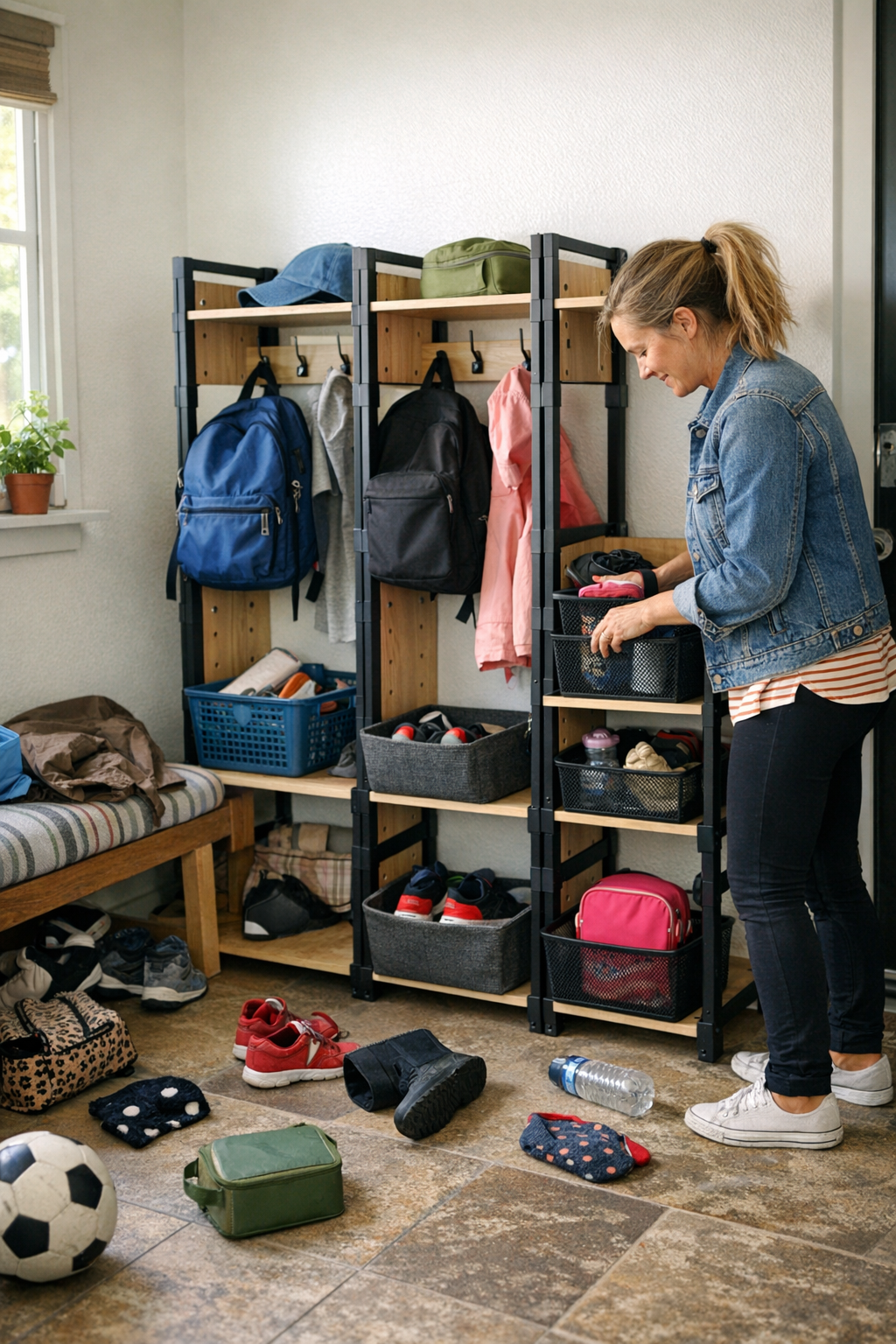
    Picture the entry closet after four days of normal use. Shoes on the bottom shelf, bags on top, coats lined up—until real-life rush sets in. Kids dart through, dropping a single boot under the coats or tossing today’s gym bag onto yesterday’s hats. You reach for one lunchbox and unsettle a whole pile. By Friday, every shelf is a mix: an umbrella wedged between sneakers, hats crushed under backpacks, and a floor in open rebellion.

    This is how friction builds up: bins that start out single-purpose slowly swallow castoffs; folded stacks lean and collapse as you paw through for a missing glove; shelves fill because nothing ever quite gets returned to its precise spot. The system expects you to remember the plan—while your routine just wants things fast and within reach.

    From Category Chaos to Task-Based Flow

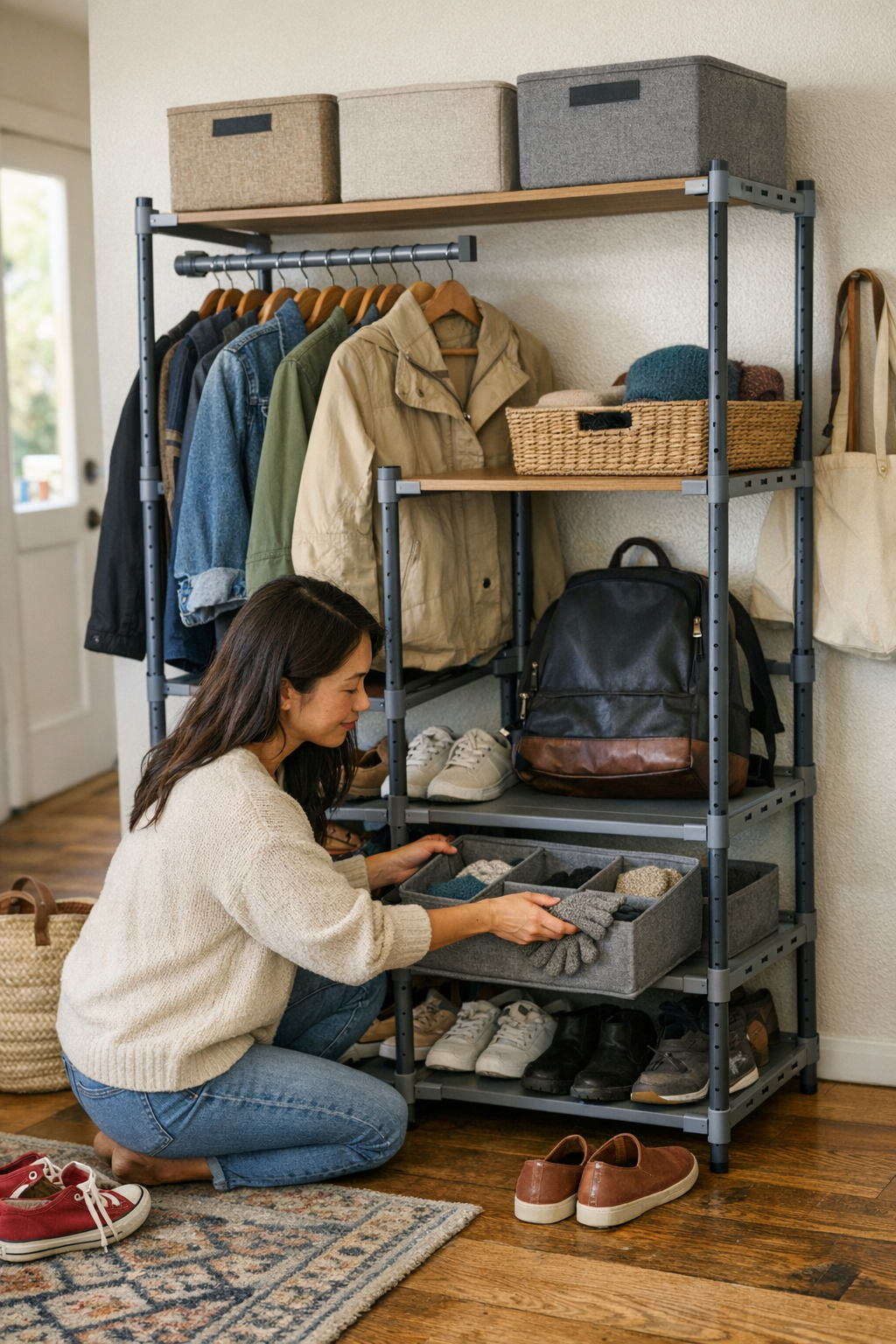
    Task-based storage flips the logic: instead of “what category does this belong to?” it asks “what do I need for this routine?” No more trekking from shoe zone to bag shelf to hook; now, each person or daily job gets a mini-station—bin, cubby, hooks—all in one spot, all at the right height.

    The difference is immediate. Kids stop hunting and start grabbing. You stop doubling back for the thing you forgot. The entryway becomes a hallway, not an obstacle course.

    The Mudroom, Unscripted: What Happens During Rush Hour

    Think of the critical minutes before school or work. Shoes go flying, someone’s missing a glove, the lunch bag is out of sight. In a category-based setup, everyone’s scrambling—shuffling stacks, sidestepping piles, juggling two bins just to get one thing. The floor’s a catch-all, parents circle back to stuff things into their proper home—until next time.

    Switch to task-based, and each child (or adult) has a single station: backpack, jacket, shoes, water bottle—all together, all easy to put away. The reset at the end of the day shrinks to minutes. Gear is contained, the floor stays clear, and nothing disappears mid-routine. It’s not magic, it’s a system that works the same way you do.

    How Storage Actually Improves—And Where It Won’t

    The biggest difference isn’t just less clutter—it’s less movement. No more ping-ponging between corners, no digging behind towers of other people’s stuff. Essentials are collected by routine and returned in one stop. Resetting the space is faster, even with kids. The usual spread—shoes out of place, hats on the floor—becomes occasional interruption, not a chronic condition.

    Daily wins you’ll notice:

    • Shelves and bins stop turning into random catch-alls—there’s less item migration, so clutter slows down.
    • Folded stacks and cubbies keep their shape because you’re not reaching underneath or sorting through unrelated things.
    • Vertical space gets used with intent—hooks at the right height, low bins for grab-and-stash, high shelves reserved for what you rarely touch.
    • Cleanup isn’t a project; it’s a quick pass, especially after heavy use midweek.

    It’s not flawless. Task-based zones can look uneven, and the boundaries are never perfect. But an imperfect match to your real habits beats a perfect layout that’s impossible to keep up with.

    When Category Systems Still Make Sense—and Where They Unravel

    Some gear just isn’t daily—think party shoes or holiday scarves. Those belong in clear, out-of-the-way category groups. The trouble starts when that logic creeps into your everyday lanes. One big glove bin in mouth-of-the-mudroom territory? Suddenly, you’re rifling through Lost & Found at 8 AM. When routines run together and categories merge, it just makes the reset harder and the floor messier.

    Set the system by use, not just by type. Remove bottlenecks. High-urgency, high-frequency items need their own “fast track” stations.

    Quick Upgrades for Flexible Storage

    For any space that gets constant traffic, draw hard lines for daily routines: one bin per person, labeled hooks, low cubbies for shoes you actually wear. If stray items keep piling up, the solution isn’t always more sorting—it’s more defined, bite-sized zones. Make it just as easy to put things back as it is to dump them.

    One easy improvement: If you notice one shelf turns chaotic every few days, break it into smaller task-specific baskets. Even two is better than one. Sort by how you move through mornings, not just by what you own.

    Storage That Withstands Real Life

    The win isn’t a picture-perfect reset. It’s what happens after five days of normal mess—when you can still find your gear, the routine flows, and cleanup doesn’t fill an afternoon. Does your system clear the path after a long week, or just send you on another hunt? The better your storage mirrors how you actually live, the longer it lasts (and the saner your mornings feel).

    The test is motion, not stillness. If your setup keeps pace—handling rushes, drops, and late returns—order stays visible, and you spend a lot less time fighting your own closet.

    For more practical storage ideas that fit real routines, visit ClosetWorks.
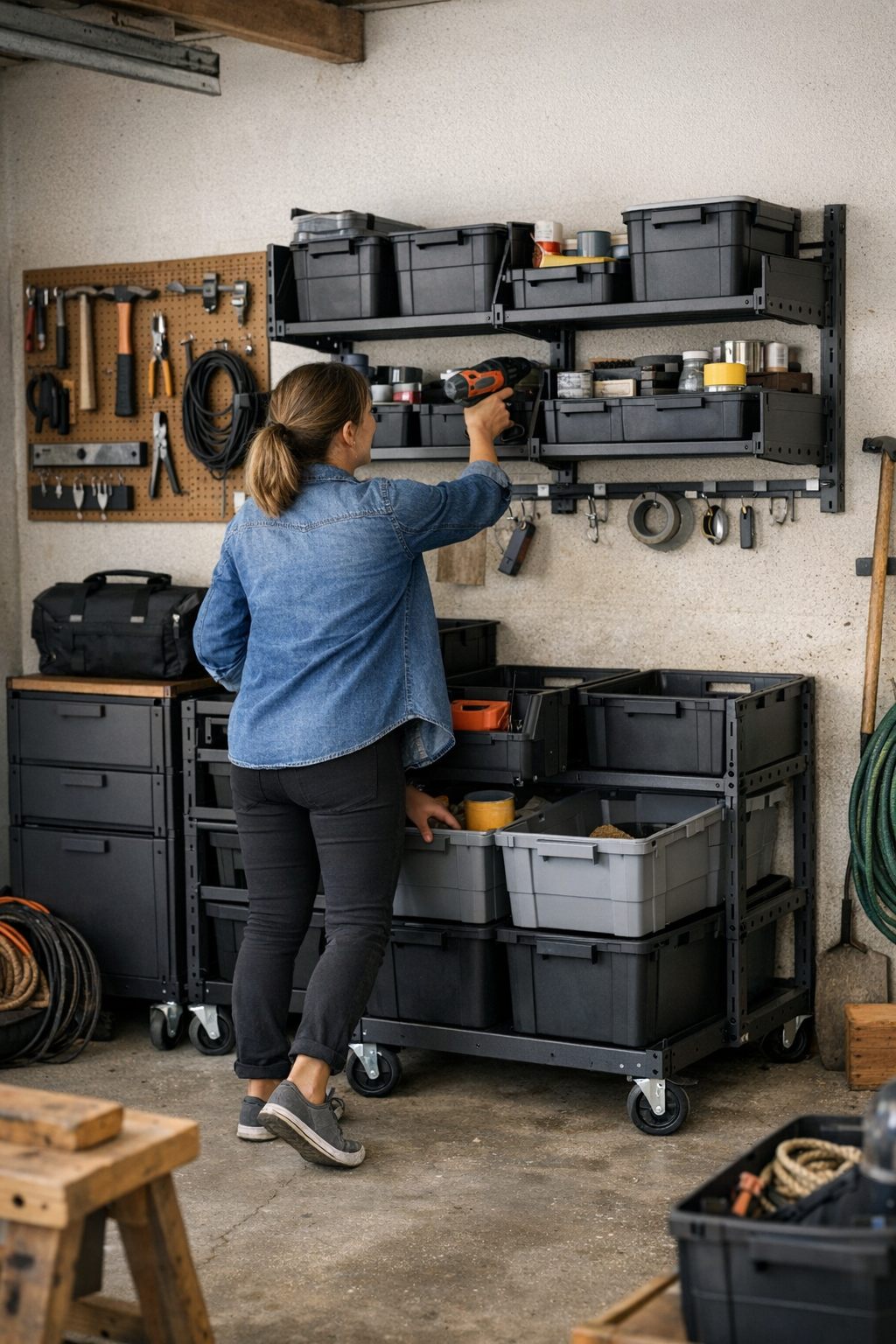
  • Why Stability Outweighs Extra Tiers in Modular Shelving Units

    The allure of modular floor-based shelving in a garage or workshop is immediate and unmistakable: everything finally lifted off the concrete, bins crisply stacked, and storage climbing vertically to reclaim lost space. On day one, a freshly assembled multi-tier unit promises to solve the chaos. But it doesn’t take long for these shelves to reveal their real impact—especially when every project, tool swap, or seasonal bin return tests their place in your daily flow. The “extra storage” starts to demand its own attention: sidestepping a blocked path to the corner, steadying a wobble with one hand while groping for a storage tote with the other, reshuffling bins just to reach a single item. What looked streamlined now quietly interrupts the rhythm of real work.

    Stacked High—And Suddenly in the Way

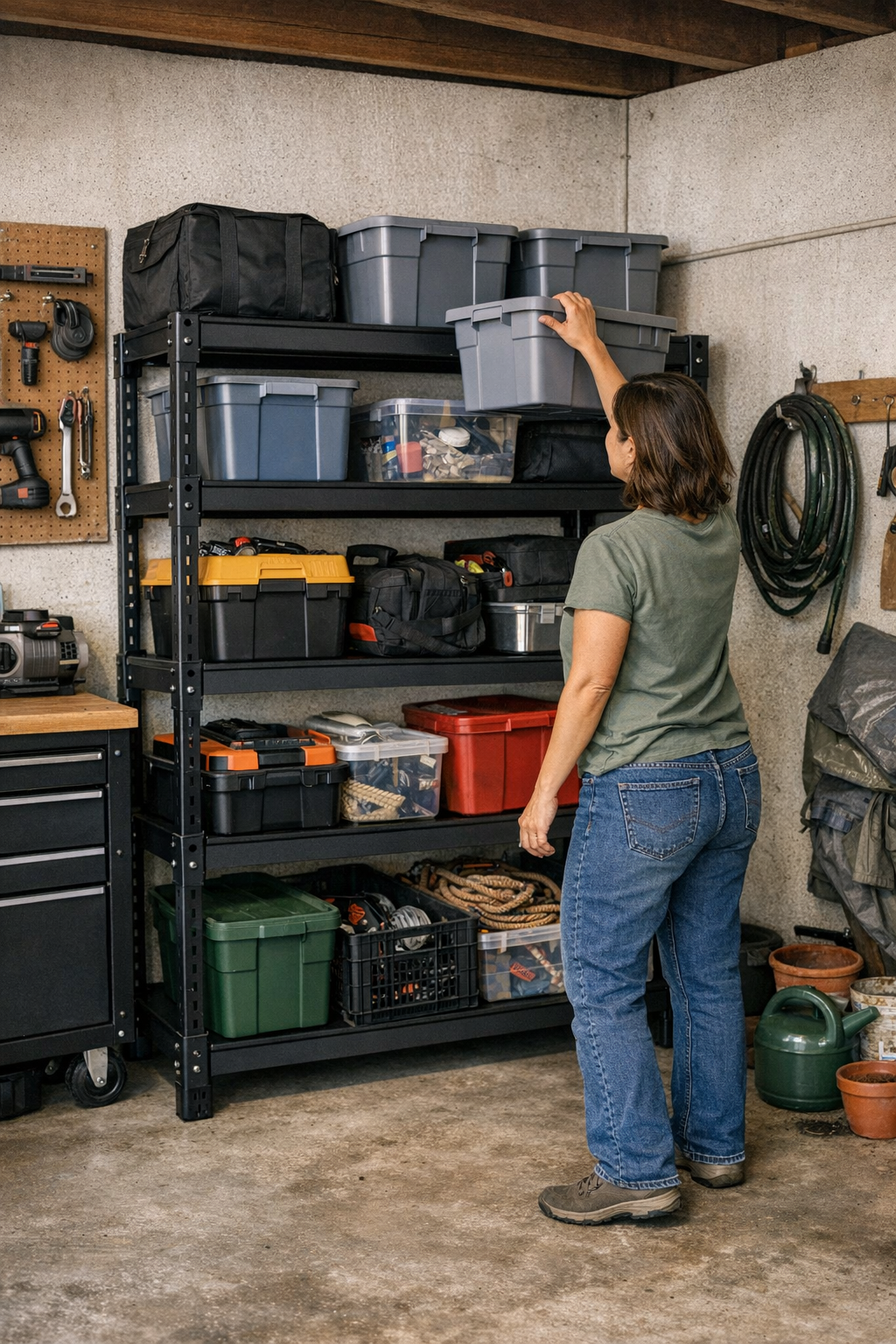
    Setting up a five-tier shelving unit feels optimistic—the empty floor, visible boxes, every inch seemingly put to work. But the real verdict arrives not at assembly, but in ongoing use. Grabbing tools mid-task, returning heavy bins after a long weekend, or just trying to squeeze a rolling cart through becomes a low-stakes obstacle course. The higher the shelf, the more it flexes under awkward loads or shifts if your floor is even slightly out of true. Small imbalances multiply: you start bracing each reach, nudging a shelf after a bin slips into place, feeling just enough motion to hesitate. Tidy placement morphs into an ongoing act of balance—in both sense and practice. And as frames begin to rock or shelves sag under uneven weight, you’re forced to slow down, sidestep, and hope the setup holds.

    When “Organized” Turns Into an Obstacle

    Fast-forward a few weeks. The bins on the bottom shelves now handle most of the action; they’re fastest to grab, easiest to return. The top tiers? Slowly abandoned to awkward, seasonal, or just-for-now overflow. Suddenly, those upper shelves aren’t practical—they’re a test of caution. You climb a stepstool, steady the edge, carefully juggle items around a sagging panel. That parked work cart you set next to the shelf? You now maneuver it every time you want into a corner. Movement narrows. Each return of a bin becomes a mini puzzle, shuffling from one spot to another, just to land everything securely. Instead of cutting through tasks, you’re managing the shelving—and new piles start appearing on the floor “until later.” The illusion of order drifts; the footprint keeps expanding as walkways and dead corners gather the spillover.

    How Instability Sneaks In—and Stays

    Instability rarely announces itself all at once. It seeps in: a wobble after a hurried reach, a flexing shelf when unloading something heavy, a spot on the upper right you avoid unless absolutely necessary. That formerly tight edge, now skipped because the entire frame shifts with the lightest touch. These aren’t isolated quirks; they’re warning signs that the system isn’t holding up to the real routine. If you find yourself adjusting movements, avoiding certain spots, or thinking twice before using top tiers, the shelving is actively subtracting from your space’s function—bit by bit, every day.

    The intended gains—clear floors, open wall space—get clawed back as overflow bins land on the ground again, traffic paths choke up, and you end up shifting things around just to access what you need. Sometimes it even spreads: nearby shelving gets cluttered as you return things on autopilot, or a once-clear wall starts stacking up with temporarily homeless items. Instead of taming mess, the shelving becomes a new source of sprawl.

    The Real Upgrade: Stability Over Sheer Height

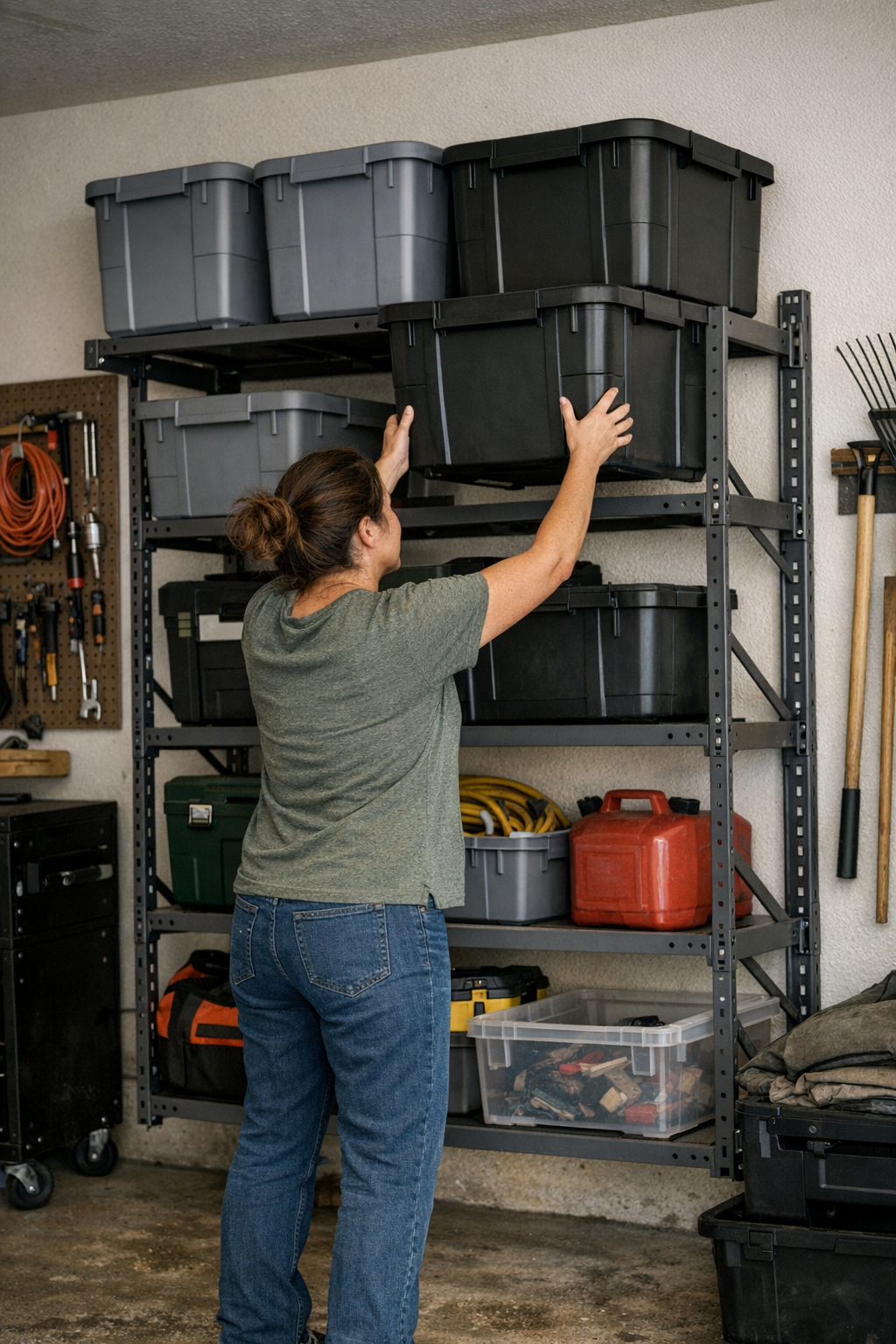
    The real turning point comes when stability—not just capacity—takes priority. In one clutter-prone workshop, removing the top tier from a towering unit (and reinforcing the rest) didn’t just lower the profile; it changed the entire experience. Suddenly, every reach was direct and confident—no more balancing a bin by the tips of your fingers, no more slow placements to keep the frame still. Paths stayed open. You stopped parking the utility cart in odd spots to avoid blocked corners. Instead of endlessly resetting wobbly shelves, you could return tools and storage in one fluid motion. Overflow no longer piled up on the floor because returning items felt reliable and fast. The shelf footprint finally matched the work routine—not just the available wall height.

    A stable setup isn’t just about staying upright—it shapes every movement. With wobble and sway eliminated, resets became quick, bins settled on the first try, and that “organized” look finally translated into a workspace that stayed clear between projects. You used the shelving because it worked—not just because it was there.

    Smarter Modular Shelving—How to Make It Actually Work

    Track Real Movements—Not Just Storage Capacity

    Notice how often you brace a shelf, sidestep bins on the floor, or avoid upper tiers altogether. Every moment spent steadying, rehousing, or doubling back means the system is adding friction, not removing it. Over time, those little adjustments rob you of valuable space—and compound the original clutter issue.

    Cap Height, Reinforce the Frame

    Don’t default to maximizing vertical space just because you can. A well-reinforced four-tier unit outperforms any unsteady five-tier stack in a real, frequently used area. Reinforce the joints, anchor if possible, and stop adding levels when reach and stability dip below everyday comfort. That discipline pays off in every future project—returns are quicker, nothing sways, and storage stays where it belongs.

    Respect Walking Lines and Return Paths

    If shelving forces you to shuffle carts, squeeze through corners, or dodge “temporary” bins on the ground, pause and rethink the setup. Reclaim those walkways by shifting units a few inches or adjusting orientation—open, clear paths mean your storage layout supports your routine instead of boxing it in. Watch for those overlooked corners and wall edges that quietly gather overflow: they’re signals that current shelving isn’t fitting actual use.

    Full Shelves vs. Functional Space: Don’t Confuse the Two

    An overpacked, sky-high shelving system can turn into daily resistance if the frame can’t shrug off real, repeated use. The extra capacity starts out invisible, but it steals back time and energy, one slow reset at a time. Clogged movement, yet another reshuffle just to grab one tool, or that growing pile in front of the shelves—it’s all evidence that looking organized isn’t the same as working smoothly.

    A strong, slightly shorter shelving unit doesn’t just “fit” the wall—it opens up the room to function. With true stability, you regain floor paths, cut out repeated shifting, and reclaim both time and space. The rest of your gear finally has a clear, permanent home—and your workshop or garage actually keeps pace with what you do, not just how you want it to look.

    Find practical modular shelving and storage options that work for real spaces at StackNest.

  • Avoiding Deep Discharge to Maintain Air Cleaning Tool Performance

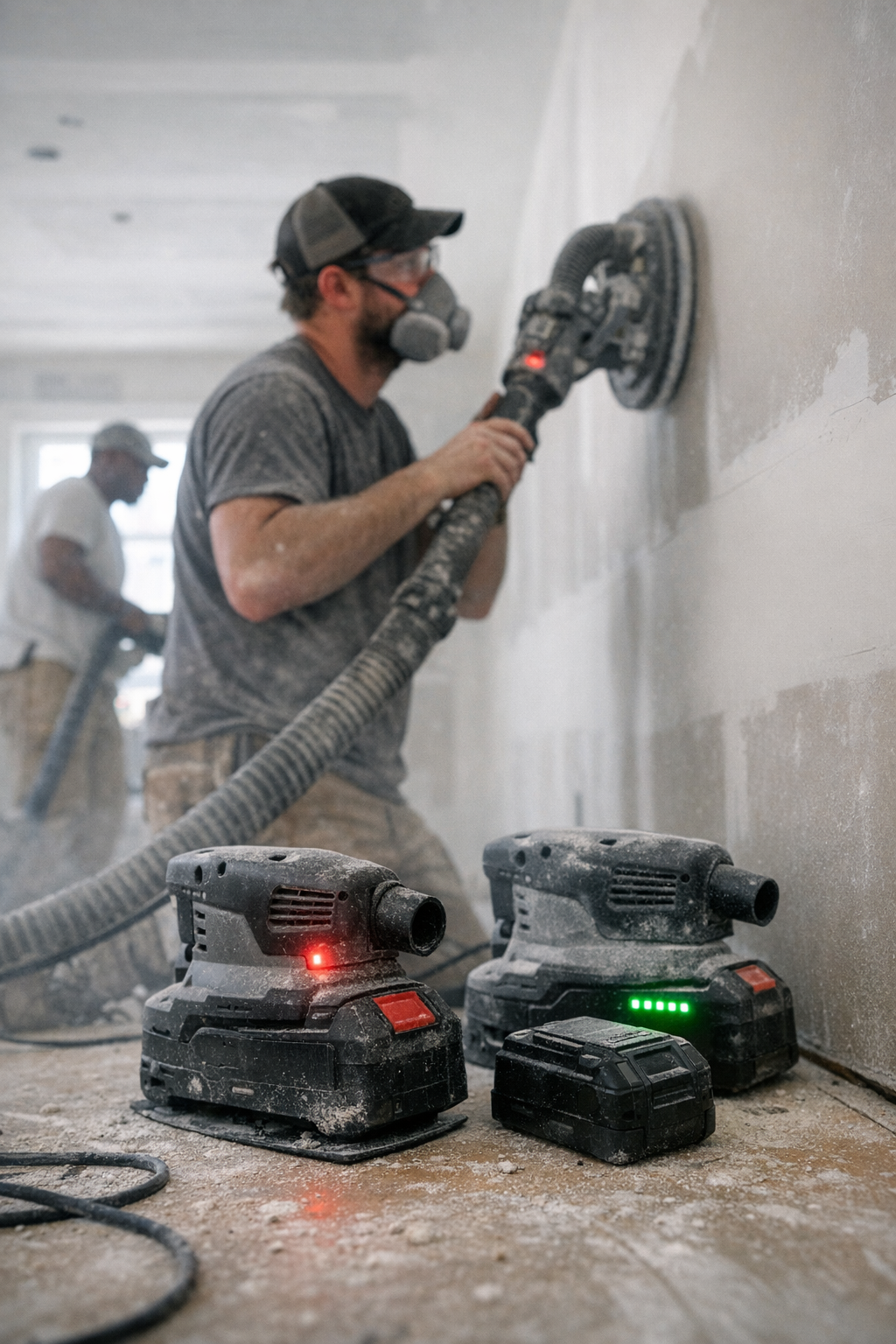
    You don’t see battery fatigue coming—not when your workshop vacuum still screams at full strength or your air scrubber is kicking up fresh airflow with the first pass. The reality sets in much later: behind the whirr and the clean panels, it’s the battery that gets chewed up job after job, shift after shift. By the time you’re halfway through a messy drywall tear-out or mid-sanding run—with dust swirling and tools in constant motion—the small habits around battery swaps end up deciding whether your tools finish the day as strong as they started, or slowly grind themselves down until you’re left chasing lackluster results. It isn’t just shine that fades. It’s performance, and it’s reliability—right at the moment you can’t afford tool drift or missed debris.

    Draining to Empty Always Feels Convenient—But the Downside Adds Up

    Every worker knows the temptation: why stop early when that orange LED hasn’t started flashing? Squeeze out the last pass, let the tool run until auto cut-off, then swap batteries and move on. In theory, you’re stretching every cent of charge. In practice, each full drain chips away at your tool’s backbone. The signs don’t scream for attention. One day, a shop vac that used to yank dust clean in a single pull now takes two, then three. On a long fastening streak or a stubborn drilling sequence, the motor’s pitch changes—not louder, just thinner. Recharge time ticks upward, and the battery simply won’t rebound like it did last month. And you don’t see the difference until you’re five cycles deep into a real job week, where shortcuts show up as missed patches and slowdowns everywhere else.

    When the Work Gets Long, Weak Batteries Work Against You

    The real cost is clearest on tough, drawn-out jobs: after hours sanding out seams, when drywall residue is caked on every joint, or you’ve been carving out cut after cut and the grit is embedded in everything you touch. That first battery still feels strong—until you reach the last stretch. Now, your cleaner isn’t quite reaching into corners. The air’s moving, but somehow each pass pulls up less, and you’re double-backing over what should have been finished. Every extra minute you spend repeating a pass, every sweep that misses fine dust, you trace back to a battery that wasn’t built for this level of daily deep discharge.

    Letting your cleaner or drill push all the way to shut-off doesn’t just mess with your end-of-day results—it wears the battery harder, and the tool starts running underpowered right when finish quality and control matter most. Instead of one clean, precise pass, you’re stuck cleaning up after the tool, which always means more fatigue in your arms, slower changeouts, and that constant itch that you could have done it faster.

    Identical Tools, Different Outcomes—What Sets Them Apart?

    Imagine two teams sanding panels side by side. Both start with the same make and model of air cleaner, same voltage, and the batteries are fresh from the charger. Five cycles in, one team is still making easy, single passes—sharp airflow, suction that clears every groove, no lag. The other? Their machine is dragging, motor straining to keep up, lower panels left dusty. No difference in skill or machine model—it’s just that one battery has been cycled to dead too often.

    The difference is subtle at first—maybe a slight struggle to clear corners, maybe an odd drop in suction halfway through. But push through a busy week, and by Friday one crew has their results on the first pass while the other dreads the slowdown, swapping batteries mid-way, sometimes skipping finer cleanups just to stay on schedule. The output gap widens: one team trusts in a predictable, fully ready tool; the other compensates every day for a battery that’s lost its edge.

    Simple Habit Shifts That Add Years to Tool Life

    The smallest shift? You swap batteries at the first hint of fading muscle—when suction eases up, motor pitch drops, or airflow feels even slightly “off.” In a real shop, that might be an hour and a half in, just as you sense the edge going dull, well ahead of the shutoff click. The key: don’t wait for a dead stop.

    This isn’t about being hyper–cautious. It’s about using your senses—listening for strained sounds, watching for the tool to hesitate on a dense seam, or noticing extra effort required for what used to be routine. When you pull the battery pre-emptively and pop in a fresh one, you keep the tool in its “sweet spot.” Performance stays steady: one-pass suction, consistent drilling torque, repeatable power for clean cuts. No doubling back. No saggy runs. No burn in your arms from fighting a tired tool.

    Missing Signals Means More Work—And More Fatigue

    If you ignore what your hands and ears are telling you—holding out for that final blink or power dip—every shift gets just a little bit longer. Recharge lags, batteries fail to hold their charge through the next cycle, and your tool’s responsiveness drops. By the end of a busy week, what started as a small shortcut adds up: tool control gets sloppy, there’s more bending and backtracking, and simple jobs drag out while the tool loses steam at the worst possible moment.

    Practical Battery Management for Real Job Sites

    Look for signals, not just failures. If you notice even a small shift in airflow strength, new mechanical noises, or you find yourself re-sweeping the same stretch, treat that as your cue to swap. Integrate battery changes into your workflow—when you pause for lunch, when switching between sanding and drilling, or at the end of a big batch, not after your tool dies in your hands. It keeps both batteries at moderate cycles, and all your passes stay tight and controlled.

    This applies straight across the board—whether you’re cutting baseboards, running a dozen fasteners in quick succession, or just keeping a home workshop clean after a weekend project. Battery management isn’t about perfection or pampering. It’s about finishing strong every day, with less time lost to surprise malfunctions or faded-out runs.

    Steady Power, Smoother Flow—Why It Matters When You’re Tired

    You know the unique drain after you’ve redone a row of screws or skimmed the same floor twice because the power just wasn’t there. It isn’t just a few extra minutes lost. It’s the compounding fatigue—shoulders and back wearing down as you repeat slow, underpowered passes. Keeping batteries out of deep discharge cycles protects not just tool performance, but your rhythm on the job. The output stays level. You’re not fighting with your equipment. You’re focused on the cut, the cleanup, the next panel—work moves the way it should.

    This isn’t about protecting battery life for its own sake. It’s about less grinding, more control, and tools that respond like they did on day one—even after dozens of rough, real-world jobs. That’s what turns a decent shift into a productive day and spares you from endless reruns purely because your battery bowed out long before your job was done.

    http://gumboll.myshopify.com

  • How Kind Storage Systems Simplify Daily Organization Without Extra Effort

    The promise of order hits hard when you first set up those tidy rows of bins and baskets. Everything has its spot, the shelves look photo-ready, and for a moment, your closet feels conquered. But fast forward a few days—morning rush, laundry still warm from the dryer, your bag sliding off the shelf as you reach for a clean shirt. That seamless system? It’s suddenly in your way. The bins that looked perfect are now stubborn, slow, and somehow encourage more chaos with every use.

    When “Organized” Turns Against You

    Early on, new storage gives the illusion of control. Neatly stacked containers and folded piles satisfy in that fresh-start way. But soon enough, daily patterns wear grooves into the setup. Pull out one shirt and the whole row sags; slide a bin forward and socks escape from behind. If grabbing your go-to sweater means emptying half a shelf, the appeal of order fades quickly. Little by little, those bins bought for “just socks” become home to last season’s scarves and a creased grocery bag. By week’s end, you’re stacking things wherever they’ll fit and shoving the closet door shut.

    Micro Headaches That Add Up

    It’s rarely just one dramatic mess—it’s a steady parade of minor irritations. Shelves too deep swallow loose items until they’re out of sight. Stacks topple after you lift one thing from the middle. Deep bins become black holes—whatever goes in disappears under newer, less-used stuff. Before long, the edge of the shelf fills with “for now” clutter: a belt, a paperback, that one glove. What looked organized now requires work just to keep from sliding out of sync.

    Looks Organized—But Does It Work?

    Clutter doesn’t always look messy from a distance. It sneaks in when the system requires constant fiddling. You might spend an afternoon getting your closet in line: bins labeled, categories sharpened, everything stacked. But by the third rushed morning, clean laundry lands wherever there’s space. Need running shorts and a pair of matching socks? You’re foraging blind, upending baskets that were labeled only a week ago—until, defeated by tangled belts, you let things pile up “just to deal with later.”

    Reset Fatigue—When Maintenance Gets Harder

    The most honest test comes after a full week of everyday life. If you’re leaving items on a chair instead of putting them back—because putting them back is genuinely annoying—it’s not a motivation issue. Good storage lets you reset with minimal effort. If you’re forced to restack, refold, or reshuffle every day just to keep up, your closet is working against you, not with you.

    The Real Impact of a Smarter System

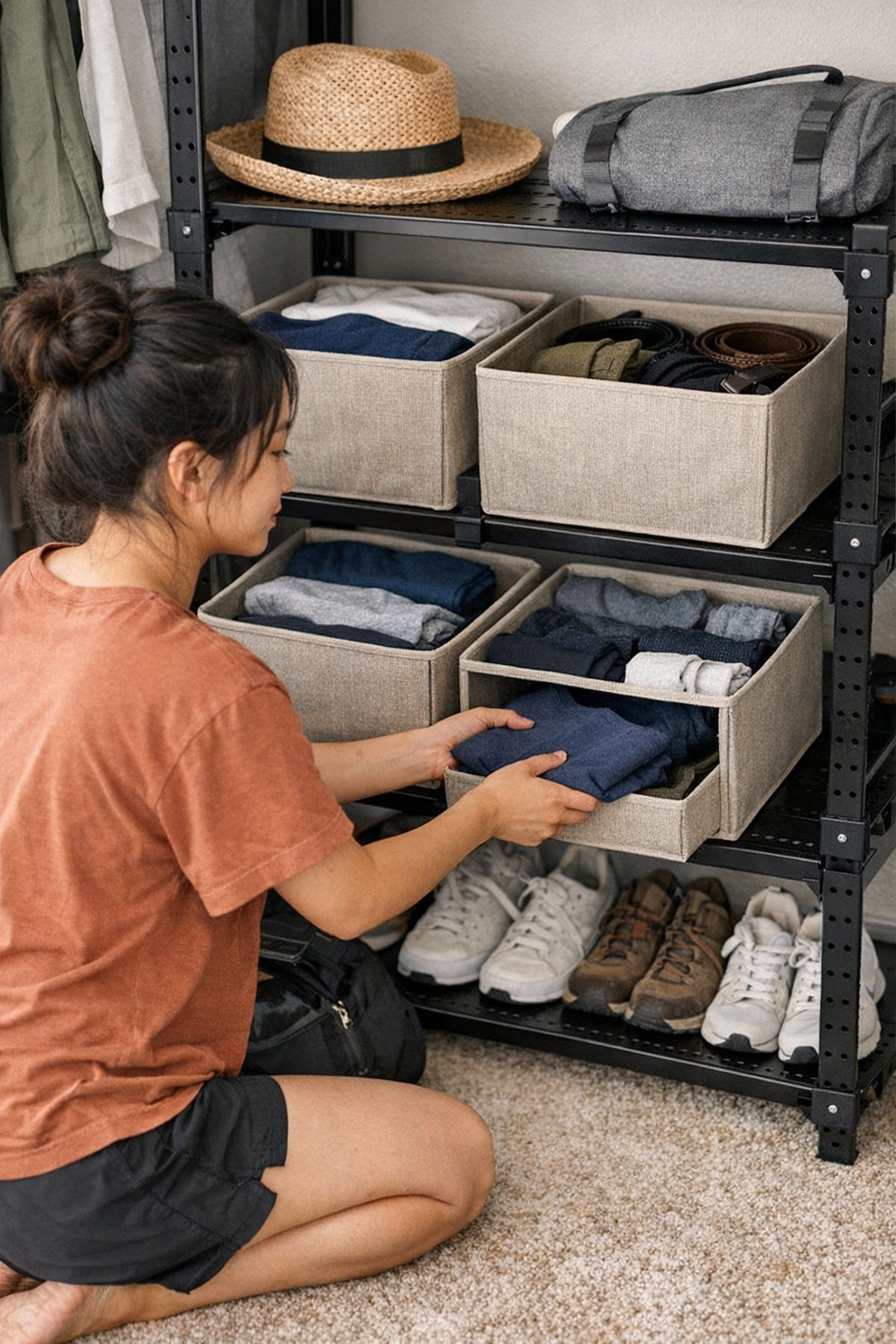
    I swapped a few oversized baskets for several smaller, open-front bins and the effect surprised me. Suddenly, grabbing a shirt didn’t mean moving five things out of the way. Every daily-use item found its own slot. Instead of digging beneath sweatpants to reach for gym socks, I could just glance and grab. The usual creep of clutter slowed, and “putting away” became so simple I barely thought about it—no spillover, less refolding, and the shelf held its shape all week.

    In the Trenches: Mornings Made Faster

    Picture it: You need an undershirt, a tie, and the second black sock—fast, before the clock runs out. With a setup that’s just bins stacked four high, you’re busy unstacking, peeking, and sacrificing neatness for speed. With clear, open bins and labels that actually map to daily life, you reach once for each thing. No accidental avalanche, nothing stuck behind something else—and when things go back, no puzzle to solve. What used to slow you down becomes nearly automatic.

    Spotting the Trouble in Your Setup

    It’s easy to blame yourself, but your storage is often the culprit. Watch for these:

    • Reaching behind bulky bins to fish out small daily items
    • Baskets and shelves growing cluttered after each week—even post-cleanup
    • “Category drift”—when socks wind up with charging cables or shirts wander into shoe territory
    • Baskets that tip or stacks that collapse if you touch the wrong thing
    • Floating piles gathering on the floor or next to doors

    If these annoyances keep recurring, your setup is quietly adding hassle to your routine.

    Why True Fit Matters Over Time

    The best storage gets easier as routines settle. It doesn’t just hide stuff—it makes returning things almost mindless. Systems built on clear categories, easy-open bins, and shelves sized to your actual use reduce the need for discipline or daily clean-up rituals. The more the storage fits what you do, the less thought it takes to keep the space working—and the less likely you’ll find stray clutter taking over again.

    Simple Tweaks That Change Everything

    A total overhaul isn’t required. Small, strategic swaps add up: trade one big bin for a pair of smaller, purpose-driven ones. Add real labels—actual use, not what you wish you had. Use shelf dividers to prevent collapsing stacks, but not so many that you build little prisons for your stuff. The sweet spot is a storage rhythm—flexible enough for real life, sturdy enough to survive messy days.

    Adapting With Your Routine

    Seasons shift, new gear arrives, your family’s needs evolve. When that happens, does your closet morph with you—or does it turn into a jumble zone? Experiment, shift categories, and see where things pile up or slot themselves back. The right system isn’t just about looking organized; it’s about making order frictionless, no matter how chaotic the week gets.

    Good Storage Shows Up on Hard Days

    The real proof isn’t the day you finish setting up—it’s the back-to-back mornings when you don’t have time to think. If, after a whirlwind week, your shelves are still holding firm and nothing has tumbled overboard, you’ve won. The gold standard? Picking up feels effortless, and the urge to “just close the door” never comes back. Your closet doesn’t demand— it quietly works so you can focus on anything else.

    Browse practical systems and solutions at ClosetWorks

  • How Eliminating Wobble Transforms Your Workshop Storage Stability

    Behind the “perfect” storage facade, the real test begins as soon as the work starts. Garages, basements, cluttered studios—at a glance, everything looks crisp: bins lined up, shelves just-so, carts tucked tight against a still-clean wall. But by Wednesday afternoon, the real rhythm takes over. A tray of screws lands somewhere random, a rolling chest blocks the only clear path, and that corner shelf—supposed to keep things within reach—now harbors a shifting pile you dodge every time you walk by. If you’ve ever built a “modular” system meant to restore order, only to be haunted by daily readjustments and slow, creeping clutter, you already know: what matters isn’t day-one alignment, but how your setup stands up to real, repeat use—loading, grabbing, shuffling, returning—without turning the simplest task into a hassle.

    The Quiet Sabotage: Where Weak Storage Chips Away at Workflow

    The subtle breakdown often starts fast—imperceptible at first, then all at once. Maybe that wall-mounted rail felt rock-steady when empty. But after a week of tools coming off and on, it sags just enough to send a jolt of doubt through your next reach. A rolling cart, smooth on its maiden glide, now bumps and lists over every floor seam, drifting just far enough that you have to pivot it back, again and again, just to clear the cabinet doors. Those micro-wobbles and tiny tilts? They slow you down, force tiny compensations, and start turning the ordered space into a puzzle you keep having to solve.

    Ignore these little shifts, and routines warp. Heavy items get orphaned in safer, less useful places. One bin winds up jammed against the wrong wall, stealing movement from the main aisle. Overflow piles up in a zone you’d sworn would stay clear. What promised to be a fluid path instead becomes a shuffle—resetting the system just to finish what you started, every single time.

    When “Good Enough” Isn’t: Small Flaws, Big Interruptions

    Instructions and marketing never warn you about the day-three surprises: that shelf bowing under an awkwardly loaded toolbox, the floor unit’s one leg floating slightly above the concrete, or casters so undersized they screech and catch after the first actual haul. Instead of supporting your workflow, the system starts dictating awkward workarounds—loading lighter objects where the frame holds, parking rolling storage sideways just so it doesn’t wander, never trusting the upper shelves with anything substantial.

    The effect is everywhere—if you look for it. You nudge a storage cart toward the door, hit a shallow dip, and it veers off so you end up parking it further from reach. Wall units flex when you grab a power tool, so next time you leave it where it’s easier to access, and the “dead zone” expands. Setups that should liberate space quietly fence it off instead. Each extra moment spent moving or bracing a unit, each shortcut you take to avoid a lurch or tip, is another little tax on your flow. Soon, less and less of your organized footprint actually works the way you intended.

    How Looseness Slowly Undermines the System

    Picture the aftermath of a real week: you tidy it all Sunday, but by Wednesday, you’re sidestepping an out-of-place cabinet and digging for a sander on a shelf that now shifts under the weight. The rolling chest you need most ends up wedged across two floor seams, blocking your fastest route and forcing a detour. One catch pan, meant as a quick overflow, gets stashed in the only open patch left—the original plan for wall and floor use already compromised by little slip-ups and awkward resets.

    What started as a rock-solid setup has become a source of friction. Every fresh project means an impromptu clean-up before you can even get started. The more you use it, the more the pieces migrate out of alignment, drawing you into a cycle of fix and reshuffle. Instead of clarity and speed, your reward is a slow crawl back to square one.

    Simple Anchors, Real Gains: Restoring Control

    This isn’t inevitable—nor does it require a full overhaul. The difference comes with a handful of focused fixes. Screw wall shelves into solid studs or masonry and watch the bounce disappear. Swap tiny casters for sturdy, wide wheels and feel the cart track true instead of fishtailing on cracked concrete. Even bracing a wobbly leg or shimming uneven feet transforms the way you navigate the zone: fewer interruptions, less tip-toeing, more willingness to actually use every shelf and bin as intended.

    Small reinforcements restore confidence. Heavy tools go back on high shelves without second-guessing. Rolling bins can finally be parked straight, even in the tightest footprint. Each adjustment chips away at wasted motion, letting every area do the job it’s meant for—no more letting awkward movement win out over usable space.

    Does Your System Still Move the Way You Need?

    Forget the perfect bubble-level reading on assembly day. Here’s the test: Put your normal workload onto the system. Rapidly slide bins off and on. Pull out a rolling chest and try to dock it one-handed between jobs. If you’re bracing units with your hip, constantly nudging pieces back into alignment, or making mental notes to “go easy on that shelf,” your storage is already slowing you down. Each workaround will grow—until you find yourself walking a longer route just to avoid the wobbly section.

    If you’re stacking bins at odd angles “so they won’t slide,” or building up catch-alls in zones meant for clear movement, it’s time to retune the setup—before workarounds become part of the daily script.

    Storage That Fits the Actual Room—Not the Ideal One

    Every real workspace is imperfect: old slabs slope, walls hide soft patches, thresholds catch tiny wheels, and years of small accidents leave dents and dips nobody sees on a floor plan. Wall storage might promise a clear floor but only if the surface and anchors take a beating day after day. Floor units might span the load, but a rock or slope turns them into blockers instead of helpers. Ignore these realities, and the setup itself becomes another obstacle—eating time, not saving it.

    The clever catalog layouts never last past week one. What matters isn’t the stated capacity or look, but how every shelf, bin, and bracket stands up to repeated, slightly messy, daily use—and still gives you the same open, reliable access day after day. You can tell if it’s working: resets take minutes, not whole afternoons, and every bin and tool returns to its home at speed, not after a careful game of shuffleboard with whatever drifted during the week.

    Making Order That Stays: From Looks to Lasting Function

    Some mess builds invisibly—a cabinet that never sits flush, an aisle that loses a foot’s width because a rolling chest keeps wandering, a utility bin that stays in overflow because it’s easier than re-clearing a wobbly shelf. The best setups don’t just tidy up for the photo—they stay aligned with your daily moves. Friction fades: anchored shelves, stable carts, and sturdy bases mean less wasted motion, less mental overhead, and fewer half-hour resets just to clear the area for one new project.

    This is what separates a space that “looks organized” from one that actually works. In a system that holds fast, you stop noticing the storage—because everything you need stays just where you intended. Zones remain clear, cabinets open without wrestling for space, overflow doesn’t claim your walkways, and at the end of even the busiest week, you can reset the room in minutes—not hours—because the foundation is right.

    Visit StackNest for practical, real-world storage solutions.

  • Why Precise Battery Voltage Monitoring Improves Air Cleaner Performance

    The drop in battery voltage hits before you notice it—but everything after gets harder. The vacuum lags on a long sanding run; dust suddenly hangs around the jobsite. Tools don’t care if it’s just an hour left in the day or there’s a deadline—performance is performance. And if you rely on an air-cleaning power cleaner to keep pace during rough cutting, concrete drilling, or non-stop sanding, you’ve learned fast: what really matters isn’t just the tool’s muscle or badge. It’s how you track—down to the moment—your battery voltage, while the job’s unfolding for real.

    Voltage on the Floor: Why Numbers Turn Into Mess

    Start the air cleaner and expect strong suction, only to find dust escaping anyway—or the clean hiss replaced by a dull, uneven whine halfway through. Ignore the voltage too long, and what should be a routine sweep turns into a patchy, repeated fight with fine debris. A flashing LED or a vague feeling won’t help you in a corner after cabinet sanding, or after filling a hallway with tile dust. Here, those “good enough” shortcuts mean mess, slowdowns, and more filter swaps when you’re already spent—and the job’s not done.

    Let voltage drop just a little too far and you pay with weak airflow, gummed-up filters, and an ugly restart when you should have finished. The worst part? You rarely catch it until it’s too late. Only when daylight angles in or the site light comes up do you spot the real cost: lines of leftover dust in baseboard cracks, or a powder settling across new paint just as you’re packing gear.

    The Unseen Slide: What a Voltage Drop Looks Like Mid-Job

    Two identical cleaners, two people wrapping up a nasty round of sanding and drilling. Both start out strong. But watch as the hours build: one runs until its “low battery” glows red; the other uses a digital meter showing numbers creeping steadily down. With the LED, you might sense the weak pull just as the tool gives in. With the voltage readout, you spot the drift—airflow fading, motor tone softening—before it gets in your way. The slip is subtle, easy to miss until a haze hangs in the air or cleaning passes start taking longer, each sweep leaving behind a growing trail to re-do later.

    Repeat Jobs: Where Stray Dust Stings the Most

    If you’ve worked cleanup in a crowded storeroom or after hours at an assembly bench, you know: missed dust doesn’t just vanish, it migrates—on shoes, carts, even settling on finished surfaces you’ll have to touch again. Often, what seems like a clogged filter is really just the tool starved for voltage. Wait too long to check, and yesterday’s work visits you twice—scrambled up with a fresh batch of static-clinging, fine debris.

    Late in the Day: The Reality of Chasing Dust with Tired Batteries

    The end of a shift, you’re hauling the cleaner back and forth through doorways, under pipe clusters, behind new cabinetry. By the fourth cycle, the vacuum’s tone starts warbling, airflow drops, and you find yourself working harder for less result, feeling suction lifeless against your hand. You keep going, thinking there’s still charge left—until you spot faint, ugly dust trails looping around wire bundles or slipping under shoe molding. Sometimes you only see these after packing up, forced to drag hoses and tools back out for another round.

    Out in the open, you might shrug off a little dust—but on finished trim or floors, every missed spot is a time penalty. The built-in gauge? Usually just a lagging signal that you’re already behind.

    Precision Upgrade: The Small Change That Fixes the Rhythm

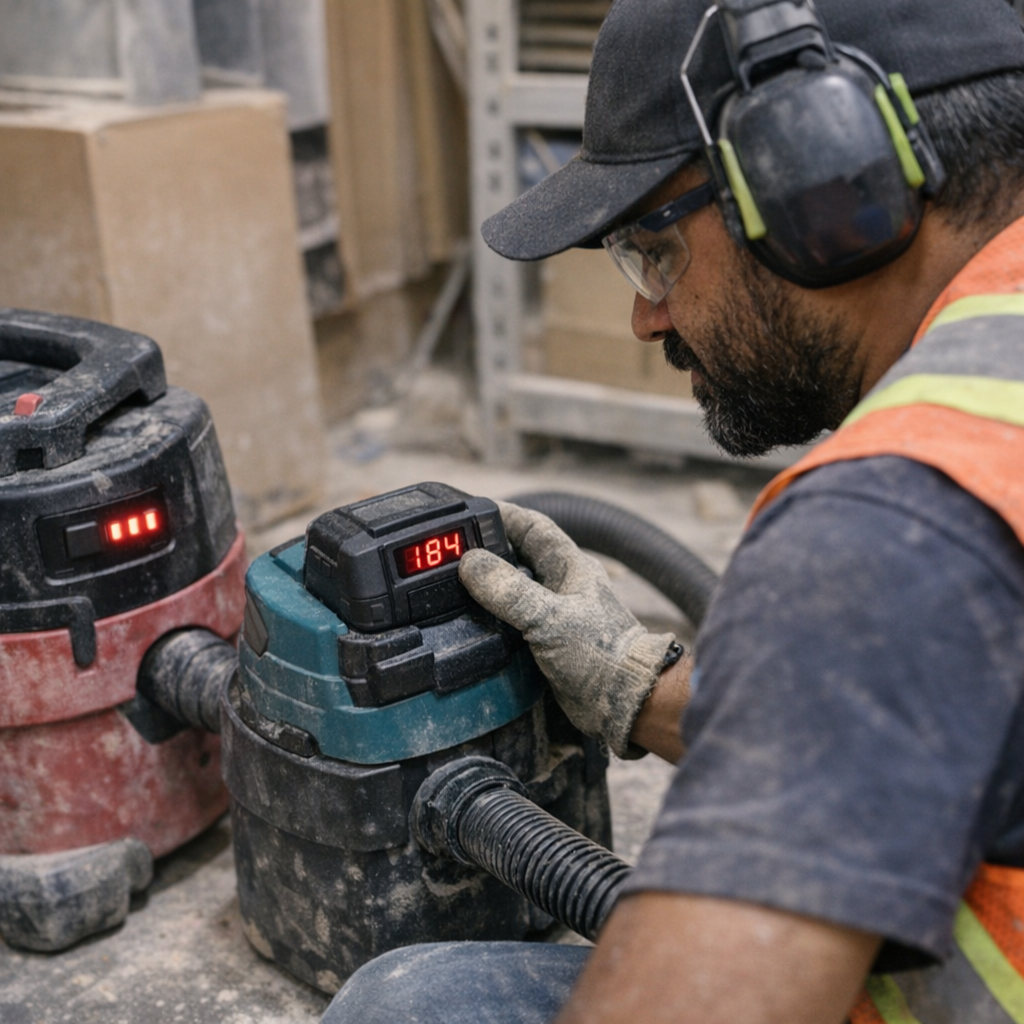
    The fix isn’t complicated—a digital voltage meter that reads to the decimal. My own rig shows changes of 0.1V on a 21.6V pack. The practical effect: the instant voltage slides to 18.4V, the swap happens—before the airflow fades, not after. There’s no last-minute stutter, no silent drop in suction that ruins the finish or doubles your dusting. Just a clear cutoff to keep everything consistent and under control.

    Over time, this means less stalling out. No guessing if it’s filter or battery. No chasing ghostly dust lines with a broom after hours. It’s less break in your rhythm, less wasted effort, and a cleaner exit with fewer double-backs at the closeout.

    Work Smarter: Building Voltage Checks Into Your Workflow

    Check voltage every half hour of real run time, or sooner if suction pulls weak or the pitch softens in your ear. Don’t write off a slow pass or new resistance as just a filthy filter. Glance at the digital display and you’ll know: if voltage is low, swap in a fresh pack—simple. Factory LEDs? Rarely bright enough, often unreliable under shoptop glare or with dust slicks covering the lights.

    Beyond Suction: The Real Cost of Running Low

    Letting voltage dip isn’t just about a little less suction. Motors strain, dragging heat and wear up with every underpowered pass. Filters gum up, dust sneaks past, and maintenance stacks up. Ignore it for weeks and you’ll feel it—in extra tool wear, frequent swapping, and eventually a higher bill for parts and repairs. Small shortcuts ripple out: more wasted motion, more fatigue from going over the same square foot twice, and less time cutting or fastening where you wanted to.

    Make It Routine: Voltage as a Hands-On Habit

    However you monitor juice—onboard indicator, ear for the tone, or a digital meter clamped to the case—the discipline shapes your day. For sanding runs, concrete work, or any job where airborne dust can sabotage a result, those hard numbers beat hope every time. Pick a conservative swap threshold (18.4V works well for 21.6V batteries), and run with it—you’ll get steadier workflow, fewer filter swaps, and, most of all, less wasted time.

    See tools and power equipment tuned for real work at Gumboll.

  • Why Structured Closet Storage Outperforms Open Shelves Over Time

    What quietly sabotages a closet isn’t the day you organize it, but the mornings that follow. Shelves look pristine right after move-in or a big sort—crisp piles, everything sorted, optimism high. But real-life friction builds fast. Shirts tumble after one rushed pull. Stacks buckle, socks migrate, shelves blur. Motivation fades long before the system does. Whether your closet keeps its sanity a week later rarely depends on your folding discipline. It’s the structure—open shelves versus divided zones—that determines whether your storage works for you, or quietly demands fixing, every single day.

    Where Open Shelving Breaks Down—Fast

    At first, open shelves feel like a simple win: easy to load, easy to scan, no small parts. But they fall apart in real usage. Reach for a sweater at the back, and you drag a tangle of shirts forward with it. Bookended by nothing, neat stacks quickly tilt and spread. A pile of folded pants is fine—until you grab one from the middle, and the rest slouch sideways. Socks wander into T-shirt space. Towels blend into spare bedding. Every new item threatens the old order.

    There’s no built-in stopping point. One careless return sends an entire section spiraling. Open shelving rewards patience—until the day you’re running late, or simply don’t feel like refolding anything. There’s no penalty for crowding too much in, but the price shows up later as a minor avalanche and a slower start to your morning.

    The Real Cost: Resets That Never Last

    You fix the stacks once, maybe twice, then lose patience. More effort goes into keeping that “organized” look than actually finding what you need. A shirt slides out, you refold half a pile. Socks you separated days ago now hide at the back. It becomes a tedious reset—one step forward, two small setbacks each time you pull something out or put it away. The result: a closet that looks organized only during resets, and demands constant hands-on maintenance to stay that way.

    Sectioned Storage: Invisible Help for Everyday Mess

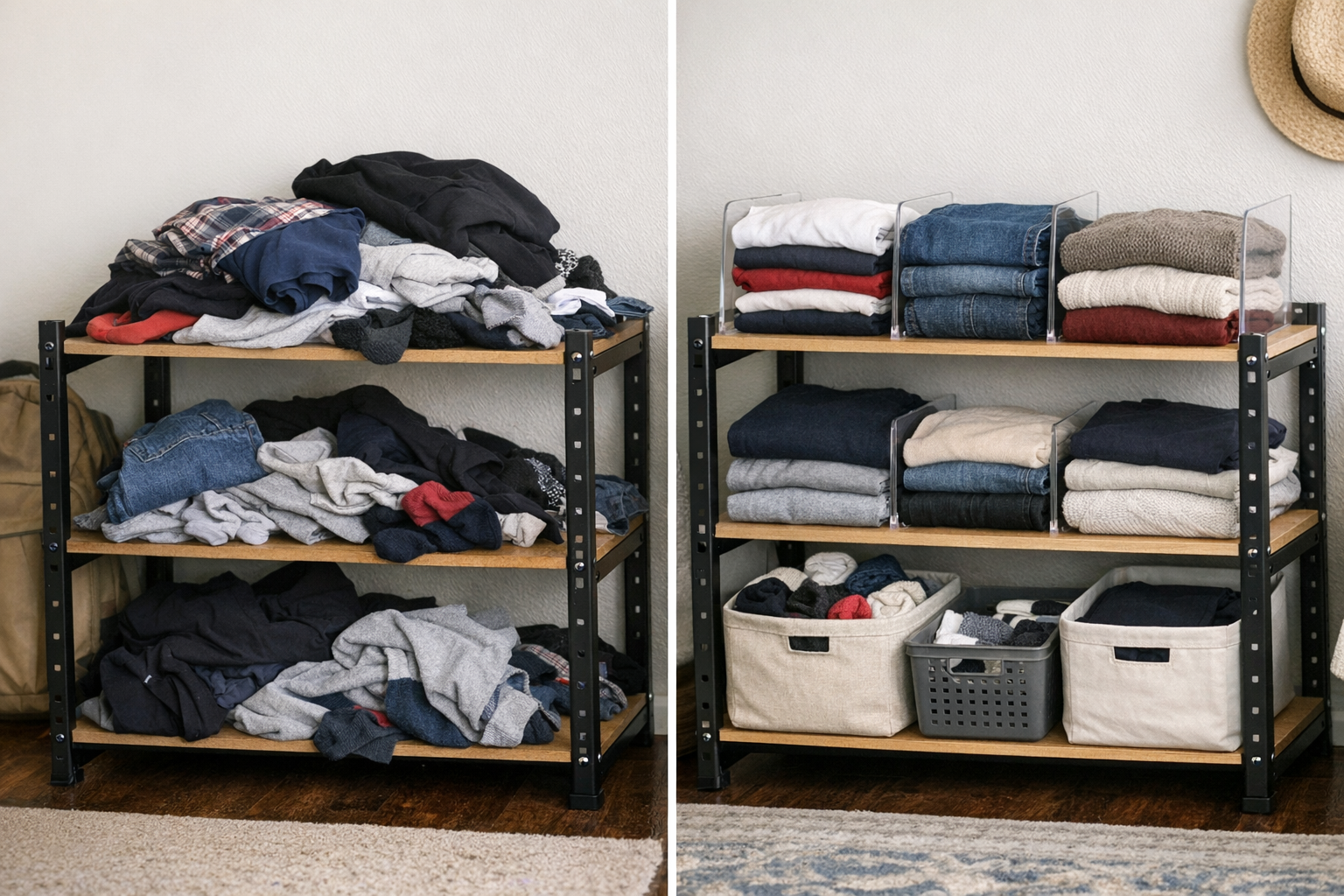
    Real relief starts when every category gets its own guarded space. Shelf dividers, bins, or baskets carve out real boundaries—no more best guesses about where the sweaters end and the jeans begin. Even the simplest divider means grabbing your gym shorts won’t topple your dress shirts. A bin for scarves or belts keeps them from endlessly mixing with gloves or extra socks.

    On a day you’re out of energy, you can toss something back into its “lane” and trust the rest of the shelf won’t follow. Slim dividers keep stacks vertical; bins give even the trickiest items a home. The messy realities of daily living—rushed retrievals, quick toss-backs—don’t undo the entire order. Suddenly, staying sorted doesn’t rely on you being meticulous. Your closet quietly does the steadying for you.

    In the Wild: Where Structure Saves Time

    Think of the utility closet with deep shelves: towels piled next to cleaning supplies, lightbulb boxes perched behind stacks of sheets. Opened up, it looks fine—until two busy weeks go by. You dig for a single rag, and half the towels tumble. You move one bin, and the dryer sheets scatter into the vacuum bag supply. The reset cycle begins again, usually right when you’re already in a rush.

    Add sectioned baskets or adjustable dividers, and the problem changes. Towels stay flanked, rarely shifting. Boxes of supplies each get a contained space, no longer knocked or scattered. You can reach behind one spot without disrupting everything up front. Minutes add up, patience returns, and you actually use what you stored—without re-stacking every few days.

    Small Upgrades, Real Impact

    Upgrading from a bare shelf to a divided system looks like a small move on paper. But the weekly difference is real. One homeowner’s closet went from a wide shelf where shirts and sleepwear merged within days, to tidy, firmed-up sections thanks to a few slender dividers. Reach for pajama pants; the shirts hold position. By Friday, nothing is buried. Visibility stays clear, reach-and-grab is faster, and re-setting the shelf shrinks from a 10-minute job to a simple two-minute fix—sometimes just a single adjustment instead of dozens.

    Not everything needs a rigid home, but dedicated zones dramatically lower the “where did that go?” frustration. Anxiety about tossing and returning vanishes. You’re not fighting entropy; you’ve just made it run uphill.

    The Creep: How Closets Lose Their Boundaries

    The gradual breakdown isn’t always obvious. Maybe your favorite T-shirt migrates, or bin contents blur together until you just give up looking. Suddenly, finding a single item takes a shuffle, a dig, and putting five other things back into place. When a closet lacks prompts—dividers, bins, physical clues—it can’t quietly nudge you. Over time, category walls collapse. Maintained systems stop helping, and everything blends into a daily puzzle of misplaced basics.

    It’s not about perfection. Even a subtle upgrade—one more basket, a divider for stacks—restores some order for weeks, not hours. The system does just enough to keep you from giving up and letting clutter take over.

    Let Your Storage Reflect How You Live

    Organization isn’t one-size-fits-all. Some shelves need big bins for winter gear that rotates out. Others need tight, vertical dividers to keep go-to shirts visible and ready. The trick isn’t buying the fanciest system; it’s what makes routine easier. If you find baskets turn into catchalls by the end of the week, try smaller ones or tweak what goes in. Relentless shirt migration? Insert a divider and reclaim that edge.

    The best systems aren’t flawless—they’re responsive. They notice and adapt to your real habits: frequent grabs, rushed mornings, whatever items always seem to shift around. Sometimes, just shifting a bin or adding a single boundary gives your daily routine a reset that sticks.

    Everyday Tweaks That Actually Help

    1. Give each zone slack—Don’t cram every bin or divided section to the brim. Breathing room makes it possible to add or remove items without the dreaded cascade.

    2. Use see-through or pale dividers—You keep a sightline to what’s inside and avoid the “out of sight, out of mind” problem. Items don’t get overlooked (or lost to a bottomless pile).

    3. Pay attention to ease—If putting something back takes more than a few seconds, friction will wreck your system. A fix should never slow you down; systems that reset quickly survive real life.

    The Quiet Payoff: Less Work, More Clarity

    No closet is immune to chaos, but some setups push the battle off your plate. Shelves with built-in boundaries create daily clarity—without demanding you refold or reshuffle after every use. Suddenly, you’re not organizing by hand; the storage itself holds the line. That’s where small upgrades pay back, again and again: with clearer categories, steadier stacks, less time spent searching, and routines that finally feel less like a test of willpower, and more like a system you can trust—even when life gets messy.

    Explore practical storage systems at ClosetWorks

  • Why Anchored Shelves Outperform Freestanding Units Under Heavy Loads

    No storage setup proves itself on day one. The real test comes weeks later, when your habits clash with the promises of a new system. Whether you’re outfitting a garage wall for the third time, stacking up gear in a narrow laundry nook, or hoping your workshop finally circulates better, the line between an anchored shelf and a freestanding rack doesn’t reveal itself until real routines set in. Both might look perfectly stable when empty, squared off for a quick photo. But as you load and shift, as bins get cycled and heavy gear moves from one season’s project to the next, those differences move from invisible to unavoidable.

    Everyday Annoyances: The Subtle Cost of a Wobbly Rack

    You clean up after a job or return another armload of bulk supplies. It’s nothing dramatic—just a quick trip to the shelf, a bin to restock. And then it hits: that soft flex, the slight forward lean, the fraction of movement that interrupts your natural rhythm. What was a barely-noticeable wobble on day one is now a steady presence, prompting a pause every time you store something heavy overhead.

    It’s the small adjustments that accumulate: bracing with one hand, sliding dusty bins with extra care, keeping your heaviest boxes lower just in case the frame shifts too much. You adapt, re-sort, and build little workarounds—spreading out the weight, using the top shelf mostly for light overflow—but with every workaround, flow gets choppier and the clean order you pictured keeps slipping out of reach.

    Looking Organized, Feeling Blocked

    Unanchored shelves look good in a lineup along the wall. The symmetry is appealing. For a moment, the impression is: “This space is finally under control.” But surface order rarely holds up under real demand. In a shed or workshop, racks that wobble or shudder under load turn from background infrastructure into active obstacles.

    As soon as you’re forced to pull a whole unit away from the wall to hunt for that runaway bolt, the weaknesses become obvious. Dead corners stay awkward, always accumulating what doesn’t fit anywhere else. Tools or materials originally meant to be easy to grab end up shuffled to new spots, just to avoid fighting the flex. Suddenly, you’re rerouting the whole flow of traffic: nudging a cart aside to open a path, reaching around a protruding leg again, stepping out of the way when two racks crowd each other. What looked organized becomes a zone to tiptoe and avoid—resetting after each project instead of working smoothly through them.

    How Small Shifts Snowball

    Here’s the routine you know too well: By the weekend, you’ve stacked three heavy containers on the upper rack. Midweek, you pull one down, feel the frame shift—so you move lighter gear to the top and vow you’ll reorganize “later.” The overflow you need most starts to stack up in an unused corner, out of urgent reach. Meanwhile, the main shelving quietly eats up both floor and wall space without actually streamlining your efforts.

    Even with generous square footage, a poorly anchored or drifting unit pushes the rest of your layout out of sync. You shift a rolling cart for the hundredth time; you squeeze around a shelf that juts out half a foot too far; work zones blur, and what should be open movement starts to feel cramped. Each reset takes longer. Each tool is just a little less accessible. You feel the arrangement working against—not for—your routines.

    Anchoring: The Invisible Upgrade

    Frustration has a breaking point. After one too many near slips, you finally mount the uprights into the wall—just a handful of brackets into the studs. The difference is instant and tangible. That steady background anxiety is gone. The third shelf can take the heaviest box without a twitch; no more hip-bracing or tentative reaches. Each return trip is a true reset: you drop the bin, close the loop, and move on without hesitation.

    This isn’t a quest for showroom perfection—it’s about clearing away friction so your setup steps out of the spotlight and simply works. The reset at the end of the project feels breezy, not exhausting. That corner you used to avoid? Now open for business. The floor and wall space actually serve the flow of work, not just storage for storage’s sake.

    Making Small Fixes That Stick

    Not every space lets you bolt everything to studs, but small improvements count. Anchor brackets at one point, add proper feet, or simply drive a single screw to stop a recurring shift. Don’t just evaluate a shelf when it’s empty: put it through the routines that matter—climb, stack, remove, reload—and watch what happens. Wherever you find yourself bracing, nudging, or working around the shelf, that’s a cue to intervene.

    If a rack needs a quick shift before every access, or always seems to inch away from the wall, don’t resign yourself to that pattern. Rearrange with purpose. Test until you find the point where your movement is unimpeded and every zone—corner, alley, or awkward stretch—actually works the way you intended on setup day.

    The Difference You Feel, Not Just See

    Garages, utility corners, and workspaces don’t need to look perfect—they need to keep pace with your actual habits. Anchoring a single shelf transforms the energy of a whole routine: resets happen on autopilot, fast movements don’t force second guesses, and no space is surrendered to awkward workarounds. Suddenly, storage is background—efficient, unfussy, and always available. That’s not a dream scenario. It’s the quiet difference of a system that’s finally as capable as you are.

    http://stacknest.myshopify.com