Category: Tools & Workshop

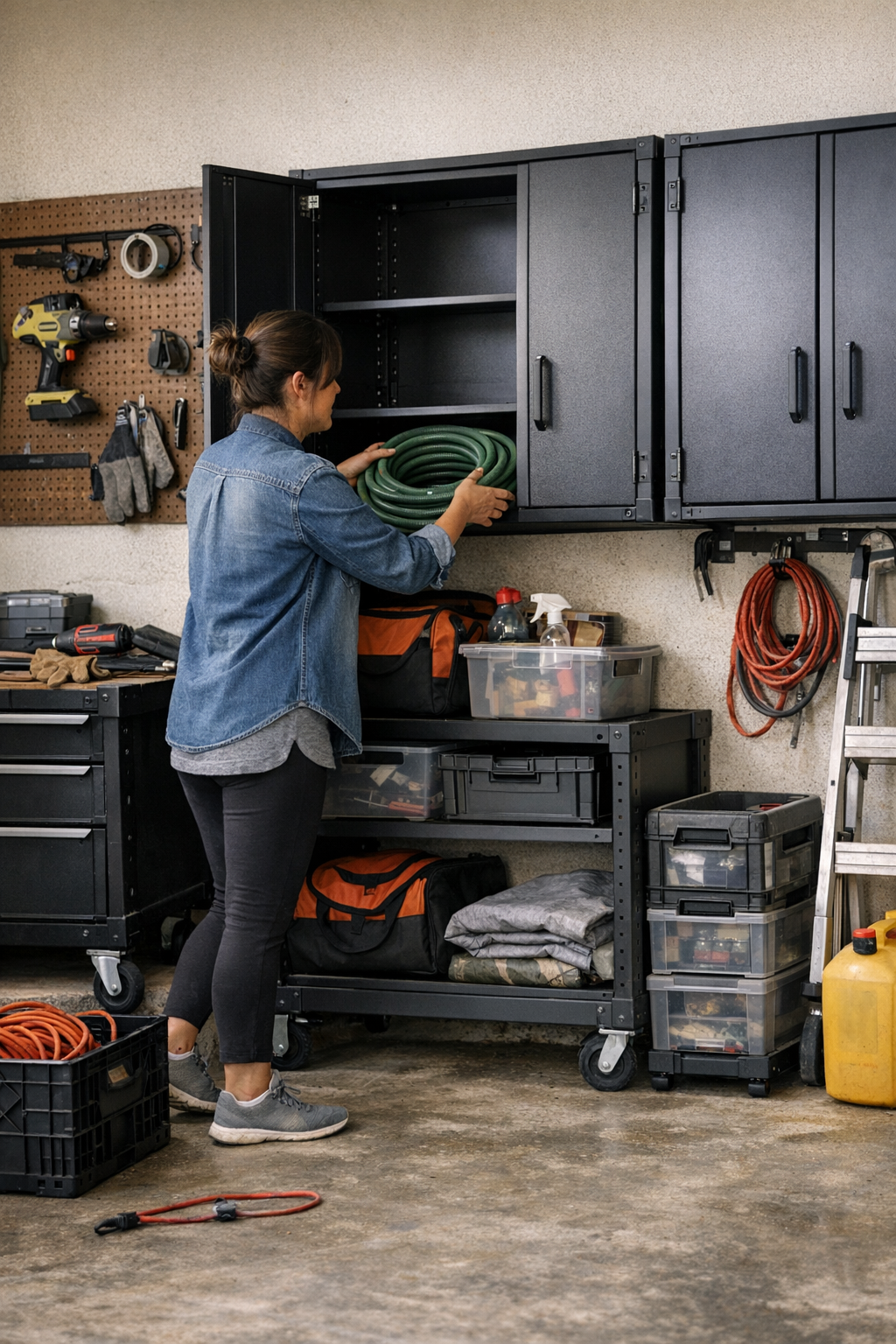
  • Why Leaving Space in Cabinets Boosts Storage Efficiency Over Time

    There’s nothing like the brief high of finishing a garage or workshop overhaul—tools racked, bins labeled, every shelf filled, the whole floor wide open. For a week or two, it looks and feels like a well-oiled machine. But in real, daily use, those picture-perfect setups rarely last. By week three, small frustrations creep in, and the bright promise of a “fit-everything” system starts to dull.

    When “Fits Perfectly” Becomes a Daily Obstacle

    At first, “packed full” feels efficient: cabinets loaded edge-to-edge, wall sections covered in racks, bins nested to squeeze out every bit of air. On move-in day, the logic is clear. But as soon as routines return—hauling out the toolbox mid-week, tucking muddy gear away after a rushed yard clean-up, hunting for a power drill buried behind a season’s worth of other supplies—the tight fit demands a penalty every time.

    Suddenly, each interaction is clumsier. That cabinet you filled to the brim? Now you have to pull out an entire bin just to slide one wrench back in. You find yourself nudging the rolling cart two feet sideways just to swing a cabinet door wide. The spot behind the cart—the one you swore would keep walkways clear—now requires a lurch and a sideways reach to access what you actually need. Corners fill with items that technically “have a place,” but rarely make it all the way back in without a multi-step shuffle.

    Overflow Piles: Where Good Organization Goes to Die

    It’s rarely mess at first—just overflow. Without built-in give, things with no ready slot take over new territory. Last used hose sits coiled by the door, waiting for someone who’ll actually deal with the cramped utility shelf. Extension cords drape across the rolling cart’s handle because there’s no buffer spot left inside. A pair of bypass pruners balance on top of the garden bin “for now” but end up living there all week. None of it is a crisis, but the supposed control is leaking away with every improvisation.

    The toll is slow. Every time you put something away, you have to move something else first. Extra bins, too fat for their cubby, wait permanently in front of closed cabinet doors. The easy path from the workbench to the yard starts collecting gear that doesn’t fit anywhere but also can’t be left outside. The floor is supposed to stay clear, but now it’s a landing strip for whatever didn’t make it back home without a fight.

    Why Backing Off 100% Full Actually Improves Flow

    This is the underappreciated fix that only shows itself with real use: leaving 10–20% of your shelves or cabinet space intentionally empty keeps the rest running smoothly. On paper, it looks like wasted capacity. In reality, it’s what protects your routine.

    That extra gap means you can always return something fast, with no puzzle-solving or back-and-forth. You don’t have to reshuffle three bins just to park one stray mallet. Odd-shaped gear drops right into the cabinet, not onto whatever spot in the garage is convenient and unclaimed. Instead of rate-limiting yourself with brutal efficiency, you give every regular return a place to breathe, keeping overflow bottled up inside the system where it belongs, instead of on your floor or stacked in dead corners.

    Example: The Garage Reset That Actually Worked

    Start with a real scene: a suburban family’s garage, neatly equipped—wall-mount cabinets, tiled flooring, a rolling cart for weekend gardening. The first month? Pristine. But after two weekends of outdoor projects, the cabinet space vanished. Tools and hoses returned but found nowhere open, so they sprawled at the cabinet’s foot; bikes detoured around the clutter. The rolling cart became a junk tray “until we have time to reorganize.” It never looked disastrous. It just made everything—putting away, retrieving, even walking—slightly more annoying. There was no dramatic mess, only a slow drip of friction.

    What really broke the flow? To return a single rake, you had to first shift bins, wedge the door open against the cart, and plan your moves like stacking blocks. The whole system was airtight, and impossible to flex. The floor was meant to be open. Instead, each “return” ended as an unscheduled drop-off on whatever surface was closest to the entrance.

    The Everyday Payoff of Deliberate Underfilling

    The solution wasn’t another full reset—it was carving out emptiness on purpose. By clearing just one shelf per cabinet and resisting the urge to fit every bin, the pattern changed overnight. Suddenly, overflow had a home of its own. That random garden spade? Tossed inside, no reshuffling. Bin to switch out before dinner? Parked, door shut, job done. Movement stayed clean, the floor open, and the once-persistent slowdowns—the domino effect of too-tight storage—stopped dictating how the rest of the space functioned.

    This isn’t minimalism as virtue. It’s about keeping the area truly usable, preventing the daily shuffle, and letting the setup actually serve the chaos of real life—not just look good on move-in day. The difference won’t make a tour photo, but it’s the only way some corners ever stay clear, and some tools ever make it all the way home after a ten-minute rush.

    How to Build the Buffer Into Your Setup

    If you’re planning—or rebuilding—a garage, workbench zone, or muddy gear wall, try giving yourself the permission to keep a shelf only half-used. Accept that some bins will come and go, some days demand more space than tidy plans allow. The benefit shows up not on day one, but on day 45, after you’ve dumped, retrieved, misplaced, and rushed through every corner at least twice.

    The best setups don’t just store things—they move with you, absorb surprises, and make it easy to reset weekday chaos in minutes, not hours. That deliberate buffer is the difference between a space you admire and a space you rely on every single week.

    Find more practical storage solutions and systems at StackNest.
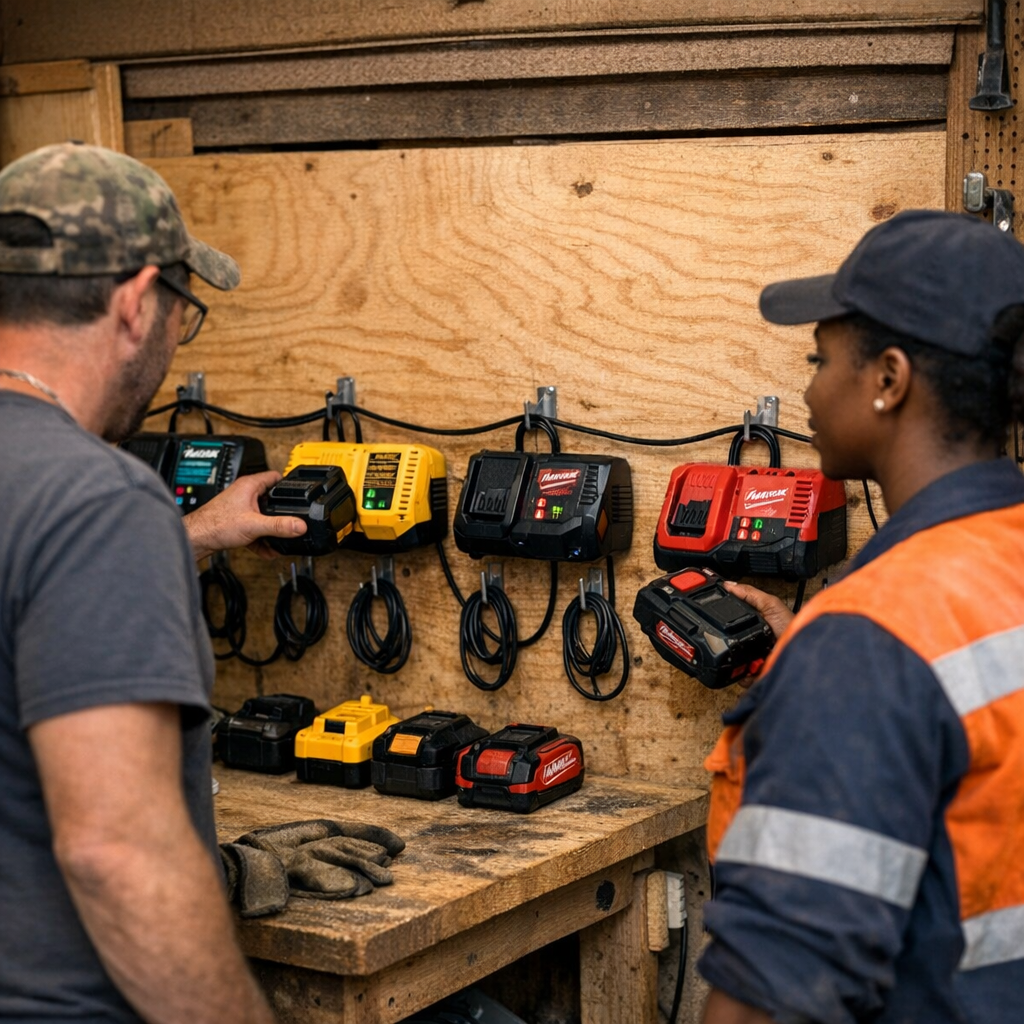
  • How Proper Charger Spacing Prevents Tool Downtime and Battery Damage

    Power tools don’t let you down—until the charger station does. The day starts organized: drills, drivers, and saws lined up and charged. But a couple of hours into real work, the hidden weak point appears. Suddenly, you’re staring at dead packs, tangled cords, and blinking red lights right when you’re lining up for a critical cut or driving that final screw. Productivity nosedives, and minor chaos takes over the bench.

    Where Charging Chaos Creeps In

    Spend an hour on any busy job site—drilling walls, rapid-fire fastening, ripping boards—and you’ll see it unfold. Chargers lined edge-to-edge, cables coiled tight around each other “to save space,” all looks tidy in the quiet stretch before the day heats up. But as soon as the tool cycle speeds up, the setup cracks:

    • Blocked charger vents crowd in, choking off airflow.
    • Cords spaghetti together—no one’s sure which battery belongs where.
    • Quick grabs pull on cords, half-unplugging chargers or yanking plugs just enough to interrupt the charge cycle.

    The downside hits at the worst time: halfway through a plunge cut, a drill bogs down. You reach for another pack—still blinking, still empty. Now, the scramble begins: swapping chargers, guessing which cord goes where, accidentally unplugging the sander for the finisher’s orbital. “Organized” doesn’t mean much once the real-world pace picks up.

    What Happens When the Job Gets Fast

    Crammed charging isn’t just annoying—it grinds workflow to a halt. Imagine a carpentry crew rotating three saws and a brace of drivers, everyone expecting fresh power on every cycle. When chargers cluster or cables loop over each other, it’s not just about looks. It’s about:

    Vent blockage silently overheating chargers—sometimes you don’t notice until the casing is too warm or you smell faint plastic. Over time, batteries lose capacity, tools lose torque, and your blade starts binding halfway through a long sheet of ply. Cables crossed and twisted, flexing behind benches, develop weak spots. Days or weeks later, that hidden kink leaves a battery half-charged right when you need full performance to keep the cut smooth and jam-free.

    It snowballs in the background. Missed charges, intermittent contact, time wasted tracing which cord actually powers the jig saw charger, and more tool changes than necessary only add fatigue for everyone involved.

    The Mark of a Shop That Runs Smooth

    Visit a crew that never stalls for power and you’ll see the quiet difference: chargers set at least 15 cm apart, every cord cleanly routed and visible, cables hooked—not coiled—out of the way. During the rush before lunch or the last push before close, nobody’s guessing which light means “done.” Packs swap in and out without delays, cords untouched except at the plug. The bench stays open for tools, not tangled wiring.

    Contrast that with corners where chargers are mashed together, cables twisted into piles. The consequences show up by mid-afternoon: a driver suddenly weak mid-fastening, a saw dropping RPMs midway through a board, frustration rising as the crew plays musical chairs with whatever packs look green.

    When Small Tweaks Make the Big Difference

    Giving each charger breathing room—just 15 cm—and separating every cord brings order out of chaos. When demand spikes—cutting hardwood, sanding entire runs, drilling frame after frame—chargers stay cool, charging lights stay easy to read, and batteries come off the bench ready for a full shift.

    This isn’t about spotless organization for its own sake. It’s about reducing the hiccups nobody budgets for: thirty seconds wasted here, three minutes lost there, searching for a charged battery or untangling cords. Over a week, that’s hours reclaimed—time your team can put into cleaner cuts, more precise fastening, and finishing strong rather than fighting fatigue brought on by constant tool swaps and surprise dead packs.

    Catch Trouble Early: The Warning Signs

    Small details at the charging station quickly snowball into downtime. A charger that feels a little warm. A cable with a soft spot from being pinched. Ignore these, and you start to see:

    • Flat batteries halfway through routine jobs—forcing unplanned stops.
    • Chargers that slow down, stretching out fill times just when you need speed.
    • An impossible tangle when troubleshooting: was it this plug or that cable? Why’s the finish sander flat again?

    These are early warnings: if you fix them now—before the next push—you avoid the dead air and scrambling for substitutes when the work won’t wait.

    Simple Fixes That Actually Hold Up

    This isn’t about a perfect system. It’s about daily routines that take pressure off everyone using the bench. Spacing out chargers lets heat escape and keeps batteries cycling safely, with no silent capacity drop-off. Assigning every cord a single hook or run keeps problems visible—a nicked cable stands out, ready to be fixed before it turns into a bigger hazard. You spot loose sockets, worn insulation, or odd charger sounds right away. That keeps the team working—not hunting for fixes.

    Whether you’re pushing through a Saturday in the garage or running a tight punch-list on a big site, a few seconds of care at the charging station echo through every cycle, every swap, every smooth finish with fewer pauses and more control.

    Work-Proven Habits for Fewer Headaches

    1. Inspect cables weekly—even if the system looks tidy. Bends, frayed sheaths, or dark marks show damage before it wrecks a charging cycle. Swap out tired cords so you’re not caught with a sudden short in the middle of an important run.

    2. Tag chargers and batteries—especially for rotating crews or busy shops. Colored tape, initials, anything that links packs to a charger and a tool. The benefit shows up when pressure’s on and the right battery is ready at a glance—no guessing, no mis-swaps, no lost time when the job’s moving fast.

    Bottom Line: Charging Station, Stronger Workflow

    A solid tool workflow relies on one thing more than any touchscreen or upgrade: batteries ready when and where you need them. Small layout habits—those 15 cm gaps, dedicated routes for every cable—mean drills finish the run, saws cut clean, and crews aren’t fighting surprise downtime. Your tools deliver every bit of control and power you expect—no stalls, no strings of half-charged swaps—simply because the weakest link isn’t holding everything back.

    http://gumboll.myshopify.com

  • Choosing Between Wire and Solid Shelving for Bedroom Closets That Last

    Step into a freshly installed closet, and everything looks under control—at least for now. Shirts stack into crisp rows, socks and tees fold neatly into place, and whether it’s wire or solid shelving, everything feels visible and simple. But the first week of real use—actual laundry cycles, rushed outfit changes, the half-awake scramble for “just one more sock”—reveals which setup holds its promise. The small, daily inconveniences that sneak in after that initial sense of order are what really decide whether the closet works for you or against you.

    How Tiny Storage Frustrations Multiply

    In those first days, it’s almost impossible to spot the difference. Both wire and solid shelves stand empty of clutter. But the habits that follow—tugging out last-minute undershirts, grabbing a favorite top from the middle of a stack, stuffing pajamas away when you’re late—all push your shelving system beyond its showroom calm.

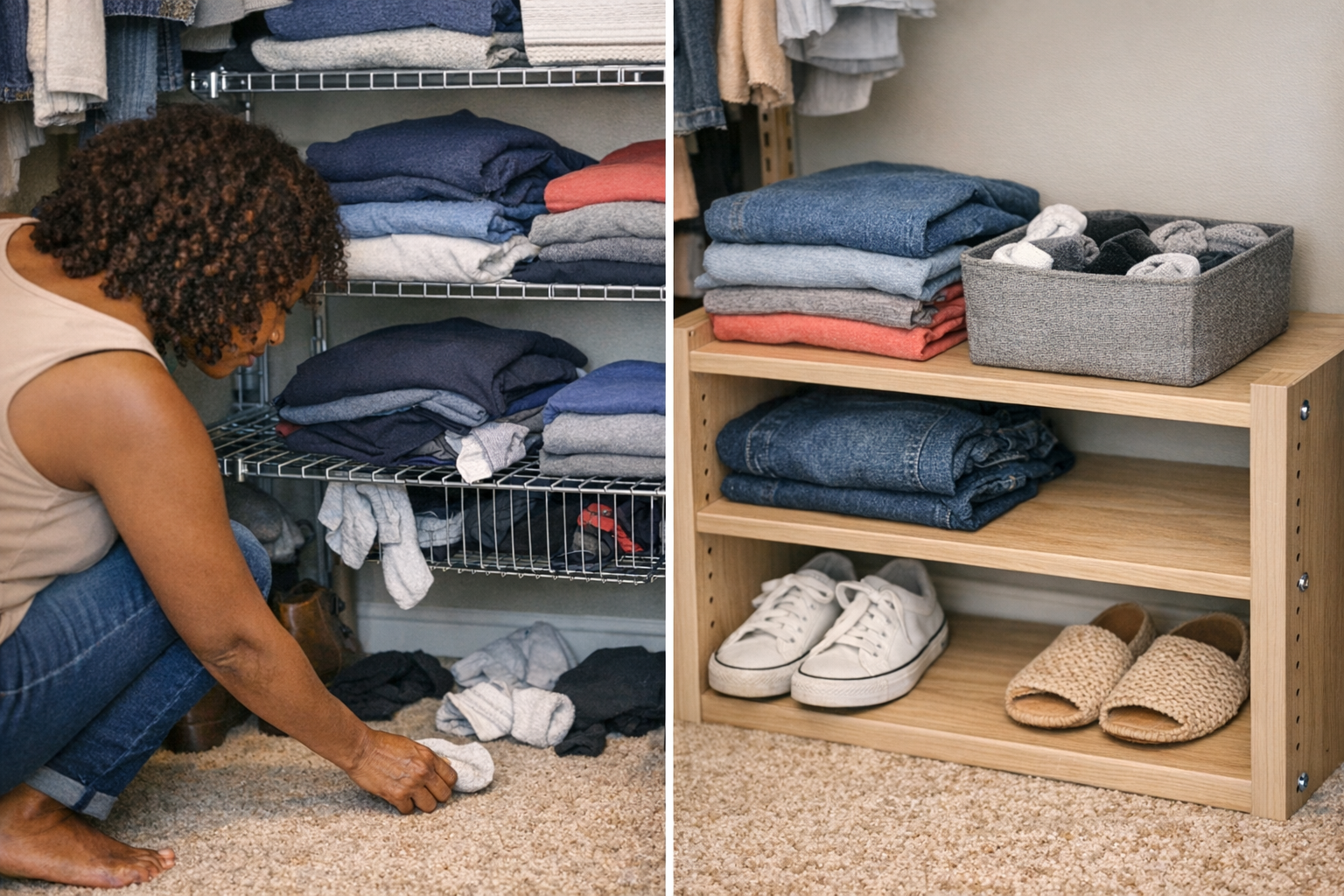
    With wire shelving, these pressures show fast. Socks nudge through the grid, sliding halfway out of sight. T-shirts, especially the soft ones, settle between the wires and make the whole pile slope and sag. The closet still looks organized at a glance, but the process is messier: reaching for one shirt topples the next, while a single sock slips through to hide beneath the lowest shelf. You end up crawling on the floor almost daily—not for a deep clean, but just to recover whatever fell overnight.

    Solid Shelves: Fewer Gaps, But New Trade-Offs

    Switch to solid shelving, and those gaps disappear. Everything from jeans to gym shorts stacks flatter, and grabbing a piece from any part of the pile doesn’t collapse what’s left. Socks and smaller items can’t disappear through the shelf, and you’re spared the routine of fishing fallen clothes out from awkward corners.

    But nobody gets a free ride. Solid shelves collect dust and lint, especially under stacks that barely move week to week. Resetting is less about tracking down wayward clothes, and more about wiping down surfaces—still a minor friction, but one that quietly accumulates if you’re a “fold and forget” type. Yet for most, this is a fair trade: it means the shelf stays reliable, even when you’re rushing through yet another Monday morning reset.

    Where Closet Routines Really Slip

    The test isn’t how organized your closet looks after a deep clean—it’s what happens as life gets busy. By the end of each week, even “perfect” stacks start to slide. Favorite shirts migrate to the front and the rest get buried. In a rush, you pull an item from the bottom—now every fold above slides out of place. On wire shelves, the problem is amplified: thinner socks vanish beneath the grid until you’re left with single strays and half-stacks, and that tidy line you reset on Sunday is scrappy by Friday.

    The cycle repeats every time you dig for something specific: a workout top at the back, a pair of thick socks for winter, a T-shirt buried under sweatshirts. Each grab risks another cascade, another stray, another moment spent putting things back rather than getting dressed.

    Real Scene: Socks and the Extraction Drama

    Picture the speed round before work: you reach for socks stored on wire shelving, and the last pair clings to the grid. As you pull, the pile shifts, a sock falls, and now you’re on the floor again, scanning under the shelf, grasping for what dropped. What should have been a two-second reach becomes a three-step rescue. If your mornings already feel rushed, this minor hassle quietly chips away at your patience.

    Now imagine the swap: On a solid shelf, you reach, lift, and nothing escapes. The rest remain steady, and you’re out the door in half the time. Over a week—the cumulative effect is obvious. If multiple people use the closet or if mornings are a blur, those seconds compound into real time reclaimed, less fluster, fewer rogue socks to puzzle over at night.

    A Simple Fix for Everyday Friction

    Some improvements take minutes to install but save hours over months. Dropping a shallow basket or bin onto a wire shelf instantly stops small items from slipping out of sight. Now socks, underwear, and delicate shirts drop into a defined space, not onto the floor. Your shelves stay visually organized, but the routine—grab and go, pile stays settled—finally matches your real-life habits. Instead of constantly resetting, you reset once, and the system quietly holds.

    Quick tip: If solid shelves aren’t an option, a set of affordable liners or stacking bins can transform wire shelving. Piles stop collapsing, small things stop escaping, and your daily reset becomes quick and predictable instead of a recurring obstacle course.

    Does Your Storage System Actually Work for You?

    Wire and solid shelving aren’t just different materials—each shapes your daily rhythm. The right setup isn’t the one that “looks” perfect on install day. It’s the one that makes your space resilient to repeated grabs, quick reshuffles, and last-minute wardrobe changes—without piling up silent annoyances.

    If you catch yourself constantly tidying, fishing for dropped items, or wondering why the space looks organized but acts like chaos, it’s a sign something needs to shift. Sometimes it’s a matter of swapping shelf types, other times it’s simply adding the right basket or liner. The real payoff: smoother mornings, less disruption, and more time doing anything but reorganizing. One small change can pull your closet back into alignment with the way you actually live.

    Explore the full ClosetWorks collection

  • Why Your Shelves Fail Under Pressure and How to Fix Them

    The first day always feels like a win. Shelves stand proud, bins line up, and the floor finally shows daylight. But by Wednesday, you start seeing the cracks: that sturdy shelf you trusted has a subtle lean, the rolling cart has migrated—again—into your walking path, and the wall rack’s perfectly ordered screwdrivers are wedged oddly as overflow gathers. Look closer and the clean install already feels less like an upgrade and more like a daily negotiation.

    First Impressions Fade—Routine Always Wins

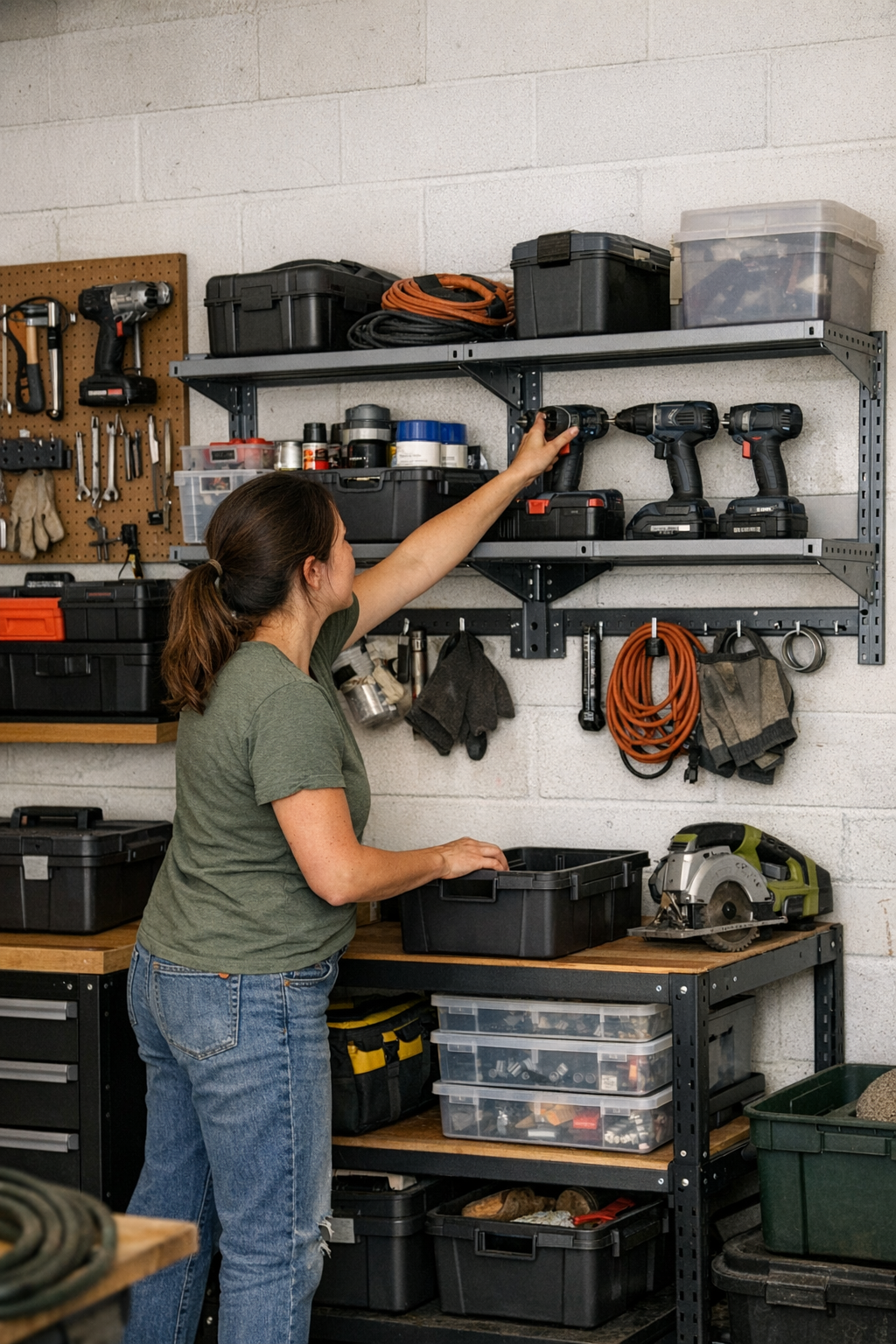
    Any new setup can look organized on day one. It’s what happens on day eight, and day twenty, that matters. Think about the real flow: grabbing a sander mid-project, returning a heavy toolbox after a full afternoon, coiling hoses or cords back onto hooks. If your system resists sagging, wobbling, or collecting piles, you glide through each step. But when a shelf flexes as you return a drill, or you must nudge a cart sideways for the third time that week, you’re feeling the very first signs your setup is falling behind your actual use—and slowing you down without you even realizing it.

    These aren’t just minor annoyances. Over time, every awkward reach, every stutter step around a misplaced bin, is friction against your routine. A setup that looked flawless quickly becomes something you have to manage and work around, rather than one that quietly supports your workflow behind the scenes.

    The Real Test: Looks Organized vs. Works Organized

    Walk into almost any newly arranged workspace and the differences are invisible. Rows are even, levels match. But what you don’t see at a glance is how each system will hold up after dozens of cycles of use. Will those wall shelves stay rigid when loaded—and reloaded—with power tools? Does the utility cart return to a neutral spot, or does it creep until you’re boxed in every night? Does “a place for everything” mean quick access three weeks later, or do you start stacking things wherever they fit just to keep the surface clear?

    A shelf that’s anchored and supported not only looks right—it feels stable no matter what you return to it, no matter how often. You set down a heavy bin and nothing budges. But if the shelf gives even a little, you’ll unconsciously shift items to safer ground, doubling up on a more stable section and leaving the flexing edge to sag further. Over time, those little adjustments break the logic of your original zones—things migrate, corners become dumping grounds, and resets take twice as long because nothing fits back where it began.

    Catching the Real Trouble Spots Early

    The slow creep toward clutter isn’t a dramatic event—it’s small, repeated moments that build up. You notice a single spot collected with tangled extension cords, or a corner bin filling with odds and ends that don’t fit anywhere else. Maybe you wedge the rolling cart in front of a cabinet “just for now,” until it becomes a fixture you work around all week.

    Each of these is a blinking signal. When you stretch to reach a tool blocked by something that never finds a true home, or you find yourself shuffling items on a soft shelf so they don’t tip over again, your setup is fighting your routine instead of shaping it. The system isn’t failing with a bang—it’s leaking time and movement with every cycle.

    How Repeated Use Wears Down Weaknesses

    Fast forward to a busy weekend: you’re cycling between workbench tasks, swapping tools, and restocking parts on the fly. The first hour with a new system feels seamless—everything is where you want it. But as the workload builds, weak spots show themselves. A shelf sags on the end and suddenly drills and tool cases are left in a teetering pile; you hesitate to return them as intended. Instead of resetting by habit, you’re stuck improvising—a little more with each round, until you’re spending as much time managing storage as working on projects.

    That’s the gap between “looks tidy” and “stays functional.” Sometimes, the fix is simple: reinforce a shelf midpoint, re-anchor a wall bracket, or split a zone that overflows too easily. Even a minor adjustment—when aimed at the exact spot that’s tripping you up—can restore the flow enough that resets go fast and the system supports you, not the other way around. The trick is to act before today’s small workaround becomes next month’s constant friction.

    Warning Signs Your Setup Isn’t Really Working

    Is your storage system lagging behind your routine? Watch for these telltale symptoms:

    • One cart or bin always seems in the way, and you’re shifting it every time just to get through.
    • A shelf edge flexes or feels spongey as soon as you put a heavy tool back, making you avoid it for the rest of the day (or week).
    • “Temporary” piles or overflow corners are quietly becoming permanent setup features.
    • Returning items at the end of the day turns into a puzzle—pieces no longer fit, zones blur, and you’re left restacking or settling for wherever there’s room.
    • The wall is covered, but you’re still left searching for real, reliable access—because surface order hides underlying chaos.

    The Reality Check: Pressure-Test Your Setup

    Don’t wait for routine to grind your layout into frustration. Pressure-test it now: load the heaviest things where they belong, shuffle items in and out just as you’d do on your busiest day, park carts where you naturally leave them. Does the whole system keep its shape—no sagging, no accidental bottlenecks, no “junk corners” starting to form? If not, make adjustments: add support, re-space shelves, clearly define each zone, so you reset by instinct, not struggle.

    This is the difference between a setup you live with—and one that actually works as hard as you do. The goal isn’t perfection; small fixes make a world of difference if they let you move, return, and retrieve without friction piling up. The less time you spend managing the setup, the more you get out of every work session.

    Turn Daily Annoyances Into Smoother Flow

    No layout is immune to a little friction, but the right adjustments can reclaim wasted steps. Well-anchored shelves stay reliable under stress. Carts that park out of flow keep pathways clear and returns easy. Distinct wall zones block overflow from bleeding into other areas. Setups that score high on easy reset—where quick, single-motion returns are the norm—don’t just look better. They feel better, every single cycle you go through.

    The real payoff isn’t measured in how neat things look after a big clean, but in how little you think about the storage on your busiest day. Fewer stalls. Smoother movement. Zones that hold. That’s a system performing for real life—a setup that finally matches how you actually use the space, not just how you pictured it the day you installed the shelves.

    http://stacknest.myshopify.com

  • How Simple Storage Habits Prevent Rust on Oscillating Power Tools

    Your multitool is supposed to make jobs faster, not add new headaches. Yet if you’ve ever grabbed yours after weeks in “dry” storage—maybe from the cold garage or the back of a crowded van—then struggled to slot in a blade or felt a stubborn hitch changing a sanding pad, you already know the secret enemy: hidden rust. It’s rarely blatant. First comes a slight drag fitting a new accessory, then a sticky clamp that should snap, now fighting back. Pretty soon, a project that should flow starts leaking minutes and draining your patience. Tool performance fades not in a dramatic breakdown but through tiny setbacks—less speed, sloppier cuts, more fatigue by the hour.

    Why “Dry Enough” Storage Fools You Every Time

    It’s easy to think a cool, dry shelf will shield your kit. But real workshops don’t stick to neat rules. Even bone-dry air lets condensation form on cold steel after a night’s temperature drop. And tool metal loves to hold moisture—maybe sweat from last session’s quick grip, maybe summer humidity that lingers for hours between tasks.

    The problem: you don’t see it until it matters. A paper-thin smear of corrosion on blade seats and clamps saps the “quick change” right out of your multitool. That extra force needed to seat a blade? It isn’t just nuisance—it translates directly to lost accuracy, awkward grip angles, and amplified hand fatigue every session. Sometimes, rust sets in less than a week if dust and sweat ride into storage. The tool looks fine but behaves all wrong when you need real control.

    A Few Extra Seconds Change Everything: Wipe and Oil

    The proof is easiest to spot in side-by-side use. Grab two multitools—one tossed onto the shelf after work, the other wiped and oiled before storage. The first time you swap a fine-tooth blade, the neglected tool seizes up, misaligns, or sends you searching for extra torque just to lock it in. The oiled tool feels instantly different—clamps close with a smooth snap, accessories drop into position, and you don’t burn energy wrestling tiny details on an already tight job.

    Picture trimming a door casing flush against tile: if your blade mount grabs, your line slips or the multitool stalls just as you reach the edge. Or switch to detail sanding for cabinetry: every extra gram of resistance magnifies your error and roughs up your finish. Rust quietly trades away the very precision the multitool was meant for, multiplying correction work later. It isn’t dramatic failure; it’s relentless, creeping friction that chips quality and extends your to-do list.

    Where It Really Hurts: Friction at Every Step

    Resistance isn’t just psychological; it’s measurable. A sticking quick-change slot can chew up bits and blades, untighten mounts mid-use, and push your grip into unsafe wrist contortions. Miss one oiling, and you’ll find every accessory change takes longer, every pad eats more grit, and every failed line means sanding out mistakes you could have avoided. That half-minute fighting a stuck part while a drill or multitool runs at your heels adds up; so does the fatigue from every rougher hand motion forced by hidden corrosion.

    Rust doesn’t limit itself to the showpiece tools, either. Drill chucks start to skip when mounting bits. Changing to a spade bit or countersink means jiggling through resistance instead of a snappy shift. Even adjusting clamping guides—anything with bare steel—becomes effort, especially under jobsite pressure where every second counts and a misaligned bit spells rework.

    Not Just Surface Trouble: How Moisture Lingers

    Sawdust, sweat, and stickiness are stealthy allies of rust. Woodchips from a humid cut, greasy fingerprints after a long install, dust packed into slot corners—every one traps moisture right where rust loves to start. Metal left bare, even after a quick cloth-off, gives corrosion a foothold before you notice a single brown fleck. By the time you feel resistance, blade tips may already be chipped, and accessory fit can drift just enough to force extra sanding or bad cuts, draining both accuracy and tempo.

    If you move between locations—garage, basement shop, jobsite trailer—those temperature swings and bursts of damp air set up fast. One overnight reset, and accessory slots can transform from smooth to sticky before you ever see it coming.

    The Three Second Habit: Quick Oiling, Lasting Results

    There’s no magic: just seconds of real prevention. After the usual dust-off, a light spray or dab of mineral oil on mounts and contact faces throws up a barrier, buying time against moisture. This isn’t fussy maintenance; it’s the difference between days of glide and days of grind. Across real shops, this step can drop the effort needed to seat attachments by half. Clamp force falls, swaps become easy, and by the next session, your multitool responds with the snap and surety you felt the first week you bought it.

    It’s invaluable on big tasks—a full sheet install, a series of switch changes—but the payoff multiplies on small, late-night fixes and awkward angles where lost control means another late return to the shop. A few seconds of oil is simply a form of time-saving insurance that stacks up over project after project.

    Keep It Doable: Oil Where It Counts, When It Counts

    Focus on high-contact parts, not just surfaces. Skip the urge to polish every inch; prioritize slots, clamps, blade seats, and active fasteners. Build it into your post-work rhythm: brush, wipe, a few drops of oil, then close up. If your workspace is prone to condensation—garage, crawlspace, van—treat every use as a potential risk and oil each time. Climatic control, bone-dry air, or a light session? Maybe weekly is enough, but never skip after a sweaty or high-speed job.

    When your tool “just feels off”—hesitation slotting a blade, shaky clamps, a hitch changing bits—a quick check for orange dust and a steel wool touch-up can buy back smooth performance. If you spot true pitting or ragged edges, call it time for replacement; that damage signals control you can’t recover mid-task.

    Break the Friction Cycle—Project by Project

    If smooth operation is fading, don’t just muscle through—look for rust. Slowdowns—wobbly blades, sticky clamps, pads that chew up scratch after scratch—almost always connect back to moisture and a skipped oil. Start cleaning and oiling and you’ll feel the reversal: effortless swaps, tight cuts, more stamina, and control that lasts the whole session.

    Fast-paced shops, cramped garages, corners overflowing with last week’s scraps—they all tempt you to just “store and forget.” But every fix-up later, every repeat job to correct a botched edge, starts with a few seconds neglected when putting the tool away. Oil isn’t about being precious; it’s straight-up practical, and it pays for itself in smoother cuts, faster battery swaps, and less fatigue on every task.

    http://gumboll.myshopify.com

  • How Thoughtful Closet Storage Cuts Clutter and Boosts Daily Efficiency

    When the Closet Looks Right, But Works Against You

    That “after” photo moment—the closet where every shoe is lined up and every basket is tagged—only matters for a snap. The real test comes at 7:15 am, when shoes are missing, bags are buried, and the morning routine leaves fresh piles in its wake. This is where many so-called organized closets actually fail: not in how they look, but in how they get used. The corners start catching overflow, hooks go ignored because they require an awkward reach, and the reset never quite happens. If your closet starts each week picture-perfect but by Thursday feels like a detour and a balancing act, the problem isn’t you—it’s the setup that isn’t designed for the friction of real life.

    Every Extra Step Grows the Mess

    Small obstacles add up fast. The tiniest inconvenience—reaching behind a basket, crouching for shoes stashed beneath a low shelf, sidestepping a bench—sends people into shortcut mode. That means sneakers collect by the door instead of going up on the shelf. Bags slide from hooks to floors. Even a little extra walking or a single blocked spot is enough to derail good intentions. All it takes is one busy evening, and suddenly you’ve got leaning towers of laundry, bins swallowing random odds and ends, and “just this once” clutter that never fully disappears.

    It’s not laziness; it’s human nature. If you have to maneuver around hanging coats, you’ll drop your hat on the nearest surface. If shoe storage is one step too far, shoes start gathering in the hallway. What starts as a small detour quickly multiplies: a few missed spots become a full reset job, not a quick tidy-up. Habits always beat layouts designed for empty spaces, not hectic weekdays.

    Where Organized Closets Actually Break Down

    Pay attention to closets in heavy daily use—a family entryway, a shared coat closet, even an overstuffed guest closet. Friction points show up fast:

    • Reaching behind stacks erodes order quickly. That go-to hoodie somehow ends up behind boxes of rarely used hats, so every retrieval turns into a mini teardown. Within days, neatness turns to chaos—just to get dressed.
    • Bins become black holes. Those deep, pretty baskets near the door start with neat gloves and mail, but soon swallow receipts, headphones, and everything else that doesn’t have a place. Categories blur, and you’re digging instead of grabbing.
    • Folded stacks can’t survive real use. Stiff, straight piles look fine on laundry day but soften and slide into one another after a couple of searches. Instead of a quick reset, you’re restacking shirts and guessing what belongs where.

    Once storage categories lose their clarity, or putting something back means making extra decisions, “organized” becomes another form of hidden clutter. The system’s failing not because it got messy, but because it asks too much in real time.

    Looking Organized ≠ Actually Organized

    Crisp shelving setups, new rods, or matched bins might impress right after install. But run your real routine for a week and see what holds. Are shoes still paired on the rack, or spilling across the hallway again? Do shelves still show open space, or are they a jumble of mittens, hats, and forgotten bags? Good looks can mask underlying friction—because if the closet demands workarounds, the chaos creeps back fast.

    Micro-adjustments can have outsized results. One family’s hallway closet always overflowed with hats and gloves beside the door—until they lowered a shelf just six inches and added a divided bin right at hip level. Suddenly, even the quickest drop-off worked. No more overflow in the hallway—even though nothing looked that different. Some of the best fixes barely change the photo, but completely change how the closet handles normal wear and tear.

    Building Storage for the Way You Actually Use It

    Stop organizing for “someday” and build for right now. The best storage isn’t about perfect labels or everything matching—it’s about making the routine routes friction-free. Everyday grab-and-go items should live at the height you naturally reach, not on an aspirational upper shelf. If kids use the closet, double rods or low baskets mean they can actually put things away themselves, without reminders or an adult swooping in.

    Press pause on the showroom logic and look at your patterns:

    • Main shelves near the door get the most action. If putting boots away means a traffic jam or walking around someone else, expect piles to start creeping past the threshold.
    • Bins are only useful if they match your grab spots. Too big, too deep, or tucked in the back? They’ll become bottomless catch-alls, not tidy categories.
    • Deep shelves tempt you with the promise of extra storage, but the stuff in the back almost always gets lost. That’s when overflow begins: it’s easier to throw new things onto a growing pile than to wrestle with tight corners.

    Map the repeated breakdowns—where items never seem to stay put, or piles keep forming—and you’ll see where the layout fights your habits. The trick is to make it easier to put things away properly than to leave them out “for now.”

    Spot the Early Warning Signs of Clutter

    Storage doesn’t usually collapse in one big disaster. The slow creep is the real threat. Look out for:

    • Needing to unstack or move an item daily just to access something else.
    • Feeling like putting things away means more shuffling than actual organizing—a sign your system is fighting back.
    • Opening a bin and realizing you can’t tell what’s inside anymore—categories vanished, and labels ignored or forgotten.

    These are signals, not shortcomings. Sometimes all it takes is lowering a shelf, adding dividers, or shifting a bin closer to your true drop zone for the space to keep pace with your routines, not the other way around.

    Small Shifts, Real Wins: Tweaks That Actually Last

    You don’t have to gut the closet to make it work better. Start with:

    • Dropping a shelf just enough to add a slim, easy-reach basket—so grab-and-go items always land where you need them most.
    • Adding or moving dividers inside bins to stop category creep, so you don’t have to resort each week.
    • Swapping out unreachable shelves for dual rods or hooks at the height of your youngest user, turning routine storage into an easy, automatic habit.

    The best system is one that keeps its balance even as life gets busier. If clearing up after yourself and others feels faster, steadier, and less frustrating with each passing week, then your closet is working—finally matching the way you actually live, not just the way it looked right after organizing.

    For more solutions designed for real homes and real routines, visit ClosetWorks.

  • Why Digital Tool Tracking Transforms Job Site Efficiency and Cuts Delays

    Misplacing a specialty tool doesn’t just slow a busy jobsite—it throws off the whole day’s rhythm. Picture this: you’re ready to notch a jamb with the oscillating multitool, but it’s missing from the kit. Within minutes, two crew members have abandoned their own tasks to hunt it down. Soon, you’re combing through dusty bins and decoding initials scribbled on a coffee-stained logbook, all while everyone is asking, “Who had it last?” The clock ticks. Frustration builds. Work grinds to a halt over a tool that should have been a 30-second grab. On tight jobs, the problem is never just the missing multitool—it’s the wasted time, lost focus, and the profit quietly draining away, one search at a time.

    Growth Exposes the Cracks in Old Tracking Habits

    When it’s just you and one other, tracking tools might mean jotting names on a scrap of paper or trusting memory. You might even snap a photo of the pile at the end of the day. But bring a third worker, a second shift, or a new trade into the mix and suddenly, tools start vanishing into pockets, trucks, and workbench clutter. The old “I’ll remember who used it last” method collapses fast under real job pressure.

    This isn’t theory—it’s the actual site routine. The oscillating multitool, a right-angle drill, maybe the perfect-size paddle bit: these tools don’t stay in the box. They float between tasks, vanish under insulation, or wind up on the wrong end of the floor. By midweek, tracking down that one multitool is less about being organized and more about running damage control.

    Oscillating Multitools: Critical, Constantly Shared, and Always Getting Lost

    Few tools disappear faster than the multitool. It’s small enough to toss into a pocket, but essential for the awkward cuts—like slicing a baseboard clean after flooring, trimming shims in a tight jamb, or cleaning up a miscut electrical box. By late afternoon, it’s been handed off to three or four people, and nobody knows where it landed next.

    And here’s where the headache expands: mid-task, the finish crew waits because the multitool is missing. Another team stands idle, unable to start until a specific trim cut frees up their workflow. Missing tools don’t just cost time; they create pileups—dead hours, mounting stress, and a resentment that lingers long after the actual tool turns up under a pile of drop cloths.

    Paper Logs and Tracking Apps: Real-World Friction

    Try to solve this with a paper log, and you’ll collect a week’s worth of chicken scratch—duplicate initials, bad handwriting, checked boxes that don’t match the timeline. Someone signed the multitool out at eight, marked it in at four, but at 2:20, someone else needed it and played detective. The logbook tells you everything—except where the tool actually is.

    Switch to a barcode app and you might get a little further. When it works, every tool gets scanned, and you know who had it last—unless the app crashes, WiFi drops, or someone skips scanning because their hands are covered in glue and sawdust. Suddenly, the tech solution is just another blind spot, with missing check-ins and a crew that quietly reverts to the old ways.

    The Last Hour of Friday: Scene From the Real

    Picture the sprint before the weekend: one crew finishes outlets while another preps baseboards. Both claim they “just dropped the multitool off.” You check the log—same initials twice, crossed-out times, half-filled checkout slots. The tool’s gone, the schedule slips, and nobody trusts the process. What’s really lost is trust: in the record, in each other, in finishing the week strong instead of scrambling.

    Digital Tracking Fixes Churn—Not Human Nature

    Moving to barcode tracking and check-in apps doesn’t fix the human mess, but it brings actual order to the chaos. Now, every high-turnover tool gets its barcode. Instead of spending half an hour tracing who “probably had it,” you follow the scan trail. The difference isn’t full reliability—it’s how quickly you spot gaps and move on. Instead of four tool hunts a week, maybe it’s once—ten minutes, not forty.

    Tech fails too: phones die, scans get skipped, the app clogs up. But here’s where it’s an upgrade—the errors become obvious. You see missed scans, not blank guesswork. Resetting the trail takes minutes, not tedious debate. The lost momentum shrinks, and everyone can get back to cutting, drilling, or wrapping up a punch list instead of playing tool bingo.

    Are You Losing Time—or Just Losing Tools?

    Ask yourself: if you’re routinely sidelined for twenty minutes, circling the van or double-checking bags for a multitool, or if your logbooks show more edits than clean lines, the tracking system isn’t holding up. Most break down the same way—not enough buy-in, too much friction, or a process so clunky it gets skipped the minute the site moves into “production mode.” The goal isn’t a flawless log. It’s trust at work speed: fast, obvious, and hard to ignore.

    The System Gets Tested When Everything Gets Tight

    Tool tracking doesn’t matter when things are quiet; it matters when time gets short, scopes change, or crews overlap in a final push. It’s in these high-pressure windows—where every minute counts and every missing tool messes up sequencing—that you separate a reliable tracking method from a wishful one. Fast trace equals fast recovery. Steady, scan-based tracking means less blame, smoother handoffs, and a team that can actually focus on making sharp cuts, clean holes, and crisp finishes—without the background jitters that come with endless searching.

    What Changes On Site: Tangible Relief, Not Perfection

    Solid tool tracking isn’t about turning the jobsite into a showroom. It’s about daily wins—shaving ten minutes here, twenty there, keeping focus on the actual craft: dialing in flush cuts, swapping blades before burnout, drilling clean holes on the first pass, or swapping batteries before you run dry. Those small savings shift the mood and the profits. And everyone gets to leave a little less fried at day’s end, knowing the tools are more likely where they should be, ready for tomorrow’s mess.

    For more practical jobsite gear and no-nonsense tool setups, visit Gumboll.

  • Why Task-Based Storage Transforms Daily Routines and Reduces Clutter

    When “Organized” Still Means a Morning Scramble

    It’s easy to believe your storage system is working—neat stacks, bins labeled by category, everything tucked away with military precision. But walk into that same closet or mudroom on any Wednesday morning and it’s a different story. Shoes drift from their shelf, hats mix with scarves, and the jacket you need is squeezed behind three other coats. Instead of simple grab-and-go, you’re sliding bins, unstacking baskets, and backtracking just to find what you use every day.

    That visual order? It fades fast when routines get real. You’re not just fighting mess, but the slow breakdown where every step—digging, reshuffling, searching—turns “organized” into another layer of daily hassle. The system looks good; it just doesn’t keep up.

    Where “A Place for Everything” Gets in Your Way

    Picture the entry closet after four days of normal use. Shoes on the bottom shelf, bags on top, coats lined up—until real-life rush sets in. Kids dart through, dropping a single boot under the coats or tossing today’s gym bag onto yesterday’s hats. You reach for one lunchbox and unsettle a whole pile. By Friday, every shelf is a mix: an umbrella wedged between sneakers, hats crushed under backpacks, and a floor in open rebellion.

    This is how friction builds up: bins that start out single-purpose slowly swallow castoffs; folded stacks lean and collapse as you paw through for a missing glove; shelves fill because nothing ever quite gets returned to its precise spot. The system expects you to remember the plan—while your routine just wants things fast and within reach.

    From Category Chaos to Task-Based Flow

    Task-based storage flips the logic: instead of “what category does this belong to?” it asks “what do I need for this routine?” No more trekking from shoe zone to bag shelf to hook; now, each person or daily job gets a mini-station—bin, cubby, hooks—all in one spot, all at the right height.

    The difference is immediate. Kids stop hunting and start grabbing. You stop doubling back for the thing you forgot. The entryway becomes a hallway, not an obstacle course.

    The Mudroom, Unscripted: What Happens During Rush Hour

    Think of the critical minutes before school or work. Shoes go flying, someone’s missing a glove, the lunch bag is out of sight. In a category-based setup, everyone’s scrambling—shuffling stacks, sidestepping piles, juggling two bins just to get one thing. The floor’s a catch-all, parents circle back to stuff things into their proper home—until next time.

    Switch to task-based, and each child (or adult) has a single station: backpack, jacket, shoes, water bottle—all together, all easy to put away. The reset at the end of the day shrinks to minutes. Gear is contained, the floor stays clear, and nothing disappears mid-routine. It’s not magic, it’s a system that works the same way you do.

    How Storage Actually Improves—And Where It Won’t

    The biggest difference isn’t just less clutter—it’s less movement. No more ping-ponging between corners, no digging behind towers of other people’s stuff. Essentials are collected by routine and returned in one stop. Resetting the space is faster, even with kids. The usual spread—shoes out of place, hats on the floor—becomes occasional interruption, not a chronic condition.

    Daily wins you’ll notice:

    • Shelves and bins stop turning into random catch-alls—there’s less item migration, so clutter slows down.
    • Folded stacks and cubbies keep their shape because you’re not reaching underneath or sorting through unrelated things.
    • Vertical space gets used with intent—hooks at the right height, low bins for grab-and-stash, high shelves reserved for what you rarely touch.
    • Cleanup isn’t a project; it’s a quick pass, especially after heavy use midweek.

    It’s not flawless. Task-based zones can look uneven, and the boundaries are never perfect. But an imperfect match to your real habits beats a perfect layout that’s impossible to keep up with.

    When Category Systems Still Make Sense—and Where They Unravel

    Some gear just isn’t daily—think party shoes or holiday scarves. Those belong in clear, out-of-the-way category groups. The trouble starts when that logic creeps into your everyday lanes. One big glove bin in mouth-of-the-mudroom territory? Suddenly, you’re rifling through Lost & Found at 8 AM. When routines run together and categories merge, it just makes the reset harder and the floor messier.

    Set the system by use, not just by type. Remove bottlenecks. High-urgency, high-frequency items need their own “fast track” stations.

    Quick Upgrades for Flexible Storage

    For any space that gets constant traffic, draw hard lines for daily routines: one bin per person, labeled hooks, low cubbies for shoes you actually wear. If stray items keep piling up, the solution isn’t always more sorting—it’s more defined, bite-sized zones. Make it just as easy to put things back as it is to dump them.

    One easy improvement: If you notice one shelf turns chaotic every few days, break it into smaller task-specific baskets. Even two is better than one. Sort by how you move through mornings, not just by what you own.

    Storage That Withstands Real Life

    The win isn’t a picture-perfect reset. It’s what happens after five days of normal mess—when you can still find your gear, the routine flows, and cleanup doesn’t fill an afternoon. Does your system clear the path after a long week, or just send you on another hunt? The better your storage mirrors how you actually live, the longer it lasts (and the saner your mornings feel).

    The test is motion, not stillness. If your setup keeps pace—handling rushes, drops, and late returns—order stays visible, and you spend a lot less time fighting your own closet.

    For more practical storage ideas that fit real routines, visit ClosetWorks.

  • Why Stability Outweighs Extra Tiers in Modular Shelving Units

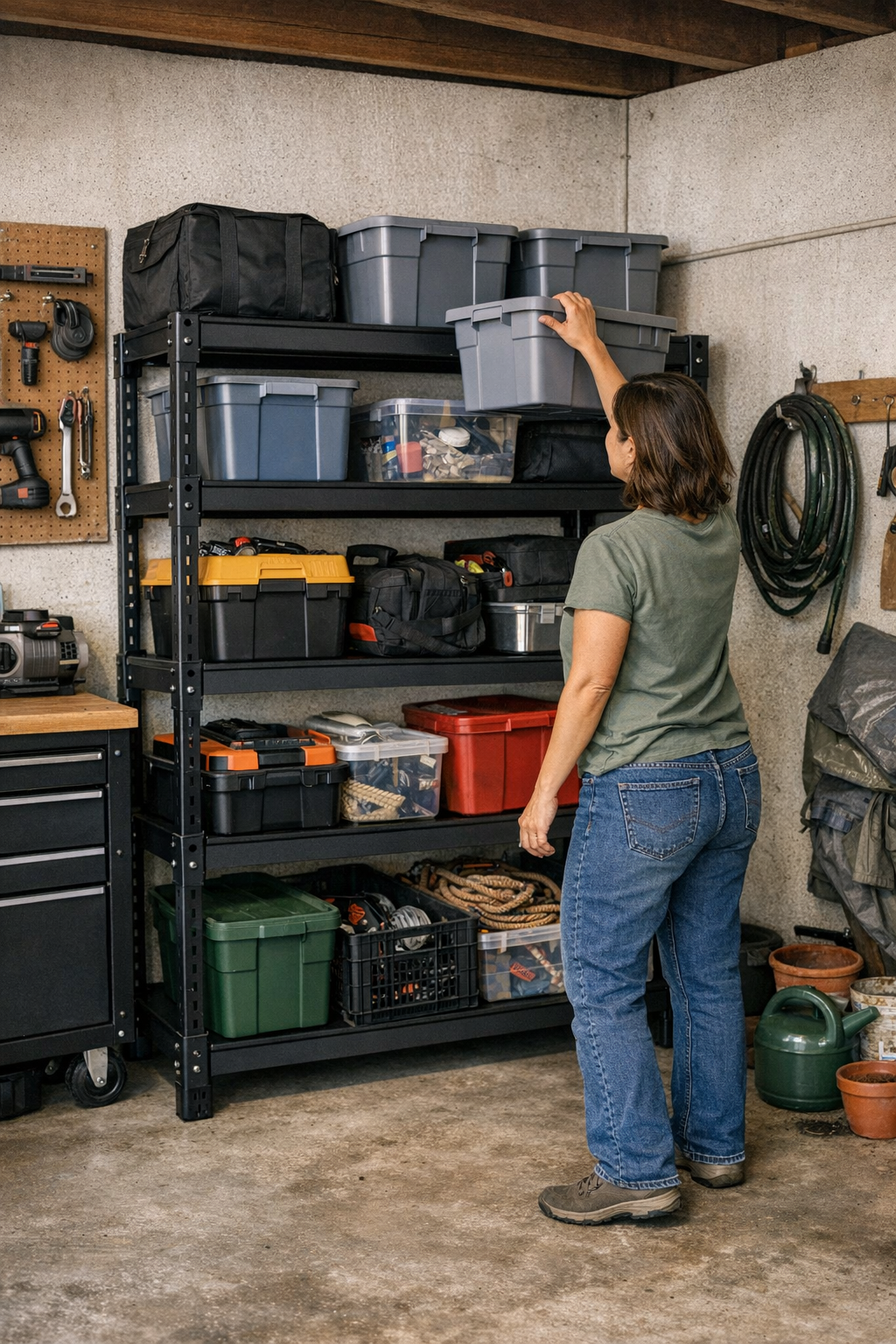
    The allure of modular floor-based shelving in a garage or workshop is immediate and unmistakable: everything finally lifted off the concrete, bins crisply stacked, and storage climbing vertically to reclaim lost space. On day one, a freshly assembled multi-tier unit promises to solve the chaos. But it doesn’t take long for these shelves to reveal their real impact—especially when every project, tool swap, or seasonal bin return tests their place in your daily flow. The “extra storage” starts to demand its own attention: sidestepping a blocked path to the corner, steadying a wobble with one hand while groping for a storage tote with the other, reshuffling bins just to reach a single item. What looked streamlined now quietly interrupts the rhythm of real work.

    Stacked High—And Suddenly in the Way

    Setting up a five-tier shelving unit feels optimistic—the empty floor, visible boxes, every inch seemingly put to work. But the real verdict arrives not at assembly, but in ongoing use. Grabbing tools mid-task, returning heavy bins after a long weekend, or just trying to squeeze a rolling cart through becomes a low-stakes obstacle course. The higher the shelf, the more it flexes under awkward loads or shifts if your floor is even slightly out of true. Small imbalances multiply: you start bracing each reach, nudging a shelf after a bin slips into place, feeling just enough motion to hesitate. Tidy placement morphs into an ongoing act of balance—in both sense and practice. And as frames begin to rock or shelves sag under uneven weight, you’re forced to slow down, sidestep, and hope the setup holds.

    When “Organized” Turns Into an Obstacle

    Fast-forward a few weeks. The bins on the bottom shelves now handle most of the action; they’re fastest to grab, easiest to return. The top tiers? Slowly abandoned to awkward, seasonal, or just-for-now overflow. Suddenly, those upper shelves aren’t practical—they’re a test of caution. You climb a stepstool, steady the edge, carefully juggle items around a sagging panel. That parked work cart you set next to the shelf? You now maneuver it every time you want into a corner. Movement narrows. Each return of a bin becomes a mini puzzle, shuffling from one spot to another, just to land everything securely. Instead of cutting through tasks, you’re managing the shelving—and new piles start appearing on the floor “until later.” The illusion of order drifts; the footprint keeps expanding as walkways and dead corners gather the spillover.

    How Instability Sneaks In—and Stays

    Instability rarely announces itself all at once. It seeps in: a wobble after a hurried reach, a flexing shelf when unloading something heavy, a spot on the upper right you avoid unless absolutely necessary. That formerly tight edge, now skipped because the entire frame shifts with the lightest touch. These aren’t isolated quirks; they’re warning signs that the system isn’t holding up to the real routine. If you find yourself adjusting movements, avoiding certain spots, or thinking twice before using top tiers, the shelving is actively subtracting from your space’s function—bit by bit, every day.

    The intended gains—clear floors, open wall space—get clawed back as overflow bins land on the ground again, traffic paths choke up, and you end up shifting things around just to access what you need. Sometimes it even spreads: nearby shelving gets cluttered as you return things on autopilot, or a once-clear wall starts stacking up with temporarily homeless items. Instead of taming mess, the shelving becomes a new source of sprawl.

    The Real Upgrade: Stability Over Sheer Height

    The real turning point comes when stability—not just capacity—takes priority. In one clutter-prone workshop, removing the top tier from a towering unit (and reinforcing the rest) didn’t just lower the profile; it changed the entire experience. Suddenly, every reach was direct and confident—no more balancing a bin by the tips of your fingers, no more slow placements to keep the frame still. Paths stayed open. You stopped parking the utility cart in odd spots to avoid blocked corners. Instead of endlessly resetting wobbly shelves, you could return tools and storage in one fluid motion. Overflow no longer piled up on the floor because returning items felt reliable and fast. The shelf footprint finally matched the work routine—not just the available wall height.

    A stable setup isn’t just about staying upright—it shapes every movement. With wobble and sway eliminated, resets became quick, bins settled on the first try, and that “organized” look finally translated into a workspace that stayed clear between projects. You used the shelving because it worked—not just because it was there.

    Smarter Modular Shelving—How to Make It Actually Work

    Track Real Movements—Not Just Storage Capacity

    Notice how often you brace a shelf, sidestep bins on the floor, or avoid upper tiers altogether. Every moment spent steadying, rehousing, or doubling back means the system is adding friction, not removing it. Over time, those little adjustments rob you of valuable space—and compound the original clutter issue.

    Cap Height, Reinforce the Frame

    Don’t default to maximizing vertical space just because you can. A well-reinforced four-tier unit outperforms any unsteady five-tier stack in a real, frequently used area. Reinforce the joints, anchor if possible, and stop adding levels when reach and stability dip below everyday comfort. That discipline pays off in every future project—returns are quicker, nothing sways, and storage stays where it belongs.

    Respect Walking Lines and Return Paths

    If shelving forces you to shuffle carts, squeeze through corners, or dodge “temporary” bins on the ground, pause and rethink the setup. Reclaim those walkways by shifting units a few inches or adjusting orientation—open, clear paths mean your storage layout supports your routine instead of boxing it in. Watch for those overlooked corners and wall edges that quietly gather overflow: they’re signals that current shelving isn’t fitting actual use.

    Full Shelves vs. Functional Space: Don’t Confuse the Two

    An overpacked, sky-high shelving system can turn into daily resistance if the frame can’t shrug off real, repeated use. The extra capacity starts out invisible, but it steals back time and energy, one slow reset at a time. Clogged movement, yet another reshuffle just to grab one tool, or that growing pile in front of the shelves—it’s all evidence that looking organized isn’t the same as working smoothly.

    A strong, slightly shorter shelving unit doesn’t just “fit” the wall—it opens up the room to function. With true stability, you regain floor paths, cut out repeated shifting, and reclaim both time and space. The rest of your gear finally has a clear, permanent home—and your workshop or garage actually keeps pace with what you do, not just how you want it to look.

    Find practical modular shelving and storage options that work for real spaces at StackNest.

  • Avoiding Deep Discharge to Maintain Air Cleaning Tool Performance

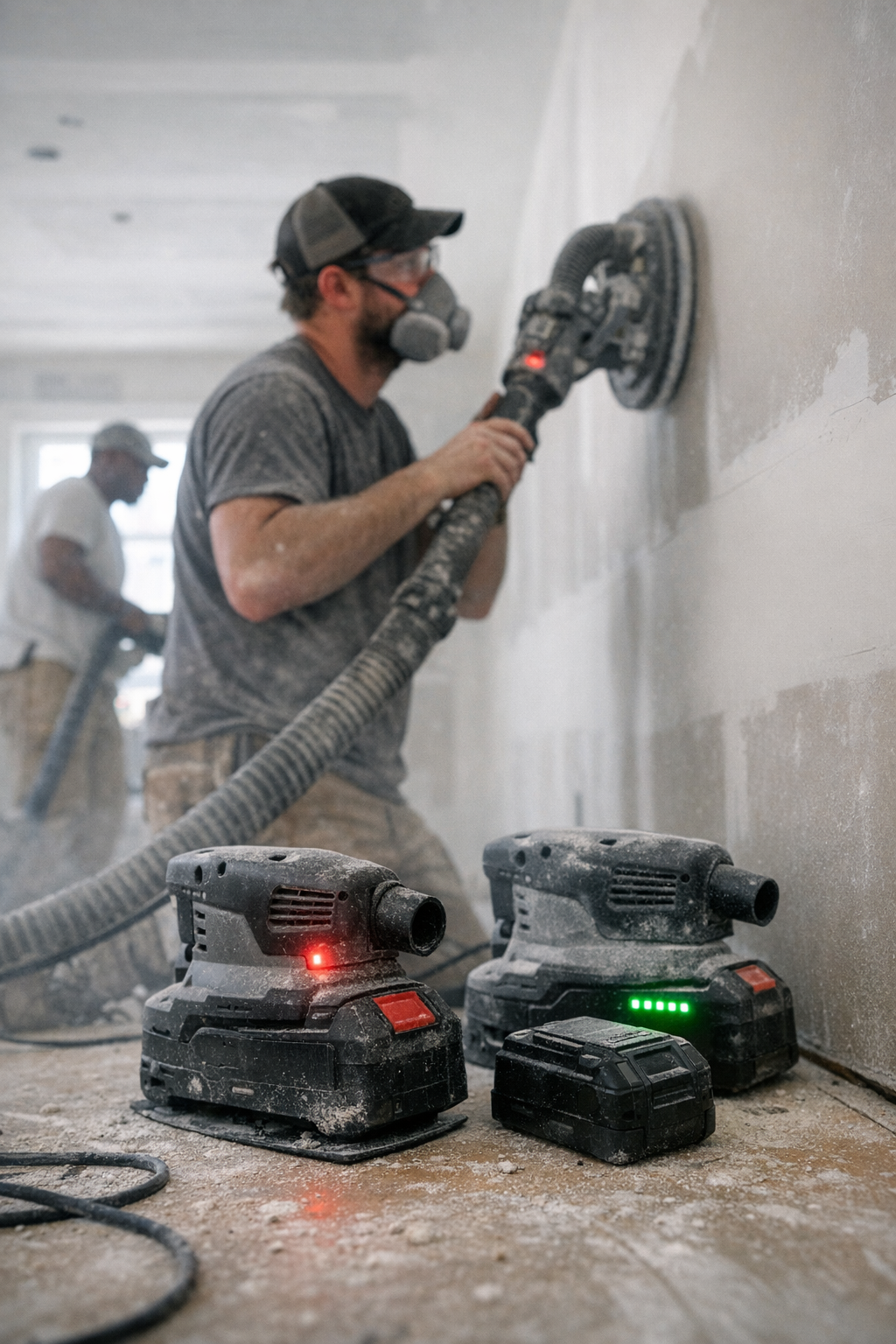
    You don’t see battery fatigue coming—not when your workshop vacuum still screams at full strength or your air scrubber is kicking up fresh airflow with the first pass. The reality sets in much later: behind the whirr and the clean panels, it’s the battery that gets chewed up job after job, shift after shift. By the time you’re halfway through a messy drywall tear-out or mid-sanding run—with dust swirling and tools in constant motion—the small habits around battery swaps end up deciding whether your tools finish the day as strong as they started, or slowly grind themselves down until you’re left chasing lackluster results. It isn’t just shine that fades. It’s performance, and it’s reliability—right at the moment you can’t afford tool drift or missed debris.

    Draining to Empty Always Feels Convenient—But the Downside Adds Up

    Every worker knows the temptation: why stop early when that orange LED hasn’t started flashing? Squeeze out the last pass, let the tool run until auto cut-off, then swap batteries and move on. In theory, you’re stretching every cent of charge. In practice, each full drain chips away at your tool’s backbone. The signs don’t scream for attention. One day, a shop vac that used to yank dust clean in a single pull now takes two, then three. On a long fastening streak or a stubborn drilling sequence, the motor’s pitch changes—not louder, just thinner. Recharge time ticks upward, and the battery simply won’t rebound like it did last month. And you don’t see the difference until you’re five cycles deep into a real job week, where shortcuts show up as missed patches and slowdowns everywhere else.

    When the Work Gets Long, Weak Batteries Work Against You

    The real cost is clearest on tough, drawn-out jobs: after hours sanding out seams, when drywall residue is caked on every joint, or you’ve been carving out cut after cut and the grit is embedded in everything you touch. That first battery still feels strong—until you reach the last stretch. Now, your cleaner isn’t quite reaching into corners. The air’s moving, but somehow each pass pulls up less, and you’re double-backing over what should have been finished. Every extra minute you spend repeating a pass, every sweep that misses fine dust, you trace back to a battery that wasn’t built for this level of daily deep discharge.

    Letting your cleaner or drill push all the way to shut-off doesn’t just mess with your end-of-day results—it wears the battery harder, and the tool starts running underpowered right when finish quality and control matter most. Instead of one clean, precise pass, you’re stuck cleaning up after the tool, which always means more fatigue in your arms, slower changeouts, and that constant itch that you could have done it faster.

    Identical Tools, Different Outcomes—What Sets Them Apart?

    Imagine two teams sanding panels side by side. Both start with the same make and model of air cleaner, same voltage, and the batteries are fresh from the charger. Five cycles in, one team is still making easy, single passes—sharp airflow, suction that clears every groove, no lag. The other? Their machine is dragging, motor straining to keep up, lower panels left dusty. No difference in skill or machine model—it’s just that one battery has been cycled to dead too often.

    The difference is subtle at first—maybe a slight struggle to clear corners, maybe an odd drop in suction halfway through. But push through a busy week, and by Friday one crew has their results on the first pass while the other dreads the slowdown, swapping batteries mid-way, sometimes skipping finer cleanups just to stay on schedule. The output gap widens: one team trusts in a predictable, fully ready tool; the other compensates every day for a battery that’s lost its edge.

    Simple Habit Shifts That Add Years to Tool Life

    The smallest shift? You swap batteries at the first hint of fading muscle—when suction eases up, motor pitch drops, or airflow feels even slightly “off.” In a real shop, that might be an hour and a half in, just as you sense the edge going dull, well ahead of the shutoff click. The key: don’t wait for a dead stop.

    This isn’t about being hyper–cautious. It’s about using your senses—listening for strained sounds, watching for the tool to hesitate on a dense seam, or noticing extra effort required for what used to be routine. When you pull the battery pre-emptively and pop in a fresh one, you keep the tool in its “sweet spot.” Performance stays steady: one-pass suction, consistent drilling torque, repeatable power for clean cuts. No doubling back. No saggy runs. No burn in your arms from fighting a tired tool.

    Missing Signals Means More Work—And More Fatigue

    If you ignore what your hands and ears are telling you—holding out for that final blink or power dip—every shift gets just a little bit longer. Recharge lags, batteries fail to hold their charge through the next cycle, and your tool’s responsiveness drops. By the end of a busy week, what started as a small shortcut adds up: tool control gets sloppy, there’s more bending and backtracking, and simple jobs drag out while the tool loses steam at the worst possible moment.

    Practical Battery Management for Real Job Sites

    Look for signals, not just failures. If you notice even a small shift in airflow strength, new mechanical noises, or you find yourself re-sweeping the same stretch, treat that as your cue to swap. Integrate battery changes into your workflow—when you pause for lunch, when switching between sanding and drilling, or at the end of a big batch, not after your tool dies in your hands. It keeps both batteries at moderate cycles, and all your passes stay tight and controlled.

    This applies straight across the board—whether you’re cutting baseboards, running a dozen fasteners in quick succession, or just keeping a home workshop clean after a weekend project. Battery management isn’t about perfection or pampering. It’s about finishing strong every day, with less time lost to surprise malfunctions or faded-out runs.

    Steady Power, Smoother Flow—Why It Matters When You’re Tired

    You know the unique drain after you’ve redone a row of screws or skimmed the same floor twice because the power just wasn’t there. It isn’t just a few extra minutes lost. It’s the compounding fatigue—shoulders and back wearing down as you repeat slow, underpowered passes. Keeping batteries out of deep discharge cycles protects not just tool performance, but your rhythm on the job. The output stays level. You’re not fighting with your equipment. You’re focused on the cut, the cleanup, the next panel—work moves the way it should.

    This isn’t about protecting battery life for its own sake. It’s about less grinding, more control, and tools that respond like they did on day one—even after dozens of rough, real-world jobs. That’s what turns a decent shift into a productive day and spares you from endless reruns purely because your battery bowed out long before your job was done.

    http://gumboll.myshopify.com