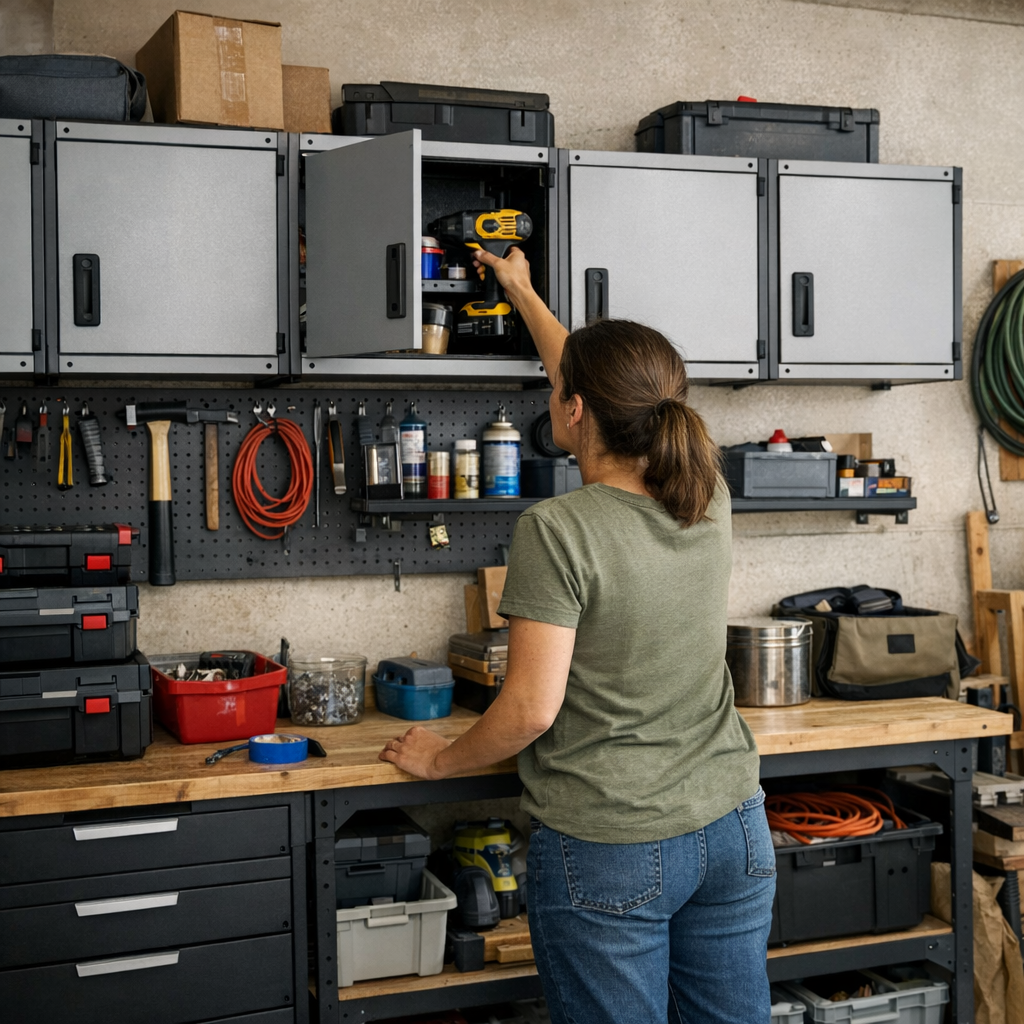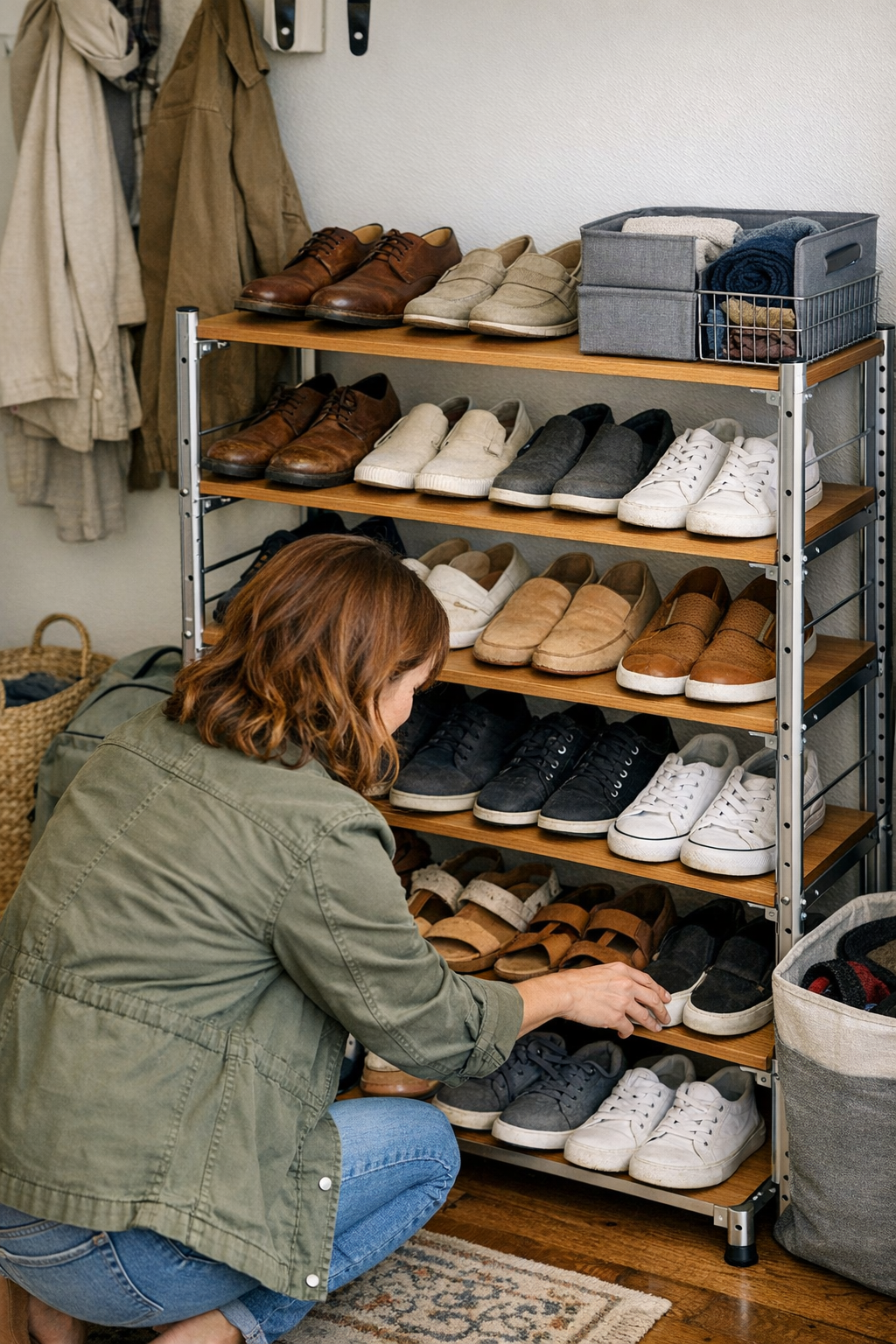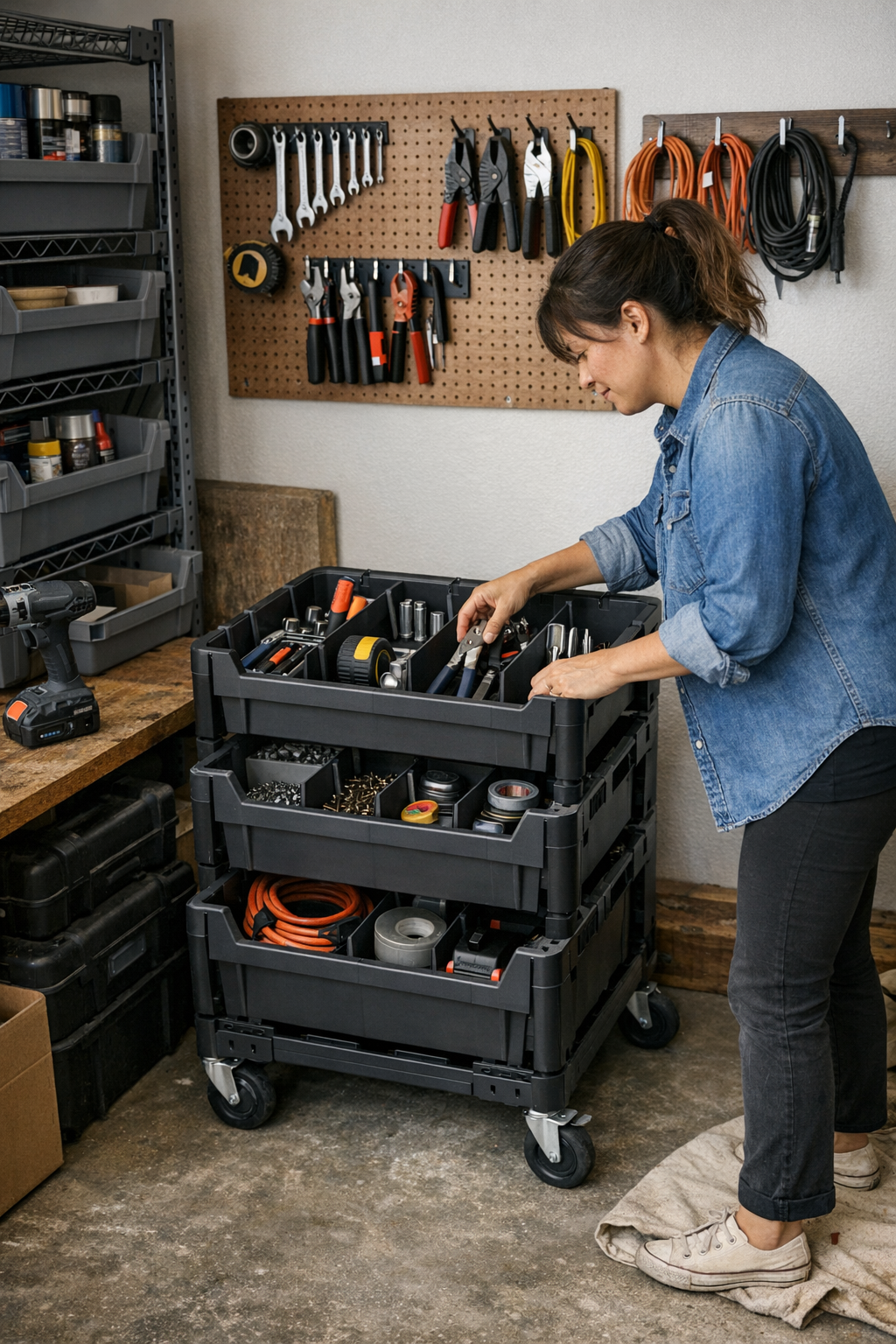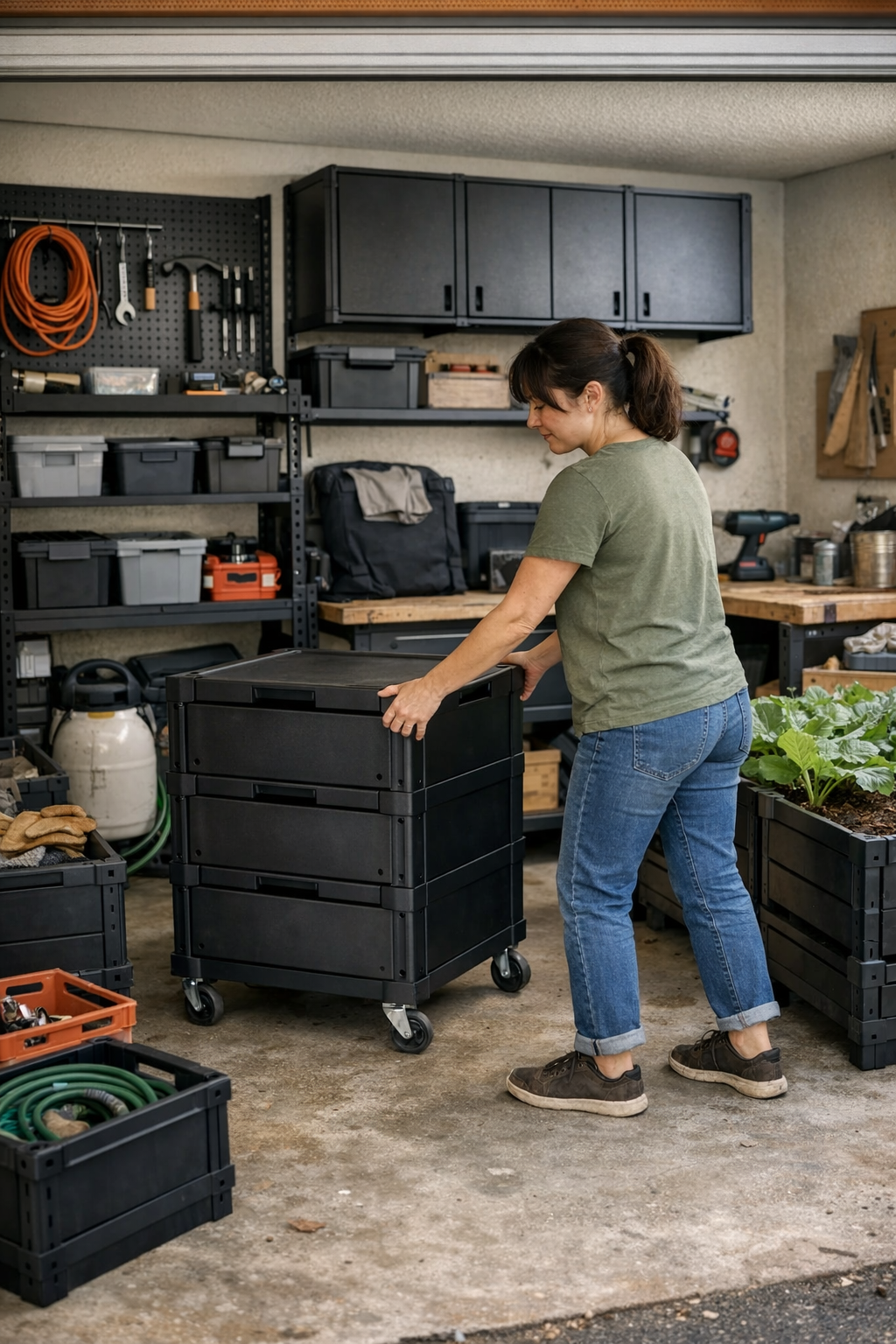
A garage or workshop always starts out with promise. On setup day, every tool has a resting place, the wall racks line up in perfect rows, and you almost want to leave the space untouched. Fast-forward one week: you’ve sprinted in for the socket wrench, dumped a muddy rake after yardwork, or juggled a box of winter gear with nowhere obvious to drop it. Reality intrudes quickly, and the illusion of “done” fades. In daily life, a tidy setup is only as strong as its weakest return path or most awkwardly parked cart. Every shortcut, every not-quite-right reset adds up—until what looked organized proves anything but intuitive under real, repeated use.
Where Real Friction Surfaces: The Trap of the Perfect Layout
You invest in adjustable shelves, anchor the heavy cabinet to the wall, and wheel in a modular chest—trying to wring every inch from your square footage. But the first day you’re in a rush, that careful order hits a snag: the roll-out cart blocks the wall rack, the corner bins demand a sideways shuffle, the deep cabinet is useless with the doors jammed half-shut by overflow. The problem isn’t that you lack storage space or that things look disorganized—it’s that the setup fights you in motion. What begins as a crisp layout can, by Wednesday, feel like a maze of micro-obstacles and routines that require too much thought.
Static layouts—fixed shelving wedged into corners, wall racks that seemed smart until you tried working around them—turn every small change into a big one. One stray bin forces you to move two others. The cart you rolled out for one project becomes the permanent gatekeeper for half your supplies. Rigidity isn’t just a style issue; it locks you into patterns where “returning things” becomes a negotiation, not a habit.
Dead Corners and Overflow: Subtle Drifts into Disorder
The breakdown doesn’t happen suddenly. It creeps in, right where movement gets pinched. You reach for the blower—except the rolling chest, never quite stored right, blocks half the shelf. Or the pile of bins at the back needs moving just to grab a cord that barely gets used. Your wall space is “maximized,” but certain essentials are semi-buried. Soon, the least intuitive returns keep bubbling up: a tote on the floor, gloves stashed wherever there’s a flat surface, hoses draping over what was meant to be a clean bench.
It’s the midweek scene that tells the real story: Saturday you orchestrate a reset—mobile chest squared off, walkways open, wall rack immaculate. By Monday, the new tote lands blocking access. By Tuesday, you’re tossing garden gloves on top “for just a second.” By Thursday, an awkward box of hardware hovers in the reset zone, always about to be put away. The main path slowly disappears, routines get clumsy, and the next time you want the air hose, you’re sidestepping half a chore’s worth of confusion. No one monumentally failed to “keep up”—the system simply never flowed with the everyday pulse.
Clutter doesn’t shout; it leaks in where the return path feels like a puzzle. Systems that look crisp at rest falter when packed days force improvisation, and routines break down not at the edge, but right through the heart of the space.
Reset Fatigue: Why Permanent Order Is a Myth
Every so-called “optimized” setup, as any homeowner knows, becomes an obstacle course under pressure. Park a mobile drawer too near the workbench, and you’re opening it halfway, nudging it just to squeeze through. Fix a sliding door cabinet in tight, and a single out-of-place bag can block the whole thing. When overflow zones absorb one too many “for now” items, your workflow grinds. It starts with a single trouble spot—maybe the power tools corner, maybe the gardening zone—but soon enough, you’re negotiating every movement: where can I actually step, what do I need to move next?
These aren’t dramatic disasters. They’re the slow grind of increased friction—return routines that drag, resets that loom larger, and a lingering feeling that order is always one big clean-up away. The supposed efficiency ends up stealing more of your Saturday than you’d ever planned.
Movement First: Regaining Control Over Your Space
The real difference comes from setups that clear paths, not just maximize storage. It’s a shift you feel the first time you roll a modular chest two feet out of the collision zone and watch a “dead” wall rack become useful again. Suddenly, you grab gear without wading through obstacles; you return items without orchestrating a mini-move every single time.
That single shift produced outsized results:
- Corner shelves finally accessible for daily items instead of emergency overflow storage.
- Cabinet doors opening wide, not snagged on a wandering cart’s wheels.
- Resetting became an end-of-day scan—a minute or two of genuine order—instead of a twenty-minute shuffle just to see the floor again.
There are still long weeks where a project leaves clutter trailing behind. But here’s the difference: pathways stay open, resets don’t require heavy lifting, and returning things no longer teeters on frustration. When the movement flows, the whole system flexes to match your actual routine—not just the plan on a blueprint.
Sniffing Out Subtle Warning Signs
Where does your system quietly fail? Bins creep toward the door; caster wheels edge into walkways; carts hover in front of what you actually use. These aren’t signs that you’re lazy; they’re the setup revealing its blind spots. If putting things back feels like a chore, the layout itself is resisting your rhythm—not the other way around.
Watch for these silent tripwires:
- Units packed too close to main paths, shrinking usable floor—especially after a busy afternoon.
- Zones squeezed so tight that a single open drawer or door transforms into an instant hazard or catchall for overflow.
- Wall sections lost behind car bumpers, open doors, or always-parked tools—turning “accessible” storage into dead space.
Spotting these patterns early can be the difference between an easy tweak and yet another dreaded all-day reset. The sooner you move the friction, the easier it is to stay ahead of the slow boil toward chaos.
Building a Setup That Stays Flexible—and Useful
The goal isn’t more shelves—it’s more freedom to move, return, and reset without thinking twice. If your neatly staged zones gradually erode into “just close enough” returns and haphazard drop spots, it’s time to get ruthless: shift a cart, redraw where overflow lives, slim down the zone footprint to what actually makes sense for your hands-on habits. The most usable spaces aren’t gallery-ready; they simply let you pass through, grab what you need, and put things back with zero resistance, even after a busy week.
Real improvement is messy, incremental—a far cry from showroom illusion. It’s the small, believable wins: not needing to move a pile every time you want your drill; not getting boxed in by wheels you meant to make things easier; not dreading the Sunday reset. Every solved pinch-point, every reclaimed corner, every streamlined return path moves your garage or workshop from looking organized to actually making sense in use—and that, over time, is what keeps the clutter from creeping back in.
Find more practical solutions for real spaces at StackNest.