Category: Pet Life

  • How Small Changes in Dog Setup Improve Daily Comfort and Flow

    Your dog’s setup may look organized—bowl tucked into a corner, bed right under the window, water bowl nestled beside it. But if every day you watch your dog pause at the food station, circle the bed before lying down, or stand awkwardly between spaces, something’s off. You don’t see chaos, just repeated friction: reaching for the leash and bumping into a scatter of toys, arriving home after a walk and realizing towels or wipes are out of reach, or watching your dog sidestep a bed that looks inviting but never feels easy to use. The “neat” layout isn’t always the routine-smoother you hoped for. What actually stacks up are tiny delays and missed beats—until the setup that looked right on day one keeps snagging the flow for both dog and owner. The DogPile world isn’t about picture-perfect corners. It’s about setups that survive real dog-life repetition—walks, resets, rushed mornings, bedtime resets, and everything in between.

    When “Good Enough” Stops Feeling Good

    Dog routines don’t fall apart all at once—they slow down through details. Maybe feeding is delayed while your dog picks a path around a wedged-in bowl, or evenings finish with your pup stalling in the no-man’s-land between bed and meal zone. A streamlined setup might hide friction for weeks until you realize: you’ve adapted so well to those small obstacles that you no longer question why the routine drags at certain points. That’s how a “solved” corner gradually resets itself as the place where meals get delayed, rest gets interrupted, and you spend small bursts of time nudging your dog along rather than moving forward together.

    No trash spread, no drama—just patterns: dogs hesitating at thresholds, glancing back for reassurance, making one more orbit before eating or settling. If you find yourself straightening beds, shuffling bowls, or pushing a mat “just in case” multiple times a week, you’re not optimizing—you’re managing silent friction that never really leaves the routine.

    How a “Dependable” Setup Can Hide Repeated Friction

    That corner bowl? Less mess, yes. That bed against the wall? More floor space for you. But for your dog, the geometry changes everything: their entrance and exit path is blocked, their instinct to approach head-on is denied, and what you call “organizing” becomes their daily awkward dance. Most dogs adapt by pausing, circling, stopping to see if you’ll clear the way. After busy mornings or evenings, you start bracing for these delays: the extra time needed when your dog double-backs at the water bowl, or waits in limbo for a cue to settle. The tidy layout fades into the background, but the repeated stalls and reshuffles become the true routine—predictable, but never easier.

    The Daily Life Version: Walks, Meals, Rest, and That Annoying Pause

    This isn’t theory—it’s the difference between a day that clicks and a day full of micro-slowdowns:

    • After the morning walk: You unclip the leash, but the food bowl’s too close to the wall. Your dog hesitates, circles, delays—breakfast never starts on cue.
    • Before resting: That bed looks perfect where it is until your dog drags it forward, spins in confusion, or sleeps half-off just to find a better angle.
    • Refilling water: The bowl’s ideal for spill control in theory, but cleaning it or reaching past it means blocked hands, scattered drips, and a dog waiting or splashing at the wrong time.
    • Evening reset: By the end of the day, toys drift into footpaths, wipes are buried under other gear, and just prepping a clean corner adds steps that weren’t there at first.

    Individually, these are minor. Stacked across the week, they become the reason routines stall, why settling the dog always takes “one more thing,” and why the area that seemed solved keeps nagging you at the very moment you need smooth flow.

    When Tidy Looks Good—But Doesn’t Work

    Visual order and repeated function are two different things. Arranging bowls, beds, and toys in neat lines clears your own path, but not your dog’s. Most setups that look “finished” begin failing quietly as friction points accumulate:

    • Forcing awkward bowl approaches that never feel natural
    • Making the bed an obstacle course instead of a place to land
    • Leaving blank spaces where your dog lingers, unsure where to settle
    • Letting toys, wipes, or towels migrate into human space, so everyone moves slower and more resentfully

    Small tells—the multiple circles, the wait at the bowl, the scramble for supplies just a beat too late—signal a setup that isn’t quite keeping up with real-world use. The clutter might be hidden, but the interruptions keep surfacing every day.

    Why Does the Same Weak Point Keep Coming Back?

    Quiet friction is stubborn. Move the bowl, clear the toys, straighten the rest mat, and the same hesitation reappears in a new form days later. The issue isn’t the mess you see—it’s the subtle mismatch between layout and flow. Wiping the same spot under the bowl after every feeding, watching the bed creep inches away from its assigned spot, or doubling back to fetch a missing towel isn’t just bad luck; it means the setup ignores how routines really play out, not how they appear for a photo.

    Clear Signs Your Setup Needs Rethinking

    You know the cycle’s off when these signals show up:

    • Dog pauses at food or water. Stops, stares, or glances for reassurance—never just eating and moving on.
    • Rest is restless. Your dog circles or flops repeatedly, aiming for comfort but never quite landing.
    • Slowed post-walk transitions. Dog lingers between spaces—pacing or freezing, waiting for you to signal the next move.
    • Routine cleanup requires repeated reach-arounds. You fumble for wipes, double back for chews, or shuffle items out of your own path every single time.
    • Daily reset takes longer than needed. Arranging toys, repositioning beds, or relocating bowls becomes a drawn-out ritual—the “neat” setup slipping out of alignment with real life.

    When routines are interrupted in these silent ways, a setup that looks good on a checklist may actually waste your time and your dog’s focus, day in and day out.

    Small Shifts, Big Difference: How Adjustments Unlock Routine

    What fixes this isn’t a room overhaul—it’s noticing the hidden snag, then making one adjustment that removes repeat friction rather than adding more organizing. The key is to challenge the “good enough” and tweak a single point, not the whole map.

    A Real-World Fix in Action

    Picture the daily return: dog in, leash unhooked, bowl in sight. The sticky pause repeats until you slide the food bowl twelve inches out from the corner and rotate the bed to face the center of the room. Suddenly, the post-walk shuffle falls away. Your dog goes straight to the bowl, eats without circling, lays down without fuss. The time cost disappears, and everything feels like it actually clicks without new gear, just a smarter line-up.

    Other Realistic Tweaks That Pay Off

    • Rotate the bed so entry is direct. Dogs settle faster when the “open” side faces the main path, not the wall.
    • Slide water into the main route—but not where you trip on it. This keeps both mess and bottle refills easier for you and more inviting for your dog.
    • Put towels and wipes near real transitions. A reset station close to the walk-in makes cleanup automatic, not a scavenger hunt after the fact.
    • Account for the busy hours. Temporarily reposition bowls or beds for morning or evening surges. Allow a setup to flex when the routine bottlenecks—not just look neat for guests.

    No daily system is truly finished if you’re still working around the same small blocks. With a sharper eye on how routines break down—towel buried, bowl blocked, toys sneaking into walkways—you unlock an easier flow that’s tuned to everyday life, not just a tidy floor plan. The difference might not look dramatic, but it feels better with every real use.

    See what’s actually working in real dog-life routines—find setups that fit daily reality, not just a photo, at DogPile.
  • How Small Pet Spills Disrupt Your Daily Routine and Cleanup Flow

    Why Small Pet Messes Turn Into Big Interruptions

    Every daily pet routine has a breaking point. Miss a stray kibble or let a water splash dry under the bowl, and suddenly a fast reset turns into a slow, awkward detour. Most owners push these minor messes forward—kick a crumb aside, step around a spill, promise themselves a proper wipe-down “later.” But these tiny leftovers repeatedly jam up practical care, turning a normal feeding or water refill into a friction point you notice at the worst times: before work, when you’re carrying groceries, or late at night when you’re already tired. This isn’t just untidiness. It’s one invisible snag after another—each one making that CalmPetSupply corner that looked manageable now feel like a stop-and-go zone.

    The real cost? Small routines break apart. A quick bowl rinse drags out when you need to move a scatter of toys first. Water and fur combine into sticky smears that don’t wipe away with a single pass. Crumbs edge under the cabinet or mix with tracked-in grit after one missed morning. By the next day, what started as “good enough” now trips you up over and over—a few extra steps, a little more bending, another search for a cleaning tool that wandered off.

    How Pet Spills Compound Over Time

    Skip a single wipe-down, and you barely feel it. Skip twice, and the mess doubles back: dried water rings under the bowl, fur fused to damp spots, crumbs tracking from kitchen tile to hallway. Owners often think, “It’s just today’s mess—but tomorrow I’ll be on top of it.” Yet “tomorrow” keeps slipping, and the space quietly becomes harder to handle. The cleaning task that should have been one swipe now needs scrubbing, rearranging, or a shuffle-and-chase session with dust and food bits underfoot.

    Over just a week, these micro-messes gather up everything else: hair, grit, stray litter, even odors if left invisible. Shared home zones—kitchen corners, porch landings, laundry cut-throughs—pick up evidence that never quite resets. The real interruption isn’t just dirty surfaces—it’s the slow drag that inserts itself into every routine: a pause to clear a space, a delay searching for a mislaid towel, that creeping feeling you’re always just behind and never quite set for the next care round.

    Everyday Scenes: Routine Disruptions You Recognize

    What does this look like hour by hour?

    • You reach to refill the water bowl, but there’s always something blocking access—the brush from yesterday’s grooming, a towel bunched and in the way, or a treat bag that’s drifted too close. One extra move every single refill.
    • The spot you skipped last night soon grows into a patch of dried hair welded to floor as water dries—and when you step across the kitchen, you track more than you clean. The clutter migrates instead of shrinking.
    • Cleanup wipes or towels are technically “nearby” but never right where you need them: on the wrong shelf, inside a half-shut drawer, or mixed up with laundry. You put off the wipe, do it late—or grab a paper towel from another room, breaking flow and adding double steps.
    • At a glance, mats and feeding station bins look organized, but every pass means weaving around toys or sliding storage back into place—not quick resets but constant sidesteps.

    What once worked—everything within arm’s reach, quick in/quick out—shows hairline cracks. You notice one stubborn trouble spot that always lingers, or a care tool that ends up everywhere except where you need it most. By Friday, each routine feels heavier. You’re not just cleaning; you’re work-arounding the setup you thought was “fine.”

    Quick Fixes that Build Friction—or Break It

    The go-to “fix” is to stash a towel or wipe nearby for emergencies. But when it needs a free hand to grab, or it keeps wandering after laundry day, the fast route from spill to clean keeps shifting. One area gets faster; another slows down. You’re always moving one thing back just to wipe up something else.

    Perfection isn’t the point—reliability is. Cleanup should fold into care without detours. A rinse, refill, or quick swipe shouldn’t mean bumping into extra steps. If the right tool is always visible and reachable—never blocked, never halfway across the room—then every piece of the routine stays light and automatic. One missed beat, though, and daily care feels heavier, not easier.

    Making Simple Adjustments: What Works in Real Homes

    The best reset isn’t complicated: a single towel or reusable wipe always on a hook beside the feeding zone, never in a pile, never in another room. Each refill or meal pause becomes a micro-reset: grab, wipe, hang back, move on. No decisions, no hunt, no “where did I put that?”—just direct, friction-free action every time.

    These adjustments prevent the daily buildup. Hair and crumbs stay corralled, water spots don’t crust into sticky trouble, and the feeding space doesn’t creep outward. Over dozens of routines, the difference is obvious: there’s no migration of mess, no shared-home interruptions, no late-week “how did it get this bad?”

    Most people notice a turn when the cleaning tool returns to its hook out of habit, not effort. Cleanup snaps back into the natural flow of feeding and resets—never becoming an extra burden, never left to snowball. Small friction points fade, and normal care stays just that: routine.

    Tidy vs. Functional: Knowing the Difference

    There’s a visible gap between “organized” and truly workable. A feeding setup can look photo-ready—matching mat, lined-up bowls, hidden bin. But if a routine wipe takes effort (blocked by the layout, stuck under something else, or just missing), the area is only cosmetically calm. The mess is suppressed, not solved.

    True function means every tool appears where it’s needed and goes back automatically. Feeding, water checks, and surface wipes happen in-position and in-sequence, not as end-of-day chores or future catch-ups. It’s the chain reaction—remove one block, and the whole routine flows; ignore a weak link, and every step feels compromised.

    Keeping Routines Undisturbed: The Practical Takeaway

    The drag on pet care isn’t from major disasters—it’s the constant resistance of “almost ready” setups and missing basics. After a refill, a meal, or a walk, the friction shows up: a towel out of reach, a surface half-blocked, a cleaning tool gone missing. What should be a split-second reset now drags, and inevitable messes get deferred.

    Knock out those small barriers—keep every tool visible, remove obstacles, avoid storage that makes access slower—and normal routines stay smooth. It’s a difference you feel daily: resets that aren’t a chore, care routines you can trust not to spiral, and a space that quietly stays under control instead of turning into a distraction loop.

    Make your pet’s space work for you instead of the other way around—one practical reset, every time, with the right tool right at hand.

  • Ending Cat Grooming Early Reduces Stress and Simplifies Daily Care

    Grooming an indoor cat can seem simple—until you’re halfway through, fur on your hands, your cat tensing up, and the “quick session” is already dragging out the evening. You squeeze in brushing between other chores, pushing for that fully smooth coat, but every extra minute you insist on finishing costs you tomorrow: your cat bolts at the first brush rustle next time, the grooming blanket sits ignored, and the supposedly tidy corner quietly turns into a work zone no one wants to use. The room might look put together for a moment, but the setup is starting to fight back—more scattered fur around the baseboards, tools piling up instead of staying ready, and a routine that now feels like a drawn-out negotiation. The right grooming setup is supposed to cut friction, not bury it under a cleaner surface. StillWhisker’s world is about setups that hold up to repeat resets, not just one perfect-looking session.

    Why Shorter Grooming Sessions Change the Pattern

    Cutting sessions short the moment your cat shows tension isn’t just about being gentle—it’s how you keep daily resistance from spreading across the week. At first, skipping those last lingering tangles feels like you’re leaving the job unfinished. But over a few days, you notice it actually gets easier: there’s less wrestling to start, less hiding before you begin, and fewer tools left abandoned on the nearest counter. Grooming shifts from “squeeze it in and brace for trouble” to quick, manageable resets the cat barely bothers to protest. Your hands spend less time tracking fur under chairs, more time keeping the shared spaces livable.

    This isn’t about ignoring mats or letting things slide. It’s about dodging the trap where brushing always ends with a struggle, the area gets quietly avoided, and every future attempt starts as a standoff. The longer the resistance builds, the more likely it is your supplies end up shoved out of sight, home spaces get interrupted, and you wind up putting off basic upkeep just to avoid another round.

    Recognizing the Real Tension Points

    Every indoor-cat setup eventually reveals pressure points. Maybe there’s a chair corner reserved for grooming—blanket spread, brush stashed nearby. First week, the reset is easy. Over time, though, you spot wariness: your cat keeps an eye on the brush instead of the window, the blanket rarely stays in place, and fur works its way into every unreachable crack. The “grooming corner” is visually clean, yet supplies stop being easy to reach, and every session feels like a second round of prep and chase rather than maintenance. The weak spot isn’t the amount of fur—it’s the friction that grows if the setup never adapts.

    Tools that look stored can become hard to grab. Blankets that seemed convenient start sliding off, forcing an awkward grip mid-session. Cleaning up takes longer—not because there’s more mess, but because you’re repeating a cycle instead of relying on a flow that just works.

    “Finish Everything” vs. Flowing with the Cat’s Rhythm

    It’s tempting to push for a fully done session—a smooth coat, a swept area, zero loose fur. But insisting on that “one last brush” is what slows everything down, day after day. As soon as your cat arches, flicks a tail, or subtly stiffens, you’re at a crossroads: pause now and keep reset friction low, or stretch for those last few tufts and bake tomorrow’s resistance right in. The cost rarely shows up immediately. Instead, here’s how it plays out in repeated use:

    • The brush never leaves the room, because bringing it back out means another chase.
    • Your cat circles the grooming space, watches you move, then waits for you to give up before settling in.
    • Fur lines appear under furniture even after a “good” session, because cleanup always gets delayed.
    • The blanket, instead of being a tool, becomes another thing to fold and move, clogging up the next shared use.

    The more you try to polish the area in a single go, the more breakdowns you inherit for the next round. A great-looking reset means nothing if it takes double the effort to use again tomorrow.

    The Accumulating “Invisible Mess”

    A room can look spotless—blanket folded, fur binned, brush discreetly tucked away—and then slow everything down later. The invisible mess isn’t just physical: it’s the buildup of avoidance, longer pauses before starting, and tools that no longer feel easy to use or return. When resets always take “just a minute longer,” daily flow breaks down. You swipe a cloth on the armchair, but fur lingers beneath. Grooming turns into circuitous errands—find the brush, hunt for the blanket, corral the cat—and your sense of order gets chipped away by small, repeated delays. A setup that isn’t fluid in daily use is one you’ll eventually sidestep.

    Spotting the Signals: When to Pause

    Indoor cats signal resistance before the full stand-off. You’ll feel a shift—tail flick, head twist, muscle stiff under your hand, paws repositioning, a purr that cuts out. If you stop at that moment, even with clumps left, you’re saving yourself the next chase around furniture. That half-minute “unfinished” session is what keeps both your cat and your supplies ready for the next round.

    This isn’t indulgence. It’s what keeps grooming supplies accessible instead of buried, what lets the cat use the chair without hesitation, and what turns grooming from a project back into a manageable reset—one you can handle any night, not just when you’re fully prepared for hassle.

    Example: The Blanket Corner Routine in Real Use

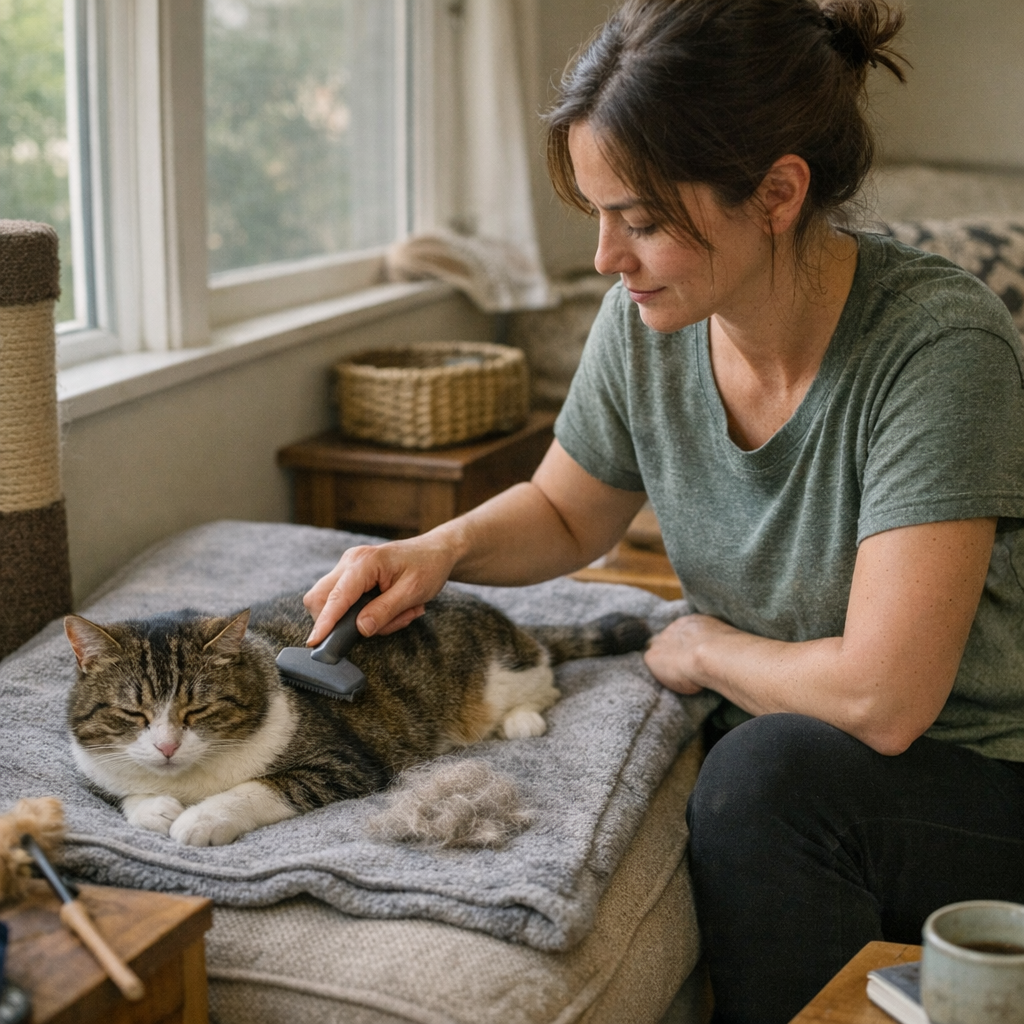
    Picture a regular evening: blanket on the armchair, brush pulled from the nearby bin, cat just waking from a nap. Brushing starts easy, then halfway through there’s a subtle twitch or sharp inhale. Rather than bargaining for another minute, you let go—literally. The brush gets wiped, blanket shaken, and both stash easily without a second trip across the room. Cat leaves without a sprint; space goes back to normal. A week later, you realize cleanup no longer drags, and the cat doesn’t vanish at the sight of the brush. The routine holds up quietly—you spend less effort fixing messes that “good intentions” created last time.

    Reset Flow: Handling What’s Left Behind

    Leaving stray fur or skipping the “perfect finish” isn’t laziness—it’s the structure that helps your setup do its job day after day. That imperfection keeps each session lighter, shortens hunting for displaced tools, and means the area never turns into a flagged-off zone everyone would rather avoid. Fur missed today is less work than compounded avoidance all week.

    Tools returned without resentment get used more. You stop shoving supplies behind closed doors, and spent blankets don’t pile up, damp and forgotten. The grooming setup actually becomes a part of the room’s routine: visible, usable, solid.

    Cleanup and Shared Space: Managing Adjacency

    No grooming setup is self-contained—fur drifts, tools move, comfort items migrate from shared chairs into every corner. When resets are short and low-tension, cleanup rarely grows into a full project. You brush and tidy up in one move; the blanket returns with the cat, not trailing hair through the hall. Shared spaces stay in play, not divided into “cat zones” and “resets waiting to happen.” No urgent overhauls. The area is ready to be used again for something else—reading, napping, guests—without a mental note that there’s an invisible job still waiting.

    Real Friction, Real Improvement—Not Perfection

    No method erases every snarl or spilled fur clump. Bad weeks happen: the brush gets batted away; you spot undone fur in the favorite nap spot. The difference is, you’re not wading through a week’s worth of delayed resets, chasing after perfection that only lasts for hours. Smoother, shorter sessions soak up the hidden strain—what’s left is an area that gets easier to use, not just cleaner to look at. Eventually, visual calm lines up with a setup that actually requires less effort between chores, not more.

    Trusting the Setup: Small Adjustments, Lasting Gains

    No two homes run the same routine. But the shift that makes a grooming area work is always about repeat use—not one-off cleanliness. Brushing supplies left within reach and not resented, blankets you don’t dread washing, corners you both return to instead of tiptoe around—those are the signs that small adjustments are adding up. Listen early, pause before protest, reset with speed. When grooming fits into your actual week, the rest of the home starts to run smoother too.

    See more ways to make indoor-cat routines easier at StillWhisker

  • How Small Dog Habits Can Disrupt Your Kitchen Routine and What to Do

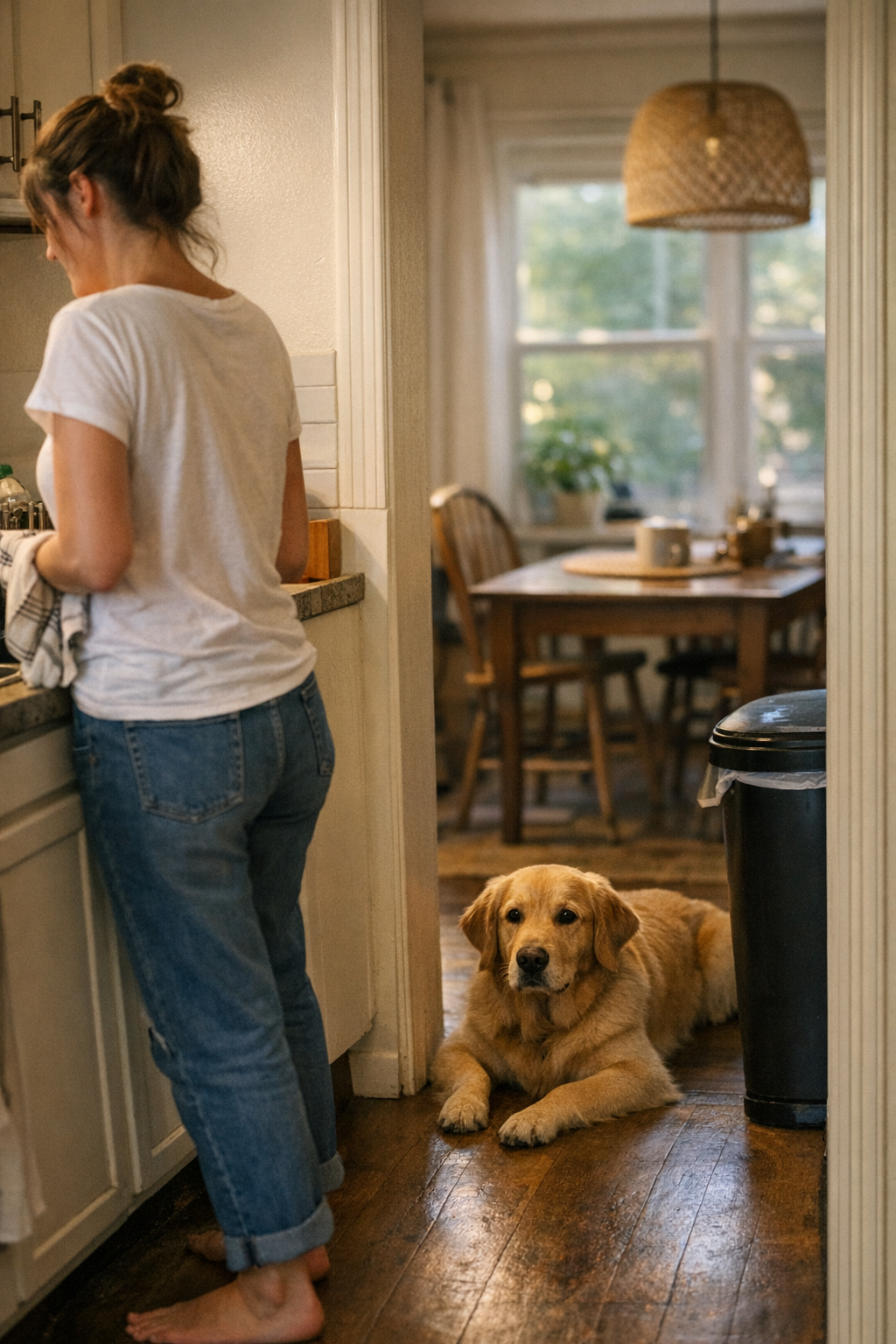
    Every dog owner knows the exact spot: that stretch of kitchen floor your dog turns into a roadblock as soon as mealtime ends. Cleanup isn’t just about clearing bowls—suddenly, you’re stepping around a lounging body, dodging a tail, snagging the towel at an awkward angle. The kitchen looks under control, but your pace slows. By the third day of rerouting, delayed chores pile up, and rest slides further into the night. The routine doesn’t blow up—it just quietly drags, one small detour at a time, carving friction into something that should be simple.

    When the Smallest Pause Turns Into a Drag on the Whole Night

    An ordinary dog routine flows until it unexpectedly doesn’t. The most overlooked squeeze is the “threshold pause”—your dog settling right where you cross after meals. The first night, you dance around them without a thought. By the end of the week, stepping around that body becomes automatic, but so does the irritation: arms full of dishes, you shuffle sideways, or you reach for cleanup supplies and realize your stride is twisted. Passing through becomes an obstacle course you never meant to build.

    This isn’t a dramatic standstill. It’s half-second stalls—hesitations as you adjust, sidestep, or reroute to avoid a dog who thinks they’re just being present. Each subtle block extends the distance between “done eating” and “actually finished for the night.” Days stack up. The reset window stretches. What looks like a calm kitchen hides a recurring snag you feel every time you try to get something done without bumping into fur.

    Why Dogs Anchor Themselves in the Worst Spot

    This isn’t about stubbornness. Dogs position themselves at the threshold because that’s the stage where you’re most active after meals. They’re tuned to your rhythm, waiting: will it be treat time, a hint toward a walk, or just a belly rub? For them, the kitchen doorway is a control tower. For you, it’s a tripwire. Every time your dog camps in that path, the logic is obvious in hindsight—the only route from dinner zone to cleanup or rest now funnels through a waiting, alert dog.

    This repetition is what quietly wears you down. Side-stepping isn’t a nuisance for one night. But when the same “move” repeats at every routine pinch-point, what used to flow now stutters. Your habits adapt: maybe you stop carrying two things at once, or you delay wiping the counter because your reach isn’t clean. The routine bends, but never gets truly better. You’re not just moving around a dog—you’re compensating for a weak setup, one awkward crossing at a time.

    The Hidden Tax: Adapting Doesn’t Translate to Smoothness

    Humans adjust quickly—bend, lean, detour, stretch around the block in the path. But those clever workarounds harden into new habits: always clutching dishes higher, always waiting for the moment when the dog finally shifts. The old “fix” becomes an invisible hassle. It’s rare that anyone admits a problem—bowls get left soaking, crumbs escape underfoot, cleanup lingers one step behind. Meanwhile, the threshold remains staked out by a dog who’s just waiting for your next move, right where every task intersects.

    The Smallest Setup Shift That Changes Everything

    You don’t need an overhaul. The real difference comes from a move small enough to test in a single evening. Try this:

    • Serve your dog dinner away from the busy doorway—shift the bowl one meter to the side, toward a quieter corner.
    • As cleanup begins, your dog finishes and settles somewhere with less “traffic,” not out of training, but because the new placement cues them differently.
    • No more forced pauses between the sink and the trash, no more clumsy balance acts with a towel or falling bowls. Cleanup flows. You actually walk straight lines again.

    This tweak, repeated across the week, rewires routine momentum. It isn’t discipline or retraining—it’s layout logic. The difference is instant and multiplies daily: less stepping around, fewer glances down for a tail or nose, a clear path between each part of cleanup. The bottleneck moves, and suddenly you’re not losing time to invisible dog traffic jams.

    “Looks Fine” vs “Works Well”: The Real Test of Kitchen Setup

    A visually neat kitchen is a universal goal—bowls lined up, floor wiped, clutter hidden. But underneath a calm surface, function stalls. The test is not whether the area looks tidy, but if it lets you cross from one job to another without negotiating obstacle after obstacle.

    Ask yourself: is your setup made for show, or made for motion? The bowl mat might look perfect on Instagram, but if your dog lands right in your path every night, the only thing smooth is the surface appearance. Consider:

    • A bowl placement that lures your dog into your cleaning lane every single meal.
    • A cozy mat in a walkway that moves from “thoughtful” to “trip hazard” as routines harden.
    • Cleanup gear visible but just far enough away that you hesitate, bend, or abandon a task halfway to avoid disturbing the dog.

    Any of these signs means you’re living with the gap between “organized” and “workable.” Surface calm can let real bottlenecks quietly persist for months.

    Everyday Pattern, Real Impact: Why the Wrong Setup Costs More Over Time

    Pretending “it’s just a second” doesn’t change the cost. If you recognize the same sidestep, the same stall at the door, the same hallway backup after feeding, you’re paying for a setup that works against you. Multiply those moves morning and night, across seasons, and the interruption shapes daily comfort for both human and dog. The longer it goes, the more your dog expects you to adapt, and the less momentum you keep for yourself.

    Pattern Recognition: When Odd Pauses Become Routine Obstacles

    Notice the difference between coincidence and pattern. When “my dog always ends up here” lines up with “I always get blocked now, not just once,” that’s a structure problem, not a personality quirk. If every leash grab, wipe fetch, or bedtime reset comes with a dog in the way, it’s time to rethink: your routine isn’t random, and neither are these micro-frustrations.

    Beyond Bowls: Setup Logic Affects Every Routine Transition

    This bowl blocking is only one form of the same home-dog bottleneck that repeats everywhere you share space:

    • Grabbing the leash and finding a crate wedged beside your usual reach, or towels stored two steps too far while the dog waits by the door.
    • Returning with muddy paws, but wipes or towels are placed on the wrong side of the landing—so cleanup delays and muddy tracks begin.
    • Toys sliding underfoot into hallways and bedding curling into walking lanes, causing extra resets before you can move through cleanly.
    • Rest corners that look cozy but require a full bedding reset each use, because the dog shoves everything into the main crossing lane.

    These don’t look dramatic, but they interrupt flow and fill each routine with small, repeating drag. The frustration isn’t a messy room—it’s a room that slows you down no matter how organized it looks.

    Setup Change Means Routine Change—Or It’s Not Working

    The most effective setups tolerate reality: fatigue, rushes, imperfect returns. A good arrangement isn’t fussy or “styled”—it’s just reliable under strain and supports both sides of the leash without constant reminders.

    The proof is always in the aftermath: Cleanup runs faster, you grab towels and wipes without rerouting, the dog settles out of the line of fire, and the shift from chores to downtime comes sooner. Less irritation, less juggling, more real rest at the end of the night.

    Good Routines Fix What Never Looked Dramatic, But Always Slowed You Down

    No fancy trick is needed—just a new spot for the bowl, a tweak to mat placement, wipes where your hand actually lands. If your routine feels easier by the third night, you’ve probably fixed what setup kept dragging you through. The best dog-life upgrades are invisible in photos, but obvious in use.

    Find practical, everyday setups for smoother routines at DogPile.

  • Small Home Changes That Bring Lasting Calm to Your Dog’s Routine

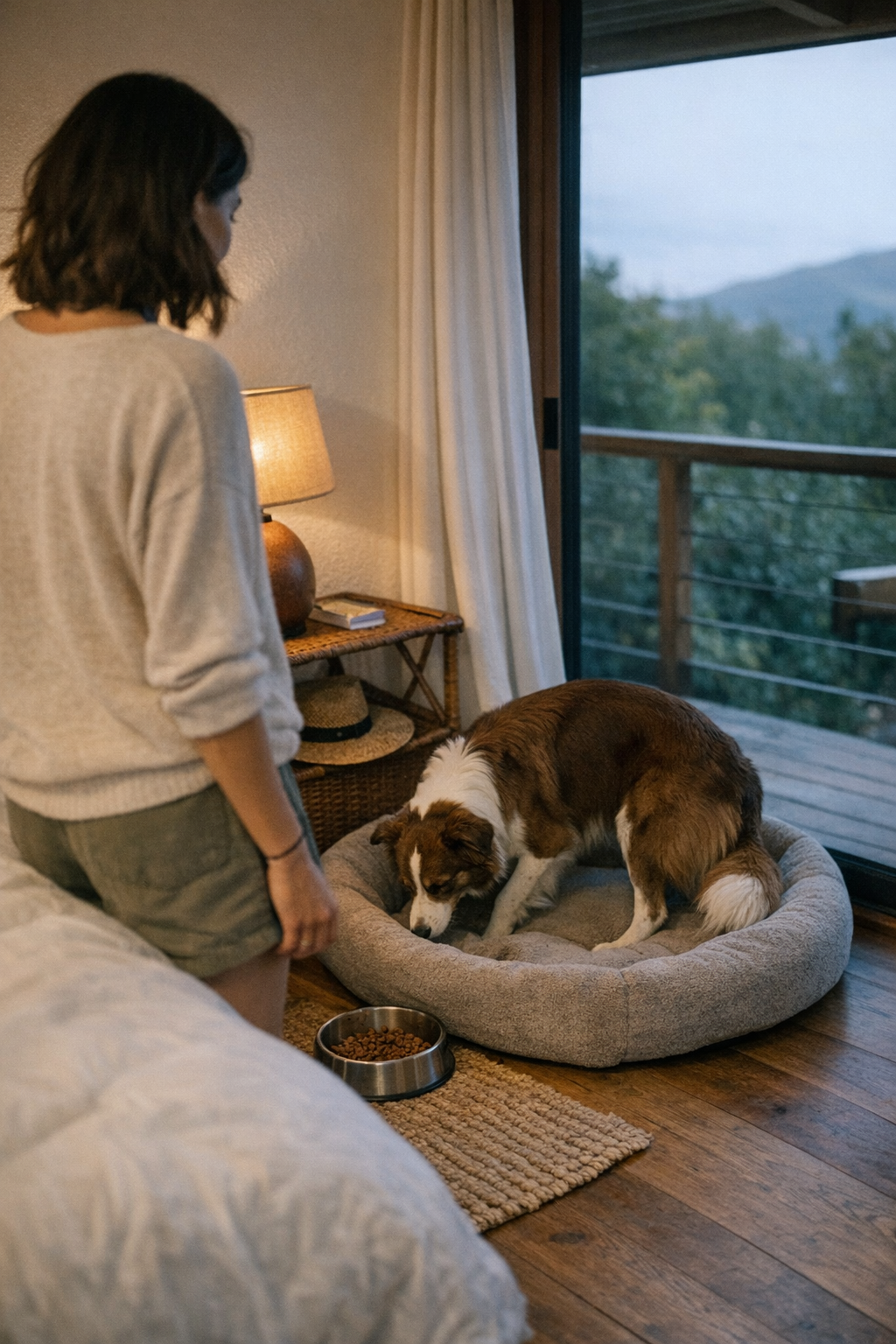
    The evening routine with a dog rarely breaks down in obvious ways—it’s the small, repeated frictions that drag you off course. The leash is on its hook, the floor is clear, and yet—just after feeding or the last walk—your dog circles the food bowl again, stalls near a cluttered bed corner, or stands caught between entry and rest. Every night, these minor holdups pile up: the towel you need for paws isn’t within reach when the door opens, a plush bed blocks the shortcut to the kitchen, or the water bowl sits just where your foot lands during cleanup. Instead of winding down, you’re stuck in a cycle of half-finished resets and second-guessing what’s holding things up.

    Everyday Friction Hiding in Plain Sight

    Most dog owners run the same drill: feed, tidy, toss a toy aside, expect the dog to settle. But when mealtime ends and the dog hovers around the bowl, paces between spots, or hesitates near a rest corner, it’s usually not pent-up energy—it’s the setup itself quietly working against you. These patterns reveal the problem before you notice: the essentials are present, but their arrangement keeps putting friction in the path of actual comfort.

    You’ll see:

    • Your dog lingering at the bowl with nothing left to eat, unwilling to walk away.
    • Pacing a groove between feeding and rest, never choosing one.
    • Starting to settle on the bed, then popping back up to check another spot.
    • Stalling in a doorway, stuck between activities—not truly resting, not busy either.

    Even when the room looks tidy, persistent micro-interruptions stretch simple routines. You spend extra time resetting beds, grabbing towels too late, or shifting gear that keeps creeping into the wrong spot. None of it seems “wrong” on its own—but in combination, these small misses add up to a routine that never quite flows.

    Why Restlessness Keeps Returning After Meals

    If your post-meal routine is slower every night, repeated friction is likely the culprit. The moment you expect calm, you see circling, step-backs, and hesitation—not because your dog needs more training, but because the route from eating to rest is physically awkward: bowl and bed overlap, the cleanup towel hides behind a bin, or a toy pile blocks the path. These aren’t random quirks—they’re direct feedback from a setup that looks neat but breaks down under real pressure.

    Food and bed crammed next to each other? You’ll see hesitation, not transition. The lack of a clear boundary between feeding, waiting, and resting zones means your dog gets mixed signals. The more these zones overlap, the longer it takes for both dog and owner to switch gears. Instead of a smooth movement from food to bed, you get double-backs, stalling, and repeated glances for cues that never come.

    Small Delays, Cumulative Drag

    A single pause near the bowl doesn’t ruin an evening, but stacked up night after night, these stalls stretch transitions, make bedtime drag out, and chip away at real calm. The very routines designed to bring order end up slowing things down—a cost you barely notice until you’re stuck waiting for your dog to settle, again.

    How Subtle Friction Disrupts Calm for Everyone

    What makes this friction hard to spot is its normal appearance. A bowl tight against a bed, or a plush rest spot barely brushing a hallway, might look organized, even efficient—until you live with it. Dog toys migrate into high-traffic spaces. The towel for dirty paws is present but not actually within reach when you need it. Beds nudged out for tidiness block your path during cleanup. Each fix creates a new, hidden snag:

    • The towel’s there, but you stretch for it while pinning the door open with your knee.
    • Entryways crowd with gear that looks “put away” but isn’t accessible in the rush.
    • That new bed makes floor space look cozy, until it’s the reason two people have to shuffle sideways between kitchen and couch after dinner.

    Looking neat isn’t the same as feeling settled. Repeated-use awkwardness signals that something “efficient” on day one is actually breaking the flow of day-to-day life.

    Scene from a Real Evening: Where Routines Tangle

    Picture this: walk’s over, leash hung up, dog paws wiped (the towel still damp from last time, stashed behind the shoe basket). Dinner goes down next to a fluffed-up bed, so everything’s together—too together. The dog eats, steps toward the bed, stalls, sniffs at the old towel, circles back to the bowl, then freezes half-in, half-out of rest. You wait for the sign she’s ready: instead, she hovers, you hover, the lights stay on. No crisis—just a cycle of stop, start, repeat, because the layout invites hesitation at every step.

    • Meal ends; dog moves halfway to bed—then doubles back.
    • Licks a bowl already empty, pauses at the towel still out of reach.
    • Blocks the path just as you try to step through with groceries or mail.
    • The whole evening slows—not ruined, but never smooth.

    This is what a too-tight or awkwardly shared setup feels like after real use: constant low-level interruptions, with comfort zones turning into conflict zones, and nobody quite settling in.

    The Hidden Weak Points: How Everyday Setups Work Against Flow

    When Efficiency Backfires

    Squeezing everything into one corner means less walking—on paper. In reality, dog spaces packed together blur the lines between routines. The bowl sits under the table, but now you bang your toes or spill water every time you reach for it. Bed and towel share space by the entry, so grabbing one means shifting the other, and the dog never gets a clean cue to settle. Owners and dogs alike run loops around objects meant to help, not slow, the routine.

    Overlapping activity spots create confusion and hesitation for your dog, while repeated detours cost you time and patience. Nothing dramatic—just enough to chip away at calm and stretch the end of your day.

    Blocked Access and Repeated Reshuffling

    You might line up supplies to look tidy, but can you actually reach them when a muddy dog barrels in? If the towel is hidden behind the food bin, or toys slip out into walkways, every cleanup turns into a scramble. Resetting after walks or meals becomes a repeated shuffle—gear gets moved, then returns to block the same spot next time. Even “organized” setups end up causing slow reset and subtle frustration.

    The Subtle Cost: Repeated Interruptions

    Left unadjusted, these setup misfires force you to adapt in small, inefficient ways—waiting for your dog to circle three extra times or shifting your own path to avoid upending a bed. The home may look under control, but the routine underneath stays awkward, incomplete, or just slow.

    Small Fix, Big Difference: Adjusting the Setup

    The most powerful change is often the simplest—repositioning a bowl, moving a bed, clearing a path. No elaborate overhaul required; just realigning the essentials to match the flow you and your dog actually use. For example, moving the food bowl a stride away from the bed creates a clear separation: the dog eats, then heads straight to rest—no looping back, no stuck transitions.

    This isn’t about making the room prettier or adding more gear. It’s about making routines work: bed where the dog won’t block you, towel close enough to grab before muddy paws hit the floor, toys contained so they stop spilling into your path. The right setup fades into the background—what stands out is how little you think about it after.

    One Measurable Change, Immediate Payoff

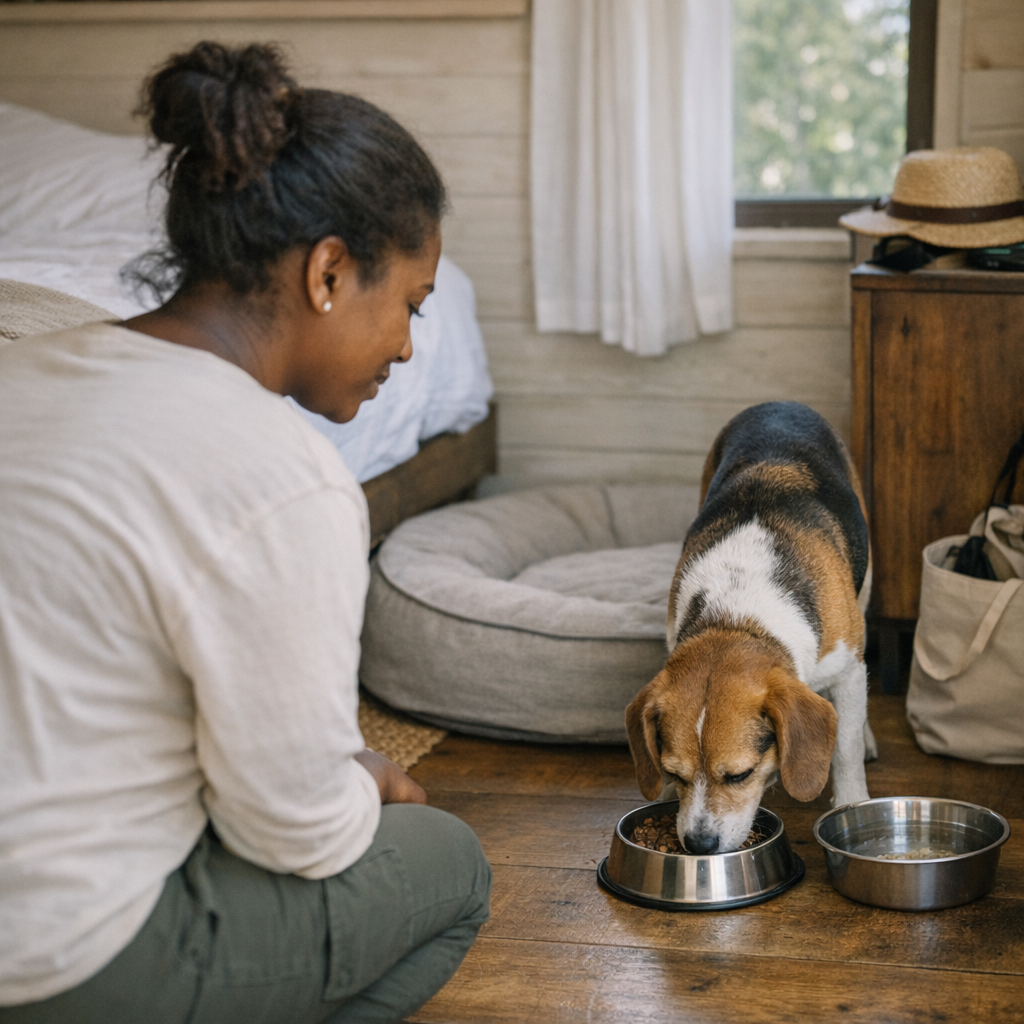
    Move the bowl just one dog-length away from the bed, and you’ll see instant progress. The dog finishes eating, turns, and settles with a single, no-hesitation movement. That repeated pattern—circling, backtracking, stalled hovering—disappears, replaced by a clean, single transition. The proof isn’t in a claim; it’s right there in how easily both of you switch from action to rest, night after night.

    Other fixes work just as fast when matched to the real sticking points: a bed set in a quieter zone, a towel snapped to the wall near the door, or toys corralled away from high-traffic areas. When everyday friction drops, both routine and rest improve for everyone.

    Recognizing Unsettled Patterns (And Undoing Them)

    If your dog keeps pausing after meals, gets stuck in doorways, or retraces steps between bowl and bed, the message is clear: the routine isn’t just slow—it’s being blocked by the setup itself. These aren’t personality quirks; they’re red flags left by ordinary layout choices. Overlapping spaces mean mudd

  • How Daily Pet Care Resets Prevent Messes and Save Time

    At a glance, your pet’s feeding corner can look organized: bowls stacked, brush at hand, water topped off. But when you head to refill water and a bottle blocks the scrubber, or reach for the grooming brush and find it missing, the “organized” look falls apart. Leftover grime clings to bowl edges, towels wander from their hooks, or basic tools shift just out of reach—small problems, but ones that quietly multiply. Each skipped wipe-down or delayed return turns fast resets into a grind. Over a week, you’re no messier—the system just slows. Routine care starts costing more time, and every reset drags compared to day one. Surface order gives way fast when setups aren’t built for repeated reach, refill, or cleanup. In the CalmPetSupply world, these friction points aren’t rare; they show up wherever quick grab-and-return steps get lost in the shuffle.

    Where Micro-Tasks Slip, Small Hassles Multiply

    You reach under the sink for the pet bowl scrubber, but a pile of containers blocks the way. That minute of rearranging turns a quick refill into a micro-hassle twice a day. The bowl returns, and now—because it skipped an immediate wipe—the rim needs an aggressive scrub to clear off the crust. When those little steps slide, resets stretch into chores. The single-day slowdown is forgettable; by the end of the week, water refills and feeding resets all feel heavier.

    Feeding has its own traps. Last night’s unwiped bowl becomes this morning’s hardened mess. Skip the quick wipe, and you’ve got crumbs tracked off the mat and into the living room. Delay one cleanup, and the next round turns from seconds to ten. With every missed micro-reset, effort snowballs—subtle in the moment, but cumulative and real.

    Why “Later” Quietly Becomes “Never”

    The real drag isn’t always piles of mess; it’s the silent build-up of misplaced tools and delayed steps. A scoop abandoned on the rack instead of its hook, a brush left near the door, a damp towel tossed wherever—each puts one more search between you and a clean reset. The next feeding or walk is interrupted not by clutter, but by the task of retracing your last “later.” Each delay means doubling back, and the cost is barely felt until the routine starts to ripple with friction.

    Setups that look okay can mask trouble—until that one missing scoop or wandering brush throws off a busy evening or a rushed morning. At the wrong moment, even a tidy layout can leave you stranded without what you need.

    Real Home Scenes: When Pet Items Interrupt Daily Flow

    Even the most intentional setup runs into resistance:

    — Filling the food bowl at breakfast, you find last night’s crust stuck to the edge—scrub now, or let the coat toughen.

    — After a walk, your towel for muddy paws is outside, so you either detour barefoot to the porch or let dirt track in.

    — During a quick sweep, the grooming brush lands on the bookshelf; later, you’re hunting through magazines instead of brushing as planned.

    It’s never dramatic, but these snags interrupt the routine. Bowls, towels, and tools creep into shared spaces, cover counters, block entryways, or stack up in odd places. A setup that looked straightforward starts demanding constant reshuffling. “Tidy” morphs into “awkward.” The more items drift from their spots, the less the whole system holds together.

    The Impact of One Weak Point

    One repeated snag can sink the best system. Maybe the towel never makes it back, or the brush keeps going missing—a single gap adds a friction loop, no matter how neat the rest appears. Even with most pieces dialed in, a persistent minor fail keeps the routine from ever feeling smooth.

    If your setup feels fine at first but wears on you over time, this is usually why. Friction multiplies, and what should take moments—feeding, water, grooming, evening checks—starts to siphon more attention and time, round after round.

    Tidy Versus Truly Functional

    Clearing counters hides mess, but not all clutter is visible. If every refill means moving four things first, or the brush ends up in three possible places, resets cost more every day. Surface neatness isn’t a substitute for simple access. Unless every basic step—refill, wipe, return—fits real use patterns, you’re storing up future work. Hidden disorder just delays the next interruption and drains the efficiency out of daily care.

    Small Practices That Make The Difference

    The fix is unglamorous: immediate micro-resets that don’t wait until “later.” Quick rinse after each meal, water topped off before it drops, towels returned before stepping away. Consistently wiping the bowl rim when breakfast ends means you’ll never need a chisel by dinner. Tools—towel, brush, scoop, bottle—must return to their spot right after use, not “eventually,” or the loop breaks again.

    The difference isn’t just in cleaner surfaces but in a routine that doesn’t break pace: feed, wipe, refill, walk, groom—no detours or hunts. The right setup lets every tool and supply meet you exactly where the routine repeats, not where it looks best for photos. Your pet’s daily care becomes lighter only when you stop cleaning up the last round mid-way through the next. Any setup can look fine for a day. The real test is if it still feels effortless by Friday.

    For setups that feel ready even after a week’s routine resets, explore practical solutions at CalmPetSupply.

  • How Pausing Between Brush Strokes Eases Indoor Cat Grooming Stress

    Indoor-cat grooming setups often look “good enough” on day one—until the small, repeat frustrations start stacking up. Brush in hand, you clear space for your cat, aiming for a smooth routine. But after a few sessions, the process feels heavier: fur clumps keep escaping the mat, your cleanup towel is somehow never within reach when you need it, and your cat starts ducking away at the first sight of the brush. The area still looks set, but hidden friction grows: more mess leaking into shared spaces, more bending and reshuffling between steps, and a creeping resistance to even start the next round. The difference between a grooming zone that works in daily life and one that just looks settled shows up fast—especially in a home shaped by StillWhisker-level routines, where gear needs to hold up under real, repeated use, not just “good intentions.”

    When Grooming Turns From Routine To Hassle

    The basics seem straightforward: brush, mat, cat, done. But it never stays that simple. One week in, you’re noticing: tufts of fur stuck along the mat’s edge, loose hair already drifting toward the sofa, and tools that migrate away from “right at hand” to “lost under a blanket or behind a cushion.” Your cat flinches sooner, tail flicking with each pass, and the session slows as you pause to untangle small messes. Suddenly, what once fit into a spare 10 minutes pulls out into a sequence of starts, stops, and post-session cleanups—often with your cat leaving after the first flurry or, worse, skipping the spot altogether the next time.

    Little Signals: Friction Comes From The Setup, Not Just The Cat

    It isn’t always a full rebellion. You see:

    • The same front paw yanks back each time you reach a certain angle.
    • Hair crowding the mat’s seam, resisting quick cleanup.
    • Finding more fur trailing away than collected on the actual brush.
    • You delay the session, knowing it means an extra room pass with the lint roller after.

    Repeated-use headaches add up quietly—often camouflaged by a setup that looks “pulled together” until it collapses under the strain of actual routines.

    What Really Drives Cat Tension During Grooming?

    Some tension is cat-driven—overstimulation from too many strokes at once or no escape route when nerves spike. But much of it is structural. Brushing straight through, or pausing only after your cat squirms, can leave both of you tense. Staging the session at the edge of a crowded chair or in a corner makes every pause feel forced: your cat gets boxed in, you reach awkwardly, and tension rebounds into every new gesture across the week.

    The Trap: Tidy On The Surface, Stressful Under Pressure

    That grooming nook with the matching mat and organized tools? It starts strong. But repeat friction sneaks in:

    • Mats fill up faster than you clear them, flinging hair into the hallway with every reset.
    • Your cat marks the spot as somewhere to avoid for naps—a low-level signal that “tidy” is too close to “stressful.”
    • Stray tufts wind up in resting corners or tracked beneath the dining table.

    Your grooming area may still look arranged. But the structure quietly fails: resets multiply, and fur shows up in new places that were never meant for the mess.

    Breaking The Cycle: Why Pausing Is More Than Nice

    Pausing isn’t decorative—it’s your only real tool for regaining control in a runaway session. That break resets tension in both you and your cat, especially if you use those few seconds to:

    • Let your hand rest, giving your cat a visible breather. Shrugging shoulders, relaxed ears: your cat often stays longer with you.
    • Clear fur from the brush and mat edge instead of waiting until the mess is overwhelming—so flyaway hair doesn’t spread into places you don’t notice until laundry day.
    • Allow your cat to step away and circle back, distinguishing overstimulation from disinterest. Sometimes, a short step aside means the session isn’t over—your cat just needed a break, not a total retreat.

    Slowdown now saves triple the hassle later: resistant cats ease up, piles of fur get managed mid-session, and cleanup doesn’t balloon into a whole-room project every weekend. The “pause, reset, repeat” pattern is invisible at first—but it’s what keeps a grooming setup from quietly collapsing into a high-maintenance job.

    Setup Friction Shows Up In Unexpected Ways

    Perfectly staged grooming areas break down once routine use grinds in. Typical pressure points:

    • Corner setups corral everything… but squeeze your cat (and you), ramping up resistance after two brushes.
    • Mats stashed behind furniture keep clutter off main paths—until each cleanup is a hunt for lost fur, making resets less likely until stray bits surface everywhere else.
    • Shared armchairs or daily throws blend comfort with crisis: once the cat dreads that spot for grooming, the “rest area” becomes another place you chase fur and avoid interruptions.
    • Cleanup supplies on stand-by are never quite reachable mid-session—so you lean, disturb the cat, or skip the step that could have saved time (and effort) later.

    The missing ingredient: a setup you can pause and reset, right when things start to go sideways—without needing to move half the living room or juggle everything within arm’s reach every single time.

    How Small Tweaks Change The Daily Flow

    The test isn’t how clean or cute your setup looks when new—it’s how it performs on session seven, or session thirty. Cat fur migrates. Habits bend. The slickest organization gets exposed the moment you skip a cleanup or can’t grab what you need mid-session.

    Pacing with Intention: Control > Appearance

    If you’re used to blitzing through, try this sequence:

    • 3–5 gentle strokes with the brush.
    • Pause: rest your hand, sweep stray tufts from the edge, let your cat shift or simply settle.
    • Repeat—watching for visible changes in your cat’s tension and for drift of fur beyond the mat.

    The result isn’t just a calmer cat. The surrounding floor and furniture stay cleaner. You spend less time searching for escaped fur and more time actually finishing the routine.

    Contain Mess At The Margin

    Mid-session, a quick drag with a lint roller or damp cloth around the mat edge stops flyaways from colonizing the nearby rug. Wipe as you reset, not after everything’s done and the room’s already lost the war to tumblefur.

    Location: Open Access Beats Hidden Corners

    Choose a mat or setup with at least one clear edge—reachable without bending or shuffling other supplies. Avoid setups that force you to squeeze next to tables or move water bowls, which interrupts you and unsettles the cat. Open, flexible zones make mid-session pauses usable instead of disruptive.

    Grooming Setup: Beyond The Brush And Mat

    The first days are deceptive. Organizing is easy; living with it gets harder. Questions to track:

    • Are grooming sessions skipped because you dread wrangling all the pieces back into place?
    • Is fur sneaking under bowls or into feeding setups anyway, even if the mat seemed well-placed?
    • Do you find yourself reaching around side tables or crouching for wipes, realizing mid-session that “at hand” is never actually “right here”?

    Often, the telltale weak point is a supply that lives close by—but never quite where you need it in the actual flow. Every shuffle or reach is another invitation for your cat to bail—or for cleanup to multiply in new, slow-to-reach angles.

    Spotting When To Refresh Your Grooming Routine

    Rising friction—longer resets, stickier mess, cats who treat grooming spots like enemy territory—means your setup isn’t keeping up. Watch for:

    • Your cat slipping away the moment the grooming mat comes out, not just after a few strokes.
    • Visible build-up: fur rings along mat seams, piles wedged under resting cushions, or tools scattering to far corners between sessions.
    • You putting off sessions because cleaning takes longer than the grooming itself—or because the extra squat and reach required makes you avoid the task entirely.

    The main sign: you’re working harder than you should for a routine meant to be simple.

  • How Small Changes Can Smooth Out Your Dog’s Morning Routine

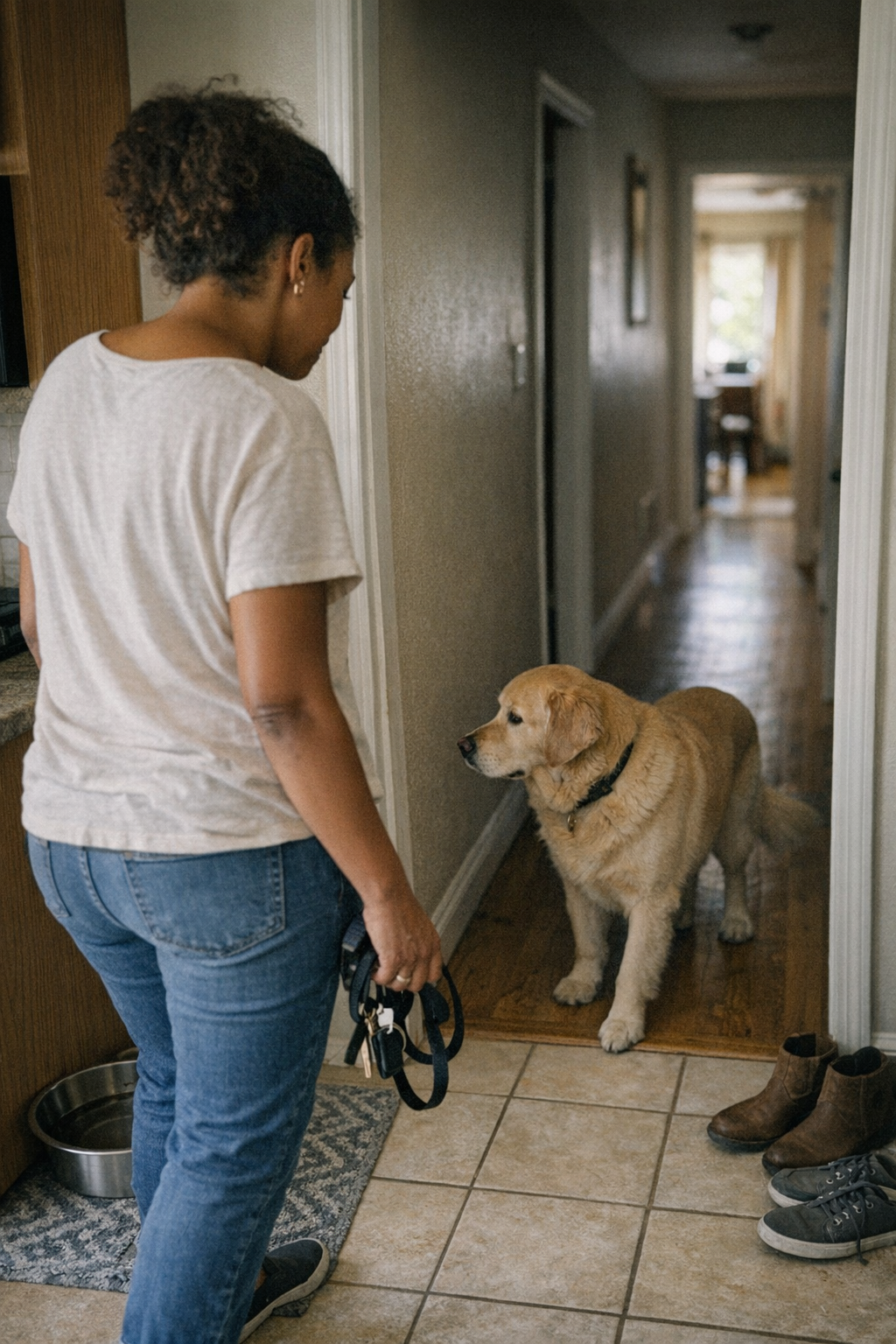
    Most dog routines don’t collapse because of giant disasters. They grind down one small block at a time—the tipped-over bowl in the walkway, the towel you can never grab when you actually need it, the leash that somehow ends up under a chair just as you reach for the door. It’s this hidden, repeated inconvenience that keeps walk after walk feeling slower and a little more chaotic. If you’ve ever juggled keys, leash, and treat pouch only to find your dog planted at the doorway—waiting, hesitating, or circling in a blocked hall—then you’ve met the everyday friction that makes or breaks a dog-friendly setup.

    The Hidden Cost of Everyday Thresholds

    Think about your last ordinary morning. Breakfast ends, the water bowl sits in its usual spot, and you both head for the door—until the pause. Your dog stops with one paw forward and the rest of the body angled back, as if unsure about crossing into the next room. It isn’t dramatic, but the seconds stack up: three beats for a cautious look, a sidestep to avoid the bowl, maybe a loop back to check if you’re following. What looks like a minor stall starts dragging out the transition, making each step toward the walk feel heavier and less coordinated.

    This kind of micro-delay isn’t an isolated quirk—it becomes its own routine. By the third or fourth day, you’re preemptively calling, reaching, nudging, or shifting things just to keep things moving. The smooth handoff from inside to outside is lost to repeated interruptions: slow steps, leash detours, adjusting the towel you don’t actually have in your hand yet. Day after day, routine friction compounds until even the simplest walk or cleanup feels off-schedule.

    Micro-Frictions Multiply: Why Small Pauses Matter

    One slow exit doesn’t change much. But when the same snag resurfaces every morning—hesitation at a threshold, a bowl blocking the exit, tangled leashes on the doorknob—it exposes a deeper issue: setup friction. These pauses are less about your dog’s quirks and more about what you’re bumping into, stepping over, or reaching past every day.

    The cost isn’t just lost seconds. Owners start every outing by sidestepping a misplaced mat, bending around a pile of towels, or shifting a bowl that keeps sliding back into the same old spot. The small workarounds—nudge, step, repeat—bleed the energy out of your day before it even starts. Sometimes you cue your dog, sometimes you just grab whatever’s blocking the way too late, but the drag stays. The routine gets chunkier, less automatic, less calm for everyone involved.

    The Cluttered Exit: When Setup Gets in the Way

    Placing bowls and towels for easy cleaning seems practical, until it means reaching past your dog every morning or shuffling gear in the only open doorway. Hooks at the wrong height or tucked-away grab bags turn quick exits into a shuffle zone. Even a space that “looks” organized at a glance often hides physical blockers—mats that slide when paws hurry over them, or beds that spill into the path and require repeated straightening. The difference between theory and daily reality shows up right at the choke points: doors, thresholds, hallway bends.

    How Small Adjustments Change the Whole Morning

    The difference between a routine that looks tidy and one that actually flows is simple: routines fail or succeed in motion. The setup can be visually spotless and still force delay if it blocks or interrupts you at the busiest moments.

    Picture it: your dog hovers in the doorway, uncertain, while you’re juggling keys and trying not to drop the leash that somehow migrated under yesterday’s mail again. The bowl’s edge is just far enough into the walkway that your dog detours. You reset, your dog stalls, momentum drops. Morning walks start edgier; your energy flags before you even leave the house. The real damage isn’t visual—it’s how the repeated stutter throws off everyone’s balance, day after day.

    But fixing it often comes down to a single move. Slide the bowl a foot away from the high-traffic zone. Rehang the towel so it’s actually beside the door, not above or across the room. Clear the mat just after breakfast instead of letting it sit until noon. These tweaks don’t make the routine perfect—they just remove the speed bumps. Dogs cross thresholds without pausing, owners reach what they need in one try, and suddenly the whole morning moves faster. In practice, even shaving a minute off a repeated snag changes the rest of your day.

    Recognizing Patterns: Is It Disobedience or a Setup Issue?

    If your dog always pauses at the same spot, don’t just chalk it up to stubbornness. Watch what happens: does it follow every meal, post-walk return, or water break? Every time the dog changes rooms and hesitates, odds are strong there’s something physical in the way that only shows up during real movement—not during still moments when the space looks fine.

    When routines repeat, setup problems reveal themselves. Owners often spend weeks stepping around a half-rolled mat or bumping the same bowl, treating the interruption as normal—but these micro-frictions aren’t random. Maybe the towel is always just out of reach after a muddy walk, or the spray sits too far away for real cleanup. The delay becomes a pattern, and the pattern points straight to what needs shifting.

    Visual Order vs. Real Flow

    Neatness in static space is not the same as daily function. You can hang every leash, tuck every bowl, and fold every bed, but if doing that blocks smooth movement, the price is paid in slower, jerkier transitions. A space can be perfectly staged for a photo and still force you into detours, bending, and last-minute reshuffling with every walk or cleaning routine.

    Working Through Real Friction: Everyday Scenes

    • Leash Hunt: You’re ready at the door, but every morning the leash is under a pile of toys, or caught around a bowl you have to move first. Instead of grabbing and going, you’re pausing and untangling—while your dog gears up to bolt.
    • Post-Walk Wipe Delay: Muddy paws arrive, but the towel is across the room or buried under jackets. By the time you dig it out, there’s already a new trail to deal with.
    • Bowl Blockade: For convenience, you leave the bowl where feeding’s easy—but in practice, it blocks the path to the door. The dog slows and side-eyes, you nudge and shuffle. Same awkward route every day.
    • Looks Clean, Moves Messy: The room is tidy on Sunday, but by Wednesday, you’re repeatedly moving beds, shifting toys, and clearing mats just to cross the floor, especially when time is tight.

    From Stagnant Setups to Smoother Mornings

    Permanent change rarely means a big overhaul—it’s about noticing what keeps interrupting the day and fixing the real problem spots first. Instead of blaming the dog or hoping the next new organizer will fix everything, focus on what actually gets in the way at key points. Do you have to step over the same bed, reach behind the same stack of bowls, or unhook leashes from a spot that’s always just out of reach?

    Direct resets work best:

    • Relocate food/water bowls immediately after use. Even a small shift away from doorways or main walkways clears routine traffic jams.
    • Hang leashes and cleanup bags at real grab height. If you have to move shoes or sift through a shelf to find them, the system isn’t working.
    • Keep towels or wipes where muddy paws actually land, not in another room.
    • Clear walking corridors of beds, toys, mats—every day, not just on organized weekends.

    Refreshing the Routine Without Starting Over

    You probably don’t need a total redesign. The right changes—a bowl moved out of the walkway, a bed relocated, a towel finally stored where it needs to be—show immediate payoff in daily use. Each friction point erased makes routines feel less strained and more intuitive. The “improvement” isn’t about perfection, but about matching the home to the actual pattern of daily resets, cleanups, and transitions between activities. In the long run, spaces that move with you—not just look good—win out, even if an outside observer doesn’t see the full difference on a tidy morning.

    What to Watch For Going Forward

    Fixing one choke point may uncover others. Take a critical look after every change: did a crate door just become the next new obstacle? Did moving a bowl clear the hall but crowd the feeding corner? Everyday dog life is a feedback loop, so expect new pinch points to crop up as routines flex and spaces shift. That’s normal. The real win is staying alert to these micro-frictions—and adjusting before small hurdles turn into daily slowdowns.

    Don’t wait until things feel out of hand

    Dog

  • How Simple Floor Cleanup Transforms Your Daily Pet Feeding Routine

    Why Pet Area Cleanliness Breaks Down

    Pet feeding spots don’t fall apart after a major spill—they break down in the quiet, repeated misses: the water that drips when you refill, the crumbs that slide past the food mat, the sticky spot you promise to wipe later but forget. The kitchen floor under the bowls is always where mess accumulates fastest, even in homes that look tidy at first glance. Skip just one wipe, and the reset drags out next time—cleaning shifts from a 10-second swipe into a multi-step chore. The difference between a calm, workable pet area and an everyday hassle is almost never dramatic, but you feel it each round: bowls that stick, mats that slide crooked, dust tracked into shared space.

    Over time, minor shortcuts backfire—one dried kibble, one patch of missed water, one reach for the bowl where your sleeve gets dirty. With every small delay, you’re forced to work through more buildup. The “clean” version of the area becomes harder to reach and even harder to keep.

    Everyday Friction: What Actually Happens

    Most cleaning friction hides in the daily basics: the floor under feeding bowls catches every drop and stray crunch, no matter how careful you are. Even a well-placed mat falls short—a few meals in, kibble bounces over the edge and water finds its way underneath. Moving the mat reveals a crust of residue and crumbs jammed against the baseboard.

    Postponing the cleanup, telling yourself you’ll get to it after work, means the floor turns sticky, crumbs harden, and hair or litter clings before you even get to the main mess. The moment a quick reset becomes a project, the routine breaks pace. Suddenly, every feeding means moving supplies, sweeping aside clutter, or scrubbing more stubborn spots.

    When Setup Hurts More Than it Helps

    Some fixes seem clever but cause new headaches. The mat you chose for spill protection? It catches crumbs but demands lifting, shaking, and cleaning underneath in addition to around. The “easy” cleaning spray or towel is across the kitchen or buried behind other supplies. Each layer to protect the floor adds new steps to your evening routine—what was meant to control mess ends up making resets longer and less likely to happen in the moment.

    Friction leaks in from every angle: the mat blocks the cabinet you need, the water bowl sticks against a mat edge and spills, cleanup supplies migrate into shared space for easier reach, and your kitchen now permanently hosts out-of-place tools and stray pet items. Instead of handling care faster, your setup crowds everyday movement and makes every part of the routine slightly less smooth.

    The Ripple Effect: When Delays Take Over

    Ignore one patch after breakfast, and by midweek, you’re chasing mess all over: crumbs trail past feeding spots, wet pawprints reach the sofa, rings of dried food form at corners, and stray hair piles up in new places. The failed reset doesn’t stay hidden—mess migrates, adding steps to your day and forcing late-night or early-morning catchup.

    Suddenly, every small routine—letting the dog out, picking up toys, swapping water—requires clearing a trail or circling back to fix what you skipped. Delayed cleanup stops being background and starts shaping how—and when—you can move through your own space.

    The Smallest Change: What Actually Solves It

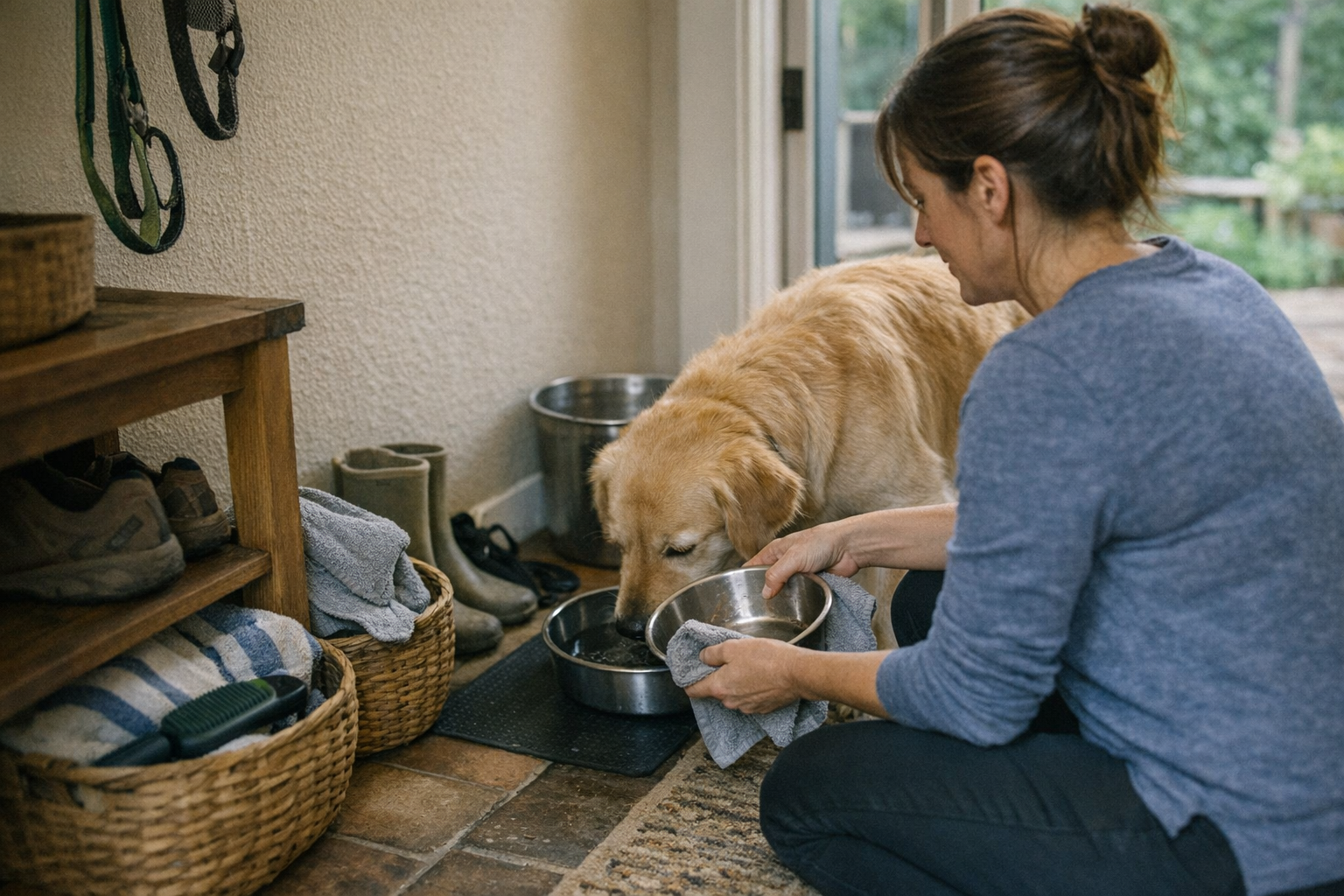
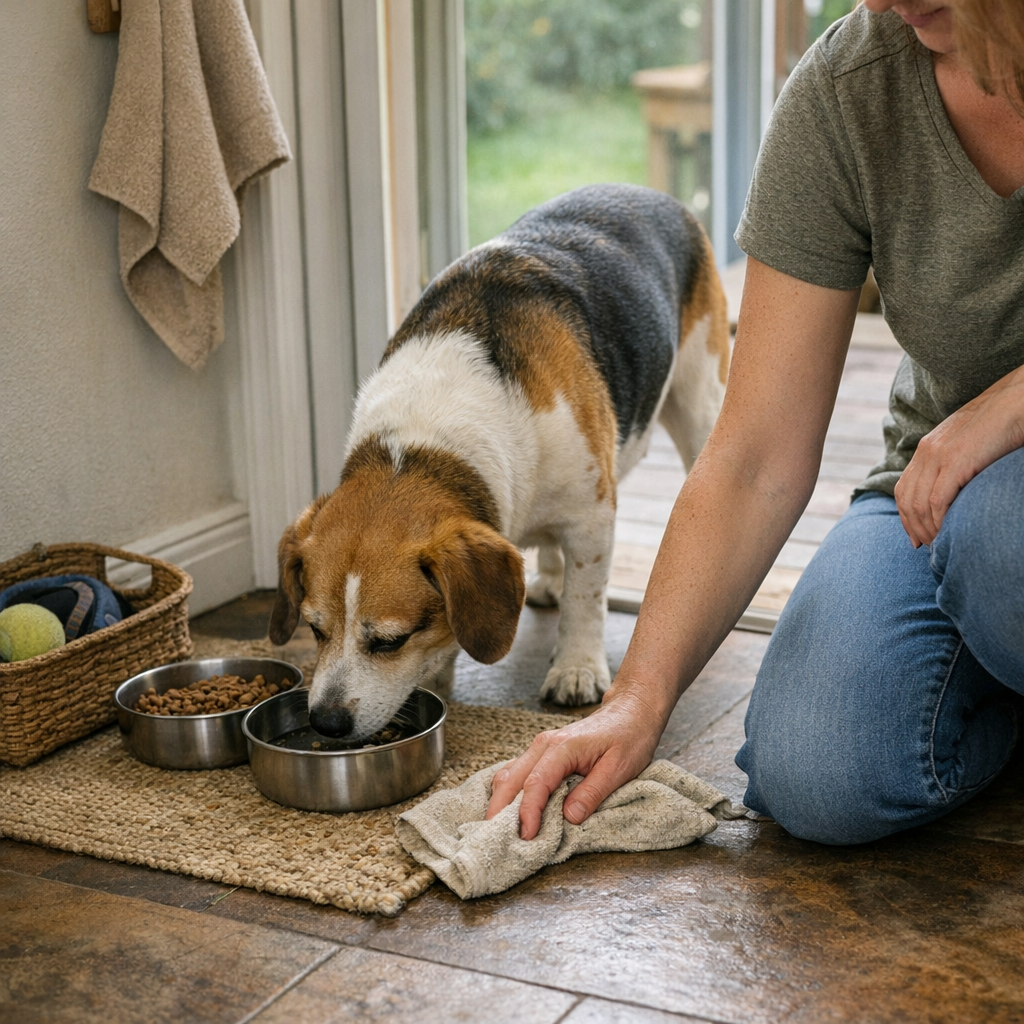
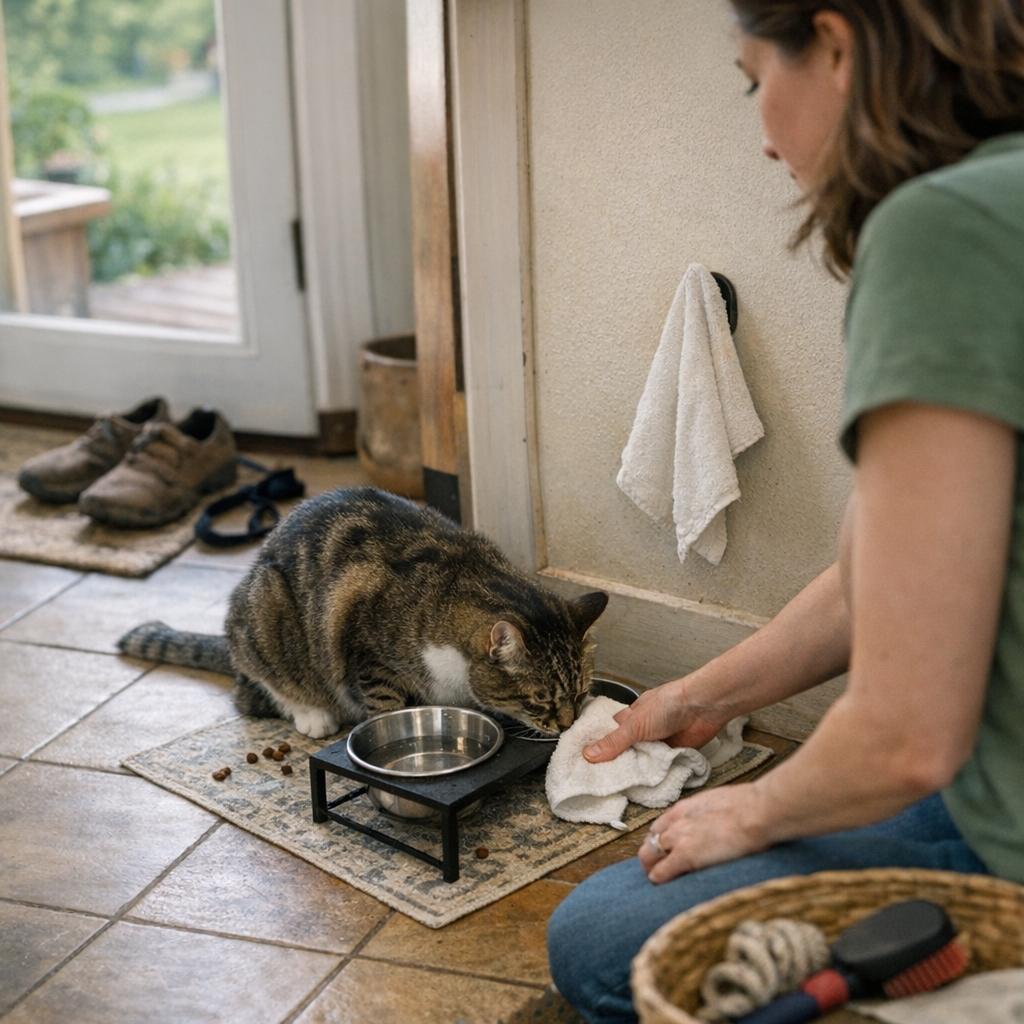
    The most effective fix is never complicated: keep a basic, absorbent towel hanging within arm’s reach of the feeding area. Not hidden in a closet, not across the kitchen—right there, every time. After each feeding, a quick swipe catches spills before they harden or spread. No sprays, no scrubbing, just a single pass before mess becomes build-up. Reset feels part of feeding, not a dreaded chore.

    This single step—done when you’re already at the bowls—saves minutes daily and keeps small problems from turning into full resets. Cleanup stops piling up. The area actually functions from one round to the next: not just neater, but easier to keep that way. The routine never drifts into project territory, and the floor is always ready for life to continue without repeated interruptions.

    Practical Cleanup Guidance—FAQ

    How do I prevent pet food mess from sticking to the floor?
    Wipe under and around the bowls immediately after feeding—using a towel that’s always on hand, not stored away. The sooner you handle spills and crumbs, the less any mess lingers or becomes stubborn work later.

    Is a mat enough to keep the feeding area clean?
    No—every mat only helps partially. Kibble and water slide past the edges after a few uses, and what’s meant to protect ends up hiding mess until it’s worse. Plan to lift and wipe under mats often; don’t trust a single “solution” to do all the work.

    Why does cleanup get harder over time?
    Each missed or delayed wipe-down hardens crumbs and lets water marks set, making every reset after that take longer and feel heavier—especially once extra mess spreads into other rooms and routines.

    From Looks to Function: What Actually Matters

    A pet area that appears clean after a reset doesn’t mean the care routine is friction-free. Mess you can’t see—blending into corners or under mats—still drags on the next round, and small missed steps add up. If your towel or cleanup tool isn’t always within easy reach, you’ll keep pushing off that last swipe, and setup that once looked organized quickly slows down as real use exposes what’s missing.

    Design your spot for actual daily use: hang a towel right by the bowls, cut the reset to a wipe, and keep cleanup basic and easy to put back. Whether it’s after meals, refills, walks, or bedtime checks, the right small step keeps everything running—no overhaul, no buildup, just daily flow you can count on.

    See CalmPetSupply’s collection for more practical solutions

  • Why Brushing Cats After Naps Simplifies Grooming and Reduces Fur Spread

    Every indoor-cat owner will recognize the pattern: you set out for a quick grooming session, only to realize fur has drifted under the dining chairs, the brush is missing again, and what looked like a two-minute job has become a scattered, ongoing mess. Brushing “whenever you remember”—in the middle of checking the water bowl, or right after you’ve tidied the food area—sounds practical but never simplifies the routine. Instead, the room keeps collecting stray hair, tools go wandering, and you find yourself repeating cleanups you thought you’d already handled. In daily home use, the invisible cost of sloppy timing and wandering tools isn’t just the visible fur—it’s the slow drag on your ability to reset, keep shared spaces usable, and avoid those corners of the room that keep turning up debris.

    When Good Grooming Habits Go Wrong

    The “just fit it in anywhere” mindset falls apart fast once friction begins stacking up. Brushing your cat on the move—by the kitchen counter, at the edge of a shared sofa, or while squeezing past their favorite resting chair—feels efficient until you realize:

    • Fur has drifted beyond control: Hairs show up under tables, along hallway edges, behind the litter mat—forcing extra sweeps in areas you use most.
    • Cleanup gets disjointed: That “fast” brush sparks a chase for the vacuum or dustpan, and fur escapes the original spot, triggering a string of unexpected wipes and resets.
    • Tools keep vanishing: The brush is on the window ledge today, under a cushion tomorrow, or lost behind the TV by the weekend—wasting minutes each time you try to stick to a routine.
    • Each session feels heavier: Mats slip, blankets need a full reset, surfaces catch more debris than expected, and the room never really stays “done.”

    Over a few days, these small inefficiencies multiply. Instead of a single contained reset, you’re chasing the same mess through different rooms—never sure why it always returns, even when things seem under control. That’s when home order starts to feel fake: every area looks managed after each cleaning sprint, but hidden fur and stray tools quietly restart the cycle.

    Why Post-Nap Brushing Shifts the Tone

    Most indoor cats revert to favorite nap corners—sun patches on the couch, cushions by a window, or a tucked-away mat. After a nap, your cat’s energy drops, her urge to escape or dash off is muted, and she’s slow to transition. This post-nap pause is the short window when fur, tools, and containment finally line up—and you can shape the room’s mess boundaries without fighting the daily current.

    The Daily Flow Change You Can Feel

    After just a week of brushing only after naps, a new pattern sets in:

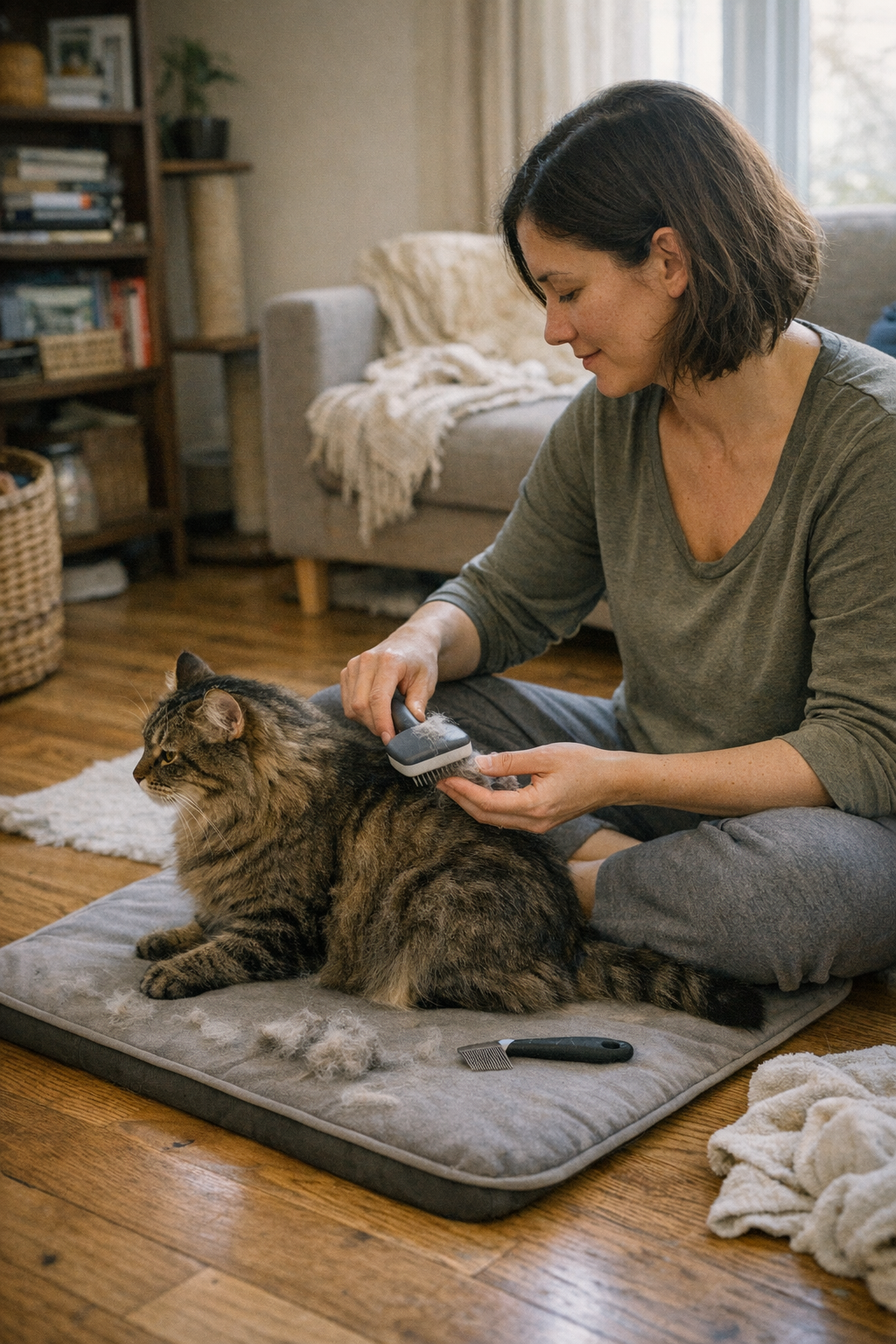
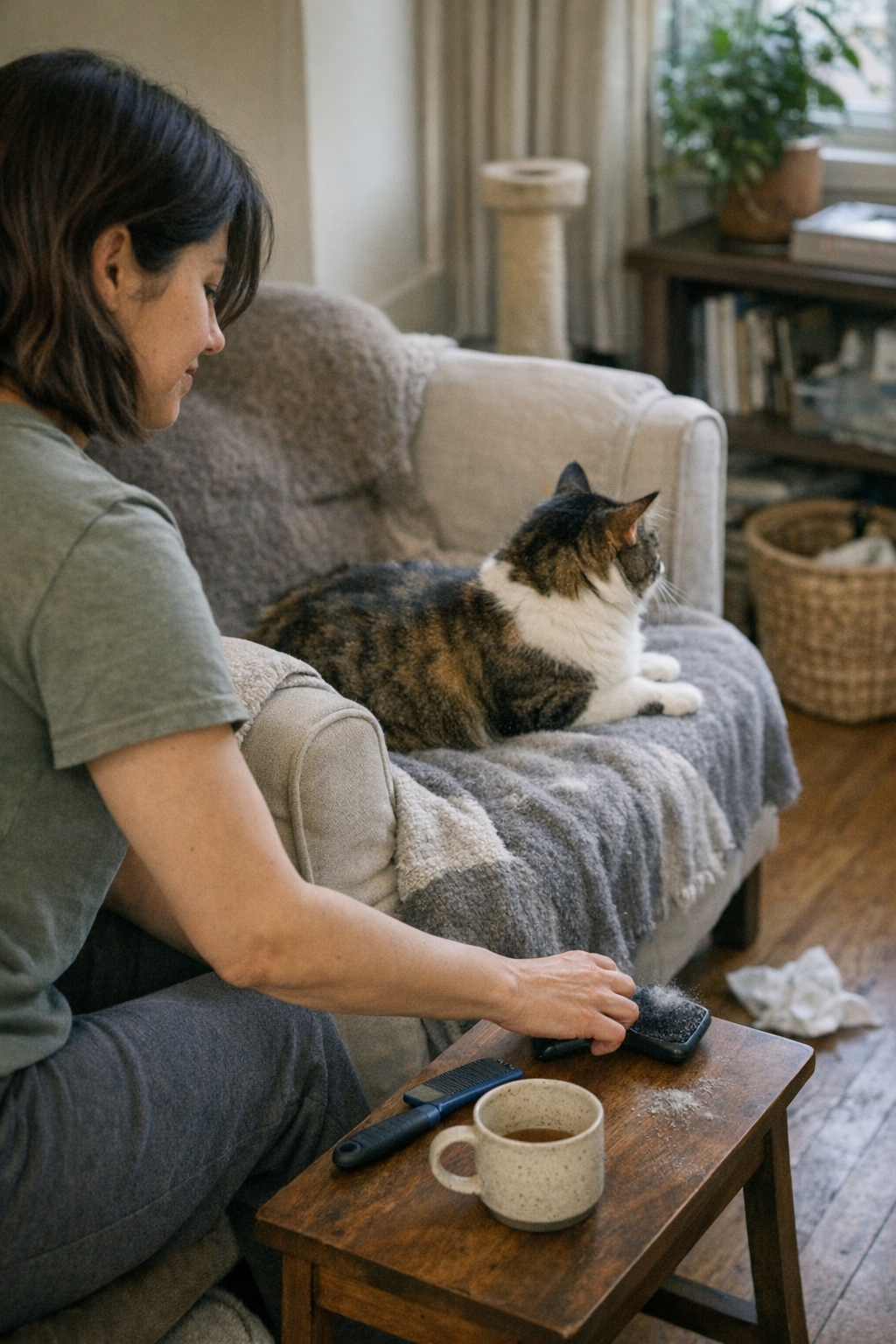
    • Fur collects almost entirely on a dedicated mat, blanket, or patch—corralling hair into one spot rather than scattering it behind every chair leg.
    • The surface you actually need to clean is predictable—no more awkward stretches under the fridge or food shelves.
    • Your cat stays grounded—less likely to squirm, leap, or thread hair through a trail of toys, since she’s emerged groggy instead of wound up.

    The difference isn’t perfection; it’s control. With the right timing and a single setup zone, cleanup shrinks to one shake-out or quick fold—rather than piecemeal retracing through the house, vacuum in hand.

    The Cost of Brushing as Afterthought

    Multitasking grooming—grabbing the brush during morning coffee, or while folding laundry in a busy room—feels clever in theory but breeds chaos in practice:

    • Cats, in play-mode, eject fur far faster—twisting, wriggling, and tracking loose hair into food lanes, water mats, or even straight onto your lap.
    • Loose fur now lands directly where it’s hardest to keep clean: around bowls and litter setups, in shared walking paths, or right at a room’s entrance.
    • The “quick job” fragments: the brush loses its home, feeding setups need a full wipe, and what started as time-saving ends as double effort.

    This invisible buildup isn’t just cosmetic: the next day, you’ll feel fur prick under bare feet, spot it beside the water bowl, or find your own mood turned sideways by yet another unfinished corner. Instead of routines clicking into place, they keep interrupting each other—and you retrace the same corrections on repeat.

    Small Shifts, Noticeable Wins: Where, When, and How You Store the Tools

    You don’t need a new gadget—just a focused setup. The biggest gains come not from what you brush with, but where you store the brush and when you use it.

    Give Your Tools a Home, Not a Hiding Spot

    Find your cat’s best-loved nap zone—the sunny corner, the window seat, the armchair fleece. Place the brush within arm’s reach of that spot, not banished to a drawer or floating across three rooms.

    • If the napping surface has its own mat, fleece, or towel, use it as your fur boundary: it’s easier to shake one piece outdoors than to chase single hairs from every edge of the room.
    • A tucked-away brush, slipped beneath a cushion or stowed behind a rest mat, stays findable—but only if you always return it here after use.

    Boundaries Over Perfectionism

    No setup eliminates shedding, but boundary brushing works sooner than endless sweeping. One soft mat, folded throw, or tucked towel—paired with immediate after-nap use—protects the shared spaces from overflow. Debris lands where you expect it, and a quick shake or swap resets the routine before it spreads. Even low-tech solutions gain power when they stop the problem’s path at the edge of the nap zone, not once it’s underfoot in every other room.

    When Routine Shifts, What Really Gets Easier?

    The win isn’t in skipping effort, but controlling it. When you pair brushing with your cat’s nap schedule—not a gap in your own—it means:

    • There’s no stray fur leaping onto counters or into water bowls; no detour to vacuum a food mat after the fact.
    • The brush isn’t lost to laundry baskets or bathroom shelves. It waits where you need it, not “somewhere” in the apartment.
    • Resets shrink to seconds—a shake, a swipe, a folded-up throw—because mess never gets momentum.
    • Your cat senses the pattern too: she tolerates brushing as a predictable, low-energy moment, rather than darting off with the first comb’s pass.
    • The feeling of catching up overtakes the headache of always being slightly behind.

    That said, friction still lingers. Mats still gather hair, laundry piles still come, and the occasional tuft escapes under the nearest chair. Every home has its blind spots: fur sticks to clothes, or clings between couch cushions. But the old pattern—resetting every space every day—gives way to a calmer pace, fewer corrections, and a room that feels as manageable as it looks.

    Indoor Cat Life as It’s Actually Lived: Mess Boundaries and Relentless Return

    Real routines aren’t polished. Tools wander, fur gathers, and the same pinch points resurface unless you reset the structure itself. If you manage work-from-home, tight shared rooms, or frequent movement between cat spaces and people spaces, you notice immediately when your system works—or quietly falls apart. The benefit of tying brushing to nap times and designating tool storage is measurable in shorter resets, less trailing debris, and a room that interrupts your day less often.

    One Week In: A Room that Finally Holds Together

    Midweek, with the brush stored under the window seat, improvement shows not in big change but in smaller interruptions: hair lifts easily with the blanket, fur doesn’t tumble out on every step, and refilling the water bowl or resetting a feeding mat skips the extra wipe. Instead of a home that looks staged but falls apart by the afternoon, your setup now stays one step ahead of the mess cycle.

    Bringing It Home: Building Smarter Grooming Into the Routine

    Storing the grooming tool within arm’s reach of your cat’s nap spot and brushing during low-energy wakeups is less about “doing it right” and more about dodging a chain of small, repeated inconveniences. Containing the mess early means the room becomes easier to reset, not just cleaner on the surface. Most indoor-cat setups are only as good as their weakest point—usually wherever tools wander or routines slip. Shifting storage and timing isn’t a cure-all, but it’s the quickest way to keep fur from taking over the rest of your week. For practical tools and boundary setups that fit