Author: jaesoon_admin

  • How a Simple Cat Feeding Setup Cuts Clutter and Impulse Buys

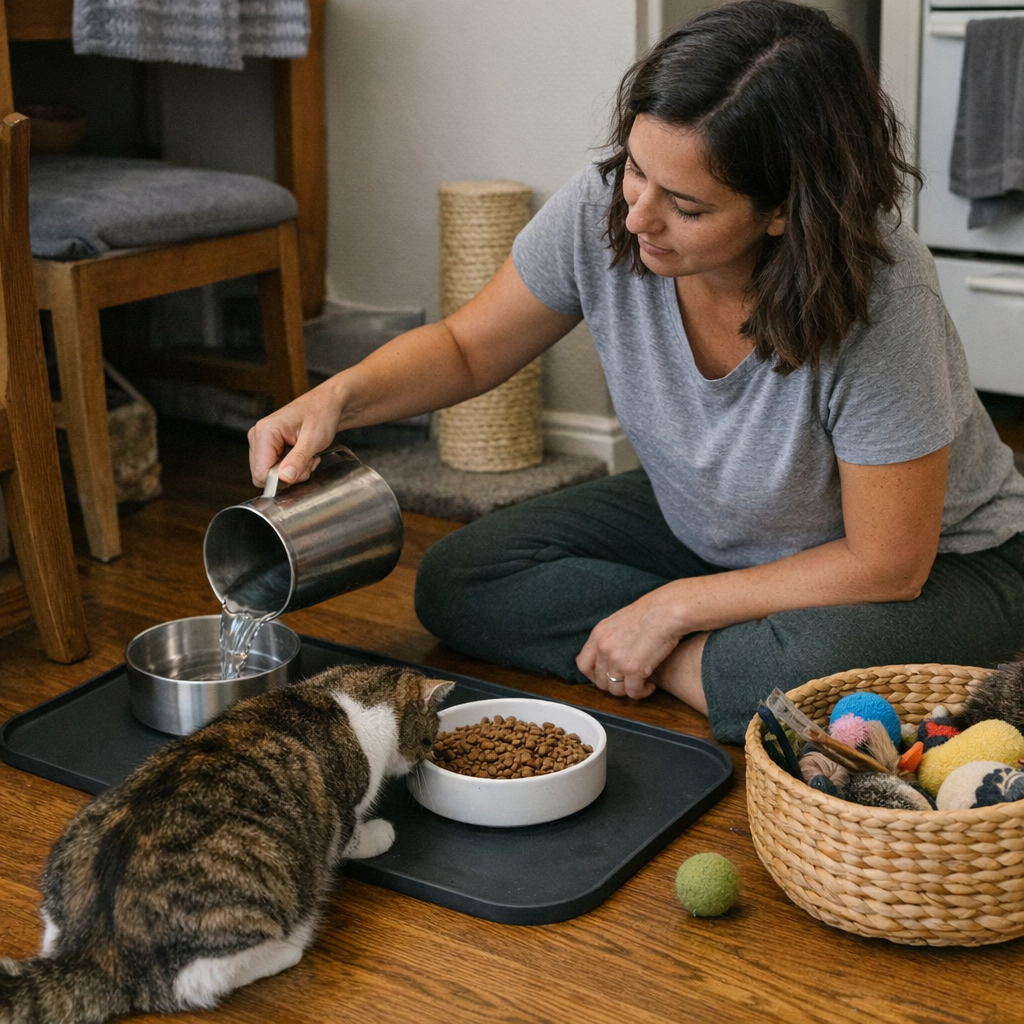
    The real test of an indoor-cat feeding setup isn’t how neat it looks after one tidy—it’s what starts to go wrong by the third day of daily routines. The mat that promised to corral the mess is now collecting a fresh fringe of kibble, a supposedly anchored bowl has slipped just far enough to block your cabinet door, and the same one-eyed toy keeps reappearing right where your foot wants to go. Resetting the area starts taking longer each time. Soon, you’re not just wiping down—you’re nudging bowls, clearing a new path for water refills, and moving that “quick-fix” storage bin out of the way yet again. The surface looks managed in photos, but the real-life strain piles up, leaving every reset a little slower and less convincing. For most cat owners, this friction isn’t dramatic. It’s unrelenting: small chores multiplying, messes creeping farther into shared space, and the whole area drifting away from the “easy upkeep” you meant to build.

    The “Almost Tidy” Trap: Why Setup Shape Matters More Than Surface Order

    It’s easy to judge a cat zone by how fast it snaps into visual order for unexpected guests. But after a day or two, the chaos reasserts itself: bowls edge into the walkway, toys trickle from their bin, and a constellation of crumbs resettles between mat and floor. You notice it right when you want to do something else— another refill pause, another sweep for scattered food, another tray drag just to reach the water bowl without bumping elbows with your own cat or shifting three other things first.

    Each “organization upgrade”—an extra bin here, a cuter mat there—offers a brief sense of progress but quietly increases daily handling. The real work just shuffles around. Instead of lessening your burden, these patches build a maintenance loop: another thing to move, align, or wipe down at every turn.

    Everyday Friction in Real Home Use

    The pain points that push you to reset aren’t dramatic—they’re relentlessly practical. There’s the grit line sneaking out from under the food mat, the cleaning wipes stranded behind a toppled bowl, or the barefoot trip into the kitchen where you step on last night’s plastic ball. “Managed” becomes constant interruption: every refill, every wipe-down, every sweep finds an item in the way or a surface you can’t quite clear in one motion.

    A week of this, and you’re losing time: trays drift off their mark, letting litter spread into the hallway; a comfort mat, once helpful, turns refilling the water bowl into an awkward sidestep; toy bins multiply but sprawl wider as the week wears on. Resets get slower, and the border between your cat’s zone and the rest of the house blurs as pieces leak into main walkways and shared rooms.

    The Repeated Reset: Where Most Setups Fall Short

    Even the most organized feeding area looks fine immediately after a reset, but gaps reveal themselves in real use. A bin labeled “toys” or “clean-up” only helps until a needed item is buried or tipping one thing dislodges half its contents. A mat that filled the space when you set it up now leaves windows for crumbs, and cleanup tools are always just far enough away to slow you down.

    Here’s what breaks down: bowls and bins clump up and block each other, so even a simple refill becomes a three-step diagonal shuffle. Mats don’t catch every spill, and wipes or dustpans are “close”—but out of practical reach right when you actually need them at the spill site. Tidy in principle, high-friction in practice.

    The Slow Creep: How Cat Items Push Into Shared Spaces

    You start with a compact, defined spot for cat life. But after a few weeks, a trail of stray litter points toward the bathroom, and plush mice dot the floor from the fridge to your desk. It’s not a dramatic mess but a repeated seep—each tidy-up fades fast, and the “cat zone” quietly expands, interrupting your day at odd angles.

    This isn’t just about having to clean—it’s about how often. The misaligned bowl or knocked-over bin is never where you expect it. That feeling of control dissolves under stacks of micro-messes and repeated tweaks you never planned to spend time on.

    Instant-Fix Purchases: Short-Term Calm, Long-Term Work

    Every new irritation—a drifting food bowl, a mat that sheds instead of containing—pushes you into another online search (“This one might solve it, right?”). But each fix plants its own burden: another place to stoop, another edge to line up, another surface to monitor. You don’t get freedom; you inherit more steps. The root routine—refill, wipe, reset—rarely gets lighter.

    Real Relief: The Impact of Simple, Anchored Layouts

    The setups that hold up over time don’t just look better; they act as friction-breakers. The most valuable improvement comes from layouts and materials that prevent drift, sprawl, and routine disarray. A basic, broad silicone mat that actually fits both bowls and cuts off side mess—paired with open, reachable storage for toys—makes a difference in lived use, not only in theory:

    • Bowls stay anchored—no creeping into main traffic paths or needing a midweek reset. Reaching for a refill doesn’t mean rearranging the whole area first.
    • Kibble gets stopped at the edge, not the far corner. Clean-up shrinks to a single swipe, not a furniture-corner hunt for lost crumbs.
    • Toys stay contained but accessible. An open bin—close to the play zone but not camouflaged—means lost foam balls are found before midnight and dropped back in with zero search-and-rescue effort.
    • Refill and reset break the full-cycle grind. When every item returns to its spot without conscious effort, you don’t keep reaching for more organizers, and the daily wipe-down happens at the right moment—less often, less annoyingly.

    Example: A Week with an Improved Feeding & Play Area

    The change isn’t instant. Day one and two feel familiar, but by day three the difference lands: you’re not bending twice to move a sliding bowl; the mat actually collects mealtime debris instead of letting it sneak onto tile; toys get played with but always find their way back to a visible bin. The urge to buy another bin or realign the whole area fades away—reset gets quicker, and that stubborn crumb line becomes an easy, one-pass fix instead of a drawn-out routine under baseboards.

    Recognizing Signals: When Your Setups Need a Change

    The most obvious sign your setup is broken? Repeated reset friction. If you’re sliding bowls around just to wipe, lifting mats to reach a spill, or still stepping over the same tired toy no matter how many resets you do, your system is fighting your actual patterns. Every “solution” that doesn’t fit how you live just creates another maintenance job.

    Ask yourself: Does the area keep pulling you into more fixes, or is it basically stable between resets? Stop-gaps that keep spills and messes contained, and arrangements with storage within true reach—not theoretical but real—are what cut down repeated work. Upgrades work when they let you refill or clean without extra shuffling or new purchases each week.

    Lasting Control Comes from Structure, Not Surface Calm

    The feeding setups that actually lighten routine aren’t just visually neat; they’re built for reset speed and repeated use. That usually means fewer total items—but ones that anchor, separate, and open the right way. Storage within natural reach, mats that do their job at the boundary instead of hiding fallout at the edges, and bowls that resist creep save daily seconds and keep “clean” from turning into a background chore loop.

    Nothing is perfect. But the difference shows in the ordinary: water gets topped up without dragging a mat, sweeping doesn’t mean threading your way around bins, and you forget about new organizers because the space finally matches the rhythm of real use. Improvement isn’t about more stuff or constant upgrading. It’s about making resets easier—and daily cat life smoother—without turning every day into another rearrange-and-tidy session.

    Find practical, real-use solutions for your feeding, water, litter, and shared home-cat zones at StillWhisker.
  • Optimizing Wall Storage by Removing Rarely Used Items for Efficiency

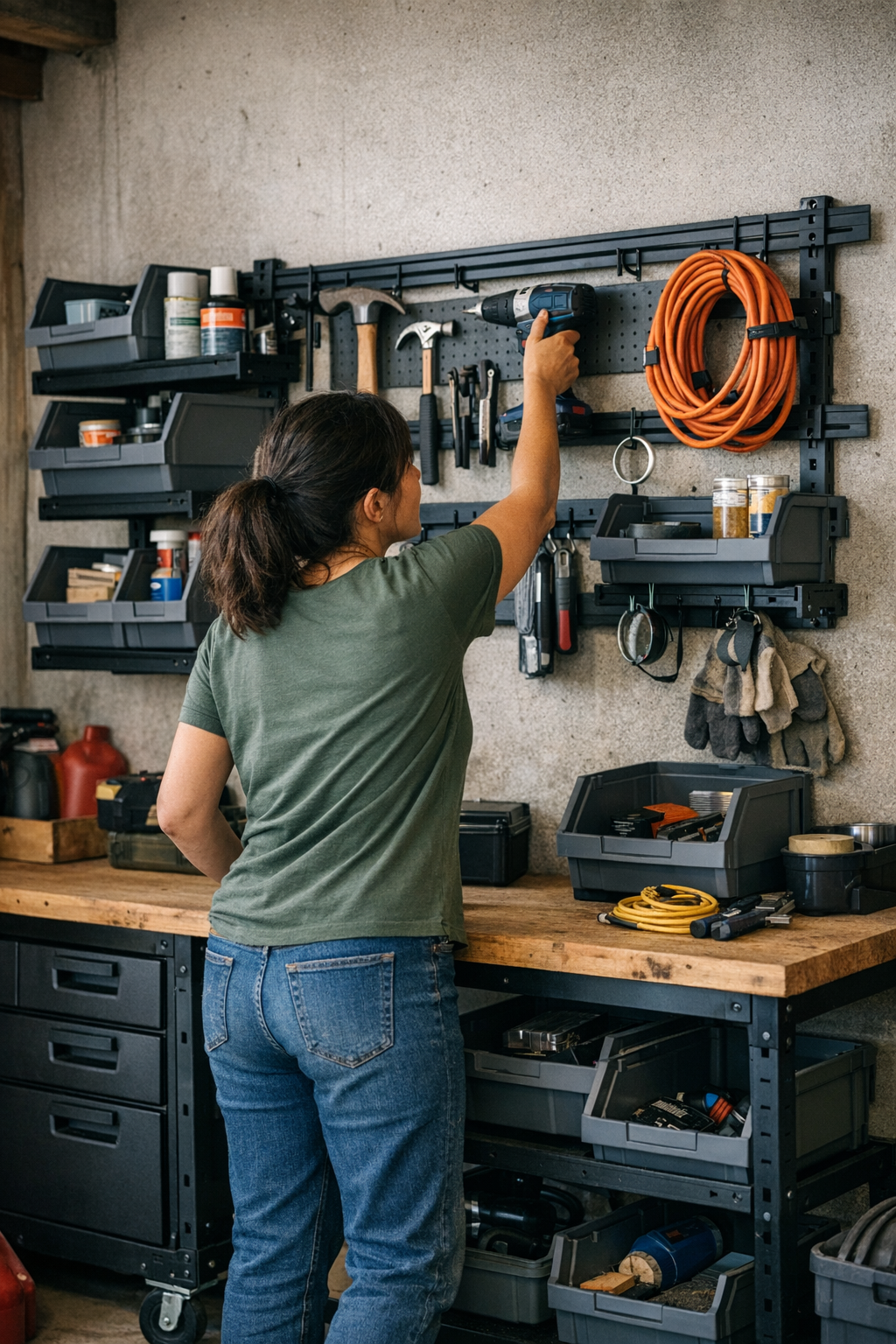
    Hang up the last basket, step back, and savor that clean, modular wall of storage—until real life sneaks in. By the third hectic Saturday in your garage or workshop, that perfectly lined-up wall starts to resist you: the system that was meant to clear space now forces you to pause, shift, and sidestep. Order wasn’t supposed to slow you down, but now every return trip or new project exposes the friction. Welcome to the gap between a storage setup that looks organized and one that actually works for you.

    When “Organized” Turns into Ongoing Friction

    There’s an urge to fill every possible slot, hook, and basket—especially when you finally get tools off the floor. It’s tempting to cover every inch, convinced this is maximum efficiency. But as the weeks go by, the wall you were proud of slowly builds hidden obstacles. The tools you reach for every session are blocked by bins you only touch twice a year. That stretch to hook up the drill becomes a delicate dance around bags or boxes stacked for “just in case.”

    Real Use Snapshot: The Blocked Bench Zone

    The scene’s familiar: you start a few routine projects on a weekend. By mid-afternoon, your bench is busy, and at the end, you try to hang everything up—except now you have to set down a rolling cart “just for a second” to make room. An extension cord is squeezed behind a shelf, and the return of the hammer means shifting three other items into awkward new territory. Row upon row of tightly packed organizers look ordered, but each gets in the way of the next step. It’s only when you’re trying to reset—while tired, late, and ready to be done—that the setup reveals just how unhelpful too much “organization” can be.

    More Storage, Less Flow: Where the Promise Breaks Down

    Packing in more doesn’t guarantee better access. When every rail or shelf is claimed, there’s no room for decisions on the fly. You lose:

    • Quick grabs for everyday tools—because first you hunt under or behind less-used items
    • Flexibility to shift gear mid-project, since every platform is already spoken for
    • Uncluttered returns at the end of the day; instead, you’re forced into a game of “where can this even go?”
    • Clear movement through the zone—every pass means squeezing past overflow or avoiding that one bin jutting out

    What started as a visual solution quietly becomes a recurring speed bump. The space isn’t working for the way you actually move through it. Hidden dead corners don’t get better—they just collect more overflow.

    Streamlining the Wall: Subtract First, Then Adjust

    The secret isn’t more accessories, but less clutter in prime spots. The first time I took a hard look at my main wall, I noticed half the lineup went untouched between seasonal projects. Moving anything not in constant rotation to a lower shelf, an out-of-the-way bin, or even a side cabinet, made the zone above my bench instantly lighter to use. My favorite wrench could finally hang on its hook without bumping into a row of clamps I only use once in spring, and the rail that used to snag cords stayed open for tools I actually put back each week.

    The High-Use Zone: Reserve It for Your True Essentials

    The biggest breakthrough comes here: Save wall space for gear you grab or store weekly—nothing else. Track your routines for a few busy weeks. You’ll see: there are things you instinctively reach for each time, and others that linger, untouched, just out of habit. Clearing the latter out doesn’t make the wall sparse—it makes movement clean and predictable, especially at crowded moments above your main bench or work surface. No more bumping into seasonal gear; your flow is no longer interrupted by tools you barely remember adding.

    Practical Drill: Audit After Real Routine, Not Just Setup

    Don’t decide what gets wall space just by the first night’s arrangement. Run the space through normal, even messy use—multiple sessions, real resets, full clutter. Which bins or tools never move? That’s your cue: shift those off the wall. Give prime placement only to what’s proven to demand it. When the wall breathes, resets happen quickly. Overstuffed zones no longer become the bottleneck at the end of a long day.

    What Happens When You Clear Too Much?

    Balance matters. Clearing the wall doesn’t mean creating a vacuum. If only two screwdrivers remain, you’re likely to start hunting for essentials buried somewhere else. The trick is to set up rails and hooks for daily (or nearly daily) tools, then stage occasional or oversized gear on a side shelf or in a mobile organizer—always within reach, never crowding out core flow. The goal isn’t empty space, but a layout that feels intentional, not overstuffed or makeshift.

    How the Right Setup Changes the Zone

    Suddenly, movement isn’t blocked. Cleaning up after work doesn’t require constant reshuffling. You lose the habit of propping carts in walkways just to unload the bench. Heavy-use tools have a home you don’t have to think about—returns become automatic. Overflow stops piling up in awkward corners or creeping back onto the floor. The visual calm matches the ease of movement. Your wall is finally tuned for your routine—not just for show.

    End on Real Use, Not Just the Look

    Let repetition guide you: You’ll know which setup works by how often you have to break your own flow. If the wall demands you pause, reposition, or makes you second-guess what belongs, it’s worth another adjustment. Choose clarity in your routes, not just tidy lines on the wall. When your space matches the way you actually use it—through mess, rush, and reset—it feels right week after week.

    Explore more practical modular storage ideas at StackNest

  • Simplify Storage by Reducing Categories for Easier Daily Use

    Most storage systems look tidy on day one—until you actually start using them. Walk into any closet, entryway, or storage wall after a few weeks of real life, and you’ll often find a familiar slowdown: you’re reaching over bins, digging behind baskets, and pausing to squint at a label that no longer matches what’s inside. The shelf that looked so ordered now feels crowded at the edge; quick grabs turn into careful reshuffling. It’s this subtle, daily friction—not chaos, just relentless inconvenience—that makes staying organized feel harder than it should be.

    When Storage Starts Working Against You

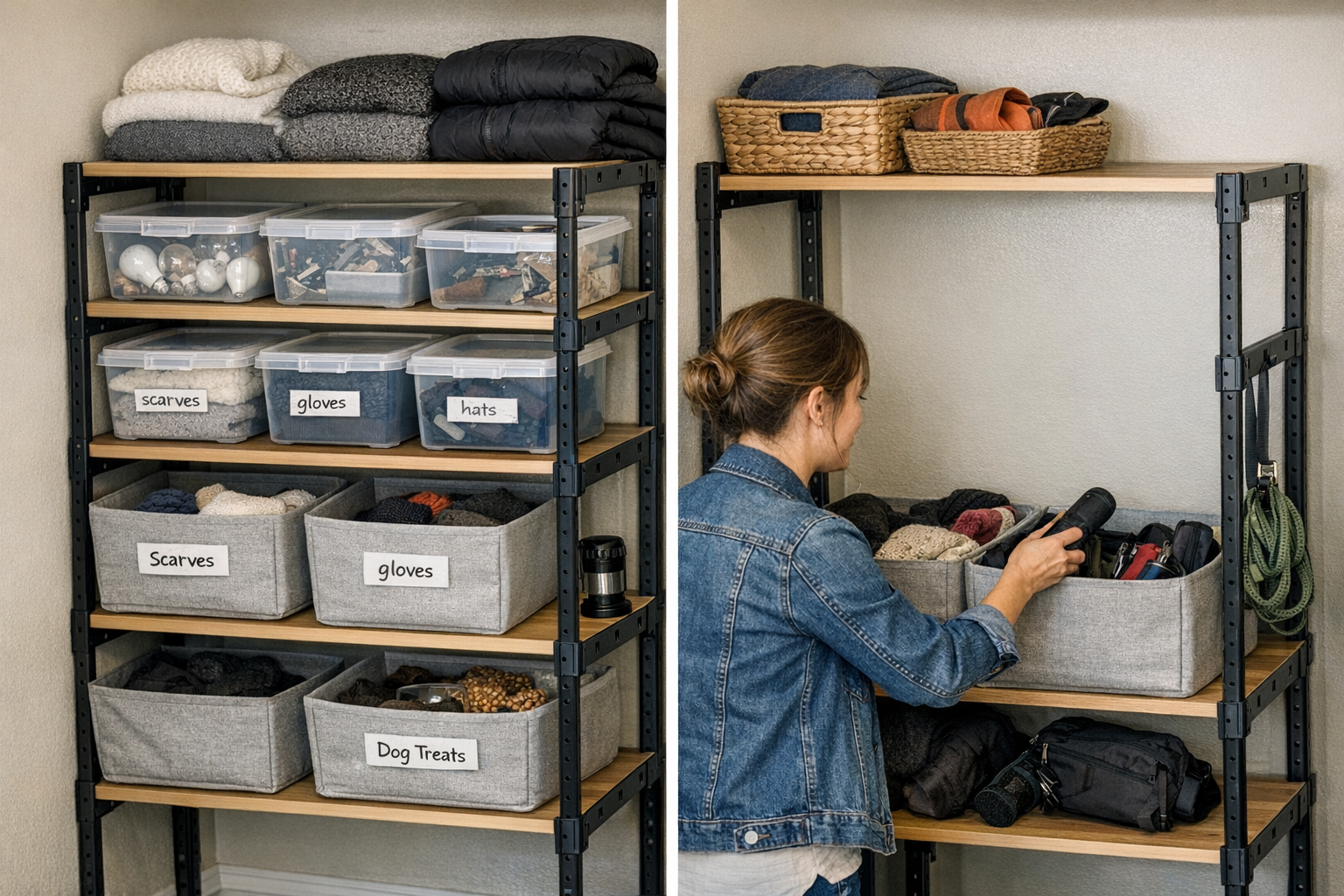
    The difference between a space that just looks organized and one that actually works for you shows up fast. Maybe you set out bins for every category: gloves here, scarves there, chargers in their own box. Inevitably—especially in rush hour moments—items stray. The “rain” umbrella ends up under a tangle of leashes. Last night’s hat vanishes behind a stack of folded bags. Each time you need something, it’s suddenly never at the front; you start pulling out one container only to move two others first.

    This isn’t just clutter—it’s a slow drain on momentum. Over time, the setup that was supposed to simplify your routines now creates extra steps. Instead of spending Saturday putting everything back, you relabel bins, freshen up the stacks, and promise yourself next week will run smoother.

    Why More Categories Create Real-World Complications

    The urge to fix these problems with extra bins and labels is strong. More categories should mean more order, right? In practice, real life refuses to stay within those careful boundaries:

    • The “miscellaneous chargers” box attracts batteries, random earbuds, and manuals nobody will need.
    • Sock bins catch stray mittens after laundry day gets hectic.
    • Tightly packed bins block access, forcing you to juggle stacks just to get to basics like a scarf or reusable bag.

    What results is an ordered look that doesn’t translate to daily ease. Everything fits—until it doesn’t. Categories blend, edges bulge, and the act of grabbing a single item can unravel a shelf.

    Closet Fatigue: When the System Can’t Keep Up

    Picture your hallway closet during a real week: hats, scarves, dog leashes, an umbrella for the first storm of the season, a bag of light bulbs meant for the garage. Someone hurries in with wet shoes, drops an umbrella onto the nearest pile, and leaves a glove in the bag bin “just for now.” The result? You open the closet in the morning and the edge of the shelf is wobbly, now crowded with objects trying to escape their slots. Bins lose their structure. Categories bleed. Each reset becomes less about restoring clarity and more about desperately hiding evidence behind the door.

    This is the slow failure most storage systems aren’t designed for. Good intentions get overwhelmed by quick decisions, family routines, and the simple fact that nobody reaches for storage when they have time to put things back perfectly.

    How Fewer, Broader Bins Speed Up Recovery

    The real breakthrough happens when you cut the number of bins. Take that same hallway closet and forget the fine-tuned categories—go from five or six down to just two broad zones:

    • Wearables: all gloves, hats, scarves, even sunglasses, in one open bin.
    • Grab-and-go gear: bags, umbrellas, leashes, shoe covers, all lumped together in a second.

    Instantly, access improves. You stop wrestling with tightly stacked boxes. The shelf edge holds steady, even after a chaotic week. Items land where they’re dropped—close enough to find, loose enough to suit unrehearsed mornings. Instead of a full-scale weekend overhaul, it takes ten seconds to lift and shake out a pile, realign the bins, and move on. The reset shrinks to a flick of the wrist.

    The Day-to-Day Difference

    The shift isn’t cosmetic—it’s practical. Messy afternoons don’t end with new “temporary” piles leaning against the door. Lost-and-found hunts fade out. Family members don’t pause, wondering where that random glove belongs; they drop it in the wearables bin and keep moving. Organization survives the week, not because everyone’s perfectly tidy, but because the system doesn’t demand perfection.

    How to Tell If You’re Stuck With Too Many Categories

    Watch for these warning signs that your storage system is slowing you down:

    • Shelves feel crowded long before they’re full—vertical space goes unused as bins stack and topple.
    • Labels get ignored, or containers lose track of their original purpose.
    • Baskets become a jumble: what started as “just socks” ends up mixing in dog toys and keys.
    • Weekend resets aren’t quick—they’re repeat performances of the same tedious sort-and-stack.

    If you spend more time maintaining your storage setup than actually using it, that’s the system breaking down, not your habits.

    Striking a Realistic Balance in Everyday Spaces

    Every house and routine has its own demands. Some high-traffic drop zones—think muddy boots and soccer gear—need a handful of divisions to keep things in check. But if you find yourself regularly reshuffling boxes or struggling to find anything quickly, it’s time to zoom out. The sweet spot is simple: a few big categories, loose enough to fit real habits, structured enough that bins never disappear under piles.

    Organization isn’t about how clean your closet looks on a good day—it’s whether everything still has a place when Monday gets messy, errands pile up, and nobody has time for perfection.

    Try This: The One-Month Category Reset

    Not sure how to start? Let your space show you. Spend a week using your closet or entry area as usual. Notice which bins always run empty, which ones overflow, and where items keep migrating. Merge the ones that swap contents. Make categories a little wider than feels “correct”—then leave it for a month. If you find yourself grabbing what you need faster and spending less time rearranging, you’ve landed on a system that actually fits the way you live.

    Simpler storage isn’t the absence of clutter—it’s making sure the clutter that does appear is quick to sort, quick to clear, and never slows you down. The right system keeps up with daily life, not just with a perfect photo on move-in day.

    Shop ClosetWorks for practical storage solutions that fit real daily routines.

  • Achieving Flawless Cabinet Edges with Precise Router Setup Techniques

    Every woodworker who’s put serious time behind a router table knows how thin the line is between “that’ll do” and truly clean edge work. It’s easy to convince yourself the setup’s close enough—a bit that’s almost dialed in, a fence you trust but haven’t checked in an hour, a table that feels just steady enough for one more pass. But by the time you’re stacking a dozen cabinet doors or drawer fronts, the little slips you thought you’d gotten away with start surfacing everywhere. Suddenly, you’re chasing down chipped laminate corners, burn marks that bloom from a moment’s hesitation, and sanding out tiny divots you swore you’d catch next time. What felt like a barely-noticeable shortcut has eaten your afternoon and dulled your confidence in the stack.

    How “Almost Right” Setups Cost You

    Edge routing—especially batch work—amplifies every oversight. Start with the fence a hair loose or the bit a half turn high, and sure, the first few panels come out looking passable. But by panel twelve, chip-outs creep in, and fine dust swirls up as you sand and sand to erase damage that wouldn’t be there with a crisp cut. Catching your mistake rarely happens when you’re fresh; it shows up in hour three, with a dozen panels lined up and every “good enough for now” adjustment glaring back from the woodgrain.

    Where the Setup Fails—and Why It Matters

    Run composite or veneer through the router in the morning and it feels fine—sharp edge, barely any fuzz. But as the cutter warms, the fence gets nudged, or the bit loosens in the collet, suddenly you’re fighting splintering at the corners and faint burn lines that only get worse if you try a quick re-pass. Ignore it for a couple of pieces and you may get by, but on real jobs—full sets, multiple doors, wide panels—those little errors multiply until you’re sanding through surface layers or, worse, scrapping parts that never had a chance.

    Router Differences that Show Up in Real Work

    On the shelf, routers look interchangeable—solid grip, decent fence, fresh bit. But on the bench, small details matter: Some vibrate just enough to crawl across the guide line when tackling a stubborn hardwood. Others deaden your hand fatigue so you can keep control on pass thirty—not just the first. The best ones forgive a slight angled push, correcting the wobble instead of carving it into the edge. And dust collection? If it’s bad, you’re blinded by shavings and miss when burn marks start. If it’s good, you reach the end of the run and still see the bit’s profile cleanly, no guesswork.

    The Slow Drift That Kills Consistency

    Even a careful hand can’t rescue a router that wants to wander. By door fifteen, you’ll sense it: fence flex, a base that rocks on a dust clump, a bit that’s loosened just enough to eat deeper into the last panel. It’s rarely a dramatic blowout—just a slow creep away from flush edges and tight reveals. The minutes lost aren’t all in sanding; some get burned fixing alignment in assembly, realizing one loose pass has snowballed into a cabinet stack that doesn’t sit right.

    When Fatigue Becomes a Hidden Flaw

    The longer your batch, the more your body and your setup betray you. Start with a dozen maple panels: in the first hour, you’re sharp—measure, lock down, double-check. By lunchtime, grip slackens, arms tire, the base tips slightly against a clamp scar. Maybe you press a little harder to keep things flat, and the bit height has slipped a hair before you notice. It all seems invisible—until you flip the stack and see uneven reveals and that shadow of burnt grain you’ll be sanding out again. Suddenly what should’ve been finish work turns into rework you can’t bill for.

    Tool Fatigue: Beyond Your Hands

    Fatigue travels beyond the body. A fence lock that’s not truly tight or a bit depth that creeps as vibration sets in are mistakes that multiply with every repetitive cut. And in real shop conditions—tight deadlines, batch runs, back-and-forth between tools—any setup that can’t be quickly checked and locked down turns small lapses into workflow headaches: more touch-up, more sanding, more lost time. Those little frictions are what separate a smooth assembly from a day that drags deep into overtime.

    Setting Up for Results You Can Count On

    After enough flawed panels, you start respecting setup more than speed. Gone were the days of setting bit depth by glance or feel; the feeler gauge became a non-negotiable step. Locking in a repeatable 0.5mm gap turned “looks about right” into something you could trust across every run. Extra fence locks—one at each end, not just the nearest—stopped flex that ruined clean lines on unruly plywood. With those changes, the difference became more concrete than expected: sanding time per panel dropped, tiny nicks nearly vanished, and late-day mistakes travelled way down the list of worries.

    Seeing Real Gains—in Any Shop

    The difference isn’t about slowing down to perfection—it’s about building a routine that makes precision automatic, even when you’re in a hurry. Rigid setups absorb everyday bumps and bad grain. Consistent measurements and full-width fence pressure mean less wandering and less “just one more check” between parts. Those upgrades keep your work tight and your confidence high—even when you’re cranking through long batch after batch.

    Finding—and Fixing—Small Problems Early

    Catch drift before it costs you. Bit height slip or fence misalignment will always show themselves—first as chipped edges or tiny burns, then as broader flaws that demand serious repair. On veneered or composite stock, a single off pass can sink an entire panel. Make the habit of setting bit depth with a gauge, walking the fence the full panel width before you tighten it down, and giving everything a re-check before each batch shift. Taking two minutes at setup means you won’t lose two hours to rework at the end of the day.

    Dust: The Small Thing That Ruins Precision

    Even a thin layer of dust under the base plate throws off level, leading to pressure points that vibrate the bit and scar your work. Reliable dust extraction serves more than health—it’s your best ally for keeping cuts true and visible. Work clean, and your chances of last-second “one more pass” fixes shrink fast. A scratched base or unseen chip-out is ten times harder to recover from than a quick vacuum pass between panels.

    Routine Consistency: The Real Payoff

    You won’t see instant perfection, but you’ll feel the difference in panels that actually align, in sanding taking minutes not hours, and in the way each batch lands ready for assembly—not destined for a pile of touch-up work. With measured setups, true fence pressure, dust kept away, and bit heights that stay put, your workflow finally starts to flow. Not every job will be flawless, but the headaches get rarer, and your final product becomes something you trust.

    Real improvement is built into the daily routine—steady, detailed setups and equipment that helps you lock down control, not just speed. When the deadline looms and the panels keep coming, that’s what keeps you from falling into the “good enough” rut—and makes the difference between crossing your fingers and handing over work that stands up, batch after batch.

    http://gumboll.myshopify.com

  • How Small Changes Simplify Your Pet’s Outdoor Greeting Routine

    Daily pet care rarely falls apart in one dramatic moment. Instead, it snaps at small, repeated pressure points: a water bowl blocked by a shoe, a towel for muddy paws missing from its hook, a brush buried beneath yesterday’s mail. You plan for quick resets—feed, wipe, refill, out the door. But over a regular week, these setups quietly break down. The “just for now” spots become default. Before you notice, going outside, coming back in, or even topping up water is now a hunt for missing basics. One simple handoff stretches into minutes of improvising, delay, and mess—signals that your entry routine looks calm but doesn’t keep up with real use. CalmPetSupply is built for exactly this: routines that have to work, not just look neat.

    Where Everyday Routines Actually Slow Down

    Most setups fail when the pace of real life collides with vanished towels and misplaced refill bottles. It’s not a matter of planning—nearly everyone begins with tidy intentions. But after three busy days, the towel is still in the washer, the water dish slides behind loose boots, and the brush shifts further from reach each evening. The result: after a late walk, you realize nothing you need is where you expected it. Reaching for a towel means rummaging, using the wrong cloth, or tracking in more dirt—turning what should be a two-minute reset into a ten-minute, multi-surface scramble.

    Water bowls offer another quiet snag. They might be “available,” but actually grabbing them means shifting shoe piles or digging behind bags. The gear you set out to speed things up becomes its own blockade. Nothing is missing, just never in the right place—so every outing, cleanup creeps longer.

    Real-World Examples: Blocked Access and Clutter Creep

    Say you return from an after-work walk. Your pet needs a wipe down, but the towel isn’t on the door—it’s sitting under laundry from earlier. As your dog waits, mud drips onto the mat, and you backtrack to find what already should be at hand. Now your “quick” return involves extra cleaning and leaves you behind on everything else.

    Or picture a rushed morning. The leash is within reach, but the water dish is behind a jumble of shoes. Every day, you pull apart the same pile just to refill. By the time you’ve untangled it, what looked organized yesterday is back to a slow, awkward puzzle. Week by week, these friction points don’t go away—they resurface, quietly dragging down the entire entryway routine.

    Even the best intentions fade under real pressure: supplies migrate, clutter creeps, and a one-step handoff mutates into a four-step loop. The “pet zone” spreads, clashing with the flow of everything else—making the home look tidy at a glance but feel constantly interrupted in use.

    Why “Looking Tidy” Doesn’t Guarantee Smooth Routines

    There’s a hard line between “looks put together” and functions in real time. An invisible brush tucked in a sealed bin under the bench, a towel hidden where it won’t show, or water topped off behind the coats: each fix delivers tidiness at the cost of adding seconds or full minutes to your repeated routines. Grab a brush with full hands? Not happening. Reach for a hidden towel in a hurry? Too late—mud’s already inside.

    A setup that hides mess but blocks access means every shortcut quietly backfires. The more steps or barriers between you and the basics, the more likely cleanup gets missed, items get abandoned halfway, and routines stop fitting the reality of day-to-day use.

    How Small Misses Create Predictable Slowdowns

    In almost every house, daily snags come down to one missed piece: the thing you need is not within a single reach. Whether it’s a towel, bowl, or brush, the absence means a pause, detour, or outright mess. Yesterday’s solution—just putting it “somewhere out of sight”—adds to today’s delay. One skipped prep can turn a full week into double cleaning, repeated checks, or awkward shuffling at the door.

    Even clean spaces hide these routine failures. The towel too far from the entrance delays every wipe-down. The empty water bowl sits, forgotten, just beyond the doorway, waiting for a refill bottle that got moved. Fast grooming tools left loose end up blocking walkways, while the essentials pushed away out of sight make every transition slower.

    What Actually Shifts Daily Flow

    The turning point is always reset speed—how quickly the space returns to ready for the next go. Simple, visible anchors—a hook for towels within easy reach, an open bin for water or brushes right by the exit, a leash spot that stays unblocked—change the math. Each missing anchor means another shuffle, bend, dig, or missed step. With no baseline reset, even beautiful order can’t hold. The routine buckles under repeated micro-friction.

    Quick Scene: Two Minutes That Turn Into Ten

    Evening walk: you’re back, leash off, pet in the doorway—and the towel is nowhere. Instead of a smooth entry, you juggle bags, lift shoes, pat the floor for a drying rag, and promise to sweep again later. The lost moment seems small, but it stacks. Routine pet care shifts from autopilot to constant troubleshooting.

    The same friction hits after feeding or grooming: a blocked water dish, a spritz bottle missing, a brush wedged far from where you stand. Not disasters, but steady irritations that quietly raise your background stress.

    Clear Strategies For a Smoother Routine

    Consistent function never comes from perfect appearance; it depends on fixed, open, obvious storage—one hook for the towel, one open bin for water gear, a clearly unblocked leash path, all within one step from the door. Returning each tool to its post right after use stops the slide into disarray. The question isn’t “what looks tidy,” but “what’s always ready?”

    Every overlooked reset—a towel left elsewhere, a water dish blocked by clutter—underlines the cost. Small hesitations become routine, and almost always, the friction returns by the end of the week.

    The Payoff: Function That Fits Real Days

    A welcome home for both person and pet isn’t about staging a perfect entryway. It’s about hands finding exactly what they need, in the spot where the mess actually happens, even on the busiest Wednesday. A few setup changes—kept visible and easy to reset—transform the handoff with your pet from constant interruption to a process you can trust to work, every round, without thinking.

    When your basics have a permanent place and resets become three-second habits, routine pet care really does stay calm. No more lost towels, no more repeated cleanup cycles, just a reliable bridge between indoors and out.

    For more ideas on setting up a truly easy daily routine, see what fits your needs at calmpetsupply.myshopify.com.

  • How Small Car Setup Flaws Drain Your Focus and Daily Routine

    The difference between a car setup that works and one that drags you down isn’t obvious—until you actually live with it, drive after drive. You organize your mount, thread charger cables, slide in a tidy floor mat, and think: problem solved. But by your third errand, order unravels. A charging cable vanishes under the seat again. Floor mats inch off line. Coins loosen and rattle, creeping toward the pedals. All those “fixed” solutions demand your attention when you least have time to give it. This is the friction that quietly piles up—rarely noticed in spec sheets or first impressions, but relentless in daily use. For every visible upgrade, there’s an awkward moment waiting to remind you: looking organized isn’t the same as driving smoothly.

    The Slow Build of Repeated Car Friction

    What interrupts your flow in real-world driving isn’t always the big stuff. It’s the small resets forced by drifting mats, hidden cables, or container lids that pop off on a bump. The test isn’t how a setup looks after you sort it out, but how it survives ordinary routines: parking, short stops, fast returns, repeated loading, and the unexpected swerve. Organization that falls apart on your commute or a midweek grocery run just means dealing with more repeat problems. Once a charger slips beneath the seat or a floor mat bunches near the pedals, every access point becomes a distraction—and every fix you do “just for now” tends to become part of the routine.

    A center organizer might look perfect on Sunday, but by Friday, it’s where your coins and cords collect in a messy tumble. Floor mats that promise full coverage shift under quick stops, creating a new mess and forcing you into awkward spot-fixes mid-errand. Neat storage and cable routes sound great—until they fail the minute you actually drive like you live.

    Where Functionality Falls Short: Everyday Scenarios

    Looks Fine, Feels Off

    A car can look under control and still throw off your routine. After a three-stop errand loop, the charging cable that should be at hand is missing—or worse, stuck under a floor mat you just fixed yesterday. Returning after work, you grab for your phone and find the mount’s grip slipped out of alignment, forcing a clumsy two-handed adjustment before you can even start navigation. Small design weaknesses show up exactly when you need seamless reach—and multiply as usage repeats.

    Loading and Return Slowdowns

    The trunk and cargo organizers hold up until you need to restack or quickly unload. Grocery bags hang up on container edges, and sliding organizers shuffle items into awkward gaps after one hard corner. Loading gets slower. Pulling something from the trunk means bracing items with one hand instead of just grabbing the bag. Routines that should be smooth become small wrestling matches, all caused by setups that look organized, but can’t hold still through normal driving.

    Protection That Trades One Problem for Another

    Upgrade covers or protectors solve visible mess, but introduce new snags. Seat covers keep coffee or pet hair off the fabric, but snag your pants pocket every exit, forcing a tug and a reset. Floor mats have clean edges—until one lip catches your charging cable and traps new dirt along the seat track. Cleanup gets easier in theory, slower in reality.

    The Mental Cost of Minor Resets

    No single reset feels major, but every repeated touch pulls your focus. The time you spend recovering the same charger, adjusting sliding organizers, or fixing a mat drag adds up, quietly leeching energy from your routine. It’s not just about being tidy. It’s about the small, repeated interruptions that force mental effort every single drive. By Thursday, you feel the drag: missing items, shifting mats needing another nudge, or the wait as you dig the charger out of its new hiding spot—again. The frustration isn’t loud, but it’s steady, making each errand just a little less straightforward than it should be.

    The Difference: Real Solutions That Reduce the Reset

    Anchoring, Not Just Hiding

    The real shift came when a cable—constantly sliding out of reach—was finally clipped to a seat-base anchor. That single fix stopped hidden cable hunts for good: now it’s always grab-and-go, always in reach, with zero chaos after use. It’s not about adding more holders or covers. It’s about fixing the path and touchpoints—so your cables, mats, and organizers stay where you want, without needing daily reminders or resets.

    Small Adjustments, Big Flow Changes

    Effective tweaks aren’t always complicated: a simple clip on the seat rail stops mats pushing cords into no-man’s land. Weighted, non-tip organizers keep cargo from shifting, so there’s no mess to fix after every brake tap. Every item you anchor, every slot or tray that doesn’t drift or flip, is one less reason to pause or repeat a task. This turns daily car use from a string of micro-corrections into something closer to autopilot.

    How to Recognize When Your Setup Needs Change

    You don’t need a total overhaul—just an honest look at what disrupts your routines:

    • Are you fishing for cables or untangling chargers multiple times per week?
    • Does a mat, organizer, or cover move out of line after most drives?
    • Does “organized” look right but feel clumsy when reaching, loading, or cleaning?
    • Did a fix for one problem (like stray dog hair or spilled snacks) create another snag or access issue somewhere else?

    If you’re doing the same manual fix twice a week, the current setup is failing at real-world repetition. If anything in your car demands a reset to work properly, it’s not really solved—just deferred.

    Lasting Improvement: Less Managing, More Driving

    The payoff isn’t perfect order—it’s setup that holds through messy, real routines. Once cables stay anchored, trays resist sliding, and covers stop snagging, every drive gets easier. Entry and re-entry feel faster. Cleanup drops from every outing to once a week. Those small improvements free your mind from routine distraction and keep your car’s structure working with you, instead of needing constant management. Stability and anchored reach points aren’t just about looks—they’re the difference between “good enough” and a car that’s finally out of your way.

    Find practical car-use solutions that make your driving routine smoother at DriveWellSupply.

  • How Adjusting Your Carry-On Packing Simplifies Stressful Return Trips

    The illusion of an “organized bag” collapses the moment real travel begins. On a hotel desk, your carry-on looks surgically ordered—pouches aligned, zippers shut, passport squared in a sleeve. But at the airport, that visual order can turn into its own obstacle: wedged in an aisle seat, you find yourself digging through layered pouches, pausing the line or blocking the aisle, just to reach a charger or document you thought was “in its place.” What kept everything tidy all morning now slows you down at the first sign of pressure—because travel isn’t about static order, it’s about repeated, unpredictable retrieval.

    Why “Looking Organized” Fails in Real Transit

    Departure setups always look perfect: tech pouch zipped, toiletries nested, travel docs perfectly filed. Then the airport flow shreds that logic. Security bins start stacking, boarding lines squeeze, and suddenly you’re unzipping deeper and deeper, looking for the same few essentials in the middle of a crowd. Each neatly packed layer adds another delay—one more zipper, one more reshuffled pouch, just to put a hand on what you reach for most.

    The desk test is deceptive: what seems controlled under calm lighting turns clumsy once you’re trying to grab a passport blocked by chargers, or a pen slipped between organizers. Movements multiply, urgency builds. Friction isn’t obvious in the mirror—only in the repeated interruption of your flow when access turns awkward.

    Repeated Interruptions Matter More Than Mess

    Order’s not the problem—friction is. Every extra unzip, each search through double-stacked pouches, adds drag to the travel sequence. Organizers promise order, but in real use, they easily gum up the rhythm: grabbing an e-reader means lifting paperwork, reaching a charger means unpacking a sleeve. With every repack, the time cost compounds. The enemy isn’t visible mess, but slow, repeated pauses that add up at every checkpoint and seat entry.

    The Real Cost of Nested Packing

    You don’t notice the trap at first: earphones sorted, travel docs slotted, charger buried neatly, everything layered for visual calm. But real-world travel means retracing those layers over and over—through security, during turbulence, after each boarding call—when what you need is never just one movement away.

    Where “organized” setups fail over real trips:

    • Paused at bag scan, holding up the line, because your passport is under paperwork and a tablet.
    • Needing sanitizer and being forced to unzip three pockets, each revealing the wrong pouch first.
    • The pen you used at check-in already lost between tech and doc organizers—again.
    • Your “essential” pouch keeps sinking to the bottom after every security tray repack, even when it started on top.

    These aren’t dramatic failures but they chip away at your travel pace. Each blocked retrieval, each untimely clutch of the wrong pouch, means more public fumbling and more fatigue—especially when routines have to repeat during a tight connection or a crowded return flight.

    The Shift: Packing for Movement, Not Display

    The upgrade isn’t complicated: move your real-use items—passport, charger, meds, pen—into a single outer pocket or top-access pouch. No double-zipping, no pouch shuffle for repeat basics. If you touch it twice between hotel and seat, it shouldn’t be buried for looks. This shift turns each borderline-miss—fumbled documents, lost sanitizer, pen hunts—into one-move retrievals. Instead of unsealing pouches in public, you build a flow that matches airport speed and boarding tension.

    Real-World Example: The Outer-Pocket Reset

    Test after test, every packed trip that put the main-use essentials—passport, tickets, phone, charger—into a dedicated outer pocket delivered instant wins at checkpoints. What changed wasn’t just the pouch location; it was friction that disappeared: one zipper, one action, one item in hand. No main-bag reopening, no lane-blocking repacks, no guilt-inducing repouching while the security tray stack grows. The rhythm of movement—unzip, grab, reseal, keep moving—turned gate lines and seat entries from frustrating pauses into smooth, continuous sequences. These aren’t “efficiency tips”—they’re force multipliers for ordinary travel pressure.

    Recognizing the Weak Points

    Perfect order fails where travel gets messy and time-pressured:

    • Your passport’s wedged under tech gear while dozens wait behind you at a passport check.
    • Turbulence hits and your needed meds are stuck under a double layer of organizers you haven’t touched since packing.
    • Security trays pile up—your visually neat pouch setup now a puzzle of trays, bags, and zipped-down layers, each one stealing time during crunch moments.

    These recurring trouble points aren’t dramatic emergencies—they just repeat, accumulate, and quietly sabotage your pace in every crowded terminal, busy aisle, and repacking rush. The “order” that looked good before becomes a slow leak of time and patience.

    Tuning Your Setup for Real Travel Life

    The real test isn’t how “organized” your bag looks after repacking. It’s how many times you can reach, retrieve, and keep moving before the system starts pushing back. Anything you use repeatedly before boarding needs instant access—outer pocket, top zip, wherever avoids the pouch shuffle. Tidy doesn’t always mean usable; function means knowing the minimum moves between you and what you reach for while the line is compressing and bins are filling. It’s not about ditching order—it’s about order that lets you move, not pause.

    Autopilot repacking for looks makes the next round just as frustrating. Instead, the strongest setups favor flow: what you need, right up front, always where you expect it. The result? You spend less time interrupted, less time nervously shuffling trays and zippers, and more time actually moving through every checkpoint—and every aisle—without dragging your trip’s rhythm.

    Does Your Carry-On Still Work Later in the Trip?

    Smart design isn’t about a hotel-room photo. It shows when your carry-on lets you move, grab, and go—checkpoint after checkpoint—without breaking stride. Each slow retrieval is a signal: function lost to optics. If you keep losing seconds to hidden essentials or repack drag, your setup is due for a reset.

    Every trip is a reality check. Early tune-ups produce a smoother, less interrupted journey home: faster retrievals, easier seat access, and less friction between you and moving forward. The difference isn’t cosmetic—it’s structural, and you feel it every time the airport pace forces another test of what’s really packed well.

    See carry-on tools designed for real travel flow at CarryOnSupply.

  • Choosing Bedroom Storage Benches That Quietly Hold Extra Bedding

    The cracks in “tidy” storage show up the moment you live with it, not when you first open the lid. Bedroom storage benches promise seamless organization—but fast-forward one week, and the easy-access seat turns into a friction point: the lid slams into the wall at midnight, a blanket hunt turns up bunched liners and the struggle to shove one more pillow inside pushes the bench from solution to aggravation. Instead of keeping bedding out of sight and instantly available, the wrong bench turns every retrieval or return into a reshuffling mission, disrupting your routines and crowding walkways. The theory looks clean; daily life exposes every shortcut and missed detail in the setup.

    When a Storage Bench Adds Friction Instead of Flow

    The promise is simple: extra bedding stays close, out of view, and easy to grab. But small design gaps widen under real use. Reach for a comforter and the lid claps the wall, waking whoever was asleep. Pull for a pillow, and the entire pile shifts as the liner slides, turning a “grab and go” into a clumsy dig. After a few days, bedding that used to fit neatly refuses to go back—the bench now collects loose throws along its edge, with overflow leaking into pathways or pressed beneath the bed. Instead of streamlining your space, the bench becomes one more obstacle to reset every morning.

    Real tension builds quietly: The extra noise of sticky hinges, bedding snagged on hardware, or the half-open lid blocking your path—all these combine to erode the promise of calm order. Not disasters, but a friction that makes the bench more of a hassle than a helper. The difference is stark: a layout that looks “organized” once but turns against you as daily patterns repeat.

    Small Details Make or Break Repeated Use

    The usefulness of a storage bench is defined in daily movements, not first impressions. The hidden weak points start showing after normal use: a liner bunches up, compartment dividers sag, or lids that used to sit flush now hover or jam. Every laundry cycle and every late-night comforter grab exposes where the bench holds up—and where it collapses into mess.

    Where breakdowns surface:

    • Creaky or stubborn hinges: Impossible to open quietly if someone’s asleep, or stiff enough to require a two-handed tug.
    • Slippery or shifting liners: Throws become tangled or wedged, requiring sorting for even the smallest item.
    • Lid collision zones: If the bench sits too close to a wall or dresser, every open becomes a loud tap or scraping arc—a small error, repeated daily.
    • Weak dividers: Floppy compartments fail to corral bedding, so piles collapse together and sorting dissolves into a single mixed jumble.

    Small flaws accumulate: the bench lid stops closing flat; pillows are doubled on a nearby chair; you start stacking laundry on top instead of inside. Every extra motion slows resets—and the neat bench now lives in a state of semi-open, semi-clutter that defeats its purpose.

    The Gap Between Looking Organized and Actually Working

    The tension is clear: storage that looks neat on day one begins to resist use by day five. Showroom benches with crisp lines and rigid lids hide the reality that “put away” isn’t the same as “ready for next time.” By the third bedding shuffle, it’s obvious—the convenient look is all surface, with every reset exposing the friction underneath.

    Why does a “calm” bench become disruptive? Picture the evening scramble for a blanket: instead of a smooth lift, you catch a lid on the wall, fight a collapsed divider, or pinch fabric just trying to close up. Repeating this friction a few times and you start sidestepping the bench—a pile grows beside it, or you use the closet in defeat. Storage that’s visually silent grows noisy in lived routines, and path creep sets in as bedding migrates out to open corners or under the bed.

    These issues rarely trigger a dramatic failure, just slow the room with added steps. The bench appears tidy but works against your reset—requiring you to rearrange, refold, or hunt for lost items multiple times a week. The slow drain on order is subtle, but unmistakable if you’re the one putting bedding away.

    Flow-Killing Design Flaws to Spot Early

    The frustrations start long before anything breaks. Tight placement against walls guarantees the lid never opens fully, causing repeated scuffs or awkward maneuvering. Forget soft-close hinges, and you trade in a minor luxury for nightly tension—every swap risks a jarring bang that ripples across the room.

    Category collapse compounds friction: Mix bedding with off-season clothes, and every grab risks unstacking both. Without interior compartments that actually separate categories, “organized” piles fall together by week’s end, turning retrieval into an excavation. Weekly resets become a full re-sort, not a fast putaway.

    Overstuffing is the most common trap: Try to squeeze in that extra blanket, and you create a puzzle that only fits if nothing needs to come back out. The result? Delays, blocked movement, and bedding migrating out to the open just to keep the bench functional. In a compact room, even a few extra seconds compound into persistent frustration.

    Quiet Successes: When Small Changes Restore Calm

    Switching to a bench with soft-close hardware or real compartments isn’t just an upgrade—it’s a shift in the room’s pace. Suddenly, bedding moves in and out with barely a sound. You can open the lid, grab what you need, and return it with one hand, no bracing or balancing act required. There’s no fallout—a pillow isn’t nudged onto the floor, pass paths remain clear, and bedding stays sorted instead of drifting around the room.

    The payoff is visible: Fewer interruptions. Less time re-folding or digging through collapsed piles. Quiet resets that don’t wake anyone—and open space that doesn’t slowly crowd at the edges. One switch can stop the chronic creep of overflow and restore a daily sense of order, especially when the rest of the storage zone is set up to match.

    Tips for Keeping Bedding Storage Calm and Low-Maintenance

    Let the Bench and Breathable Storage Work Together

    Choose benches with built-in vents or an interior gap, avoiding boxes that trap humidity or squeeze contents against the lid. Resist the urge to overfill; give yourself just enough space for daily bedding plus one spare. Refold bedding occasionally—especially post-laundry—to prevent creases, stale spots, or trapped moisture that can transfer to fabric.

    Maintenance That Actually Pays Off

    Every few weeks, clear dust from lids and hinges. A touch of lubricant on sticky movement spots (not just the hinge center) keeps action smooth. Stick-on felt at contact points all but eliminates lid bang and quiets routine use—especially helpful if your bench sits close to a frame or wall.

    Keep Categories Clear—Even Inside the Bench

    Store bedding and clothes apart. Mixing them might seem efficient, but daily bedding rotation quickly scrambles less-used items, making return flow and sorting a headache. Assign one type per compartment—or at minimum, separate baskets or dividers within the bench to stop layer drift and keep access fast.

    Why Setup Matters More Than Looks

    The goal isn’t just a storage bench that looks good, but one that disappears into the routine—where quiet hinges, reliable dividers, and clear structure reset the room without calling attention. A good setup means fewer blocks in your path, bedding that stays contained, and resets that happen in seconds—not after a round of frustrated shuffling.

    If you’re fighting the same lid, noise, or overflow week after week, this isn’t just a call for better folding. It’s the setup—how well the bench, compartments, wall space, and retrieval path match the way you actually use the room. When storage looks calm but lives messy, the shift starts with just one well-designed, realistic organization zone.

    Shop Gridry for practical storage benches and inside-organization systems.

  • Choosing Ceiling Lights That Reduce Dust Visibility and Eye Strain

    Most rooms look fine under new ceiling lighting—until reality sets in. Bathrooms, laundry nooks, and hallways might seem “bright enough” on day one, but that same light can quickly announce its flaws. After a week of real use, harsh glare shows up on the mirror each morning, dust trails cut across shelf edges, and clean tiles flash every smudge. It’s not the paint or the products: it’s stray beams, unfiltered shadows, and every polished surface becoming a stage for dust and streaks. The right fixture never reveals these burdens in the first place; the wrong one makes you chase them on repeat.

    Where Glare and Dust Make Ordinary Tasks Harder

    Leaning in at the bathroom mirror, you squint past glare that wasn’t obvious at installation. Crossing the hall, a “bright” ceiling bulb throws half the space into splotchy shadow as you move. Fold laundry at dusk, and lint glows in the beam, making clean piles feel undone. Harsh open-bulb fixtures turn what should be minor annoyances into daily chores. Exposed bulbs flood cabinets and counters with cold light, exaggerating every stray particle—even surfaces scrubbed that morning look careless. Light that’s meant to reveal actually disrupts: the edge of the counter vanishes under a sharp shadow, mirror tasks demand shifting position, and movement slows to dodge sudden flashes of glare.

    Poor overhead light—uncorrected, stark, or undiffused—translates into missed lint, streaks distilled in harsh reflections, and cleaning that never seems to satisfy. Task surfaces lose contrast just when you need it; vision blurs in a narrow spot while everything else fades into dim blur. The wrong ceiling light sets up routines for constant, low-level friction.

    Movement and Visibility: Not Just About Lumens

    “High brightness” doesn’t mean high usability. Notice how a single unshielded fixture in a narrow corridor leads to:

    • Side walls plunging into shadow, so footsteps land less surely near the baseboard
    • Glare catching your peripheral vision at every stair turn, making the next step less certain
    • Laundry-room air filled with visible dust motes, spotlighted instead of ignored

    Even a glossy surface—sink, tile, or shelf—looks unclean under lighting that pushes every imperfection into focus. Soon, you wipe and re-wipe, not because anything changed, but because the light keeps exposing what you’d rather stay invisible. You duck your head to line up an angle in the mirror or find yourself shuffling toward corners, dodging the brightest patches. It’s a distraction built into daily use, not a problem of cleaning products or missed spots.

    Why Routine Cleaning Isn’t Enough

    When a utility space or bathroom won’t look clean for more than a few hours, don’t blame the brush. Blame the fixture. Airborne lint and moisture hover above your sightline—and with each use, open-bulb or clear-lens lights send direct beams through the haze, making what’s floating or slightly smudged look permanent. Dust lands quickest on upper surfaces; exposed light fixtures punch it into view rather than softening edges or hiding what cleaning already handled.

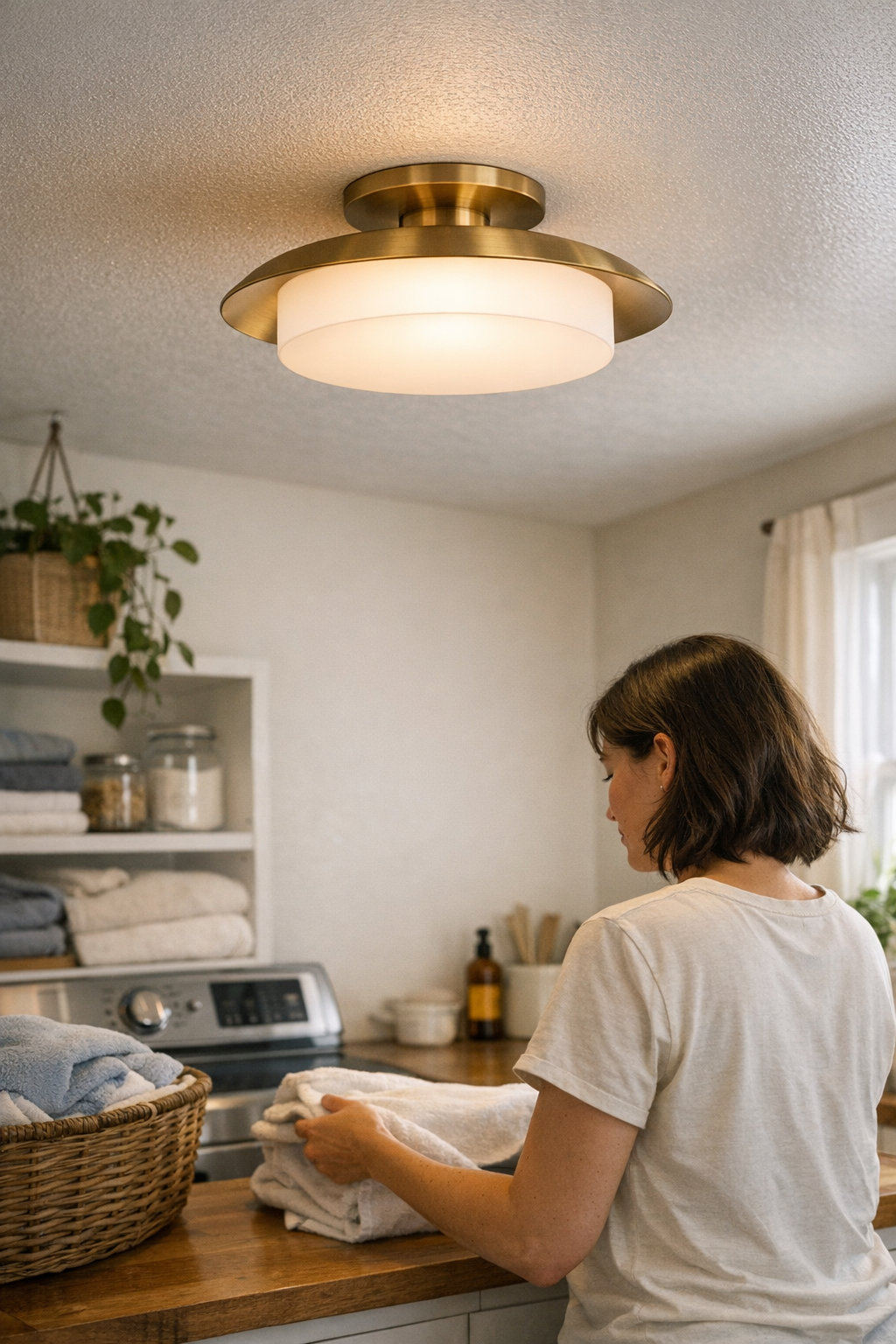
    Enclosed or diffused fixtures offer relief in real conditions. In a shower-heavy bathroom, a sealed, damp-rated flush mount softly fills the space, scattering light rather than creating visual hotspots, which calms streaks and hides post-shower haze. A semi-flush in the laundry with a sealed lens keeps late-day lint from becoming a shadow-casting event, meaning you no longer see debris floating above every work surface, and basic cleaning actually sticks.

    Repeated Use, Repeated Frustration—Until You Change the Fixture

    Install a sleek new light in your laundry corner, then wait three wash cycles. Suddenly, lint glows midair and shelf edges look grimy, even after you just wiped down. Clean, step back, repeat—until you realize the light itself is the nagging problem. Every load brings back the same bands of dust, shadows, and distraction. Switch to a sealed diffuser with proper coverage, and you see the change immediately in routine, not just appearance: folding, sorting, and walking through no longer means chasing reflections. Eyes stop straining, tasks stop stuttering, and the room feels easier even if you did nothing else differently.

    Hallways, Bathrooms, and The Case for Glare Control

    Ceiling lights that fail to control or diffuse their output undermine movement and comfort. Walk a hallway with an exposed bulb: shadow pools near the door, one wall glares at every pass, and the stair turn demands caution. Stair treads catch steely lines of light, making dust stand out in ways daily sweeping can’t erase. Entryway fixtures with weak coverage brighten upper walls while leaving traffic paths shaky and unsteady—a pattern only noticeable when you rush through with arms full or kids trailing behind. As routines pile up, so does the irritation.

    In bathrooms, damp air churns up fine particles, and unless a fixture shields the source, beams exaggerate flaws onto mirrors and tile. “Brighter” can mean sharper discomfort: open bulbs reveal every print, streak, and speck, trading the look of light for the burden of endless spot-checking. The mirror becomes hostile to clarity, not because the room is dirty, but because the lighting refuses to cooperate with actual use.

    The Payoff for Choosing Diffused and Damp-Rated Fixtures

    Upgrade to a fully enclosed or diffused ceiling fixture and notice immediate relief: glare drops, streaks fade, and cleaning starts to last. In high-humidity bathrooms, light flows gently, so you stop tracing dust lines after every shower. Hallways develop evenness—corners hold their shape instead of vanishing behind splotchy shadows. Laundry becomes less about chasing lint and more about simply completing the job. This isn’t decorative—it’s practical: the right fixture reclaims control from dust and glare, letting routines finish clean instead of starting over.

    Practical tip: Opt for a fixture that completely encloses or diffuses the light source wherever humidity, lint, or fast traffic are involved. Even swapping out an open bulb for a flush lens can turn a wearying routine into a clear, completed task—with less eye strain and no extra cleaning. If you’re stuck re-cleaning a counter, rubbing your eyes, or dodging glare on every pass, the problem is usually the fixture itself, not the amount of effort.

    Small Steps That Make Lighting Work With You

    When you catch a flare of glare after sundown, or walk a hallway that slips from shadow to dazzle, check the fixture first—not your eyes. Ask if it:

    • Is fully sealed or carries a diffused cover to block direct beams
    • Spreads light gently and reaches shadow-prone spots without harsh lines
    • Prevents dust and moisture buildup inside the lens area

    Small choices like these decide if a space just “looks lit up” for a minute or actually functions clearly for weeks. The right ceiling light means the difference between endless correction and routines that work without attention.

    Lighting That Keeps Up With Real Routines

    Functional indoor lighting doesn’t disappear into the background—it actively prevents new sources of frustration and distraction. In bathrooms, utility rooms, and busy hallways, the right ceiling light rarely gets noticed first. Instead, you spot what’s missing: glare points, floating dust, lost edges, and visually forced chores that once slowed your movement. Details like a safe stair turn or a mirror free from searchlights are not luxuries—they’re signals that the setup finally works with your daily life.

    And while swaps or upgrades won’t make a room perfect, they will make routines sustainable. You stop solving your lighting problem over and over. Instead, you return to a space that’s ready, not fighting against your habits. See real examples—and find practical, glare-taming ceiling lights for every challenging room—at LightHelper.

  • Fold-Out Work Tables Transform Garage Entryways by Saving Space and Reducing Clutter

    Most garages fail at the threshold. The transition from garage to house is more than just a storage problem—it’s a grind of daily movement, bottlenecked by whatever sits in the flow. Shoes creep into the walkway, bikes intrude, grocery bags and backpacks sprawl and multiply, all pressing into the narrowest part of the route. Put a fixed bench or static table in that traffic zone, and you start losing clear passage fast. What’s meant to help—extra surface or “organized” storage—turns into an obstacle after enough rushed drop-offs and messy returns. Piece by piece, reset by reset, the main entry shrinks until all it takes is one bag dropped at the wrong moment to block the path and break the routine.

    Why Fixed Surfaces Fail in High-Traffic Garage Entryways

    The idea of a built-in workspace collapses under repeated use. Permanent benches promise helpful order: somewhere for tools, a place to sit, maybe a landing zone for gear. But real flow dismantles that logic after a few weeks. The bench edge collects dropped bags, the top becomes a stacking point for mail and stray gloves, and shoes always find their way underneath—expanding outward, swallowing the first step off the threshold. By midweek, you’re shifting three things to reach one, nudging a backpack just to swing in groceries, or sidestepping a creeping shoe heap just to get through. The so-called working surface isn’t a workspace at all—it’s a magnet for overflow, soaking up the spill but never clearing the path.

    The friction isn’t always dramatic, but it’s constant. Fixed benches make the area look managed at first glance, but if you’re actually coming and going each day, it becomes a cycle of partial resets—one tidy row in the morning, chaos by sunset. What solves clutter for guests who never step in won’t solve it for the family who lives in the zone. If every return trip means threading through a pinched lane and reshuffling clutter just to open the door, the setup isn’t working, no matter how solid or polished the furniture might look.

    How Fold-Out Wall-Mounted Work Tables Change the Flow

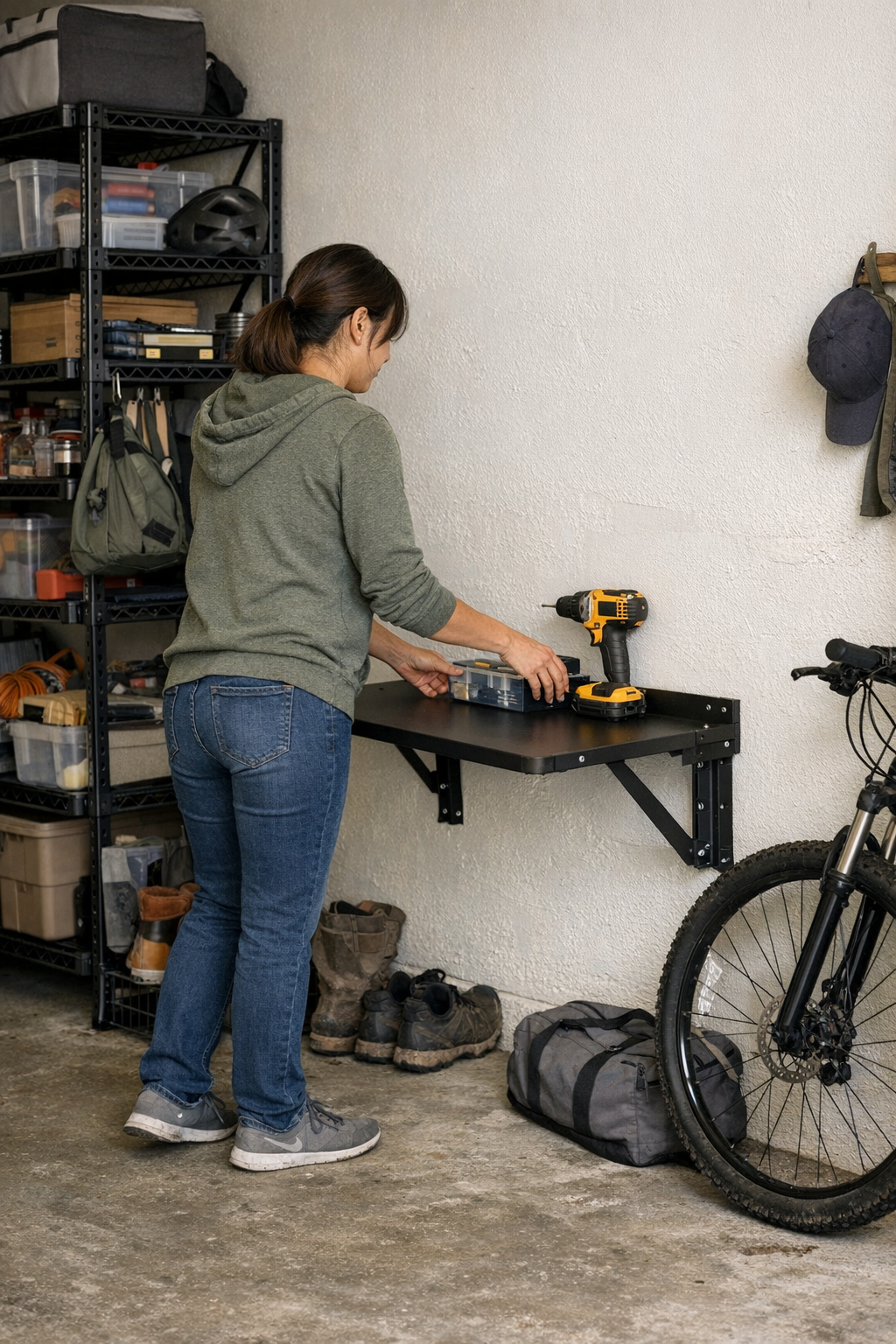
    Wall-mounted fold-out tables don’t just reclaim space—they stop the entry zone from collapsing under pressure. Unlike a fixed bench, a fold-out disappears when you don’t need it. Park it flat against the wall and regain vital pass-through width. It’s not surface space for its own sake; it’s an on-demand tool that refuses to build up clutter out of habit. Mixed routines—muddy shoes, bags, groceries, a fast bike grab, three people moving at once—don’t overwhelm the space. There’s no “surface gravity” sucking random items into a pile, because the surface literally isn’t there unless you choose to use it.

    It’s a different rhythm. Prep a tool or sort mail when it fits your routine; fold the table up immediately after. The act of putting the surface away is its own minor reset—forcing a return to open floor and neutral zone, even if the shoes aren’t perfectly aligned or the bags are still in the car. Reset doesn’t mean perfection; it means you don’t forfeit the whole entry each time one routine overlaps another. That’s the real payoff: you might have a muddy day, a heavy grocery haul, or the classic after-school gear ambush, but your pathway keeps rebounding to usable shape—not just an illusion of control, but actual room to move.

    Everyday Scenarios: The Difference a Fold-Out Truly Makes

    Imagine hitting the garage late, arms full, rain on your coat—under typical setups, the fixed bench is already losing the battle: shoes block your toes, backpacks sag half-off, mail sits untouched. You do a one-footed shuffle trying to carve out enough space to step through. Now, hit the same moment with a wall-folded table. There is no extra “catchall” to attract overflow or stall your momentum—the floor is open, even if everything else is messy. Drop your bag or not, the path still holds. Even the after-school chaos gains an upgrade: instead of islands of overflow radiating from a bench, you handle the gear on the table, then erase the surface, so the entry route snaps back, ready for the next round. No semi-permanent clutter, no bench-edge drift, just the lived relief of not having to “fix” the same zone every day.

    The Reset: Why Clutter Never Fully Gains a Foothold

    The fold-out table is built to force a habit—actual, physical reset—right into your routine. You unlock real control when the surface disappears by default: no lingering drop zones to decay into clutter, no excuse for shoes or bags to anchor themselves in the middle of the passage. Folding the surface away is a tiny inconvenience compared to the constant friction of maneuvering around fixed-edge buildup. The passage regains width fast; shoes spread but don’t sprawl into a blockade. Precarious piles never get a chance to build, because the “bench” doesn’t exist unless you open it. Real order doesn’t mean total tidiness—it means making the return to ready state so automatic that the entry zone stays usable for the next round, not merely for show.

    What to Watch For: Getting Placement Right

    A fold-out table only works if you respect the flow it’s protecting. Mount it on a clear wall where the main foot traffic passes, but don’t crowd it above bins, piles of shoes, or a bike’s front tire. Get it wrong, and you’ll avoid using it, or worse, leave it permanently unfolded—defeating its whole point. The best placement is within easy reach, fast to open and close even when the garage is busy, and never a new place for overflow to settle. If you can’t fold and unfold the surface in one motion amid normal mess, rethink your wall choice. It’s the act of disappearing that restores movement, not the surface itself.

    Build and Use: What a Wall-Mounted Fold-Out Table Can (and Can’t) Do

    Anchored securely, a fold-out table can handle the real tasks that pile up at garage thresholds: quick fix-its, bag sorting, unloading groceries, corralling gear. It’s not a workbench for car rebuilds or deadlifting bulky bins, and it shouldn’t invite permanent storage underneath. Its power is in its invisibility between uses—full support when project time hits, then vanishing again so the area doesn’t accumulate more than daily reality can handle. You flex between zero and full workspace, matching your habits, not imposing a new surface that competes for the same square foot you need for actual movement.

    Two Quick Tips from Repeated Real-World Use

    • Pair with vertical storage: Mount narrow cabinets or sturdy hooks nearby. Hang gloves, dog leashes, or simple tools above arm’s reach—never on the fold-out. That way, relaunching the table is always instant, never delayed by leftover mess.
    • Make folding up part of closing out: Build the fold-in into habit—last step before you re-enter the house or after you finish a task. A small move, repeated, keeps the fallback zone clear and stops short-term clutter from calcifying into long-term blockage.

    The True Impact: Open Pathways, Faster Resets, and Fewer Frustrating Moments

    The real win isn’t cosmetic—it’s practical mobility under pressure. Garages and mudrooms fill up fast, and only a setup that flexes with the grind of daily life keeps the entry passable. Take away the trap of the “just drop it here” surface, and you reclaim the zone as an active, usable boundary—not a slow-growing junk strip. When resets are frictionless, clutter doesn’t get to take root, and you stop losing daily time and motion to bottlenecked, narrow paths. The difference may not show in a photo, but it’s unmistakable in a week of rushed mornings and disorganized returns.

    For more transition-space storage designed around real, daily use, visit Betweenry.