
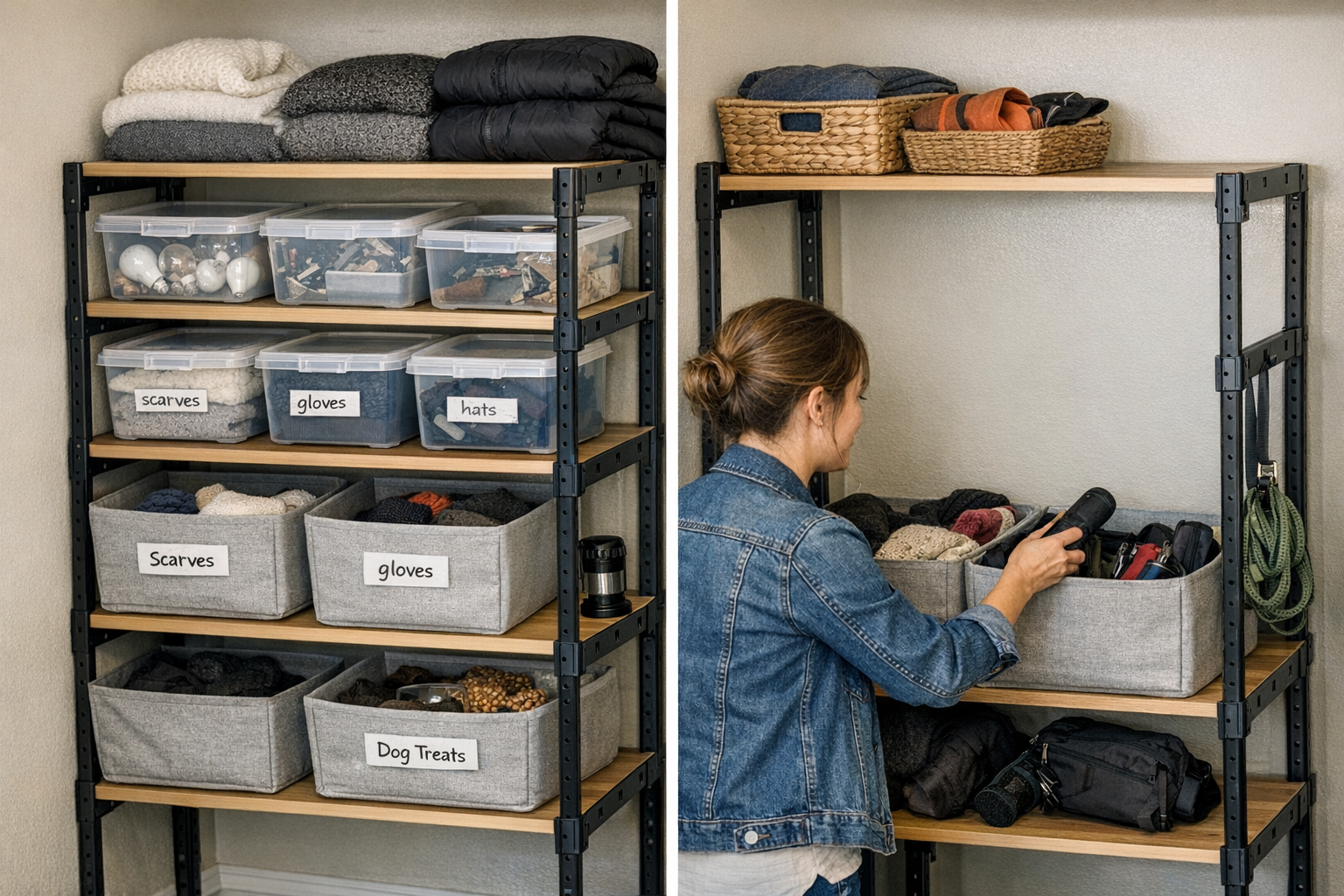
Most storage systems look tidy on day one—until you actually start using them. Walk into any closet, entryway, or storage wall after a few weeks of real life, and you’ll often find a familiar slowdown: you’re reaching over bins, digging behind baskets, and pausing to squint at a label that no longer matches what’s inside. The shelf that looked so ordered now feels crowded at the edge; quick grabs turn into careful reshuffling. It’s this subtle, daily friction—not chaos, just relentless inconvenience—that makes staying organized feel harder than it should be.
When Storage Starts Working Against You
The difference between a space that just looks organized and one that actually works for you shows up fast. Maybe you set out bins for every category: gloves here, scarves there, chargers in their own box. Inevitably—especially in rush hour moments—items stray. The “rain” umbrella ends up under a tangle of leashes. Last night’s hat vanishes behind a stack of folded bags. Each time you need something, it’s suddenly never at the front; you start pulling out one container only to move two others first.
This isn’t just clutter—it’s a slow drain on momentum. Over time, the setup that was supposed to simplify your routines now creates extra steps. Instead of spending Saturday putting everything back, you relabel bins, freshen up the stacks, and promise yourself next week will run smoother.
Why More Categories Create Real-World Complications
The urge to fix these problems with extra bins and labels is strong. More categories should mean more order, right? In practice, real life refuses to stay within those careful boundaries:
- The “miscellaneous chargers” box attracts batteries, random earbuds, and manuals nobody will need.
- Sock bins catch stray mittens after laundry day gets hectic.
- Tightly packed bins block access, forcing you to juggle stacks just to get to basics like a scarf or reusable bag.
What results is an ordered look that doesn’t translate to daily ease. Everything fits—until it doesn’t. Categories blend, edges bulge, and the act of grabbing a single item can unravel a shelf.
Closet Fatigue: When the System Can’t Keep Up
Picture your hallway closet during a real week: hats, scarves, dog leashes, an umbrella for the first storm of the season, a bag of light bulbs meant for the garage. Someone hurries in with wet shoes, drops an umbrella onto the nearest pile, and leaves a glove in the bag bin “just for now.” The result? You open the closet in the morning and the edge of the shelf is wobbly, now crowded with objects trying to escape their slots. Bins lose their structure. Categories bleed. Each reset becomes less about restoring clarity and more about desperately hiding evidence behind the door.
This is the slow failure most storage systems aren’t designed for. Good intentions get overwhelmed by quick decisions, family routines, and the simple fact that nobody reaches for storage when they have time to put things back perfectly.
How Fewer, Broader Bins Speed Up Recovery
The real breakthrough happens when you cut the number of bins. Take that same hallway closet and forget the fine-tuned categories—go from five or six down to just two broad zones:
- Wearables: all gloves, hats, scarves, even sunglasses, in one open bin.
- Grab-and-go gear: bags, umbrellas, leashes, shoe covers, all lumped together in a second.
Instantly, access improves. You stop wrestling with tightly stacked boxes. The shelf edge holds steady, even after a chaotic week. Items land where they’re dropped—close enough to find, loose enough to suit unrehearsed mornings. Instead of a full-scale weekend overhaul, it takes ten seconds to lift and shake out a pile, realign the bins, and move on. The reset shrinks to a flick of the wrist.
The Day-to-Day Difference
The shift isn’t cosmetic—it’s practical. Messy afternoons don’t end with new “temporary” piles leaning against the door. Lost-and-found hunts fade out. Family members don’t pause, wondering where that random glove belongs; they drop it in the wearables bin and keep moving. Organization survives the week, not because everyone’s perfectly tidy, but because the system doesn’t demand perfection.
How to Tell If You’re Stuck With Too Many Categories
Watch for these warning signs that your storage system is slowing you down:
- Shelves feel crowded long before they’re full—vertical space goes unused as bins stack and topple.
- Labels get ignored, or containers lose track of their original purpose.
- Baskets become a jumble: what started as “just socks” ends up mixing in dog toys and keys.
- Weekend resets aren’t quick—they’re repeat performances of the same tedious sort-and-stack.
If you spend more time maintaining your storage setup than actually using it, that’s the system breaking down, not your habits.
Striking a Realistic Balance in Everyday Spaces
Every house and routine has its own demands. Some high-traffic drop zones—think muddy boots and soccer gear—need a handful of divisions to keep things in check. But if you find yourself regularly reshuffling boxes or struggling to find anything quickly, it’s time to zoom out. The sweet spot is simple: a few big categories, loose enough to fit real habits, structured enough that bins never disappear under piles.
Organization isn’t about how clean your closet looks on a good day—it’s whether everything still has a place when Monday gets messy, errands pile up, and nobody has time for perfection.
Try This: The One-Month Category Reset
Not sure how to start? Let your space show you. Spend a week using your closet or entry area as usual. Notice which bins always run empty, which ones overflow, and where items keep migrating. Merge the ones that swap contents. Make categories a little wider than feels “correct”—then leave it for a month. If you find yourself grabbing what you need faster and spending less time rearranging, you’ve landed on a system that actually fits the way you live.
Simpler storage isn’t the absence of clutter—it’s making sure the clutter that does appear is quick to sort, quick to clear, and never slows you down. The right system keeps up with daily life, not just with a perfect photo on move-in day.
Shop ClosetWorks for practical storage solutions that fit real daily routines.