
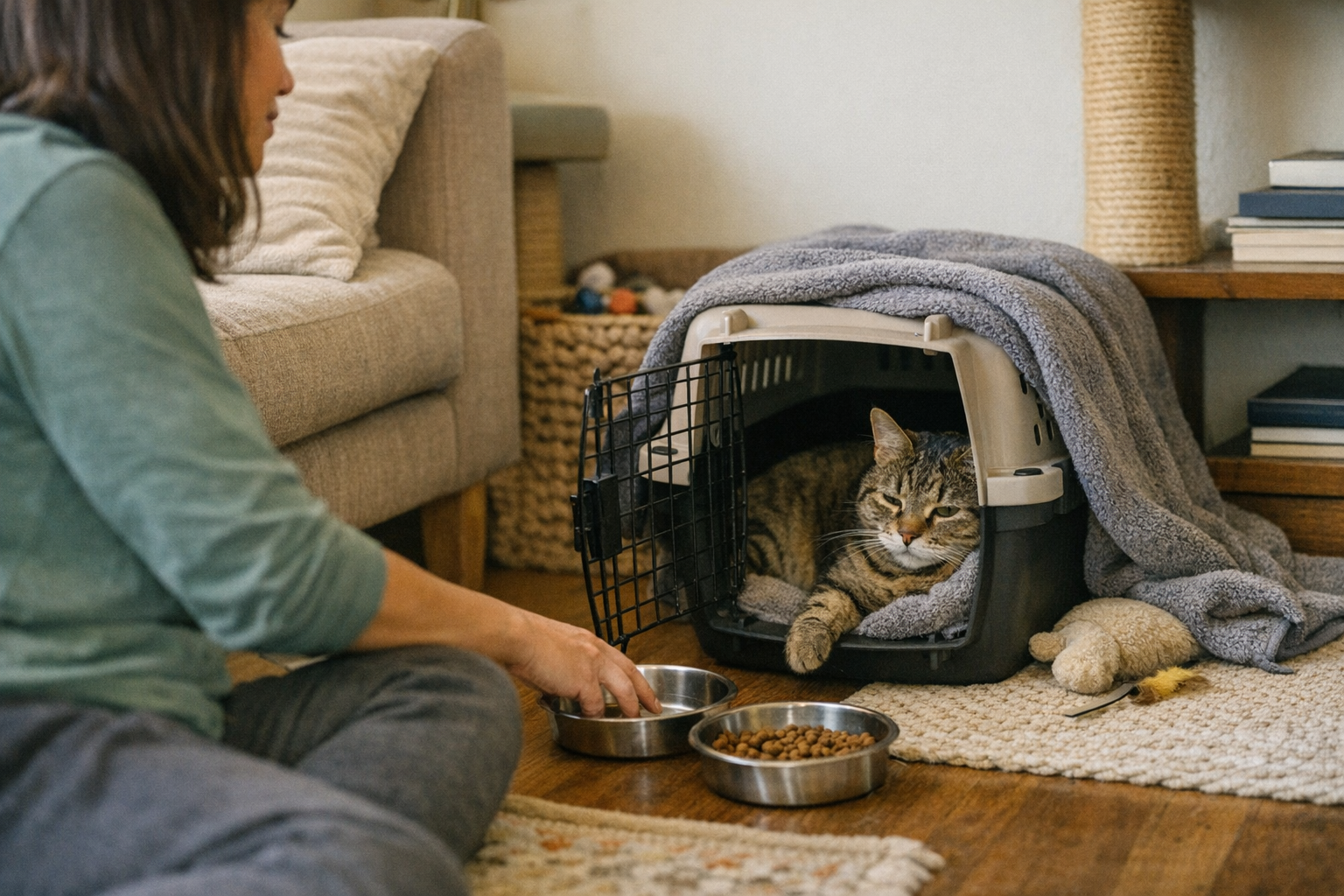
The cat carrier is the quiet weak link in most indoor-cat setups—harmless when ignored, and then instantly a problem the moment you actually need it. Most carriers live buried behind jackets, wedged behind cleaning bottles, or stashed under benches, out of sight until the next vet appointment or repair visit. As soon as real use hits, everything that looked clean and settled falls apart: you’re reaching past muddy boots to tug out the carrier, tripping a storage avalanche, and realizing the area you kept “clutter-free” now blocks the entire routine. Meanwhile, your cat bolts under the couch at the first scrape of plastic, leaving you chasing fur trails long after the day’s disruption.
Why Hiding the Carrier Sets Up Trouble for Later
Stowing the carrier away seems like an easy fix: no eyesore, no gear trailing through the hallway. But under daily conditions, this “tidy” logic does the opposite. Pulling out a hidden carrier almost always means yanking it through tangled coats, scattered bags, and corners full of shed fur that went unchecked since the last emergency. By the end, there’s a visible mess—shoes knocked sideways, a spray of dust across the floor, and now the real routine is just starting with extra cleanup.
For your cat, the problem compounds: the carrier only appears at peak stress moments. One or two cycles of this and your cat starts making the connection, leaving the food bowl behind and diving for cover the minute a closet door creaks. What was a neutral object for the human becomes a clear stress flare for the cat—a feedback loop of tension you feel everywhere: skipped bites, scattered fur, and a room that instantly feels unsettled.
Routine Breakdown: How Hidden Carriers Disrupt Daily Flow
The damage isn’t limited to carrier day. Scrambling after your cat in a panic kicks toys under the couch, drags the litter mat crooked across the tile, and knocks the water bowl off target. Even after the trip, you’re left realigning bowls and smoothing fur lines—sometimes replaying the same reset sequence you thought you solved last time. Cleanup turns into a drawn-out, multi-zone chore triggered by one hidden item.
Notice how small scratches show up on the baseboard exactly where the carrier scraped through during the last battle, or how feeding areas look fine until you have to move everything fast. The room’s order survives only as long as all routines run on schedule—which they never do when the carrier returns.
The Gap Between “Tidy” and “Liveable” in Cat Homes
The biggest miss? What soothes the human eye doesn’t always save the routine. Out-of-sight carrier storage looks purposeful but sets up the kind of slow-drip inconvenience that only appears on the third or fourth cycle. When it’s go-time, all the friction hits at once:
- Access turns into obstacle course: You end up shifting half your supplies just to reach the carrier, fighting a storage squeeze you created yourself.
- Room flow gets sliced up: Mats bunch up, shoes block quick exits, and your reset streak gets instantly blown apart—every zone left half-right, half-wrong.
- Cat stress explodes: Instead of rebounding, your cat hangs back, reluctant even after the carrier vanishes, each event leaving a bigger stress residue for the next round.
The Real Cost: Reset Burden That Keeps Returning
The result isn’t just one extra wipe-down—it’s a sequence that starts slow and then multiplies. Now you’re:
- Wiping down a water bowl again because a rushed foot scattered its contents mid-chase.
- Peering under furniture for lost toys and grooming gear that used to stay put.
- Finding that same fur whirlpool every time, always at the spot where the carrier scraped through.
The more you rely on the hidden carrier “solution,” the more it becomes a bottleneck for every shared space and reset—less a shortcut, more a recurring source of friction that outlasts the emergency.
Flipping the Setup: Why Visible Carriers Reduce Hidden Stress
The quickest real-world fix isn’t about keeping things invisible—it’s about erasing friction where it builds up most. A carrier left in plain view (and well-placed) doesn’t just erase the panic search; it resets the whole dynamic. Now, the carrier stops being a stress alarm and blends into the normal traffic zones of the day. Settle it near a favored rest spot and it becomes part of the territory, not an intruder. The stress signal is gone.
Turning the Carrier into Ordinary Structure
Planting the carrier near daily anchor points—a blanket in the window nook, or by the toy patch—changes the game. A bit of bedding draped over a corner, a scratch pad beside it, and suddenly your cat treats the carrier like neutral ground: napping half-in, stretching a paw against the crate edge, no more high alert. For humans, this means the reset work drops away. The old routine of yanking, shifting, and dusting disappears. Suddenly, prepping to leave means moving a blanket, lifting the handle, and stepping out—nothing else requires a re-sort.
The Practical Change: Reset in Two Moves Instead of Ten
Here’s a pattern from real use: the carrier parked under the bench used to mean water bowls got jostled, crumbs scattered, and cleaning sprays were always just out of reach at the worst moment. Cat gone, routine scrambled, and by the time you left you’d spent fifteen minutes piecing the feeding zone back together. After moving the carrier next to a favorite nap spot, the routine snapped into place. Cat inside (sometimes already halfway there), bowls barely nudged, bedding straightened in seconds. The reset became a background step, not an ordeal.
Smart Placement Without Turning the Room Into a Maze
No one wants to trip on a carrier every time they cross the living room. The trick isn’t just visibility—it’s intelligent placement. Only integrate carriers in spots already used daily, where both cat and human traffic flow smoothly. Don’t wedge it by the door or jam it in a dumping zone, where it gathers dirt and blocks movement. Instead, next to a blanket station, by the regular toy drop, or in line with your own cleaning caddy—all places that blend it into routine and keep resets minimal.
Blending Familiar Textures and Patterns
A cat carrier that shares texture with existing comfort items (a blanket, a scratch pad, a chewed-up toy) loses its status as a threat. Now it’s just another nap option or scratch target. Visually, the carrier recedes; practically, it becomes one of the easiest spots to swipe clean, since its presence puts problem areas right in front of you, before loose fur or litter tracks upend the look of the room again.
The secondary benefit: accessible carriers let you catch surface buildup, litter drag, or stray fur before messes multiply, lowering reset pressure with each daily use rather than every emergency.
From Reset Chaos to Predictable Ease
The difference grows with every cycle: the out-of-sight “clean” carrier spreads chaos each time it reappears, while the in-sight, everyday carrier fades quietly into the background. The room holds its structure after the rush. No more full-area resets. No more missing toys burrowed under baseboards. Cat tensions and human cleanup both slide back toward normal within minutes, not hours.
Signs Your Current Carrier Setup Creates More Work Than It Saves
- You dread carrier days because you know they’ll scatter the organization you thought you’d nailed down.
- Your cat’s panic reaction seems to increase, hiding faster and resisting longer with every event.
- The same scratches and scattered debris return after each use, in the spots where resets keep falling short.
- The setup’s neat appearance doesn’t hold up—each round of use demands a slower, heavier cleanup.
If Your Cat Setup Struggles After Round Three, It’s Not Really Working
Most indoor-cat setups look functional on day one. It’s by the third, fourth, or fifth time that hidden friction exposes itself: missed feeding windows, toys jammed under couch legs, water dribbles where bowls shifted in the rush, or the faint litter trace marking every emergency maneuver. “Organized” means little if it breaks under repeated use—and nothing slows cleanup like dragging the whole closet into the routine every time the carrier has to move.
Reducing carrier chaos comes down to making resets shorter, not hiding gear deeper. Once the carrier lives in the flow of the room and blends with the setup, breakdowns get smaller each round. The item you used to hide becomes just another surface to wipe down on the daily run; the tension dies down, and the routine gets lighter, not heavier, after each use.
If your home asks for less chasing, less hidden buildup, and fewer marathons to put things back, the setup doesn’t need to get prettier—it needs to make use easier after round three. Where the