
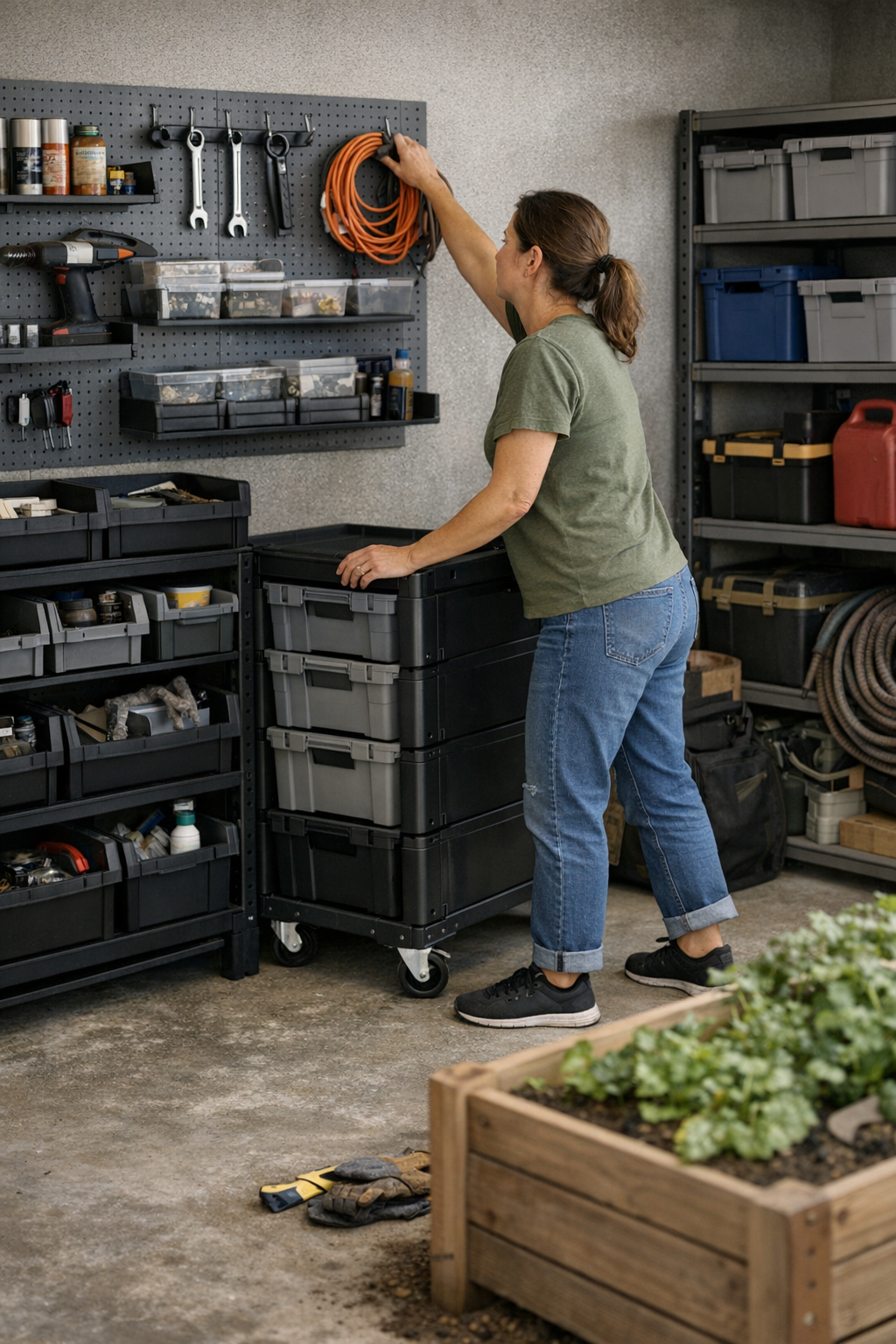
Everyone loves the crisp satisfaction of a freshly organized garage, workshop, or backyard shed—a place where every tool has a label, every bin squares up in tight rows, and the floor finally looks clear. It lasts about as long as it takes for real work to start. The first time you pull out that mobile cart, open up a wall system, or reach for a drill mid-project, the “perfect” setup proves itself less perfect: storage fights back, movement stutters, and the tidy arrangement you sweated over quietly becomes the new source of friction.
When “Perfect” Layouts Trip Up Real Routines
The thrill of seeing everything snapped into place easily hides this creeping frustration—movement friction that sneaks up on you in your actual routine. The so-called mobile cart seems nimble until it ends up wedged between folding tables and parked halfway into the walking path. The low cabinet that fit so neatly along a wall now demands a sideways reach around its edge every single time you grab the one hand tool you use daily.
Clutter isn’t the problem; it’s blocked flow where organization gets in your way. Detouring around a misplaced cart, sliding out bins stacked in front of the one you truly need, or hunting for a gardening glove in a compartment lost behind others—not only do these tiny disruptions add up, they slowly chip away at the sense of order you thought you’d achieved.
The Real Price of Blocked Pathways
The tension between looking organized and actually living with the setup shows up in small but relentless ways:
- A rolling chest perfectly camps against the back wall—until fetching the shovel hanging behind it becomes a wrestling match.
- Your cubby grid sparkles on day one, but every Saturday finds you stepping over the same baskets dumped out from last week’s project. The prime parking spot for your mower? Slowly overtaken by overflow you “temporarily” stuffed there.
- The workbench with built-in storage looks efficient, but now you’re in the habit of shuffling bins on and off it each time you want to actually work in the space.
Resetting these zones turns into an obstacle course of micro-shifts: carts that never quite return home, bins crammed blocking easy access, a heap behind the door that grows with every project. The more you have to maneuver around your system, the more routine resets stretch and frustrate—until even a quick tidy-up feels slow, clunky, and discouraging.
Real Resets vs. Routine Resistance
This isn’t just a once-a-season headache. In the day-to-day grind—especially in small or multipurpose spaces—these frictions show up after every use. Finish a job, and suddenly you’re sidestepping a half-moved cart, squeezing past a tray you left out for “just a minute,” or rerouting your return because bins have piled up on the “clear” part of the floor.
It’s not just lost time—it’s a slow drain on motivation. Two minutes to “reset” balloons to five as you’re forced to touch the same items over and over. Eventually, the system meant to make things simple just breeds a quiet resentment and a feeling that your setup is working against you. The more you “fill” your space, the more you realize the real priority: how easily you can move and reset, again and again.
The Shift: Serving Movement, Not Just Storage
The biggest improvement rarely comes from adding more storage. It comes from creating open movement lanes and rethinking what “full” even means. The best setups respect your need to get in, reset, and move out—without choreography or second-guessing. That might mean not lining every inch of wall with storage, or carving out clear “parking spots” that don’t collapse into each other after a busy weekend.
Sometimes, just leaving a deliberate half-cart-width between your mobile rack and the shelves behind it is the single tweak that transforms daily use. That split-second access—no sidestep, no “excuse me”—removes a routine interruption you’d accepted without question. Your wall tools, for example, become a simple reach, not a detour requiring you to drag something else aside first.
Test It: The “One-Move Rule”
Put your setup to the test: if you have to shift, slide, or backtrack just to get a tool you use every session, you’ve spotted a friction zone. Try re-assigning where carts park. Slide core-use bins up to eye level. Shift infrequent items—and only those—to the corners or deep shelves. The goal: one move, not three, to access anything you need all the time.
Spotting Subtle Drains: Overflow Piles and Dead Space
Let flow issues go unchecked, and you’ll spot the real cost quickly enough: zones that slowly fill with overflow, corners that become permanent drop zones, wall organizers that overflow onto the floor. Labeled bins multiply behind closed doors—and suddenly every “temporary” pile is part of your new normal. Those dead corners never get reclaimed; they just rearrange the obstacles.
In reality, it’s not about the sheer amount you can store—it’s about how easily it all returns to place without a chain reaction of bumps, slides, and re-shuffles. Nobody plans to be tripped by their own organizing system, but it’s the most common side effect of ignoring circulation, bottlenecks, and how things land after real use.
Designing for Effortless Repeat Performance
Lasting ease isn’t about picture-perfect bins—it’s about setups that handle repeated routines without turning resets into relapses. Leave genuine lanes for carts. Prioritize wall zones for the dozen tools you grab on autopilot. Study your own traffic: wherever you get stuck or forced to shuffle, make a change—even if it means storing less on that one shelf. These adjustments last because they mirror your habits, not just aesthetic ideals.
The right difference is immediate: No more pausing before putting things back. Less weaving around forgotten bins. A routine that feels like “coming home” to a zone ready for your next move, not a puzzle to be solved every time. Space welcomes you back because everything is staged for actual movement—not just on display for a camera.
The glossiest storage layout isn’t always the one that works. What matters is carving out a plan that lets you flow—resetting, reaching, and moving with real ease—no matter how many times your week upends your best intentions.
See modular and mobile storage that lets your routine flow at StackNest.