
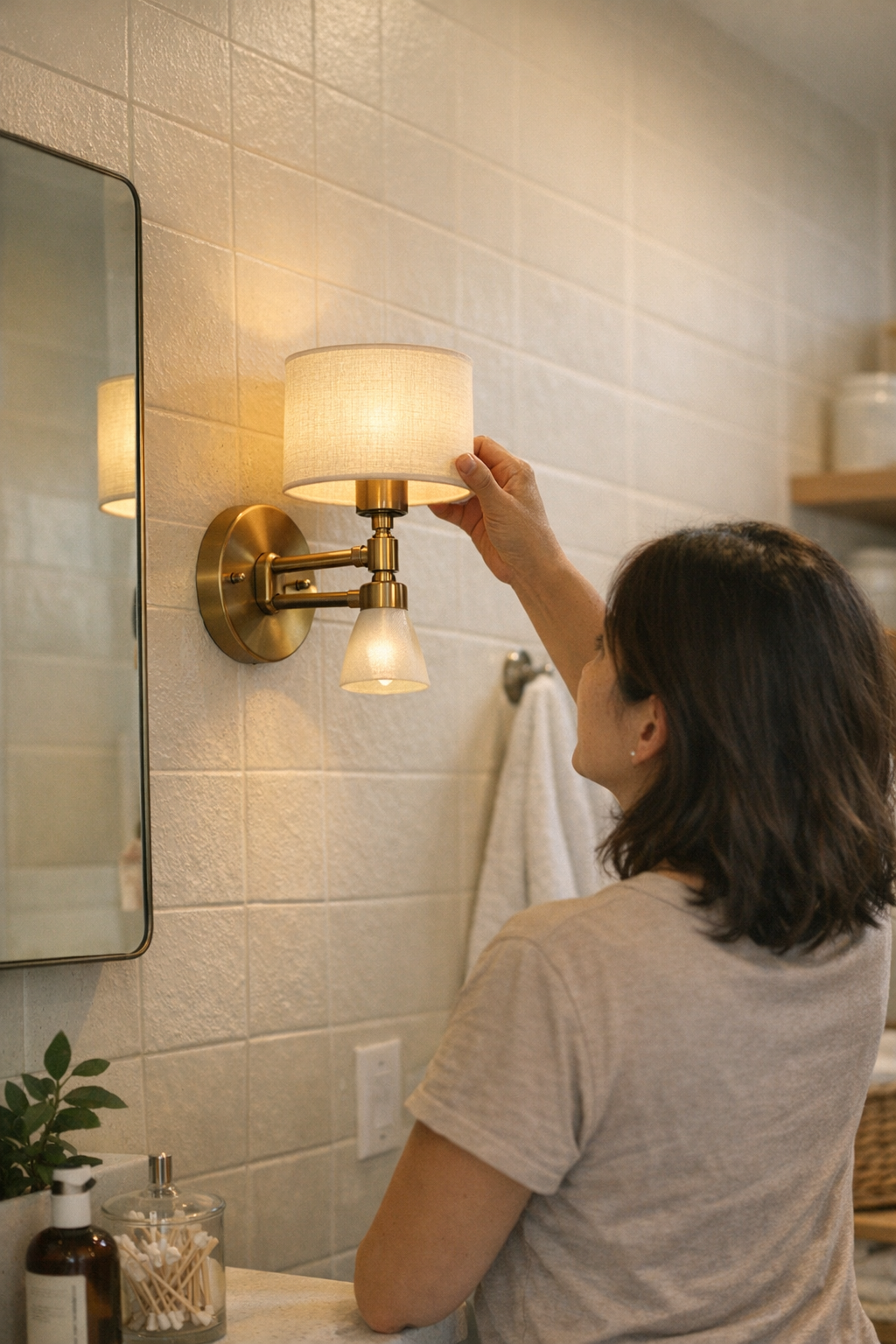
One rushed shortcut during lighting install—especially with a power driver—can undermine every routine that follows. A ceiling light looks flush above the laundry sink, a vanity strip brightens the mirror, a hallway sconce sits square after install. But what you don’t see on day one is often what unravels everything after a week of real use. Cross-threaded screws or stripped heads—usually from forcing things fast in a tight zone—let fixtures sag, hum, or shift until a steady space becomes an ongoing irritation.
Lighting That Holds—Or Starts to Slip the Moment You Use It
Fixtures can look perfect right after installation. The flush mount sits even, the wall light sits steady, everything aligns. But invisible installation mistakes take hold before you even flip the switch. A ceiling fixture set too quickly can drag a gap at one edge—barely there, until the first bump with a laundry basket or a door slam makes it obvious. Bathroom sconces that lined up along the mirror slide off-level just from weeks of steam and wiping the glass. Under-cabinet task lights—so clean on day one—start to gap and collect dust or moisture near the mounting points where a screw was rushed and couldn’t bite properly.
This kind of failure isn’t random. It’s almost always in the most awkward places: above mirrors, behind laundry units wedged to the wall, back corners under cabinets, stair turns where your hand can barely fit. Those are the spots where grabbing the drill feels easiest—right up until the next cleaning, bump, or quiet vibration makes a loose thread or compromised anchor finally show.
Routines That Expose Every Weak Point
Repeated movement exposes fixture flaws more than first impressions ever will. Stepping up the stairs, tossing a towel in the laundry, swinging a door—each routine flexes mounts and fixtures. A flush mount near the washer that shifts when bumped. A vanity mirror light that starts humming with every open-and-close. The edge of the under-cabinet light that tilts further each time you wipe the counter, until shadows fall over the sink’s lip and you instinctively lean closer to see.
Everyday use is relentless. Corridor footfalls loosen a misaligned semi-flush. Damp air amplifies the slant of a hurriedly fixed wall sconce. You start to hear a buzz that wasn’t there, see dust or bugs settling in the crack that grew next to a driver-driven screw. The flaws don’t just annoy—they disrupt safe movement, shadow the work surface, or force you to work around the lighting you paid to improve.
One Bad Screw, Months of Small Interruptions
The real problem always comes during upkeep. That moment when a bulb goes, or the fixture needs a clean, and the screw head is locked or stripped—no way to open without more tools and time. You’re left extracting hardware, re-mounting under less access, repeating the very fix that a hand-tightened screw could have prevented. For any fixture in a spot you have to clean or see daily, one installation shortcut turns small inconvenience into a recurring hassle.
What Happens When You Hand-Start Screws—Proven in Utility Spaces
Commercial and utility spaces make it obvious: a run of under-cabinet lights, each mounting screw started by hand, not drill, stays anchored month after month. Wipes, vibration, heat—no gaps, no slip, the panel stays true. When you have to unscrew for dusting, the fixtures come down smoothly: the anchor is still intact. The single screw forced by drill in the tightest corner? Its section always shows the first slip—gap at the edge, growing grime, uneven light scatter over the worktop. The difference isn’t whether the room glows, but whether that light stays useful with every routine knock, wipe, and adjustment.
Slower Means Fewer Repairs
Hand-start every screw. Especially in blind corners, damp areas, and every place you can hardly get a grip. When the thread starts clean, the light fixture holds. Even above the mirror, by the stair turn, under the shallowest cabinets. Time spent now buys months without shifting shadows, loose wires, or the tilt that makes you avoid using part of the counter or mirror. That reliability? Built in a single, patient step before any tool ever touches the screw.
Common Lighting Mount Problems—And What Actually Causes Them
Why do mounting screws cross-thread in lighting installs?
Answer: Because drilling at an angle, or forcing the screw straight into the box or drywall anchor, often distracts from feeling the threads line up. The screw cuts its own off-kilter path—especially easy in older surfaces, patch jobs, or shallow wall boxes. The tighter the access, the easier to mistake speed for success.
How can stripped screw heads put the whole fixture at risk?
They make maintenance a struggle and stability a gamble. A stripped screw can’t be tightened or loosened safely. You risk a fixture coming loose over time, or wires getting pinched and exposed in ways that invisible misalignment can worsen. Each skipped cleaning session or unmade bulb change just deepens the problem—until the whole light feels risky to use.
Is careful, hand-started mounting really necessary for flush mounts, sconces, or task lights?
Absolutely, especially where movement, moisture, or daily cleaning test the install again and again. Every damp bathroom, busy stairwell, or high-traffic hallway proves: hand starting means the fixture stays tight and flat, wires behind the ceiling stay unmoved, and the light itself doesn’t become a future obstacle. The more routines and traffic, the more this microscopic care pays off.
Lighting That Survives Real Use, Not Just Looks Good Once
Reliable indoor lighting isn’t about a room looking bright the day it’s finished; it’s whether each fixture stays secure and usable after daily bumps, wipes, and shifts. That flush mount above your washer that doesn’t rattle when steam fills the room, or the stairway fixture that holds level all through winter boots and raincoats, signals a good install—one built on hand-started threads, not drill-forced shortcuts.
Day after day, the difference is this: do you move confidently through the room, or do little stutters, shadows, or ill-fitting gaps make you pause, detour, squint, or just quietly regret the last-minute push to finish?
For flush mounts, wall sconces, vanity runs, or work-area lights in busy, tight, or damp spots, the quickest way to an unreliable setup is speeding past the basics. The most useful, trustworthy performance always comes back to the details nobody sees—especially that first, slow turn of each screw.
Visit LightHelper for practical indoor lighting that works, not just looks finished