
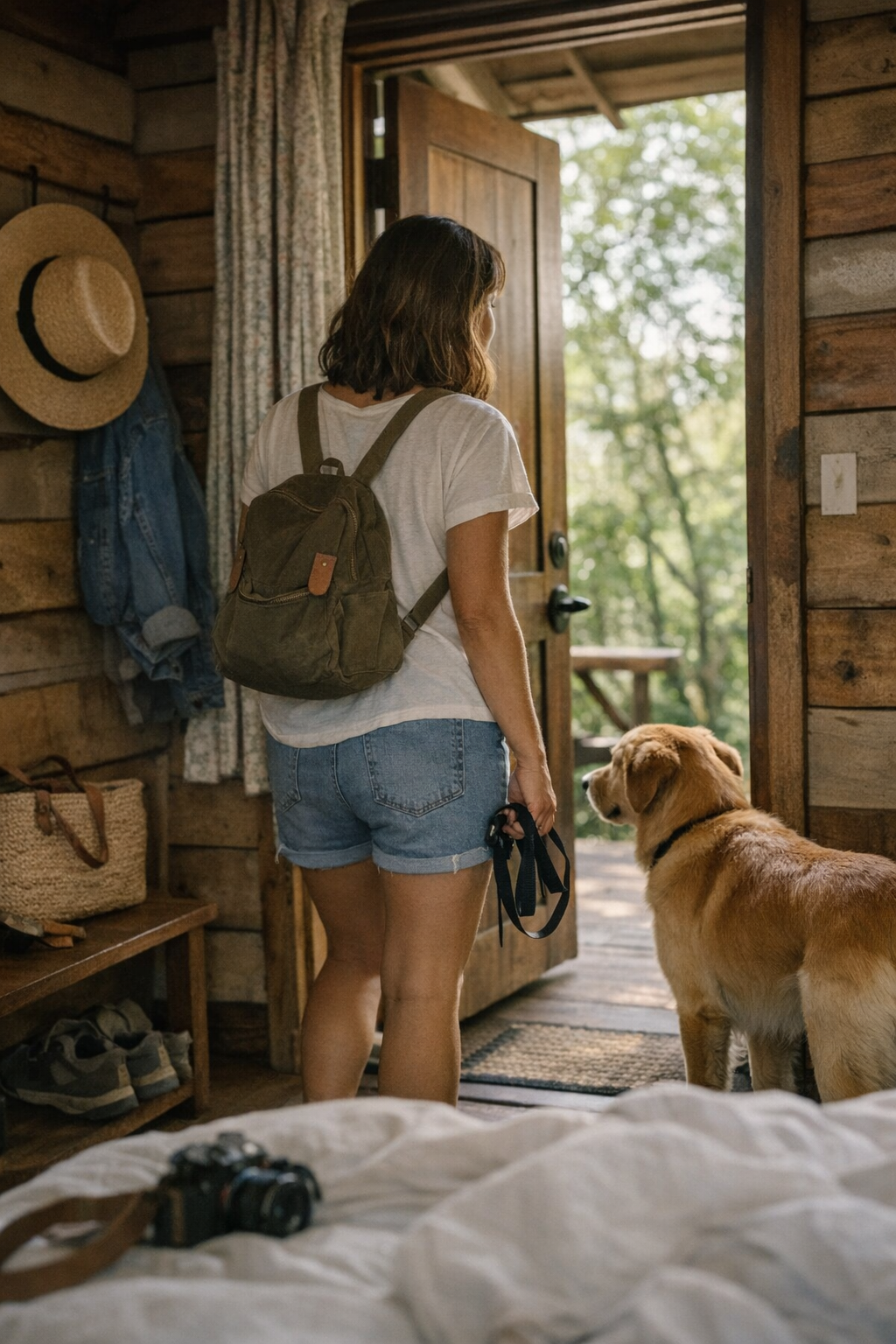
Everyday dog routines always reveal their cracks in the same places. You reach for the leash, but find it tangled under yesterday’s jacket—again. Wipes and towels are “out,” but never close enough when muddy paws barrel in. Water bowls drift from their corner, toys creep into your walking path, and what seemed organized yesterday now means circling back, doubling up, or stepping over the same dog-bed for the third time this morning. Most owners just patch these interruptions and call it “manageable,” but a setup that only looks tidy keeps you stuck in the same slowdowns, over and over.
When Everyday Routines Get Stuck on the Same Weak Point
Setups that appear fine in week one slowly uncover their own friction. The leash starts buried, bowls migrate across three kitchen tiles in as many days, and the soft bed “fixed” for comfort starts blocking quick access to another doorway. Each little adjustment means an extra pause—by the door, after a walk, before feeding—until your daily flow turns choppier, and your patience stretches thinner. What started as just a few seconds forced detour gets repeated so often it becomes how your entire routine feels.
Surface order does not erase real friction. Maybe your wipes sit in a cute basket on the shelf, but hunting for them with a wet dog dancing at your feet turns cleanup into a two-step production every single time. An “organizer” might hide mess, but delay the very access you need when the routine actually happens—not just when someone’s looking.
Reading Your Dog’s Signals: When Routine Feels Off
Dogs notice when patterns change—even by a few inches or minutes. A familiar bowl gets nudged aside, the walk time drifts, or the crate ends up facing a new direction. The impact shows up right away:
- Your dog hesitates at the doorway, glancing between spots instead of heading straight out
- Paces or circles around the water bowl before drinking
- Hovers and watches, instead of settling, as you re-gather items you thought were ready
- Delays at mealtime if feeding rituals or bowl placement have changed
These aren’t just quirks—when start points, gear locations, or feeding spots keep changing, dogs stall or backtrack. It’s a quiet but real signal: your “system” is unpredictably resetting itself, and neither of you can relax into it.
Recognizing Real-Life Routine Friction
Take the evening walk: you usually reach for the leash at the entry table, but today it’s gone—straightened up into a basket on the far shelf. Your dog stands by the door, waiting longer, glancing from you to the new hiding spot. Multiply these delays across feeding, watering, and rest—now the routine looks organized, but works slower at every turn.
Scenes Where the Routine Falters (and Frustration Creeps In)
The Missed Leash Moment
You’re in a rush. The leash should be by the door, but your hand lands on keys and random clutter—leash moved during last night’s tidy-up. Searching adds extra minutes. Not huge, but enough for your dog to lose focus, start whining, and for you to leave the house already behind schedule. The cycle repeats: same trip, same interruption, day after day.
Cleanup Items Out of Reach
Back from a wet walk, the dog charges in ahead. You go for the wipes—hidden behind a treat jar you set down yesterday. Instead of a quick cleanup, now you mop the floor first, backtrack for the supplies, and try to coax a squirmy dog back for round two. Each misplacement costs momentum, making after-walk resets messier and more drawn out than they need to be.
Resting Spots That Keep Moving
You buy a new bed, set it up in the living room. It works—until the laundry basket needs the space, and suddenly the dog’s bed shifts to the hallway. The dog circles, hesitates, then lies down on the bare floor. Even great comfort fails when the “landmarks” move every few days—leaving your pet pacing, not settling, and bedtime calm replaced by restlessness.
Why “Predictable” Routines Calm Down the Fuss
Dogs relax into routines built on reliable, repeatable structure—not just what looks neat on a weekend. The gear placement, path, and order become cues. When a bowl returns to the same cupboard after every meal, the leash always hangs by the same hook, the rest mat holds its corner without migrating—patterns stabilize, and friction fades. Meals proceed with less circling; after-walk cleanup turns into a single, smooth reach, not a multi-part search-and-reset for basics. Calm returns not by accident, but because the structure stops shifting beneath you both.
It’s the Chain, Not the Clock, That Calms the Routine
Most dogs care less about precise time than concrete, repeatable steps. You can walk at 8:00 or 8:30—as long as the order and gear are always the same, your dog cues in. But move the leash, swap bowl sides, or force your pet to navigate random toy piles and you’ll see the confusion play out as slow approaches, glancing back at you for guidance, or not eating right away. Predictability is about the flow: leash, coat, waste bag all in reach as you leave; bowls and mats unmoved, even when tidying feels tempting.
- If play always follows the same corner, and bowls stay anchored, meals settle into rhythm—regardless of sunset or dinner rush.
- If leashes, coats, and wipes live together by the door, walks become less about searching and more about actually getting outside—even in rain or snow.
- Rest mats only truly anchor calm if they don’t need to be reset each night—pick a spot and let it become familiar, not a floating target.
How Small Setup Tweaks Can Fix Slow-Downs
Spot the repeated snag:
- You keep searching for the leash at the door, but it’s always mixed in with mail or tossed onto a chair
- Toys or bowls keep ending up in your walking path, tripping you on your way out
- Soft beds, designed for comfort, now block crate access or force awkward detours
- No matter how tidy things appear, you always hit the same sticky point—a step that just never gets smoother
A “neat” setup isn’t always a usable one. If you’re always reaching, reshuffling, or correcting just to make routine moves, the structure is making you work around it. The quickest sign is when you keep adjusting the same spot three times a week—moving a bowl, straightening a mat, repositioning wipes—only for the delay to return at the next mealtime or after the next walk.
Resetting for a Smoother Cycle: What Really Changes With Better Structure
Stable routines make the reset—and the rest—feel automatic. Items return to the same place; the dog knows what’s next and stops signaling for help or clarity. After a few days of true consistency, your dog approaches the bowl or leash without circling or waiting for direction. The after-walk wipe-down involves a reach, not a search, and evening calm begins with the dog already settling—because the rest mat hasn’t moved. The net result isn’t just “faster” routines, but fewer breakdowns—each transition holds together, and the small frictions stop adding up.
The Real Test: “Looks Tidy” vs. “Works Smoothly”
A perfectly styled entry way still fails you if the leash is in a closed drawer, the wipes are a room away, or you double-back for toys that block the door. The right setup survives actual daily repetition: fewer detours, no recurring snags, and no dog left hovering in uncertainty. Smooth routines win not because they’re neat, but because they hold their shape across three rainy mornings, five return-from-work entries, and a week’s worth of muddy paws without buckling.
Practical Ways to Anchor Predictable Routines
- Choose a visible, fixed location for essentials—leash by the door, bowls by the cupboard, bed in its own corner—and stick with it for a week before moving things “just to tidy.”
- Think before relocating: if “cleaning up” means less reachability, wait until a new spot actually shortens your reset, not just hides the clutter.
- Group the highest-use pieces together—outdoor gear, cleanup wipes, water bowl—where you grab them in one step, not two or three.
Better structure is not about outsmarting every mess—it’s about picking the right anchor points for your real routine and letting comfort and speed reinforce each other. These are the setups that work even on tough days, with muddy paws, forgotten wipes, or a dog