Author: jaesoon_admin

  • Why Simplifying Your Indoor Cat Setup Saves Time and Reduces Clutter

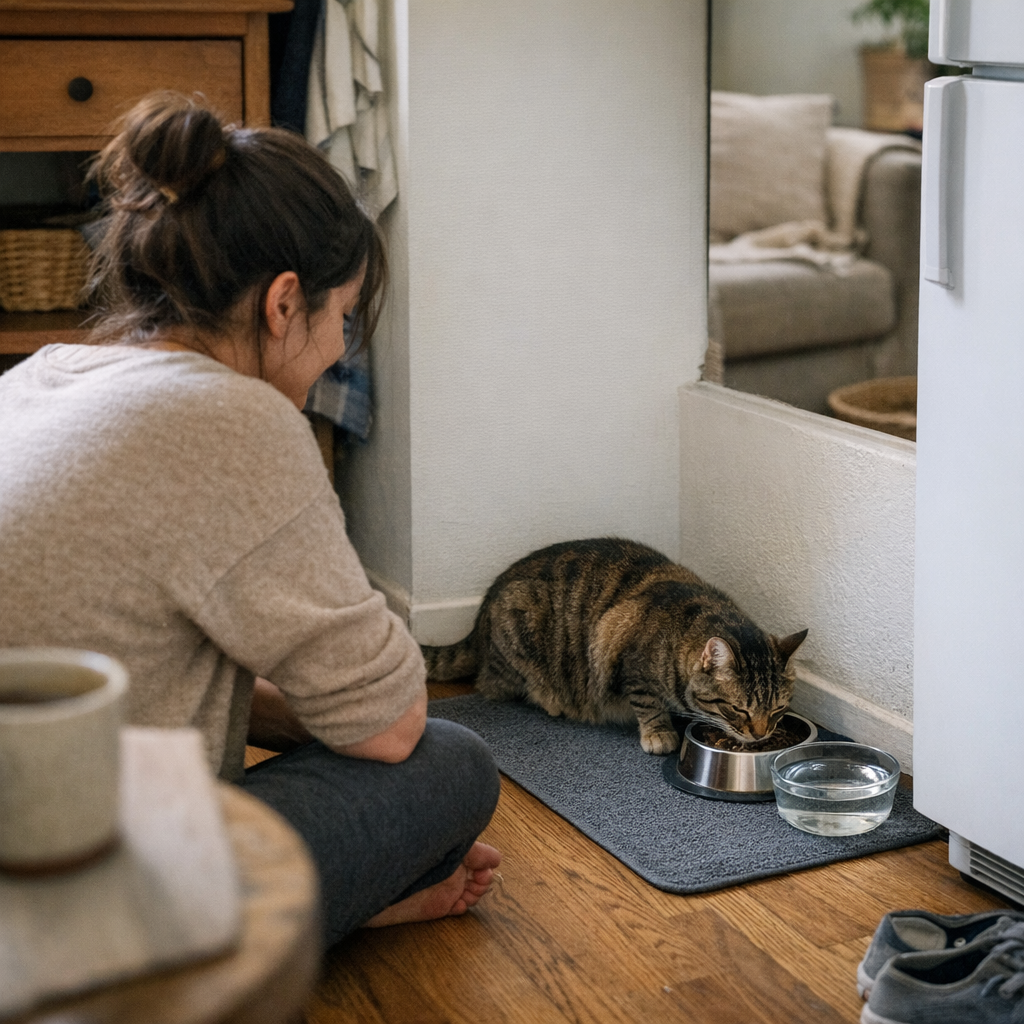
    More bowls, more mats, extra toys—what starts as “just in case” becomes the main reason the feeding corner always needs attention. The instinct to double up on cat supplies looks sensible at first: backups for quick swaps, spare bowls to avoid last-minute scrubbing, a few extra mats for that perfect landing zone. But stack enough of these “preparations” together, and you end up with a feeding area that’s always cluttered, a water station you dread refilling, and a daily routine stuck on repeat cleaning the things you meant to make life easier. The setup looks ready for anything, but every extra item is one more obstacle or dust-collector, slowing every reset. In the StillWhisker world, the difference isn’t about how much you have—it’s about how fast you can keep things actually working.

    Clutter That Sneaks In Through Good Intentions

    Extra bowls and mats feel like protection—one dirty dish won’t stall breakfast, and that bonus mat covers the rare splatter. But those backups transform into extra surfaces you wipe even when they haven’t seen food, and extra pieces that slide away only to collect a fine line of tracked litter or crumbs. After a month, most of your cat area upkeep isn’t about spills—it’s about correcting overflow. The reality hits when the “prepared” corner turns into its own micro-cleaning job: stray hair by the backup bowl, a mat gathering dust instead of debris, toy bins growing but never empty.

    Real-World Friction: What Actually Happens

    Expecting “backups” to be invisible workhorses rarely matches real days. That feeding zone with two food bowls—a just-in-case third to the side, and a water dish tucked for extra hydration—might look complete in a photo, but in a 6:45am rush, it means:

    • Your hand bumps the backup bowl as you try to brush out crumbs—the extra is in the way, not helping.
    • The side mat, unused and out of reach, managed to collect dust just from sitting there—now you’re lifting it out to vacuum what nothing spilled.
    • The “extra” water bowl hiding behind a table is bone dry, a reminder it’s been forgotten for days—still something to clean, but not something your cat actually drank from.

    The supposed margin for error is now an extra set of detours. Instead of a quick morning reset, it‘s juggling pieces that add time but subtract little actual benefit.

    How Overpacking Turns Routine Into Chore

    Every extra dish or mat is another demand to clean, move, or remember— while your cat mostly ignores the surplus. Most indoor setups function better with a single, reachable feeding area and a clear water spot. More doesn’t mean better living for your cat—it just inflates cleanup and slows down the parts that matter.

    Surface Wipe and Scrub Mission Expand

    In a lean setup, a quick wipedown resets the space for the next meal or drink. Add extras, and you’re running the same cloth three times: a bowl hiding behind another, a mat that must be lifted to catch tracked litter underneath, and—guaranteed—a missing toy peeking out from under furniture, just out of easy reach. Many mats, instead of insulating, scatter grime beyond the intended border, demanding an extra sweep or vacuum pass. Spare dishes attract a layer of dust or stale residue, never used for food, only for cleaning off whisker marks your cat never noticed.

    The Cycle of Reset Gets Longer

    The more pieces, the more complex the area becomes to reset. Moving one thing means shifting two others. Toy bins multiply—now each play session ends in a miniature scavenger hunt. On day one, it’s a minute to clean; a month in, you’re running 10-minute laps, undoing the mess caused by the very items that were supposed to help. The weak link drags the whole routine down—a mat that slides, a backup bowl edging into the walkway, or stray toys tucked everywhere but their basket.

    The Illusion of Spread-Out Comfort

    Extra feeding stations, bonus mats, and stacks of toys often create a sense of abundance—for the owner. The cat adapts, but your maintenance grows. Your feline won’t care if there’s a backup bed under the chair, but you’ll notice when it’s the spot that now catches shed fur and dust. What looks plentiful to you creates extra work, not extra wellbeing.

    Shared Space Gets Smaller

    In apartments or close quarters, every added bowl or mat cuts into what you can actually use. A crowded feeding corner pushes carts and chairs further away. That second water station behind the end table means kneeling or reaching awkwardly just to refill or wipe a dribble. Toy migration means what was a cat area starts bleeding into walkways, so reset after play becomes an obstacle course. Extra litter mats don’t block stray grit—they spread the vacuum target zone out, turning a tight border into a sprawling maintenance loop.

    Practical Home Scenes: Where Overpacking Breaks Down

    Some familiar breakdown points:

    • Meal Rush, Blocked Path: The dash to swap a food bowl now means detouring around a pile of beds and backup dishes, with the one in daily use never the easiest to get to.
    • Water Top-Up Turns into Tour: Filling water isn’t pour-and-go—it means inspecting each bowl to see if it’s actually used, then fishing out the one that matters from behind other cat infrastructure, plus cleaning the mystery puddle left underneath a backup spot.
    • Random Toy Finds: Instead of tossing toys back in a basket, you’re retracing the room, elbow-deep under furniture or rugs, finding “extras” your cat barely touched but you now can’t ignore as clutter.
    • Litter Mat Overflow: Doubling up on mats blurs the edge of the cat area, so tracked grit appears in farther flung, low-traffic corners—every cleanup day gets longer as boundaries grow vague and “quick sweep” becomes full-room patrol.

    When “Preparedness” Becomes the Problem

    The urge to stay ahead of messes is smart, but overpacking flips the problem: every spare is a new micro-task. Each meant-to-be buffer silently lengthens your list: another mat edge to suction, more odd angles to lift bowls from, overlapping rugs that slip underfoot. The daily routine mutates. Simple pickups become workarounds, not quick grabs—reaching for the essentials now involves shuffling the very pieces that are making life harder, not easier.

    Hidden Costs Across Daily Routines

    The creep is quiet: a few backups become setups you’re cleaning “just because they’re there.” Days you’re busy, the clutter multiplies in your periphery—somehow, every return to the cat’s area reveals another spot half-done, a dish half-wiped, another pile encroaching. Skipping one cleanup doubles the pain next time. These are not background inconveniences—they shape how much time you spend keeping up, not just how tidy the area looks.

    What Happens When You Strip Back?

    No tricks, no lifestyle dogma—just observed reality. Real households see their daily reset shrink when they reduce to a single feeding station, one main water bowl, and a mat with an obvious edge. Here’s what makes it function:

    • One sturdy, visible mat: catches the debris, but doesn’t hide spillover—so you spot what needs fixing right away.
    • A single food and water bowl, always within easy reach—lift, wipe, refill, done. No shadow dishes to remember.
    • No backups left idling—nothing to sidestep, trip over, or clean just because it exists.

    The reset stops being a circuit. You see instantly what needs to be done, do it once, and move on—stray litter or crumbs are managed before they spread, not days afterward when every surface is in play.

    A Single Reset, Not a Cycle of Corrections

    Reduced clutter turns maintenance from an interruption into a short, routine check. The hidden costs fade: no double-taking forgotten bowls, no wrestling layered mats. The entire setup feels less fragile—a full reset now takes half the time, and the area stays clear, because it’s easier to spot and fix the weak spot before it spreads. The difference isn’t theoretical—it shows up the first time you finish cleaning and don’t find yourself tripping over the “just in case” spares that slowed you down yesterday.

    Common Questions About Simplifying Indoor Cat Setups

    Is one feeding and one water area really enough?

    For most single-cat homes and apartments: yes. A clearly defined, single feeding and water station is much easier to keep clean, monitor for spills, and maintain. More stations usually translate to more maintenance, with little gain in cat comfort except in rare, specific setups.

    Doesn’t stripping back reduce the cat’s comfort or enrichment?

    Only if you strip essentials. One

  • Choosing the Right Pump Seal to Prevent Damage in Power Cleaners

    You don’t notice the pump seal when your air cleaner is fresh and the first duct run is still easy. But on a filthy second shift—knee-deep in sawdust, squeezing the trigger while juggling hoses—the wrong seal can drag your whole workflow down. In real shops, the difference between a job done smooth and a job done twice is rarely dramatic; it’s squinting at patchy spots, wet streaks, or a half-stuck trigger, wondering why control keeps slipping away.

    Where Tool Friction Shows Up: Not at Startup, But in the Middle of Real Work

    Imagine it: an unboxed cleaner, still factory-tight, ready to take on a row of ducts choked with gypsum dust, old resin, or metal shavings. For the first set of passes, pressure feels stable, the trigger snaps back, your lines stay crisp. Whether it’s a standard or reinforced seal, everything works as advertised. It’s only once the first hour rolls by—and your arms are starting to ache from overhead work—that the difference creeps in. You feel a sticky lag in the trigger, or a subtle sag in power output. It’s minor, until suddenly you’re doubling back to polish out light haze you couldn’t see at the start.

    Missing the Warning Signs Costs You Time

    Think you’re just tired? Maybe—the job is monotonous and fatigue undercuts your focus. But it’s rarely just muscle: small seal breakdowns trigger mist leaks you can’t ignore. Where there should be a clean line, there’s a faint wet edge. Pressure wobbles unpredictably. As soon as the tool loses precision, so do you—and the job gets slower, messier, and grinds you down twice as fast.

    This is when a weak component quietly becomes your bottleneck: turning solid effort into rework and eroding your standards before you even realize it.

    Standard Seals vs. Reinforced: Invisible Until It Isn’t

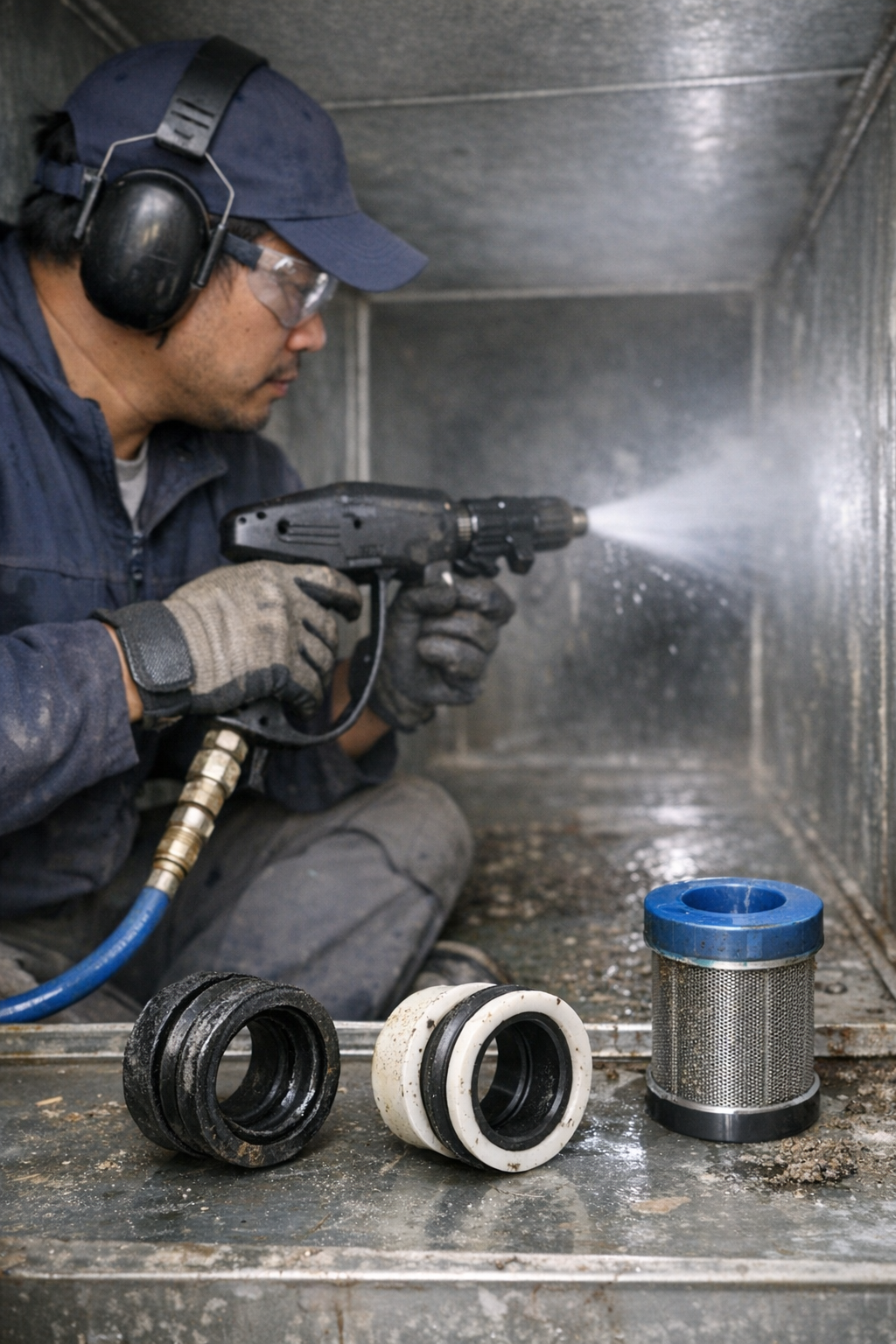
    Lay a new standard and a reinforced pump seal side by side—no obvious differences. But clamp in a standard seal, run back-to-back clearing cycles through grit and debris, and hairline leaks sneak up quick. Fine metal flakes or dense sawdust grind straight into the standard edge, and it shows: you’ll notice tiny vacuum drop-offs, dulling your control with every trigger pull. Suddenly, those “normal quirks” are robbing you of speed and precision, especially when you’re already pushing to keep up.

    With a PTFE-backed or reinforced seal, those small breakdowns don’t stack up as fast. The pressure actually stays even. Your arm notices the lighter, more predictable action: no extra fight at the trigger, no guesswork on whether the vacuum will hold at the far end of the run. It’s not a miracle, but it’s a clear subtraction of headaches. Patterns stay tight, less redo, more flow.

    Real Shop Scenario: Weak Link, Wasted Hours

    Recall the end of a long shift—everything dusty, trigger hand cramping. What tanks the finish isn’t your effort, it’s micro leaks at the seal. Dull response, streaks where crisp lines should be, and the frustration of lurching to a halt just to shine a light at the nozzle. If that sounds familiar, you know how fast confidence drains away when the tool starts fighting back.

    How to Stay Ahead: Simple Upgrades That Compound

    If you want to keep your workflow sharp, don’t wait for major breakdowns. Upgrade your seal and clean out your intake before the next grind-heavy project lands. A reinforced or PTFE-edged seal is small insurance against “do-over” days. Pair it with a quality 30-micron intake filter to stop abrasive fines before they reach the pump. This isn’t theory—these are the tiny shifts that keep your tools working with you, not against you.

    Real Payoff: Two Jobs, Two Results

    One shop swapped in PTFE seals and added new intake mesh before tackling their monthly machine-room cleanout. They weren’t hoping for miracles—just fewer breakdowns and clean passes. By hour three, the win was crystal clear: no drop in trigger response, no puddle streaks, no rework. The veteran on the team summed it up: “It just held pressure like day one—even when the air was thick with ceramic shard dust. No pause, no fixing leaks, just work.” For them, it wasn’t hype. It was the first job in months finished on schedule—with energy left for clean-up, not just collapse.

    Sometimes, the mundane wins are the most valuable: consistent passes, less fatigue, no surprise setbacks. That’s what keeping your gear upgraded really delivers.

    Tighter Habits, Better Results

    Replace before failure. If the trigger softens or light haze appears, swap your seal without delay—a half-hour spent now will save a half-day of rework. And always eyeball your intake filter before tackling dirty jobs, especially in older workshops where sediment and dust float everywhere.

    Small changes stack up. Each cycle you skip double-passing, each spot you don’t have to touch up, hands you time—and control—back. Quality work comes from those saved hours, not luck or extra sweat.

    Find more tools tested under real shop conditions at Gumboll.

  • How Tiered Spice Racks Transform Kitchen Organization and Accessibility

    Pulled twice for the cumin, sleeves dusted in flour, spice jars scattering and labels vanishing—this is when a “neat” pantry shelf stops working and starts actively slowing you down. The lineup looks sharp for a day: jars aligned, labels out. Then meal prep kicks in, hands move faster than intentions, and suddenly everything’s a guessing game. Oregano hides behind coriander, turmeric doubles up with paprika, and the neat row dissolves into the old shuffle. The problem isn’t cosmetic; retrieval turns fumbly, resets get longer, and double-buying a bottle you already own becomes routine friction—all from a flat shelf pretending to be a system. If you feel your storage fighting back, not flowing, that’s where inside-organization solutions actually prove their worth—in the grit of daily return, not the moment after a reset.

    Why Flat Shelves Break Down Under Real Use

    A flat pantry shelf is just a horizontal surface—it doesn’t manage how things move, return, or get lost in repeated use. Most spice collections mix jar heights, old and new bottles, familiar and mystery blends. Try lining them up, and taller jars stand in front, blocking shorter ones. Labels get hidden in hours. One misplaced bottle, and the “organized” look lasts only until the next meal rush. In a shared kitchen, this break happens faster: one person returns a jar out of order, the next shuffles things around searching. The result? Categories drift, hidden containers linger untouched, and a simple reach turns into a full-shelf search. Sorting labels outwards isn’t a routine, it’s a reset that collapses on contact with real use.

    Solo cooks aren’t immune. Neatness decays as the pace picks up: bottles double-stack, overflow creeps onto counter edges, and tracking what needs restocking goes fuzzy. Every retrieval interrupts the rest, and the cost shows not in how the shelf looks, but in how much time and effort it siphons from your actual cooking. When storage only looks organized standing still, most of your time is spent shuffling to restore order instead of moving forward.

    The Cascade of Small Mistakes: Shared Shelves, Shared Friction

    Real friction builds in shared storage zones. One person misaligns a jar. The next can’t see labels and moves half a row. Suddenly, cumin is deep in the back, salt is buried, and every retrieval means breaking the half-order that’s left. This isn’t theory: it’s a visible cascade on real shelves—bottles slipping behind, half-done resets, and overflow creeping onto surfaces meant for prep, not storage. Outcomes include:

    • Spices stacked or hidden behind larger jars, essentially invisible until the next big clean
    • Buying extra bottles because no one can find the original through the clutter
    • Pull-everything-out resets that stall nightly cooking, not just Sunday organizing
    • Overflow jars drifting to counters, drawers, even other rooms just to stay accessible

    A shelf that once seemed like “extra capacity” now creates a daily obstacle course you have to work around, not with.

    Tiered Spice Racks: Making Every Label Visible

    The practical advantage of a tiered rack isn’t optical—it’s operational. Every jar has its own step, so labels stay visible, even during rushes or with distracted helpers. Grab one, the rest remain sorted. Drop a jar back slightly askew, the whole system still functions. After a week, visible gaps show what’s missing; hidden duplicates are rare. The design absorbs small lapses, making resets lighter—never a full empty-and-restore, usually just nudging a few jars back to their level.

    Homes with mixed hands in the kitchen—roommates, families, or kids—see this difference multiply. The rack tolerates imperfect returns. Someone sets a bottle down off-center, and it stays findable instead of vanishing behind a wall of glass. The reset hurdle shrinks: “put it back where you found it” becomes less critical when the right place is mapped by levels, not just an ideal lineup. Unintended category drift slows, and order holds even when routines don’t.

    Flat Looks Ordered—But Tiered Stays Reachable

    The first impression of a flat shelf—perfect, tidy lines—lasts hours at best. The collapse is silent but certain: taller bottles up front, shuffled sequences, lost labels. Tiered racks aren’t immune to mess, but one-off errors stay isolated instead of spiraling into total disorder. Spot a missing jar? The visible gap tells you instantly. Need three spices at once? There’s space to grab without relocating everything else. In the lived reality of crowded mornings or shared dinners, the system does most of the work—return flow stays loose but logical, not a weekly battle with the entire row.

    Good storage doesn’t demand perfection to work. With a tiered rack, you get back most of the time lost to searching, and “good enough” returns still keep order visible. There’s less pressure at the shelf edge, fewer bottles stranded where they don’t belong, and lost time traded for smoother routines.

    How Switches Like This Change Weekly Maintenance

    Most households resign themselves to a weekly “pantry reset”—pulling bottles out, lining up labels, pushing stray jars back. This isn’t organizing, it’s firefighting. Switching to a tiered rack transforms that burden. Instead of a five-minute reshuffle, you’re doing 30 seconds: nudging one bottle back, sliding two others to their step. No more full-shelf emptying just to see what’s there. Resets become maintenance, not an obstacle course, and the cost of imperfection shrinks dramatically. A small system change eliminates most of the routine rework, keeping daily movement forward instead of cleaning up after last night’s chaos.

    Where “put it back where you found it” fails, a step structure quietly prevents most failures from spreading. The gap between messy and manageable narrows—not because everyone’s tidier, but because the shelf itself doesn’t let errors snowball.

    Not Every Tiered Rack Fixes Everything

    Some real limits remain. Oversized, odd-shaped, or overflow bottles can resist neat tiering; supermarket racks aren’t made for giant tins or boutique spice tins, and drawer setups with a tiered liner can still hide things at the back. Wall racks can claim more vertical space and boost visibility, but require a permanent spot—hard to redo often—or create wall clutter. Shelf-based racks may eat into shelf depth, so you trade a touch of flat surface for big daily improvement. There’s no magic; even the right small system won’t save you from buying triple-sized garlic salt. But the friction curve drops sharply for the items that fit—a visible, felt change for 90% of daily traffic.

    When Organization Holds—And When it Doesn’t

    It’s not about perfect pictures after setup—it’s about whether the system still works after a week of messy, shared, unpredictable use. Tiered spice racks change the odds: labels don’t vanish, categories drift slower, resets shrink, and shelf zones resist collapse. Every kitchen will still have a few outliers—awkward jars, one-off mistakes—but most grabbing, returning, and restocking becomes routine, not a repair job. You feel the difference every time you reach, return, and move on without stalling the rest of your flow.

    If you’re ready to tackle the small but persistent storage slowdowns that keep interrupting your kitchen routine, find more practical options and system upgrades at Gridry.

  • How Small Changes in Your Home Can Stabilize Cat Care Routines Amid Guests

    In daily pet care, even the smallest interruption—a bag tossed on the counter, dishes left from breakfast, or a guest moving supplies—can turn a smooth routine into a series of small delays. You might plan to refill the water bowl, only to find it shoved behind shoes or tucked beside clutter. The bowl isn’t empty because you forgot; it’s inaccessible because everyday life keeps blocking access or burying basics. This is the real difference CalmPetSupply fixes—a setup that isn’t just neat at 9am, but still holds up after guests, late dinners, or another round of socks and shoes at the door.

    How Small Disruptions Complicate Daily Pet Care

    The first sign? Your dog standing beside a bowl that never gets refilled on time, or your cat staring at the space where the brush should be. These moments pile up without drama—a food dish quietly edged out of reach by stacked plates, a grooming tool kicked under the mail pile, a water bowl splashed as someone shifts things around. You return to refill or clean but find the item you need knocked aside, hidden, or borrowed. Each of these missed beats grows into a routine drag you recognize only after you’ve knelt to mop up the same puddle twice in a day or wasted minutes hunting for the leash.

    It’s never the spectacular mess that drags routines down. Small delays—water refilling slowed because a backpack blocks the bowl, a towel used but not returned, grooming supplies shuffled away by someone heading out the door—are enough to burn real time every day. Each pause and search compounds into a care routine that is just awkward enough to interrupt your flow.

    Real-World Stalls: When a “Good Enough” Setup Breaks Down

    A tidy setup doesn’t always mean an easy routine. At a glance, your kitchen—or entryway—looks under control. Then dinner ends, and the treat bin is in the way of someone’s coffee mug, or the cleanup towel is left drying somewhere out of reach. Suddenly, feeding resets take two steps instead of one. Grooming becomes a delay because the brush is mixed in with keys and wallets. Late-night check-ins stretch out as you walk the house to find what should have been at hand.

    You see the pattern most on busy days: Try to quickly reset the area, but a glass or purse is tangled with the pet station, forcing you to move more than you planned. A towel meant to dry wet paws is now missing because it doubled as a kitchen wipe, leaving you unprepared after a muddy walk. These are not rare slip-ups, but repeated frictions of a setup that seems fine until it’s actually used alongside normal life. Every time you kneel to clean for the third time in an afternoon, or lose another minute scanning shelves for the brush, you feel the slow seep of time wasted.

    Hidden Repeats: Identifying and Fixing the Weak Point

    Even a well-organized home has a spot where use breaks down. Maybe you can refill the bowl in the morning, but by evening it’s shoved behind yesterday’s mail or blocked by shopping bags. Maybe the treat pouch, a nightly signal for bedtime, is easy to spot until guests arrive—or someone does a hasty tidy and “organizes” it out of reach. Or maybe you always have the leash…except at the precise moment a quick after-dinner walk would save the evening.

    Simply tidying or “decluttering” isn’t enough. If your wipes, leashes, and brushes are hidden inside crowded drawers, every routine now takes an extra minute—sometimes two. Counters may look clearer, but now you’re pulling apart a storage bin just to manage one normal cleanup. A setup that looks organized but demands extra effort is one you’ll end up resenting by Friday.

    Simple Adjustments: Protecting Essentials from Routine Disruptions

    The quickest fix is to find the weak link and protect it from daily shuffle. For example, mount a basic hook on the wall beside (not in) the guest path, so dog brushes never go missing under bills or bags. Keep cleanup wipes on a non-shared rack away from counter clutter, and make sure bowls are placed out of foot traffic but within easy reach—preferably on mats that stop them from sliding when bumped. If one thing keeps vanishing, create a separate spot that’s obvious to you but awkward for anyone else to borrow.

    None of these changes have to be perfect, and that’s the point—they solve for friction, not decoration. A slightly more visible towel or brush may jar with a designer kitchen, but you’ll stop doubling back or re-cleaning because someone re-purposed the pet gear for something else. What matters most: the setup that works even when normal activity resumes, not the one that only works during quiet hours.

    From Repeated Resets to Smoother Daily Flow

    Imagine dinner ends and you can reset the food and water bowls, wipe down surfaces, and brush out loose fur—in a single round trip, no hunting or extra steps. Less time is lost finding or retrieving tools, and pets don’t end up waiting or anxious while you retrace your steps. By the end of the week, the difference is visible: fewer repeated wipe-downs, faster resets, and less tension during busy transitions. Night routines shrink down because every supply stays anchored right where you need it. Loud days, late guests, or busy weekends no longer tip your system into chaos—they just become part of a routine that survives real use.

    Reliable setup isn’t about how calm or orderly it looks at the start of the day. The routines that actually hold up are those designed to keep small essentials ready, visible, and protected—so daily care remains smooth even when the rest of the house gets busier or less predictable.

    Key Takeaway: Find, Adjust, and Anchor Trouble Spots

    The make-or-break of a pet care routine comes from noticing which step keeps getting derailed and shifting that tool or supply to a spot where it can’t quietly disappear. It’s not about a flawless magazine spread, but about breaking the repeat cycle—so you don’t face the same interruption day after day. Just protecting one key supply or moving feeding and cleanup tools out of traffic can turn your resets into a quick, repeatable habit, no matter how crowded the day gets or how many hands are in the mix.

    For practical, repeat-use tools that fit this approach, visit CalmPetSupply.

  • Why Leaving Space in Your Carry-On Transforms Travel Efficiency

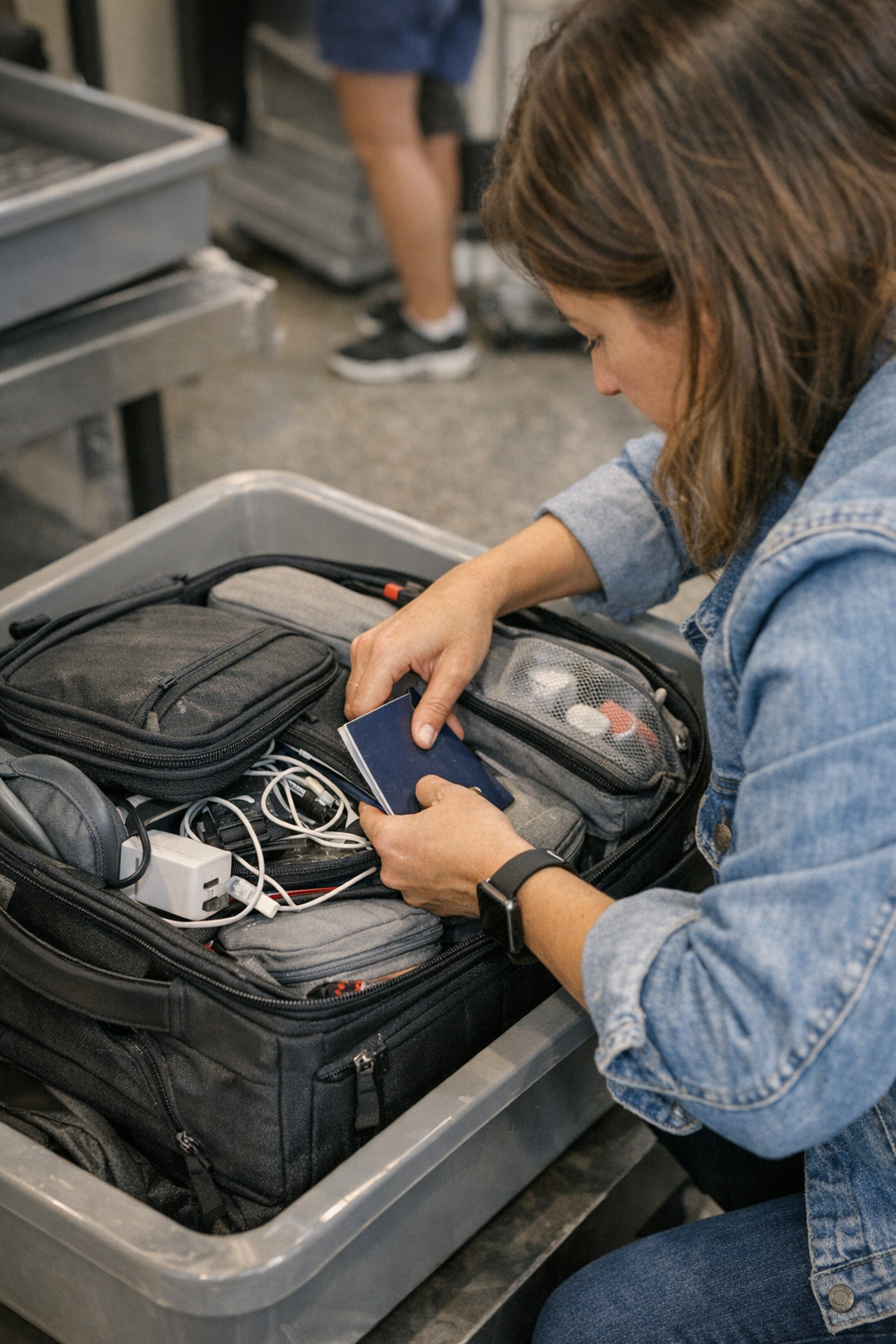
    Packing for travel feels complete at home: every slot filled, pouches lined up, zippers running smooth. But the real stress test for your carry-on starts the moment you reach the airport. What looked organized now shows its limits—outer pockets jammed, document holders blocked, and every quick retrieval slowed by layers of careful packing. Each checkpoint and boarding call turns “order” into a source of slowdowns. What works on your bedroom floor often fails at the first security tray or as you reach for your passport in a moving line. With every reach, unzip, or repack, the bag that looked ready now drags the routine, turning what should be fast moments into friction you feel again and again. CarryOnSupply tools are built for this reality: not just neatness, but movement under airport conditions.

    When “Organized” Turns into an Obstacle

    At home, it makes sense to file your passport, headphones, boarding pass, and charger into neat, shared compartments—until you find yourself squeezed in a security line. Suddenly, you’re reaching for your passport but it’s trapped beneath headphones or mashed against a charger, forcing you to shift and reshuffle while dozens watch. That just doesn’t happen at home. The moment isn’t rare: every time you try to retrieve something critical, other items cling together. What looks like efficiency quickly reveals itself as a clumsy tangle under real pressure.

    The problem isn’t one-off. With every access—verification, charging on the move, snack search mid-flight—you feel a repeat: unzip, dig, find the wrong item on top, replace, try again. Items stray from their original place, hard compartments can’t flex, and each new urgent grab makes the bag less structured than before. By the end of the day, what started organized now resists every basic task and forces you into awkward repacking rituals just to keep moving.

    Compounding Friction: The Hidden Cost of Packed-to-the-Brim Bags

    Stacking every slot full creates a fragile arrangement—one that breaks down at speed. Try returning your ID after a gate check with a front pocket packed tight: zippers catch, pockets bunch, and you end up turning sideways or balancing your bag on one knee just to stuff things back in. If you rush, something always hitches—a charger tugs loose, a cable snags, or you drop a boarding pass right when the line moves.

    Filling pouches to the limit turns every access into a performance: headphones must come out so you can reach a phone, cables shift in lumps instead of sliding out, and “quick access” starts meaning “pull half the pocket just to get a single charger.” One forced zipper or misplaced pouch always costs you extra time at the worst possible moment, especially when you’re blocking a narrow aisle or struggling with a crowded security tray.

    Airport Security: The False Sense of Readiness

    Security strips any illusion that your layout is ready for real travel. You slide your bag onto the tray and instructions come rapid-fire: “laptops out, liquids separate, documents shown.” If your daily order stacks charge blocks with passports or headphones with ID, your hand dives through a mess—one tug pulls three items out by accident, chargers tangle with cables, and toiletries jam up the path. Each security cycle scrambles your system a bit more, making the next repack sloppier and slowing you down even once past the checkpoint. Fumbling with zippers or hunting in the bottom of a pouch, you feel pressure rising—from yourself, the staff, and everyone queued up behind you.

    Less Than Full: Why 80% Capacity Wins in Real-World Travel

    Most packing errors come down to filling every inch. But leaving deliberate slack—packing key pockets, tech organizers, and travel pouches to about 80%—makes the airport routine run smoother. Leave space in your document pocket, and passports glide out and return without collision or bunching. Looser cable rolls and less-stuffed tech kits let you pull out a charger or headphones without snagging everything else. Quick-access means true access; you grab what you need, then get moving before you ever hold up the line.

    That slack pays off fast. Run through a few real trips and you notice it immediately: zippers close in one try, nothing spills while standing in the aisle, and you can reset your bag in seconds at the end of screening or after someone bumps you in a boarding crowd. That half-inch of open space is the difference between a smooth grab and a pause that disrupts boarding, security, or your own momentum during layovers.

    Travel Scenes Where Slack Pays Off

    Routine document checks: Airport staff ask for another look at your boarding pass. With slack in the pocket, you go straight in—no shuffling, no shifting other items, no fumbling. The process takes seconds and you’re free to move up in line without apologizing or dropping anything.

    Fast in-seat access: You need headphones quickly while letting another passenger squeeze past. When outer pockets aren’t overpacked, the zipper slides for a one-handed grab—no jammed contents, no mess left on the seat, and you’re not blocking traffic longer than necessary.

    Security tray transfer: Sorting out tech from liquids gets easier when everything’s got breathing room. Chargers don’t tangle with ID, and nothing needs to be emptied out just to find the one thing screening staff want to see.

    The Risk of Neat-Looking but Clumsy Systems

    There’s a difference between looking “packed right” and traveling without hassle. Tight systems, filled-to-the-edge pouches, or loaded outer pockets might look streamlined at home, but often trigger micro-blockages in real use: chargers packed flat can’t be reached, items shift each time you return them, and every new stop leaves your layout a little more jumbled. What’s gained in surface tidiness is lost in flow—the more careful you are at home, the more each step on the trip can undo your work, one small inconvenience at a time.

    After two or three repacks, sequence fails: the quick grab for your headphones leaves your document pouch out of order. Retrieving your phone after boarding means shifting half a kit around, and each new interruption resets your system in a way that costs actual minutes and increases dropped items, missed pockets, or awkward returns. The system you trusted turns unwieldy exactly when you need it most.

    How Small Margins Change the Packing Game

    It’s not about leaving things behind—it’s about refusing to sacrifice movement for appearance. Keeping extra space in key areas prepares you for the changing rhythm of travel: gates that jump without warning, document checks you didn’t predict, or a need to grab essentials from the overhead bin mid-flight. That extra bit of give in your bag is leverage: you stay nimble, each grab works as intended, and you navigate crowded aisles, surprise requests, and fast boarding calls without a string of slowdowns.

    Every small margin makes life smoother. You won’t notice on first use, but by the end of a full trip, you’re less burdened by repacking, less caught by surprise, and far less likely to curse your once “perfect” system. That’s the difference CarryOnSupply tools are designed for—travel setups that actually move with you, not against you.

    Find practical tools and smarter packing solutions at CarryOnSupply.

  • How Containing Desk Outlets Transforms Workflow and Reduces Interruptions

    A desk can look spotless on Monday, but the first sign of trouble shows up under the surface: the outlet area turns chaotic fast. It’s the real-world cluster below the workstation—where charger bricks spill into foot space and cables tangle behind drawers—that determines if your workflow runs clean or keeps snagging. The main risks hit exactly where the desk surface hides the reality: a power brick nudged loose by rolling your chair, a critical plug pulled the exact moment your screen needs power, or a mess of cords forced into a gap just as everything must be connected at once. No organizer on your desk stops these hiccups. Routines stall not at the keyboard, but deep near the wall or under the desktop, where all your devices quietly share a single, overloaded outlet zone.

    The Friction Beneath an Organized Surface

    Tidy desktop, messy undercarriage: it’s a trap for anyone who spends hours moving between screens, notepads, and chargers. It only takes one drifted cable—slipping under your chair wheels, snagging on a desk leg, or dropping just out of sight—to make a reset ritual out of what should be a quick day. Each time you shift a monitor arm, roll away to stretch, or reach back for a file drawer, the same scenario recurs: a faint pop from a plug worked loose, a monitor blinking off, a phone left uncharged minutes before your next call.

    The trouble isn’t dramatic, but it stacks up. By midweek, the named order on your desktop loses its impact as lost minutes pile up tracking which cable isn’t feeding power. No one remembers the perfectly lined-up notebooks; what’s remembered is fumbling for a fallen charger or tracing a dead connection when you’re already behind. The real tension is invisible—each device switch becomes a negotiation, the tidy surface a false signal once the ground-zone falls apart.

    How Containment Changes the Routine

    Containment—using cable boxes, under-desk trays, or enclosures—does more than tidy up: it changes where friction shows up. Suddenly, cable drag stops yanking cords into foot traffic. You’re not on your knees every week pushing a charger back into a cracked outlet. The floor stays clear. Power points stay anchored. Your routine—pulling in a notebook, plugging in a tablet, swapping a phone charger before you forget—plays out without the usual stops.

    It’s not just cosmetic. When containment fits how you actually use your devices, interruptions shrink. If you juggle between screens before the next meeting or bounce between digital sketching and keyboard sessions, a single exposed power strip can turn ten-second swaps into minutes untangling cords. That’s the hidden tax: more device changes means more chances to snag, dislodge, or lose track as the day gets longer. A stable, semi-hidden cable route restores speed: you just swap and go, not reroute and reset.

    Finding the Balance: Access vs. Clarity

    Too much hiding creates its own problems—no one wants to open a box or crawl under the desk for every cable change. The setups that work aren’t about perfection; they’re about selecting the right compromise. A cable tray or box mounted just behind the desk edge, with a clear exit for priority chargers, ensures essentials stay accessible. You don’t want every adapter in a vault; you want to show only what gets touched each day and keep everything else anchored outside your path.

    Real example: Take a typical dual-monitor setup. Monday: everything in order. By 11am, the charger has slipped off the surface, the power strip rotates, and five cables begin to twist after the first round of chair, drawer, and screen moves. Shifting to a contained outlet zone above floor level—keeping lines routed, power strips stable, and cable access narrowed to three working ports—means the reach-and-reset routine goes away. Your hands stay on the desk, not under it.

    Repeated Use: Where Containment Pays Off

    The wins from containment compound. The fifth time this week you hunt for a charger and find it still where you left it, the reason is structure—not luck. A loose cable finds the ground once; given no boundaries, it’ll be a mess again by Friday. The outlet zone needs a barrier—tray, sleeve, box, or anchor—because clutter and drift always return unless physically stopped. This isn’t an “after” shot. It’s a difference you feel every cycle, as small interruptions simply don’t happen as often.

    Desks with shared shifts, compact corners, or mixed home-and-work routines see this clearest. The desk that requires daily resets will always slow you down, break focus, and create the infamous “why is nothing charged?” moment before a deadline. The setup with containment lets you trust the space, not fight it.

    Micro-changes That Stick

    You don’t have to overhaul everything. Running a cable sleeve, nudging a tray half an inch, or cutting a single four-inch access gap can flip a fiddly reach into a smooth routine. These tweaks aren’t photo-ready; they’re quiet upgrades that show up as fewer fumbles and less frustration at week’s end. The desk starts behaving—the way you imagined during setup, but only after a few cycles of real use.

    When to Revisit the Outlet Area

    If your desk resets itself into chaos despite clean lines up top, follow the friction back to the outlet. Typical warning signs:

    • Repeated unplugs as you reach behind or under for a charger
    • Plug swaps that get slower each week—access feels blocked or tricky
    • Cables drifting onto the floor by midweek, creating a perpetual tangle
    • Regular stooping or kneeling just to reset a power connection

    Appearance cannot fix structure. A clean look buys nothing if every reset is clunky—and the right enclosure, tray, or cable route is what actually keeps your habits smooth, your legs clear, and your devices powered through long days.

    Quick FAQ: Common Outlet Area Fixes

    Will containment make access harder?

    Not if you plan exit points for daily-use cords. A gap on the box’s edge or a tray slot for your main charger lets you keep just what you need in reach, and everything else out of sight and away from your legs.

    How should I know if my solution is working?

    If cables stay put, resets shrink, and you barely think about power management during work—your structure is working. Setup pays off in what stops demanding your attention, not only in how neat it looks at a glance.

    What’s the fastest way to upgrade my outlet zone?

    Even the simplest step—a basic under-desk tray or discrete cable box placed above the main outlet cluster—can clear most daily snags. Start with one structure, then tune how you access it as your workflow reveals new habits.

    A Contained Zone Is Only the Start

    The outlet area that doesn’t require your attention is the one you notice least—because it works. Hiding every wire isn’t the goal; removing the drag of repeated cable resets is. A well-contained zone means the desk supports your work without constant maintenance—cycle after cycle, device after device, with no silent sabotage at the outlet edge.

    Explore the full WorkBasic collection

  • How Smart Pet Travel Kits Reduce Friction During Slow Stops

    Pet travel setups fool you at the start—they look organized, but the real test begins the moment you’re on the move. At home, everything fits: waste bags zipped in, wipes stashed, bowls nested, pockets closed. But just a couple of stops into the trip, neatness collapses into friction. That seemingly tidy pet travel kit becomes a slow-motion problem. A leash gets trapped under a blanket, wipes are buried when you need them fast, and what should be a quick seat-side grab turns into a game of trial and error. Instead of keeping pace with your pet, you’re stuck untangling gear you thought you’d already solved.

    Where “Looks Ready” Falls Apart: The Realities of Repeated Stops

    Your kit promises order, but repeated use strips away that first impression. You park, reach for the leash—only to find it snagged beneath a tangle of backups. Waste bags? Technically there, practically missing under a towel. Essentials meant for the next pause sink deeper, locked up by new layers every mile. Traveling with pets isn’t one long journey; it’s dozens of short transitions, each one exposing how a “prepped” bag actually creates new micro-delays.

    Minor hang-ups multiply into real drag. Each awkward pause—finding the right pouch, unwinding a tangled leash, or searching for wipes—breaks your flow. A routine that should be simple grows choppy, your energy drains, and your confidence in the setup fades a little more with every stop-and-go.

    The Hidden Weak Point: Access That Breaks Down in Action

    An organized bag is only as good as its behavior in the field. Repeated stops reveal a design problem: most travel kits make quick access harder, not easier, after a few uses. The more you layer, categorize, or double up compartments for “organization,” the more your essentials slow you down.

    Typical scene: you park, open the door, and reach for the leash. But a wipe pouch, supposedly in the “easy spot,” has slid or snagged on the harness. You dig past a collapsed bowl and knock treats onto the mat, just to find waste bags in the last place you’d expect. It’s not a one-off. Each stop triggers more item migration and overlap, turning “organization” into obstacles you have to solve again and again.

    Real-World Repeat Friction

    • The bag gets heavier. Not because of added gear, but because you start bracing for the awkward reach, the blocked pocket, or whatever surprises you again this time.
    • You pick the wrong pocket. In the split second you reach, you guess, unzip—wrong section. Every fumble adds a little mental friction.
    • Cleanup delays stack up. Wipes stashed for “clean access” now jammed behind a food bowl. What should be fast becomes a scavenger hunt for the simplest supplies.
    • Comfort vs access. The travel blanket settles your pet, then covers the pocket you need, forcing another full shuffle just to grab a basic item.
    • Owner and pet items blend until flow breaks. One quick reach for your phone, now complicated by stray dog treats or a damp waste pouch.

    When the Bag Holds Its Shape, Yet Slows Everything Down

    “Prepared” isn’t enough if you’re stuck midway through the same access puzzle every stop. Even a pristine-looking setup starts to feel like a prop the moment the third or fourth stop hits. Wipes blocked by spare towels, leashes trapped once again, and each quick grab needs a little re-sort. The outside stays neat, but inside, movement turns clumsy—every return to motion is slowed by preventable resets.

    Pocket count and sleek lines don’t matter if you hesitate every time you re-enter the car. What actually works is a setup that stays responsive when handled again and again, not just once at the start. If every stop equals another mini-shuffle, your “system” is a brake on your trip—and you feel it most on routine legs, not just rare emergencies.

    Dissecting the Main Pain Points: How Flow Breaks Down

    High-Pressure Pauses

    When your pet’s at the door and you’re hunting for a leash, your kit’s real design shows. The bowl blocks the wipes, or the waste bag roll is laced through a side tether. Each second spent fighting structure, your momentum and attention split. Quick stops turn into scrambles—just as your pet’s ready to jump out, you’re solving another avoidable tangle. The more these moments repeat, the less in control you feel at the very times you need efficiency.

    Repeated Restarts

    Every stop triggers some version of the same routine: shifting bowls, digging for bags, moving a blanket, and playing pocket roulette. Repacking just resets the puzzle until it inevitably falls apart again. Over time—even on ordinary errands—you notice the pattern: travel stops aren’t smooth transitions, but a series of half-solved mini-problems.

    A Practical Reset: Changing Your Access Logic

    Better pet travel doesn’t start with more pockets—it starts with separating true essentials from occasional-use stuff, on purpose. Lumping everything “convenient” into big multi-use pockets backfires under real use. Instead, make each item’s repeat-use role clear and its position consistent every trip.

    Give Seat-Side Access to True Essentials

    Dedicate an external or mesh pocket to every-stop gear: leash, waste bags, wipes, travel bowl. These items should never compete with backup towels, rarely used medications, or random extras. Routine access should be predictable, never layered behind things you touch once a day.

    Demote Backups to Side Storage

    Rarely used items—spares, “just-in-case” gear, backup supplies—should stay clearly out of your everyday workflow, either in side/rear pouches or a mini internal bag. This stops the primary pocket traffic jam and gives you one less thing to rearrange each stop. Now, essentials don’t migrate or get buried, and every restart moves faster without sacrificing preparedness.

    What Changes in Real Travel?

    The real win: fewer pocket reshuffles, more reliable grab-and-go access—trip after trip. Coming back to the car, pulling the leash and waste bags is instant, not a multi-step search. Bowls stay above wipes. Backups don’t murk up your go-to routine. After a rainy walk or a muddy-paws break, you don’t wonder if you buried the only cleaning wipe that matters. Your bag still looks organized—but now it holds up under the real pressures of repeated travel.

    This isn’t just a “first-trip” fix. The big difference appears over time: rainy stops, car rides with sudden needs, pet detours you didn’t factor in. The structure you set up at the start stays mapped through dozens of transitions, so you spend less time second-guessing or repacking—and more actually keeping pace with your pet.

    Spotting the Warning Signs: When to Refresh Your Structure

    Notice yourself pausing before every grab—or dreading another reach into a “solved” pocket? That’s your kit lagging behind your actual travel rhythm. A pet-travel setup that works in theory will always fail when your practical needs repeatedly outpace its logic. A true fit becomes clear through friction: when routine stops make you hesitate, sigh, or redo the same reshuffle, it’s time to overhaul.

    Watch for these warning signs:

    • You hesitate or stall before opening a compartment you used to trust.
    • Retrieving one needed item creates a minor reshuffle and a mental note it’ll annoy you again next time.
    • The more organized your setup looks, the less efficient you feel during actual stops and starts.

    The Difference Between Looking Prepared—and Moving Smoothly

    Bags that only look calm but jam up your stop-and-go flow aren’t solving anything. Good organization isn’t about neat packing; it’s about whether your kit can handle quick access and repeated action without extra steps. When you separate high-frequency gear from every-once-in-a-while items, your travel stops feeling like a series of small obstacle courses. Every restart gets smoother—not just neater.

    For setups that seem “sorted” at first glance, the real test is repetition: does the order last after several true-use cycles, or does it break down the first day you need rapid-fire access? Structure built for the look won’t keep up with a trip. Structure built for actual seat-side, restart, and moving routines—tested and tuned—will.

    Make your next pet trip less about fixing old snags and more about consistent, comfortable movement. Explore travel setups and solutions at PawGoTravel.

  • How Small Routine Blocks Slow Dog Walks and How to Fix Them

    The chaos of daily dog life usually doesn’t explode—it creeps in, one bad reach or missed setup at a time. The leash hangs just out of range, the bowl’s too tucked away, the wipe is never on-hand when muddy paws hit the floor. These tiny routine stalls—the awkward half-turn, the pause at the door, the double-back for supplies—don’t look dramatic, but together, they grind down what should be a quick flow. Suddenly, the “simple” walk, feed, or cleanup is always one step more complicated than it should be. The setup you trusted quietly becomes a daily obstacle, and any sense of smooth routine vanishes—visible mostly in the moments when you lurch or stop instead of move.

    Where the Routine Stalls: Recognizing Repeated Friction Points

    This isn’t about major disasters; it’s about the repeated, silent slowdowns you only notice under pressure. The leash that never lives where your hand expects. Shoes crowding the door so the leash is buried. Now, each step out means reaching, untangling, or shifting the pile yet again. The delay stacks up fast, especially when your dog is keyed up and ready, feet clicking out a nervous rhythm on the tile. One beat lost, then another. A process that should move in one line starts zigzagging—first for a leash, then for shoes, then for the dog, who’s somehow blocked the path again.

    These micro-delays don’t just eat time, they eat routine sanity. Each missing towel, off-center bowl, or absent wipe forces a detour. At first, you brush it off—a shrug, a quick backtrack. But as days stack up, you notice: habits rerouted, timing thrown, and a creeping feeling that you’re always compensating for something the “organized” setup didn’t solve. The routine that’s supposed to be second nature gets heavier, slower, stickier, and you end up dreading the part of the day you used to power through.

    The Ripple Effect of Little Delays

    What starts as a skipped beat becomes a pattern. Without warning, mornings stall in the hallway. Feeding crashes into cleanup, and that leash-fetch moment puts the whole routine out of sync. You hear yourself calling twice, or pushing for your dog to move, because it takes too long to get what you need. Your dog’s not refusing—it’s the setup refusing you. Watch how your hand hovers, searching for a wipe that should be near the door. See how your body pivots, dodging clutter that “neatened up” the space but now blocks your fastest route. These are not one-off annoyances; they’re the fingerprints of a setup that opposes its own routine.

    The Subtle Build-Up: How Micro-Delays Shape the Day

    At first, the friction barely registers: just a slight stall when you grab the leash, or a pause clipping in as your dog waits behind the half-open door. But what’s tiny on day one becomes a nuisance by day ten—a choreographed tangle of sidesteps, elbow swings, moving a crate, nudging a bowl. Each awkward moment joins the next. Soon you’re bracing for the same hassle even before it happens, mentally mapping out workarounds: which foot to plant, which hand gets the leash, how to scoop food without stepping on your dog. The house might look neat, but under the surface, all the extra movement exposes the places where the setup still falls short.

    It’s no longer just about physical clutter; it’s about invisible drag. The arrangement might win you compliments for tidiness, but the workflow is fractured, and each chore costs more effort. By the week’s end, you’re counting steps, feeling that heaviness in all the places where function breaks down as the routine repeats.

    A Closer Look: Real-Life Setups Derailing the Flow

    Case Study: The Walk That Never Just Starts

    Take the “quick walk” that refuses to be quick. The leash looks close, but is snagged under a bag. Shoes clog the path, so now there’s a twist and reach. Your dog hovers—half-eager, half-blocking. Tick, tick, tick—each second, your frustration grows, and so does theirs. All before the first step outside. And when walks start with tension, that feeling follows you out the door, souring what’s supposed to reset the day.

    Feeding Flow Interrupted

    Or look at feeding: bowls tucked for appearance rather than access. To avoid a messy kitchen, you slide the bowl out of the way—then trip over your dog while carrying kibble, or cross to another room for the wipe after every meal. Bowls look pretty but interrupt your path. The dog camps out in a tight spot that pinches every breakfast, and “tidy” turns out to be code for “hard to use.”

    Grooming and Cleanup Choreography

    Grooming is more of the same: the towel’s out of reach, wipes are too many steps away. Each muddy paw means crossing back and forth, footprints multiplying before you find the supplies. You try for comfort—soft beds, plush mats—but now you’re forced to work around them, nearly tripping as you wrestle a wet dog, wishing cleanup followed the rhythm of the mess instead of the logic of storage. Every reset is a minor ordeal, and the “nicer” the setup, the more it resists quick recovery.

    The Real-World Consequences of Small Setup Weaknesses

    These aren’t rare events—they’re routine failures so predictable you stop noticing except for how tired you feel at the end of each loop. To get anything done, you build in extra time and double movements. Instead of feeling prepared, you’re always chasing after the next missing piece. The problem doesn’t vanish with better storage or visual order. That kitchen looks great—until you rush through and realize a backtracking loop has wormed its way into your day. You thought you “fixed” it, yet every leash tug, muddy print, or bowl refill sends you searching for what should already be in your hand.

    Organized space does not guarantee organized action. What looks improved may still break down once the rush of repeated use exposes a weak point—echoing the same frustration, just behind a tidier facade.

    Why These Blocks Keep Returning—And Why They Don’t Fix Themselves

    The temptation is to blame your dog: they pause, hover, hesitate. But the invisible culprit is usually the setup itself—how far you reach, where you bend, what you can grab without shifting your weight. It’s rarely laziness or distraction. One item a half-step further, a bowl hidden from sight, a wipe tucked away in a “system”—all of these are small demands the space makes on you every single use. The result is a learned pattern: push through, compensate, put up with mini-obstacles instead of solving them. One pause multiplies across the week, then solidifies into a routine you never chose, stuck on repeat.

    Making the Fix: Nudging the Setup Toward Real Flow

    One Measurable Change, One Smoother Routine

    It rarely takes a full remodel to cut these frictions. Instead, look for practical, targeted nudges. One example: after too many pre-walk stalls, moving the leash hook just a step closer to the door erased the lag—no more retreat, no more tangle. The time from open door to outside dropped to three seconds, and exits lost their nagging frustration. With less drama up front, even the return reset felt less frantic. One change—one less point of repeated failure. The win wasn’t the number on a clock, but feeling the routine finally match its promise of being quick and ready.

    Think Placement, Not Just Tidiness

    Apply that eye everywhere. Bowls away from traffic, wipes in arm’s reach right at the back door, beds not tripping up your path—every shift is about shaving off the next detour, not earning points for a showroom look. The difference is in the lived day: less doubling back, fewer sidesteps, little bits of calm returned to routines that used to sap your patience. None of these fixes shout for attention, but their absence is instantly obvious. The flow that returns is quieter and sturdier than visual order—because nothing interrupts it, not even the gear you rely on.

    Observing and Resetting: The Habit of Noticing What’s Slowing You Down

    The progress isn’t set-and-forget—it’s sustained by noticing, again and again, where you break stride, even in setups that looked perfect last week. Every repeated patch of friction is an alarm: another bowl in the wrong spot, another reach for a wipe in the next room, another crate lid sticking out where you trip. Pause at every stumble—these are your troubleshooting map. Sometimes the fix is a new hook, a single basket, a swap of locations. Sometimes it’s just breaking the habit of adapting to bad flow. The strength of your routine settles in these micro-adjustments—the more you notice, the smoother tomorrow feels.

    Most “better” setups start as a reaction to obvious clutter. The ones that hold up are the ones you’re willing to n

  • Why Cross-Pattern Tightening Prevents Lighting Misalignment and Shadows

    Flip on your brand-new ceiling light and you expect clarity— but in practice, even a “bright” fixture can sabotage the room. Movement stalls at the third stair, where a stretched shadow makes every late-night trip uncertain. The bathroom mirror catches glare on one side and dullness on the other, so you lean and adjust, but never find even light. That clean finish you saw at installation turns out to be unsteady: shadows grip hallway corners, work counters lose their edge in pools of gloom, and the simple routine of passing through becomes just a little more awkward, every single day. In high-traffic rooms and practical zones, these small lighting failures are not cosmetic. They keep getting in the way.

    How Small Fixture Misalignments Create Daily Lighting Problems

    Lighting imbalance so often starts at installation— not because you chose the wrong fixture, but because one side lands tighter or higher than the other. Anchors pull unevenly, especially if you move in a circle, tightening screws one after another. The fixture looks flush until you actually use the space, and then:

    • Stairwells leave some treads vague and risky, especially beyond the reach of daylight.
    • Vanity mirrors highlight one cheek and sink the other in uneven gloom, making basic routines less reliable.
    • Hallways throw light along the center but let shadows collect at the baseboards or far wall, sending you through stripes of dimness and brightness every time you cross.
    • Counters you work at force you to squint at certain angles, even with all the switches on.

    The cost isn’t just irritation— every misaligned fixture adds a friction point you can’t tune away in daily use. The flaws repeat, and your attention gets pulled to what still doesn’t work.

    Why Cross-Pattern Tightening Makes a Real Difference

    With ceiling and wall lights, what happens during those final minutes with the drill and anchor set shapes every hour you’ll spend in the room. Cross-pattern tightening—alternate diagonals, never a circle— lets the fixture settle against uneven drywall, spreads pressure, and closes subtle air gaps that let shadow lines crawl in. The difference is most dramatic on:

    • Flush and semi-flush ceiling lights that must hug imperfect ceilings
    • Long vanity or mirror-mounted bars where both sides matter equally
    • Wall sconces with spread-out mounting points needing even pull
    • Fixtures coping with warped ceilings or drywall patches

    Skip this method, and you risk torquing the frame, leaving strands of shadow along seams, slight sags, or even a visible slant. Even one or two millimeters misaligned? That’s enough to make a “bright” room feel off balance or just not pleasant to move through.

    Real-World Example: The Shadow on the Stairs

    Imagine: a semi-flush ceiling light, perfectly centered above a stair turn. For weeks, you wonder why one riser at the edge stays murky no matter how strong the bulb. Only after returning, loosening every anchor, and retightening slowly in a criss-cross—one screw, then its diagonal twin—does the base finally flatten. That night, the shadow fades away. You walk downstairs watching your step less and trusting the space more.

    How Repeated Use Reveals Subtle Lighting Flaws

    The flaws only appear with use— not on the ladder, but days later in ordinary movement:

    • Shaving or doing makeup becomes a guessing game, since the wrong side is always lost in dimness.
    • Hallways that looked “even” at first suddenly feel crowded by patchy light at the edges, especially at dusk.
    • Laundry corners you lean into just to see what you’re folding—half bright, half shadow, always a compromise.

    Mistakes at the mounting plate don’t disappear. They tilt the emitting surface, slip the shadow lines out of place, and quietly drain confidence or ease from each routine. Your brain adapts, but frustration builds all the same.

    The Practical Fix: Cross-Pattern Tightening in Action

    Cross-pattern tightening is fast, but it’s what keeps routine frustration away:

    1. Set all anchors hand-tight, with plenty of play—just enough to support the weight.
    2. Tighten one screw, then its immediate diagonal opposite. Never keep circling in the same direction.
    3. Work back and forth, side to side and diagonally, drawing the fixture gently into position. Only after each is nearly flush do you finally finish the last turns.

    This stepwise approach lets the fixture adjust minute by minute, finds its own level against bumps or warps, and prevents pulling the whole unit off axis. You’ll feel it: a small, final give where the plate finally meets ceiling or wall.

    Check your work while the room looks “done.” Move from one end to the other, testing shadow lines, scanning for dark corners or glare along mirrors. If brightness looks even but the routines feel smoother—feet sure on stairs, hands finding edges, no face lost in half-shadow—that’s the difference that matters.

    Where It Matters Most

    Some fixtures are more forgiving, but anywhere you move, work, or see your reflection day after day—bathrooms, hallways, kitchens, stairs—misalignment shows fast. If walls are crooked, surfaces uneven, or the room never seems to light up right, pressure imbalances show up loudest in:

    • Mirrors and vanities, where even light prevents routine confusion—no side left guessing which version of your face is the real one.
    • Hallways and stairwells, where clear visibility holds confidence—no more stepping through “safe” rooms with hesitant feet.
    • Work counters or cabinet runs, where practical task light beats raw appearance—a surface is either usable or it’s not.

    The Everyday Payoff: Lighting That Works with You

    Good lighting isn’t “invisible”—it makes the space work, skip after skip, shower after shower, crossing after crossing. Flush, semi-flush, wall, under-cabinet, and vanity lights truly perform only when the mounting is right:

    • Paths are visible, not just lit
    • Work areas stay useful from corner to corner
    • Glare drops off, shadow lines shrink, distraction fades
    • The fixture finally does its job, letting you use the room as you planned, not as you’re forced to

    Real lighting reliability shows itself the next day, and the day after, when the space just works—because small installation choices rippled into every movement and task.

    To see more solutions designed for everyday routines and the challenges of real rooms, visit LightHelper.

  • Why Limiting Car Storage Improves Daily Maintenance and Convenience

    In-car organization that looks fine on Monday can quietly turn into a daily stumbling block by Friday. That reassuring sense of order—wipes stacked, chargers tucked, “just in case” gear placed neatly—can unravel fast. Run through a few days of real-world errands, rushed pickups, or quick food stops, and the invisible roadblocks appear: charger cords tangled behind receipts, a lunch bag wedged between a “spare” umbrella and old napkins, every reach slowed down by hidden resistance. The right setup is supposed to help you move faster, not make you hesitate and dig every time you need something basic. This is where the DriveWellSupply approach to practical car organization comes into focus—less about visual tidiness, more about cutting friction that builds when storage stops matching the way you actually use your car.

    When “Organized” Starts Slowing You Down

    Your dashboard is clear, the seats are empty, but the process betrays you—again. You drop into the driver’s seat, but the charger you expect is jammed under scattered mail. The wipes for a post-lunch cleanup keep slipping into the floor gap, so you start skipping quick tidy-ups. That umbrella—out of sight until the rain hits—remains buried in the no-man’s-land under a pile of masks and backup pens. On paper everything looks placed, but your hands and routine feel the slowdown. Every repeated reach involves a shuffle, a pause, or a micro-scramble—seconds lost multiply with each errand, each return to the car, each attempt to reset after a routine trip.

    The Real-Life Drag: Interruptions That Build

    Think back: last time you plugged in your phone, did you have to slide aside a granola bar, shift cables, or dodge a loosened mask? Did cleaning the console at the gas station mean detangling wipes from under a pack of gum, then spilling receipts across your lap? The true friction isn’t clutter you can see—it’s every routine move blocked by something that “should” be in the right spot but isn’t accessible. It’s a system that fights the way you actually use your car.

    There’s a deep difference between a car that appears orderly and one that actively supports daily flow. “Full” compartments create a hidden drag: every return—plugging in, wiping down, loading groceries—becomes an exercise in managing small interruptions. Slight delays add up. The structure resists, your pace slows, and soon, the setup you built for control starts working against you.

    Everyday Example: Competing Items, Slower Actions

    Picture a midday grocery run. The trunk looks neat, but a bulky organizer blocks the rear edge. Now a bag rides up front as a workaround. Each unload means nudging items, reshuffling sacks, maybe leaving frozen food on the floor mat “just for today.” By the weekend, you’re avoiding the organizer because using it means re-layering everything again. The original sense of order now doubles your steps, and you start to work around your own setup.

    Signals Your Storage Is Working Against You

    Spotting the shift isn’t about finding chaos; it’s about reading the signals:

    • If you reach for a basic—charger, wipe, mask—and always have to move something else out of the way first, that’s friction.
    • If a five-minute tidy-up feels exhausting because every section is full, the arrangement “works” only in theory.
    • If prepping for a trip always means rearranging your previous “solution,” the flow is broken.
    • If there’s a pause—untangling, shifting, or reaching—every time you hop in, the structure isn’t supporting your routine.

    Even light resistance, repeated over every drive, means your storage system is missing the mark.

    Less Can Really Mean More

    Real improvement isn’t about tossing gear or buying the biggest trunk caddy. It’s about ruthless boundaries—a hard cap on items per compartment, a single spot for your main charger and wipes, two cables maximum in easy reach. It’s not minimalism for its own sake; it’s giving each routine action a clear path.

    Enforce these boundaries and the change is immediate: the charger is finally where you expect it, not tangled or buried. After a coffee spill, cleaning takes seconds—you aren’t prying wipes loose from under a multi-tool or dog leash. Grocery trips mean less stacking and unstacking. The illusion is gone: it’s not about every slot being filled, but about everything essential moving without interruption. Each short tidy—post-park or pre-drive—requires less work, because there are no hidden hassles layered in.

    Visible Order vs. Usable Flow

    A spotless interior can hide a slow-motion backup. If you keep moving the same sanitizer from the console before each drive, if your charging cord keeps finding its way under the floor mat, you’re not alone. A setup that seems perfect at rest can fall apart under the force of repeated, real use—especially when the interference returns as quickly as you fix it. Watch for your own pain points. The need to “fix” the same spot again and again is a giant signal: appearance doesn’t equal practical flow.

    Getting Past the “It Still Looks Fine” Trap

    No car, especially a shared or work vehicle, escapes clutter for long. But the true tipping point is subtle. If each grocery run, workday commute, or carpool cleanup involves blocked chargers, heavy-handed organizer adjustments, or reluctance to tackle minor cleaning, you’ve crossed from organized to overloaded. The resistance is real—and so is the mounting inefficiency.

    Practical organization isn’t about maximizing storage; it’s about clearing the way for how you actually drive, load, clean, and reset. The best setup stops you from losing flow—giving you back the seconds, reach, and access you’d otherwise forfeit. A DriveWellSupply-style reset cuts that routine drag. Your next errand doesn’t feel heavier than the last, and a five-minute tidy stays a five-minute tidy—not a complicated project repeated too often.

    The right structural tweaks—a cable kept out of the gearshift path, cargo held in place but still reachable, only essentials in the door pocket—make the difference between an interior that invites smooth use and one that quietly resists, drive after drive. Lose the hidden drag, and your car setup finally works for your routine, not against it.

    DriveWellSupply