
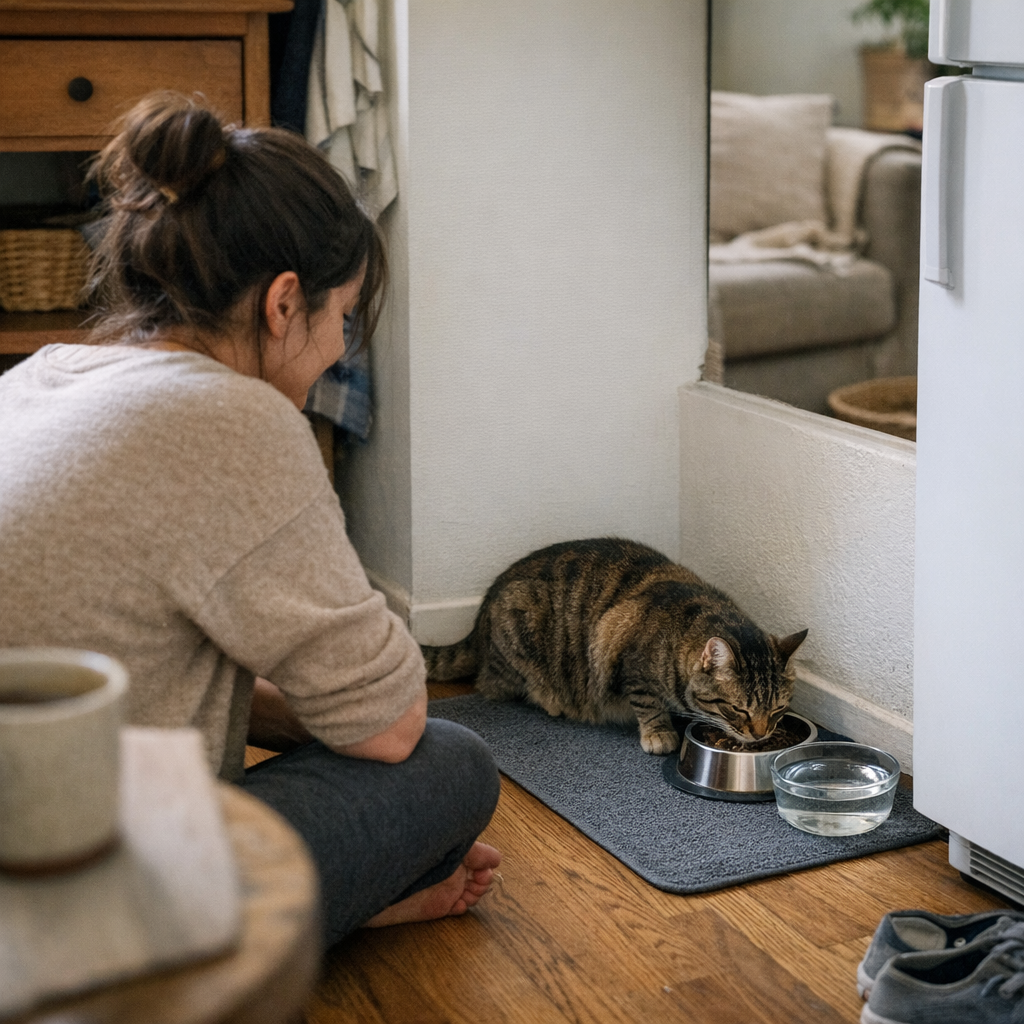
More bowls, more mats, extra toys—what starts as “just in case” becomes the main reason the feeding corner always needs attention. The instinct to double up on cat supplies looks sensible at first: backups for quick swaps, spare bowls to avoid last-minute scrubbing, a few extra mats for that perfect landing zone. But stack enough of these “preparations” together, and you end up with a feeding area that’s always cluttered, a water station you dread refilling, and a daily routine stuck on repeat cleaning the things you meant to make life easier. The setup looks ready for anything, but every extra item is one more obstacle or dust-collector, slowing every reset. In the StillWhisker world, the difference isn’t about how much you have—it’s about how fast you can keep things actually working.
Clutter That Sneaks In Through Good Intentions
Extra bowls and mats feel like protection—one dirty dish won’t stall breakfast, and that bonus mat covers the rare splatter. But those backups transform into extra surfaces you wipe even when they haven’t seen food, and extra pieces that slide away only to collect a fine line of tracked litter or crumbs. After a month, most of your cat area upkeep isn’t about spills—it’s about correcting overflow. The reality hits when the “prepared” corner turns into its own micro-cleaning job: stray hair by the backup bowl, a mat gathering dust instead of debris, toy bins growing but never empty.
Real-World Friction: What Actually Happens
Expecting “backups” to be invisible workhorses rarely matches real days. That feeding zone with two food bowls—a just-in-case third to the side, and a water dish tucked for extra hydration—might look complete in a photo, but in a 6:45am rush, it means:
- Your hand bumps the backup bowl as you try to brush out crumbs—the extra is in the way, not helping.
- The side mat, unused and out of reach, managed to collect dust just from sitting there—now you’re lifting it out to vacuum what nothing spilled.
- The “extra” water bowl hiding behind a table is bone dry, a reminder it’s been forgotten for days—still something to clean, but not something your cat actually drank from.
The supposed margin for error is now an extra set of detours. Instead of a quick morning reset, it‘s juggling pieces that add time but subtract little actual benefit.
How Overpacking Turns Routine Into Chore
Every extra dish or mat is another demand to clean, move, or remember— while your cat mostly ignores the surplus. Most indoor setups function better with a single, reachable feeding area and a clear water spot. More doesn’t mean better living for your cat—it just inflates cleanup and slows down the parts that matter.
Surface Wipe and Scrub Mission Expand
In a lean setup, a quick wipedown resets the space for the next meal or drink. Add extras, and you’re running the same cloth three times: a bowl hiding behind another, a mat that must be lifted to catch tracked litter underneath, and—guaranteed—a missing toy peeking out from under furniture, just out of easy reach. Many mats, instead of insulating, scatter grime beyond the intended border, demanding an extra sweep or vacuum pass. Spare dishes attract a layer of dust or stale residue, never used for food, only for cleaning off whisker marks your cat never noticed.
The Cycle of Reset Gets Longer
The more pieces, the more complex the area becomes to reset. Moving one thing means shifting two others. Toy bins multiply—now each play session ends in a miniature scavenger hunt. On day one, it’s a minute to clean; a month in, you’re running 10-minute laps, undoing the mess caused by the very items that were supposed to help. The weak link drags the whole routine down—a mat that slides, a backup bowl edging into the walkway, or stray toys tucked everywhere but their basket.
The Illusion of Spread-Out Comfort
Extra feeding stations, bonus mats, and stacks of toys often create a sense of abundance—for the owner. The cat adapts, but your maintenance grows. Your feline won’t care if there’s a backup bed under the chair, but you’ll notice when it’s the spot that now catches shed fur and dust. What looks plentiful to you creates extra work, not extra wellbeing.
Shared Space Gets Smaller
In apartments or close quarters, every added bowl or mat cuts into what you can actually use. A crowded feeding corner pushes carts and chairs further away. That second water station behind the end table means kneeling or reaching awkwardly just to refill or wipe a dribble. Toy migration means what was a cat area starts bleeding into walkways, so reset after play becomes an obstacle course. Extra litter mats don’t block stray grit—they spread the vacuum target zone out, turning a tight border into a sprawling maintenance loop.
Practical Home Scenes: Where Overpacking Breaks Down
Some familiar breakdown points:
- Meal Rush, Blocked Path: The dash to swap a food bowl now means detouring around a pile of beds and backup dishes, with the one in daily use never the easiest to get to.
- Water Top-Up Turns into Tour: Filling water isn’t pour-and-go—it means inspecting each bowl to see if it’s actually used, then fishing out the one that matters from behind other cat infrastructure, plus cleaning the mystery puddle left underneath a backup spot.
- Random Toy Finds: Instead of tossing toys back in a basket, you’re retracing the room, elbow-deep under furniture or rugs, finding “extras” your cat barely touched but you now can’t ignore as clutter.
- Litter Mat Overflow: Doubling up on mats blurs the edge of the cat area, so tracked grit appears in farther flung, low-traffic corners—every cleanup day gets longer as boundaries grow vague and “quick sweep” becomes full-room patrol.
When “Preparedness” Becomes the Problem
The urge to stay ahead of messes is smart, but overpacking flips the problem: every spare is a new micro-task. Each meant-to-be buffer silently lengthens your list: another mat edge to suction, more odd angles to lift bowls from, overlapping rugs that slip underfoot. The daily routine mutates. Simple pickups become workarounds, not quick grabs—reaching for the essentials now involves shuffling the very pieces that are making life harder, not easier.
Hidden Costs Across Daily Routines
The creep is quiet: a few backups become setups you’re cleaning “just because they’re there.” Days you’re busy, the clutter multiplies in your periphery—somehow, every return to the cat’s area reveals another spot half-done, a dish half-wiped, another pile encroaching. Skipping one cleanup doubles the pain next time. These are not background inconveniences—they shape how much time you spend keeping up, not just how tidy the area looks.
What Happens When You Strip Back?
No tricks, no lifestyle dogma—just observed reality. Real households see their daily reset shrink when they reduce to a single feeding station, one main water bowl, and a mat with an obvious edge. Here’s what makes it function:
- One sturdy, visible mat: catches the debris, but doesn’t hide spillover—so you spot what needs fixing right away.
- A single food and water bowl, always within easy reach—lift, wipe, refill, done. No shadow dishes to remember.
- No backups left idling—nothing to sidestep, trip over, or clean just because it exists.
The reset stops being a circuit. You see instantly what needs to be done, do it once, and move on—stray litter or crumbs are managed before they spread, not days afterward when every surface is in play.
A Single Reset, Not a Cycle of Corrections
Reduced clutter turns maintenance from an interruption into a short, routine check. The hidden costs fade: no double-taking forgotten bowls, no wrestling layered mats. The entire setup feels less fragile—a full reset now takes half the time, and the area stays clear, because it’s easier to spot and fix the weak spot before it spreads. The difference isn’t theoretical—it shows up the first time you finish cleaning and don’t find yourself tripping over the “just in case” spares that slowed you down yesterday.
Common Questions About Simplifying Indoor Cat Setups
Is one feeding and one water area really enough?
For most single-cat homes and apartments: yes. A clearly defined, single feeding and water station is much easier to keep clean, monitor for spills, and maintain. More stations usually translate to more maintenance, with little gain in cat comfort except in rare, specific setups.
Doesn’t stripping back reduce the cat’s comfort or enrichment?
Only if you strip essentials. One