Author: jaesoon_admin

  • How Smart Car Organization Reduces Daily Driving Distractions and Fatigue

    A car that looks organized isn’t always easy to use. Most drivers know the gap: you open the door after work, spot the neat console, but still need to sweep aside a drifting charger, fish a receipt from the cupholder, or wrangle a jacket that’s migrated to the footwell. The hard truth—outward tidiness doesn’t survive real daily routines. Setup shortcuts, bins, and mats bought for control end up creating new trouble once you’re actually driving: shifting mats, tangled cables creeping near pedals, hidden essentials that slow you down. The difference between “looks neat” and “works smoothly” shows up fast, and the friction comes back even after last night’s cleanup.

    When Tidy Looks Don’t Add Up to Smooth Use

    What works for looks rarely works for repeated action. A cable, coiled out of the way when parked, finds its way under your heel mid-commute. A closed-lid organizer hides clutter, but turns a quick grab for your phone or parking card into a hassle. The right floor mat slides or buckles in a week, jamming by pedals or trapping dirt along the edge. Solutions that start tidy begin to feel like soft obstacles: every re-entry, acceleration, or stop exposes their limit.

    The routine repeats: you’re nudging that charger, smoothing a mat, or collecting rogue coins at almost every stop. Each minor fix interrupts your flow. Over a week’s worth of errands and commutes, these friction points add up—trips slow, quick actions turn into a hunt, and the promise of order morphs into a cycle of low-level annoyance. Looking organized isn’t the same as feeling in control behind the wheel.

    Everyday Routines Where Setup Friction Shows Up

    The “Clean” Car That Still Slows You Down

    Errand loops make the mismatch obvious. By the second or third stop, that cable looks smartly tucked until you have to untangle it from a water bottle. An organizer bin corrals receipts, but blocks access to your charger or favorite gum. Every fast corner, the cargo in your trunk slides and thuds—forcing you to re-stack groceries or bags before heading home. The smarter your setup looks at noon, the more disarrayed it feels by evening.

    Slippery Seats and Wandering Items

    Seat protectors, meant to control mess, can slip out of place or bunch up during normal entry. A jacket, tossed neatly on the seat, slides into the footwell on the very first turn. Grooves in the mats gather keys or coins escaping the intended bin. The same escape and retrieval cycle happens day after day: scooping up fallen items, resetting covers, reaching awkwardly for things that didn’t stay put, and never quite fixing the daily break in flow.

    How Repeated Use Exposes Weak Points

    Repeated car use makes neat solutions fail where they aren’t built for routine movement. You install a trunk organizer for groceries—but if you need to load something big on the fly, you fight the structure or have to lift bags high over stiff sections. A fashionable bin hides small items so well you end up hunting under seat gaps for your parking pass. Good intentions backfire: the “solution” now creates new slowdowns or hides clutter in harder-to-reach spots. For shared cars, these weak points multiply—one person’s smart fix is another’s obstacle every single trip.

    That’s the irony: what looked solved at a glance—tidy cables, covered bins, covered seats—becomes a source of fresh micro-annoyances the more often you drive, park, recharge, or reload. With every re-entry, the practical limits of a poorly-matched setup show themselves, sometimes in new ways only obvious after days of use.

    Stable Structure: The Subtle Upgrade That Reshapes the Routine

    When you switch to structure built for actual use—anchored cable guides that don’t shift, low-profile trays, divided drop-zones, seat covers with grip, open coin and card slots—the friction eases. Actions that used to stop you—a charger wrapped underfoot, a mat curled by the pedals, a phone sliding halfway off the seat—stop happening. Loading groceries, the trunk organizer flexes aside or grips bags instead of blocking your reach. The daily flow restores itself: get in, grab, go.

    Fixed Cable Routing in Action

    No more tracing a charger with your toes or ducking under the seat for a cord. Cable channels keep lines exactly where you left them—pinned along the console, out of the footwell, ready every time. With hands full, plug in as you sit. The result: no more cable shuffle or under-dash wariness, even as you hit multiple stops. It doesn’t just save seconds—it changes how seamless errands and commutes feel over an entire week.

    Open Trays and Unhidden Essentials

    Open trays don’t hide mess, they block it from scattering. Keys, coins, small cards—easy to grab, less likely to vanish on turns. Phone mounts and uncovered drop spots beat stylish bins for anything you touch often. You spend less time rummaging and more time moving. The improvement is practical: no more last-second fishing for toll change or dropping items between seats when you’re already running late.

    From Organizing Looks to Organizing Action

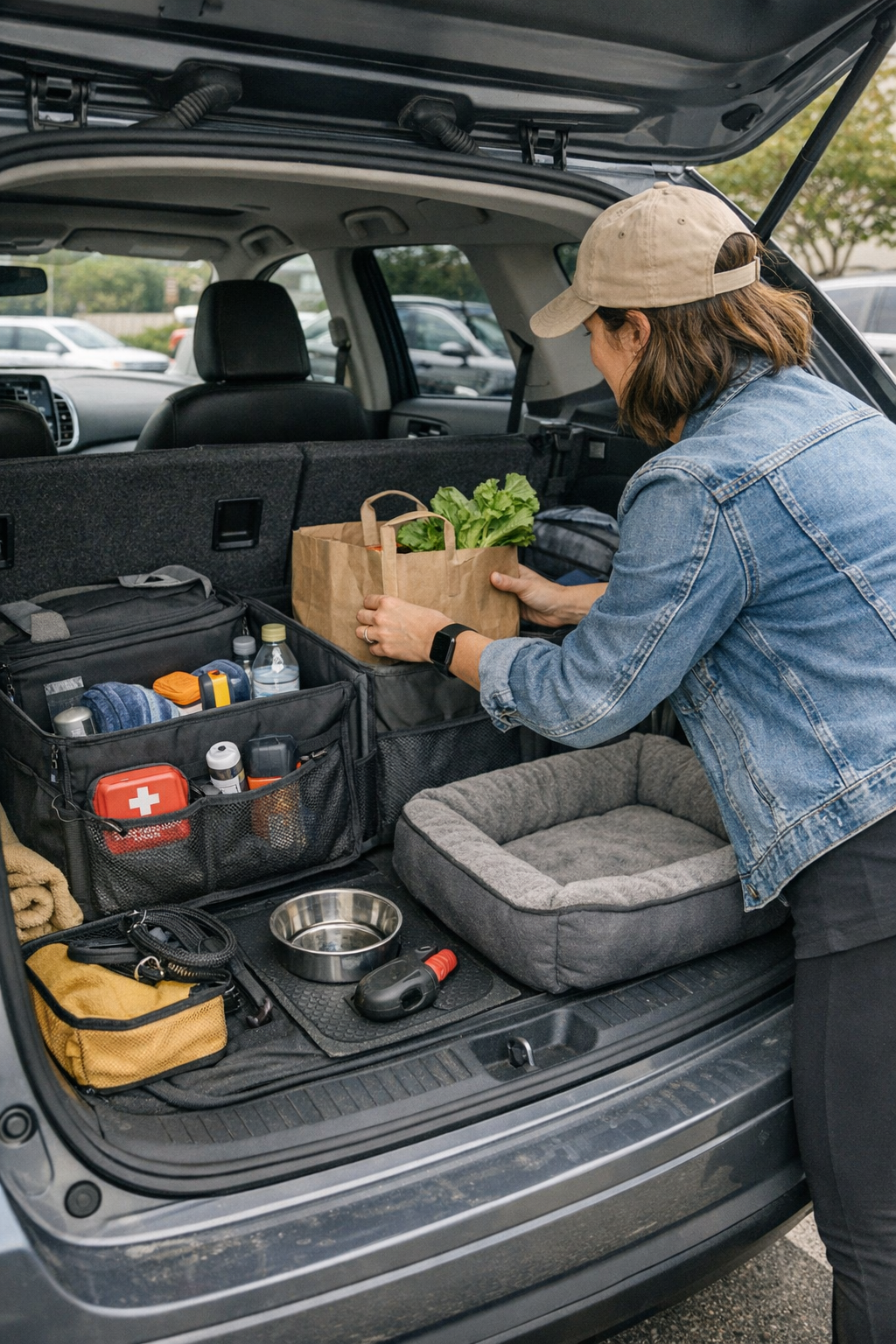
    The best car setups defend against daily mess not by hiding it—but by shaping where things live and how they move. Mats that grip, organizers that resist sliding, chargers routed away from pedals, dog barriers that keep pets and gear from wandering up front—these become routine. Even one small upgrade, like swapping a deep bin for a divided tray, or clipping cables to fixed guides, can cut re-entry cleanup and rescue time by half. A car that stays usable through real cycles—trips, stops, loading, and quick exits—makes the difference clear within days.

    The purpose isn’t museum-level neatness—it’s having a car you can return to, reach in, and drive off without pausing to reset or untangle the same obstacles every day. True order is proven by repeated use: the bits that never shift out of place, the cables that don’t return underfoot, and the gear that supports your drive instead of slowing it.

    See practical products for easier car routines at DriveWellSupply.

  • How Thoughtful Pet Travel Gear Transforms Every Walk Experience

    What looks “organized” at home can fall apart the second real travel starts. You think you’re ready: leash clipped, waste bags peeking out, travel bowl folded flat, treats stashed up front. But as soon as you hit your first stop—muddy paws on the curb, traffic in the lot, your dog pulling sideways—order collapses. Try grabbing wipes and you find them under a packable bowl, snared by a leash loop. Dig for treats and you lose track of the waste bag pocket, or fumble with gloves that always seem to slip. Suddenly, every movement costs extra effort, and “ready to go” turns into another awkward shuffle at every stop.

    Looking Ready Versus Being Ready: Why Real Use Exposes Hidden Problems

    A travel bag that looks complete isn’t always ready for the repetition of actual pet travel. The real test appears during that stop-and-go flow: wrangling your dog after a short ride, balancing one hand on the leash, reaching for wipes to handle a mess you didn’t plan—and hitting overlap, tangles, or blocked pockets again. The problems rarely show during packing, but surface at every ordinary pause, restart, or roadside break. It’s the real movement—gloves half-on, dog tugging, keys in the wrong spot—where setups prove themselves, or fail.

    Repeated motion is where weak design gets exposed. Even a well-packed kit will frustrate you if you need to dig beneath a toy for wipes, or go through two pockets before finding the waste bags—especially when it’s the third time you’ve done it in one afternoon.

    The Slow Drain of Small Delays

    A minute lost here or there seems minor, until it compounds. Overlapping pet and owner items, tangled seatbelt loops, and out-of-order packing means:

    • You try to grab waste bags, but the leash handle or seatbelt clip blocks the pocket—so you untangle, again.
    • Treats slide under a blanket, so your fast reward moment is always just out of reach.
    • Your wipes are always present, but by the time you dig past bulkier gear, the mess has already spread onto the floor mat or seat.

    The result isn’t just lost seconds—it’s lost focus, and small moments where handling your pet turns clumsy or stressful. The more stops you make, the heavier these flaws feel.

    When Overlap Means Delay: The Real Cost of Mixed Gear

    Mixed, overlapped packing—pet and owner gear sharing pockets, comfort items stacked with essentials—seems efficient. But each new stop exposes the downside. First you unzip, then shuffle toys aside, shift a raincoat, and finally dig for wipes or a treat. The result: real travel turns your tidy setup into a source of repeat interruption. Every unnecessary reach puts attention on your bag instead of the dog—or the situation you needed to handle.

    Common Trip Trouble: The Post-Park Cleanup Fumble

    There’s a reason this scene keeps repeating: you get back to the car, dog muddy and antsy, your wipes buried again. You pin the leash with your elbow, glove catching on the strap, and blindly feel around for what you need—hoping your pet stays in place this time. No matter how neat the pockets were at departure, in motion, you’re right back to awkward scrambling. Packing “better” rarely solves it because the overlap comes back the second you repack, shift gear, or stop unexpectedly.

    A Single Change: Dedicated Access That Holds Up Under Stress

    Bigger bags and more compartments can’t solve a basic friction point: needing one high-use item, instantly, without clearing a path. The real improvement happens when each essential—wipes, treats, waste bags—has a pocket that’s only for that one thing. No overlap. No shared space. Always outside or at the very top. Even a single outer pocket for wipes, never doubled with treats or toys, cuts seconds and stress from each transition. This isn’t about perfect packing—it’s a structure shift that holds up on the fourth stop as well as the first.

    Simple pocket separation lasts longer than careful repacking. If one thing (like wipes) stays always-reachable, you handle muck and mess before it becomes a bigger interruption. The rest of the bag can jostle inside, but the top-contact gear stays put and saves every restart.

    Why Dedicated Zones Win on the Move

    When you can grab wipes, treats, or waste bags without moving a second item, travel gets less tangled—even if you’re hurrying. Dedicated zones mean gear stays accessible no matter how many times the bag’s been set down or repacked. Overlap adds seconds, but also tension—a pause that gets noticed more as the day goes on. The payoff for the right structure? Recovering speed, focus, and an easier reset with every repeat break, cleanup, or quick reward.

    Typical Setup Pitfalls: What Looks Neat vs. What Actually Works

    • Pockets stay organized until the bag shifts or tips—then quick-grab gear is blocked or hidden
    • Extra “just in case” packing means the essentials are never truly near the surface—every reward or wipe is slowed down
    • Start-of-trip order evaporates when you dig for the leash mid-walk or after a quick stop
    • The right gear is present, but reaching for it disrupts every post-walk or seat-side moment—nothing ever feels smooth

    The real mark of a smart pet-travel setup is that your seventh stop goes as smoothly as your first—nothing buried, nothing slowing you down, and no mental effort wasted searching for the basics.

    Structure Over Image: Why Setup Is the Secret to Smoother Pet Travel

    Feeling “prepared” only helps if your gear actually responds to repeated use. If your routine includes always moving blankets, sidestepping a tangle, or digging to the bottom for a single essential, that’s not a personal failing—it’s a signal your current structure isn’t right for how you move. These small frictions build up until they feel like a bigger burden than any single mess or accident.

    Get the setup that fits your travel rhythm: separate zones for the things you reach for the most, easy resets between stops, and less handling time with every loop through your day. The right arrangement means you regain attention for the one thing that matters most—your pet, not your gear. For gear built to keep moving with you, see PawGoTravel.

  • Creating a Wet Zone to Protect Entryway Storage from Moisture Damage

    Entryway organization always seems simple—until wet weather exposes what actually works and what quietly fails. The most disruptive mess in a threshold space isn’t always visible clutter. It’s water, creeping past the “clean” line as boots, umbrellas, and gear keep crossing the same spot, day after day. One damp arrival feels minor—a mat catches the runoff, a bench looks untouched. But as the week wears on, the pattern becomes obvious: moisture spreads outward, soaking beneath benches, pooling in storage cubes, dulling the so-called dry zone until every return feels like a fresh reset you can’t quite finish.

    When the Invisible Mess Spreads

    Wet zones sound like organizing jargon, but in a real entryway, missing or weak wet containment is a trigger for daily inconvenience. Without a strong, defined stop for wet shoes and gear, moisture quietly escapes—soaked shoes inch off the mat, half-damp bags get dropped bag-side down, backpack fabric starts picking up a cold patch, and “dry” quickly becomes a hypothetical zone. The friction isn’t just tidiness slipping; it’s backpacks absorbing odors, floorboards starting to buckle, and reset work getting harder each day you ignore the issue.

    Benches you once set up so carefully end up clammy at the edges. Storage cubes begin to smell faintly sour, runoff seeps through, and the sealed bins you trusted get emptied out, just to check if they’re starting to go soft inside. When moisture and clutter fuse, each entry—each cold, rainy arrival—adds a little more chaos to the transition zone.

    Organization That Slips Under Real Pressure

    Picture a normal after-work sequence: sudden downpour, three people, one narrow entryway. The mat’s already crowded by arrival two; boots land heel-to-toe, but overflow pushes across the threshold. Duffel bags drag across damp spots. An umbrella, never quite dry, leans against the utility cabinet—leaving a swelling puddle. The bench, meant as a quick shoe-removal perch, becomes overflow, leaving gear slightly soggy at the edge. What looked orderly at Sunday reset becomes—by midweek—cramped, slippery, and more annoying to cross each time.

    Slim racks or closed benches seem functional on clean-out day but show their limits by Friday. Water wicks along bench frames. Shoe racks hung too high drip directly onto bags below. Wall-mounted units buy you visual space, but the line between “contained” and “creeping” mess gets blurrier after every return. Entryways without enough separation between wet and dry go from controlled to congested with surprising speed.

    How Moisture Forces Bad Habits

    Let a reset slip once or twice, and temporary mess turns permanent. Miss placing a bag back on a shelf and it starts living by the door, each trip picking up more moisture and eventually a musty hint. Shoes pile sideways, mats slide out of place, the clear walking route vanishes under gear moved “just for a second.” Wall-mounted hooks which seem like a fix just push the saturation line further up the wall—wet coats above, puddles below, and little real control gained.

    Overflow starts as a momentary shortcut—set a bag or coat on the bench, planning to move it later—but multiply those micro-decisions, and the bench becomes a permanent damp zone, shoes crowd further inside, and every storage cube or basket near the door ends up fighting must and mildew you rarely notice until it settles in. The worst friction isn’t the daily mess—but the creeping permanence that follows weak containment.

    The Sharp Difference a True Wet Zone Makes

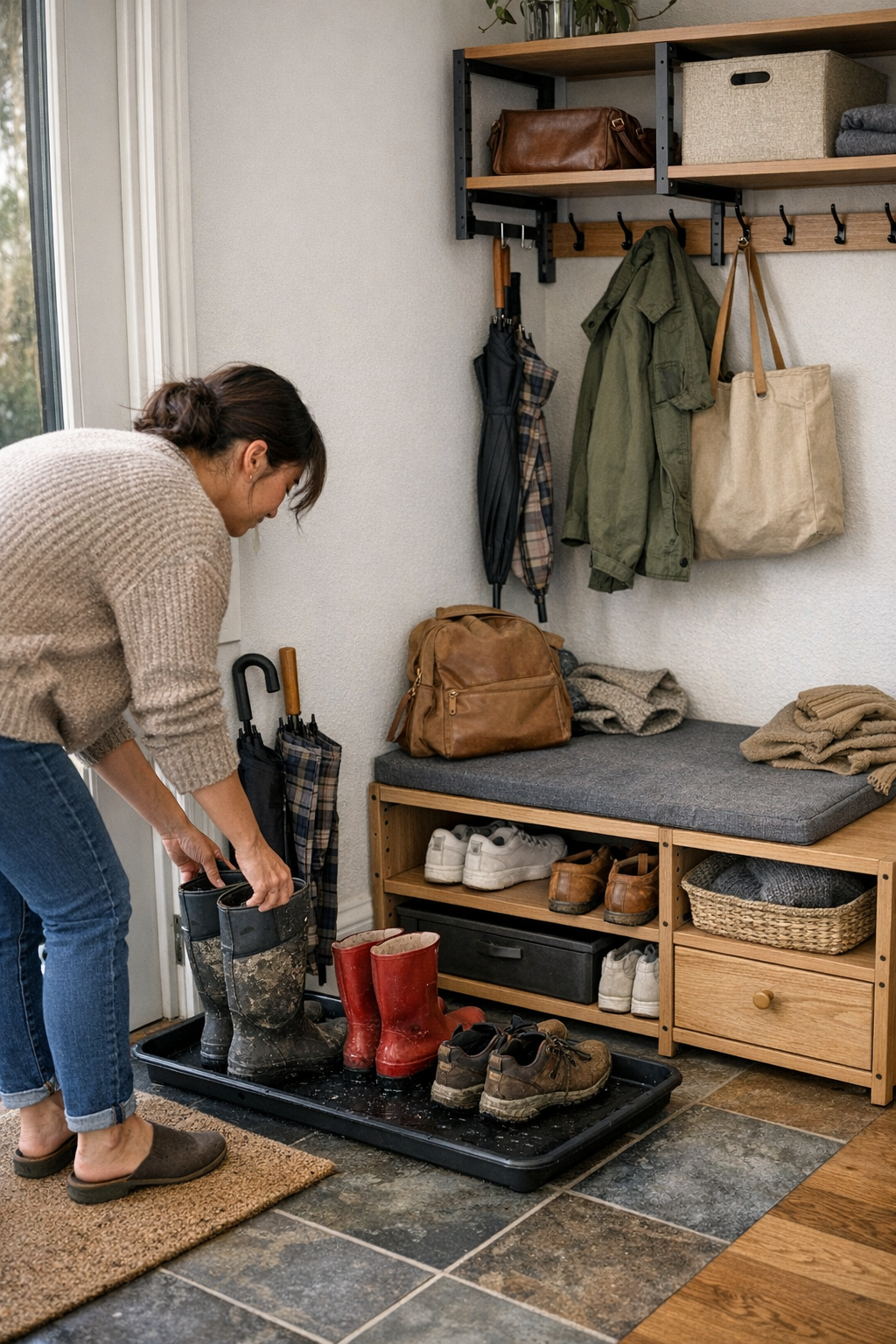
    Set up a clear wet zone right at the threshold—a heavy-duty mat, a floor tray placed nose-to-door, a vertical umbrella rack on the edge—and the whole rhythm changes. Wet items have one destination, not three. Shoes form a single, defined row that doesn’t edge wider by the hour. Anything damp stops at the door, so dry gear travels safely past and stays that way. Sudden returns become manageable, not a reset spiral.

    The improvement isn’t just about looks. Reset chores become shorter, not because you’re working harder, but because the storage interior stays protected: benches stay dry, cubbies don’t develop that sticky feel, and the pathway remains clear even during busy times. Fewer last-minute shuffles. Cleanup shifts from a tedious, catch-up cycle to a short scan and occasional wipe-down.

    When the Wet Zone Isn’t Big Enough

    Catch the limits early: if shoes are drying half-on, half-off the tray; if “dry” sneakers still feel clammy the next morning; if you’re cracking open storage to air it out every other week—your wet zone is underpowered, misplaced, or simply too narrow for real traffic. Adjust by shifting trays closer to the door, using bigger mats, or splitting storage: lower compartments for wet, upper for dry. Small changes here force all the difference in how long these defenses really last.

    Simple Habits for Lasting Control

    Routines that last are ones you barely need to think about, because the space itself guides even hurried arrivals. Put an ironclad rule in the setup itself: wet gear never travels past the threshold spot. Place the mat or wet tray directly at the step-in point—even a slim catchment at the weather-facing edge is better than letting moisture sneak further inside.

    Keep cabinet interiors, benches, wall hooks and storage cubes reserved for dry items only—never blend wet and dry. If you share storage, ventilate anything near the floor and retrain yourself to drop gear at the outer edge, not “just for now” on the first available surface. In lean entryways, that one disciplined divide—wet gears out, dry gears in—protects you from the slow invasion of invisible reset work.

    Real Entryways Need Adaptive Routines

    Threshold spaces are built to be crossed, not just admired. Daily conditions—unexpected guests, muddy gear, shifting blow of wind and rain—expose layouts that only look controlled in a vacuum. Sometimes the wet zone needs to expand overnight; sometimes it’s about moving key pieces so flow can reset, not stall out. Permanent solutions fail if nobody uses them; adaptive ones survive because they’re easier to enforce, even when everyone’s rushing or the weather refuses to cooperate.

    Months of living with and adjusting a true wet zone make the payoff undeniable: less invisible damage, fewer blocked paths, less endless wiping-up, and an entry that welcomes in all seasons rather than acting as a friction gate. Ignore the need to separate wet and dry, and the transition mess always returns; design for it, and the entry actually works with you.

    For entryway storage and adaptive wet/dry solutions built for transition spaces, visit Betweenry.

  • How Shared Closet Organizer Kits Can Prevent Daily Routine Chaos

    Closet organizers rarely survive the daily rush of shared use without breaking down in ways a showroom photo never reveals. That moment of initial order—fresh baskets, clean lines, everything squared away—shifts fast once two people start colliding at the closet door. The minute you reach for a jacket while someone else ducks for shoes, what felt organized becomes a scramble: blocked access, overlapping paths, and items dumped wherever there’s an inch of free shelf.

    Where Neat Layouts Start to Fail: The Shared Routine Test

    Most “all-in-one” closet kits are built for visual order: rods lined up, baskets matching in size, drawers stacked like puzzle pieces. But what these systems rarely solve is the pressure of a real routine—especially with more than one person involved. The breakdown starts quickly:

    • While you dig for a work shirt, someone else is shoving gym shoes under the lowest shelf.
    • Supposed off-season bins morph into catch-alls by midweek—socks, receipts, a stray water bottle all landing on top.
    • Shoes set under the main rod look neat until someone needs to kneel for socks, instantly blocking the only exit path with their body and gear.

    These aren’t rare lapses. They pile up, round after round, each flaw compounding until the system barely resembles its starting logic.

    The Problem Isn’t Just Clutter—It’s Friction

    Spend a week using a shared closet and the real trouble surfaces: Awkward placements, mixed-up zones, and subtle physical friction. Drawers for essentials get placed so low you’re squatting in the dark. Tall baskets are barely reached—so basics end up on whatever shelf is open at a comfortable height. When both users need access at once, waist-high shelves become battlegrounds: returns get dropped anywhere, quick grabs turn into digging sessions, and overlapping routines start to jam the whole area.

    The true cost isn’t just stray socks. It’s the slow erosion of any return flow—clean laundry gets stashed wherever, gloves drift from their section, shoes migrate across zones. The “organized system” collapses under the strain of repeated shortcuts and random overflow, needing a full reset after just a few busy cycles.

    Scenes from a Stalled Closet

    Picture this: One side features deep drawers at floor level, with hanging rods layered above. The other has tall baskets—supposedly for out-the-door gear or linens. It looks balanced until rush hour. Someone kneels, stretching to the bottom drawer, trapping the only exit with their body and an open bin. The second person, short on patience, yanks a basket overhead to get a hoodie, shifting stacks just out of reach and never restoring them. By Thursday, a single boot or wayward laundry hamper can stall the main path for everyone. Every reset takes more effort, as the system nudges everyone toward quick dumps and unsorted returns over thoughtful placement.

    When a Zone Becomes a Dumping Ground

    Certain sections instantly absorb chaos. That low basket? Crammed with socks, tangled gym bands, yesterday’s shopping bag and whatever needs “dealt with later.” Anything beneath takes a yoga move to retrieve, so more and more items pile up, untouched and increasingly unfindable. This has little to do with bad habits and everything to do with a design that interrupts natural return flows, nudging users toward the path of least resistance—dump, dash, repeat.

    Small Adjustments, Big Impact

    Routine exposes which closet zones actually work and which fail under pressure. Tweaks that seem minuscule can unravel massive daily friction:

    • Move everyday drawers just under shoulder height: No more morning crouch, faster sorting, and returning laundry becomes a breeze instead of a chore. Missed items drastically drop off.
    • Segment shoes into vertical cubbies along the closet edge: Keeping shoes off the main walking path relieves traffic jams, stops the “shoe pile,” and forces a better return habit by making random dumping less convenient.
    • Store rarely-used accessories or overflow above direct reach: High shelves are no longer wasted, and daily-use zones stay clear, making grabs and returns automatic rather than disruptive.

    These tiny shifts rewire how—and where—each user interacts with storage. Items actually go back to their category, not because of willpower but because the system makes the alternative less appealing.

    Matching Setup to Real Movement

    The best storage setups don’t just look contained—they adapt to how people actually move within the space. Shelves and drawers placed between waist and eye level are used more, with less wasted effort. Divide closet zones clearly: when users have their own reach-range for essentials, overlap and jostling plummet. Simple physical dividers—small trays, shelf risers, soft bins—make it harder to “temporarily” dump items in the wrong place, quietly guiding better use without policing behavior.

    Piling items on the floor is a red flag. Every layer of floor-level storage adds another crouch, and each crowded surface increases friction for the next return. Wall systems that only store up and out, not within natural reach, just become slow-moving overflow—visual order without daily usability.

    Why “Looks Organized” Isn’t Enough

    A closet system isn’t truly organized until it recovers quickly from Monday-to-Friday reality. If zones drift, shelves crowd, or returns become an afterthought within weeks, the setup has failed its real test. Good storage makes resets lighter and routines less interruptive—not by stricter rules, but by making the right action easier.

    The difference is immediate but subtle: a closet that keeps up with real movement, not a static kit that stayed pretty for a day then collapsed. True shared-use systems reduce background friction, keep overflow visible and manageable, and adapt whenever the pressure spikes.

    Explore practical closet kits and modular storage that solve shared-use friction at Gridry.

  • How Fixed Cable Paths Keep Your Desk Edge Clear and Organized

    Most desks start clean—but it rarely lasts. After the first tidy setup, small cable problems come back fast: a charging cord drifts into your writing space, USB leads slip over the desk’s front edge, power bricks edge closer to where your arm lands. You start by brushing them aside, but by midweek it’s a familiar grind: nudging cables back when they invade your notebook space, catching a wire under your palm as you move from keyboard to pen. What looks organized in the morning falls apart in routine use—not from visible clutter, but friction at the desk edge where your work actually happens.

    Where Clean Looks Fall Apart During Real Work

    The illusion of order holds—for about half a workday. Everything lines up: organizer set, monitor arm fixed, drawers closed flush. But start shifting between tasks—type, jot a note, plug in a device—and the desk’s edge unravels. Cables pile against drawer handles. A charging cable that stayed put at 8 a.m. now blocks your pen when you reach for a pad. A power adapter nudges into your elbow as you adjust your chair. Each movement adds micro-friction, breaking up your workflow every time your hand catches on a stray cord or you catch yourself stopping to clear a surface that looked clear minutes before.

    This isn’t just background annoyance. Each arm reach or device swap means another cable is out of place. If your setup asks you to dodge cords every time you move between keyboard and notebook, that “organized look” becomes a maintenance loop: fix, reset, repeat. In compact workstations, where every inch matters and notepad space has to fight USB lines for the same territory, the drain is constant. By your second reset, you’re wasting focus regaining open space instead of working.

    Cable Drift: The Slow Creep That Breaks Flow

    Let a single cord slip for an hour and you’ll feel it: the laptop shift for a quick call sends the charger cable sliding into your lap; a chair pull leaves a USB lead snaking across the area you just cleared; reaching into a shallow drawer yanks another power cord into view. Unanchored cables don’t wait for a deep clean—they wedge themselves into hand space, tangle with drawer units, or fling themselves onto the desk as you adjust your posture. Each time you repeat your most basic task (rotate the monitor, open a drawer, charge a device), you’re forced to rearrange whatever has crept forward.

    This isn’t a one-day nuisance—it’s built into the setup. The cycle is familiar: start by placing the cord, turn away, look back, and it’s already migrated somewhere inconvenient. If a surface has to handle both monitor work and constant note-taking, cable chaos isn’t a rare slip—it’s daily resistance. Every misplaced cord is a split-second interruption that, after enough repeats, chips away at your usable space and working rhythm.

    Structuring the Flow: Locking Cables Into Place

    The answer isn’t another reset—it’s physical structure. Reroute cables through an under-desk tray and lock each one with a fixed, sturdy clip. This pins every charging cable, USB lead, and adapter along a single, predictable exit path—no slack allowed to snake into the workspace. Power bricks hang from the tray, off your surface completely. Only the cables you actually use exit upward, anchored at a fixed spot, sitting no farther than a finger-width from the edge, with nowhere else to wander.

    Drop the cable paths just a few inches below the working edge, and suddenly your writing and reach zones feel as open as they look. “Move the wire before you write” disappears from your routine. You’re free to slide a notepad in beside your keyboard, pull out a drawer without a cord slapping into your palm, even reposition your screen late in the day without catching cables that have drifted into your elbow swing. The edge doesn’t just look uncluttered—it finally acts that way, after real cycles of use.

    How Compounding Friction Adds Up (and When It Disappears)

    No single cable nudge feels urgent, but every time you recover a lost connector or untangle wires to free a notebook, you lose seconds and snap your focus. In shallow desks or split setups where there’s always a competition for reach space, those seconds become the gap between productive work and a setup that resists you. The mental signal that you “never really have space at the edge” is the constant background tax—never major, but always there, adding just enough delay that you stop trusting your surface to stay ready.

    Anchor the cables. Fix the routes. Resets stop being a nagging chore—now you pull out a device, take notes, adjust your chair, all without dragging a power cord back from the floor or finding your charging lead hooked around an organizer. The surface stays open, not because you tidied more often, but because the structure blocks drift entirely. The friction, finally, disappears without effort.

    The Shift That Stuck: Anchored Clips and Predictable Paths

    It wasn’t a big renovation. A tray under the desk, several rigid clips, one rule: no loose cables in the hand zone. Heavy chargers lived in the tray, out of the work area. The main surface stayed genuinely open—so you could actually move a notebook without clearing a route. Desk routines that once started with “collect and reset the cords” quietly vanished. No more surface clutter creeping back after lunch. No more cords waiting to trip your next move.

    Not every desk frustration disappears, but the single most repeatable nuisance—the cable chaos undoing your organization—does. You stop fighting the same problem every morning. Instead, the edge holds steady, so the desk you cleared on Monday still works on Friday.

    Common Questions on Keeping the Desk Edge Ready

    Where do cable trays or clips actually make the most difference?

    Mount trays or rigid clips beneath the back edge of your desk, about four inches in from where your hands and wrists rest for typing or writing. That keeps every cable running close and parallel to the surface—blocked from drifting into your work area and nearly invisible in daily movement. Under-surface trays make even heavy adapters stay out of hand reach, preventing crowd buildup in your critical space.

    If my desk looks clear, do I really need cable management?

    Yes—because “looks clear” doesn’t survive real work. If cable routes aren’t fixed, wires fall into the same hand spaces as you reconnect, move monitors, or type beside your notebook. The edge you cleared keeps filling back in. Only firm paths protect your usable reach from slow invasion.

    How do I keep cables from fraying or wearing out at the exit?

    Use a rigid, padded clip or flexible sleeve right at the desk exit. This eliminates the sharp bends and abrasion that eventually split cable insulation or cause charging to fail. With a stable anchor, the cord always returns to the same spot, ready for action, never dragging visual clutter with it.

    A Desk Edge That Holds Its Own—Session After Session

    The gain isn’t aesthetic—it’s subtraction of the most persistent interruption at the point of use. A neat-looking desk means nothing if cables drift back by noon. Desk setups that endure aren’t just “organized,” they channel cables on purpose and keep them locked in place. That’s how you trade a desk that sabotages your flow for one that quietly supports it.

    When cables have to follow a set route, resets become infrequent, the edge stays ready, and your surface remains usable across all the task-switching, drawer-pulling, and chair shifting a real workday demands.

    Explore the full WorkBasic collection

  • Why Open Shoe Racks Outperform Stacked Boxes in Busy Closets

    Shoe box stacking looks like organization—until you actually live with it. The first week exposes the weak spots. Day one: rows of boxes sit in clean lines, shoes sealed and apparently sorted. But by the third retrieval, order cracks. Grabbing a pair from the bottom means unstacking the whole tower just to reach a single set. What was meant to save space turns fast into a multi-step shuffle. The closet shelf stops being a launch pad and starts acting like a blockage—especially the moment a lid goes missing or a box perches awkwardly in the hallway. Stacked boxes deliver a snapshot of control, not a system that holds under daily pressure.

    How Shoe Box Stacking Slips Away from Real Routines

    “Organized” can mean two entirely different things: organized at rest and organized in the middle of your week. Stacked shoe boxes reward you on day one but penalize you every time you need to break the stack’s order. The first pair not on top brings the shuffle: lift two boxes, separate lids, wedge one stack aside in a hurry, then—maybe—reassemble the tower. What actually happens is less surgical. Lids wander. Temporary piles creep onto the floor, labeled “just for now.” By Friday, the closet’s floor zone is hosting shoes meant to be boxed, and the boxes themselves are half-empty or stacked out of order. The promise of easy resets evaporates, and regaining control becomes a weekend project, not a nightly routine.

    The problem grows quietly. Categories blur; work shoes get mixed with weekend pairs “just for today,” and half-matched stacks stay mismatched for days. It’s not dust that threatens these setups, but the mounting time and effort needed to make the closet usable again. Each reset becomes heavier, often delayed, and the cycle repeats.

    Shared Spaces and Collapsing Shoe Systems

    Box stacks survive longer in a closet used by just one person, but shared use brings faster collapse. Three people, three types of shoes, and one set of stacked boxes—morning retrieval turns into a bottleneck. No one wants to unstack six boxes to claim a left sneaker, so boxes linger wherever someone last dropped them. Shoes get stranded out of their intended category, and “overflow” migrates to odd corners or the nearest open path. By midweek, the closet’s “organization” is only skin-deep—the system slows down everyone’s routine while the real storage action moves to the floor or an improvised pile.

    The effect reaches past appearances. Even in moments when the closet looks decently sorted, movement inside the space grows cramped. You sidestep fallen boxes, relocate a stack just to get at a jacket, or run into loose shoes on the exit. The original promise—more shoes in less space—transforms into a tradeoff between visual order and daily friction. Shoe storage that looks compact on Sunday works against you by Thursday, dragging out retrieval time and starting a chain reaction of micro-messes across the zone.

    Open Racks: The Quiet Difference in Day-to-Day Flow

    Switching to a horizontal or open wall rack makes the weakness of box stacking obvious. An open rack means each pair is visible, reachable, and not sandwiched under others. No wrestling with lids. No pre-removal shuffle. Instead, shoe storage keeps up: grab a pair without moving anything else, then slide them back in seconds. Use doesn’t create new clutter—there’s no “just for now” pile, no domino effect when someone is in a rush. Categories survive real use: running shoes actually stay with running shoes, boots don’t cross lines with flats, and overflow has nowhere to start spreading.

    Every return becomes a non-event—done in one motion, not an unwelcome puzzle. Sorting becomes invisible. The closet starts enabling the routine, not just storing items. The change isn’t dramatic on the surface but is deeply felt in the background: less hidden chaos means fewer resets, and no one’s routine gets slowed by storage meant to help.

    From “Fake-Tidy” to Functional: One Week’s Worth of Change

    The shift to an open, low-profile rack isn’t about surface looks—it’s about survival under actual use pressure. Lids stayed put, stacks never toppled, and the accidental shoe pile-up simply stopped happening. Resetting the closet faded from a major event to a simple step folded into every return. No more hunting for a missing match or finding a lone sandal stranded in another room. The structure didn’t care about perfect order; it just didn’t break down when used in a hurry, and that steadiness absorbed the weekly churn without show.

    Why Boxes Invite Clutter, Even if They Look Efficient

    Stacked boxes only look efficient in low-traffic, low-turnover areas. In high-use closets, they create hidden labor. Each retrieval adds another layer of handling. Every unreturned box or “temporary” pile draws the system further from function. Quickly, the area meant to be organized ends up with more overflow creeping onto the floor, leaving less usable space than if everything was open and in use. The category system you started with—work, daily, seasonal—quietly disintegrates as short-term needs force boxes out of place.

    Small Space, Big Tangle

    For limited closets, stacking feels like a space win—until you try to retrieve favorites from the middle layer two mornings in a row. Each shoe removed is a micro-barrier, slowing you down and reshaping stacks in ways that don’t get rebuilt until a full reset. Space is preserved only in theory; in practice, daily friction eats away at any saved inches and encourages spillover beyond the intended zone.

    Modular Racks: Adapting as Seasons — and Shoes — Change

    Open shoe racks aren’t magic, but their adaptability is key. Modular racks allow you to shift shelves for boots in winter, make more space for sandals in summer, or separate users without everyone needing their own stake in the chaos. Adding a tier or moving a divider is simple, doesn’t trap shoes in now-unreachable compartments, and lets the closet flex as routines change. No system is static, and open racks accommodate that fact: less hidden pileup, no temporary workarounds that become permanent eyesores, and fewer “solutions” that require reworking the rest of the zone for one season or one new pair.

    Real-World Fixes: Smoother Resets, Less Routine Disruption

    The true difference between a closet that works and a closet that stalls you out is found in tiny, repeated frictions. Getting shoes in and out—without needing to sidestep, restack, or hunt for a box—shrinks the number of unplanned “reset” moments to nearly zero. Lost matches, delayed departures, morning standoffs with an unstable pile: the right visible, accessible system prevents all of those. A closet should support your day, not absorb your attention. Functional storage removes chores you didn’t sign up for and fades into the background, not because nothing ever moves, but because movement isn’t penalized.

    Quick Tip: Use a deep shelf’s back zone only for rarely worn or out-of-season shoes in slim bins—never double-stack your everyday pairs. Visible, single-layer access keeps clutter from creeping past the edge.

    In the end, shoe storage should survive real use without needing rescue every few days. Swapping stacked boxes for an open, flexible rack doesn’t ensure perfect order, but it does cut off the endless reset spiral and lets the whole closet keep moving at real-life speed. Systems that look great only in still photos rarely hold up in the grind of a busy week. For shoe storage, lasting usefulness always outweighs the illusion of perfect tidiness.

    Explore Gridry’s practical storage systems

  • Why Circular Saw Performance Really Matters for Deck Building Projects

    It’s not the first cut—it’s the fiftieth—that decides whether you’ve got the right circular saw in your hands. By the time the sun is overhead and you’re deep into a deck’s pressure-treated boards, every choice you made—blade, baseplate, grip, weight—hits back. The boards get heavier. The knots get meaner. And a tool that felt “good enough” starts to show every shortcoming, one stuttering cut at a time.

    The First Few Cuts: A False Sense of Security

    You know the routine: new saw, fresh blade, stacked lumber on sawhorses. The first pass is smooth enough to make you think specs might actually tell the whole story. RPMs, amps, price tag—all blend together as you knock out those opening boards. But every deck builder knows these early wins mean nothing. When the wood’s dry, the blade’s at its sharpest, and your arms are still fresh, even a bargain saw can fake it.

    Wait a few dozen boards. Once the lumber starts to sweat, knots turn ragged, and you’ve pushed through the edge of your patience, the real test begins. Pressure-treated pine doesn’t just resist blades—it wears them down. Pitch, moisture, and crooked grain start gluing up the teeth, and suddenly that clean, crisp cut wobbles just a hair off line. Fine at first—but run your palm along the edge. You’ll feel the difference in every chip, splinter, and micro-shake.

    The Real-World Grind: How Tools Expose Their Limits

    The steady rhythm you found in the morning—pulling the trigger, riding the line, flipping boards—falls apart as you get deeper into the stack. Now, the saw’s subtle flaws start adding up. The blade sinks slower. Sawdust piles up between your shoes. Vibration creeps into your wrist until it’s not just the wood resisting, but your own grip getting tired.

    Tool specs go silent when fatigue sets in. It’s easy to bench-race saws on no-load speed or cord length, but what matters is how the saw handles the hundredth cut. Does it hold its speed into a knot, or does the motor note dip and the cut angle wander? Do you need a break to shake away tingling in your fingers, or can you keep going without wincing? These pain points don’t show up on the box—they appear one rough cut at a time.

    Head-to-Head on the Job: Where Specs Stop, Reality Starts

    Picture the scene: two nearly identical saws, both with 7-1/4″ blades, both fresh out of the box. By the end of a long afternoon, you can tell them apart by the feel alone. With one, chips eject clean and you’re hardly dusting the edge between cuts. The other bogs down on every joint, leaving fuzz and tear-out that needs sanding. You start swapping batteries or blades just to keep up, but the real difference comes in how you have to babysit the “off” saw every step—the tool fights you, never the other way around.

    The Fatigue Factor: When Small Issues Slow Down the Entire Day

    By midday, what looked like a lightweight saw becomes a lead weight. Even a few ounces off in balance feel like a mistake after your twentieth board. Each knot needs an awkward pause and more force. Tiny shudders up the handle steal momentum from every push. Now the little problems you ignored in the morning—vibration, binding, awkward switches—start to cost you time, cut after cut.

    This is the cumulative effect of short-sighted choices. The saw that felt okay at first now eats into your energy, and you find yourself reaching for sanding blocks or extra batteries as often as the tape. Over a full day, the result isn’t just slower progress—your patience and finish quality wear thin too.

    Sudden Relief: What a Real Upgrade Feels Like

    Every builder’s been there: You swap in a saw with a true low-friction baseplate. Instantly, that sticky plank that just fought you now glides, the blade tracking straight with half the effort. It’s not a revolution—but suddenly boards cut cleaner, hands cramp less, sanding is an afterthought, and you’re not double-checking for burn marks after every pass.

    Even a minor design change—a slimmer grip, better line of sight, less motor strain—makes the workflow smoother and steadier. Cut after cut, your pace holds up. The pile of finished boards grows instead of the list of little fixes you’ll need to make later. The “just good enough” saw gets benched, and you remember what production looks like when the tool helps, not hinders.

    Spot the Signs Your Saw’s Slowing You Down

    Listen close: dropping RPMs or a strained whine on dense grain means the blade is working too hard. If you’re seeing more dust than chips thrown from the cut, you’re losing efficiency—more resistance, more sanding later. If vibration lingers in your hand after a pass, imagine sixty more of those. These micro-frustrations, minute by minute, drag a project from satisfying to slog.

    Specs Mean Nothing in the Long Haul

    No tool looks bad sitting fresh on a shelf. But by the last cut of a real job, the difference between “fine on paper” and “right in the hand” is obvious. The gulf between a passable saw and a genuinely good one doesn’t show up for the first five cuts—it compounds over hours of real use.

    If edges are rough, the sound changes, or you’re tightening your grip just to stay straight, don’t wait for the tool to quit on you. Even small gear upgrades—a better glide, a more consistent motor output, a dust port that keeps the line clean—chip away at frustration and keep the day moving forward. That’s not marketing. That’s just what keeps the job finish sharp and your energy intact, no matter how long the project drags out.

    For equipment that stands up to real work, visit Gumboll.

  • Why Fixed Storage Compartments Struggle With Everyday Clutter

    At first glance, crisp dividers and perfectly measured bins look like storage salvation. The promise is tempting: a closet remodel where every scarf, hat, and pair of gloves sits in its designated home, clutter supposedly banished for good. But a few weeks in, that showroom order can quietly fall apart. With each laundry day or weather change, your neatly separated bins start blending, and everyday routines turn “organized” into just another source of friction. The danger isn’t mess—it’s a storage system that can’t absorb real life’s small surprises.

    Where Compartments Start Betraying You

    Consider a closet with bins carefully marked: hats, gloves, scarves. On day one, everything sits in line. But the minute you bring home a new pair of oversize mittens or switch to a thick winter scarf, harmony unravels. Hats spill onto gloves. Scarves wedge themselves against bin walls or hang out too far, snagging hands each morning. You start playing a daily shell game—rearranging piles just to grab a single glove, or squeezing scarves into spaces an inch too tight.

    This isn’t just a closet problem. Any fixed system—rows of cubbies, unadjustable drawers—looks flawless until you actually live with it. Socks migrate in dresser organizers. Grocery bags overflow their box after a shopping spree. One busy week and the boundaries blur, categories blend, and you’re working against the very system meant to speed you up.

    Frustration on Repeat: How Rigid Storage Slows You Down

    Rigid compartments shine in theory but trip you up in practice. In bedroom drawers, a set of little trays keeps socks and belts tidy—until you swap in bulkier winter socks or try to fit an odd-shaped accessory. Suddenly, instead of seeing your options, you’re digging behind a gap-toothed stack or undoing your careful folding just to find a single item. The “reset” after laundry takes twice as long, dragging new items into old, unmoving boxes.

    Entryways are even less forgiving. Maybe you have a bin for shoes, one for bags, one for cold-weather gear. But after a muddy day or a friend’s oversized tote, shoes stick out, bags flop over, and gloves end up in a pile on the bench. What started as clear order becomes a bottleneck, each category crowding the next until the surface itself is a landing zone for overflow.

    Organization That Can’t Flex—And How That Shows Up

    Storage systems built on static roles fail quietly, slowly. At first, you might ignore the creeping disorder—hats perched precariously, labels peeling off, an “overflow” mound near the door. But over time, you start rerouting your own process: slipping things onto any available surface, lowering the bar for putting things away, or skipping the bin entirely. Suddenly, the dividers and labels are just for show.

    Even the fridge catches the curse—those “salad” and “snack” bins that fill up with odds and ends when routines shift, or a big shop undoes the careful balance. It’s the same old tension: seamless for a snapshot, jammed by the unpredictable.

    The Trouble with ‘Perfect’ Compartments

    Order feels great—briefly. But systems that demand precision create a hidden tax. A sweater an inch thicker than usual pushes the whole stack crooked. An oddly-shaped shopping bag won’t sit in its bin, so it lands wherever gravity lets it. Every time you return something to its “place,” you negotiate with a system that resists change. Bit by bit, effortless resets become a chore.

    Watch closely: when stacks slide, bins overflow, or labels fade in relevance, the compartmental illusion cracks. You’re no longer organized; you’re just volunteering for more tidying work.

    The Power of Small Margins and Movable Parts

    One minor tweak changes everything: a bit of give at the edge, or a divider you can slide or remove. In a real closet refresh, a homeowner decided to ditch two fixed dividers and let one bin float: immediately, it became the zone for extra hats, travel thermals, or a friend’s borrowed gloves. When seasons changed or shopping patterns shifted, nothing needed a full resort—items just found temporary room in that flexible gap.

    Small space to overflow or blend, without constant rearrangement, means fewer rogue piles outside bins, faster resets after laundry, and less time “undoing” your own organizing effort. A system with an escape route simply works longer without you having to think about it.

    Recognizing When Your System Is Working Against You

    Be alert for these sure signs of storage friction:

    • Bins or baskets always left open, as if waiting for something that won’t fit
    • Loose piles forming on floors or benches near “full” containers
    • Having to shift one stack just to free something hidden underneath
    • Original labels now ignored, or half-right categories repurposed on the fly
    • A pause or sigh every time you try to tuck something away

    When these patterns repeat, your system is asking for flexibility—or else, clutter will simply find its own space outside the system.

    Low-Effort Adjustments with Outsized Benefits

    You don’t need a full overhaul to fix chronic mess. Sometimes, removing one divider is enough to make a shelf work for both heavy sweaters and lighter tees—no more domino tipping when you reach for something on the bottom. In the entryway, trading a rigid bin for a woven basket with soft sides lets boots and shoes squeeze in, instead of spilling out every busy morning.

    Leave room for wild cards: a purposely empty spot, just for the random or seasonal—the extra tote, a neighbor’s returned umbrella, the overflow pair of gloves. Giving unpredictability a landing zone means less pressure everywhere else, and fewer “temporary” piles lingering for weeks.

    Why Storage That Bends, Endures

    A closet, shelf, or cubby shouldn’t be measured by a perfect snapshot, but by how little fuss it takes to put things back a week—or a month—later. Items and routines shift, new things arrive, and the weather itself can upend your categories. The best systems share an almost invisible trait: they absorb change without demanding constant attention.

    When your setup has slack—removable dividers, a margin in a bin, a wild card shelf—you spend less time fixing and more time finding, using, and putting away. The payoff isn’t just a neater photo; it’s a storage space that keeps up with you: the surprises, messes, and resets of real life, not the momentary calm of organizing day.

    Find classic and flexible closet solutions at ClosetWorks.

  • How Mobile Storage Transforms Garage Routines with Faster Access

    A “perfectly organized” garage or workshop looks impressive—for seventy-two hours, maybe. On day one, every shelf lines up, bins stack with military precision, wall hooks gleam with potential. But return mid-week, arms loaded with tools or materials, and that order blurs into a slow grind. The floor is still clear, the bins are still labeled, but suddenly, what seemed efficient on Sunday leaves you stepping around obstacles on Wednesday. The friction isn’t dramatic—it’s the tiny, repeated delays that quietly drag on your routine.

    When Order Becomes an Obstacle

    Designing a “clean” storage system looks sensible on paper. Towering cabinets, neat stacks of labeled bins, every square foot allocated. But run through a typical week and the realities set in:

    • Grabbing a part means unstacking bins for the third time before lunch.
    • That pristine wall corner is a dead zone, cutting off movement and quietly collecting scattered overflow after each rush.
    • Heavier tools force a crouch, a twist, or an awkward two-handed lift from a low shelf yet again.
    • The “tight” layout that once looked smart turns into a blocked pathway by Friday—just when you’re ready to speed up, not slow down.

    This isn’t clutter. It’s subtle structural friction built into setups that look right in theory, but stall routines in reality. The result? Your “order” demands more work just to keep basic access flowing.

    Static Storage: The Setup That Pushes Back

    Picture the classic arrangement: a closed cabinet packed with bins, wedged tight against the wall to maximize open floor. For a moment, it’s the model of efficiency. But reach for anything on a busy afternoon and the problems pop up fast:

    • Bending low to yank out a bin—because, of course, the one you need is at the bottom.
    • Lifting two containers just to grab a drill or socket you swore you left up top.
    • Dodging the swinging cabinet door again, cramped between wall and workbench with no wiggle room.

    None of these are show-stopping disasters. But every grab, reach, and restack breaks your stride. What started sleek now saps energy in constant, invisible redirects. After two or three cycles, it’s clear: you’re spending more time working around the storage than actually working.

    When Storage Moves, Everything Else Gets Easier

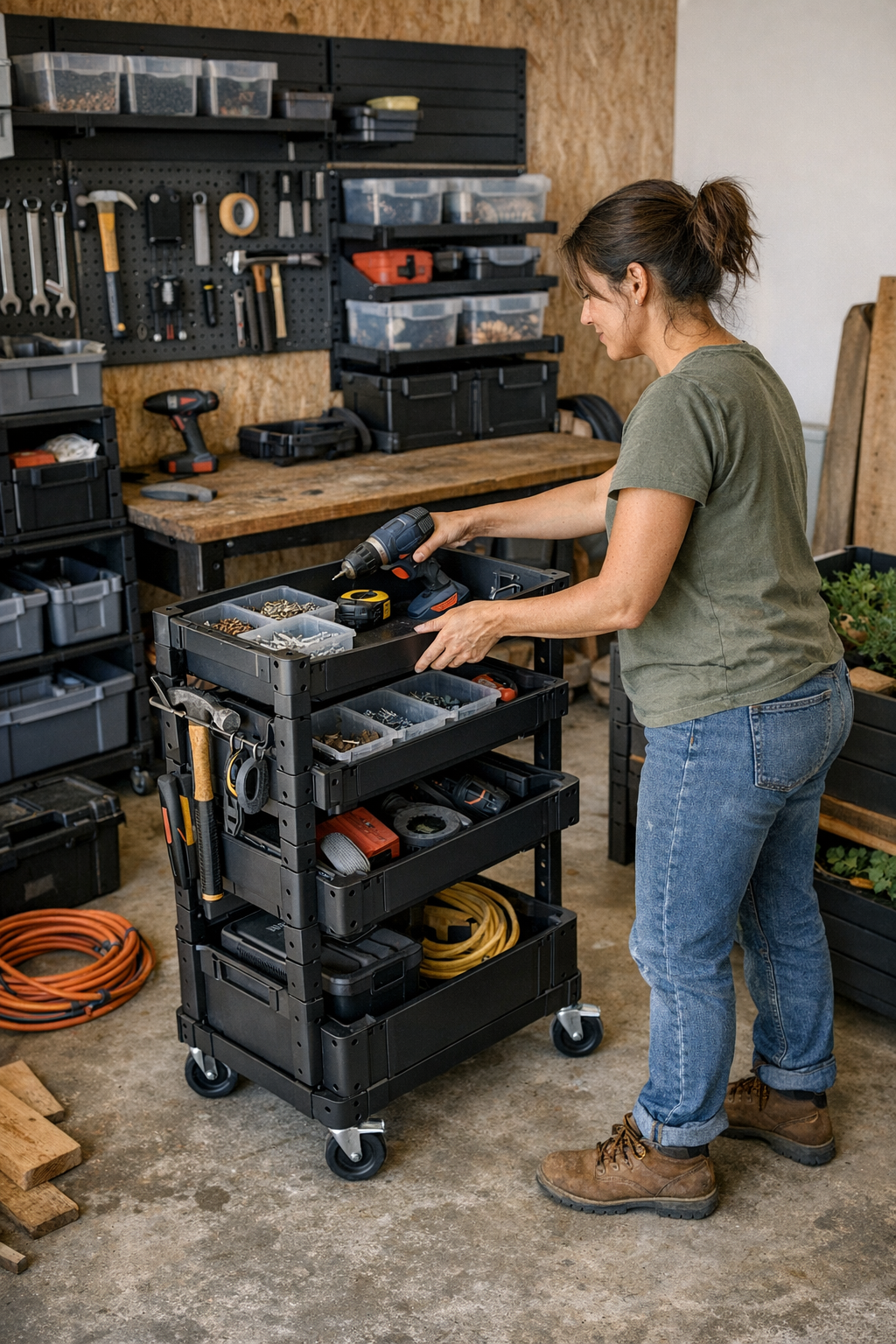
    There’s no magic in “more bins.” The real shift comes with equipment that moves as your work moves. Rolling carts, modular trays on wheels—these small adjustments flip the script:

    • Instead of rearranging yourself, slide the cart aside with your knee to clear the path or open up workspace.
    • Reach at bench height, not three feet below or behind your shoulder. Your main tools are always at hand, not buried in the stack.
    • When routines change or another person joins, the storage pivots with the moment—no reshuffling or squeezing past fixed barriers.

    It’s a chain of tiny gains. The cart shifts—so you don’t have to. Hand tools drift back to where you need them. Resetting the zone is a slide, not a chore. Suddenly, the area adapts to your pace, not the other way around.

    On-the-Job Adjustment That Actually Pays Off

    Put daily-use items in the top tray or front slots of your rolling cart—right at hand height. That one change cuts out the zig-zagging, crouching, and reshuffling that slow down every small project, especially when you’re trading back and forth between jobs all day.

    The Quiet Price of Crammed Footprints and Forgotten Corners

    Layouts that “maximize wall use” or claim zero floor clutter can look sharp—until you try to move. What happens next?

    • The overflow zone appears—the shelf or tray that always holds whatever you couldn’t quickly deal with, building into a mess by default.
    • Dead corners become a fixture: awkward wedges too tight for real storage but impossible to ignore, so you shuffle around them every time.
    • The “full” wall leaves resets harder, slowing each return trip and stretching the end of your day into overtime.

    The real value of modular, movable storage doesn’t come from a sleeker empty space. It’s the end of workflows that stall and stack up. A mobile cart glides out of the way; a tray parks right where tasks wrap up—no blocked zones, no routine broken for the sake of aesthetics. Even in tight garages or narrow garden sheds, the difference is obvious: fewer detours, faster cleanup, and a zone that feels ready, not rigid, each round.

    Is It Time to Rethink Your Setup?

    If ordinary routines become obstacle courses, your setup is signaling for change. Notice if:

    • The same corners are jammed by Wednesday—no matter how often you reset.
    • Supplies or tools land on the floor “just for now”—and stay there all week.
    • Gear clusters by the exit because the “proper” spot is a ten-step hassle.
    • Most days, you’re shuffling bins and boxes just to pull off normal tasks—not just at peak rush.

    The answer isn’t a mega-cabinet, but a smarter flow. Open trays for the stuff you use every session. Add movement so equipment follows the workbench, not the wall. Let your storage park at the finish line of each job, not where it fits best on a blueprint.

    One Small Shift Makes Every Session Easier

    Swap out those top-heavy, fixed-bin stacks for wheeled carts with shallow trays. See measurable, repeatable returns in your own space:

    • Your daily loop across the floor shrinks by several trips.
    • No more splitting time unstacking bins just to grab a screwdriver.
    • Tools actually go back to their haul spot because it’s right where your hand lands.

    These aren’t pipe dreams. They’re the practical shifts that stay with you project after project—easier access, fewer obstacles, and a zone that holds up to everyday use. It may not look showroom-perfect, but it works every time you step in.

    Find practical storage options for real workspaces at StackNest.

  • Choosing Outdoor Storage That Keeps Your Yard Functional Over Time

    Outdoor storage sounds simple until you’re living with it week after week. That first day, any new rack or utility box makes the backyard feel well-managed—but give it a month and the reality seeps in: movement gets blocked, side lanes crowd up, and the clean surface hides a routine reset burden you never signed up for. What looks ‘organized’ too often means “constantly in the way,” forcing you to drag, shuffle, and nudge every time someone needs to pass through or put just one thing back.

    Where Outdoor Storage Friction Really Starts

    The classic trouble spot? That narrow side yard lane or the patio edge that turns into the unofficial collection zone. Shoes, hoses, soccer balls, and worn garden gloves never quite find their way back into a bin—especially when the box itself crowds the path or getting the lid open means moving half the stuff around it. You might think there’s still floor space, but every return becomes a low-key obstacle course: step, lift, sidestep, squeeze a shed door fully open, then find out what you needed is still buried under something else.

    The drag isn’t always obvious until it’s routine. A dusty bin sitting just inside the gate, a freestanding chest that nudges its way outward, and soon you’re dodging items that are supposed to be stored, not sidestepped. If putting a shovel away means blocking the rake, or you notice outdoor gear drifting further out over time, it’s not about storage size. It’s about storage friction slowing every return and reset.

    Wall-Mounted Systems: Winning Back Movement Lanes

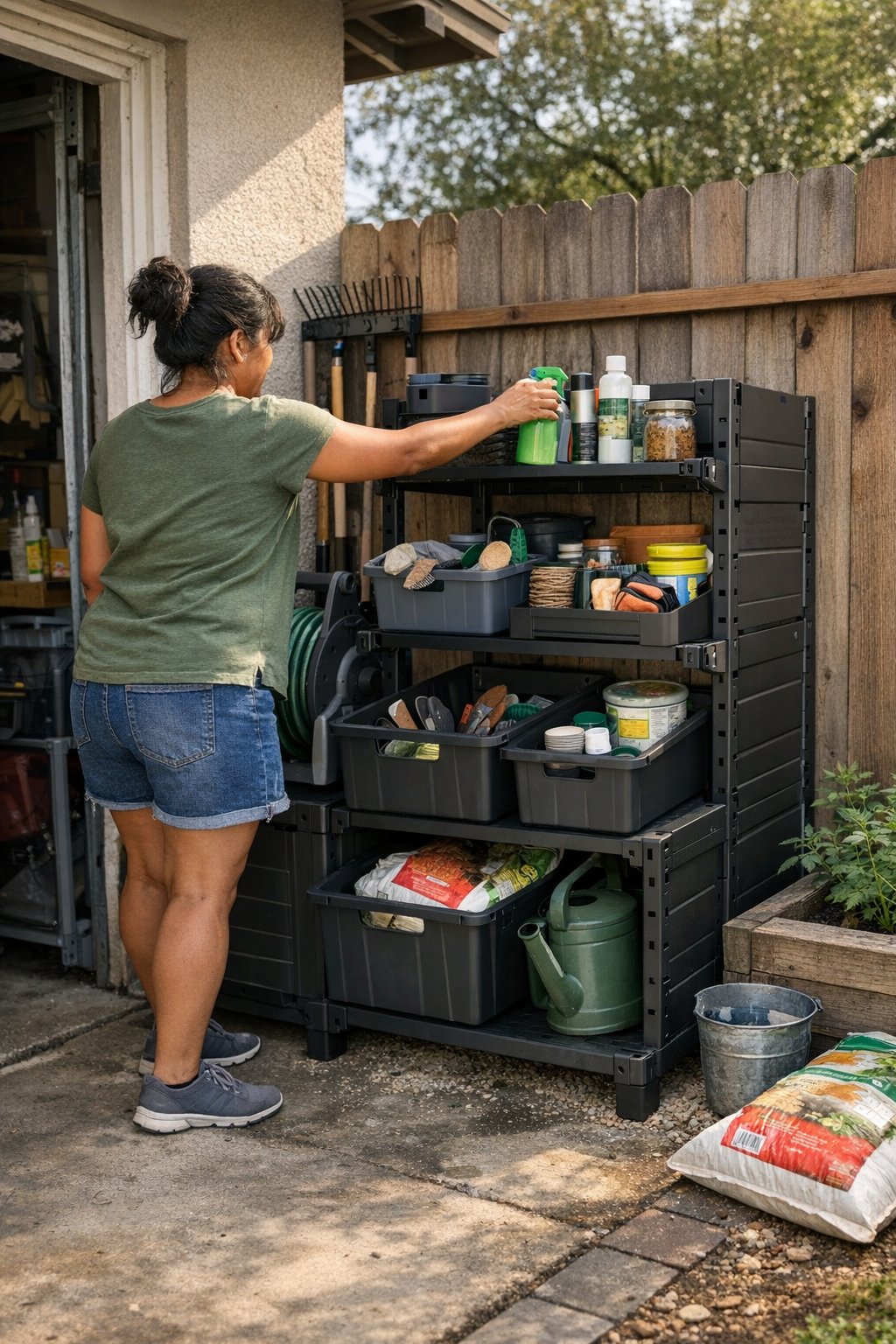
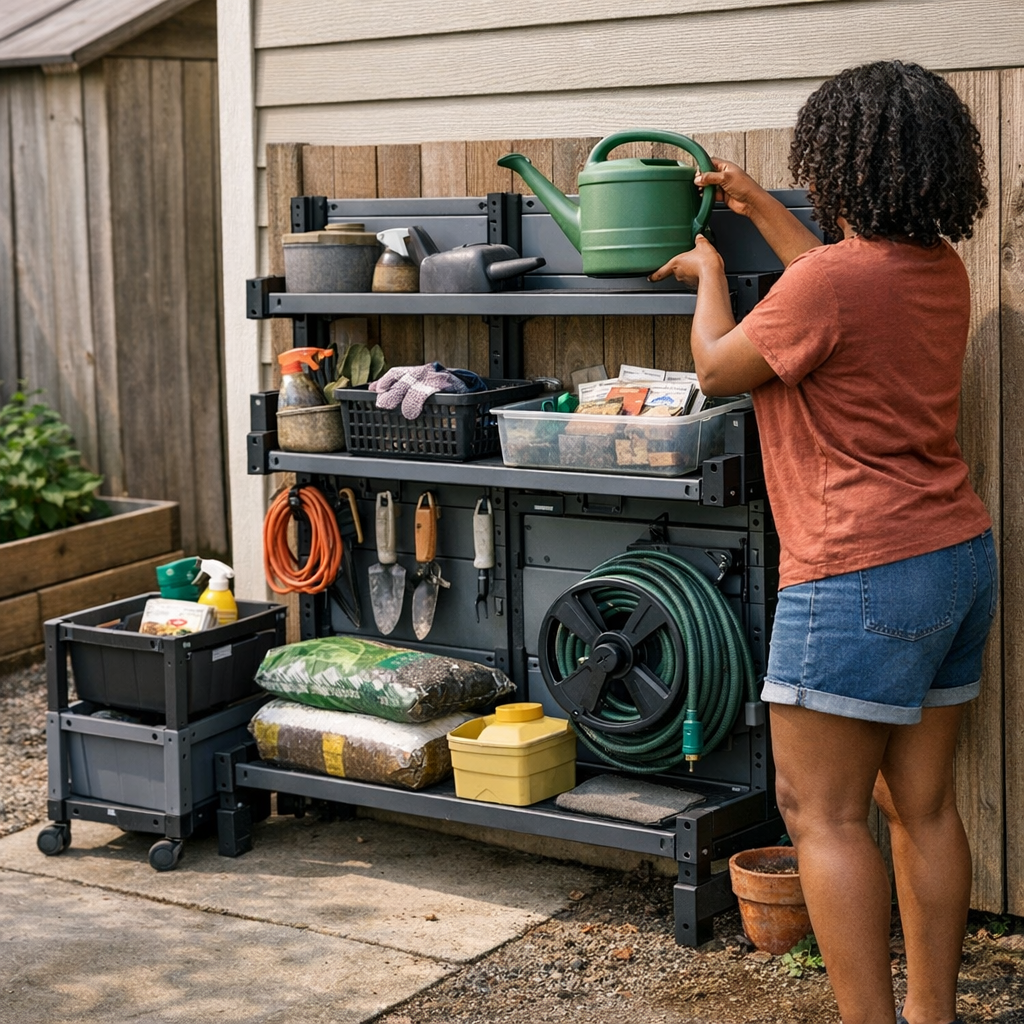
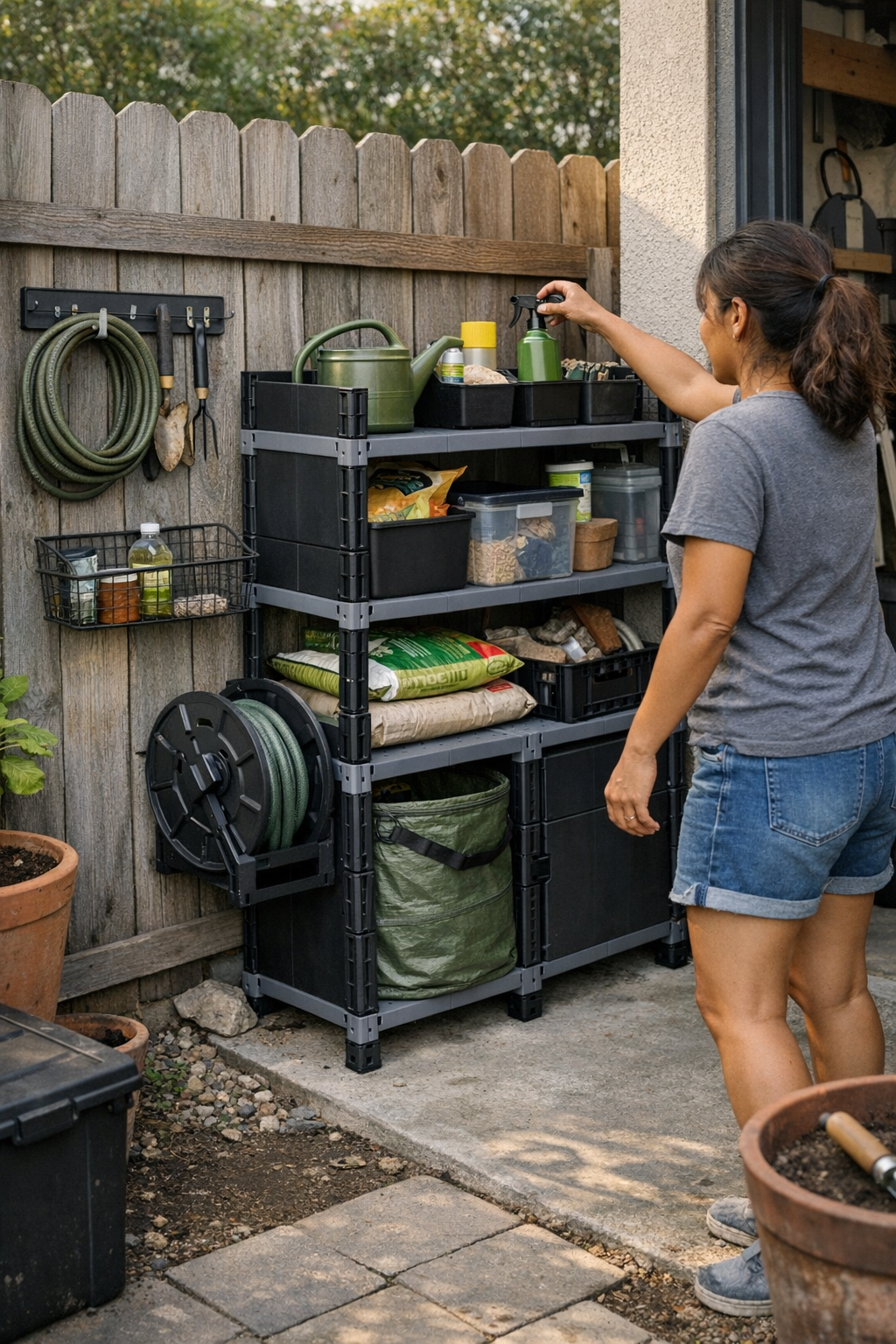
    For real-world yards—side strips, tight patio spaces, fence-lined runs—wall-mounted storage changes the whole traffic pattern in ways you notice after just a few weekends. Brooms, hoses, and tools finally have a place that doesn’t eat into the walking lane or force a pile-up against the garden gate. You end up spending less time reshuffling, less time barking about “clutter at the entrance” because each piece gets a clear return spot—always visible, always up off the ground.

    What actually improves is the flow: hang up a shovel, and you’re done. The patio edge stays walkable. Kids’ balls and tools aren’t lost in a bottomless bin—they’re hanging, easy to find, impossible to ignore. Even in shared entry points, wall-mounted layouts lower the silent tension about “who left the gear here” because everything has a visible return path. Nobody needs to drag a bin just to get in the gate, and resetting the zone after a cookout or workday happens fast, almost automatically.

    Freestanding Units: Early Promise, Long-Term Drift

    Freestanding boxes and lockers seem like the dream—until you’re pushing them back in place every Saturday, re-clearing the same footpath for the third time in a row. Their greatest strength—a roomy footprint, easy repositioning—becomes the core problem: they migrate. Maybe the deck box leans into your main lane, maybe the tall locker keeps edging further from the wall. Either way, the “easy access” turns into an ongoing relocation project that never quite resets right.

    The pattern repeats: you drop off a garden trowel, and now the boot tray won’t fit. A rake catches on the locker base, so it gets left out “just this once.” Blocked paths, trail of overflow gear, and the silent timer ticking up on every reset. You might not notice until you’re already shuffling items for the umpteenth time just to get the path back—or start plotting how to do all your outdoor tasks in one miserable session, just to avoid the reshuffling dance the rest of the week.

    Modular and Mobile Setups: Flexible but Fussy

    Those slick, rolling racks and adjustable storage cubes are tempting—especially for multi-use yards where the patio turns into a planting station, then a play zone, then dinner seating. Being able to roll a rack up to the project at hand is useful, right up until real use exposes the cracks. Mobile racks drift into your best walking lane, get heavy and slow to move, or end up “temporarily” blocking the back gate, shrinking usable space with every new activity.

    Frequently, bins start multiplying. Some stay mobile, others stop moving entirely, turning the outdoor path into a zigzag of obstacles. By month’s end, you’re going around bins instead of through them. Overflow piles land wherever there’s room, not necessarily back in the proper slot, and everything that once felt customizable just feels loose—and slow to reset. Flexibility doesn’t matter if items never make it all the way back, or the shift from “active” to “stored” takes more steps than it’s worth.

    Overflow Zones and the Return of Edge Clutter

    Every backyard has an overflow zone: the patch under the spigot, a muddy corner by the side gate, one wall just beyond the garage. These corners soak up what the official system can’t hold—or what’s too irritating to put away properly because the setup fights your routine. Shoes stack up by the hose, stray balls fill the patio edge, and containers on the ground slowly trap rainwater, dirt, and whatever doesn’t quite fit anywhere else.

    Wall-mounted systems play defense here: they keep floors clearer, make edges usable, and give every item a chance to actually go back. But as soon as storage boxes or modular racks land in these transition spaces and jut out, blockages return. You end up moving two things just to clear a lane, or decide not to bother at all. The reset becomes a slog, and those “temporary” piles harden into permanent fixture status until you finally admit the system stopped working weeks ago.

    Shared Zones and the Problem with “Enough Room”

    In homes where “shed space” means skinny side yards or fence-line strips, the main pain isn’t storage capacity, but how storage breaks up movement and flow. Bins that looked slim enough on setup day somehow narrow the path every week. Chest lids can’t open all the way; doors get blocked, forcing awkward sideways slips just to get past. Shared zones mean multiple people with different routines—family, friends, even neighbors grabbing shared tools—each adding to the slow build-up of friction.

    Every bit more awkward to step over means more stuff gets left out. Over time, even a box filled to the brim becomes a bottleneck, with everyone reluctant to deal with the effort it takes just to get things put away. The cycle is familiar: bigger storage brings more overflow, not more ease—until “just enough” room is never quite enough.

    Recognizing Early Signs of Setup Breakdown

    Creeping clutter is the first red flag. Bins that never fully close, bikes parked awkwardly against a fence instead of stowed away, gloves tucked wherever there’s open air instead of on a hook. If you notice yourself sidestepping overflow, putting one thing away only to dig through three others, or wincing at how long it actually takes to reset after a busy weekend, that’s your signal: the storage isn’t keeping up.

    The real giveaway: reshuffling. If routines stall out because something’s blocking the lane, or you start “temporarily” storing gear elsewhere, the original plan has drifted. What started as flexible turns rigid, and what looked tidy starts feeling slow. Every little trade-off—extra steps, awkward angles, blocked movement—adds up over time.

    Tip: Audit Your Reset Speed

    Time yourself after a weekend: how many trips, lifts, and detours does a standard reset actually take? If a quick five-minute tidy-up stretches into half an hour, or you find paths choked in the same places, the setup needs more than extra bins—it needs a flow fix.

    Choosing for Real Use: What Consistently Works

    In small yards, shared corner spaces, or any utility zone you have to cross daily, wall-mounted systems and tight-profile storage units routinely outperform. They free walking lanes, give tools and shoes a visible place, and stop the slow creep of blocked pathways. When movement is preserved, return flow is obvious: gear lands back where it belongs without a debate or reset marathon. Keep bigger freestanding and modular pieces for spots with true perimeter room—where moving them won’t bottleneck movement or block a natural shortcut.

    Mobility can be a perk—if you’re ready to actively shuffle every week. Otherwise, those bins settle and end up as new obstacles, especially as contents grow or the ground isn’t perfectly level. The best setups are the ones that vanish from your mental checklist after daily use—not the ones that ask for more effort as soon as the weather shifts or your routine changes.

    More Than Looks: Does Your Storage Really Serve the Routine?

    On setup day, every system looks sharp—precisely as organized as the last “after” photo. Fast-forward to the end of the season and the difference is clear: did reorganizing get faster or slower as you used it? Does everything have a visible, reachable return spot—or are you back to stepping over bins, arguing about whose turn it is to clean up the patio, and watching edge zones fill up on repeat? The best setups make outdoor resets easy even when life gets busy, routines change, and overflow inevitably returns