
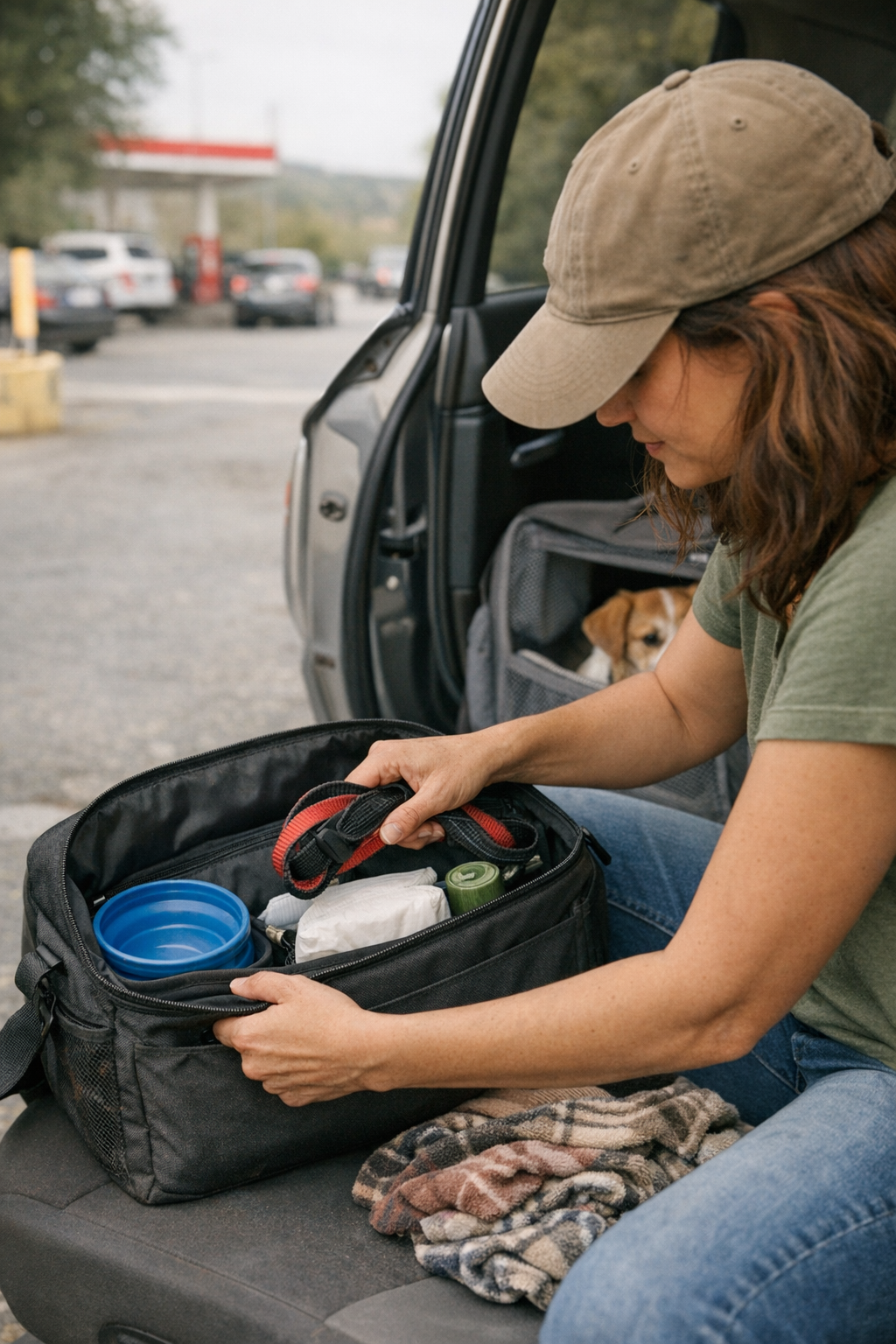
The difference between a pet-travel setup that looks organized and one that actually works is exposed within the first real stop. A bag can appear perfectly packed on your front seat—leashes coiled, wipes zipped, bowls nested. But as soon as you try to grab a leash while steadying a restless pet, what looked efficient unravels: you’re blocked by a mat covering the wipes, or the cleanup bags are now jammed under a comfort blanket. The gap isn’t just cosmetic. It’s minute-by-minute friction: slowed access, forced reshuffling, and a side glance from your pet who feels every delayed move. This is the everyday pressure PawGoTravel setups are built to answer, but too many travelers don’t recognize the real problem until it keeps repeating.
When Looks Mislead: The First Signs Your Setup Is Slowing You Down
Packing feels sharp—until you actually try to move. On your first stop, holding an eager pup with one hand, you realize your “easy access” pocket isn’t where you expect. Seconds stack up as you:
- Burrow through layers for a leash while your pet tries to lunge forward
- Discover wipes tucked behind two extra accessories—just far enough to interrupt quick cleanup
- Try to reach a bowl without scattering mats or repacking everything you just set up
The first snag—a zipper that hesitates or a pouch hiding under pet gear—signals trouble ahead. By stop three, your system is already tiring you out, with every new pause making it harder to regain rhythm.
Where Travel Organization Meets Real-World Friction
An organized bag at 8 a.m. proves little by 11. What’s stacked at the start rarely survives real travel’s fluid mess. As you shift gear in and out, each forced pause exposes the setup’s limits:
- Blocked quick access: The leash sits buried despite being “prepped” on top; reshuffling after each use always costs time.
- Overlapping zones: Your cleanup wipes disappear each time comfort items for your pet get rearranged mid-trip—it takes two steps to unearth them, not one.
- Restart friction: Every break brings a choice: do you leave essential items half-out for speed, or repack everything and risk the next search getting slower?
Your pet senses the stall. Each dig through the bag is a cue for tension or impatience. Quiet friction like this doesn’t create dramatic failures; it grinds away at your pace and focus, sometimes so subtly you miss the pattern until you’re already behind.
Not All “Secure” Designs Stay Convenient
Complicated organizers—full of compartments, stacked mesh, and zipper security—promise order but demand more from you every stop. A morning’s tidy system becomes:
- Loose items shifting out of their “assigned” space as you walk from lot to trail or corner to curb
- Bags or bowls getting lodged under comfort mats, making one-handed access nearly impossible with a barking dog in the other hand
- Order purchased at the expense of flow; after a handful of stops, “secure” feels like slow-motion undoing
Maybe the bag looks uncluttered, but cleanup now takes longer. What began as smart packing now asks you to think, sort, wait. Friction isn’t gone—it’s spread thinner, stuck in every repeated motion.
The Real Impact: Losing Flow, Not Just Time
You notice it fastest at checkpoints: what should be a routine grab stretches into a mini-puzzle. Is the leash in the side pocket, or under the treats? Did the quick-access zipper close all the way—now blocking the one thing you need? Instead of watching your pet or the next stop, your attention is anchored on the bag. Each cycle nudges focus away from the trip and toward minor annoyances. That small slip adds up, replacing calm travel with a sequence of tiny resets. Not a crisis, but a constant, low-grade drag you only feel stacking up over time.
A Common Scene: City Stop Friction Unpacked
Take a five-minute curb break. One hand juggles the leash, the other tries to grab a collapsible bowl. The bowl has slipped behind a folded blanket from the last stop. Meanwhile, wipes are half-stuck in a nabbed section, forcing another search. Each move risks tangling the leash or spilling a treat bag, all with your pet wriggling sidelong. These are not disasters; they are slow leaks of efficiency—and patience—that repeat at every public stop where pressure is already running high.
The Overlapping Challenge: Pet Needs and Owner Needs Tangle
Most travel setups quickly blur what’s “yours” and what’s “theirs.” Your water bottle tangled next to pet wipes; your hand sanitizer next to treats. Each repeated reach rearranges boundaries, with more overlap between pet and owner items. Nine stops in, this blurring turns every restart into a question: does reaching for wipes dump the treats, or brushing past your own item covers up what your pet needs next? The system isn’t broken, but it asks more memory and micro-adjustments at every cycle.
Looking “Ready” vs. Feeling Ready: The Functional Divide
A bag can look prepared but behave differently under real pressure. The real question: after multiple stops, does your system make each action faster, or does it create a new round of searching and repacking?
- Are your essentials—leash, bowl, wipes—hit-or-miss each time, or all actually in-hand within seconds?
- Does a soft bedding help your pet, but end up blocking what you need to reach in a rush?
- Is tidy organization turning into extra steps—reminding you to maintain order, or forcing quick-fix improvisation in a crunch?
Repeated use exposes the cracks: not a dramatic failure, but enough persistent snagging and resetting that the whole trip feels heavier than it should.
Finding What Actually Helps: Simple, Flexible Arrangements
The best practical shift: ditching rigid stacks for layouts that respond to actual travel use—three or more stops, with real pet handling between. Instead of forcing items through individual compartments, simplify. Keep the leash, bowl, wipes, and bag together at the top or one clear side. Zip just far enough to allow a clean, quick grab. Focus on easy return, not just show-off neatness at departure.
- Place core items where you can grab any with one hand, even while steadying your pet
- Allow a seat-side opening wide enough for instant access in either direction—no need to unroll or untangle first
- Use fewer, more adaptive segments—avoiding the stacked, deep layers that slow every re-entry
With this structure, you’re not “unpacking” at each stop—you’re using, resetting, and moving. Seconds saved compound with every break. And the absence of friction grows: your pet stays calmer, you reach less, clean up smoother, and the stops start to feel more routine than rehearsal.
What Shifts After Repeated Use: Real-World Momentum
By midday, a flexible setup is judged not by looks, but by silence—no fidgeting at pit stops, no awkward bag wrestling, just quick reach and smoother starts. Travelers report noticing what’s gone: the time spent rummaging, the buildup of tiny delays, the stress signal in their pet’s posture that used to flare up with every lost second. You haven’t packed less; you’ve just stopped fighting your own system.
The bottom line: Most travel friction creeps in as small, repeated stumbles—one blocked reach, one tangled item, one quiet pause. Fixing what slows you down isn’t about adding more structure, but about letting your essentials move as quickly as you need, without making every cycle a new obstacle course.