
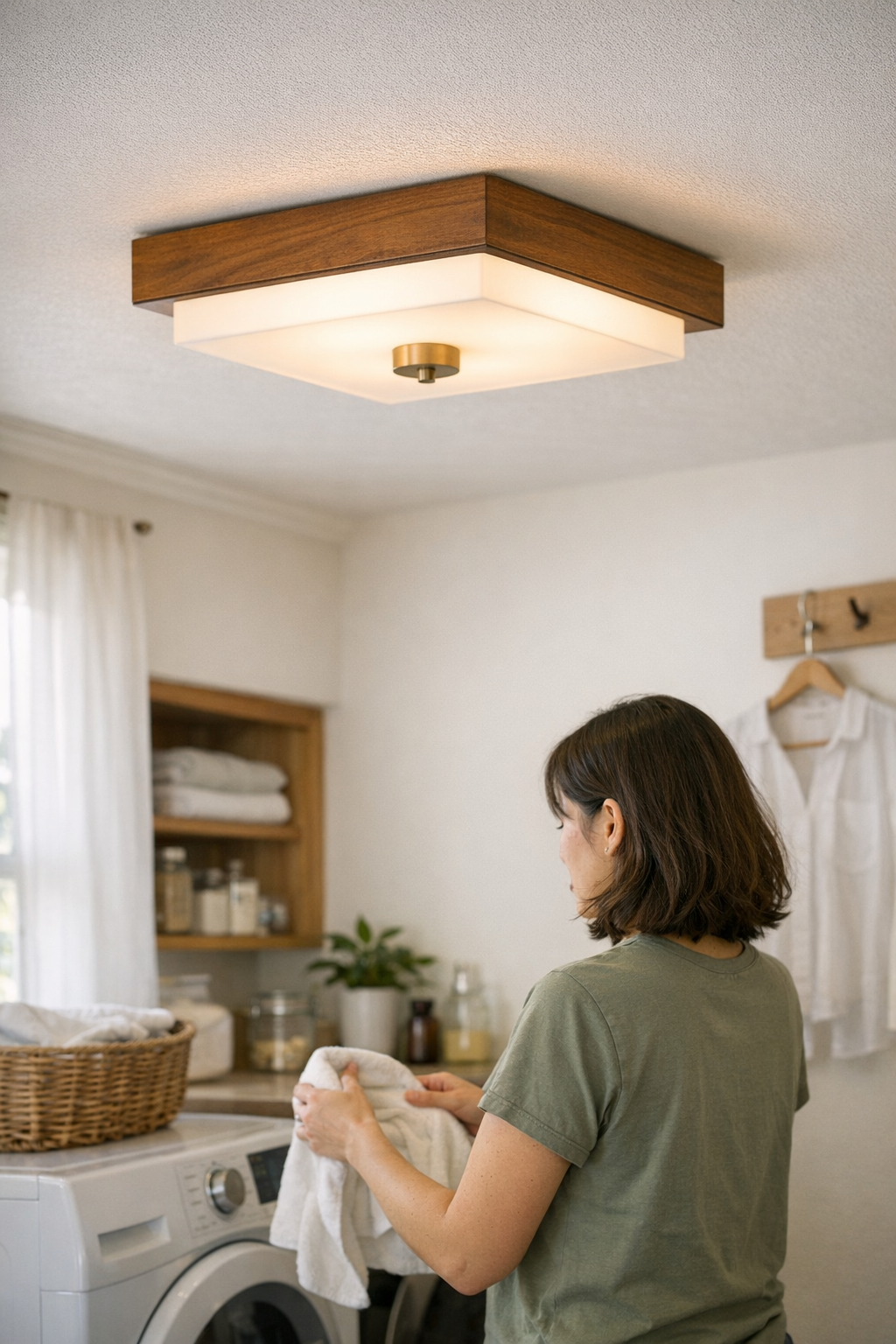
A bathroom mirror that looks bright in the morning can still leave your face half in shadow. A hallway lit with a new flush mount feels safer—until the glass buzzes every time someone slams a door, and dark edges creep toward the baseboards. The repeated discomfort isn’t about how a fixture looks or how new it is. It’s about the structure behind the glass: how well each part stays anchored during daily use, and whether that support is strong enough to keep glare, vibration, and awkward shadows from taking over the spaces you cross, work in, and depend on.
Where Fragile Lighting Reveals Its Flaws
On install day, even low-profile ceiling disks and clean-lined wall sconces seem solid. But fast-forward a few weeks and common weak points show up—especially in busy spaces. That smooth ceiling light over the laundry folds into cloudiness along the edge after two dryer cycles. A hallway fixture that sits still when installed starts to wobble when you shut a nearby door, making light flicker and corners go gray. One loose edge or thin, loosely clipped glass panel is all it takes for condensation to move inside in a steamy bathroom, dulling the surface and shifting the feel of the room from clean to unsettled.
That same fragility shows in ways you feel but don’t always see first—a stairway wall sconce that hums when you step past, drawing your eyes away from the tread, or a vanity light that gradually collects glints on one side of the mirror, forcing you to lean in to see your own face. Each is a sign not just of style decisions, but of support that fails in real life.
Routine Movement Turns Small Weaknesses Into Persistent Problems
Fixtures that only look rigid can make daily movement more uncertain. Repeated hallway crossings, hurried mornings flipping on a mirror light, or simply putting away towels in the laundry test each fixture’s tolerance for vibration and moisture. You notice it not in technical specs, but in living with it: Each door slam sends a rattle through the ceiling mount overhead, breaking up the light and filling side walls with shadows; the corner you count on to stay bright disappears into murky dimness. A hallway that seemed “done” now leaves you squinting to find the next step.
In the bathroom, condensation seeps along the edge of a vanity sconce, softening the seal, until suddenly the glass shifts at the touch—so the mirror is blinding at center, gloomy at the edge, and nothing you wipe off can fix it. Even in a dry corridor, a poorly anchored flush mount will start to vibrate at every upstairs stomp. The lesson comes through failure: an uneven room is more than a visual annoyance. It’s unpredictable to move through, and, over time, interrupts your rhythm.
Glare, Shadow, and Safety in Everyday Zones
Lighting quality isn’t simply measured in watts—it shows up in whether critical spots are actually usable, comfortably navigable, and free from sudden dark spots. The stair turn is the classic test: if a fixture tips or shifts, even slightly, the beam drifts and a shadow lands right where your foot should go. At the bathroom sink, glare collecting on one mirror edge makes normal washing or shaving unsteady, as you squint or shift positions to see straight. Countertops with under-cabinet lights anchored by a single wobbly point end up with bands of light and missed patches, leaving small tasks harder than they need to be.
When glare cuts into a hallway path, or shadow chokes off a stair’s turning point, the space feels less ready—even if it “looks bright” on first glance.
The Real Difference: How Fixtures Support Their Glass
The gap between lighting that quietly outlasts daily chaos and lighting that becomes a source of frustration lies in the support structure. Not finish, not style—anchoring. A flush mount or panel with true glass-to-body locks, tight gaskets, and a sealed perimeter doesn’t just resist a week’s worth of bumps. It distributes light with less interruption, shrugs off vibration, and fends off the fog and dust that creep into loose seams. Look for:
- Gasketed or truly sealed glass: Keeps laundry and bath fixtures clear of condensation, preventing that creeping cloud at the edge.
- Secondary locks or body anchors: Block the buzz and rattle from everyday foot traffic or slamming doors, keeping light even and silent over time.
- Glass secured against shifting: Defends against abrupt shadow lines and edge pooling in stairways or task corners—small differences that alter safety and comfort.
By contrast, fixtures that rely on thin clips or lightly attached glass won’t hold their place. Weak sealing means dust (and moisture) sneaks in. Stress points magnify each step, door slam, or cabinet close, and the lighting you trusted to brighten a space starts to highlight its own instability—harsh lines streak across the ceiling, corners dim, every tap is an echo of a job half done.
Small Upgrades, Noticeable Gains in Everyday Use
Evaluating a fixture’s real quality means living with it—over weeks, not just the first unboxing. Swapping out a flimsy ceiling mount for a sealed, double-locked flush mount in the laundry killed the telltale fog and let lint and lost socks stay obvious at a glance. Upgrading a loose hallway fixture to a properly secured, thick-glass design stopped the persistent rattle and evened out the corners instantly. The stair landing didn’t just look brighter—it moved from unreliable to confidently navigable because the light’s center actually stayed where it belonged, no matter who ran up or down in the morning rush.
Most of these changes don’t earn compliments, but you notice them every time nothing distracts you, nothing needs a second glance, nothing forces you to squint or tiptoe. Instead of adapting to lighting quirks, your space finally adapts to you.
Field-Tested Tips for Avoiding Repeat Lighting Frustrations
- Check fixture movement after install: Even a gentle tap shouldn’t shift the glass or send tremors through the frame. Movement means trouble—address support before finishing.
- Scan for shadow and glare: Walk your route at dusk or with night lighting. Note any dimming in corners, shadow lines on stairs, or mirror edges that glare.
- Observe moisture patterns: After the first week of use in bathrooms or laundry spaces, look for any signs of internal fog or condensation. A properly sealed fixture should stay clear.
Lighting That Fits Repeated, Real-Life Use
Stair landings, bathroom mirrors, hallway turns, and utility work zones all push lighting structure in ways that product descriptions miss. Selecting fixtures with real, secure glass support isn’t a technicality—it’s what decides whether movement feels safe, tasks remain visible, and comfort holds up after daily routine resets. The best setups aren’t just bright at install—they stay steady, silent, and balanced, no matter how many times you swing a door, reach for a switch, or walk a familiar path.
Find indoor lighting that fits the way you actually use your space at LightHelper.