
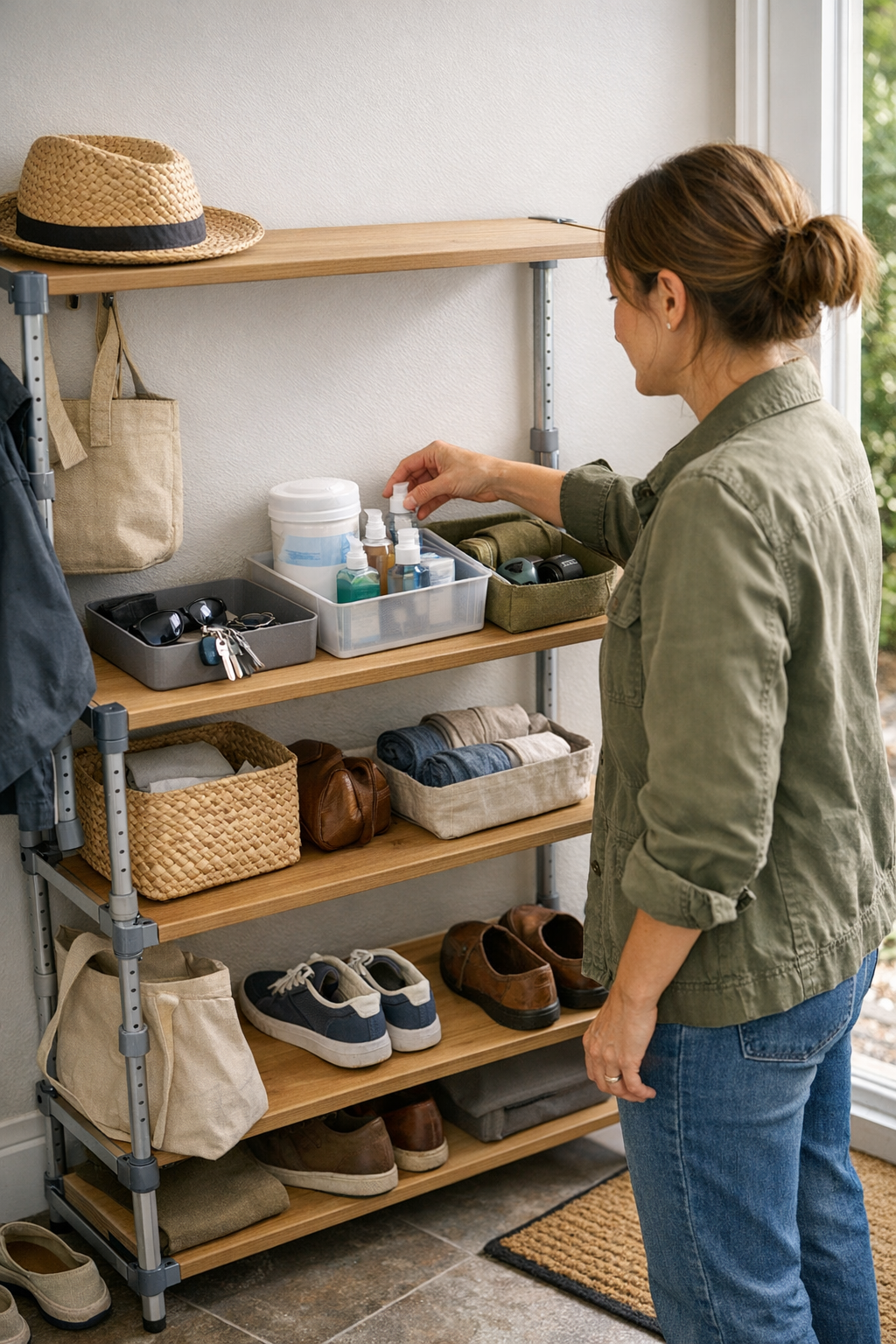
The instant you realize there are no keys, wipes, or pet bags at the door isn’t a forgettable slip—it’s the kind of disruption that can unravel the whole rhythm of leaving or coming home. If the entry zone fails to flag what’s missing, hassles pile up fast: you’re fishing under benches, rummaging through tote bags, or losing another precious minute at the threshold while someone else waits. A missing refill shelf isn’t just an inconvenience. It exposes how quickly even an “organized” space starts tripping you up under real, repeated use.
The Real Friction at the Threshold
Most entryways break down where routines collide. Bags get dropped just inside the door, shoes form a moving blockade, and a utility bench—supposed to streamline exits—becomes a catch-all for stray jackets, delivery packages, and anything “urgent” enough to skip being put away. Order lasts until the second rush hour or rainy day. Shoes spread sideways, mail starts stacking at the wall, and the entire threshold zone narrows: not because there isn’t enough room, but because every reset demands a sweep and sort that never sticks. Movement jams up. The baseline control you had yesterday dissolves with one late morning.
The true gaps appear in the high-turnover basics, not the deep storage: missing keys, half-used sanitizer, vanishing wipes or empty pet bag rolls. These don’t matter—until you’re sprinting for the door and they’re gone. The crisis isn’t in the setup; it’s in the stumble it causes when you’re already late, and the system is too buried, too cluttered, or too hidden to notice what’s running out before it hurts.
The Difference an Exposed Refill Shelf Makes
A refill shelf isn’t just minimalist décor or a mini supply line—it’s a daily checkpoint wired into the main flow. Place it in plain sight, near the main bench or right by the door: every pass becomes a built-in status scan. When the wipes are down to the last sheet or the pet bags are missing, the gap is obvious before it matters. There’s no separate tracking routine. The shelf’s visibility does the work, and shortages show up days earlier than with closed bins or buried cubbies.
Here’s what breaks down with the “hidden” setup: Stashing basics in deep cabinets might look neat, but it clouds what actually needs attention. Shortages sneak in because the deficit is hidden—by the time you notice, you’re blocking the exit, disrupting the next person’s path, or backtracking for a missing item. That “clean” look caves under real pressure; it trades surface order for routine breakdowns you only see at the worst moments.
Everyday Setbacks: How Small Misses Add Up
The limits of a closed or cluttered refill system turn up in the repeated scenes: you drop your shoulder bag, and the slim walkway is instantly a traffic jam. You try to file reusable bags into a shelf that’s already crammed with last week’s mail or winter gloves. You open the door and only then realize, again, that the pet bags are out. Multiply this across a shared space—kids coming in, roommates rotating schedules, frequent visitors layering new clutter—and the breakdowns multiply.
When the refill shelf stays in the main sightline, every missing or overflow item gets caught before it blocks movement or builds into a mess. If overflow starts—extra keys, umbrellas, random gadgets—the misplaced stuff isn’t hidden. It interrupts. That’s the built-in self-reset. You deal with small problems as soon as they appear, and the threshold stays functional. No more sprinting back for missing keys; missed refills don’t become full-blown disruptions.
Location Is Everything: Making the Shelf Work
A refill shelf behind a closet door or tucked out of the main pathway is mostly decorative—its status fades into the background noise. For it to help, it has to compete for attention along the route people actually take: mounted above the bench, by the main bag-drop, close enough that no one misses it in a rush. If you have to step out of the regular flow to check it, you won’t. And once it’s out of sight, it starts failing silently. Hidden storage doesn’t remove pressure—it just delays the consequences.
Visibility means survival for high-use supplies. The best-positioned shelf turns every entry or exit into a split-second scan: keys there, wipes there, gap there—done. Systems that try for perfect neatness or hide essentials for aesthetics can’t keep up. If you don’t notice the missing item until you need it, location cost you the function.
How Refill Shelves Shape the Reset Routine
With bins or cubbies, resets become an event, demanding memory and extra steps. With an open refill shelf, the reset is frictionless: you see the shortfall mid-movement, and the fix is obvious before you have to think about it. A half-empty tub of wipes can’t hide; missing keys are a blank space, not a scavenger hunt. Daily surges—construction dust, wet umbrellas, visiting pets—are flagged as they pile up, not after the zone gets blocked. The reset shifts from periodic to continuous. That’s not more work—it’s less drama, less time spent finding or refilling basics under pressure.
Even better, a consistent placement reclaims the path: kids, guests, or roommates can all see what goes where, and everyone helps maintain the signal. If the refill’s been skipped, the visual gap nags until you fix it. Overflow—receipts, rogue gadgets, mystery toys—gets cleared because there’s no hiding spot for “later.” Instead, the essentials fight back against clutter creep automatically.
Controlling Clutter and Overflow: Simple, Repeatable Steps
The refill shelf puts limits back in play by design. Shallow trays show the difference between daily-use and just-in-case instantly. When someone tries to expand into overflow—adding a magazine, stashing a cord—the category lines spill into plain view. That’s the cue for a fast reset, not a growing mess. The shelf self-corrects, and corrections happen right in the course of passing through, not as project cleanups.
The smallest tweak that compounds: Build a status check into an action you already take—a weekly bin pass, or a reset as you come in on Sunday and change shoes. That two-minute scan avoids whole weeks of threshold frustration. Over time, the cost of letting overflow creep in is lower than the payoff of resetting it, so the habit sticks.
Why Not Every “Neat” Solution Actually Works
Closed bins and matching baskets are tempting—they look controlled in a photo and offer the illusion of permanent fix. But routines expose what the catalog doesn’t show: a lid or door means you don’t see the deficit building until it’s urgent. Over time, what’s hidden is lost, and you keep rediscovering the same holes: an empty hook, misplaced keys, missing dog bags. The contrast isn’t visual—it’s functional: a setup that surfaces shortages keeps up with routines, while a “tidy” one that hides them triggers last-minute resets and wasted motion. What looks neat at first unravels fastest when you actually live with it.
Real Results After a Week in Use
Switch an underused cubby or too-deep shelf for a refill shelf just above the bench, and the feedback loop is instant. Shoes and bags still roam, quick drops still happen, but nothing blocks the grab-and-go for essentials. Every exit becomes a micro-reset—grab, glance, move—without stalling out. Entry path stays clear, even when weather shifts, guests arrive, or routines get chaotic. Daily pressure on the threshold falls, because the stress doesn’t accumulate out of sight. It gets flagged and sorted before it clogs up the flow.
It’s not about having the fewest items or the prettiest shelf—it’s about whether your entry setup cooperates with the way people actually use it, again and again. The best refill shelves are rarely Instagram-neat, but they are always in the line of fire and always functional—helping everyone who passes through avoid those avoidable stumbles that turn small gaps into bigger headaches. When routine resets happen before you need them, the whole space moves with you, not against you.