
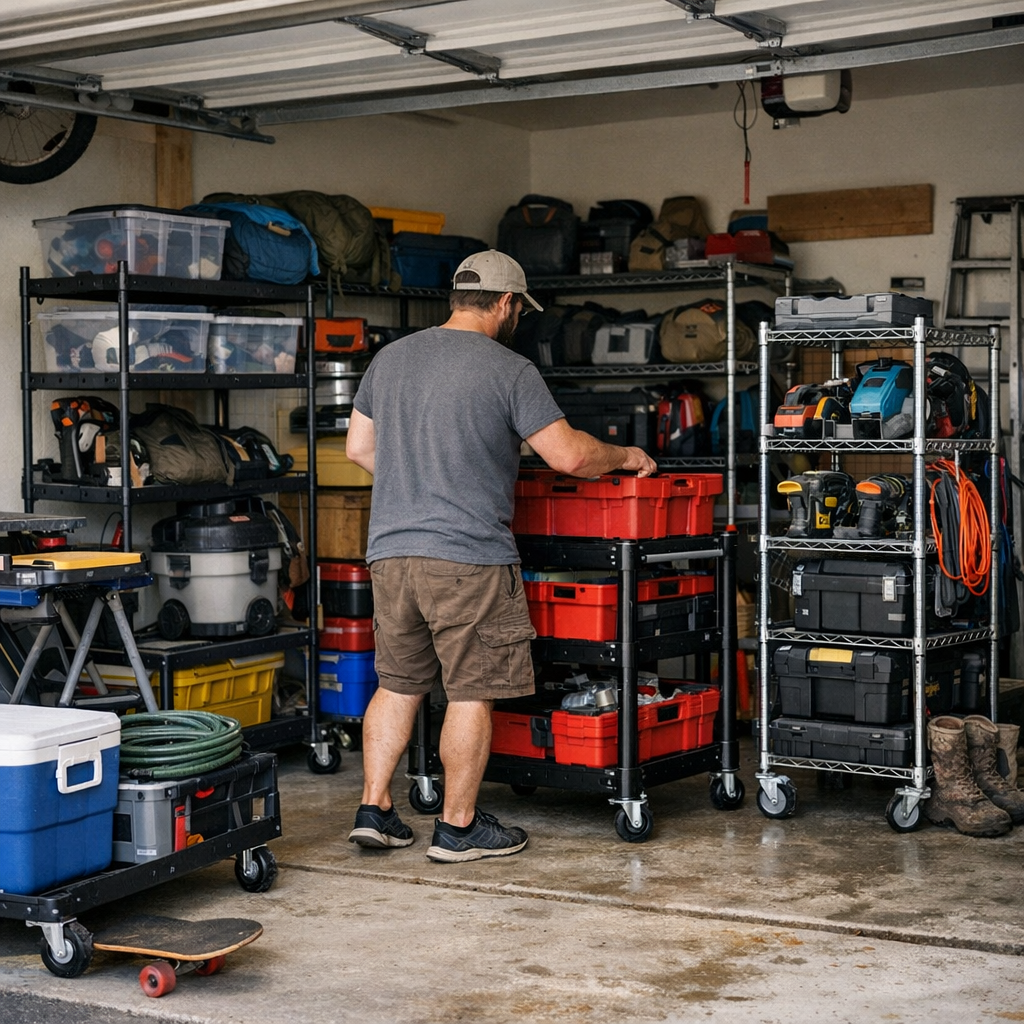
You walk out to the garage in the morning, expecting order—and run straight into confusion you didn’t create. That socket set you hung up? Gone from its usual spot, swapped or misplaced by someone else. The rolling chest isn’t where you left it. A storage rack blocks your stride, and the clean lines you carved out last weekend have dissolved into a sprawl of tools and clashing priorities. In a shared space, every neat arrangement is a brief reprieve before the next round of tools go missing, bins migrate, and structure slips. What starts organized by intention turns unpredictable overnight.
Everyday Friction: Where Disorder Invades Your Setup
It’s the daily grind—not the urgent project or sudden overhaul—that wears down even the best efforts at organization. One person leaves boots wedged under the storage cart. Someone else parks a rolling rack right up against the car door, so what used to be a straight shot for your drill now means zig-zagging around bins. Trying to start a simple repair? You’re digging for a hand saw that was definitely there last night, except now it’s been borrowed for yard work and stashed behind sacks of soil.
This slow build-up of friction is stealthy. If mobility and modularity weren’t part of your system from the beginning, routine misplacement and awkward barriers become normal. No two family members move carts or replace bins the same way, so a wall of minor breakdowns—blocked shelves, mystery piles, stuck wheels—grows before anyone notices. Improv fixes become routine, but the friction just moves down the line.
The Reality of Sharing: Systems That Shift under Pressure
Perfect symmetry dies the first time real projects collide in the space. You can line up every wall bin and drawer, but all it takes is one urgent repair or quick potting session for carefully planned order to unravel. Someone clears off half a shelving unit for an impromptu project, or moves trays to “just get them out of the way,” and suddenly, by lunch, your workshop feels like a patchwork—improvised, not maintained.
That’s not failing at organization. It’s what happens when your storage isn’t set up for moving targets, especially if modular pieces are missing or fixed fixtures dominate. When a rolling cart jams on gravel, or a chest becomes an immovable anchor because it’s packed with heavy stuff on one side, the frustration shows up in time lost—awkward shoves, side-steps, and the mental tally of where things should have gone. At these moments, you’re forced to choose: do you stop and reorganize or just patch things and limp through another day?
The Morning Shuffle: Metal Scrapes, Tools Gone Missing
The daily soundtrack of a shared garage isn’t silence—it’s drawers thudding, rolling racks squeaking, and the low-level hunt for missing tools. You open a chest, hoping to spot your pliers, but someone’s stashed pruners, boots, or a fishing reel in the same drawer. The domino effect starts: one out-of-place tote blocks three others. Suddenly, you’re improvising your way around today’s mess instead of working in sync with your space.
Organization That Fails When You Need It Most
The true test of storage isn’t picture-perfect shelves; it’s whether you actually can reach and move what you need when it matters. That means: three people grabbing drill bits at once, a flurry of borrowed clamps, last week’s logical lineup suddenly making zero sense. When pegboards rattle, trays are snatched back and forth between benches, and containers refuse to roll into better light, disorder doesn’t just come from clutter—it’s from a system that can’t adapt on demand.
The Invisible Blockages That Just Wear You Down
Many small obstacles hide in plain sight. A mobile rack stuck behind the bikes, forgotten until you finally need it. A chest wedged because the floor heaves just enough to jam a wheel. These aren’t dramatic failures—they’re background irritations that steal minutes until the workaround itself becomes a regular part of your routine. In most real workspaces, “organized” is a moving target, not a trophy shot for social media.
The result? There’s rarely a finish line—just a cycle of partial resets, shifting frustrations, and new workarounds as the space evolves.
Weather Hits Hard: When Organization Gets Tested
Nothing exposes the limits of your setup like a sudden thunderstorm or a muddy day. Moisture seeps under the garage door and wall hooks trap grit as easily as tools. If your shelves or racks can’t move out of the way—or don’t survive a hasty relocation—organization breaks down fast. Neatly labeled bins aren’t much comfort when you watch fertilizer topple off a crooked cart or fumble for dry gloves as rain closes in. The only pieces still working are often the mobile racks or caddies: quick to grab, easy to shelter, and still accessible when everything else is getting soaked or blocked.
Real use brings wear. Shelves sag, brackets loosen, panels creak loose. By dusk, you know exactly which elements help you react—and which make life harder. The resilient stuff stays functional even when the weather’s winning; the rigid, overloaded, or static setups demand repairs or a rethink.
Tip: Build Weather Logic into Your Stacking Routine
Stack dense, heavy supplies on the lowest shelves of rolling racks. Keep grab-and-go tools and the things you move most frequently at the top. That one adjustment dramatically improves balance during those mad dashes to get gear in—or out—before the storm or mud hits. You’ll feel it most when the forecast is at its worst.
The Relentless Cleanup Loop
Even on those rare, almost-tidy days, cleanup is a reality check. Before you can even start, you may need to scoot three carts aside to pull in the car, or shove a gargantuan rack just to wipe up a spill. Chests get stuck where the pavement dips. By the end of the day, “putting everything back” means wrestling with the leftovers of everyone’s use patterns: half-emptied bins, tool trays balancing on top of boxes of compost, that one cart always pushing the mower an inch too far left.
No matter how disciplined your system, every shared garage or workshop breeds its own brand of chaos by the time the sun sets. Organization—real, working organization—only shows up in your willingness to adapt, shuffle, and reset daily. The zip ties wander, the compost bin blocks your path, and any static setup will struggle to keep pace with the churn.
Why “Fixed” Organization Always Unravels
The lineup that looked perfect on Saturday afternoon barely survives a Friday full of shared projects, muddy boots, or seasonal equipment swaps. Change comes hour by hour: if you clear one obstacle, another springs up, usually in the one place you forgot to leave breathing room. Mobility, not just order, keeps the space liveable.
Rolling racks and modular shelves buy you crucial flexibility. They shoulder the load—bags of soil, bins of paint, armfuls of tangled hoses—but can still be nudged or rerouted when you need to reclaim square footage. The key: don’t overload them, and always leave the wheels free. Otherwise, you’re right back where you started, wrestling a jammed-up cart while everything else waits on your next move.
A Quick Maintenance Habit That Pays Off
After a big cleanup, a weekend project, or just when the garage “feels off,” give your mobile storage a sixty-second check. Wheels, corners, handles—loosen, tighten, and rebalance before it’s too late. It feels like an extra step, but it’ll save you fifteen minutes (and a whole lot of frustration) in your next round of setup and teardown.
Progress Over Perfection: What Real Organization Looks Like
There’s no version of a workshop, garage, or garden zone that stays camera-ready or locked in place. Tools go walkabout, bins scatter, racks become workbenches for the hour. The goal isn’t static neatness—it’s to keep your setup resilient and responsive. That’s why modular, mobile, and clearly containerized storage always wins in the end. It gives you the leverage to clear a path, control the spread, and cut actual friction without stopping every time priorities clash.
Week after week, you’ll see the evidence: bins that won’t stay put, racks that demand a new slot, shelves shouting for a re-stack, carts rattling after a hard day. The best system doesn’t promise to banish chaos. It simply gives you the upper hand—enough structure to keep moving, and enough flexibility to recover after the next wave of disarray.
See how purpose-built storage can support real, unpredictable workspaces at StackNest.