
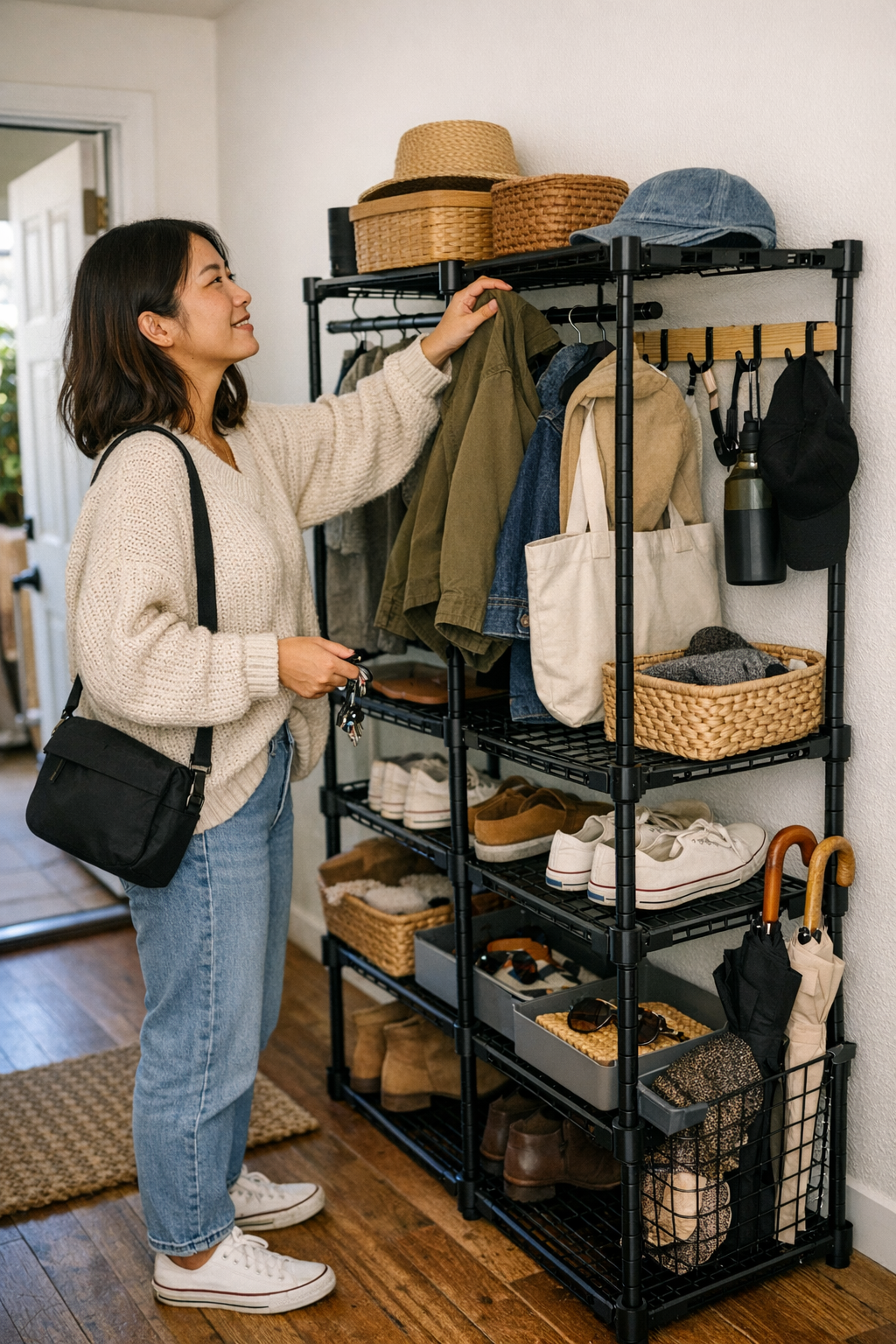
The truth about an entryway isn’t found in a catalog photo—it’s in the headaches you face every time you cross it. That first three feet inside the door isn’t just a landing strip. It’s a collision zone: boots pile up, someone’s bag swings onto a hook, the mail slips somewhere—always. Yet for all our baskets, hooks, and built-ins, most of us ignore the one thing that shapes every entry and exit: the light. Lighting is what decides if a quick grab-and-go turns into a hunt, if “order” dissolves into clutter, and if you can spot the shoes you need before the dog slips out the cracked door.
Entryway Lighting: Where It Always Goes Wrong
This isn’t just about brightness. It’s about how uneven, awkward, or outright wrong lighting turns your entry into a stress test, not a transition. Walk in after sunset and you’re instantly up against it: a sallow ceiling bulb throws a puddle of weak yellow, the far wall sits half in shadow, and the spot you drop your keys is somehow always hidden behind glare. One section is too dim to see inside a cubby. The other is lit so harshly that polished hooks send mini-blind reflections right into your eyes.
Picture this: Early morning, the house mostly dark, you’re one eye half open and fumbling for a leash or lunch kit. Even if you remember where you set things yesterday, the mix of shadows, bright spots, and hidden corners slows you down. You squint at scattered mail, scan half-seen basket tops, and fumble through routines that should be muscle memory. In the worst moments—running late, searching for a missing glove—you can feel the wasted seconds pile up. The lighting didn’t just fail to help. It made things harder.
How “More Storage” Gets Sabotaged by Bad Light
There’s a reason so many organized entryways still hide lost hats, missing letters, and single socks. Deep bins, tall cabinets, and high shelves sound like solutions—until they turn dark at the back, or vanish into gloom after dusk. You open the closet, find a jumble of shadows, and start fishing by touch for gym passes or mittens you swear were right there this morning. The more ambitious your storage, the more irritating the mystery when lighting doesn’t keep up.
If you can’t truly see it, you can’t keep it moving. That’s the shift: When corners go dark, routines break down. Storage meant to streamline the rush instead becomes a zone for stray stuff—keys slid into blind spots, hats toppled beside baskets, shoes lost just out of reach and invisible until you’re in a hurry. Every blockage adds annoyance: that slow-building sense that you’re not just chasing clutter, but hunting for things swallowed by dark or glare, while the clock and your patience run shorter with each pass through the door.
The Turnaround: From “Okay Light” to “Everything Visible”
Eventually, the friction becomes obvious enough you have to act. Swapping light bulbs is tempting but rarely enough. What changes the entryway isn’t just more light—it’s putting brightness right where your hands, eyes, and routines actually land. In our house, two tweaks changed everything. First: Out with the tired old ceiling globe that cast an odd, weak spotlight. We replaced it with a flat, modern flush mount that brought gentle, even light to every angle, right down to the floor. Second: A small, hardwired sconce, aimed over the hooks—so keys, backpacks, and dog leashes aren’t in a dead zone, even before sunrise.
Now, you can see what you’re grabbing before you reach for it. The once-shadowed bin beside the door looks more like a place for shoes and less like a black hole for last season’s flip-flops. When the dog’s circling and time’s tight, there’s no blind rummaging—just a quick scan and out. Not perfection, but functional improvement, visible in real time.
Everyday Habits, Actually Supported
It didn’t make us instantly tidy. Weekend storms still produce a moat of muddy boots around the bench. Gloves migrate. Junk mail piles up. But when routines slide, the fix is easier—a glance reveals the overflow, bins don’t hide things, and finding a missing scarf means seeing it instead of guessing. The old “where did it go?” gets traded for “there it is”—enough of a change that the entry fights you less and helps you more, even on the worst days.
Entry Lighting Tweaks That Actually Change How You Live
- Bathe the path in diffuse, overhead light. Try a flush or semi-flush ceiling mount: no weird halos, no harsh side-shadows. Especially vital for narrow or shallow entries where a single glare spot can dominate the zone.
- Put task lighting right by your “grab-and-go” points. A wall sconce above hooks, a targeted fixture by the shoe bench—anything that turns blind rummaging into quick, direct action at all hours, not just midday.
- Go for multiple light layers if possible. Overhead for the big view; targeted for the exact place hands and eyes meet baskets, bags, or mail. The aim: nothing important lost in a gap between two beams.
- Choose gentle, warm-white bulbs. Stay away from icy-cold blue tones that jar you awake or make the space feel clinical. Around 3000K is a sweet spot for friendly, approachable visibility that works—and feels welcoming—morning or night.
One Little Habit: Keep the Night Honest
If the piles, packs, and papers tend to grow after dinner, leave a low-watt sconce or nightlight on through the evening. With the entry softly illuminated, those leftover shoes and odd bits of mail are that much harder to ignore. Searching before bed stops being a flashlight mission, and mornings start with fewer mysteries—and less rushing.
Wrap-Up: When You See More, You Struggle Less
No entryway is ever free of the small chaos of daily life. Some shoes will always wander, bags will shift, mail will slip away. The difference is what lighting allows in real life: searching less, finding more, moving in and out without bottlenecking at the threshold. With light that serves the way you actually use your space, the whole entry softens. Not flawless, but functionally transformed: a crossing, not a choke point, and a place that gives, rather than takes, a little more time on your side.