
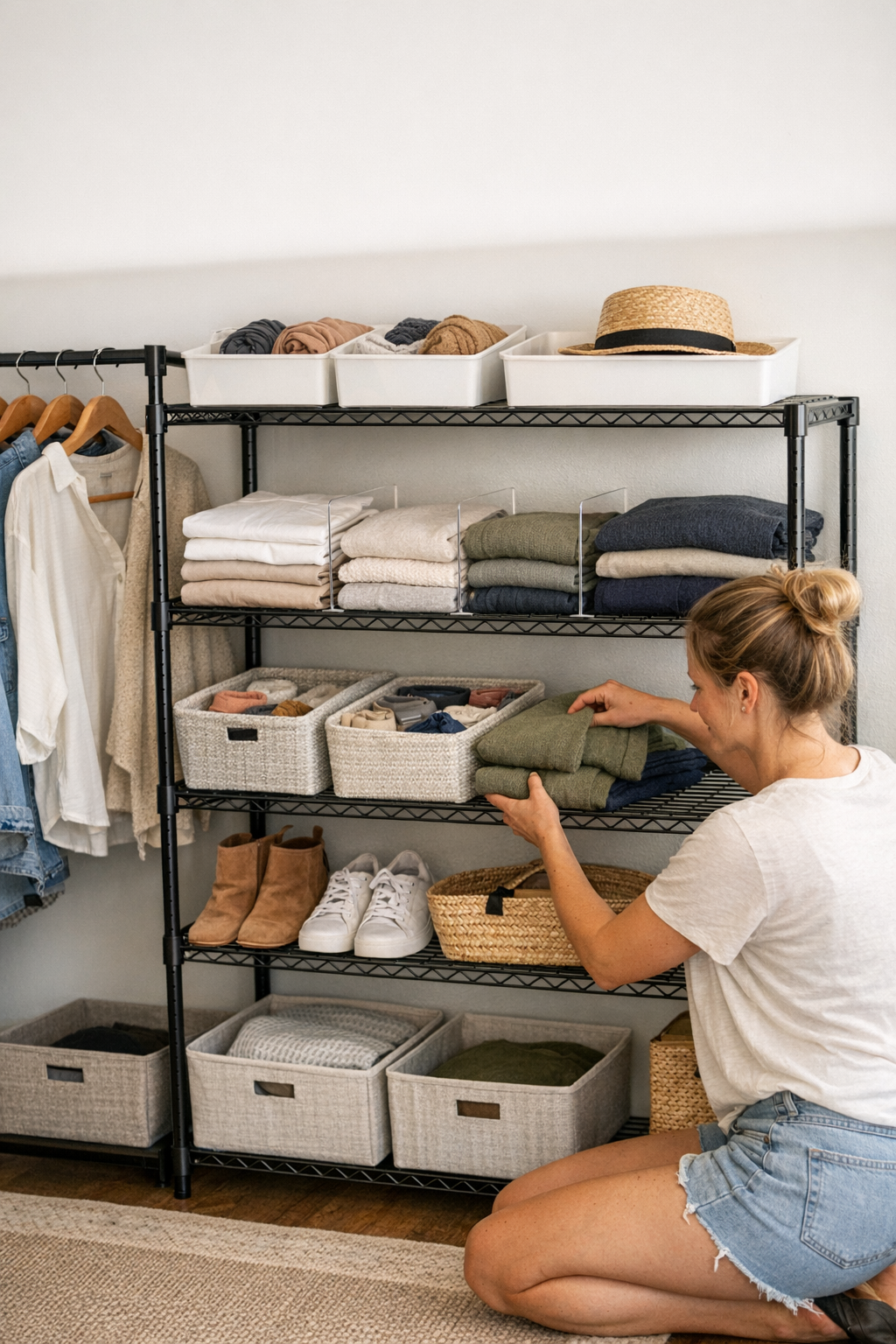
Most closets start organized, but real routines put every setup to the test. After a week, “neat” turns into shuffling past overloaded stacks, digging through foggy bins, or watching piles slump and blend together until you’re right back in the muddle you tried to avoid. That quick morning grab for a favorite tee? Now it means disturbing three other items just to reach it. When the fix for one small frustration ripples through the rest of your space, the difference between a photo-ready closet and one that actually works becomes impossible to ignore.
The Compound Effect of Everyday Storage Choices
Choosing between a new bin or shelf divider seems trivial—until everyday use exposes the flaw. Three shirts neatly stacked on Monday quickly become a slouching, lopsided blend by Thursday. What started as clear rows slip sideways, merge, and force you to rebuild the whole stack just for one item. And once you add that fifth sweater or a new gym top, the boundaries vanish entirely.
Each grab, each return, creates a ripple. The more you interact with your space, the faster weak systems reveal themselves: time spent straightening, guessing where something moved, or re-establishing “zones” that looked obvious before. Instead of a five-second pick-and-go, you’re mired in micro-adjustments that crawl into every morning routine.
How Clutter Slowly Spreads—And Drags You Into It
The small signs don’t take long to surface:
- Shelves packed edge-to-edge by midweek, turning “visible storage” into a solid wall
- Stacks drooping, folding over onto neighbors, or spilling just enough to erase any sense of order
- Bins that started as category allies morph into black holes—socks vanishing under scarves, accessories slipping out of sight
- Sliding one item out triggers a domino effect: three things shift, two items get buried, nothing feels easy anymore
These aren’t just cosmetic annoyances. Each slip or merger adds friction, slows you down, and chips away at the idea that “organized” means effortless. Instead, every minor retrieval becomes a decision point—or a little sigh—about how much clutter you can ignore for another day.
What Actually Keeps Your Closet Calm
Closet systems that work in real life aren’t defined by how many racks or bins you squeeze in. They’re about stopping the spread, keeping lines visible, and ensuring every category has a fighting chance of staying put. Shallow, open bins prevent items from layering out of sight. Mid-shelf dividers nip pile drift before it starts. If categories start invading each other, your setup needs an edit.
More hanging space isn’t always helpful if it forces tight reaches or stacks clothing too closely. The true upgrade is clarity—visible divisions, just enough structure—so each retrieval isn’t a balancing act or a hunt. Systems that are easy to reset in 30 seconds are the ones that actually survive a full week’s activity.
Instagram Closets vs. Midweek Reality
Perfectly staged closet photos look crisp only on day one. Tall bins and double-stacked rods might work until you actually need something from the bottom—or until stacks wobble and turn the “shirts” section into a crash site for mismatched gym gear. By Wednesday, carefully sorted areas blend together, and the act of keeping up starts to feel like another chore.
The only test that matters: will you find things where you expect, without first rebuilding the shelf? If every row, bin, or section keeps its shape, your weekday rhythm flows. If not, even a small addition or quick grab leads to clutter that sticks around much longer.
Real Mornings, Real Obstacles
Imagine your normal routine:
- Pulling out a shirt from the middle of a pile—then spending two minutes half-folding the rest just so the stack doesn’t topple
- Hunting for a scarf that’s now MIA inside a bin mixed up with hats, gloves, and yesterday’s loose belt
- Watching carefully sorted shirts start to tip, edge closer, and finally blend into a single, unruly heap by the end of the week
- Each quick move leaves the shelf just a bit messier, until resets feel inevitable and exhausting
When you need both hands for what should be a one-hand pull, or you hesitate to return something because it might set off a collapse, the system has become another small obstacle—one that builds stress with every round.
The Power of Clear Visibility and Smooth Reach
It wasn’t a major overhaul that fixed my own closet, just targeted changes that smoothed the pain points:
- Shallow, open trays took the place of oversized, sagging bins. Now I see everything at a glance—nothing gets buried, nothing forgotten.
- Eye-level dividers stopped rows from blending. A gentle boundary, easy to adjust, that keeps shirts from sliding into jeans or workout gear territory.
- Lowering stack height added a feedback loop. When a pile started to grow, the visual cue was immediate—time for a quick reset before the chaos even started.
With less stacking and more surface visibility, retrievals became frictionless. Returns stopped feeling like a gamble. Most telling: I didn’t have to “get organized” again a week later.
Is It Time for a System Reset?
If you’re sliding aside piles, untangling mixed categories, or regularly forgetting what’s at the back, your setup isn’t working with you. Long reset times, frequent straightening, and lost items are the system’s way of signaling it’s out of sync with real habits. Deep bins and broad, open shelves create hiding spots and encourage lazy piling—if you haven’t seen an item in weeks, it’s buried for a reason.
The simplest correction is often the most powerful: insert shelf dividers or swap out deep bins for lower, shallower trays. The immediate visibility boost makes new messes—and missing items—impossible to ignore. Small, obvious cues let you act before clutter takes over.
A Closet That Works for the Week—Not Just the Weekend
The real value of organizing is measured in weekday flow, not the afterglow of a big cleanup. A good setup answers to the real demands: grab, go, replace, repeat—without slowdowns or silent sprawl.
The right tweaks—bin height, divider spacing, and visibility—reduce the need for full resets. When you can see what’s there and put things back in a split second, order holds without effort. Instead of battling your closet, you use it—and move on, knowing it’ll hold steady until you’re ready for the next round.
Shop storage solutions that are designed to handle real-life routines at ClosetWorks.