Blog

  • How Unscented Cleaners Transform Cat Litter Box Habits Over Time

    A room can look spotless—litter raked flat, bowls set perfectly, mats realigned—yet the cat hesitates at the edge, circling instead of using the box, or pausing at the food without eating. The problem isn’t what you see, but what lingers: a chemical scent or residue from the last wipe-down. Everything seems in place, but some cleaning products quietly sabotage the routine, creating hidden obstacles you only notice as the day stretches on—a little more resistance, a new mess nearby, and an endless cycle of re-cleaning.

    When “Clean” Becomes a Quiet Problem in Cat Spaces

    A feeding station or litter zone may look newly reset—a surface that gleams, no visible debris, nothing out of line. In real life, the trouble rarely shows in the immediate aftermath; it creeps in as low-level friction hours or days later. Not the big messes, but the nagging, repeated problems:

    • Food suddenly scattered along the mat’s edge after every meal, even if you centered the bowl.
    • Litter tracking increases, forming arcs at the threshold right where shoes catch stray grains heading down the hall.
    • The cat investigates, hesitates, then leaves a “near miss” just outside the box—something you only discover late in the day.

    At first glance, these are almost invisible. Over a week, though, the pattern grows obvious: the more you clean, the less the area holds up. Routines slow, the cat avoids what’s “fresh,” and you’re repeating resets you thought were solved.

    The Hidden Cycle: Scent, Hesitation, and Cleanup That Won’t Stick

    Most commercial cleaning sprays promise lasting freshness, but what clears your nose can create sensory landmines for a cat. That lemon or pine you barely register can signal “don’t step here” for hours. Visible disorder you can correct instantly; invisible residue disrupts the routine in slow motion:

    • First reset: everything looks fine. The new scent is almost interesting to the cat.
    • By the next rounds, the cat circles or sniffs for longer, then seeks alternate spots—either skipping the box or pushing food to the far side of the mat.
    • Litter starts turning up outside the setup, sometimes in shared rooms or on the edges of the rug, because the threshold feels wrong.
    • You find yourself wiping down mats and retesting bowls between uses, chasing after small headaches that didn’t exist two weeks ago.

    The space remains visually clean but demands more attention. Every reset adds another interruption, and the sense of “settled” never lasts to the next cycle.

    Real Home Example: The Wipe-Down Trap

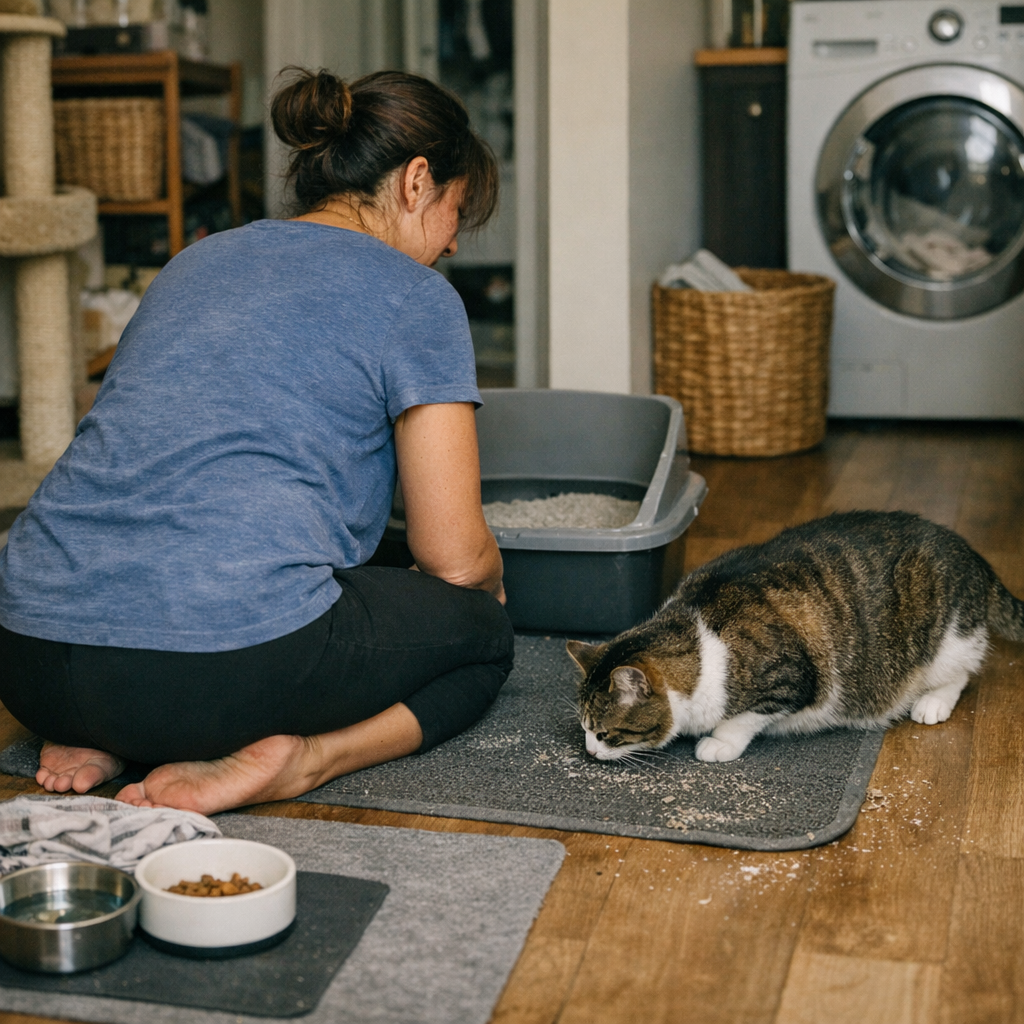
    Picture the cycle: you clean the box, spray a strong citrus solution, dry and reassemble. The room looks ideal—but then the cat starts using other corners, or a trail of litter appears near the washing machine. Instead of being done, you’re stuck tracking down new messes caused by the last “reset.”

    In tight spaces—a narrow bathroom, a mudroom without airflow, or a high-traffic laundry corner—the cleaning scent doesn’t clear. It stirs with each pass, mixes with room odor, and keeps returning as a background layer. That triggers avoidance, so every “clean” now means chasing another workaround. Areas that look correct stop functioning smoothly, and your effort starts going to maintenance, not improvement.

    The Invisible Reset: Cats React to What Lingers

    The real test for any cat setup is what happens after you step away: does the cat return naturally, or start sidestepping the reset spot? Cats read scent and residue at a level humans don’t notice. A “barely-there” freshener is still an obstacle—they process it as ongoing, even after it fades to you. So, in ordinary days—pouring new litter, recentering mats, grabbing bowls—one unnoticed film or lingering smell can break the cycle. If you’re wiping more than expected or see the same patchy mess despite resets, too much product may have replaced visible disorder with a new, invisible mismatch for the cat.

    Shared Spaces, Slow Friction

    Many indoor cats use multi-purpose rooms—boxes tucked near appliances, feeding corners at kitchen edges, litter placed just inside hallway boundaries. In these cross-use spaces, even the “tidy” setup can keep triggering the same repeated snag:

    • Box near the dryer seems freshly cleaned, but piles turn up behind it as the cat detours after a sour wipe-down.
    • Filling water is complicated by mats or trays that now feel sticky—last week’s residue not rinsed completely away—or heavy scents that hang around the feeding area.
    • Instead of reducing tracking, every cleaning seems to push litter into shared walkways as the cat avoids entry points.

    When rooms double for both cats and humans, a too-harsh product shifts the workload: now, every reset ripples into more frequent wipes, more moved items, and home routines that feel jumbled whenever you try to keep appearances in order.

    Choosing a Cleaner That Matches Indoor Cat Life

    What actually survives repeated, real-world resets? The answer isn’t in extra scent or more powerful chemicals. It’s a simple, water-based, unscented solution—one that leaves almost nothing behind for cat senses to process, and that doesn’t compound over multiple cleanings.

    This method won’t leave the whole house smelling like “freshness,” and the absence of fragrance might seem boring—but it removes a quiet source of daily hassle: no residue, no hidden trigger points, no leftover scent that sends the cat sideways after every reset. Over multiple uses, this keeps routines reliable and areas needing less reactive maintenance. The difference shows up in ordinary details: bowls stay centered, mats stay put, the cat uses the setup without skipping or circling. Cleanup shrinks back to its intended size—one pass, not a drawn-out troubleshooting loop.

    Spotting the Real-World Signs: Is Your Setup Working?

    You’ll know the cleaning pattern is working—or quietly unraveling—by watching for:

    • Sniff-and-go moves: The cat pauses at freshly wiped areas, checks, then returns only after a long wait or not at all.
    • Edge-mess drift: New accidents “almost” at the box, or food pushed off the mat right after a cleaning that should have made things neater.
    • Unsettled routines: More circling, less predictability, and routines that seem jumpier immediately after each reset.

    If these signs crop up after changing cleaners—especially after switching to something scented—it’s likely the product is now the routine’s weak link.

    How to Test and Switch the Right Way

    Suspect your cleaning basics? Drop scents and heavy-duty sprays for 10–14 days. Use a mild, water-based, unscented option for all surfaces the cat contacts. Track the changes—does pause or tracking drop? Are you spending less time monitoring the spot, and is the cat using each area with less fuss? Improvement is usually quiet but persistent; smooth routines, fewer midweek resets, maintenance that no longer interrupts the rest of the day.

    Small Adjustments, Fewer Interruptions

    It’s not about making cat care delicate or fussy—it’s about reducing unnecessary triggers. Rinse food and water bowls thoroughly, dry them completely, and let mats or boxes breathe fully before returning them. Even an unscented product, if left wet or sticky, can bait new problems the next time your cat sniffs around.

    The real reward: routines that stop pulling attention. A feeding or litter setup you have to think about less, and time saved by not constantly fixing what looks fine but keeps cycling back to you for another round.

    Where Cleanup and Cat Life Actually Cross

    Indoor-cat upkeep is shaped by repetition: the way a bowl goes back after a refill, how a mat gets nudged out of line after every step, whether a cleaning bottle is actually useful in real-time, or just leaves another invisible obstacle. The wrong cleaner makes work feel endless—and it takes a week or two to realize a routine setup is quietly less livable. The right product doesn’t just snap the room into order; it stops the most common interruptions before they start, and keeps shared spaces quietly functional, where you want them, and as easy to maintain as they look.

    Find cleaning options and practical setup tools designed for real indoor-cat routines at StillWhisker.
  • Choosing Dynamic Harnesses to Prevent Indoor Angle Grinder Kickback

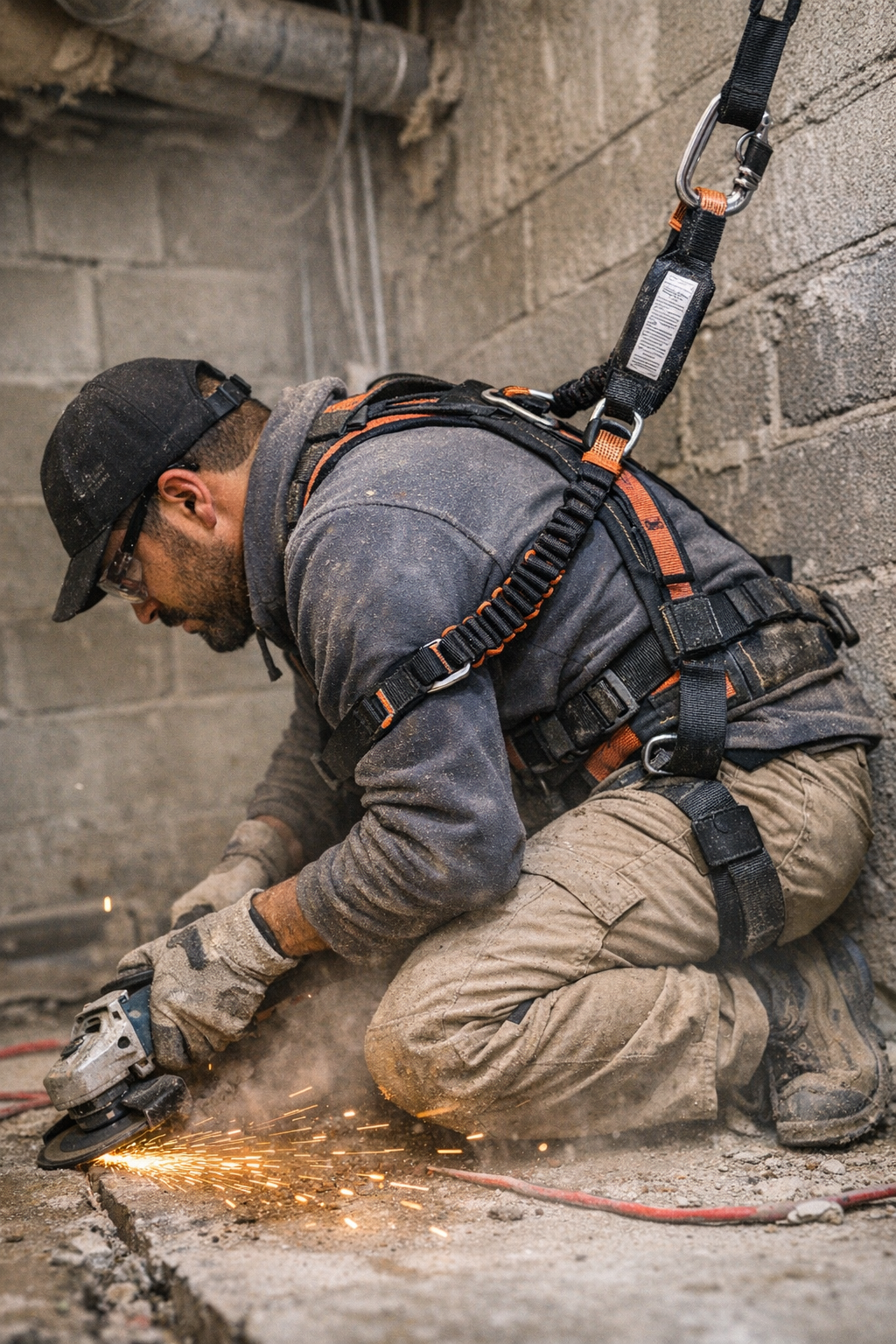
    The shortcut on the jobsite is painfully familiar: You’re gearing up for a messy round of indoor grinding, maybe tight drilling overhead, maybe a long haul of sanding awkward seams. Gear selection turns into an afterthought—grab whatever harness and lanyard are closest. “Any PPE is better than nothing,” you mumble. But the first real cut exposes that lazy logic fast: steel meets hidden rebar, the bit bucks, or the wheel bites and jerks. Now, every tool kickback rattles through your body. Safety gear that felt routine becomes friction: tension in your shoulders, a jolt to your back, lost precision, a cutline wandering off target while gloves fill up with grit. Instead of fighting the material, you’re fighting your own equipment, and the job gets slower, sloppier, and more exhausting with every pass.

    How the Wrong Harness Turns Minor Misses Into Major Rework

    You know the cycle: The first cut or fastener feels right enough. But as you move down the run—grinding edge, nailing anchor, swapping to a new battery—the little mismatches in your harness start to add up. Stiff, static harnesses don’t cushion tool vibration or re-center after a binding cut. Every shock travels through unforgiving webbing straight into your hips and shoulders. It’s not just discomfort; your grinder drifts sideways, your drill skips the mark, and even sanding edges starts to require more force and micro-adjustments. By day’s end, “good enough” gear means extra sanding, patching, and sometimes retracing your entire cut—lost time you’ll never bill for.

    The Difference: Dynamic Harnesses for Active Tool Use

    Harnesses all look roughly the same—heavy straps, big buckles, no-nonsense rings. But a grinder-ready harness actually works with your body’s movement. Dynamic designs allow enough flex at the hips and shoulders to absorb quick shocks, pivot naturally, and keep you balanced instead of tipping you off-line with every unexpected rebound. Look for abrasion-resistant materials built to withstand repeat tool motion, not just idle “fall arrest” claims. It’s these small design differences—flex zones, shoulder articulation—that add up hour after hour when your arms are stretched above your head or you’re reaching for that last awkward fastener.

    Lanyard Choice: The Unseen Saboteur

    Most harness complaints come mid-task: When a drill snags or a grinder stalls, a cheap, static lanyard becomes the silent problem. Shock-absorbing lanyards rated at 1.2 kN or better make bites and skips manageable—not a full-body wrench that throws you off your line. The difference is subtle: Instead of feeling every minor bind twice, once in the tool, once in your core, shock absorption smooths out the job, giving you control to correct and keep the pace steady. Over a long shift, those hard checks on static webbing sap your stamina—and precision—far more than any one big slip.

    Real Spaces, Real Strain: Grinding Where It Counts

    Picture the job that won’t let you stand upright: crawlspace, furnace closet, elbow jammed against cold pipe, sander howling in your ear. It’s not just a one-off—it’s a regular Tuesday. Every new pass means adapting posture, ducking wires, and your cut path changes as soon as your stance does. When your harness rebounds every tool kickback straight into your spine, your hand slips, lines meander, and the finish starts looking amateur midway through. The right gear—shock-damping harness, dynamic lanyard—lets you regain steadiness when you shift position, not punish you for moving at all. With a static setup, fatigue and tool drift compound fast: after six or seven passes, you’re looking at real cleanup work, not just a quick brush-off at the end.

    When Fatigue Takes Over: The Hidden Cost

    It’s rarely just a single mistake that trashes your finish. Usually, it’s the cumulative effect of a dozen small jolts: a lanyard tug every time the saw binds, fresh resistance halfway through a long drill, awkward torque with each battery change. Dust and sweat make you clumsy, but it’s the unseen friction in your PPE that erodes your edge, both physically and in the cut. Each time the harness drags you off-center, your focus narrows—and the more you push, the messier the result. Dynamic gear doesn’t promise perfection—it just keeps those tiny mistakes from snowballing into hours of late rework.

    The Real Impact: What Changes When You Choose Right

    Switching to a dynamic-force harness and a quality, 1.8-meter shock-absorbing lanyard (rated to absorb at least 1.2 kN) delivers changes you can count by the clock and by the square foot:

    • Cleaner, more consistent tool control on long, repetitive cuts—even when material density shifts or you’re forced into awkward reaches.
    • Noticeable drop in shoulder and hip fatigue, so you’re not dragging yourself through the last hour or switching hands just to manage the ache.
    • Tighter edges and fewer off-line gouges, keeping touch-up sanding and patchwork to a minimum instead of stacking up at the end of each job.
    • Freedom to pivot mid-task: no more wrestling your body around equipment just to get a better angle. The gear moves with you, not against you.

    It’s less about buying “the best” and more about spending sixty seconds at set-up: adjust every strap for active fit, focus slack in your workspace, buy lanyard and harness as a team rated for repeat, real-world tool abuse. Ignore “one-size” PPE or generic fall arrest claims. The best spec: Look for dynamic load language and mentions of repetitive tool use.

    Red Flags: How to Know Your Gear’s Slowing You Down

    You don’t need to wait for a nasty mistake to realize your kit’s holding you back. Real-world warning signs speak up across a single shift:

    • Your grinder or sander drifts more often as the hours tick by—or you keep adjusting grip mid-cut just to stay on line.
    • Strange aches at the end of routine days, body tension you’d expect after falling, not after normal work.
    • Unfinished edges demand double the cleanup—when your PPE fights you, so does the finish.
    • Any moment you catch yourself wrestling with the harness, not the tool, you know it isn’t working for you.

    Good PPE fades into the background—you barely think about it as you move. If it’s on your mind for the wrong reasons, that’s a sign the frustration probably isn’t your fault.

    Easy Fix: Prep Right, Work Clean

    Get ahead of tool rebound and fatigue by tuning your PPE before the first cut—not after the first slip. Before starting, give yourself one minute: check for unrestricted movement in hips and shoulders, verify visible absorption specs, and adjust straps so you’re not flailing for range mid-job. If your lanyard or harness is “fall-only,” leave it for static work—using it on active, repetitive tool runs is a shortcut to frustration and wasted time. The small prep on the front end is the trade-off for controlled, predictable work by the end of the day.

    Even when the jobsite won’t pause for personal comfort, paying attention to your kit upfront earns you cleaner results, fewer aches, and less time fixing yesterday’s mess.

    Find more practical safety gear and grinder-ready PPE at Gumboll.

  • Why Visible Pantry Storage Prevents Duplicate Grocery Purchases

    Poor pantry storage isn’t just an eyesore—it slows you down, wastes food, and turns every restock into a guessing game. If you regularly end up buying what you already have, fishing for missing staples in deep cabinets, or clearing a blocked pathway just to reach the flour, then your setup itself is hiding the problem. The root cause is nearly always the choice between closed cabinets and open shelving—a split that looks cosmetic but quickly reveals real, repeated costs the moment normal use resumes.

    The Invisible Build-Up Hiding Behind Pantry Doors

    Closed cabinets promise calm and control, but they operate with one persistent downside: the silent build-up of forgotten items. After a new grocery run, recent purchases land up front—meanwhile, older goods get nudged back and vanish from daily view. Boxes, jars, and backup snacks slip out of sight behind a neat facade. Weeks later, you reach for rice and hit a wall of duplicates or discover expired cans hidden out of rotation. The outer calm hides a churn: inventory is piling, not cycling.

    This isn’t a one-time mishap—it’s the expected result when storage allows everyday items to drift out of sight. A shelf that looked fine after a weekend reset will quietly accumulate overflow by Tuesday. Front rows get crowded, rear rows fill with neglected stock. You bring home what you think you need (but already own), while usable space gets choked by invisible backups. Even a system with precise labels can’t hold up: the closed-door effect masks real-time shifts, and tidiness always gives way under repeated use. The room looks orderly, but you’re losing time and groceries every week.

    Open Shelving: Exposed, but Less Mistake-Prone

    Put everything in view and the friction drops. With open shelving or glass-front units, your storage tells you what’s happening now—no mental inventory, no silent stockpiles. From a quick glance, you see what’s missing, what’s low, and what’s overbought. The inevitable mistakes—restocking cereal you already have, letting that sauce linger in the back—virtually vanish. Visual scanning replaces sifting and shuffling; what’s out in the open gets used before it piles up.

    This isn’t just theory: in most real shared kitchens, anyone can instantly spot if there’s enough pasta for dinner or which snacks have vanished. Pulling out trays or kneeling to hunt in shadowy rows is replaced by scanning a single visible line. Instead of the hidden double-purchase, you get immediate course corrections—a true daily advantage and one that short-circuits the cycle of unnecessary resets.

    Multiple Users = Amplified Blind Spots

    More hands in the pantry guarantee more drift. Each person returns things where there’s room, not where they belong—especially when items vanish into the depths of cabinets. Picture a busy night: you reach for pasta, find none, add it to the shopping list—unaware a full box sits out of sight, blocked by a wall of cans. Multiply that by every snack or baking staple, and the pattern compounds. Hidden storage lets this drift stick around, creating overflow zones in the back while the front never looks quite right.

    As the crowd grows, so do the problems. “Category” zones collapse. Someone parks a bag of bread with cleaning supplies. Snacks end up near sauces. In cabinets, these mix-ups go unseen for weeks—on open shelves, they’re caught immediately, with less time wasted hunting and less frustration during the next reset. The difference is visible not just on cleaning day, but every time you walk in and need something now.

    What “Organized” Looks Like vs. What Actually Works

    Closed doors and seamless lines give a false sense of order—but in repeated use, they slow you down. Open shelving eliminates the endless rearranging. No shuffling cans forward and back, no inventory buried three rows deep. Stocking groceries becomes a quick scan; expired and duplicate items almost disappear on their own because nothing can hide. The payoff isn’t just looks—it’s a storage system that keeps pace with you rather than bogging down every return trip.

    Resetting the Setup: One Practical Switch

    Fixing the problem rarely means a full remodel. Swapping one closed cabinet for a simple open rack—set at standing height and just deep enough for single-file rows—removes the daily pain points instantly. The digging vanishes. Lost items are a relic. Resetting after a shopping trip is now a glance, not a project. No more hidden towers of soup cans or energy lost to searching behind shifting bins—the reveal is constant, simple, and honest.

    One small workaround: If total openness feels too exposed, clear bins or glass-front doors can still give you real-time control. Group items by type, keep everything in one visible row or layer, and inventory checks stay brutally honest. You’ll know exactly what’s missing and what needs fixing—before it becomes a problem buried at the back.

    When Calm Looks Aren’t Enough

    There’s a price for visible storage: more visual clutter, less immediate neatness. But in a busy pantry or a shared utility zone where products move fast and hands are never the same twice, usability wins. If you stack groceries out of sight just to maintain a calm exterior, all you’re doing is delaying chaos. The prettiest setup on Saturday will bottleneck by Wednesday if you have to work around its layout every time you return something or hunt for a staple.

    The real test isn’t how it looks after a clean—but how it works after the week. When overflow creeps onto the floor, bin returns get messy, or you’re constantly pushing aside what you don’t need, the system hasn’t failed visually—it’s failed functionally. A good setup lets you find, return, and restock items without breaking pace or blocking your path, not just display temporary order.

    Real-World Signals Your System Is Failing

    Watch for these: expired cans at the back, unbroken stacks of the same item, opening one area just to dig through another, or moving bins just to access what you actually use. If these become routine, visibility is missing—and no organizing trick will fix a zone that hides its own inventory. Failure isn’t dramatic; it just creeps up as more floor space gets taken, categories blur, and resets grow longer. You’re not maximizing storage; you’re feeding the problem with every use.

    Choosing What Suits Your Real Routine

    There’s no universal fix—but the best setups bring your inventory out of hiding and force real function. For those who can’t stand visual clutter, glass-front cabinets or a mix of open and closed zones can still do the job. If speed, control, and automatic feedback matter most, go for open shelves with single-layer organization. The system that works isn’t the one that photographs best at install—it’s the one you don’t have to think about in your busiest hour, because it fits your living routine exactly as it is.

    A good rethink happens the moment restocking feels slow or every trip to the pantry leaves something lost. Don’t settle for storage that just stores—demand a setup that stays in sync with your actual use, resets fast, and brings everything you need into immediate reach after every shop-and-stock week.

    Gridry: Storage systems for real indoor life

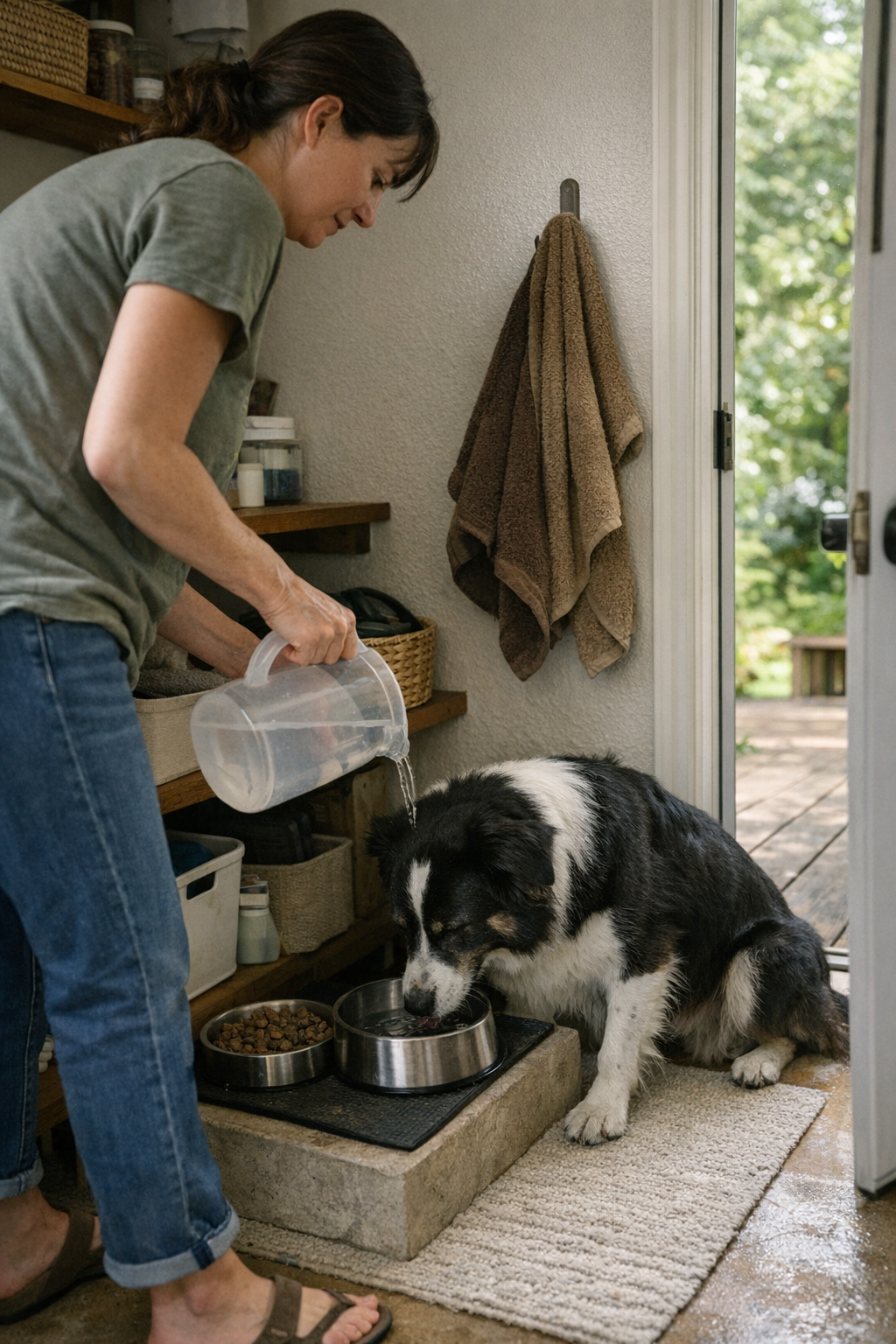
  • How a Simple Door Towel Transforms Daily Dog Cleanup Routines

    Right after every walk, there’s a split-second test: leash in one hand, shoes half-off, you reach for the towel—and it’s missing. Your dog’s quick paws land on tile, already streaked with yesterday’s tracks. Pause too late and you’ll find a whole day’s grit underfoot, turning a so-called clean routine into a slow-motion mess, all because the one thing needed is out of reach. This isn’t about one muddy day—it’s a recurring friction point that makes the whole routine feel fragile, no matter how tidy you keep the entryway. One misplaced, damp, or vanished towel and the supposed reset spills into cold, interrupted minutes and another round of cleaning later.

    One Weak Point: The Towel That’s Never Where You Need It

    The problem keeps repeating itself. You expect the towel by the door, but it’s been used for something else, tossed somewhere “for now,” or taken out of rotation. So you scramble, improvising with a dish towel, paper towels, or just hoping the welcome mat absorbs enough. For a day or two, these workarounds pass as harmless, but annoyance stacks up just as reliably as your twice-daily walks.

    The pattern hardly changes: dog barrels in, leash tugs, paws find tile—and you’re not ready. Pausing to hunt for a towel means accepting new muddy prints. Every “I’ll get it next time” shifts into more spots to clean, more mess under shoes, and more resentment for a step that should have been automatic.

    How Routine Friction Builds (And Why It Matters)

    Cleanup lag is quiet but relentless. Towel gone, wipes tucked away, cleaner on a shelf no one remembers—each break in the chain adds up to slower resets and creeping disorder. Coming home turns from “we’re back” to “where’s my stuff?” long before you notice the cost.

    The daily slipstream looks like this:

    • Dog at the door. Towel missing. You hesitate, calculate the risk.
    • Try to keep your dog still—usually a losing battle as paws slip or wander.
    • Leave the open threshold, chase down a towel, and return to new prints and a disrupted dog.
    • Cleanup becomes triage—imperfect, rushed, sometimes leaving one paw dirtier than before.
    • The next time, you spot new dirt in the corners—not a big event, just slow, invisible drag.

    Every patchwork fix teaches your routine to crumble right at the point it needs discipline.

    Visual Order vs. Usable Order

    It’s easy to fall for the illusion of “organized.” Benches aligned, bins labeled, hooks unused—but if the towel is blocked, missing, or mixed in with unrelated clutter, the routine stumbles. When the cleanup step is buried or unreliable, form sabotages function—and your floors keep paying for it.

    What Actually Changes With a Towel at the Door

    The real fix: anchor a dedicated towel at full arm’s reach where you cross from outside in. Instantly, the silent hassle at the entry starts shrinking—even more so when it’s pouring rain or after a late-night walk. That first pause gets shorter and less frantic. Mud stops at the right spot, paws are cleaned in sequence, and the chance for a mess to escape drops with every cycle.

    This isn’t a miracle: there’s still grime, there’s still weather, but the doorframe stops being a choke point. The difference is not the absence of dirt but the absence of chase, dodge, and doubled work in the cleanup loop.

    The Routine in Real Time

    Here’s how the setup changes the post-walk return:

    • Dog pauses—leash steady, mat beneath, you don’t need to move.
    • The towel is visible, hanging right where you expect—not stuffed in a closet, not lost to laundry.
    • You wipe—methodically, without the scramble, while your dog starts to wait for the signal.
    • The last paw never touches the inside floor until it’s done; fewer prints, less stress.

    The repeated “where is it?” moment disappears. Clean floors stay that way, not because every step is perfect, but because the weak point doesn’t keep reappearing. Routine takes over where improvisation used to slow everyone down.

    Everyday Obstacles That Don’t Go Away On Their Own

    Most breakdowns happen fast: after rain, with muddy paws, or when other people are walking through. Maybe the first paw is half-cleaned, a towel is still damp from the morning, or you skip the step “just once.” Routine friction masquerades as a minor slip, yet the aftermath repeats:

    • No towel after rain? You’ll feel the wetness in your socks by the next crossing.
    • Morning rush, supplies misplaced? Dog grows impatient, the floor absorbs the chaos.
    • Friends visit, cleanup skipped? Paw prints spotlight the gap the following day.

    One untended gap means more work later—not just now, but in unpredictable sprints every few days unless the setup actively closes it.

    Real Examples From A Week’s Routine

    Look back on your week. By Wednesday, the backup towel is still drying in another room. Last night’s towel is damp, slightly sour-smelling, but you grab it anyway. One evening, you skip cleanup after a late walk, but an hour later the tile shows new prints, almost daring you to ignore them. Each missed reset leaves a trace—and teaches you how easily the system unravels when just one item goes missing.

    The most ordinary detail—one towel out of place, one step skipped—predictably undermines the routine more than any new gadget or deeper cleaning ever fixes.

    Making the Setup Easy to Stick With

    Consistency beats perfection, every time. The solution isn’t a strict routine; it’s about matching physical setup to the way you actually enter and exit. If the towel is exactly—literally—where your hand lands when you pause, the habit builds itself. When anyone else in the house repeats the new order, the dog—and the mess—stay predictable, not spread across every threshold.

    How to Anchor the Routine

    • Pick a real, open spot—not behind bags, not under shoes, but directly on your main route.
    • Signal your dog—a cue or hand motion at the same place, every time, builds their expectation.
    • Keep it short—wipe, praise, move. Overcomplicating is the enemy of habit here.
    • Swap towels often—weekly for normal use, more in wet seasons, to keep texture and smell from breaking the routine.
    • Don’t force a damp towel—replace it when needed, or you’ll skip the step and reopen the loophole.

    This isn’t about discipline—it’s about removing resistance right where the routine can fail. The more friction you clear at the door, the less discipline you (or anyone else) actually need. Quiet, simple changes keep the entry functional without micromanaging every pass-through.

    Less Floor Wiping, More Flow

    The target isn’t a magazine entry—it’s a routine that holds up for real dogs, muddy days, impatient mornings, and distracted households. The towel in the right spot isn’t just cleaner; it shrinks the invisible work and makes coming home frictionless. Dogs get the rhythm. You keep paper towels in reserve. The need to run back for one missed supply drops and doesn’t return just because the rest of the area looks neat.

    This isn’t theory—it’s a structure that outlasts surface tidiness and keeps walk-after-walk residue from reasserting itself, no matter how good things look between the slips.

    When It Looks Fixed But Still Feels Slow

    Even with neat hooks, tidy shoes, and a fresh mat, a missing or awkwardly placed towel drags down every return home. The appearance says “ready,” but your routine still collapses with the first cold or muddy paw. Practical control means the thing you need is at the exact point the problem starts—otherwise the same old tension creeps back in and the reset was just for show.

    Whatever your routine, structure always tells the truth in repeated use. One towel at the door isn’t a magic bullet, but nothing else fixes scattered mess and recurring delay so quietly, every single entry.

    STORE LINK:
    http://www.dogpile.myshopify.com

  • How Proper Cable Management Transforms Your Workspace and Lighting Setup

    All it takes is one exposed cable to disrupt a desk, shelf, or reading nook that’s supposed to work—and keep working—day after day. Maybe it’s the lamp cord that slips from the desk’s edge, now catching your sleeve every time you reach for the mouse. Or an under-shelf light’s power cable—neatly routed at first—drooping until it becomes the thing you notice first, not the lighting. Suddenly, what looked finished turns into a source of small, constant interruptions: snagged books, realigned chargers, and a glowing fixture you can’t fully use without skirting the mess beneath it. Even a so-called “clean setup” sours fast when the cable path becomes a hazard or a distraction.

    Why Visible Cables Rarely Stay Out of the Way

    Lighting setups almost always look controlled the first day—the lamp sits exactly where you want it, fixtures bracketed neatly, the cord tucked to one side. But as you actually use the space, small failures show up. You grab a pen, catch the cord, and have to straighten the lamp again. The cable migrates: off the desk edge, into your direct line of sight, or along the shelf where it presses against objects you move every day. An under-cabinet strip that looked invisible when you walked away now pulls its cord right across the work zone during the morning’s shared scramble. These breakdowns rarely feel catastrophic, but they start to dominate how the space functions in practice.

    A loose cable wrecks more than looks. Forced runs and slack lines ruin the effect of clean surfaces, trip up your hands during cluttered routines, and wear against brackets or mounts that need stability. Over time, one weak cable path shapes your use of the entire room—forcing new habits, making tidy setups feel unreliable, and gradually undoing your original intent.

    The Real-World Consequences: More Than a Visual Mess

    Exposed or awkwardly run cables disrupt normal use again and again:

    • Lamp or charger shifts out of place as soon as something catches or tugs the cable
    • Loops slip over table or counter edges, setting up easy snags, unplugging, or even tripping
    • Cords collect dust in the spots you clean least, and make simple wipe-downs awkward
    • Brackets and mounting points lose their hold, especially if every use puts pressure on the support line
    • The cable keeps invading your sightline—a constant, minor demand for attention

    This is the practical cost: not a dramatic failure, but a weakening of focus and comfort every single day—precisely where you wanted lighting to make use easier, not harder.

    Small Differences That Change the Whole Feel

    The space between “noticeable cable” and “working setup” is often less than an inch. A cord held flush to the desk’s rear edge disappears from routine; let it sag or creep forward, and you’ll nudge it, shift your arm, and move devices all day long. This friction builds: a connection strains, the lamp drifts off true, cleaning turns into a balancing act around a cable you can’t ignore. In real use, every time you adjust to the cord’s position, the upgraded lighting feels less like an improvement and more like a new obstacle.

    The best routing vanishes in practice. The worst steals your attention—without warning or drama, just daily drag.

    Scenes Where Weak Cable Setups Break Down Fast

    Family Table Trouble

    Imagine a family table with an LED light bar mounted under a shelf. The fixture is slim, the light strong, but the power cable runs loosely toward a wall outlet. As laptops appear, hands shift, and books slide during a busy evening, the wire is bumped out of its clip. A heavy textbook drags the cord down, yanking the light bar on its bracket. A distracted hand sends everything closer to the table’s edge—close to falling, all stability suddenly in question. What started as “out of the way” proves fragile when a living room routine really pushes the setup.

    Work Desk Drift

    Or take a streamlined, “finished” work desk: minimal lamp, under-cabinet lighting, cabling routed tightly at first. After a week of swapping cables, adding a phone charger, shifting books—the cord that started tidy now dips across your work area. You find yourself working around it, nudging the wire to avoid your wrist, and watching dust gather where cord meets desk. The lighting still looks good in photos, but in use, your desk quietly gets harder to work at.

    Taming the Cord: What Actually Holds Up Over Time?

    What solves this isn’t a fancy gadget but a practical, visible reroute. If you anchor the cord tight—flush to the shelf or desk underside, clipped every foot or so—it simply stops drifting into your workspace. The lamp sits straight, plugs aren’t yanked sideways, and cleaning turns back into a two-second job. Low-profile clips work because they manage the line without making it permanent: you can rearrange when you change furniture or swap in a new light, without a trail of old adhesives or screw holes to regret later. The main trick: keep cables out of your hands’ path and out of your cleaning routine, but easy to rework when reality changes.

    The right cable path is rarely complicated. The wrong one slowly eats away at both the look and use of your space.

    Practical Signs Your Cable Run Needs Attention

    • Cord sags, migrates, or falls back into your active work or reading zone
    • You’re forced to adjust your reach or move devices to avoid running into the cable—again
    • Plug fittings and mounting hardware feel less secure, or start shifting out of alignment
    • Dust and clutter keep gathering around cable lines, never fully clean
    • Everything looks settled, but feels slightly wrong the minute you actually use the space

    If these issues have become routine, the payoff from managing the run sharply outweighs the five minutes it usually takes. The result: a space that doesn’t just look fixed but actually stays reliable in action.

    Tips for Better Cable Management in Living Workspaces

    • Use removable clips—every 12 to 18 inches—to hold cords flush, with no commitment to a single layout. Change your mind later without tearing up the surface.
    • Skip permanent anchors if you plan on rearranging: modular clips and channels are easier to rework and don’t scar desks or shelves.
    • Follow natural room lines: hide cables along the back or underneath edges, behind brackets, or under shelves to keep them invisible and out of everyday movement.
    • Don’t shrug off recurrence: If a cable keeps drifting or collecting dust, fix it now—the problem won’t solve itself and only gets more annoying with time.

    Cable Calm Means Lighting That Supports, Not Distracts

    A lighting upgrade only delivers if it works—uninterrupted, every day. Let the cable situation slip, and the same fixtures you chose for clarity or mood become daily points of resistance. The difference between “looks resolved” and “feels right” is almost always cable logic—secure or drifting, stable or always in the way. Manage the cord once and surfaces don’t just look calm—they support every routine without becoming another friction point.

    http://www.lightsupport.myshopify.com

  • Why Fixed Hooks Fail and Modular Storage Transforms Entryways

    Fixed wall hooks look like a cure for entryway chaos—until your daily routine hits back. The spotless row starts strong, but the setup buckles as soon as life throws extra bags, bigger coats, or surprise downpours into your path. Hooks fill, edges pile up, and the neat threshold turns quickly into a crowded reset zone no one is eager to cross. If every exit or entry becomes a shuffle through hats, shoes, and sliding backpacks, it’s not just you. The friction isn’t from messiness; it’s from rigid solutions that fail when routines flex or real weather hits. What solved clutter yesterday only spotlights bottlenecks today.

    The Problem Hiding in Plain Sight: Rigid Hooks and Changing Routines

    The illusion of order often lasts just a week. Install a crisp row of hooks above a slim bench: the hallway looks complete, with a tidy shoe line underneath. But then—one guest’s jacket lands, wet bags join after school, or an umbrella that never fully dries claims space. Shoes break left and right, drifting from their assigned spots. Bags droop off the hooks, sometimes nudged straight onto the floor. Within days, the edges blur: what was once a clear path gets blocked by layers of overflow and half-parked gear. It’s not heavy clutter, exactly—it’s a steady creep that turns reset into routine labor.

    The tension builds fast: each pass through the entry means shifting the same pile from bench to hook, from floor to bench, playing a slow-motion game of musical chairs. The original “place for everything” plan reduces to compromise—one big bulky item, and the rest have nowhere left to land. Hooks close together can’t fit thick coats and backpacks side-by-side. Suddenly, the storage that looked logical feels stuck on the wrong side of the door, or scattered in a way that slows you at the threshold every time you leave or return.

    Overflow in Action: When “Good Enough” Isn’t Enough

    Families, changing weather, and even one busy week expose these cracks quickly. What starts as “good enough” turns into real daily friction:

    • The bench and floor absorb overflow. The bench edge becomes stranded with hats, bags, stray gloves. Shoes are forced out beyond their zone as upper hooks clog. Soon the shoe line is a pile creeping into the walkway.
    • “Temporary” drops turn permanent. A workbag dropped “for now” lives on the bench for days because no hooks are open. Over time, these half-intended placements signal that the entry is now a holding zone—not a working threshold.
    • Threshold pressure, blocked flow. With hooks crowded, walking in with full hands means fumbling: nothing hangs neatly, something always falls, and resets take longer. Clutter rebounds fast—there’s no quick return-to-order.

    Why Static Setups Fall Short as Life Changes

    Static hook lines assume next week will look like last week—and break down when loads get unpredictable. Single-person homes with perfect schedules may get away with it, but adding kids, guests, or just a wet winter exposes the limits immediately. The problem isn’t poor discipline—it’s lack of flex.

    • Item types collide. Switching from light spring wear to bulky winter gear doubles up hooks, while sports bags crowd out coats. Useful wall space gets jammed or left empty—never the right balance for your day.
    • Every reset is an argument with the layout. Adults swap corners, kids abandon shoes mid-aisle, and guests layer items wherever there’s a gap. Negotiation replaces flow. Clutter rebounds even after cleanups.
    • Visual resets, weak function. The entry can look fixed after a deep tidy—but can’t hold up to repeat use. By midweek, the old cycle restarts.

    What Happens When the Setup Improves

    Swapping a rigid hook row for a modular, moveable setup changes more than looks—it changes what resets feel like. With adjustable rails, every season or schedule shift is a minute’s job: slide a hook, open a gap, or add a placement zone on the fly. The bench stays empty for sitting or unloading, shoe rows stay contained, and there’s always a spot available for whichever large or awkward item needs it that week.

    One lived-in change: sliding a single hook two inches away from a crowded cluster stopped coats from piling up and shoe overflow from creeping beneath. Instead of layering gear until everything merged into one strategy-proof lump, the entry path stayed open—even when bags or coats multiplied. That two-inch flex cut stop-and-shuffle time to almost zero at the door. The difference isn’t visual polish; it’s day-long access and less ambient stress.

    Recognizing When Your Entryway Is Too Rigid

    If you keep moving the same jacket, retrieving shoes from the walkway, or propping bags upright on the bench just to get through, the story is clear: your setup can’t flex with actual use. Persistent clutter isn’t just untidiness—it’s your system showing it can’t keep pace. Bench surfaces turning to permanent drop zones, delays and blockages each time you pass through—these are system failures, not personal lapses.

    Adaptable storage is about reset speed and flow: how quickly you can make the space work for an offbeat item, how reliably everyone finds a spot without constant negotiation, how little time goes to wrestling with layout. The more adjustable your setup, the less friction for every user, every season, every threshold rerun.

    Small Shifts Make a Big Difference

    Change rarely looks dramatic, but it feels immediate. Modular entryway setups invite quick pivots: shift hooks lower for young kids, open space for extra boots or visiting friends, tighten up for routine weeks. The main line never lags behind real life—shoes know where to go; coats don’t block the bench; umbrellas stop becoming hazards to dodge.

    Small advice, big payoff: Adding a hook or two at kid-height turns “clean up your stuff” from a battle to a simple cycle. No more high hooks as off-limits territory—return flow improves, and the bench stops absorbing everything with a handle or strap.

    From Visual Control to Real Daily Use

    The best entryway isn’t the one staged for move-in photos. It’s the one that survives five family exits on a wet morning, gear swaps for sports nights, and still leaves the path to the next room clear. If you’re constantly re-parking shoes, picking up fallen jackets, or making detours for dropped umbrellas, your system isn’t adapting—invisible clutter management is becoming your new routine. Setup isn’t just about how things look, but how efficiently the threshold can reset, reroute, and stay useable under actual pressure.

    Betweenry’s reconfigurable, transition-focused storage turns that high-traffic struggle into a system you barely have to think about—no more musical chairs with hooks, no more shoe avalanches, no more lost minutes to yet another reset. The point isn’t to achieve a perfect look, but to remove daily friction where it slows you most.

    See more practical, adaptable entryway storage at Betweenry.

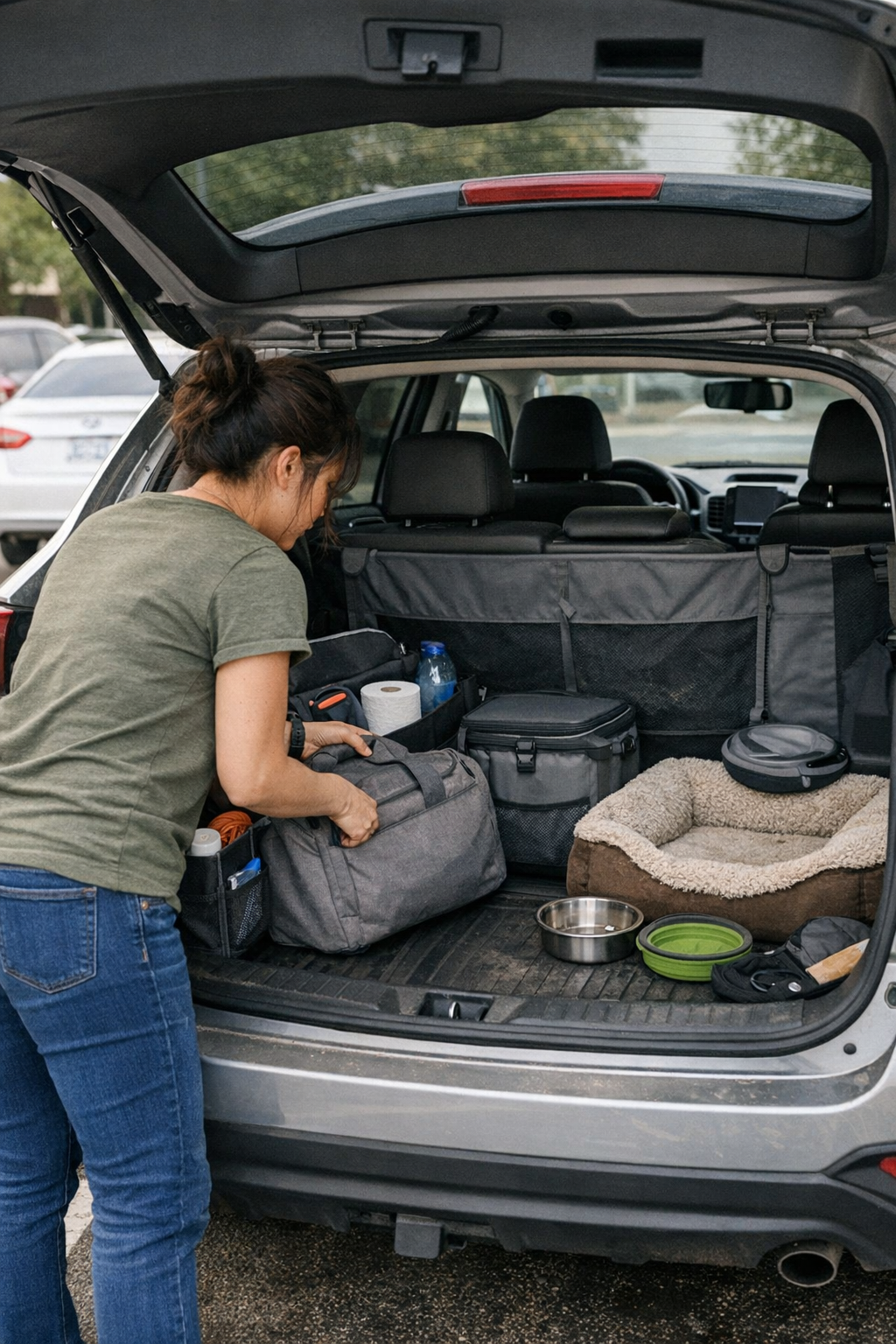
  • Why Leaving Space in Your Car Setup Speeds Up Daily Routines

    “Organized” can still mean headache—especially if your car’s ‘perfect’ setup keeps getting in the way when you actually drive. You tidy every pocket, click every tray into place, route every charging cable just-so. But as soon as the week begins—coffee in one hand, phone sliding to the floor, a tote bag squeezing between a rigid console and seat edge—the supposed organization trips you up. In theory, every compartment has its purpose; in practice, you find yourself shifting things aside, untangling cords, and improvising storage just to get going. A car that looks calm in the driveway can force you into extra moves, slower exits, and constant adjustments the moment your real routine hits speed.

    When “Finished” Setups Start Slow You Down

    The fantasy: a flawlessly organized car, ready for anything. The reality: over-managed interiors make everyday driving harder. The trouble surfaces right away on a cold morning—you’re rushing in, hands full, only to find cupholders jammed with supplies and critical reach-zones pinched by gadgets. The obstacles aren’t always obvious until you have to work around them: digging for your cable under a stack of pouches, or bumping an add-on tray with your elbow every single time you settle in. What promised ease can quickly raise small barriers—so the neatness you see actually increases the friction you feel.

    The system’s limits emerge fast: actual use exposes every spot where the organization interrupts, not helps. It shows up during that first hurried commute, when what seemed like an upgrade is now something you’re working against.

    Spotting the Trouble Zones: Where Organization Backfires

    All cars have access “hot spots”—the seat edge you cross with bags, the pocket you grope for at stoplights, the charging zone you juggle mid-drive. These are the friction points: drop keys and you’re stuck, reach for a charger and you battle an organizer edge. Block these zones with rigid storage or even extra protection gear, and quick motions turn into awkward shuffles. Think about a weeknight grocery run: arms full, you open the door, only to find the floor boxed in, center console crowding your entry, or a cargo tray that makes loading an exercise in rearranging rather than tossing. These are the moments when the system breaks down—not in appearance, but in everyday movement and delay.

    Beneath the Surface: Why Clutter Creeps Back

    The urge to add another slot, bin, or cable wrap is strong. “One last tray,” you reason. But each extra piece of control tightens the space for hands, shoes, and stray items. Soon you’re improvising: stacking mail atop organizers, jamming water bottles where they stick out, letting receipts drift between tightly bordered trays. The car looks ordered until you try to remove a bag or quickly clean crumbs—then the gaps have all shrunk, and routines stall. Cleanup gets harder, not easier. Clutter doesn’t vanish; it migrates and stacks up at the first sign of pressure.

    The Frequent-Use Reality Check: Pressure Reveals Weak Links

    Organization doesn’t break in the showroom or on a lazy Sunday; it breaks under stress—mid-errand, in a rainstorm, or scrambling to school dropoff with coffee and phone in hand. The “neat” cable blocks the handbrake. The smart cargo tray ends up in the way when you toss in a backpack. The area at your side, once free, becomes a traffic jam of organizers you have to nudge aside to get out. In practice, these polished setups can slow every routine—forcing temporary clutter in random zones just for a few seconds of speed. Over time, these seconds add up to real, repeated frustration.

    What Really Works: Strategic Empty Spaces and Clear Paths

    The real upgrade isn’t more compartments—it’s carving out breathing room where you actually move. With repeated use, the difference becomes clear: the best setups leave flexible gaps and open pathways that adjust to what the day throws at you:

    • An empty cupholder near the armrest: ready for coffee today, a set of keys tomorrow, or nothing at all if your hands are full.
    • A seat edge not boxed in by plastic: giving you a fluid spot for bag drops, quick slides, or even a fast sweep of crumbs—no blockages, no pinched fingers.
    • Charging cables tight to the side: no more elbows snared or sleeves caught reaching for your phone. Access is direct, interruption-free.

    These aren’t losses in storage—they are gains in speed. When you’ve left ‘live’ zones open, rainy-day loading, messy errands, or dog-travel moments don’t slow to a crawl. Routines run smoother, with far less pausing or double-handling. Most telling: day-to-day clutter decreases, because stuff returns to natural spots instead of stacking up atop rigid organizers that get in your way.

    The Subtle Cost of Over-Organizing

    Sleek interiors can camouflage new problems. Each bonus tray or divider means another small detour—one more block your hand has to sidestep, one more pause at every grab and return. At first you ignore the micro-hesitations. By Friday, you’re frustrated: this was sold as improvement, but it’s just new obstacles between you and the road.

    Practical Adjustments That Last

    Lasting solutions aren’t the densest or most “solved”—they’re the ones that hold up under real, repetitive action. Setups stay reliable when core areas stay open: a cable free to pull, cup space that flexes, a seat edge unblocked for instant entry or exit. You come back after a trip and every move is one step, not a multi-stage shuffle. Cleanup is less of a project; you’re not prying coins from under a rigid tray, or untangling your own system just to shake out dirt. Re-entry flows like it should—no slowing down, no reset, just a car that stays ready on your terms.

    Making the Car Feel Easier—Not Just Looking the Part

    Order is easy to fake for a photo. True usability is proven by repetition—the quick drop, the reach on the go, the post-park return. “Optimized” isn’t about maximum fill but minimum friction. Every open path, every clear space is a tiny future favor to yourself. Small gaps, open holders, and clever cable routes aren’t cosmetic. They decide whether your morning works—or wears you out before you even get on the road.

    Explore car-use solutions that make routines easier—not just tidier—at DriveWellSupply.

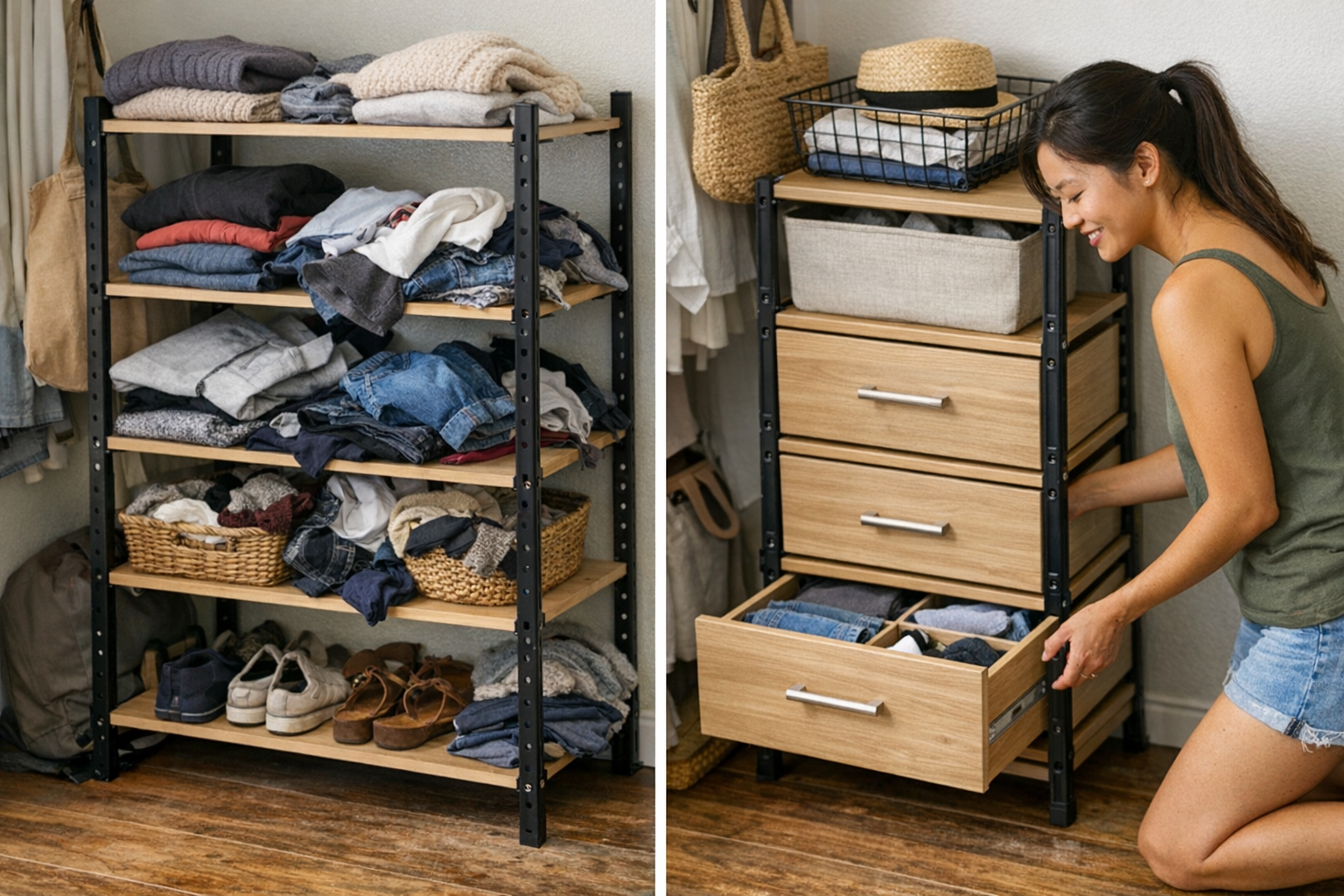
  • Why Drawers Quiet Visual Clutter Better Than Open Shelves in Closets

    The difference between a closet that just looks organized and one that actually works gets painfully obvious after a few weeks of real, messy life. You start with orderly stacks and labeled bins, but day after day, it gets harder to find what you need, put things back where they belong, or face the closet at all. That quiet, everyday struggle usually comes down to one choice: drawers or shelves. It sounds trivial—until every rushed morning and tired evening depends on how easily you can grab, stow, and reset your space.

    The Subtle Chaos of Shelf Living

    Open shelves are seductive when they’re empty. You imagine clean stacks of shirts, everything visible, zero effort to grab what you need. But the first time you reach for a T-shirt under last night’s gym shorts, the pile above slips, suddenly nothing fits right, and socks tumble to the floor. What started neat turns soft around the edges—by midweek, jeans are half-folded on top of sweaters, and a belt has vanished behind piles you stopped reshaping days ago.

    Every reach on an open shelf risks unravelling order. The more you hurry—or the more people dip into the same closet—the faster categories blur. Socks merge with tees. That stack of shorts you kept so nice on Sunday now leans, threatening to collapse every time you brush by. And anything you don’t use daily? It somehow drifts further out of sight, pressed to the back, forgotten until next season’s cleanup.

    When Overflow Isn’t About More Stuff

    The first real trouble isn’t running out of space—it’s running out of clarity. Half a shelf can look overstuffed after just a few imperfect grabs. Once one category slips into another, you waste time untangling shirt from shirt, or restacking after a single wrong move. This isn’t a slow road to chaos; a couple of rushed mornings, a partner’s hurried change, and your “easy-access” shelf is now a minor daily headache.

    If you’re coordinating laundry, flipping clothes for a new season, or sharing the closet with kids, the disorder spreads faster. One off-pattern day and suddenly the whole system feels harder to fix than just shutting the door and ignoring it.

    Drawers: Hidden Order, Faster Function

    Drop a drawer into the mix, and everything changes. Suddenly, grabbing a tee or pair of socks takes a quick pull—not a careful restack. That semi-messy pile? It’s out of sight, out of mind, letting you reset only when you choose, not every single day. Drawers absorb life’s imperfection; the exterior stays neat, no matter how jumbled the inside might get after a wild week.

    Drawers mute the mess. The outside stays serene, even as the categories inside inevitably swirl together. Your closet feels under control—even on a weeklong laundry delay.

    The One-Minute Reset

    Think of the pre-drawer routine: To find a shirt at the bottom, you’d lift three stacks, knock over socks, and probably refold the top layer just so you can close the door without shame. With drawers, you slide out, grab or return, and slide shut—the mess never travels out into view. You get back precious minutes, and the closet looks freshly arranged long after the folded piles inside have taken a beating.

    The longer you live with drawers, the more you realize you’re less anxious about “finding time” for a reset. Imperfect isn’t visible—so you don’t feel the pressure to reorganize with every little slip. That energy returns only when you actually want to do a full tidy, not at the sight of sliding stacks every morning.

    When Open Shelves Still Earn Their Keep

    Shelves aren’t always the villain. For capsule wardrobes, shoes on display, or entryway jackets you grab daily, open access works. Just limit the number of categories—shelves handle five pairs of shoes, not two dozen, and those tidy rows of baskets only work if you keep sorting to a minimum.

    But the moment you add more—scarves with hats, gym clothes with sweaters—the shelf can’t keep up. You either spend precious time every week reshuffling, or the shelf blurs into a landscape where categories die and clutter wins. With drawers, you can let your categories multiply. The chaos stays hidden, and you’re free from that nagging tally: “I have to do something about this tonight.”

    Fewer Messes, Smarter Fixes

    The real advantage isn’t picking sides—it’s combining the right features for your habits. If you find yourself constantly rescuing lost socks or separating tangled belts, add drawer-dividers to create micro-zones. These invisible fences let one drawer handle five things without a weekly avalanche. For shelves, shallow bins or baskets help, but only up to a point—too many categories, and even the best bin loses purpose as items migrate with each hasty morning.

    If your shelves always get crowded at the front while the back sits empty, or if every category seems to wander by midweek, a single deep drawer with internal dividers often outperforms a row of shallow bins. The secret is breaking up chaos before it happens, not after.

    Are You Stuck with the Wrong Setup?

    How do you know if your closet is working? Simple: if restoring order takes longer than thirty seconds, or if staring at the shelves fills you with dread, something in the setup is doing you a disservice. The best systems—drawers, well-placed dividers, limited open shelving—don’t just look good for guests. They quietly eliminate clawing for the socks behind your sweaters, keep rush-hour reshuffles to a minimum, and let you get in and out without that familiar sigh.

    For practical, hard-won ideas on closets and every other home storage challenge, visit ClosetWorks.

  • How Small Daily Resets Simplify Pet Care and Keep Spaces Organized

    Most pet setups hide their real problem until you’re in the middle of the day, trying to refill a water bowl and bumping into yesterday’s misplaced toy, or searching for a grooming brush that’s wandered yet again. Pet care isn’t just measured in bowls filled or walks done—it’s in the extra trips, awkward searches, and little resets that eat away at whatever looks like order on Monday. Miss a single return or leave a towel “just for now,” and by Wednesday, the routine’s already stalling—an invisible drag on every refill, wipe-down, or feeding reset. The result: what seemed tidy at a glance turns into repeated reshuffling, clutter quietly building, and cleanup delays you can feel but barely see. The CalmPetSupply world is built for these friction points—where fixing one missing step can mean the difference between a routine that flows and one that keeps snagging.

    Where Daily Routines Really Stall

    The friction isn’t dramatic—it’s the sum of all the small, repeated gaps left in your routine:

    • Going for the water bowl and finding it blocked or knocked off-center by another item you last moved “just for a minute.”
    • Reaching for a towel after an after-walk cleanup and realizing it’s still vaguely damp because it never got fully aired out after the last use.
    • Grooming wipes are “there” but behind a stack of unrelated things, so you hesitate and then put off wiping until later—if at all.

    These aren’t obvious messes, but they stack up. Reset momentum stalls: a mat goes unwiped, a bowl goes unreturned, and suddenly you’re hunting around or doubling back, sometimes two or three times for one basic step.

    What Happens When Early Order Slips

    Pet spaces usually start the week looking functional—dishes lined up, brushes and towels exactly where you expect. But routines break not through chaos, but through one or two shortcuts. Set a brush down across the room, leave a food bowl by the couch after a quick water top-off, or skip a mat wipe “since it doesn’t look that bad.” These tiny breaks in the loop guarantee that by the next meal or walk, you’re making do: reaching for items twice, patching over what you skipped, or clearing up leftovers you meant to handle last time. The reset never lands completely; the setup keeps drifting until you realize you’re always a step behind.

    Real-World Scenes: Chasing Down Supplies

    Think of the after-walk routine. Towel goes down for muddy paws—then instead of drying on its hook, it ends up slumped over a chair while you hurry to refill water. By the time you realize, the towel’s half-dry, the entry is cluttered, and the next walk starts with a pause while you scan for something clean and dry. Or after a quick feeding: the bowl doesn’t return to its mat, but migrates to the coffee table “just for now” during an errand. Next mealtime, it’s a detour involving a missing bowl and a half-hearted surface cleanup before you can even feed.

    Tidiness vs. True Function: What Looks Ready Isn’t Always Ready

    A pet zone can pass a visual check—everything seems in place, no massive mess. But the difference comes at the first snag: stepping over a forgotten toy to pour food, realizing the towel is still perched where it doesn’t belong, or needing to backtrack for a wipe you thought would be closer. Over several days, these little catches repeat. Supplies that look “put away” are actually layered behind other things, so the routine interruptions keep coming—despite a tidy surface.

    Small Changes Make Resets Automatic

    The key isn’t about deep cleaning—it’s about eliminating excuses for delay. Hang a hook exactly where you reach for the walk towel, not around the corner or buried on a coat rack. Store wipes and brushes right next to the feeding spot—within arm’s reach, never across the room or under the sink. Commit to returning bowls to the same mat the second they’re cleaned or refilled, not on the way to do something else. Each micro-adjustment cuts one moment of forgotten effort or double-back searching. Over the week, that difference means fewer interruptions and a flow that holds up even on repeat.

    Making the Routine Smooth, Not Just Clean

    An organized zone is a weak test; a real routine is whether every bowl, brush, or towel is instantly usable, without hunting or extra shuffling. Build in a single, simple check-and-reset every day—right after use, before the inevitable drift kicks in. This habit stops supplies from bleeding into common spaces and keeps each area ready-for-action instead of almost-ready. What feels like a minor discipline becomes the difference between daily drag and effortless upkeep.

    Why Routines Fail: Weak Points Return

    No matter how clean you start, focus slips once: bowls drift, towels go walkabout, wipes don’t reappear. Each awkward-to-return item becomes the first weak link. “I’ll do it later” starts small, but by next round you’re stalling again, redoing what you already solved earlier in the week. In the CalmPetSupply pattern, if a return isn’t easy—if access is clumsy or a storage bin is too far away—routine drag creeps back, and so do the interruptions you think you already fixed.

    Setting Up for Effortless Flow

    Getting pet care to run quietly in the background isn’t about spotless appearances—it’s about setups that make every reach and return brainless and immediate. When tools stay at fingertip distance and supplies snap back to ready-without-effort, daily maintenance shrinks to almost nothing, and interruptions drop away. It’s these small, structural adjustments—a closer bowl mat, a visible bin, a towel always at its hook—that turn routines from a chore into something you barely notice. And if you can spot the one step that keeps breaking your loop, that’s often where the next fix will have the biggest payoff.

    Find practical gear and setups for smoother daily routines at CalmPetSupply.

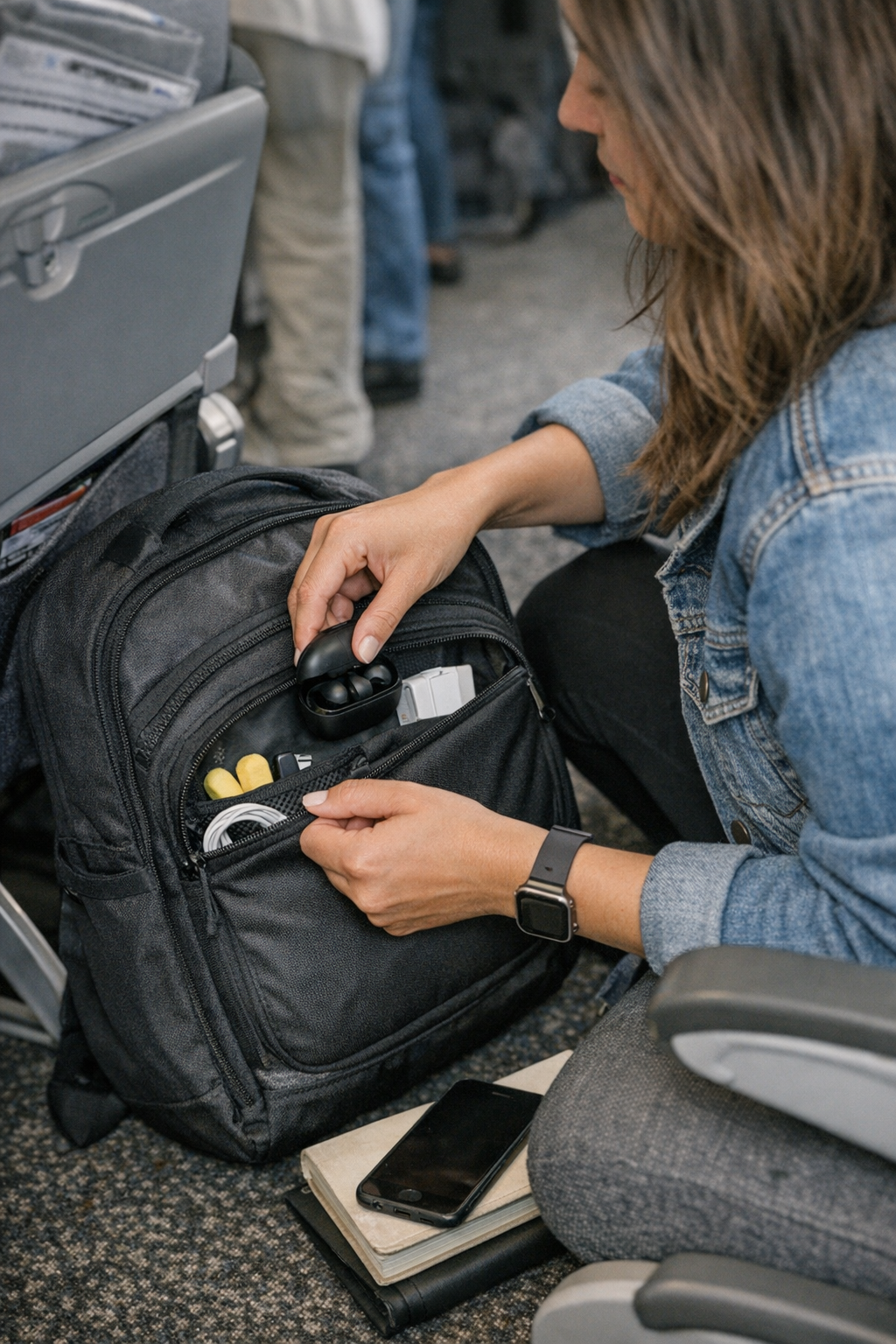
  • How a Simple Carry-On Pocket Design Cuts Travel Noise and Friction

    The moment you step into the security line, the cracks in your bag’s setup show themselves fast: what looked organized at home turns chaotic when your essentials are trapped behind zippers, buried by pouches, or lost in an outer pocket so crowded it might as well be locked. You’re squeezed in a boarding line, juggling a passport and phone, trying to look calm while you secretly wrestle your bag’s “system.” Every reach for comfort—a charger, a mask, earplugs—turns into a public display of pocket searching, pouch shuffling, and escalating zipper drama. Suddenly, what should be a two-second grab drags into a scramble. The whole point of traveling light slips away, replaced by the frustration of a well-packed bag that doesn’t move with you.

    Why ‘Organized’ Isn’t Always ‘Usable’

    There’s a critical difference between a bag that looks sorted on your bed and one that actually keeps up with airport reality. What starts as a neat assembly—cables tucked, pouches labeled, pockets zipped—breaks down by the third document check or late-night gate switch. Unzipping one pouch for a charger ends up spilling out half your gear; grabbing your documents means emptying layers you thought were separate. The core issue is not mess, but slow, stacked access—each “solution” introducing tiny repeated stall points whenever you need to move fast.

    The Repeat-Offender Moments You’ll Recognize

    • Security tray crunch: you’re holding your phone, digging for your passport, and realize the document pouch is pinned under two other organizers—good luck not stalling the line.
    • In-seat frustration: elbows tight, your hand wedges for earbuds in a shallow pocket, but the second item you grab snags everything else, drawing attention with each movement.
    • Boarding limbo: zipper after zipper, each attempt at “quiet” retrieval just creates more sound, more pause, and ends with a rushed, messier repack as the crowd compresses behind you.
    • Tray-transfer breakdown: retrieving a single tech item means undoing the careful order you built—your logic evaporates as travel chaos exposes flaws in the system.

    The Real Cost: Disrupted Flow, Lost Focus, and Shared Space Friction

    Every drawn-out retrieval or noisy shuffle multiplies when you’re under real pressure. The inconvenience that goes unnoticed at home becomes impossible to ignore in an airport line or cramped cabin aisle. Suddenly you’re rehearsing a sequence—open, unzip, dig, re-stack—while everyone waits and watches. Calm, private order is traded for public, visible delay. Announcements urge you forward, cabin space constricts, and every second spent digging just amplifies the tension. The bag hasn’t failed on neatness; it’s failed the test of movement and access when the stakes are higher.

    How Packing Choices Ripple Into Repeated Disruption

    Where you stash your high-need items shapes your entire flow. Stack organizers for visual order, and you bury necessity. Split everything into too many pouches, and you lose track: was the passport in tech, or did it end up with headphones? Each fix solves a past annoyance, but creates new work when the environment changes—in motion, at the gate, or under a time crunch.

    One common result: your bag looks ready, but routine access becomes a friction point. Passport under a pen case, earplugs wedged with a power bank—suddenly every quick reach interrupts the sequence. The strongest signal you need change isn’t a messy bag; it’s the instinctive dread at every checkpoint, tray transfer, or seat shuffle, when your flow hits another snag.

    Compact Isn’t Always Conducive

    Hyper-minimalist or compact designs often create their own kind of block. That outer pocket that should be for fast grabs turns into a confused multi-use space—snacks, tech, receipts—too loose and disordered, or so tight that nothing comes out without drama. Slim setups solve excess, but not the slow dig or the awkward public unpack when one item is sealed off by another in motion. Many setups look minimal, but force you into slow, showy retrieval right when you need zero interruption.

    The Shift: Isolate Essential Quiet-Use Items to the Exterior

    The only reliable fix that stands up to repeat-use testing: assign a dedicated, accessible exterior pocket for your silence-first essentials—earplugs, sleep mask, passport, power cord, e-reader, or compact comfort item. Not the main compartment. Not an inner pouch. Just one repeat reach, one quiet unzip, nothing else disturbed.

    This approach directly cuts friction in the most punishing real-world moments:

    • Boarding scramble: headphones slip out in one motion, no need to unpack the main bag or draw every eye with a zipper symphony.
    • Security rush: passport slides from the correct spot instantly, not after a fiddly bottom-of-bag dig that holds up everyone behind you.
    • In-flight: sleep mask returns to its pocket without triggering a cascade of re-folding, tidying, and disrupting seatmates.

    By giving essentials a visible, isolated home, the main compartment stays zipped and stable through repeated repacking. Used items go back in a fast, silent loop—not a scene. You keep order and forward motion, even when the airport pace turns brutal—or when the cabin lights go down and you’re moving by touch.

    Going from ‘Looks Packed’ to ‘Moves Quietly’

    This external-pocket shift isn’t a one-time hack—it’s an upgrade with compounding value over trips. The result is loud in its silence: fewer distractions as you duck into a row, no more slow, searching hands or mid-aisle repacking. Passengers barely notice your movements. Your bag stops making public noise every time you reach for something. The change isn’t about perfection or style—it’s about a system that holds up, keeps your trip flowing, and lowers both hassle and visibility where it matters most.

    The Quiet Carry-On Routine, Trip After Trip

    Even the neatest packing fails the test when you repeat the same reach, in the same crowded space, and hit the same blocking point. That “one last pocket” trick works until it becomes a friction spot in real pressure—security, tight aisles, frantic repacks, seat swaps. The dedicated exterior silence-pocket isn’t about looking like a minimalist or carrying it all; it’s about shutting down repeated open-close-reset cycles at the exact moments the old system drags. Security trays, seat changes, fast gate exits—each becomes faster, less visible, less disruptive.

    Set up right, your bag moves with you instead of against you. Noise fades, the stress of repeated public unpacking vanishes, and your carry-on finally works as quietly as you need it—trip after trip.

    CarryOnSupply