
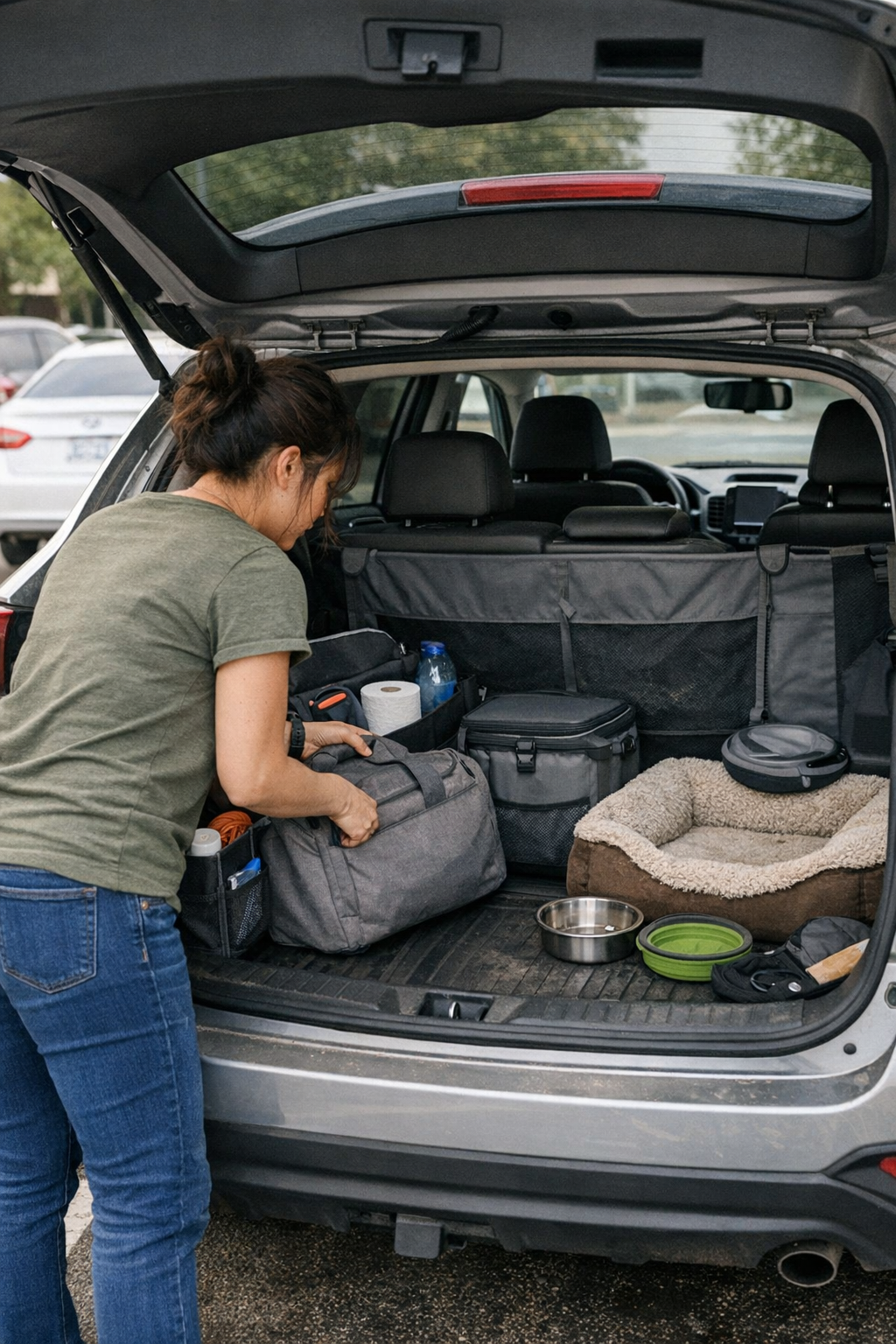
“Organized” can still mean headache—especially if your car’s ‘perfect’ setup keeps getting in the way when you actually drive. You tidy every pocket, click every tray into place, route every charging cable just-so. But as soon as the week begins—coffee in one hand, phone sliding to the floor, a tote bag squeezing between a rigid console and seat edge—the supposed organization trips you up. In theory, every compartment has its purpose; in practice, you find yourself shifting things aside, untangling cords, and improvising storage just to get going. A car that looks calm in the driveway can force you into extra moves, slower exits, and constant adjustments the moment your real routine hits speed.
When “Finished” Setups Start Slow You Down
The fantasy: a flawlessly organized car, ready for anything. The reality: over-managed interiors make everyday driving harder. The trouble surfaces right away on a cold morning—you’re rushing in, hands full, only to find cupholders jammed with supplies and critical reach-zones pinched by gadgets. The obstacles aren’t always obvious until you have to work around them: digging for your cable under a stack of pouches, or bumping an add-on tray with your elbow every single time you settle in. What promised ease can quickly raise small barriers—so the neatness you see actually increases the friction you feel.
The system’s limits emerge fast: actual use exposes every spot where the organization interrupts, not helps. It shows up during that first hurried commute, when what seemed like an upgrade is now something you’re working against.
Spotting the Trouble Zones: Where Organization Backfires
All cars have access “hot spots”—the seat edge you cross with bags, the pocket you grope for at stoplights, the charging zone you juggle mid-drive. These are the friction points: drop keys and you’re stuck, reach for a charger and you battle an organizer edge. Block these zones with rigid storage or even extra protection gear, and quick motions turn into awkward shuffles. Think about a weeknight grocery run: arms full, you open the door, only to find the floor boxed in, center console crowding your entry, or a cargo tray that makes loading an exercise in rearranging rather than tossing. These are the moments when the system breaks down—not in appearance, but in everyday movement and delay.
Beneath the Surface: Why Clutter Creeps Back
The urge to add another slot, bin, or cable wrap is strong. “One last tray,” you reason. But each extra piece of control tightens the space for hands, shoes, and stray items. Soon you’re improvising: stacking mail atop organizers, jamming water bottles where they stick out, letting receipts drift between tightly bordered trays. The car looks ordered until you try to remove a bag or quickly clean crumbs—then the gaps have all shrunk, and routines stall. Cleanup gets harder, not easier. Clutter doesn’t vanish; it migrates and stacks up at the first sign of pressure.
The Frequent-Use Reality Check: Pressure Reveals Weak Links
Organization doesn’t break in the showroom or on a lazy Sunday; it breaks under stress—mid-errand, in a rainstorm, or scrambling to school dropoff with coffee and phone in hand. The “neat” cable blocks the handbrake. The smart cargo tray ends up in the way when you toss in a backpack. The area at your side, once free, becomes a traffic jam of organizers you have to nudge aside to get out. In practice, these polished setups can slow every routine—forcing temporary clutter in random zones just for a few seconds of speed. Over time, these seconds add up to real, repeated frustration.
What Really Works: Strategic Empty Spaces and Clear Paths
The real upgrade isn’t more compartments—it’s carving out breathing room where you actually move. With repeated use, the difference becomes clear: the best setups leave flexible gaps and open pathways that adjust to what the day throws at you:
- An empty cupholder near the armrest: ready for coffee today, a set of keys tomorrow, or nothing at all if your hands are full.
- A seat edge not boxed in by plastic: giving you a fluid spot for bag drops, quick slides, or even a fast sweep of crumbs—no blockages, no pinched fingers.
- Charging cables tight to the side: no more elbows snared or sleeves caught reaching for your phone. Access is direct, interruption-free.
These aren’t losses in storage—they are gains in speed. When you’ve left ‘live’ zones open, rainy-day loading, messy errands, or dog-travel moments don’t slow to a crawl. Routines run smoother, with far less pausing or double-handling. Most telling: day-to-day clutter decreases, because stuff returns to natural spots instead of stacking up atop rigid organizers that get in your way.
The Subtle Cost of Over-Organizing
Sleek interiors can camouflage new problems. Each bonus tray or divider means another small detour—one more block your hand has to sidestep, one more pause at every grab and return. At first you ignore the micro-hesitations. By Friday, you’re frustrated: this was sold as improvement, but it’s just new obstacles between you and the road.
Practical Adjustments That Last
Lasting solutions aren’t the densest or most “solved”—they’re the ones that hold up under real, repetitive action. Setups stay reliable when core areas stay open: a cable free to pull, cup space that flexes, a seat edge unblocked for instant entry or exit. You come back after a trip and every move is one step, not a multi-stage shuffle. Cleanup is less of a project; you’re not prying coins from under a rigid tray, or untangling your own system just to shake out dirt. Re-entry flows like it should—no slowing down, no reset, just a car that stays ready on your terms.
Making the Car Feel Easier—Not Just Looking the Part
Order is easy to fake for a photo. True usability is proven by repetition—the quick drop, the reach on the go, the post-park return. “Optimized” isn’t about maximum fill but minimum friction. Every open path, every clear space is a tiny future favor to yourself. Small gaps, open holders, and clever cable routes aren’t cosmetic. They decide whether your morning works—or wears you out before you even get on the road.
Explore car-use solutions that make routines easier—not just tidier—at DriveWellSupply.