Blog

  • Choosing Between Adjustable and Fixed Closet Shelves for Daily Use

    You don’t discover the true difference between adjustable and fixed closet shelves until you’ve lived with them through busy mornings, rushed evenings, and endless laundry loads. On paper, it’s a simple choice: flexibility versus stability. But in real closets, where habits and clutter collide, the stakes rise fast. That shelf you set on day one? It decides whether your routines feel smooth—or you spend every week battling fresh friction.

    That First Week: Everything Fits—Until It Doesn’t

    The early days fool you. Install new shelves, line up the bins, arrange the shoes—everything looks sharp and orderly. For a short stretch, you’re convinced you’ve defeated closet chaos: every shirt in its slot, every basket labeled, even the awkward purse tucked neatly away.

    But then reality peels back that tidy surface. A new winter coat lands in the mix, or someone swaps sneakers for boots. Suddenly, the shelf holding hats now hosts a half-unzipped duffel. Baskets fill and start to spill—first a scarf peeking out, then gloves tumbling to the floor. Within a week, you’re already stacking, squeezing, and bending the rules of your own setup. Friction creeps back—one grab at a time.

    Adjustable Shelves: Flexible but Not Automatic

    On paper, adjustable shelves promise to solve these moving targets. Need to fit that pair of knee-high boots? Move a shelf. A big new storage bin? Lower another just a notch. When used, the flexibility is real—if you choose to pause, empty a section, and physically reset the shelf height.

    The hard truth: busy routines rarely leave space for this reset. Instead, most of us squeeze that new item in, tilting boxes or burying smaller things behind whatever fits. The shelf might be adjustable, but our habits turn it into a fixed surface until the next rare overhaul. Suddenly, you’re reaching behind a row of mismatched shoes to grab one pair, or restacking sweaters because a storage bin doesn’t quite slide in like it used to. Flexibility fades when every adjustment requires a mini project.

    One Measurable Reset: Real-World Payoff

    Yet when you invest five minutes to adjust that shelf—raising it just enough to let coats hang freely, or lowering to fit a box without crushing the container—the effect is outsized. Boots finally stand up. The bin slides out smoothly instead of snagging. It’s not a dramatic visual transformation. What changes is the daily current: no more nudging baskets around or pulling sweaters from the middle of a listing pile. Less time rescuing toppled stacks. More likelihood you actually put things away, rather than letting them sprawl on the floor out of frustration.

    Fixed Shelves: Relentless Stability, Real-World Limits

    Fixed shelves, on the other hand, never budge. Their strength is literal—no wobbling under heavy bins, no risk of a sagging surface midway through the season. They’re ideal for massive detergent bottles, stacks of towels, or out-of-season gear housed in weighty bins. Order feels bulletproof.

    But only as long as nothing changes. Sneak in a taller item and you’re out of luck: the new bin gets jammed sideways, or a stack of T-shirts climbs higher than the shelf allows and eventually flops, spreading across the shelf below. That crisp visual order starts to break down as you rearrange, combine bins, and create layered piles just for things to fit.

    Beyond Closets: When Fixed Means Friction

    The struggle isn’t limited to bedroom closets. Entryway shelves, fixed at backpack height, soon clash with boots or helmet collections. Items overflow onto doormats. Bathroom shelves, perfect for towels, get crowded with stray products and half-used toiletries. You end up with dead vertical space above low-slung baskets, and nowhere to go when you bring home something new. The “organized” look becomes a mirage—a thin shield over a growing undercurrent of shuffling and stalling.

    Looking Organized vs. Living Organized

    Photos can’t tell you what daily use reveals. After a deep clean, any system appears neat. But the reality test comes week after week: Are you shifting stacks to get a single t-shirt? Digging behind a basket to find your hat? Or finding yesterday’s organizing effort undone because piles don’t hold their shape?

    Adjustable shelves only deliver if you commit to resizing as life shifts. Leave them alone too long and the entire system hardens; sudddenly, you’re back to awkward workarounds. Fixed shelves, for all their ruggedness, eventually force you to double-stack bins or resign yourself to perma-clutter as the categories blur and pile up in unused corners. Every day, you pay in extra movement—an invisible tax on speed and clarity.

    Daily Storage: Which Friction Can You Live With?

    Every routine is a different test case. Ask yourself:

    • Does your closet’s inventory rotate with the seasons, or do you mostly keep the same things in the same place?
    • Are you a regular shopper, bringing in new bag sizes and odd-shaped items?
    • Do you have the energy (and patience) to occasionally take five minutes, empty a section, and lift or lower a shelf?
    • Are you storing real bulk—cases of soda, stacks of books, paint cans—that demand unwavering strength?

    Too much constant tweaking is unsustainable. But so is enduring a setup that forces you to constantly reshuffle, restack, or leave items homeless. Clutter builds slowly, bin categories bleed together, and the closet that once felt generous now feels cramped—not because you own more, but because storage can’t keep up with your life.

    Stronger Setups, Smoother Days

    Build in margin for the unexpected. The best storage systems start with accurate sizing—measure your tallest boots, largest bags, and bulkiest baskets before fixing shelf heights. Assign everyday items to the “easy zone”—at chest level, for quickest access. Relegate off-season or once-a-month pieces higher or lower, out of daily circulation.

    If you rely on fixed shelves, add vertical dividers between stacks and bins. It stops categories from bleeding into one another and helps keep piles upright longer. For adjustable shelves, a reset once or twice a year—triggered when you first notice grabs getting messy—can buy months of smoother living.

    Pay attention to your routine’s pinch points. If you’re regularly digging, lifting, or unstacking to reach the same few things, don’t ignore the signal. Even a small shelf adjustment can streamline access and keep clutter from seeping beyond the closet and into everyday living spaces.

    The Shelf Choice That Actually Pays Off

    There’s no single best answer. If your storage rarely changes, fixed shelves have an appeal you never have to think about. But if your routine involves frequent swaps, seasonal items, or gear with growing needs, adjustable shelves become a low-effort way to keep pace—so long as you use their flexibility before frustration takes root.

    The payoff isn’t a magazine-perfect closet. It’s opening the door every day and finding what you need in one try, not five. A few minutes spent adjusting today can mean weeks of order—and far fewer reasons to dread the next closet shuffle.

    See more practical storage ideas at ClosetWorks.
  • Why Airflow Control Defines Precision Heat Guns for Indoor Projects

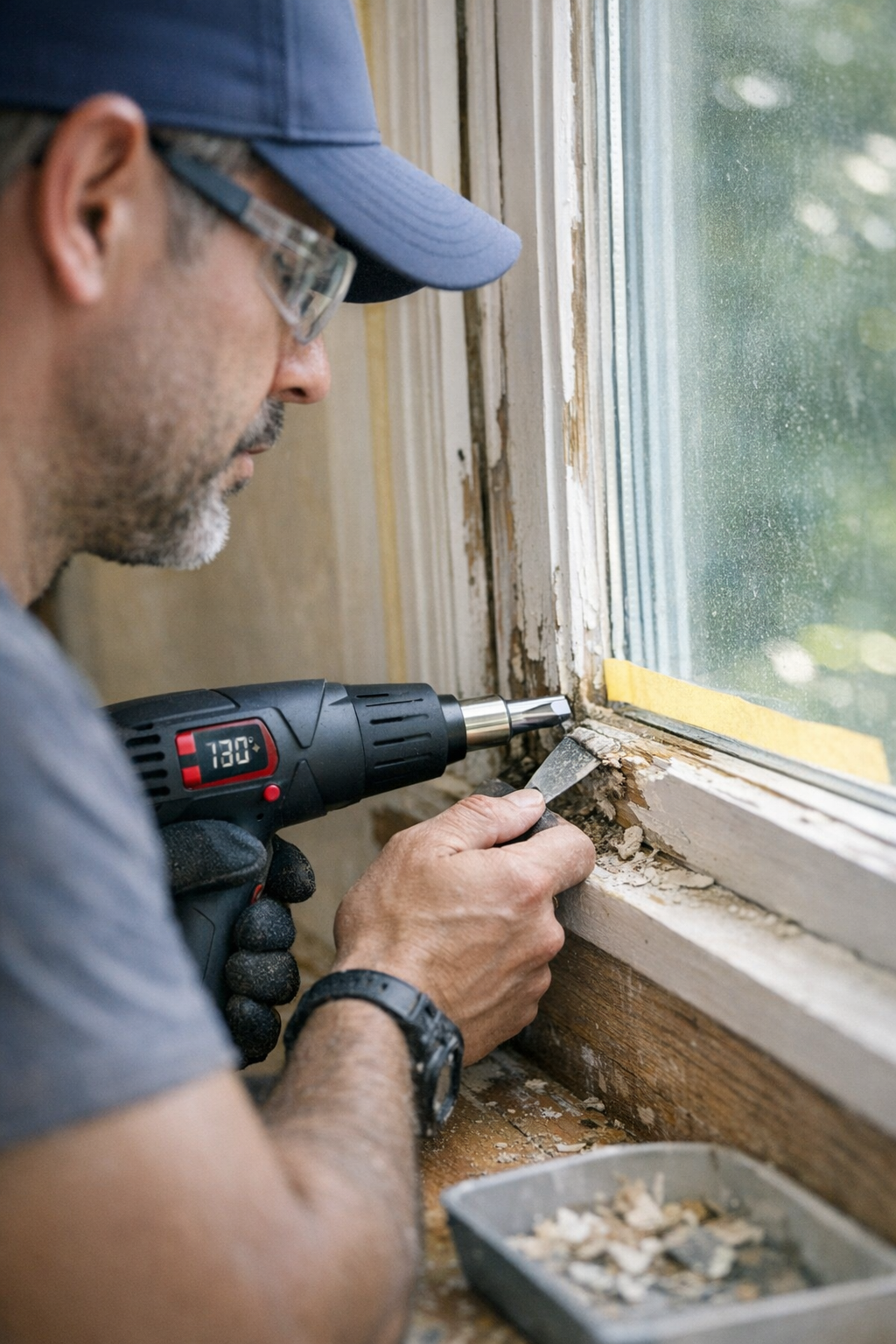
    There’s a familiar aggravation that shows up fast when you’re in the middle of fine detail work—stripping tight window muntins, cleaning stubborn paint from intricate trim, or peeling old finish off shelves wedged between cabinets. You haul out a so-called “precision” heat gun, expecting sharp control, and wind up fighting it instead. Blistered corners flare up. Paint lifts past the masking. Edges that were supposed to stay untouched end up scorched and uneven. If you’ve ever spent two hours prepping, only to have a few seconds of sloppily directed heat undo it all, you know the gut-drop. And you know how the wrong airflow, not just the wrong temperature, can sabotage the entire job.

    Airflow vs. Wattage: What Really Matters Indoors

    No one does delicate finish work in a showroom. You’re contorted under a stair tread, at a cluttered bench, or balancing in cramped trim alcoves. In these real-world corners, what decides whether your project ends up crisp or riddled with touch-ups isn’t the power rating on the box—it’s how controllable that stream of heat actually is. Two heat guns might look identical, both branded “precision,” but once you start working tight putty lines or detailed moldings, massive differences show fast.

    Picture softening old glazing alongside a painted sash. One gun delivers a laser-tight column, letting you direct every bit of heat right where it’s needed. Another diffuses warmth across a three-inch swath, softening what you want—and what you absolutely didn’t. There’s no elegant recovery once a broad spray curls up the paint you taped off. Even the steadiest hand can’t wrestle back a finish after heat’s seeped under tape and behind the detail. Every inspection you do later will show the ghost of that misfire.

    How Repetition Turns Small Errors into Big Headaches

    The first pass is rarely the disaster. Start stripping lacquer from a veneered kitchen cabinet, and both your “fine” and generic heat guns seem workable. But as you repeat—panel by panel, feature by feature—edges start to fail. The tape isn’t enough. Lacquer flakes in weird places. Paint fuzzes up outside your lines. You sand back the error, but every session leaves borders slightly rougher, and those “quick fixes” start eating the clock.

    This is the hidden toll of a tool that won’t respect the line you’ve drawn. Any carpenter, finisher, or even weekend rehabber recognizes the pattern—what’s a minor nuisance at first gradually becomes a half-day’s overtime doing touchups. Precision isn’t a luxury when you have batch work to get through. It’s the difference between keeping pace and constantly doubling back.

    The Payoff from Upgrading: What a Reduction Nozzle Actually Does

    Some upgrades aren’t hype—they’re relief you can measure in your workflow. Swap your standard attachment for a 13mm reduction nozzle and suddenly the difference jumps out. Now the heat hugs the edge. You can keep the gun focused for ten seconds on a corner profile—no scorch lines, no glue bubbling across the joint, no accidental lifts along the meticulously masked tape. Face frames, veneered patch repairs, and delicate adhesive strips all become calmer work. The change doesn’t just live in theory: over a dozen doors, or a week of shop batches, you’re saving real minutes, reducing tedium, and handing over work that doesn’t need apologetic “blending” later.

    It’s not a magic fix—but it’s the difference between reworking the same spot for the third time and moving confidently to the next piece.

    Are You Fighting Your Own Tool?

    Spot these nagging symptoms and you’ll know your setup’s working against you:

    • Subtle bubbles or odd shine popping up past your protected strip
    • Edge fuzz or scorch patterns that always need “just a little more” sanding
    • Messy results on repeat details, profiles, or corners where heat should have been contained

    Techniques will only get you so far if the heat won’t stay put. Those little errors build up fast when you’re running batch jobs or elaborate trim runs.

    More Power Rarely Solves the Problem—Control Does

    It’s easy to assume a bigger heat gun will chew through jobs quicker. But inside delicate built-ins or working around finished surfaces, force isn’t your friend. All that extra wattage simply pushes damaging heat into places you don’t want it—making warping, peeled paint, and melted adhesives a near certainty. Suddenly, a half-hour touch-up is a half-day correction.

    Consistent, containable airflow pins down only the spot you choose. The “invisible” qualities—patterned nozzles that actually match the work, smooth output, and real adjustability—do more than any number stuck on the label. That’s what makes a tool something you trust rather than resent.

    Where the Numbers Show: Long Pieces, Tight Spaces, Batch Work

    The gains from real precision show up most during repetition—stripping twenty door frames, finessing endless feet of shoe molding, doing lineup after lineup of cabinetry seams. Small mistakes don’t stay small—they multiply. What’s one ruined edge in isolation becomes hour after hour lost to repair when you scale up. Suddenly, your pace is dictated by how often you pause to sand, patch, or retape—not by the work itself.

    Shelf models can seem identical until you rely on them, day after day. The barely-noticed curl of a nozzle, the steadiness of airflow, the way an accessory fits—these define your results as much as your touch ever will. The people who notice? Anyone expecting the job to look finished, not just “not ruined.”

    Bench-Tested Habits for Cleaner Results

    • Dial in with test scraps: Before raising the gun near real trim, blast a cutoff for five seconds. You’ll see instantly whether your heat creeps or stays sharp. If the warmth hits where you didn’t mean, rethink the nozzle or setting.
    • Section off every stage: Don’t trust exposed edges to luck. Divide big runs into smaller, protected zones, and always keep a strip of metal or even folded foil as a barrier when softening finishes near corners.

    The Takeaway: Precision Directs the Work—Not Just the Heat

    Fine indoor detail jobs demand more than steady hands. They require tools that deliver on intent—not excess, not almost. When heat lands only where you send it, your pace picks up, your anxiety drops, and your finish finally matches your setup time. If you’re fixing the same errors, or find your brushwork stalling to chase after a heat gun’s mistakes, it’s time to question what’s guiding your hand. Reliable airflow control and well-designed accessories won’t solve every problem, but they save you enough hours over a season to justify the shift—job after job, batch after batch.

    Explore work-proven heat guns and accessories at Gumboll

  • How Thoughtful Car Organization Enhances Everyday Driving Comfort

    You settle into your car, expecting order—the organizer is where you left it, cables look managed, the floor tidy. But by the second errand, annoyance creeps in: the charger cord tangles around your bag, sanitizing wipes have slid into the passenger footwell, and the tray that once held keys now blocks your coffee reach. Surface tidiness collapses with the first real use. The daily pause, reach, and untangle become routine interruptions—a sharp contrast to how organized your interior seemed just hours before. If your car looks “reset” but forces these same small fights every day, you know the difference between neatness and function. In the DriveWellSupply world, car setup isn’t about a clean photo; it’s about layouts that survive the actual rhythm of parking, grabbing, driving, and returning.

    When Car Organization Falls Apart Under Real Use

    It’s easy to mistake a freshly organized car for a lasting solution. But calm cabins rarely last beyond a couple days of real routines. That cable, tightly routed in the morning, now dangles and snags the second you reach for the gearshift. Your wipes, which had a home, drift with each turn and hide from reach. A tray that cut clutter yesterday now blocks hand space or disrupts cupholder access. Each “fix” reveals a new snag in repeated use.

    This isn’t just clutter sneaking back—it’s setup friction slowing every quick stop. A tidy look disappears fast when storage choices slip, block, or shift, forcing small but relentless detours with every errand.

    Real-World Friction: Interruptions That Add Up

    The gap between a car interior that actually works and one that just appears organized comes down to repeated pressure. Items bought to “solve” disorder—charger cradles, pouches, cargo bins—lose their advantage once they can’t hold position or keep the essentials straight after a week’s worth of parking, hasty exits, and quick returns.

    The Return-to-Car Reality

    You don’t notice your organizer—until suddenly you do, because it’s blocking your leg or sliding into the door pocket again. Park at the coffee shop, return, and the phone cord’s wrapped around the gearshift. Run errands, and the wipes pack now nests under the passenger seat. These aren’t messes you’d photograph, but in repeated use, they show up as hesitations and reach-arounds that were never part of your routine before the “upgrade.”

    When Fresh Setups Create New Issues

    Installing more storage—the latest seat pocket, center tray, or large catchall—feels smart at first. But layering fixes often means layering new conflicts. A seat pouch for wipes and sanitizer bulges against the seatbelt, turning normal entry into a shuffle. Cables routed behind organizers end up threading awkwardly across grab points, causing snags or accidental unplugging. The “more organized” your cockpit, the more potential for one fix to crowd out another, especially under real pressure—late pickups, rainy-day groceries, or a quick work stop.

    Everyday Scenarios: Where Structure Slips, Time Leaks

    Cord Drag, Cup Snares, and Missed Reach

    Routine: unplug your phone while leaving work. If the cable dives between the seat and center console, you’re forced into an awkward reach or knee-twist just to fish it out. It’s seconds lost, multiplied by every drop-in or shift, quietly souring your perception of “organized.”

    Organizer Drift and the Disappearing Essential

    Seat-side trays only work if they don’t migrate. Over a few days, sanitizer, receipts, and smaller items edge toward the floor or door gap, leaving your essentials scattered just when you need smooth re-entry. What looked clean after cleaning quickly feels scattered in real, high-frequency use—rummaging replaces the “grab-and-go” ideal you were aiming for.

    Cargo Order That Becomes a Loading Hurdle

    In the trunk, an organizer may look sharp, but try rushing through groceries with rain coming down. Instead of tossing bags and closing up, you’re tiptoeing items past bin walls or shuffling dividers, turning a quick unload into a balance exercise. Efficiency on paper often means more steps under pressure when the setup doesn’t adapt to speed.

    Small Adjustments with Big Impact

    Another big-basket organizer or a round of deep cleaning rarely solves these pain points for long. Real fixes show up as minor adjustments that sync with your movement—not another layer to manage, but smarter routing, right-sized holders, and setups that stop creating new drag.

    Cable Routing That Stays Out of the Way

    The upgrade nobody notices until it’s missing: Locking the charging cable along the console edge using a simple clip or friction route. The cable stops drifting into cupholders or underfoot, so there’s no more constant tugging or fishing. Zero drama, zero daily resets—a problem removed from your awareness, not just tidied out of sight.

    Organizers Sized to the Essentials—Not the Everything

    Instead of a multi-pocket bin, try a narrow tray that holds just your phone, sanitizer, and primary key fob by the gearshift—no space for overflow, no excuse to pile. Space along the seat edge clears up, grabbing and sitting down becomes instantly smoother, and there’s less to shift or toss during crowded commutes. “Order” means less to maintain, not more to adjust.

    Why Quiet Setups Survive

    The car setups that last are the invisible ones—their proof is in the absence of friction. When you aren’t checking, shifting, or re-tidying between every stop, you’re left with a calm flow: cables never in the way, wipes always retrievable, bins motionless and never blocking a fast sit-down. This isn’t “magically organized”—it’s a stability built for real test cycles, from Monday morning’s rush to Friday’s full trunk.

    The result isn’t a perfect “after” shot. It’s the quiet endurance of practical layouts, measured not by how clean your car looks after a reset, but by how little it bothers you to keep it functional all week long.

    The Cost of Setups That Can’t Keep Up

    When a cable keeps drifting or a bin blocks seat controls, the consequences stack quickly: cables tangle underfoot, organizers wedge behind seats, small essentials disappear when you actually need them. “Efficient” choices that don’t match your habits add up to more adjustment—resetting, restuffing, or flat-out giving up on their promise of smoother use. Over days of normal errands, the maintenance costs climb—and your car starts to feel like work, not relief.

    The Real Payoff: A Car That Clicks Into Place

    The best interiors aren’t just tidy after cleanup—they stay in sync with how you actually exit, grab, load, and repeat. This is the payoff: a car that feels faster and friendlier every time, not just after an afternoon of reorganization. When your setup matches your real routine, you spend less time resetting and more time moving—with order that quietly holds under pressure, not just on display.

    Explore more real car-use solutions at DriveWellSupply.

  • Creating a Calm Dog Greeting Routine That Lasts Through Daily Use

    Why a Calm Greeting Routine Matters in Everyday Pet Care

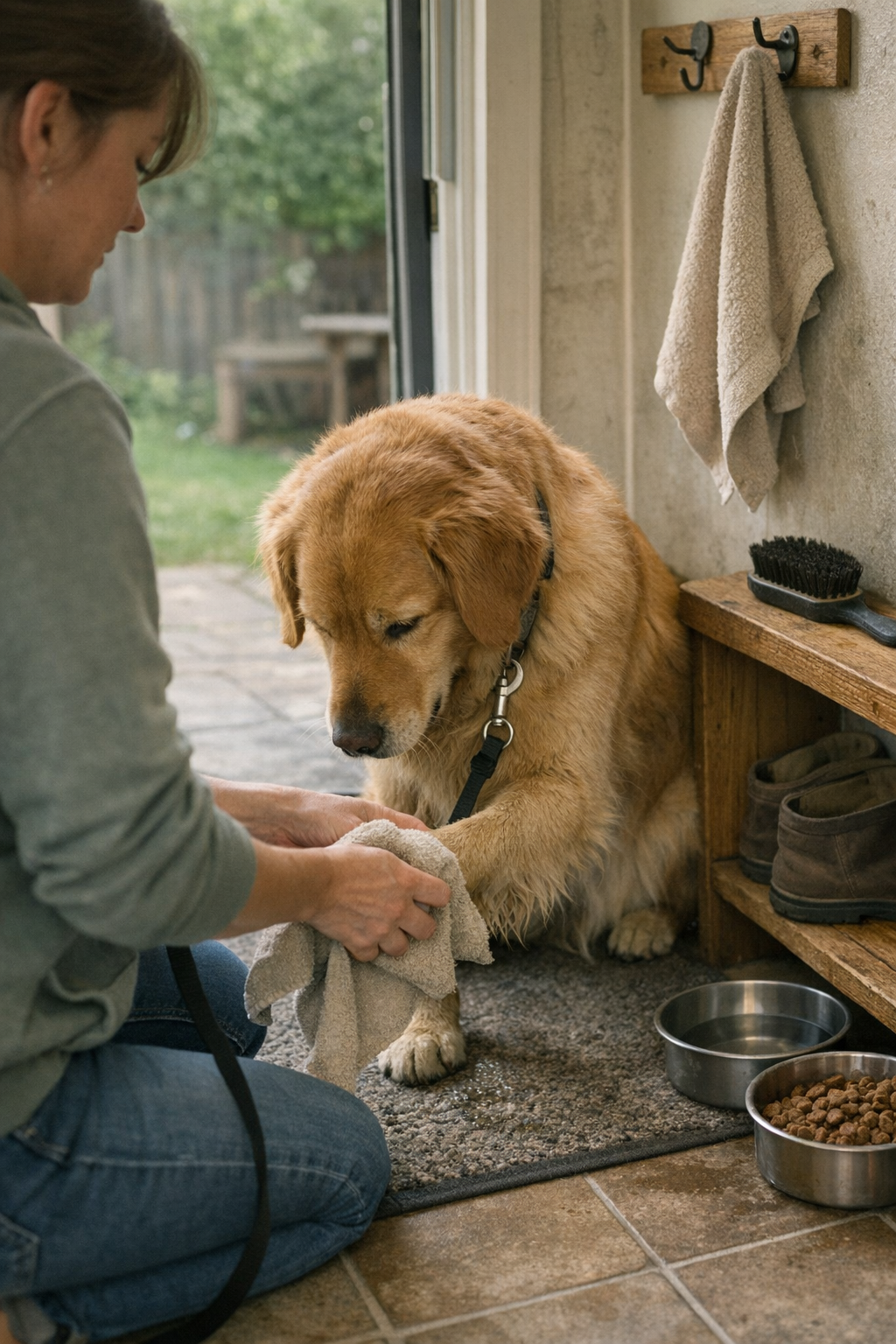
    Most pet setups start out looking organized—maybe there’s a mat by the door, a row of hooks, a tidy bin for towels. But when you’re dragging in a wet dog, juggling grocery bags, and reaching for the one thing you need, the cracks in your routine surface fast. A calm greeting routine isn’t about appearances; it’s what separates a quick, low-stress reset from the constant scramble of searching for supplies, mopping muddy floors, and cleaning up after routines that don’t actually work when life gets busy. The difference isn’t subtle. If your entry zone can’t keep up—even once—the mess doesn’t just pause your day, it spreads. This is where CalmPetSupply’s world of basics fits: not as décor, but as tools that turn real transition chaos into hand-ready order.

    Small Misses, Big Impact: Repeated-Use Scenes

    Coming home in the rain, your dog charges ahead. You reach for a towel—find tangled leashes instead. Maybe the towel slipped to a chair, or ended up damp and unusable. Next, the water bowl’s out of reach, blocked by a forgotten brush, or pushed under a bench from last time. Each step is slowed by something that was supposed to help, but now just gets in the way. Muddy paws edge farther into the house; the domino effect isn’t one bad day, but a pattern: another job you didn’t plan for, another search for the brush, another wiping session that waits too long. These little misses build—not into disaster, but into a harder, messier week.

    Day after day, the same friction repeats. The dog hurries to the feeding mat as you fumble to wipe paws; the towel is missing, or balled up and damp. The brush is buried under mail or tossed behind a door. Instead of a smooth entry, you’re caught in a chain of improvising. There’s never a disaster—just the slow leak of time and order every time the setup falters.

    Appearance vs. Function: The Setup Challenge

    An entryway can look organized but fail under pressure. Extra towels stacked “just in case” mean digging through a heap with muddy hands while your dog shakes off on the clean rug. Bowls stacked at the bottom, grooming tools in the next room, leashes on high hooks—these setups look fine when the day is slow, but crumble during a real rush. The more you need split-second access, the more the wrong placement leads to skipping steps. That towel on the other hook? Nobody grabs it when it’s out of sight. The brush left near coats? Missed until grit is already on the floor.

    Even after a determined re-org, weak points return fast. The mat migrates and no longer catches muddy paw prints. The only towel hook is empty, or the bin is full of clean towels but not one at hand. These aren’t failures in design—they’re signs the setup can’t withstand the real pace and interruptions of daily life with pets. If your system only works when you’re moving slowly and nobody is distracted, it’s not built for actual use.

    The Domino Effect of One Missed Step

    One skipped step at the door starts a chain of extra work. Let wet paws go without a wipe-down, and there are mud streaks winding through every room. Skip the brush, and dust or pet hair travels into shared spaces where it’s harder to clean. Water bowl gets nudged off its mat or blocked? Suddenly you’re mopping a splash instead of moving on. These are not rare emergencies—they’re repeated corrections that chip away at any sense of routine.

    Over time, these constant resets add friction. You slow down, reshuffling bowls and towels again, delaying dinner, retracing steps to hunt for that brush. The gap between setups that “look fine” and those that stay ready even during messy, fast transitions becomes impossible to ignore.

    Practical Adjustments That Change the Routine

    Real improvement isn’t more products, it’s simple, visible switches that stick. Command-hook a single towel directly at entry height—no piles, no excuses, always one dry towel within arm’s reach. Keep the soft brush at floor level next to the mat—never buried, never too far. Designate a low, stable spot for water and food bowls—never under other gear, never lost under a bench. Each change doesn’t just look tidier—it physically reduces the reach, the search, that three-second lag where things unravel. Over dozens of daily uses, these details decide whether care feels light or like an extra chore.

    The routine that lasts isn’t the perfectly staged one; it’s the setup anyone can use on a rainy fifth trip through the door, when hands are full. Consistency beats quantity: the right tool, always where it should be, not scattered or buried out of sight.

    Seeing the Strength of a Reliable Routine

    You only notice the payoff of a calm greeting routine after dozens of busy days. When towels and brushes stay at arm’s reach, resets are instant—no more tracking mud so far inside it means another room to mop, no more skipped wipes, no more bowls drifting out of place. Instead, the entry area becomes stable: pet gear doesn’t creep into shared spaces, feeding and water setups don’t cause repeat mess, and the scramble evaporates. Small, reliable access turns into less cleaning, less reshuffling, and fewer reasons to dread the next walk or meal.

    The invisible weight of repeated, low-grade mess and missed steps is replaced by a rhythm that your household can actually keep up with. When routines click, the pets settle quicker, the gear works like it should, and the basic setup stops being a drain. That’s the practical core of CalmPetSupply: tools and arrangements tested by real use, not just organized for appearance.

    See everyday setup solutions at CalmPetSupply.

  • How Thoughtful Carry-On Design Reduces Travel Delays and Stress

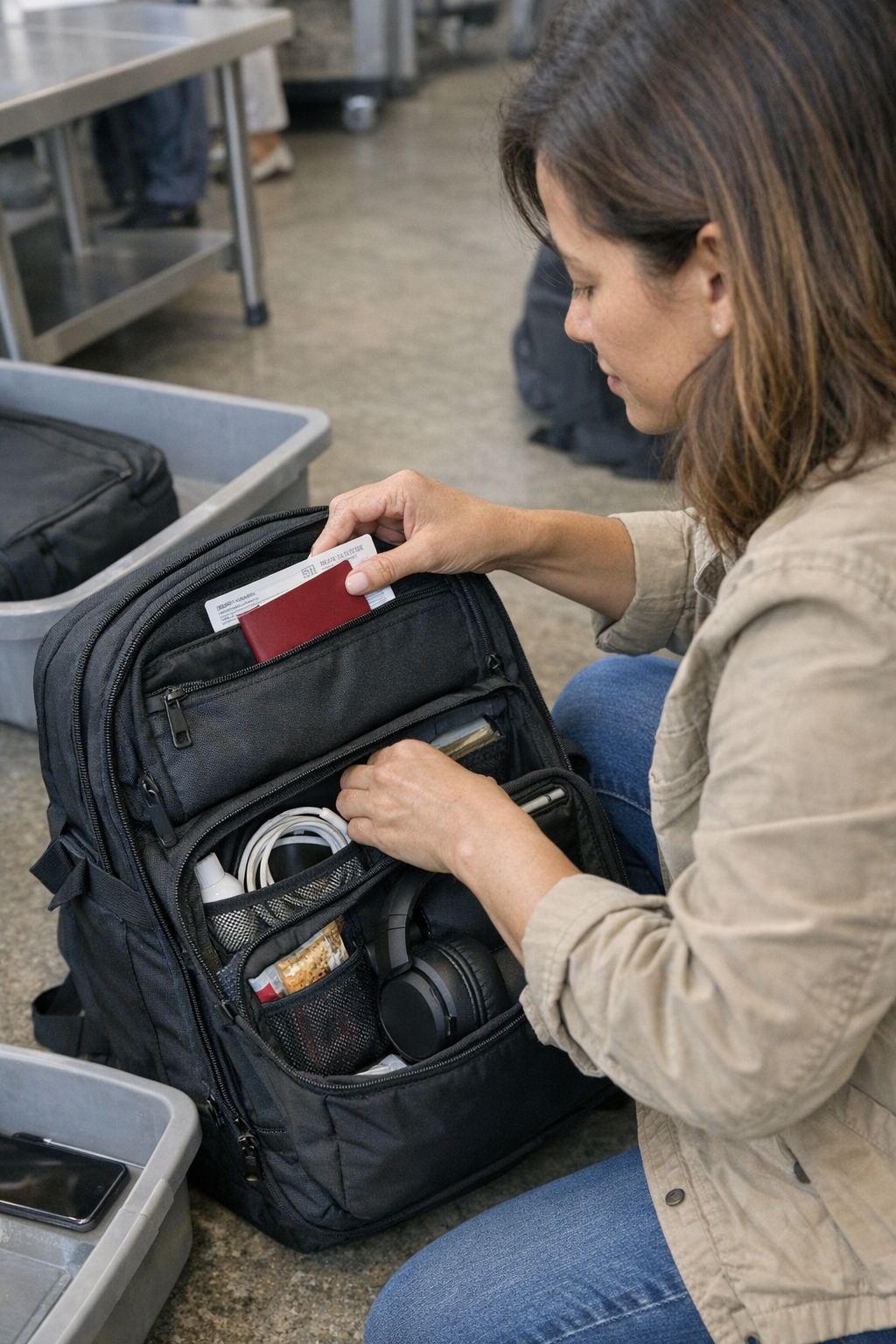
    Most travelers don’t realize their “organized” carry-on is primed to fail until airport movement turns simple pockets into friction points. At home, it looks ready: lines neat, compartments zipped, everything in reach. But the moment you’re in a real queue—security trays moving, agents watching, people pressing behind—a micro-delay reveals itself. Zippers snag on pouches that slid since you packed. Boarding passes wedge behind charging cables, or quick-access pockets jam up with whatever you stuffed in last. The illusion of order vanishes under live conditions; the bag that promised control instead drags at your every stop.

    When Visual Order Collides With Real Travel Pace

    The bag on your entryway bench might look dialed in: tech stacked, paperwork visible, snacks tucked away. But a travel rhythm exposes design flaws—reachable at rest isn’t the same as reachable in movement. You reach for your ID and a charger shoulder-blocks it. The “quick-access” pocket? It’s full of mixed cords, and you’re stuck unzipping the wrong pouch—twice. With each line, fresh obstruction: a zipper blocks a pass, a passport scrunches under wrappers, headphones come out knotted and cost you another five seconds. These interruptions aren’t embarrassing, but they’re relentless. Every fix chips away at your pace, especially when you hit the same hitch at every checkpoint.

    The real strength test isn’t first glance—it’s mid-rush retrieval. If grabbing what you need under pressure means negotiating overlapping compartments or shifting contents, the structure fails. What starts as small re-adjustments becomes a loop of slowdowns—passport tangled in cable, headphones buried beneath pouches, boarding card stuck behind chargers. Each pause is minor; the frustration is that it shouldn’t be happening at all, much less on repeat.

    Scene: The Security Tray Stall

    You’re finally at the x-ray belt, bag on tray, about to show your boarding pass. Simple—except the pocket meant for it is pinched tight with two cables, stuck to a half-eaten snack. You root around, produce a power bank instead, shuffle again—the agent is waiting, the queue is closing in, and a pass that was “on top” an hour ago now costs you small bits of dignity. These aren’t single-trip surprises; they’re repeated frictions built into a setup that looks fine at rest and fails under even modest airport pressure.

    When Every Five Seconds Repeats

    The pain point isn’t a dramatic failure—it’s the low-grade hassle that keeps happening. Over and over, you dive for the same document, repack the same pouch, hope something stays where you left it only to meet the same resistance. Fresh city, old problem: ID buried again under snacks and tech. One fumble is nothing, but by the third, fourth, or eighth search in a day, your patience wears thin and the compounding drag becomes real travel fatigue.

    Static Packing, Dynamic Friction

    That color-coded, compartmentalized system built at your kitchen table unravels after the first real shake. One snagged cord yanks a wallet free; an overstuffed charger pouch compresses your documents. Arrive at your seat to find headphones strangled by a toiletries kit, forcing a repack that blocks the aisle and draws side-eye from the boarding line. Airports punish static structure: it never matches up against the bumps, pulls, and seat-side twists of the actual route. Most travel mess isn’t dramatic, just constant: every extra zipper to open, every scavenger hunt in a crowded gate area, every retracing to find something you should already have in hand.

    Carry-on frustration rarely arrives as chaos; it’s built from the burden of micro-corrections. Each time you double-back on your own setup—two zippers instead of one, three pouches to rifle for the usual passport or pass—you burn momentum and draw out the awkwardness for yourself and the people behind you.

    The Structural Test: Movement, Not Appearance

    On the packing table, separation and order look perfect. But the real pressure test comes mid-transit, after you’ve been through three checks, a gate change, and a hotel reset. Suddenly, the aesthetic decisions—passport nestled with tech, chargers floating with snacks—start failing. By the afternoon, “organized” just means you’re always repacking after every retrieval. You’re not operating from flow; you’re patching the same holes, grumbling as you dig through sliding layers of gear for the item in heaviest rotation.

    When “Neat Enough” Is Nowhere Near Smooth Enough

    The difference between a functional carry-on and a photo-ready one is only clear when interruption persists. If your setup demands repacking after almost every access—if every “quick” grab means stopping to sort, dig, and reset—the visual order is just masking routine interruption. Each minor rummage signals a bigger design fault: tidy lines mean little if your travel beat is always getting tripped up.

    Small Adjustments, Real Efficiency

    Strict separation turns theory into practical flow. Carve out truly distinct homes: one flat, open slot for your boarding pass (never shared, always top-facing); a pouch exclusively for chargers and headphones (cable snags, gone); snacks with snacks, documents with documents. Suddenly, retrieval is tireless—you don’t break movement or pace, even with a last-minute gate change or another ID check. Yes, abandoning the “unified, sleek compartment” has a superficial cost, but the functional payoff is immediate. You grab, use, and return everything with predictable ease. Repetition isn’t dreaded; it’s managed. Nothing migrates or tangles by mid-trip.

    True improvement surfaces when the zipper you reach for behaves exactly as expected: it gives you the one thing you need, not a mixed handful or another retrieval step. Headphones go back to one spot. The passport is always right side up, never knotted to cords or buried under emergency snacks. These edge-of-movement tweaks are lightweight, but over the life of a single trip—or a dozen cycles in and out of gates—they mean you move forward, not sideways, at every handoff.

    What a Better Carry-On Structure Actually Delivers

    The gain isn’t showy; it’s revealed by what you no longer notice. No boarding pass hiding under your power bank. No impulse repacking at your seat. No five-second delays at every turn. Instead, your travel rhythm holds. Checks, pulls, tray transfers—they all happen without friction, without wasted motion, and without costing you another minor apology to the boarding line. Your carry-on finally works like an extension of your plan—not an ongoing patch job you need to monitor and tweak. Over the course of a real journey, this carries more weight than any “unboxing” moment or perfectly square interior photo.

    A truly workable carry-on isn’t perfection at rest—it’s low-friction reliability in constant movement. When structure matches the pace and signals of real travel, you stop repeating fixes and start moving with more control, every step and stop in between.

    Find tools and organizers that make this difference at CarryOnSupply.

  • How Toy Storage Ottomans Transform Living Room Organization Quickly

    The living room floor turns into an obstacle course the moment toys start piling up—blocks underfoot, cars against the wall, plush animals halfway beneath the sofa. Adding a storage ottoman feels like the fast fix: lift the lid, toss everything inside, close it, and walk away with the space “cleared.” But smooth surfaces hide a daily mess beneath. The quick wins unravel by midweek. Blocks vanish under costumes, little wheels bury themselves in corners, and every retrieval means an awkward arm-deep search that drags everything back out. Instead of a reset, each cleanup becomes another shuffle, and the ottoman’s promise—tidy in five minutes—slows to ten and then fifteen as order breaks down inside its single unwieldy compartment. The surface looks calm, but anyone using the space knows: closed-lid order isn’t the same as actual usability.

    How Interior Structure Changes the Living Room Routine

    Storage isn’t just about hiding clutter—it shapes how the room gets used after each real day. A basic floor ottoman keeps things off the carpet, but the friction returns the second you need something specific. Maybe you’re halfway through a conversation when a kid wants the blue train that’s now wedged under last night’s costumes. The only way to find it: spread everything on the carpet, turn one hidden search into a sprawl, and jam a reset cycle right back into your path. Hidden bins that look organized on top often trade visible chaos for daily interruptions underneath.

    Compartment layout changes this entirely. Built-in dividers, modular inserts, or separate zones keep plush toys from mixing with blocks, tiny figurines from drifting into the corners. Storage turns into a working system instead of a one-way dump—children can return soft toys to one side, building pieces to another, and hard-to-find items stop vanishing into the bottom. Cleanup becomes routine instead of another hidden hassle.

    The Hidden Problems with Single-Compartment Ottomans

    An ottoman without structure resets only once. At the end of a busy day, everything gets tossed in, but the inside is already primed for chaos. As soon as the first retrieval happens—a hand searching for a missing wheel, a book lost under plush animals—the contents get churned, layers collapse, and spillover restarts. Repeated empty-outs become normal. Even adults dread reaching in for that small card or lost block, often digging twice for the same thing or abandoning the search to avoid a full reshuffle.

    Over days, the footprint feels heavier. The ottoman blocks usable floor space yet doesn’t smooth the return flow; path movement slows, and putting things back feels like another unending cycle. The initial “reset” grows less satisfying every time—internally scrambled storage leads to visibly slowed cleanups and creeping frustration. A storage unit that hides mess but interrupts retrieval disrupts both order and routine.

    When “Looking Organized” Isn’t Enough

    Closed lids and smooth fabric can fool you into thinking clutter is solved. But in real family living rooms, surface calm hides acute friction inside. The first thrill of new storage fades the moment you’re pawing through mixed-up piles in front of guests, or when you put off evening tidying because the bin-archaeology feels more daunting than just leaving toys scattered. If the inside blurs every category and item type, each dump-and-search chips away patience—until even quick resets feel like a chore you want to avoid.

    What Compartmentalized Ottomans Actually Change

    Switching to an ottoman with actual interior layout—dividers, modular bins, or adjustable compartments—isn’t a small tweak. It fundamentally shifts your routine. Zones mean plush toys always have a home on one side; blocks, magnets, or game parts live in separate pockets. Instead of “all-in-one” chaos, items have predictable return spots. Retrieval is simple: open, grab, close—no excavating, no uncovered mess on the floor.

    This setup works with typical household tempo. The “five-minute” evening tidy-up is finally real: no more digging through buried layers, no more stalling to regroup after a playdate, no repeated sorting just to keep the ottoman reset. Movement around the ottoman is easier—there’s no edge overflow, no path blocked by piles refilling the floor zone. High-traffic weeks don’t mean order collapses; everything returns to the right compartment, and anyone—even a child—can reset the space without guidance.

    Everyday Use: What Actually Improves

    No more pulling out everything for one buried item: A missing toy is no longer an ordeal or a cause for multiple re-searches—its category has its corner.

    Easy return flow: Families can quickly train habits (“soft toys left, blocks right”), so end-of-day cleanups fit muscle memory—even when rushed or distracted.

    Resets that stay under five minutes: The shift from dump-and-dig (ten minutes or more) to true five-minute calm makes a real difference across an average week.

    No more instant overwhelm in front of guests: Spontaneous company no longer means emergency reshuffling; order is straightforward and sustainable.

    The Value of Built-In Boundaries Over Time

    In any living zone—urban apartments where every square foot counts, shared open-family rooms, or even makeshift play spaces—an ottoman with structured interior boundaries keeps order visible and usable. Category drift doesn’t get a foothold. Block sets aren’t buried under plush piles, vehicles don’t vanish under costumes, and staple items are always retrievable without upending the whole bin. Return paths stay clear, and the area around the ottoman remains navigable instead of becoming a choke point for overflow.

    For busy families or spaces where reset time matters, the distinction is real: a structured ottoman removes friction that an open bin quietly multiplies. Surface calm meets actual order beneath, so the living room remains both presentable and functional—not just for one day, but across the repetitive cycle of modern, multi-use living.

    One Small, Useful Tip

    If replacing the ottoman completely doesn’t fit right now, sliding in modular inserts—small bins, caddies, or soft dividers—inside your current container can mimic much of the advantage. Even one or two clear zones sharply cut rummaging and make resets less painful. The right storage isn’t about perfection; it’s about systems that handle repeat pressure without crumbling by Friday evening.

    The best inside-storage setups don’t just tidy the surface; they keep a space ready, usable, and simple to reset every time. For storage that works with how a room is actually used, see smart, functional options at Gridry.

  • Why Moisture-Rated Ceiling Lights Matter in Bathrooms and Laundry Rooms

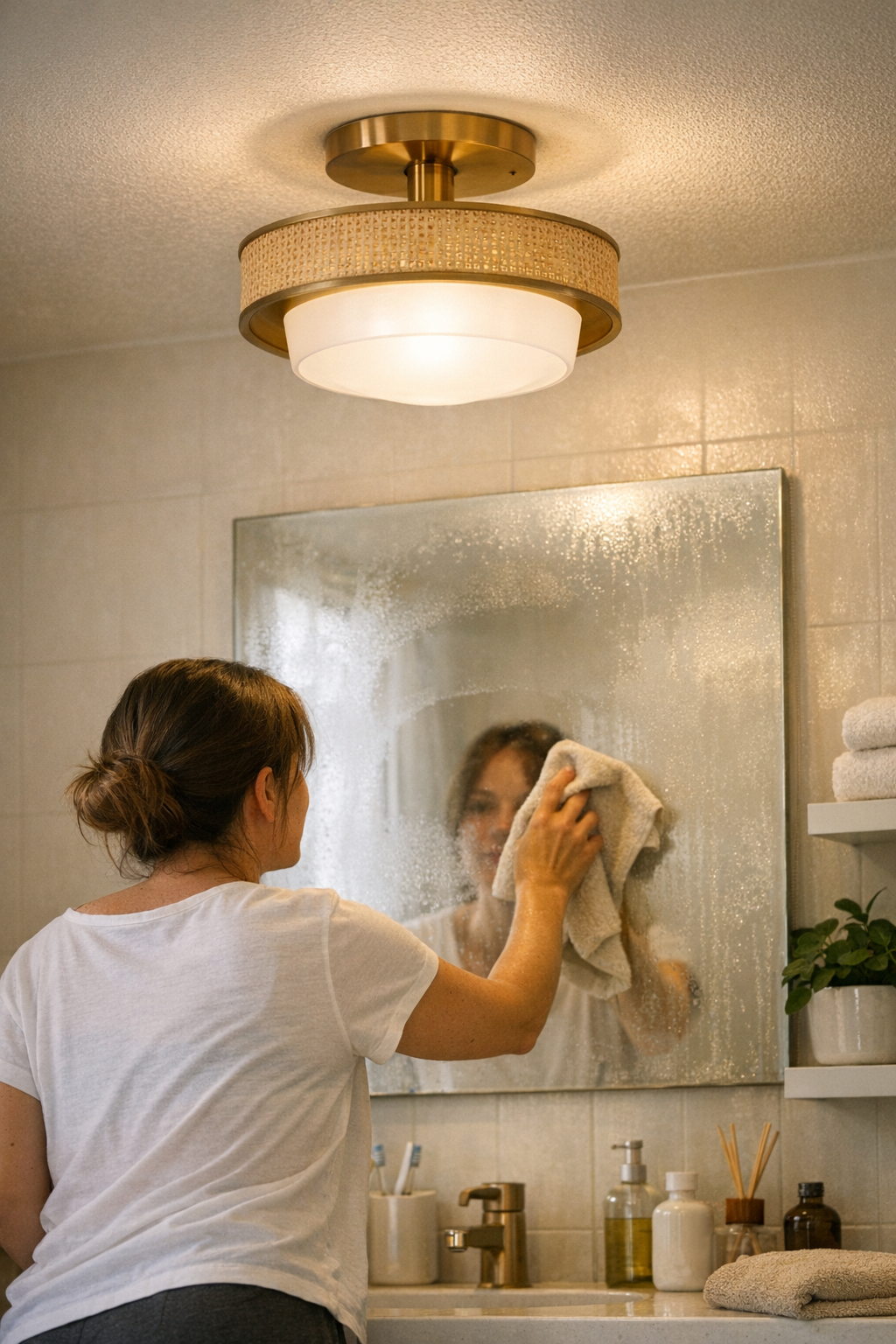
    Ceiling lights in bathrooms and laundry rooms rarely get a second thought—until badly balanced light turns fast routines into a grind. If you are wiping a foggy mirror yet half your face is still lost in shadow, or tripping into the laundry area and finding the corners look muddy even when the fixture’s on, you’re not missing style: you’re running into the real limits of lighting that wasn’t built to handle steam, moisture, or repeated use. The day you notice glare hotspots above a wet countertop, or uneven spread sending half the floor into darkness, is the day the wrong light stops being invisible—and starts dragging routines to a crawl.

    Where Lighting Choices Actually Matter

    The gap between “fine for now” and “works every week” isn’t obvious the day a fixture is installed. Basic ceiling lights—whether labeled for damp use or not—look almost identical until the first month of real routines. Step by step, the differences stack up: fixtures that hold their clarity versus setups that let edge shadows, flicker, or smear-prone glass creep in every time the humidity spikes.

    Steam after hot showers, condensation rings around fixtures, and dim corners aren’t random: they’re a warning from the room itself. The moment dampness lingers, a light’s moisture rating decides whether you’re running a safe, usable space—or putting up with patchy glare, unpredictably dark edges, and daily workaround habits that wear you down.

    Moisture Changes Everything: The Real-World Ceiling Challenge

    Bathrooms, laundry spaces, even the inside of the shower—these areas grind down ordinary fixtures faster than almost anywhere else at home. At first, every light throws out a “glow.” After weeks of steam and condensation cycles, tiny flaws crack open:

    • The mirror’s edge picks up dark bands no matter how clean the glass is.
    • Glare hovers over the ceiling but leaves sinks or counters unpredictably murky.
    • Standard fixtures (lacking a true damp or moisture rating) begin to buzz, flicker, or dull out after enough back-to-back showers or a parade of laundry cycles.

    This isn’t just about how a space looks—the real question is whether the lighting keeps up on heavy-use days when every shortcut gets exposed.

    Mirror Zones and Vanity Routines: Where Uneven Lighting Shows Up Fast

    Picture the morning rush: you lean to wipe a streaked mirror but the left side of your face is softly lit, the right thrown into glare, and the middle split by a hard shadow. Each rinse, wipe, or quick shave makes the imbalance worse if the overhead fixture can’t handle dampness—humidity exaggerates the difference, pushing the edges further into shadow while pooling glare over the rest. By the end of a month, routine tasks start demanding extra steps just to get basic clarity.

    Switch to a properly rated ceiling fixture. Even after ten steamy showers, the spread holds up. The mirror clears faster, the face remains evenly lit, and tasks flow—less eyestrain, less second-guessing if you missed a spot. It’s not dramatic, but that low-level friction quickly separates lighting that plays along from lighting that works against you.

    Shadow Buildup: What Routine Use Actually Looks Like

    Moisture doesn’t just cause cosmetic streaks. Over the weeks, standard ceiling lights above vanities, counters, or the far end of the laundry bench show real wear:

    • Shadows creep outward a little more after each humid cycle, subtly warping where your eyes expect clear light.
    • Room edges lose sharpness—making it easier to miss dropped items or step into a barely-seen wet spot.
    • Frustration builds: you add a clip-on lamp for a task, or fumble for a flashlight to make up for the fixture’s faded power.

    These aren’t sudden breakdowns but an ordinary, creeping decline that you notice most when routines feel slower and less certain.

    Laundry Zones: Patchy Light and Slowed-Down Movement

    No one designs a laundry room for drama, but light that can’t handle steam makes every step less certain. After a wash, condensation beads overhead, and a generic ceiling light leaves sorting bins dim and folding tables half-lit. The dark side of a towel pile, the color of a missing sock, the bottle on the back of the shelf—routine tasks start pausing mid-move, shoulders tensed, as you re-adjust for a patch of persistent shadow that never seems to go away.

    Lighting that holds steady in week twelve, not just on day one, keeps the room usable—no matter how often the cycle repeats.

    Condensation: When a Ceiling Light Becomes a Weak Link

    Notice regular condensation on ceiling panels, around your fixtures, or on cloudy mirrors? The wrong fixture isn’t an inconvenience—it’s a growing maintenance risk. Ordinary ceiling lights, even if well-sealed at first, will eventually:

    • Show signs of internal corrosion, faint staining, or rings where moisture collects again and again.
    • Develop flicker or random shut-offs when electrical contacts degrade in repeated humidity.
    • Throw uneven light, so whole work surfaces drop into shadow not because of a bulb, but because the fixture has quietly lost its evenness under stress.

    You know it’s happening when a room looks “on” but nothing is fully visible where and when you actually need it.

    When Everyday Lighting Fails: Practical Impact

    When light fails routine use, the problem isn’t just irritation—it’s lost time and new risks. A bathroom where water spots are lost in shadow, or a laundry zone where glare hides edges and leaves puddles undetected, quietly increases the chance of slips, missed steps, and small accidents. A foggy mirror that never fully clears slows morning routines, while corners made dim hide dropped items for days.

    • Edges of wet floors blend in—making slips or hasty moves riskier.
    • Persistent mirror fog turns small tasks into drawn-out rituals (and more wiping means more chances for an awkward reach).
    • Supplies, tools, or everyday laundry items vanish into peripheral shadows—forcing repeat searches or missed details.

    At best, it’s a drain. At worst, it makes a “routine” area quietly fail when pressure is on.

    Consistency Beats First Impressions: Lighting That Actually Works

    What a damp-rated fixture offers isn’t visible in the packaging or even the first few days: it’s the way even spread, consistent brightness, and glare control survive months in a wet, steamy room. Mirror zones stay usable, corners remain defined, and safe, comfortable movement continues—no matter how many loads, showers, or quick cleanups a week brings.

    Every indoor zone comes with its own stress test. For anywhere humidity, splashes, or steam are part of the routine, an ordinary sealed fixture is already fading in the background. Step up to lighting with real moisture resistance, and the line between an active, reliable space and a zone that sabotages itself becomes clear with every use, not just in the catalog.

    If standing in uneven light or working around patchy glare is slowing you down, the next fixture is less about style and more about whether your routines feel smoother, safer, and less interrupted for the long run. See what actually stays usable day after day, at Shop LightHelper: Damp-Rated Ceiling Fixtures and Practical Indoor Lighting

  • Why Placing a Leash Hook Near Your Door Latch Transforms Entryway Order

    In most entryways, the smallest mistake—like mounting your leash hook too far from the latch—quietly turns order into ongoing clutter. The difference shows up the first time you drop your groceries, reach for the leash, and realize it’s tangled in shoes or looped over a bench instead of where you actually need it. Between a routine that flows and a threshold that breaks down, the setup of your hardware decides if you walk out smoothly or stumble through daily reset.

    Threshold Storage Isn’t Decorative—It’s a Routine Lifeline

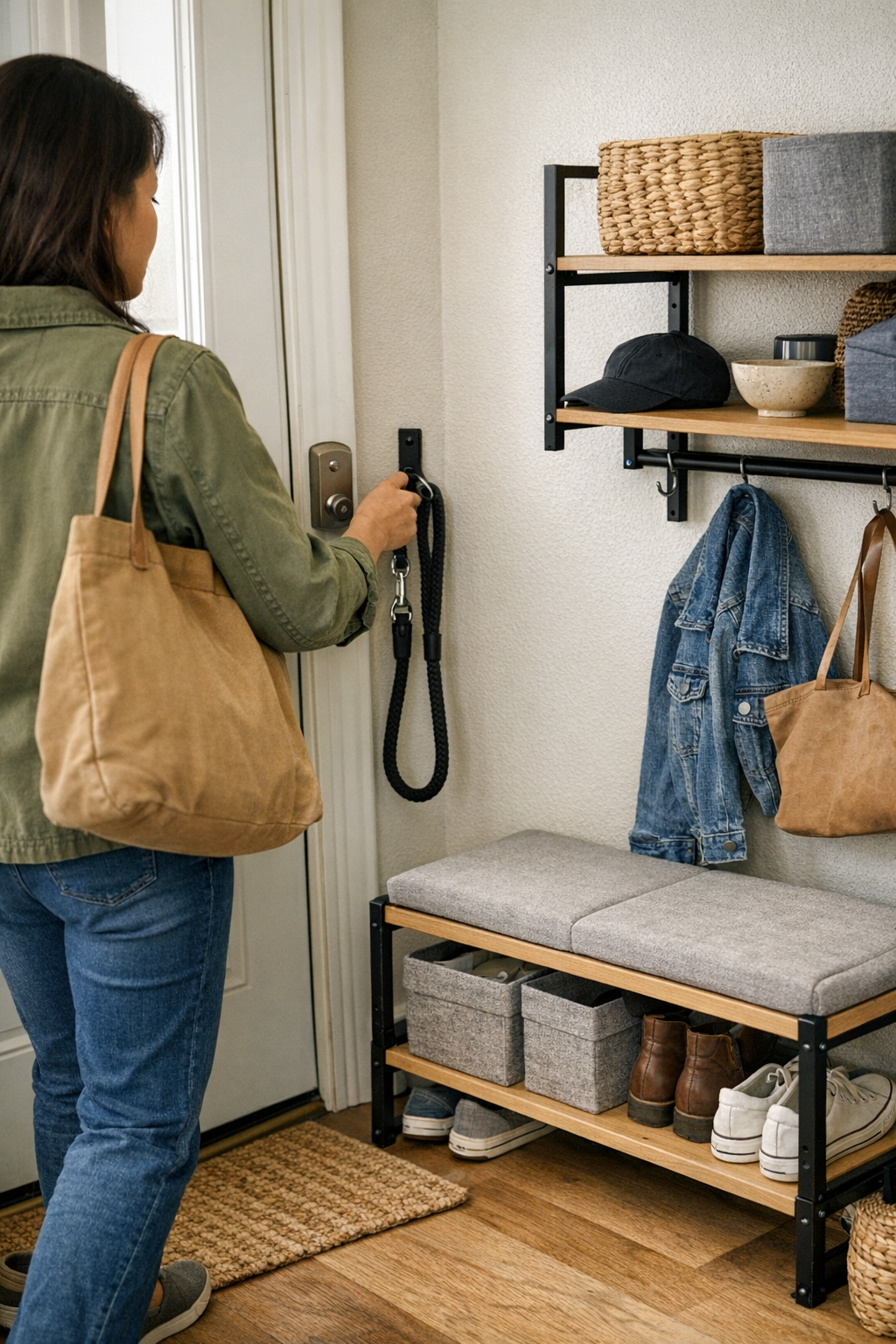
    Magazine entryways show tidy racks and “statement” hooks, but they never reveal what happens on a real Tuesday afternoon: your arms full, your dog already lunging, and the leash not where your hand lands. Install the hook flush with the door latch—squarely in your natural reach—and every exit gets faster, every return simpler. Miss that zone, and the leash rarely goes home: today on the bench, tomorrow buried under a bag, then looped around a knob, another object added to the daily trip hazard. Your “system” looks neat on paper and fails where routines meet real life.

    “Order” That Interrupts the Routine

    Even entryways with plenty of racks, bins, or cabinets end up failing after a week of normal use. Systems break down not from neglect, but from collision with how you actually move through the zone: shoes creep outward, yesterday’s bag lingers on a seat, the leash joins the clutter perimeter instead of returning to its “spot.” The weakness always appears when storage is designed to look contained but doesn’t map to real motion—especially those hasty, loaded entries and exits that blur any sense of control.

    Why Leash Hooks Drift (and How Placement Really Works)

    Most leash hooks get hung where the wall looks balanced or where they “fit” the decor. But two days in, the actual pattern sets in: if it’s even a panel away from your route, the leash stops making it back. On a rushed morning—with dog tugging, bag sliding off, shoe rack crowding the way—the hook too far is just another unused prop. The leash lands on the bench edge or a knob as a stopgap. As this repeats, the intention behind the setup fades, replaced by whatever object is easiest to grab or drop at the moment.

    The Slow Creep of Threshold Clutter

    What starts as a clean bench edge and lined shoe row warps fast. Each return brings a bag left “just for now,” shoes spreading until they block the flow, and the leash looped on any knob in arm’s reach. These detours pile up, forcing you or your family to step over last night’s shuffle just to cross the threshold. The original setup isn’t guiding the routine—it’s quietly being pushed aside by the pattern of actual use.

    Arm’s Reach from the Latch: Where the Fix Actually Sticks

    Sustainable order comes down to one simple placement: mount the leash hook right at the door latch, at waist height, inline with your step-through path. That way, you don’t detour around bags or shoes—your hand finds the hook in one move, making cleanup a non-decision for kids, guests, and whoever else passes through. The difference is immediate: clip, hang, go. No re-training, no elaborate system to remember—just a routine that reinforces itself by matching how you actually enter and exit.

    One Small Change, Noticeable Difference

    The instant the hook shifts to the proper spot, the overflow drops. On a crowded morning, you’re not hunting for the leash under a coat or shoe pile; it’s always where your hand expects. The bench stays free for sitting, not for overflow storage. Shoes line up instead of drifting wider, because the leash no longer floats, claiming random real estate. The threshold clears itself by design, not by luck or repeated resets.

    Missed Hooks Become Set Dressing, Not Storage

    Hooks or racks even a foot off-route slowly go unused. Everyone defaults to whatever’s in their path—bench, knob, shelf edge—and the original fixture becomes part of the background, a “storage” feature observed but rarely used. That gap between where things should live and where they actually land is the source of most daily entryway mess, making every reset a bigger job than it should be.

    Practical Tips from Real-World Use

    • Install at waist height, lining up with the latch. Anyone from adults to older kids can use it without stretching or stooping, and it matches your entry motion.
    • Choose wall-mounted hooks for reliability. A fixed hook doesn’t wiggle, get buried, or fall behind jackets like flimsy over-the-door solutions after a week of real pressure.
    • Make the hook single-purpose. Hold just the leash (maybe one essential), and resist piling on extras—more hooks often invite more sprawl, not less.

    Small Moves, Fewer Roadblocks

    Entryways are built-in bottlenecks, especially in homes with families, pets, or tight hallways. One misplaced hook or drifting storage fixture ripples into blocked paths and routine detours by day three. The right fix isn’t about aiming for perfect order, but letting your setup absorb repeated chaos and snap back—ready for whatever tomorrow’s entrance brings.

    If you want less clutter and fewer resets, start with one change that matters every time you walk through: place the leash hook as close to the latch as habit allows. That quiet shift keeps mess one move further away, making your entry zone do its job, day after day—no extra ritual, no fresh round of frustration.

    http://www.betweenry.myshopify.com

  • How a Simple Morning Reset Transforms Your Pet Travel Routine

    There’s a difference between a pet-travel setup that looks sorted and one that actually works on the fourth stop of a busy day. What starts as a perfectly packed bag—wipes on top, leash in its place, bowl ready—can unravel within a few short outings. By the second errand, the wipe pouch you used earlier has drifted out of reach. The water bowl you dried hours ago is wedged under bulky gear, still damp and hard to grab. One rushed car-side cleanup turns into digging through layers you thought were organized—while your dog watches, restless, and your own patience thins.

    How Pet Travel Setups Break Down—Even When They Look Ready

    The stress points in pet travel setups are rarely visible at first glance. On the first walk, order holds. By the third or fourth, repeated grabs push quick-access items below pads or beneath less-used gear. Wipes end up buried, the leash tangles with the bowl, and a once-ready kit starts turning routine pauses into hidden stalls. If you’ve ever torn apart a neat setup hunting for a single item you know you packed, you’ve felt this gap—what looks prepared on the outside can become friction stacked up inside.

    It’s a quiet failure: the structure built for one-time ease can’t cope with layered use. Instead of a sudden mess, you get gradual slowdowns—each new search stealing seconds, each reshuffle making the next one inevitable. True readiness shows up after the real world has tested the system and found its weak points.

    Small Friction Points, Big Daily Slowdowns

    Digging through bag sections for the cleanup pouch. Unpacking half your carrier just to reach the leash under a comfort blanket. These moves don’t ruin a trip, but they stack up. Every extra search interrupts your routine, especially at seat-side as you exit the car: wipes tucked under a pad, leashes knotted with bowls, or a treat pouch blocked by bedding. It’s at these transitions—moments built for speed and calm—that awkwardly overlapping gear forces you into one-sided balancing acts and blunted momentum, while your pet senses the delay and restlessness builds.

    Why Organization Isn’t Enough—The Ready vs. Usable Gap

    Packing for visual order isn’t the same as packing for repeated, quick use. Waste bags out in the open at the start. Treats in your line of sight. But once the day gets going, the setup’s tidy appearance can’t guarantee fast grabs. A bowl zipped under everything means either upend the setup or make your pet wait. A leash stowed for neatness under a comfort pad triggers a full unpack the moment movement restarts. Each misplaced item costs you not just time, but smoother handling—especially if you face repeated stops with no break between them.

    Fast-access items need to stay visible and unblocked. Once those lines blur, the distinction between “packed” and “truly ready” emerges fast. The gap shows itself in split seconds lost, in the repeated reach that takes five times as long on trip number three as it did on trip one.

    The Reality of Overlapping Pet and Owner Needs

    Shared bag space creates its own snags. Your key fob winds up jammed among waste bags. Hand sanitizer rides under the same flap as treats. Owner and pet gear compete for the best pockets, so every return to the car starts another quiet scramble. The end result? Misplaced items and minor reset times that slow everyone—owner distracted, pet fidgeting—instead of the smooth, return-to-motion flow you planned for when first organizing.

    Recognizing When Your Setup Is Underperforming

    If you keep pausing at the same awkward point—baited by wipes buried under a pad, or forced to untangle the leash from a mashed comfort blanket—this is more than bad luck. Repeated stalls mark a structure flaw made obvious by real use, not by how the kit looks. These snags eat up energy, make transitions clumsy, and chip away at the good intentions behind careful packing. Each friction point repeated through the day means less patience and a rhythm that never quite recovers.

    Real-World Example: The “Quick Trip” That Isn’t

    Take a standard Saturday: three errands, two walks, car rides bracketed by seat-side stops. The first trip runs fine. But by lunch, after a couple of stops, wipes once close by slip beneath a comfort mat. The next muddy-paws cleanup turns into an awkward juggle: one hand on the bowl slipped between other gear, the console crammed, your dog wriggling for the exit. A process built for “grab and go” now staggers—simply because fast-use items couldn’t hold their turf after the first round of real movement.

    The Reset: Restoring Access, Not Just Appearance

    Resetting is more than putting things back “where they belong”—it’s making sure what you need is instantly grabbable in actual movement. This means that at least once a day, outer pockets or open clips get wipes and leashes, not just less-used gear. Comfort mats and bedding move to a spot that doesn’t block high-turnover items. For repeated quick stops, even a zipped pouch needs positioning that won’t shift under heavier kit after three in-and-out cycles. Adding one more clip or switching the wipes to a direct-access flap saves time on every reach, especially when the pace picks up.

    It’s a small adjustment—a clip repositioned, wipes migrated to a side panel—that clears the runway for the next transition. Cleanup doesn’t turn into a hunt. The leash doesn’t vanish. Resetting for real use means less sorting mid-routine, more time moving instead of fumbling car-side while your pet gets antsy.

    Preventing the Return of Clutter and Delay

    The difference-maker? Mini resets—quick, less-than-a-minute realignments between stops—are what stop your setup from degenerating, even if it starts out organized. Not a full overhaul. Just bringing wipes and leashes back to the front. Untangling overlapping items, or pulling owner supplies clear of pet fast-grab needs. The repeat offenders—repeated awkward reaches, one-handed digs, bowls buried again—signal it’s time for a reset before everything jams up by early afternoon.

    If you notice reach friction creeping in, don’t wait for a total mess. Each reset closes the gap between how things look and how they’ll work at the next exit or cleanup rush. Overlook these signals, and the best carrier or organizer devolves into constant minor correction.

    From Clumsy to Fluid: What Real Improvement Looks Like

    Apply even two or three of these changes, and the pattern shifts fast. Less cross-compartment shuffling, fewer repeated holdups, a transition speed that fits real-life chaos—walks, errands, pit stops—without your setup failing quietly halfway through. It’s not about perfect looks; it’s about a bag, carrier, or kit that stays responsive after repeated motions, loads, and returns. High-visibility placement and quick resets make friction points fade, so you’re not stuck fighting the same interruptions trip after trip.

    True pet travel isn’t curated for photos; it’s built for the loop: move, reset, move again. Each small structure fix goes further than fresh packing or decorative organization. And that’s the world PawGoTravel equips for: setups that don’t just promise preparedness—they survive the real, repeated pace of travel with your pet.

    Explore reliable pet-travel gear at PawGoTravel

  • Balancing Corridor Lighting for Safer and More Comfortable Spaces

    Corridor lighting problems announce themselves with every step. A ceiling row that looks orderly on paper turns traitor in daily use: glare catches your eyes when you pass a workstation, then three steps later your foot lands awkwardly in a dim patch where storage juts into the hallway. Every door, corner, and shelf becomes a test—does the light land where you need it, or does it leave you squinting, hesitating, and dragging bags through awkward shadows? This isn’t just about not having “enough” fixtures. The core frustration is misaligned light—fixtures chosen for visual symmetry, not for how bodies and routines actually move through space. Mismatched corridor lighting makes itself felt instantly and keeps messing with comfort and flow every single time you cross the space.

    The Everyday Consequences of “Even” Lighting

    Uniform fixture rows might impress on the first day, but corridors fight back. After a week, what stands out isn’t the tidy ceiling symmetry—it’s the unpredictable friction below. Glare at one end forces you to duck or shield your eyes; a step later, you’re feeling for the next foothold because a deep shadow hugs the floor near a bracket or storage shelf. That “even” appearance quickly exposes its seams in actual use: you catch yourself stumbling over dim corners, turning your head to avoid light in your eyes, or pausing uncertainly where the corridor should be most predictable—by a coat hook, a door, a step. It’s not an occasional annoyance; it’s built into the daily rhythm.

    When Looks Don’t Match Daily Use

    Most corridor lighting goes wrong in the difference between showroom logic and lived reality. On install day, everything lines up—flush-mount ceiling lights, cables out of sight, surfaces neat. But then you reach for shoes under a shelf and realize the shadow never left; the bracket you hung for bags is half-lit, still awkward. The cleaner one section looks, the more the murkiness at the next feels like a flaw you can’t ignore. Grabbing a toolbox or kneeling to tie laces means squinting at the floor, even with all lights “on.” By night or early morning, that half-meter stretch near the main shelf turns into a risk zone—still dim, still inconvenient, a bottleneck that repetition never makes comfortable.

    The Real Test: Corners, Edges, and Busy Spots

    It’s the transition points that expose weak lighting plans: thresholds by a door, edges of a crowded wall shelf, or that bottleneck beside a coat hook. These are where corridors actually work—or don’t. Repeated use reveals:

    • Dragging bags along a floor edge that disappears into shadow as storage crowds the path
    • Stopping, hesitant, at a patch where a missing step blurs into the floor—especially with hands full
    • Endlessly adjusting a fixture or swapping bulbs, only for new glare or shadows to show up elsewhere
    • Sensing cable runs or plug-in support pieces before you register the room itself—clutter that translates as distraction

    First impressions fade. By week’s end, you map out the avoid zones: places to guide kids around, places where guests pause unsure. A neat row overhead might feel resolved, but at ground level, unavoidable discomfort settles into the routine.

    Small Changes, Tangible Improvements

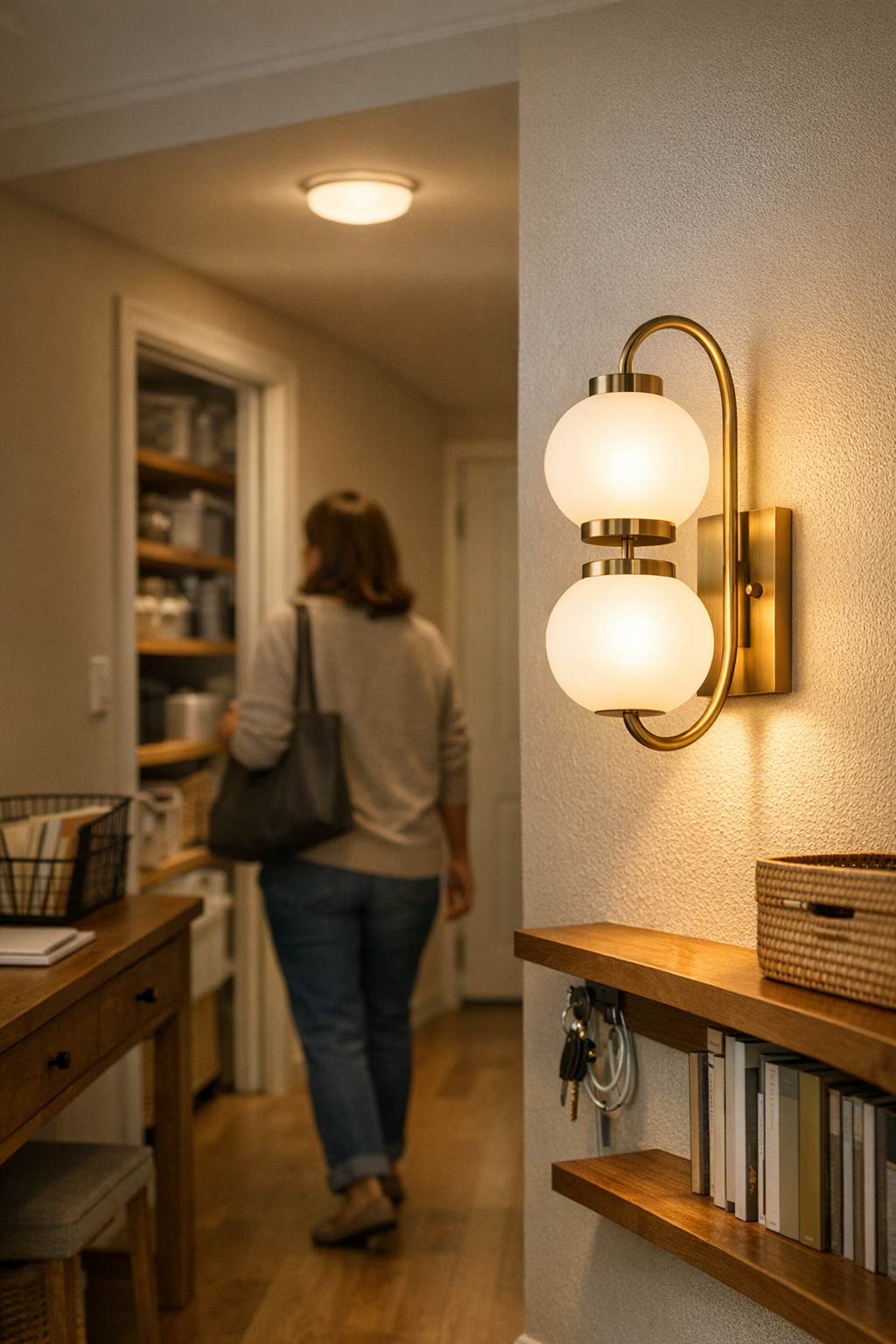
    The fastest way to cut shadow and strain isn’t adding more ceiling light—it’s targeting the real friction. Installing a wall-mounted linear light, angled down at the edge of a stubborn shadow, made a recent setup instantly more livable. One slim fixture near a dim shelf cut the hard-to-see patch by half a meter—now shoes, bags, and everyday drop-off spots stand out, not vanish into gray. The movement path and storage nook both became legible at a glance, not harshly lit but simply unfussy, even on evenings or overcast mornings. And it wasn’t just boosting brightness; it was about delivering light exactly where the routine needed it. Pair that with a stable cable bracket or tidy run holder, and messy support gear fades from view. For days with constant back-and-forth—or with hurried kids—the change is unmistakable: less micro-managing, fewer instinctive detours.

    Practical Tip:

    Test your corridor at dusk or on a gray afternoon with all main lights on. Walk slowly and focus on what doesn’t resolve: Is the shelf’s edge clear or is it just a fading line? Stand by the door and check for glare bouncing off metal brackets or desk corners. Pinpoint these uneven spots—they’re the priority for a targeted fixture or a clearing support piece.

    Blending Structure with Actual Use

    To fix the mismatch between appearance and comfort, look beyond the ceiling row. The strongest gains come from added support: wall-mounted spots, slim under-shelf lighting, bracketed task lights tucked where routines actually force you to squat, reach, or pause. Every adjustment should answer one question: “Is this where the discomfort starts?” Real improvements come from:

    • Erasing recurring shadow pockets at routine turn points and habitual pauses—not just ends, but every hang-up zone
    • Taking glare out of play before it hits eye level—at desks, shelf edges, and anywhere someone sits or grabs gear
    • Grouping cable management and support at true friction points, then running wires clear of sightlines and daily hand-traffic
    • Smoothing out lighting lapses at bends or ceiling drops—patching dim spots without flooding the whole corridor and inviting more glare

    Why Segment-by-Segment Beats the One-Row Standard

    No corridor is uniform—there are always corners, crowded storage, odd brackets breaking the line. Standard rows gloss over these weaknesses, but lived-in use exposes the real cost. Fixing by segment means:

    • Delivering safety exactly where turns, clutter, or dropped bags make stumbles most likely
    • Making every transition—from door to shelf, from bend to straightaway—less tense, more visually clear, and faster to use day after day
    • Avoiding the trap of endless quick-fixes: stick-on lights that don’t last, moving obstacles, adjusting fixtures further and further from where they help

    The only test that matters: after repeated trips, does the corridor demand less of your attention—or is it still a source of slowdowns and subtle risks? When each segment gets its own lighting logic, the repeated discomfort just fades. You see what’s on the floor, grab what you need, and move without hesitation or second-guessing the lighting itself.

    Getting Corridor Lighting Right: A Checklist from Repeated Use

    • Walk first, diagnose second: Mark spots that break your flow—those corners, doorways, shelf and storage edges where tension or dimness lingers.
    • Target support, not just volume: Place task or under-shelf lights where the problem starts—low, angled, aimed at persistent shadows or repeated glare.
    • Refine cable paths: Use cable brackets and discreet support so sightlines stay clear and routines stay unbroken.
    • Test at worst light: Evaluate at dusk for the real answer: does each surface, bracket, and turn-off now show itself, or do you sense the setup as staged and unfinished?

    Making Practical Adjustments, Not Just Visual Tweaks

    The difference between a corridor that simply looks streamlined and one that actually makes daily routine easier comes through in small moments: no more squinting at a half-lit step, no more hunting and re-hanging cables, no more daily run-ins with “mystery patches” that appear whenever natural light drops. When support pieces help instead of getting in the way, and lighting is targeted by use instead of appearance, the corridor starts serving you back. Segment-driven fixes—better support, focused light, less cable chaos—quiet the repeated friction. The goal isn’t showroom perfection. It’s a setup that finally disappears into the background of your routine, not because you stopped caring, but because it just works.

    Visit LightSupport for targeted lighting, mounting, and support solutions built for real, everyday setups.