
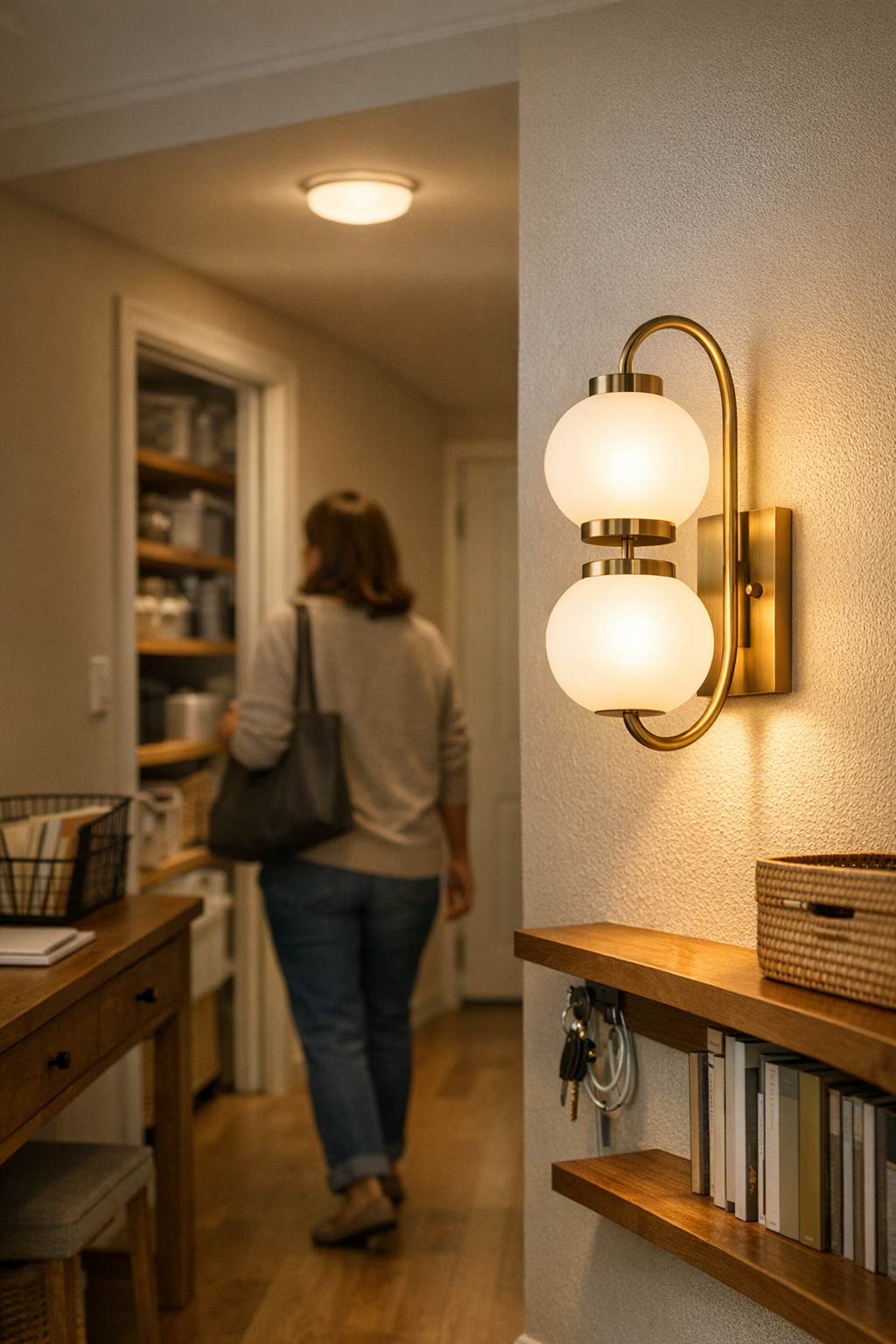
Corridor lighting problems announce themselves with every step. A ceiling row that looks orderly on paper turns traitor in daily use: glare catches your eyes when you pass a workstation, then three steps later your foot lands awkwardly in a dim patch where storage juts into the hallway. Every door, corner, and shelf becomes a test—does the light land where you need it, or does it leave you squinting, hesitating, and dragging bags through awkward shadows? This isn’t just about not having “enough” fixtures. The core frustration is misaligned light—fixtures chosen for visual symmetry, not for how bodies and routines actually move through space. Mismatched corridor lighting makes itself felt instantly and keeps messing with comfort and flow every single time you cross the space.
The Everyday Consequences of “Even” Lighting
Uniform fixture rows might impress on the first day, but corridors fight back. After a week, what stands out isn’t the tidy ceiling symmetry—it’s the unpredictable friction below. Glare at one end forces you to duck or shield your eyes; a step later, you’re feeling for the next foothold because a deep shadow hugs the floor near a bracket or storage shelf. That “even” appearance quickly exposes its seams in actual use: you catch yourself stumbling over dim corners, turning your head to avoid light in your eyes, or pausing uncertainly where the corridor should be most predictable—by a coat hook, a door, a step. It’s not an occasional annoyance; it’s built into the daily rhythm.
When Looks Don’t Match Daily Use
Most corridor lighting goes wrong in the difference between showroom logic and lived reality. On install day, everything lines up—flush-mount ceiling lights, cables out of sight, surfaces neat. But then you reach for shoes under a shelf and realize the shadow never left; the bracket you hung for bags is half-lit, still awkward. The cleaner one section looks, the more the murkiness at the next feels like a flaw you can’t ignore. Grabbing a toolbox or kneeling to tie laces means squinting at the floor, even with all lights “on.” By night or early morning, that half-meter stretch near the main shelf turns into a risk zone—still dim, still inconvenient, a bottleneck that repetition never makes comfortable.
The Real Test: Corners, Edges, and Busy Spots
It’s the transition points that expose weak lighting plans: thresholds by a door, edges of a crowded wall shelf, or that bottleneck beside a coat hook. These are where corridors actually work—or don’t. Repeated use reveals:
- Dragging bags along a floor edge that disappears into shadow as storage crowds the path
- Stopping, hesitant, at a patch where a missing step blurs into the floor—especially with hands full
- Endlessly adjusting a fixture or swapping bulbs, only for new glare or shadows to show up elsewhere
- Sensing cable runs or plug-in support pieces before you register the room itself—clutter that translates as distraction
First impressions fade. By week’s end, you map out the avoid zones: places to guide kids around, places where guests pause unsure. A neat row overhead might feel resolved, but at ground level, unavoidable discomfort settles into the routine.
Small Changes, Tangible Improvements
The fastest way to cut shadow and strain isn’t adding more ceiling light—it’s targeting the real friction. Installing a wall-mounted linear light, angled down at the edge of a stubborn shadow, made a recent setup instantly more livable. One slim fixture near a dim shelf cut the hard-to-see patch by half a meter—now shoes, bags, and everyday drop-off spots stand out, not vanish into gray. The movement path and storage nook both became legible at a glance, not harshly lit but simply unfussy, even on evenings or overcast mornings. And it wasn’t just boosting brightness; it was about delivering light exactly where the routine needed it. Pair that with a stable cable bracket or tidy run holder, and messy support gear fades from view. For days with constant back-and-forth—or with hurried kids—the change is unmistakable: less micro-managing, fewer instinctive detours.
Practical Tip:
Test your corridor at dusk or on a gray afternoon with all main lights on. Walk slowly and focus on what doesn’t resolve: Is the shelf’s edge clear or is it just a fading line? Stand by the door and check for glare bouncing off metal brackets or desk corners. Pinpoint these uneven spots—they’re the priority for a targeted fixture or a clearing support piece.
Blending Structure with Actual Use
To fix the mismatch between appearance and comfort, look beyond the ceiling row. The strongest gains come from added support: wall-mounted spots, slim under-shelf lighting, bracketed task lights tucked where routines actually force you to squat, reach, or pause. Every adjustment should answer one question: “Is this where the discomfort starts?” Real improvements come from:
- Erasing recurring shadow pockets at routine turn points and habitual pauses—not just ends, but every hang-up zone
- Taking glare out of play before it hits eye level—at desks, shelf edges, and anywhere someone sits or grabs gear
- Grouping cable management and support at true friction points, then running wires clear of sightlines and daily hand-traffic
- Smoothing out lighting lapses at bends or ceiling drops—patching dim spots without flooding the whole corridor and inviting more glare
Why Segment-by-Segment Beats the One-Row Standard
No corridor is uniform—there are always corners, crowded storage, odd brackets breaking the line. Standard rows gloss over these weaknesses, but lived-in use exposes the real cost. Fixing by segment means:
- Delivering safety exactly where turns, clutter, or dropped bags make stumbles most likely
- Making every transition—from door to shelf, from bend to straightaway—less tense, more visually clear, and faster to use day after day
- Avoiding the trap of endless quick-fixes: stick-on lights that don’t last, moving obstacles, adjusting fixtures further and further from where they help
The only test that matters: after repeated trips, does the corridor demand less of your attention—or is it still a source of slowdowns and subtle risks? When each segment gets its own lighting logic, the repeated discomfort just fades. You see what’s on the floor, grab what you need, and move without hesitation or second-guessing the lighting itself.
Getting Corridor Lighting Right: A Checklist from Repeated Use
- Walk first, diagnose second: Mark spots that break your flow—those corners, doorways, shelf and storage edges where tension or dimness lingers.
- Target support, not just volume: Place task or under-shelf lights where the problem starts—low, angled, aimed at persistent shadows or repeated glare.
- Refine cable paths: Use cable brackets and discreet support so sightlines stay clear and routines stay unbroken.
- Test at worst light: Evaluate at dusk for the real answer: does each surface, bracket, and turn-off now show itself, or do you sense the setup as staged and unfinished?
Making Practical Adjustments, Not Just Visual Tweaks
The difference between a corridor that simply looks streamlined and one that actually makes daily routine easier comes through in small moments: no more squinting at a half-lit step, no more hunting and re-hanging cables, no more daily run-ins with “mystery patches” that appear whenever natural light drops. When support pieces help instead of getting in the way, and lighting is targeted by use instead of appearance, the corridor starts serving you back. Segment-driven fixes—better support, focused light, less cable chaos—quiet the repeated friction. The goal isn’t showroom perfection. It’s a setup that finally disappears into the background of your routine, not because you stopped caring, but because it just works.