Category: Yard & Utility

  • Moisture Resistant Bathroom Cabinets That Maintain Daily Order and Cleanliness

    Most bathroom wall cabinets claim to organize, but in a real shared bathroom, the flaws show up fast. After a reset, everything looks crisp—until a week of damp hands, half-closed containers, and post-shower steam unravels any sense of order. Shelves that felt stable turn faintly tacky. The base edge starts to puff or ripple. Instead of quick retrieval, you’re fighting the slow stick of bottles fusing at the corners and labels peeling up. If your wall cabinet can’t keep out moisture, the entire storage setup betrays you right when things get busy: morning routines stall, zones blur, and hidden backup supplies absorb more humidity than attention.

    When “Good Enough” Fails Under Real-World Routines

    The basic bathroom wall cabinet—thin panels, unsealed seams—looks organized in a photo, but daily use exposes the limits. Wipe down on Sunday, and by Thursday it’s already shifting: toothpaste caps leave sticky patches, face cream smears trail on the underside, and paper-packed items form soggy corners against the rear panel. What felt like clear sorting devolves into mixed stacks as humidity warps the surfaces and categories collapse into each other. Instead of grabbing a bottle from its usual spot, you’re reaching around clutter or repeating the hunt in the wrong section.

    This isn’t just visual clutter; it’s lost time and small interruptions. A warped shelf tips items into a group—cotton pads brick together, and small tubes slide into dips at the edge. Rushing before work, you wedge past sticky clusters, pulling a q-tip container that suddenly resists with a faint suction at the base. The right side of a shelf sags; nothing sits upright. Things once sorted merge and slow you, escalating friction on the busiest mornings.

    How Moisture-Resistant Cabinets Change the Experience

    Switching to a moisture-resistant wall cabinet goes beyond appearance—a sealed finish and protected seams block the cycle of swelling and drift. After a week of steam and back-and-forth product returns, you’ll notice: shelf lines remain straight, edges stay crisp, and distinct storage “lanes” last longer. Surface wipes dry cleanly, bottle bases stay free of sticky buildup, and quick returns don’t become future messes.

    “Dry return” sounds minor, but it’s everything in daily flow. You put items back without calculation or hesitation, minimizing touch points. Jars keep separate, shelf lines don’t blur overnight, and you spot what’s missing on a glance instead of a search. The feel along the back edge—dry, not softened or sticky—signals the layout is working, not quietly degrading between resets. Real zones persist: face care on the left, razors and backup toothpaste on the right, small tools unmixed. Retrieval is quick and return flow stays smooth, even when multiple people share the space daily.

    The Sneaky Problem of Category Drift

    Category drift slips in unseen. One reset sorts everything; two weeks later, wet corners and bowed dividers funnel items into one another. Floss gets buried in a heap of cotton pads. An extra razor pack migrates sideways, blocking the right section. You waste time repeating the same search, or re-dividing items that never should have migrated. Moisture-resistant cabinets fight this creep, reinforcing structure where lesser cabinets simply surrender, week after week, until every morning starts with another re-sorting loop.

    The Hidden Costs of Subtle Swelling

    It’s not just the mess. A soft cabinet lip turns minor accidents—an upturned lotion, a tossed brush—into ongoing headaches. Water collects at low points, leaving surfaces faintly gummy no matter how often you clean. Each day, a hairbrush that once slid into place now nudges sideways and won’t stay. Small jars fall into shelf dips. Even light, fumbled movement makes the whole system feel unreliable. The friction isn’t just annoyance—sometimes you have to pull the entire line of items to find a lost tube or mop up pooling residue hidden just out of sight.

    Crowded mornings expose the consequences. Everyone wants their own section, but swollen edges funnel everything toward the middle. Scanning for one product, you find three in the way. The “organized” look from last Sunday is long gone; you improvise, or temporarily pile things on the counter to get through the rush.

    Reset Friction—Why It Matters (and How the Right Cabinet Eases It)

    An “almost-right” cabinet never stays sorted for long. Each deep clean—gunk scraped from corner seams, mixed-up rows untangled, lingering wet patches wiped again—steals your time. The right moisture-resistant cabinet slashes this reset friction. Fast wipe-downs work better. Zones hold for weeks, not days. Items stay in intended categories through real cycles of use. Instead of repeating big deep-clean resets, you maintain order with less effort—keeping the wall useful, not a disguised holding pen for the next overflow event.

    Small Real-World Tweaks That Help

    Moisture resistance doesn’t solve all problems automatically, but minor tweaks extend the effect. A thin, removable mat on the bottom shelf blocks unseen pooling, and peels right out for washing. After heavy-use mornings, leave cabinet doors cracked open for an hour—airflow dries what even a sealed surface might miss. Don’t overstuff shelves; a crowded setup still causes migration. Real storage improvement comes from friction-aware habits, not upgrades alone.

    What to Watch For: Recognizing a Cabinet That’s Failing

    Check the seams and surfaces after seven days of real use. If you feel spongey spots, persistent stickiness, or find paper products weirdly compressed, your cabinet is losing the battle. Labels curling up and packed zones that always blend together mean the storage is quietly making order harder, not easier. Slow resets and blocked retrieval are early warnings—signs not of messiness, but of a system breaking down under repeated routines.

    Quick Q&A: Staying Ahead of Routine Breakdown

    Do moisture-resistant wall cabinets prevent mold? They block trapped water, especially at seams and corners. For real mold prevention, keep up airflow and schedule occasional empty-out wipes—finish alone isn’t enough in very steamy rooms.

    Is a moisture-resistant finish alone enough for high humidity? No finish, sealed or otherwise, can counteract every steamed-up morning. Pair it with open-door airing and shelf empties when cleaning—especially if your bathroom stays humid all week.

    How do you know it’s time to upgrade? If finger-checks along the seams reveal spongey texture, if labels repeatedly lift and sticky patches return right after resets, the cabinet has crossed from “storage” to “clutter trap.” A true swap saves time and daily hassle.

    The Bottom Line: Storage That Stays Useful All Month

    The right wall cabinet doesn’t just clear visual clutter—it protects structure, holds lines straight, and preserves categories even under stress. Moisture resistance makes faster resets real, keeps retrieval reliable, and quietly saves daily movement from unplanned extra steps. The effect is as real as the moment you grab a bottle and it comes away clean, not stuck; as practical as the weekly check that finds zones, not piles.

    Gridry offers practical, tested wall storage and bathroom solutions designed to make reset routines less draining and daily movement smoother. Explore more at Gridry.
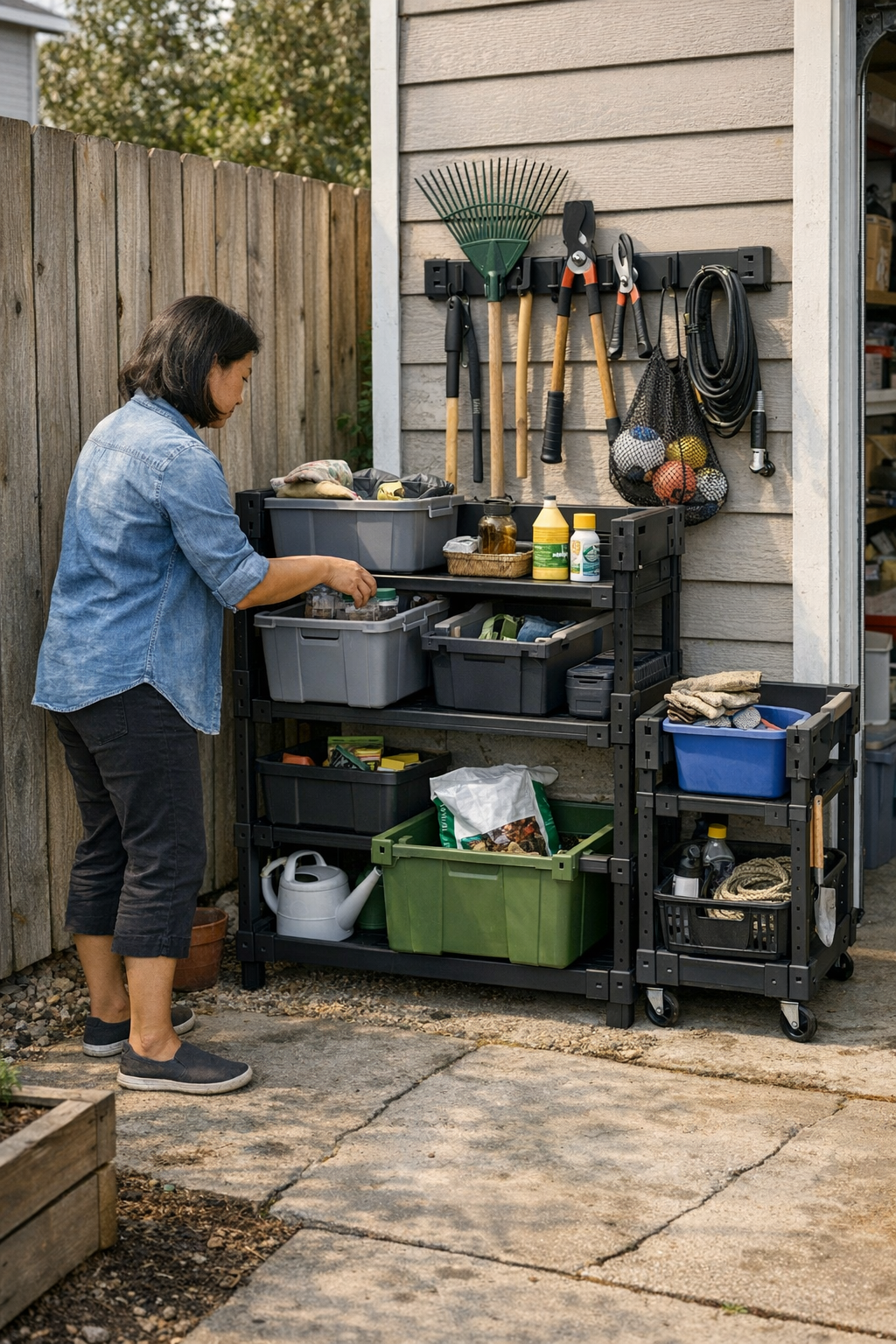

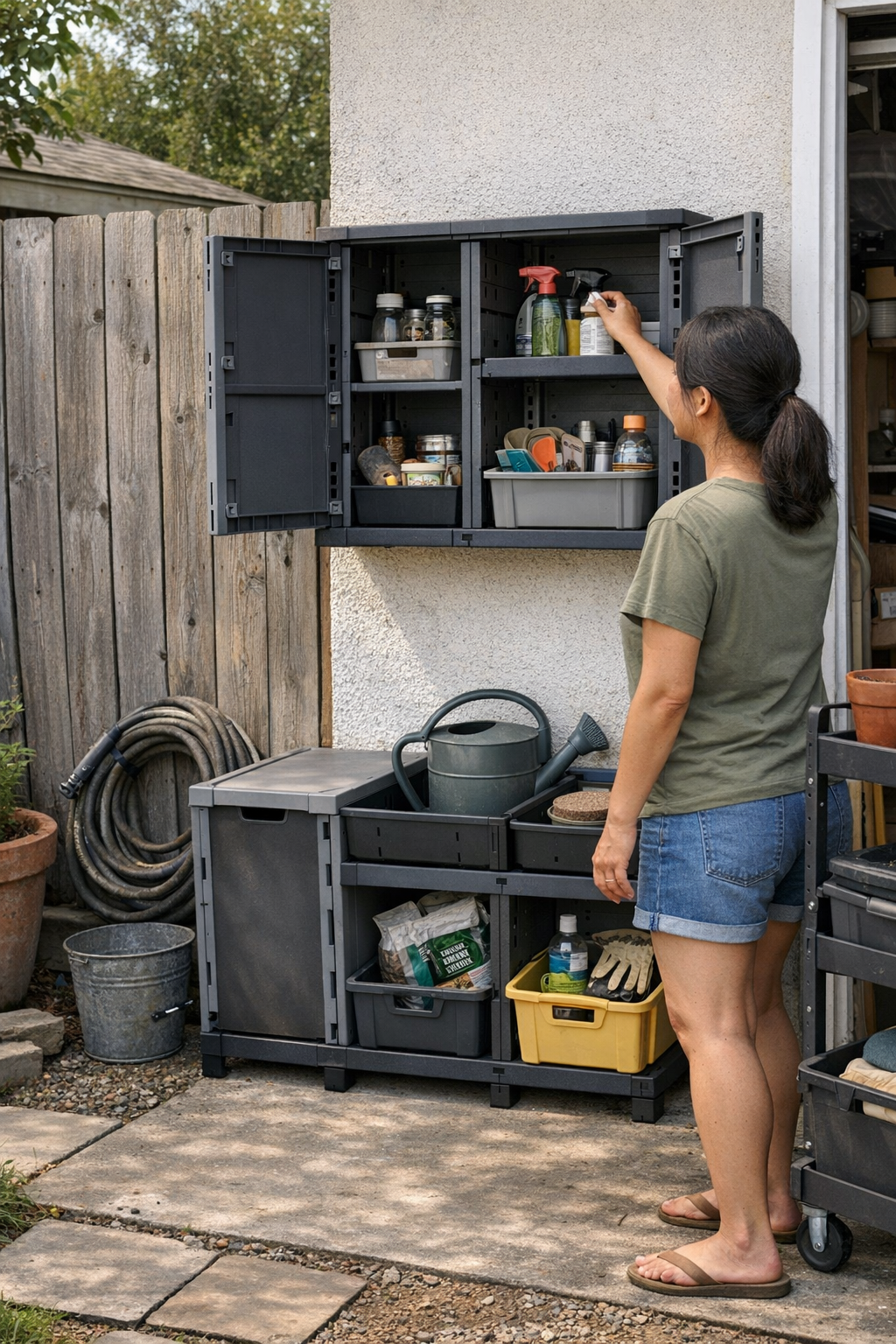
  • How Wall-Mounted Storage Transforms Shared Yard Maintenance Efficiency

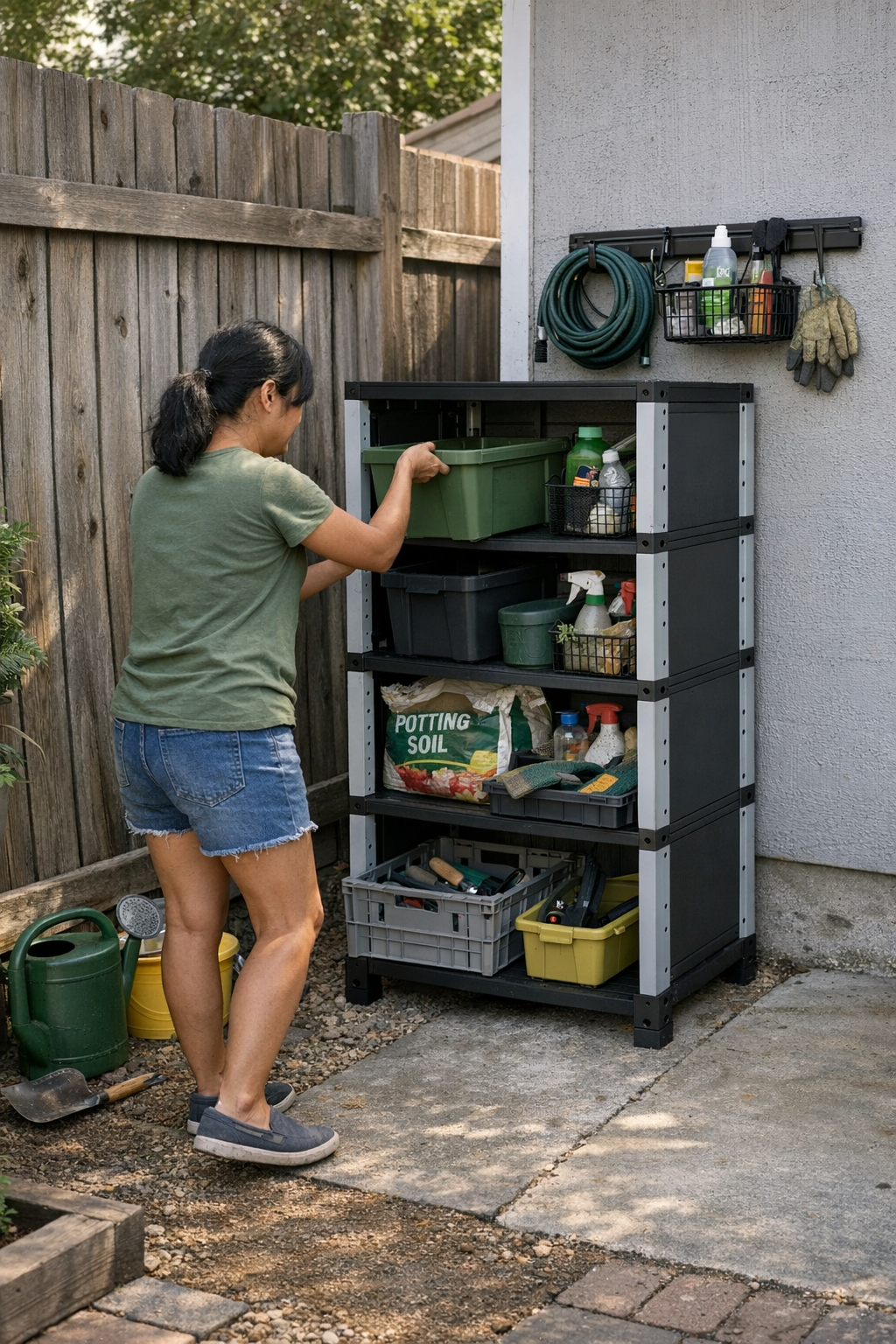
    Outdoor storage promises simplicity. The wrong setup just breeds chaos. Step into any side yard or narrow backyard strip, and you know the drill: dodge a rake, step over last week’s muddy boots, dig for lost gloves beneath old pool toys. This isn’t about sloppy habits—it’s a setup problem, and it wears out fast. Where tools and gear are shared, every clever arrangement gets stress-tested by real life. The gap between “it all fits!” and “why can’t we move through here?” closes in a matter of weekends.

    When Organization Breaks Down: The Everyday Grind

    Storage solutions look good in catalog photos—deck boxes lined up crisp, benches closing over scattered toys, plastic sheds zipped shut. But after the first week, patterns reveal themselves. Return flow crumbles. The mower is wedged against a bin that won’t close. Random soccer balls rest wherever they roll. Folding chairs migrate to block the path entirely. As soon as any single item lacks a clear home, “just dump it here” becomes the law, and every “back to normal” reset lands on whoever loses patience first.

    Clogged Paths, Small Annoyances That Add Up

    The mess rarely erupts all at once. One trowel gets tossed into the deck box and vanishes under pool noodles. Later, someone piles games and bats in front of the only walkway. What looked like harmless clutter becomes gridlock: moving the mower means shifting half the shed, and the only way to find pruning shears is to did through a tangle at the bottom. Resentment simmers quietly—especially when some users contribute more than others to the piles or the cleanups.

    Why “Tidy” Storage Doesn’t Fix the Routine

    It’s easy to feel impressed by deep bins and big deck boxes—everything hidden, technically nothing left out. But this illusion hides the critical flaw: when returns aren’t obvious or easy, no one sticks to the reset. Layers build up inside closed bins, and once the neat “entry layer” fills, things end up dropped behind the shed, propped on fences, or stranded on the patio edge. Every storage “success” becomes a source of new friction the moment real life takes over.

    The Wall System Swap: Friction That Disappears

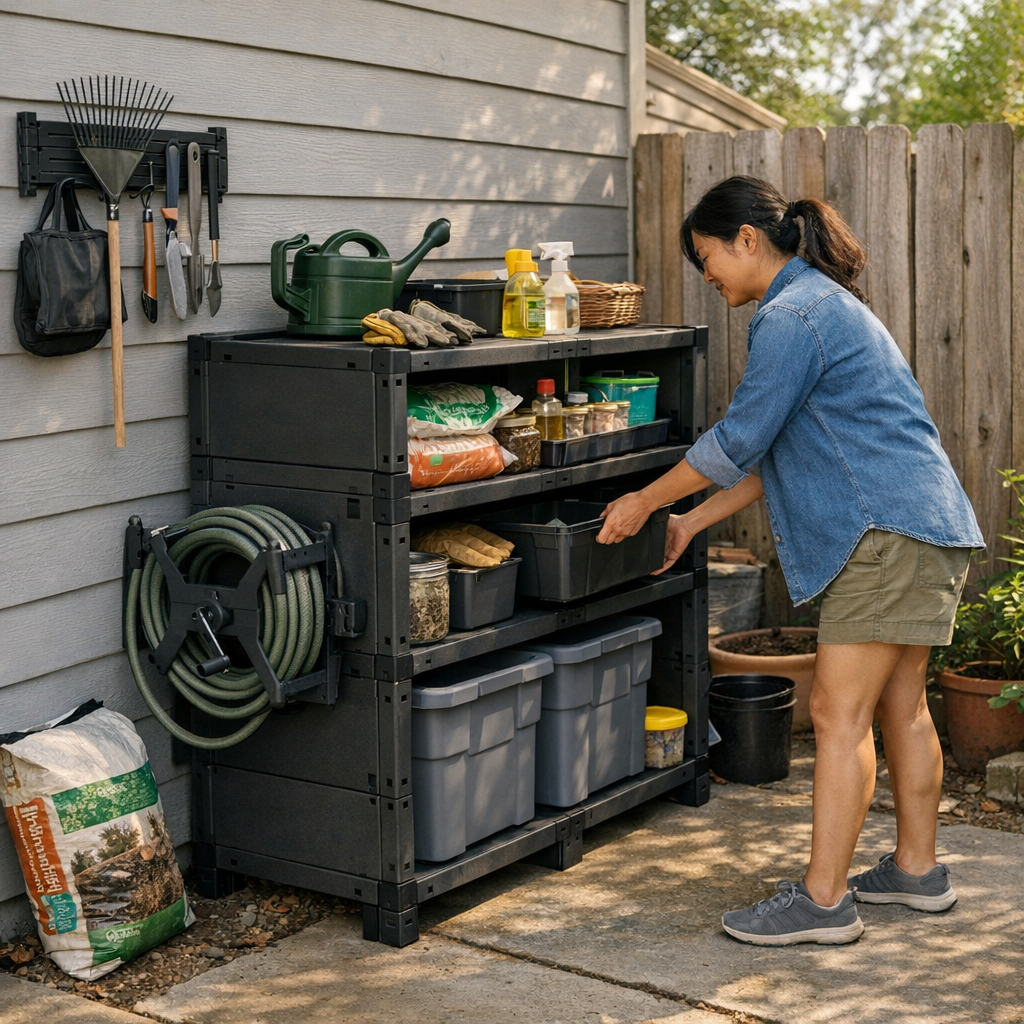
    Wall-mounted systems don’t just save space—they expose the routines that actually work. A row of hooks and wall racks leaves nothing buried. Rakes hang where you can see them, balls return to their sling or bucket, and anyone can tell immediately if something’s missing. With clear, visible spots, it’s harder to justify tossing a tool arbitrarily, and lost time sifting through the pile shrinks fast. Suddenly, what goes missing is obvious—a quiet motivator no deep bin can match.

    Where Efficiency Dies: A Real Use Scene

    Picture a narrow concrete corridor squeezed between a garage and a fence—a side-yard zone every house seems to inherit. There’s a “sports basket” stapled to the fence, a lidded box intended for tools, an accidental pile of folded tarps in the only dry corner. By Saturday afternoon, the area clogs: someone stacks patio cushions in the walkway, dropped gloves and balls drift into the only clear path, and a ring of gear spreads until moving the hose means untangling it from bat bags and gardening stakes. Nobody claims responsibility, so the mess builds up day by day, daring the next user to be the one who gives in and starts sorting.

    Floor Storage: The Stealth Space Killer

    This mess isn’t just clutter—it’s evidence of the floor setup silently losing control. Every new item on the ground multiplies work for the next person. After a month, just reaching a trimmer means shifting a “temporary” pile that’s quietly become permanent. Spaces that seemed generous on moving day shrink with each week of just-in-time stacking, till the next “quick chore” is a fifteen-minute shuffle. There’s no sense of flow—just a slow buildup of friction, one awkward maneuver at a time.

    What Happens When Return Points Actually Exist

    Replace the deck box with a wall-mounted rail, and the reset shifts immediately. Return time shrinks. Movement gets easier. Pressure to maintain order distributes. Each hook is dedicated—a shovel here, pruners there, each with enough space to actually swap in and out. Now the reset isn’t a vague idea; it’s thirty seconds to hang something in its slot, no pile diving needed. If something’s out of place, it’s visible to everyone. That little bit of social pressure goes further than any storage “hack.” Even on busy weekends, when overflow collects, it’s in the open—no one can ignore it for long or blame the chaos on a mysterious invisible mess.

    The difference shows in ways big bins never can: No more side-stepping around lidless boxes. No gear blocking the only route from garage to gate. No drawn-out debates about whose job it is to dig out last month’s clippings. The yard flows again—routine chores don’t stall out, and normal use just works.

    Still Messy Sometimes, But Manageable

    Imperfection doesn’t disappear. There will always be overflow days—a stray rake, a lost ball, a wall section filling up after a party. But unlike closed storage zones, wall systems surface these lapses instantly. Each mistake is incremental, not catastrophic. Resentment—“why is this all here again?”—fades because fixing the problem is fast and obvious, not another big project waiting to pile up.

    Setup Moves That Actually Improve the Routine

    • Visible Homes for Each Tool: Tools need to return to a spot you can see, not just a space that “fits.” Clear, labeled wall hooks outcompete deep bins every time, especially where multiple people share the space.
    • Modular Wall Systems With Purpose, Not Just Flexibility: Modularity only helps if each slot is meant for something specific—otherwise, the system just evolves into another jumble. Purposeful sections keep resets quick and spillover contained.
    • Floor Storage as a Last Resort: Anything that lands on the ground multiplies obstacles. Get tools off the floor to keep walkways clear, maintain actual usable space, and stop that slow slide from “neat” to “tragic.”

    Minor Tweaks, Noticeably Better Flow

    Set up wall-mounted elements spaced to fit the most-used tools. Leave an “overflow” hook or two for peak usage days. If you have a stretch that always refills with stray gear, zone it as a temporary returns shelf—reset it weekly, not yearly. These small changes keep clutter visible, short-lived, and hard to ignore, so the cycle of creeping mess hits a wall before it takes over.

    Function That Outlasts the Honeymoon

    The goal isn’t showroom perfection—it’s daily use without daily frustration. When storage clearly matches the way the area is used, the yard, patio edge, or fence strip can stay workable week after week. Tools come and go; movement keeps happening; reset isn’t a dreaded weekly project. The difference isn’t just less mess—it’s a space that finally stops getting in its own way.

    Explore practical outdoor organization at TidyYard

  • How a Small Trash Bin Transforms Entryway Clutter Management

    The overlooked clutter always starts small: a wrapper tucked behind shoe baskets, a crumpled snack bag abandoned on the bench edge, packaging stranded near the shelf. The first day, no one notices. By the third, wrappers start making the rules. Each time someone rips open the mail or empties a bag in the entryway—then walks off without a bin in reach—the drop zone absorbs another fragment. The mess doesn’t just collect; it migrates, slips between shoes, hides under benches, and returns to the surface with every shuffle. Suddenly, “resetting” the entry no longer means restoring order, but launching another lap through concealed traps of trash the system was never designed to catch. And the longer this gap stays unaddressed, the more it blocks flow—turning the threshold into a place you rush through, not use with intent.

    How Trash Finds Its Way Into Every Transitional Gap

    Every real entryway gets hit with shoes, bags, packages, mail, groceries—over and over, day after day. One rushed afternoon, a snack wrapper lands on a shoe rack while bags are unloaded and left in a hurry. Parcel packaging parks on the bench, blending in until it becomes background clutter. Junk mail scraps settle in with keys, “just for a second,” and hang around for days. No built-in disposal means that trash never exits in a single pass: wrappers drift from one surface to the next, bouncing from shelf to shoe to bench.

    • Wrappers that start by the drop zone end up jammed beneath shoes after a week of comings and goings.
    • Mail shreds, package tabs, and snack remnants fill the small “dead zones” no one intends to use.
    • Even wall-mounted storage and open shelves turn into accidental collection spots when there’s no clear-out channel.

    In the absence of a bin right where unpacking happens, every storage feature becomes a fallback trash shelf. The cycle repeats: nothing gets out cleanly, and each quick tidy is just a partial reset that lets the same debris sneak back in.

    Why a Designated Bin Changes the Entire Entryway Routine

    Introduce a properly sized trash bin directly into the routine—under the bench at shoe-removal height, beside the main door, or pressed against the main drop spot—and wrapper migration collapses. Suddenly, when mail is opened or a snack is finished, trash has nowhere to spread. Wrappers and packaging are discarded instantly, right where clutter begins, not shuffled to the next surface “for later.”

    This isn’t just about surface appearance—it shifts the entry’s entire rhythm. Debris never makes it behind shoe racks, never hides out in baskets. Resetting the entry turns from a slow, multi-stage hunt (sweeping every corner for hidden trash) into a single, clear routine. The system removes friction: clutter gets absorbed and exits without delay, so the area stays functional day after day.

    Not Every Bin Works: Size, Placement, and the Backfire Effect

    Drop the wrong type of bin into the entry—too large, awkwardly shaped, or tucked away—and the problem just shifts. Oversized bins become a final depot for general trash: weeks pass between empties, and the zone gains a new sense of unresolved mess. Awkward bins, parked out of reach or poorly aligned with movement, are skipped entirely or overflow in the wrong spot. Instead of solving wrapper drift, these bins become their own stationary clutter, demanding manual resets or getting ignored. When the disposal channel is incorrect, trash doesn’t exit—it just detours, and the reset burden falls back on you.

    Scenes That Spotlight the Entryway’s Real Storage Weak Spot

    Regular routines push systems to their edge. Picture Sunday night: several people, multiple bags, groceries, parcels, and backpacks squeeze through the same threshold. There’s nowhere to toss packaging except the nearest flat surface, so wrappers fan out over the bench and nestle under shoes. Midweek comes; passing through means dodging mini-piles that now block shelves and bench seats. Every shoe line is pushed wider. The bench becomes more landfill than seating, and by the next round of resets, you’re not clearing shoes—you’re dragging out all the trash that’s floated into every gap.

    • Shoe storage gets jammed with transient debris, and rows start slipping past their assigned lines.
    • Drop zone shelves and key trays quietly fill with wrappers that never made it past “just for now.”
    • Quick in-and-out moments slow down, pressured by stray packaging at every touchpoint.

    This isn’t neglect—it’s a system missing a critical step. The trash never exits on the first pass, so low-level congestion seeps into every part of the flow. Resetting gets slower, passing through the entry grows tighter, and clutter takes up mental as well as physical space. That’s how wrappers turn from temporary inconvenience to semi-permanent congestion—because no alternative exists at the exact friction point.

    The Power of Precise Placement: Making the Bin Disappear Into the Routine

    Tested in actual busy entryways, a compact, lidded bin placed right under the bench—exactly where bags and shoes land—is nearly invisible by the second week. It opens easily with a foot nudge. Wrappers get dropped as soon as they appear—no detours, no “I’ll handle this after.” The zone stays clear not from discipline or extra effort, but because disposal becomes a reflex, not a chore. The difference isn’t just neatness—it’s daily movement that’s smoother, reset cycles that shrink, and no more strays lurking behind walls or inside baskets.

    For real use, size is not a small detail. A capacity of 2–4 liters handles the typical pile-up—snack wrappers, package debris, mail fragments—without becoming the next trash can for the whole house. It fills on cue with routine debris, empties out on schedule, and never gives wrapper drift a second home. Too big, and the entry inherits a new mess; too small, and wrappers overflow, restarting the cycle. The right size and spot mean trash disappears on arrival—and the entry stays open for every round of shoes, coats, and bags moving through.

    Practical Tips for Entryway Bin Setup

    • Place it where unpacking happens: Under the entry bench, close to the primary door, or right at shoe-drop height. The shorter the path, the fewer wrappers wander.
    • Choose a compact volume (2–4 liters): Enough for daily debris, not so much that it morphs into a permanent garbage stash. Predictable to empty, impossible to ignore.
    • Use a lidded bin: Keeps contents contained and avoids accidental spills, especially with pets, kids, or a tight passage between outdoors and in.

    The Real Difference: Containment vs. Camouflage

    Most entryways can look organized after a heavy tidy—but without dedicated disposal, wrappers aren’t gone; they’re just hidden until the next reset. A bin doesn’t simply store trash—it gives it an exit ramp the system never had. Baskets and wall shelves are designed to contain, but without a real trash channel, they camouflage the problem, letting debris resurface in cycles. The real improvement isn’t cosmetic: it’s spending less time chasing loose wrappers and more time moving freely through an entry that self-clears every time you walk in the door.

    From Drop Zone Congestion To Smoother Daily Flow

    A small, well-placed trash bin doesn’t just clean up appearances—it clears the underlying cause of recurring entryway congestion. No more collecting wrappers for the next trip to the kitchen. No more using a recycling basket as a stand-in. Packaging and debris leave the entry the moment they arrive. The drop zone stops falling back into disorder between resets. You can cross the threshold without sidestepping yesterday’s clutter, and the routine speeds up without backtracking for strays. The result: a transition space that finally matches the way you use it—open, resettable, and ready for whatever walks through the door next.

    Find transition-space entryway solutions designed for real daily use at Betweenry.

  • How Proper Placement Keeps Bathroom Linen Cabinets Moisture-Free and Organized

    The difference between “organized” and actually easy-to-use storage shows up fast when it comes to towels. That sharp-lined bathroom linen tower looks calm at first—but five days in, the flaws start appearing. Towels pulled from lower shelves feel limp or stale, the tower’s closed doors trap steam from daily showers, and what once seemed handled quietly becomes another source of small, repeated disruption: slow-drying linens, musty corners, extra shuffling every time you reach for a fresh towel. Hidden inside most linen cabinets is a cycle where visual order doesn’t equal practical reliability—even when the setup looks perfect immediately after install.

    The Hidden Effect of Placement—Why Moisture Finds a Way

    The real tipping point isn’t dramatic. On busy mornings, you grab a towel from the “good” middle shelf, but it’s not crisp—just faintly damp, not quite right. It’s rarely a visible leak. Instead, it’s the slow, invisible humidity that blankets the cabinet after every shower. Where you place a storage tower matters: wedge it too close to a shower door or under a window prone to condensation, and even the tightest cabinet seals are no match for gradual moisture buildup.

    This becomes a repeating feedback loop. Each stack absorbs a bit of dampness, so freshness fades unevenly. Over several days, you’re not just grabbing a towel—you’re testing for the driest one, re-stacking leftovers, and hesitating before shutting the cabinet again. Over time, retrieval turns from routine to mild shuffle: rotate, sniff, refold, repeat. The system quietly loses its edge, and the difference becomes annoying, not just inconvenient.

    Towers That Look Organized vs. Towers That Stay Functional

    Closed tower cabinets promise dust-free stability, but they routinely trade airflow for appearance. Behind some tidy door, lower shelves take the brunt of the moisture—especially when the tower is pressed up to splash zones or cheap vent windows. What looks sorted quickly slides into the old cycle: most-used towels get shuffled to the top, forgotten ones stagnate below, and musty surprises multiply midweek.

    Open shelving flips this problem—air circulates, you can check towel condition instantly, but now everything is exposed. Lint, visual clutter, and a sense of unfinished business move in. Worse, in tiny bathrooms, either setup used without considering the true flow of steam just makes bad positioning harder to ignore. Stack a closed tower near the steam source, and you’re back to rotation games and, eventually, hidden mildew creeping in from below.

    Repeated Use Reveals Subtle Pressure Points

    Picture a real outcome: a tower placed two feet from the shower, with no exhaust fan. The first couple of days, storage seems ideal—towels stacked, quick to grab. By Thursday, the bottom shelf is loaded with slightly heavy towels, while the few on the upper racks get all the action. You fall into a loop of:

    • Pulling towels, then quickly shuffling lower stacks to air them out
    • Second-guessing the “safe” spot, fishing around after several back-to-back showers
    • Half-empty shelves as you constantly rotate older towels upward, losing track of which set is still good—organization becomes a moving target

    This ongoing, low-key uncertainty doesn’t just erode your storage—it chips at every attempt to streamline the morning routine.

    A Small Shift That Changes Everything: Moving Away from the Steam

    Most fixable problems don’t need a new cabinet, just a rethink of placement and shelf loading. Shifting a tower 50 centimeters out of the wettest zone—further from blast lines or that perpetually fogged window—immediately reduces trapped moisture. Another often-missed trick: leave one shelf free between stacks. This empty space lets air move and towels breathe, even in a cramped setup. It costs a bit of storage, but the payoff is real: fewer towels going limp, less reshuffling midweek, easier resets on laundry day.

    Within days, towels stay lighter and more consistent. That background mustiness fades, and the usual “air out and hope for the best” ritual quietly disappears. Instead of digging for a dry set, every shelf becomes more reliable with less fuss. Sometimes, the hardest-working storage tweaks come down to one adjustment—distance from the damp, and resisting the urge to cram every inch at capacity.

    Practical Tip: Mind the Shelf Gap

    Don’t pack every shelf just because you can. Skipping a row or alternating where stacks land creates small air channels that keep towels fresh much longer. Rotate which shelf holds empties and which gets restocked, and watch the reset cycle smooth out. That minor “waste” of shelf space prevents the bigger drain: endless midweek reorganizing and rotating, all to keep up a system that should have made the routine easier, not harder.

    Tower Height, Airflow, and the Role of Routine

    Adding more shelves might seem like progress, but it often creates new problems. When towers get too tall, bottom layers become dead zones—forgotten towels hiding out of reach and slowly collecting humidity. Realistically, three shelf levels is the high-water mark for most home bathrooms. Anything more, and you get category drift: last year’s towels living at the base, out of use, while a rotating handful cycle through the top. The best layout keeps shelves above splash lines and along clear wall space—away from heat pipes or plumbing, so movement and airflow stay simple and predictable, not blocked or hidden.

    Closed vs. Open: Choosing for Your Actual Space

    Closed cabinets defend against dust if you’re disciplined about regular airing out and don’t overload every shelf. In drier corners, they work smoothly. But shut too tight or filled too deep, they turn into slow-reset chambers, trading sleek appearance for hidden maintenance headaches. Open shelving has a different rhythm: it forces rotation, avoids forgotten stacks, and keeps even the bottom towels in active use. Hybrid options—closed for reserves, open for everyday—often make sense, so long as the tower stays clear of the steamiest walls and you’re willing to prioritize ease of circulation over absolute capacity.

    What Looks Sorted Isn’t Always Easier to Use

    The proof of a bathroom storage system isn’t in perfectly folded stacks—it’s in how many times you grab, pause, and reshuffle before getting what you want. If you’re opening one door to reach for another, running overflow onto a random chair, or leaving drawers half-closed to let air in, your setup isn’t really working for daily life. Storage should match the actual rhythms of your routine, not just hit a visual benchmark.

    Keep questioning: does this layout give you what you need in one smooth step? Reducing shuffling, doubling back, and hesitating over stacks makes all the difference—far more than extra shelves or decorative order ever could. Placement, airflow, and space for circulation are what make towel storage part of a reliable routine, not just a once-a-week reset challenge.

    For more practical storage systems and ideas, visit Gridry.

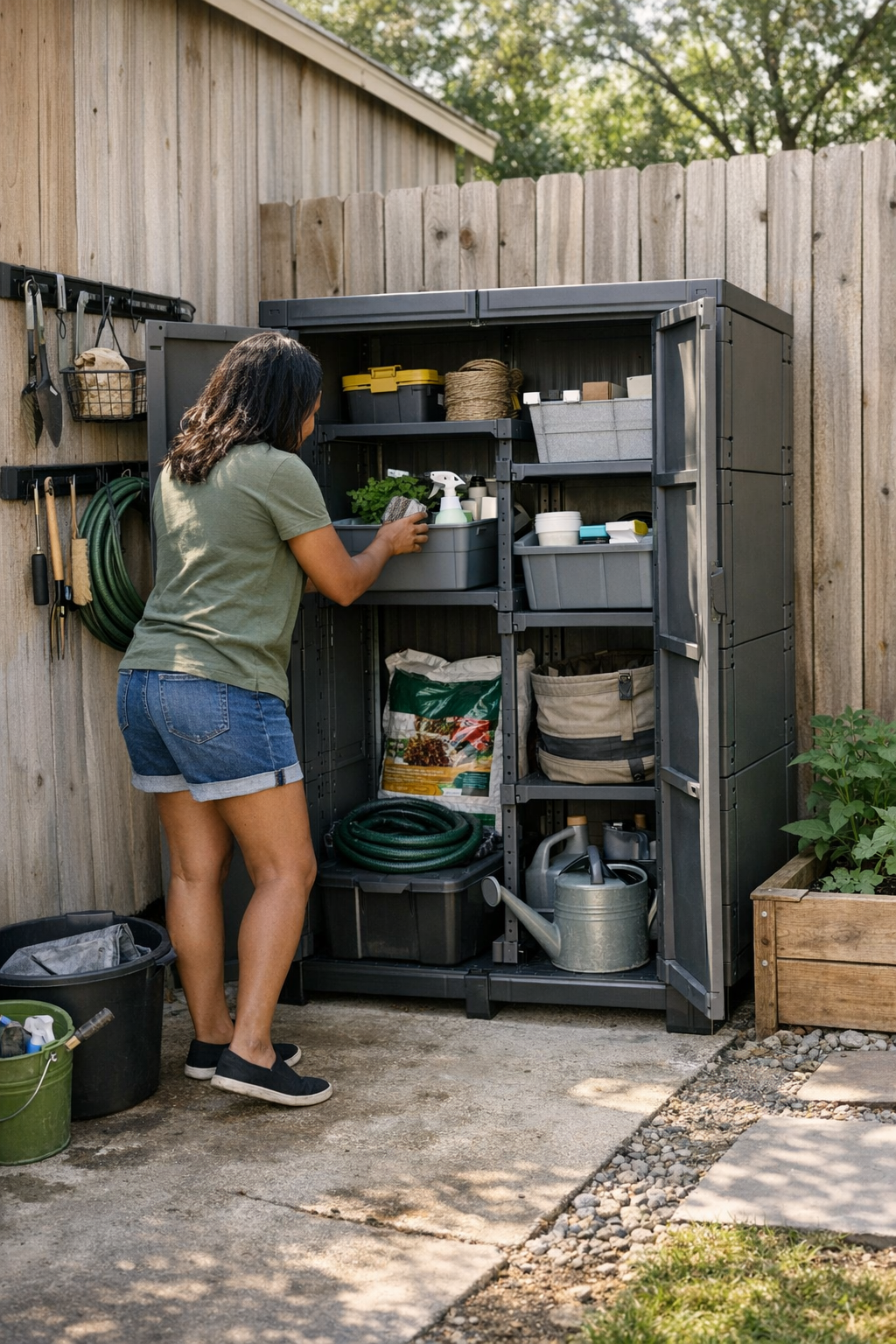
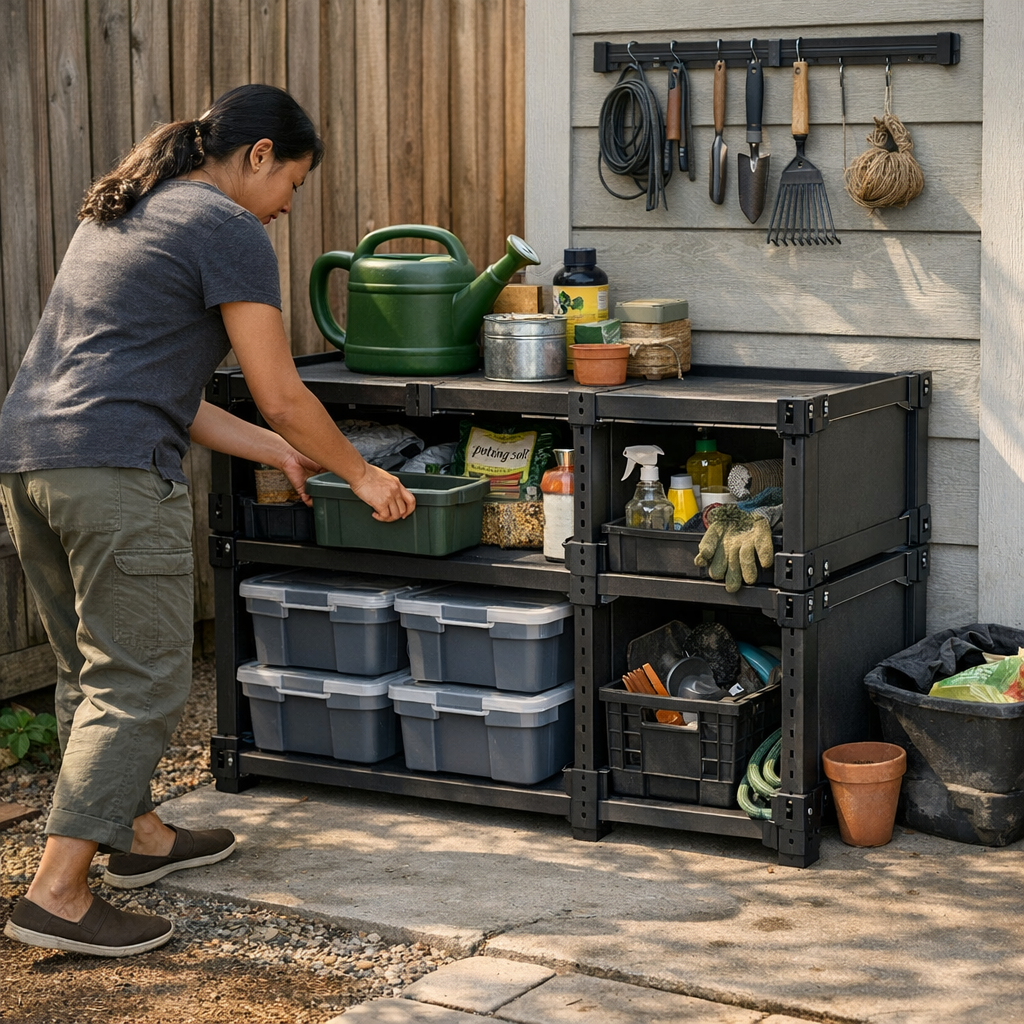
  • Choosing Between Wall-Mounted and Floor Outdoor Storage for Lasting Use

    Every outdoor storage area looks organized on day one. But the real test kicks in after two weeks—a mower that blocks the side yard path, a batch of wet tools balanced on the garage edge, or bins creeping back into the space you swore would stay clear. What turns once-neat storage into an obstacle course isn’t just clutter habits or lack of square footage—it’s how the setup fails to keep up with actual, repeated use.

    The Hidden Reset Burden of Wall Storage

    Wall-mounted storage delivers that initial promise: tools in a row, open shelves, fresh space underfoot. It’s easy to believe the problem is solved—until real routines return. One not-quite-dry hedge trimmer takes over an entire shelf “just for today.” A muddy rake leans against the wall, never meeting its intended hook. By the third or fourth week, folding chairs have migrated—one on the wall, one by the stairs, neither fully stored but always blocking something else.

    Return friction sneaks in, day by day. The more awkward it is to rehang or stack an item, the more likely it’s left somewhere in-between—a bucket on the ground, a pair of garden shears exiled to a corner. Hooks get overloaded. The prime slots that once held seasonal gear get swamped with daily-use clutter. Soon, your “everything on the wall” plan feels like working around a fence line of half-returned, half-forgotten stuff that never quite goes away.

    Spotting the Setup That’s Working Against You

    • Leaning tools: Are shovels, rakes, or hoses forever propped at the edge of the wall rack, waiting for “next time” to get put up? If putting things back always feels like a small effort, the reset burden is already collecting in your routine.
    • Half-returned gear: Is there always a soccer ball, cooler, or pile of pool toys camped out on the patio steps or just inside the gate? If items block your movement or gather in not-quite-out-of-the-way spots, your system is slowing you down.
    • Stray bins and overflow: Bins meant for hooks end up on the ground. Dead corners become the default dumping zone. Over time, the “floor stays clear” promise collapses, and the layout forces a shuffle each time you walk through.

    Each tiny snag means a small reset, and those resets add up. Instead of one clear-out at the start of summer, you’re renegotiating with your own storage every weekend, just to keep the path open.

    Where Floor-Based Units Quietly Win

    Floor storage is rarely pretty—but in the spots where movement matters, it saves you. Lower friction, faster returns. Drop muddy boots in a bin. Stash a hose loop in a chest. There’s no balancing act, no puzzle to solve each time. That difference is loudest on weekends—when guests, kids, or yard projects pile up, the path by the garage stays open because items go straight into a bin or chest, not scattered across three different places.

    Bulky gear and folding carts get contained, not orphaned at the edge of the wall system. The area stays usable, not showroom-tidy but clear enough to haul groceries, find your tools, or let the dog through without tripping over last week’s project.

    When “All Up Off the Floor” Fights Your Routine

    In tight outdoor strips—side yards, patio edges, or that narrow wedge between fence and house—it’s easy to believe that wall hooks alone will solve everything. But with several people (or pets) using the area, overflow finds its own way down. See planters or garden carts “stored” a foot off the system, hoses looping across the walkway, bins squatting in corners. The more you squeeze floor space, the more you end up blocking flow. Movement stalls, objects pile up, and the sparkling vertical system quietly starts sinking the entire zone back into daily shuffle.

    Return Flow: The Make-or-Break for Real Use

    The test isn’t a perfect “after” photo, it’s the fourth week of busy routines. Are you slotting gear back where it actually belongs—or detouring to the easiest landing spot out of impatience? Floor units and modular chests survive the cycle-pressure: the fast returns, odd-shaped items, dirty tools that no one wants to fuss over. Wall setups hold up if you only ever use the same few tools, the same way, every time. But the moment your real gear list expands—bikes, chairs, project leftovers—you see hesitation: “Should I reshuffle the whole system tonight, or just set this here for now?” That’s the gap where clutter returns.

    Recognizing What Actually Works—Not Just What’s Tidy

    Reality check: You come home with groceries, and the footpath is blocked by a pile of bins and a chair that never went back up. Walk to the mower—first, slide the coolers out of the way, scoot aside last week’s balloon weights. The system didn’t fail on day one, but bit by bit, it puts your routine on pause every time you just want to move through. The loop resets: organize, shift, work around, promise a seasonal cleanout that keeps getting pushed back.

    Adding a single floor bin or modular chest breaks this loop. Now you can drop a muddy pair of boots, fold and stash a chair, or park garden toys the moment you’re done. No unnecessary lifts, no puzzle-solving—just a clear return flow that keeps the area open. Tidiness follows from convenience, not from occasional resets.

    Strategy: Pair, Don’t Just Pile Higher

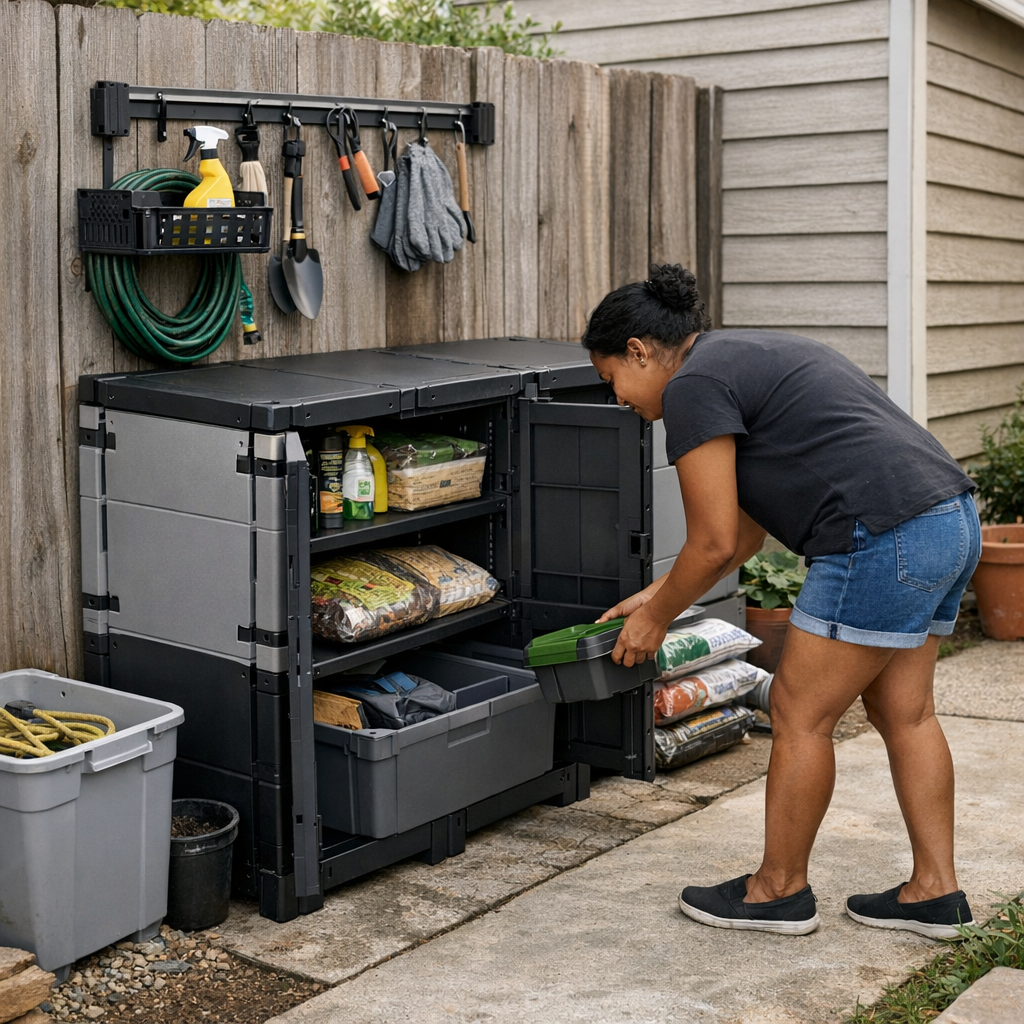
    Instead of building up another row of hooks, combine a single wall rack for your core tools—what absolutely needs to hang—with one or two floor-based containers for everything that won’t sit neat. Now, the tricky and oversized gear lands where it belongs, not at the foot of the steps or in the path to the side gate. In real family yards or busy garden zones, a catch-all bin outperforms the fantasy that “everything up” will keep working once life gets busy again.

    Let Your Routine Lead the Setup

    No system fixes everything. But the right outdoor storage setup erases the small frictions you feel daily: gear that always lingers at the edge, paths that keep blocking, corners that never truly clear. Watch where your own returns actually collect. Which items demand easiest possible drop-off, and which can live neatly hung? Setup that follows these patterns is the setup that holds, even when nobody wants another reset.

    The difference isn’t a photo-op finish—it’s how the space actually moves after a normal week. Let real use—not just a clean floor—drive your next change.

    Explore TidyYard outdoor organization solutions

  • How Open Storage Solutions Prevent Countertop Clutter in Entryways

    When your entryway countertop is buried under bags, keys, and shoes, it isn’t just chaos—it’s evidence your storage setup is losing the daily battle against real routines. If you’re endlessly cycling bags from the counter to the floor, shoving shoes aside to claim six inches of bench, or lifting piles just to find today’s mail, your system isn’t broken by clutter—it’s defeated by habit friction. Most entryways don’t start with a stuff problem; they develop a bottleneck because storage is built for one controlled reset, not for the relentless, scattershot returns of ordinary life. If an open surface is the fastest place to drop something, it wins. Every evening, every weekday, that’s where overflow stacks up first, turning “temporary” into a new normal with no friction to interfere.

    Why Entryway Surfaces Turn Into Catchalls

    Flat, open surfaces next to the door are magnets for anything in your hands as you cross the threshold. Say you’re juggling groceries, kids, or wet umbrellas—if there’s even a one-second delay to open a door or lift a lid, the countertop takes the hit. One bag landed “just for now” attracts the rest: shoes, mail, hats, stray gloves. The result isn’t immediate disaster—just a slow drift, with once-neat paths shrinking as items settle further from their homes. The real cost? What was meant as a pass-through becomes a blockade, and resetting feels like re-sorting a pile that never quite empties. Even determined organizers find themselves repeating the same cycle, losing the surface to new overflow midweek.

    Access Friction: The Real Source of “Random” Clutter

    The wrong storage looks tidy only when nobody’s in a hurry. Add late arrivals, arms full of sports gear, or a toddler’s scattered shoes, and small access issues snowball. Closed cabinet doors and bins with tight lids turn a simple drop into a multi-step frustration, so bags and shoes circle around to land wherever’s easiest—most often, right on display. That “temporary” shortcut doesn’t reset itself; it builds up. Soon, the entry is less a passage than a holding zone, stacked with every day’s backlog. A system that makes you reach or pause ends up never being used when it matters most.

    The Bench-Top Domino Effect

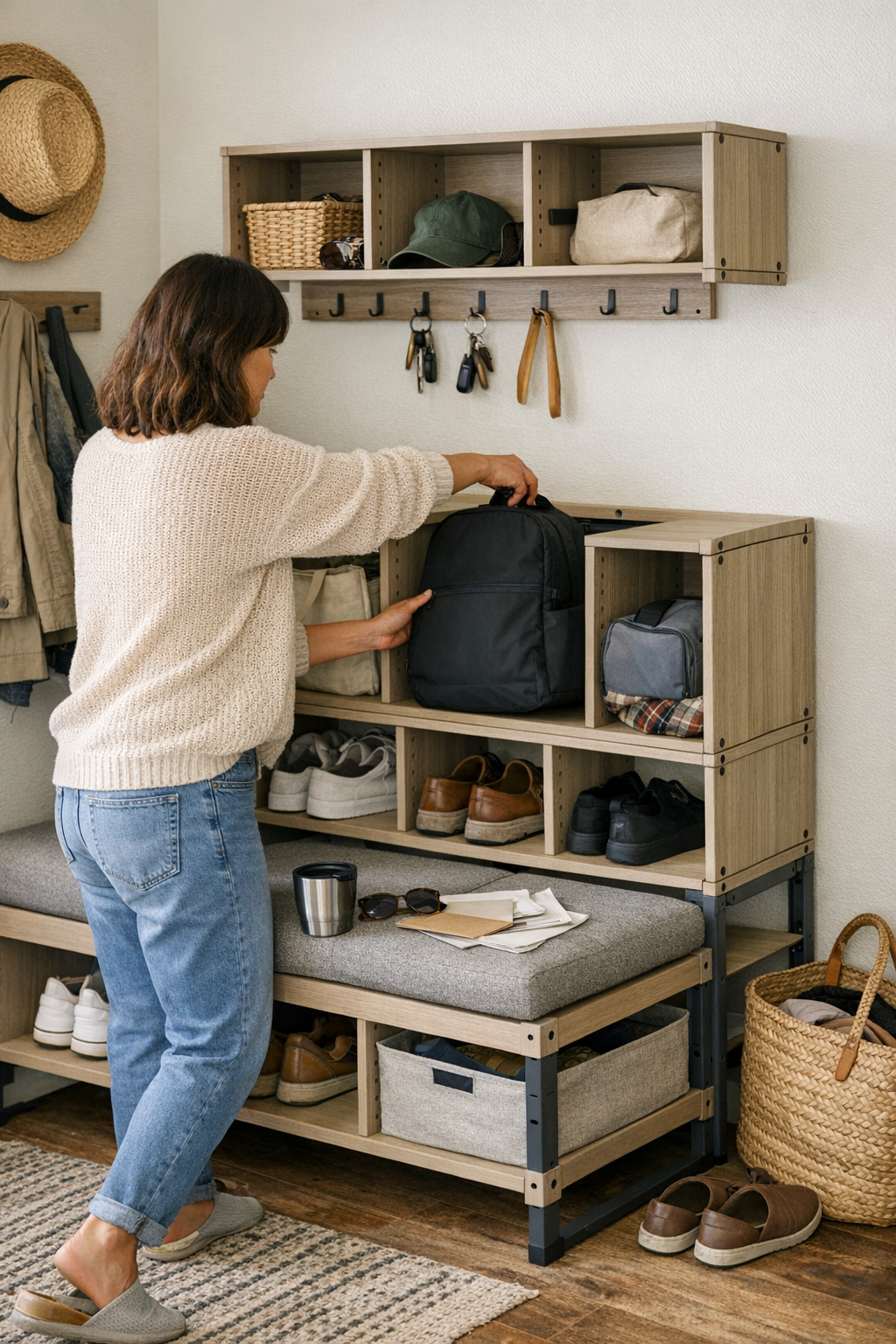
    Picture a narrow entry with just enough room for a slim bench and a wall cubby overhead. The week starts with shoes lined up and backpacks perched in order. But as the days blur, one bag left in a rush becomes two, keys multiply in the tray, and shoes spread out to the far edge. The cabinet might only be a step away, but if its door is shut on Tuesday morning, dropping mail on the bench is inevitable. By Wednesday, not only is the surface gone, but shifting anything means risking an avalanche. The storage that looked neat in a photo now interrupts your path every time you squeeze through.

    Closed Storage vs. Open Access: What Actually Works?

    It’s tempting to reach for closed cabinets, deep bins, or drawers to “make clutter invisible.” But for high-traffic thresholds, every handle or lid adds a speed bump. The best setups strip away barriers for what actually lands multiple times a day: shoes, bags, mail, keys, jackets. Open racks, cubbies, and wall hooks invite instant drop-and-go—no balancing act, no shifting stacks, no two-handed lid wrestling. Instead of overflow migrating, these units become the first-choice landing, not the fallback. Open storage can’t hide everything, but it channels the daily mess to a defined zone, instead of spreading piles to every available edge.

    Testing the Alternatives in Real Life

    Swap lidded bins for open cubbies and the rhythm of entry changes. Pre-switch, storing gear meant pausing, opening a lid, moving other things, and—more often than not—abandoning the process halfway. Shoes and bags hovered on the closest surface, bench tops jammed up, and reset was a major event. After switching in open-front racks, “drop and move on” finally worked: shoes landed in their zone, bags got real parking spots, and the need to clear and restart dropped sharply. By midweek, the signal was obvious—the overflow edge stopped creeping outward, bench surfaces remained open, and rushed mornings no longer triggered a full entryway reset. Not perfect, not perfectly hidden, but the critical friction point was gone.

    Real-World Entryway Friction: Recognizing the Patterns

    Repeated inconvenience always finds a new surface to claim. Classic signs your setup is introducing friction:

    • One bag dropped breaks the no-clutter streak for days. That first item is always a magnet for the pile-up that follows.
    • Neatly lined shoes stretch farther each day. If it’s work to return them, they migrate—often ending mid-hallway by Friday.
    • The bench transforms into overflow parking. What’s meant for sitting becomes the backup zone for anything without a fast home.
    • Returning one item partially blocks the path. Awkward placement or oversized bins can jam up entry for everyone.
    • Wall-mounted storage does part of the job—but only if it’s in the flow path. Bad placement leads to items drifting back to counters or floors instead.

    Fine-Tuning for High-Frequency Use

    No two homes share the same entry layout, but friction shows up the same way: routine items resist reset unless it’s easier than leaving them out. Lasting setups are built for repeat motions: priority items land in open, reach-first spots—no lid, handle, or deep bend required. Spaces that only look organized after a full sweep break down by Tuesday. Instead, open cubbies and racks let you toss, grab, and go. Wall units clear the floor, shrinking pinch points in tight halls. Floor units with open faces tackle bags and heavy gear that need ground-level access, without turning every morning into puzzle time.

    Quick Tips for Fewer Clutter Rebounds

    • Organize “by reach,” not by storage size. What you touch most should never require an extra step—items that do will migrate to the nearest open spot.
    • Time your resets to busy stretches—after work, post-activities, or weekends—so your setup supports traffic, not just empty-house order.

    The Difference Between Looking Tidy and Functioning Smoothly

    An entryway that looks organized at noon and collapses by Wednesday isn’t short on storage; it’s missing the match between habits and setup. When shoes click into place fast and bags find open bays—without shifting a stack—surfaces stay clear for the unexpected and returns lose their drag. The payoff is in the threshold: easier passage, fewer blockages, and a zone that stays as open on a Friday as it felt on Sunday. Real order survives the week because the setup fits how you actually move—not just how you want things to look at reset.

    For carefully designed storage built for busy entryways, drop zones, and real-world routines, visit Betweenry.

  • Wide Underbed Storage Boxes Solve Oversized Duvet Storage Challenges

    Underbed storage can keep the bedroom passable, or it can quietly sabotage the space you thought you’d saved. In small bedrooms—where bedding doesn’t have a closet and walking space is already tight—the choice between a too-shallow bin and an oversized comforter isn’t abstract. You notice it the first time you stub your foot on a bin edge jutting out, yank at a jammed lid, or try to slide a box free only to feel it resisting, warped and bulging from the pressure of actual bedding. Most underbed storage looks organized in the beginning—but as soon as routines set in, what seemed smart quickly turns into a recurring obstacle, tripping you up every laundry cycle and slowing resets after every guest.

    When a “Tidy Row” Becomes a Reset Chore

    The illusion is strong on day one: a perfect row of bins flush under the bed. But normal use cracks that calm. Every time you fold and store bulky duvets and try to make them fit, you bend lids, bulge sides, and send boxes creeping out of line. Plastic distorts. Lids bend upward. The units start drifting. Soon, a single retrieval means shifting two other bins, bracing one hand on the frame, and wrestling against boxes wedged by overflow. An item you meant to “set and forget” now costs you minutes and frustration each round—especially painful if you’re stepping sideways between bed and wall just to get past.

    These aren’t minor inconveniences. In an already cramped room, every nudge, angle, and awkward scoot steals space, time, and patience. You’re buffering, realigning, or dragging bins with both hands instead of simply living in the space. The job of underbed storage was to make routines invisible. Instead, it’s taken center stage as a recurring background hassle.

    The Limits of Standard Storage Bins Under Real Bulk

    Standard underbed bins—designed for flat sheets or off-season clothes—collapse under the shifting volume and weight of thick duvets. For the first week, you get away with it. But each use adds pressure: bins bow, plastic corners get softer, and soon the lid won’t sit flat. One side sags farther; boxes stick out and create new snags along the floor, breaking whatever clean line you started with.

    A bigger problem? The spread of clutter at the edges. Bins meant to keep bedding corralled now force you into constant maintenance: pushing stray inserts back in, wrestling lids to fit, endlessly refolding or shifting items to make them settle, only for boxes to migrate out of reach or stick into the walkway after each round. The “setup” you trusted for order is now a series of piecemeal corrections—never quite reset and always one off-angle bin away from visible mess.

    Repeated Use Reveals Weaknesses Fast

    Look at a typical week: you launder and fold a duvet, try to compress it for a bin that’s not quite wide enough, and immediately the sides bend, the lid wobbles, the whole container jams against the bed’s underside—or pushes out just enough to block a path or leave bedding exposed. Every time you load or unload, things get a bit sloppier. Add guest bedding rotation and the cycle only accelerates: you run out of patience as much as you run out of space.

    If your use pattern isn’t static—swapping summer for winter comforters, pulling spare linens for guests—the storage friction compounds. What should be an out-of-sight, out-of-mind routine becomes a live issue, making the thin margin between a passable setup and an outright mess painfully clear.

    The Wide Underbed Box: Built for Repeated Bedding Routines

    The difference shows up fast with a truly wide, reinforced underbed box—one that actually matches the unfolded sprawl and settled weight of a real duvet. Instead of patching a system after every jam, you get storage that anticipates bulk and motion, not just shallow stashing.

    • Reinforced walls don’t buckle when you cram or retrieve.
    • Level, locking lids keep dust out and don’t deform, even after repeated use.
    • Single-handed, predictable access replaces wrestling and two-handed bracing—even in a narrow fit.

    It’s not about “more capacity”—it’s a design that keeps its shape and slides in and out with the same ease all week. You stop needing to straighten bins every Sunday, or brace the frame just to get something free. A real underbed box absorbs everyday use instead of magnifying every movement. Storage becomes background again—no longer claiming your time or blocking your path.

    Scenes from Everyday Use

    Blocked Pathways and Jammed Boxes

    See it on a rushed morning: you reach for bedding, but the bin jams sideways, bulging from last week’s hasty refold. Now you’re wrestling the box clear with an elbow, scraping it along the leg of the bed, bumping into a wall, or knocking it loose only to have it spill. Or you walk past, clip your ankle on a corner poking out—another “invisible” annoyance that’s become a regular hazard since the lid first lost its fit.

    Unplanned Category Drift

    The shape of clutter shifts as bins struggle to contain real use. Overflow forces some containers to become miscellaneous drop zones: stray throws, awkward pillows, a spare sheet that never finds a place. Instead of grabbing what you need, you pull three items and re-sort. Storage stops supporting your flow and starts demanding triage after every laundry load.

    Smoother Return Flow—and Fewer Small Annoyances

    Get the right wide box and the pattern flips. Bedding has a true slot—no bulging out, no hidden overflow, no debate over how much to squeeze. A quick return actually stays quick. The bin doesn’t drift or tip. Changing bedding is a one-movement task, not a mini-reset demanding clutch fixes. The background stays quiet; your path stays clear.

    Real-World Q&A for Underbed Storage Issues

    What’s the sure sign a bin is wrong for bedding?

    If you find yourself compressing one more time, wrangling lids, or constantly adjusting a box that edges further out after each use, you’re seeing the system fail in practice. Warped plastic, lids that won’t close, bins stealing floor space—these are clear flags that everyday use is overpowering the original plan.

    Are wide underbed boxes actually worth the trouble?

    The payoff is immediate in small routines. Wide, reinforced bins don’t fight you. They preserve both order and pace: bedding changes finish in less time, and resets stay in the background. The right box prevents all those small storage irritations from piling up—and keeps the rest of the room from paying that price.

    Can a better underbed box solve all my storage issues?

    No underbed storage is a magic bullet, but the right model eliminates one of the worst culprits: the recurring tripwire of ill-fitting bedding storage. You won’t solve clutter everywhere, but you will shrink the single most irritating storage reset into a quiet habit—no more wrestling, no more realignment, no more daily penalty for a cramped setup.

    Matching Storage to Actual Use (Not Just the Planned Layout)

    The real gap isn’t between “looks organized” and “works”—it’s between the system you imagined and how it stands up to repetition and bulk. The best underbed storage choices acknowledge tight walkways, moving piles, limited wall space, and the need for clean return flow. A well-matched solution makes storage invisible again: no daily corrections, no slow drift toward disarray, no buildup of micro-annoyances that eat away at living space. When every inch counts, the shift from “barely working” to actually supporting your routine is more than cosmetic—it’s a relief you can measure in time and movement, not just looks.

    See practical, setup-focused underbed storage options and more at Gridry.

  • Choosing Between Backyard Storage Units and Wall Systems for Outdoor Clutter

    Outdoor storage doesn’t judge you on moving day—your real verdict comes weeks later, when the shed’s clean lines unravel into soccer balls wedged by the door, hoses creeping across every path, and tools claiming whatever edge you’ll tolerate after a long day. The showdown between a freestanding storage unit and a wall-mounted system isn’t really about aesthetics or capacity. It’s about whether your setup quietly clogs your routine—shuffling bins, nudging doors, retracing steps—or actually makes your yard less of an obstacle course after each storm, each Saturday, each ordinary weeknight. Good intentions meet mud, rush, and gravity. Setup choices make every difference—especially in corners where room disappears fast.

    Where Storage Becomes the Roadblock

    The first afternoon, your new storage looks tidy—a shed lining the fence, or a wall rail loaded just-so beside the garage. But normal use doesn’t wait. Each trip for the rake brushes against the packed lineup of patio chairs; bins you swore would stay sorted get stacked and re-stacked, blocking the walkway on every pass. In no time, movement gets pinched: sometimes a sideways slip, sometimes backing up and moving a wagon just to reach the pruners. Overflow stops being a surprise and becomes built-in friction.

    If you work with a side yard barely wide enough to wheel a mower, or a patio edge serving both storage and kids’ traffic, setup footprint matters more than shelf count. A floor unit filled once becomes dead weight. It’s supposed to solve chaos, but more often, it becomes the pivot point where everything bunches up: Park the scooter and now nobody’s getting to the rakes; want the gardening gloves, but you’re balancing bins just to pull the right door open.

    Wall-Mounted Systems vs. Standing Units: How Use Patterns Actually Shift

    Wall systems promise freedom underfoot and open lines of movement—until vertical clutter stacks up. Hooks go up neatly, items are easy to see. But in practice, “out of the way” means cramming old hoses above eye level, stashing out-of-season tools on the far ends, and letting this month’s gear pile right in front of last month’s. What started as a clean wall morphs into a shifting wall of stuff.

    It sneaks up: grabbing a shovel now requires shifting past coolers and moving the folding chairs—one hang-up triggers two more fixes, and suddenly you’re halfway to another weekend reset. Hooks meant to organize now collect overflow, blocking what you use most.

    Freestanding Units: Shelter That Can Box You In

    Freestanding and modular units offer the shelter your gear demands—but they claim their territory and don’t give it back. Dropped into a fence line or anchoring the patio’s end, their swing radius interrupts the routine: the shed door opens and now the footpath is gone, so tools dragged out for one job just get dumped outside for “later”—clutter in a new location.

    Soon, the inside becomes an “anything goes” zone for bulky, awkward gear—cushions, sports nets, bags of soil—often just piled to clear the patio, not truly put away. The evidence: every time you pencil in a “Saturday shed rescue,” frustrated by how quickly that reset is needed.

    The Return Problem: Can You Actually Put Things Back?

    The best outdoor storage proves itself on the return trip, not on day one. If putting a trowel away means working past children’s boots, buckets, and a half-lost hose, it’s easier to drop it “just for now”—a momentary decision that, repeated, piles up into chaos.

    Wall-mounted options work if returning gear is simple—grab, hang, step away. But few systems stay that simple under daily use. If the trimmer only fits behind a stack of bins, or a wall hook now supports three tangled extension cords, nobody’s putting things away the right way after a late-night chore.

    Big sheds repeat the cycle with bulk. You unload outdoor cushions after a cookout and leave them inside the threshold, telling yourself you’ll “fix it up properly next time.” That next time creeps further out, as each drop-off blocks the last one. The rhythm breaks down, and the storage eats its own path.

    Overflow Piles & Dead Corners: How Clutter Wins in the Edges

    Every system promises a place for everything—until overflow creates its own zone. Stray gear finds the same awkward corner by the gate, or a once-clear path shrinks as piles drift slowly outward. That wall grid that felt perfect after spring cleaning? By July, it’s a choke-point for everything too awkward to store somewhere else, and the overflow stays until the next full reset.

    Modular units don’t always flex. One cubby stays empty for months, the next is packed and spilling out. Meanwhile, rigid storage boxes can’t dodge wheelbarrows or redirect foot traffic. The result? You’re always working around storage when it should be working around you.

    The Real Measure: Does Your Setup Keep Up With Daily Life?

    The difference isn’t drawer count or shelf height. It’s whether your flow—grab, use, put back—survives a real week of change. Areas that do double-duty for play and projects have to adapt on the fly, not just look contained when nobody’s moving. Wall racks can flex for midsummer swaps or quick rearrangements. A mobile cart or bin might save the day when garden tasks explode or guests bring more gear. It’s the ability to tweak, not commit, that keeps things from bogging down.

    Beware any setup that traps your habits. A shed that severs play space is an obstacle, no matter how nice the doors swing. A wall system overloaded with sports gear and boots becomes a messy barricade by the end of a rainy week.

    Practical Tweaks That Cut Down Clutter Creep

    • Designate an overflow landing pad—and set it where clutter wants to gather, not where you wish it would. A crate near the wall racks can keep soccer balls and jump ropes from flooding walk space.
    • Rotate out dead corners by swapping seldom-used stuff for what needs to stay within reach. Don’t expect one layout to last a year—refresh with the seasons, or after a month of noticing what keeps getting blocked.
    • Prioritize the return trip. If any system demands reshuffling for the smallest item, it’s time for micro-changes—not just another “deep clean.” Small adjustments beat giant resets, every time.

    Why Real Fit Eats Features for Breakfast

    The right setup won’t win awards for looks but will quietly make your yard less irritating, reset after reset. Go for what matches your yard’s awkward paths and return habits, not what seems impressive by the numbers or the catalog photo.

    Wall systems keep floors in play—but rustle up chaos if overloaded. Storage units keep your gear dry, but can carve zones that block everything else. What feels “easy” on install day can quickly become the thing you avoid, if it’s not built for the reality of your space and your routine.

    When “organizing” becomes your new default activity, your storage is failing. Build for easy returns, fast tweaks, and the messes you know actually happen. That’s when outdoor storage genuinely helps, not hinders.

    For a full look at outdoor storage and real-world fit, shop TidyYard storage solutions.

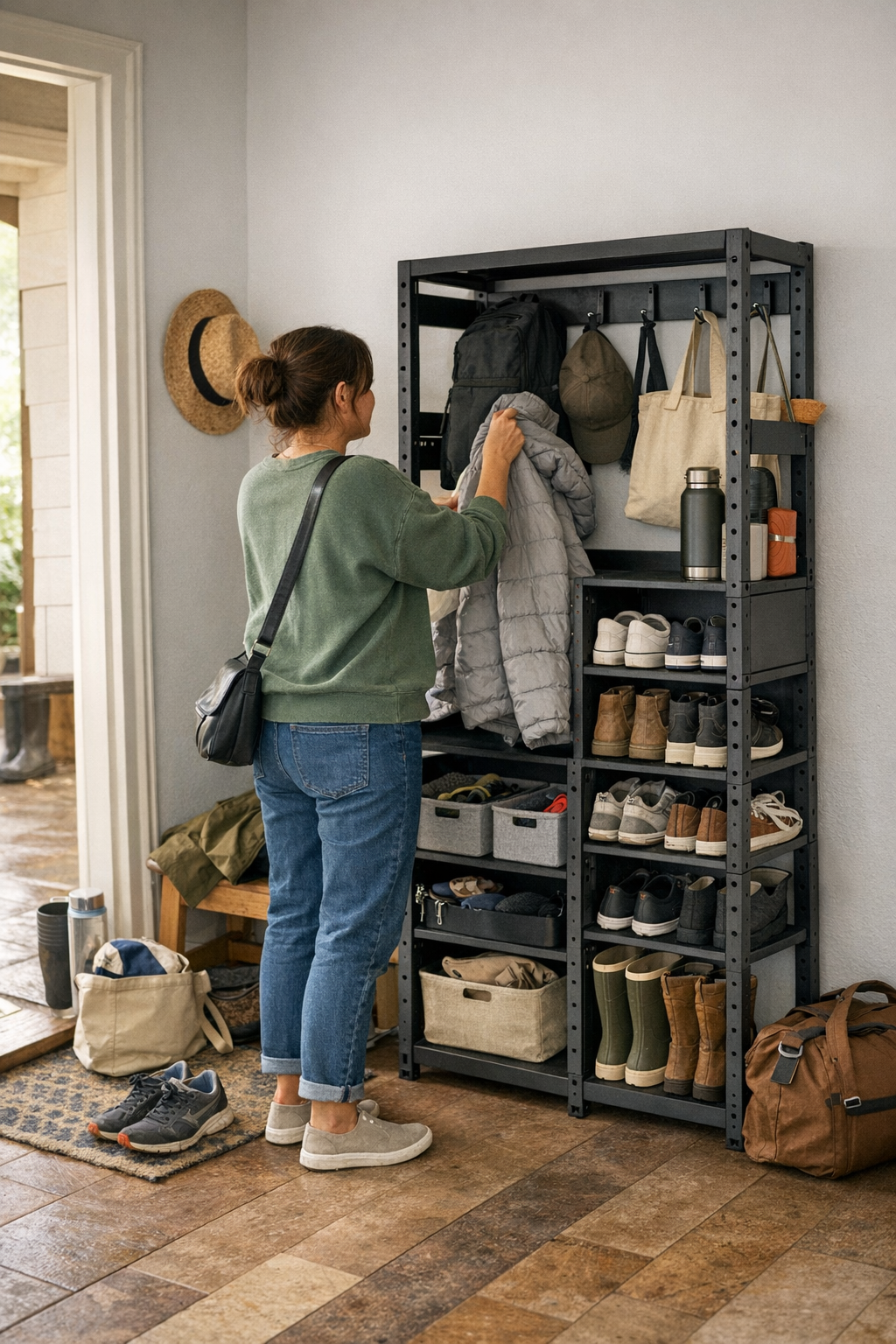
  • How Vertical Storage Solutions Keep Utility Rooms Organized Under Pressure

    An entryway doesn’t fail because it looks messy—it fails the moment it can’t bounce back from your real, repeated comings and goings. You set up shelves, a bench, maybe a few baskets. At first, everything holds. By midweek, though, shoe rows sprawl past their bounds, bags edge toward the door, and the bench—meant for a quick sit—gets buried. What started as “just for now” becomes the default: gym bag on the bench edge, umbrella halfway off, out-of-season boots waiting for a spot but never quite making it back. The problem isn’t a lack of storage. It’s the way the system starts dragging—resetting takes too long, categories blur, and the pressure to maneuver through the threshold grows every day. The entry space you wanted to smooth your routines now slows every exit and return.

    Where Well-Intentioned Setups Break Down

    On paper, a couple of shoe shelves, a low bench, and a few baskets tick all the boxes. In actual use, their limits show up fast. Shoes stray and multiply, forming new lines along the tight walkway, forcing you to zigzag instead of stride. The bench? It hosts one bag, then two, then a scarf, then the mail—a seat turning into an obstacle course. Temporary piles go ignored, then harden into permanent clutter, as each rushed day lets the overflow stay put. Five days later, the “system” looks intact but works against you every time you need to move quickly or share the space.

    Blocked movement is the early warning sign. If grabbing a coat requires unstacking a pile or shifting three bags, your storage isn’t keeping up with your pace. Instead, it piles on friction—forcing micro-decisions and repeat work each time you step in or out.

    After the Initial Calm: Signs of Creep and Drift

    Organized storage holds just long enough to deceive you: it looks fine day one, even day two. But watch the space after back-to-back school runs or two wet days in a row:

    • Shoes overflow, forming a second, unofficial row at the entry to the hall.
    • Bags and spare gear huddle in corners, squeezing out space for daily grabs.
    • The “just for a minute” bench pile becomes a layer you have to move before sitting.
    • Mail, bottles, and odd objects wedge their way onto any flat edge, crowding out the gear that should be easiest to reach.

    Category drift takes over: Items blend zones, half-in, half-out. Suddenly, there are boots in the mail tray and keys tangled with hats. The more surfaces get used, the more you improvise—and the more time and energy every reset demands.

    Real Rush, Real Friction: Everyday Use Scenes

    The Drop and the Backslide

    Picture the morning rush: someone searching for shoes among the pile, backpack half-zipped on the edge of the bench, keys missing under yesterday’s scarf. Cubbies and bins exist, but full or wet hands make shortcuts tempting—so items settle on the closest open spot, even if it blocks the path. One stray bag turns three shoe spots into trip hazards. Instead of grab-and-go, you get bottlenecks, sidesteps, and forced apologies just crossing the threshold.

    The Spread of “Just for Now”

    Deep bins and big baskets hide the mess at first, but by Wednesday, you’re fishing for a glove under last week’s mail or shifting art projects to reach today’s essentials. Every temporary dropzone raises the barrier to a true reset. Give it a few days, and it’s no longer a quick pick-up—now it’s an hour-long dig, or nothing at all. By Thursday, the “cleanup” isn’t a routine, but a postponed project.

    Vertical Versus Horizontal: Why Shape Wins Under Pressure

    The orientation of your storage controls your entry flow. Wall-mounted racks and slim, segmented vertical units force each item type—shoes, bags, hats—into a visible, easy-access zone. There’s nowhere to let clutter hide. Vertical shapes preserve walkways, so overflow can’t sprawl across your only path out. Category boundaries stay obvious, making it clear what’s out of place and where the reset should happen.

    By contrast, benches and deep horizontal bins invite trouble. The broader the surface, the wider the slow spread: shoes crawl out, stray mail stacks up, and the “quick grab” zone clogs up by midweek. Heading out means shifting things just to make space—which quietly lengthens every re-entry and exit.

    Making Returns Effortless: What Actually Holds Up

    The best setups that last through real-life pressure all do the same things:

    • Shallow, divided landing spots: Each item group has a clear zone. Returning it is direct and visual. Deep bins disguise the mess but never make routines easier.
    • True open access: Shoes or bags drop back into place with one hand. No stacking or re-arranging to find a spot—meaning less excuse for “just for now” piles.
    • Pathways stay open: Walkways never narrow around collected gear, because vertical setups fence in drift. You pass through, not around, your storage.
    • No awkward steps: If the return takes too much effort—moving other items, opening lids—the routine breaks. Survival setups make returning a habit, not a task.

    The difference is measurable each time you reset: a clear, segmented structure shrinks “reset” from minutes to seconds. The urge to just drop things disappears when the return spot is unavoidable and easy. By the end of a wild week, a quick pass is all that’s needed—not a drain of your Sunday energy.

    Signs Your Setup Is Quietly Failing

    • Are you always shifting something just to reach the door?
    • Do shoes and bags disperse further by Friday than they began on Monday?
    • Does restoring order mean committing half an hour, not half a minute?
    • Are deep bins and closed cabinets used for offloading, not daily routines?

    If any sound familiar, your entryway isn’t disorganized—it’s working against you. It looks passable, but eats up extra effort with every threshold crossing. Until each category gets a fast, reliable home—visible, ready, easy—you’ll keep battling the same cycle: drift, delay, and rework.

    How Better Structure Cuts Down on Reset

    The only setups that survive repeated, real-world use are those that match the way you (and other people) move through the threshold—hurried, unplanned, loaded down. A segmented vertical rack, clearly split for shoes and bags, redirects every item back to its corner. Shoes don’t flare into walkways. Bags don’t seed new drop zones by the door. Everything returns with less effort, so the reset is a minute, not a mood.

    The gain isn’t in showroom looks or first-day perfection. It’s day-five function: smooth entries, clear paths, friction cut down to size. The entry zone won’t ever be spotless, but it won’t slow you down. In a space built for real-life churn, you notice: the biggest change is how little you have to think about it after the setup actually fits your routine.

    For practical storage setups that actually stand up to rushes, weather, and the routine drift of real life—not just the first day’s organization—visit Betweenry.

  • Why Rigid Underbed Storage Bins Outperform Flexible Options Every Time

    The first morning with a new underbed storage bin always looks promising: every shoe, extra blanket, and batch of cables has a home. But two days into real use—reaching for gym clothes without waking anyone, or tossing shoes back after a late night—the cracks start to show. Flexible bins sag and skew; a neat pile at sunrise turns into a jumble by dinner. Instead of providing an easy out-of-sight stash, a flimsy underbed bin adds one more cycle of sorting, digging, and shoving—until the supposed organization is just hidden mess with a sliding lid.

    When Storage Structure Fails: Small Issues, Fast Friction

    Routine exposes what doesn’t work. Reach under the bed and feel a bin catch on a stray carpet edge; pull too hard and one corner collapses, sending a finished load shifting into a new confusion. Shoes wedge against the side, socks slip under books, and a tech charger presses into cardigan sleeves. Even if it looks fine once, the contents wander with every push and pull. One silent snag leads to a messier, less trustworthy zone. The cost isn’t all-at-once chaos—it’s the daily background friction: a return pile that starts blending categories, a mental note to “fix the bin” that never fits the week.

    Day after day, the setup slows you down. Each retrieval means resettling what shifted last time. Return flow breaks: you stop tossing things back in, or just shove them by habit, because keeping order isn’t practical. Underbed storage that can’t handle repeat movement becomes more avoided than used.

    Why Most Underbed Bins Collapse Under Real Pressure

    At first glance, a set of matching storage bins looks like an instant upgrade from piles creeping into floor space. But most soft-sided bins and flexy plastic boxes only win on Day One. Stack something heavier—a set of board games, winter boots, last year’s yearbooks—and the design falls short. Walls bow out, lids won’t sit straight, and every hurried return grinds the situation down. Bins catch on the frame, corners warp, and the floor under the bed starts collecting what should’ve stayed sorted inside.

    A flexible bin seems contained, but gives way just enough to scramble the inside. With every move, the categories blur. Cables tangle with shoes. Seasonal clothing seeps into last week’s tech. Retrieving one thing by feel means knocking other items loose. Bits that stuck to the edge yesterday have slid out of arm’s reach by tonight. You start fishing around—less organization, more low-key scavenger hunt.

    Rigid Bins: Holding Up When Everything Else Sags

    Rigid underbed bins shift the equation. Their structure absorbs the repeated pressure of real, unpredictable use: pull hard, push quick, or load them heavy—boxes keep their square shape and flat bottom. An early-morning grab or a one-handed toss doesn’t start the collapse. The lid always fits; the contents rarely migrate. Instead of dreading the shuffle, you learn to trust that what you put back will still be where you left it. Even when you’re moving fast, the setup keeps its form.

    Recurring Use Reveals the Difference Fast

    Picture a small bedroom with two people—shared space, rushed mornings, competing routines. Two bins need to open daily (clothes, chargers, shoes); other bins store off-season bedding or overflow. Soft bins mean corners sag, little things slide or get pinned underneath, and by Thursday, last week’s system is gone. One person’s hasty return undoes another’s precision—category order dissolves. Fast swaps and resets just speed up the drift from organized to chaotic.

    With rigid options, especially those built with interior dividers, there’s no daily reset tax. Shoes tossed in late stay in their section. Cables don’t entangle with clothing after three cycles of pull and return. Routine use—multiple times per week—leaves the setup basically unchanged. That’s the real metric: if your storage works when you’re hurrying, distracted, or sharing access, it’s actually fitting your life, not just your layout dreams.

    The Quiet Advantage of Internal Dividers

    Stiff walls alone aren’t enough if your bin is still just a big undefined box. Rigid bins with internal dividers segment the chaos. Each zone blocks drift: sneakers stay in their lane, chargers aren’t buried, out-of-season sweaters don’t obscure the daily rotation. Suddenly there’s no avalanche of cables when reaching for socks. On a rushed morning, you actually see what you need—no digging, no hesitation, no windfall of loose odds and ends.

    Years of small failures make it clear: if you’re loading up, invest in bins with solid panels and clearly partitioned interior sections. Anything that flexes, folds, or lacks defined compartments quickly turns return flow into more sorting—even for the tidiest person. Mixing heavy boots with delicate tech, or tools alongside linens, will always show stress at the seams when the structure isn’t firm. The cost? More time spent unsnarling instead of using your space.

    Movement Should Be Quick—Not One More Annoyance

    Most people underestimate how awkward it is when bins don’t move cleanly. At 6 a.m., a flexible bin’s sagging side is all it takes to wake up someone else—or yourself. Snagging on the frame, dragging on a rug, or warping as it’s pulled can sour a whole morning. Rigid bins, on the other hand, stay anchored and quiet, sliding in and out without drama. That’s not just aesthetics; it’s whether your storage adds minutes and frustration to a routine, or works so frictionlessly you forget the last time you sorted anything inside.

    Looks Sorted—But Will It Survive a Real Week?

    There’s a difference between bins that look organized when fresh and those that stay functional after repeat jolts, rushes, and returns. Storage can hide clutter as easily as it contains it. If it takes five minutes to rescue your system after three days of ordinary use, the solution is already eroding. True order isn’t just a clean lid—it’s finding what you need without redoing yesterday’s work. Systems that keep zones defined and returns simple hold up in real conditions: after guests, after a busy workweek, after storage needs scramble again.

    Rigid, pre-divided solutions catch small shifts before they escalate into invisible disorder. Less micro-managing, less tip-toeing around bins that erupt every time, less background annoyance—just functional space ready for whatever the week throws at it.

    Which Bin When Storage Pressure Builds?

    If your underbed area sees mixed traffic—shared bedrooms, kids swapping bins, crowded overflow—flimsy bins fall short. Flexible storage might keep lightweight blankets controlled for a month but buckles the first time you add manual weights, sports kits, or dense winter layers. Most households eventually test the limits. When bins open daily, serve more than one person, or have to absorb mixed loads, there’s no substitute for structural resilience.

    Shared zones and unpredictable routines break anything not built for repeat, rough, or uneven use. A strong underbed bin preserves category order with less hands-on rescue, absorbs chaos instead of multiplying it, and keeps the daily flow moving—no organizing streak required. Over time, that’s what keeps frustration low and living space easy, even as the demands on your storage system keep shifting.

    Browse more inside-storage solutions at Gridry.