Category: Yard & Utility

  • How Console Cabinets with Drawers Transform Entryway Organization and Daily Flow

    The entryway looks fixed—shoes vanished, chargers invisible, stray mail gone—until you try living with a closed-drawer cabinet for more than a weekend. The first impression is pure relief: surfaces clear, the path to the door finally open, and the messy pileup replaced by order. But the moment real routines kick in—morning scrambles, crowded returns, and hands full of keys and mail—what appeared “organized” quickly strains under the weight of daily use. Here, the gap between looking tidy and actually working starts to matter.

    First Impressions: Clean Surfaces, Calmer Spaces

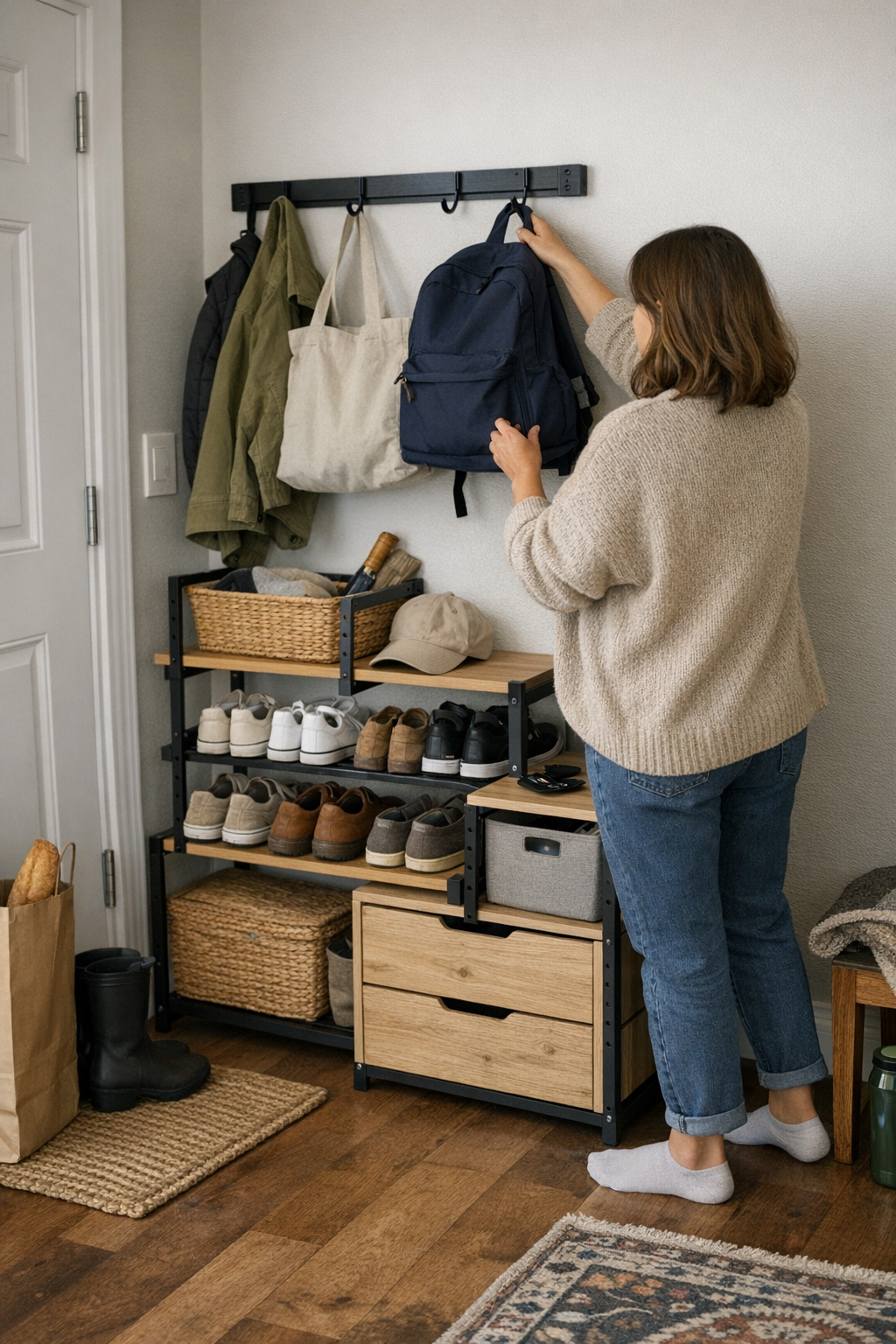
    Pulling the entry zone under control gives immediate visual payoff. Sideboards, console cabinets, or slim storage benches hide the chaos fast—walking in, you see nothing tangled, nothing spilling onto the hallway. Traffic finally flows instead of bottlenecking around a pile of sneakers and dropped mail. But what works for a single evening—hidden clutter, smooth surfaces—will be tested hard during the next ten hurried departures.

    The energy shifts once routines cycle through. If a cabinet makes it easy to stash everything out of sight, it rarely makes as much sense when you’re late or carrying five small things at once. The first sign is simple: you start opening the same drawers twice, or push past one “put away” item to reach the things you actually need.

    Routine Friction: The Real Entryway Challenge

    This is where hidden storage, for all its visual calm, begins to fight back. The weekly rhythm exposes the flaw:

    • It’s midweek. You’ve got a stack of envelopes, an extra set of keys, your phone’s nearly dead, and shoes half-on—none of it placed precisely where it belongs.
    • You yank open a slim drawer: keys jammed behind chargers, more mail blocking movement, and the item you thought you “put away” missing entirely.
    • Movement stalls in the tight zone—someone waits behind you, another person edges around the stuck drawer, and underfoot, a rogue sneaker blocks the route.

    Instead of quick retrieval, you repeat the same gestures—rummaging, reshuffling, searching again. Surface clutter is gone, but the inside logic falls apart with everyday speed.

    Why Closed Drawers Alone Aren’t Enough

    Closed systems trade visual relief for slowdowns beneath the surface. With an open shelf or basket, you can throw keys, kick shoes onto a rack, or grab a charger in a blink—messy, but immediate. Closed-drawer cabinets demand memory, order, and precision, especially if nobody agrees where anything goes. When drawer zones blur—mail in the key spot, chargers choking up the hat bin—retrieval friction spikes, and “put away” becomes “lost inside.”

    • Drawers fill and overflow fast if categories drift even slightly.
    • Resetting the whole entry takes longer and happens more often as items pile out of zone.
    • Overflowed or misused drawers start quietly reopening the surface clutter—mail left on top, keys tossed anywhere, the cycle restarting.

    The tidy cabinet front survives longest, but inside, chaos builds until the next forced reset.

    Comparing Open vs. Closed Storage in Real Use

    Open storage gives up on tidiness but wins for speed: shoes are visible, the mail pile is obvious, and nothing asks for memory. Closed-drawer setups bring instant calm but can’t keep up with messy, real patterns—morning traffic, overlapping users, and things “temporarily” thrown in. When the inside gets disordered, closed storage becomes a traffic bottleneck and a source of tiny daily irritation: opening, rooting, reshuffling, repeating.

    Look organized once, but slow everyone down forty times a week—and tension creeps in around every ordinary use.

    When Logic Breaks Down: The Cost of Vague Zones

    The deeper pain hits when one cabinet section becomes the unplanned overflow: the “miscellaneous” drawer collects every orphaned item, and suddenly, finding a charger means digging through library books, loose coins, and last week’s mail. If the entry is narrow, the extra seconds standing blocked by an open drawer magnify—especially during grouped departures or late returns. In setups where wall space is used but not organized with interior dividers or trays, even a slim cabinet’s footprint can turn entry flow into a series of stutters and sidesteps.

    A cabinet that promises order ends up shifting the clutter just out of sight—until you feel the slowdown where it matters most: leaving, returning, and resetting the zone between uses.

    Building Real Order: Dividers and Defined Zones

    Nothing improved until the storage inside changed shape: simple dividers, trays, and fixed zones—one for each recurring group of things. The smallest difference: trays for keys and coins. Mail gets a slot, not a loose pile. Things “just passing through”—library returns, random notes—gain a defined limbo, cleared on schedule before it grows toxic. Each item starts and ends in the same spot, so retrievals are single-motion, not long hunts.

    • Designated sections mean no shuffling, no guessing, and faster movement for everyone crossing the entry zone.
    • Surface stays clear because items return home instead of orbiting edge-of-cabinet or drifting back to open air.
    • The reset burden shrinks; even peak mess resets can be done in seconds instead of a weekend overhaul.

    This is not organizational perfection—just the minimum tint of logic required to keep concealed storage functioning for real schedules.

    Tips for Keeping Cabinets Functional—Not Just Tidy

    1. Assign spaces by both item type and user. If your family or roommates all move through the same entry, split drawers or zones by person to prevent habitual overlap and item-migration wars. It won’t stop the occasional stray glove, but overlap drops fast.

    2. Refuse “black hole” drawers. Label interior trays or use translucent bins. This way, you don’t need to open and scan five drawers for sunglasses, and you’re less likely to let small items vanish under mail pileups.

    3. Set a strict “overflow” rule. Allow a temporary holding slot, but empty it weekly—catching runaway categories before they breed hidden chaos inside the cabinet.

    The Tradeoff: Looks Good vs. Works Well

    True entryway order isn’t spotless, but it lets people keep moving—even in a rush. Console cabinets and sideboards with drawers only pay off if their inside matches the churn of daily routines: wall units, slim systems, even storage benches can all fail if items don’t have fixed, retrievable zones. Looks only last if the system returns everything to its right place, no matter how many hands pass through.

    Great storage isn’t what you barely notice—it’s the setup that never slows you down, never asks you to stop and reshuffle mid-commute, and never becomes a hidden overflow zone. In the best cases, the surface stays cleared not because clutter is buried but because flow, not friction, defines the space.

    Find entry-friendly storage systems and more at Gridry.
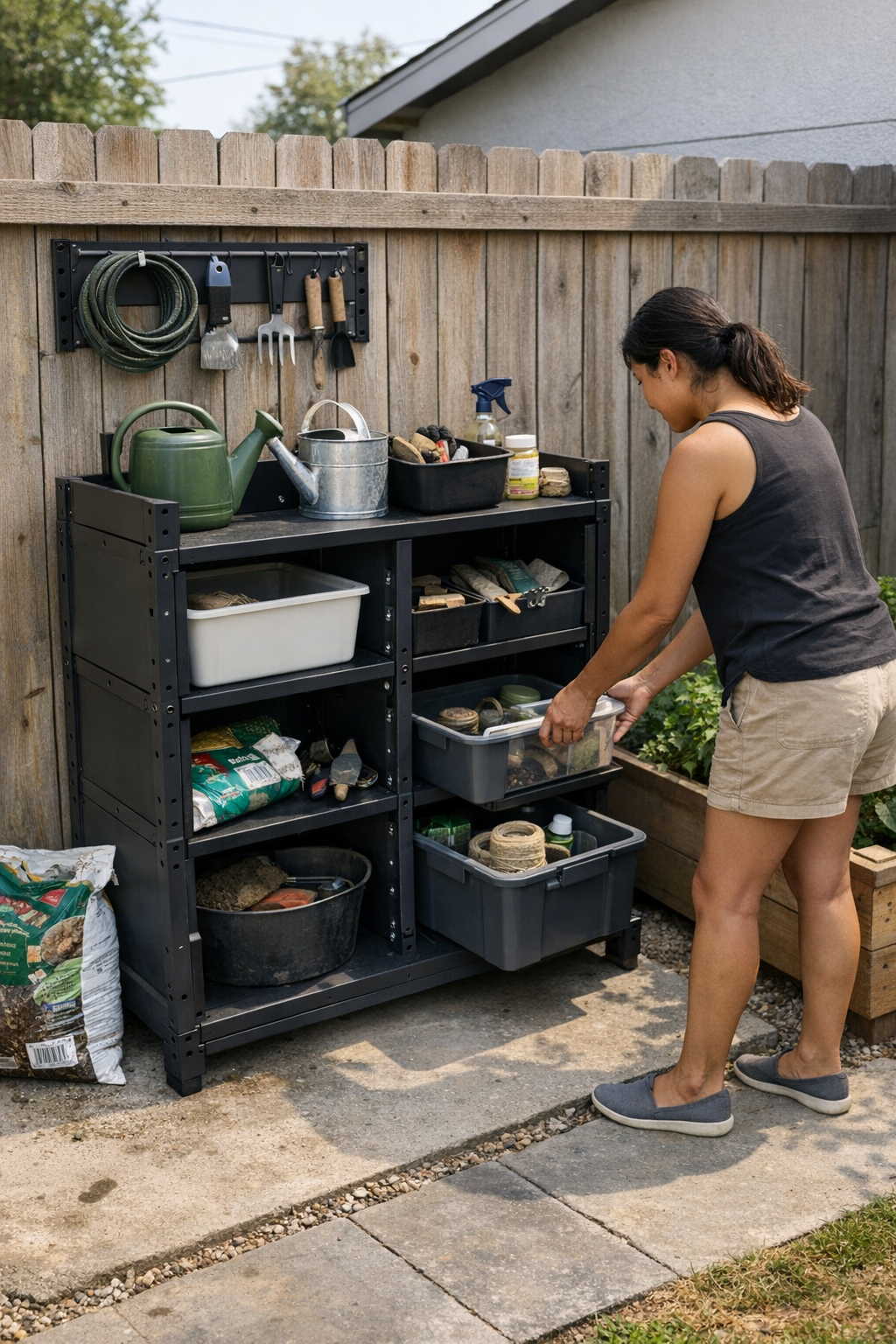
  • Why Edge Storage Transforms Small Yards Into Usable Outdoor Spaces

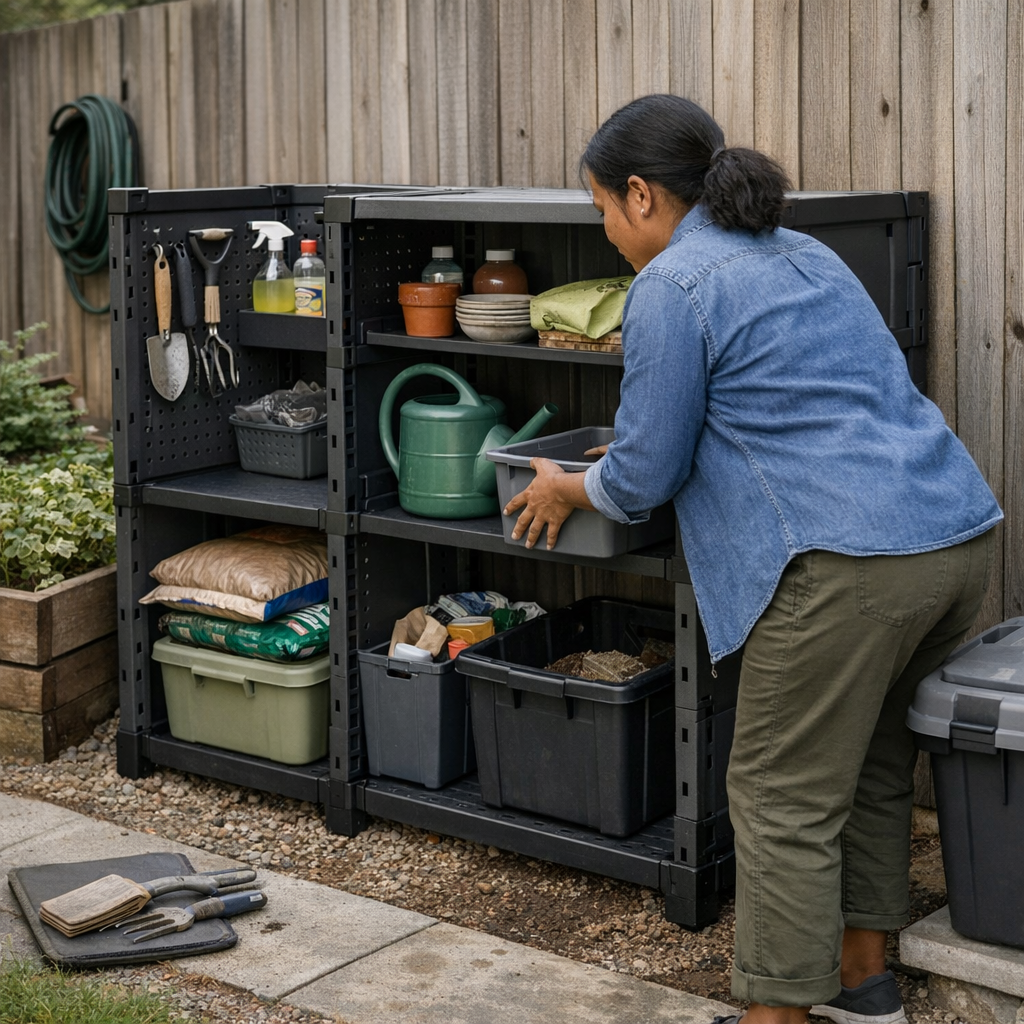
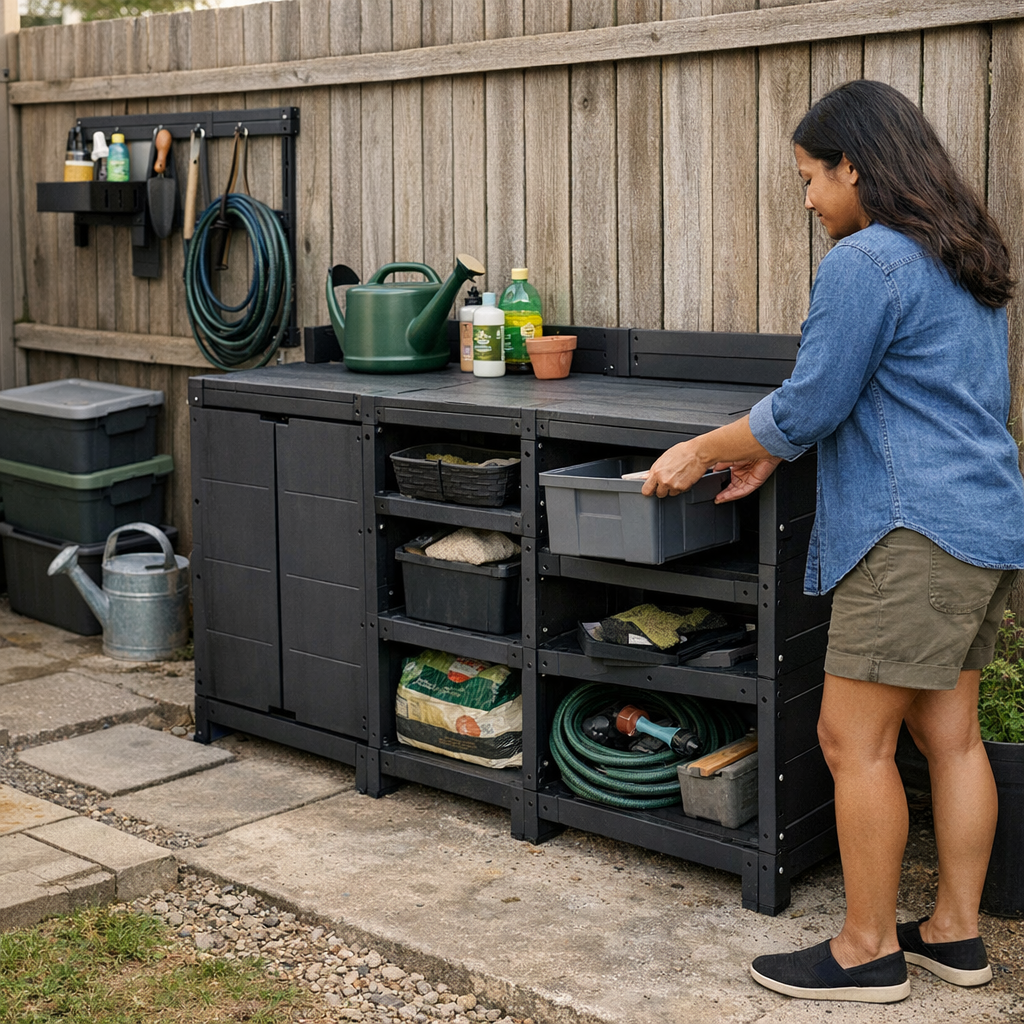
    In a narrow backyard or tight side yard, outdoor storage can either make your life easier—or quietly trip you up every single day. It’s not just what you buy, but where it actually sits. Stick a bin, cabinet, or bench in the wrong spot, and soon you’re side-stepping bikes, shifting bins out of the pathway, and wondering why every reset feels like untangling a knot.

    Where Storage Sits Is the Difference

    Most people shop for outdoor storage by thinking about space: biggest box, tallest shed, whatever holds the most gear. But in small, hard-working outdoor spaces, the real challenge isn’t volume—it’s movement. That sleek bench or easy-access box looks sharp in the middle of a walkway or play area on day one. By the end of the week, it’s already in the way: bikes get wedged, trash bins block the main route, and what started as ‘organized’ quickly turns into a maze of obstacles you have to dodge just to take out the trash or carry groceries in from the car. Every time you squeeze past, the friction adds up: one awkward sidestep, one box nudged just enough to make the reset harder.

    Most setups don’t fail all at once—they wear you down. That “nearly fits” layout that seemed fine at first becomes the silent reason you skip putting the rake away or leave the kids’ gear on the edge of the patio. Suddenly, every trip outside has a small but persistent hassle built in.

    The Edges vs. the Center: Clearing the Pathways

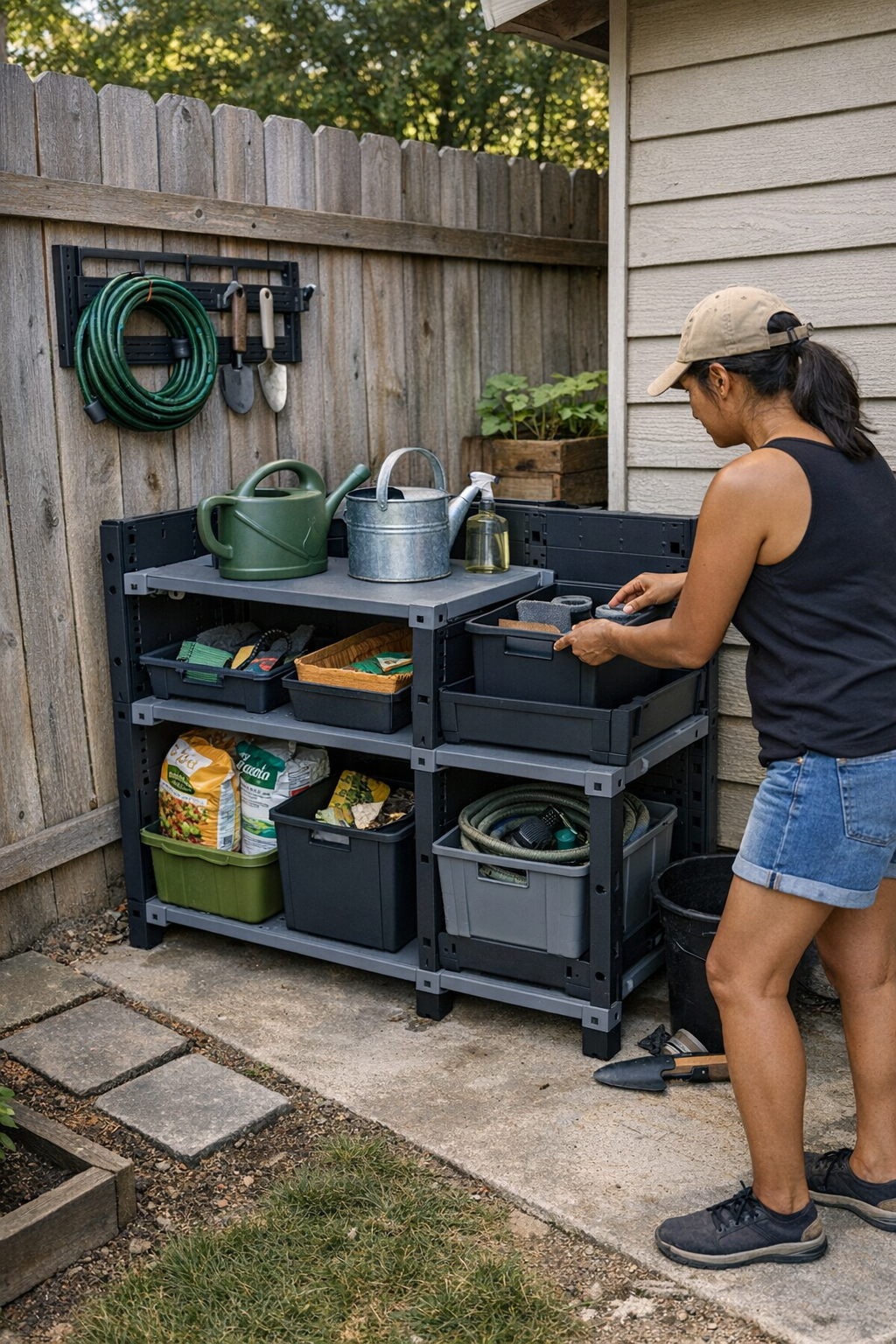
    In mixed-use yards and narrow strips—think bikes, bins, mowers, and a soccer ball all fighting for the same territory—storage needs to mark the edges, not the middle. Push gear up against the fence, under eaves, or flat to the wall, and you un-jam the main flow. Leave a bench or shed in the center and choke points form—sometimes slowly, sometimes instantly. Picture kids coming home and trying to park bikes along a path already squeezed by bins. Parents maneuvering the grill have to slide a tool rack out of the way just to reach the fence gate. It doesn’t take much before you’re shuffling every time you cross the yard.

    Overflow piles up fast when there’s no buffer along the boundary. Centrally-placed storage ends up blocking every possible route after only a few new arrivals: stray toys on the walkway, chair legs sticking into the path, a garden cart marooned in the open because no better spot exists. Every pass-through becomes another loop around congestion. Eventually, even putting something away turns into rearranging half the zone first.

    Real Scenes: The Micro Friction of Small Setups

    Picture a Tuesday evening. The quickest way to the bin is blocked by a wheelbarrow slid too close to a storage box. You set a ball down ‘for a second’—now it’s a fixture for days. Routines slowly break down: putting things back takes twice as long, and stray gear ends up living wherever it landed last because the storage wasn’t truly out of the way.

    Or it’s Saturday morning yardwork. You reach for the rake buried behind a half-open storage bin in the middle of the walkway. Getting it back means lifting lids with one hand, bracing a shovel, and squeezing past a bike that’s now wedged even tighter. Mowers roll through crooked, paths get bottlenecked, and eventually you give up and leave tools out. Small interruptions compound until ‘just for now’ clutter becomes semi-permanent, littering the ground you need to use.

    How Shifting to the Edge Changes Everything

    Sliding storage units right up to the fence or wall—even if that means losing a few centimeters of depth—instantly cuts down on awkward workarounds. The open path stays clear, so walking through with a bike or wheelbarrow feels unrestricted, not like threading a needle. When tools, bins, or toys need to go back, their return spot is obvious and friction-free. The reset becomes a few quick moves instead of a game of outdoor Tetris.

    In one real-world fix, moving all racks flush to the fence (with just enough room for a handle or two) meant bikes once dropped on the patio found a repeatable home. Overflow stopped eating into footpaths. No more stalling while you figured out how to arrange everything just to mow the lawn. Edge storage gives the main area a clear job: for movement, not for parking clutter.

    Test First: Walk Your Routine Empty

    Before adding any storage, lay out the pieces (empty!) where you plan to put them. Walk through the space as if it were a typical weeknight—haul the bike out, pick up toys, imagine taking the trash to the curb. Is there a spot where you have to angle sideways or move bins twice just to keep moving? If so, that’s your pain point. Slide the storage to a boundary and test again until movement feels as close to automatic as possible. Don’t squeeze more in hoping to achieve ‘maximum storage’—protecting the flow is what keeps the yard functional.

    Small Yard Pitfalls: Where Setups Keep Failing

    Overflow traps and junk corners: If you notice a low corner always collects random clutter or you dread reaching for gear because it’s wedged behind something, your current layout isn’t holding up. Dead zones signal storage that’s “out of sight” but never easy to use or put back.

    Wall systems that block more than they help: It’s easy to slap hooks up everywhere, but if you have to move a hose reel just to grab a broom, you’ll start defaulting to the floor. Wall space only counts if it speeds up—and never slows down—the routine.

    Modular pieces becoming moving targets: Stackable bins and rollable benches are great in theory, but in practice you end up shuffling pieces anytime someone else needs to get by. If everything needs to move twice for one thing to go away, the whole system wears out its welcome fast.

    Let the Edges Do the Heavy Lifting

    Sticking to the boundaries isn’t a magic bullet—but it’s the single setup shift that pays off in time saved and frustration avoided over weeks and months. Even after a backyard barbecue or muddy yardwork session, you can shove things into their edge homes and keep the center usable—no epic resets required. Routines stick, flow stays open, and even if life gets messy, the clutter doesn’t blockade your basic movement.

    Perfect yards don’t exist, but setups that work after real-life use are possible. When storage stays on the edge and movement remains effortless through the middle, there’s less reason to slip into bad habits—and way less time lost just getting things back under control.

    For more practical outdoor storage ideas designed for real setups and repeated use, visit TidyYard.

  • Why Reinforced Hinges Are Essential for Heavy Door Racks in Busy Homes

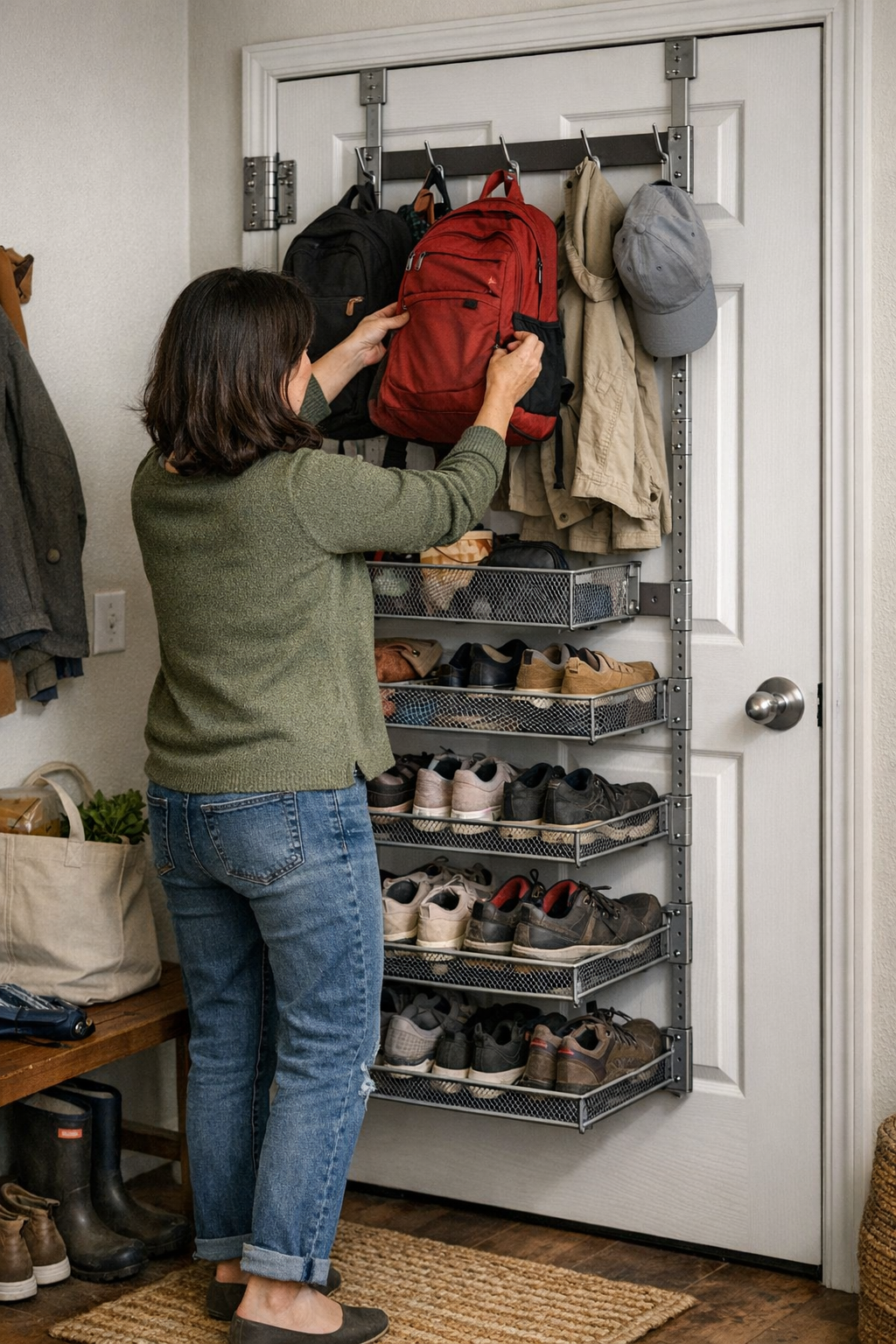
    Most entryway storage looks organized for exactly one day. You hook up an over-the-door rack, sweep the floor for that “finally fixed” effect, and watch clutter vanish—but only until real life leans on your setup. Wet boots appear, bags flop onto the nearest hook, and the careful shoe row fans out until the threshold tightens again. Drop one backpack the wrong way and the door jams; return home with groceries, edge past the rack, and suddenly the space that promised order now blocks every move. Instead of routine flow, you end up with a clean look that collapses the moment daily pressure kicks in—especially if your hardware isn’t built for shifting, repeated loads. A setup that seemed to absorb the mess slowly becomes another obstacle, forcing more resets, more sidesteps, and more friction each time you come or go.

    When Good Racks Go Bad: The Hidden Toll of Everyday Loads

    Transition spaces magnify every small mistake. Over-the-door and wall racks promise vertical storage, but each new coat, pair of muddy shoes, or slung bag doesn’t simply rest—it adds weight that strains hinges and door frames. Standard door hardware is not engineered for these shifting, daily stresses. If the rack’s support isn’t up to the job, you don’t just accumulate clutter—you compress the entry path itself, making each passage less smooth and more awkward.

    The difference shows fast. By midweek, a rainstorm swells the shoe pile; someone returns late, wedges a backpack onto an already-full rack, and now the door grinds at the frame. That slick swing turns stiff. Kids shove their gear through the bottleneck after practice, and you find yourself nudging the door just to step inside. Minor friction—an almost invisible catch, a rack that dips—builds up day by day, gradually shifting the problem from visible mess to movement-pause frustration.

    The Catchpoint: Real Scenes from the Threshold

    Most entryway setups don’t fail all at once—they just get harder to use until you stop using them well. First, the rack leans. Next, the hinge creaks. Then the door needs a special tug, or starts sticking partway. Grabbing a coat one morning, you feel the whole rack twitch. Adjusting shoes or bags becomes its own routine, a ritual of micro-rearrangements just to clear the path. The original tidy look is replaced by a set of silent negotiations at the threshold.

    This cycle plays out in homes everywhere: organized for the photo, undone by the week. Moving piles from rack to bench or spiking overflow into corners doesn’t fix the root issue—the structure just can’t keep up with the way your household actually enters and exits every day.

    Why Reinforced Hinge Support Changes Everything

    Most racks treat the door as a backdrop, not a working, moving part. But that’s exactly where everyday stress accumulates—and where weak support fails first. Ordinary hinges flex, alignment drifts, and what felt “solid” at install turns unpredictable under daily use.

    Add reinforced hinge support, and the contrast is clear.

    • The door swings like it should, even after a muddy soccer day loads it up.
    • Locks line up—no gap at the latch, no need for extra push-and-pull.
    • Redistributing clutter actually works; you’re not shuffling things just to make the rack sit flat.
    • The daily reset becomes a quick habit, not a dreaded event.

    Telltale Signs Your Setup Is Failing

    Watch for these early warnings before a small annoyance grows into permanent bottleneck:

    • The door sticks, resists, or needs a shoulder bump to move.
    • Hinges emit new noises, or the edge of the rack rubs after a busy spell.
    • The rack leans, sways, or sags—especially when the door stands open.
    • Tiny gaps widen at the latch or where frame meets jamb as alignment suffers.

    Ignore these and you risk more than paused movement—swapping cleanups for repairs, rehanging a door, or resigning yourself to a path that no longer works with your family’s routine.

    The Difference Between Organized Looks and Reliable Use

    Entryway storage systems often win on appearance and lose in real use. The true test shows up under stress: post-storm returns, gear pileups, missed resets. A Sunday-night tidy look is easy; a setup that doesn’t unravel midweek is not.

    • Are you forced to shuffle items just to get in or out?
    • Does a crooked rack or sagging mount keep you from resetting quickly?
    • Has returning bags or shoes quietly regained its original level of annoyance—just moved to a new location?

    With the right reinforcement, your threshold stays functional. Shoes and bags don’t sprawl, resets speed up, and the “drift” slows—so routines remain smooth for everyone crossing the zone, not just for the next photo or first day after cleaning.

    When Reinforcement Brings Its Own Trade-Offs

    No fix is friction-free. Some reinforced hardware adds bulk or reduces swing angle—tough on very slim entryways or doors that open flush with a wall. Always measure wall and clearance space before upgrading to heavier-duty solutions. Do a trial run with the typical gear load you expect—so you avoid trading one kind of blockage for another and can spot pinch points before they become part of daily life.

    Small Shifts, Smoother Routines: Practical Tips for Lasting Entryway Flow

    Max storage isn’t always best flow. Instead of maxing out every hook and shelf, try these fixes:

    • Hang heavier bags low and close to hinge-side mounts, where the door is strongest.
    • Assign strict drop zones for each person’s shoes or bags—mapped to real movement, not photoshoot symmetry.
    • In busy households, stagger arrivals and drop-offs to prevent pass-through pileups—especially after school or work peaks.
    • If there’s no room for error, shift heavy loads to wall-mounted units nearby instead of loading up a flexing door.

    The Real Win: Thresholds That Don’t Block Your Routine

    The goal isn’t just fewer piles—it’s less friction every time you cross the entry. A reinforced, well-matched rack keeps shoes off the floor and the threshold open, so you’re not doing the reset shuffle or nudging a blocked door on busy mornings. Choose hardware and setup patterns for real routines, not showroom silence—and you’ll see the difference: fewer backflows, snappier resets, and a threshold that works with, not against, your everyday life.

    http://www.betweenry.myshopify.com

  • Why Buffet Cabinets with Doors Outperform Open Shelving for Serveware Storage

    The tension between surfaces that look organized and storage that stays organized quickly shows up wherever serveware gets used day after day. The dining area becomes a kind of test lab: do you keep platters and bowls visible on open shelving where resets are constant, or do you hide them in a buffet cabinet, closing the mess behind doors? At first, both systems promise “order”—but once a week’s worth of dinners, rushed hands, and hasty returns have passed, only one setup lets you find what you need fast without triggering a re-sorting project just to keep up.

    The Everyday Reality: Open Shelving vs. Closed Cabinets

    Open shelving signals calm—rows of plates, cups, and platters look easy to grab. But daily action quickly unravels this order. Dust gathers on exposed surfaces. Steam and splashes mark whatever sits out. The simple act of reaching for a mug in the morning or pulling a tray at night shifts the whole row, and neat stacks start to tilt. By Friday, your shelves can look less like curated storage and more like open proof of every last rushed breakfast or dinner prep. Resetting means either constant attention or facing a messy display until you make time to restore everything to its place.

    Closed buffet cabinets seem like a shortcut to order—doors shut and the clutter disappears. They block dust and hide chaos as long as what’s inside matches how you need to use it. But push an oversized platter onto a shelf sized for bowls, or stack mismatched trays just to get the doors closed, and you haven’t solved clutter—you’ve hidden it for now. The mismatch isn’t always visible, but it doesn’t disappear; it just waits until you’re searching for a serving bowl and end up digging through piles of mixed-up, jammed-in pieces while the meal pauses and stress rises.

    Where Storage Systems Actually Get Tested

    Night after night, serveware is cycled in and out—stacks of bowls on the move, platters back from washing, glasses quickly corralled in time for guests. That’s when the real test begins. If your buffet cabinet’s interior forces you to balance three trays on top of a row of bowls just to get the doors shut, you’re setting up the next retrieval for a mini landslide. If the shelves in your open system are too shallow, or not separated by type, things go missing behind tall platters, and what needs to be accessible is instantly buried. Nothing signals a failing storage setup faster than having to pull out half the cabinet just to find a matching set—or realizing you’ve chipped a plate because it was hidden behind a teetering pile.

    Open shelving leaves these failures in plain view; after a busy week, the disorder is public, every small misplacement adding to a mess that’s on display for anyone to see. Cabinet doors contain the sprawl, but only for a while—until you’re slowed down by blocked access, category mixing, or one section turning into a catch-all overflow bin. Both setups begin to break down as soon as the layout doesn’t fit the pressure points of real meal prep, clean-up, and return flow.

    Common Scenes That Signal a Mismatch

    • Reaching around a leaning stack of trays just to get a bowl parked behind them.
    • Dragging out the entire front row to rescue a seldom-used serving piece wedged in back.
    • Opening two or three sections before you can assemble a full set of glasses or utensils.
    • Watching one low shelf collect everything that doesn’t fit—the overflow zone no one wants to sort.

    None of this is rare. It’s the reality of a storage system that almost supports daily routine—but ends up requiring extra time and reshuffling just to keep running smoothly.

    Why What’s Inside the Cabinet Makes or Breaks the System

    Cabinet doors hide, but don’t fix, an interior that doesn’t fit real use. Fixed-height shelves rarely match the mixed heights and shapes of serveware. Tall bowls force smaller plates to sprawl sideways or double stack, and awkward gaps open up where nothing fits cleanly. After just a few hurried returns, categories blur together: a ladle gets lost behind trays, stacked platters shove smaller serving pieces into corners, and the system buckles under normal use. If the cabinet’s footprint forces you to bend, reach, or shuffle every time you need something, the storage starts working against you.

    These aren’t just minor hassles. Every bottle-necked shelf, blocked pathway, or overspilling edge adds seconds to retrievals, risks chipped dishes, and makes resets a heavier lift than they should be. A buffet cabinet that once looked like a calm surface starts dragging out meal prep and making the dining area feel cramped by clutter you thought you’d contained.

    The Quiet Impact of Adjustable Shelves and Clear Zones

    This is where adjustable shelving turns the whole equation. When shelf heights flex to fit your tallest platters upright, deep bowls rest securely, and every item has a home—not just a spot where it fits for today—storage finds its rhythm. Assigning sections by use (platters upright, mixing bowls nested, utensils within reach) simplifies retrieval and makes returning items a frictionless reset rather than a complicated reshuffle. Categories stay visible and usable all week, instead of blurring after a couple meals worth of rushed returns.

    Instead of a sweeping weekend overhaul, resets become quick—a five-minute scan: are large trays still standing, are serving spoons in their zone, is overflow contained where it belongs? The difference isn’t invisible: it shows up in uncluttered footpaths, fewer chipped dishes, and shorter pauses mid-meal because you can actually grab what you need without a search-and-rescue.

    Practical Tip: Assign “Return Zones” For Faster Reset

    Tape a simple marker or line a shelf to create clear “home base” zones—one for upright platters, another for nesting bowls, a bin for loose utensils. Even in shared households or during busy weeks, these defined landing spots cue everyone to put things back where they belong. The hidden system holds up even when routines get unpredictable and turns resets from a dreaded job into a simple, almost automatic check-in.

    What Lasts Is What Matches Real Use

    Hidden storage is only as useful as its interior logic. Only when adjustable shelves, clear category boundaries, and intentional landing spots align with the real movements—what gets grabbed most, what drifts, what sticks out or crowds shelves—does a buffet cabinet reduce frustration rather than just hiding it. Watch for:

    • Flexible shelving to adapt to each season’s changing serveware.
    • Dedicated areas: big items aren’t stacked with little ones, overflow is contained.
    • Enough depth and spacing so nothing gets buried, and everyday pieces are always in reach.
    • Zones for the pieces that constantly migrate or get lost in the mix.

    On paper, any cabinet can “contain” clutter. But it’s the invisible structure—how shelves change, how return flow works, how zones fight overflow—that earns back time and calm in the real world. When the inside fits the way you actually live, the difference is not just neater storage, but a dining area that works—less frustration, fewer slow-downs, and resets simple enough to keep up with actual life, not just first-day order.

    Find practical buffet cabinet and home storage solutions that hold up under real, repeated use at Gridry.

  • How Sideboards Keep Dining Tables Clear and Organized Daily

    No dining table stays clear for long—not when every surface in a busy home pulls double duty. The first trouble isn’t a mess, but the drag of repeating the same action: clearing scatter just to sit, stacking work gear in a precarious edge pile, shuffling chargers and mail so the meal can happen. Every “quick reset” adds up, becoming daily friction that quietly eats into mealtime flow. One day’s envelope, a dangling cord, a stray condiment—they don’t leave. Instead, you end up re-clearing the same outliers, sometimes hour by hour. The loss isn’t just visual order, but the steady erosion of function: a landing zone that never resets, a table that resists its real purpose.

    When Dining Doubles as Storage: Where the Problem Starts

    A dining table rarely gets to exist as simply a place to eat. Shared rooms, open-plan layouts, and thin boundaries between work, school, and family time mean “temporary” items become semi-permanent. That pile of utility bills, the headphones left mid-charge, kid projects half-finished—the line between categories fades fast. Items gravitate to the edges, then start migrating inward, taking over any space not formally claimed.

    This is where the true friction builds. It isn’t just the visual clutter, but the repetitive reset cycle: needing to push, stack, or remove the same obstacles before laying out even a basic meal. The moment routines overlap—breakfast half-cleared, lunch squeezed into a corner, dinner delayed as someone hunts for salt—the absence of a containment zone forces every activity to start with a fresh interruption.

    Sideboards: Not Just Storage, but an Active Barrier

    The right sideboard doesn’t just offer storage—it builds a real divide between “table use” and “everything that wants to creep onto it.” If daily routines keep sending items back onto open surfaces, a reachable sideboard with well-fitted compartments acts as a daily block. Instead of scrambling for space, there’s a stable, nearby landing spot for repeat offenders—and critically, a frictionless route for getting them off the table without wandering to another room.

    But not all sideboards hold up in repeated use. The payoff only arrives when storage matches real patterns: drawers sized for mail and gadgets, shelves that can handle the volume, no awkward bending or blocked access. A “good-enough” unit quickly becomes a new dumping ground if it’s inconvenient—while one that actually fits your in-and-out flow keeps cycles short and the reset simple.

    Scene: Two Tables, Clear by Morning or Crowded by Dusk

    Picture two dining zones at 8 a.m.: both clean, both ready. By evening, the difference becomes stark. At the first, with no sideboard or thin storage, mail and devices stack loosely at one end, chargers slither under books, napkin holders retreat under papers. The meal is bracketed by shuffling and apology. At the second table, a sideboard sits within reach: mail slips into its own drawer, remotes and headphones drop into hidden bins, placemats reclaim free space. The difference isn’t perfect order—it’s the vanishing of repetitive clearing. By the next meal, returns are automatic, not a fresh battle.

    Containment Beats Surface Clearing Every Time

    Resetting a dining table is satisfying—briefly. But if all you have is a flat surface and nowhere logical to transfer clutter, the mess will creep back as soon as routines collide again. Sideboards with category-specific compartments don’t just hide the overflow—they block it from rebounding. If your only “storage” is a basket or bare shelf, small items migrate back to hand’s reach, and the discipline of a clear table never lasts two full days.

    You’ll inevitably find yourself nudging placemats to the corner, hunting under paperwork for the remote, or sliding chargers aside just to set down plates. With no dedicated landing zone, resets fade as quickly as they’re made, and every “clean up” feels like a temporary break before the same problems return.

    The Real Test: Does Storage Match the Way You Actually Live?

    The value of a sideboard isn’t measured the week you buy it. The real test comes after several rotational cycles through work, meals, weekend projects, and rushed mornings. If drawers are too deep or compartments too generic, edge piles reappear—first slowly, then relentlessly. If the closest storage is two steps too far, “just for now” objects end up back on the table.

    One household replaced their surface catchall with a single sideboard drawer, precisely sized for overflow: mail, keys, remotes, and chargers. Instead of repeated room scans, post-meal cleanups meant a quick sweep—items slid straight to where they belonged, almost by muscle memory. The difference wasn’t willpower; it was path-of-least-resistance storage that matched their actual habits, so return flows stayed smooth week after week.

    “Right Sizing” Storage Is Everything

    Overestimate what you’ll keep, and the sideboard fills with random clutter. Underestimate, and the surface overflows—leaving you back at the start with items camping on placemats. The ideal balance: enough compartmentalization so nothing fights for the same slot, but not so many zones that you slow down every retrieval. Open shelves are tempting for fast grabs, but every exposed cubby invites stray objects, and most families end up one day away from overflow.

    Closed drawers and smooth doors pull the line tighter. They offer a visual break and prevent daily drift, particularly for those prone to leave miscellaneous gear in sight. But design matters: poorly placed drawers force awkward crouching, and broad doors block dining routes if clearances are tight. Make every compartment reachable in the middle of the routine, not just when you have time to plan a full reset.

    Reality Check: Flow, Footprint, and Movement Feel

    Any storage unit (especially freestanding sideboards) rewires the flow of a dining room. If opening a drawer requires shifting chairs, or the footprint narrows your traffic lane, new friction quietly replaces the old. Watch for how the sideboard sits against wall and floor: does it create a squeezed pass-through? Does its door swing bottleneck the space? “Storage that crowds movement” is a frequent fail—especially with kids, multiple users, or open layouts where dining and living zones bleed together. What works on a floor plan or catalog can feel clumsy by the third week if it slows down everyday re-entry or forces detours around hardware.

    Containing Category Drift

    It’s not enough to stash clutter out of sight if everything slides together in the same drawer. Chargers knot around school forms, hot sauce packets wedge under envelopes, and the search process becomes its own routine. The best setups assign every repeat item—chargers, pens, remotes, loose napkins—a specific nook, not just a shared bin. When every return has its particular place, “where does this go?” no longer slows the reset. Less category drift, less shuffling, easier retrieval—and critical in a room fighting for calm surfaces against constant pressure.

    The Lasting Advantage: Easy Reset Wins Over Fake Perfection

    A dining zone will never be frozen in display mode—nor should it be. What matters is how effortless it is to reclaim the table’s purpose after each use. The right sideboard, in the right place, trims the reset time to seconds: placemats stay free, mail vanishes quickly, gadgets have a slot you don’t have to think about. As family shape or routines shift—more work from home, bigger tech footprint, school projects on rotation—the unit you choose should adapt with you, offering flexible access and specific containment as categories and pressures evolve.

    Find practical storage for living, dining, and daily use at Gridry.

  • How Wall-Mounted Storage Transforms Busy Family Outdoor Spaces

    Is your outdoor storage setup actually working, or does it break down the moment real life kicks in? The cracks show up fast: a soccer ball abandoned halfway to its bin, garden clippers dropped and forgotten where the job ended, bins wedged sideways in the shed corner just to make space for the new batch of gear. What looked “organized” yesterday starts to break down by late afternoon, as the family unloads after practice, watered plants, or a messy project. The return flow bottlenecks, and suddenly that clear floor or open path you worked for is buried again—right when you need it most.

    A Closer Look at Everyday Clutter Creep

    Storage that stays “reset” during a quiet hour often collapses during the real rush. Picture this: two people lugging shovels, someone else balancing pool floaties, one kid zig-zagging in hunting for a missing ball—everyone’s dodging leftover gear just to get in the door. What looked spacious the night before becomes blocked with every return, until you end up shuffling buckets and stepping over shoes just to clear a path.

    The trouble rarely roars in—it seeps. A rake left across a threshold nudges the next person off course. A bin overloaded with sports gear forces the soccer net to rest on top, which means someone else leans it elsewhere “for now.” Step by step, zones meant for movement—garage thresholds, narrow strips next to the fence—become chokepoints. The system punishes fast returns, so the friction multiplies. You finish putting one thing away only to realize you’ve blocked the way for something else.

    The Real Cost of Floor-Based Storage

    Most setups start out with lined-up bins, a low shelf, maybe a storage box near the garage wall. That works until the rush returns—especially after a real Saturday outside:

    • The rake doesn’t fit back so it gets propped beside the bin, waiting for “later.”
    • A basketball rolls under the bench, out of sight and one more thing to remember next time.
    • Drippy boots stack up inside the back door because there’s no fast outside option.

    Before you know it, the floor isn’t storage—it’s a drop zone. Especially in the narrow side-yard or the busy path inside the gate, every quick unload slows the next. Pathways shrink. Resetting at day’s end feels like getting ambushed by your own system. More stuff lives “almost put away” because fully returning it just isn’t worth the hassle.

    Wall Space Wasted: When “Mounted” Means “Still a Pile”

    Wall storage sounds like a cure, but too often it’s only halfway there. Hooks get put where only adults can reach. Wall rails bunch up, forcing bulky kids’ toys or garden tools into tangled clusters. Even when the floor briefly looks emptier, one overloaded hook becomes the new pile-up corner—replaced but not fixed. The friction shifts but doesn’t go away.

    Wall-mounted systems matter only if they match real movement. You need to hang, snap, or sling gear in place on the fly. If tools don’t go up quickly, or kids can’t reach their hooks, the clutter just flows to wherever’s easiest. True wall systems create “see it, grab it, return it” zones—visible, reachable, and unmissable when they start to overflow. But it still falls apart if all the action hits a badly planned section. Wall space, done wrong, just hides a problem in plain sight.

    Return Flow: Where Real Clutter Begins

    Think about those busy, back-and-forth afternoons: kids rotating toys, gardeners tossing gloves, someone else trying to fish folding chairs from behind half-blocked bins. The only way the reset holds is if everything lands in the right spot, fast—without detouring or double-handling. But deep shelves and stacked bins invite “good enough” returns: stuff tossed nearby, not actually back, waiting for a big organizational sweep that gets put off yet again.

    Each half return is a setup failure multiplied. One item placed “almost there” pins another behind it, tripping up the next use. A too-full bin causes a sports bag to get dropped on top, where it slides, spills, or goes missing. A crooked tool blocks the pathway until someone finally does a reset—usually later than planned. The setup breaks down exactly when the routine speeds up.

    Wall-Mounted & Modular Systems: Why the Shift Matters

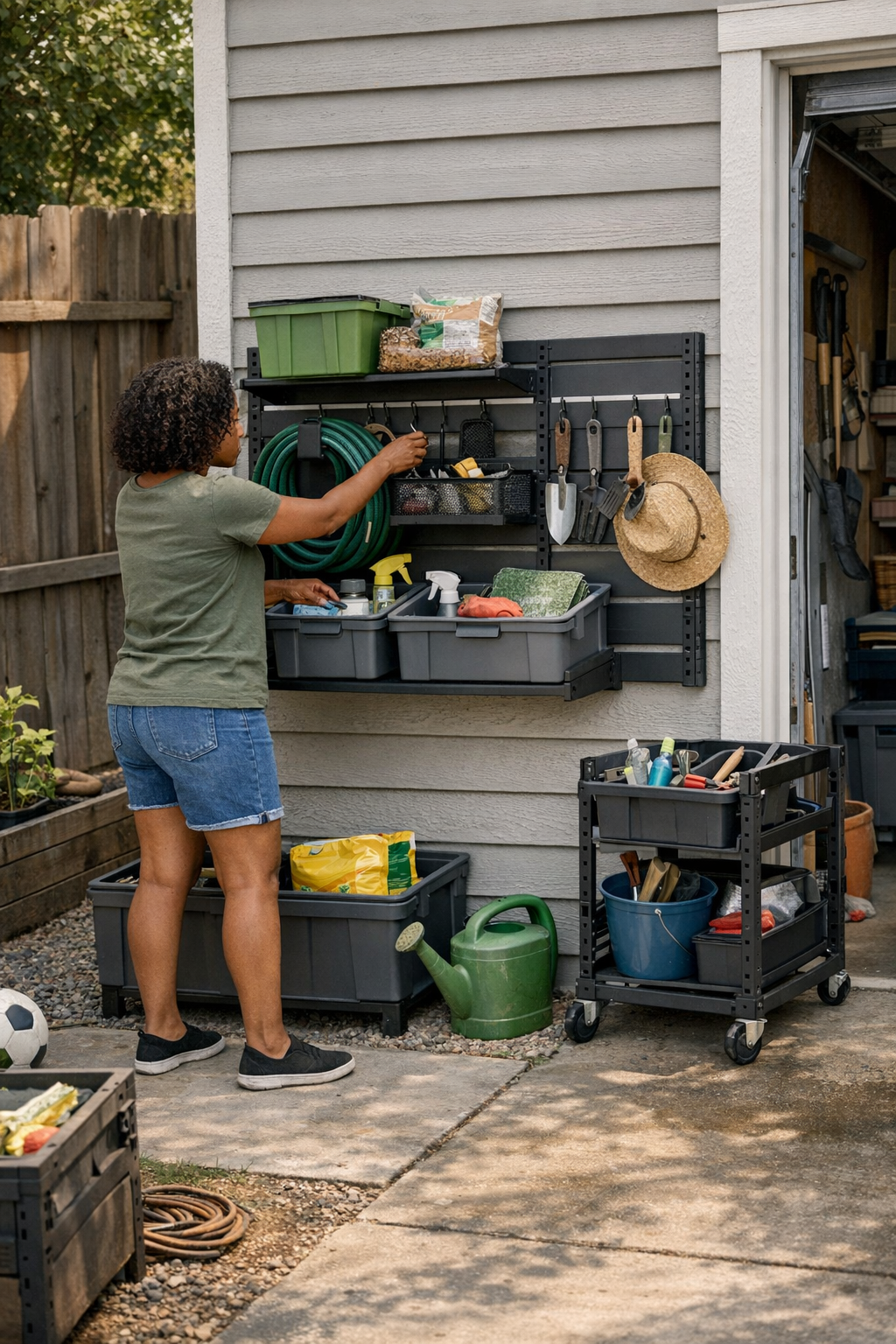
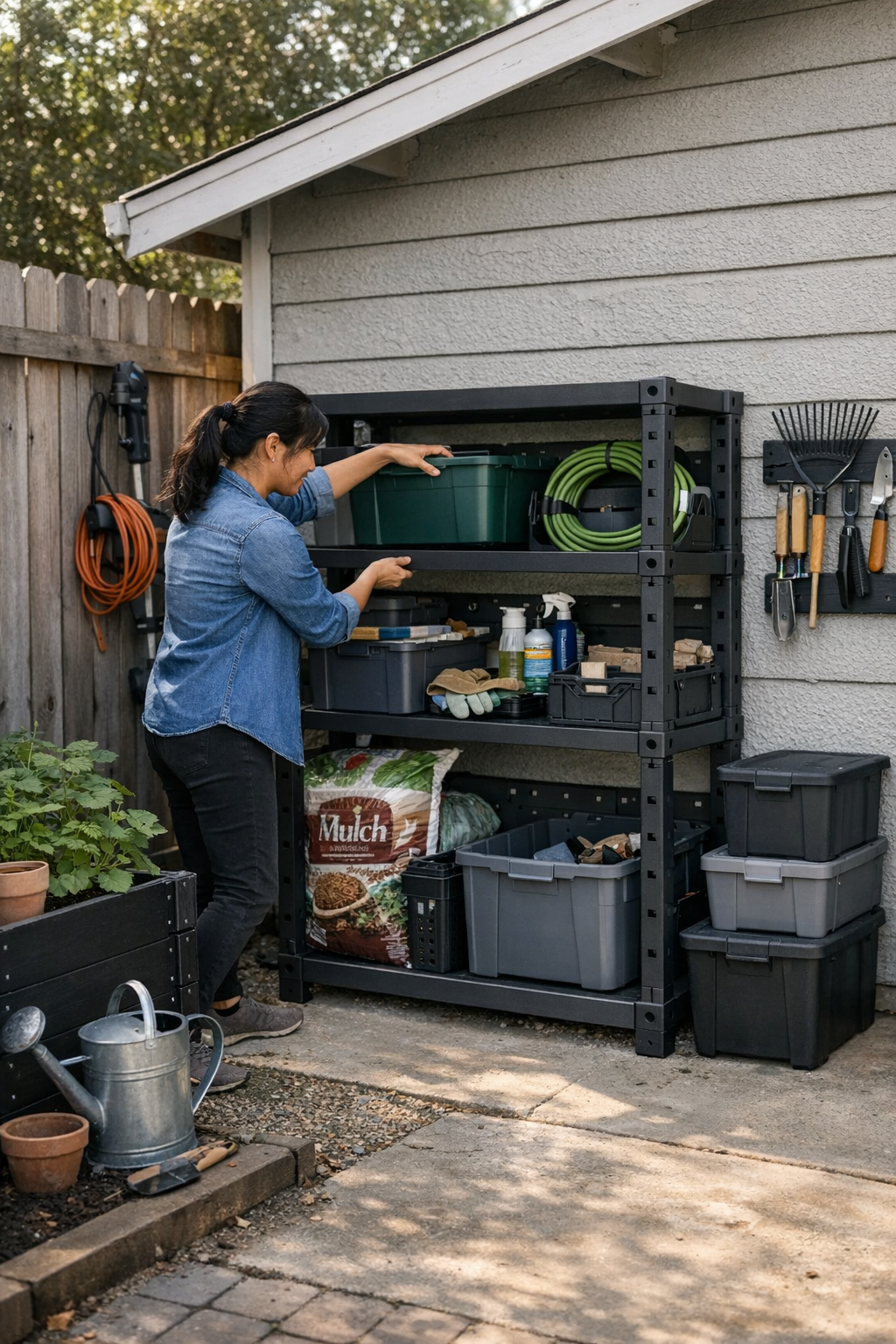
    Getting storage off the floor changes not just how things look, but how everything moves. Suddenly, the easiest path is the real system path. A muddy ball goes right onto a wall hook, not underfoot. Tools snap back onto a rail—no balancing act with packed bins, no tripping over dropped boots at the gate. Raised storage—say, 18 inches off the ground—kills the excuse for “just for now” drop-offs and keeps the walkway open. There’s less pushing stuff aside just to get to the grill or back gate.

    Swap bins for a modular wall panel and you see it in daily life: every return is faster, and the traffic lane stays clear. Overflow can’t hide—if something lands on the ground, it sticks out, drawing a quick adjustment instead of a delayed scramble. Patterns build: you hang it, grab it, move on. “Usable” and “overflow” zones become obvious. Reset sessions shrink.

    Tip: Zones That Match Life, Not Just Storage

    Tacking up rails or panels is only half the answer. Your setup must fit your actual routines. Break storage into clear, labeled, or color-coded sections: a row for tools, separate bins for balls, child-height hooks for kid stuff. If you don’t, boundaries start to blur and everything drifts out of place—gear returns fast, but not where it belongs, feeding future chores. Real, lived-through zones mean anyone—adult or child—knows what “put away” means as soon as they’re at the wall.

    Problem Spots: See Them, Reset Them

    Every system, even a smart one, has slippage: dead corners fill with misplaced gear after a rain, or a single overworked hook starts growing a nest of random tools. The trick is catching these breakdowns early, before “just for now” becomes permanent. Sometimes a hook needs to shift left a foot or a dead crate becomes a “quick throw” tray that gets cleared at sunset. Notice the pattern: the same spot always attracting overflow? Time to update, not ignore.

    Visible is better than hidden—mess seen is a mess you’ll solve. Wall setups keep the truth exposed. Pileups can’t bury themselves at the back of a floor bin. You see small issues while they’re small, so resets are short and regular, not rare and overwhelming.

    When Routine and Setup Sync, Maintenance Shrinks

    Most “clutter” comes from a mismatch between setup and movement—not a lack of space. As a true-fit system takes root, the loop gets faster: gear leaves, gear returns, lanes stay open. Less gear gets stranded halfway home. Overflow stops hiding. That means less shuffling and more real time outside. The difference goes beyond a tidy look—it’s about not getting tripped up by your own stuff every weekend. Over time, resets feel less like chores and more like five-minute tune-ups.

    Small Tweaks, Real Results

    The right adjustment—like raising storage above trip height or adding a flexible bin for quick seasonal swaps—can unblock the whole flow. Catch yourself dumping overflow in the same spot? That’s an alert: either make it a real zone, or fix the system so the routine finally works. The goal isn’t showroom-perfect. It’s a setup that hands back your space, opens the path, and shrinks the reset so you aren’t always fighting the same pile over and over.

    Let the real-use patterns guide you. No solution lasts forever, but the setup that fits your rhythm keeps the clutter and frustration in check—especially when the yard’s busy and nobody’s got time for a massive reset.

    Find practical outdoor storage solutions for real-life routines at TidyYard.

  • How Light Door Racks Transform Entryway Organization and Accessibility

    The front-door overlap zone is where routines jam up, not just where intentions get misplaced. Mornings reveal the problem: shoes multiply out from the wall, bags topple onto the bench or floor, and someone’s already digging for a key that disappeared into yesterday’s pile. That entryway setup—a bowl on the bench, a basket underfoot—lasts about three days before it loses any sense of order. Suddenly, what was meant as a simple drop-and-go station becomes a bottleneck: shoes block the path, keys get buried, and resets turn into a full-blown search-and-rescue instead of a one-step tidy as you come and go. This is the real cost of the wrong threshold setup: not just clutter, but a routine that breaks every time it’s used.

    Why Vertical Storage Changes the Game in Transition Spaces

    Layout—not just storage amount—determines if a transition zone stays usable under pressure. Floor baskets and wide benches pose as solutions, but quickly unravel. Add two people’s morning habits and things go sideways:

    • Shoes march off the mat and narrow the pass-through, especially after a wet day.
    • Keys get stuck under junk mail—every single rush-out a mini excavation.
    • Small items like gloves or cards disappear into the stack, resurfacing only after a second reset.

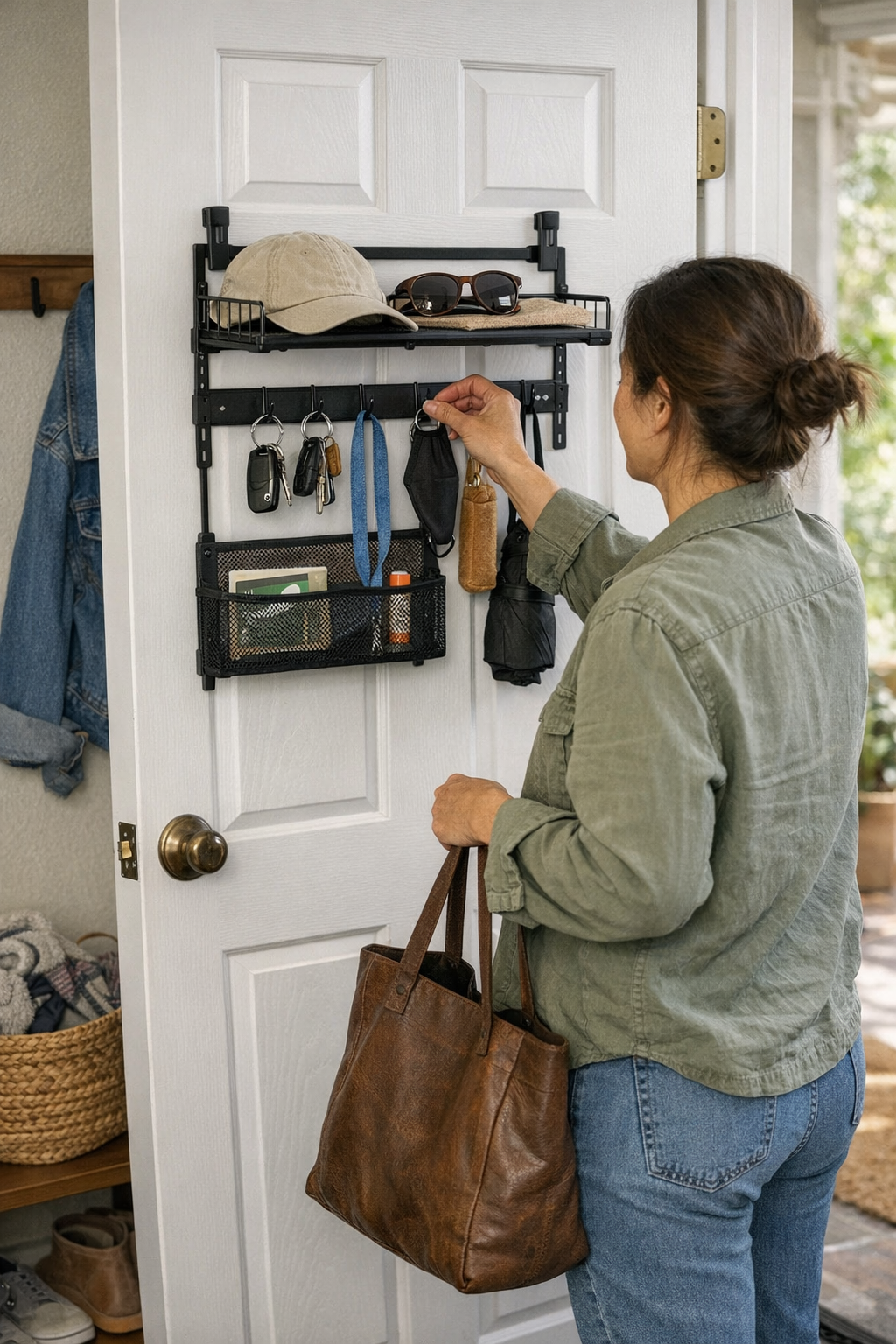
    Switching to a wall-mounted rack—a slim, eye-level unit by the door—alters this fallback cycle. Hooks and sleeves make daily-access gear visible instead of buried. You feel the shift not in the first few days, but deep into the third week, after the treadmill of returns and exits: where the bench would’ve been an overflow trap, now essentials hang right where you reach as you pass through. No more digging. And the “clean zone” stops flooding back onto the floor.

    Real Friction: What Happens Before and After the Switch

    The Pre-Rack Shuffle

    Picture a workday entry: a gym bag lands crooked on the bench, shoes nudge up against the edge, and someone’s elbow-deep in a bowl for a key, only to yank out someone else’s badge by mistake. Another bag enters the lineup; mail and sunglasses pile in random order. By next morning, that bench is a small mountain. There’s no easy “grab and go.” Instead, each arrival or departure requires sorting, shifting, and guessing what’s still missing. Multiply that chaos by a busy week, and the entryway becomes a friction zone—resetting doesn’t shrink, it compounds with every use.

    The Immediate Impact of a Wall-Mounted Rack

    Add a slim rack at the right height near the threshold, and something snaps into place. Keys and badges claim visible hooks; hats and sunglasses stay out of the fray. You don’t stack accessories—each has a slot. The gym bag? Still needs ground space, but what’s truly “daily” hovers above the avalanche zone. At first, the change is quiet. But later, you notice: no one’s lost a card in two weeks, shuffles are down to a few seconds, and you don’t dread opening the door to unsteady piles. The system prevents return of the old pile-on, even when routines clash by the entryway.

    The Capacity Tipping Point: Knowing the Limits

    Wall-mounted racks create visible order—but only up to their real limits. They’re ideal for fast-grab essentials: keys, passes, small wallets. Stack them with too many hats or bulky bags, though, and you’re right back in overflow territory:

    • Jammed hooks breed snarls and “what’s mine?” moments in the morning scramble.
    • Too much bulk makes the unit sag—or strains the door if it’s a hanging model.
    • Once grab-and-go takes more than one motion, the reset time grows again, and mess radiates outward.

    The best setups broadcast their own limits. An overloaded wall rack doubles as a warning: if you hesitate to hang one more item, it’s time for a quick sort long before the mess spreads to the floor or bench again.

    Entryway Movement: How Setup Shapes Traffic Flow

    Small entryway changes can shift the whole flow pattern. In the crunch of a weekday pass-through: two people grab for shoes, one reaches for a bag, another heads for the rack. Floor baskets mean feet tangle and elbows bump—the reset takes up physical space and time. Shift that everyday clutter vertically: now each person sees and grabs what’s theirs, the walk-through path stays navigable, and guests reach for visible hooks instinctively. It’s not that the entryroom becomes perfect—it just avoids that slow-building crawl from clear to blocked that most households resign themselves to. Less tripping, less waiting for a corner to clear, more functional movement.

    Setup Tweaks That Make a Difference

    Placement Is Everything

    A wall rack only works if you get the details right: mount it at reachable height in the natural grab zone near the door, not tucked out of immediate sight or blocked by hardware. Too high, and it gets ignored; too low or behind a swing, and it sits empty. The practical test? Mark the spot with tape and run a week’s worth of comings and goings before drilling in—you’ll know fast if the location interrupts movement or invites use. That one tweak can mean the difference between a rack that actually empties your hands and one that gathers dust while clutter piles elsewhere.

    Keep It Slim, Keep It Dedicated

    Wall racks solve for “grab-and-go,” not for everything. Oversized boots, winter coats, sports gear—they need floor space or closed storage, not another crowded hook. Overloading the rack with mixed categories just migrates the mess to a higher plane. Instead, limit the rack to the few items you always reach for and edit it weekly. When the rack’s purpose gets diluted, so does its everyday impact—and the clutter creep returns, a little more vertical but just as inefficient.

    What Real Improvement Looks (and Feels) Like

    A door rack isn’t there to make your entryway pretty—it’s there to keep the entry functional under real, repeated pressure. This difference becomes obvious as:

    • Resetting the threshold drops to a 10-second task instead of a 10-minute hunt.
    • Lost accessory searches disappear from the daily routine.
    • Thresholds stay clear, even as people overlap on busy days.
    • Everyone in the house can spot and take what’s theirs—handoffs become smoother, not another reset chore.

    The space doesn’t freeze at “just right”—but the right rack helps edit the mess before it ever sprawls. Overflow stops spreading outward, and the bench and floor actually stay usable between resets.

    Recognizing the Difference Between Neat and Functional

    Not every “organized” zone survives real use. If three arrivals in seven minutes still creates gridlock and disarray, a setup is cosmetic, not functional. Wall-mounted racks don’t end the need for editing; they just shrink the work from a full sweep to a minor correction, and let real use—not showroom looks—set the standard. Movement gets smoother, lost-item hunts fade, and what felt like a permanent bottleneck at the door finally lets routines flow in and out without the old friction hanging around.

    Explore practical wall-mounted storage for real-life transition zones at Betweenry.

  • How Drawer Design Impacts Maintaining a Clear Minimalist Bedroom Surface

    Every bedroom storage setup looks promising the first morning: drawers empty, tops wiped down, everything in its assigned place. By midweek, that illusion cracks—a phone charger shows up on the surface, socks and glasses form a row of “for now” clutter, and the evening book perches permanently above a drawer. Real disorder doesn’t erupt from having too little storage, but from storage that can’t keep up with daily habits, leading even spacious dressers to become crowded landing zones instead of actual storage systems.

    Where Drawer Design Collides with Daily Routines

    Many dressers claim versatility—clothes, gadgets, toiletries—but the test isn’t what fits, it’s what stays usefully sorted under real-life pressure. Drawers that look generous enough on paper quickly reveal awkwardness: too-deep sections turn socks and cables into a scavenger hunt, and mismatched compartments force you to shuffle or stack daily. Retrieval slows, categories blend, and every “I’ll put this away later” becomes a risk to visible order.

    Clutter isn’t an explosion; it’s a signal that the structure is failing to match the routine. As the days go by, high-use items—headphones, charger, a watch—escape closed storage because returning them is inconvenient. They linger on top, expanding until the difference between “organized” and “reset-required” fades completely.

    What Makes a Dresser Top a Drop Zone?

    The friction isn’t just about drawer count but repeated access. If you hesitate to open a drawer—because it’s too full, unsorted, or hard to reach—the surface becomes a default parking lot. The “easy reach” drawer nearest your bed or most-used path might be so packed or undefined that it slows you enough to build external clutter. What looks like a single out-of-place object is really a queue: each time you skip the headache of finding the right section, the overflow grows more permanent.

    Category Creep and Disrupted Flow

    Shallow drawers promise oversight but fail when categories go undefined—shirts slide into work cables, creams wander past small tech, all blurring into an uneasy mix. Deep drawers invite layering, making every retrieval an exercise in rearrangement. When you’re forced to lift three stacks to access the bottom, or hunt for one cable among clothes, it’s clear: the system encourages out-of-drawer hoarding by making return flow awkward.

    This is category drift at work—you start with tidy lines and end with a random inventory. The more times you reach twice or abandon a tough-to-reach corner, the less your system is working with you. It becomes a cycle of micro-delays and pileups, not a functional routine.

    Small Shifts: How Drawer Structure Can Reset the Routine

    Lasting order isn’t about more volume but sharper structure. Adding a shallow divider or slim compartment to the upper drawer—just enough for everyday essentials—gives those items a predictable return spot. When the path back is direct and simple, the “leave it on the surface” habit breaks down: putting the cable or tape measure away is faster than abandoning it, and the surface stays available instead of clogged by overflow.

    This setup beats the common fix of trays or bowls atop the dresser, which merely catch—rather than prevent—spillover. Internal division carves out true zones, making it much harder for pens, watches, and pills to invade each other’s space or migrate outward into constant view.

    What Repeated Use Reveals

    Early changes feel subtle—maybe an extra second sorting at bedtime, maybe a single redirected reach. But by the end of a week, the payoff is visible: the top is still clear, high-frequency items are easy to find, and there’s no buildup hiding just out of sight. The cycle of quick resets shortens, and you spot “clutter creep” before it becomes a full reset project. It’s a structure that flags disorder early, not a system you only notice when it’s already failed.

    Recognizing Signs Before the Reset Is Needed

    The crucial signal isn’t sudden chaos but creeping inefficiency: if a drawer gets slow to open, always feels full, or the wrong categories are colliding, your setup is quietly breaking down. When you have to dig, dislodge, or dodge one item to get to another, each return becomes friction—faster to toss it somewhere else than to deal with the jam.

    Reset by quickly emptying the top or a trouble-drawer every few weeks, even for a minute. This shows which items genuinely belong within arm’s reach and which are just accumulating. If you find yourself constantly rehousing the same cable or bottle, it’s a sign your structure isn’t holding—leading to another cycle of surface buildup and reshuffling.

    Drawers vs. Trays: Why Surface Organizers Often Fail

    It’s tempting to add trays, thinking more defined surface zones will absorb the chaos. But trays do little if the core storage stays unsorted or overloaded—they become overflow bins, not organizers. Stray objects, loose change, and accessories simply shift from one visible spot to another, making resets slower and disguising deeper problems.

    Instead, let divided drawers carry the organizational load. When small boundaries inside match your routines, less clutter escapes—reducing the chance that “just tonight” turns into “always out.”

    When Storage Matches Routine, Calm is Easier to Keep

    Real order isn’t about creating a perfect snapshot but about a storage setup that absorbs normal mess without requiring constant oversight. When a dresser’s drawers match their internal zones to real item flow, the surface becomes less of a battleground. Reset pressure drops, daily use speeds up, and you spend less time correcting the system because it bends with, rather than resists, your habits. Overflow doesn’t disappear, but it stays contained, letting the space support daily movement—not interrupt it.

    You’ll know the difference: instead of thinking about where to put things or how to reclaim an organized look, you simply use the space—and visible calm holds, not because you’re tidying constantly, but because the inside matches the outside. That’s the signal of a storage routine that quietly does its job and makes ongoing clutter one problem you leave behind.

    Gridry – Simple, practical inside-storage systems for easier daily living

  • Why Wall-Mounted Storage Systems Outperform Standalone Units Outdoors

    Most outdoor utility zones look organized—for about five days. By week two, patterns settle in: a rake left somewhere between garage and gate, soccer balls forming a minefield along the walkway, hoses and buckets choking the fence line. Each reset feels temporary because it usually is—the problem isn’t you, it’s how the area handles real, repeated use.

    How Floor Storage Collapses Under Routine

    Picture your side yard after a normal week. Tools start out lined up, bins tucked in the corner. But by Sunday, the ground tells another story: a shovel upends the path, a pile of shoes spreads near the door, and a bag of soil creeps from the wall almost to the patio table. Even spilling sweat on a Saturday reset doesn’t change the rhythm—overflow returns to the same dead spots within days.

    This isn’t just an untidy look—it’s floor pressure that keeps stacking up. Every time you squeeze past a muddy boot or nudge a bag aside to open the gate, your setup is actively blocking you. The more the space is used—gardening days, ball games, kid traffic—the narrower the walkways, the heavier the friction. Resets turn into reruns: handling the same handful of stuff, over and over, each week.

    The Hidden Stall in Standalone Boxes and Sheds

    The appeal is obvious: stash all the loose gear in one big weatherproof lift-top or mini shed. And for the first week or two, it might feel like the problem’s solved. But next, reality creeps in—a buffer zone develops right in front of the chest. You find yourself stepping over a lean-to stack of chairs, dodging hoses, or moving a pile of “for now” shoes and gloves just to return a single shovel.

    A heavy lid turns a 10-second tidy into a chore nobody wants. If the latch is sticky or the box is blocked by a wheelbarrow, items hang around the threshold. What looked like maximum capacity quietly loses ground to impromptu piles and awkward workarounds. The box itself becomes ringed by gear that never goes back in, simply because access doesn’t match your real routine.

    Blocked Paths, Delayed Returns

    If putting something away takes two hands, a heavy lid, or moving another object, it lingers outside. Lawn chairs begin roosting beside the shed. Toys drift down the walkway. In any squeezed zone—a patio edge, garage strip, or skinny fence line—friction multiplies fast. Suddenly, the main path becomes a slalom course, slowed by stalled returns and “just until tomorrow” piles.

    What Actually Changes With Modular Wall Systems

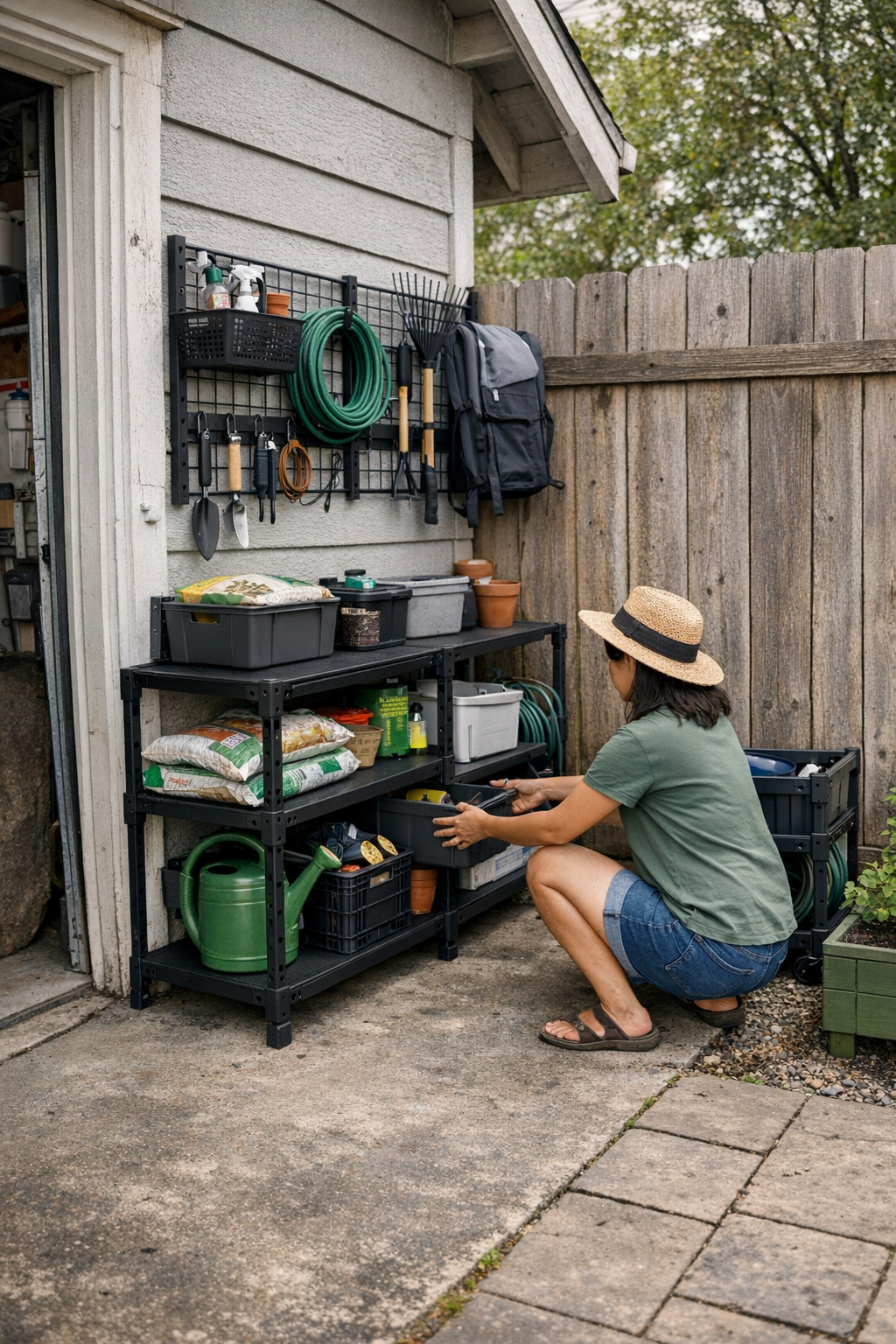
    Now, picture the same area after a swap: along the fence or garage wall, a few sturdy panels, some adjustable racks, well-placed hooks. Garden tools hang clean and visible. Balls and cones perch above the ground. Folding chairs hang high enough to clear the gate. Each pass-through, you see what belongs—and nothing begs to pile up.

    The battle moves off the floor. Movement is clearer. The reset, lighter. Items don’t hide behind lids or get jammed behind bins. Drop-off points stay visible and easy to reach, even when routines shift from weekdays to weekends. The difference is obvious: a walkway that stays usable, even after a week of hard use, versus the quiet creep of clutter that closes the path within days.

    The Trap of Wall Space Used Wrong

    Not every wall fix works. Slap up too many hooks behind a bin, and you get a dead zone. Put shelves beyond normal reach, and tools start piling up below instead. The smart setups map to how hands actually move: hose reels at hip height, not above the mower; kids’ toy bins at the natural end of play, not at the farthest fence post; flower-pot shelves just inside the gate, visible every time you walk out.

    • Hang that hose reel where it sees daily use, even if it breaks symmetry.
    • Let kids’ bins meet them at the natural finish line, not tucked out of view.
    • Keep active-use shelves within one step of the entry, not lost behind lesser-used items.

    Modularity isn’t a buzzword—it’s what pulls the system back into sync as seasons shift and uses multiply. Swapping a hook or folding out a shelf means the system stays relevant, not another fixed annoyance.

    Overflow Zones and ‘For Now’ Creep

    Watch for the “just for now” pile: a drenched garden cushion on the box lid, folded chairs leaning “temporarily” by the threshold, a tangle of gloves sagging on the closest surface. These clusters aren’t laziness; they’re feedback. If stuff stays outside the unit for days, the flow of putting it back is broken. Each new drop-off makes the next reset slower and the next block larger.

    Does one section always collect the backup gear before every party, yardwork day, or rainstorm? If so, your setup is losing the battle against live use. Maybe the gate needs to swing wider for spring planting or the basketball hoop gets moved for a summer dinner—modularity lets you reclaim or reroute those storage clusters fast, adapting to how your yard actually lives, not just to how it looked on move-in day.

    Why Flexibility Stops the Reset Spiral

    Outdoor spaces never freeze. Shade shifts hour by hour. Tables migrate for a barbecue. Suddenly a corner is needed for a wading pool or a load of firewood. The heavy, anchored box or rigid shed doesn’t move; soon it traps itself in awkwardness, becoming a new obstacle instead of a solution—especially where every foot of breathing room matters.

    Wall-based panels and modular frames work because you can shift, trial, and re-stack layouts. Renters aren’t shackled by anchors in the siding, and homeowners aren’t stuck with yesterday’s guess. Utility zones remain flexible, the friction drops, and the setup keeps pace with the way you actually move through the space.

    Is Your Setup Holding Back Your Routine?

    You’ll see the signs long before the setup “fails”:

    • Do you zigzag more than walk on your own path after a regular weekend?
    • Do “for now” piles quietly take over the edge of the main storage unit?
    • Are you shuffling something every single time you open the gate or reach for a tool?
    • Does the memory of a sticky lid or blocked bin make you skip returning gear?

    If any of these feel familiar, your friction isn’t about trying harder. It’s that your setup isn’t tuned to your real patterns. Moving to a visible wall system or modular setup isn’t about making the space pretty—it’s about clearing repeat bottlenecks, keeping resets quick, and giving every square foot back its actual use.

    Outdoor Setup Practices That Actually Hold Up

    Protect the ground. Movement is gold. Treat floor space as non-negotiable. Each tool, ball, or basket lifted onto the wall is one less thing tripped over. The less gear you shuffle just to reach the gate, the faster you reset—minutes, not hours.

    Build for sight lines—skip the memory games. If it’s in plain sight and an easy stretch away, you’ll use the return spot. Hide it behind a lid or above your head, and the “for now” pile wins again. Let the structure do the reminding for you.

    Stay ready to shift, not just once but every time the routine does. Modularity keeps your sanity. Whether it’s a moved potting bench in May or an extra rack for holiday decor, adapting the storage to match actual changes removes the creeping irritation of spaces “almost” working.

    And when you need a shelter for muddy soccer cleats or rain-soaked gloves, a tough box still works—but keep the flow gear high and wide, and away from every natural choke point.

    If your weekly resets feel like reruns, it might be time to see how real-world setups can make your routine lighter. See TidyYard’s current wall systems, modular structures, and storage units here.

  • Why Overloaded Door Racks Cause Hinge Damage and Door Sagging

    When the door starts dragging and the entry clogs up, it’s no longer just about “where to put the shoes.” Door-mounted racks promise relief from floor clutter, but real-world routines test that promise fast. Bag drops, overflow shoes, and “just for now” gear pile up—suddenly the rack isn’t just full, it’s slowing every return and exit. Each added item makes the door heavier and every reset clumsier. The space between in and out gets tighter, not clearer.

    When “Organized” Starts Feeling Like a Barrier

    Most entryways begin with a single hope: make daily comings and goings less chaotic. Hanging a rack on the door feels like instant order, a way to “catch” shoes and backpacks before they sprawl. But watch what happens after a week of mixed use:

    • Shoes spill past their slots, overlapping in unpredictable patterns—pairs unpair, one boot blocks the others, and retrieval means shuffling through the jumble or digging behind stray sneakers.
    • Bags and jackets crowd each other, swinging together in a tangled mess where grabbing one means disturbing them all—or sending something tumbling as the whole rack wobbles with the door’s motion.
    • “Just for now” becomes semi-permanent, as umbrellas and spare grocery bags claim hooks and never migrate out, loading down every available inch.

    What started out as “neat” becomes something you work around. Getting through the door on a busy morning turns into sidestepping loose shoes, freeing a jacket stuck by the zipper on another, or wrestling a closing door that no longer swings smooth. The so-called organization now stands between you and a clean entry.

    Hinges Under Pressure: The Hidden Cost of the Overloaded Door

    The real risk isn’t the mess you see—it’s the slow warping you don’t, hidden in the hinges and frame. Every new load added to the door rack isn’t just making the entry look crowded: it’s shifting physical pressure to where the door was never meant to carry it. Here’s how the warning signs show up in real use:

    • Closing the door gets harder, especially when shoes have stacked unevenly—sometimes you need to lift or jerk the door just to latch it.
    • Edges no longer align, as subtle door sag creates thin slivers of daylight or lets cold air leak past the shifting seal.
    • Every swing creaks or groans, and after a few soggy mornings or kid rushes, the once-smooth action becomes a dragging, scraping hassle.

    Each little adjustment—a sneaker crammed in, a backpack hooked on the top—pushes the rack from a helper to a silent stress point. The cost isn’t just visible: it’s cumulative fatigue running through the whole entry setup, landing hardest when you least want it—right as you try to hurry out or come back in.

    Floor Cleared, Flow Compromised

    Door racks clear the floor, but at the cost of blocking the path. They work as long as loads stay light and tidy, but for mixed, everyday traffic, the cracks in the system expose themselves quickly.

    See what happens in real motion:

    • Bag drops jam the swing, suddenly halting a routine exit because a satchel dangles too low and jams at the threshold.
    • Shoe rows overflow, pushing sideways so retrieving one pair means shuffling or nudging others, turning a quick grab into a mini-reset each time.
    • After a morning scramble, the setup becomes a puzzle of misplaced shoes and unclaimed bags—the “clean” look only returns after physically moving or unloading the rack to regain access.

    Real Scene: Entryway Drift in a Narrow Apartment

    Picture a narrow entryway in a busy apartment—designed for two people, used by three. By midweek, two backpacks crowd the rack, this week’s groceries hang off a stray hook, and a jumble of boots, sandals, and sneakers wedge the wire shelves. The door starts dragging. Then rain: wet bags drop down, pooling against the threshold. Instead of crossing in or out easily, someone has to stop, unhook, or pick through at least three items just to open the door all the way. Attempts at order just layer new obstacles—resetting turns into a routine disruption, not a fix.

    Why Hardware Stress Grows Unnoticed—Until It Doesn’t

    Most door racks are designed for a few, light items. As mixed loads take over, hardware strain builds below the surface. The door absorbs damage slowly until it becomes hard to ignore:

    • Misalignment creeps in: the rack sags lower, and the door skews out of square after each overloaded stretch.
    • Metal twists or hooks warp, subtly at first, but enough to make the rack move awkwardly and the door stick.
    • Movement resists or drags, signaling the underlying frame is carrying more than it was designed to tolerate—a penalty that only gets worse with repeated crowding.

    Wall-Mounted and Floor Storage: Rerouting the Routine

    Switching to a wall-mounted unit or floor-standing setup reroutes the entire threshold flow:

    • Weight shifts off the door, letting it swing free—shoes and bags are supported by purpose-built anchors or floor legs, not hardware designed only for opening and closing.
    • Resetting shrinks to a couple of movements: shoes forward, bags and coats to assigned spots, with no tugging or realignment needed each time.
    • Passage stays open, because storage doesn’t move with the door or block the threshold. Each item has a deliberate home within the entry zone, not balanced in a shifting tangle.

    Over time, the relief is clear: not just a tidy surface, but a truly usable entryway. When weather or busy weeks hit, gear piles up—but resets don’t. The door closes quietly, and you spend less time undoing the day’s clutter just to feel like the entry isn’t a constant obstacle course.

    Real Change: What Holds Up When the Routine Stretches

    A month in, wall-mounted or anchored floor storage turns “just leave it there” into a frictionless routine—drop shoes, hang the bag, done. Drift shrinks: shoes don’t migrate, overflow gets absorbed (and cleared) with fewer moves, and the urge for last-minute decluttering fades. Even after a chaotic run, the reset isn’t a chore—just a habit. The entry may get messy, but it never blocks you from coming or going.

    Practical Entryway Tips for Real Daily Traffic

    • Limit door racks to single categories or lighter items. If door storage is a must, dedicate it strictly—hats, light scarves, or one shoe set—not every type of gear at once.
    • Check for warning signs of hardware stress: if the door drags, squeaks, or needs lifting, scale back before real misalignment locks in.
    • Map the reset routine after a busy day: if getting organized takes too many steps or backtracks, reroute to wall or floor storage for smoother flow and less threshold congestion.

    A Setup That Works Beyond the First Impression

    The best entryway storage stands up to weekly repetition, not just the urge for surface-level order. Door racks can fake tidy at first, but as real use piles on, the pressure shows: blocked paths, sagging hardware, slower routines. Wall-mounted or floor-standing systems absorb the load—freeing the door, opening the threshold, and making each return or reset feel lighter. When the setup actually fits how your entry is used, tidying up stops feeling like another mini hurdle the second you walk in.

    Explore more practical storage for stubborn transition zones at Betweenry.