Category: Travel & Drive

  • Why Car Organization Fails Without Practical Accessibility in Daily Use

    Return to your car after a quick stop, and the gap between “organized” and “usable” becomes obvious: your charging cord has slipped under the seat (again), those wipes you stashed are buried just out of reach, and the trunk organizer you placed for order now blocks direct access to whatever you actually need. It’s the same story every week: tidy on Sunday, irritating by Wednesday. Car setups that look controlled—cables routed cleanly, organizers stacked, seat covers flat—start losing coherence the minute real-life driving begins. Multiple short trips, messy pickups, or a fast return can turn neat arrangements into persistent, low-level friction. The tension is everywhere: the tools that should help actually slow you down in daily use.

    Why “Perfect” Organization Collapses Under Real Driving

    Visual neatness breaks first under pressure. After a deep clean, most car setups seem dialed in—until actual routines expose the fault lines. Commuter rush? The charger you buried for aesthetics now requires a blind reach-under every time your phone is gasping at 15%. School pickup shuffle? That zipped packet of wipes vanishes behind a pile as soon as you need it, and the floor mat that stayed perfectly aligned in photos now bunches after each in-and-out. Real driving doesn’t pause for resets; it highlights every buried necessity and every obstacle in your own “well-organized” design.

    Repeated Friction Sneaks In Faster Than You Expect

    The more you hide, the more you interrupt your own rhythm. Setups optimized for one-time order unravel in the face of reach, return, or cleanup under time pressure. Suddenly you’re lifting a mat for a cable, undoing a snapped bin to get one item, or re-straightening a seat cover that doesn’t survive normal exits. The daily slowdowns aren’t dramatic—they’re cumulative: seconds lost, irritation added, and the creeping sense that order is costing you tempo, not restoring it.

    Real Examples: Everyday Routines That Undo Neat Setups

    Phone Chargers That Keep Going Missing

    The mount is always visible; the cable is always gone. One quick turn, and the charging wire has slipped into the seat gap, demanding a hand contortion you don’t have time for between errands. Hidden routes or under-mats might look clean, but by the third store, you’re on another hunt. Charging on the go isn’t halted—it’s perpetually sabotaged by placement that values looks over grab-and-go flow.

    The Elusive Cleanup Wipes

    A covered console or zipped pouch gives a sharp look, but when coffee jumps the cup holder during a left turn, your next moves turn into a timed puzzle. Wipes positioned for neatness are almost always masked by something else—each cleanup event turns into unzip, dig, repack, while traffic inches forward behind you. Car life rarely respects the “everything returned perfectly” plan. It’s the second and third uses that show where the setup breaks down.

    When Trunk Organizers Block Rather Than Help

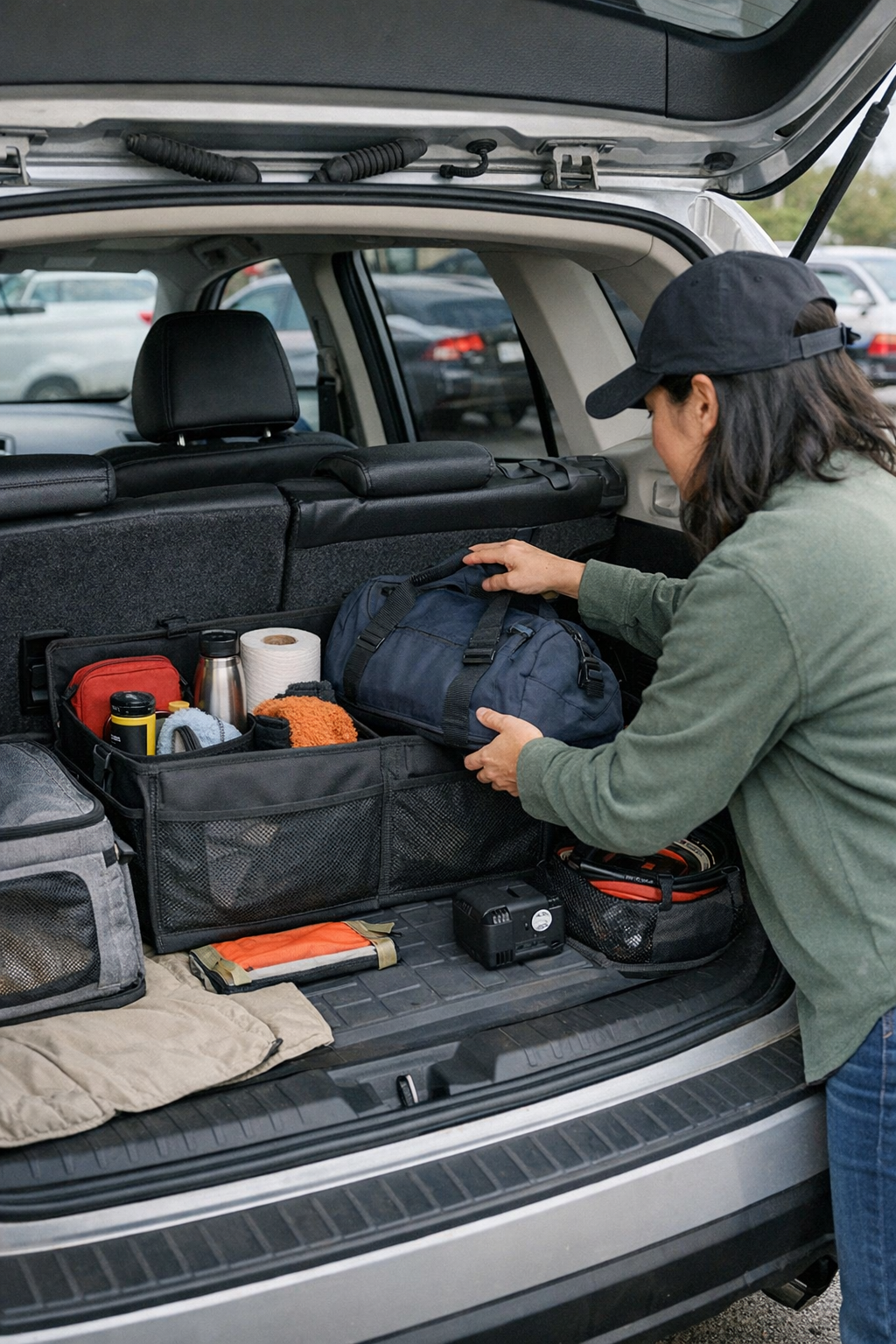
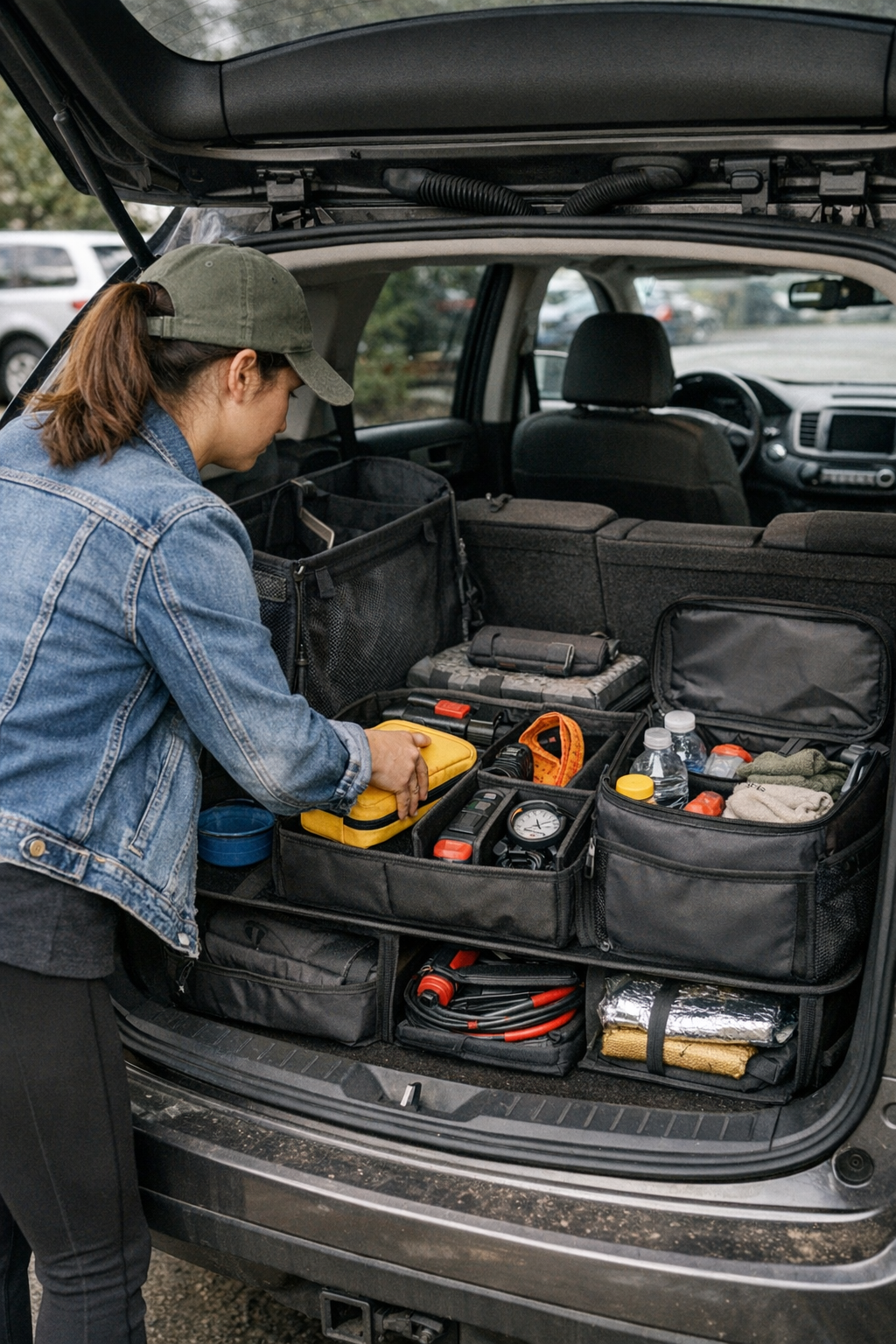
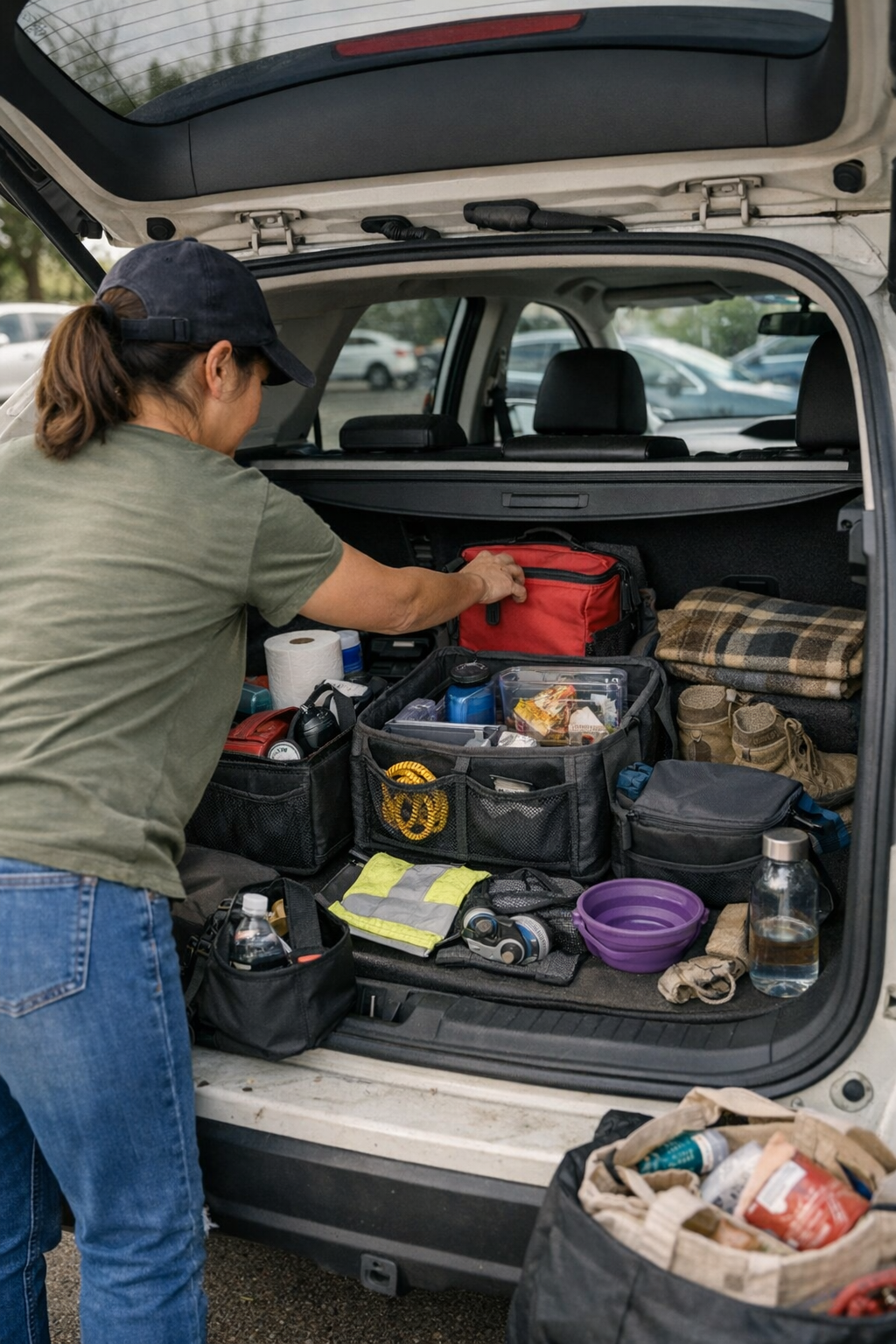
    Rows of bins or cargo boxes make the trunk look decisive—until the routine is unloading groceries, finding a runaway ball, or desperately needing the jump cables that always sink to the bottom. Systems designed for “maximum order” quickly demand multiple lifts and armfuls shuffled for one item. Loading and unloading drag out, and the original goal—smooth, fast access—disappears behind your own walls of storage.

    The Unexpected Tradeoffs of “Tidy” Setups

    Clean lines, constant interruption. Hiding cables under mats disguises them just long enough to turn a daily charge into a repeat reset: the mat shifts and snags, the wire pops loose, and the “organized” route adds a new repair effort every other trip. Sleek floor coverage turns clumsy once corners curl or overlap, demanding fix-ups before you even leave the parking spot.

    Seat covers aiming to catch messes too often slip sideways or bunch up, so the protection saves cleanup but costs you time—straighten, tug, drive, repeat. The result: setups that excel visually keep raising the bar of maintenance, eventually draining more energy than a basic, open-access layout.

    Making Access Easier, Even When Visual Order Suffers

    What actually works isn’t polished perfection but flow that endures under repeated stress. Swapping a zipped organizer for an open one beside the seat means essentials—your charger, wipes, a tote—are immediately in play. No more pausing to unlock, unzip, or dig: direct reach wins over slow beauty. Let a charging cable stay visible and looped to its mount: no more fingertip hunts under the seat, no more tangled recovery under the mat. Utility first means you lose showroom neatness; you gain predictability in chaos, and fewer issues to fix between trips.

    The car isn’t spotless, but it’s alive to your needs. Push for immediate access, favor simple organizers, and trade a little visual silence for usable control. Especially with unpredictable stops or messy returns, the cost of “perfect” resets is revealed: less routine fixing to do, less dread each time another drive starts, more time actually moving instead of managing.

    Recognizing Where “Order” Adds to the Load

    Most systems fail not through bad design but through daily demands they weren’t meant to meet. If keeping organization means you’re zipping, stacking, or buttoning on every re-entry, the tool becomes a burden—not a solution. Those benefits only last as long as you have time for perfect resets; on normal days, they transform into high-maintenance requirements you’re less and less willing to meet.

    The Small Details That Break the Flow

    Floor mats engineered to reach every edge slip and bunch just from daily ins and outs, putting you in a loop of smoothing and refitting after every short trip. Seat-side organizers with buckles or snaps force pauses that add up—“quick” now means an extra move. These details aren’t dramatic but they chip away at actual usability: the car looks prepped for a showroom but still delays the things you do most.

    Prioritizing Usable Flow Over Showroom Neatness

    Chasing zero clutter slows you down. Put what matters—charger, wipes, tools—directly in reach, let a few cords be visible, use open bins for daily drivers, and allow the interior to look a little lived-in. The point isn’t to eliminate every mark, but to support movement, not maintenance. It’s an active trade: tolerating a bit of visible gear for the sake of removing the slow friction that tidy setups always introduce in real use.

    The best setup won’t remove every annoyance, but it will reduce the slowdowns you notice most. The difference between “looks ordered” and “works on a Wednesday” comes from dropping polish for function. Arrange around what gets used, not what looks finished, and let accessibility override cosmetic order. That’s when your car stops being a reset project and starts acting like the tool you need it to be—task-ready, stress-proof, and ahead of the next repetition.

    Browse practical, real-world car-use tools at DriveWellSupply
  • Streamlining Pet Travel: How Easy Access Keeps Your Journey Smooth

    No pet travel bag feels as ready as it looks once the trip actually starts. Even perfectly packed, with every treat and cleanup supply tucked in, the first curb stop or rest area exposes friction you didn’t see standing still. Reaching for a blanket, you open the wrong compartment. That waste bag you swore was handy? It’s caught behind wipes and a balled leash right when your dog pulls, waiting for relief. The bag promises streamlined comfort, but as soon as real movement and quick stops return, familiar cracks open up—items buried, quick grabs blocked, calm moments lost to scrambling. In actual use, the gap between being packed and being prepared is hard to ignore, especially when your setup is supposed to make things easier. PawGoTravel’s world starts where those details matter—not just in what you bring, but how you reach it in motion.

    When “Ready” Doesn’t Mean Reachable

    Packing with care feels reassuring at home: treats zipped beside wipes, bowls nested cleanly, comfort items placed “within reach.” But these neat arrangements miss what happens in transit—pauses aren’t planned, and grabs rarely go as pictured. The tighter the packing for visual order, the more likely it is that you’ll be fighting layers or fumbling for the one thing you need before the moment slips away. At every stop—out of the car, leash in hand, juggling curb cleanup or vet check-in—the bag’s structure begins to resist the flow. The blanket isn’t “just there” if it’s beneath tomorrow’s food. Waste bags blend into lined pouches. Each delay stacks on the next, and the routine—supposedly smooth—starts stalling in quiet, annoying increments.

    The Hidden Cost of Deep Packing

    Put a well-organized bag through a real trip: twice in, and the logic breaks down. The treat meant for reinforcing calm is wedged under a towel and two zipped pouches. Cleanup bags require one hand’s blind fishing just as leash tension spikes. Every extra layer converts “well prepared” into “awkwardly delayed.” The surface stays tidy, sure, but new micro-delays creep in; frustration replaces the ease you packed for. The plan doesn’t fail all at once. Instead, every rescue-moment exposes the overlap: pet gear and owner gear shifting mid-journey, urgent items ducking behind non-essentials, repeated restarts burning through smoothness. After three stops, the so-called system can feel more work than your old, messier improv setup.

    The Fast-Fizz Routine: Real Scenarios That Wear You Down

    Hunting for Comfort During a Curbside Pause

    You pull up for a park break, prepping to reward a calm moment. But the blanket is at the bottom—wipes, harness and half a day’s snacks on top. Reward timing passes as you dig. Your dog waits, then squirms; you’re still flipping zippers. Instead of reinforcing comfort, you’re managing container chaos.

    Owner and Pet Items in the Way—Again

    Phone, wallet, waste bags, treats—stuffed together for “convenience,” but the moment you reach for a cleanup pouch, you end up sifting past keys or knocking snacks to the floor. Each overlap is a silent break in flow: a few seconds lost at each stop, patience thinning on both ends of the leash.

    The Mid-Drive Water Bowl Dance

    Midway through a drive, your pet needs water. You know the bowl is there—stored neatly behind a zipped divider. But by the time you unzip, double back, and fish it out, your pet’s already distracted. The illusion of being “prepared” falls apart the minute sequence matters: wrong zip, wrong grab, timing gone.

    What Actually Keeps the Routine Moving

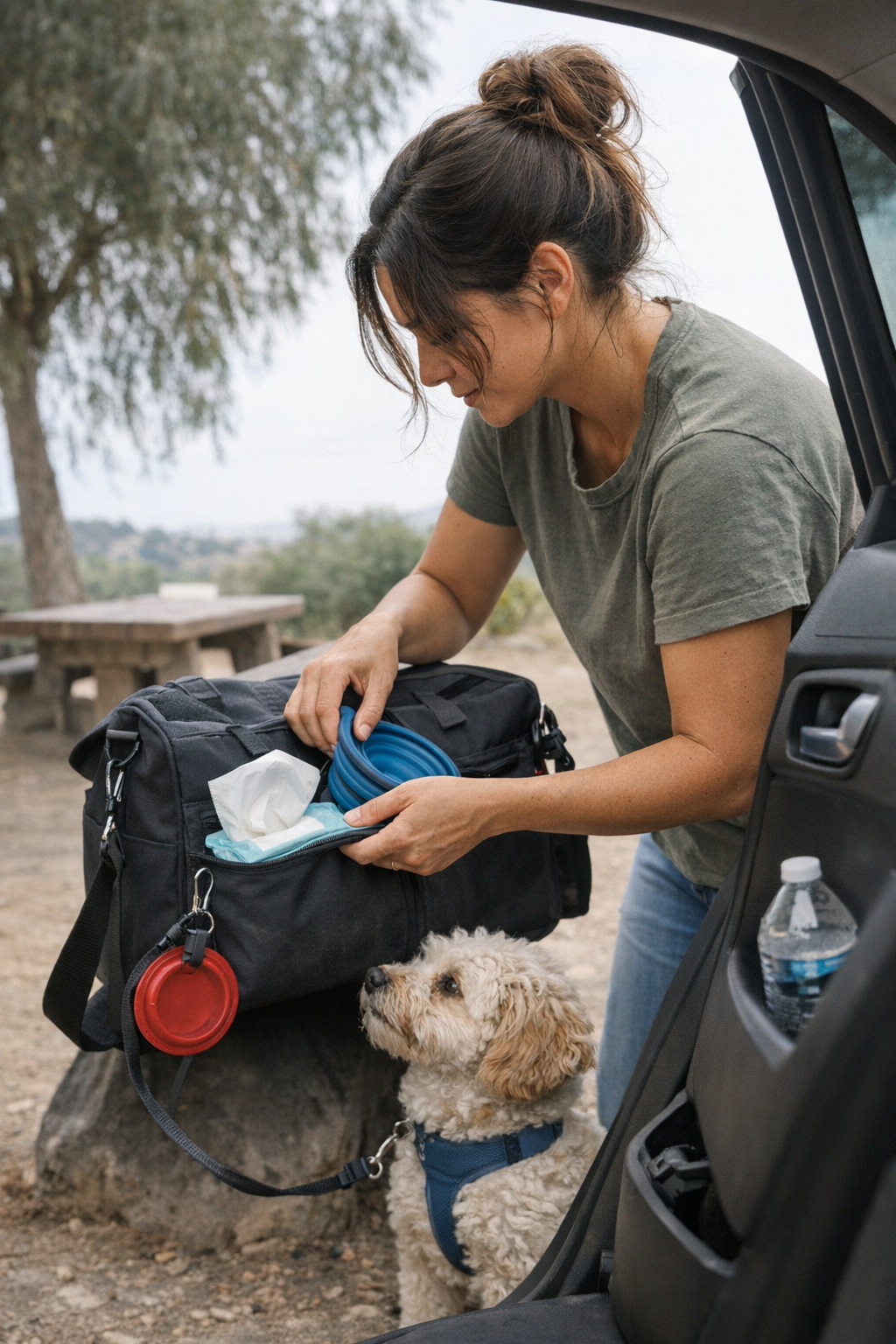
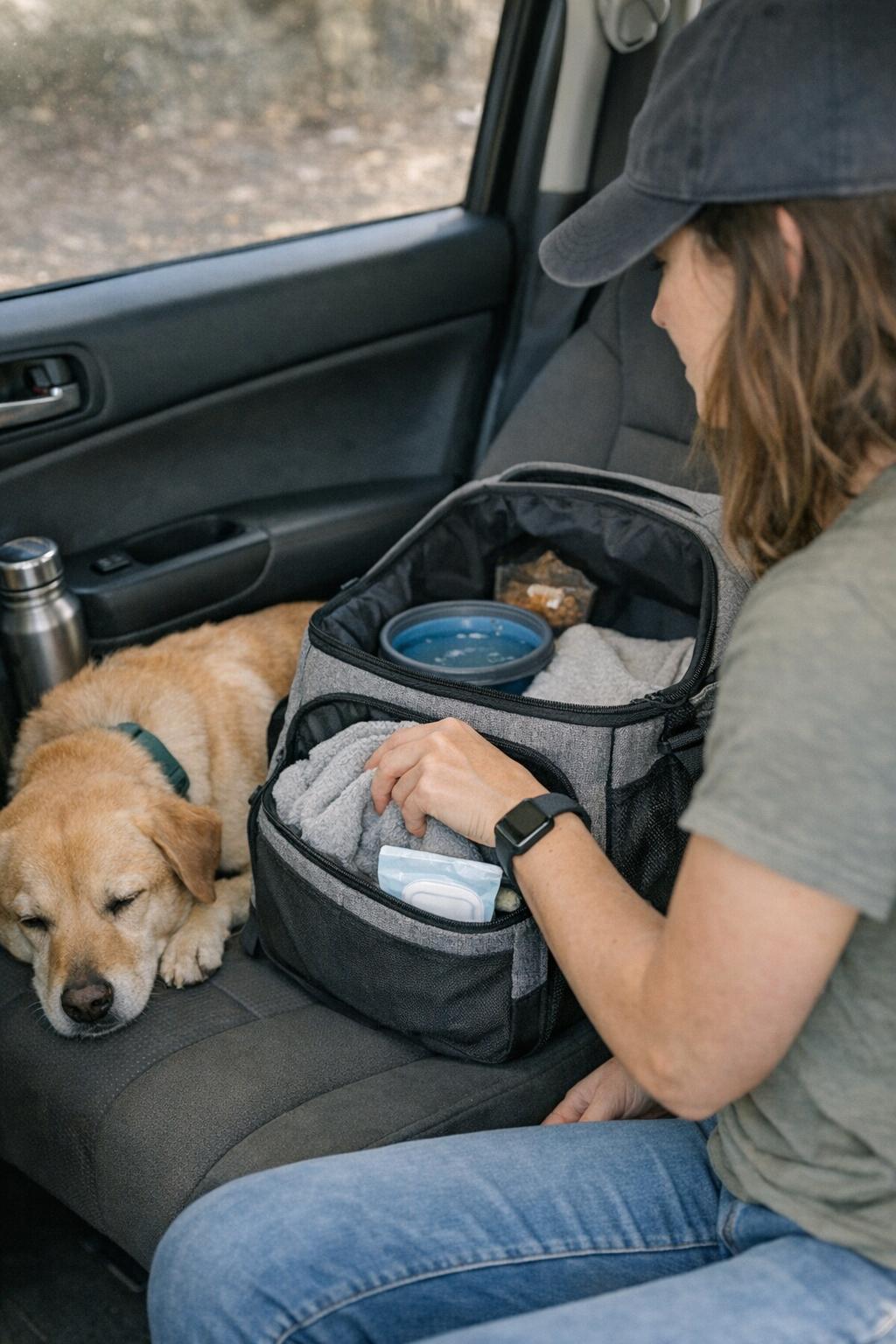
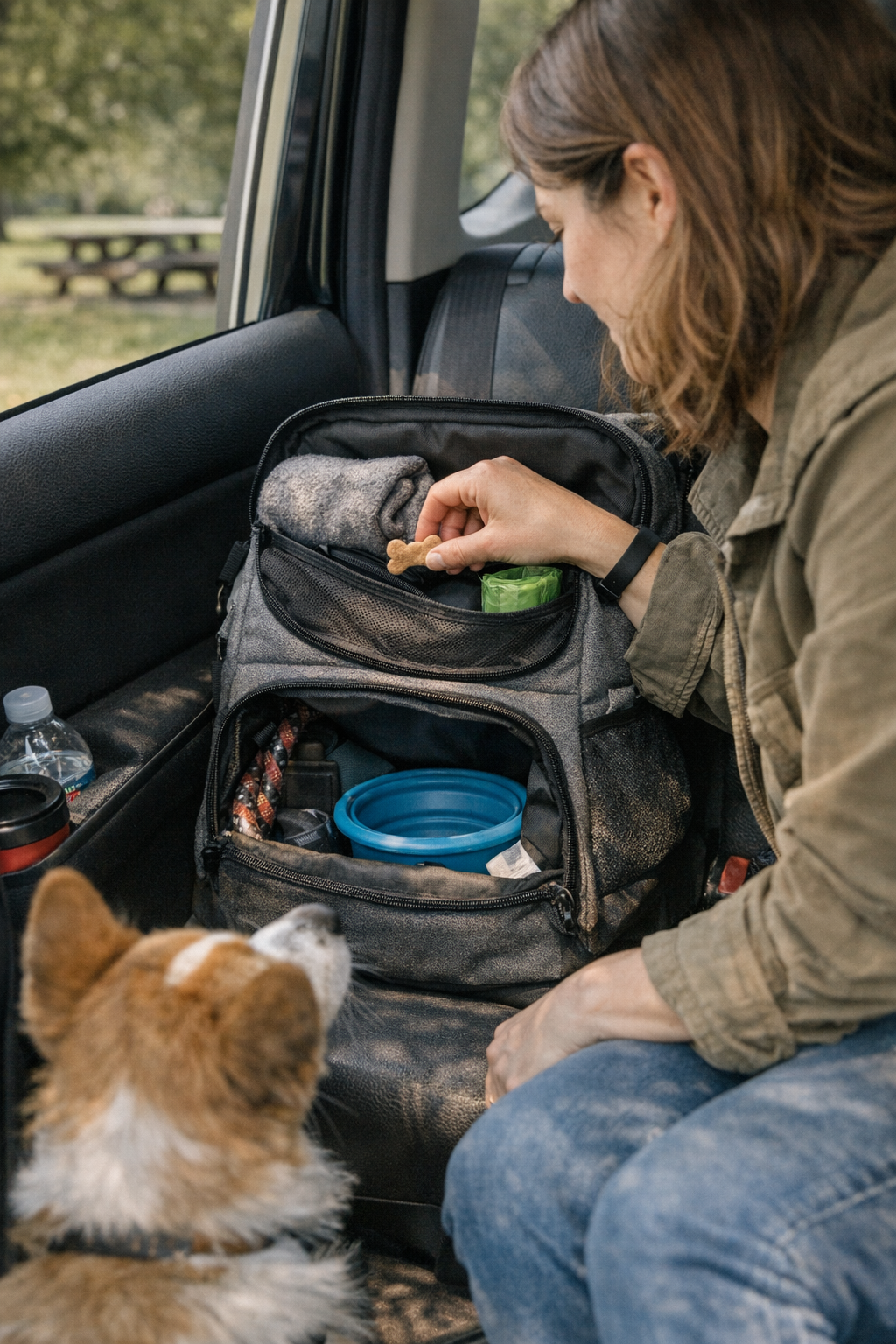
    Bringing more gear doesn’t fix the problem; shuffling still kills momentum. The real shift is reorganizing for actual reach: putting the most-used comfort cues, treats, and wipes at the edge, at true seat-side or curbside access every time you need them—not just “somewhere inside.” One proven fix is reserving an open pocket along the bag’s edge or flap for the blanket, reward treat, and a waste bag, arranged for single-move access—so they come out together the instant you need them, no reshuffle required. This is not about neatness. It’s about making your bag or carrier work as fast and frictionless as real travel demands.

    How “Immediate Access” Feels on a Real Trip

    • No layering gymnastics when your pet’s hit their limit—just a direct grab.
    • Comfort handed out at the exact moment your cue is spoken—word and action synched, no scramble.
    • Cleanup is a two-second job—no more “almost there, just wait” delays.
    • Items drop straight back into their pocket, prepping you for a repeat grab, not a new puzzle.

    With that structure, tracking “where things are” fades. You focus on your pet’s body language, not zipper-order. Each stop-and-go cycle gets closer to seamless—less stuttering, more ready motion. The payoff isn’t a look; it’s a routine that finally matches how you and your pet actually move and wait, together.

    Real-World Observations: Less Mess, More Flow—But Not Perfect

    No system is bulletproof. Items still get jostled, pockets aren’t immune to scatter, and after a rushed day you’ll curse even a smart layout. But the real gain shows up in the numbers that don’t draw attention: fewer double-grabs, rarer wallet-treat collisions, less “where is it?” muttering with a leash and a waiting dog. The over-promised gap between “looks organized” and “actually travels well” narrows into something manageable—enough for seat-side access and timely handoffs to become the default rather than the exception. The instant fix doesn’t exist, but the everyday cost of ignoring true access becomes impossible to justify when you’ve lived the alternative, stop after stop.

    Find practical pet travel organizers, quick-access kits, and real-use travel gear at PawGoTravel.

  • Why Carry-On Organization Often Fails During Travel and How to Fix It

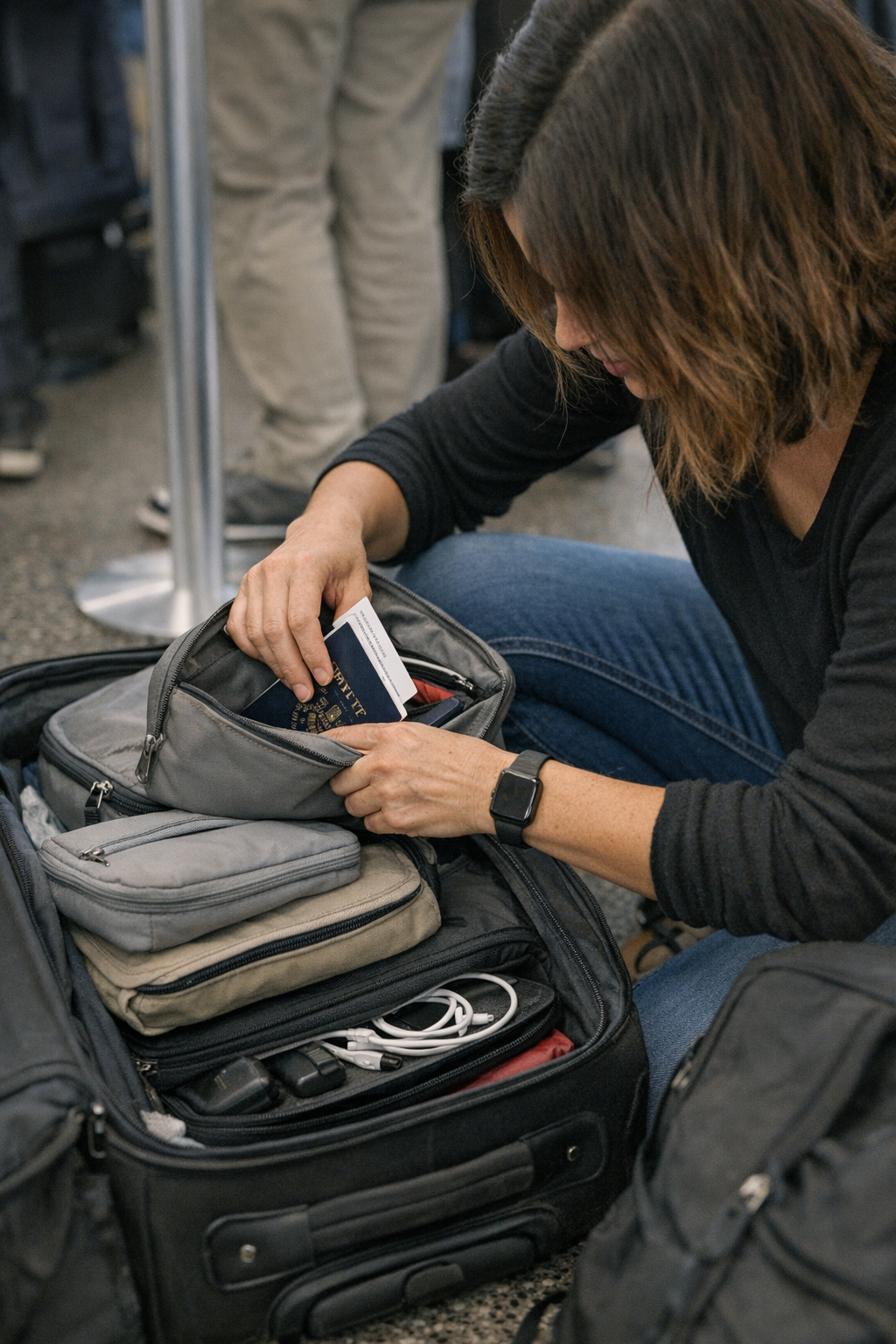
    An organized carry-on can feel perfect—right until airport reality starts grinding away the illusion. At home, every pouch is zipped, chargers are coiled, and your passport slips easily into a slim organizer. Step into an airport, and the difference between “packed neatly” and “built for movement” appears almost instantly: reach for your ID at security, fumble for your boarding pass while others wait, or yank out a charger at a crowded gate—each motion caught in a web of compartments that seemed like an asset just hours earlier. A bag that looks sharply ordered on your kitchen counter turns slow, uncooperative, and awkwardly layered when actual travel puts pressure on the setup. That’s where friction starts to build, and why what works at home can work against you after the first real use.

    Where Repeat Access Meets Real-World Friction

    Airports expose weaknesses you barely notice until you’re in the churn of check-in, security, and boarding. Every travel checkpoint demands the same few essentials—ID, documents, chargers—over and over, often under time pressure. This is when a “neat system” starts working against you. By the third time you’ve yanked a pouch free, unzipped yet another layer, or set your tote awkwardly on the floor to retrieve your passport, you feel it: structure built for tidy packing turns into minor chaos under repeated retrieval. Worse, if your hands are repeating the same clumsy search with each checkpoint, the flaw isn’t your memory—it’s the bag’s structure slowing you down, step by invisible step.

    The Quick-Access Trap: Organized but Not Usable

    A visually flawless bag—chargers in tech pouches, documents nested, toiletries lined up—photographs well, but stumbles in real use. The moment you’re rushed, everything you need is gated behind layered steps. Boarding pass? Unclip one pouch, move another, unzip, dig. Earbuds? Blocked by a charger you packed “efficiently.” One clean, gridded packing job adds three or four micro-barriers every time you want something in motion. Each repeat retrieval is a reminder: tidy at rest, tangled under pressure. The harder it is to reach what you actually use, the more the system works against the flow of the airport and the speed of your own muscle memory.

    Security: Where Organization Slows Down

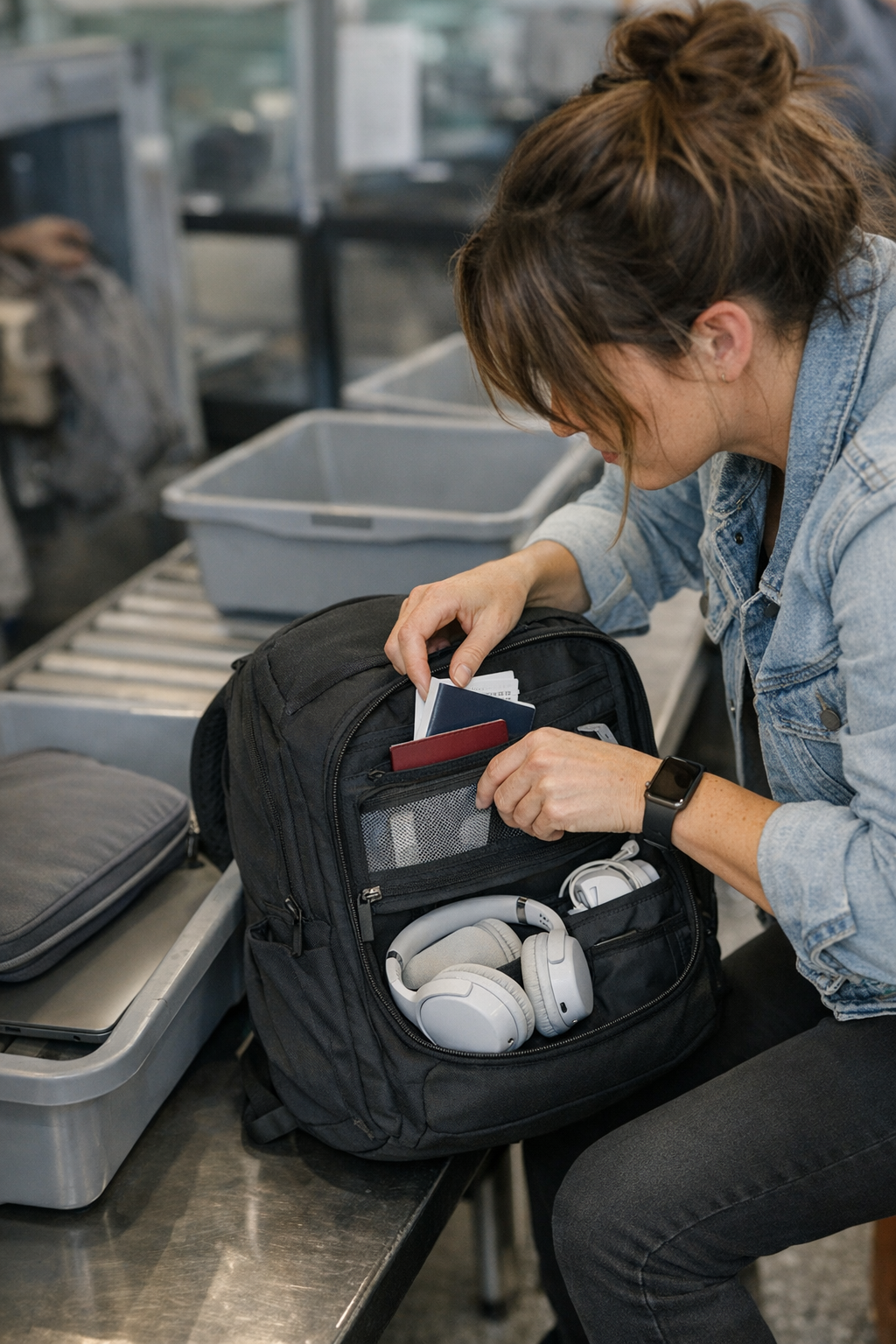
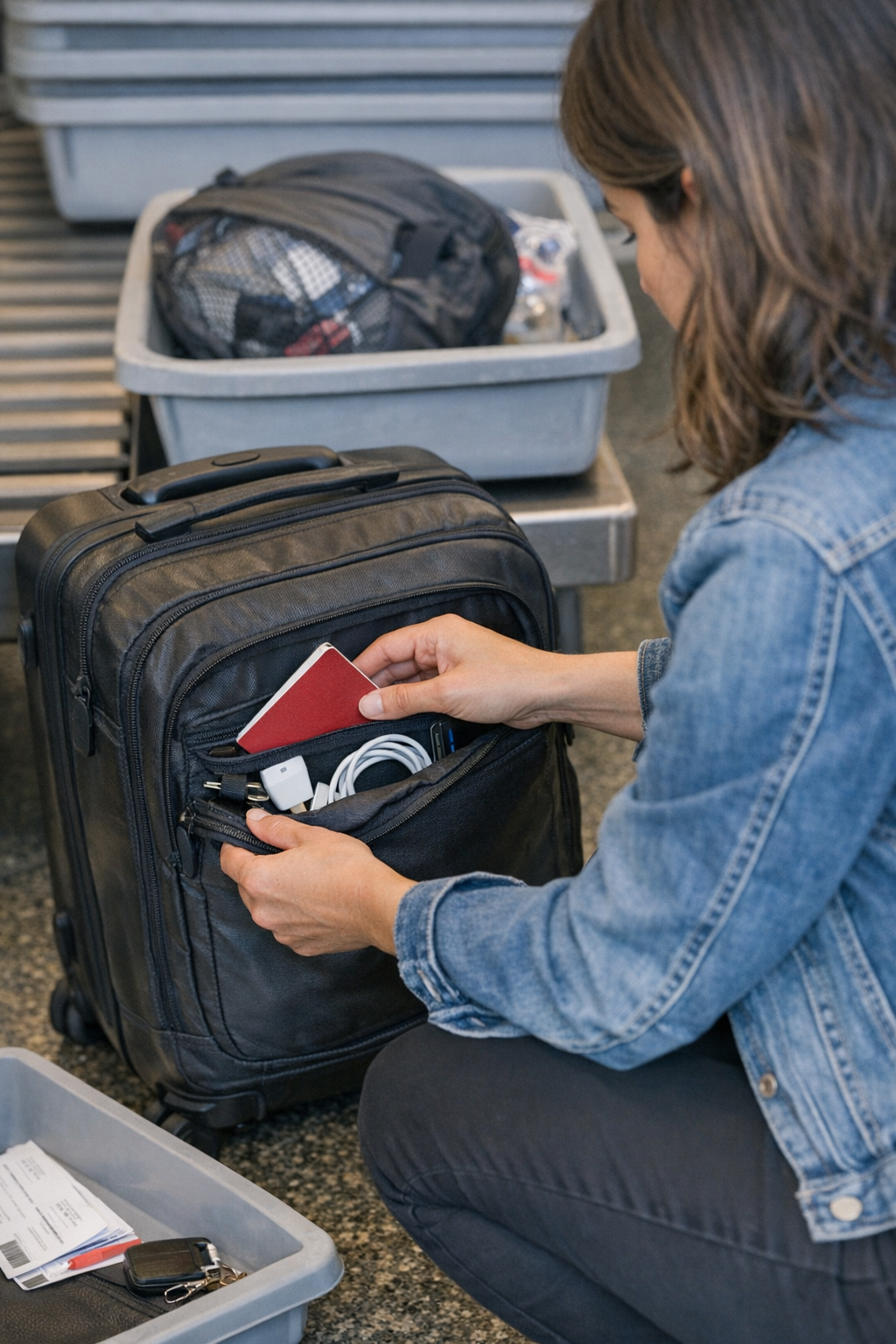
    The security tray is where these small inefficiencies become public. With staff watching and a line behind you, there’s no patience for methodical unpacking. You need electronics and fluids out—quick, all at once. Instead, you unzip tight compartments stacked for “efficiency,” dig through two pouches for one item, and end up juggling half-unpacked gear. Now your order has become a bottleneck. If a passport or phone slips deep between layers, you feel it in sideways glances or the extra seconds spent shuffling items while the trays pile up. What helped you feel “organized” at home now slows everyone, including you, at the worst possible moment.

    Repacking Burden: A Cycle that Doesn’t End

    Every retrieval in transit comes at a cost. The first time you fish out a charger or ID, you promise yourself you’ll repack with care later. The second and third cycles? Reality sets in. Each round leaves essentials shuffled, pouches misplaced, cables loose. You find yourself kneeling awkwardly near a power outlet or at the gate, trying to restore the original order, but the “system” quickly becomes a pile you keep reorganizing. The friction becomes self-perpetuating: every access weakens the order, making the next access even slower, until the tidy setup that gave you peace at home produces real irritations with every flight segment.

    How Access Frequency Should Define Your Layout

    The key to a frictionless carry-on is prioritizing frequency over visual order. Anything you’ll reach for more than once—passport, boarding pass, headphones, main charger—deserves immediate, single-zipper access. If it has to move around or come out, it should never be behind another item, buried beneath a stack, or hidden under a pouch labeled “for order’s sake.” In a real-world setup, frequent-use items should dominate exterior or top-level sections, even if that means breaking your visual grid.

    Minimizing Steps Beats Visual Perfection

    This approach intentionally sacrifices some Instagram-worthy layout for speed you’ll actually feel—single-motion retrieval, fewer zip paths, less public scrabbling. The new benchmark: if you never have to move another pouch, unzip an extra layer, or disturb your secondary gear to get core essentials, your travel rhythm becomes smoother and your re-packing sprints disappear. Clean packing is worthless if every real use turns into a miniature unpacking ordeal. Layout designed by reach, not by look, proves itself by making you invisible in security and effortless at the gate.

    Spotting the Weak Points Before They Compound

    Most carry-on failures aren’t big—they’re slow-building and repetitive. Notice if you’re opening two compartments to get the same item at every stop, repeatedly searching a section for your phone, or re-zipping the same pouch after each document check. If the same access process clogs your flow in multiple airport segments, you’re staring at a structural issue, not a personal quirk. These small drag points don’t just waste time—they create a travel rhythm that’s more about fixing earlier disorder than actually making progress.

    Example: From Home to Boarding

    The night before, you build a “system”—tech in one spot, toiletries tightly arranged. By the time you reach security, retrieving electronics means unzipping three pockets. At boarding, your noise-cancelling headphones (packed deep for symmetry) slow you down once more, forcing you to hold up the aisle while you dig. When you hit your seat, your main charger is—again—at the bottom. Each interruption is nearly identical: too many layers, not enough access, and the same repacking motion repeated out of necessity, not choice. This isn’t “messy travel.” It’s misaligned structure: setup that works until you actually move.

    When to Rethink Your Setup

    Ask yourself:

    • Am I shifting more than one pouch or pocket to reach my most-used item?
    • Do I re-pack key essentials every time I touch them?
    • Is “order” costing me valuable seconds or creating new bottlenecks at security, the gate, or during seat entry?

    If the answer is yes, the solution isn’t more packing discipline—it’s a new structure. Promote high-frequency, high-stress items to instant-access compartments. Let the layout look “lived in” if it means you never stall at a checkpoint or block the aisle while re-zipping. The real payoff is fewer interruptions and a setup that doesn’t just survive three or four rounds of airport movement, but actively makes each round easier.

    The best carry-on isn’t just tidy on the first use; it’s one that silently absorbs the wear of three, four, or five real-world cycles—each faster and less fussy than the last. When your system removes friction instead of adding it, you’ll feel the quiet difference on every trip.

    Shop more practical carry-on solutions at CarryOnSupply

  • How Assigning Specific Roles to Car Pockets Transforms Daily Driving Efficiency

    The real car clutter problem isn’t just what you see—it’s how often you have to reach, shift, or dig for the same thing again and again. You rush back to your car after errands. The interior looks tidy enough, but your phone charger’s tangled with coins and gum wrappers—so you’re already slowed down before you get in gear. It’s not that you’re careless. It’s that most car setups ignore how fast routines break the initial order: grab, park, toss, repeat. DriveWellSupply centers—phone mounts, organizers, chargers—exist because even a “neat” car keeps tripping you up when daily use exposes where the setup falls short.

    Why ‘Looks Neat’ Isn’t the Same as ‘Works Smoothly’

    Every new organizer or car caddy feels promising for about two days. You drop your phone, sanitizer, and wallet into a center console that starts out organized. But by mid-week—one grocery run, one passenger, three charger swaps—it’s back to the same scenario: looking for one item, hands bumping into others, cables catching on pen ends, and receipts buried in forgotten compartments. What takes seconds on Monday drags by Friday; the “tidy” setup isn’t speeding things up, just shifting the mess until you need something in a rush.

    Here’s what the friction looks like in practice:

    • Phone charger tangled with old receipts—again.
    • Hand sanitizer buried beneath coins—again.
    • Sunglasses case blocking your reach for a single pen—again.

    None of these moments seem like a big deal alone. But stack them over five quick stops, and every routine exit and entry becomes a series of small, annoying interruptions.

    The Cumulative Cost of Mixed Car Pockets

    It’s easy to excuse the first tangle—“I’ll fix it later.” But when errands pile up, child seats migrate, or you share the car with another driver, chaos ramps up fast. Picture a busy parking lot: hands full of takeout, battery at 2%, you reach for your charger—only to go digging through sunglasses, dry wipes, and two snack bar wrappers stuck in the same slot. You’re muttering, unplugging the adapter with one hand while your food tips over with the other. The longer routines pile up, the harder it is to spot what you need the first time; each grab becomes guesswork, sometimes with a dropped cable or another item sliding under the seat.

    The minor, persistent interference—charger in the wrong pocket, sanitizer buried under mail, coins rolling to unreachable corners—adds seconds you don’t have and stress you never budget for. Multiply this by shared rides: new hands stash things randomly, and everyone loses track of where their essentials ended up. Every stop runs slower, and the sense of “organized” turns into a memory game you’re losing.

    Assigning Each Pocket a Job: Less Drift, More Flow

    One practical change actually sticks: assign a single job to every storage zone—no mixing allowed. Charging? Only cords and adapters belong in that slot. Daily grab items? Dedicated area. Documents or insurance? One tight spot, not two. By keeping cables out of coin pockets and snacks away from paperwork, every reach is a matter of habit, not hunting. If a DriveWellSupply organizer or seat gap filler fits your car, use the shape to reinforce only one kind of item per place. The difference isn’t cosmetic—it’s that you quit resetting the same mess after every drive.

    How it looks in real traffic:

    • Passenger door pocket: Cables and nothing else; charger stays untangled and reachable even on a full grocery unload.
    • Center console: Wallet, sanitizer, and sunglasses in dividers—never mixing with mail or snack bars.
    • Under-seat section: Only paperwork; no charger adapters or lost pens floating around.

    This structure turns retrieval into muscle memory. The more you stick to single-job zones, the less you pause, sort, or grumble on routine in-and-outs. The payoff is less time wasted before every start—your setup works without you having to “reset” it every couple of days.

    Busy Routines, Dense Driving: Where This Matters Most

    Single-purpose pockets really matter when the routine is at its most crowded. During errand loops or school drop-off, you don’t have time to sort before each stop. Here’s where mixed storage fails first:

    • Errand stacking: Three fast stops, each demanding a different card or receipt. Mixed pockets bury what you need behind trash from yesterday—slowing exit and re-entry on repeat.
    • Shared vehicles: Carpool drivers or family members drop items wherever there’s space. By midday, chargers shift, sanitizer goes missing, and keys drift to impossible spots. There’s no shared logic, so retrieval is slower for everyone.
    • Packed cargo days: Trunk overloaded, back seats blocked. Everyday essentials can’t be shuffled to fallback spots; if pockets are already mixed, the stuff you need for the next stop gets lost or requires a two-hand, two-minute search.

    Clearly defined zones—strengthened by trays, gap organizers, or door-mount pockets—keep these friction points from spiraling. Movement becomes automatic because every grab has only one possible place to go.

    Tricky Tradeoffs: When a ‘Solution’ Makes Something Else Harder

    Plenty of car accessories backfire—an organizer that forces pens, coins, and cables into one cramped bin fixes the “messy look,” but now you wedge your hand in every morning, brushing sanitizer just to fish out your key. A seat cover promises spill protection but bunches at the edge, making every console reach require another push aside. You fixed one problem, replaced it with two new slowdowns.

    This is where the single-job thinking matters most: it’s not about “looking organized,” but about setups that don’t block, drag, squeeze, or bunch after five days of real use. Any zone or add-on forcing category overlap will look fine new and then make your routine clumsy fast. A setup only reveals its strength or weakness during the motions: reach, grab, stash, return—over and over.

    Keep It Unmixed: Practical Methods and Real-World Tweaks

    Some built-in spaces have to flex, but a few tweaks bring more order:

    • Divided organizers: Use DriveWellSupply-style trays or gap fillers that clearly block mix-ups—cables can’t entangle keys, sanitizer tops stay upright and instantly findable.
    • Texture cues: Felt, silicone, or rubber mats make separation tactile—without looking, your hand feels “where cables end, docs begin.”
    • Front/back logic: Daily grabs reserved for front-most zones. If you rarely need it, bury it; for repeated use, keep it predictably closest.
    • Trip-end resets: Five seconds to check (not sort) before locking up: if categories stay separate, drift is stopped before it starts.

    The goal isn’t pretty bins for their own sake—it’s putting what slows you down right back in reach, with zero daily effort. Unmixed zones mean your car lets you move, not stop to fix the same pile twice before lunch.

    When Order Looks Fine—But Still Trips You Up

    A “clean” car is easy—until you actually use it. You open the door and everything looks sharp, but one grab for your phone means moving a case, untangling a charging cable, and scraping against a sanitizer bottle you left in front. Time lost, mood dented, all before you’ve left the curb. Appearances mislead; live usability is the true test. The real signal? If you keep unmixing the same two items every trip, your system isn’t working—no matter how “together” it looks.

    Single-job storage doesn’t mean spotless. It means you aren’t fighting your own habits. Want less anxiety on busy mornings? Keep pockets defined, categories simple, and never let a two-second grab become a two-minute scramble—no matter who drove last.

    The Real Payoff: A Car That Works the Way You Actually Use It

    You don’t need a full interior overhaul—just boundaries that survive a week’s worth of drive, park, and return. The upside is concrete: fewer forgotten chargers, less repeated cleanup, and faster recovery when you lose track. A real-world setup—reinforced by proper organizers, textured mats, or even a habit of five-second checks—lets you get in, get what you need, and get out, with less reset and less drift. For cables, cleaning tools, pet barriers, or trunk organizers, rely on products that force categories to stay unmixed, making routines almost frictionless.

    Spot the difference next time you park: does a single grab slow you down, or is your car actually making daily motion

  • How Thoughtful Pet Travel Gear Eases Every Stop on Your Journey

    The difference between a “ready” pet travel bag and one that actually helps—shows up fast at the third stop. You pause, your pet tugs, and suddenly the setup that looked organized is slowing you down: wipes drifting under a collar, the leash tangled with a food pouch, cleanup supplies always one item too deep. Every stop exposes another tiny inconvenience. What’s packed “for emergencies” is awkward to grab when you’re one hand short and your dog’s already half out the door. This is where slip-ups multiply—not because you forgot something, but because the structure hides it just when it matters. In the world of repeated pet travel, PawGoTravel builds for these real moments: setups that keep pace when “organized” isn’t good enough.

    The First-Glance Trap: Looking Ready vs. Moving Smoothly

    At departure, an average tote crammed with pet gear can feel reassuring. Every item—bowls, wipes, chews, leash—folded into a section or zipped pocket. But by the third roadside pause, reality sets in. Your hand fumbles between compartments; the leash escapes into a nest of snacks; the section you just shut is open again for one missing item. Outwardly, the carrier still looks neat. Internally, every reach takes longer, each action interrupts the last, and both you and your pet sense the slow build of hassle. The real strain isn’t at the start—it’s after routines repeat, surfaces get messy, and every “quick stop” reveals another delay.

    Repetition Is the Real Challenge

    Pet travel exposes weaknesses not in emergencies, but in the steady rhythm of stops and starts. On stop one, hunting for wipes under a bowl is only a shrug. By stop four, you’re reshuffling a dozen things before anything is reachable. The leash stuck beneath the jacket you packed “just in case”; comfort biscuits packed perfectly, but too deep to grab for a nervous pause. It’s not disaster, it’s repeated irritation—slow, cumulative, and draining. Each restart demands rearrangement. Organization begins to erode. “Prepared” quietly turns into “why won’t this work?” even for careful packers.

    Packed Isn’t the Same as Practical

    Most setups fail not because something’s missing, but because overlap and blocked access creep in. On paper, combining wipes, water, lead, and toys in a single big compartment seems sensible. But with one hand occupied by a leash and a pet twisting to explore, you’re forced to tip out three things to get one, again and again. The visible difference is the slow but steady “where did I put it?” moment after every stop. Items migrate. Quick access gets muddled. The more often you pause, the more the whole kit feels scrambled—a pattern every pet owner knows from the endless cycle of motion, cleanup, and calming.

    Cleanup and Comfort: Small Wins Change the Day

    Travel friction spikes during the small but urgent cases: cleanup after a muddy paw or a sudden whine for comfort. When wipes are lost behind a zipped barrier or the blanket is buried for “organization,” these moments become needlessly tense. The solution isn’t more packing—it’s easier access, without cross-talk or spillover.

    Cleanup That Doesn’t Slow You Down

    Think back to your last few trips: how often did you dig for wipes just when you needed them clean and fast? With a dedicated, no-interference side pocket, grab-and-use motion becomes automatic—no dumping, no leash trailing, no mess expanding just because access is blocked. It’s a testable difference you notice by the second or third round.

    Comfort Items Within Reach

    Calming treats and familiar toys only help if you can hand them over fast. If “organized” means they’re trapped beyond a heap of towels or water bottles, nerves ramp up for both you and your pet. Quick-access, front-loaded pouches or side-release holders keep those go-to comforts on hand—cutting nervousness, speeding sooth times, and stopping tensions from spreading through the whole trip.

    Cleanup, Restart, and the Overlap Struggle

    The real test for a carrier or organizer isn’t total capacity—it’s whether you can reset smoothly under mild pressure. After an hour on the road, your pup is twitchy, you’re juggling half-clean hands, and you want water out—now. The collapsible bowl jammed under a heap of leashes, wrappings, and wipes? That slow search turns routine stops into frustration factories. A structure with stable outer pockets or fast-separating sections means speed instead of scrapping with the bag every time, helping you close the door and get moving with sanity (mostly) intact.

    The Real Difference: Automatic Returns and Movement Flow

    Setup structure doesn’t just keep things tidy at the start—it organizes your habits on the fly. The right travel bag puts wipes, leash, treats, and water within hands-reach, shaping motion so you don’t think about where to find anything. You grab, swap, return, and move—sometimes even with muscle memory, not conscious hunting. Imperfections stay: a collar will tangle, a favorite toy will wedge wrong one trip. But interruptions shrink, and routine stops take less mental bandwidth. The more invisible the effort, the more the setup works.

    Everyday Scenes That Reveal Weak Points

    • The wrong pocket, again: Reaching for treats, but the zipper reveals a snarl of lead and wipes nowhere nearby.
    • Buried cleanup: On a walk, needing wipes instantly—but your “good organization” buried them beneath two other compartments.
    • Restart hesitation: That moment before you close the car door, knowing the bag is more jumbled on every stop—and re-setup is only getting worse.
    • Comfort at a cost: The one item that keeps your pet calm is always stuck under something else, blocking smooth access and slow-tracking your whole restart flow.

    No single scene ruins a journey. But they add up. Overlapping items, awkward placement, and blocked fast access quietly shift your setup from “solution” to friction. Get through five or ten stops, and even a tidy-looking bag starts to feel like dead weight.

    Building for Real Flow, Not Just a Tidy Look

    Forget surface neatness. The only test that matters: Does your setup make the fifth or tenth stop easier—or does it stack hassle with every repeat? Pockets aligned by motion, quick-reach clips, and clearly divided sections shrink interruption’s reach. The best gear setups disappear into habit, letting you move, reset, and care for your pet without a mini-reset at every break. Start with structure built for real use, not just a packed image. Function shows up at the fifth pause, not on the first glance.

    Let the repeated trip routine drive better design. The right flow beats “packed” every time. As you tweak how you load and reach, those moments of friction start to fade—not because the problems disappear, but because your kit finally keeps up with you, not against you.

    http://www.pawgotravel.myshopify.com

  • Streamlining Carry-On Organization for Faster Airport Transitions

    The real test of a carry-on setup isn’t what you see on a bedroom floor—it’s how fast you can reach, retrieve, and repack when the line shoves you forward at airport security or boarding. Every traveler recognizes the quiet drag: fishing for a charger you swore was on top, unzipping a pouch you thought was for “quick access” but now blocks your hand, holding up a line while a document or headphone case vanishes deeper than it should. Nicely divided pouches and clever layouts can look under control at rest, but on the move, invisible slowdowns pile up. Every second spent rifling through the wrong pocket, shifting a kit to unlock a sleeve, or tracing a cable under a toiletries bag, is friction you feel in real time—and it never happens just once.

    Organized on Paper, Slow in Practice

    The tidy packing logic—separate pouches, snapped-in sleeves, color-coded organizers—means little when your routine breaks it in minutes. You plan for order, but airports force constant reach and return: headphones for zone calls, passport for desk checks, sanitizer on demand, charger before wheels up. Each time, a smooth layout at home becomes a shuffle of pouch-over-pouch, or an awkward pause as you pull one item only to block another. The structure that looked “put together” now acts as a slow gatekeeper. The flaw isn’t in forgetting to pack—it’s in backing a setup that turns these tiny retrievals into repeated speedbumps.

    Travel exposes this: your main sleeve is tidy but blocks the charger two layers down, or your outer pocket is stuffed with “just in case” items, putting boarding passes and IDs beneath an accidental barricade. Reach, pause, reshuffle, move along. The cost isn’t major in one moment; it’s the repetition—every interruption a small penalty that chips away at flow.

    Access Delays: The Quiet Obstacle Course

    The problem shows up fastest at security and document checks. You unzip to grab a laptop but find cords tangled under a toiletries kit, or a tech pouch that shifted in transit now masks your passport. The line behind you watches as you empty out layers you packed specifically to avoid this. What started as logic—“group similar things, zip tightly, be neat”—fails, not by descending into chaos, but by hiding the right item beneath the wrong layer. The order is still there—it just doesn’t work at speed.

    What’s more common than dropping everything is repeating a small dance: unzip, reach, pause, remember, retrace, then return items to their layer, only for them to migrate again after five minutes. Over the course of a single trip, that choreography steals minutes you don’t even notice adding up. By your second or third airport line, friction has built into a visible fatigue: slower rhythm, more disruption, a bag that demands your attention instead of simplifying your path.

    Packing Logic vs. Real Travel Flow

    Many travelers pack to look neat, not to move fast. Splitting essentials into isolated kits or pouches often means your boarding pass, passport, phone, and charger end up in three or four zipped zones. In theory, every group is separate and orderly. In use, every extra move turns the bag into an obstacle course. Visually clean setups can still force you through detours—slide one pouch aside, then another, then search. The time to scan a code, grab a pass, or stow a device isn’t measured in “was it packed well?” Nearly every delay is self-created by structure that rewards stillness, not motion.

    Count your most common travel sequences: code scan at a gate, boarding pass at security, headphones in-seat, charger before landing. If any of these require a second zipper or shifting a stack to reach, you’re set up for repeated interruption. Even perfectly packed carry-ons create friction if their logic doesn’t match your rhythm of reach, retrieve, and move.

    When “Good Enough” Structure Stops Working

    Your system may look fine at home. The failures only show under pressure—seat knees blocking access, one hand busy, the other untangling a cord or searching for a pass that was “right here” but slipped under travel snacks. The moment that repeats is quiet but clear: open, hesitate, try again, by now holding up another traveler or blocking access to the overhead bin. At first, it seems minor—then it becomes the normal flaw you tolerate, because the setup is “good enough.” Real carry-on stress isn’t meltdown; it’s the steady drag you feel by the fourth or fifth time the wrong pouch opens before the right one.

    Every repeated delay is a signal that the structure works against you, not with you—because what’s logical in a still room fails in line, aisle, and seat sequence. When the outer pocket is full of infrequently used things, documents migrate to harder-to-reach places. When the passport pouch fits the slip, it can also swallow a boarding pass by mistake. It isn’t one slip, but the combined price of design that never gets retrained after real use shows its limits.

    Small Tweaks, Sharper Results

    The fix starts with reading your own routine: identify the two or three items you always need first—passport, boarding pass, charger, headphones—and move them into a ruled outer pocket reserved only for these. Don’t rely on new gear; test with what you have by stripping just the repeat-use essentials from the main bag structure. Assign these a home that opens directly, near the zipper, every single time. Force one fast-reach zone for in-line and in-seat moments, not for static storage. Then test: at security, note how many moves it takes to unload; on board, see if reaching for headphones now requires no pouch-pulling or inner-bag shuffle. After use, monitor if everything restores in one motion instead of a return-to-base sorting. Small design tweaks that reduce these micro-motions compound immediately—less interruption, more travel flow, no need for a total re-pack.

    The Compounding Effect: Less Delay, More Trust

    When essentials stay one move away, the daily string of airport friction fades. No more apologetic aisle dances, blocked bins, or lost rhythm while digging for a cable or cards. A single, clearly split outer pocket turns a carry-on from an order project into a movement tool. It won’t feel revolutionary in one go, but the difference is clear when the same motion that once slowed you down now happens without a thought—your hand knows where to reach, your focus stays on your next step, and your setup lets you move. The best structure doesn’t just look tidy; it stays less interruptive through every repeat access. That’s how you measure real improvement—less friction, no matter how often you open, reach, or return.

    See travel-ready organizers, outer-pocket tools, and better carry-on structure at CarryOnSupply.

  • Why Your Carry-On Setup Makes Travel Feel More Stressful Than It Should

    Travelers who pride themselves on a perfectly organized carry-on often hit the same wall: mid-trip, their “system” slows them down. On the home floor, every pouch and pocket looks under control. But try pulling a boarding pass from under stacked travel pouches with a boarding line pressing behind you, or dig out a charging cable during the pressure of airport security—what worked on the table turns into a speed bump in real use. The moment you have to move fast—boarding, security, sudden document checks—is when your carefully built structure goes from neat to nerve-racking. What seemed streamlined at home becomes a source of friction in motion. CarryOnSupply exists because almost every “orderly” carry-on creates these live travel bottlenecks.

    When Organization Creates Unexpected Slowdowns

    You leave home feeling set: nothing rattling loose, pockets clear, zippered mesh and organizers lined up. But real travel isn’t static. Pause at security, stand in a tight aisle, or juggle two bags and a passport at a boarding gate, and your cleanly packed layers don’t move with you. Suddenly, grabbing a single cable means feeling for the right pouch between toiletries and chargers, or unzipping two mesh sleeves just for a boarding pass. Every “efficient” system demands extra moves exactly when you don’t have seconds to spare—and time lost here is visible and aggravating, not theoretical.

    Visual order can blind you to operational drag. The first access might be fine: quick passport handoff, headphone retrieval. But after the second rushed repack—tray to bin, bin to seat—you’re already losing time to repeated zip-unzip cycles and stacked pouch juggling. What started out as a streamlined flow turns glitchy the minute the setup is used under real trip pressure.

    The Real Stress Points: Where Your Carry-on Structure Breaks Down

    The Blocked Aisle

    Your turn to board arrives. The line behind you grows as you reach for headphones and travel documents before stowing your carry-on. If your setup forces you into extra zippers, hidden pouches, or pouch shuffling, every second feels magnified—especially with impatient eyes watching. Order delays you. You pause, balancing objects on the seat arm, apologizing to queued passengers, all because that “organized” structure hides quick access under extra steps.

    Security Line Tangle

    Security works in strict order: liquids, laptop, documents, belt, tray. If any part of your essentials is tucked behind other pouches—boarding pass beneath your toiletry kit, charger under a stack of organizers—you pay with delay. Fumbling for a cable means opening the main compartment, re-stacking organizers in line, then scrambling to repack while trays pile up. A system that looked perfect on your bedroom floor now forces live improvisation and lost rhythm right when glances and trays are piling up.

    Layover and Long Days

    Mid-trip, with energy draining, your initial structure collapses further. Frequent pulling and repacking disturbs the neat layers; one pouch slides over another, an outer zipper jams, an urgent item is now two layers down. The third or fourth cycle—gate repack, curbside check, seat drop—proves the setup is slowing you, not supporting. What first looked organized now works against you, burdening every stop-and-move.

    Spotting the Subtle Repetition of Friction

    These aren’t minor delays. In transit, every additional pocket unzip, awkward pouch move, or scratch-around for sanitizer cuts directly into your pace. Maybe you kneel in the aisle for a charging cord. Maybe you pull out two unrelated pouches just to reach one document—feeling watched at a checkpoint as you untangle your own structure. Each micro-delay breaks flow and amplifies stress.

    The real friction: Over-layering, over-stacking, burying essentials beneath lesser-used items—all slow you down not once, but every single cycle. At home it’s invisible; after two or three retrievals, the drag shows itself in lost travel time and repeated setup fails.

    How to Rethink Carry-On Structure for Repeated Use

    After a few trips, the answer isn’t another pouch or a stricter organizational system—it’s simplifying the moves required for high-frequency items. The most effective shift? Reserve a shallow, external pocket for only your most-used essentials: passport, boarding pass, charging cables. No layers, no pouch stacking, no barrier objects. Just visible, direct, one-action access.

    This isn’t mindless minimalism. It’s a direct response to repeated-use friction. When these essentials sit solo in one dedicated spot, every checkpoint, gate, or quick tray-grab becomes smoother. You don’t break stride or upset the rest of your packing structure—just open, retrieve, and keep moving. It’s not theoretical efficiency; it’s practical access you feel on every stop, transfer, and seat change.

    Recognizing Which Setups Sabotage Flow

    Nested organizers, lined-up mesh, and perfectly squared-off tech pouches can look flawless but act like roadblocks in motion. If pulling a charger means detaching your toiletry kit, or if a document is “secured” inside, yet buried, you pay with lost moments and compromised flow. The problem isn’t messy packing—it’s packing that blocks speed and repackability through repeated steps and unnecessary barriers.

    Building a Setup That Actually Makes Travel Smoother

    The best carry-on isn’t the one that looks perfect when zipped shut; it’s the one you can operate with one hand after three rounds of access and repack. The strongest setups:

    • Keep top-priority items instantly accessible—never behind other organizers.
    • Eliminate moves where you’re forced to pull one thing to reach another.
    • Translate to quick, semi-blind repacking—no lining up pouches just for a photo finish.
    • Repeatedly survive travel chaos: dropped pouches, gate changes, nested repacks—without gradual breakdown or slowdowns by trip’s end.

    You don’t need to overhaul everything. Moving key items—like cables and documents—out of a nested pouch “system” and into a single, touch-ready section pays off most after repeated cycles. Every subsequent trip or transfer, you’re spared the slowdowns. The bag doesn’t just look lighter; it actually moves lighter through your whole travel day.

    Why “Order” Means More Than Just Looks

    Real organization isn’t about visual calm—it’s about closing the gap between how your bag appears and how it works once you start moving. If your structure forces you to pause, dig, and reorder every time, the surface neatness is just a cover for buried inefficiency. Choose setups tested by actual airport movement, not just by static preflight checks. Real travel exposes every layer that’s more performance theater than usable design.

    Find more carry-on travel solutions at CarryOnSupply.

  • Optimizing Pet Travel Gear for Faster Comfort and Less Delay

    The problems with your pet’s travel bag don’t wait for the end of the trip—they hit fast, usually within the first unscheduled stop. It might look “organized” when you start out, but the real test shows up the moment your pet flags and you need one comfort item or cleanup tool immediately. The treat pouch is stashed under bowls; wipes are three zippers away; the blanket is pinned beneath a leash and water bottle. Reaching for any of it quickly turns into a lopsided scramble, especially in cramped car seats or during quick sidewalk breaks. Each extra second spent digging, repacking, or shifting gear isn’t just frustrating—it drags every restart, interrupts your pet’s comfort, and makes you question what “ready” ever really meant. This is the friction PawGoTravel was built to prevent—making repeated stops, fast resets, and seat-side comfort actually doable, not just well-packed on paper.

    Where Well-Organized Bags Start Failing During Real Trips

    Tightly sorted carriers and supply bags only seem efficient until you’re forced to interact with them under pressure. The layout that made sense late at night—bowls nested, wipes zipped away, blanket rolled tight—falls apart the first time your dog slumps with fatigue or your cat shifts nervously. Suddenly it isn’t about “having everything”; it’s about whether you can actually reach what counts, fast, without reconstructing the bag during each stop.

    The moment most pet owners know too well: you’re parked, scrambling for a comfort item, and the neatness from home means nothing. The blanket is trapped underneath bowls and toys; the wipes need a full unzip and dig. If you’re juggling multiple mini-stops or are already behind schedule, every design flaw gets sharper and more annoying. Even the most organized setup starts to feel hostile to real movement.

    Flaws Revealed by Repeated Stops and Early Pet Fatigue

    Most bags only show their true colors when the trip breaks routine—an anxious pet, surprise messes, or just a hunger pang at the wrong moment. It’s here that the difference between “put away” and “quick access” becomes costly, especially when conditions keep changing.

    Common Friction Points in Real Use

    • Pocket faces away from you: Comfort items are stashed in a compartment that turns toward the window or away from your hand, forcing awkward twisting or full-lift maneuvers just to reach a single item.
    • Important gear layered under rarely-used stuff: The treat or blanket always seems to require fishing past water bottles and sippers, guaranteeing you’ll mess up any previous arrangement.
    • Cleanup tools buried or blocked: Spilled kibble or pet accidents mean digging behind zippered panels or loose toys, turning a routine cleanup into a hurried, two-handed production.
    • Reset drag compounds: With each stop, the “order” unravels further—half-used items float up, pet supplies drift toward the bottom, and each restart gets slower as more pieces get knocked out of place.

    After just a few stops, these friction points don’t just annoy—they cost you real time and pet patience. “Organized” is only useful if it survives actual use without interrupting the flow.

    What Looks Ready at Home Isn’t Always Fast in Motion

    The most convincing setups fool you at the start. Bags packed tight mean fewer loose items rolling around, but the moment you reach for comfort mid-trip, you find yourself elbow-deep in stacked gear. Maybe that blanket is meticulously rolled but positioned under bowls; the zipper faces outward instead of toward the seat; your pet waits through every second of your improvisation. When pets are already tired or unsettled, those small delays multiply. A bag that looked “together” at home quickly feels impossible to work with after two stops and some unexpected mess.

    The mess may not spill out visually—but every extra handle, every blocked pocket, and every need to unclip or rearrange slows you down. The gear stays “contained” but at the cost of repeated clumsy resets. By lunch, your organized bag has you working around its order, while your pet’s agitation rises with every stall and shuffle.

    Seat-Side Access: The Game Changer for Comfort and Cleanup

    One shift completely changes the travel equation: bringing comfort and cleanup gear into a seat-facing (or genuinely easy-reach) pocket instead of hiding them beneath or behind everything else.

    Reroute your access, and your reaction time improves immediately: Flip the carrier so its opening is at the seat edge; load wipes and comfort items in the front or in an exterior seat-side pocket. Suddenly, instead of a digging session, it’s one motion to blanket or wipes. Your pet gets what they need before their irritation spikes, and you avoid repacking entirely. After swapping to this setup, every pit stop becomes less messy—not just for your bag, but for the whole trip rhythm. You’re still “organized,” but you’re no longer at war with the bag’s structure.

    Why Typical Organizers Still Fall Short

    Most generic travel bags—especially those hyped for “maximum storage”—push you toward deep stacking and over-compartmentalizing. It feels logical until reality hits: as soon as your day’s actual needs deviate, you’re back to reshuffling, shifting, and cursing every extra pocket between you and the key supplies. Every unplanned delay adds up to one more restart where your pet stays uncomfortable, and you stay off your intended schedule.

    Real-World Examples: The Friction You Actually Feel

    • You stop at a rest area, and your dog slumps, looking for their blanket. It’s at the bottom—under bowls, leashes, and snacks—forcing you to tip or dump half the gear. By the time the blanket emerges, your dog is unsettled, and you’re already wishing for a simpler setup.
    • A biscuit shatters mid-drive. Technically, wipes are packed, but they’re buried under a pouch of toys and behind a double-zip. Cleanup drags on, your pet fidgets, and by the third repack, your patience thins.
    • The travel dish overlaps with your own water bottle, which blocks the emergency waste bags; at every stop this overlap means shuffling things around, repeatedly losing momentum.

    Every pause turns minor access flaws into irritating delays. Instead of supporting the outing, your travel gear becomes a recurring obstacle you fight each time something unexpected happens.

    Access Order Defines the Whole Trip

    The single most important setup question isn’t “does everything have a place,” but: does each essential land in your hand at the moment you need it?

    • Are comfort items where your hand naturally falls at a stop, or wherever they “fit” during packing?
    • Do cleanup supplies come first, or are they guarded by layers of well-organized, but rarely touched, gear?
    • Does each restart happen smoothly, or do you catch yourself rearranging and repacking over and over?

    The routine only gets easier when comfort and cleanup aren’t buried. Bringing these up to seat-side or grab-access positions means the trip moves at your pace, not the bag’s structure.

    Real Improvement Comes from Repeated Use Adjustments

    It’s not lack of preparation that drains you—it’s drag. Daily or weekly outings reveal it fast: the bag that promises order actually blocks you in real use. Shifting to logical seat-side pockets, reducing item overlap, and solving for fast-in-motion access is what transforms travel gear from “good-looking” to actually functional. The only real proof is how it handles when trip conditions don’t cooperate—not how tidy it seems at the start.

    Packing for order means nothing if the routine still gets jammed under pressure. Actual improvement starts when your travel setup works as fast as you do—keeping comfort close, cleanup instant, and each pause easier to handle.

    Find practical seat-side travel gear and comfort-first organizers built for smoother movement at www.pawgotravel.myshopify.com

  • Why Mixing Storage Categories Causes Car Clutter to Return Quickly

    Your car resets fast after a quick clean—cords coiled, surfaces wiped, everything looks controlled. But that order shatters within days: chargers tangle with coins, dog leashes spill past the console, and wipes or pens drift across trays meant for something else. The real test isn’t how tidy your car looks after cleaning—it’s whether you can actually reach, grab, and use what you need without shifting, detangling, or hunting every time you drive. If your hands keep brushing aside the same clutter, you’re not alone. The gap between visual order and daily drivability is wider than it seems, and ordinary car-use routines quietly expose every weak spot in your setup. This is where most setups break down, even with the best intentions—especially if you haven’t looked closely at what stays separate versus what instantly starts to overlap.

    The Real Trap: Storage Overlap that Undermines Order

    No one drives around planning to make a mess. What actually wears down order is category overlap—when emergency tools, snacks, tech gear, and dog supplies all funnel into the same catch-all area because that’s what routine demands. You might start your week with everything separated—chargers tucked, tissues stacked, wipes anchored. By the third trip, cords creep under snack packs, and cupholders hide both quarters and dog treats. Plugging in your phone means untangling a cord from a grocery receipt, two steps slower than it should be, every time. What looked “organized” at the start is already resisting you at each reach.

    The core problem: setup boundaries vanish after only a few real-world drives. With every acceleration or quick stop, small items migrate—chargers slip under gloves, wipes edge into phone-mount space, and sanitizer rolls into tech zones. This kind of chaos doesn’t come from neglect—it comes from daily movement. If you rely on one pocket or center bin to do everything, routine use will blur those boundaries almost instantly.

    How Micro-Delays Build Up in Everyday Routines

    Most setups look fine until you’re pressed for time. Imagine returning to your car in the rain, hands full, expecting a quick exit. Instead, your charging cord is wound around a snack wrapper, with your mask stuck under stray receipts. These aren’t big messes, but they chip away at your patience: an extra moment here, another second there, detangling and digging for basics. These micro-delays aren’t dramatic, but they grind on you, making each drive feel slightly slower and less predictable. With every short commute, quick errand, or family handoff, you sense the interior shuffle—never quite as crisp as after the clean, with little frictions multiplying across the week.

    Especially in busy routines—school drop-offs, parking scuffles, shared car use—these delays compound. Instead of reaching and moving, you’re re-sorting before driving off, every time. Fast access vanishes. The “reset” you worked for is gone before you even notice.

    Why Shared Dump Zones Break Down Fast

    The center tray or deep door pocket is supposed to simplify everything—a go-to zone for fast storage. But these combined spaces quickly break down under repetition. What starts clean becomes a layered stack: sanitizer jammed under phone cords, water bottles bumping against forgotten wrappers, and tech gear buried between spare change and emergency wipes. On the surface? Still looks “fine.” In practice? Each reach means knocking over some other item, juggling cords, or dislodging half the bin. Even the simple act of grabbing a charger becomes a disruption, and fetching a mask means pushing past unrelated mess.

    One rushed grab, one bump in traffic, and your supposedly organized zone collapses into a mixed clutter pocket. The issue isn’t truly losing things—it’s that nothing stays reliable. Every small trip erodes your system until the idea of “quick access” is just a memory, replaced by mini-sorting rituals that slow you down.

    Stress: The Moment Mixed Storage Really Fails

    The real cost of mixed storage hits during pressure—returning to your car with arms full and a phone battery dying, only to find every cable, snack, wipe, and coin jammed together in the supposed “access spot.” Suddenly, regardless of how carefully you cleaned last weekend, you’re digging through mess to find what you need, risking spills or knots, and—once again—leaving coins and trash to slip under the seat. Rushed days reveal how quickly a tidy look loses its usefulness, and how grueling it can feel to keep resetting what never stays set for long.

    Recognizing the Cycle: When Tidiness Doesn’t Survive Real Use

    The cleanup cycle is predictable: sort, separate, return to order—then blend and drift, again and again. But if categories aren’t strictly divided, this order collapses early. The routine becomes about restoring lost boundaries more often than actually using your space. By the third normal trip, what looked “done” is already creating slowdowns: tangled charging lines, mask slides, water bottles rolling past tech gear, each one a reminder that visual neatness doesn’t mean faster, easier drives.

    How Purposeful Separation Transforms Your Driving Flow

    The change that actually lasts comes from enforced separation—giving chargers, tech pieces, dog leashes, and wipes clear, dedicated organizers or routed spots. With each core item in its own holder or lane, friction drops instantly. Charging a phone becomes a reach, not a dig. Seats stay free from tool drift, and cargo isn’t a scatter plot by the end of the day. A charger run along the center edge and anchored away from the catch-all means no more coiling up to use your device at each stop. Dog travel setups that limit access to their own pocket stop their gear from sliding into tech or everyday spaces.

    Is this setup perfect forever? Of course not. Real driving still means tossing items and shifting as needed. But the repeated pauses, the little hesitations—where did the cable go, which compartment buried the wipes—fade out. Over an ordinary week, it takes less effort to keep things in place, and the idea of “resetting” your car becomes a rare need instead of a daily chore. The system holds up under weekday chaos, not just after a big vacuum and wipe-down.

    Small Fixes That Make a Daily Difference

    Simple changes—using high-grip organizers, limiting each pocket to one item type, or routing cables into single zones—do more than just look tidy. They shift your whole car experience. Repeated reach and return becomes easier: you aren’t knocking over bottles to untangle a charger, or brushing wrappers off a mount to answer a call. Loading gear is quicker, and cleanup starts to feel manageable. Family members find what they need on a first try, and pet supplies are less likely to drift into tech corners. The difference isn’t in having less stuff—it’s in not having to fight to access the things you actually use.

    The daily win is obvious: less wasted motion, less second-guessing, and a car that works with you, not against you, even after a stretch of back-to-back errands or shared drives.

    For practical solutions that keep your essentials sorted and your routine moving, visit DriveWellSupply.

  • Streamline Your Carry-On for Stress-Free Airport Boarding

    The biggest weakness in most “organized” carry-on bags isn’t visible until you’re actually moving: Standing in a slow security line, shouldering your bag while juggling a passport, or squeezed behind the person who’s already loading trays, you find that “order” breaks down fast. A bag that looks perfectly packed at home turns clumsy with every forced reach—one hand fishing beneath zipped pouches, a passport trapped under orderly layers, earbuds buried where you can’t get to them. The true test isn’t the tidy layout on your table; it’s the moment you need to grab something in real airport flow and your setup adds friction with every repeated move. This is where most travelers discover their perfectly arranged carry-on just became their biggest travel hassle.

    When “Organized” Falls Apart: Friction in Real Transit

    The most common travel mistake is believing packing order alone guarantees a smoother trip. You arrive at airport security, confident because your bag holds every item—each in its pouch, every pouch in its slot. Then reality checks in: your passport is under three other pouches, and your headphones require a full unpack just to drown out boarding announcements. Meanwhile, the line presses forward. The setup that felt streamlined in your living room now means you’re popping zippers, shifting stacks, and losing seconds at every interruption. Every extra reach interrupts your flow and signals to everyone behind you that you’re not quite ready for travel pace.

    Travel friction builds by the minute—not just from pouches and zippers, but from forced, repeated rearrangement. What starts as a minor pause as you dig for documents grows bigger each time you need access, especially as crowds grow more impatient. If you’ve ever found yourself in mid-queue, holding up a line because your travel layout needs constant untangling, you’ve already seen how “order” can quietly work against you when the clock is ticking.

    Layers vs. Access: Where Packing Logic Breaks Down

    Many carry-on bags sell the promise of “complete organization”: document sleeves deep inside, neatly stacked packing cubes, everything zipped away tight. It feels secure—until you actually need to move fast. What makes sense in static packing falls apart under live airport pressure, where repeated access is the rule, not the exception.

    Imagine you’re called for boarding or another document check. The sleeve holding your ID is “safe,” but accessing it means bending your bag in a cramped space, rooting around blind, yanking out a pouch, then re-layering awkwardly on your knee. The third or fourth time this shuffle happens—often before you’ve even reached your seat—the so-called organization feels like a trap. Your setup might protect every item, but at the cost of speed, confidence, and real usability.

    Where the Friction Shows:

    • Hidden sleeves demand repeated full unzips—forcing a reset for every small item
    • Pouches stacked tightly together—pull one, two others shift, nothing returns perfectly
    • Essentials vary in placement by segment—constantly reopening the main compartment for routine checks

    Several retrievals in, “secure” packing turns into a string of micro-delays—each one piling up stress during boarding calls, gate changes, and seat entries. Travelers quickly learn that looking organized and staying accessible are not the same thing.

    Repeated-Use Realities: Movement Exposes Weak Points

    The biggest gap in many packing systems appears when travel stops being linear. Tight layovers, unexpected crowd surges, or those last-minute boarding zone calls—suddenly, your neat setup isn’t helping but holding you back. With one hand tied up by a bag, the other juggling a phone or tag, every inefficient reach becomes obvious and expensive.

    Seconds lost hunting for routine items add up in ways you only notice when the stakes are high. The traveler who pauses at the x-ray tray for a buried document, or steps out of the aisle to reshuffle pouches after a bag check, is living the flaw of overdone order. These are not just minor delays—they risk missed boardings and heighten the pressure at every checkpoint. Real travel flow is broken not by messy packing, but by “neatness” that chokes access at critical moments.

    Boarding and Seat Entry: Small Advantage, Big Relief

    The difference jumps out when you compare opening an outer pocket and producing your ID in seconds to those wrestling deep-pouch setups. By the third or fourth document check, every extra zipper feels heavier—and each awkward reach increases the chance you’ll drop or misplace something vital. This isn’t a rare problem; it’s the default for most new “organized” layouts that never saw real-life, repeated access before being labeled travel-ready.

    Small Changes, Big Difference: The Case for Quick-Access Zones

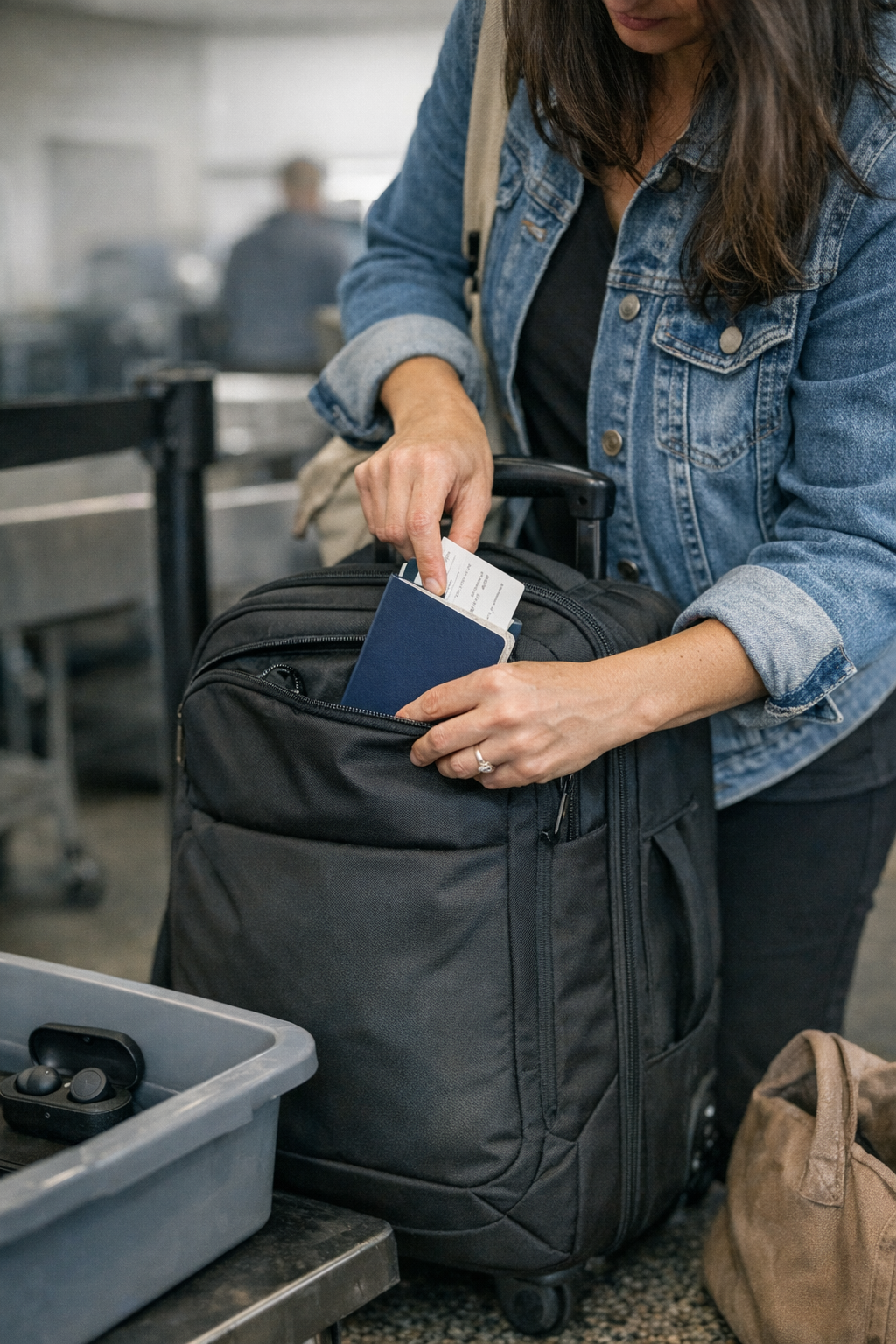
    After too many trips repeating the “layered pouch” dance, switching to a carry-on with one consistently reachable outer pocket changed my entire travel sequence. Now, boarding passes, passports, and earbuds stay in a single, hipside zip—always retrievable with the bag upright, never demanding a full compartment repack. Access is instant, using one hand, and never disturbs the rest of the bag’s order.

    Does this pocket look as sleek as the pre-trip flat lay shot? No. But the trade-off is a carry-on that finally matches the speed of airport movement. Suddenly, reaching for essentials isn’t a disruption—it’s routine. Every document check, boarding pass flash, or last-minute repack happens without losing your place in line or compromising everything else inside. In airports, that seamless quick-access zone proves more valuable than the illusion of perfect organization.

    The Quiet Wins of Quick Access:

    • Retrieving documents without opening the main bag (or disturbing its layout)
    • Grabbing earbuds or comfort items mid-line, never disrupting the bag’s stack
    • Sitting down in a narrow airplane seat fully prepared, already holding everything you’ll need for the first hour
    • Reducing that subtle embarrassment of holding up impatient travelers behind you at key checkpoints

    Accepting Visible Imperfection for Smoother Travel

    It’s tempting to pack for a perfect photo: every pouch in line, every zipper closed, nothing left out. But repeated travel almost always breaks that visual order. If you sacrifice quick-access to keep your bag looking pristine, you invite needless friction at every gate, checkpoint, and seat entry. The real test is how the setup works after three, five, ten retrievals on a single trip—across miles and terminals, not just a flat surface.

    The lesson lands quickly: order counts only when it survives real movement. A sharp-looking bag won’t matter if grabbing your passport, phone, or headphones pulls you out of the flow every time. Over repeated segments, functional access always saves more stress—and the best setups are the ones you barely have to think about, even after hours on the move.

    Packing for Movement, Not Just for Show

    Real carry-on utility depends on whether your bag supports you in the small, repeated travel moments: airport security, spontaneous gate changes, tight aisle shuffles, or the mid-flight hunt for a charger. A packing system that demands frequent full unzips or repacking will let you down far more quickly than one that trades a little visual neatness for reliable, one-move retrieval of your essentials.

    Across dozens of flights, small changes—putting high-use items in consistent exterior pockets or switching to a carry-on with a dedicated quick-access area—delivered more relief than any stacking scheme. The best carry-on isn’t the prettiest on pause. It’s the one you trust to move with you, not against you, checkpoint after checkpoint.

    Shop CarryOnSupply for practical travel solutions that work in real movement.