Category: Travel & Drive

  • Small Fixes That Prevent Daily Car Setup Frustrations and Stress

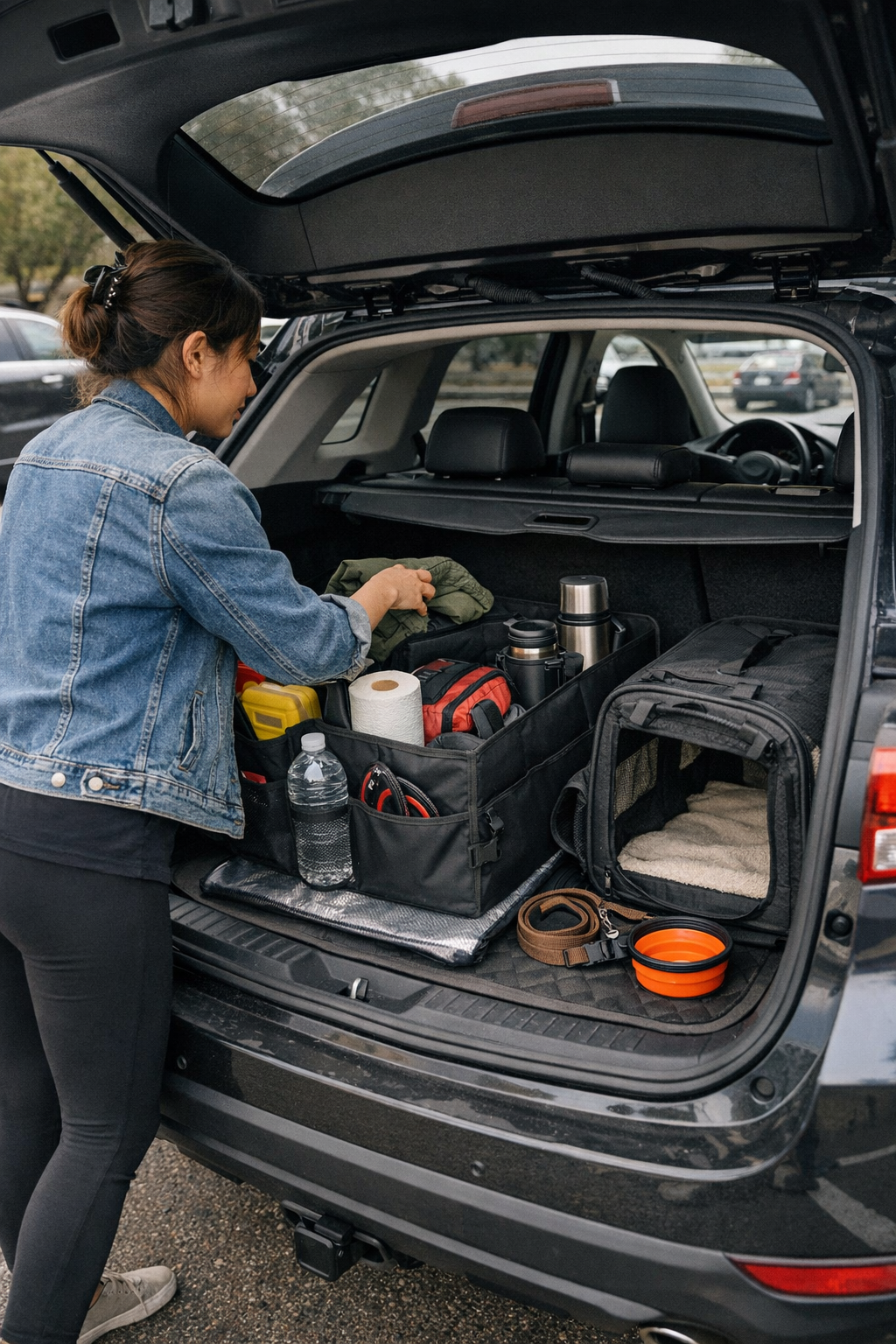
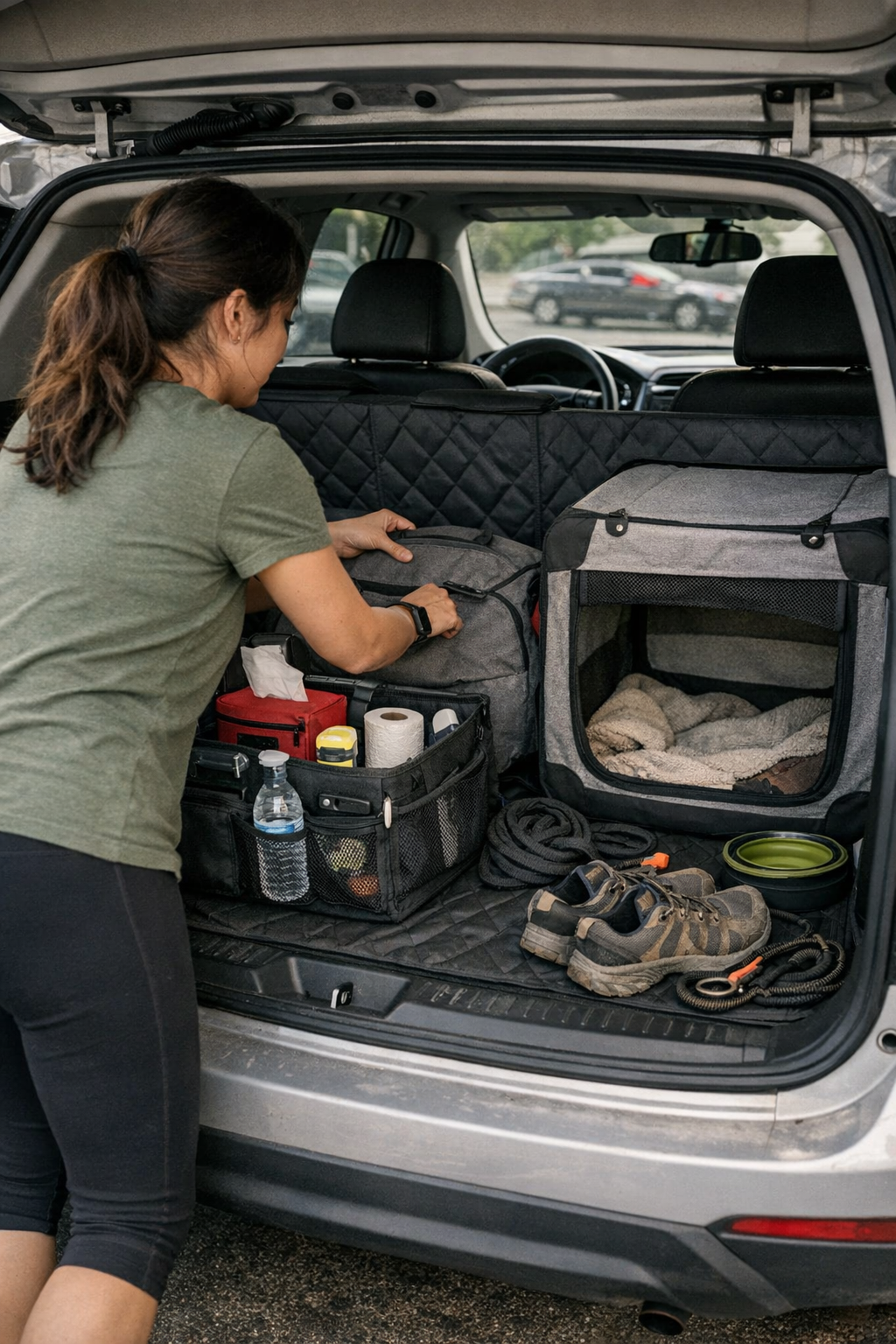
    Every neat car setup has a weak spot. You feel it the moment you drop back into the driver’s seat: the phone cable is never where you expect, the seat cover slides just enough to need another tug, or the trunk organizer forces an awkward reach for the thing you use most. What started as “finally organized” quickly becomes “why am I hunting for this again?”—a pattern that repeats with every errand or after-work drive. The more organized things look, the more friction you notice as routines break down: cables slide out of reach, items drift just beyond a quick grab, and small adjustments eat into your drive-before-you-drive. These aren’t one-time annoyances—they’re the reason a car that appears settled is still a daily hassle.

    The Hidden Cost of a Setup That Only Looks Organized

    Even the tidiest car setups show their real shape under daily routines. A cable that sits perfectly during setup finds its way to the floor after two days of random stops. A seat protector that looked like it would never move gets pulled, bunched, and nudged out of place just by normal entry and exit. It’s not the occasional messy trip that exposes weak structure—it’s the grind of repeated errands, hurried loading, and the constant in-and-out that highlight function gaps.

    The test isn’t the first impression. It’s the third or fourth time you find yourself bending for a fallen cable, resetting the seat cover before sitting, or digging around a cargo bin that stacks storage at the cost of usable reach. These problems rarely get noticed in a showroom. They show up as stress tax in the pace of everyday life.

    Recognizing Early Friction

    The most telling friction points aren’t dramatic—they’re the subtle ways a weak setup makes you work harder without thinking. Signs you’re overdue for a real-world adjustment include:

    • Cables that consistently drift behind the console or under the seat, forcing you to search or scrape your knuckles during the busiest rush.
    • Seat covers that bunch up or creep away from the seat edge so you end up pulling and realigning more than driving.
    • Organizers that gather clutter in one place but require a full unload to grab one must-have item.
    • Accessories that are meant to reduce mess but add steps, slow loading, or force corrections before every ignition.

    It’s not about getting the car perfect. It’s how much correction shows up as part of your normal motion. The more invisible obstacles you’re clearing for the next drive, the more your setup has turned into background resistance that never fully fades.

    Real Use Makes the Flaws Obvious

    Picture this: groceries in one arm, phone and keys in the other, you kick the door closed, reach for your charging cable—and it’s nowhere. It slipped between the seat and console again. Now you’re twisting, shoving the grocery bag onto the seat, rooting around for that elusive cord while the car idles. Or consider the seat cover: after just a few days of routine use, the back edge is permanently out of line, forcing you to shift and re-anchor it every time you sit. None of these scenes is dramatic, but they happen daily. The fix isn’t in tidier setups—it’s in anchored accessories that stay put during the thousand small movements no “before” photo can capture. You shouldn’t have to restart your setup before every drive.

    Why Looking Good Isn’t Good Enough

    Instagram neatness doesn’t survive real life: out-of-sight cables mean more reaching; single-bin organizers turn into hidden piles; perfect symmetry gets broken by two days of actual movement. For anyone sharing a car, juggling short stops, or ferrying kids, these first-glance solutions give way to slower grabs, missed charges, and time lost untangling the “organized” zone. If you keep having to reposition or dig for essentials, your setup is failing the motion test. The difference isn’t just visual—it’s functional, and you feel it every time you drive.

    Choosing Anchored Accessories for Real Routines

    Small adjustments deliver the biggest changes. A low-profile cable clip transforms the cable hunt into a one-move grab. Seat covers with actual anchor points or grippy undersides won’t shuffle after every use. Multi-access organizers keep routine items a reach away, not a rummage away. The shift is visible within days: cables stay present, seats don’t need constant tugging, and each stop is just in and out—no corrections, no resets. The effect builds: less lost motion, more friction removed, and a routine that falls in step with your actual habits.

    Seeing Through the “One Big Compartment” Trap

    The all-in-one bin or giant seat-side pouch might promise order, but it slows you down when it matters. In use, these solutions pile essentials together, turning every quick grab into a shuffle. Few things are more frustrating than dumping half a cargo bin just to fish out a phone charger or emergency glove. The right organizers separate items by reach—not just category—so daily-use gear never gets buried beneath seldom-used stuff. If your routine involves constant in-and-out, open-sided or multi-entry organizers make every stop faster and future searching unnecessary.

    Seat Covers: Looking Stable Isn’t Always Stable

    The quick-fix “universal” seat protector never advertises what really happens after a week: slipping inch by inch, bunching under legs, and demanding constant readjustment. Any cover without real anchor straps or a seat-gripping texture becomes another maintenance task disguised as protection. If you’re pausing to fix a cover more often than you’re cleaning spills, the accessory built to help is quietly doubling your work. The right cover is the one you stop noticing—because it stays put, drive after drive.

    Connecting Form with Real Function

    The best car interior doesn’t just survive a photo; it survives you coming and going, loading and unloading, plugging and unplugging, a dozen times over. Each time you’re forced to realign, untangle, or dig, it’s a signal your setup is more for show than for driving. Accessories should remove, not add, steps from your routine. Good design disappears into the background—delivering function first, order second.

    If you’re still reaching, searching, or correcting after every drive, it’s your setup—not your habits—that’s slowing you down. Swapping just one loose accessory for an anchored, purpose-built piece can reset your whole routine. The answer isn’t a new car. It’s an interior that finally keeps up with your real schedule—and doesn’t make you pay with motion and patience every single trip.

    See practical, anchor-first car solutions at DriveWellSupply.
  • Streamlining Pet Travel Walks with Practical Bag Organization Tips

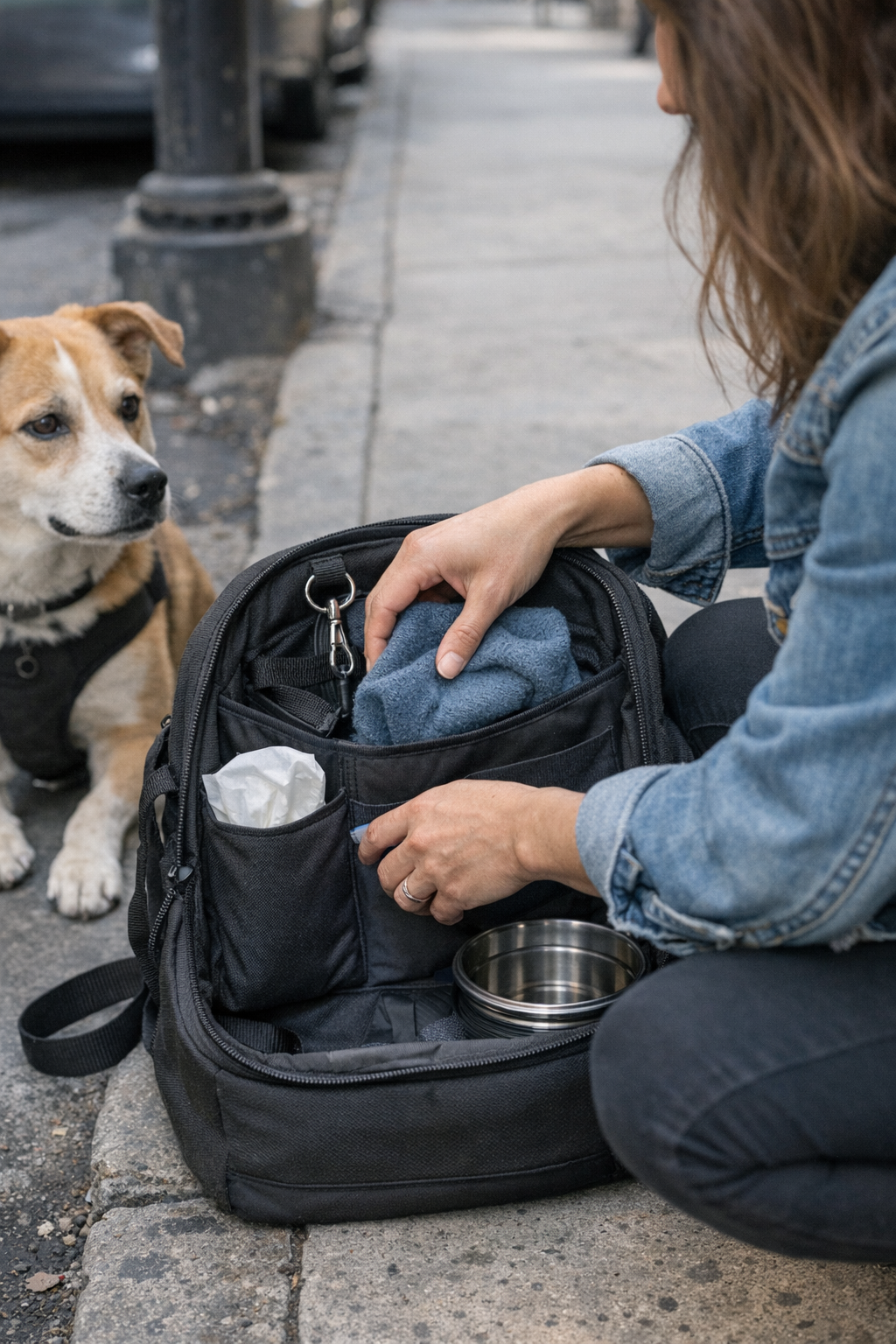
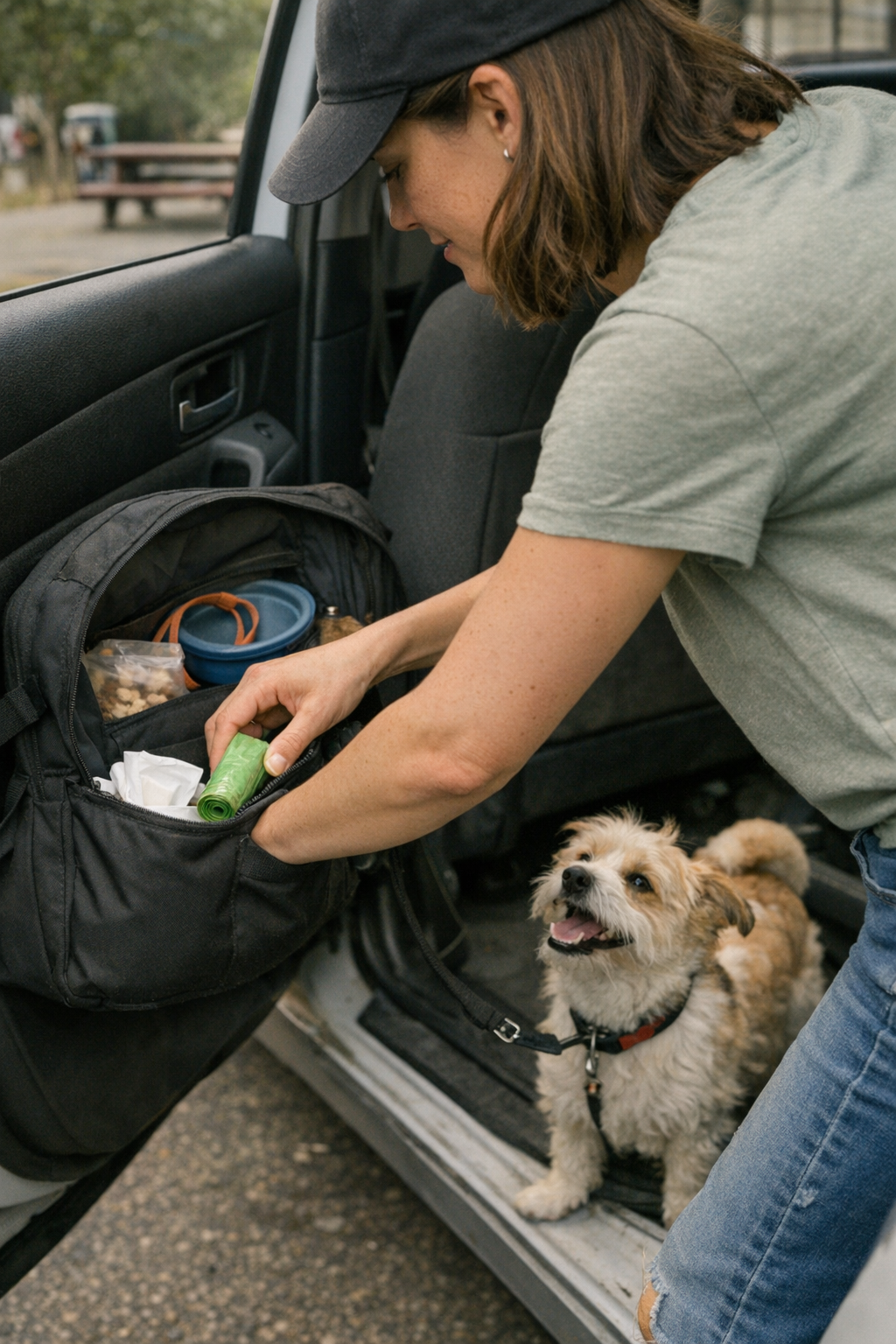
    Most pet travel routines don’t fall apart because you forgot a key item—they break down because small, repeated slowdowns keep stacking up every time you move. That “ready-to-go” bag by your door feels solid at home, but any normal outing exposes its limits fast. You reach for a wipe and come up empty, dig through twice-zipped pockets, or fumble with overlapping leashes and waste bags just to handle a routine pit stop. By trip three, every pause to search or double-check becomes its own cost—less a one-off mistake and more a recurring interruption that drags at each restart. The difference between set up and actually workable? It’s not neatness. It’s friction—or the lack of it—and the PawGoTravel world starts where most setups start to slow down.

    Where Smart Packing Breaks Down in Real Travel

    The at-home confidence is deceptive: everything stored, everything zipped, bag at hand. Fast-forward to a real travel hour. You’ve got your leash, your pet is already pulling, and your bag is loaded—yet retrieving a single item means two-handed juggling while your dog circles the parking brake. Those well-considered inner pockets? They quickly become barriers at the exact moment you need one thing fast. Even for short errands or pit stops, the supposed “organization” forces repeated stop-and-shuffle, breaking rhythm just to keep up with a pet that never waits for your perfect setup. By the end of a round of errands or a drive broken by multiple breaks, the neat bag that looked ready is now just in the way—slowing cleanups, tangling gear, testing patience every restart.

    The Hidden Cost of Slow Access

    Organization that hides away essentials creates friction you only feel once you’re on the move. Reaching for a cleanup bag that’s slipped behind a pouch, or finding wipes crammed out of reach, doesn’t just delay you—it messes with the whole stop. Now your leash is twisted, your dog is wriggling, the wipes take that crucial extra effort, and what looked “ordered” at home demands finger acrobatics on a crowded curb. Pet-side movement forces you to feel every step: the more you sealed things up, the more you have to open and close, reshuffle and dig. Under pressure—whether it’s a sudden muddy paw or a rush to get back in the car—the order flips against you, slowing every movement that counts.

    Real-World Example: The Two-Bag Test

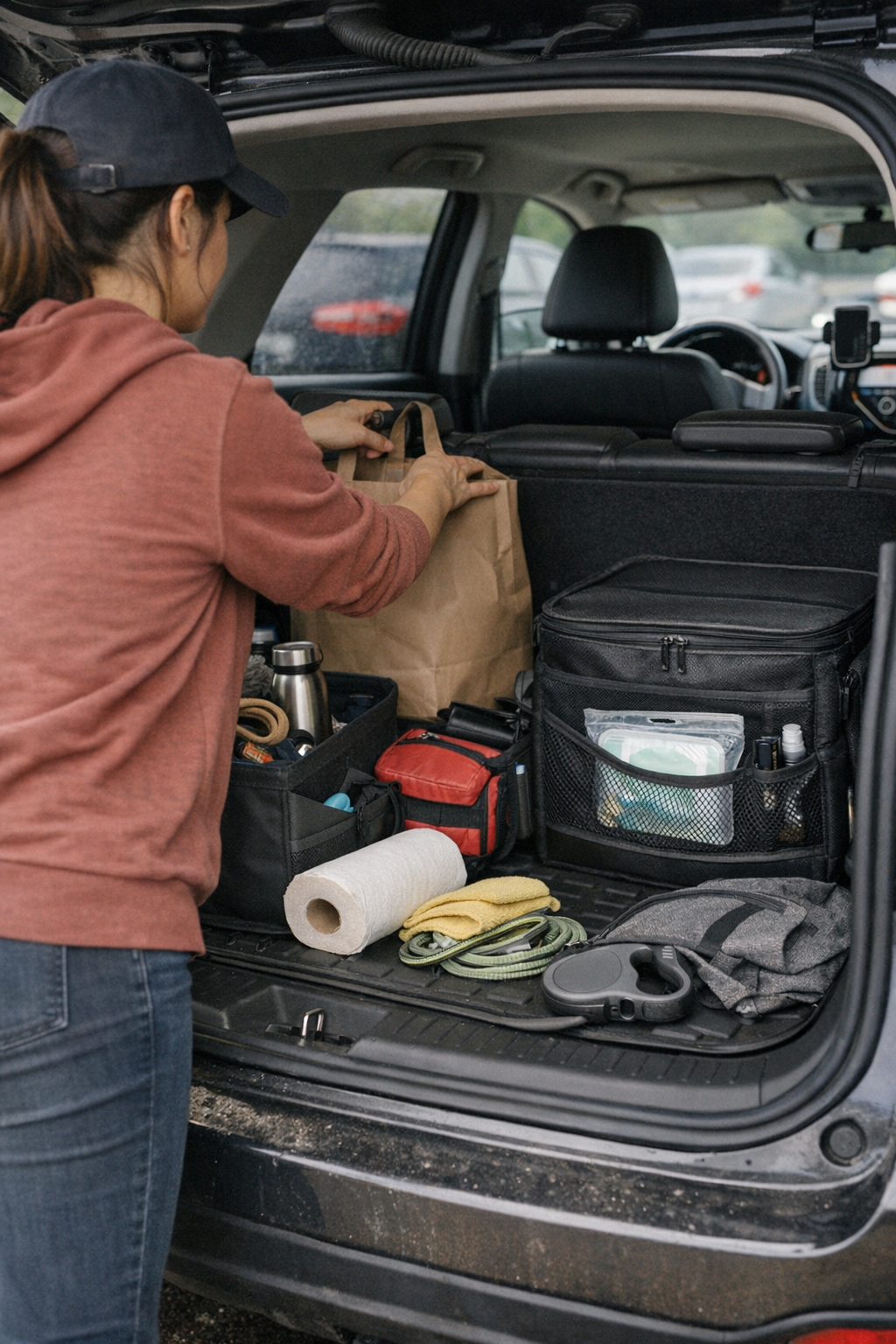
    Lay two setups in your trunk: one, all items in their calculated compartments, zipped and sorted; the other, just core items in a single open side pocket. The first looks ideal as you load up. But once you’re juggling leash and carrier at a busy stop, you notice: two hands to open, inside lining snagged, dog pulling while you hunt for one buried bag. Each small slow-down is invisible at home—painfully obvious in stop-and-go routines. With the looser setup, you reach for waste bags or wipes in one motion, before your pet can make things harder. By round two, the payoff is clear. The edge isn’t visual—it’s practical, under pressure and repeat handling.

    The Trap of Visual Order

    Packed appearance isn’t functional readiness—pet travel tests how easily you can actually access what you need, right when you need it, over and over. If every walk, rest stop, or bathroom break triggers the same hunt for a treat pouch or the right cleanup item, that’s not readiness—it’s an interruption loop. Bags that bury most-used gear inside neat sections guarantee repeat frustration. Unzipping, rooting, closing again—it’s a routine that turns micro-delays into mounting stress, draining your flow and patience as you retrace the same slow pattern each outing. Eventually, the bag itself feels like one more thing you have to fight, not a tool helping you move.

    Single-Pocket Reach: A Simple, Lasting Fix

    The best way to cut repeat friction isn’t by adding more pockets or gadgets. It’s as direct as putting high-use cleanup supplies and quick-grab items into a single exterior pocket, always on the same accessible side—angled toward where you exit the car or step off a curb. That side-pocket needs zero explanation: at each stop, your hand lands right on the wipes or waste bags, and you’re already handling your pet before they ratchet up the chaos. There’s less “order” inside, but it stays easy to reset. Even if a backup leash tangles with a toy at the bottom, your main essentials stay one move away. The interruption is gone where it matters: the restart, the moment your setup usually stumbles.

    Why Owners Resist This Change

    It’s tempting to pack for maximal order, thinking more mini-pouches equals less mess. But real travel exposes this: too many compartments create more steps, not less friction. The pet-travel setups with the fewest mid-stop interruptions almost always have a single quick-access spot for daily-use gear, even if the inside isn’t catalog-pure. A “used” layout that puts wipes, waste bags, and leash clips into a side pocket is simpler to handle at every restart, every bathroom rush, every muddy-paw recovery. Once you live through a few awkward stops, giving up a little internal tidiness for real-world speed isn’t just logical—it’s obvious.

    The Real Measure: Less Drag, More Flow

    A few trips in, the wins are concrete: fewer resets, faster cleanup, no more opening the wrong pocket under pressure. The right pet travel setup is the one that stops slowing you down by the third stop, not the one that photographs well before your first walk. Repeated use without repeated rearrangement is the real cost-saver—less time rearranging, more time moving, fewer chances to fumble with leash, keys, and cleanup gear all at once.

    This isn’t a theory any traveler can ignore. If you’ve scrambled for a wipe while your dog is muddy and your patience thin, the value of instant side-pocket reach is obvious. The whole trip feels lighter not because your kit is pretty, but because every needed reset is faster, simpler, and happens with almost zero thought. You start reading your bag by muscle memory—hand on pocket, wipe out, problem solved—and each transition is smoother, every ordinary stop less of an energy drain.

    Building a Pet Travel Setup You’ll Actually Use

    The best pet travel setup isn’t about first-use neatness—it wins at the seventh stop, when you’re not fumbling, not irritated, and not slowed by your own gear. Travel routines that keep key items instantly accessible turn every pause and restart from a mess into an easy reflex. The right setup handles interruption before it starts: quick grab, no digging, no extra drama. Pet travel stops being a series of fights against design decisions and just becomes movement again—ready when you reach, reliable with every routine use.

    Find practical pet travel gear designed for repeated, real-world use at PawGoTravel.

  • Streamline Your Carry-On for Faster, Stress-Free Boarding Every Time

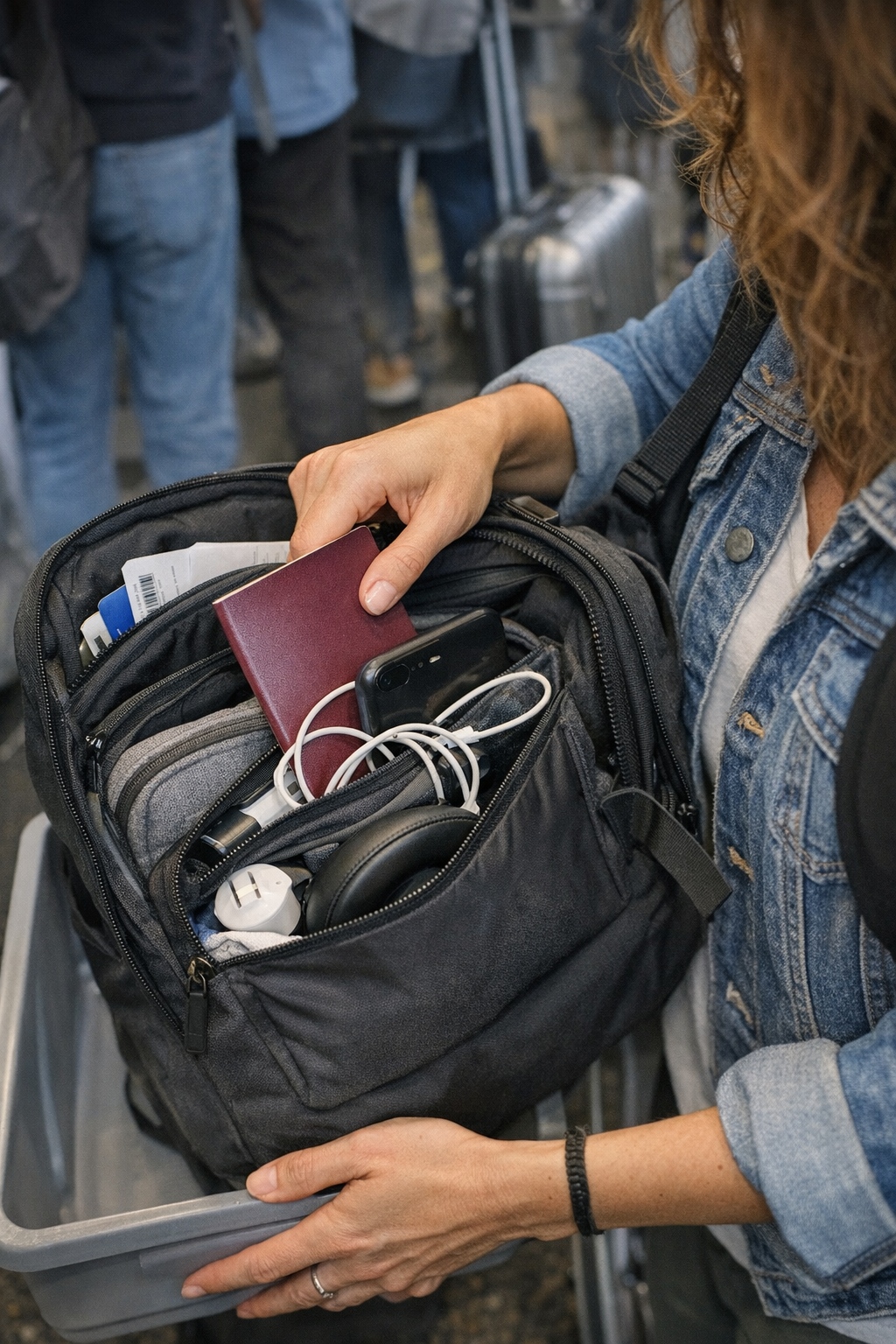
    The true bottleneck of boarding rarely announces itself until it matters: your carry-on looks perfectly organized, but nothing is where you need it when the line starts to move. At home, every slot, pouch, and zipper creates the illusion of control. But once you step into the stuttering shuffle of an airport queue—bag on your shoulder, speaker blaring, people pressing forward—the cracks in your “system” show up as delays, shifting weight, blocked access, and small moments of friction that multiply with every step.

    Packed to Impress—But Stalled at the Gate

    The first real test of any carry-on isn’t how neat it looks fully packed. It’s how fast you can grab your essentials under pressure. Even one zippered layer too deep—passport hiding under a pouch, phone wedged behind a charger—means you have to pause, fish around, and break your flow. The boarding line compresses, elbows nudge, and what felt organized turns slippery when one quick reach becomes a mini-fumble. This is not a rare disaster; it’s the ordinary speed bump that repeats every time you fly, turning a smooth line into a stuttered advance.

    This isn’t about losing items, but about how even a brief scramble for ID or ticket breaks your movement. Every unnecessary step—stopping, adjusting how your bag hangs, pulling it closer just to see inside—compounds the sense that your setup is slowing you down at exactly the wrong moments.

    Nesting and Overlapping: When Organized Means Slower

    The neatest-seeming layouts can turn on you mid-trip, because stacked “order” quickly becomes stacked barriers. At home, pouches nested into pockets and chargers wrapped tight inside toiletry bags look visually satisfying. At the airport, when your boarding pass is wedged beneath your headphones or your ID rests at the very bottom, each layer is one more obstacle on the way to what you actually need. Every document check or security bin highlights how slow this becomes in practice: unzipping, digging, repacking—none of which feel important until you’re in line, forced to repeat them with a dozen impatient travelers around you.

    Overlapping zones—chargers pressed against passports, snacks overlapping wallet space—are the main culprit. You think you’ve packed cleanly, but now each retrieval starts a mini search-and-rescue, sometimes pulling out cords or letting a lip balm tumble onto the floor. The so-called “order” creates friction: boarding, searching at security, even reaching into the main compartment once you’re in your seat all reveal how fast those layers break down in use.

    Real Boarding: Where Carry-On Layouts Succeed or Fail

    There’s no hiding from the reality of the boarding line: you might be carrying a sleek spinner or an ergonomic backpack, but if crucial items require digging through overlapping pockets, you’ll stall. Picture this in motion—one arm full, carry-on angled in the aisle, fighting a stuck zipper while the line closes in. Visual neatness loses against functional access instantly. Does finding your boarding pass require shifting your weight, unshouldering your bag, or dragging the whole thing onto your knee for balance? If so, that “organized” look is undermining every step you take.

    Outer pockets easily become a trap: they appear handy but mix too many one-off necessities. Stuff your boarding pass, a wallet, loose headphones, and lipstick in the same spot, and now the cable snags, the pass is blocked, and you’re left pulling out fragments or dropping something in the aisle. The illusion of fast access turns into a bottleneck where essential seconds are lost and the crowd keeps moving.

    Practical Example: Rushing at the Jet Bridge

    Imagine you’re up next for boarding, thumb still on your phone, scrambling to free up a hand for your ticket. You stuff the phone into an outer pouch and swing your bag around for a one-handed score—but when you reach in for your ticket, the charger cord comes with it, tangling your fingers. You can’t blame nerves; this is what happens when a setup doesn’t force clear separation for the high-frequency, in-transit items. The inconvenience repeats, not because you forgot, but because the pocket is doing too many jobs at once.

    Why Dedicated Outer Access Matters

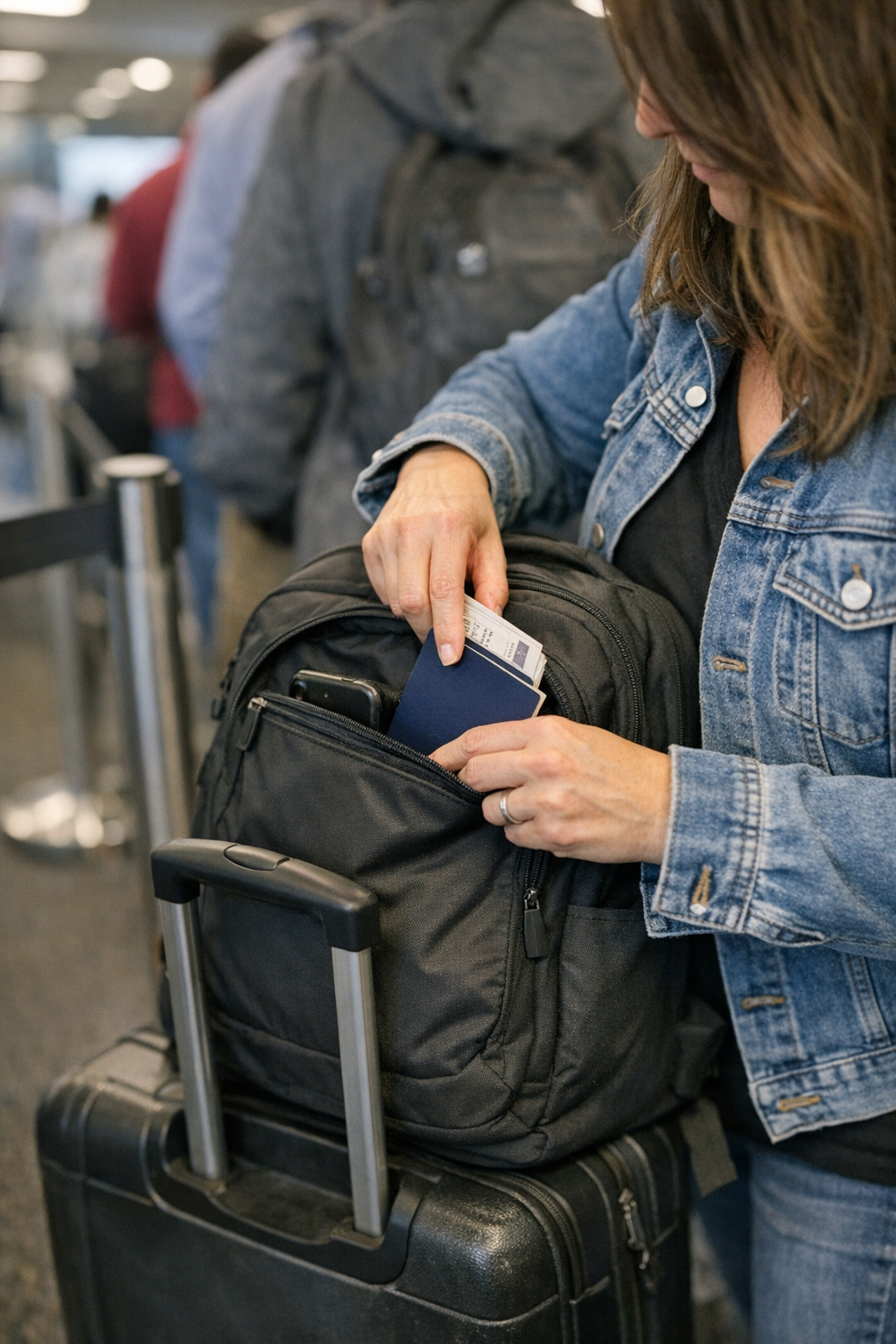
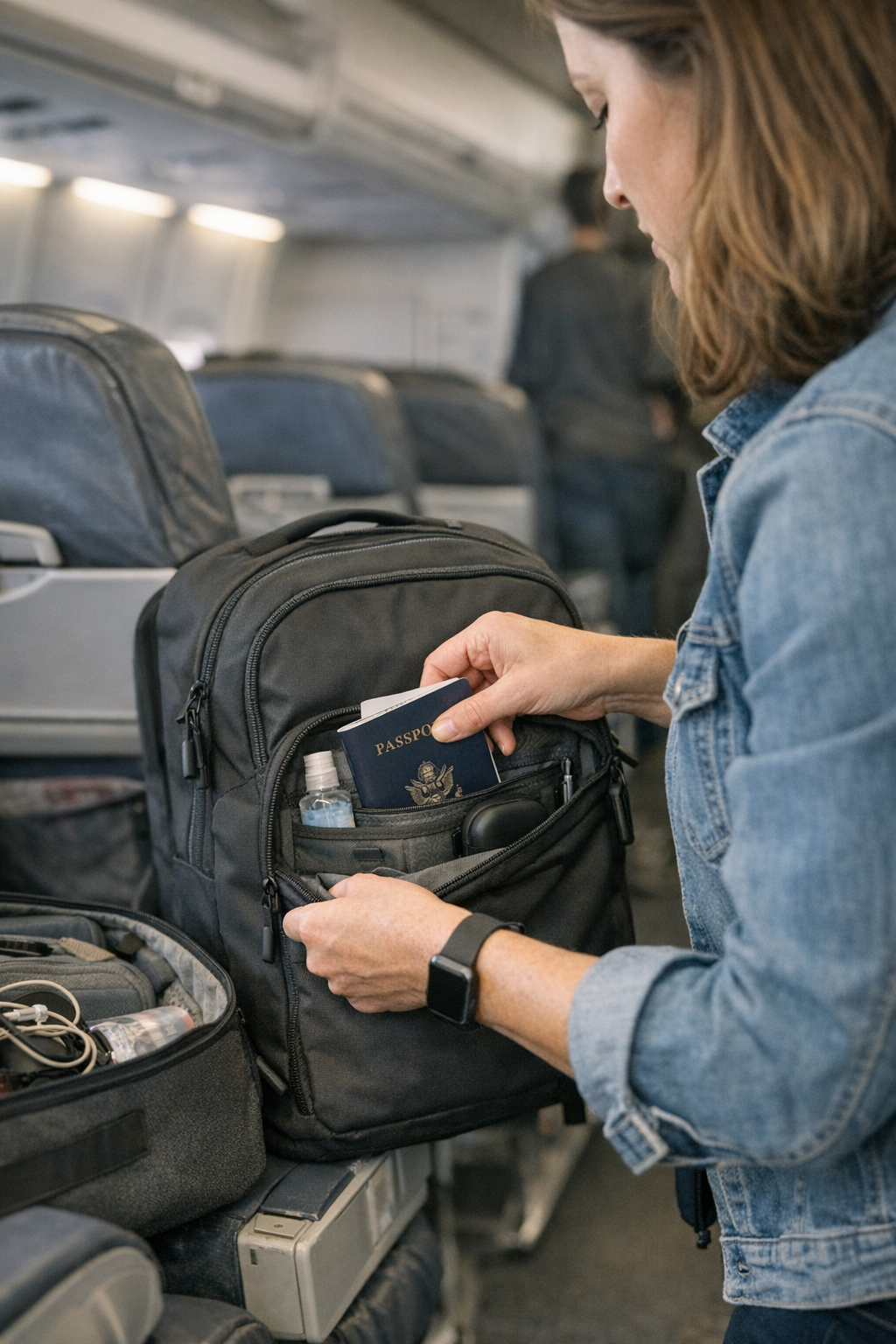
    The easiest fix for in-transit slowdowns isn’t adding more pockets. It’s subtracting confusion by assigning a single, truly dedicated outer pocket for only your key travel items. Limit it to the essentials—passport, boarding pass, ID, maybe headphones. When nothing else shares that real estate, retrieval turns from guesswork to habit: it takes one reach, not two. There is no pause to verify, no risk of fishing up a snack instead of your wallet. The motion becomes automatic, and the zip-path feels as familiar as your own jacket pocket.

    This single change isn’t about “convenience” in a vague way—it spares you from the repeated awkwardness at security trays, the mid-aisle stretch that slows seat entry, and the last-minute repack when an accidental spill dumps your essentials in public view. There’s no more accidental clutter at your feet, no document jam that leaves you standing with your bag half-open as others shuffle past.

    Repeated Access: When Good Structure Pays Off

    Try flying a full travel day—two boardings, a tight connection, and security checks—using a split-front zipper pocket for all high-frequency items. You’ll notice: the loop of double-checking, of hand-digging and “where did it go” disappears. It’s not a one-trick fix; by the time you get to your hotel, grabbing a document or headphones still takes a single move. That temporary pre-trip order holds up in the chaos—no need to mentally reset or reorganize just to keep pace.

    Design for Movement, Not Just Looks

    The most persistent failure is confusing tidy with fast. Compact packing isn’t enough—if the essentials aren’t immediately reachable, each leg of your trip exposes where things slow down:

    • Document checks become a reflex, not a pause to scan every pocket.
    • Seat entry loses its awkward shuffle—no swinging your bag around to find what’s buried deep.
    • Security trays stop being frantic dump-and-scramble moments.

    The “quick fix” of just adding another organizer rarely works. Every saved movement matters. Order that shrinks your speed isn’t order—it’s just a prettier form of interruption. The right structural change lets your carry-on help you move, rather than making every retrieval a hidden obstacle course.

    Redesign One Zone, Reduce Repeat Headaches

    The most manageable shift: dedicate one quick-access outer pocket exclusively to the core items that matter during the first and last fifteen minutes on the plane. Don’t let chargers, snacks, or toiletries steal space here. Reducing overlap is not about minimalism for its own sake—it’s the only way to cut the string of micro-interruptions that come from digging through unrelated accessories when time is tight. Nothing else should share space with your passport or boarding pass if it can wait until you’re seated.

    Most carry-on routines break down not from lack of space or lack of gadgets, but from too many access points stacked on top of each other. If you need two hands, an empty seat, or a mini-inventory in your head just to pull a ticket, the structure is working against the reality of travel movement. Add less, rethink more—one simple pocket shift beats another layer of pouches every time.

    The Difference Over a Real Trip

    Back-to-back flights, tight connections, or airport routines built on repeated boarding checks put every choice under pressure. When your travel setup separates high-frequency items into a truly dedicated, low-overlap zone, your bag stops tripping you up and starts matching your speed. The awkward mid-aisle repack becomes rare, and the repeated, low-level stress of reorganizing fades out. Your focus returns to the trip, not the tug-of-war with your own luggage. The shift is visible only during actual motion—but that’s exactly when it counts most.

    Discover practical carry-on upgrades at CarryOnSupply.

  • Why Clean Car Handles Transform Your Interior’s Overall Freshness

    No matter how well you organize your car, dirty or sticky handles break the illusion of control instantly. You can have spotless seats and lined-up organizers, but the moment your hand hits a tacky door pull or a gritty gear shift, that clean-up effort feels less real. That one neglected touchpoint—right where you grab every single time—undoes your sense of order far faster than a bit of carpet lint or a glovebox that’s slightly off-kilter. It’s not just visual; it’s a repeated interruption that reminds you there’s a weak spot in the way your car actually gets used, not just how it looks.

    Unavoidable Touchpoints: The Hidden Weak Spot in Car Cleanliness

    Handles aren’t optional. Every trip—groceries in the rain, dashing to work, hauling in sports bags—begins with your hand on a door latch, a grab handle, or the seat adjuster. Grime collects in slow motion: a sticky patch after coffee, rain-muddied grit from a damp jacket, crumbs from drive-thru snacks, finger oils during winter’s dry weeks. Even if you just cleaned, unpleasant feedback from a sticky or grainy handle overrides all the order you built elsewhere. Unlike a cluttered cupholder you can ignore, an uncleaned handle calls you out every time you re-enter or get out.

    Why Handle Hygiene Feels Bigger Than It Looks

    Handles are the “weakest link.” You can vacuum out debris and sort cables all you want—none of it matters if that single point of contact registers as neglected. Every time you reach for a handle, your hand does a quick check for film or residue, especially after a streak of heavy use: multiple errands, food runs, or a muddy playground detour. All it takes is one neglected handle to snap your focus away from how organized the rest of the car appears.

    Pressure points appear on the busiest days: rushing to open the trunk with arms full of bags, or grabbing the gear lever while juggling phone, keys, or chargers. If the first thing you touch leaves a film, even the neatest storage setup feels like a false start. That moment lingers—a low-grade annoyance you notice again and again with every trip.

    Everyday Cleanup That Never Feels Done

    Handle neglect creates a constant, low-level drag. Swiping with a tissue or quick sanitizer hit can look clean on the surface, but textured plastic, chrome seams, and grip ridges hold onto dirt you don’t see—until you feel it. Over days, those layers cause friction every time you exit or adjust your seat. Instead of a smooth pull, you find resistance—a tug, a sticky edge, or that faint unpleasant residue. In family cars, the effect multiplies: different hands introduce new dirt, and what’s minor for one driver becomes a frustration for everyone sharing the vehicle.

    Stopping Micro-Interruptions Before They Start

    It’s not the big messes that wear you down—it’s the daily, tiny interruptions that never resolve. Picture unloading groceries in a rush, only to get sidetracked yet again by a greasy spot you can’t immediately fix. No wipes in reach, no time, just another reminder your car routine falls short right where it matters. That’s where “looks organized” unravels into “still awkward to use.”

    The irritation grows because you end up patching the problem with whatever’s nearby: napkins from the console, your sleeve, even a packaged wet wipe borrowed from a snack bag. These ad-hoc workarounds break your flow, undercutting even the best phone mount or cargo system. Until the touchpoint is fixed, that sense of in-control driving never feels complete.

    Making Clean Handles a Routine, Not a Chore

    The real shift comes from changing your setup—not just waiting until you finally get around to a full clean. Keeping flat packs of automotive wipes right in your door pocket or console changes the entire experience. Fuel up? Swipe the handle. Just loaded groceries? Quick wipe. Muddy dog paws or spilled coffee? The fix is at hand—without extra effort, stopping you from building up grime between big cleans. Cleanup shrinks to a three-second motion, folding seamlessly into loading, driving, and unloading. Handles, glovebox pulls, trunk latches—each gets the same treatment, and even peripheral high-touch spots start staying cleaner with no conscious effort.

    This minor routine tweak pays off by reducing the mental and physical drag you never realize is sapping your flow—making the car genuinely easier to be in, not just look at, on every short drive or return trip.

    The Right Cleaning Tools for the Job

    Regular cleaners leave behind their own headaches—streaks, sticky residue, or a slick feel that just attracts more dirt. Low-residue wipes and sprays formulated for car plastics and metal break down oils and gunk quickly without damaging finishes. For most, a once-weekly wipe keeps things in check, but messy errands, commuting with kids, or hauling pets calls for fast touch-ups that only work if supplies are close at hand. Keep the right wipes in the center bin or door pocket, and cleanup becomes a predictable, low-friction move—not another task to put off.

    Small Setup Changes, Noticeable Daily Improvement

    Car maintenance doesn’t need to be an all-day event—big results come from fixing the repeated weak spots. Consistently clean handles shift the rhythm of your driving: your routines get faster, and the moments of friction disappear.

    When wipes or sprays stay within reach, there’s no excuse for tolerating build-up or letting micro-annoyances interrupt your use. Those little moments debating whether to clean or let it slide? Gone. Instead, cleanup folds right into your driving flow—supporting an always-ready car, even after back-to-back errands or a week of family drives. It’s less about scrubbing and more about smoothing out what slows you down. The difference isn’t dramatic right away, but you notice it in how often you stop being distracted by what’s not working. See practical car-use solutions for every trip, every return, and every repeated reach at DriveWellSupply.

  • Streamline Pet Travel with a Single Home Base for Essentials

    Most pet owners hit the road feeling organized—leash packed, wipes ready, each item in its own spot. But after just a few stops, that “prepared” setup falls apart where it matters most: The bowl now buried by a shifting jacket, wipes out of reach when you need them, leash clipped somewhere you can’t find from the front seat. On paper, every pocket has a purpose, but in fast, repeated movement—rest stops, quick leash-outs, messy snack breaks—a travel bag’s structure either makes life easier or quickly becomes another thing to wrestle with.

    When “Organized” Isn’t Useable

    Initial neatness is deceptive. Those split pockets feel smart until the third stop, when you’re caught nudging aside treats to find waste bags, or a leash disappears behind the seat after your dog’s impatient tug. The problem isn’t disorder; it’s the friction of splitting essential items when the real world wants you to move, grab, reset, and go—without a scavenger hunt at every pause. What looks like control at home collapses into awkward resets in the car’s cramped reach or at a busy rest area.

    Each Tiny Delay Costs Real Time

    Small hang-ups—unclipping the wrong zipper, juggling through the wrong section—feel minor at the start but start stacking up. By the second or third round, one missed grab leads to another: treats spill, wipes slide under a coat, your dog grows restless in the back, the seat area starts to sprawl. The trip’s rhythm breaks every time you dig for one simple item and find three others tangled first.

    The “Divided” Bag Trap

    More compartments promise more control, but when you have pet items here, your phone there, and keys in a “human” section, the split makes quick access harder, not easier. A leash hiding next to your wallet or wipes wedged behind snacks forces you into an endless reshuffle. It’s not that things are lost—it’s that the effort to restore order pulls you out of the driving, handling, or just enjoying the trip. Compartmentalization solves nothing if you’re always patching overlap with half-trained muscle memory.

    The Cost of Routine Stops

    Picture this: First outing feels fine—everything in its place. But by the second quick stop, you’re digging for wipes behind a jacket, reaching past a spilled treat box, fishing a leash out from the wrong pocket. Friction builds—not because you’re disorganized, but because the bag’s logic unravels after each move, each stop, each rush to restart. The difference between organized and truly accessible only shows up when you need speed and control, not perfect packing.

    Unified Essentials: The Actual Solution

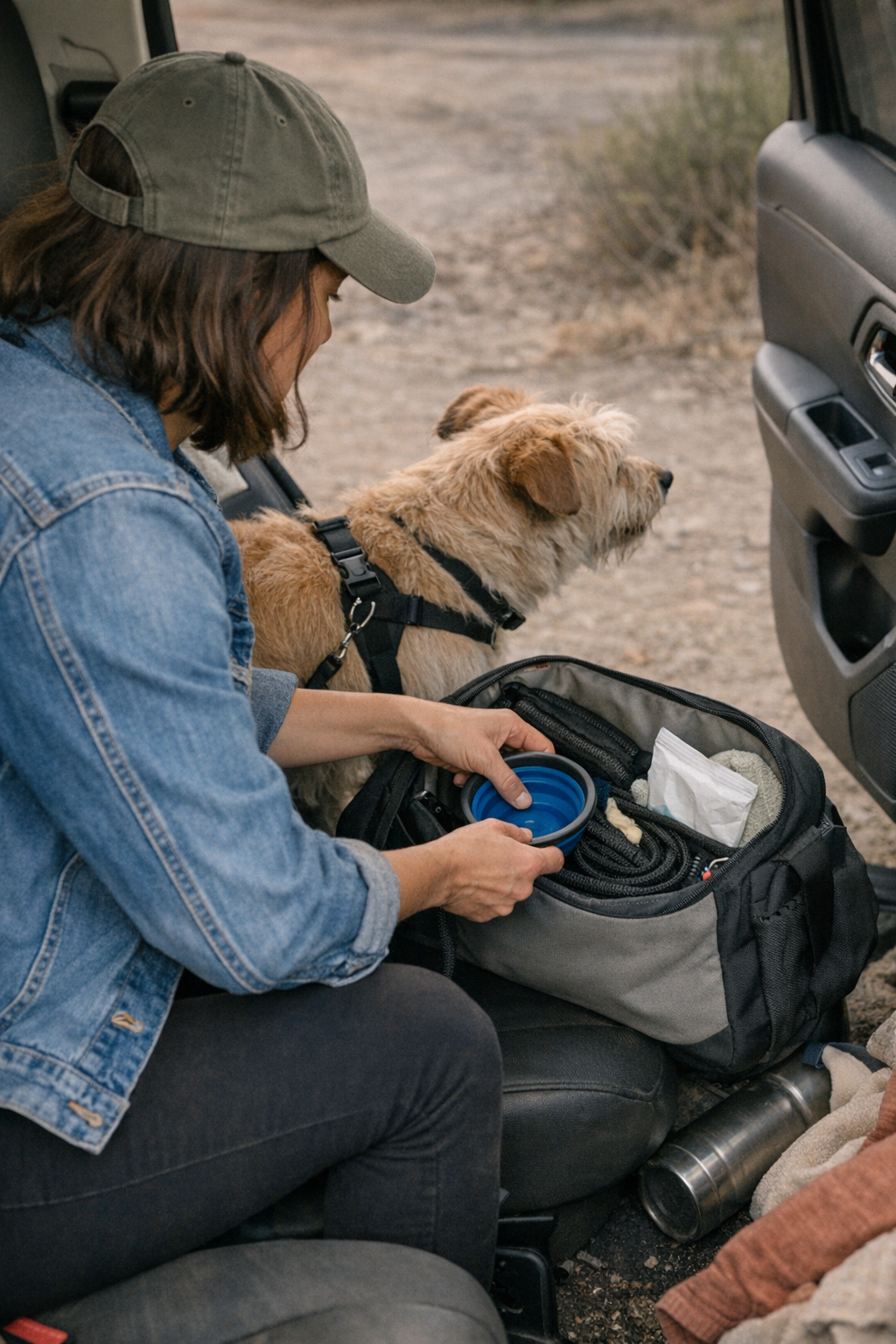
    Real travel clarity comes from one predictable “home base”—an intentionally placed seat-side pocket that puts high-frequency items (leash, bowl, wipes, calming toy) within reach, regardless of travel chaos. This isn’t about “sorted” bags—it’s about making the fastest grab the easiest one, even when the route’s gotten messy. Seat-side placement matters: whatever your hand naturally falls toward becomes the true control center. The rest is just storage.

    Designing for Clean Resets

    A strong home-base pocket makes resetting after a stop nearly automatic. Instead of re-sorting, you just drop core items back into the same spot—no hunting, no delay, no new mess. Stops become a two-step: grab, return, move. No forgotten wipes rolled under seats; no leash vanishing behind a changing pile. Unpredictable routes stop stealing focus or patience because your setup works with your routine, not against it.

    Scattered Gear: More Than a Minor Headache

    When essentials are split—leash here, wipes somewhere else, bowls at the bottom—each mini-search eats energy, and small awkwardnesses become routine. Grab for the leash, send a snack bag rolling. Dig for wipes, pull out a treat container instead. Your dog’s anxiety ramps up as you fumble with sections designed for showroom neatness, not real use. After a handful of stops, momentum tanks and your mood shifts from “ready” to “why is this taking so long?”

    Pockets That Work Against You

    Extra pockets often introduce new failure points. Wipes tucked under a jacket? Forget it if the jacket slides. Calming toy lost beneath waste bags? Now you’re digging as your pet whines. Too much structure fragments your access: your muscle memory misfires, waste bags hide, comfort items lose their purpose by being out of reach. The bag’s promise of “organized” falls apart against the reality of repeated, rushed movement.

    Real Moments When Structure Decides Everything

    Consider three flashes from any pet trip:

    • At a gas station, you reach for the leash but grab the snack pouch first—everything shifts and a waste bag jumps out of reach.
    • Post-snack cleanup: wipes are buried in the main compartment, so you’re twisting with your other hand on your dog, moving slower with every step.
    • After a quick walk, you want to get back on the road, but a toy blocks the waste bags, forcing another shuffle before the dog can even climb in.

    None of these are disasters. But each time, the seconds and movements wasted add up—a structure built for display doesn’t hold up to the pace and randomness of actual travel.

    Choosing Structure That Handles Real Travel

    When routines matter, having one core, seat-side access pocket for both pet and owner’s high-use essentials (leash, bowl, wipes) beats splitting them into isolated, easy-to-forget zones. Letting “organized” mean split-up just means more seams for reality to break through. A setup that survives jolts, quick stops, and jumpy paw movements keeps your trip moving without collapse, no matter how many unplanned pauses or spilled snacks happen. The real world rewards reliability and quick reset, not simply good looks.

    The travel setups that work aren’t flawless. They just shrug off mishaps, let you recover fast, and don’t ask for attention every three steps. The real test isn’t how tidy your bag looks when leaving—it’s whether you can reach, reset, and move without breaking stride after multiple stops. If your setup keeps your hands freer and your temper calmer, you’re already ahead—however messy the trip gets.

    Find practical, seat-side-ready carriers and pet-travel essentials for real-world movement at PawGoTravel.

  • How a Simple Carry-On Habit Can Transform Your Boarding Experience

    Your carry-on only looks organized until the airport exposes its weak points. That outer pocket you packed so carefully turns into a black hole when you’re three document checks deep and suddenly unzipping, digging, or reshuffling in the boarding line. Even if your bag “looked sorted” back on your hotel bed, most setups miss one thing: under pressure—at security, boarding, or gate changes—the real friction isn’t clutter; it’s awkward access, pointless pausing, or having to hunt for what should be at your fingertips.

    The Unseen Slowdown: When “Organized” Isn’t Practical

    Carry-on frustration doesn’t always come from visible mess. It starts subtly: a passport slid under one too many pouches, or a travel wallet trapped under a carefully stacked gear grid. That feeling of order crumbles the moment you need something now—like hitting check-in with your phone in one hand, a flattened boarding pass hiding below your headphones, and sanitizer tucked three pockets back. Every extra zip, rummage, or shuffling to find just one item—especially with travelers closing in behind you—breaks your movement. The bag didn’t fall apart, but your airport flow did.

    The risk sneaks in quietly: a slim outer pocket packed just a layer too deep, an “everything-essentials” pouch morphing into an interchangeable catch-all. You aren’t failing, but after each gate, checkpoint, and aisle squeeze, the time loss becomes obvious. Missed beats pile up: a small delay at security, a pause finding your docs at boarding, or that moment mid-aisle when you expose half your bag to get to just one thing.

    Real Carry-On Moments: Where the Friction Builds

    Document Retrieval During Boarding

    In the boarding queue, the flaw shows up the moment you attempt a quick reach—phone and ticket in one hand, carry-on nudged along with your foot. Now essentials are layered: a cable pouch covering the travel wallet, sanitizer wedged between, and the only way to your passport is to lift, tilt, and sort through pouches. The “organized” setup is suddenly blocking quick retrieval, and every second spent unpacking triggers the impatient shuffle of the line behind you.

    The Security Tray Scenario

    Security is the most unforgiving test. As soon as you unzip for your laptop, you realize documents are elsewhere—maybe pressed into a secondary pocket or lost between an organizer and a mesh pouch. Cords tumble out as you reach. Edges catch on zippers packed too tight. Every move multiplies: device here, ID there, something else tumbling, and the tray fills with loose items. The scramble signals the setup was never tuned for real-world flow.

    Pocket Overlap in the Aisle

    Down the airplane aisle, tight space turns minor setup flaws into full stalls. One overlapping pouch blocks the zipper path so badly, grabbing headphones with one hand means propping the bag in the crook of your knee and peeling open half your outer pocket. Your seatmates wait as you untangle. The better your bag looked at boarding, the more glaring it feels when simple retrieval turns into a balancing act just to reach what you need before sitting down.

    After Arrival: The Repack Reset

    Organization rarely survives the trip. Once you’re back on your feet and prepping to deplane, every rushed grab leaves gear scattered: passports shunted behind chargers, sanitizer sliding loose, pouches out of order. Repacking doesn’t really restore flow—it just hides the drift until the next checkpoint, and the same chaos returns with the next fast retrieval.

    What Actually Works: Structure That Holds Up Under Pressure

    More organizers don’t solve this problem—more often, they add layers rather than fewer. Only after repeating the same awkward reach for essentials on flight after flight does the fix start to surface: commit one outer pocket to real in-transit essentials only—not “might needs,” just the items you repeatedly reach for between curb and seat.

    Test narrowing your grab zone to passport, boarding document, sanitizer, and a single comfort item—no stacked cases, no pouches to shuffle. What sounds like a small change turns out critical under pressure: at security or the jet bridge, a single reach replaces the instant where your bag blocks you and everyone behind you. The “clean” look at the hotel means nothing if it doesn’t survive repeated use; the best setup is the one that always offers one-move access while in motion.

    Smart Separation: Reduce the Overlap, Cut Down the Delay

    Letting your tech, documents, and comfort items blend in the same space guarantees redundancy and slow retrieval. It’s not about grouping by category; it’s about how—under pressure—you actually reach for each thing. If your hands never need passport and charging cable at once, splitting them pays off every time you move.

    Reserving one exterior pocket for pure transit essentials—then making a habit of resetting it after each use—restores speed without more layers. Every checkpoint becomes a single, predictable motion, not multi-step recovery. Cutting overlap turns your bag from a mobile storage locker into a tool: ready to access, re-close, and move, not just get packed “neatly.”

    On the Road: Living With the New Setup (And Where It Still Bends)

    No method resists entropy forever. By your third airport in a week, even the best exterior pocket shows signs of drift. But with fewer layers, bouncing back is easy; essentials shift but stay visible, and instead of constant re-ordering, you just reset the pocket post-move. Not perfection—just friction drop.

    The real signal your structure works isn’t the photo on packing day—it’s flashing your boarding pass instantly at a gate after a seat swap, or one smooth unzip for your passport at check-in, even after a rush. You’ll still get caught once in a while (wrong pocket, surprise transfer), but the time lost is less, and the need for a total unpack vanishes. Travel order isn’t cosmetic; it’s how well your setup survives repeat interruption and recovers when routine gets broken.

    Small Improvements, Repeated Gains

    The biggest difference isn’t what your bag can hold—it’s how that setup stands up during repeat airport demands. Cutting layers and overlap delivers smoother movement, faster resets, and less friction flight after flight. The best setups don’t win on looks—they keep you moving even when habits slip or travel days get long.

    Match your packing to your actual in-transit behavior: fewer pockets to fuss with, one path to repeated essentials, and the hidden delays fade into the background. The smartest fix is often subtracting a pouch, not squeezing in another. If your current carry-on fails to keep up when you double back for one last item or juggle a last-minute gate change, it’s time to rethink the structure, not the surface.

    For real-world-tested carry-on setups, organizers, and accessories that cut daily friction, visit CarryOnSupply.

  • Why Touch-Focused Cleaning Transforms Your Car’s Interior Comfort

    You can keep your car vacuumed, free of cups and trash, and still dread grabbing the wheel. If you routinely climb in, go to shift into drive, and your fingers catch on a tacky gear selector or your phone leaves your screen streaked after every dock, you’re right in the zone most drivers forget. The visible mess is gone—yet the contact spots you use every day pick up silent grime that no quick tidy will touch. Every return—from groceries to work to school pickup—means hand-to-car and car-to-phone transfer, the kind of residue that doesn’t show but signals itself instantly in sticky, slick, or smudged touchpoints. The result? Even a spotless cabin creates a catch, a small moment of discomfort, and makes every short errand, fast commute, or rushed family drive feel subtly “off.”

    When Clean Looks Fine, but Driving Still Feels Wrong

    Consider normal routine: you open the door after errands, check the seats—no wrappers, no dirt—car looks ready. But each time your fingers land on the gear shifter, there’s a smoothness that isn’t quite clean. The steering wheel edge, right where your hand waits in traffic, feels either sticky or filmy despite looking untouched. Every control becomes suspect: knobs, display buttons, the same phone mount you cleaned last week, all building up an invisible layer of skin oil and road dust fast enough to catch you off guard. General cleaning doesn’t touch these zones, and even a lined-up interior still leaves fingertips greasy or makes you pause before sharing rides.

    High-Friction Spots: Where Residue Beats Normal Cleaning

    Most car tidying targets what’s obvious on quick glance: floors, seats, glass, loose items. But it’s the contact points—where routine pressure, sweat, and handling hit hour after hour—that undermine the sense of “done.” The touchscreen’s edge, gear selector seams, steering wheel stitching, phone cradle, and window controls all collect buildup quietly: every “just a second” swipe, every turn in traffic, every cable-drag across a mount. These areas take more abuse than cabin surfaces and rarely look dirty, which is exactly why they get skipped in most cleanups. But one wrong texture—slippery, sticky, gritty—will be the first thing you feel on your next drive, even if you vacuum yesterday.

    • Steering wheel, especially rim edge and behind the spokes
    • Gear selector, including base nooks and shift paddles
    • Infotainment knobs, screen frames, and volume dials
    • Door pulls and window switches (driver and passenger sides)
    • Phone mounts, charging trays, and nearby cable touchpoints

    Vacuum and wipe down as often as you want—these are the spots where “pretty clean” always loses to real use. That odd wheel texture or unexplainable smudge on your favorite button shows up long before dust is visible anywhere else.

    Why the Buildup Gets Ignored (and Why It Matters)

    Drivers skip cleaning high-touch points because they blend in: dirtless, mostly matte, never obviously contaminated. But repeated use is a giveaway—sleeve streak on the console, phone picking up a faint film, or a slow itch to use a sanitizer after every school drop-off. And because this residue returns within days, even immediately after most deep cleans, it’s easy to just live with the drag. But here’s the problem: every overlooked contact zone becomes low-level friction in your normal driving loop. It doesn’t just annoy—over time, it shapes your routine. You start reaching for less-used controls, wiping hands on jeans, or hesitating before lending your phone, because comfort has dropped below the look of the car.

    The Reset That Actually Works in Repeated Use

    This isn’t about a show car or weekend detailing. Resetting tactile comfort means targeting the points you actually touch, not just the view from the door. Once a week—or when you hit a fueling stop or unload groceries—take a microfiber dampener to:

    • The wheel rim (loop over and grip, not scrub)
    • Gear selector and nearby buttons—quick dabs, not heavy pressure
    • Infotainment controls and favorite app buttons
    • Phone dock, charging slot, and corded areas
    • All door handles and window toggles—especially the neglected ones

    The trick is to think placement over polish. If your elbow lands next to a console edge after parking, or one door handle gets the most post-grocery grabs, give these five seconds. The most-used spots build gunk fastest and reset quickest with the right wipe-then-dry motion.

    The Difference in Routine: What Changes (and What Doesn’t)

    You’ll notice the shift the next day: handing a phone over without a grease streak, gripping a clean wheel during a long red light, not bracing for a sticky transfer when the weather heats up. Your shirt sleeve stays cleaner, and you stop subtly avoiding certain dials. But it’s not magic. Miss just one spot—leave the phone tray dirty or the climate knob untouched—and the annoyance returns right at the wrong moment. Most trunk organizers and seat covers help with the big chaos, but neglecting contact zones lets tiny friction creep back into every drive.

    That’s the daily difference: organization means less visual clutter, but comfort comes from touchpoints working as clean as they look. A quick, routine-focused wipe bridges the gap, making your car less of a silent distraction in heavy use—and less likely to leave friends or family catching stray mess after three errands in a row.

    Turning Quick Cleanups into a Working Ritual

    This isn’t a detailer’s job or weekend overhaul. The system works best when built into ordinary routines—keep a microfiber in the side pocket, inside a trunk organizer, or next to bulk wipes in the center bin. Link the habit to fill-up stops, weekday returns, charging cable untangles, or dog unloading, not a scheduled deep clean. A few seconds spent on contact zones keeps sticky mess at bay, softens entry and re-entry, and puts real control back in your driving setup—not just the appearance.

    For more tools and car-use solutions designed to help with real-world routines—not just surface appearances—visit: DriveWellSupply

  • How Structured Pet Travel Bags Prevent Delays on Repeated City Walks

    Every hurried stop with your pet exposes one silent flaw: a bag or carrier that looked organized at home quickly turns into an obstacle course after just a handful of real-world pauses. You think you’re set—leash coiled, wipes packed, comfort items within reach—but as you hit the third or fourth stop, your hand goes in and hits an unexpected wall of shifted gear. Instead of one smooth grab, you’re untangling, reshuffling, or blocking your own path, as every “quick” reach gets slower under actual travel use. That’s when an organized setup proves it’s not really built for repeated movement—and that’s where most pet-travel routines break down.

    When “Ready to Go” Falls Apart at the Next Stop

    No matter how tidy your bag seemed leaving home, repeated stops reset the deck. The leash ends up wedged behind crumpled wipes; the treat pouch migrates under a bowl. Each new pause creates more overlap, shifting items just enough to turn every restart into a search. Even the best-looking travel bags become less usable on the move: what started as “grab and go” now means digging and interrupting your pet every single time you reach for an essential. By the end of the walk, you’re working harder for every basic task—and your dog feels the shift in rhythm.

    The Build-Up of Small Interruptions

    No one dramatic snag—just constant drag. The real cost comes from how these frictions stack up: your pet waiting at your knee as you reach for the leash, only to dislodge wipes or wedge your hand behind a bowl that’s slipped out of place. Soft bags bend; sections blend. Gear disappears into corners or doubles up in the wrong spots, turning a routine stop into a series of unwanted delays. It’s not one lost item—it’s an invisible current pulling every grab out of sync.

    Typical Scene: The Awkward Stop-and-Go Shuffle

    Picture this: halfway through your usual city route, your dog’s on edge, focus slipping. You need the comfort toy now—but it’s buried, caught up with the leash, partly blocked by the bowl that wasn’t in the way this morning. You fumble, the stop stretches, your dog gets more distracted. What should be a steady routine is now broken by a scramble you can’t predict, and with each pause, both you and your pet lose a bit more flow.

    The Invisible Mess: Why Superficial Order Isn’t Enough

    Freshly packed, almost any setup can look under control. Zippers close easily, pockets feel snug, and you’re convinced the arrangement will hold up. But inside a soft-sided bag, lines blur fast: without defined separation, gear glides where it wants—wipes drift over leash handles, small comfort items vanish under heavier gear, and cleanup supplies become a two-handed dig. Once there’s no fixed place, the “muscle memory” you counted on disappears, and even the best plan starts failing after just a few stops.

    Problem Pileups: When Structure Stops Holding

    It’s silent overlap, not mess, that kills rhythm. Everything might look contained, but once you need something fast, tiny shifts create enough resistance to block every “quick” grab. That leash isn’t gone—it just isn’t where you left it. Missed reach turns into routine interruption, and the distraction trickles straight to your pet. Instead of a calm, seamless walk, you’re both stuck in a loop of half-second delays that build up across every city block.

    How a Clear Structure Changes the Travel Loop

    The answer isn’t shaving down your carry list—it’s locking key items into fixed, repeatable slots. Switching to a pet carrier with true structural dividers—dedicated leash rings up top, shallow comfort pockets, single-purpose wipe sleeves—means every essential has an anchored, no-guess spot. Even after stop number six, your hand lands where it needs to: leash, comfort toy, wipes, all in order. Your pet settles faster because you move smoother; you stop spending attention on finding gear and spend it keeping the routine calm.

    Field Insight: The Power of a Defined Spot

    By putting only a leash, one comfort item, and wipes at the absolute top—each inside its own sleeve, ring, or pocket—you avoid the classic travel drag. As soon as overlap creeps in, bag structure breaks down. But with fixed slots, your hand works by feel; reach is instant, not guesswork. By the fifth or sixth stop, most bags have slipped into friction. But with clear separation, every restart feels the same, your attention stays with your pet, and the walk regains rhythm instead of unraveling with each pause.

    Unpacking the Real Difference: Fewer Items, Firmer Zones

    There’s no perfect travel setup—but this solves the pain points that grind routines down day after day. Cutting clutter isn’t the magic; it’s structure doing the quiet work of keeping overlap and search time in check. You’ll still have the odd fumble, but the endless rummaging and repeated mishandling drop away. Pet travel days settle into motion because the bag finally supports the way you actually move, not just the way you thought you’d move at home.

    Recurring Weak Spots: Where Even “Tidy” Setups Slip

    If you’ve ever reached for gear on autopilot and come up short—wrong pouch, blocked access, a divider you didn’t expect—you’ve felt the distance between looking prepared and actually being prepared. That friction isn’t about forgetting; it’s what happens when bag structure can’t keep up with cycles of real use. Even subtle shifting inside makes your routine feel clumsy and makes your pet more unsettled, especially when stops become more frequent.

    What to Watch for When Choosing Your Next Bag or Organizer

    Ignore “clean lines” for their own sake. Look for:

    • Rigid, real dividers instead of just stacked or soft sections
    • Leash rings and attachment points anchored where they’re always reachable
    • Single-use, well-marked pockets for your must-grab items
    • Wipe sleeves fully separated from leash hardware and bowls

    Resist over-packing. Never turn top access into a crowded zone. If you’re already slowing by the third stop, it’s not your routine at fault—it’s a bag that doesn’t hold up under real movement and reset pressure.

    The Small Change That Sticks

    Skip designer tricks and focus on the setup itself: does each essential have a defined home, reachable every time—at the tenth stop as easily as at the first? Structure that matches your movement means you and your pet don’t lose pace when travel routines demand repeat performance. Neat is good—but if your setup doesn’t move with you, it only feels ready for one block, not the full trip.

    Find practical, trip-tested pet travel gear and solutions at PawGoTravel.

  • Why Carry-On Organization Makes Boarding Feel Chaotic Every Time

    The real carry-on trouble doesn’t start when your bag spills open—it starts when your setup collapses the moment you’re moving. On the surface, your carry-on might look streamlined and perfectly packed. But the instant you hit the airport line—boarding pass handoff, tray balancing, passport check, one last phone check—you realize: a bag that seems organized while standing still can turn into a slow-motion mess under pressure. Slow retrieval forces you to dig, pause, and re-adjust just when you need speed and access. This is not about visual neatness; it’s the difference between a smooth trip and a sequence of small breakdowns—each one eating away at your focus and flow, flight after flight. That’s where the structure of your carry-on matters more than you think, and why the world of carry-on tools and layouts at CarryOnSupply exists in the first place.

    The Hidden Snags in “Organized” Carry-Ons

    Most travelers get trapped by bags that look tidy until the moment real travel starts. At home, pouches and pockets seem clever: documents in a slip, tech in a cluster, toiletries separated. In motion—shuffling through a live line or grabbing your ID single-handed as a tray slides by—these supposed shortcuts jam. You reach for your passport and snag a cable, or your front pocket that seemed perfect is suddenly packed too tight with receipts, a pen, and your boarding pass. Pull one item, and another leans out; fumble for headphones, and your phone edges closer to the floor. Every small tangle or micro-delay feels minor until they begin stacking up through the trip, turning what should be routine into a string of small stumbles.

    Cumulative Friction: How Small Delays Add Up

    A few wasted seconds don’t matter in daily life—until you’re in a moving airport queue with travelers behind and hands full. Unzipping an extra pouch for every retrieval, or fishing under layers that overlap, slows everything. It’s easy to blame a one-off mistake, but the same friction returns every trip: the passport you could grab at home now means pushing past chargers, confusing slot order, and stacking two pouches on a tray just to get your ID out. Over time, hesitation and minor fumbles add up: misplaced tickets, dropped earbuds, and that familiar, rising sense that your setup isn’t really built for real movement.

    Every trip, the drag multiplies—not just in wasted seconds, but in avoidable drops, misplaced essentials, and the dull stress of feeling one step behind your own routine.

    When “Compact” Turns Into “Complicated”

    Going slim and layered promises elegance but often delivers hidden hassle when you need speed. Overlapping pouch stacks, deep pockets, and multi-use slots look minimal but force repeat shuffling. Your tech pouch blocking the passport slot? Now you’re swapping pouches or jostling things twice to get the right item. Even if you love how compact your bag looks, the time cost shows up at the worst moments—every extra movement when boarding or clearing security is another chance to miss a beat. The inside friction you don’t see in a product photo is what holds you up in the real boarding line.

    Real-World Boarding: Where Problems Surface

    Boarding exposes the cracks in an “organized” setup. Join any busy line and you’ll notice: someone doing a pocket shuffle, or bent sideways repacking their tray by the gate. Weekday morning, major terminal: my own careful layout—the passport slipped next to a phone—fell apart as I tried to pull ID with one hand. The charger edge snagged my headphone pouch, shifting everything, sending my phone tumbling out just as a tray slid against my leg. Two-second delay, but the ripple: hands full, line tightening, risk of something hitting the floor and breaking comfort for the entire flight. It’s not rare. These small fights for access signal a setup that looks neat but fails the repeated-use test, piling up the odds of an awkward loss or scramble exactly when you don’t have margin.

    Boarding and Seat Entry: Where Order Breaks Down

    Fast-moving boarding and the squeeze towards your seat expose weaknesses no packing video ever shows. Bag in one hand, jacket over an arm, ticket wedged where it should be easy to grab—until a slip pocket collapses or a pouch blocks your reach mid-lift. Tech organizers built for tabletop order snag your hand or stop you just as you pivot by another passenger. What looks practical at rest turns into extra shuffling, blocked movements, or having to reset your entire setup in the middle of the aisle. With each boarding or seat entry, the pressure to access one specific thing—without repacking everything else—grows.

    Why “Looks Good” Isn’t Enough: The Reality of Repeated Use

    A fresh packing job holds up only until reality hits: repack after security, mid-flight grab for a charger, hotel arrival shuffle, or layover rush. You think you fixed the system, but items drift back into the wrong slot, pouches block each other, and that slim control vanishes the moment you need it most. Order fades and friction returns, because most setups aren’t built for fast, repeated movement—they only look organized in static photos. Every repack or quick retrieval that forces you to unzip, dig under, or pull a pouch free is proof that visual neatness does not equal reliable flow. Small layout failures multiply over the chaos of even a single trip.

    Building a Setup for Real Travel Movement

    Smoother boarding isn’t about adding more layers or chasing hyper-minimalism. The real advance is dedicated separation: one clear, single-purpose zone for each must-access item. Avoid clustering tech, documents, and comfort together. Instead, give each a slot or pouch that’s always a single reach away—front-access zipper for passport and ID, flex room for chargers and cables, no pouch stacking where live movement happens. With just a margin of separation built in, you gain seconds and lose confusion, especially at key pinch points: document checks, tray drops, or squeezing past seats. Test your setup as you move, not just at rest. The only standard that counts is how quickly you can reach, reset, and keep moving—every time, not just once.

    Setups that actually work show it in motion: no second-guessing which pocket or fighting past your own organization. They don’t win style points for Instagram—they win every time you avoid a fumble or have one calm hand free when it matters.

    The Subtle but Real Impact of a Better Setup

    Real change appears in transit, not on a packing table. Switching to one slim passport slot, tech corralled in its own case, and each comfort item unblocked by other gear turns access time from slow to automatic. I measured every tray transfer: just a few seconds shaved off is the minor benefit. The major shift is missing—the dropped boarding pass, the tangled charger, the last-minute panic. Nothing ruins a calm airport transition like scrambling for what should have been ready. Over a full trip—multiple boardings, repacks, transfers—the freedom to move without a reset builds real flow and lowers travel stress in ways you only notice after making the switch. That’s the real test: does your setup need less correction, not more, every time you reach for an essential?

    For practical carry-on tools and accessories designed to work under real travel pressure, visit CarryOnSupply.

  • How a Simple Cloth Setup Transforms Your Car Cleanup Routine

    Every return to your car is a test of your interior setup. The car might look nearly spotless from the outside, but one quick glance inside—dust on the console, coffee streaks near the cupholder, a tissue half-stuck to the gearshift—shows how easily surface-level order collapses. It doesn’t take much: a week of errands, a spilled water bottle, a single afternoon with drive-thru receipts stuffed in cupholders. The real hidden variable? How—and where—you store your only reliable cleaning tool. If your must-have wipe or cloth is buried, drifting, or missing, cleanup friction builds. Instead of a car that’s ready, you’re stuck repeating small rescue missions between every drive. This is where setup beats intention, and the DriveWellSupply world gets visible fast: what you grab, where you grab it, and how that shapes the entire routine.

    Why Messes Multiply When Cleanup Isn’t Instantly Reachable

    The cycle starts quietly. Maybe you wedge napkins in the console, trust tissues in the glovebox, or assume you’ll just grab what’s handy. But the first sign of real-life pressure—a phone buzzing, a damp gym bag tossed in, a coffee jolt on a rough turn—sends those “stored” napkins sliding under seats or buried under shopping bags. Find a sticky spot on your shifter or a streak on the screen? Most people hesitate, then decide to deal with it “later”—which never comes before the next trip.

    With each skipped cleanup, messes spread outward. By Friday, dust reaches door handles, wrappers edge onto the floor, and your “organized” car now shows loose items that keep reappearing. What’s really lost is not just cleaning time—it’s the pause every time you search for a cleaning tool, the frustration of discovering it’s missing, and the mental backlog of tiny jobs stacking up with every entry.

    First Glance vs. Real Use: Where Setup Falls Apart

    A car stacked with tissues or napkins in easy sight often feels “prepared.” But after two days, those napkins are crushed, drifted, or torn apart when you need to wipe up anything more than a dry crumb. A backpack thrown in the passenger seat scatters everything further, and the entire stash migrates—sometimes out of reach, sometimes onto the floor, often torn or unusable on the next real mess.

    The pattern is predictable: areas like console edges, seat sides, and door handles pick up grease, prints, and fine debris. You feel the dirt with your fingertips, reach for any tool, find nothing, and let the spot go one more day. Every “looks fine” setup decays under routine: more surfaces go untouched, more buildup collects, and cleanup soon means a full-field cleanup session—just when you’re least likely to have time for it.

    One Motion, One Cloth: How Fixing the Access Point Shrinks Cleanup Time

    The single biggest change comes not from buying more products, but from assigning a single, reusable microfiber cloth a permanent, visible home. Kept in the driver’s door pocket or center console—not loose, not under the seat, not mixed with trash—it is ready on your first reach. Always dry—or slightly damp only if you wiped up a spill—it’s only useful if it’s never on the floor or missing entirely.

    What this unlocks: a one-motion cleanup flow. As you drop into the seat or exit after a snack run, your hand lands directly on the cloth. Drips from a cupholder, sweat marks along the door, screen smudges after a GPS check—each gets removed before it becomes “that” spot you ignore for the next week. The difference isn’t just visible; it’s structural. The routine speeds up. You find yourself touching up five messes in twenty seconds—or none at all, because buildup never starts.

    Real Scene: After Errands, Before It Spreads

    Picture this: You return with hands full—keys, takeout bag, phone—and notice a new slick patch on the console. If you rely on tissues, they’re usually shredded, lost in the door, or dissolved in last week’s rain. If your microfiber cloth lives exactly where your hand reaches, cleanup is single-motion. The mess disappears on the spot. You never face last week’s grime, and you don’t carry new streaks to the next drive.

    The Weak Points Most Setups Miss

    Loose disposable napkins, old tissues, and floating paper towels always migrate, fall apart, or disappear under pressure. Each missing-tool pause—crouching to reach under the seat, fishing behind the center stack, scanning every pocket—breaks the cleanup rhythm, and most small messes have already dried by the time you’ve found anything that works.

    Even “organized” systems—like a neat starter kit of folded towels or wipes—usually drift from their first perfect spot. By the third drive, items shift, wrappers are mixed in, and tools vanish into corners you never meant to clean. The original setup looked promising, but each unplanned distraction proves it wasn’t as stable as it seemed. Fast correction turns into slow double-backs, and the interior feels demanding, not effortless.

    How One Assigned Cloth Changes the Routine

    What actually shifts is repeatability: A permanent cloth spot—whether the left edge of the driver’s door or the console’s front pocket—breaks the cycle of lost tools. You reach in the same spot every time, use the cloth without searching, and never create new frustration while fixing the old one.

    Over a series of typical routines—school drop-offs, lunch runs, late errands—the cloth gets used automatically. Smudges never settle, stains never set, and wrappers don’t build up because there’s never a pause to wonder where the tool went. Every drive feels just a touch smoother, with cleaning so woven into the motion that you stop dreading return trips. The interior stays ready for use, not waiting on another round of “I’ll fix that later.”

    Small Changes, Big Usability Gains

    This isn’t just surface cleaning. Assigning one tool to one reachable location strips out glitchy, interruptive friction. Your drive flow improves. The car feels less fussy, maintenance drops to seconds, and “it looks organized” finally matches “it actually works.”

    Where Should That Cloth Actually Go?

    The prime location: driver’s door pocket or center console, right where your hand travels as you enter or settle. If you need to lean, twist, or fish, the tool will get skipped and the cycle restarts. For shared cars or frequent passengers, double up: one main cloth, one backup within their reach, both with a fixed home. Clarity matters more than quantity—if a cloth loses its place, it’s as good as gone the next time you need it. Item drift beats the best intentions every time.

    What Happens Over Time: The Real Test of Setup

    Most setups shine on day one, but drive cycles expose weaknesses. After five commutes, a soccer weekend, or a single coffee spill, a permanent, visible cloth doesn’t just keep working—it keeps you from needing to stop and fix mistakes at all. Instead of stacking small jobs for “someday,” you stay ahead of interior friction and stop thinking about cleanup as a chore at all.

    The clearest proof isn’t just a neater car—it’s when you stop noticing problems stacking up, and start reaching for your seat or phone without rerouting around stray tissues, wrappers, or traces of old mess. The setup proves itself by getting out of your way.

    Find practical cleanup kits and car-use organizers at DriveWellSupply.