Category: Travel & Drive

  • How Purposeful Carry-On Organization Keeps Travel Moving Smoothly

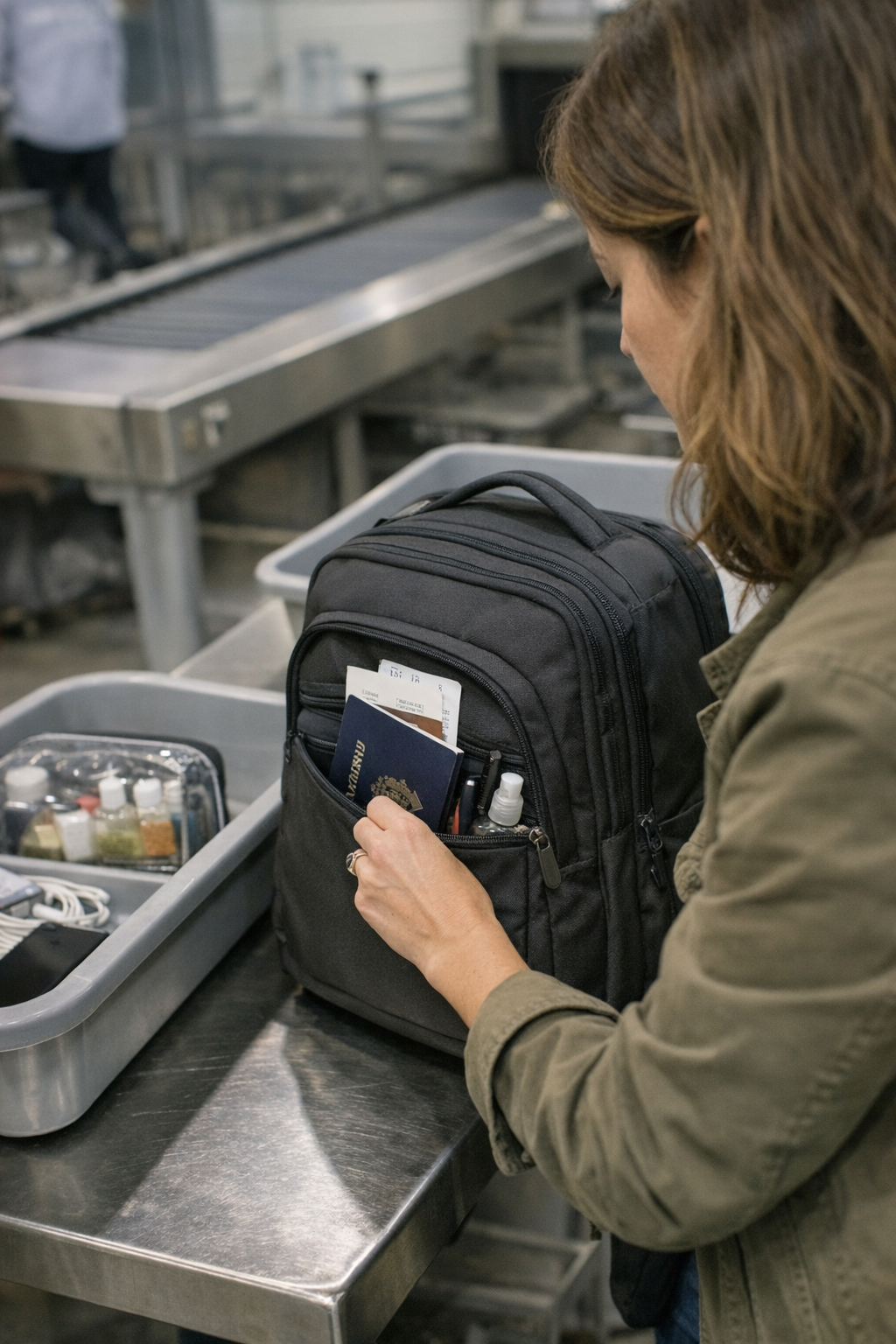
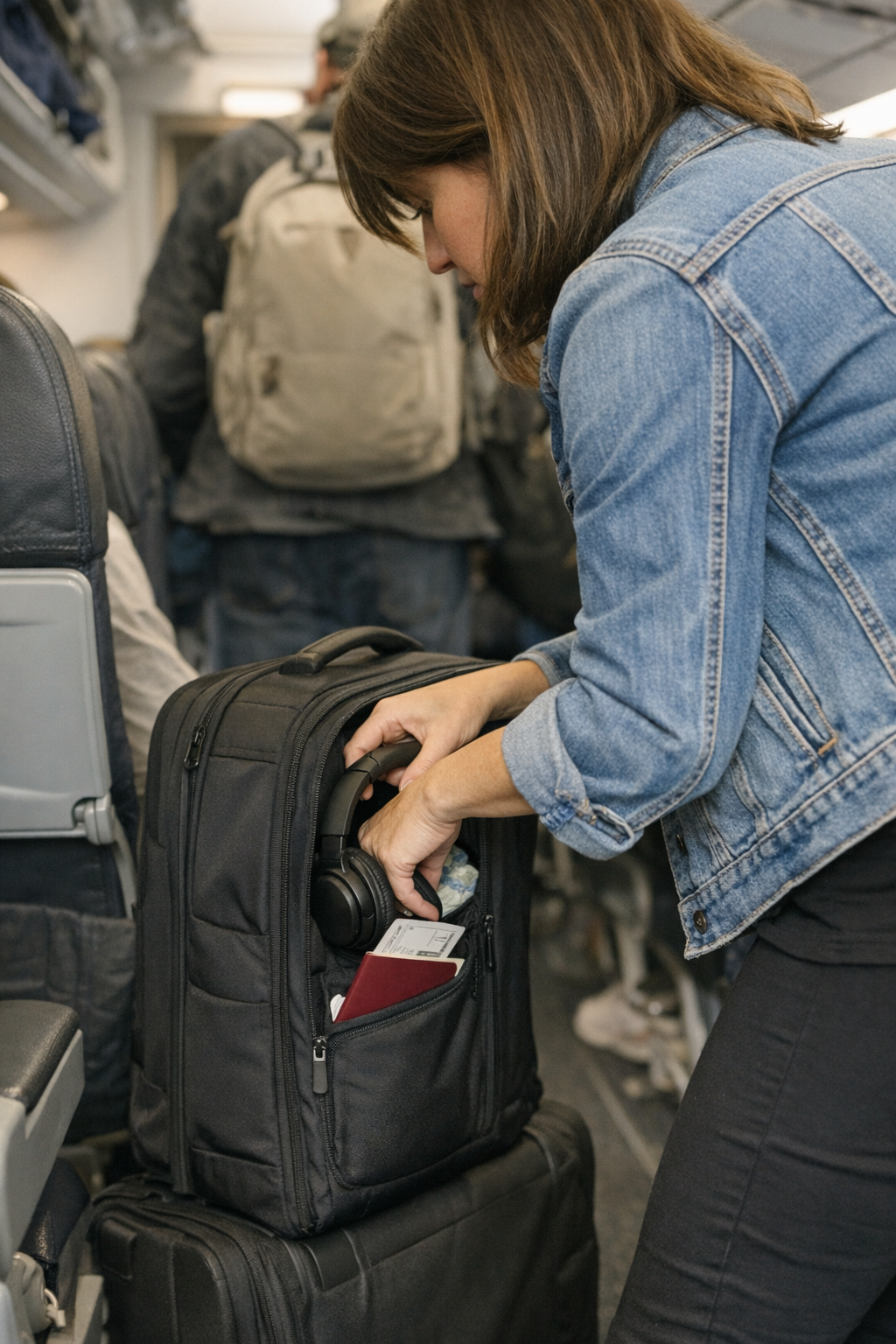
    The weakest point in any carry-on setup isn’t mess—it’s the sudden interruption when you actually need something fast. The line lurches forward at airport security or a boarding gate, and the “organized” structure you praised at home turns sluggish: a document stuck behind a cable, a charger blocking your passport, headphones wedged too deep, a pouch that adds steps instead of reducing them. The drag isn’t visual clutter. It’s the real-world lag between reaching and retrieving—small, repeated, and costly when every second counts and lines don’t pause for you.

    The Illusion of Organization: When Tidy Packing Turns Against You

    At home, any system feels impressive. Pouches stack up in neat rows, cables are tied, and documents have their assigned spot. But at the checkpoint—elbows pressed, shoes in one hand, ID in the other—this planned order is tested and often fails. What looked like a “time-saving” setup turns into an awkward re-sorting scramble. A boarding pass hides behind adapters, a charging cable stops you from sliding your passport free, tech essentials blend into non-essentials. You end up rifling through organizers you meant to streamline, turning every retrieval into a two-step delay instead of a quick grab.

    This isn’t a cosmetic annoyance. It’s an ongoing slowdown, one that repeats at every checkpoint, every boarding call, every gate transfer. You misjudge which pouch holds which cable, open the wrong pocket for your pen, dig past snacks to find earphones, and quickly lose trust in your original packing logic. Travel flow stalls with every overlapping zone.

    Security, Boarding, and In-Transit: Where Structure Fails First

    Travel exposes friction early and relentlessly. At security, trays move out of reach before you finish sorting. A bag that looked “locked in” at home lets documents slip into unreachable zones, tech organizers tangle at the wrong moment, and visual tidiness means nothing when the scanner line is live. Order deteriorates not in catastrophe, but as a string of small retrievals—each leaving the layout less certain for the next use.

    Picture the ordinary breakdown: You dig for your boarding pass, realize the pouch doubled as a tech kit, and fumble as the line builds. The item comes free, but the neat grid you set up is scattered and in need of repacking—while space, time, and patience are running out just to move another step forward.

    Looking Packed Well vs. Moving Without Delay

    The sharpest contrast comes when a system that “looked” perfect—tightly packed, every slot filled—delivers friction instead of freedom when the conditions shift. Five color-coded pouches mean nothing if you still hesitate each time you need a passport. Tech sleeves built for desktop order resist quick access in a crowded aisle. Something as basic as a stuck zipper (because layers cross over the teeth) turns into a real delay. A “main essentials” pouch that requires a full unzip to reach a single pen loses you momentum.

    Routine frictions hit faster than you expect: Having to remove the bag halfway from an overhead bin just to get one necessary item. Unzipping three compartments to find a snack. Confirming and reconfirming which pouch hides your charging cable—each instance saps your sense of control and increases repacking time mid-journey.

    When One Zone Does Too Much: The Hidden Tangle

    The “everything together” convenience of a multipurpose pouch sinks under repeated use. Inside, cables and papers coil around each other, headphones knot with pens, and what felt efficient at home turns maze-like on the move. Each time you unzip, the structure degrades—more overlapping, more hunting and rearranging. By the time you reach your destination, the single “organization hub” holds chaos, not order, making every needed item harder and slower to grab.

    The Case for Single-Purpose Zones

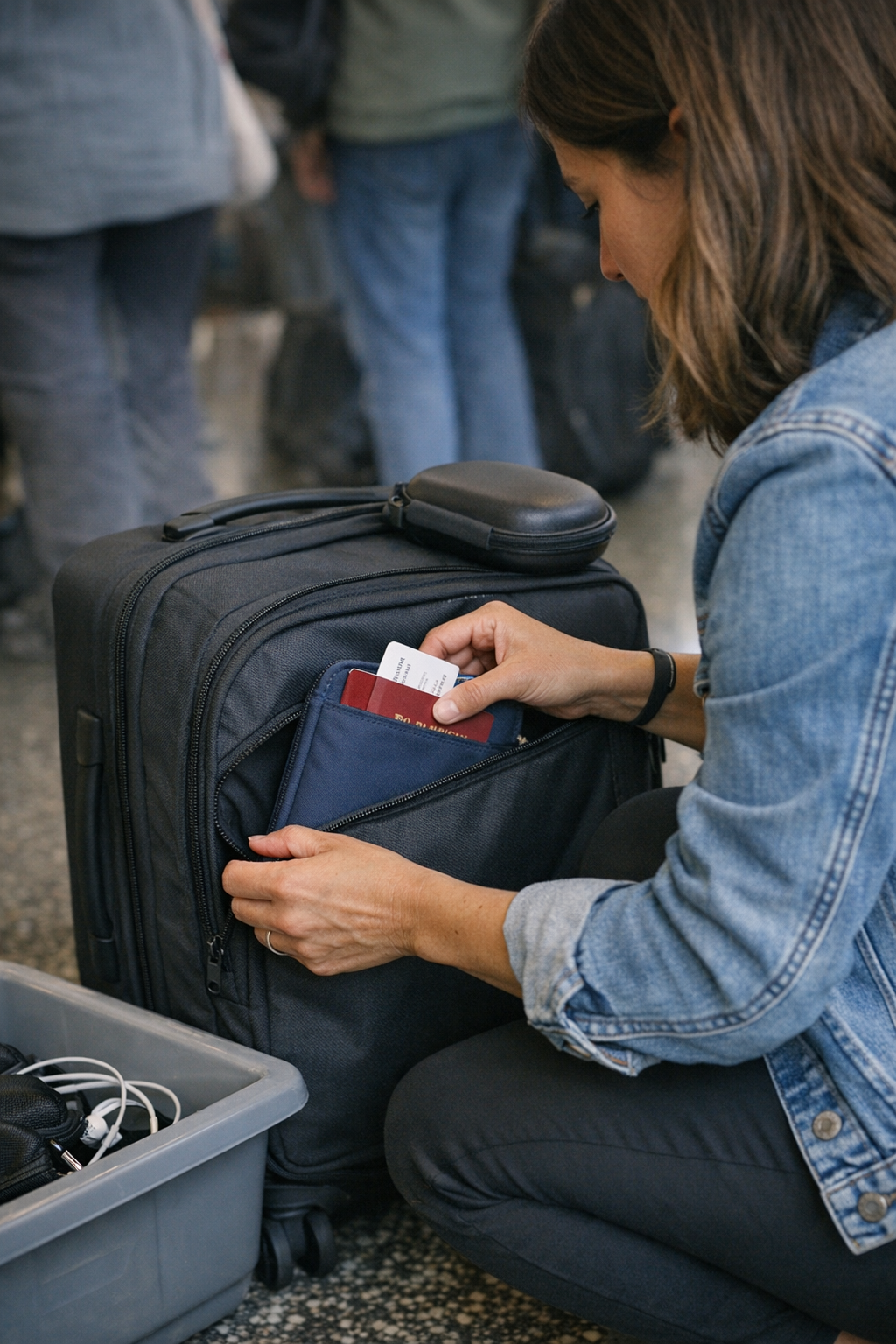
    The real upgrade in movement comes from separation—not more layers, but more intention. One dedicated, unshared pocket—especially vertical, along the side or on the outer shell—turns a stressful retrieval into muscle memory. One zipper, one motion, always the same spot. Your hand finds documents or essentials instantly, even with the carry-on squeezed under a seat or wedged into an overhead. The fumble and re-sort are gone; essentials return to the right spot after each use rather than drifting deeper into the stack.

    How Packing Choices Echo at Every Travel Stage

    Speed isn’t just about a single retrieval, but echoing consequences at every phase. During arrival, at the gate, boarding, or seat drop, structure choices either strengthen or sabotage your flow. The wrong overlap forces you to pull out half your bag for a passport. Zippers overlap and confuse, so the act of “quick access” now means scanning every pull tab or label. Outside pockets promising fast reach often become too crowded, turning into a slower bottleneck than the main compartment ever was.

    Across a trip, what first felt “organized” gradually exposes its failure: Repacking after each checkpoint takes longer, not less. “Quick-grab” pockets are now slow to sort. The time lost in split seconds at every use adds up, quietly draining energy and mood as the journey unfolds.

    Practical Steps for More Reliable Carry-On Structure

    The fix isn’t more pouches or labels, but changing how zones work under stress:

    • Designate a pocket or slot for travel documents and comfort essentials only—never mingle them with cables or chargers.
    • Prioritize a direct-access pocket that stays easy to reach in an aisle or cramped seat (vertical or edge-side beats hidden interior).
    • Keep tech, snacks, and bulkier items isolated further inside so vital retrieval isn’t blocked by low-urgency gear or cluttered overlap.

    Every time you grab your boarding pass or passport without hunting, without shuffling, without even looking—these moments add up. Travel friction seeps out of the process, and you reclaim both time and focus every time pressure spikes and space tightens unexpectedly.

    Access Over Appearance: The Test of Real Travel

    Actual travel isn’t a photo—it pits your setup against urgency, tight space, and uneven flow. A visually tidy carry-on can backfire when jammed into an overhead or navigated with one hand while the line squeezes forward. Access is what counts, not just order. Every change—boarding, security, seat drop—proves how your setup holds up, or how it slows you down when every second is shared with strangers and moving trays.

    The bag you actually trust isn’t the prettiest or most color-matched, but the one you can open, grab, and close, over and over, without a second thought. No backtracking, no “wait, which pocket?” hesitation, no last-second juggling. When retrieval becomes automatic, stress drops, lines move, and your trip feels lighter. That’s the difference between a setup that quietly accelerates your trip and one that quietly sabotages it, one unpredictable pocket at a time.

    Visit CarryOnSupply for practical tools that help your carry-on keep pace with real travel.
  • Why Securing Your Car Flashlight Transforms Nighttime Driving Safety

    The moment you actually need your car flashlight—whether dropped phone on the floor, sudden roadside check, or one cable gone missing—finding it fast isn’t guaranteed, no matter how “organized” the interior looked this morning. Most gloveboxes and center consoles start tidy, but as soon as the daily loop of groceries, charging, quick stops, and shifting paperwork begins, the real order breaks down. The flashlight you meant to have ready ends up jammed under insurance slips, tangled in charging cords, or rolling somewhere unseen—right when you need light and can’t spare the extra seconds hunting for it.

    Why “Organized Enough” Still Fails After A Few Drives

    At first glance, a freshly tidied car interior feels in control: cables wound up, flashlight stowed, wallet and papers stacked. But that setup cracks after only a few errands.

    Each drive adds its own friction. Papers migrate. Chargers slip loose. And small round tools—especially flashlights—drift on every corner or brake, ending up hidden or pinched at the least helpful moment. It’s rarely total chaos, just a steady slide back to cluttered: a light that’s visible only after shuffling folders, unplugging a cable, or raking your hand through the glovebox in fading light.

    The Real-World Cost of a Wandering Flashlight

    You feel it the first time a routine night stop turns into a scramble. Flashlights left loose create:

    • Receipts or registration cards covering the lens
    • Cables twisting around the grip, binding the switch
    • Loose batteries jamming glovebox seams
    • Random cargo settling on top, blocking fast reach

    Each small shift means the next search takes longer. The “clean” impression from Sunday resets fades by midweek—folders drift, cables pile, and the flashlight is never quite where muscle memory expects it. When you’re digging for it beneath clutter, the quick task—checking under the seat, scoping a parking-lot drop, chasing a faint rattle—drags out, and the frustration is unmistakable.

    Fixed vs. Free: How Placement Translates into Speed

    A flashlight mount seems minor until you’ve reached for the same rolling light five times in one week and lost precious seconds every time. There’s a night-and-day difference in two real setups:

    The Free-Floating Routine

    Park after dark. Reach for the glovebox. In your hand: cable, pen, loose receipts—never the flashlight on the first try. Every new errand shakes items out of place, and each search tangles what you’d just organized. Closing and reopening means the chaos resets.

    The Fixed-Mount Transformation

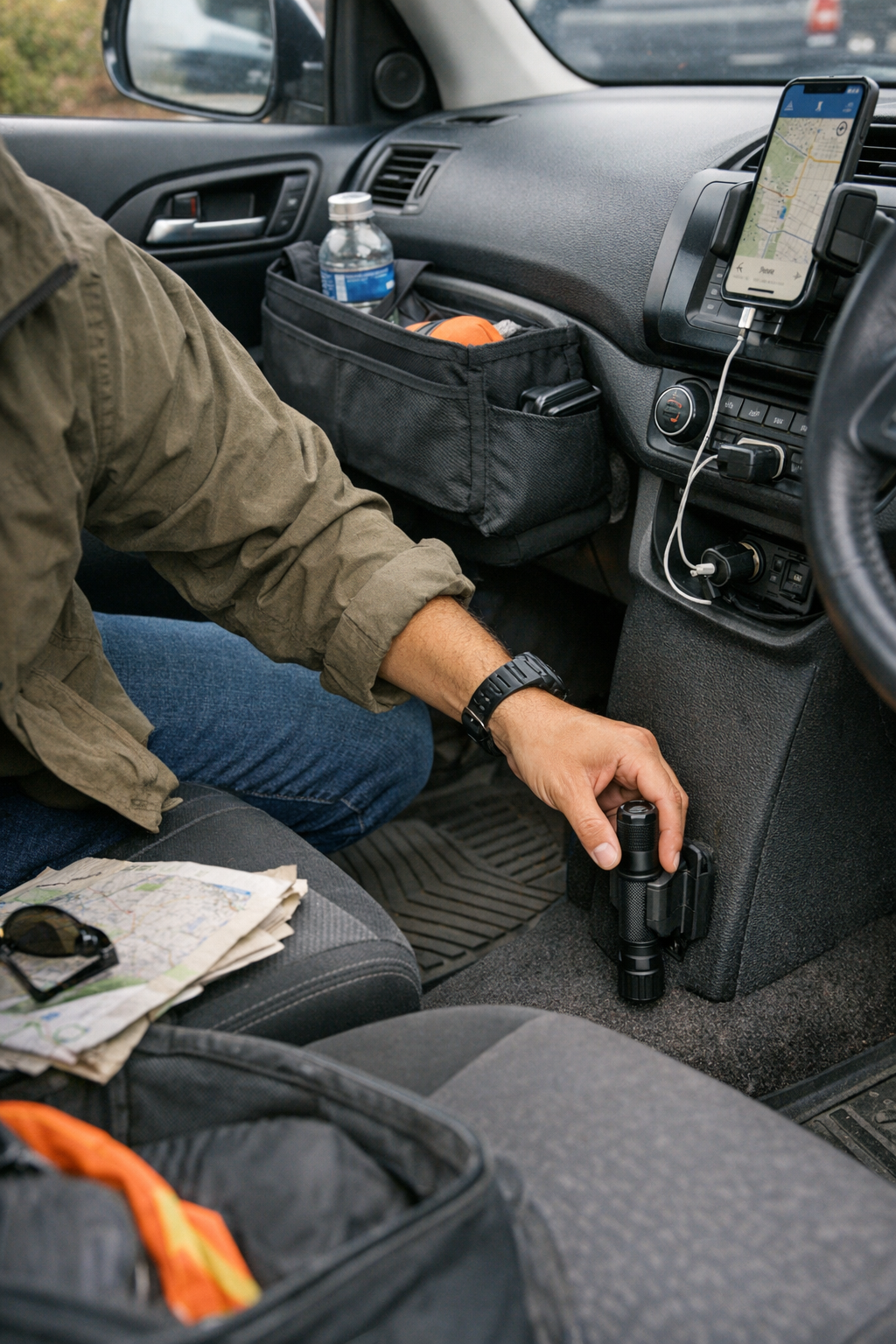
    Install a low-bracket holder at the footwell or side-console zone—now, the flashlight is always upright, always exposed. Open the door, grab the handle, done. No sifting, untangling, or risking a mini avalanche every time you need it. The mount absorbs daily road movement, so the light stays exactly where you last left it, not buried under the week’s new clutter.

    Small Setup, Big Change: Living with a Mounted Flashlight

    Shifting my own flashlight to a clipped side bracket ended the endless hunt. Morning unloads—bags, tools, fast re-entry—never knocked it loose, and charger cables finally stayed in their own zone instead of intertwining with everything. The biggest shift? Cutting search time from twenty seconds of glovebox shuffle and sighs to less than five, even across weeks of busy nights, parking-lot gear checks, and under-seat cleanouts.

    Not Just for Emergencies

    Most of us pretend the flashlight is purely for breakdowns—but it’s the regular uses that reveal the design gap. Hunting for charger cables under the seat, spotting spilled change, or checking for a dropped SIM card: a consistently mounted flashlight turns from once-a-season backup to a real, every-week tool—no “where did I put it” required.

    The Hidden Friction of Loose Storage

    Loose flashlights don’t just disappear. They also:

    • Block fast access when you’re reaching for chargers or wallets
    • Slide near seat rails and risk jamming adjustment tracks
    • Create fresh cable tangles every time you plug in or disconnect
    • Slip under floor mats, making cleanup noticeably harder

    These minor frictions stack up, even if you barely notice them at first. Clearing one tangle or unclogging a storage slot often means disrupting another—the never-still flashlight makes certain cleanup “wins” short-lived and temporary.

    Building Real Control: What Actually Works

    Lasting order isn’t about constantly resetting your car’s interior—it’s about locking in the core tools so they survive daily routines and all the mess they attract.

    Fixed mounting is what turns short-term neatness into real usability. A mount that:

    • Keeps the flashlight immediately visible and never hidden
    • Stays separate from high-clutter charging or phone mount zones
    • Remains clear of foot movement and re-entry paths
    • Offers one-motion retrieval—grab and go, eyes never needing to follow your hand

    Variable mount positions even help in shared-family cars or delivery routines, letting each driver keep the light exactly where their habits demand. The real payoff: every evening, every mid-errand fix, every swerving stop, the flashlight stays put, no reorganizing required, no trading one convenience for another clutter cycle.

    So Your Car Looks Organized—But Does It Really “Work”?

    The real test isn’t Sunday’s neat layout—it’s Thursday night, after errands and re-parking, when you need to grab that flashlight in a hurry. No shuffling, no digging, no tracking down which corner it rolled into. Once a fixed-mount setup becomes routine, the weekly reset ends. Everything finally stays where you expect, priorities shift from endless tidy-up to quick access, and the driving routine flows instead of stalling on forgotten gear.

    Explore practical car organization and lighting solutions at DriveWellSupply.

  • Why Simple Pet Travel Gear Outperforms Complex Organizers on the Road

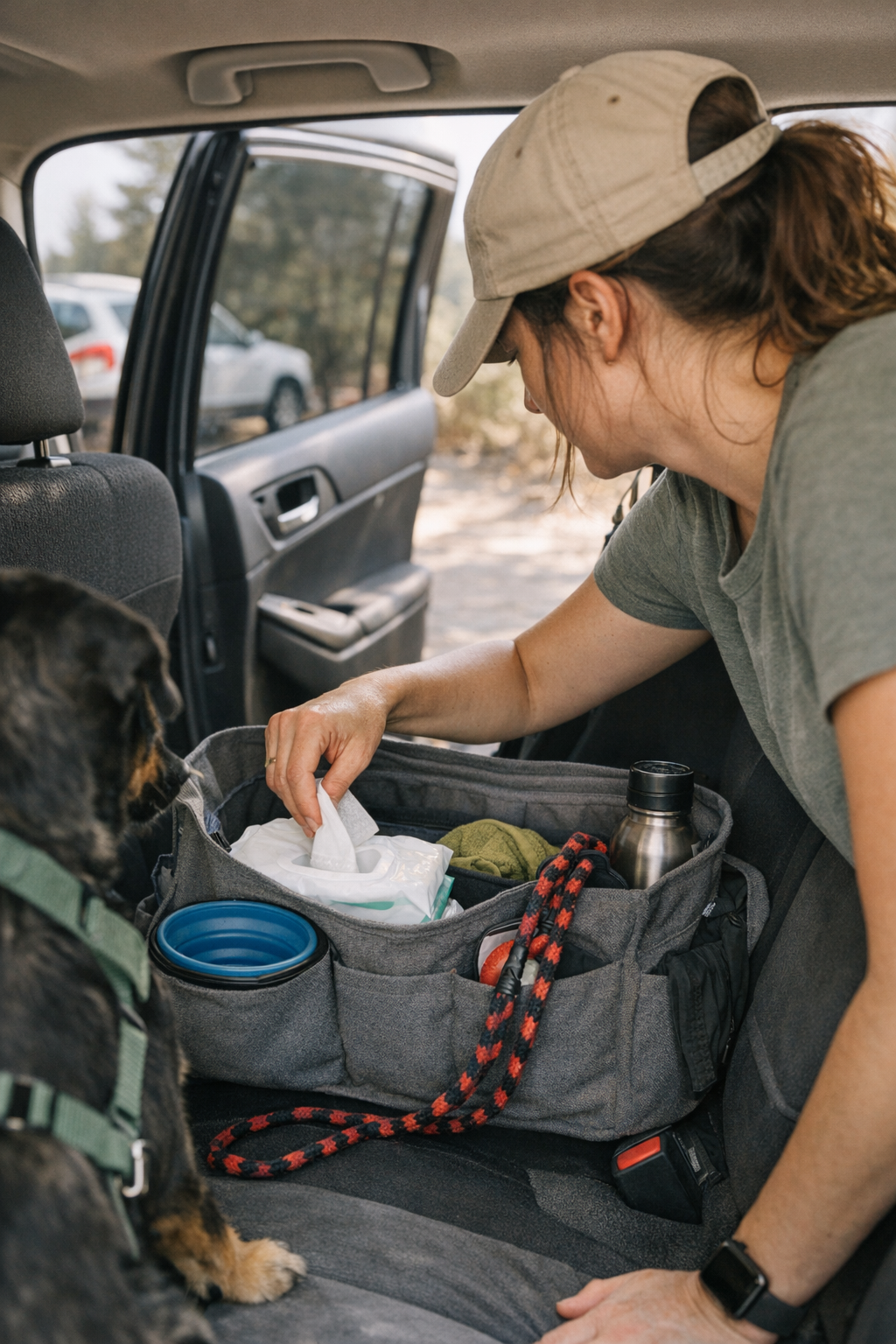
    Pet travel setups rarely fail in theory—they fail at the first real stop. That “perfectly organized” bag or carrier doesn’t feel clever when you’re pulled over, one hand on a leash, the other frantically unzipping compartments just to get at a wipe or bowl. Water dish jammed beneath a folded blanket. Treats tucked away beside owner keys. Wipes missing in motion, “organized” out of reach by that third leg of the trip. The real friction isn’t what you forget—it’s what you can’t get to quickly when handling and cleanup are no longer theoretical. A setup that seems calm and dialed in on the driveway can slow you down at seat-side, right when movement needs to resume. This is the pressure point that shapes regular travel with pets, and PawGoTravel builds around these repeated, lived interruptions.

    When “Ready to Go” Gear Chokes in Real Movement

    Most pet travel friction doesn’t surface when packing, but when you try to grab a single item mid-trip—after real stops, with a restless pet, and no margin for slow access. On paper, every leash, wipe, treat, and bowl is allegedly “right where it belongs.” But pull over twice, handle a spill, and the pattern shows up: what looked arranged is now hidden by layers or blocked by comfort items. Fumbling for wipes, you sift through towels and your own keys. The bowl slides under gear you thought was for calm but now just delays you. The day’s routine pulls apart—not from missing supplies, but from setups that trap your essentials beneath their own structure.

    Repeated interruption, not one-time chaos, kills flow. Dense pockets and tight organizers slow you most during the critical seconds between stops, not at the start. Every unnecessary zip or shuffle at seat-side means another delayed restart—and a few seconds lost every time add up fast across a trip.

    When Organization Backfires: The Downside of Layered Kits

    Too many compartments, deep-zip bags, or “ultra-secure” carriers seem smart but hog seconds when your pet is squirming or you’re holding a leash and coffee. Seat-side, the structure that gave you confidence morphs into a barrier: you’re leaning in, balancing bags, reaching for items buried one layer too deep.

    Picture the loop: Quick stop for a five-minute water and cleanup break, only to spend two minutes rummaging for a bowl that migrated under the blanket, or for wipes sealed inside the “organized” compartment. One hand holds the leash, the other is left juggling zippers, shifting gear, losing patience. The same kit that looked optimal at home reveals a flaw—repeated stalls, each one bleeding out focus and keeping you parked longer than planned. Frustration isn’t a one-off; it’s a predictable cycle at every stop where organization becomes the drag.

    Repeat Friction: The Weak Spots Don’t Go Away

    The same snag reappears trip after trip. Seat-side “quick access” often gets blocked by the very comfort items you brought to calm your dog. A favorite toy soothes until it blocks the front pocket where wipes live. Bowls gravitate to the wrong end of the main bag. Every routine restart forces the same work: one awkward hand clears the way while the other tries not to drop something crucial. The setup isn’t chaotic, it’s just structured to work best only at rest—not in motion, not when speed counts.

    Comfort and calm are vital, but not when they make it harder to grab what you need. A setup meant for stability can turn into an obstacle course if quick access isn’t right at the top layer—or if every retrieval becomes a negotiation between calm and speed.

    Single-Reach Essentials Beat Over-Designed Organization

    What solves these daily-use stalls? Not color-matched pouches or the “most pockets”—but visible, easy-to-grab essentials that don’t require two hands, deep unzipping, or guesswork. Specifically:

    • Wipe pouch with a single-flap top, always outermost, never buried
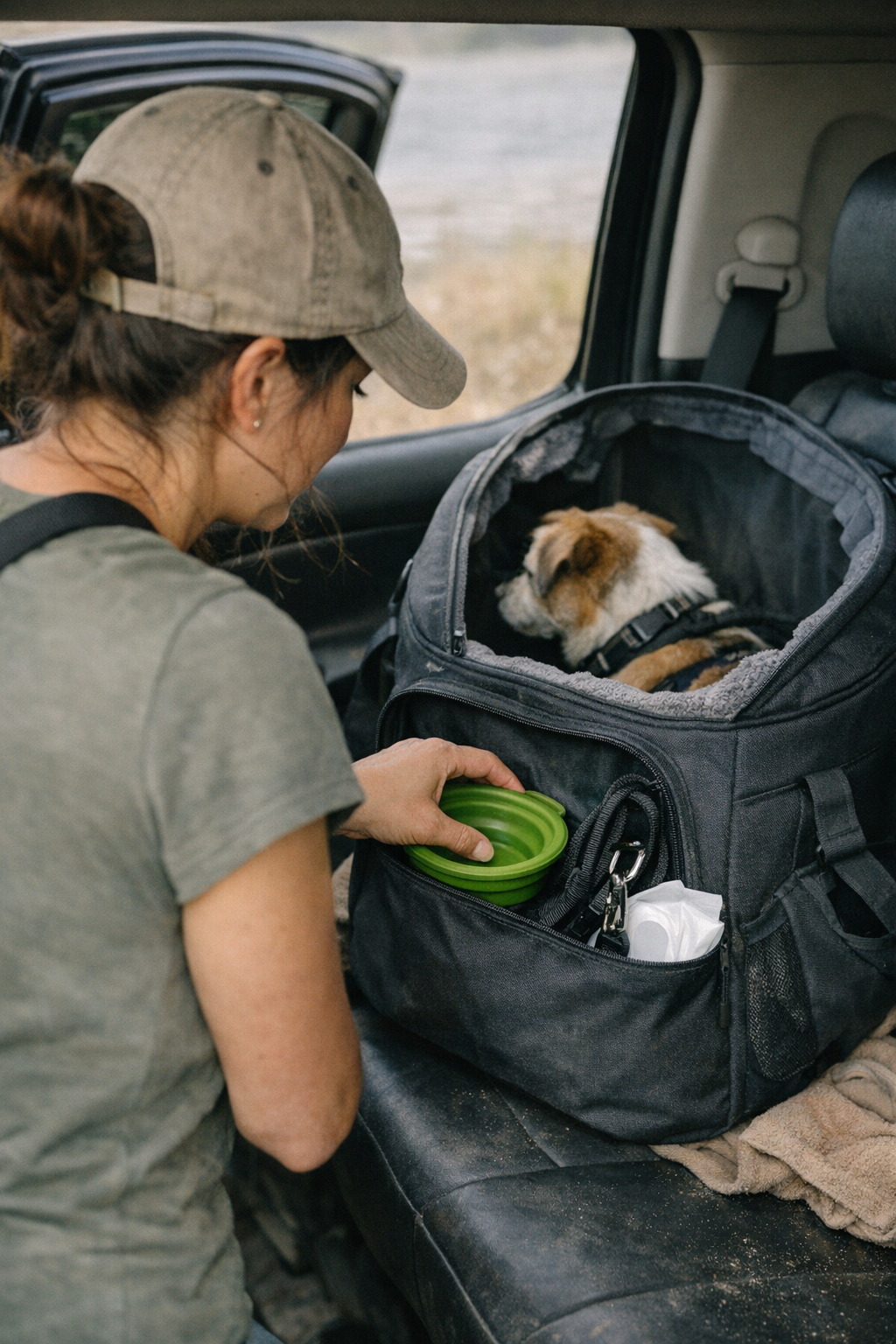
    • Collapsible water bowl clipped to the carrier’s exterior—grab with three fingers, not a full unpack
    • Seat-facing open pockets for leash, keys, or waste bags—no need to reshuffle or pause

    Sometimes, the most practical setups won’t look showroom-ready. A slightly “untidy” outer pocket, an open tote edge, or a bowl clipped outside might not appear perfect—but under repeat stress, these quick-access zones let you fix, reset, and move in seconds. Ask yourself: When handling a spill or leash snag, do you stall reshuffling layers, or just reach, clean, and continue?

    Triggered by Reality: The Fourth Stop Test

    By the fourth stop, weaknesses stand out. Door open, dog half out, muddy paws on the seat, water at risk of spilling—this isn’t the moment for a double-zip pouch or reach-under-everything retrieval. A wipe at the very front means you can clean, reload, and buckle up before the energy drains from the trip. Bowl goes in the exterior mesh, no stacking or balancing act required. It’s not a miracle, just a structure that reduces unnecessary reaches—and cuts the cycle of small hang-ups.

    Small Shifts—Big Impact: Resetting the Routine

    The smallest adjustment—separating go-to travel must-haves by actual frequency of use, and making them instant-access—dwarfs all packing cleverness. After just one high-frustration trip juggling densely zipped pockets, the logic is inescapable: frontload wipes and water, stuff the rest second. Now, the leash stays in one hand, cleanup in the other, and you’re not paused, unzipping, or fumbling mid-move. The day stops feeling like an obstacle course and starts to flow again—one second per motion, not three.

    The endgame isn’t a sparse bag or a “minimalist” kit. It’s a routine that matches your actual travel rhythm—organized so you move with the trip, not against your own layers. Every second not wasted on repeat restarts or deep searches pays off—especially with energetic dogs and trips built on frequent, short stops.

    When Pet Gear and Owner Gear Collide

    One overlooked frustration: owner items tangled with pet gear. Searching for a treat but pulling out your phone; scooping up waste bags but snagging your charger. This overlap adds delay as you pick through the pile, and the pause isn’t solved with more dividers. Instead, give must-have pet items a protected, owner-proof “quick zone”—separate, unblocked, always within reach—so your own wallet never hides a leash or wipes. That single habit breaks the pattern of low-level gridlock, letting every transition feel smoother instead of heavier with each stop.

    Don’t Trust Looks—Test Real Access

    Organizers and carriers can sell you on visible order, but the true test is in the pressure of small, repeated travel tasks. Before your next trip, pick a must-have: wipes, bowl, leash. Time the reach, the return, the pocket reset—are you moving in one motion, or stuck shifting layers and re-zipping at every step? If each “grab” drags past a second or two, expect friction to set in by the end of the day. The access penalty adds up—not as chaos but as a routine delay you feel by the third or fourth stop.

    The setups that feel right in real travel are built for movement, not put-together looks or packing perfection. Long-lasting routines aren’t neat—they’re friction-proof enough to outlast the cycle of seat-side fumbles and repeated restarts. That’s the shift you feel—and it makes the next trip less about pausing for your setup and more about getting back on the road.

    http://www.pawgotravel.myshopify.com

  • Streamline Your Carry-On for Effortless Travel Access and Speed

    The moment your carry-on leaves the hotel room, neat packing starts losing its advantage. You join the security line. Someone behind you sighs while you crouch at the tray, rifling past two stacked chargers for a travel-size lotion buried in a pouch. At the gate, you’re blocking the aisle, stuck unzipping and pawing through “organized” pockets just to free your ID. The design that looked perfect on the bed turns clumsy at the checkpoint—every retrieval becomes a full stop, every must-grab item comes with an interruption. A well-packed bag at rest often turns into an obstacle course as soon as you need to move.

    When “Organized” Isn’t Usable: The Hidden Trap of Neat Packing

    Most travelers over-focus on appearance: pouches stacked, cords wound, compartments zipped. But every extra layer, every nested wallet, each tightly arranged pouch—these details show their true cost when you try to retrieve something mid-trip. Common patterns emerge:

    • Your careful document stack forces you to handle every ticket, note, or bill just to get your passport out—for every single check.
    • Charging cables look sorted, but when you need one before takeoff, it’s trapped under three other things and a tangle waits.
    • The sanitizer and pen slide to the farthest corner of a deep organizer pocket, vanishing in the exact moment you’re up for customs.

    Travel isn’t static. Every time the airport flow speeds up, that “order” quickly becomes slow-moving friction. Looks neat on the surface, but each new transit reveals where the setup drags.

    Real-World Carry-On Moments: Repeated Interruptions That Add Up

    Security Check: The Quick-Access Bottleneck

    The X-ray line is where real carry-on design gets exposed. Nested pouches make for slow, awkward document digs. Now you’re fishing deeper, under pressure—then fumbling it all back as the trays stack up. Rush the repack, and it’s too easy to misplace something or leave behind a tucked-in device. The deeper your items, the more you reset in public.

    Boarding and Aisle Traffic: When Every Inch Matters

    Overhead-bin space is tight, the aisle is even tighter. You find your slim carry-on—then realize your passport is under two zipped layers, half-blocked by another pouch. Your top-down layout that looked so streamlined now traps small essentials behind everything else—forcing you to block the aisle and dig under pressure, just as the rest of the plane stacks up behind you.

    Tray and Pouch Trouble: Packing Choices That Loop Back

    “Deep organization” causes instant regret at the security tray. Suddenly you’re unzipping both a toiletry bag and a tech pouch, all for a toothpaste tube you thought was accessible. When travelers behind you rush forward, re-assembling your careful system mid-belt means something gets jammed or left out of place. The more nested your packing, the more fragile it becomes under pressure.

    Why Certain Packing Decisions Slow You Down

    The “Instagram-ready” bag hides a real problem: unzipping, detaching, digging, and reconstructing just to grab one high-use item. Boarding passes, tablets, snacks, and chargers pile up steps—each layered pouch or clever pocket multiplies reach and repack time. Tight spaces magnify every flaw. Crowded gates, shuttle jumps, busy transfer zones—here, every move you need to make in motion makes a packed-away item a liability, not an asset.

    In real travel, the only “order” that matters is the one you can use—quickly and without drama. Repeated access is the only useful measure.

    The Difference Between Tidy Packing and Instant Access

    Visual control fools most travelers. If your setup can’t deliver essentials directly—passport, charger, snack, sanitizer—you’ll end up breaking down your whole bag just for one thing. Key questions for real travel:

    • Can you pull your passport without shedding tickets or small bills all over the aisle?
    • Can you reach a charger or pen in seconds, or are you lifting pouches and squinting at zippers?
    • Is your repack at security a single, obvious motion—or a guessing game every time?
    • Do high-frequency items actually return to their “home,” or are you rebuilding your layout at every checkpoint?

    Most people only spot the cracks after their third flight or mid-transfer panic. A design that trims clutter at rest often underperforms where speed and access matter most—at the gate, in the seat, or when the line’s moving ahead.

    Reducing Carry-On Drag: Small Adjustments, Real Results

    More pockets don’t fix slow retrieval—less resistance between you and essentials does. The real improvement isn’t just another organizer, but finding the exact “lane” where the highest-frequency items always live. Example: group passport, travel docs, pen, sanitizer, and main cards in one shallow outer pocket with a smooth zipper path. Now, you bypass the main compartment for every high-pressure moment—ID check, ticket scan, customs—no more upending your bag or stacking items on the tray. Habits stabilize—the items always land in the same place, reset after use, and repacking shrinks from ten scattered moves to a single return.

    Instead of digging under-seat or blocking a busy boarding line, you move with the flow: open, retrieve, close, keep going. Repeatable, not fragile. The drag, mess, and delay fade—because your carry-on finally matches real travel speed.

    Recognizing (and Fixing) Carry-On Weak Points

    There’s always a stubborn trouble spot—passport lost in a black-hole pocket, tech charger buried under a secondary kit, or a pouch system that collapses with one wrong move. These are more than minor annoyances. They’re the signs your bag’s structure isn’t tuned for the pressure of repeated, in-motion use. The right setup becomes invisible under real conditions: key items stop needing a search party, reset paths become intuitive, and every needed object returns to its spot. If you keep repeating the same awkward zip or pouch shuffle, it’s time for a smarter reset, not just another “organizer” share.

    Travel-Ready Means Ready for Movement

    What looks “organized” in a lobby photo rarely survives real trip motion. A bag’s true value isn’t how untouched it sits for a quick snapshot—it’s how quickly you can grab what matters mid-line, mid-seat, or mid-transfer, often without even looking. If your setup cracks the third time you need the same document before takeoff, or stalls every aisle move, it’s not built for real flow.

    Getting there takes trial, judgment, and sometimes just one critical shift—a smarter pocket, a clearer outer slot, or a fixed path where high-use items never get buried. A functional carry-on turns trip chaos into flow you can trust—even through airport friction, cramped shuttle crowds, or trailing at the end of a long departure line.

    Find practical carry-on solutions at CarryOnSupply.

  • Streamline Your Morning Commute with a Dedicated Essentials Pocket

    A car can look spotless and still trip you up every single morning. Underneath the clean console, everyday essentials—phone, keys, parking badge—slip under cables or get wedged behind receipts and cards the moment your drive starts repeating. The real problem isn’t a messy floor; it’s when items you actually need go missing in arm’s reach, forcing you to pause, fish under clutter, and watch another minute disappear—not because your car is dirty, but because it’s quietly disorganized where it matters most.

    The Hidden Cost of “Looking” Organized

    Center trays may look pristine by evening: cables coiled, coins stacked, ticket stubs out of sight. Yet by the third or fourth use, high-traffic zones—cup holders, seat edges, under-console spaces—collect a rotating pile of essentials and leftovers. The friction builds in background: a charging cord knotting up with your keys, a receipt sliding over the badge you’ll need at the next stop, coins rolling into the seat gap. On paper, the setup is “organized.” In use, it’s a slow leak on every departure—awkward grabs, accidental cable yanks, tiny delays stacking up exactly when you can’t spare them.

    Why General Storage Trays Aren’t Enough

    Catch-all trays promise convenience but become dumping grounds. Toss your phone, badge, wallet, and a sanitizer into the same bin, and today’s must-haves merge with last week’s change and backup cards. It’s not visible chaos—it’s time lost to micro-searches: pulling a phone out from under a tangle after a quick store run, pushing cables aside to snag a key during rain, realizing your parking pass is now sandwiched behind a bag of mints and ticket slips. If the tray starts tidy and ends most weeks as random storage, that’s not a design solving for real use—just disguising friction as surface order.

    The Value of a “Today” Pocket

    A dedicated, reachable pocket for only your current essentials resets the entire daily driving flow. Instead of shoving everything into the general bin, mounting one mesh or fabric pocket—ideally beside the seat or left of the console—draws a hard line between what you constantly use and clutter drift. Now, your phone, badge, and key land in a fixed spot, away from tangled cords and change piles. The result isn’t just neater—it’s a repeatable motion: grab, go, no interruption. After a week, you stop thinking about finding stuff; your hand just moves to the right spot—every time, even on rushed mornings.

    Real-World Flow: How the Setup Changes

    Picture this: Monday, your badge and phone go in the center tray with your keys. By Wednesday, the badge is under car wash coupons, the phone cable has looped around the pen, the backup card is sliding between papers, and the key fob migrates to a far edge. Even with nothing overtly messy, each retrieval means a shuffle or a mini hunt—inefficient, distracting, and easy to ignore until you’re running late or juggling groceries. Now swap in one “today” pocket: only your go-to items live there, visible and clear of the every-other-day drift. The routine sharpens. Even if general clutter grows elsewhere, the essentials zone stays frictionless.

    Small Tweaks That Reduce Daily Drag

    A “today” pocket works best with a few focused habits—practical, not theoretical:

    • Install the pocket where your hand falls naturally—side of seat or along the console. If you have to lean or twist to reach in, friction comes right back.
    • Clip or route charging cables so they don’t drape across the pocket. Adhesive clips or simple routing behind the pocket edge stop cords from snagging your phone or dragging out keys by accident.
    • Empty non-essentials daily. Give the pocket a five-second check: pocket only what you’ll need next drive. This keeps clutter migration away from your main access path.
    • Accept scheduled resets for deeper clutter. The “today” pocket shields your routine from minor junk, but the main tray still needs attention—just not every day.

    When Organization Doesn’t Equal Convenience

    Many cars pass the “looks tidy” test but fail the morning grab test. If you’re ever nudging aside a stray cord before pulling out, spilling coins just to rescue a key, or pausing mid-reach for a badge trapped beneath last week’s receipt pile, visible order isn’t translating to actual ease-of-use. The difference is obvious after a rainy day, a fast supermarket stop, or a tight parking return: with a solid essentials zone, grabbing your must-haves happens in one motion, no detours, no accidental snags, no morning slow-down hidden behind a neat-looking interior.

    Keeping the Flow Going: Maintenance Over Perfection

    No solution erases drift forever—receipts reappear, a new USB stick lingers, a backup mask settles into the cup holder. But the beauty of a daily-use pocket is its quick recovery: when clutter returns, you don’t need to empty the whole car, just reset your essentials zone and move on. Over time, this structure means faster starts, fewer missed items, and less daily frustration—no showroom perfection required. For anyone using their car as a real, daily tool, the payoff is instant: reach, grab, drive, repeat—routine friction out, flow restored.

    See more practical solutions for easier, more useable cars at DriveWellSupply.

  • Streamlining Pet Travel: How Smart Organizer Design Eases Repeated Stops

    Halfway through your day, the pet carrier that looked “ready” at home starts to feel like a bad fit. The wipes you need are wedged behind a half-spilled treat pouch. Your dog’s leash is tangled under a hydration bottle. Grabbing one thing means juggling three others—right when a clean, quick reset is most urgent. With every stop-and-go, what looked neatly organized becomes an obstacle, draining patience and slowing you down. This isn’t rare inconvenience—it’s the point where most pet-travel setups quietly break under real repeated use. PawGoTravel lives in this gap: the space between gear that photographs tidy and gear that actually works at seat-side pace, with a restless animal in tow.

    When “Prepared” Doesn’t Mean Practical

    Looking organized is easy; actually moving through a travel day is something else entirely. Zip everything shut, label pouches, line up snacks and wipes—and five minutes after your first pit stop, real-life travel takes over. The pet wants out. The leash is under the bowl. The wipes are somewhere, but not in hand. What worked on the counter now stumbles at the curb. Equipment you placed with care at departure quickly starts to scramble itself with every short stop, every re-entry, every messy pause for a roadside break.

    “Pocket for everything” seems efficient until it’s mid-trip, and now finding one item means digging, shifting, or emptying half your kit. In reality, the friction shows which setups hold up—and which just look organized until movement starts.

    The Hidden Slowdown: Compartment Overload

    Extra sections don’t guarantee speed—they usually delay it. A carrier packed with layered dividers and clever sleeves ends up hiding your essentials under each other. After two or three stops, the “tidy” look is gone—now you’re stuffing a damp bowl above a knotted leash, then hunting for wipes that have slipped deep into a side pocket. What felt smart in your kitchen now feels like a puzzle you get forced to resolve, again, each outing.

    These recurring stumbling blocks stack up fast:

    • Leash buried under a water bottle—can’t reclip your dog without unpacking half your kit
    • Cleanup wipes visible, but stuck at the bottom and impossible to extract one-handed
    • Comfy bedding eats up the best access pocket, so nothing is reached quickly
    • Pet food gets muddled with human snacks, mixing crumbs and slowing every grab

    Each “organized” layer adds another pause. Pets squirm, tempers shorten, and your trip’s rhythm breaks: now, travel is dictated by your gear’s slowest point, not the pace you need.

    Scenes That Reveal the Weak Point

    Returning to the Car When the Routine Breaks Down

    Imagine finishing a muddy detour at the park. Dog leashed to your wrist, wipes clutched in one hand, damp bowl under your arm—you get to the car, only to find the front pocket is blocked by the treat bag you used last stop. There’s a pause, your pet gets impatient. You’re unpacking gear to extract what you need, repacking it in a slightly worse arrangement for next time. Multiply this by every pit stop, and your “organized” setup turns into perpetual reshuffling—swapping speed for slowdowns that never appeared at home.

    Juggling at Quick Stops

    Fast errands get complicated in seconds. Buckling your cat’s seat harness demands squeezing past a half-open package of wipes jammed on top. You close the travel bag after a water break, but reaching for the leash means digging past snack pouches while your dog pulls off-balance. What felt fine on your hallway floor collapses under real-time use—revealing the gap between a calm setup and true travel flow.

    What Actually Makes the Difference?

    The real fix isn’t more storage—it’s targeted, repeated-access placement. The most effective pet travel setup is the one that puts your highest-use items—wipes, leash, bowl—where they’re instantly reachable, one-handed, at the edge nearest your pet’s space, every single time.

    Instead of scattering essentials in far-flung pockets, group them where your movement begins: close to the carrier opening, side pocket by the car seat, or top-flap on the travel bag. Suddenly, you go from awkward, multi-step digs to barely pausing. Each restart is swifter, routine items come out in order, and travel flow returns—no matter how many unscheduled pulls over or seat-side cleanups you run.

    It’s not about extra features or more “solutions.” The real advantage is structural: the right pocket or opening ends interruption before it starts.

    Why “Compartmentalized” Isn’t Always Efficient

    At first, kits loaded with slots and dividers feel clever—until you’re forced to operate by their logic, not yours. A bowl jammed into a deep sleeve, a leash tangled in a mini-pocket, wipes you can’t reach without unzipping half the bag: every stop magnifies how these systems slow you down. The more you strive for order, the more your gear pushes back with micro-delays.

    The contrast is clear during heavy-use days: a wide-access section beside your pet’s seat lets you dump a wet bowl, grab wipes, unclip and pocket a leash—all one motion, one hand reserved for your animal. Structure that supports repetition means fewer interruptions, and nearly immediate reinforcement that this arrangement cuts friction instead of stacking it.

    Resetting the Routine — and Keeping It Moving

    The best pet-travel setups are built for return-to-movement, not just for a first impression. If every stop demands re-sorting, hunting, or untangling, your gear isn’t just cluttered—it’s pushing you off schedule, and making fast cleanup feel harder every single trip.

    Prioritize kits that let you:

    • Snag wipes or treats without unzipping multiple sections
    • Keep your own keys, snack, or coffee from colliding with leashes and bowls
    • Hold onto your squirming pet while extracting cleanup supplies
    • Leave each stop at the same pace you arrived—instead of losing time as the day wears on

    If a bag or carrier consistently trims minutes from restarts, it isn’t just a better organizer—it’s an easier travel companion, stop after stop.

    Finding Your Real “Ready” Setup

    After enough returns to the car, every owner sees it: the gap isn’t between “organized” and “messy,” but between setups that let you reset in seconds, and those that keep adding micro-battles, tangles, and spillover. Carriers and bags that adapt to repeated movement—and cluster your critical items together—eliminate the hidden drag of fighting your storage over and over. Every time you restart with ease, the payoff is clear: less time fixing, more time moving, no matter how many seat-side cleanups or field-side pauses your real trip demands.

    Want pet travel gear that survives more than a photo op? Focus on return-to-movement flow—not just surface-order. Fewer forced compartments, smarter front-side access, and a structure that reduces interruption instead of multiplying it. For solutions built for the real, repeated push-and-pull of road travel with pets, explore PawGoTravel’s practical solutions here.

  • How to Organize Your Carry-On for Stress-Free Airport Gate Changes

    Every traveler has faced it: your carry-on looks neatly organized at home, but within minutes in an airport, that same setup becomes a liability. You’re sliding between strangers in a moving boarding line when security suddenly asks for your passport—and right then, your “packed to perfection” pocket system slows you down. Instead of a quick grab, you’re fumbling with layered pouches and hidden compartments, exposing the gap between home order and real airport movement. Organization that feels sharp in your bedroom often collapses under actual travel pressure, especially when document checks or seat entry happen faster than you planned.

    When “Organized” Isn’t Enough in Real Airport Movement

    A bag that looks orderly in your hotel room doesn’t guarantee smooth movement in transit. The real verdict comes at the worst moments: shuffling forward in a boarding queue, stuck behind a bottleneck at security, sprinting down a crowded terminal with a gate change ticking down. Visual neatness offers zero help if you’re double-unzipping, moving pouches aside, or repacking mid-flow just to get at your ID or boarding pass. The true test isn’t whether your bag looks ready, but how much friction you feel—repeated tiny holdups—each time your hand goes searching for something you actually need, fast.

    That drag builds in silence. A neat setup at home turns irritating when you’re forced to dig, shift, or reset contents every time another travel checkpoint makes a new demand—while impatient travelers press behind you and the line keeps moving.

    The Subtle Ways Pocket Design Trips You Up

    Outer pockets seem helpful until they turn into traffic jams for essentials. It’s standard to stash fast-access items—documents, headphones, sunglasses—in the same “easy” pocket. But by the second or third attempt to retrieve something, you often end up rearranging the pocket to reach what’s at the bottom. Layering daily essentials together in the same exterior spot forces you to block and unblock your own path: a sunglasses case wedged in the way of your boarding pass, or charging cables half-covering your passport. Even well-intended segmented pockets can backfire as needs flip rapidly—security, then charger, then wallet, in a sequence that didn’t matter at home but becomes critical in the airport’s stop-and-go rhythm.

    A Familiar Friction: “That Pouch Was Supposed to Help”

    At first, nesting everything—tech, travel documents, chargers—into a single organizer or all-in-one pouch feels efficient. But that same pouch becomes a delay machine when, under travel pressure, you have to fish through cords for your ID, or move tickets aside for a charger. Each retrieval feels minor—until it’s repeated in every checkpoint, every boarding, every tray transfer. What started as a “clean system” becomes a repeated source of mild panic: headphones tangled with receipts, passport hiding under cables, the pouch itself now a speed bump instead of a solution. By the third or fourth interruption, small irritations accumulate into real drag, especially when time and space are tight.

    Packing Order vs. Movement Order

    There’s a cold truth: the bag that looks best lined up at home is often not the one that works best when you’re actually moving through airports and planes. Rigid lineup, stacked organizers, and tight compartments photograph well—but start to fail as soon as you enter the unpredictable pacing of a travel day. Stacked pouches stack your problems: one charging brick blocking a zipper, one “quick-access” slot stuffed behind other cases, an external pocket overflowing because the interior ones are too cramped. Packing order flatters your system in theory; movement order exposes whether you can actually reach, grab, and move on without pausing or reshuffling every time the sequence changes.

    The “One Grab Turns Into a Pause” Moment

    Picture rushing gate to gate. You reach into an outer pocket for your boarding pass, but it’s wedged behind headphones and yesterday’s sunglasses. What should be a one-motion retrieval becomes a public shuffle: pulling items out, setting them down, disrupting the line behind you. Suddenly, the arrangement that felt foolproof has turned on you, and you’re left remembering that travel exposes every layer of overplanning—and every shortcut that wasn’t built for reality.

    How Two Dedicated Pouches Break the Cycle

    The first real improvement comes from dividing, not stacking. After too many stops to repack mixed pouches, switching to two lean, purpose-built pouches—one for travel documents and essentials, one for tech—broke the old friction cycle immediately. The travel-doc pouch slid into a wide, no-fuss exterior pocket with a zipper that opened fully. Tech and cables stayed inside, no longer in the way. Every time a guard, gate agent, or attendant called for tickets or ID, you could target the right pocket once—no digging, no double-handling, no resetting. That single split cut down stress and forced pause time at every repeat use. Suddenly, interruptions didn’t equal total repacking—just a clean grab and on you go.

    The difference shows up over and over: the pouch you need is reachable without unpacking a layer of gear, you repack fewer things each time, and your sequence stays intact. The pace of travel recovers—not because you packed for looks, but because you packed for how often real access is demanded under pressure.

    What to Look for in a Truly Travel-Ready Carry-On

    • Wide, single-action external pockets: Should unzip fully and show key items at a glance, so you’re not reaching blind or disrupting internal order.
    • Dedicated, single-purpose pouches: Never force travel documents to share space with cords or chargers. Shared space means lost time at checkpoints.
    • Minimal overlap between high-access items: Each item that competes for the same spot is a future bottleneck—split them early to avoid repeat slowdowns.
    • Zipper paths and pocket depth matched to motion: A pocket that can’t be opened cleanly while standing, or a compartment that’s too deep for easy reach, becomes a mini-ordeal every time you’re called to move quickly.

    How Packing Choices Are Exposed by Airport Reality

    Packing order is just the starting line. Actual travel is built on access cadence—the rhythm of repeated reach, use, and return, often crammed into minutes while juggling bins, bags, and boarding slips. Each dig, unzip, and repack reveals whether your choices speed you up or quietly drag you down. What made sense the night before can slow you down at every checkpoint, aisle squeeze, or document request. These small snags pile up until that “perfectly organized” bag feels like a barrier, not an upgrade, and the visual order from home fails to translate into fluid movement in the real world.

    Signs Your Current Setup Is Slowing You Down

    • Repeatedly reaching for the same item, always finding it blocked, stashed beneath something, or off-sequence
    • Needing to open two or three pouches to retrieve a single passport, charger, or boarding pass
    • Feeling your progress stall in line or at your seat as you untangle or reset pocket contents
    • Realizing your home packing “system” leaves you stuck, not helped, when access speed actually matters

    Ultimately, there’s a difference between a carry-on that holds its shape and a carry-on that keeps you flexible—ready for every new checkpoint, line surge, or gate shift, no matter how many times the needs change along the way.

    For more field-tested carry-on tools, visit CarryOnSupply.

  • Creating a Dedicated In-Between Zone Transforms Car Interior Organization

    The moment you realize your car setup isn’t working for you usually comes from the floor. Maybe it’s a charging cable wrapped around your ankle, a half-crumpled wipe sliding under the pedal, a spare mask buried in grit, or a charging bank that always lands just out of reach. These aren’t major hazards—a quick trip, and you ignore them. But they build up: every errand or commute means untangling cables, scooping up the same loose gear, or feeling your hand search again for something that’s drifted away. The story isn’t about a messy car. It’s about an interior that keeps tripping you—where “tidy” never means smooth, and so-called storage solutions can actually slow you down.

    When “Tidy” Isn’t Enough: What’s Missing in Your Routine

    Most cars look controlled at a glance—trunk bins tucked away, cup holders open, floor mats straightened. But that appearance fades during real use. Within a week of short trips and rushed re-entries, the chaos leaks back in:

    • Charging cords snake into the footwell, needing a shove aside every single morning.
    • Wipes and masks shift and wedge into unreachable gaps—never waiting exactly where your hand expects.
    • Loose change and sanitizer play musical chairs, drifting from shifter to door pocket to between the seats.

    This isn’t about neatness for its own sake. When every return to the car means five seconds searching or shifting things—especially rushing in rain, or with arms full—it starts to wear down your routine. No “in-between” zone means every stop reopens the mess, and you’re repeating the same cable untangling and item shuffling more than actual driving.

    The Hidden Costs of No “In-Between” Zone

    Hidden storage doesn’t fix the problem—it just disguises it. Trunk lids close, seat bins slide under, but the tools, cables, and wipes you touch daily resist being truly stashed. Instead, they go rogue: phone cords jammed under mats or pedals, wipes escaping to the passenger side, a backup shopping bag ending up behind the seat or in the trunk after a turn. Now, every trip means finding, not just using, your essentials. With each drive, the lack of a “landing zone” multiplies micro-annoyances: yanking a cord loose, bending to hunt for a lost mask, re-cleaning the same spot because loose wipes get dusty fast. “Tidy” on paper quickly unravels without a repeatable structure for the things you use most.

    Where Routine Interrupts: Real-Life Friction Points

    When does this friction stand out? Try these—

    The Rainy-Grocery-Run Scenario

    You hurry to the car juggling bags, phone, and umbrella. You open the door—phone slips onto the angled seat, screen in pooled water. The cable has crawled out, wrapping your wrist as you reach. Wipes? Buried under two layers of yesterday’s errands. Every motion is clumsy: nudging items with your elbow, scooping under the seat, or pausing awkwardly just to find clear floor space for your foot. This isn’t rare. It’s exactly what surface-level “tidiness” misses: the way disorganization punishes you fast when just one thing needs to go smoothly.

    Commuter Chaos, Interrupted

    You come back to your car after a long day. The charger cable is somehow looped around the parking brake—again. The mask you need is stuck in no man’s land between the seat and door. You’re not adjusting to a new mess; you’re living with a pattern where nothing seems to stay where it should, and every commute ends with a micro-wrestle, even when the cabin still looks “clean.”

    Why High-Frequency Items Need Their Own “Landing Zone”

    There are two types of car gear: what you store and what you actually use. The difference feels small until you have to dig a phone from a bin mid-errand, or sweep wipes out from under a pile of mail just to sanitize your hands. High-frequency items need an always-visible, always-reachable zone—a hub, not an afterthought. This isn’t just more storage. It’s a stable site for quick deposit and grab, keeping daily-use gear in the same path, not orbiting the floor or playing hide-and-seek with every trip. Without that structure—without a physical “landing pad” for what cycles in and out of your hands—organization stays frozen and soon collapses into familiar, low-level hassle.

    Making the Zone: How a Small Structure Changes the Experience

    The “fix” isn’t a trunk vault or extra cupholder—it’s smart structure, right where the repeated action happens. The best upgrades sometimes look like nothing: a seat-edge organizer that catches your essentials before they hit the floor, a routed channel that keeps charging cables in a single arc, a divided tray close to the hand’s natural return. What matters is:

    • Natural hand path—so you don’t have to consciously correct your motion every time.
    • No pedal or seat interference—structure means flow, not new obstacles.
    • Division for real needs—one spot for sanitizer, a groove for a charging plug, a slot for your must-grab mask or pass.

    With this structure in place, cleanup time shrinks. Cables don’t snake onto the floor, daily wipes don’t bury themselves, and the quick-reach items actually stay quick to reach. Even a five-minute parking-lot sweep becomes easier: essentials are right where you left them, not migrated out of sight or stuck behind uneven piles.

    Does Structure Actually Save Time? Real-World Results

    The pace of improvement isn’t dramatic, but you notice the shift each time you drive:

    • The portable charger stays in place through sharp turns.
    • Wipes and masks actually stay clean and accessible—no more diving under the seat mid-commute.
    • Cords trace a predictable, snag-free route every trip.

    Here’s what changes: You stop hunting. Bending, scooping, untangling, or stopping to retrieve runaways drops off. Less time spent correcting little messes means more time moving, less strain on your back and patience, and—most noticeably—far less floor grit collecting against your essentials. What’s measurable? Fewer repeat cleanups and smoother transitions in and out of the car. The difference isn’t just in looks, but in ease and repetition: the proof shows in friction that’s simply gone.

    Common Pitfalls: When Storage Creates More Work

    It’s easy to assume more bins or deeper compartments equal instant order. But hiding daily items out of immediate reach creates its own loop of clutter and frustration. The more often you need an item, the less hidden you want it—otherwise, gear pops back into cupholders, crowding the shifter or dash, and you circle back to scrambling for what you can’t quite grab. Storage solutions should reduce steps, not add new ones—if the setup makes you dig, sidestep, or double-handle, it’s actively working against everyday flow. What was “organized” quickly becomes just another cleanup to repeat, in a slightly different place.

    Setting Up a Real “In-Between Zone”—What Actually Works

    The simple, repeatable upgrade: install or place an organizer right at the seat edge or under the center console—where your hand goes every time you sit or reach. The best location:

    • Makes charging, grabbing, and returning items frictionless.
    • Stays out of your feet’s path and doesn’t block movement.
    • Allows entry and exit—no extra shuffling, no new snag points.

    There’s no such thing as a flawless interior, especially in daily use. But if you’re still pulling the same charger from under the seat, or cleaning up gear that rolls everywhere after every normal trip, it’s not for lack of storage—it’s a missing “in-between zone.”

    Find practical, field-tested car organizers and daily driving solutions at DriveWellSupply.

  • How to Optimize Pet Travel Bags for Smooth Stop-and-Go Journeys

    Most “organized” pet travel bags only look good the moment you step out the door—give it two stops and any hidden flaw makes itself known. The handle feels comfortable, the zippers are all closed, and every item seems to have its place, but as soon as your pace is interrupted—rest stop, quick cleanup, roadside leash—what once felt smooth turns into a slow shuffle. The problem isn’t whether the right items are packed; it’s whether reaching for them under real travel pressure brings order or chaos. A setup that resists this friction signals the difference between PawGoTravel’s approach and yet another bag that falls apart at the first restart.

    Getting Out the Door: Why Looking Organized Isn’t Enough

    That first optimistic minute—dog circling your feet, travel bag looking slick, car keys in hand—always fakes you out. On paper, everything is where you want it: wipes tucked away, bowls settled deep, leash clipped neat. But this grip on control ends at the first unscheduled moment—a pit stop, a street-side wait, a sudden dash for water. Now, the arrangement that seemed so considered forces you into a frantic mental search: where’s the bowl, did the leash loop under, why has the wipe pouch sunk behind extra snacks? What looked “together” at home is just one zipped layer away from being undone by real movement. The gap between “packed” and “useful” starts here, not at some later crisis.

    Stop-and-Go: When Pet Curiosity Collides with Setup Flaws

    Pet travel rarely unfolds smoothly—dogs get bored, distractions pop up, and your “system” is dragged from entryway order to vehicle-blur within an hour. At each stop, seat edges and footwells become improvisation zones. The moment your dog starts fidgeting at a red light or bolts upright at a highway rest stop, neatness unravels. Now, can you grab the bowl or leash in a swipe, or is one blocked behind a zipped layer or tangled among toys? If you have to start digging, travel rhythm collapses. Every unnecessary reach adds time, frays patience, and blurs that line between pet travel and a recurring hassle. The pet’s agitation rises, and you find yourself shuffling a pile instead of handling a trip.

    Repeated Motion Means Repeated Friction

    It’s not the first stop that ruins most setups—it’s the third, fourth, and all the rest. Each small pause uncovers new weak points: treats slip deeper, wipes get buried, leashes snag. Every restart means pulling, restacking, or unzipping parts that shouldn’t need attention. A bag optimized for “tidy once” falls apart in cycles—what seemed perfect at home turns clumsy when you’re pressed to move fast at curbside. Items built into elegant layers disappear from reach the moment chaos starts, and the more you try to keep up, the worse it gets. At some point, you’re reorganizing more than you’re traveling.

    Real-World Pet Travel: Scenes Every Owner Recognizes

    That Mid-Trip Pause: Calm to Chaos in Moments

    Parked at a crowded rest stop, your dog quiet, bag close—then a squirrel dashes by, your serene setup vanishes. The travel kit you prepared becomes a puzzle box: the bowl is trapped under the emergency leash, the wipes are behind a zipped compartment, a toy crashes onto the floor with one bad grab. You try to anchor the leash while your dog surges forward, scrambling for what you need while the seat-side area devolves into a mess. Seconds pass; agitation climbs. By the time you dig out the essentials, you’ve lost momentum, both canine and human nerves are frayed, and your “orderly” travel area now looks defeated by a simple pause. This isn’t rare—it’s the default for bags prioritizing looks over lived-in flexibility.

    Cleanup Supplies: Present, But Never in Reach

    Every pet trip brings mess—muddy paws, spilled kibble, fur everywhere. Most travelers tuck wipes or cleanup kits neatly into side pouches at the start, then lose them under misplaced toys or snacks after the first repacking. The smaller the mess, the harder it is to justify the struggle, and soon just finding a wipe through tangled items turns every minor spill into a drawn-out ordeal. It’s not a catastrophe, but the repeated inconvenience wears you down. Travel fatigue grows worst when simple cleanup becomes two steps harder each time, and the thought of another delay makes each restart run slower.

    One Adjustment Too Many: The Hidden Tax of Overlap

    Repeat use exposes which setups truly bend to the trip and which ones break down into friction. Let a chew toy slide over the wipes pouch, clip a leash at the closest D-ring—by stop three, you’re wrestling overlapping clips and restacking layers just to touch the basics. The deeper reality is clear: you’re spending as much time resetting your bag as you are actually moving. A bag that “holds everything” isn’t enough if it organizes you into more micro-interruptions. PawGoTravel’s focus on layout is visible here—either your most-needed items are isolated from the clutter, or you pay with choppy handling all trip long.

    What Makes a Bag Work: Beyond Just More Pockets

    Why the “Vertical Bottle” Trick Can Backfire

    “Smart” features on paper—like deep vertical bottle sleeves—promise neatness until the bottle’s blocked by a fold, a toy, or a crumpled towel. Now, grabbing water means removing two other things first, and handling slows where speed matters. A bowl or bottle in a quick-exterior pouch turns “where is it?” into a clean grab, ending the stop before impatience wins. Tight packing isn’t a solution when it forces delay, and every clever stacking trick becomes an enemy in the chaos of real travel. Bag setups that sacrifice rapid reach for shallow neatness work against you, not with you.

    The “Prepared” Look: Why Calm Isn’t Always Quick

    A visually calm entryway setup often means hidden trouble on the road. Blankets, jackets, and toys layered for aesthetics force more sorting at the exact moment your dog surges with excitement. What helped keep things “tidy” at home now blocks access in real use. Even the best comfort item—snuggled on top—quickly becomes a hurdle if it hides bowls, traps wipes, or locks the leash under too many layers. Every extra move makes the bag less nimble. If your order comes at the cost of speed, the trip loses twice—first to mess, then to handling frustration.

    The Real Fix: Prioritizing Use Over Stacking

    No pet travel bag truly improves your trip by squeezing in more things—it gets better by removing overlap and putting your go-to items dead center, right where you’ll need them on the move. The best fixes aren’t glamorous: pull the wipes to a seat-edge pocket, keep the leash clip away from anything zipped, anchor the bowl so one hand and no digging gets it out. Owners who recognize which three items they grab at every stop and reset those for instant access cut out seconds at every pause, and stress seems to drain away alongside the extra steps.

    How Small Fixes Change the Trip

    Move a single pouch to the front, pin down the leash in a dedicated spot, shuffle comfort toys so they never bury the cleanup kit. Each change is small, but during a half-dozen trip pauses, the payoff is obvious: less rummaging, no repeated unzipping, and a bag that follows your trip instead of forcing you to manage its mess. The end result isn’t always pretty—sometimes the outside looks less “clean”—but your movement is smooth, your dog stays calmer, and you actually want to grab the bag the next time out.

    Where Setup Meets Real Travel: Supporting Your Rhythm

    The value of a travel setup isn’t how it looks after packing—it’s whether you stop reorganizing and start moving the way you meant to, even when the dog’s excitement throws chaos at you stop after stop. Find the gear that follows your actual travel rhythm—reaching, reloading, sitting, restarting—without quietly sabotaging you after the first layer is disturbed. The win isn’t a prettier layout; it’s real-world, repeated ease. After all, pet travel is about momentum, not just first impressions.

    Find the gear that fits the trip’s real rhythm at PawGoTravel.

  • Why Car Organization Fails Without Considering Real Driving Habits

    The difference between a car that functions smoothly and one that just looks organized shows up fast—usually by the end of a single week. You start Monday with a spotless interior, cables tucked and organizers lined up. By Friday, patterns emerge: a charging cord blocks the shifter again, your cupholder is commandeered by an “all-in-one” bin, or the seat cover is bunched at the edge from getting in and out. It isn’t chaos—just a series of repeated blockers that wear on you every time you rush, reach, load, or need to charge. This is the gap between “ready for a listing photo” and “actually usable for someone who drives every day.” When slick setups stall your motions, it’s not an accident—it’s the predictable mismatch of tidy looks and real-world car use. That’s what DriveWellSupply builds against: organization that doesn’t quietly booby-trap your daily driving flow.

    When Order Turns Into Obstruction

    An uncluttered dash and empty console may satisfy at a glance, but function breaks down in motion. What slows you isn’t mess—it’s small interruptions as you reach, move, charge, or return to the car under normal pressure. Friction isn’t loud. It creeps up in the middle of a routine: the phone cord escapes its slot and tangles with your bag, or a perfect-fit organizer wedges in just where your hand lands when grabbing coffee at a red light. One neat fix can quietly create two new blockers within days.

    Recognizing Repeated Annoyances

    Look for patterns, not “one-offs.” Does your phone cable keep landing across the cupholder? Does the seat cover always ride up when you slide in? A trunk organizer solves one loose-item problem, but now you’re lifting groceries over it on every store run. These aren’t isolated mistakes; they’re signals that your setup adds drag to ordinary actions—commutes, errands, loading, charging, cleaning—until even a quick trip feels like navigating tiny traps.

    The Hidden Cost of Appearance-First Organization

    Visually “solved” setups can secretly amplify inconvenience. That multi-slot console bin? Looks rational, until you find your arm knocking it aside just to unlock your phone or hit the window switch. You don’t notice on Day One; you feel it by Day Five, stuck repeating awkward workarounds. A setup that fits perfectly at rest quickly turns into an obstacle course once you’re in motion, loading, reaching, or making fast stops.

    Real-World Overlap: Charging Meets Storage

    Almost no car routine happens in isolation. Plug in to charge mid-errand and your cable snakes around a storage box; reorganize the trunk, and the dog blanket flops over the tethered gear. “Order” on paper means nothing if loading, charging, and access knock into each other in practice. The real trouble isn’t visual—it’s where your hand, bag, cord, or cover stumbles against the setup, time after time.

    Real Scenes: When Organization Slows You Down

    Picture a regular weekday: work bag on the floor, lunch in the back seat, kid’s backpack thrown on the passenger side. Phone’s fading, so you reach for a charger—and your hand hits the edge of a bin, cable slipping underneath, forcing you to fish it back out. The seat cover bunches at your hip, so you shift it again, hardly noticing because it’s become part of the drill. The same fix gets replayed with each quick pit stop: real-world use turns “organized” areas into friction points.

    Small Frictions Multiply

    One hiccup seems trivial. But repeated, these micro-obstacles chip away at your drive:

    • Adjusting the same cable or organizer every time you get in
    • Patching a cover or unclogging a mount after brief stops
    • Adding steps to simple loading or charging because storage elbows into your main access path

    Finding the Line Between Order and Obstacle

    Overfilling and overcovering don’t equal ease. “Maximizing” every slot invites the same kind of drag you thought you were fixing—especially in high-motion zones like seat edges or central charging reach. Leaving some access points open, or picking slimmer organizers that hug—not invade—hand and cable routes, can cut down on the invisible effort that builds up so fast in a real driving week.

    Adjusting to the Routine You Really Live

    One practical switch: moving from a bulky, gap-filling seat organizer to a slimmer, driver-only pocket. Two inches of clearance made plugging in the charger instant—no fishing, no cord snags, no blanket catching on a bin edge. Dog gear stayed contained, the main charger route opened up, and after five days, there was nothing left to “fix.” The real gain wasn’t in looks—it was in not having to pause, adjust, or untangle during every routine move. The best change removes friction, not just clutter.

    How to Spot Setup Trouble Before It Adds Up

    Audit your habits. If you’re straightening, untangling, or shifting something in the car more than once per drive, you’re seeing the weak link in your setup. These “invisible chores” signal a configuration that’s fighting back, no matter how tidy it looks to passengers. If your morning always starts with minor fixes—freeing a cable, shifting a cleaner, slotting a cover—your system is due for a rethink.

    Designing for Ongoing Use—Not Just Day One

    The car setups that survive busy weeks share three qualities:

    • Unblocked charger cables and hand-reach areas—main movements never cross barriers
    • Low-profile, stable gear—organizers that don’t budge, covers that don’t bunch
    • Room to move in the spots you touch most—even if it means less storage or an “empty” patch

    Trading a little storage for fast, snag-free access pays off every time you park, load, drive, or reach. It’s these structure tweaks—not big overhauls—that keep you from slipping back into the fix-and-fix-again cycle that drains energy week after week.

    The Real Purpose of Car Organization

    The best setup isn’t the one people notice—it’s the one you forget about. If your hand never hesitates, if cables stay out of your way, if you don’t have to reset a cover every return, you’ve found the sweet spot. If you’re constantly smoothing, tucking, or rescuing the same area, no amount of organizer “promise” outweighs the daily friction.

    Test changes: dial back coverage, pick slimmer accessories, or deliberately leave high-use spots empty for a week—and watch how much smoother your drive feels. The goal isn’t a show-car, but a routine that doesn’t fight you at every step. For tools and accessories built to work with real, repeat use—rather than against it—see what fits best at DriveWellSupply.