Category: Tools & Workshop

  • How Clear Zones and Soft Dividers Transform Closet Organization

    The truth about an organized closet: it only looks calm until daily life moves in. By Wednesday, those tidy stacks and labeled bins can feel like they’re working against you—forcing awkward double-hand shuffles, hidden piles, and the slow creep of category chaos. The real difference isn’t how much you store, but whether your setup makes it nearly impossible for things to drift, blend, and disappear. When a pair of shoes goes missing beneath a toppled stack of shirts, or gloves vanish beneath hats and tote bags, you see just how quickly the friction multiplies.

    Looks Organized. Stays Frustrating.

    Give yourself an afternoon: everything folded, baskets lined up, even a couple of labels. It’s satisfying—until the first working morning. In a rush, you toss sneakers on top of sweaters or sling a hat over whatever pile is handy. The closet’s surface order stays, but one shortcut at a time, you’re setting up daily headaches.

    This is the real cost: A closet that looks crisp on Sunday but becomes an obstacle course by Thursday. Shoes creep into sweater zones. Scarves vanishing into bins meant for belts. That “miscellaneous” basket swallows one new category after another until finding anything fast is a guessing game. What started as efficient storage now demands constant correction.

    Wide Shelves, Deep Bins—And Why Stuff Goes Missing

    Think of that default closet shelf: broad, deep, and flanked by an eager, empty bin. On day one, it’s easy—each item roughly in its place. But the routine quickly betrays you. Shoes drift sideways into shirt territory. The bin for “belts only” quietly takes on sunglasses, an umbrella, even a winter hat someone abandoned. Grabbing what you need turns clumsy:

    • Shoes stuck under a lopsided sweater stack force you to pull out half the pile.
    • Digging for a belt means burrowing through three unrelated items you never meant to store there.
    • Stashing a scarf becomes a negotiation with yesterday’s “temporary” additions.

    You end up resetting the shelf with nearly every use—and the system that seemed so promising just adds more work to routine moments.

    How Categories Blur—and Why It Matters

    When storage zones blur, small hassles become constant interruptions. The “gloves & hats” bin begins to absorb odds and ends—mittens on top, a knitted scarf tangled with last month’s lost sock. The hunt for a glove turns into a messy excavation, half the bin emptied onto the floor. In a high-traffic closet, this isn’t a rare scenario. It’s almost daily: a short delay before rushing out, a mini-reshuffle upon return, and slow-building frustration as every category fights for space.

    With each cycle, the urge to put things back fades—and what started as an intuitive setup now demands extra thought and effort every time you open the closet door.

    Give Everything a Landing Zone

    Here’s the shift that matters: clear, gentle boundaries that encourage items to settle where they belong—no mental overhead required. Not elaborate. Just enough structure to keep hats from invading the glove pile, shoes in their own lane, and categories visibly separate, even during your busiest mornings.

    The practical changes:

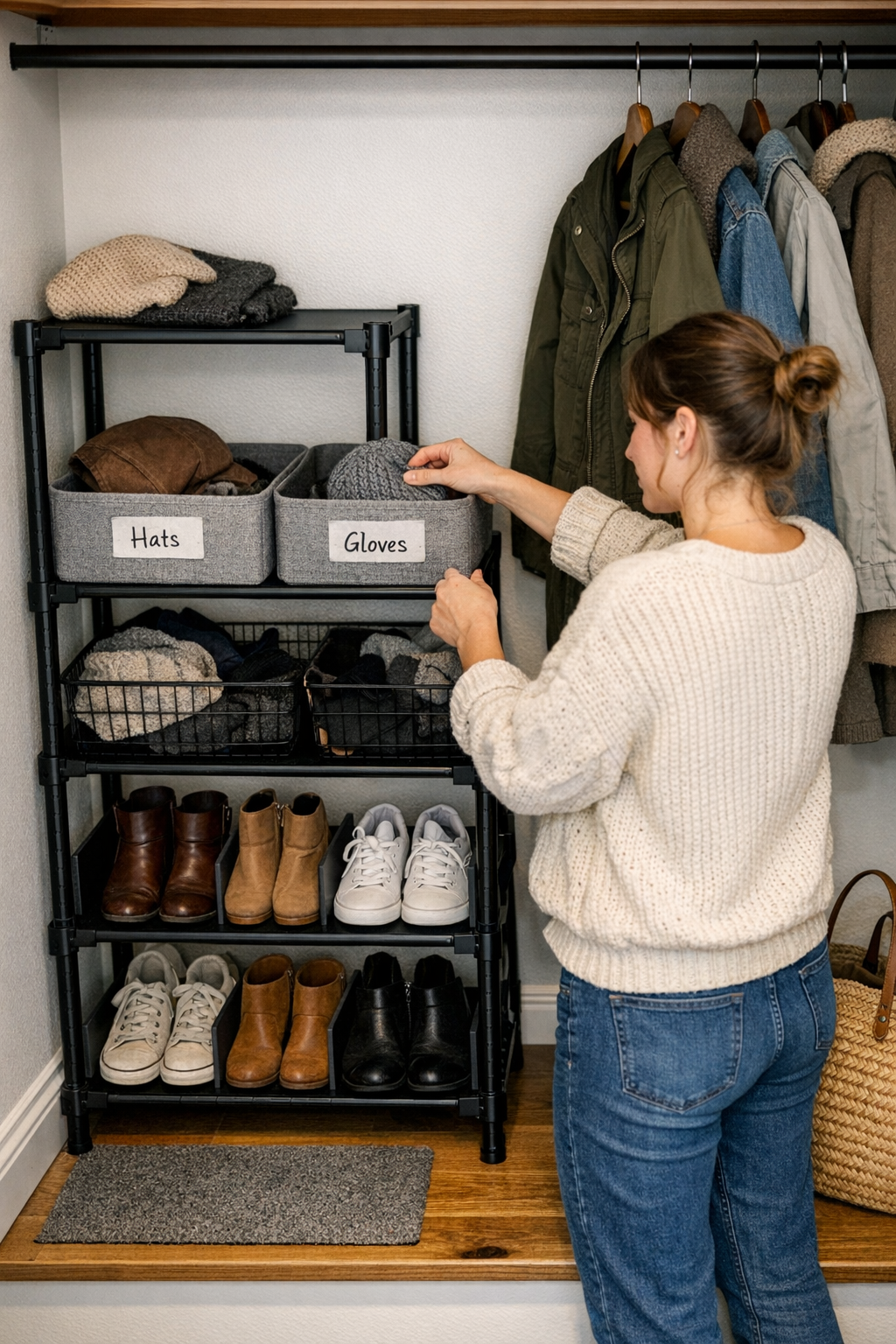
    • Swap one open bin for two smaller, shallower ones—one for hats, one for gloves. Overlapping stops cold.
    • Add dividers to shoe racks so each pair claims its own slot. Less sideways sprawl, faster retrieval.
    • Keep baskets only as deep as necessary—so nothing disappears at the bottom or gets buried out of sight.

    These tweaks mean you rarely need to move one thing to get another. Resetting the closet happens almost by habit—the next item finds its spot without effort, and the chance of a misplaced favorite drops dramatically.

    Everyday Friction—How It Builds

    The sweater stack shuffle: Chasing the right shirt means disturbing a teetering pile—with a shoe wedged in the middle.
    The basket lottery: That generous bin now hides three winter gloves, last year’s running hat, and a grocery bag—finding one thing takes emptying half its contents.
    The migrating entryway: Scarves fall from hooks, boots wander, and twice a week you clear a path through catch-all clutter just to find your keys.

    These moments kill momentum. They chip away at the “quick in, quick out” promise an organized closet is supposed to deliver. Lack of boundaries, not lack of space, is why things go sideways.

    Gentle Boundaries: What Makes Them Work

    You don’t want rigid cubbies for every object—but soft, purpose-driven boundaries completely shift how your closet behaves. A simple bin with a divider, a shoe tray that draws a line down the middle, or a set of face-out vertical organizers can:

    • Keep similar items together and visible—no blind digging.
    • Reduce clutter creep, since every category is easy to spot and return.
    • Make daily tidying almost thoughtless—items move back with zero mental negotiation.

    A Quick Visibility Fix

    If something slips behind a stack or vanishes to the back of a deep bin, it fades from daily use. Put the things you actually grab up front and upright—shallow bins, standing pouches, low-profile trays. The easier it is to see, the less likely it is to slip into the category chaos most closets hide.

    Storage That Cooperates With Real Life

    No system is flawless—the goal isn’t a magazine spread, but friction that fades in everyday use. With the right boundaries, resets shrink to seconds instead of minutes. Schedules stay hectic, but at least the closet doesn’t get in your way. Shoes have a slot. Sweaters stay stacked. Gloves come home to their own easy-access bin. You get out the door with one less headache—and your space works for you, week after week, with less effort and less stress.
    Shop ClosetWorks for practical storage solutions

  • Maintaining Impact Driver Bit Retention for Consistent Fastening Performance

    The moment you snap a bit into your impact driver, you’re making a bet: when things get uncomfortable, will this setup actually hold? In the morning, everything clicks into place—fresh bit, clean collet, jobs flying by. But as the day digs in and you’re running screws overhead, wrestling engineered studs, or buzzing through old subfloor, bit retention stops being a background detail. One slip, one chewed screw head, and you’re reminded—tool performance isn’t just about torque numbers, it’s about what happens when wear, dust, and repetition add up.

    Bit Retention: The Hidden Weak Link

    Work a job—real wood, tight space, arms above your head—and each micro-move matters. The first screws go in like clockwork. By mid-shift, a bit of play in the collet creeps in, blurring how much control you actually have. That tiny looseness starts a cascade: bits back out, cam-out scars pile up, and screw heads look melted or torn by the end of the run. It’s not a dramatic “pop”—just a creeping slop that sabotages your finish and your speed. Neglected retention doesn’t shout; it erodes your rhythm, drive after drive.

    How Problems Creep Up (and Why You Don’t Notice Right Away)

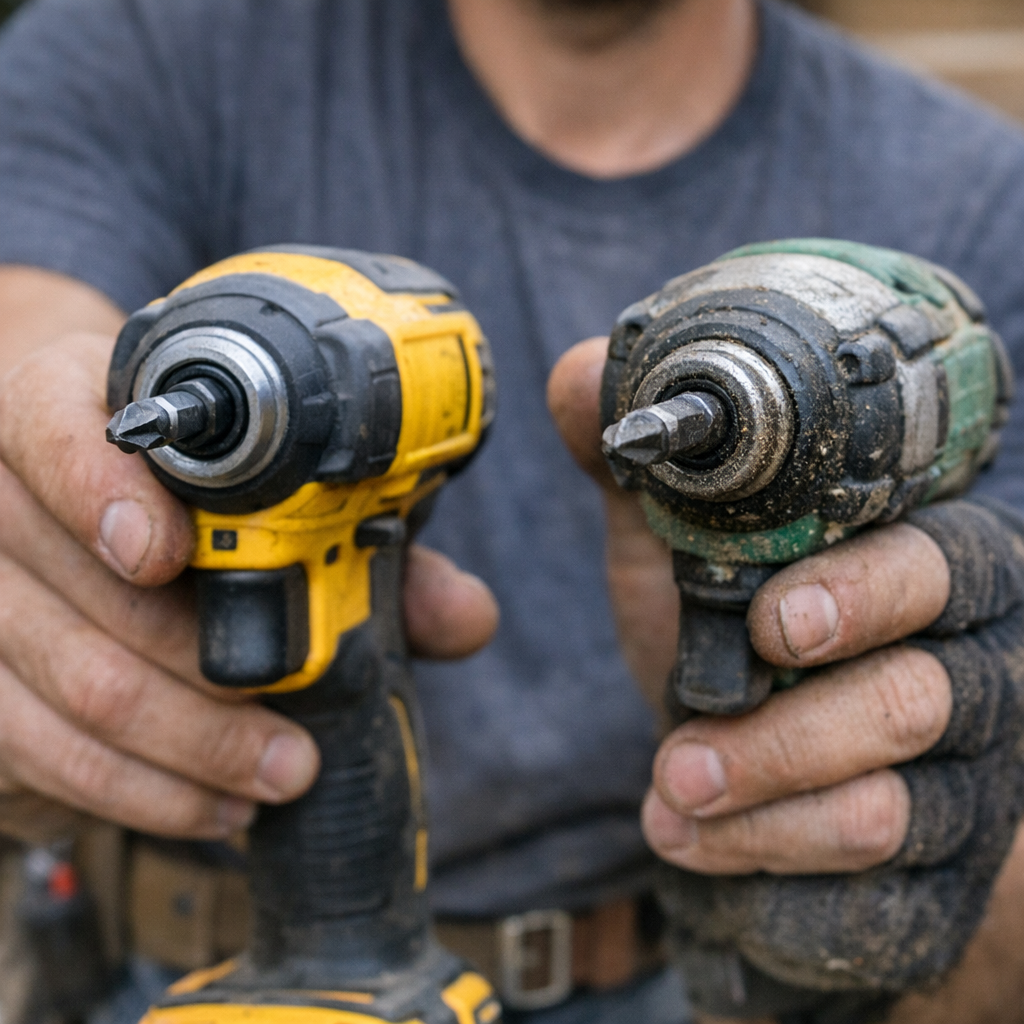
    Set two drivers on the bench—one’s cared for, one’s barely wiped down. Both feel fine on the first plywood sheet, but push into denser, rougher stock and the gap shows. Sawdust, resin, or just Monday’s grime keeps the bit from seating flush. It acts “close enough” until you hit a stubborn fastener and suddenly the bit skips, rattles, or sticks partway out of the drive head.

    This isn’t just theory—it’s routine shop trouble: One week, no cleaning, and suddenly you’re extracting bits jammed in a resin-soaked collet, or replacing screws that look shredded before they’re even tight. Swap bits too often without wiping down, and you’ll see fine metal flakes and growing side-wobble build up fast. The “click” you trusted at the start? If you’re not vigilant, it’s acting as cover for accumulating slop.

    What Maintenance Actually Feels Like Under Real Pressure

    Bring two tools to a stubborn corner cut—both loaded with fresh bits. The cared-for driver channels energy cleanly, every squeeze feeling tight and expected through the handle. Grab a carelessly maintained driver and you’ll start picking up extra wiggle, unexpected vibration, and fasteners driven at a crooked angle. It’s not just damaged screws—it’s energy lost, bumps transferred straight to your wrist, and time burned fixing avoidable scars.

    Try keeping your arms overhead after a full bag of screws: On the second ladder move, muscle memory wants the tool to just work. But that slop in the collet or sleeve leads to the bit catching, bucking, or even sliding just enough to jam a screw too deep. Small lapses in retention turn into fatigue fast, and the job starts feeling heavier than it should.

    Five Minutes That Change a Week of Fastening

    One crew member, cutting corners on cleanup, starts noticing bit wobble and chewed heads halfway through a door install. He finally stops, wipes down the collet, brushes out debris, drops a hint of oil in. The result: instant drop in side-play. Suddenly, every screw sets flush, metal shards disappear, and finish work picks up speed. No new driver, just a five-minute reset that saves twenty minutes of headaches by the end of the day.

    Real-world ritual: Keep a small rag and oil in your tool roll. Quick wipe, drop of oil between material swaps—especially when moving from gritty treated lumber to interior ply—means fewer mid-run interruptions and tighter fits every time.

    Spotting When Your Driver’s Slipping

    Know the signs before mistakes build up:

    • Bits start spinning or wobbling after the third or fourth screw
    • Screw heads finish with sharp, torn edges—even on “easy” material
    • You feel a surprise jolt down the handle, or an odd chattering sound mid-drive
    • Bright scuffs or chatter rings form around fastener heads instead of clean seats

    If any of these start showing up, stop and check your retention—especially after dusty jobs or swapping between different fastener types and materials. Ignoring the creeping play all but guarantees lost efficiency and rougher finishes as the day drags on.

    Small Habits, Big Results—Why Most Runs Stand or Fall on Maintenance

    Smoother work isn’t about the newest driver on the truck—it usually comes from the most consistent habits. Daily care—dusting the collet, feeling for wiggle, the smallest hint of oil—keeps your workflow tight and your tool honest. By the hundredth fastener, that five-minute check will be the reason your work looks clean, feels lighter, and doesn’t stall out hunting for a backup bit or sanding over avoidable damage.

    If you want more practical tool solutions built for real work, visit Gumboll.

  • Why Your Garage Storage Fails After a Few Uses and How to Fix It

    The difference between a space that “looks organized” and one that truly works for you is exposed at the exact moment you’re in a hurry—reaching for a tool, trying to reset the bench between jobs, or hunting for that one item you know you put “somewhere obvious.” In the world of garages, workshops, and utility rooms, the setup isn’t tested by photos on day one—it’s tested by the repeat friction that creeps in day after day.

    Where Friction Lurks: The Subtle Enemies of Flow

    Most setups start out promising. You spend a weekend lining up shelving, add a fresh cart, maybe even label every bin. At first, there’s relief: everything feels in control. But fast-forward a few weekends of real projects, and the cracks show.

    Do you find yourself nudging a cart aside—again—just to swing open a cabinet door? Unstacking two lighter bins to get that heavier one you always use? If grabbing a screwdriver means weaving through an awkward footprint or shuffling an overflow pile for the third time this week, your storage is silently slowing you down. What looked efficient becomes a daily source of tiny interruptions.

    When “Organized” Turns Into Obstacles

    An area that appears uncluttered on day one can quickly sabotage itself under stress. Return a tool after a long project and discover there’s no clear place—so it gets tossed in the nearest open bin. Then you block a shelf with leftover gear. Soon, small delays become predictable: sidestepping, pushing aside, rummaging. Every extra step and blocked route reinforces the same truth: the system fits the stuff, but not the way you actually use the space.

    Reality Check: The Shuffle Trap in Action

    You finish yard work with tools caked in dirt. You bring a shovel back to the garage, but can’t return it to its intended spot—maybe a camping cooler is blocking the shelf, or a folding chair wedged in from the last “reset.” Out of time, you lean the shovel against a wall or wedge it into a bin. By next weekend, it’s buried, and the quick return becomes another drawn-out hunt. Over time, what should be “grab-and-go” turns into constant reshuffling. The system doesn’t fall apart all at once—it wears you down through accumulated friction.

    Overflow Zones and Corners Gone Stale

    Every setup develops trouble spots: one shelf that absorbs anything that doesn’t fit elsewhere, the back corner that becomes a graveyard for half-finished projects, a stretch of wall that’s labeled but never truly used. When those overflow areas swell with stray items—when you keep parking a cart in the only clear floor path, or junk spreads into the same awkward corner—the layout has stopped supporting you and started resisting your flow.

    Overflow signals lost ground. It eats up valuable floor space, clogs walkways, and bogs down even the quickest reset. The mobile cart meant to increase flexibility becomes immobile—parked in front of standing space, collecting whatever you can’t put away quickly. Instead of relieving chaos, your “solution” reshuffles it into places that interrupt real work.

    Pretending to Be Organized—Until Use Proves Otherwise

    Beneath the surface order—stacked bins, neat labels, fresh lines on the floor—old problems often persist. If putting anything away regularly means shifting something else or inventing new categories on the fly, your routines suffer. What starts as organization slips into a free-for-all: categories blur, clear paths vanish, and the time spent “maintaining” only increases.

    Unlocking Flow: One Upgrade Can Change Everything

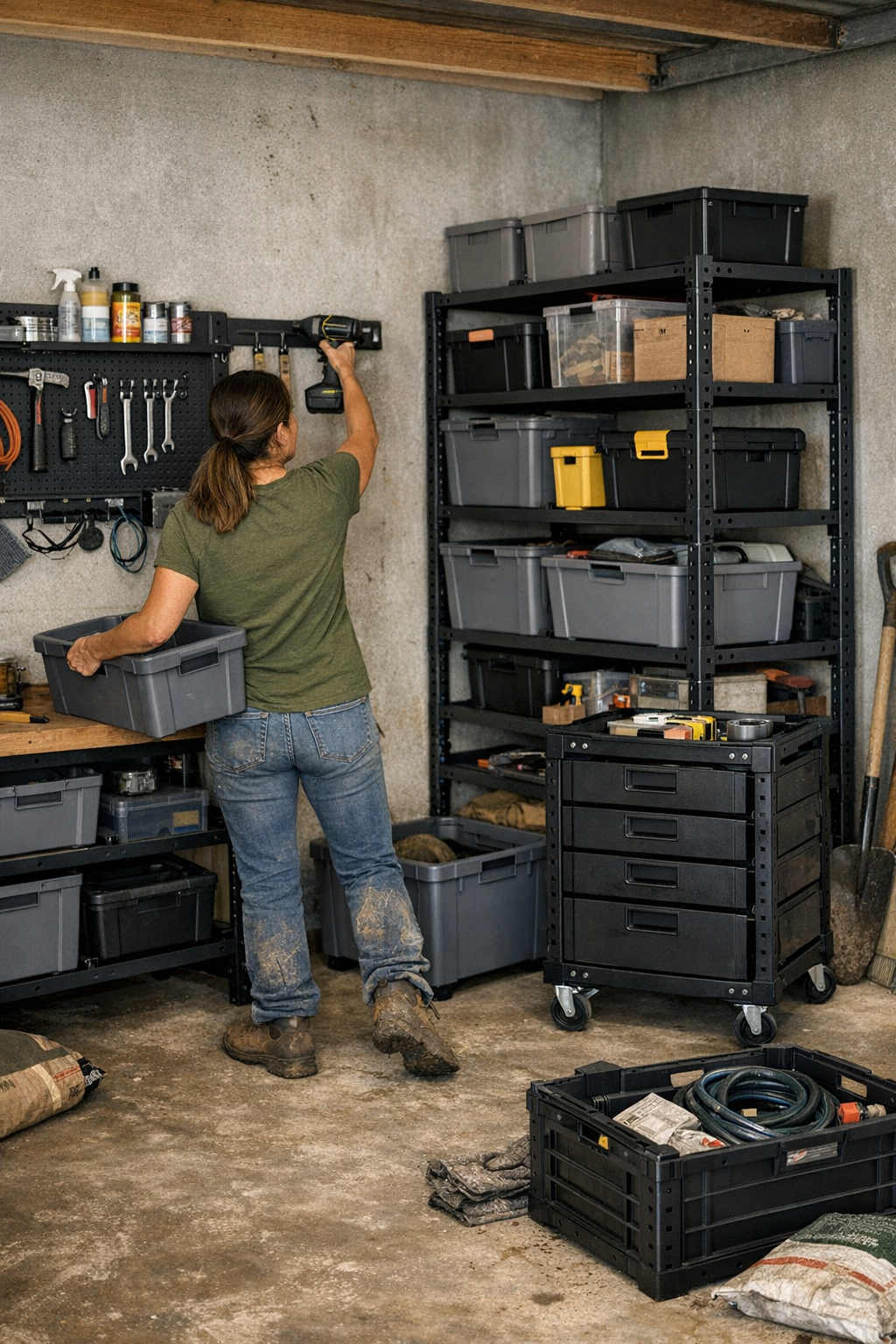
    True improvement rarely means a full overhaul. Often, one smart tweak unlocks your whole routine. Swap a deep, double-stacked shelf for a shallow wall rail above the bench: suddenly, you’re not reaching over three bins for pliers—they’re just there, in sight, at hand. No more stacking and restacking. The setup isn’t perfect, but every grab-and-return is smoother, faster, less likely to snowball into chaos.

    These changes don’t erase mess forever—but they create a system that stays functional even as tools shift in and out. Over time, that’s the real difference: a workspace that adapts to use instead of collapsing under it.

    Try These Two Real-World Tests

    • Map your return moves: The next time you’re done with a chore, notice exactly how you put back the five things you touched most. Are there extra steps? Do you have to detour or move something else first? Small annoyances repeat and multiply fast.
    • Spot your quiet spill zones: Pay attention to which areas gather items “just for now.” Are those shelves or floor areas attracting overflow because there’s no real home for those objects? This is the setup’s pressure test—where it breaks, revise with clarity or fresh storage before clutter becomes the default.

    Making the Setup Last: Build for Use, Not Photos

    The best setups aren’t the most visually impressive; they’re the ones that let you move without second-guessing, reset without dragging bins around, and adapt quickly as needs change. In practice, that often looks like:

    • Mounting your high-turnover tools right where you actually use them—even if it “breaks” the symmetry.
    • Creating designated cart paths free from blockage, not just empty floor on setup day.
    • Picking storage shallow enough that nothing gets buried, so you see it, grab it, and put it back—no buried layers waiting for next season.
    • Tweaking the system regularly when new overflow or dead zones appear; don’t wait until frustration sets in.

    Setup is a living pattern—never finished, always adapting. A system that fits your real routine makes daily movement simpler, not more complicated. If you constantly find yourself blocked, overloaded, or reshuffling despite best efforts, it’s not disorganization—it’s your current setup holding you back. The right, practical adjustment can shift your workspace from a struggle back to a tool that actually helps.

    http://stacknest.myshopify.com

  • Balancing Style and Function in Everyday Storage Solutions

    The glossy promise of “organized” storage is everywhere—matching baskets, rows of bins, that dream of everything in its place. But real-life pressure points surface fast: not on day one, but during the third rushed morning, the fourth laundry load, the fifteenth time you dig for headphones you swore were in “the basket.” Instantly neat-looking spaces are easy to create, especially in active zones like entryways, closets, or at the base of the stairs. But as the week unfolds, it’s the usability—not the look—that matters. That’s where so many setups quietly break down.

    Photo-Ready or Practical? The Tradeoff You Feel Every Day

    Uniform bins and pretty baskets deliver instant transformation: shelves go from chaos to a glossy catalog page. The illusion usually unravels by breakfast. With nearly identical baskets, the search begins: all the lids look the same, but today you need the field trip form, a left glove, the earbuds for the bus ride. Closed storage turns morning access into a guessing game—lifting lids, peeking under folded scarves, hoping you don’t have to upend a stack to check the next bin down.

    This whack-a-mole hunt doesn’t limit itself to one spot. Bins migrate to bedroom bookcases, hallway shelves, laundry nooks, and suddenly every quick grab becomes a mini excavation. The daily buildup is subtle: things quietly drift out of the “system” onto open surfaces—a hat on the banister, shoes abandoned by the sofa—because retrieving them from “organized” storage now takes three extra steps nobody wants to repeat.

    When Hidden Storage Creates New Problems

    Closed bins aren’t inherently flawed—they’re just mismatched with everyday, high-touch items. For backup extension cords, extra mittens, or holiday decorations, hiding stuff away makes sense. For everything you—and everyone else—actually touches on a daily basis, it just gets in the way. With phones dying, mail needing sorting, and a child late for practice, the last thing you want is to fumble through the wrong basket—again.

    Categories That Don’t Stick

    Every storage system starts with hope: one bin for hats, one for pet stuff, another labeled for “chargers.” By Thursday, the charger bin holds crayons, goggles, and a single slipper. Life’s pace tramples categories. After enough mishaps—gloves tossed in “mail,” receipts hopelessly crumpled under scarves—the whole family stops bothering, because the work of sorting outweighs the payoff. Overflow builds up, and the original boundaries dissolve.

    The Chain Reaction of Extra Steps

    Scenes repeat: the dog leash hides in the third bin down, so two bins come out, slumping the tidy line of containers. Grab one thing, reshuffle them all. Or worse, you open, dig, and realize—wrong one. Stack, unstack, restack: these slowdowns add up and pile on irritation. By Friday, the shelves look less peaceful, more like an obstacle course. The “easy” routine is suddenly a test of patience.

    High-Traffic Zones: Where Order Collapses First

    Busy entryways expose the weakness immediately. Everyone coming in or rushing out wants surface-level speed, not lid-lifting or mystery bins. What begins as organized—backpacks in a bin, shoes stacked away—ends with sneakers clustered by the door and bags draped over chairs. The system quietly fails under the pressure of life in motion.

    Closet shelves tell a similar story. Folded shirts start upright in a deep basket, but as outfits are yanked during frantic mornings, the pile tips, shirts slouch, and soon everything’s toppled at the bottom. Instead of maintaining order, the storage container becomes just another mess to sort through, not a system that keeps its own shape.

    Real-life storage only works if it keeps pace with habits. If putting things away takes too many steps, or if seeing what you have requires constant uncovering, clutter will always find new homes—usually on the nearest horizontal surface. By Thursday night, open counters and spare chairs fill with everything crowded out of neat-looking bins.

    Open Storage: The Real Shortcut to Staying Organized

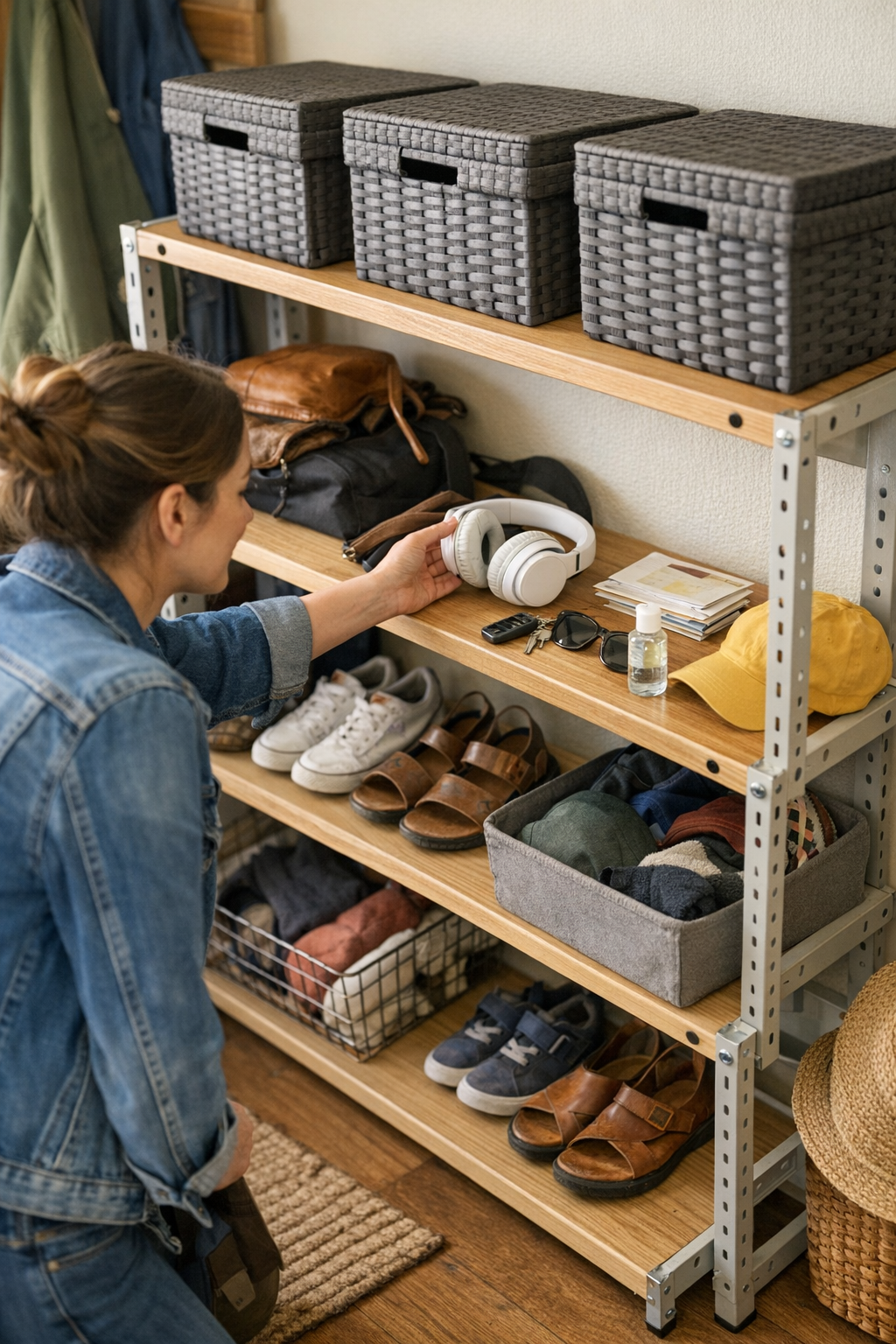
    Here’s where small changes make a visible difference: open bins, shallow trays, and clear shelves change the whole dynamic. With daily-use essentials in full view, you skip the rituals of sorting and hunting. Suddenly, “grab and go” routines work as intended. The result isn’t just speed, but better boundaries and less reshuffling overall. What actually happens day to day:

    • Immediate access: Water bottles, keys, headphones—one move, not five, and you’re out the door.
    • Easier resets: When you see the shelf crowding, you can purge or rehome items in seconds—no more “out of sight, forgotten ‘til spring cleaning.”
    • Role clarity restored: It’s obvious what goes where, so hats stay with hats, tech stays together, and the dog leash doesn’t wander into snack storage.
    • Fewer lost items: Visibility cuts down on double-buys and last-minute panics—if you see something’s missing, you notice right away.

    Set a Visual Limit—the “Tray Is Full” Trigger

    Open storage comes with a built-in signal: when the tray fills or the bin overflows, it’s time to purge. No more mystery stockpiles hiding behind closed lids. Use a shallow tray as a parking space for daily items—when you can’t fit more, it’s an obvious cue to reset. The shelf stays steady and your system regulates itself, not just on day one, but over months of use.

    Know When It’s Time to Rethink Your Setup

    You’ll feel it first in your own daily beat—if you can put things away and find them again without pausing, your system works. But when you catch yourself:

    • Repeating the same hunt for the basics
    • Noticing bins morph into mixed heaps that lose their roles
    • Watching “just for now” items multiply on counters
    • Feeling hesitation or annoyance every time you need to return something

    —that’s your gut telling you it’s broken. Usually, you don’t need a total overhaul; one open shelf at “grab height,” or a few see-through bins in the busiest spots, is enough to take the pressure off and win back function. You don’t need perfect categories—just visible, one-move homes within reach.

    Where Style Meets Reality (and Actually Lasts)

    There’s still a place for lidded boxes and matching baskets. For guest blankets, off-season decor, or craft supplies you reach for once a month, the benefits of hidden storage—dust control, visual calm—make sense. But for your “in and out” stuff, visibility wins every time. Durable, livable order isn’t about glossy calm; it’s about being able to function, fast, every day—even after a tornado of a week.

    If shelving still feels crowded, bins fill up fast, or the “organized” look falls apart by midweek, consider: a move toward open, obvious storage isn’t just style—it’s relief. And relief tends to last longer than any label.

    Find practical solutions for every routine and room at ClosetWorks.

  • Prevent Masonry Drill Bit Overheating with Carbide Tips and Proper Technique

    Halfway down a row of concrete block, your drill buckles, the bit smokes, and progress grinds to a halt. You started clean—anchors ready, a fresh bit that looked promising in the lineup. But by hole seven or eight, every push on the trigger feels heavier. Dust comes out black and gritty, the bit’s tip is too hot to touch, and that perfect paint finish is left scarred by ragged holes. Most crews have lived this shift: what seemed like a routine string of fixings turns into an hour spent patching, swapping dull bits, and wishing you’d grabbed masonry-rated gear.

    The Subtle But Brutal Gap Between Bit Types

    On the bench, “all-purpose” and masonry-labeled bits look nearly identical. Toss either in your kit and you might not think twice—until you put them into real material, back-to-back. The first handful of holes into concrete tends to hide the difference. Steel bits blast through soft surfaces and even tease you with early success in block. Then, as soon as you’re locked into a repetitive run, their limits reveal themselves: the drill starts to whine, you force the tool more, and the bit edge starts to fail from heat soak not visible at first glance. Suddenly, instead of drilling, you’re stuck in a loop—bit stalls, holes get uglier, and your work tempo falls apart.

    Why Heat and Vibration Steal the Job from You

    Masonry work generates relentless heat—fast. Drill bits meant for wood or metal aren’t built for this: their edges overheat, metal blunts out, and dust turns dark within minutes. As temperature climbs, you feel more resistance, the tool starts wobbling, and your holes lose their precision. It’s not just about progress—now your anchors risk shifting or slipping. Even one ragged entry can lead to patching, redrilling, or worse, leaving behind a weak fastening point you’ll worry about long after cleanup.

    Carbide-tipped masonry bits are different for one simple reason: they’re made to stay sharp through the heat. The carbide edge cuts cleaner, dissipates heat faster, and resists vibration. You keep your rhythm, and holes stay true—so you’re patching less and moving faster, without burning through your forearms or your bit stash.

    Quick Scene: Swapping Bits, Feeling the Real Change

    Try blasting three holes in old brick with a basic steel bit. The drill labors. Dust is burnt. The result? Jagged, chipped entry points and paint you’ll have to fix. Switch to carbide mid-job—immediately less vibration, the noise smooths out, and round holes actually hold anchors snug. You finish faster, and the wall looks like you planned it—not like you fought with it.

    When Good Drilling Starts to Go Bad—Spotting the Decline in Real Time

    Picture it: fastening conduit runs, spacing brackets evenly along that block wall. Early on, every anchor seats cleanly. But as you move down the line—especially if you’re stubbornly sticking with a worn or generic bit—the problems compound:

    • The drill growls and chatters, fighting the material at each new hole.
    • Acrid heat rises—burnt dust, scorched bit tips, and the unmistakable smell of overheated metal.
    • Entry points chip out, paint flakes, and the holes drift off-round or widen unpredictably.
    • Dust gets gritty, black, sometimes even clumps or fuses inside the hole, making each pass harder than the last.

    By hole ten, you’re juggling patch compound and swapping bits, hoping you haven’t ruined the finish or the day’s schedule. Anchors sit loose. You try “wobble-drilling” to get through—but you know it’s a shortcut you’ll pay for when those brackets get checked down the road.

    Working On, Not Against, the Wall: How Carbide Bits Change the Game

    When you switch to carbide-tipped gear and add a rhythm of short pauses, everything clicks back into place. Trusted job habits make the improvement obvious:

    • The bit keeps its edge—hole after hole, 20 or more, with far less chatter or pressure needed.
    • Pausing briefly to brush out packed dust or tap the bit free keeps holes cool and sharp—five seconds you gain back tenfold by skipping later repairs.
    • Feel it in your hand: steadier runs, fewer tool surges, and predictable cut speed the whole way down a bracket line.

    When the bit stays sharp, the tool does most of the work—not your wrist, not your patience, not tomorrow’s patch list.

    Field Habits That Actually Save Time

    Here’s what separates a smooth run from a struggle:

    • Clear dust every few holes. Packed debris acts like insulation—trapping heat, blunting your bit, and ruining hole quality fast.
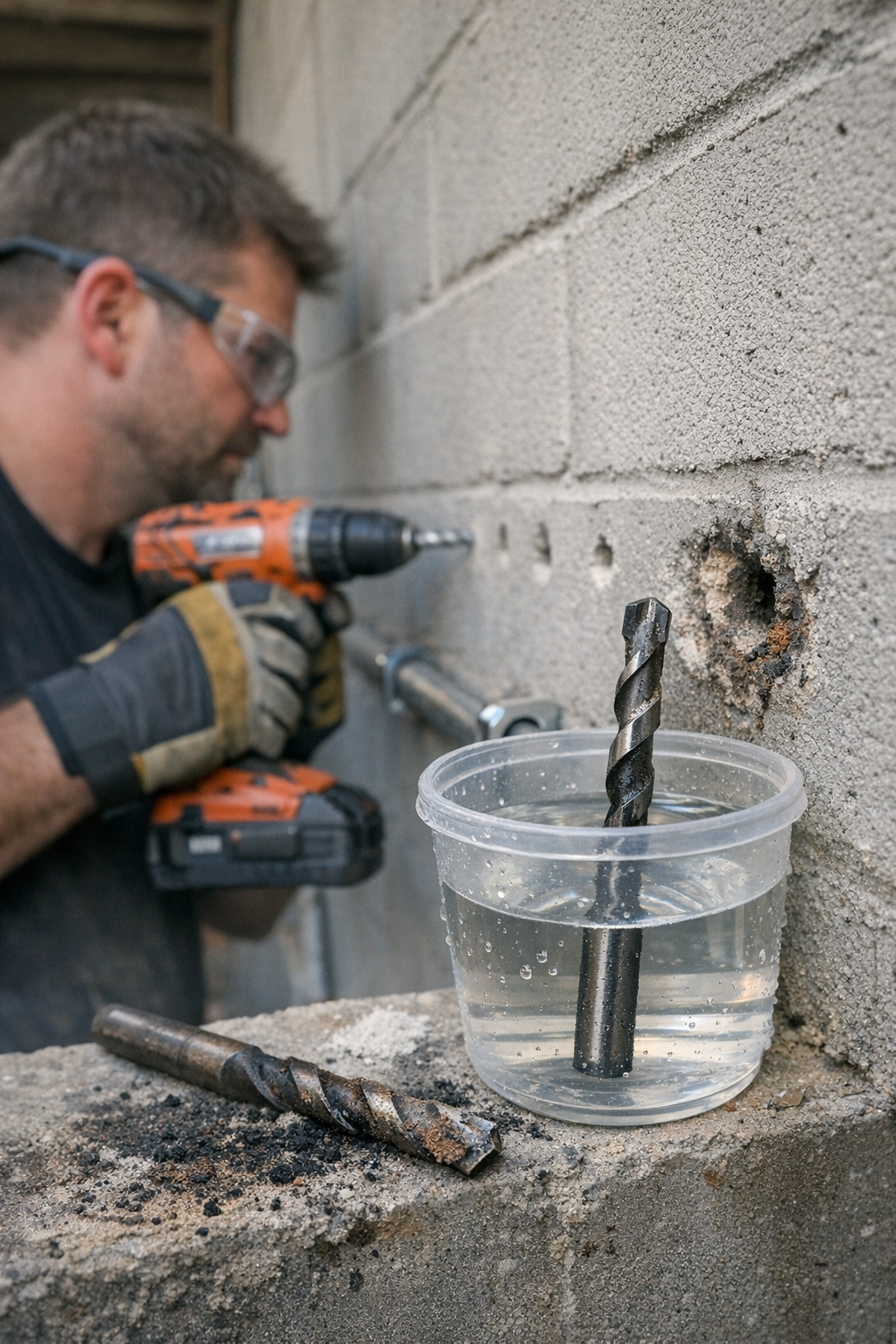
    • For relentless block or old concrete, dip the bit in water or use a mist sprayer. It’s a two-second move that stops overheating before it starts, giving you a real shot at making one bit go the distance.

    For a handful of holes in newer brick you might skip these. But facing a row of block or jobs where finish quality matters, these tricks mean less downtime, fewer broken bits, and walls that don’t betray the battle fought for every anchor.

    Real-Life Questions About Bit Overheating—Answered

    Why do my bits burn out so fast in concrete or block?

    Dense masonry builds heat inside holes way faster than wood or drywall. Standard bits can’t ventilate or deal with constant friction—they dull, slip, and burn, sometimes inside ten holes. Masonry-rated carbide bits, plus mid-job pauses, stay working longer and avoid that mid-job collapse.

    How can I tell a bit is cooked—before it ruins the wall?

    The drill starts dragging, vibration rises, and burnt dust or scorched tips show up quick. You’ll often smell a sharp, burnt odor before noticing visible damage. When these signs hit, stop—cool the bit, clear the debris, and don’t try to muscle through, or you’ll create more work later.

    Is water dipping just for pros, or does it help on basic runs?

    If you’re knocking out a couple holes in soft material, water isn’t always worth the fuss. But if you’re tackling a long line in older block or stubborn concrete, a quick dip or spritz between batches can extend bit life and preserve finish—actual time saved, not just for show.

    No Hype, Just Fewer Headaches and a Cleaner Result

    No drill bit is magic, and nothing bypasses wear forever. But in the chaos of real jobs—walls that aren’t perfect, anchors spaced by tape measure and instinct, paint that actually matters—the right bit, sharper drill rhythm, and small cooling habits take the fight out of the work. Instead, you keep your focus, your tools last, and the job wraps up without the telltale scars of a fight lost to heat and haste. Lose sight of these basics and you’re not just fixing ugly holes—you’re losing time, money, and trust in your own work.

    Explore Gumboll’s selection of masonry-rated bits and real job gear at http://gumboll.myshopify.com

  • Why Storage Systems Fail Over Time and How to Keep Them Functional

    The first day with a new storage setup—whether it’s in the garage, garden, or workshop—always feels like a minor victory. Tools have homes. The floor is finally clear. You can see the workbench and imagine move-anywhere productivity. But the real verdict doesn’t come on setup day. It arrives in the churn of real use: when you’re pushing through errands, bouncing between tasks, and suddenly that “perfect system” starts putting bumps in your path. What started as neat and promising can quickly turn into an obstacle course, crowding your routine where it should step aside.

    How Storage Systems Start Working Against You

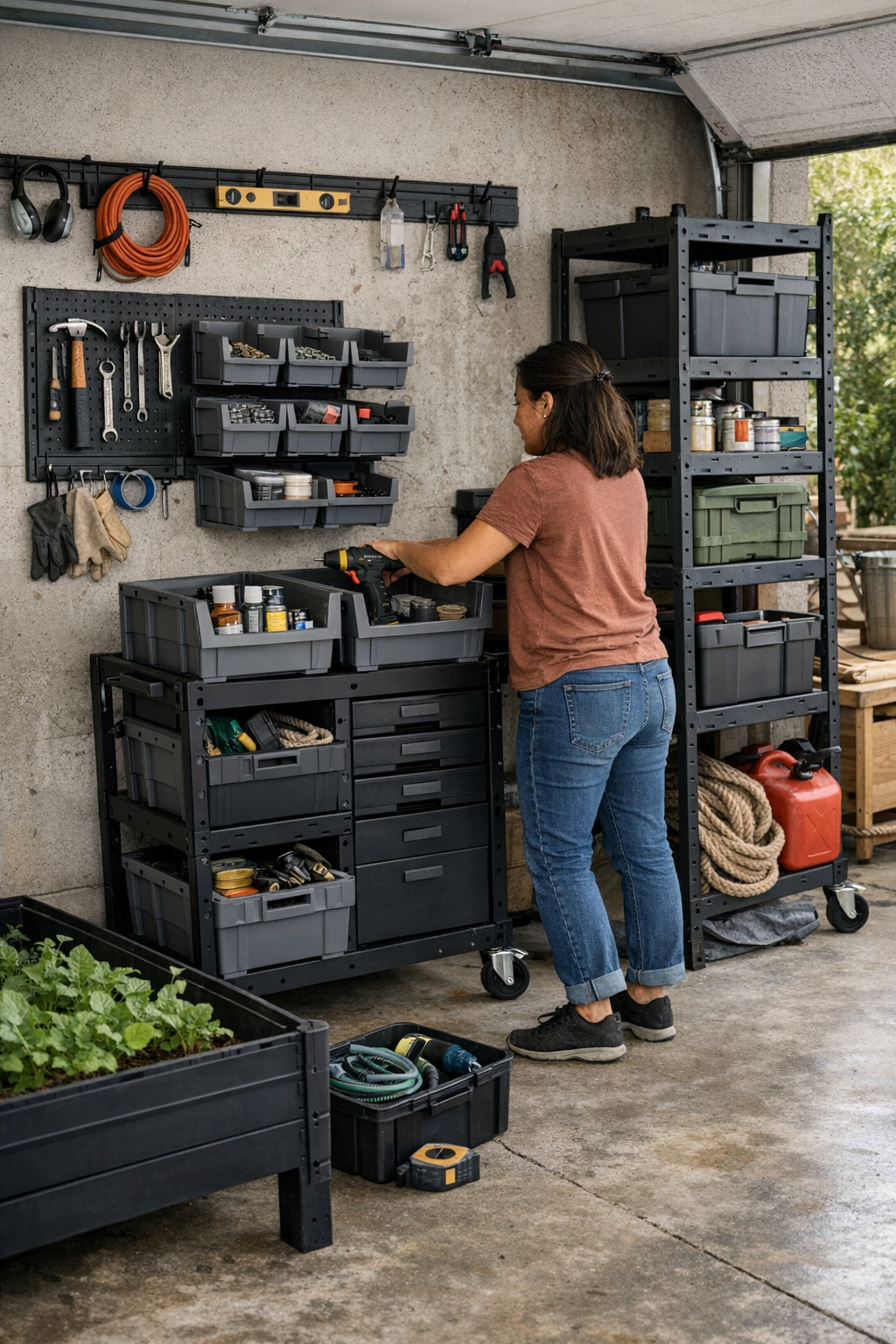
    Those wall racks, rolling carts, and modular bins promise to bring order. And at first, the improvement is obvious—you walk in, no piles underfoot, everything slotted in place. But as the calendar fills with half-finished projects and new supplies, reality sets in. That rolling cart you loved on day one? Now it’s blocking the aisle every time you need to drag the mower out or bring in a sack of soil. Wall racks show off your collection, but your most-used tools end up just out of reach or buried behind a row of things you use once a season.

    Friction starts small, then builds: a pair of bins blocking the drill for the third day in a row, a cart wedged in the exact spot you want to turn, a corner that never quite empties out. At first, it’s a few extra seconds. But stack these up—five nudges, three detours, the daily search for snips or a box of fasteners—and your routine slows. The “organized” area gradually fills with tools left out, overflow zones, and a creeping sense that the storage solution is just reshuffling the mess at a different angle.

    Where Storage Systems Fail the Day-to-Day

    The flaws don’t show during a careful Sunday setup—they emerge after weeks of improvising. Imagine grabbing a handful of screws in the middle of a busy Saturday, only to swerve around the same rolling cart that keeps popping back into the path. Or dropping a wrench onto a countertop, then realizing you need to unstack two bins just to put it away again. The little hassles multiply until you find yourself leaving tools out—because returning them feels like another chore.

    • Pulling three stacked bins apart just to fish out the one thing you always need.
    • Pushing the cart aside for the fifth time that morning, just to squeeze by.
    • Parking tools on a half-cleared bench, promising yourself you’ll sort them “later.”

    Most setups don’t collapse in a single dramatic event. Instead, the routine grinds down. The area built to help you work ends up breaking your stride—and all the neatness counts for little if you can’t move, grab, and put back tools in real time.

    Why “Tidy” Isn’t Always “Efficient”

    Looking organized is not the same as working efficiently. The clean rows of bins might impress at a glance, but if every trip means unstacking and tucking away awkwardly, you’re paying with time. Wall racks can clear the floor but make you stretch, reach, or shuffle sideways each time you need the gear you reach for daily.

    Consider the deep bin stack: it looks space-savvy—until you’re lifting three containers to dig out a socket set from the back. By the end of the project, an overflow pile appears “just for now”—right in the walking lane. A week later, the corner that should funnel supplies becomes a dead spot, holding whatever didn’t get put away because the process was just a bit too much hassle. Slowly, resets get ignored and the surface meant for working is reclaimed by clutter.

    Shifting from Storage to Movement

    The fix isn’t always more storage. Sometimes it’s subtraction—removing what gets in your way. After months of repeating the same detour, clearing out the overstacked bins and relocating the bulky cart changed the entire flow. Suddenly, the shortest route wasn’t blocked. Rather than three sidesteps to get across the space, it was a direct walk. The friction points—those subtle pauses and hesitations—vanished, and tools returned to their spots because it only took a second, not a reshuffle.

    Watch for repeating roadblocks: If you’re always shifting the same container or inching past the cart that almost fits, those are signals. The right move might be clearing that one high-traffic zone or reassigning where “overflow” lands. Sometimes moving a single choke point is enough to reset the area—without bringing in another organizer or gadget.

    Pinpointing Where Things Really Go Wrong

    Wall-Mounted Racks: Convenience or Compromise?

    Nothing beats cleared floor space on paper, but reality bites when racks get overloaded or hung above a comfortable reach. Instead of a grab-and-go, you’re balancing on tiptoes, reaching behind objects—or just leaving the tool on the bench for next time. Efficiency gives way to workaround: the “temporary” pile, the forgotten pair of shears, the bags that start nesting on the nearest chest instead of going up on the rack.

    Bin Systems and the Dead Corner Effect

    Storing bins side by side or front to back can look efficient, until every use means shuffling containers. Over time, the extra steps (and resistance) add up, and those “organized” bins become magnets for small piles—items stacked on top or just dropped nearby because returning them means disrupting the configuration. Dead corners aren’t truly empty; they’re the places that absorb whatever doesn’t have an easy return path. The result: slow but steady creep of clutter into what used to be clear space.

    Making Storage Work for Your Routine

    The best storage setup doesn’t just look tidy—it makes every movement smoother. When you can grab, use, and return something without sidestepping, restacking, or hesitating, the system works for you, not against you. True improvement is about reducing decisions and effort in the reset, not maximizing how much you can jam onto a rack.

    Every gadget promises a cleaner workspace, but only the system that fits your daily routine actually keeps order in play. Look where your flow is getting interrupted—those nudge points, chokepoints, and clutter-friendly corners. Don’t hesitate to tear up what isn’t working: shift containers, clear out the cart, and reclaim direct paths. The goal isn’t perfection; it’s practical motion. The best storage is the setup you hardly notice—because resetting the area is so easy, you do it without thinking, not just on clean-up day.

    Find modular systems, rolling carts, wall setups, and practical tools for working spaces at StackNest.

  • Why Stylish Storage Often Complicates Daily Access and Organization

    The perfectly arranged closet always looks great—right up until real life moves back in. All those matching bins and color-coordinated baskets promise easy order, but within days, the cracks appear. Shoes spill into the middle, gloves vanish into the wrong bin, and the morning rush leaves folded stacks crumpled and corners crowded. The show-home setup quickly gives way to the reality of daily routines: quick changes, tired evenings, unpredictable schedules. Suddenly the gap between “looks organized” and “actually works” is impossible to miss.

    When Style Adds Steps—and Friction

    At first, identical containers and perfect symmetry trick you into feeling in control. The neatness feels self-sustaining. But those matching lids and deep baskets rarely hold up to repeated use. Tall bins block your view, labels are forgotten, and opaque baskets mean mystery contents. Every time you reach for a charger or scarf, you’re shuffling containers—lifting, sliding, guessing. The system’s style becomes the source of its drag.

    The extra steps pile up quietly. By midweek, you’re reaching behind stacks to grab one thing, moving three baskets to find another, and reshuffling each time you put something back. Gloves land in the shoe bin. Chargers spill out over hats. Lids go missing—then never return. That “maintainable” closet now demands your attention every night, fighting your routines instead of supporting them.

    Where Appearance Beats Access: The Real Tradeoffs

    Picture a shared hallway closet lined up with matching lidded cubes. The initial effect is serene—everything straight, surfaces clear. But life in a busy home wears that system down fast. The moment you’re running late, bins get tugged out but not returned. Lids disappear. The most-used things migrate to the only open basket in front, while the rest become a jumble of tangled hats, tangled cords, and mystery items buried in the stacks.

    The daily rhythm exposes the system’s blind spot: categories blend, stacks topple, and shelf edges become drop zones “just for now.” Finding earbuds means upturning three bins. Grabbing gloves means reshuffling the row. Instead of curbing clutter, the closet hides it in plain sight—or worse, scatters it across the house as everyone leaves things where they land.

    The Real Weight of Over-Styled Storage

    Why does a closet that once looked effortless suddenly feel like work? Because you’re managing the setup, not using it. Each action—lifting a bin to see what’s behind, stacking baskets to reach something below, fishing through an unlabeled container—adds friction. Over time, what was supposed to simplify your life turns into a puzzle you solve on repeat.

    And as routines overlap—packages coming in, sports gear coming out, seasons changing—the categories lose shape. Winter gear slides into summer bins, everyday items get shuffled. The once-tidy arrangement becomes a daily game of stacking and re-sorting, just to get to the next morning without a pile-up.

    Spotting Storage Fatigue

    The warning signs are always the same: bins left out, piles forming at the edges, stuff “temporarily” stashed anywhere it fits. If opening the closet means shuffling three things just to grab one, or if you start leaving things out because putting them away is a hassle, your storage isn’t working for you—it’s working against you.

    What Happens When Storage Fits Your Routine

    Real solutions don’t come from adding more containers. The fix is aligning your setup with the way you actually use your space. In my own hallway closet, the breakthrough came from swapping a row of deep matching baskets for a mix of small open bins and a waist-high open shelf. Suddenly, there were no more hidden piles or balancing acts—shoes landed fast, grab-and-go items like hats and gloves had a simple drop zone, and all the high-use things were visible and within arm’s reach. The open shelf’s front edge, once a landing zone for clutter, finally stayed clear all week—because putting things away stopped feeling like extra effort.

    Smart storage setups reinforce routines instead of resisting them: when you can see what’s missing at a glance, you’re less likely to let clutter build. When putting something back takes one step, resets are faster by default. The system becomes self-sustaining because it’s built for how you live, not just how you want it to look.

    Designing Storage That Holds Up

    No closet or mudroom stays perfectly neat forever. But effective storage serves daily rhythms and fights back against clutter creep. Instead of fixating on matching bins and symmetry, use containers and shelves that mirror real-life categories—and keep your most-used items between knee and shoulder height. Break up deep shelves with open bins for things you reach for daily, and keep sealed baskets for out-of-season or rarely-used items. At least one open edge lets you spot missing or misplaced things before chaos takes over.

    Practical Tweaks That Make a Difference

    • Rethink shelf heights: Everyday grab-and-go items should land at “easy reach” level. If you’re crouching or reaching overhead for basics, swap the layout.
    • Watch for “bin overload”: If containers are multiplying—or migrating across shelves—ask if you really need a bin for everything. Sometimes an open shelf beats another box.
    • Audit your reset speed: If clearing clutter takes more than a minute, track down the storage step that slows you down. Strip out anything that creates extra work just to put things back.

    A Storage Setup Built for Real Life

    You don’t need a full overhaul—just honest tweaks where your routines meet resistance. The most effective changes rarely look drastic, but they pay off every day: less reshuffling, fewer mystery piles, and a closet that keeps its categories clear. Over time, your space feels lighter—not just because the surface looks right, but because it quietly supports the way you actually live. Everyone finds what they need, putting things away takes seconds, and sudden pileups become a distant memory.

    Find practical closet systems, shelves, and everyday storage options at ClosetWorks.

  • Why Consistent Anchor Depth Measurement Matters for Hammer Drill Accuracy

    Depth control doesn’t get respect—until it derails your whole install. If you’ve actually spent hours on anchor holes—drilling for racks, brackets, or overhead hangers—you know how quickly a fast, tidy project slips into a haze of misfires and slowdowns. At first, every hole feels smooth. But after a dozen plunges, cement dust grinds into your gloves, sharp tape marks fade out, and you’re second-guessing every bit of progress. Suddenly the anchors sit proud, don’t seat flush, or bite too shallow. Now you’re reaching for a punch or chisel, halting that early momentum, and muttering about “good enough.” What should be a half-hour run turns into wasted energy, patch-ups, and frustration that nobody budgeted for.

    The Real-World Mess of Measuring Anchor Depth

    Whether you’re mounting heavy brackets in a damp basement or securing a pipe run in a grimy garage, every anchor has to land just right. That should be routine, but on real jobsites, the margin shrinks fast. Shop dust turns that crisp white tape into an unreadable smear before you’re even halfway. The drill’s built-in depth stop, if you bother setting it, can loosen from vibration or just get ignored in a rush. Even a collar, if set in a hurry, has a way of drifting after a few cycles. Every workaround has a weak spot, and small lapses quietly stack up until one “quick” job becomes an afternoon of fixing what the tape or stops missed.

    When Tape Fails—and Morning Shortcuts Bite Back

    Slapping a tape flag on your bit is fine for a handful of holes—but under real pressure, tape slides, gets obscured by cement, or peels off mid-run. By the fifth or sixth hole, you’re squinting at fingerprints and guessing depth by muscle memory. If your hands are slick or the lighting bad, good luck actually seeing any marker. There’s no consistency, and suddenly you’re shoving anchors and hoping they’ll seat. Of course, you hit one too shallow—so now you’re cleaning, prying, maybe running a new hole, and losing flow as your arms and patience give out.

    Collars and Stops: Feel Without the Guesswork

    Swap tape for a true depth collar and it’s a different job. The second you feel that collar touch concrete, you know you’ve hit target—no peering through dust, no second-guessing. It’s tactile, not visual. You can check depth by feel, even if visibility is shot. Proper stops or collars don’t win awards for perfection. They win by making every hole routine: line it up, drill till you hit resistance, move on without hesitation. The payoff is measured in smooth installs and projects that finish on pace with the first anchor every time.

    Scenes the Shop Floor Knows Too Well

    The difference shows up when you’re working at awkward angles or with your head pressed beneath a shelf, nose full of dust. Try keeping a tape mark visible when drilling overhead—concrete snow falls, your marker is gone in seconds, and now you’re guessing. Or drive anchors next to a web of old patched holes; you can’t afford a slip, but you also can’t clearly see your bit. The “quick fix” holes become repeat offenders—anchors end up proud, you reach for a hammer, and you know you’ll be explaining it later.

    This is where a fixed collar saves time and nerves. You don’t have to see the mark. The bit stops where it should, no drama, no extra cleanup. Less fuss with tools, less chance of scarring the wall forcing in shallow anchors, and fewer do-overs. It’s these imperfect moments—poor visibility, awkward spaces, and fatigue—where real stops or collars quietly pull their weight.

    Tool Setup: The Small Habit That Pays All Day

    Setup is seconds; mistakes burn hours. Set up with a depth collar—just a minute with a caliper or even a tape measure. Dial it in a few millimeters deeper than the anchor to clear dust. That’s all it takes. Set tight, that collar gives you repeatable, reliable hits, no matter how many anchors or how tired you get. The payoff isn’t theoretical: it’s bracket lines that stay level, fewer anchors that have to be hammered, and no more “almost” flush fastenings that catch a critical eye at the walkthrough.

    Stick with tape and, by hole number ten, accuracy fades. Each misstep demands a cleanup pause, sometimes fresh bits, sometimes redrilling. What felt streamlined at 9 am becomes a slow-motion loop of checking and fixing, slicing up both energy and jobsite morale. In the long run, control saves more than it costs.

    Background Habits for Depth Consistency

    • Set collars with actual measurements. Even a quick check with a caliper or tape beats a rough guess every time.
    • Drill a little deeper than anchor length (4-6 mm is usually safe). That extra depth catches stray dust and lets anchors truly sit flush.
    • Re-tighten collars every dozen holes. Hammer drills vibrate things loose—don’t assume nothing’s shifted.
    • Change out dull bits fast. Rounded tips throw off both speed and control, dragging your workflow to a crawl.

    The Win: Smoother Installs, Fewer “Do-Overs”

    The best installers aren’t just quick—they’re steady. Reliable depth means reliable anchoring, and it shows up in cleaner work and jobs that finish right the first time. You don’t have to chase perfection. Aim for habits that limit surprises: a simple collar, a minute’s setup, and fewer corrections down the line. Less wasted motion. Less backtracking. Less aggravation when conditions are rough and the work just won’t wait.

    Shop tools and accessories built for real job site reliability at Gumboll.

  • Why Wall-Mounted Storage Outperforms Floor Units in Busy Workspaces

    The real mark of an organized garage or workshop isn’t how it looks after a deep clean—it’s whether you can move, grab, and reset gear easily, day after day. The frustration comes not from a pile of clutter, but from a setup that turns every reset into a minor obstacle course. For all the talk of order, a space that seems “organized” on Saturday morning can quietly unravel by Wednesday, especially when floor units trap movement and collect overflow. In contrast, wall-mounted storage supports your routines—keeping paths clear and resets near effortless, no matter how many projects run back-to-back.

    Beyond the First Clean-Up: Where Friction Actually Starts

    That first hour after a big reorganization—rows of floor bins lined up, racks standing tall—feels like a transformation. Tools are sorted, everything visible, the floor reclaimed. But the testing ground isn’t the “after” photo. It’s what happens when you’re coming in with muddy boots one day and switching out garden gear the next. Racks inch into walkways. Bins scoot closer to doorframes. Suddenly, the space that felt wide open becomes a series of small detours and awkward hesitations.

    By the second or third reset, the cracks really show. Shoes pause at the edge of a shelving unit that’s crept forward, or you hesitate before rolling a cart that’s blocking the main lane—again. Resets go from a sweep of the hand to a multi-step dance: move this, shift that, just to reclaim the movement you thought you’d built in.

    The Hidden Problem with Floor-Based Storage: Movement Interruptions

    Floor units organize your gear—but claim your space in the process. There’s an initial calm: modular bins, racks, and carts suggest flexibility. Then daily reality intrudes. You haul out a lawn mower, return with a half-used tool bag, or grab a cleaning bucket in a hurry. A bin doesn’t make it back perfectly flush. A cart is left halfway between bench and exit, subtly wedged where you need to walk.

    Soon, what once held overflow becomes a magnet for it. A shovel is nudged to the wrong side of a freestanding shelf and stays there all week. Gear piles up against the “front row.” High-use zones morph into clutter traps, while corners sit empty or awkwardly unused, since floor storage is hard to move once overflow collects.

    Real Example: When Floor Overflow Slows Everything

    Picture the typical weekend reset. Hoses dry out by the wall, boots come off in a hurry, an overstuffed bin lands where you normally turn the cart. By Wednesday, you need to slide that bin aside just to carry groceries through, then shove a project crate back in line. The five-minute tidy becomes a multi-step routine: move-bin, pick-up, restore-path, repeat. The result isn’t chaos, but a slowing drag—more shuffling, less progress, every single week.

    Wall-Mounted Rails: Preserving the Flow of a Working Space

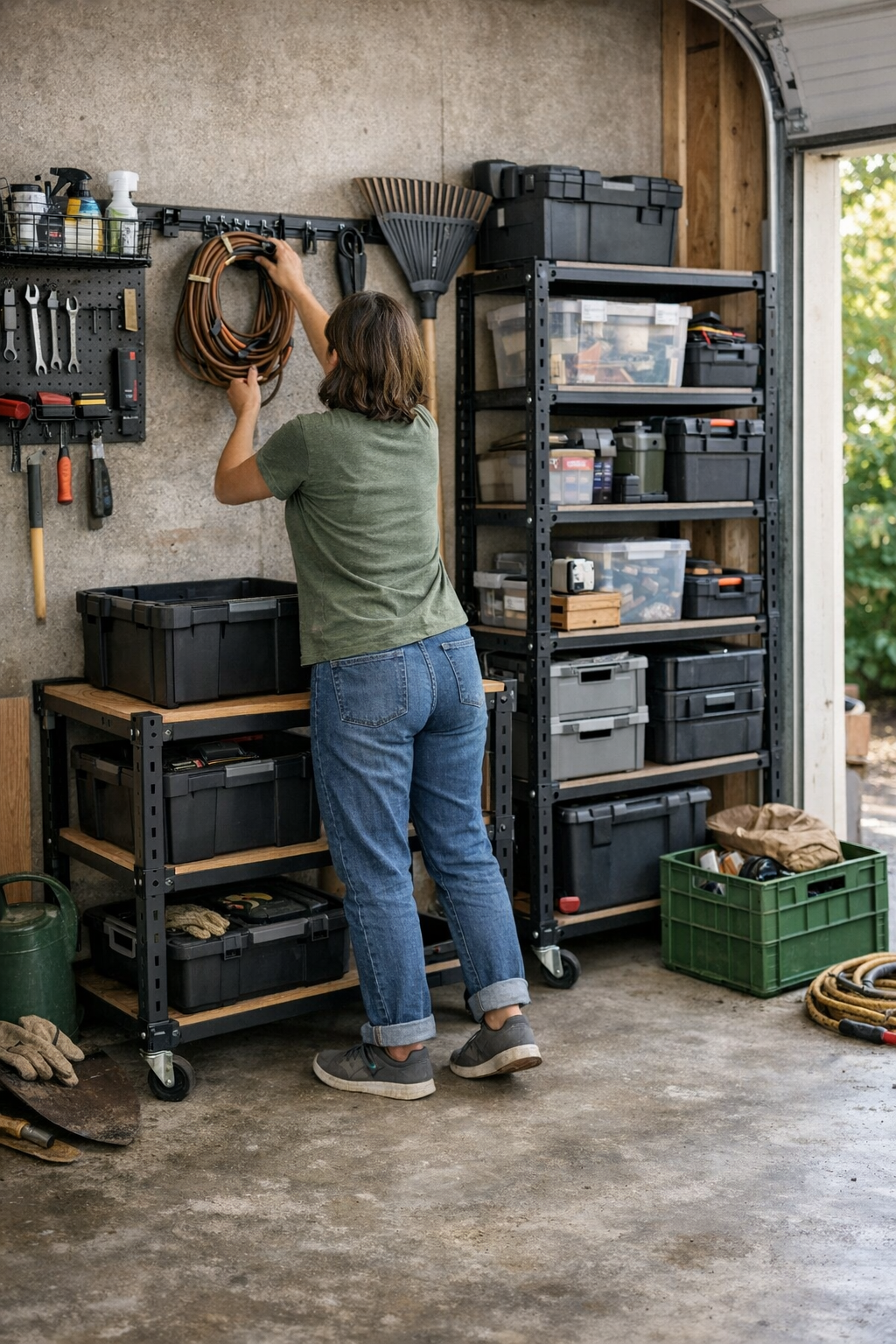
    A simple rail along the studs, a tidy bank of wall hooks, or a mounted rack seems almost insignificant at setup. But the shift in daily use is profound. No more stepping around bins or finding the cart’s in your way again. The floor stays open, with clear lanes through every high-traffic area—even on the busiest days.

    Returning a broom or tote is a direct movement, not a puzzle. The “return path” never gets choked with overflow, because everything parks above ground zero. The result: access stays quick, resets shrink back to seconds, and the garage feels ready for actual work—not just for show.

    Resetting Doesn’t Have to Get Harder—If the Floor Isn’t in Play

    Take away just two freestanding bins and you feel it instantly: straight-line movement between entry and workbench, no more weave-and-dodge through awkward footprints. Overflow tucks onto the wall or hangs in dead vertical space that never got used before. Resetting stops being a chore because there’s nothing left to drag, stack, or shuffle first. The area simply works, over and over, without a hitch.

    The True Cost of “Making Room” Again and Again

    Any floor footprint—no matter how efficient on paper—becomes a bottleneck with regular use. Quiet Tuesday? No problem. Three weekends in? The rack near the workbench now demands a sidestep every time you cross the room. Routine movement slows to a shuffle. Tools get left out, not from laziness, but because the path back is cluttered.

    This slow build-up—the quiet reshuffling, the subtle blockades—creates a hidden tax on your time and willingness to put things back. Before you know it, tasks get put off, not because you don’t want to do them, but because you’ve learned to expect a micro-hassle just to find a clear route.

    Designing for Routine: Why Floor Space Matters Most

    Order should support movement—not interrupt it. The setups that actually last aren’t just about maximizing storage, but about minimizing interference with the everyday flow. Wall-mounted racks don’t fight with carts, tubs, or boots—they slip seamlessly into the backdrop. There’s rarely a need to “make room,” and resets keep their original speed even as the area gets busy.

    Practical Tip: Protect Your Return Path First

    When rethinking your space, don’t just count storage slots—walk the actual route from entry to bench to door. Any item that repeatedly needs shifting—a cart, a bin, that “temporary” rack—is a candidate for the wall or for removal. Sometimes eliminating a single floor piece opens up an entire workflow and stops overflow before it ever starts.

    How Wall vs. Floor Storage Really Performs

    Why do wall-mounted rails keep things simple? It’s all about keeping the reset direct: grab, use, return—in one motion, with nothing to step around. The floor stays clear for work, and overflow never gathers in the main lane, so daily order is easy to maintain.

    Where do floor systems fall short? Anything that sits where you walk will become a landing spot for stray gear, stray bags, and the unfinished business of daily projects. More steps, more shifting—and more frustration with every round of cleanup.

    What are the pitfalls of wall setups? Overcrowd a wall or misplace the hooks, and you end up with dead corners or a jumble of tools that don’t really see use. However, unlike floor clutter, these issues don’t block movement—they just waste potential, which is a much easier fix.

    Reset Routines That Make Sense After Real Use

    The best setups don’t just look good on reset day—they stay easy for months of actual, messy use. Wall-mounted storage keeps lanes open and routines intact, so you spend less time reshuffling and more time actually working. Clutter has nowhere to collect and it’s clear what belongs where—so there’s never a question of “where to put this” when you’re done.

    If you want storage that works with your movement, not against it, start with the return path and keep your floor as free as possible. See storage options built for real-world resets at StackNest.

  • Why Setting Boundaries Transforms Closet Stacking Into Lasting Order

    The illusion of a tamed closet shelf rarely survives the first few busy days. Stacks of folded shirts line up neatly and bins squeeze edge-to-edge, promising order. But fast-forward to Wednesday morning: you’re digging through piles, steadying a collapsing stack with your elbow, bracing a bin that’s wandered halfway across the shelf. The surface still looks “organized,” but the friction is building—and not just because you have too many clothes.

    Why “Stacked and Sorted” Fails by Midweek

    The first setup always feels promising: folded items arranged like a display, containers right to the border, everything giving off that ‘after’ photo energy. Reality arrives the moment you need your favorite sweater from three layers down—or when you try to return a t-shirt to a category that’s already started to blur. Each attempt to grab, return, or reshuffle sends corners drooping and stacks slumping. What started as order quickly dissolves into a juggling act: pull one thing, hold up another, watch the overflow spill into whatever space is open. Categories you swore you’d keep separate slide together, and a shelf intended for “sweaters” becomes part accessory graveyard.

    How Boundaries Break Down (and Clutter Creeps In)

    Deep shelves almost invite trouble. The more surface area you have, the more likely stacks and bins are to lose form after a few real-life uses. By day three, those once-crisp edges get fuzzy. A hurried morning leaves shirts nudged into the scarf zone. By the second laundry cycle, you’re barely able to tell where one type of clothing ends and the next begins. Maybe you wedge a basket between half-crushed piles just to keep things from sliding completely out of place.

    None of it feels catastrophic in the moment. Instead, it drags at you—a slow, steady loss of clarity, until grabbing a single item means rearranging everything around it. The problem isn’t just “stuff overflow.” It’s the absence of a real stopping point—something that holds the line when you’re not looking.

    Boundaries: The Real Secret to Closet Calm

    What keeps a closet feeling orderly isn’t perfection—it’s the presence of a real, unmoving limit. Shelf dividers, solid-sided bins, or even strict rules about stack size act as brakes against the natural spread of clutter. Their effect is easiest to see after you’ve gone without them. With a clear boundary, your “shirts” section stops at the divider—every time. Reach, retrieve, replace: the rest of the closet holds its form.

    In contrast, a bare shelf without boundaries mutates over days. The first shift is barely noticeable, but soon you’re double-handedly controlling piles, or re-folding shirts just to make space for one more. The shelf’s edge ceases to mean anything—the drift wins, and every section bleeds into the next until only the top layer looks intentional.

    One Closet, Two Outcomes

    Picture this: a closet with two shelves. Both start organized, but only one has fixed dividers every foot. By the end of a week, the divided shelf still lets you grab a hoodie or return a scarf without pushing two stacks together or holding up a toppling pile. The undivided shelf? Categories blur, and you catch yourself propping up one side just to slide something back—from visible order to visible frustration, in less than a workweek.

    Boundaries That Actually Hold Up

    So what works? Rigid boundaries—physical ones you can’t ignore or accidentally shift. Install vertical shelf dividers every 10–12 inches, or use bins with upright, sturdy sides. Even a tough shoebox can stand in as a makeshift border until a better solution comes along.

    The reliability comes down to this: when a stack has a set limit, every grab, return, or hurried reach is absorbed by the boundary, not by your hand or hope. You get one-handed access without needing to restack leftovers or worry about the pile slowly slithering sideways. After laundry day, items return right where they belong, instead of starting the next slow slide toward chaos. Resets are short; lines hold.

    Self-Check: Signs You’ve Outgrown Open Stacks

    If these feel familiar, your closet needs real boundaries:

    • You support one pile just to access another
    • You spend more time restacking than actually using the items
    • Sections that used to make sense (“shirts here, scarves there”) are now hopelessly blended

    Smarter Stacking for Everyday Closets

    Keep go-to items in a single-height stack wherever possible. Doubling up works for out-of-season or less-used things, but daily essentials topple plenty fast. Jeans and chunky sweaters can withstand taller piles; t-shirts and delicate linens cannot.

    Choose dividers that are firm but flexible. Clip-in shelf dividers or slotted organizers stay put through daily use, so your closet doesn’t drift out of order at the first grab. Temporary solutions are better than none—shoeboxes, shallow totes, even repurposed bookends—all create edges that buy you time and clarity.

    The True Difference: One Clear Edge

    A closet isn’t “good” because the shelves are deep or the containers pretty. The turning point is always a real physical edge— one that absorbs daily motion so you don’t. That edge means every shirt returns to its spot, resets don’t drag out, and you know at a glance what category belongs where, even at the end of a hectic week. Without boundaries, even the most beautiful setup backslides into hassle. With the right edge, the chaos is contained—and your morning routine (and mood) improves by more than a little.

    If your closet feels crowded, slow, or in need of constant policing, stop stacking for height and start creating boundaries that last. Order isn’t about how much you can fit—it’s about how easily everything finds (and keeps) its place.

    Shop practical closet solutions at ClosetWorks