Category: Pet Life

  • How Small Changes in Routine Can Reduce Leash Pulling on Walks

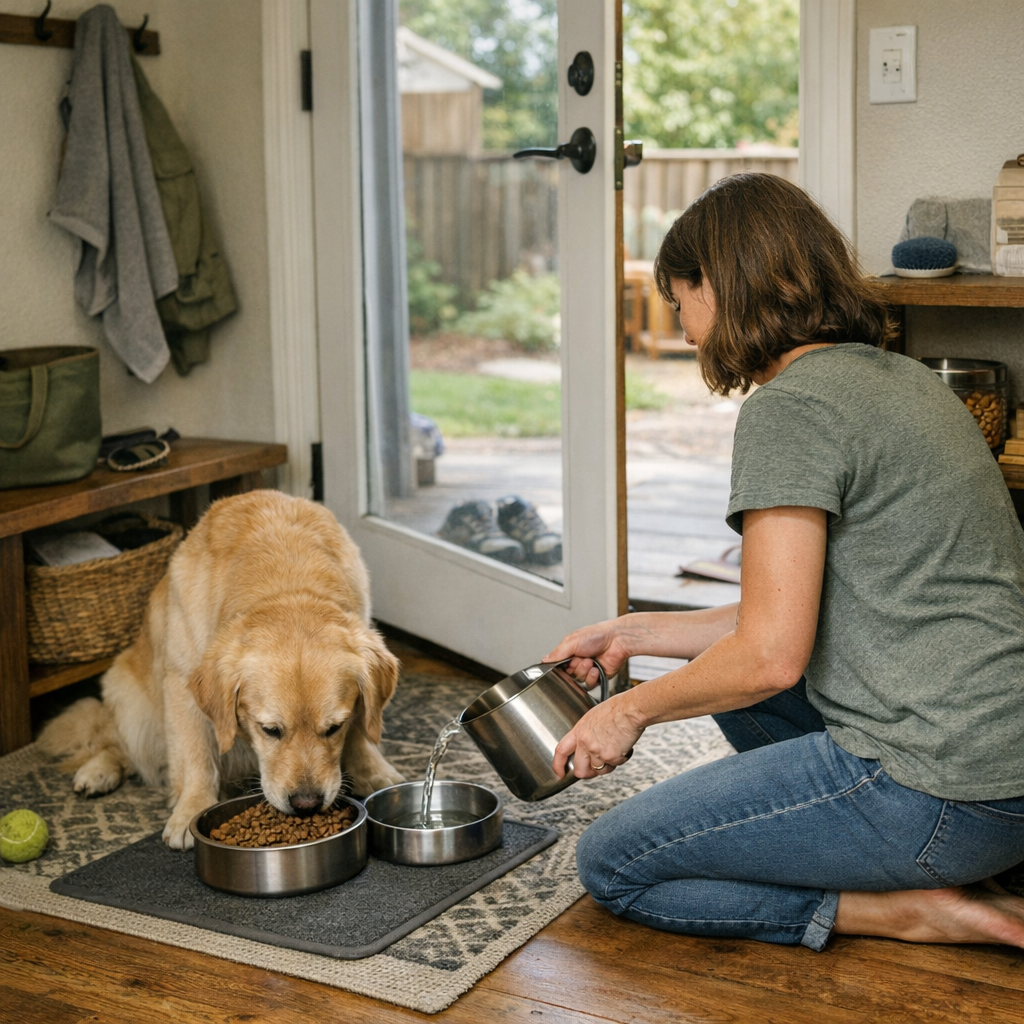
    Every dog owner has fought with the front door. You reach for the leash, but a stray toy blocks your step. You try to move quickly, but a dish catches your ankle or the wipes are just out of reach. The morning walk isn’t ruined by the leash or your dog’s excitement—the trouble usually starts inside, in the smallest routines right before you ever make it out. These friction points don’t roar—they creep in, slowing you down, stacking low-level stress until it becomes just another part of walking the dog. But almost every bit of tension you feel on the street tracks back to what happens in your home’s entry zone or routine reset point: how you set up, what you grab, what’s in your way, and what keeps falling through the cracks.

    The Hidden Patterns Shaping Every Walk

    Most owners hope for simple, calm walks—yet daily routines chip away at that hope. It’s never just the dog’s energy or the chaos outside. It’s the detail: where the leash is stashed, whether you have to nudge past a water bowl to reach a hook, and how the keys, bags, and extras stack up at the threshold. These details quietly break up the flow.

    Typically, it goes wrong before you even leave. One hand reaches for the leash, the other bumps a food bowl. You shuffle boots to clear space, your dog winds up at your feet, tense and watching. The leash is tangled. The door jam is cluttered. By the time you open the door, the tug has already started, your body is twisted, and you’re already running behind—even before your shoes hit pavement. That pattern—scramble, delay, leash tight, handler tense—starts at home and echoes down the block.

    Why the Early Moments Set the Day’s Tone

    The dog’s excitement at the door looks obvious. But those frantic circles, quick barks, and impatient stretches aren’t just raw energy—they’re signals of friction that began with your own routine. If the leash is tucked too far, if the bowl sits right where you need to stand, if you pause and hesitate, your dog’s anticipation spikes. With each snag, the walk tips from a chance to reset into a cycle of tugging and correction—one that’s nearly impossible to fix once it’s already begun.

    Many dog owners dismiss this as their pet “just being eager.” But repeated minor delays or awkward leash setups quietly set up the walk to fail. That tension won’t burn off with a longer route. It follows, minute by minute, because the routine keeps rebuilding the same problems.

    Morning Scramble: When Setup Fights Back

    Picture running late: the leash is looped on a random hook, but a squeaky ball blocks your reach. The bowl is somewhere underfoot, and by the time you clear space, your dog’s spinning in circles, primed to bolt. The leash snags. In one minute, your calm is spent and the rhythm is shot. You blame the walk, but the setup tripped you from the start—and tomorrow, this slows you down again.

    How Familiar Routes Can Help—If You Notice the Shift

    Swapping to new routes or aiming for “more stimulation” won’t fix a pattern of pulling if the entry into each walk is already off. In reality, many dogs settle more quickly on familiar paths—the hedge after one block, the same lamppost, the usual turn. It isn’t just about the dog’s memory; it’s about how the routine gives both human and dog cues to settle, glance, or slow down.

    But it’s only effective if you notice it. If you start at the front door tangled and tense, even a familiar path can’t undo a bad launch. The leash that slackens after the hedge does so only if the first steps out didn’t fall apart. Most walks show you where the setup is failing—but if your attention is only on the dog’s “bad behavior,” the routine never really adapts.

    Cues Owners Miss: The Slow Shift

    You might miss your dog starting to check in more or slowing for corners. These changes only stick if you let them—by pausing, resetting your grip, or catching those calmer steps. If not, it’s easy to repeat the same tug-of-war for weeks, never realizing that the walk could shift if the home setup stopped forcing the scramble. The gains add up only if you see them, not just fix what’s broken.

    Small Setup Tweaks, Big Routine Payoff

    Many frictions dissolve with one quiet change: move the water bowl back by half a meter, or keep wipes within reach near the door but out of tripping range. This grants you a buffer—room for both you and the dog to get set without elbowing through clutter. That pause, that gap, stops the leash from snapping tight before you leave and prevents your patience from running out before the sidewalk.

    Over time, these micro-adjustments turn jerky tension into small check-ins—your dog hesitates, looks to you, waits for the next move. Walks aren’t transformed, but stretch into something less brittle, more workable, even when conditions or timing are messy.

    After the Walk: Reset or Rewind

    Coming home can stall out, too. Towels for muddy paws disappear, wipes are buried under boots, and toy piles block your step as you try to clean up. You want to drop the leash and handle cleanup quickly but end up tripping through the reset. Now the delay that started at the door bookends the walk in a fresh bout of annoyance.

    The fix isn’t about making the area “perfect”—it’s making cleanup gear actually accessible at the right moment, not just parked where it looks tidy or hidden from sight. If wipes, towels, or disposal bins can be reached without a search, coming back inside stops feeling like just another struggle.

    Why “Tidy” Isn’t the Same as “Usable”

    A neat entry, sorted baskets, stacked toys—on the surface, the space seems calmer. But if you have to dig through bins for a leash or leave wet gear two rooms away, you’ve only traded one kind of mess for another. Many setups look organized but demand extra steps when you’re in a rush, arms full, or handling a muddy dog. That extra friction isn’t visible, but it wears down every routine moment and makes good habits fade as soon as the real day starts.

    Readiness beats prettiness. If the leash is always buried or the towels never where you need, your “organized” system quietly fails at exactly the wrong moment. The irritation repeats—sometimes as a stumble, sometimes just as a delay—chipping away at what could have been a smoother, more usable routine.

    The Quiet Accumulation of Small Setup Frictions

    It doesn’t take a disaster for these weak points to change the feel of your dog life—just a few mornings of awkward reach, or a handful of walks with the wrong bowl placement. Each tiny snag repeats, building habits of tension for both you and your dog. What seemed like a solved problem—swapping baskets, clearing a bit of extra space, adding another mat—can bring new slowdowns if it blocks access or demands too many steps at any key moment. Mess can be hidden, but friction remains if setup logic isn’t built for real, repeated use.

    Practical dog setups are about shrinking the moments where the routine gets stuck, not erasing every challenge. A little space for movement, slack to re-leash, and easy-grab cleanup supplies all add up to less repeated drag—and that, over days and weeks, makes more difference than any one-off fix.

    Tuning In: How Owners Can Catch and Shift the Routine

    The “leash fight” is mostly mechanical—a chain reaction of small delays, bad placement, or blocked access that keeps repeating when ignored. Watch where your dog’s anticipation turns to pacing. Track which corners trigger leash tension. Test what changes when you shift a bowl or move the wipes a foot closer to the door. Improvement isn’t glamorous—it’s barely visible: a pause that solves a tug, a split-second faster cleanup, a setup that no longer interrupts your stride.

    Across dozens of walks, the routine shifts. No single trick replaces the steady payoff of setups that follow the real arc of your day rather than just looking good for half an hour.

    Making Everyday Walks Smoother, Not Perfect

    No setup removes every pull. But a space that lets you reach the leash without reshuffling gear, that keeps towels and wipes close but not in the way, and that shortens the time between coming or going—that’s workable. Over time, these solutions chip away at the friction. Mornings move smoother, cleanup takes less recovery, and fewer routines stall out after a good walk. You won’t notice it in magazine-ready photos, but you will—quietly—in fewer bad starts and less repeat stress. That’s dog life made easier, not perfect. Just a setup that works as hard as your routine demands, walk after walk.
    Explore smarter setups at DogPile
  • How Small Boundaries Keep Pet Care Areas Neat and Functional

    Why Pet Care Setups Feel Tidy at First—Then Start Slowing You Down

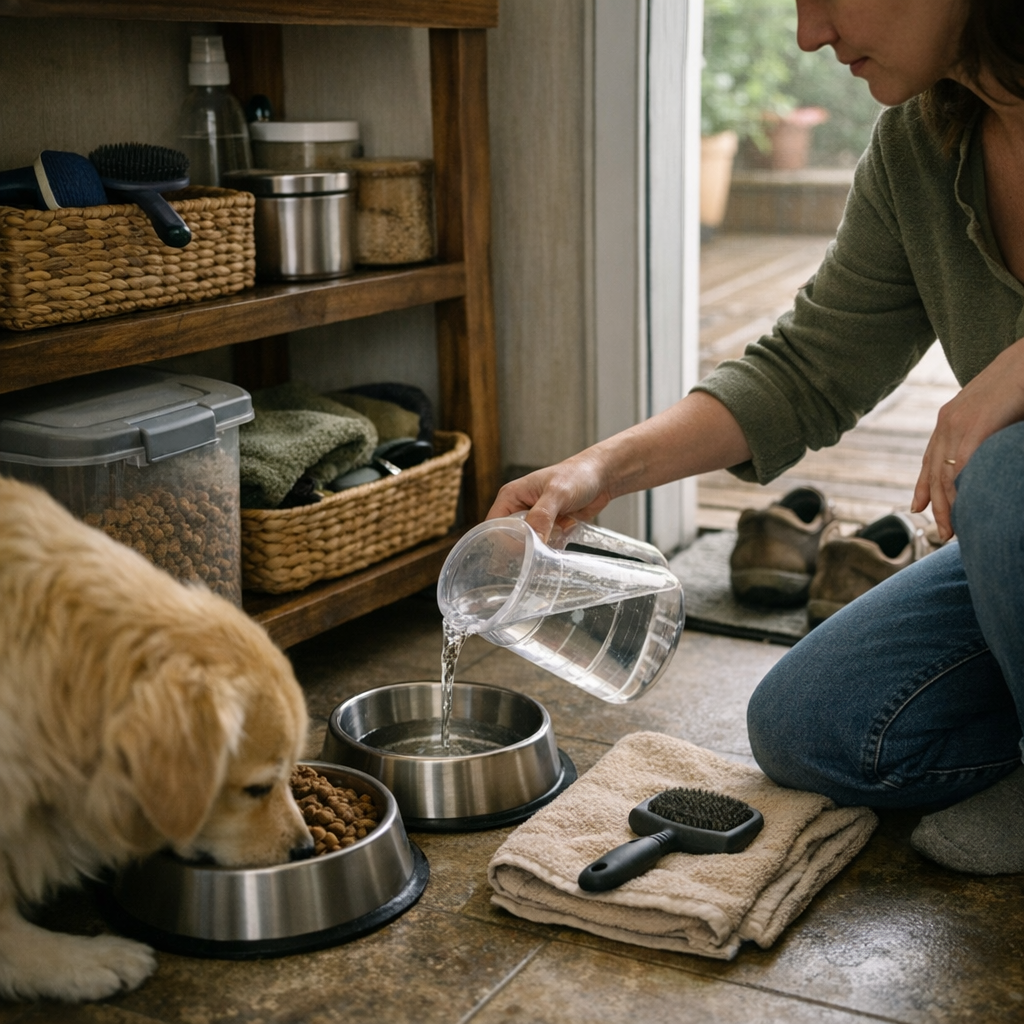
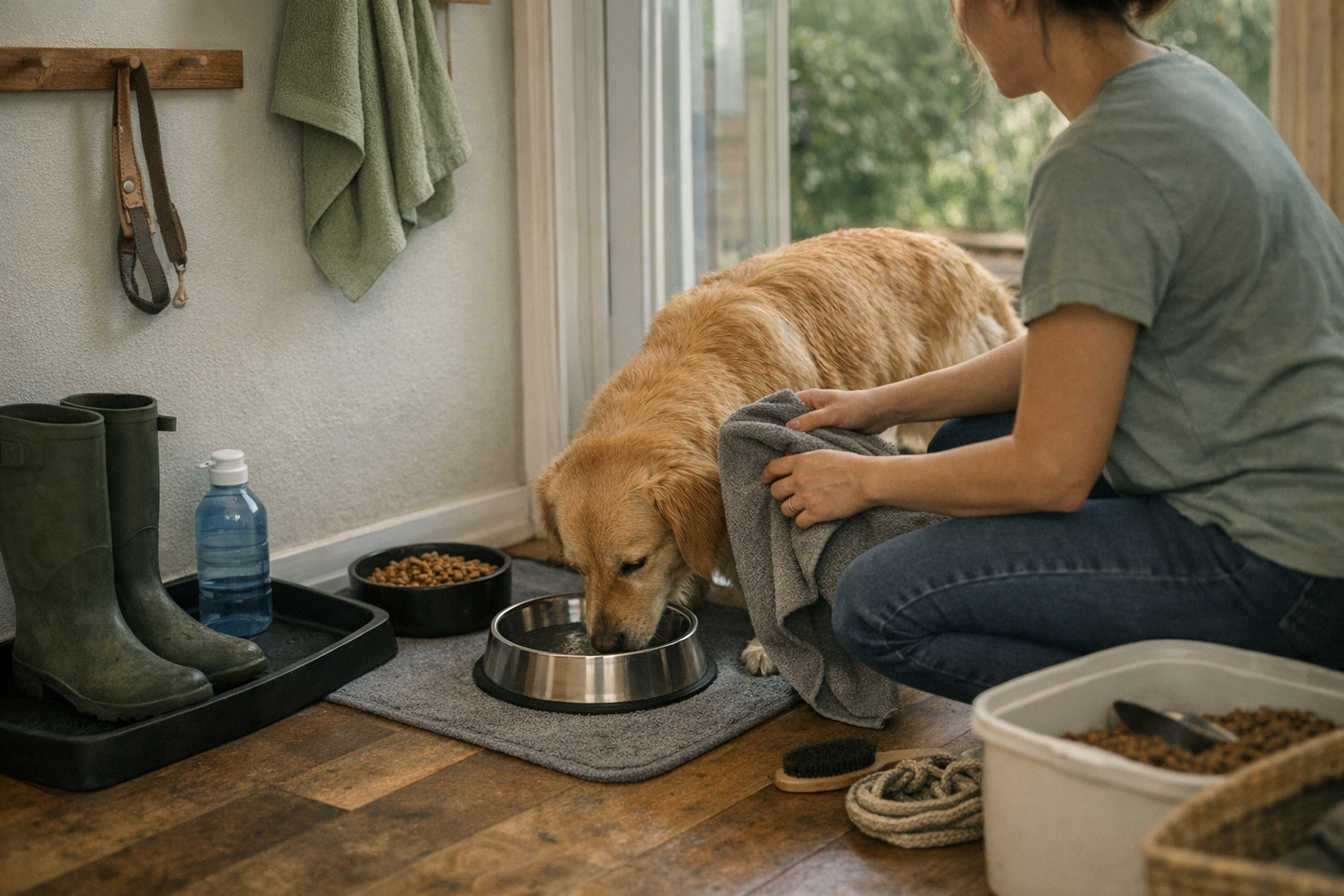
    A pet care setup that looks calm on day one can quickly turn into a daily annoyance when routines actually start piling up. What feels organized the first morning—bowls aligned on their mat, towels hanging within reach, grooming tools tucked nearby—rarely stays that way by the end of the week. Instead, you run into water tracked past the mat edge, towels sliding behind laundry baskets, or a refill bottle in just the wrong spot, turning a quick reset into a mini detour. The initial order is visible, but the real pressure comes when refilling, wiping, or grabbing basics interrupts the routine you hoped would run on autopilot. That’s the split: a pet area can look ready for care, but real friction only shows up through use.

    The hard truth: setups that seem neat after cleaning can turn against you if their physical boundaries collapse under repetitive use. Tidy lines count for nothing if daily care keeps pushing bowls, hooks, or bottles out of sync with how you actually move.

    The Hidden Friction of Small Boundary Shifts

    One inch—the wrong inch—changes everything. Take a feeding mat that slides too easily or a towel hook just beyond comfortable reach. Maybe your pet’s bowl has drifted close to the wall after two days of scooping. Now, grabbing it means bending at an awkward angle, usually knocking into a food bin or scattered bag. Or a water bottle, placed “neatly” near the entry, turns into a trip hazard or gets nudged into the feeding zone, requiring a shuffle with every meal.

    This unseen friction rarely matters during calm, deliberate moments. But during the morning rush—or those sleepy late-night check-ins—an out-of-place cloth or half-blocked access means wiping up with the wrong towel, bumping into things, and forgetting one step until the mess gets noticed later. Instead of smooth routines, you end up moving items as often as you move your pet.

    Real-World Routines: Where Small Setups Break Down

    After breakfast, a clean mat looks fine—until you spot dried water spots just past its edge, because it slid while your dog pawed at the bowl. The cleaning cloth you need isn’t missing, but it’s now buried behind leashes and bags on a crowded hook. At midday, the bowl sits too close to the radiator after your last refill, so you have to shuffle other bins just for a pour. Even a feeding area that started out clear now requires awkward reaches simply because tools and bowls migrate.

    After-walk routines stall for different reasons. Towel hooks blocked by last week’s shoe rack addition mean you have to dig for a usable towel as your pet shakes off inside. A brush left in the kitchen—since the grooming area isn’t working—means care tools float in and out of meal prep zones, never quite returning to where they belong.

    These aren’t disasters—just repeated disruptions that make a setup increasingly hard to live with. What looked organized is now a series of workarounds.

    Invisible Drag: When “Tidy” and “Effortless” Don’t Match

    A tidy feeding corner or tucked litter box can pass for functional, but repeated care quickly exposes every compromise. A mat that’s just a bit too small, a towel that’s always one step too far, or a storage bin lid that forces you to move your own shoes for every scoop—these add seconds, then minutes, and finally reluctant reshuffles to each day. Design choices that simplify one part of the routine often force last-second improv elsewhere.

    A towel hooked over the counter instead of in the entry blocks leashes or vanishes behind storage bins when you’re mid-reset. Storage bins with lids that swing into crucial walkways mean you’re nudging bags, sliding containers, or pausing more than refilling. Each “small” design gap becomes another drag on care speed when routines speed up, especially in high-traffic or shared spaces.

    Moments That Signal a Setup Needs Fixing

    Here’s where weak setup boundaries become obvious:

    • You spot spilled water or food outside the mat only after it’s dried, because the edges don’t line up with real splash zones.
    • Cleaning cloths are always “somewhere nearby” but never exactly where your hand goes after a spill—adding an extra step each time.
    • Grooming tools collect on counters meant for meal prep, breaking the care area’s flow and spreading clutter into cooking space.
    • You have to nudge trash, food bins, or bottles aside after every meal before resetting, repeating a fix that feels temporary but keeps returning.
    • Leashes and harnesses pile up near the door instead of their hook, simply because the hook is now hidden behind a coat or bag.

    If cleanups keep getting delayed, if tools migrate out of their zones, or if pet items repeatedly spill into shared space, your setup isn’t just untidy—it’s fighting the way routine care actually happens.

    Practical Changes That Streamline Everyday Care

    Small corrections have big effects:

    • Shift the mat so the water or food bowl sits fully inside—stopping daily drips from escaping, and often eliminating the need for extra wipes.
    • Move towel and leash hooks so they match your actual entry-and-exit path—midway between the door and the feeding spot—stopping items from piling up or migrating out of reach.
    • Place refill bottles on shelves above—not beside—the bowl zone, keeping the floor clear for feeding and protecting refills from accidental bumps that scatter other essentials.

    Tweaks that follow your real motions—not just design ideas—are what make resets fast, cleanup natural, and tools stay where you left them.

    Understanding the Difference: Looks Good vs. Works Well

    A setup can be spotless at a glance yet still trip you up. If bowl placement, hooks, mats, and supplies don’t mirror your refill, clean, and after-walk movements, hidden work piles up. Layouts that look intentional but ignore those repeated motions bring order at the cost of ease. Mats should meet splash radiuses, hooks should land where hands go after walks, and bins and supplies belong in line with your habits—even if that means slight visual imperfection in exchange for zero backtracking.

    That’s the split most people miss: visible order fools the eye, but lasting comfort comes from setups that hold their boundaries through dozens of uses, not just on day one. The “I don’t think about it anymore” feeling only happens when your arrangement survives actual wear and stays responsive to repeated moves.

    Less Repetition, More Comfort: Small Wins Add Up

    Notice where daily care routines keep snagging—mats creeping, hooks blocked, basics one step out of sync. Tidy looks are passive; resilient setups prevent the repeated detours. Whether your pet bolts to the bowl or lingers at the door, a care area tuned to your real habits makes cleanup, feeding, and resets less of a chore and more of an afterthought.

    Find more practical solutions for feeding resets, water refills, and everyday cleanups at CalmPetSupply.

  • How Dedicated Toy Storage Transforms Indoor Cat Spaces and Daily Routines

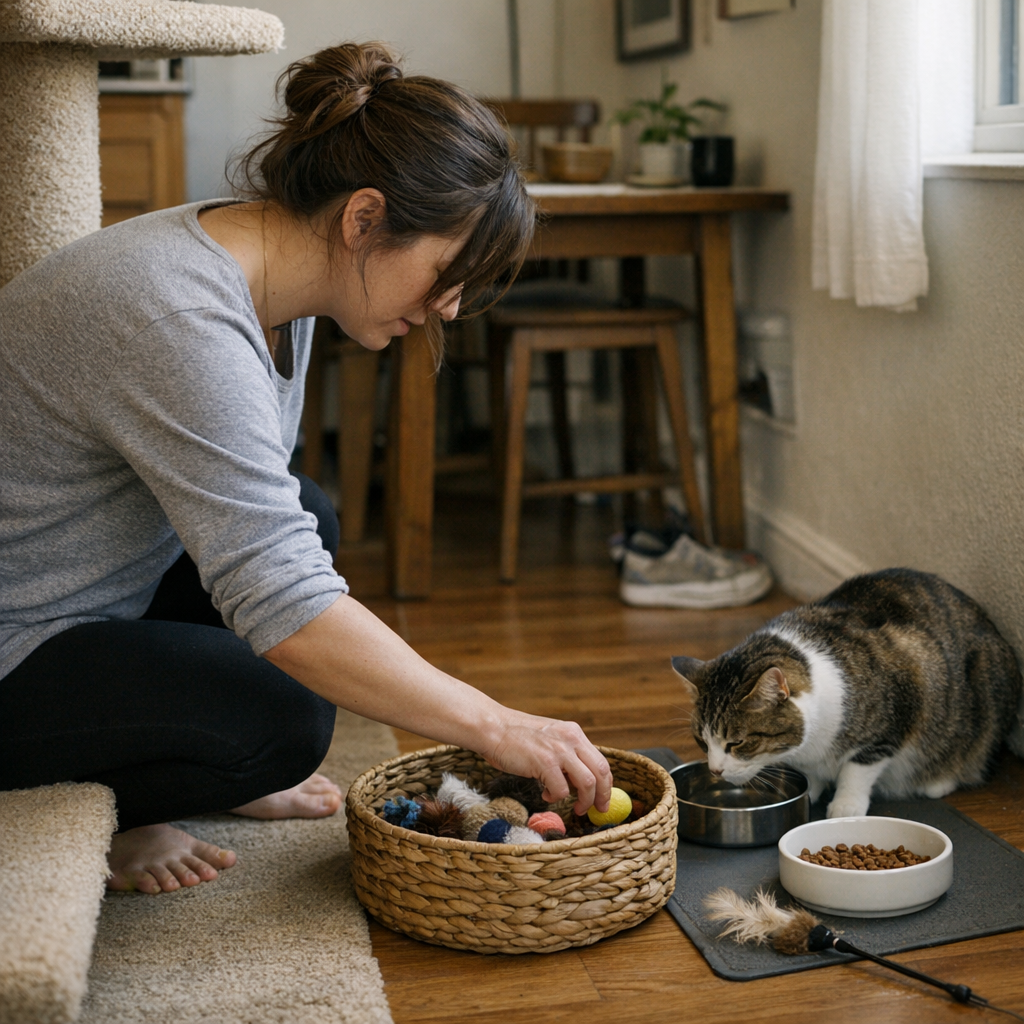
    Scattered cat toys don’t just clutter the living room—they block the next thing you need to do. It starts small: a few toys make the space feel lived-in, maybe even cozy. But within a week, the shuffle builds. What looked like harmless comfort on day one—crinkle balls between couch and scratching post—quickly turns into tripping over a wand during breakfast, nudging a felt mouse aside just to reset the feeding mat, or bending down, again, to yank a toy from under the table before you can vacuum. The difference shows up not in how the room looks after a once-over, but in how much those scattered toys slow down everything: water refills, feeding, cleanup, or even just getting across the room. This is where “cat enrichment” crosses into daily obstacle, and where the right StillWhisker setup moves from nice-to-have to non-negotiable.

    When Toy Scatter Turns Into Real Friction

    It doesn’t hit all at once. Leaving toys out after play nearly always seems reasonable—until you realize how fast they start drifting into the spots you use most. Today it’s a single ball at the bowl’s edge; three days later, the feeding mat is half-buried and the water station is tangled in plush tails. These interruptions change simple chores into layered routines:

    • Every bowl refill becomes two steps—clear toys first, then handle the water.
    • Vacuuming requires hunting down loose toys before the floor can be cleaned.
    • Main walkways turn into a maze, for you and for your cat.
    • You think the reset is done, then spot another toy jammed under a cabinet—one more detour before “finished.”

    In small spaces or multipurpose rooms, every square foot matters. Feeding, cleaning, and play overlap—so even a few runaway balls can multiply the effort, turning what should be a quick sweep into an ongoing, never-quite-done routine.

    Why “Leave Them Out” Doesn’t Work for Most Homes

    Letting cat toys linger looks harmless on day one. By day five, they pile into every pathway. Feeding mats drift, water bowls slide, crumbs gather and hide under felt mice. What started as a little extra “enrichment” mutates into a real, repeat inconvenience by week’s end.

    The overlooked problem: Each time you handle a toy—step around it, pause to move it, fish it from behind a chair—the seconds stack up. You want a quick food top-off, but instead you’re tracking down kitties’ loot, kneeling again, wondering why keeping up still feels like a chore even when the room isn’t visibly messy.

    Small Apartments, Tall Order: How Tight Spaces Expose Weak Spots

    In a studio, the impact is instant. It doesn’t take much—just two days of casual play, and your route to the water bowl is a dotted obstacle course. Mealtime for the cat or yourself becomes a stop-and-clear routine instead of a one-motion scoop and pour. Every lost inch adds up, and toys seem to drift straight toward the worst pinch points—door frames, bowl edges, the one clear space you need for yourself.

    Layers of Reset: How Toy Collection Shapes Your Daily Rhythm

    Home routines show which habits lower the mess and which ones keep backfiring. Toy collection is an invisible fault line: let them sprawl and every refill or meal becomes a mini search party. Round them up after play, and suddenly the mat sits flat, the bowl is steady, the sweep is actually quick instead of punctuated by crouching and reach-arounds.

    • Letting toys scatter means more micro-interruptions, more time lost to searching and rescuing.
    • Collecting right after play means fewer delays, and other chores don’t get hijacked by stray distractions.

    This reset isn’t about an Instagram-clean shot—it’s about coming through your evening without redoing last night’s cleanup, and about being able to handle quick, real resets when the rest of your day piles up.

    The Difference Between “Looks Under Control” and “Feels Under Control”

    A space can look settled at a glance—baskets full, surfaces clear, toys tucked out of sight. But if you’re knee-bending for lost mice daily, or dodging plastic balls with a coffee mug in hand, it’s not actually working. Surface-level tidiness often collapses at the first sign of real use:

    • Toys stashed out of the way just creep back underfoot if the setup doesn’t make returning them fast and almost automatic.
    • The room resets itself—right up until the next burst of play, when toys rocket back to the main intersections of your routine.
    • When storage isn’t near your hands at the end of play, cleanup becomes an all-over chore. Instead of finishing in a minute, you’re circling the room again.

    Order that lasts isn’t about display. It’s about a workflow that holds up when you’re tired, rushed, or distracted—so your routines don’t get derailed by small, repeating interruptions.

    Scenes From Real Home Use: How Toy Drift Interferes With Everyday Routines

    Spot #1: Feeding and Water Trouble

    The cat chirps for breakfast just as you’re about to refill. You nudge a crinkle ball from the edge, scatter kibbles, and fish a toy fish from under the water bowl—plus mop up a fresh sprinkle, all before coffee. The real problem is speed: what should take seconds drags out, again, one toy at a time.

    Spot #2: Cleaning Sidetracked by Stray Toys

    You pull out the vacuum and immediately spot three fuzzy mice lurking under the sofa. Now it’s a round of crouch, stretch, and rescue—sometimes realizing a favorite toy’s been missing for days. If this overlaps with the litter area, everything picks up an extra layer of dust you didn’t ask for.

    Spot #3: Human Traffic and Cat Pathways

    Shared spaces get the worst of it. Balancing groceries or laundry, you hit a plastic ball, sending it skittering into the walkway—or trip into a miniature explosion of toys. It’s more than distraction: little by little, the space feels less yours and more like constant maintenance mode.

    Why a Simple Storage Basket Makes a Real Difference

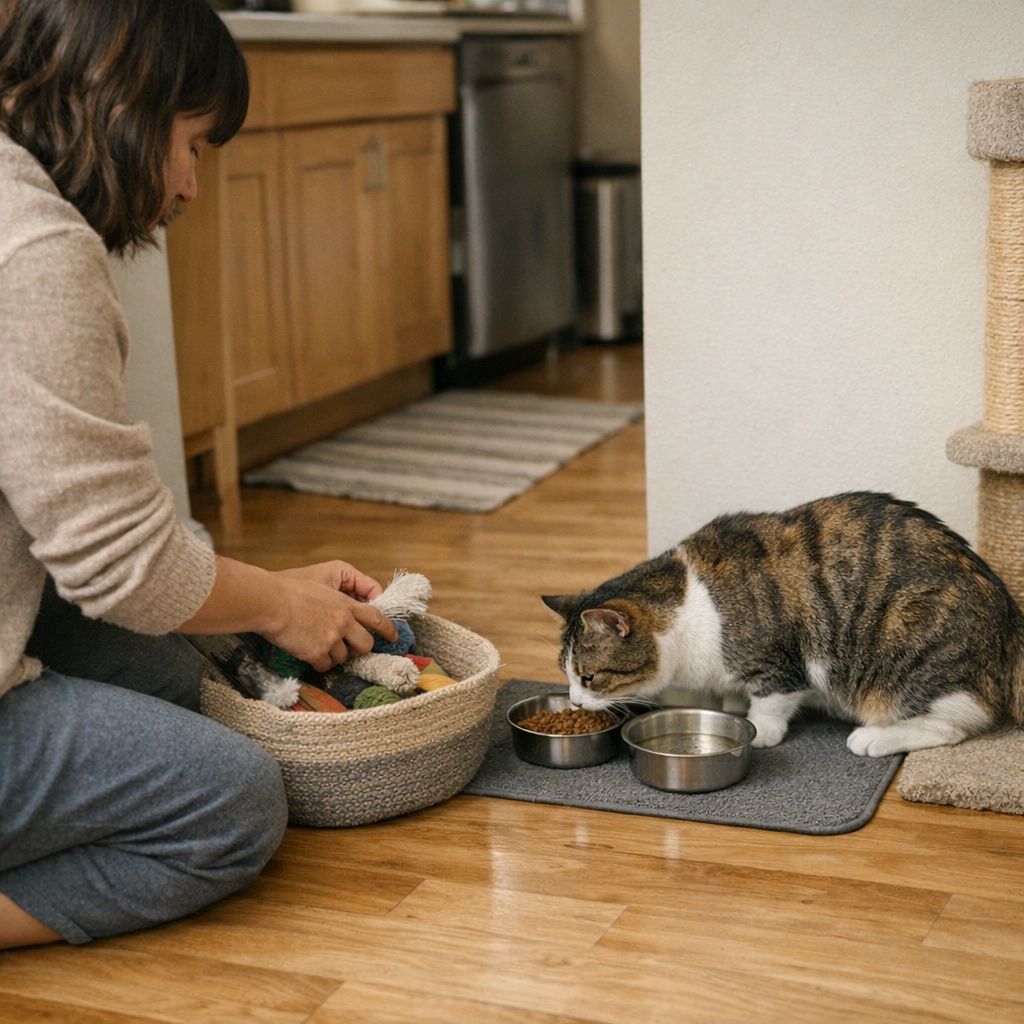
    The answer isn’t complicated: put a low, open basket right beside the main cat zone. Now, play ends with a quick toss-in—no hunting across the room, no forgotten corners. Over time, the routine builds itself. Feeding and cleaning speed up, the kneel-and-grab cycle fades, and playtime doesn’t leave a residue that sneaks into the rest of your tasks.

    Skip the elaborate bins. The best basket is the one that sits close, feels obvious to use, and lets your hand—and your cat—drop things in without leaving the space. The simpler and closer, the smoother the reset. If you don’t have to cross the room to store toys, you actually will put them away.

    Shared Spaces, Stable Routines: What Actually Changes?

    • Resets get smaller and faster: The whole chore condenses into a quick sweep, not a room-wide search.
    • Feeding and cleaning stop stalling: No more shifting toys every time you reach the bowls.
    • Walkways stay clear: You and the cat both move freely, not around clutter.
    • Daily friction drops: What was an endless battle shifts to a routine that takes about as long as you wish it did in the first place.

    This isn’t about perfection. It’s about less second-guessing, fewer mini-resets, and regaining a little bit of control without adding to your mental load—even after a particularly wild play session or messy day.

    When Toy Scatter Signals a Setup Weakness

    If you find yourself always scooting toys away before every refill—or are spending your evenings on your knees fishing balls from random hiding spots—the setup is showing its real weak point. That pattern, if ignored, becomes an invisible tax on every feeding, every cleanup, every movement through the room. Noticing it early means you can break the cycle fast with one visible structural change, sparing yourself hours of repeat work over the next month.

    The takeaway: Don’t let a surface “clean look” cover up a slow, steady drain on your time. The best indoor-cat setups solve for the next use—not just the next photo or the first impression.

    See more practical indoor cat-life setups at StillWhisker.

  • How Small Adjustments Can Restore Flow to Your Dog’s Feeding Routine

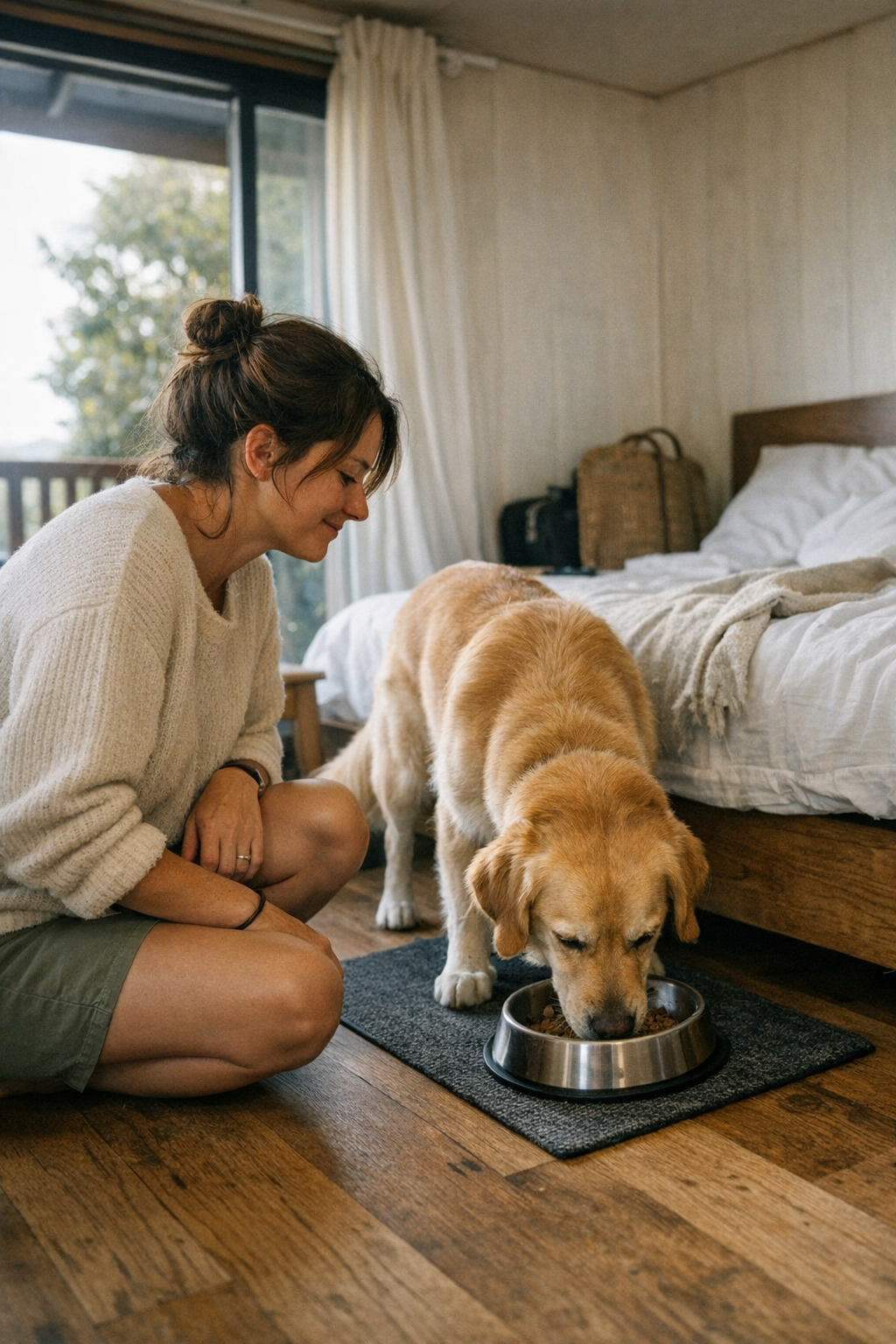
    If you’ve watched your dog nudge a food bowl across the floor, leave a trail of kibble, or pause with uncertainty before eating, you know feeding routines often unravel in small, frustrating ways. A bowl that slips every meal, crumbs collecting just out of reach, a mat shifting underfoot—these are not big messes, but their repetition turns a simple process into a daily drag. Instead of a smooth cycle, you catch yourself constantly drifting back: re-centering a bowl between bites, sweeping up the same scattered food, or guiding your distracted dog back to the spot that never quite stays steady. These minor daily flaws don’t just interrupt—they add hidden effort to every morning and evening, making you work harder for a routine that still won’t run cleanly on autopilot.

    Small Interruptions, Stubborn Patterns: Where Feeding Friction Hides

    It’s easy to ignore the micro-annoyances hiding in plain sight. The bowl sits on a mat, near the wall, food gets eaten—so the surface looks under control. But the pattern is always there: another mid-meal slide, another quick fix, another stray piece of kibble wedged in the routine cleanup zone. Over time, these little interventions become the norm. You spend every meal on standby, one hand always reaching, making silent corrections that never really solve the baseline problem.

    Each repeated workaround slowly erodes your momentum. Resetting for the next meal takes longer, and while the outside looks managed, your routine demands more of your attention for less payoff. What should be frictionless instead asks for constant monitoring and patchwork.

    When “It Works” Silently Stops Working

    Every dog owner can point to a time when their feeding setup felt good enough—until it slipped out of sync without warning. Suddenly, the bowl’s scuffed edge marks where it keeps drifting back to the wall, your dog hesitates or nudges for help, and you can’t locate that smear of kibble until after the next meal. The quick fix (move the bowl, add a mat, sweep again) only uncovers a fresh snag: now the mat slides on the floor, or the bowl bunches in the corner, blocking a smooth reach for either you or your dog. The visual order lulls you into thinking things function, but every meal starts with one chore you hoped you’d solved last week.

    Serving food, straightening, cleaning, straightening again while your dog stalls or searches for a settled spot—the visible neatness does not equal workable flow. The routine becomes a loop of minor setbacks, never regaining real smoothness.

    Every Meal, a Little Less Flow: How Friction Multiplies

    The cost is rarely dramatic. You won’t see disaster—just a steady creep of extra hassle that multiplies in silence:

    • Meals drag out, especially during already packed weekday mornings.
    • Crumbs and spilled food drift into corners, building up into deeper cleanups by week’s end.
    • You finish each evening by recentering bowls and mats instead of closing down the kitchen on time.
    • Your dog’s distracted eating means more leftovers or waiting for you to fix the same setup.

    The real shift is invisible at first. Let the same small friction linger, and your “routine” slowly becomes a series of quick, forgettable annoyances that add up to a persistently inconvenient feeding cycle.

    Setup Friction Beyond Feeding: Where Routines Keep Stalling

    Small, repeating snags don’t just live at the bowl. Any dog routine can clog in these same ways when the setup fails quiet tests of reach, timing, or ease.

    The Walk Stalls at the Start

    Every morning, you grab the leash—except your hand collides with plastic bags, tangled keys, last night’s damp jacket. The leash might always hang by the door, but a shifting pile of gear jams your exit. That one misplaced item stops your dog from transitioning calmly, and turns the walk into a scramble instead of a steady start.

    Cleanup Supplies: Always Almost Handy

    After walks or feeding, wipes and towels sit “close by”—but never actually within reach when the muddy paw lands. By the time you fetch one, the stain has migrated across a carpet, or your dog is already halfway into another room. Over just a few days, this not-quite-accessible setup keeps you permanently one step behind the mess.

    Comfort That Delays the Next Step

    Sometimes comfort trades off for cleanup flow. A plush mat corrals the eating area visually, but crumbs wedge deeper, doubling reset time. High-sided water bowls minimize spills but slow down quick rinses. You manage one hassle, but another emerges—neat appearances don’t translate to a smoother day if every tweak quietly drags on the next routine reset.

    The Repeated-Reset Trap: Spotting Patterns That Need Tweaking

    The clearest sign of a weak routine? Needing the same small workaround, every single time. If you always nudge the same bowl back, double-check for wipes, or take a detour to deal with one corner that never stays clear, your system isn’t supporting you—it’s quietly draining your time and patience.

    When every transition calls for a manual fix, the routine’s not working for you—you’re working for it.

    Especially on rushed days, these micro-stalls stack up. Dishes look in place but aren’t in reach. Cleanup “stations” reduce visible mess but don’t speed up handling. The setup passes a glance test, but the day-to-day friction builds restlessness and delays on both sides—dog and human. Neither of you gets to the next step cleanly, and the middle of your day keeps dragging two minutes at a time.

    The Power of One Small Adjustment

    The routines that shift the most aren’t overhauls—they’re clear, targeted fixes at the most stubborn recurring snag. Anchoring a bowl with a real grippy mat, moving wipes to genuine arm’s reach, streamlining storage so nothing blocks the leash—these quiet changes turn “looks fine” into “actually easier,” sometimes overnight.

    • The bowl doesn’t wander; your dog can focus, eat, and move on without extra help.
    • Stray food is more contained, and cleanup stops being a hunt for rogue crumbs.
    • You reach for wipes and actually grab them, not shuffle around mid-mess.
    • Both of you transition out of feeding or cleaning, feeling less interrupted and more in control of the next routine window.

    Instead of layering on fixes, the right adjustment removes the hidden edge from the day. Repeated friction gives way to repeatable ease.

    Notice the Patterns: Are You Living with a Quiet Weak Point?

    Every setup wears thin in its own way: a bowl drifting more as the week goes on; wipes moving out of reach as routines get messier; dog items crowding human spaces again six days after a reset. The surface may look tidy, but if you keep pausing to fix the same zone, your system is quietly stalling.

    If you spot these signs, your structure needs adjustment, not just more effort:

    • Dog gear, bowls, or mats inching further out of position with every meal or return.
    • Cleanup tools visible, but never where your hand naturally goes mid-mess.
    • Spaces that become clumsier the more you use them during a busy spell.
    • Repeated points of hesitation or redirection at the same time each routine.

    Surface order fades fast if the real-life transitions never catch up.

    The Difference Between Organized and Effortless

    It’s tempting to call a setup “done” once everything looks contained, bowls stacked, gear tucked into a corner. But organization can still mask systems that quietly slow you down. What truly works isn’t just tidy—it brings the routine as close to zero-reset as possible: bowls that stay in place, wipes you grab without searching, leashes you hook without shuffling aside clutter. Every repeated step either supports the next move or quietly jams it. The routines worth trusting are the ones that, meal by meal and walk by walk, actually reduce effort—not just hide the friction under neater lines.

    See which setups hold up when life speeds up, not just when everything is freshly arranged. Because in the thick of everyday dog-life—a bowl that stays put or wipes in reach can mean the difference between another slow, fragmented day and a routine you can almost forget about. Explore setups built for real daily flow at DogPile.

  • Creating Space in Pet Care Areas to Simplify Daily Routines

    The real pressure points in daily pet care don’t show up as big messes—they slip in as interruptions during basic routines. You go to refill the water bowl and have to shift the food bin just to reach the sink. The brush meant for a quick pet touch-up is wedged behind wipes and a treat jar, adding two more steps every single time. These aren’t dramatic problems, but their effect adds up fast: every blocked reach, every extra shuffle, gradually turns an “organized” setup into a routine that drags. With the wrong layout, looking tidy masks the real friction. The CalmPetSupply world pays off not in how your space looks right after organizing, but in how little your everyday flow gets interrupted afterward.

    The Hidden Weight of Tightly Packed Pet Areas

    Efficiency disappears fast in a pet zone set up to be tight but not actually usable. The bin sits perfectly against the bowl—until you need both at once, and one scrapes the other every refill. That brush you grabbed easily last week now requires shifting a loose towel and restacking two backup bottles. Late-night you’re balancing the water dish, searching for a wipe, and cursing a storage container blocking your reach. At first, these tiny collisions don’t register; by midweek the hassle is hard to ignore. Repeating these fractured steps day after day is what wears down even the most streamlined setup.

    Real Home Scenes: Where The Routine Slows Down

    • Blocked Access: Evening feeding means digging under a treat jar for the scoop, or knocking the water bowl into a wedged bin before you can lift it free.
    • Missed Wipe-downs: Spills linger because the wipes are at the bottom of a stack. By the time you notice, the mess is set and takes triple the effort to clear.
    • Supplies Out of Reach: The grooming brush sits “close by” but always trapped under kibble bags and a backup blanket, turning a 10-second job into a two-minute hunt.
    • Shared Space Interruptions: Leashes, towels, and carriers drift or pile into walkways or shelves. Small detours and blocked grabs break up the routine and slow you down.
    • Repeating the Shuffle: After every meal or walk, you’re stuck moving multiple objects to return just one—clutter gone from sight, but not from your daily reset.

    Breathing Room Means More Than Looks

    A pet area that looks neat may still throw off your routine if items are packed too closely. The problem isn’t “clutter”—it’s the friction created by every lid, edge, and stack left with no margin. Refilling water, you nudge something else; wiping a counter, you have to move scattered gear for each pass. The friction isn’t a pile of mess—it’s a steady leak of time and patience.

    Practical setups make a noticeable difference when they allow a buffer—enough space to handle one thing without jostling another. Even a single inch of clearance around a bowl or container cuts down the bump-and-reset cycle. You lose a bit of compactness but gain a routine that works as intended: quick, one-step, and low-stress.

    One Change Can Unlock Flow

    The fastest upgrade is often just moving one low-importance item out of the “action zone.” Take the extra bottle you only use weekly and put it one shelf up—or stash backup towels out of arm’s way. Suddenly, refilling water or grabbing the brush doesn’t involve a balancing act or domino effect; each tool comes free in one smooth motion.

    The space won’t look dramatically different, but the process tells the real story. Regular jobs—lifting bowls, quick brushing, small wipe-downs—stop causing small delays. Wipes are ready at arm’s reach, not just “stored nearby.” After routine care, you’re done with one movement instead of resetting the same trouble spot again.

    When Looking Organized Isn’t Enough

    Tidy setups can hide daily annoyances: bins that always need shifting to scoop food, treat jars that save space but slow your reach, containers that line up but break the flow. The real friction isn’t space—it’s in the split-seconds you lose to repeated nudges, lifts, and workarounds.

    Even “perfectly organized” can feel exhausting in practice. If you delay a wipe-down, reach awkwardly for a tool, or find the reset dragging late at night, you’re seeing the gap between looking good and running smoothly. The tension stays under the surface until every repeat action reminds you of what’s not working.

    Simple Steps to Maintain a Smooth Routine

    Give every high-use pet care item about an inch of breathing room—space enough to pick it up or put it back without hitting, stacking, or nudging anything else. Ask: do spare bottles or towels need to live here, or can a less-used item go higher or further away? The right move isn’t more storage—it’s clearing the path for the basics you use multiple times each day.

    With each routine—feeding, grooming, fresh water, wiped counters—watch the reset: can you cleanly finish with a single motion? If not, spot the frequent blocker and move it once. This isn’t about tidying up for guests—it’s about reclaiming time and calm during real daily flow.

    Why Minor Adjustments Matter Over Time

    The heavier routines don’t start heavy—they accumulate friction from tiny, repeated detours. Hesitate, shuffle, or reach each round, and wasted motion grows invisible but real. The difference between “organized” and “truly easy” is as small as letting an inch of space stay open for what gets used the most. Don’t wait for mess to signal a problem. Watch where you move the same object twice or get slowed down after a walk, and protect that space as the start of an unbroken flow.

    For a pet-care area ready for the interruptions of real life, look for one small fix that will open up your most-used path. The daily ease you gain isn’t about appearance—but in how many chores quietly finish themselves. Find what works in practice—not just on paper—at CalmPetSupply.

  • How Small Changes in Living Room Setup Improve Your Dog’s Rest

    Most living rooms look calm after a quick tidy—but dog owners know appearances don’t last long. Downtime always hits the same invisible snag: just when you reach for a few quiet minutes, your dog is shifting, circling, or restlessly tracking every move. That’s not a coincidence, and it isn’t just boredom. It’s a setup problem that interrupts real rest and keeps everyone in a slow, silent loop of disruption: one seat away from comfort, one step short of easy flow. The right supplies may be spread out in plain sight, but the actual routine keeps stumbling.

    The Quiet Living Room That Isn’t Really Calm

    Take a common scene: late afternoon, the dishes are stacked and drying, and you finally sit down. Your dog settles nearby on their bed—except it only lasts five minutes. Door clicks, someone gets water, or a kitchen drawer rattles, and now your dog is alert, trailing you with their eyes or shuffling to a new spot. The room pretends at peace, but each “quiet” stretch gets clipped by small, repeated interruptions. Neither you nor your dog actually resets; you trade off between movement and restless watching, week after week.

    This tension barely registers if you glance at the tidy floor. But the dog hovers half-up, reading foot traffic and listening for every fridge door. Ordinary moments—reading, cleaning, meals—get eaten by the little frictions. A delivery at the door means the dog paces; finishing a phone call means you step around both pet and their toys on your way out. The routine never fully settles, and it adds up more than most notice.

    Surface Order Can Mask Daily Disruption

    Many living rooms look set: beds just beside the wall, bowls tucked under a bench, toys pushed to one side. But if your dog’s rest spot lands even slightly in a traffic lane—say, within one stride of the kitchen—every pass sparks new tension. One person grabs a bag, the dog springs up. Someone comes in after a walk—with a muddy leash—and the only open space is your dog’s side of the floor. Suddenly, the setup that “looks organized” turns into a relay of people and dog crowding each other, never relaxing for more than a minute.

    That so-called convenient bed placement is usually only “convenient” on paper. In real flow, any item even half-in the walkway throws the whole routine off: the bed slides, a water bowl gets jostled into arm’s reach, and both you and the dog start rerouting around each other. A neat surface only hides the repeated drag that fills an ordinary day.

    Spotting the Real Signs of Routine Friction

    Check the details. The dog who looks comfortable but never fully drops their head—eyes still tracking the door. The tail swaying the instant someone stands. A paw slides out over the bed’s edge as footsteps cross the room, or the dog’s ears twitch each time a drawer opens. The friction isn’t dramatic; it seeps in as a series of micro-adjustments. After days of this, downtime feels thinner because it’s chipped away by the same low-grade interference.

    Small Frictions That Build Over Time

    • The delayed dinner flow: You try to transition toward prep, but every unfamiliar sound from the kitchen has your dog on their feet, stretching the changeover long past the first cue.
    • Reading that unravels: Your book is open, but you lift your head every few minutes—your dog re-positions to track movement down the hall or toward the back door, never fully relaxing.
    • Routine clutter creep: Put away all the toys in the morning, yet by noon, a rope or ball sits right in the walking line; the bed has shifted into the path, and suddenly it’s a clumsy detour every time you move through.

    These are not just behavior quirks—they are a map of how layout quietly breaks the rhythm of every day, over and over.

    Why the “Right” Spot Can Still Undercut Real Rest

    Well-meant setups often miss the point. A bed that seems cozy near a sofa or a water bowl ready at the edge of the room is no good if normal routines force the dog back into the action. Bed too close to the kitchen? Now every sandwich or snack keeps your dog alert. Too near the main door? Muddy paws require scrambling for cleaner towels halfway across the room as your dog waits, dripping. That “perfect” arrangement quickly exposes its flaws the moment routines actually repeat.

    This is where real-life setups fail: The dog always lands in the “busy lane,” where rest is constantly chipped away by movements that looked harmless on a tidy day.

    What Routine Disruption Really Looks Like

    Zoom out across a week. Monday: the bed is flush against a wall but just inside the kitchen’s orbit. By breakfast, the dog rises at every pass. By midweek, you’re dodging dog and toys to avoid spilled water on the route to the fridge. Friday: prepping dinner means stopping five separate times—shooing your dog out of the way or nudging the bed aside so you can reach the pantry. The drag isn’t a one-off mess; it’s the grind of routines slowed and reset by a layout that keeps interfering at the same points, every single day.

    This isn’t messy chaos; it’s the persistent loss of flow. Instead of a space that smooths life, your living room acts like an obstacle course that both you and your dog adapt to—never getting ahead, never fully unwinding.

    Reset Friction: The Persistent Weak Point

    These little interruptions don’t just fade—they multiply:

    • Post-walk return: Dog comes in with muddy paws, but wipes or towels are still a reach away. By the time you find them, paw prints stretch onto the bed that now needs a full wash.
    • Bowl blockages: Food and water bowls are present, but the water always sits right where you walk first thing in the morning, making you shuffle them barefoot or spill on the carpet.
    • Bedtime resets: Chew toys are corralled to a basket nightly, but migrate back into the traffic flow by breakfast. Your “reset” means another round of picking up what routine keeps scattering back out.

    It’s not for lack of supplies. It’s the repeated effort—extra steps, shuffles, or labor after every normal use—that drag down both neatness and actual routine speed. The space looks fine until real dog-life puts it to the test hour after hour.

    Breaking the Cycle: Moving the Bed Just One Meter

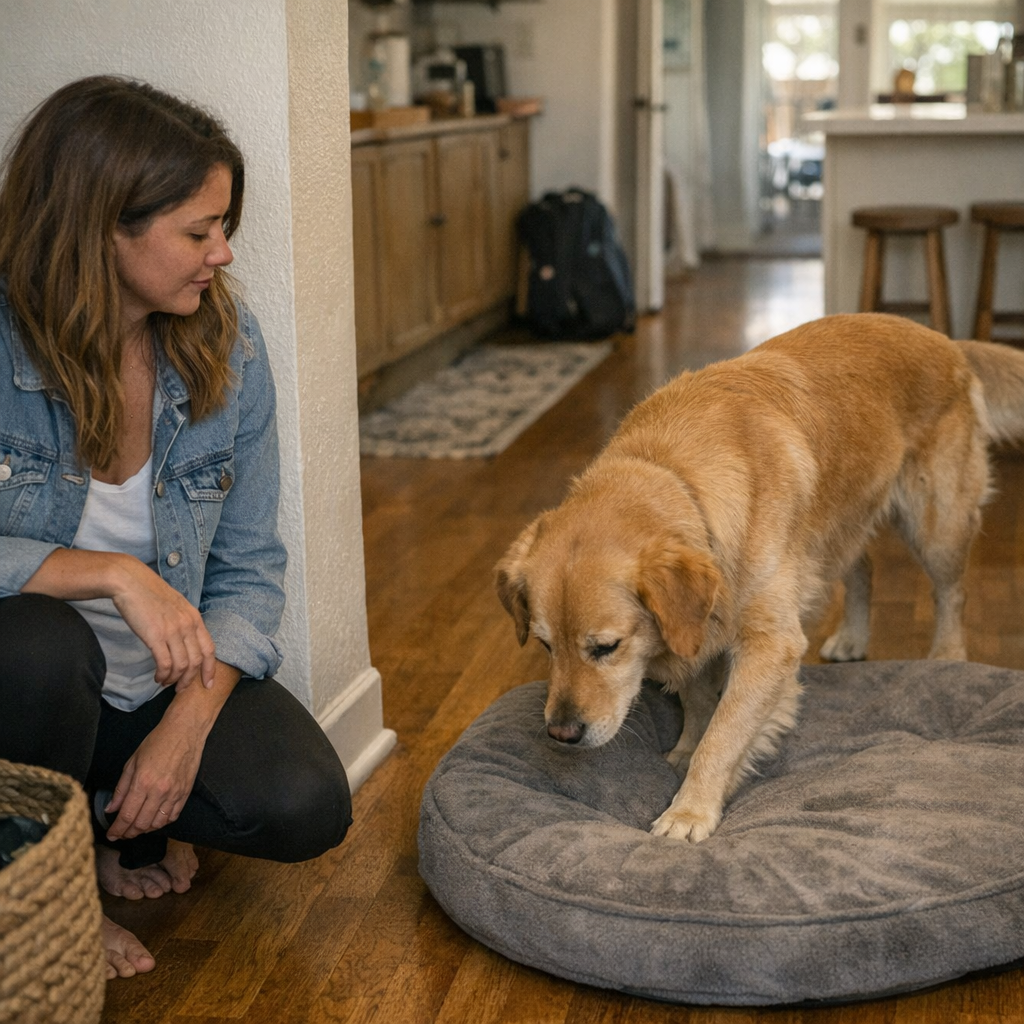
    Sometimes one meter changes everything. Slide the bed farther from the kitchen’s “splash zone” and outside the path of daily foot traffic—not hidden, just outside the frequent crossing. Suddenly, the dog rises less, spends more time down, and waits out door swings or phone calls rather than trying to anticipate your next movement. The rest area stays cleaner; the toys creep less into the main walkway. There’s no need to pause the routine for micro-resets after every meal.

    This shift doesn’t make every distraction vanish, but it reduces almost-interruptions. The dog stays down while you grab a drink, instead of pacing with every sound. By the end of a week, you realize meal prep is less crowded, downtime is longer, and the after-walk cleanup is quicker. The improvement comes not from more products or stricter routines, but a layout that matches ordinary movement instead of blocking it.

    How Small Tweaks Shift the Entire Day

    No setup is perfect, but minor changes in placement—bed, bowls, toy basket, even towels—change the way routines feel much more than another layer of surface organization. The seemingly minor meter of distance quickly:

    • Reduces noise triggers: The dog learns to ignore distant kitchen sounds, since they’re not directly in the highway of traffic.
    • Makes transitions smoother: Walks, rest, and feeding slot into each other with fewer forced pauses and no need to dance around bowls or scattered toys.
    • Lowers reset drag: After a muddy walk or a play session, supplies are within practical reach—so resets turn from small projects into quick checks.

    What changed? Not just the look of the space, but how rarely daily routines now get interrupted by layout mistakes. This builds the strongest difference between a “tidy room” and a living room that finally stops fighting back.

    A Setup That Looks Calm—But Finally Feels Right

    You can buy more bins or baskets, arrange toys daily, or clean up after each meal, but most setups only disguise frictions long enough for the next awkward moment. The only real test is this: does your dog stop scanning the room, lying down entirely even when you move? Are toys and bowls positioned so you aren’t repeatedly stepping around them or resetting things after every walk or meal? If rest starts to come easily—not just for an hour, but across the entire routine—you’ve hit functional calm,

  • How Ending Playtime Gently Improves Indoor Cat Feeding Routines

    Tidying up after indoor cats isn’t a feel-good moment—it’s a treadmill of small resets that refuse to stay finished. The supposed “feeding zone” is where this cycle breaks down fast. Toys drift back to the bowl before you’ve put the scoop down. Half-chewed play things block the mat edge, stray kibble slides off mid-reach, and the “done” feeling after cleanup evaporates before you get to the next room. Even with a tidy surface, the work repeats: every meal means detangling toys from feeding gear, dodging blocks underfoot, or wiping down a space that never quite feels settled. The friction isn’t just mess—it’s the blur between play and feeding, and it’s exactly where a better StillWhisker setup starts to matter.

    The Overlap Trap: When Play and Feeding Blur Together

    If you’ve ever found a crinkle ball hiding behind the food bowl during an ordinary refill, you know the cycle: playtime turns into dinner without a reset, and the result is a feeding area that refuses to stay controlled. A wand toy is still within your cat’s strike zone as you pour kibble, and the “transition” is nothing but a quick handoff. This isn’t about having a hyper cat—routine itself sets the trap. Toys creep into feeding space, energy lingers high, and you end up managing the same spillover cleanup over and over.

    The real-life symptoms are hard to ignore:

    • Wand toys or balls pressed against the food mat before your cat even finishes eating—cue a hasty juggle just to pour fresh kibble.
    • Kibble kicked past the mat’s edge, turning cleanup into a two-room job when food tracks under furniture or into shared walkways.
    • An overall sense that the feeding corner is never truly “done”—the line between chores and clutter vanishes as toys keep sneaking back before the next meal even starts.

    How the Feeding Area Becomes a Hidden Repeater

    It doesn’t matter if your space is a studio, an open living room, or a crowded multi-cat apartment—when the reset between play and food is missing, mess skips back instantly. You may have a mat that looks organized at a glance, but after a few cycles, reality creeps in. Toys appear just outside the frame, food bits show up in neighboring zones, and that just-cleaned surface looks ambushed by clutter before the day’s over.

    Watch for these signals:

    • Your cat splitting attention between mid-meal bites and toys left in reach, dragging food and play objects back and forth.
    • Routine resets that slow you down: instead of a quick surface wipe, you’re rounding up toys and food bits in tandem, usually two steps too late for real containment.
    • Momentary order that lasts minutes, not hours—toy scatter and food drift cross over to water stations and shared human paths before you notice.

    This isn’t surface mess—it’s fatigue from always shuffling something away. The rescue supplies are present, but never where you need them when the scatter line moves.

    That Supposedly “Organized” Space? It’s Only Half the Battle

    You mop up, you return toys, you stack bowls. But when the cycle always resumes—play rolling into mealtime, toys returning to the mat—your efforts plateau. The tell: those “clean” resets feel shorter each time until you’re perpetually in mid-cleanup. On busy days or with multiple cats, the repeated work exposes where “order” isn’t enough if you don’t break the routine’s weakest link.

    Owners miss key differences:

    • Visual order doesn’t equal a true reset. Toys moving back mean your cleanup cycle is on repeat, not concluded.
    • Clean mats or bowls can disguise a maintenance loop—the scattered edge between feeding and play simply migrates to another corner or shows up again during the next reset.
    • Organized setups fail to deliver if the cat’s transitions are too abrupt—without a gap, mess repeats itself in the background, even if it’s not immediately visible.

    Real-World Moments: When Routines Don’t Quite Land

    Everyday friction is not dramatic, but it’s relentless. Filling the bowl means maneuvering around a feather stuck under the mat. Refilling water turns into skimming floating toy shreds and wiping puddles where toys, drool, and stray kibbles merge. Even with a toy basket close by, the missing pause means objects keep looping back before you can grab them. Recognizable moments pile up fast:

    • Reaching to refill the bowl and being blocked by scattered toys, forcing a last-second tidy-up while food spills wider.
    • Fishing a loud, half-buried toy out from under a feeding mat mid-meal as your cat bats both at once across the floor.
    • Water dishes cluttered with toy debris and puddles that spread as you step or wipe, meaning cleanup supplies are needed mid-routine, not after.
    • A toy basket that can’t outpace the cycle—the window to collect and reset always comes a moment too late.

    Week after week, this turns a minute-long cleanup into a drawn-out series of micro-interruptions, sliding into your own meal window or turning a “finished” space into a stopgap for the next spillover.

    A Small Reset with a Big Payoff: Containment Before Feeding

    The turning point isn’t extreme organizing—it’s one intentional closure before the cycle repeats. Pausing to collect all toys into a contained, reachable basket or soft bin, then waiting a moment before feeding, interrupts the auto-repeat. Instead of letting toys and bowls stay tangled, you add a clear edge between play and meal.

    With this single added step:

    • Toys are out of sight, so your cat’s energy begins to wind down, making last-minute chases or spills less likely when food is out.
    • The few seconds between play and feeding lowers meal-time scatter—cats shift from stimulation to eating mode, rather than bouncing between both and dragging objects across the mat.
    • Cleanup isn’t a frantic room-wide sweep: now, it’s a direct, predictable reset, not a constant hunt for outliers before every meal.

    The difference doesn’t feel perfect, but it’s practical. The “scatter boundary” stays put: toys don’t swarm the food zone, and feeding mess is easier to find—and fix—before it escapes to other living spaces.

    What Does This Look Like in a Shared Space?

    Shared kitchens, living corners, studio layouts—they all magnify the cycle if there’s no reset. A toy within a step of the bowl triggers the same chase, no matter how you arrange things. By putting every toy away—far enough to force a gap—you signal a functional line that holds through normal household movement. Even a small, soft basket puts just enough distance to keep the feeding area stable, no matter how compact the room or stacked the routine.

    Making the Reset Routine Stick (Without Turning the Room Into a Stage)

    You don’t need a showy ritual or a designer space. The fix is about easy, frictionless transitions: sweep up toys, drop them into an open bin away from the food station, and give it a short pause before setting down the meal. The ideal container is simple—soft-sided, not a distraction during feeding, placed for your quick access but not a magnet for a bored cat. This isn’t a 10-minute project. Even a 30- to 90-second gap resets the energy and keeps the boundary intact, whether you’re in a rush or have time for a slower wind-down.

    The difference in upkeep stacks over time. On hectic days, a rushed, minimal toy grab is still enough to blunt the mess. On slower evenings, a more deliberate collection and pause tighten the control. Either way, you spend less time tangled in the transition and more time staying ahead of repeated work—the whole point is to keep the cycle manageable, not magazine-worthy.

    Everyday Proof: What Actually Changes After Resetting the Routine

    Repeated use draws a line: after a few cycles, the contrast is visible.

    • Toys show up near the food or water less often. The “danger zone” around feeding stays cleared, even with multiple resets per day.
    • Kibble and crumbs mostly stay on the mat—no more tracking food into living room rugs, under appliances, or shared walkways with every rushed meal.
    • Cleanup shortens. Maybe not dramatically, but the time saved each day adds up, especially if feeding routines stack up across cats or meals.
    • Cats finish eating and are more likely to rest or groom instead of hauling a toy back for round two—or restarting the mess you just contained.

    The feeding-play cycle can’t be eliminated, but the pressure points become easier to handle—less reshuffling, fewer mid-meal obstacles, a predictable routine instead of a permanent scramble.

    See setup ideas for

  • Creating a Seamless Pet-Care Routine That Minimizes Daily Friction

    You can feel when a pet-care routine starts dragging—even when the space looks organized. It’s not about dramatic messes or skipped meals. The real problem is the small, regular breakdowns: reaching for a refill bottle and bumping into clutter, finding the bowl an inch out of place after every meal, or going for a towel post-walk and realizing it’s back in the laundry. What begins as an occasional inconvenience turns into daily friction, turning basic care into repeat detours and workarounds. Over time, these small gaps drain speed, reset your habits, and make even a “tidy” setup feel off-balance. This is the difference between a pet space that seems calm and one that actually reduces effort—an everyday gap that CalmPetSupply aims to bridge.

    Early Signs of Routine Breakdown

    The routines that look calm on the surface can pile on extra work when basic details are off. If you’re hunting for the food scoop every morning or pausing to mop up crumbs because the bowl never stays put, these are early warnings. It’s often one item: a lid left on the wrong bin, a towel that migrated to the bedroom, a refill bottle shuffled behind canned food. The result isn’t just what you see—scattered supplies, a bowl askew—but the invisible buildup of extra steps and interruptions that cut into even the best-kept routine.

    Why Small Frictions Repeat

    When every item—bowl, towel, brush, refill bottle—is always in its place, pet care almost vanishes into the flow of your day. But the smallest mismatch—storage that blocks itself, a towel knocked off its hook, a brush set “just anywhere”—creates friction that keeps returning. Repeatedly digging for cleaning supplies, shifting baskets aside to get to food, or pausing to search for the right brush turns what should be automatic into a set of minor hurdles. These aren’t one-time annoyances. They’re issues that multiply because routines depend on repeated, reliable access—one missing link slows everything.

    Real Scenes: When “Easy” Routines Falter

    The gap between what looks good and what works becomes obvious after a few days of normal use:

    • After an evening walk, you reach for the towel by the door but it’s vanished; grabbing a bath towel or some paper towels eats up time, and later you’re mopping up damp footprints you meant to catch the first time.
    • The water refill bottle sits “somewhere nearby”—today it’s wedged behind a pile of treats and catnip. You stretch to fish it out, lose the rhythm of your reset, and forget to refresh the water until it’s already past time.
    • It’s cleanup time and the dustpan is in its cabinet—behind a gauntlet of cleaning sprays. Every extra shuffle costs a minute, which stacks up meal after meal.
    • Feeding seems fine until the bowl slides off its mat; every meal leaves invisible traces, so the mat needs a real wipe-down at tomorrow’s breakfast, not just a quick pass.
    • Grooming tools store nicely in a caddy, but when you pull out the brush, the comb is missing. Pause, backtrack, lose momentum—mid-routine resets sneak into the core of your day.
    • Pet beds and toys drift into walkways or creak across the hall at night. What’s tidy at noon turns into late-night stumbles or wake-up clutter. You nudge things back—only to find them creeping out again next evening.

    The Hidden Cost: Extra Steps and Energy Drain

    These small snags turn into real energy drains. What should be a 30-second stop to refill water or tidy up now requires juggling supplies, detouring for a missing item, or improvising with whatever’s closest. The mess returns quickly—feeding areas get cluttered, towels backup in the laundry, and little spills reappear before you’ve caught up. Even if you organize on Sunday, if one part of the flow stays awkward or out of step, you’re back to delays and reset drags by Wednesday. Every extra grab, reach, or backtrack adds up noticeably over just a few days.

    Looking Tidy vs. Working Smoothly

    It’s easy to mistake a clean, neatly stored pet area for a system that actually works. But if you’re routinely shifting supplies, clearing the same corner for a storage bin, or hunting for a missing wipe-down cloth, the appearance of order masks the reality of effort. Real functionality isn’t about visible neatness; it’s about not having to think twice, not needing extra steps, and fewer moments where the routine falls apart after the first day or two.

    Finding Calm by Fixing Basics

    Lasting improvement always comes from fixing the core setup, not adding more storage or gear. The difference shows up fast:

    • Set the water bottle in a visible, always-reachable spot—refills never get skipped and you stop double-checking.
    • Swap to a weighted or deeper bowl so it doesn’t shift; crumbs and spills drop, and the mat’s actually clean when you check next time.
    • Keep the towel hooked right by the main door—no scramble after walks, fewer muddy streaks sneaking inside.
    • Move the dustpan out of cleaning clutter; quick resets after meals or brushing become standard, not extra.

    The result isn’t just less mess—it’s a routine that stays self-resetting. No more last-second searches, no more missing items, and no slow creep of clutter or missed resets. The system fades into the background and basic care regains its reliable, low-effort flow. Getting the setup right for your real daily routine doesn’t just make things look better; it makes them work better, every time.

    See practical setups and routine-ready solutions at CalmPetSupply.

  • How Structured Play Reduces Restless Pacing and Clutter in Cat Owners’ Homes

    Everyone with an indoor cat knows this sequence: you set out a few chase toys, aiming for a clear, contained play zone. By midweek, the promise of simple entertainment sours. Toys aren’t just everywhere—they wedge behind chair legs, disappear under the radiator, and interrupt even the smallest routine. Suddenly, reaching for the water bowl means kicking aside yesterday’s crinkle mouse; a quick sweep turns into crawling after a hard plastic bead under the sofa. What should be a low-friction setup becomes a cycle of annoyance, dragging both your flow and your cat’s mood off-balance. Any claim of “tidy play area” fades as the mess keeps sliding into your usable space—without warning, your living room turns into a field of minor rescue operations. StillWhisker owners know: it’s not the toys you see so much as the interruptions you feel.

    How Hidden Messes Undermine Everyday Calm

    Most indoor cat routines trick you with a sense of order at first. It seems like you’re set—a stash of fuzzy balls near the wall, the walkway mostly open. But inevitably, the loose setup leaks. Chase toys migrate and vanish into cracks, while you tiptoe around stray wands or lose precious seconds fishing for objects just to refill a bowl. The problem rarely announces itself; friction shows up in stacked minutes, repeated pauses, and a growing sense that every shared-area reset uncovers another tiny blockade.

    A common spiral: Three successful play sessions in, and now one ball’s stuck under the couch, a feather wand is half-wrapped around a dining chair, and a bead disappears into a radiator gap. You’re promoted from play partner to low-level janitor, forced into “toy retriever” duty as part of every evening routine.

    Cleanup That’s Never Really Over

    The mess isn’t epic, but it’s relentless. Each out-of-place toy means one more slow-down: a water refill interrupted, a quick surface wipe delayed until after the latest scavenger hunt, one more thing to shift before even starting cleanup. These aren’t deep messes, just constant nicks against daily flow. Rooms that looked clear in the morning become minefields by evening, and the “simple” reset keeps expanding from minutes to lingering frustration.

    The Real Impact on Cat Behavior—and Your Routine

    This isn’t just an owner’s hassle. When chase toys scatter, your cat shifts from play to restless patrol. Instead of post-chase calm, you get pacing, vocalizing, and nosing under doors. The visible clutter cues repeat expectation—a rolling loop of “what now?” energy. There’s no clear routine to signal play is over, so your cat lingers, unsettled. At the same time, your own routines stutter: vacuuming derailed by plastic, attempts at rest broken by a cat circling for something lost.

    Noisy Even When the Room Looks Tidy

    Even after you sweep, the quiet isn’t real. Your cat returns to the corners, eyes darting for new targets, newfound obstacles, or another spark of action to fill the gap. What looks like a tidy space still triggers tension—yours and theirs. Each time your cat paws at a hidden toy or starts pacing after play, you feel the absence of a genuine reset. It’s not just about visible clutter, but about the repeated disruptions that drain time and energy long after cleanup is “done.”

    Surface Neatness Versus Real Reset

    It’s easy to mistake a neat corner for a functional play setup. But repetition exposes the difference: what feels organized at 8 a.m. has already split open by noon. Three toys out in the morning morph into a scatter through the house by night. Cleanup isn’t a single scoop—it’s crawling after vanished pieces and reshuffling furniture just to restore order. Each sweep is less about general tidiness, more about battling a pattern of tiny, repeating setbacks that never resolve on their own. The false sense of “ok for now” becomes tomorrow’s source of annoyance.

    Interrupting the Restless Loop With Structure

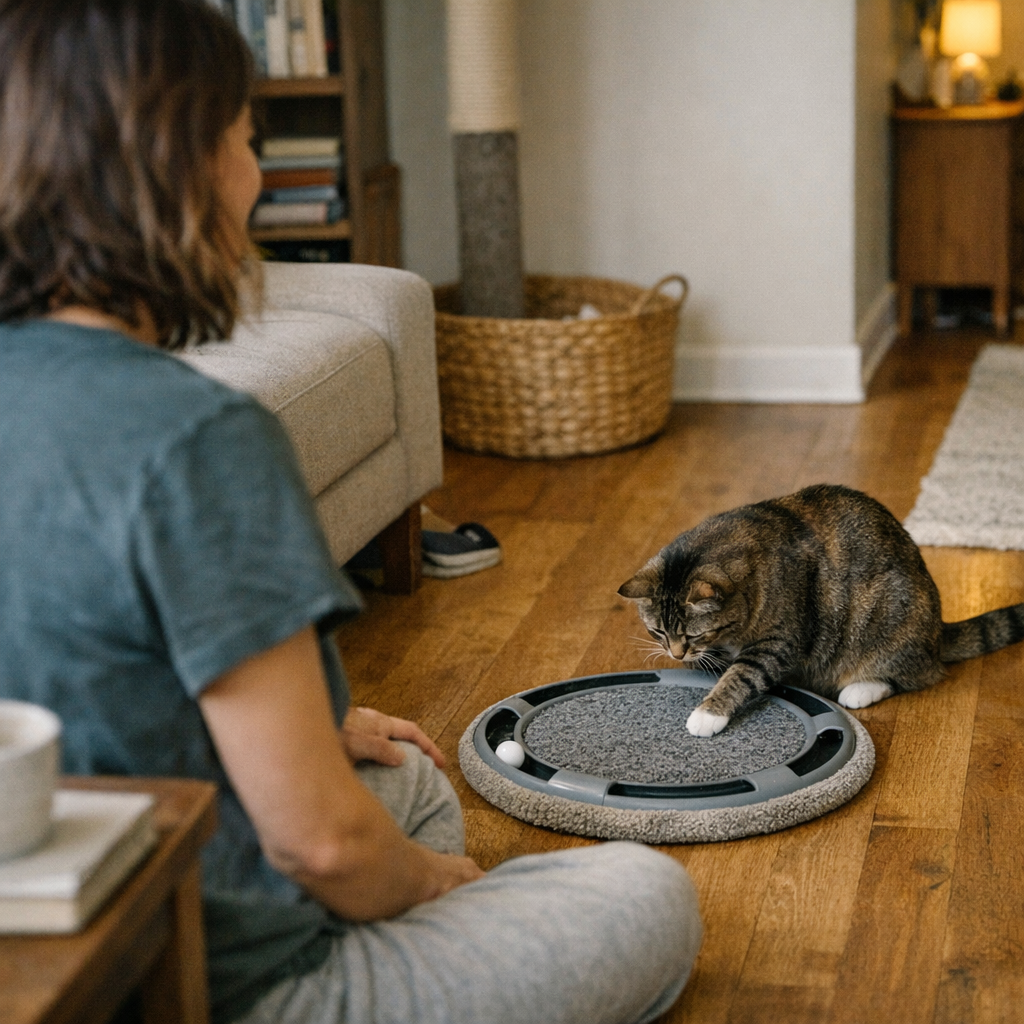
    The fix isn’t just more storage or fewer toys—it’s rewiring the post-chase experience. StillWhisker setups favor anchored play: after high-energy chase, a single semi-fixed toy absorbs the restlessness, concentrating that last burst in one predictable spot. Instead of chasing resolution through scattered objects, your cat gets closure; you get a clear reset. The ripple is immediate: your routines pick up pace, the room stays open, and your cat’s energy settles faster—especially when space is tight or cleanup windows are short.

    In practice: When you swap four loose toys for an anchored mat with a built-in rolling track, the end of play points to one specific location. Your cat finishes strong, and you reset in one step: slide mat, check for strays, move on. The lingering “unfinished” tension fades, and both of you stop circling the space for what comes next.

    Containment Makes Reset Predictable

    The biggest shift in real use is reset time. No nightly battles with the broom, no hunting for a missing bead before bed. One contained zone means you move toys back once—not in pieces, not at random hours. Your main floor route stays clear, shared spaces stop accumulating friction, and those stray meows signifying extra, unresolved energy drop off. The real gain is in what you stop repeating—reset shrinks to a routine instead of a lurking project.

    Location Matters as Much as the Toy

    Position is as potent as any new toy. Anchor the wind-down activity where both you and your cat naturally move—just off the main walkway, at the soft boundary of a living area, or tucked beside a sofa. The right spot keeps play visible and the rest of the space undisturbed; your movement recovers speed, and repeated detours evaporate. Over time, your cat’s post-play behavior becomes focused, your own motion gets easier, and sprawling interruptions give way to smoother transitions between play and everything else.

    When Structure Slides: Signals to Watch For

    Even strong setups weaken under fatigue or neglect. Watch for:

    • Loose toys creeping back to corners or under hard-to-reach places.
    • Renewed late-night pacing, door-staring, or low, repetitive meows from your cat.
    • Reset times quietly ballooning—a supposed “quick pickup” becomes a five-minute search after dinner or before bed.
    • Shared areas demanding mini cleanups before you can just walk through the doorway.

    These are the flags: structure is slipping, and the cycle needs a reset. The rhythm—chase, wind-down, contained reset—brings the friction back down with minimal changes.

    Getting Repeated Use Right: Small Adjustments, Big Differences

    Perfect is rare. Indoor cat life is always moving, for you and them. The fix is almost never an overhaul—just targeted swaps and minor shifts. Anchoring a post-chase toy, cutting the number of open-ended objects, and placing the “final stop” where it fits both cat access and your cleanup route, transforms the home from a series of micro-aggravations to a pattern that fits real, repeatable routines. Sometimes that means swapping a rolling bead for a circular track; sometimes, trading a scatter of mice for a mat that won’t migrate. The missed toy under the chair may still resurface, but you won’t have to stop everything to deal with it daily.

    Recognizing the Difference Between “Looks Better” and “Actually Works”

    Tidy isn’t the measure. The real question is how quickly any setup returns to normal during repeated use, especially when no one has time or patience for heroics. The most reliable signal comes midweek, not after the deep clean: is the evening routine still being interrupted? Are you losing time to low-grade “toy rescue”? If not, structure is holding. Play that moves smoothly from high energy to organized wind-down—anchored to the right spot, reset in seconds—means the system isn’t just neater; it’s genuinely easier to live with, cycle after cycle.

    Practical improvement looks like:

    • A predictably managed chase-to-calm flow.
    • Anchored play clearing the mental load of constant pickup.
    • Containment placed in the natural movement path—no more circles around scattered objects.
    • Cleanup that’s routine—not random, not effortful, not another slowing surprise.

    This isn’t about designer home style. It’s the practical recovery of time and comfort, so both cat and human routines become easier—not messier—with each repeated reset.

    Find more structure-focused setups for real repeated use at StillWhisker.

  • How Small Changes in Dog Rest Areas Improve Daily Relaxation and Recovery

    You set up a dog’s rest corner thinking it’s finished: bed fluffed, blankets in place, corner claimed from daily clutter. But then comes the repeat: your dog approaches, circles, eases down half, then pauses—ears catching hallway footsteps, head lifting at every family pass. The rest area looks right, yet your dog never fully commits to the spot. Instead, you get sidelong glances, uneven weight shifts, and naps broken by every noise. This isn’t rare; over time, those small hesitations—one paw on, two eyes tracking movement—build up. The real drain? Daily routines start stalling; rest isn’t restorative; and all the tidying in the world can’t hide a setup that actually disrupts instead of resets.

    The Rest Zone Looks Fine—So Why the Hesitation?

    Patterns appear in the friction: the midday nap that never quite starts, the end-of-day curl-up interrupted by footsteps, the repeated circling at a bed your dog once rushed to claim. Watch closely and you’ll see it in the moments between intention and settling—your dog pausing, half-reclined, attention split between bed and hallway. It’s not just a personality quirk; it’s a signal that the space isn’t working under real routine pressure.

    This micro-pause is the start of bigger trouble. Instead of deep sleep, you get half-dozing: every muffled voice in the hall means a lifted head. Naps get shorter. Peaceful lounging turns into restless watch duty. The clues always surface in the approach—when your dog lingers at the edge, waiting or tracking movement instead of collapsing with trust. The rest setup that looked great loses ground as the routine exposes its weak spot.

    Recognizing the Quiet Cost of Half-Rested Dogs

    You feel it before you name it. The dog is needier, the evening tighter, and the day’s small interruptions multiply. Your dog paces in, surveys the space, but won’t drop cold; instead, you get sideways glances, light sleep, a shoulder always lifted against the next noise. This tension creeps into play, feeding, and downtime—rest isn’t a true break, just another checkpoint in a too-busy flow.

    It’s easy to write off as “just how they settle.” But repetition tells you otherwise. Approaches drag out, resting becomes fragmented, and your own flow gets pulled off course by constant low-level resets—closed door here, drop of a backpack there, repeated trips for a missing towel or misplaced toy. The routine is quietly broken by environmental friction the eye misses and the dog can’t ignore.

    Example: The Crowded Rest Window

    Picture after-work chaos: dog heads for her bed as you finish a call, only to freeze as kids shoot past with school bags. The pause is visible. She waits, half-hoping for quiet. Ten minutes later, when things calm, she finally settles, but stays alert—body twisted, eyes on the main drag. Her nap window closes while you untangle leashes and clear the hallway. By dinner, her energy’s frayed—and yours is too. What looked like strategic placement in the morning now traps both of you in a pattern where rest is never uninterrupted, and cleanup starts bleeding into living space.

    Traffic, Noise, and the Sneaky Power of Place

    It’s almost always about the path. Even a well-padded bed, if set next to a main walkway or near the kitchen, puts your dog in the crossroads of noise and scent. Each trip to the fridge, each backpack drop, each snack tossed, keeps your dog half-waiting—ears primed, not relaxed.

    This design flaw slips past initial setup. The “quiet” corner at breakfast is a highway after lunch. Placement that looks clever one week silently undercuts downtime the next as movement patterns change. What shows up on repeat use?

    • Your dog flinches at each door open or hallway echo.
    • Naps last minutes, cut short by footsteps or voices.
    • Energy never resets—playtime fizzles, crate time gets jumpy, and the dog follows you, not because she’s attached, but because her rest zone is always in flux.

    It isn’t about cushion comfort alone. Without a physical or visual buffer, rest collapses into alert monitoring. Change the angle, block a path, or create a sheltered side, and the pattern shifts from pausing to deep downtime. Fail to, and you’re left troubleshooting the same restless behaviors no matter how well-meaning your setup.

    Real-World Friction: When Rest and Routine Collide

    The most telling moments happen after walks or muddy-yard trips. You return with the leash in one hand, a distracted dog in the other, and discover the bed is in the spill zone for shoes and gear. The wipes or towels—if not buried under piles—require a hallway dash to fetch, while your dog drips, shakes, and delays settling. Instead of a quick reset, every transition turns slow: you’re mopping paw prints out of traffic lanes, the bed edge gets damp, and the rest area starts leeching mess into daily flow. Organized? Maybe. Efficient? Not even close.

    The difference is stark: a space that looks tidy can actually slow everything down if you’re always circling back to fix what the setup keeps breaking. The real test isn’t visual order, but whether you can flow from walk to cleanup to rest—without detouring for missing gear or nudging your dog off high-traffic real estate.

    From Minor Adjustments to Major Difference

    If you’ve lived this, you know: even small misalignments compound. That midday pause at the bed isn’t just hesitation—it’s your whole routine forced to adjust, again, to a rest area that makes sense only on paper. Every family pass or kitchen sound draws your dog’s body higher, splits focus, erodes downtime. Instead of closing the loop with a true nap, your day becomes one of micromanaged transitions: fast shuffling from leash to towel, barking at every entry, reworking the space that should simplify, not complicate, the flow.

    But few fixes are as quick—or as ignored—as relocating the bed by even a stride. This isn’t theory; it’s what improves routines from ‘almost fine’ to seamless. Shifting the bed just a step off the main walkway, giving it one more wall for psychological cover, transforms the approach. The dog that used to hover now commits: forward motion, quick curl, chin down, full exhale—a measurable retreat from the main drag back into real rest. The earlier friction—pausing, scanning, resisting calm—lessens in a matter of days. New gear is rarely needed; the win comes from structural adjustment, not accumulation.

    The One-and-a-Half-Step Solution

    Case in point: after watching my own dog stall at her old bed site, I moved the setup roughly one and a half strides off the heaviest traffic line, pressing it to a side wall with no direct hallway view. First day: some doubt, same pause. By the third try, the change kicked in—fast entry, one circle, stretched-out sprawl, and, finally, head away from the commotion. Gone was the old pattern of staying on watch; instead, she settled, and real downtime returned. It wasn’t overnight, but it was undeniable—less frequent interference, less retracing steps, a visible shift in the day’s flow.

    The real difference isn’t in how clean the bed looks, but in how the dog—and owner—move through the steps after each routine event. Placement starts doing work, not creating more of it. Fewer reminders, fewer resets, downtime that means something again.

    Spotting Signs Your Rest Setup Needs a Tweak

    Watch for the giveaway patterns—these aren’t quirks but warning signs:

    • Dog hesitates at bed’s edge, waits before lying down
    • Excessive circling with eyes trained on entry points or footpaths
    • Half-settling, raised shoulders, head always pivoting toward routine noise or movement
    • Light, interrupted sleep—constant ear-flicks or quick lifts at everyday sounds
    • Restlessness that migrates: play fizzles, meals get messy, evening routines stall

    If the same friction persists days in a row—despite a freshly organized, cleaned rest zone—you’re not facing a neatness problem, but a structural one.

    Quick Wins for Resetting the Routine

    You don’t have to stage a remodel. Instead, try:

    • Sliding the bed one step off the direct path or door line
    • Angling for a partial wall or visual barrier, blocking direct sightlines from high-traffic spaces
    • Placing towels, wipes, or cleanup supplies at arm’s reach, not buried in another room—so resets after walks, outdoor play, or muddy paws don’t require detours
    • Positioning just enough gear for transitions, but not so much it