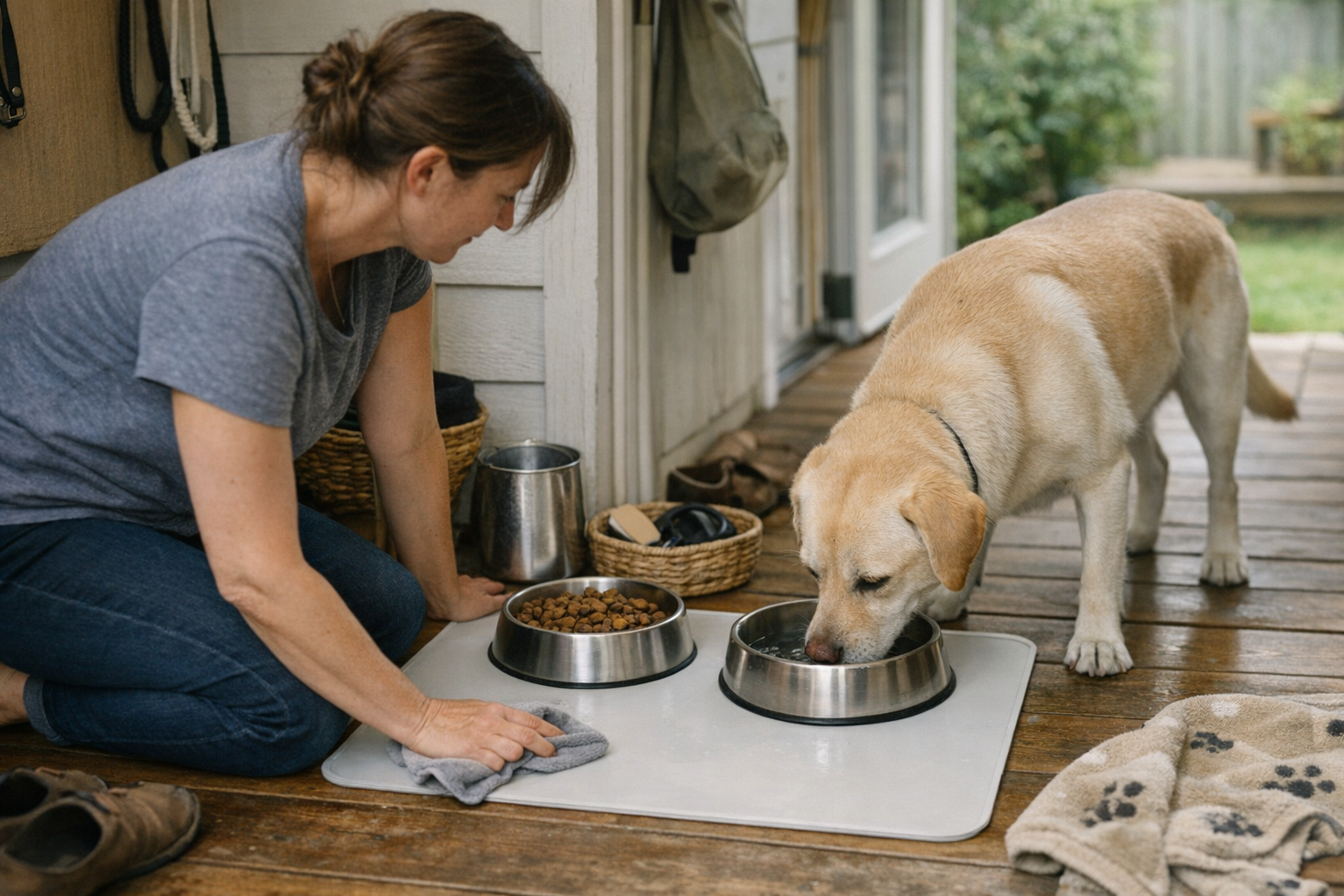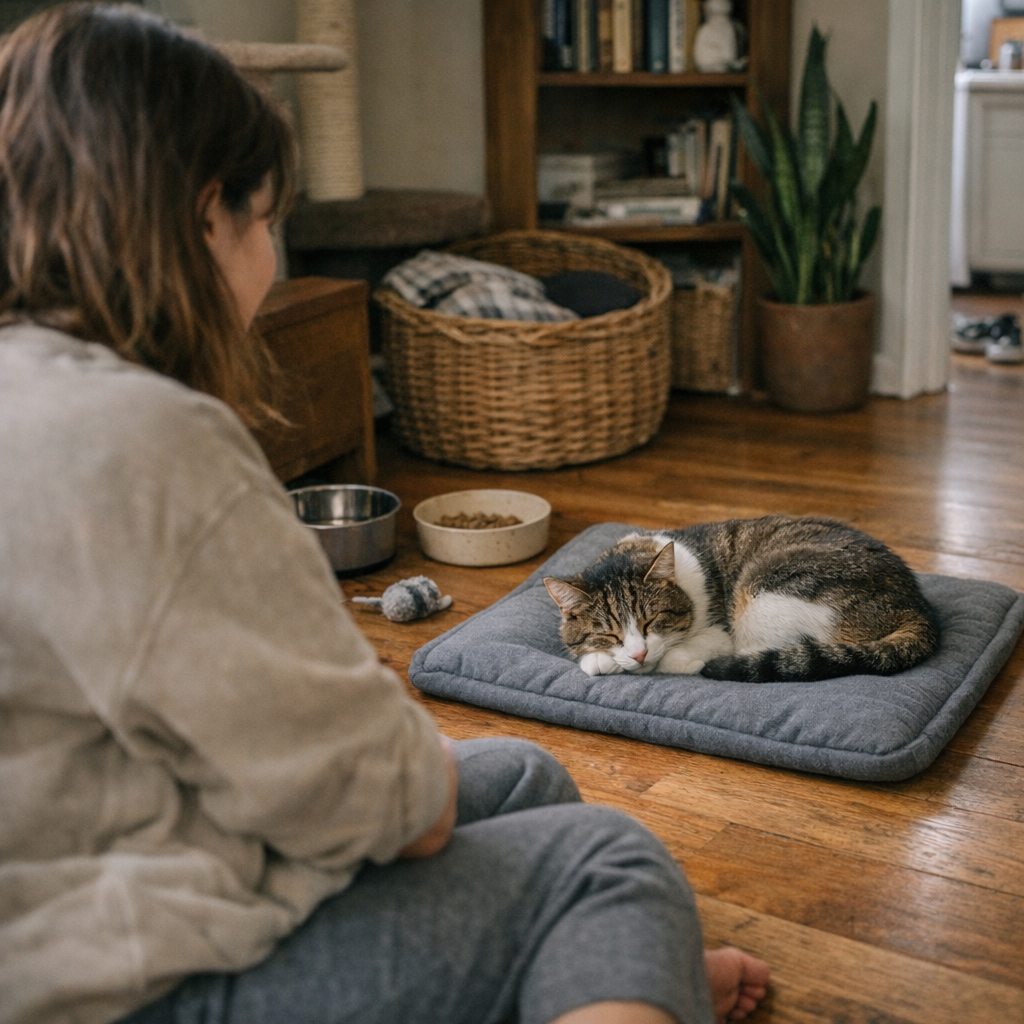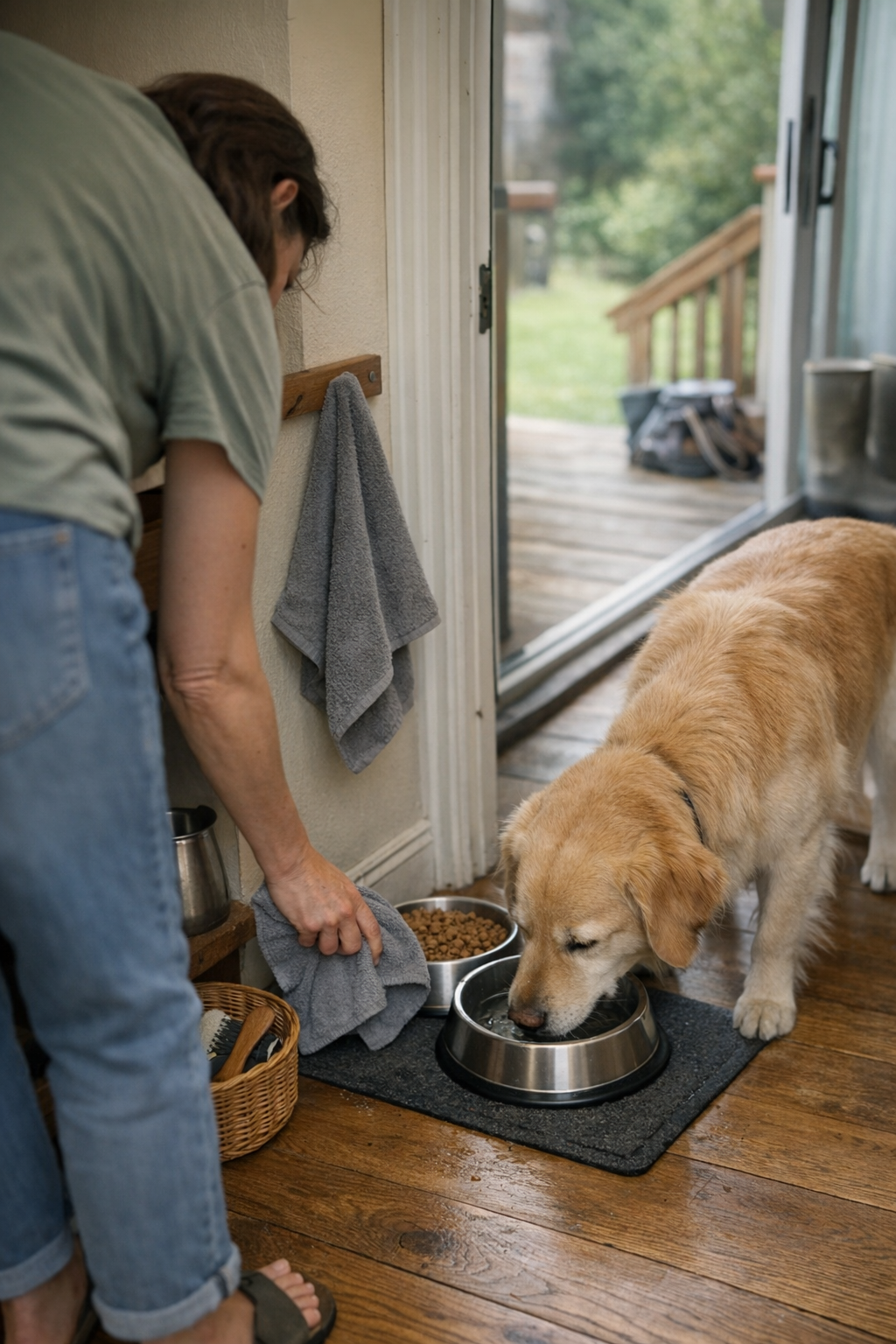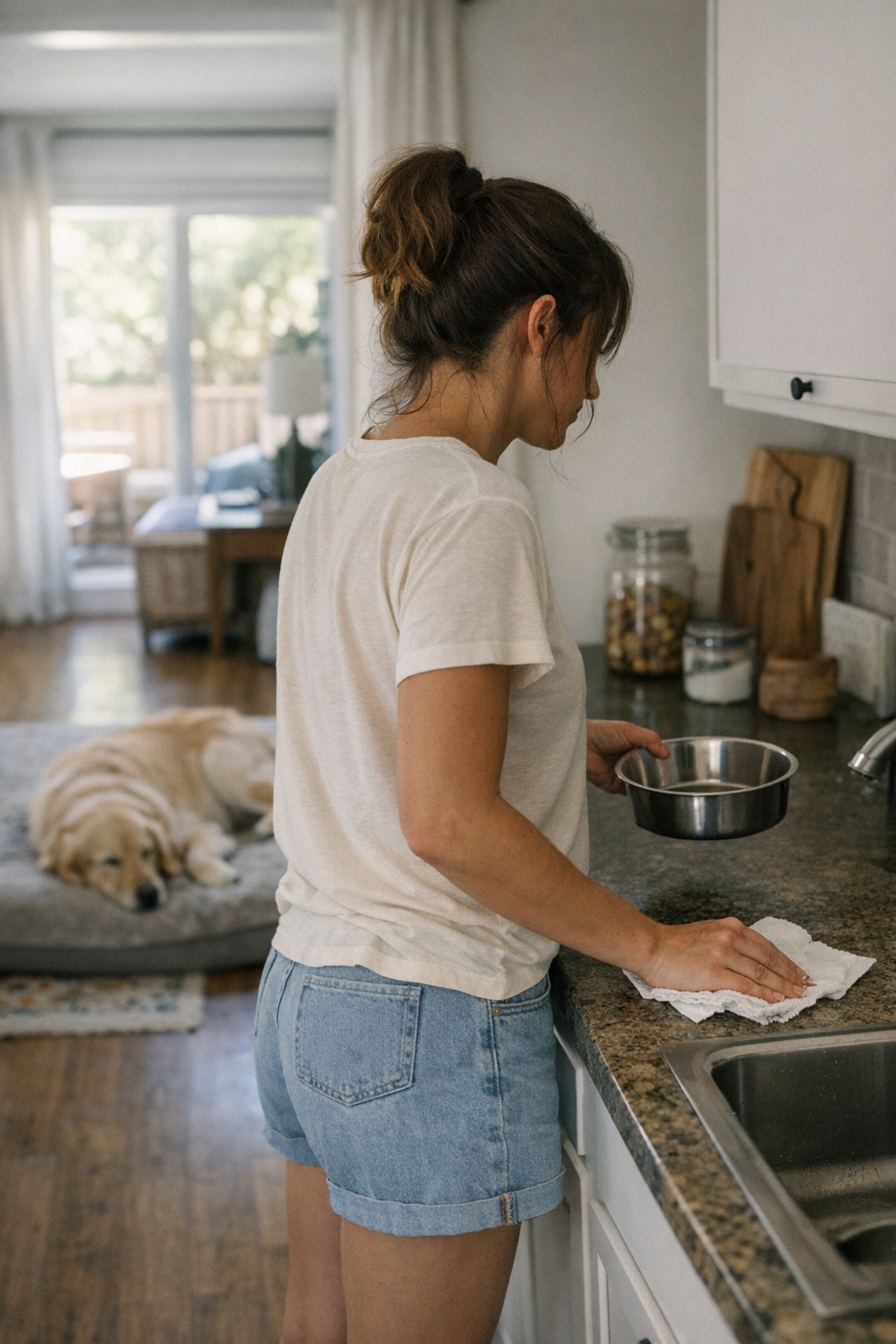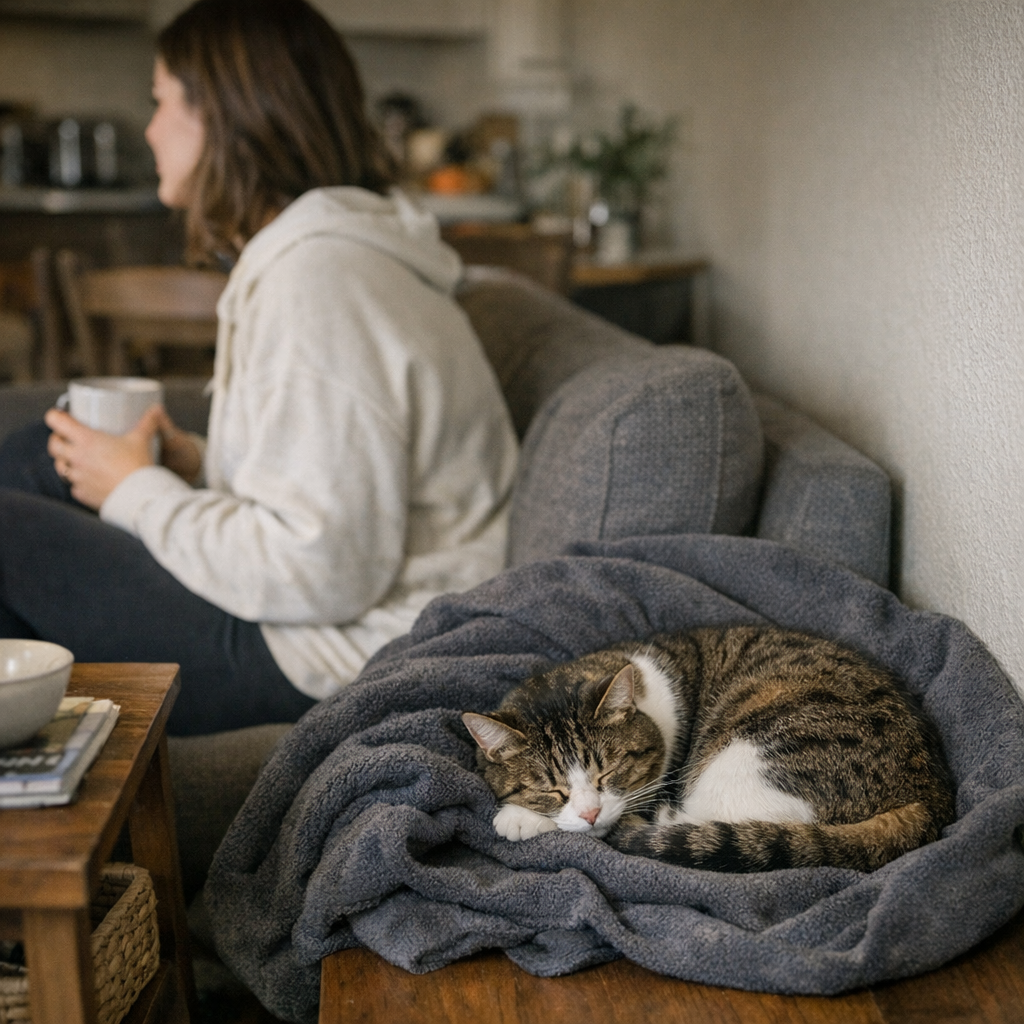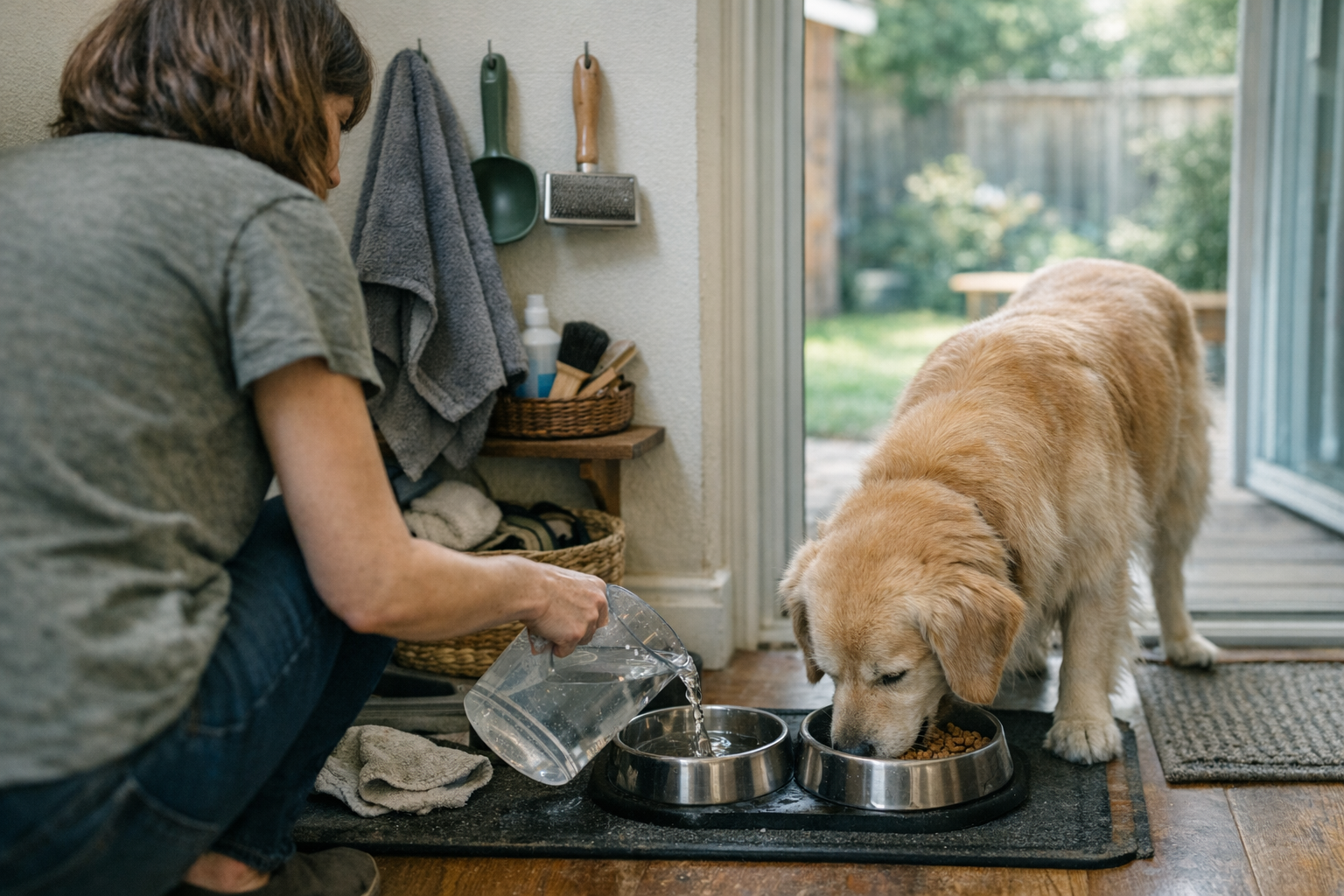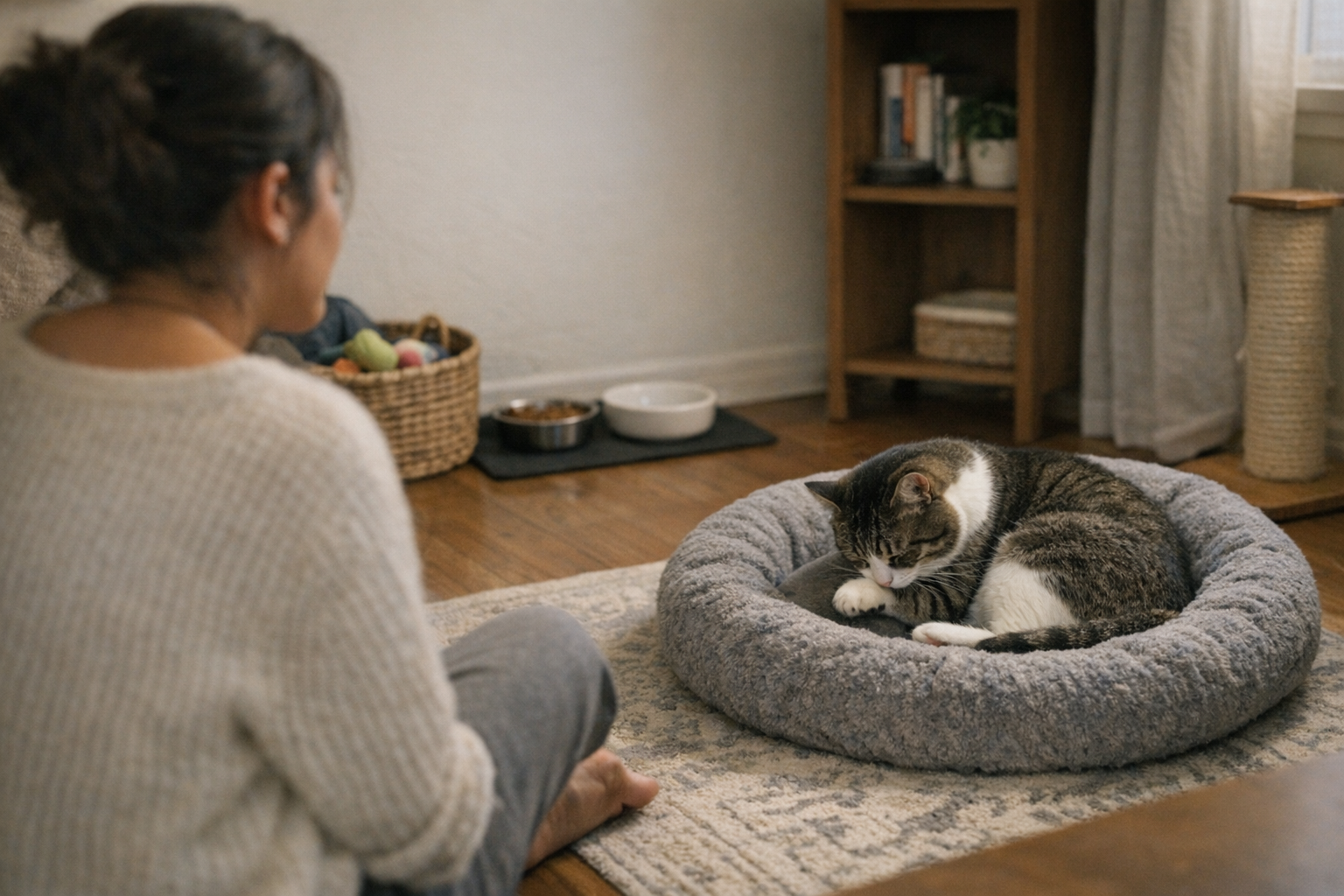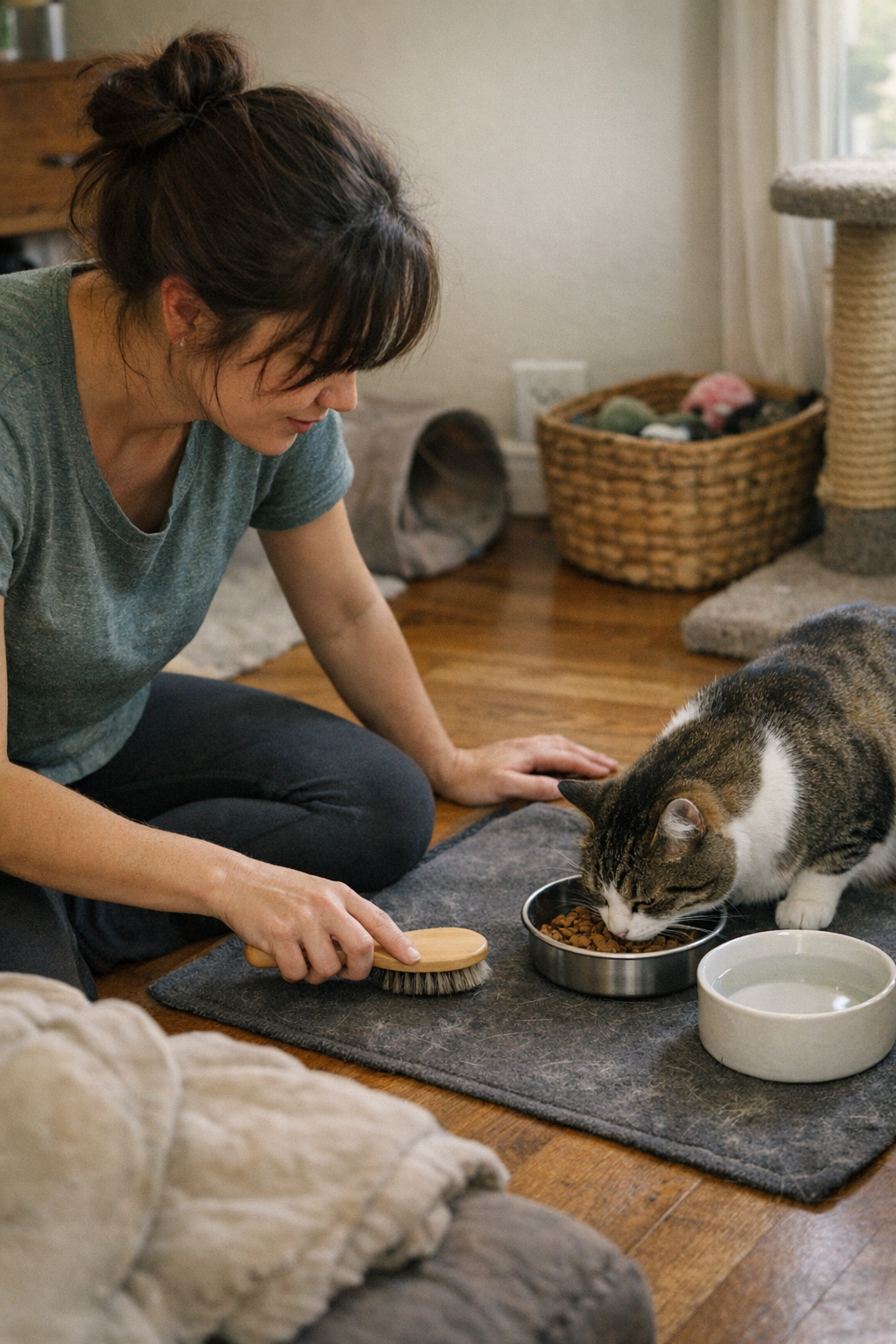
The gap between a “clean” indoor cat setup and one that actually works shows up fast—usually in the first repeated routine you run. You reach for a cat bowl to refill, but fingertips catch a line of hairs clinging to the rim. A fresh feeding mat that looked spotless yesterday already shows faint dust-lines around the edges. Every time you move a toy or a cushion, you find a new pocket of fur, not in drifts but in daily, stubborn traces. The setup didn’t fall apart; it just quietly lost its reset smoothness. If you catch yourself wiping the same spot twice before breakfast, or pausing to chase lingering fur before handling the actual bowl, you’re not just being picky—you’re seeing the real friction that builds when grooming and cleanup aren’t fully aligned with daily indoor cat life. StillWhisker setups are designed to shrink that gap: real-world home routines, not just tidy first impressions.
Seeing The Invisible Work: Where Stray Fur Really Collects
At a glance, a feeding spot—bowls aligned, mats placed—feels under control. But miss even a single grooming reset, and the quiet build-up shows: fine hair webbing the bowl’s curve, dust-fine strands gripping the soft mat where you pour kibble. These aren’t just cosmetic annoyances; they multiply steps. Poised to top up water, you realize a layer of hair coats one edge, so your “grab-and-go” turns into a sweep, lift, and second wipe before refill. Each round, what should be a single movement fragments into several—never a crisis, but always a little slower, a little less contained.
If your setup lives on a shared walkway—kitchen corner, hallway elbow—the cycle accelerates. Every reach drags low hair across to human zones, and mats at the edge start looking faded or clingy. A reset is no longer just for bowls; it means repositioning a stray toy, chasing a missed fluff, or grabbing a cloth from a shelf that’s one step too far away. That calm, organized look thins sooner than budgeted, and routine upkeep starts to show where your setup’s convenience ends.
When Routine Grooming Breaks Down: How The Cycle Starts
Let grooming slip for even a day or two and the slip shows up fast—not in one big catastrophe, but in micro-returns: a fine grit where the bowl lands, low-lying fur shadowing every feeding mat, those moments you hesitate before setting a dish down because it doesn’t quite feel clean after one wipe. Maybe you skip brushing because the cat’s coat looks fine by eye, or you run late. Suddenly, it’s the afternoon reset and you’re stuck clearing the same faint traces from yesterday—plus new ones that crept in while you weren’t looking.
The giveaway isn’t always surface mess. It’s the repeat wiping, uneasy pause, or that “almost clean” feeling that creeps into everything near the feeding area. Toy returns drag in hair. Bedding reset triggers another check around the bowl. Outward order, but one or two hidden trouble spots that mean you’re still working too much just to stay even. That’s when “looks okay” slides into “feels like maintenance.”
Small Friction, Real Minutes: How Maintenance Accumulates
The speed bump isn’t dramatic; it’s the way seconds stack up—reaching for a bowl but getting stopped by fur pasted to the rim, needing to flick the mat twice before it looks ready, halting the return of a toy to swipe away a hint of fluff. Each piece is minor, but together, they create a home routine that never quite resets cleanly, always a bit stickier, never fully done. The cost isn’t a disaster, but a dozen split-second pivots from “grab and go” to “pause and fix.”
If the brush is always in the wrong drawer or the cleaning cloth is two zones off, these steps drag—the interruption is built into the layout. As skipped grooming repeats, these pauses multiply, until a single daily reset easily costs an extra minute chasing the same recurring hair points. Now, every comfort upgrade—softer mat, new blanket—brings relief, but another friction point: plush surfaces trap more, folds catch lint, “easy” resets become little obstacle courses for stray hair.
Comfort and Complication: How Improvements Uncover Weak Spots
Adding a plush mat or smooth new feeding tray delivers instant visual calm, but softness often means hair sticks deeper, corners collect more. The space feels better—at first—then slows down day two or three when mats grip debris, with folds or padding gathering stowaway fur from toy swaps or bowl landings. Function fights feel. Soft improvements make a room look finished, but also make each reset more work if the routine slides, revealing where “easy-to-clean” wasn’t actually built for daily indoor traffic.
Grooming Frequency: How Often Matters More Than It First Appears
The visible split between “looks good” and “works better” appears inside three days. Fur lines redouble if grooming is delayed or supplies aren’t at arm’s reach. Owners who keep a soft brush nearby—the caddy, a hook, not some unseen closet—catch drift before it bakes in. Quick passes every day or two cut not just obvious fluff, but the slow stacking of effort: mats and bowls reset with fewer wipes, cleaning doesn’t spill into hallways, and hair drift doesn’t invade every shared path or rest spot.
Miss these resets, and hair gradually crosses cat-only zones into human domains: under couches, along doorways, and across that favorite play zone. Even careful vacuuming won’t match the difference—a routine brush pass keeps the hair anchored to one spot, while neglect lets it cross every zone you hoped to keep tidy.
Everyday Scenes: Where Hair Drift Steals Time and Focus
End-of-day: you lift a bowl, expecting done-for-the-night, and see a hair line etched where the mat meets table. Midweek vacuum: pull back a cushion and loose fur flickers out of the seam, waiting to be re-settled later. Morning routine—before coffee, you’re already sidetracked by a film of fur on the feeding corner, needing the cleaning supply before you even get to feeding. It’s not about cleaning for cleaning’s sake; it’s the constant rerouting—each small interruption, each too-late wipe—that quietly eats up your daily flow.
Those faint fur trails that snake from the feeding mat to the furniture edge signal when your setup’s working against you. Doesn’t matter how often you vacuum; skip consistent grooming, and hair draws new lines from food zone to play zone, and back again. Throw blankets shake clean, but by afternoon, fur’s back in the same fold. Reset after reset, you feel the lag—still handling the same evidence of missed steps, still fussing with what should be done by now.
Structuring a Smoother Routine: What Actually Changes With Consistency
Routine grooming isn’t magic—it simply cuts the double work you never wanted. After slogging through back-to-back slowdowns, I locked in a two-minute soft brush after every second feeding. Instantly, next resets went from chasing a dozen rim hairs to finding maybe one. Mats held less debris, and wipe-down shrank by nearly half a minute. “Hair check” faded from constant duty to a quiet background step. There were still outliers—busy days meant some fur got missed—but the repeat friction and mental tax dipped in a way even a tidier appearance couldn’t fake. Suddenly, cleanup supplies lasted longer, movement through the room felt lighter, and the feeding area stayed usable, not needy.
Building Your Grooming Habit: Tips For Real-World Success
Don’t aim for perfect. Build grooming habits into a moment you already hit—after first feed, or prepping the last meal. Store the brush within sight, not buried: on a caddy, drawer edge, or out near the feeding space. When you see hair collect, brush right there—seconds per mat edge is enough. If bedding always has residue, run the brush as part of your rest corner reset. Consistency trumps perfection—the whole point is to stop drift before it becomes another round of reset slowdowns and scattered cleanup frustration. Setup choice means less if the maintenance living with it keeps circling the same spot.
Explore StillWhisker’s setups for grooming-adjacent routines and more practical cat-life structure.