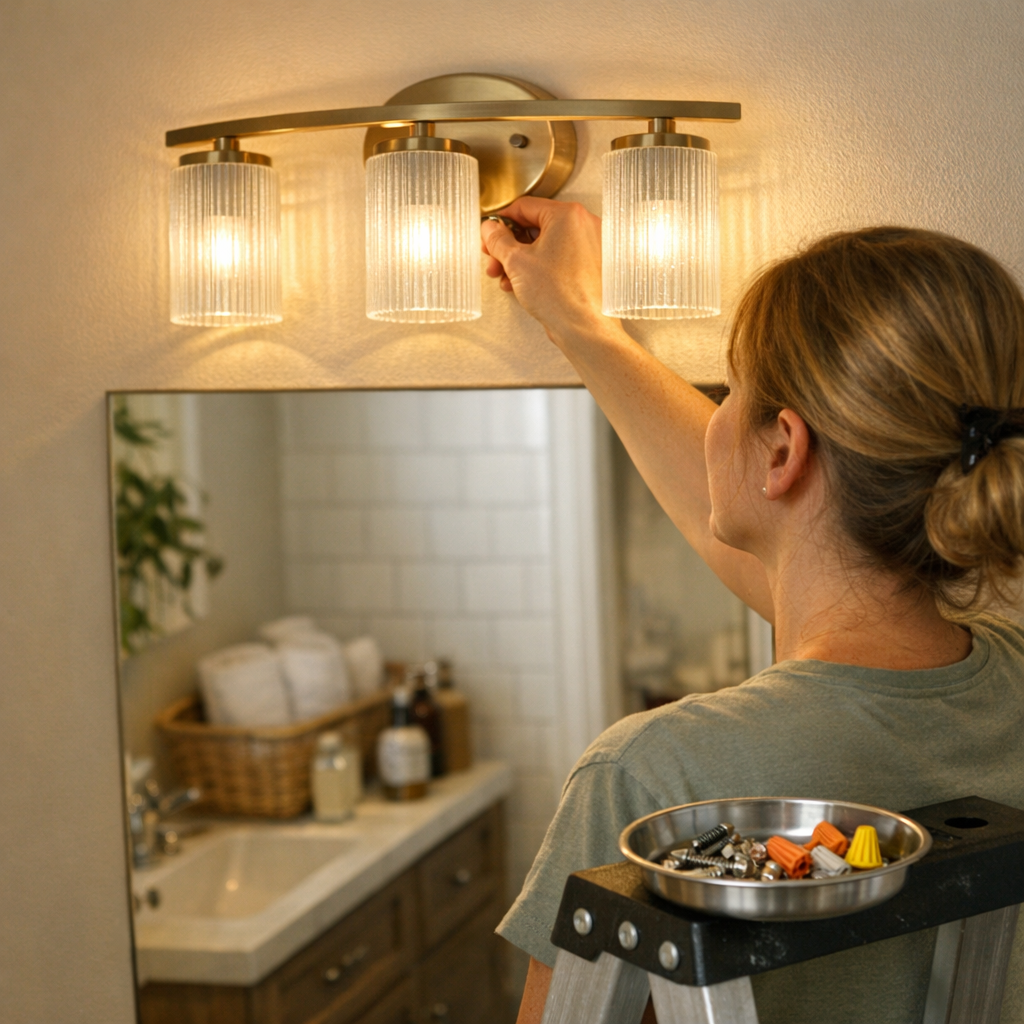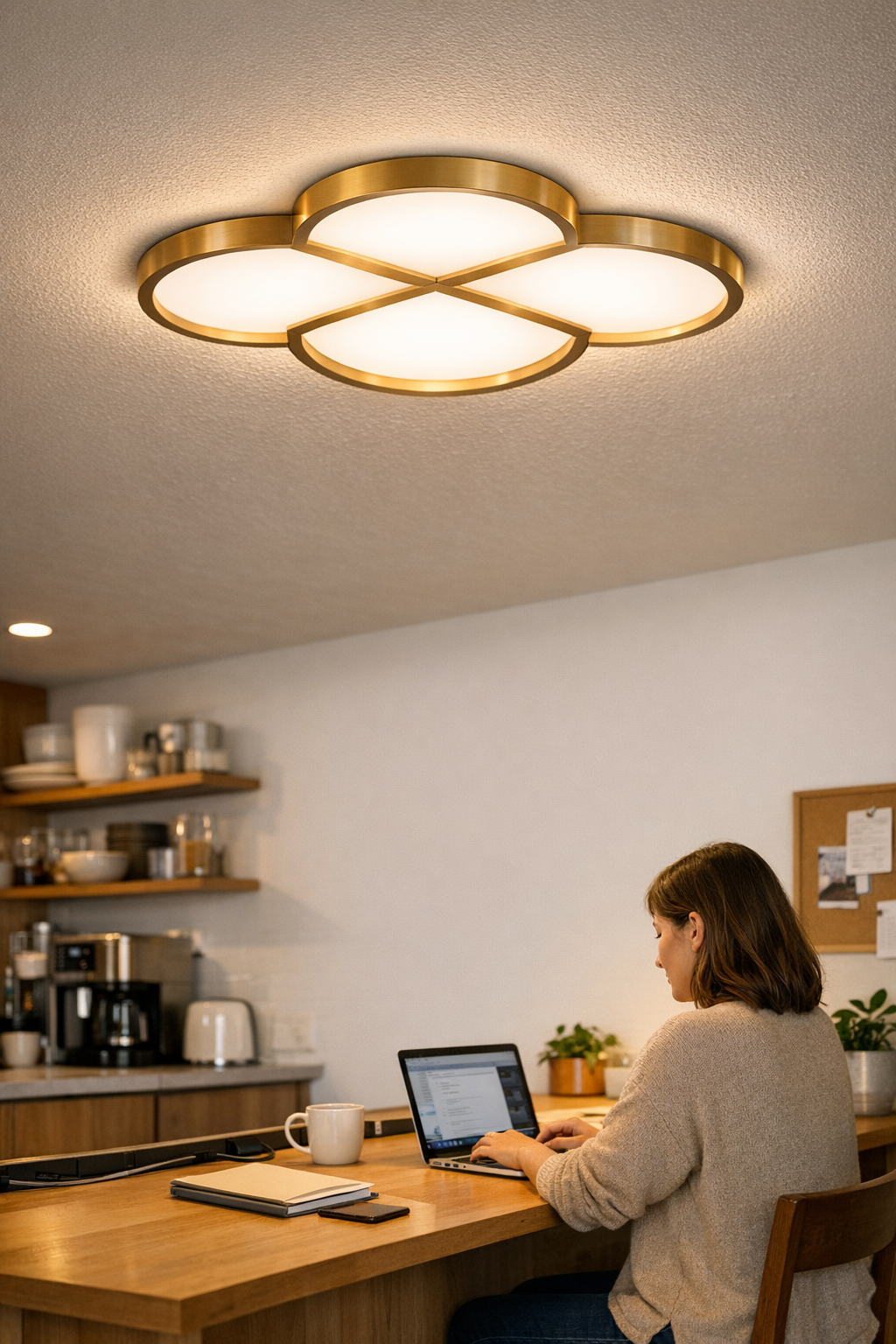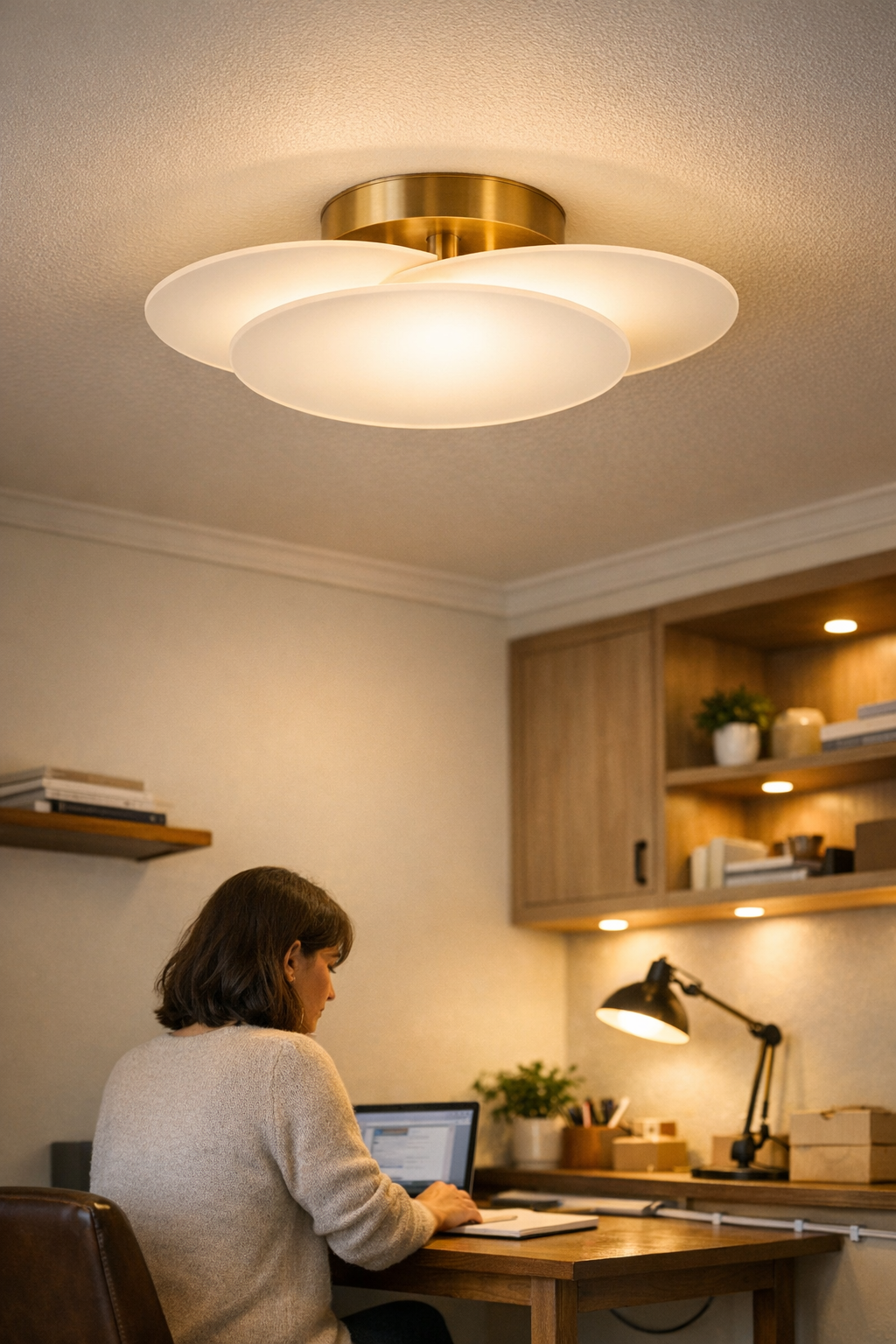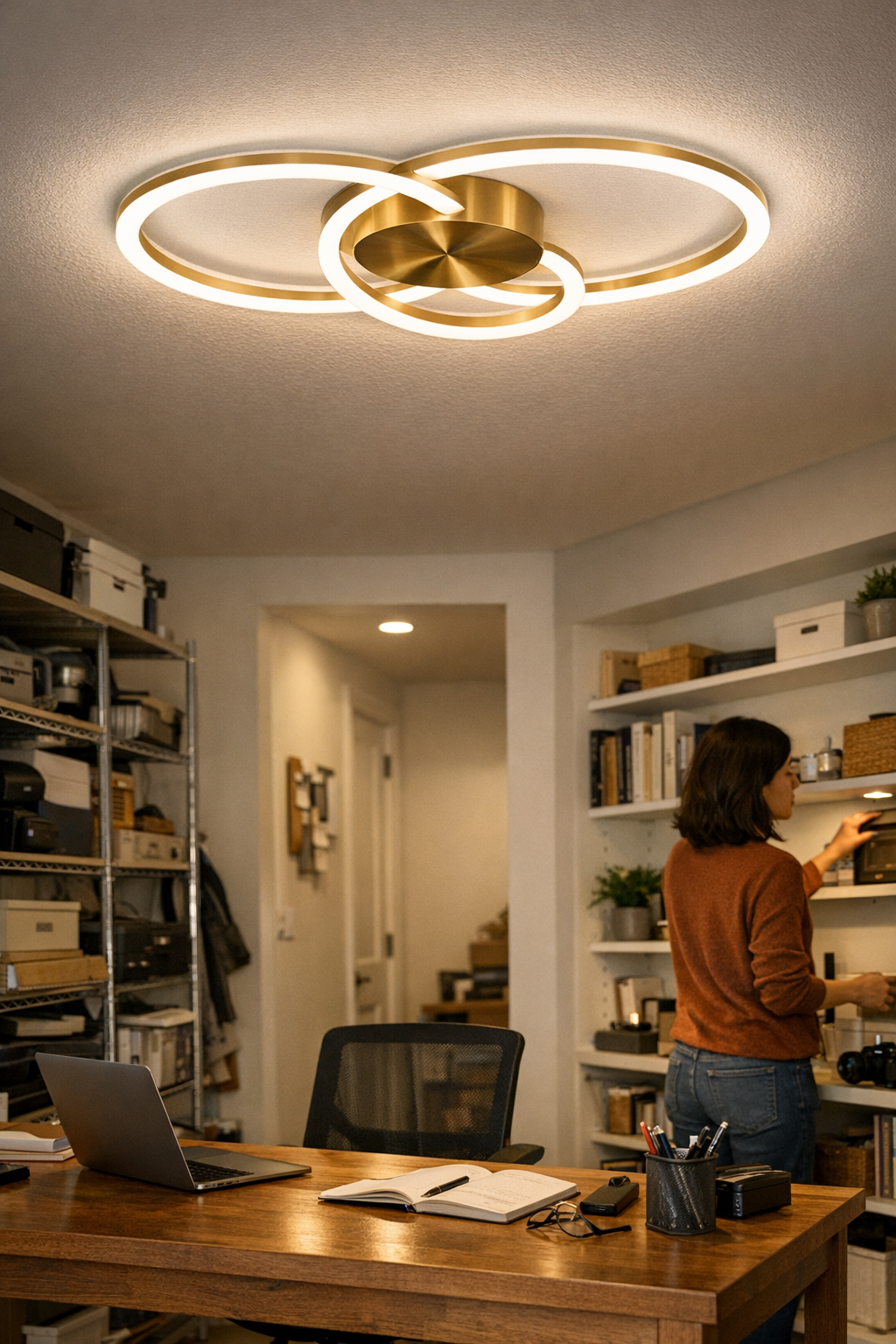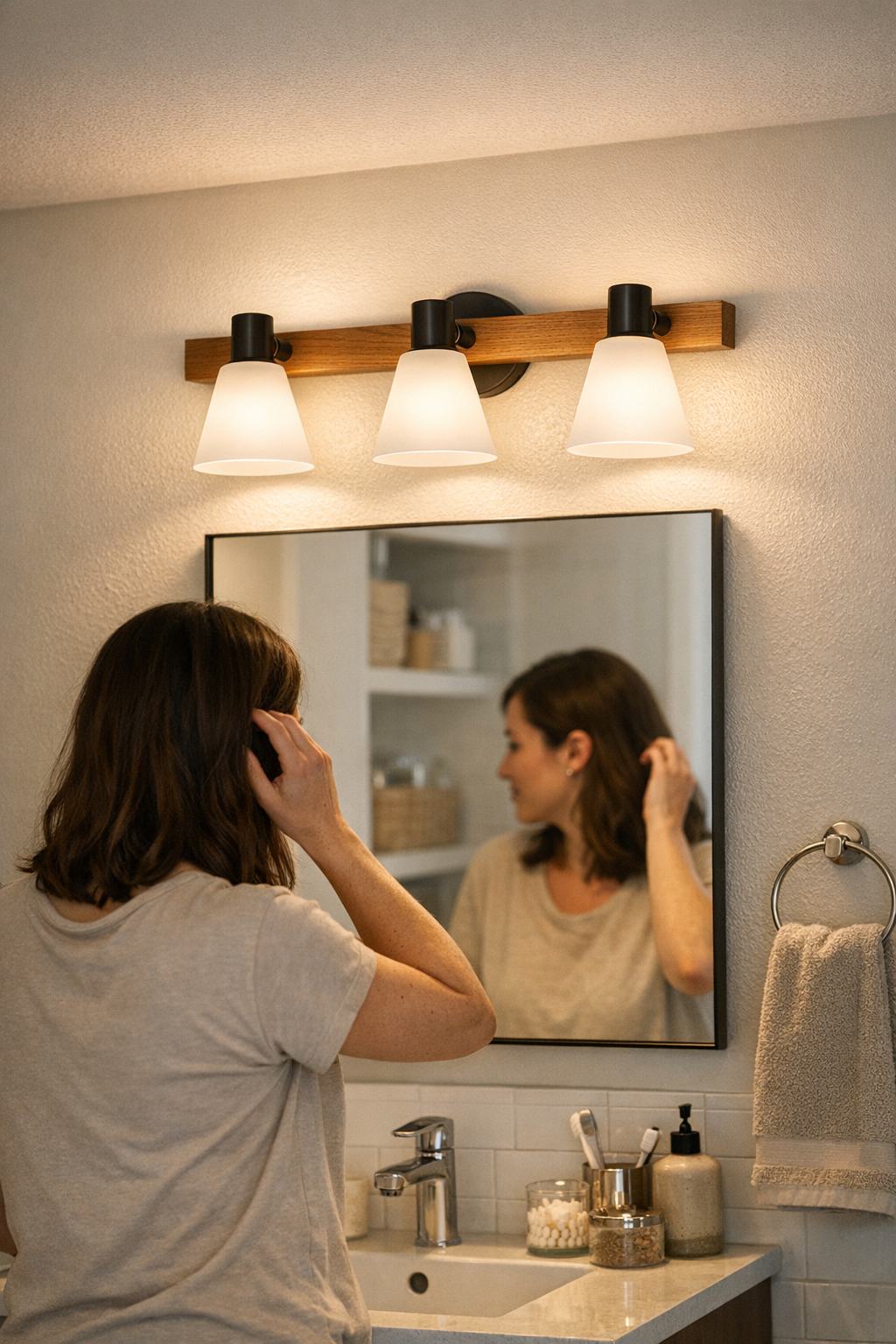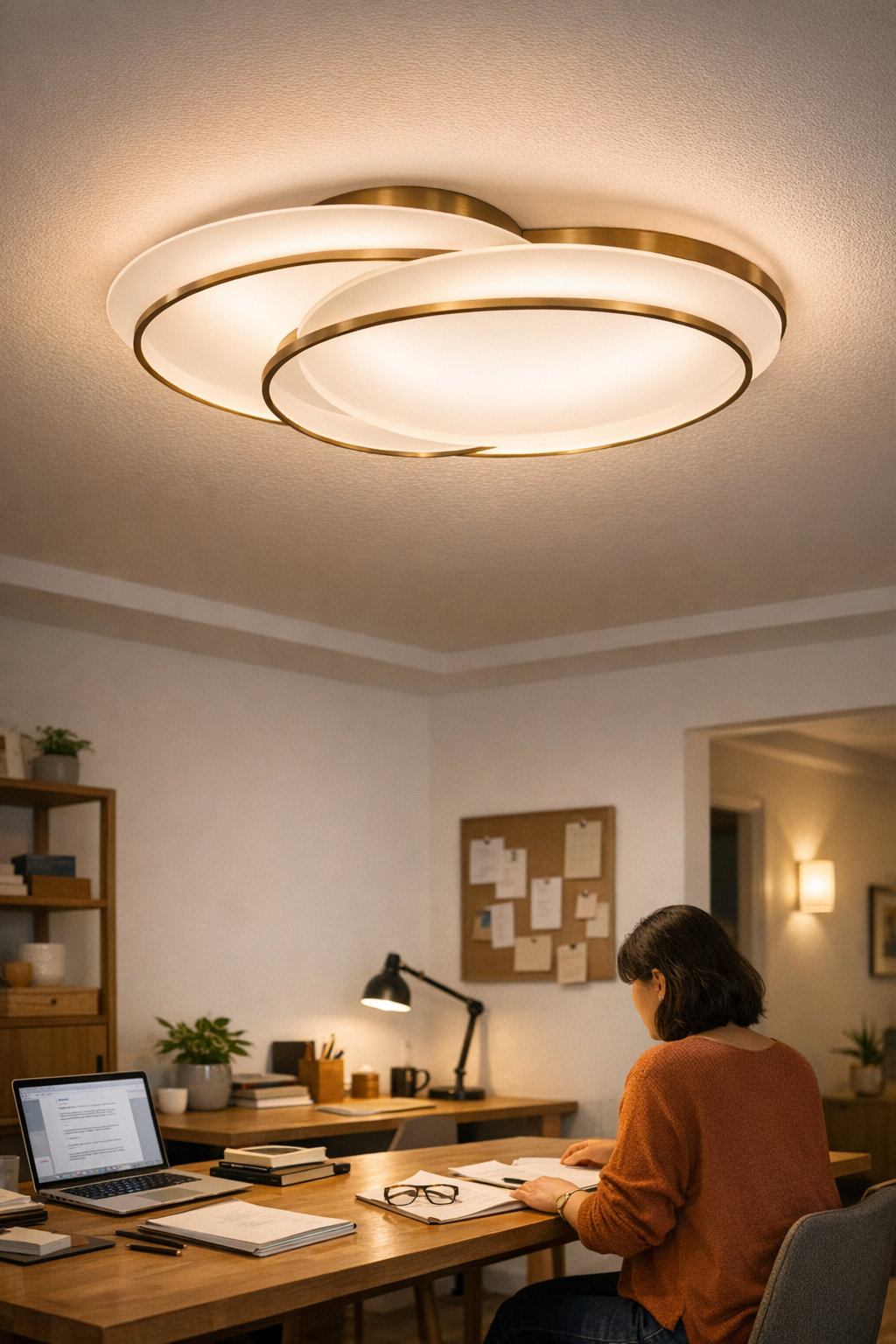
Ceiling lights that look organized rarely solve the real problem: daily use keeps exposing the weak spots. Upgrade the fixture, reposition a lamp, adjust a dimmer—yet within a week, you’re back at the same routine: shifting seats to dodge glare, dragging in a backup light to reach a shadowed edge, dodging cables that break up the view, or working around a bracket that quietly eats into your space. That visual order you created vanishes under the hassle of constant micro-adjustments and persistent underlit zones that never quite disappear. If the lighting looks streamlined but keeps interfering with your routine, the setup’s failing where it counts.
When Lighting That Looks Right Isn’t Actually Working
Getting a fixture to “fit” visually is easy; making it support your real routine is where most setbacks begin. The mismatch becomes clear not in the first walk-through, but once the room is used in earnest. Shadowed desk edges make sustaining paperwork a daily strain. That glare-free tabletop turns into a source of eye fatigue when one half stays dim and the other starts bouncing harsh, direct light. Cables, at first pressed out of view, start creeping into sightlines during long evenings. Even the sturdiest bracket can trap usable surface, cutting off a key task zone or passage—reminding you, every time you sidestep, that the support was designed for order, not actual movement.
- The far side of your desk is lost in shadow, no matter how often you reposition your chair.
- Dinner becomes a test of endurance as bright spots alternate with dead zones along the table.
- Exposed cords come back into view every time the room is used for what it was meant for, not what it was staged for.
- A bracket solves visual symmetry but forces you to reach around it, changing how you use the work area.
The grind isn’t about brightness—it’s about the slow, unfixable drag of uneven light and physical obstacles that no new bulb or higher lumen figure really resolves.
Why Linear and Panel Lights Change the Routine
Linear and panel ceiling lights shift the daily experience from “managing around darkness” to finally using every part of the room as intended. Their broad, even spread fills in the weak zones, leaving no excuse for a dim desk edge or a repeatedly shadowed corner. The difference is clearest at the edges: where a compact or spot fixture fizzles out, a panel carries light smoothly, so you stop moving the lamp or hovering near a single bright point. With less adjusting and chasing after clarity, the surface—worktable, hallway, or reading zone—just starts working without fuss.
Standard options—can lights, spot fixtures, and most table lamps—scatter bright islands with dark patches in between. The result? Simple activities like switching from reading to team work become mini logistics puzzles; at least one person ends up in the shadow, or you keep tweaking lamps and adding cords just to smooth out the light. Attempts to patch these gaps—more lamps, new angles, an endless cycle of “quick” upgrades—merely add clutter, interrupting both the visual order and the routine. Even a bigger light backfires if mounting, cable path, or bracket placement ignore how you actually use the space: it’s easy to install a fixture that solves the schematic, but frustrates every day in practice.
- Collaborative work leaves someone struggling with a shadowed stretch while the other squints into spillover glare.
- Hallway travel turns into a hunt for shoes or keys as the light skips across the room center, missing the floor near the wall.
- Patching one flaw creates another: more fixtures mean more cable paths, more supports, and more ways for glare—or a clumsy route—to creep back in.
Clean Lines Matter—But Daily Behavior Matters More
The instant appeal of panel and linear ceiling lights is all about visual calm—cables hidden tight to the beam, brackets flush with the ceiling, and work surfaces left open. But after a week, surface-level neatness is exposed by lived routines. A true flush-mount fills the edge spaces spotlights miss, maintaining usable brightness wherever you reach or sit—not just in the design mockup, but as you shift from task to meal to recharge. Makeshift combos or shotgunned task lamps may photograph well, but quick reveal their price: mismatched levels, reflections cutting across work, and the constant urge to tweak a lamp or adjust a shade just to get comfortable at night.
The Tell-Tale Signs a “Clean” Install Isn’t Performing
- The light covers most of the room, but leaves a dim strip right where hands rest or laptops sit—a sign the “fit” was only surface-deep.
- Cable lines, bundled out of the way at first, end up exposed in real use as you sit, shift, or move deeper into the room.
- A support bracket that keeps everything level still intrudes into the workspace, meaning you work around the solution instead of with it.
These aren’t just small tradeoffs—they’re everyday distractions that chip away at comfort, add clutter, and erode the sense of calm the clean look first promised.
Real-World Lighting Scenes: Where the Details Sneak Up
Setup choices show their impact fastest in these two trouble spots:
In the Hallway: Darkness Lurks at the Edges
Two shallow panel lights installed along a hallway floor—not down the center line—turn low corners from blind spots into clearly visible paths. By contrast, a run of ceiling cans spaced only for aesthetics leaves shoes, cords, or dropped items in the dark, while glare splashes across unused wall surfaces. Walk the hallway at night, and the weak setup gets exposed: missed floor edges force you to slow down and avoid obstacles that shouldn’t be in your way at all.
At the Shared Desk: Shadows and Surface Blind Spots
A “minimal” ceiling fixture above a shared workspace might tick every visual box, but test it in action—two people lean in, one gains nothing but hand shadows while the other copes with direct glare off glossy papers. Task lamps breed across the table just to patch the blind zones. Cables sprawl, nightly cleanup includes another tangle, and the shortfall isn’t fixed—just disguised. With certain supports or brackets placed for symmetry rather than movement, you end up circling the problem: reach, adjust, reposition, repeat. Light that looks right on day one keeps interrupting each routine long after.
And if cables or bracket arms rest too near reflective surfaces, glare is baked into the design, forcing a round of re-aiming or extra filters that just bring more mess and less comfort.
The Pattern: Small Inconveniences Add Up
None of these issues are rare—they simply accumulate in any room where lighting was chosen for appearance rather than real-world use. Within days, the setup that should have solved everything becomes another source of friction: chores take longer, comfort erodes, and what was meant to be maintenance-free demands constant attention.
How Setup Details Actually Solve the Problem
Lasting comfort starts with small, targeted adjustments—they matter as much as the fixture itself:
- Moving a linear light’s support bracket to dodge a ceiling beam lets you neatly hide the cable along trim—suddenly, the light recedes into the structure instead of fighting it.
- Routing power cords along the shadow of a wall or inside molded detail keeps exposures out of main sightlines and stops them from dominating the view every time you sit or get up.
- Lifting a panel as little as a centimeter can erase missed edges on a desk or counter, restoring the surface to full, comfortable use—no extra lamp required.
After dialing in these structural details, routine tasks become automatic again. No more nightly hunt for a better-lit spot; no more last-minute lamp shifts; no more tripping on cords you forgot to tuck away. The light simply works. The support setup fades—you no longer register it as a problem or a project, just as part of how you use the room.
Is a Linear or Panel Light the Right Solution for Every Space?
Panel and linear fixtures deliver higher payoff in open, broad-surface rooms where coverage, not visual novelty, matters most. But effectiveness always traces back to support—cable runs and bracket choices have to work with the structure and how you really use the space. If install logic breaks down, even the most “complete” light falls short during repeated use.
The actual fix isn’t just choosing a bigger or brighter fixture, but rethinking how it gets positioned and supported. Cable paths work best when routed toward beam edges or concealed within architectural breaks; brackets need to clear major movements and work not just overhead, but around hands, tools, and paths on the surfaces below. It’s how you position, mount, and route support hardware—not just which light you install—that quietly decides comfort, downtime, and the look you keep living with.
Height, Angle, and Space: The Subtle Difference
Low ceilings demand flush panels or shallow-m