Author: jaesoon_admin

  • How Small Daily Resets Simplify Pet Care and Keep Spaces Organized

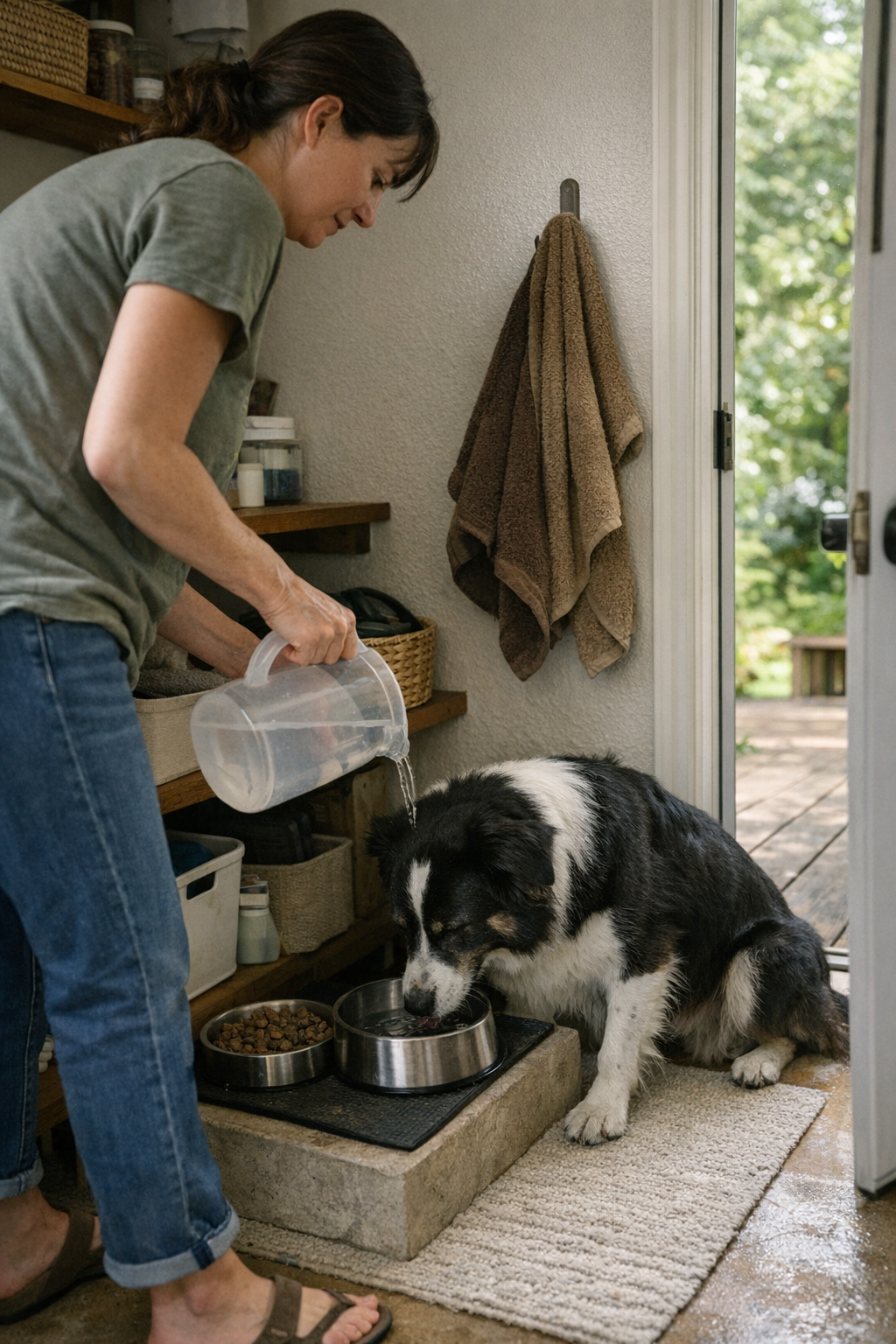
    Most pet setups hide their real problem until you’re in the middle of the day, trying to refill a water bowl and bumping into yesterday’s misplaced toy, or searching for a grooming brush that’s wandered yet again. Pet care isn’t just measured in bowls filled or walks done—it’s in the extra trips, awkward searches, and little resets that eat away at whatever looks like order on Monday. Miss a single return or leave a towel “just for now,” and by Wednesday, the routine’s already stalling—an invisible drag on every refill, wipe-down, or feeding reset. The result: what seemed tidy at a glance turns into repeated reshuffling, clutter quietly building, and cleanup delays you can feel but barely see. The CalmPetSupply world is built for these friction points—where fixing one missing step can mean the difference between a routine that flows and one that keeps snagging.

    Where Daily Routines Really Stall

    The friction isn’t dramatic—it’s the sum of all the small, repeated gaps left in your routine:

    • Going for the water bowl and finding it blocked or knocked off-center by another item you last moved “just for a minute.”
    • Reaching for a towel after an after-walk cleanup and realizing it’s still vaguely damp because it never got fully aired out after the last use.
    • Grooming wipes are “there” but behind a stack of unrelated things, so you hesitate and then put off wiping until later—if at all.

    These aren’t obvious messes, but they stack up. Reset momentum stalls: a mat goes unwiped, a bowl goes unreturned, and suddenly you’re hunting around or doubling back, sometimes two or three times for one basic step.

    What Happens When Early Order Slips

    Pet spaces usually start the week looking functional—dishes lined up, brushes and towels exactly where you expect. But routines break not through chaos, but through one or two shortcuts. Set a brush down across the room, leave a food bowl by the couch after a quick water top-off, or skip a mat wipe “since it doesn’t look that bad.” These tiny breaks in the loop guarantee that by the next meal or walk, you’re making do: reaching for items twice, patching over what you skipped, or clearing up leftovers you meant to handle last time. The reset never lands completely; the setup keeps drifting until you realize you’re always a step behind.

    Real-World Scenes: Chasing Down Supplies

    Think of the after-walk routine. Towel goes down for muddy paws—then instead of drying on its hook, it ends up slumped over a chair while you hurry to refill water. By the time you realize, the towel’s half-dry, the entry is cluttered, and the next walk starts with a pause while you scan for something clean and dry. Or after a quick feeding: the bowl doesn’t return to its mat, but migrates to the coffee table “just for now” during an errand. Next mealtime, it’s a detour involving a missing bowl and a half-hearted surface cleanup before you can even feed.

    Tidiness vs. True Function: What Looks Ready Isn’t Always Ready

    A pet zone can pass a visual check—everything seems in place, no massive mess. But the difference comes at the first snag: stepping over a forgotten toy to pour food, realizing the towel is still perched where it doesn’t belong, or needing to backtrack for a wipe you thought would be closer. Over several days, these little catches repeat. Supplies that look “put away” are actually layered behind other things, so the routine interruptions keep coming—despite a tidy surface.

    Small Changes Make Resets Automatic

    The key isn’t about deep cleaning—it’s about eliminating excuses for delay. Hang a hook exactly where you reach for the walk towel, not around the corner or buried on a coat rack. Store wipes and brushes right next to the feeding spot—within arm’s reach, never across the room or under the sink. Commit to returning bowls to the same mat the second they’re cleaned or refilled, not on the way to do something else. Each micro-adjustment cuts one moment of forgotten effort or double-back searching. Over the week, that difference means fewer interruptions and a flow that holds up even on repeat.

    Making the Routine Smooth, Not Just Clean

    An organized zone is a weak test; a real routine is whether every bowl, brush, or towel is instantly usable, without hunting or extra shuffling. Build in a single, simple check-and-reset every day—right after use, before the inevitable drift kicks in. This habit stops supplies from bleeding into common spaces and keeps each area ready-for-action instead of almost-ready. What feels like a minor discipline becomes the difference between daily drag and effortless upkeep.

    Why Routines Fail: Weak Points Return

    No matter how clean you start, focus slips once: bowls drift, towels go walkabout, wipes don’t reappear. Each awkward-to-return item becomes the first weak link. “I’ll do it later” starts small, but by next round you’re stalling again, redoing what you already solved earlier in the week. In the CalmPetSupply pattern, if a return isn’t easy—if access is clumsy or a storage bin is too far away—routine drag creeps back, and so do the interruptions you think you already fixed.

    Setting Up for Effortless Flow

    Getting pet care to run quietly in the background isn’t about spotless appearances—it’s about setups that make every reach and return brainless and immediate. When tools stay at fingertip distance and supplies snap back to ready-without-effort, daily maintenance shrinks to almost nothing, and interruptions drop away. It’s these small, structural adjustments—a closer bowl mat, a visible bin, a towel always at its hook—that turn routines from a chore into something you barely notice. And if you can spot the one step that keeps breaking your loop, that’s often where the next fix will have the biggest payoff.

    Find practical gear and setups for smoother daily routines at CalmPetSupply.
  • How a Simple Carry-On Pocket Design Cuts Travel Noise and Friction

    The moment you step into the security line, the cracks in your bag’s setup show themselves fast: what looked organized at home turns chaotic when your essentials are trapped behind zippers, buried by pouches, or lost in an outer pocket so crowded it might as well be locked. You’re squeezed in a boarding line, juggling a passport and phone, trying to look calm while you secretly wrestle your bag’s “system.” Every reach for comfort—a charger, a mask, earplugs—turns into a public display of pocket searching, pouch shuffling, and escalating zipper drama. Suddenly, what should be a two-second grab drags into a scramble. The whole point of traveling light slips away, replaced by the frustration of a well-packed bag that doesn’t move with you.

    Why ‘Organized’ Isn’t Always ‘Usable’

    There’s a critical difference between a bag that looks sorted on your bed and one that actually keeps up with airport reality. What starts as a neat assembly—cables tucked, pouches labeled, pockets zipped—breaks down by the third document check or late-night gate switch. Unzipping one pouch for a charger ends up spilling out half your gear; grabbing your documents means emptying layers you thought were separate. The core issue is not mess, but slow, stacked access—each “solution” introducing tiny repeated stall points whenever you need to move fast.

    The Repeat-Offender Moments You’ll Recognize

    • Security tray crunch: you’re holding your phone, digging for your passport, and realize the document pouch is pinned under two other organizers—good luck not stalling the line.
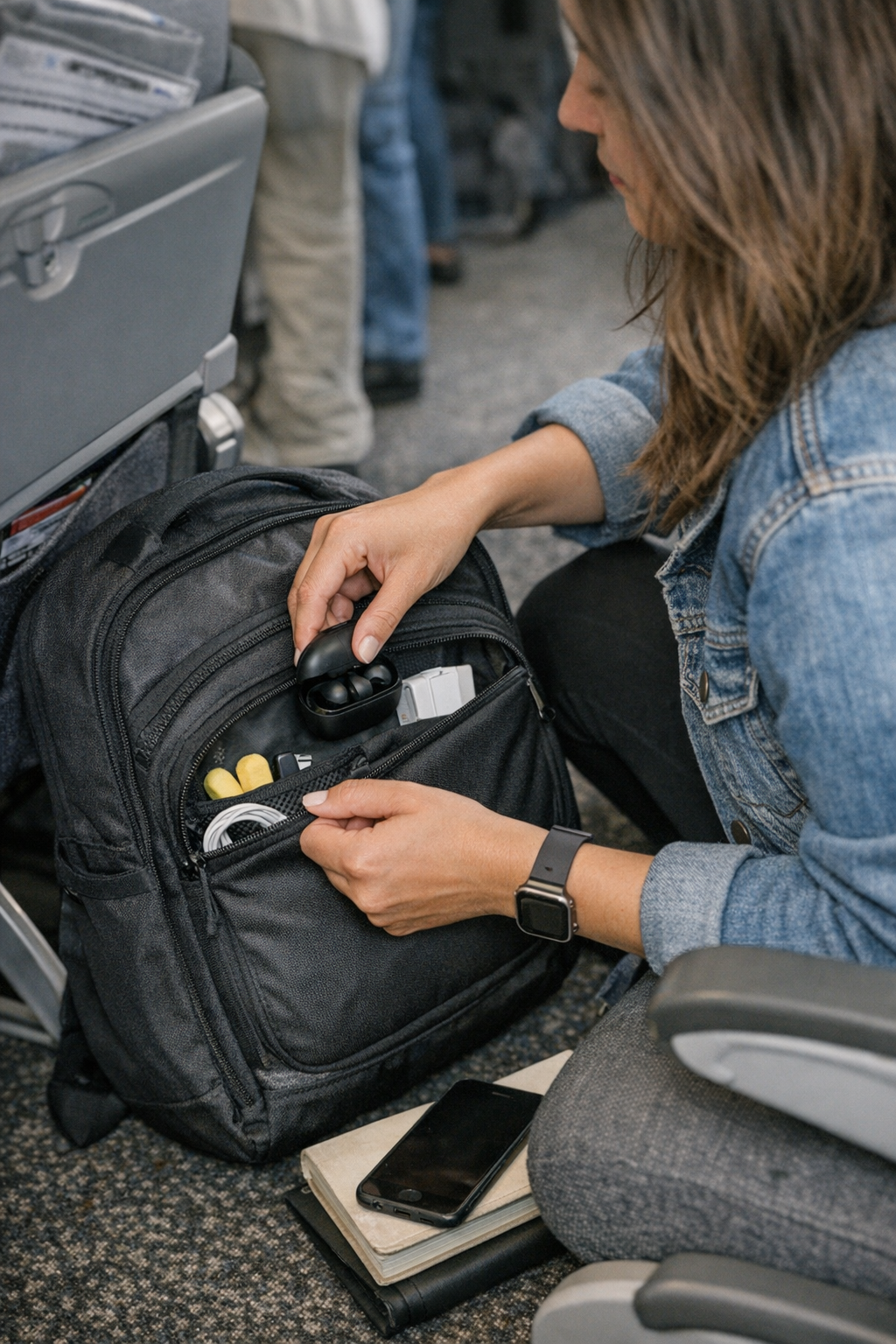
    • In-seat frustration: elbows tight, your hand wedges for earbuds in a shallow pocket, but the second item you grab snags everything else, drawing attention with each movement.
    • Boarding limbo: zipper after zipper, each attempt at “quiet” retrieval just creates more sound, more pause, and ends with a rushed, messier repack as the crowd compresses behind you.
    • Tray-transfer breakdown: retrieving a single tech item means undoing the careful order you built—your logic evaporates as travel chaos exposes flaws in the system.

    The Real Cost: Disrupted Flow, Lost Focus, and Shared Space Friction

    Every drawn-out retrieval or noisy shuffle multiplies when you’re under real pressure. The inconvenience that goes unnoticed at home becomes impossible to ignore in an airport line or cramped cabin aisle. Suddenly you’re rehearsing a sequence—open, unzip, dig, re-stack—while everyone waits and watches. Calm, private order is traded for public, visible delay. Announcements urge you forward, cabin space constricts, and every second spent digging just amplifies the tension. The bag hasn’t failed on neatness; it’s failed the test of movement and access when the stakes are higher.

    How Packing Choices Ripple Into Repeated Disruption

    Where you stash your high-need items shapes your entire flow. Stack organizers for visual order, and you bury necessity. Split everything into too many pouches, and you lose track: was the passport in tech, or did it end up with headphones? Each fix solves a past annoyance, but creates new work when the environment changes—in motion, at the gate, or under a time crunch.

    One common result: your bag looks ready, but routine access becomes a friction point. Passport under a pen case, earplugs wedged with a power bank—suddenly every quick reach interrupts the sequence. The strongest signal you need change isn’t a messy bag; it’s the instinctive dread at every checkpoint, tray transfer, or seat shuffle, when your flow hits another snag.

    Compact Isn’t Always Conducive

    Hyper-minimalist or compact designs often create their own kind of block. That outer pocket that should be for fast grabs turns into a confused multi-use space—snacks, tech, receipts—too loose and disordered, or so tight that nothing comes out without drama. Slim setups solve excess, but not the slow dig or the awkward public unpack when one item is sealed off by another in motion. Many setups look minimal, but force you into slow, showy retrieval right when you need zero interruption.

    The Shift: Isolate Essential Quiet-Use Items to the Exterior

    The only reliable fix that stands up to repeat-use testing: assign a dedicated, accessible exterior pocket for your silence-first essentials—earplugs, sleep mask, passport, power cord, e-reader, or compact comfort item. Not the main compartment. Not an inner pouch. Just one repeat reach, one quiet unzip, nothing else disturbed.

    This approach directly cuts friction in the most punishing real-world moments:

    • Boarding scramble: headphones slip out in one motion, no need to unpack the main bag or draw every eye with a zipper symphony.
    • Security rush: passport slides from the correct spot instantly, not after a fiddly bottom-of-bag dig that holds up everyone behind you.
    • In-flight: sleep mask returns to its pocket without triggering a cascade of re-folding, tidying, and disrupting seatmates.

    By giving essentials a visible, isolated home, the main compartment stays zipped and stable through repeated repacking. Used items go back in a fast, silent loop—not a scene. You keep order and forward motion, even when the airport pace turns brutal—or when the cabin lights go down and you’re moving by touch.

    Going from ‘Looks Packed’ to ‘Moves Quietly’

    This external-pocket shift isn’t a one-time hack—it’s an upgrade with compounding value over trips. The result is loud in its silence: fewer distractions as you duck into a row, no more slow, searching hands or mid-aisle repacking. Passengers barely notice your movements. Your bag stops making public noise every time you reach for something. The change isn’t about perfection or style—it’s about a system that holds up, keeps your trip flowing, and lowers both hassle and visibility where it matters most.

    The Quiet Carry-On Routine, Trip After Trip

    Even the neatest packing fails the test when you repeat the same reach, in the same crowded space, and hit the same blocking point. That “one last pocket” trick works until it becomes a friction spot in real pressure—security, tight aisles, frantic repacks, seat swaps. The dedicated exterior silence-pocket isn’t about looking like a minimalist or carrying it all; it’s about shutting down repeated open-close-reset cycles at the exact moments the old system drags. Security trays, seat changes, fast gate exits—each becomes faster, less visible, less disruptive.

    Set up right, your bag moves with you instead of against you. Noise fades, the stress of repeated public unpacking vanishes, and your carry-on finally works as quietly as you need it—trip after trip.

    CarryOnSupply

  • How Thoughtful Pet Travel Gear Enhances Comfort on Airplanes

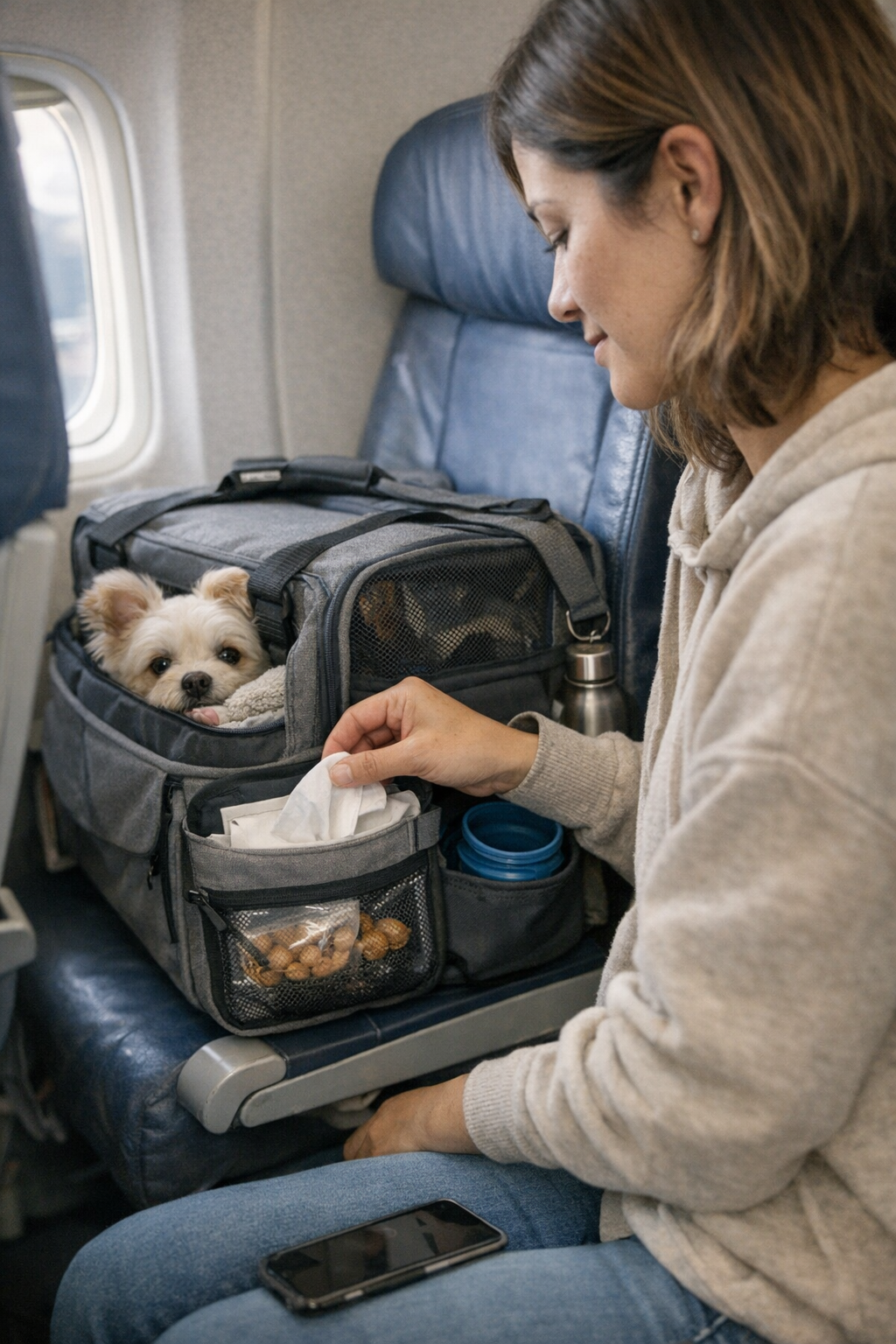
    Mid-flight, your pet starts to squirm. You reach for wipes, a chew, some cleanup gear—only to hit a maze of pockets, stiff zippers, and buried essentials. What felt “organized” rolling through security now works against you, turning every quick reach into a small wrestling match under the seat. The trip’s real stress isn’t the flight or your pet’s mood; it’s the slow grind of digging, shifting, and re-reshuffling for the same basic items—again and again.

    The Subtle Erosion of In-Flight Calm

    Neat on paper rarely means easy in the aisle. Once you’ve boarded, stowed your bag, and your dog’s already tucking in, the flaws start surfacing: a bag’s opening resists mid-flight grabs; a comfort toy is wedged deep instead of at hand; wipes vanish behind layers. With every routine check—post-takeoff, post-bathroom, after snacks—micro-hassles build up. Each snag on a zipper or pocket is a fresh interruption, a micro-slip away from actually keeping your pet calm.

    Packing for a dog or cat isn’t frantic until you’re jolted by turbulence and find yourself digging for chews, squinting for the wipes, or awkwardly detangling leashes from snack bags—over and over, especially on longer flights. Calm isn’t lost all at once; it’s chipped away by these repeated, low-key collisions between planning and real use.

    In-Flight Organization: Looks Versus Living With It

    It’s easy to choose a pet travel bag that looks “systematic”: signature pockets, layered zippers, striking dividers—ready for any Instagram pre-takeoff shot. But what looks prepared isn’t always practical. The difference surfaces the first time you reach for something—not at home, but crammed next to your feet, pinched between bags, or as your pet fusses at the worst moment.

    Picture this: wipes “organized” three zippers deep, treats under the backup leash, bowls needing a full unzip to reach. On the ground, it’s a system. In the air, it’s wasted movement, small delays, and quick tension. You know the setup isn’t working when you start predicting which pocket you’ll fumble—and when you keep doing it anyway.

    Compare with a streamlined setup: a seat-facing pouch for wipes, chews placed at the opening, bowls in their own slip—quick grabs, no digging. Function wins over surface, even if it’s less photogenic. Each reach gets easier, and moments of friction actually shrink, not pile up.

    When Repetition Reveals the Weak Points

    One messy reach doesn’t ruin a flight. What gets you is recurring friction: wipes always stuck behind a bottle, treats handy but bowls blocked by straps, cleanup gear buried where you need it fast. You handle it once, then again—and as cycles repeat, impatience and clutter return, no matter how tidy things looked on the first pass. Every “just one more adjustment” is a real cost, not just a minor nuisance.

    Real Scenes From Under the Seat (and Under Pressure)

    Take a short regional flight. Boarding’s smooth, gear packed, wipes on hand—or so it seems. As soon as my dog shifts and an accident is close, I realize the wipes are locked under the water bowl, behind a zipped pocket. I need to hold the harness, open the wrong flap, and end up dumping the carrier’s contents at my feet. Tight aisles close in, my bag starts to sag, and anyone watching wouldn’t spot chaos, but I feel it in every wasted second and sideways shuffle.

    Next round: turbulence hits; pet needs a chew. It’s “organized” but nested away. My own headphones, combined with pet stuff for convenience, come out hooked together with the leash. Each reach devolves into another shuffle—small, real, and increasingly annoying.

    How the “Fix” Feels in Real Use

    Fixing this wasn’t about more sections or better dividers—it was about getting high-use items truly upfront and friction-free: wipes in a slit pouch with zero zippers, chews in an open mesh above the fold, bowls upright and instantly pickable. These tweaks barely show up in a product chart but erase several seconds of hassle on every reach. Suddenly, restless readjusting fades. Each move feels predictable, routine, even automatic—especially mid-flight, where every extra motion costs composure.

    After several flights, resets stop dragging. I don’t dread grabbing for gear; I just do it. The bag gets less “styled,” but every trip runs smoother. My dog settles faster because my own movements are steadier, no clumsy fumble to signal tension.

    The Overlap Problem: When Pet and Owner Items Collide

    Big frustration? Owner and pet gear slowly tangling into one. Water bottle slides alongside leashes; headphones tangle with treats. The instinct is usually to over-organize—add pockets, more straps, more complexity. In reality, that just adds time to each step: headphones, then wipes, then wallet, now all stacked on top of each other in a cramped gap beneath the seat.

    The simplest way out is to set “lanes”: keep your personal must-haves out of the quick-access lineup for pet essentials. Less overlap means less interruption. Every cut motion—every item you don’t have to move or untangle—buys back a little calm on a crowded plane or a jerky train stop.

    Function Over Appearance: The Real World Test

    What truly matters is repeated motion, not surface neatness. If wipes, chews, or bowls always demand an extra pause or pocket shuffle, organization isn’t working—even if everything looked perfect when zipped at home. Routines snowball: every micro-delay at snack breaks, cleanup stops, or layovers accumulates, turning structure into a source of friction rather than flow.

    Mess minimized for the sake of appearance doesn’t cut down interruptions. The test is whether you reset and move faster—or fall into a cycle of stop, dig, and sigh at every common need. If you build up hesitation before each reach, your setup’s failing somewhere that actually matters.

    Small Shifts That Create a Noticeable Difference

    What works looks basic:

    • Wipes in an open, seat-facing pouch—never buried or zipped away.
    • Treats at the top, not under a layer of backup gear.
    • Bowls stored upright, each with a direct reach—no digging.
    • Clear lines between your own and your pet’s essentials—ditch the temptation to merge everything into a mega-pocket.

    Trips rarely go seamless, but the right setup won’t make each return heavier than the last. Each movement gets lighter, interruptions shrink, and awkward restarts become rare rather than routine.

    When Calm Isn’t “Set and Forget”

    The best travel routines win by staying out of your way, not by being clever. Flawless-looking setups still unravel if access breaks down with use. If you’re moving faster, reaching easier, and your pet catches your steadiness, you’re doing it right—even if that means an “imperfect” pack after several hours aloft. The real test isn’t a tidy finish; it’s repeated calm reclaimed through every ordinary interruption, and a travel structure that works with, not against, real-world movement.

    Find travel bags, seat-side comfort setups, and access-first organizers at PawGoTravel.

  • Why Proper Wire Space Prevents Flickering and Uneven Lighting Fixtures

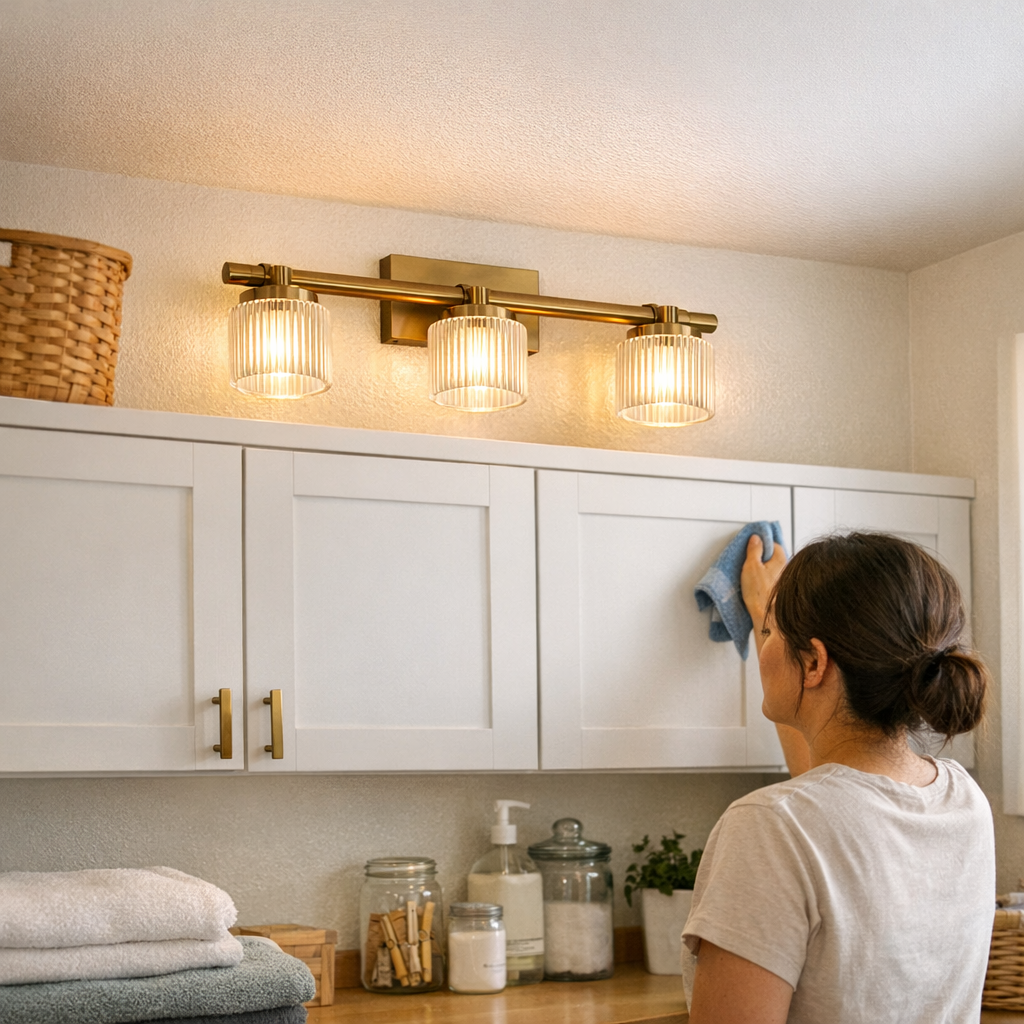
    Flush ceiling lights that won’t close flat, awkward shadow streaks on the wall, or a hallway that seems bright but always leaves part of the path in doubt—these common indoor lighting failures rarely start with a bad bulb. It’s the wiring, cramped out of sight behind too-small fixture bases, that turns a room from “technically lit” to a source of constant minor strain. Every time you reach to clean a lens, flip a switch, or just try to see the full counter in your laundry, you feel it: the stiff cover that won’t seat fully, the unreliable light every time furniture bumps the wall, or the steps you take more slowly because the bottom stair fades into shadow. What looks like a finished install becomes a repeat performance of shifting covers, flicker, and off-kilter brightness—especially when narrow hallways, small bath mirrors, or multi-switched laundry zones pack in extra wiring.

    When “Installed” Doesn’t Mean “Usable”: The Friction of Crowded Lighting

    Mounting a ceiling or wall fixture feels like progress until you live with it. Most wiring mistakes hide behind a solid-looking fixture and show up only after several weeks—never in the first hour. Instead of true, shadow-free visibility, crowded junction boxes deliver:

    • Covers that won’t seat flush, twisting or resisting no matter how many times you try
    • Bright central light with creeping dark edges along floors, counters, or mirror lines
    • Fixture bases that shift or tilt days or even months after install with the slightest touch
    • Surprise flickering after you wipe down a surface, swap a bulb, or even just nudge the housing when cleaning

    This friction isn’t just lost brightness. It erodes routines: the bathroom mirror that throws off your shave or makeup, the stairs where every night walk feels risky, the laundry counter you can never fully see edge to edge. Each visit means an extra pause, a small adjustment, or a growing wariness of “did I fix that light, or is it about to act up again?”

    How Overcrowded Junction Boxes Create Daily Lighting Headaches

    You don’t see the real culprit until repetition exposes it. Cramped wiring doesn’t just hide; it guarantees trouble:

    • Loose or unreliable connections: Slight bumps or minor tweaks break circuit contact, dimming or killing light on just one side.
    • Bulging, leaky covers: Gaps appear around the edge—collecting dust, inviting moisture, or letting even more air through in damp spaces like bathrooms and laundry zones. Cleaning turns from routine to risk.
    • Shifting light footprint: Even if a fixture claims even output, an angled install sends shadows along walls, floors, or mirrors—making setups like stairs or vanities visually unreliable.
    • Bulb and socket fatigue: More wire means more crush, warped seats, and early failures that repeat the cycle of flicker and fiddling.

    Miss a stair edge or misjudge a damp floor and it’s not just annoying—it’s unsafe. The wrong fixture behind the right specs becomes a quietly persistent problem in the places you need clarity and confidence most.

    Real-World Scenes: Where the Difference Shows Up Every Day

    Pausing at a Stairway Turn

    Every misaligned fixture becomes obvious the night you descend the stairs—one step lands in full light, the next falls into a dull shadow that’s never quite fixed. The underlying problem: a fixture forced off-plumb by excess wiring stuffed into a shallow base, so light can’t reach the landing cleanly. You compensate, your gait slows, and the routine becomes a small risk.

    Leaning in at the Bathroom Mirror

    Wall vanity lights should erase under-eye shadows, but too-tight wiring leaves the cover tilted or gapped. Steam finds every crack, and post-shower you’re met by indirect glare or a flicker at the worst moment. You shift your stance, turn your head, trying to sidestep that one bright flare or gray patch—never quite achieving the balanced light you thought you bought.

    Sorting Laundry Under Flickering Light

    In laundry rooms, the goal should be obvious visibility across every inch of the folding counter. When extra wires crowd a flush mount, the cover bows, breaking the spread and dropping unexpected shadows exactly where you stack folded shirts. The small hassle grows: a single nudge or routine cleaning brings the flicker back, and every fix is temporary.

    Moving Down a Hallway—But Only Half is Usable

    Hallways should guide movement, but a crowded fixture leaves a persistent stripe of shadow at one end. No matter how many bulbs you swap, you find yourself drifting to the bright side, running hands along the wall, pausing before entering—movement loses its fluidity because the light won’t cooperate. The room appears “lit” but never feels fully usable.

    It’s Not Just about Brightness—It’s the Right Fixture Fit

    Two flush mount lights can promise identical output, but only one with enough base depth can actually host all its wiring without distortion. The difference isn’t on the box—it shows up each morning, evening, and weekend chore when covers stay steady, glare is controlled, and edges stay clear. A deeper, cleaner fit prevents not just sagging but the accumulation of “almost light”—patchy, uneven, and never fully reliable. Trust in a space wears out when you learn which spots, switches, or motions set it off.

    Practical tip: If your light is on a multi-switch circuit, or you notice resistance as you attach a fixture, pause before forcing. Count wires, check connector size, and choose a fixture base with the real internal clearance your box needs—don’t let a tight fit set up months of routine interruptions.

    What to Watch for—And When to Rethink Your Solution

    • Covers that need force or never sit flush
    • Flicker triggered by ordinary cleaning, humidity, or minor movement
    • Visible dust or moisture tracking through edge gaps
    • Shadow lines or dimmer corners that worsen over time—especially in active areas
    • If the switch, cover, or bulb never quite “feels right” after a few weeks’ use

    If you recognize any of these, don’t let surface brightness hide the real trouble. Wire crowding is a repeat offender, and fixing bulb specs won’t solve it—rethink the fixture’s internal space before troubleshooting anything else.

    Building Reliable Lighting Means Solving Wire Management Up Front

    Room lighting never stays neutral. The balance between fixture depth, wiring layout, and repeated movement is what lets a space hold up over seasons, not just on the install day. When you solve wire fit before mounting a flush or semi-flush fixture, you remove a chain of flickers, tilts, and partial shadows before they can start. That means mirrors give true light; stairs feel secure; hallways and laundry counters keep their visibility week after week.

    The spaces you depend on deserve more than “lit enough.” Every well-managed wire behind a stable, correctly fitted fixture is one less daily stutter, one more surface or path made confidently usable. Let your rooms prove their value by how quietly, and reliably, their lighting works each day—no second guessing required.

    LightHelper

  • Why Reliable Docking Transforms Modular Storage Efficiency

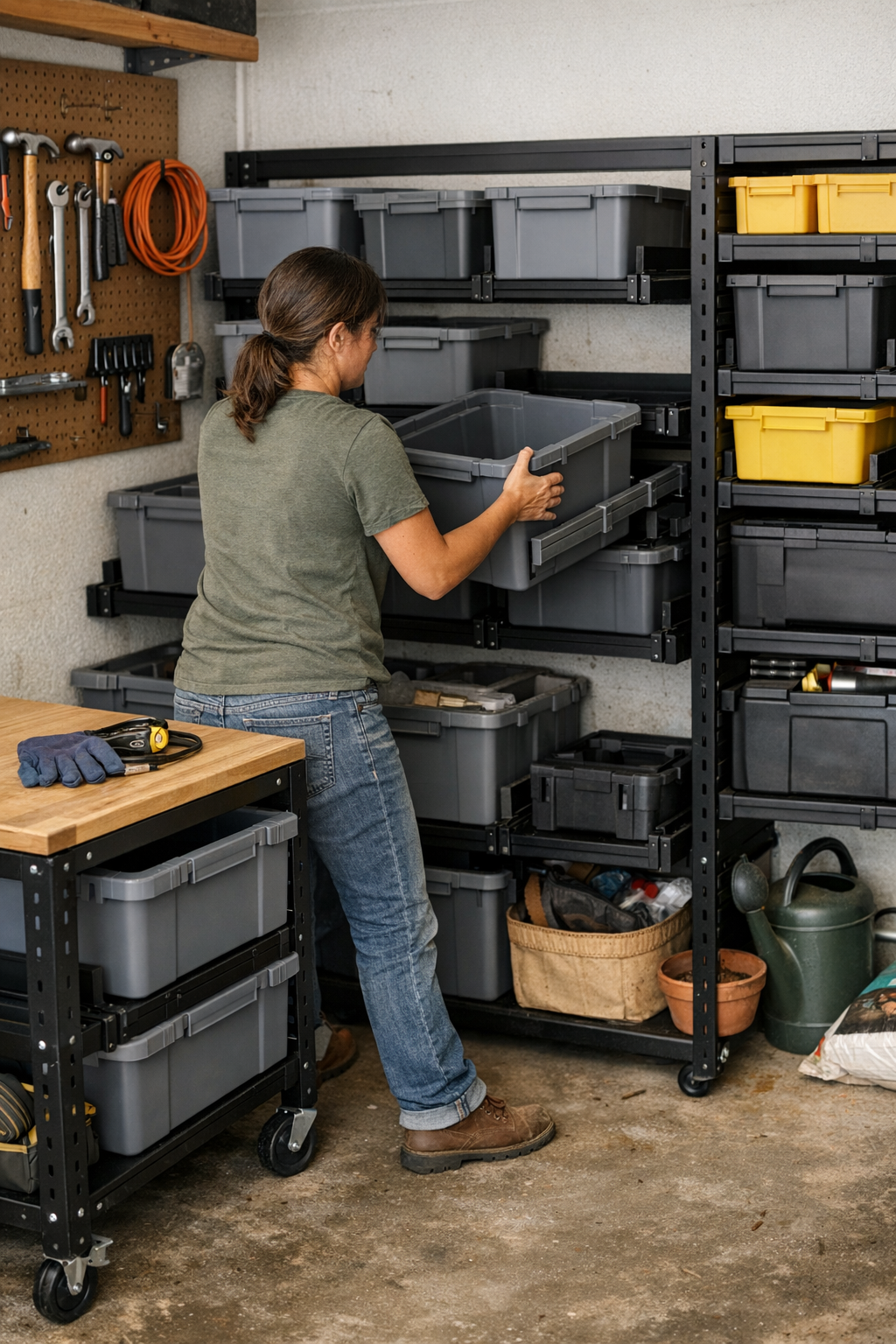
    The rush of pride after overhauling your garage or workshop is real. For an hour, maybe even a weekend, every shelf lines up, bins sit flush, and the floor feels wide open. It looks perfect. But the honeymoon fades the moment you actually get to work: dragging the hose in, returning a heavy drill, steering the rolling cart with one hand while keeping an eye on a batch of fasteners in the other. This is when the true shape of your layout reveals itself—not when everything’s pristine, but when things need to slide back into place, fast, usually with only half your attention left. Suddenly, the question isn’t how tidy the setup looks—it’s whether it can handle the churn of real use without turning into chaos all over again.

    The Hidden Weak Spots That Creep Up on Busy Weekends

    At first, even a flawed system hides its faults. But in action, little hiccups repeat—bins that never seem to seat right the first try, carts that always seem to block just enough aisle to make every passing trip a squeeze. Where storage fights the return, the whole space starts to resist your routine. Movement turns clumsy. You’re nudging bins, shifting carts diagonally, or detouring around the one cabinet edge always jutting out past the work zone.

    This slow slide into disorder doesn’t explode in one big mess; it happens in increments. A wayward bin lingers out of its spot “just for now.” The end of one row quietly becomes an overflow pile—gloves, odds, and the shovel you’re too rushed to squeeze back between other gear. Dead corners fill with what doesn’t fit elsewhere. Eventually, every new task means first reshuffling the last task’s leftovers.

    Docking: The Physical Difference Between “Tidy” and “Effortless”

    When every storage piece docks instantly and reliably, you stop thinking about storage entirely. The best setups let you return a hammer, a set of gardening shears, or an armful of odds and ends with a one-handed slide or a blind push in passing. There’s no fiddling, no extra turns, no checking if things lined up. Your whole flow stays intact, even when your hands aren’t empty or your mind’s on the next step.

    Everyday Setbacks You Don’t Notice Until They Add Up

    Picture this: Mobile bins stacked on plain shelves. On paper, there’s a place for everything. But try unloading after an afternoon outside—your hands are dirty, you’re juggling a few tools, and one bin refuses to dock. It’s crooked, maybe backwards, and needs a second fumble to sit right. The cart you rolled out earlier? It never returns flush to the wall, leaving an annoying wedge of lost floor space right where you want to walk. Pretty soon, routines stall: you sidestep, nudge, and on the third trip your patience wears thin. The setup can store things, sure, but it forces workarounds at every turn.

    How Minor Friction Becomes Major Disorder

    These minor struggles might seem harmless, but they snowball. Over time, tools start to gather in piles—closer to the workbench or on the nearest surface, because getting them “home” feels like another task. You keep shifting one rolling cabinet back and forth, just to clear enough room to open a drawer or access what’s behind. Overflow becomes routine; zones meant for flow turn into dumping grounds. Every movement through the space involves squeezing past something not quite where it belongs.

    A truly resilient setup shrugs off sloppy returns and quick drop-offs. If you can’t rediscover order without slowing down or using both hands, the system will always settle back into clutter. Clear aisles get pinched as carts drift, bins sit askew, and your carefully mapped-out zones blur into catch-alls. That sense of control you chased with the reorganization begins to unravel in slow motion.

    Real-World Example: When Optimization Backfires

    Imagine a single-car garage, squeezed for space but maxed out with two lines of modular bins and a rolling tool chest. On paper, every inch works. By the end of week one, reality intrudes. Bin rails call for a two-handed dance to dock each return. The tool chest, always meant to tuck aside, starts to wedge out on an angle after every use, blocking access to a corner shelf. A shovel, forced into a gap, jams the rest of the lineup, so it gets abandoned in the only free corner. Within days, every pathway demands another awkward step, every retrieval triggers a reshuffle, and routine maintenance—sweeping the floor, clearing a spot to work—takes twice as long. The garage isn’t full; it’s just functionally blocked.

    Why Physical Guides Outperform Good Intentions

    What keeps order isn’t discipline, but design. Physical guides—rails, channels, bumpers, or defined stops—quietly enforce alignment no matter how rushed or careless the return. You slide a bin and it locks into place; roll a cart until it clicks against a bumper and suddenly the aisle’s clear again. Footpaths don’t shrink. Wall zones stay usable. Every return is a single, mindless motion, not another puzzle to solve at the end of the task.

    Without these guides, even the sharpest visual layout unravels with regular use. Bins drift off center, carts wedge at odd angles, wall space fills with random leftovers until you’re digging to find what’s next. But add a few effective rails or channel stops, and you can reset the whole area with a handful of casual returns. The difference isn’t in how it looks but in how it performs—especially when working fast or under distraction.

    Fast Upgrades: Docking That Fixes Routine Clutter

    Restoring flow doesn’t require a total rebuild. Retrofit add-ons—like adhesive rail strips, magnetic guides, low-profile channel kits, or bolt-on stoppers—can turn any shelving or rack system from decorative to dependable. Many commercial storage units and rolling cabinets have options for add-on docking hardware. Even a simple tactile end-stop on a shelf keeps bins in check and stops the slow sideways drift. The impact is real: no more re-centering after every use, and no more micro-adjustments just to keep the zone clear. A 10-minute tweak can give back hours of hassle across the month.

    Spot the Choke Points—Then Solve Them for Good

    If you’re repeating the same shuffle every week—a cart half-blocking the walkway, bins always askew, and overflow zones always growing—a missing docking solution might be why your space feels harder to keep tidy than it should. Instead of fighting to maintain order, smart layouts work with your habits. A system built to absorb hasty returns stays orderly regardless of the pace of life, freeing you to actually use your garage or workshop, not just clean it.

    Day after day, that’s the upgrade that matters most: clear movement, fast resets, and storage zones that actually stay clear. With the right guides in place, order becomes automatic—never a project, just what happens next.

    Explore modular storage systems and docking solutions designed for real, repeatable routines at StackNest.

  • Why Single-Spot Outdoor Storage Fails and How to Fix It

    The backyard corner that never stays cleared: Everyone knows it—the one spot where tools and gear keep piling up, no matter how many “deep cleans” or weekend resets you manage. You drag your mower in after a wet mow, try to hang up a tangled hose, wedge the shovel where it might not topple. By Tuesday, garden gloves, old nozzles, and stray hand tools have already formed a new heap. If you share the space—family, roommates, neighbors—the buildup doubles. It’s not laziness. The real burden is fighting a setup that never matches how the space actually gets used. The same gear, the same routines, always push back against the old “fixes” that look organized but fall apart under pressure.

    The Single Zone Squeeze

    Almost every backyard falls for the single drop zone: one bin stuffed by the fence, one overworked hook near the door, one rack shoehorned into the side-yard. These setups promise order but quietly lock everyone into the same problem: all return traffic slams straight into the same crowded bottleneck. By Wednesday, tools are balanced on top of each other, that roomy bin is stuffed and hard to close, and the tidy row of rakes is now a locked-up wedge. To grab a spade, you have to juggle three tangled handles and hope you don’t send a bucket rolling down the path.

    The Real Reason Things Drift Out of Place

    In theory, a single wall rack or shared bin should be efficient—a place for everything. In practice, everyone on their way back from a muddy job or quick chore just drops things at the closest empty spot. If you’re coming in with dirt-caked boots or hands full of clippings, the “right” spot barely crosses your mind. Over and over, the area closest to the door or gate absorbs every shortcut. Because there’s never enough spread for return flow, the overflow always floods back into that same corner or bin.

    Everyday Problems: When Storage Layout Gets in Your Way

    You finish trimming after a surprise rain—the side path is mucky, so you move quick, trying not to track in more mud. The only free hook already holds a coil of wet gloves from someone else. Every other tool is jammed into the same bin, handles sticking out at odd angles. You angle the mower in, brush against a leaning rake, and watch a pair of gloves drop into a puddle. Next day, you need a hand trowel and end up emptying half the bin just to find it under the heap. What started as “everything in one place” turns into “nothing is easy to grab.” Each step means more fishing, more reshuffling, and less actual work done.

    Where Standard Bins and Racks Quietly Fail

    The problem isn’t obvious at first. Standard bins swallow the first batch of gear, but on a normal week? Short tools disappear under heavier ones. Lids get left open, so rainwater pools by the fence. The side-yard rack looks fine for a day, then every hook is overloaded and all it takes is one misplaced shovel for the pileup to start again. The friction builds slowly: soon, you can’t move through the area without bumping something out of place or tripping over a lost trowel. Resetting turns into a full chore, not a quick fix.

    Even modular racks, when lumped in one wall space, end up collecting all the problem overflow. “More storage” is a tempting idea, but usually just grows the pile, not the access. Corners that should free up pathways become clogged dead zones. Too often, what looked organized is back to being a visible, slow-moving mess.

    How Distributing Storage Unblocks the Routine

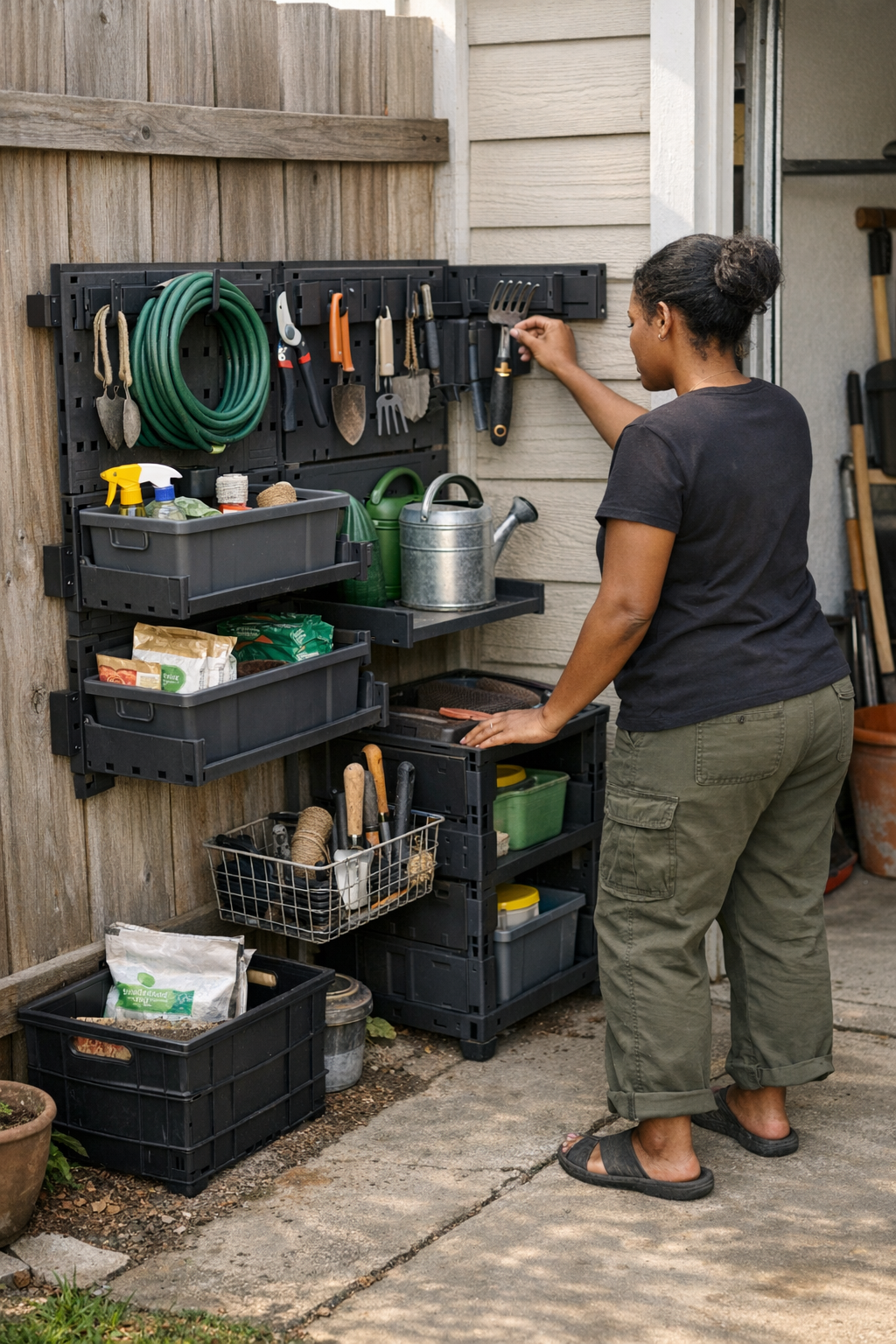
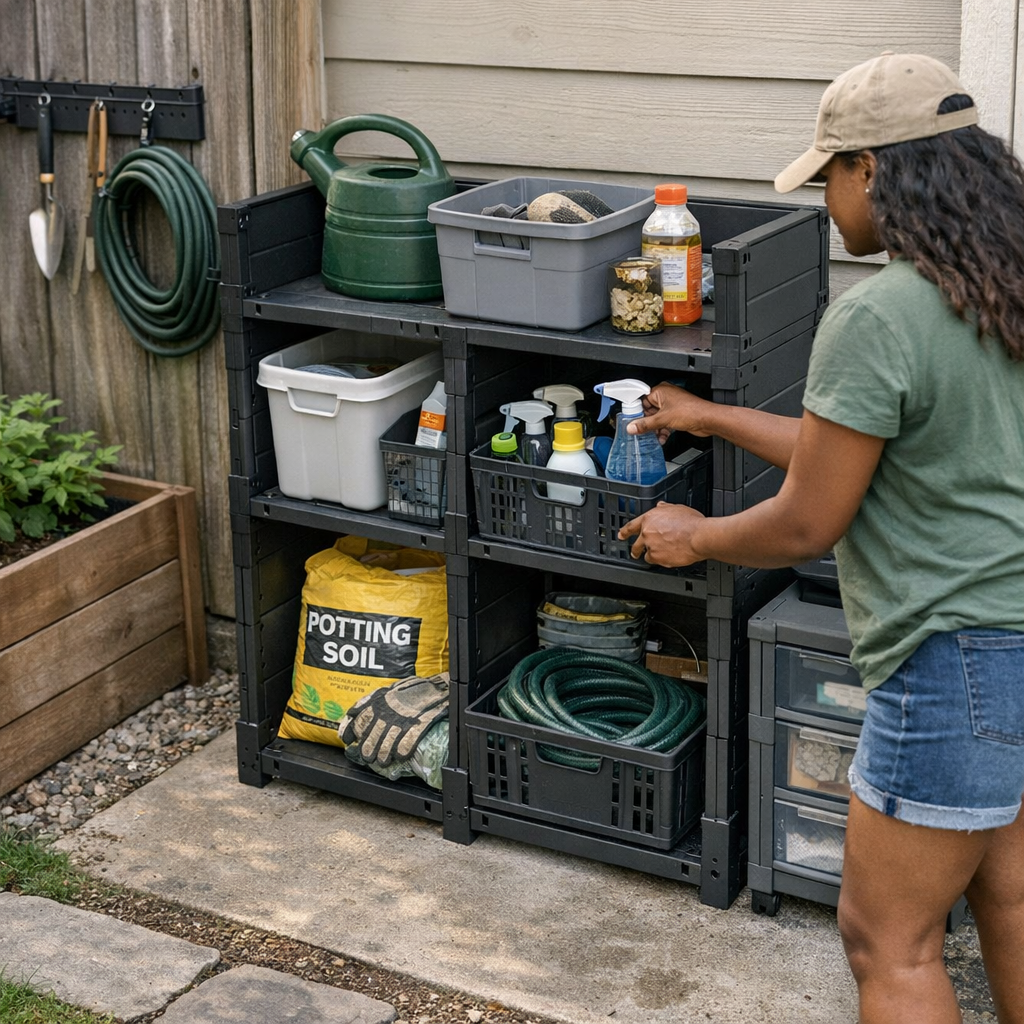
    The game-changer isn’t more capacity—it’s dividing where things return. Replacing one bulky bin or unified rack with separate wall panels, spaced-out hooks, or small modular sections gives you actual movement. Instead of everyone shuffling back to the same over-stuffed area, people drop tools at the nearest clear spot. The odds of one return “traffic jam” drop fast—because there isn’t a single spot to jam up.

    Does your garage edge have dead stretches? Hang a panel at each end, leaving the center open. That awkward side-yard? Break it into two small sections: one for muddy, heavy equipment, another for quick-grab hand gear. This layout means no single spot can overflow unnoticed, and if one fills up, it’s obvious—and easy to fix before it spreads. The path stays clear. Cleanups go from a weekly grind to a simple once-over.

    After the Setup Change: What Actually Shifts

    The difference isn’t flashy, but it shows in the routine. No one needs to move five tools just to hang one. The walk from garden bed to wall drop shrinks to a single step or lean. Clutter is easy to spot because it’s actually separated, not stacked head-high. That endless corner pile finally gives up. Resets take minutes, and you stop dreading the “put everything away” step because it doesn’t require a total reshuffle. The wall setups hold—useful, not just neat for a day.

    Tweaks That Make Distributed Setups Work

    Make usefulness visible: Tools you grab every day go in the easiest spots; heavy or rare-use items get a more out-of-the-way hook. If an area clogs up, call it overflow and reorganize a section, not the whole line. For narrow zones or high-traffic paths, angle sections outward into open space instead of across the passage—no more blocked entries or pinched walkways.

    Frequent rain or muddy gear? Drop an absorbent mat or rugged tray beneath the “wet zone” hooks. Small details like this keep the rest of the strip from going slippery and mean less cleanup later. The goal isn’t to look like a catalog but to stop your setup from quietly betraying you after a couple normal, messy days.

    It’s About Function, Not Flawlessness

    No backyard, garage, or fence-line holds showroom perfection—nor should it try. The setups that work aren’t the ones that stay pristine but the ones that make it harder for clutter to take over in the first place. Distributed storage won’t prevent every tool from vanishing or stop mud at the gate. Gear will shift, gloves will wander, someone will still drop a rake behind the compost bin. The difference is, every reset is smaller. Cleanup is lighter. The same old corner isn’t waiting for that next unmovable pile. In real outdoor zones, it’s the right structure—not just “more room”—that keeps your routines rolling instead of grinding to another messy halt.

    See more practical outdoor storage approaches at TidyYard.

  • Why Selective Drawer Labeling Boosts Desk Efficiency During Busy Days

    An organized desk promises quick starts and smooth routines. Every pen has a tray, every cable vanishes under the surface, and those drawers close on what feels like a finished solution—you sit down believing the reset is permanent. But as soon as the day shifts—when a charger moves from bag to desktop during a rushed call, or you fumble for a sticky note while your screen lights up with back-to-back urgent tasks—the cracks show. A clean desk hides friction until it counts. You pause, scan one storage tray, then another, maybe rifle the same drawer twice while your flow slips. That half-second stutter isn’t dramatic until it’s stacked: small interruptions spread across a week, quietly erasing the advantage of every morning reset. The more your setup relies on silent memory and unlabeled order, the more that invisible drag creeps in whenever real work collides with routine breaks.

    The Clean Desk That Stumbles When Work Moves Fast

    Clutter doesn’t have to be visible to slow you down. Drawer organizers and neat storage boxes create the look of productivity, but glossy order only holds until routines flex or timing gets tight. The unlabeled workstation isn’t a mess—it’s a moving target. The same cable that slipped easily into its tray yesterday turns up under a notebook or beside a wireless mouse after one long afternoon of calls. Loose headphones blend with chargers; pens migrate just far enough to force a double-check. Each swap or tool hunt is just awkward enough to break your stride, especially when your natural reach path is blocked by under-desk storage or an extra unit that seemed smart until it started intercepting your knees.

    Fast cycles expose the soft spots. By Thursday, “Is the backup drive in the left drawer or right?” becomes routine, and a once-clear system now means you’re touching three places instead of one. Those little grabs amount to resets you didn’t plan for—the paper organizer looks sharp but fails to anchor your most-used tools when the workflow doesn’t pause for sorting.

    When Drawer Labels Make All the Difference

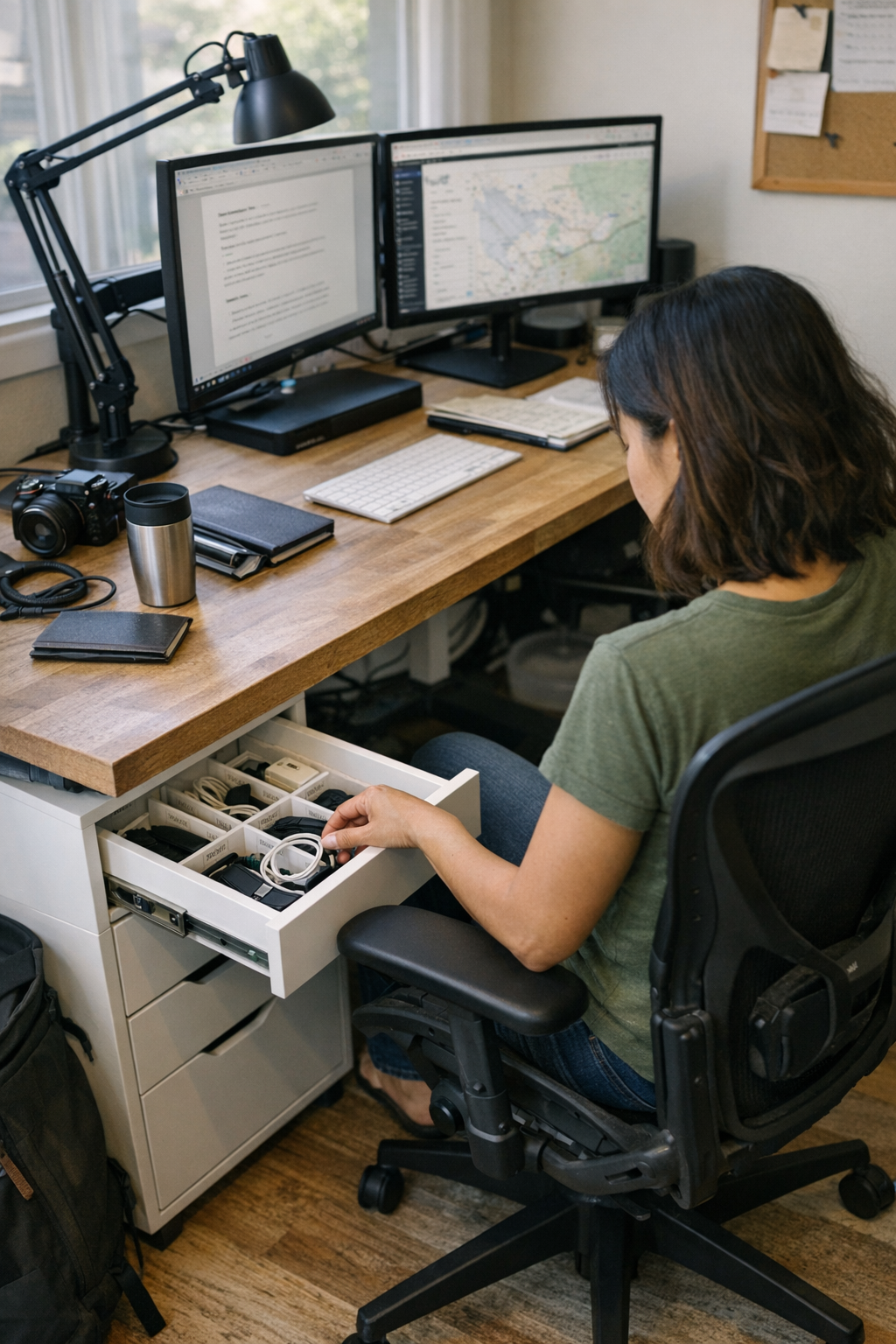
    Labeled drawers don’t announce themselves in a still photo, but in motion, they’re the difference between flowing through the day and hesitating mid-task. Reach for the SD card—your hand goes straight there. Open a drawer for two types of cables—one scan is enough. By contrast, even the tidiest unlabeled system invites drift: you guess, second-guess, move to the next bin, or toss something back where it “sort of fits.” During busy stretches, those micro-mistakes start to shape your perception of the whole setup—suddenly a perfect system has invisible friction lines everywhere you need speed.

    Picture a week with high-rotation drawers: by Wednesday, pen refills have swapped with adapters, USB keys mixed with receipts, and each retrieval has shifted from routine to chance. The visual order on Monday doesn’t defeat the lived chaos by Friday, especially after every meeting leaves a charger somewhere new.

    Stress-Test Moments: When Flow Breaks Down

    Desk organization works when the routine is calm. But most setups fail their test during spikes: double-device days, urgent deadline sprints, or when you’re shifting between keyboard and notebook while fielding messages. It’s in those moments—the cable tray partially blocked by a laptop stand, or a deep drawer that never quite lines up with where your left hand reaches—that well-intentioned systems slow you down. You hunt for the USB dongle and emerge with yesterday’s receipts, or yank a drawer only to find it packed with things that belong elsewhere but never made it back. Labels, meanwhile, quietly rescue these situations: they cut reset time, anchor items, and save you from the seconds lost to guesswork, even as the work surface looks as minimal as ever.

    Delay can come from the unexpected: a quick device swap, a not-quite-centered monitor arm forcing your body to bend, the way a task light skips the exact spot you’re writing your notes. When the whole setup relies on memory, every real-world curveball becomes a drag on your momentum.

    Making Organization Work for Real-World Routines

    It’s a mistake to cover every inch with labels—real improvement comes from targeting. Most desks only need the top “traffic” drawers marked: the ones you open every session, where fast multitasking or blended contents create constant turnover. Labeling just these hotspots is enough to change retrieval from hesitation to habit. High-use, mixed-content drawers get bold, readable cues; low-rotation and single-item drawers stay clean and label-free, preserving calm where it’s earned and urgency where it’s needed most.

    This way, the workspace avoids the clutter of over-labeling and the stalls of memory-only systems. You skip sticker fatigue and endless name edits—just quick visual guidance, anchored to the physical workflow that repeats most, especially on high-pressure days. The aim isn’t decoration; it’s keeping the desk functional and frustration-proof even when routines collapse or priorities stack up unexpectedly.

    The Small Stuff That Changes Everything

    Sometimes a label is the whole difference between a smooth handoff and a stalled reset. “Cables—Power” keeps you from upending a drawer when an urgent plug-in comes; “Adapters” makes the grab-and-go motion truly single-step, regardless of how many swaps a chaotic week brings. These aren’t just niceties: they’re friction-busters that grow in value every time you sit down again. Tiny cues accumulate into a desk that stays ready, even as your tools and priorities rotate unpredictably.

    Quick FAQ: Labeling Drawers Without Overdoing It

    Which drawers should get labels?
    Target drawers you open repeatedly during the day or that hold blended groups of tools. If you notice yourself scanning for something twice, the system needs a label.

    Does labeling ruin a streamlined desk look?
    Not if you’re selective. Focusing only on high-turnover drawers keeps your primary workspace minimal while giving clarity where reach and reset speed matter. Most drawer fronts—and the surface itself—remain untouched.

    Can a label-free drawer ever work well?
    Yes—for dedicated, single-item, or infrequently used drawers. But frequent-use, mixed-item drawers don’t stay stable without visible anchors. If you’re reaching and pausing, a simple label restores flow.

    Workstation Flow: Labels Support Real Use, Not Just Appearance

    Scrubbing every label off your setup might look great for a moment—until hidden friction returns and productivity stalls. Routines shift, memory slips, new cables and devices shuffle in. Targeted labeling—clear markers for drawer “hotspots” and nothing extra—bridges the gap between aesthetic order and functional speed. This is the small, concrete tweak that helps a real workstation keep up: clarity where pressure lands, open simplicity elsewhere. Organization finally supports the way you really work, not just how your desk looks after a clean-up sweep.

    Explore the full WorkBasic collection

  • How Small Changes in Cat Zones Cut Down Daily Cleanup Hassles

    Every “neat” indoor-cat setup hides a silent tradeoff: your kitchen looks calm, litter stays out of sight, and toys are stacked in a bin. But by Wednesday, you’re swiping familiar water drops off the floor, stooping for the same stray toy under a chair, and wiping the edge of the mat where grit thickens—again. You don’t need a worse mess to notice the problem; you need fewer repeat interruptions. If you dread the next routine reset even when everything’s put away, your cat’s corner isn’t failing by sight—it’s failing by friction. The real StillWhisker difference isn’t just looks, but the way the smallest misalignments in food, water, or litter setups turn into recurring chores, never visible in day-one photos.

    Why “Tidy” Cat Spaces Still Create Work

    It’s easy to treat “order” as the end goal: set out the bowls, sweep the corner, close the toy bin. But the real test is whether your daily patterns are smoother—or just hiding the same old obstacles. Most “organized” cat setups conceal friction by trapping maintenance in predictable weak zones: that bowl nook that always needs extra wiping, toys that never stay put, a mat edge that still leaks grit. If you keep doubling back—resetting, wiping, shuffling—you’re not outpacing the mess. You’re stuck in routine correction engineered into your setup from the start.

    Snapshots Hide Accumulating Friction

    Freshly cleaned, any cat area feels under control: bowls polished, toys out of sight, mats squared. But by midweek, water lines the floor past the tray, mat edges curl, and litter dust goes further. The gap becomes obvious: a space made for show stalls after two days of real use. Smooth initial order hides the fact that daily friction always returns right at the same pain points.

    Where Cat Zones Quietly Break Down

    The breakdown isn’t dramatic—it’s wearingly familiar:

    • Food bowls positioned so every refill leaves a drip zone just past the mat, or forces you to slide a nearby appliance to pour without bumping things.
    • Litter boxes with mats that stop short, so every exit traces the same faint grit into your hallway—a daily sweep you already resent.
    • Toy bins that never stop the migration: balls reappear under the couch, crinkle mice block the closet, forcing mini rescues when you’re just passing by with laundry.

    These aren’t cosmetic problems; they’re the pinch that lags every routine. Even if the area stays “neat,” the actual order breaks down in the exact same places, day after day.

    What Makes a Setup “Feel Right” For a Cat—And For You?

    The right setup isn’t just cleaner on day one—it’s less disruptive by day five. A space that absorbs repeated-use friction fades into the background. But a setup that simply “looks tidy” amplifies the cycle of minor corrections: you end up spending more time mopping, reaching, chasing escaped toys, or untangling mats than before.

    Real-World Stress Points: Reaching, Refilling, and Resetting

    These stress points stack up, each in their own way:

    Blocked by Bowls or Baskets

    Bowls stashed “out of the way” often end up right where you need to walk. You lean awkwardly over a bin to refill water, or slide the setup back and forth just to prevent streaks and splashes—compounding the friction. Your routine may seem easier, but the same off-angle reach or small swipe slows you down at every mealtime.

    Litter Trails That Loiter Where You Least Expect

    Litter mats only help if they match how your cat actually steps out. Misaligned mats mean dusty footprints land right where your socks land, leading to another unplanned sweep. Traces reappear just past the edge—never quite contained, always needing cleanup in exactly the wrong place.

    Toys That Keep Escaping (and Interrupting)

    A full bin means nothing if toys always make their way under furniture or into shared traffic zones. The true cost isn’t just a missing toy—it’s another reach, another shift, another break in whatever you were doing simply because setups leave escape routes wide open. “Quick tidy” becomes a loop you expect, proof your system doesn’t really hold the line between play and the rest of the house.

    When Comfort Creates New Snags

    Soft beds, plush mats, or inviting rest corners solve comfort but multiply upkeep. A fluffy blanket collects fur, bunches up, and blocks a vent just when you need to sweep. Solving for coziness regularly makes resets messier—what welcomes your cat quietly clutters your workflow. The cost may not show immediately, but over a week’s patterns, it slows every quick pass-down to a more frustrating reset.

    The Cycle of “Last Minute” Cleanups

    Some setups guarantee minor but constant extra steps:

    • Supplies just out of reach: Wipes or bags “stored close” are still an extra few seconds away, making every cleanup feel like an interruption.
    • Cat gear drifting into human space: A station shuffled out of sight spreads further as bowls walk toward open walkways, putting you and your cat in direct traffic, just to minimize visible mess.
    • Comfort items that tangle the flow: A sound-dampening mat that won’t stay put means each reset brings a fresh round of smoothing and shifting—small, but cumulative.

    Scene Update: Small Shifts, Big Change

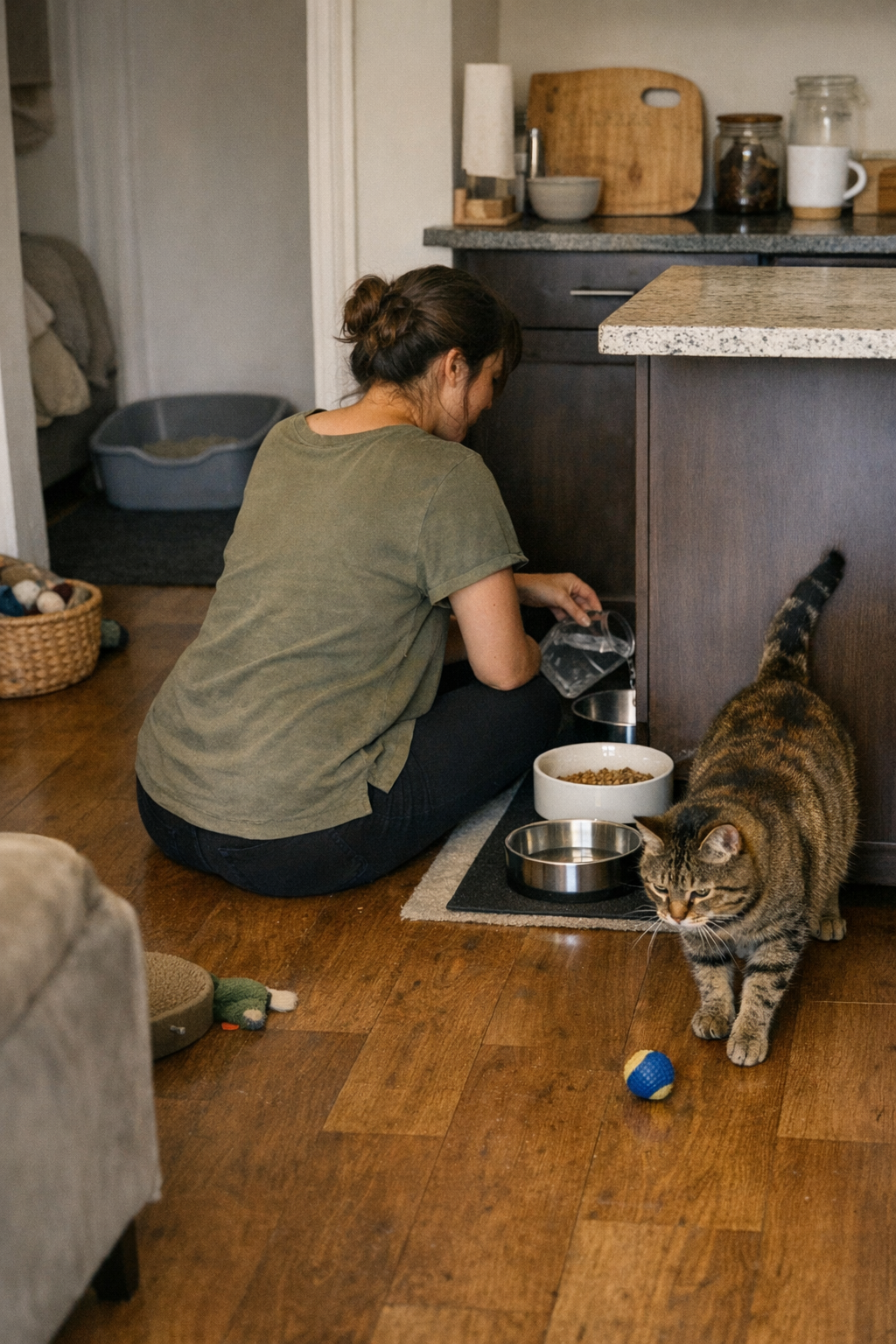
    Instead of hoping to “keep up” with friction, you can realign your setup to stop it from snowballing. Try shifting food and water to the side of the kitchen island—out of heavy traffic but reachable without contorting or moving other items. Upgrade to a hard-edge food mat just wider than both bowls, and runoff instantly becomes one contained swipe, not a creeping floor stain. You might only gain a couple inches of coverage, but that margin cuts your daily wiping in half. Less bending, less hunting for missed crumbs, more time between actual cleanups.

    Repositioning your litter area for a flush mat/doorway alignment chokes off the main scatter path: instead of daily hallway sweeps, spot-cleaning becomes rare, not routine. Small interventions—lining up mat edges, moving return bins closer to action—mean fewer daily breaks for rescue or reset. When routines stop exposing the same weak points, your mind recognizes it: maintenance pressures fade, and you do less “checking” because the setup holds longer under real use, not just by appearance.

    Barriers, Bins, and Reclaiming Calm

    Sometimes all it takes is a low-edge bin or a soft wedge plugged into toy escape pathways. Block off the classic under-couch gap and toys stop doubling as daily trip hazards. Or, shift toys to an edge zone—still visible, now out of foot traffic—and “return and reset” shrinks to a single sweep, not an endless scavenger hunt. Every small fix adds real margin to your routine instead of just new clutter to supervise.

    The Key: Less Correction, Not Just Less Clutter

    The goal isn’t just tidy surfaces—it’s a rhythm where you stop seeing the same spots yelling for attention. Only then does the line between “cat zone” and the rest of your living space truly hold. Strong setups defeat hidden friction, not just visible mess. The real success isn’t in a photo-ready corner, but in days you don’t even remember checking beneath the table or chasing after another forgotten mess.

    Find more ways to quiet the repeat problems of shared indoor-cat life at StillWhisker.

  • Preventing Angle Grinder Overheat During Extended Remodeling Tasks

    If you’ve ever ripped through a full day of drywall cutting, tile trimming, or metal sanding, you know the shift: the job starts crisp, but progress quietly grinds down. The angle grinder that flew through grout lines an hour ago is now fighting you—edges chip, lines wander, and your hands ache from the tool’s growing warmth. You try to muscle through, and suddenly you’re stuck: a simple project hijacked by an overheated grinder you thought could handle more than it actually can.

    The Slow Creep of Overheating—And How It Shows Up

    No one feels the problem out of the gate. On a fresh start, even bargain grinders cruise through thin steel or tile backer with satisfying control. But stretch an afternoon replacing a backsplash or resurfacing a bathroom—dust thickening in the air, handle slick against sweat—and you start losing the fine touch. Clean cuts demand brute force. The casing radiates heat. Instead of shavings, you get clumpy, sticky dust. Every grip feels heavier.

    It’s easy to chalk this up to tough material or a long workday—until your seams turn ragged and your patience starts leaking away. Repairs that should be five-minute fixes balloon into full re-cuts or desperate edge-sanding. All because the grinder started fighting you, not helping.

    The Tool’s Limits—Not Just Yours—Set the Pace

    Heat sneaks up, quietly changing how your tool behaves. On most job sites, it shows in repetition—grind, adjust, drill, repeat. That’s when you see the split: run two similar grinders side by side, and they feel identical until you hit the third or fourth stubborn tile or start sanding flush through rusted plate. Suddenly, one holds its RPMs and remains cool, delivering sharp lines and steady control. The other lags—RPMs dip, the handle warms ominously, and vibrations buzz through your grip. Cut quality nose-dives as resistance builds, and the motor’s smooth hum gives way to a strained, sluggish churn. Dust turns grainy and heavy. What’s really happening? The tool’s fighting its internal heat more than it’s working the material.

    Little Warnings That Add Up Fast

    Seasoned hands spot trouble sooner: dust clogging in odd places, vent slots hot enough to notice, a faint drag as you drive a screw or slice through a joist. A blade or bit that wandered easily now grabs and snarls, chewing up more board than you wanted. The finish falls apart: chipped tile, burned drywall edges, screw heads that strip rather than bite. It’s a domino effect—fatigue in the tool multiplies fatigue in you, and what should be an hour’s work stretches into two.

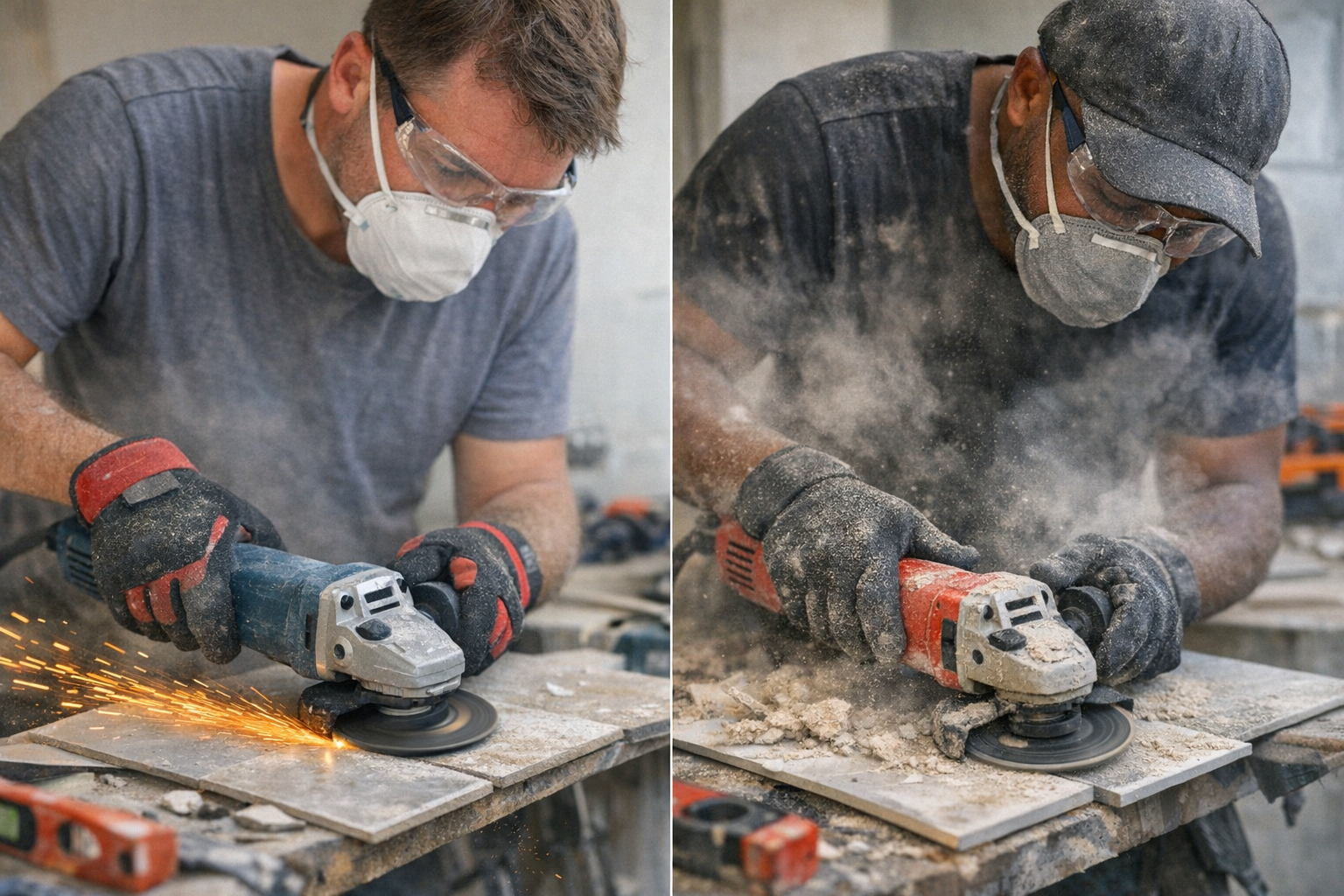
    Picture grinding away at a kitchen renovation. By midday, your dust mask clogs with heavy powder, and control slips—cuts that started straight now require two-handed correction. Every blade swap and disc change feels more desperate. By late afternoon, the workspace is thick with debris and you’re cleaning more than cutting, wishing you’d stopped ten minutes earlier for airflow or a longer tool break.

    Why Heat Sabotages Your Workflow

    It’s more than just hot handles. Overheated grinders burn out soft-start circuits, chew through brushes, and dry bearings until every movement stiffens. That means sudden stall-outs or safety shut-offs when deadlines are tight. Missed heat cues force you into last-minute cleanups, or worse—blown tools that need downtime or, bluntly, replacing before the job is done. Trying to speed up by ignoring the warning signs nearly always adds extra hours, not fewer.

    Build Smarter Routines—Not Just Bigger Muscles

    This isn’t about pampering your tools, but about respecting the limits you only discover through real work. Switching to a grinder rated for at least 1,200 watts isn’t a luxury—it’s self-defense. The upgrade isn’t just raw power: it’s steadier RPMs under load, cleaner cuts deeper into the day, and discs that run cooler and last longer. But the real shift comes from changing your habits. Forced cooldowns—even five minutes every half hour—pay off more than one last rush to finish before lunch. Keep vent slots clear. Alternate heavy grinding or cutting with lighter prep work or fastening. Swap out a worn blade for a fresh disc before you notice the slowdown.

    On a recent tile demo, sticking to a timer—twenty minutes on, five off—kept the tool’s chassis cool enough to touch. Every detail went smoother: lines stayed straight, cuts stayed crisp, and by 5 p.m., there were no ugly surprises or frantic touch-ups. PPE was less of a chore, and fatigue slacked off instead of building up by the hour.

    Simple Hacks for Hot Jobsite Days

    If your routine still leaves your grinder gasping for air, improvise. Run a box fan across your bench or clamp a desk fan nearby to move hot air through the body. It’s not high-tech, but a steady breeze spares the tool—and your nerves—on sweltering afternoons or in tight corners where heat just lingers. Swap bits and blades quickly; don’t wait for smoke or that scorched, metal smell.

    Catch the Signals—Or Pay Double on Cleanup

    Blown finishes almost never start with an obvious failure. Instead, it’s sticky dust, rough seams, guide lines going off-track, or a suddenly aggressive blade. Catching these moments early isn’t fussy; it’s practical. It spares you evening recuts and helps you hand off a job that looks professional from start to finish.

    Big claims and technical specs matter less than how the grinder actually behaves hour after hour. Trust how the tool feels in your hands and set your workflow accordingly. Every grinder hits its limits—ignore the warning, and the tool will decide when you’re done, not the other way around.

    See all practical power tools and jobsite equipment at Gumboll.

  • How Stable Cubby Organizers Transform Handbag Storage Efficiency

    Most closet handbag organizers look right for a week—then sabotage your mornings. By day four, bags have tipped over, straps have tangled, and smaller pouches are hidden behind bulky totes. What started as an “organized” shelf fast becomes a daily tangle, stealing time you don’t have and turning every retrieval into a minor reset. A neatly sorted row one day morphs into blocked access, hidden overflow, and a parade of quick, silent frustrations.

    When Storage Looks Right, but Works Wrong

    Lining up bags in tidy cubbies by size or color feels like a win at first—until a real week runs its course. Too-deep cubbies, soft-sided compartments, or oversized slots let bags slouch, topple, and spill their straps across boundaries. The first morning rush knocks everything slightly out of place; by midweek, what seemed sorted is crowded, uneven, and makes you hunt for a missing pouch or reach around a lumped-up tote. You end up reshuffling after each use but never really restoring order.

    The giveaway is reaching twice for the same hidden clutch or restacking a pile of crossbodies that slid after grabbing a tote. The organizer quietly generates new clutter, even as it was supposed to prevent it.

    The Hidden Cost of Weak Structure

    Behind the surface, the wrong cubby setup breeds small, constant friction: collapsed bags obscure what’s behind, straps snake into the next slot, one sagging item drags neighbors crooked. Instead of a visible grid, you get a slow drift into confusion. This means blocked access as you stand in the closet, path partially closed by bags sliding out or toppling over; late starts because a quick grab turns into a full-shelf shuffle; increasing hesitation about putting things back, because the “return flow” is now a balancing act.

    This isn’t just an appearance problem. In real spaces—closets, bedroom walls, utility nooks—a system that can’t survive repeated use becomes part of the problem. Deep cubbies swallow smaller bags until you “rediscover” them on laundry day. Floor-pressure increases as overflow bags pile up at the base, forcing you to step around or move stray items just to get out the door. A storage zone that collects hesitation or overflow is not helping you.

    How Structure Changes Everyday Retrieval

    Order that lasts depends on stability and visibility. Open, rigid dividers keep bags upright and separated—so you can grab tomorrow’s satchel with one motion without dislodging a handle, burying a pouch, or having to re-square the whole lineup. Soft, sagging, or oversized compartments might look clean when empty, but by day three they collapse under mixed use, making retrieval a negotiation instead of a habit.

    Fast Grabs, No Drama

    When every slot holds firm, you grab your mid-sized bag without shifting the rest—and putting it back is a single motion, not a careful shuffle. The less you have to think about restoring order, the more likely order holds. Full shelves should still offer visible, dedicated slots, not a horizontal jumble. Overflow piles and wedged bags mean every new item is returned with a silent compromise (“just for now”), building future reset work into today’s rush.

    Visible = Usable

    Take a single look: can you actually see the shape and handle of each bag? Or is your “organized” row making you slide one sideways just to find another? Every storage pause signals a weak system. The more visible every bag, the less time you’ll spend on repeated corrections—and the shelf stays genuinely usable, not just technically sorted.

    Design Details That Make or Break Cubbies

    Open-front cubbies outperform closed boxes for repeated access: they prevent “category drift” where clutches, crossbodies, and totes end up mixed and hard to see. Closed cubbies do look cleaner at rest, but introduce blind spots and make daily retrieval a blind guess, especially in tight closets with awkward doors. The core issue isn’t just neatness—it’s whether you can spot, reach, and restore every item without moving something else.

    Divider rigidity decides the outcome. Fixed, shallow partitions keep both thick totes and thin clutches upright and separated, preventing the domino effect that quickly derails order. Adjustable divider heights matter: higher slots contain slouchier, larger bags; lower ones stop smaller pouches from slipping or being buried. Floppy or bent partitions compress categories until clarity is lost—and mixed-up shapes dominate the shelf.

    Small Adjustments, Noticeable Difference

    Switching from deep or soft cubbies to rigid, modular dividers isn’t just about looks—it cuts down on daily reshuffling and halts the build-up of invisible clutter. A week in, upright slots stay upright. No more lifting four bags to rescue one, or pausing to unknot straps before heading out. The rhythm of storage—grabbing, returning, shifting—becomes second nature, not a repetitive battle with your own organizer.

    Light Routine Tips to Lock In Order

    Sort by shape and base strength. Let structured bags form a stable backbone, placing softer ones at the edge or in firmer slots. Modular dividers can and should be adjusted after a week’s trial—let the system fit your habits rather than force a false symmetry. Daily use exposes what isn’t working quickly.

    Refresh, don’t reset. Once a week, move the heaviest-use bags forward and keep categories from drifting together—a handful of seconds now prevents a mid-month overhaul later. The greatest cost of a weak system is hidden: quiet category confusion that creeps up until the only solution is a frustrating, time-eating reset.

    Beyond Looking Organized: A Setup That Holds Up to Daily Life

    The real gap isn’t between messy and Instagram-perfect—it’s between setups that hold order and those that slowly undo it. Bags stay upright, categories don’t blend, retrieval means one hand—not both—and the shelf never becomes another source of hesitation or hidden chores. Let structure do the work: you’ll spend less time untangling, less time making up for a sagging system, and mornings now start with a choice, not a search.

    A system that truly supports daily use delivers where appearance cannot—on the days nobody is watching but you.

    Find more practical storage solutions at Gridry.