Author: jaesoon_admin

  • Maintaining Entryway Order with Simple Pegboard Layouts

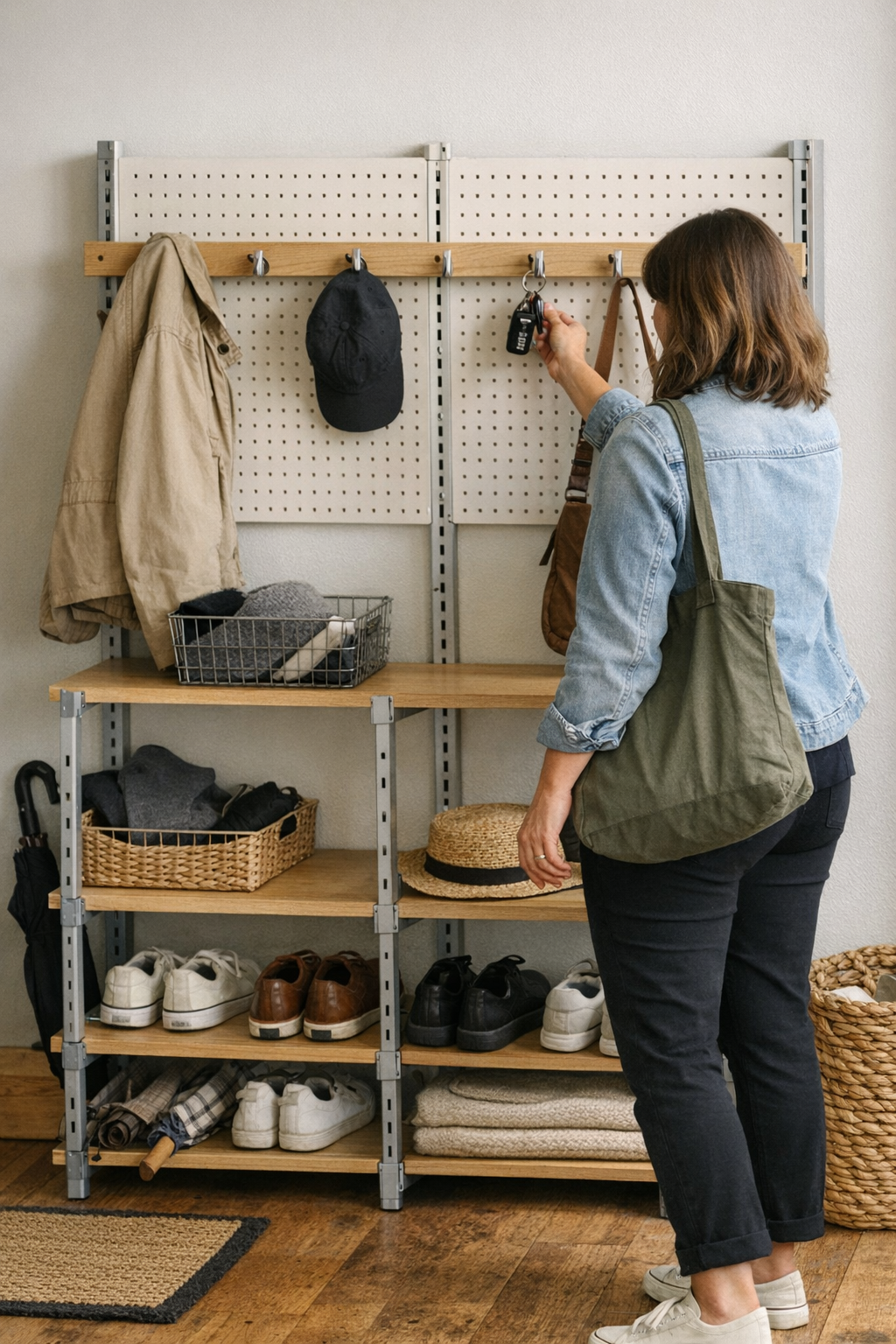
    A spotless pegboard promises instant order in the entryway—until real life starts pushing back. Shoes squeeze onto crowded shelves, someone’s bag lands on a scarf, and keys are forced onto whatever hook is left open. If you’ve ever tried leaving or coming home at speed, you know: a pegboard system cracks when routines overlap, and the drop zone turns into a daily reset trap.

    When Pegboards Meet Real-World Routines

    Transition spaces aren’t just backdrops for organization—they catch every messy detail of daily movement. Wall-mounted pegboards look efficient at first, with everything raised off the floor. But the moment two categories compete for the same spot, friction builds fast. Your key hook gets borrowed. A tote covers the house umbrella. Shoes, three-wide, become five, and the clean path you set up narrows until it’s barely there. The chaos isn’t on the wall—it spreads in the rushed shuffle to get out the door or the slow, inconvenient heap building each day.

    Morning Rush, Evening Return: How Friction Builds

    The pegboard’s weakness shows up at peak times. The morning shuffle sees keys dropped where jackets were meant to hang. By evening, a soccer bag muscles in on the shelf and a line of shoes blurs into a jumble. Every step requires a workaround—slide a bag to sit, sidestep two pairs of sneakers, unhook one thing to reach another. After a couple of busy entries and exits, the “system” usually turns into a puzzle—with your routine blocked by your own setup. Even a couple of extra items or a rainy day is enough to throw off hours of tidy intentions.

    Pegboards Reward Discipline, but Punish Overlap

    A pegboard functions if—and only if—each hook and shelf serves exactly one job. The moment double-duty slips in, everything slows: shoes pile on shoes, keys vanish under a scarf, and the bench becomes another layer of storage instead of a seat. In strict mode, pegboards feel lightning-fast; hang, drop, go. But no system survives when a single overflow item forces you to rearrange. Discipline pays off instantly, but routine, imperfect life punishes it with extra steps and silent frustration.

    The Hidden Cost of Mixed Storage

    Appearances deceive. Hooks show order but hide tangles—scarves looped behind bags, shoes forced out at angles. The bench, supposedly a calm place to sit, always seems to gain an extra bag after school or an umbrella after rain. Return flow breaks down first: what should be a quick stow turns into tracing what belongs where, or, too often, dropping things in the nearest open slot just to clear your hands. Each layer multiplies the time needed to reset; every shortcut slowly erodes the whole setup.

    Busy Entryways Expose the System

    Real-life pressure reveals a pegboard’s limits quickly. Shared entryways or wet weather mean the drop zone becomes obstacle course: a coat dumped over a gym bag, boots half-blocking the walkway, hats spilling off the end. The setup that looked “organized” in quiet moments can’t keep pace as the flow thickens. You sidestep one blockage only to hit another. By the end of a heavy-use day, small essentials drift out of reach, overflow creeps along the wall, and the visual order collapses under repeated, hurried use.

    Quick Fixes That Don’t Hold

    Patching the system only buys time. Shift a jacket, send a shoe back in line, stuff a scarf onto a hook nobody uses—each is a quick salvage move, but none lasts past the next rush. Temporary placements turn semi-permanent. Bench edges become drop zones, shoes double up, bags migrate to wherever the floor clears. What looked like an organized buffer zone slips into a bottleneck—one that eats time every time you pass through.

    Resetting the Zone: Fewer Hooks, Better Access

    Chasing perfect order in an entryway invites failure. The real upgrade is reducing opportunities for overlap: fewer hooks, strict one-item-per-spot, and ruthless overflow limits. Instead of six hooks catching everything, four hooks with one defined purpose keeps use clear. Overflow shelf? Only for true exceptions—double-stacking is out. With fewer choices, every drop zone sees less competition. Shoes can finally be accessed, not excavated. The bench keeps its primary use—sitting, not storage. One misplaced bag won’t topple the system or block your route out the door.

    Real-World Improvements in Daily Flow

    The change isn’t just neater visuals—it’s speed. After a crowded afternoon, reset takes seconds. The pegboard doesn’t demand a full rethink; you scan once and correct in a single pass. Sticking to a “less but clearer” rule means friction doesn’t pile up unseen. Each hook or shelf gives up scrambling time and returns a smoother routine. You get through the threshold with less maneuvering, faster bounce-back, and fewer half-finished resets lingering into the next day.

    Recognizing the Difference: Looking Tidy vs. Living Tidy

    A photo-ready pegboard can still slow you down. The lived-in test: do you shift, juggle, or detour every time you leave or return? If everyday setups prevent clutter from spreading, and a quick reset is truly quick, your system works under real conditions—not just in theory. But if “just for now” items keep landing wherever the last gap was, or the threshold narrows under invisible overflow, the pegboard is part of the delay, not the solution. It’s time to simplify until movement feels possible again.

    One Useful Habit: The “Reset on Return”

    The smallest ritual keeps friction under control: every time you come home, move just one stray item back to its true spot before doing anything else. This habit costs seconds now, and saves minutes of accumulated obstruction and re-sorting later. It doesn’t erase every problem—but it starves the buildup that makes reset a chore rather than a moment.

    For storage that endures real routines—not just looks organized between them—visit Betweenry.
  • How Defining Boundaries Transforms Everyday Car Clutter Into Order

    You get into your car Monday morning and everything looks as you left it: charger plugged in, phone docked, water bottle upright, seats clear, pockets just so. By Wednesday, that order is gone. The charger cable slips toward the pedals—again. The bottle makes its home on the floor after every sharp stop. Receipts creep out from under the seat. The usual routines—commutes, errands, school runs—haven’t wrecked the interior, but the friction is back anyway: awkward reach, repeated tangling, loose items drifting into the same old traps. The cabin still looks managed, but every small motion has become slower, less automatic, and more likely to interrupt your drive. Tidy isn’t the same as easy to use, and most “organized” setups start breaking down long before the week is half over. That’s when you start seeing which boundaries are real—and which were just a Sunday night reset.

    Why Car Clutter Isn’t Always About Mess

    Clutter doesn’t reveal itself when your car is full. It starts the instant daily-use items lose their spot. Most order breaks down not from too much stuff, but from missing boundaries: cables slither out of their lane, bottles migrate to the passenger footwell, sanitizer jumps from tray to glovebox. Even carefully arranged cabins fall apart in high-traffic zones—the center console, door pockets, floor corners—as soon as repeated reach and return movements test the setup’s limits.

    It’s the visible and invisible slips: reaching for your phone at a stoplight only to catch the wire, tossing a bag and yanking a charger, hunting through overstuffed trays for wipes during a rush. The most common pain isn’t a dirty car; it’s having daily-use items just slightly out of position every time you need them.

    Repeat Motions, Same Interruptions

    Volume isn’t the enemy—vague boundaries are. You can have a car that looks sorted but still runs interference the moment you rely on muscle memory. The “reach and return” routine—grab sunglasses, dock the phone, toss a wrapper—keeps breaking flow because items wander: coins wedge under mats, wipes get smashed in door pockets, cables work loose and end up near your clutch or brake.

    These aren’t occasional pains—they stack up with each trip. A tray that seemed fine on Sunday night rattles at every tight corner. A charger slides right where your foot needs to land. Driver’s side trash piles up in unreachable mat seams. Reorganizing every evening becomes part of the routine, but the cycle resets as soon as the car gets used normally again. The gap isn’t just between tidy and messy—it’s between looking organized and actually moving through the week without having to fight your own setup.

    When Protection Solves One Problem and Creates Another

    Add a mat and you protect the carpet—but now the curled edge traps receipts and dirt. Try a trunk divider and your bags stand up, yet now loading new groceries means working around the organizer’s bulk. A phone mount fixes the phone’s visibility but blocks the vent. Cable clips keep wires off the floor until the holder comes loose and creates another snag. Every fix is tested by real driving: quick stops, split-second parking jobs, last-minute grabs. If a tool slows down your real routine—even a little—it turns back into friction you notice almost daily.

    The True Cost of Missing Boundaries

    That loose charger cord isn’t a problem on a quiet morning. By midweek, you’re dragging it with every backpack, risking a dropped phone with each exit. Overfilled trays hide what you need and jam at the worst moment. Each re-entry—after work, groceries, or picking up the kids—begins with a mental negotiation: what fell, what blocked access, what has to be nudged aside before you can settle in. These aren’t superficial frustrations; they add up as mental lag, divided attention, missed calls, and in some cases, a smashed device or a crumpled receipt that now stains the seat. The novelty of a clean cabin fades fast once you’re fighting the setup instead of using it.

    Practical Tweaks That Change Everyday Flow

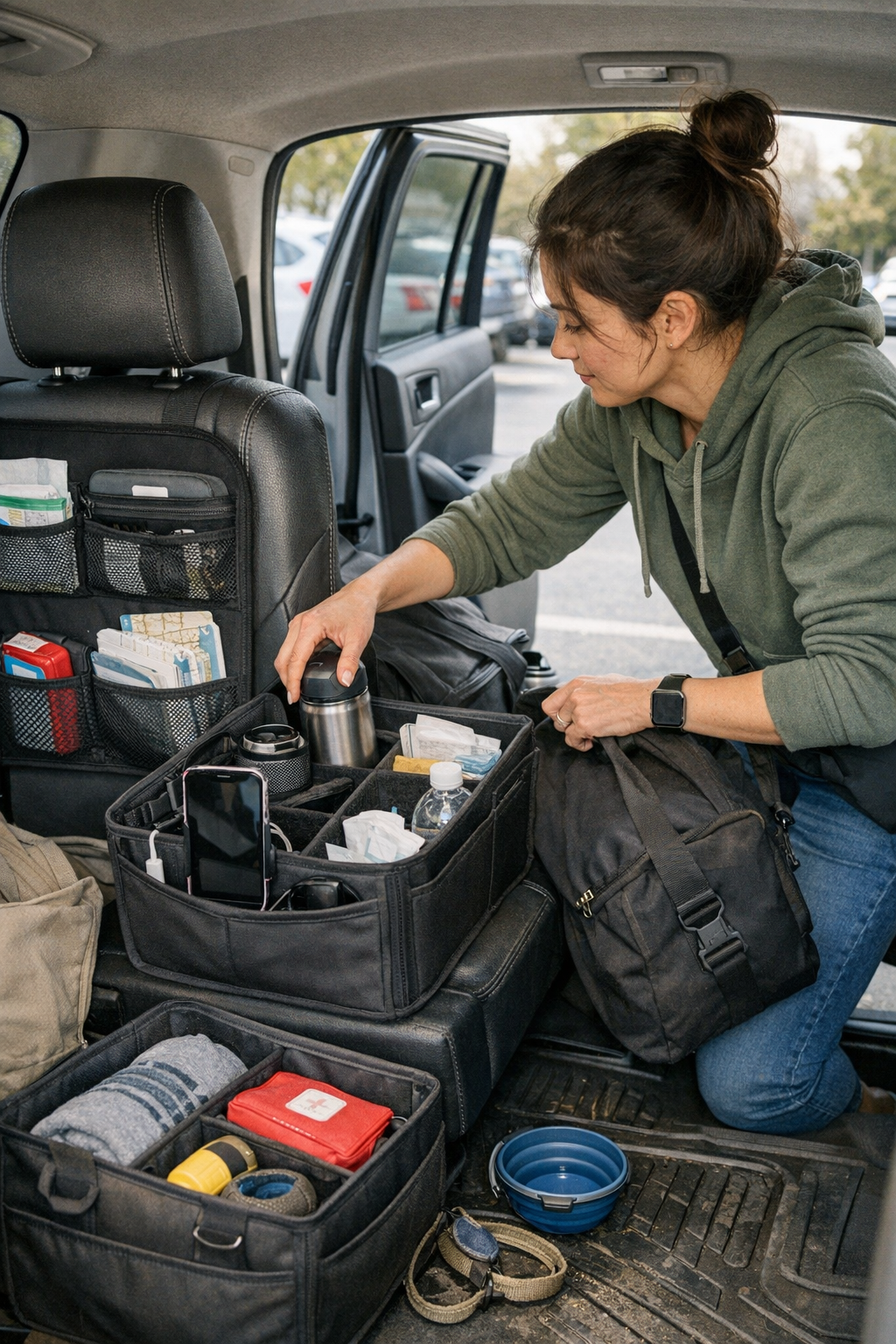
    Real ease starts with shallow, enforced boundaries—not simply more bins. Organize for movement, not just looks: divided organizers or narrow trays near the driver’s reach make high-use items return automatically. A cable slot along the seat edge stops the charger from running wild during sudden braking. Cord management clips keep lines exactly where you left them, resisting even the bumpiest ride. Solid, right-sized holders for sanitizer or wipes mean no more door clutter or console digging. Every small structure tweak matters most when you’re repeating the same movements hour after hour.

    The feature isn’t hiding the problem—it’s preventing item drift, repetition, and slow fixes. Trays and dividers that really work let you grab, drop, and return essentials without pausing. A bin between the seats cuts out the “floor drift,” so wipes, wallets, or chargers don’t vanish or pile up underfoot. Cargo management shouldn’t block you from a quick load, but it should stop today’s groceries from tipping and leaking. Setup only works when it helps, not when it adds a new workaround.

    Real-World Example: The Seat-to-Console Seam

    The space between the seat and console is a classic trouble zone—keys vanish, mail slides, cables dangle. Add a slim gap organizer (or even a simple partitioned tray) and you transform those moments: a toll pass, parking card, or sanitizer is actually at your fingertips, not sliding into an unreachable void. Instead of “park, reach, curse, dig,” the routine becomes “park, grab, go.” Over dozens of trips, you realize you’re not spending weekends fishing things out or picking coins off the floor. The setup doesn’t look much flashier, but the change is obvious in every repeated-use moment.

    When Clean Isn’t Enough: The Case for Setup Over Surface

    You can spend Saturday detailing the interior, but if your setup doesn’t enforce boundaries, that order collapses after the first run of errands. Setups that assign a fixed, repeatable spot for each key item—charger, phone, cleaner, water—cut daily friction because nothing is sliding, stashed, or half-hidden when you actually need it. Mess management shifts from constant repair to automatic reset. Instead of undoing the same clutter loop, your routine just flows—and you stop burning energy on predictable, avoidable slowdowns.

    That’s the lived difference: a car that seems organized in photos isn’t the same as one you can actually use on a weekday without extra work. Loose zones mean routine resistance. Boundaries that hold transform the whole week—fewer small fights, no mystery stains, nothing blocking reach. Order stops being a wish and becomes the default. The friction you don’t notice anymore? That’s the sign your setup is finally doing its job.

    Find practical tools to set up your own predictable, low-friction car interior at DriveWellSupply.

  • How Divided Closet Storage Transforms Your Morning Routine Efficiency

    The real test of your closet isn’t in a photo—it’s staring you down on a bleary Monday morning. That’s when the setup either saves your routine or eats up precious minutes. You slide open the door: is today another rush of digging through sock heaps and unraveling lopsided shirt stacks, or do you reach straight for what you need? Every morning answers that—and reveals if your “organization” is really working.

    When “Organized” Isn’t Enough—Closets That Stall Your Routine

    Neat rows and visible stacks look satisfying, but by midweek, reality sets in. Shirts creep into pants territory. Socks vanish to the back, or surface doubled up with T-shirts. Accessories sink between piles, quietly shifting out of reach. What starts as a tidy tableau quickly turns into a puzzle—especially when you need to get dressed fast.

    Organization breaks down the instant you’re in a hurry. If grabbing a single item means rummaging, lifting half a stack, or untangling yesterday’s choices, your system isn’t saving you time. It’s just hiding the struggle until you’re pressed.

    The Cost of Blended Storage: Micro-Delays and Daily Clutter

    Most closets don’t erupt in chaos overnight. Clutter creeps in subtly, with small inefficiencies multiplying each day:

    • Grabbing for that tee tucked behind jeans—toppling the front stack, then spending a minute reshuffling it all.
    • Digging through a pile of gym shorts to rescue a lost pair of socks from the shadows at the back.
    • Staring at a shelf mid-routine, trying to decode if those folded stacks are for work or weekends—because category lines have disappeared.

    Each of these looks harmless, but across a week, they add up. The “organized” shelf keeps stealing moments—and mental bandwidth—that you never intended to lose.

    Where Open Shelving Fails: Boundaries Make the Difference

    Open shelves promise flexibility but quietly encourage chaos. With no clear borders, every reach or return lets stacks bleed together. It’s effortless at first, but maintenance grows exhausting—one category seeps into the next until you’re left with an indistinct pile-up where retrieval is a gamble every time.

    Segmented storage changes the equation. Simple dividers, bins, or dedicated shallow drawers cut the drift. Each category claims a defined space, so shirts actually stay in their lane, socks don’t vanish under sweaters, and accessories don’t free-float into oblivion. You start reaching with confidence—no unstacking, no guesswork, no mental rerouting. The system resets itself every evening when you put things back, not just on big cleaning days.

    The Real Impact of Boundaries: Routine vs. Reset

    Perfectly folded stacks rarely survive contact with real life. One hurried morning is all it takes for clothes to sprawl across old category lines. Add in roommates, partners, or kids—each with different ideas of “putting things back”—and your system deteriorates even faster.

    Physical boundaries—however simple—shrink these gaps. The hesitation vanishes. Each grouping stays visible. Even after a hasty grab, you know exactly where the next shirt or belt belongs. The system is more forgiving, making resets a near-automatic part of your nightly routine rather than another chore you avoid.

    Real-World Reset: Four Zones, One Shelf, No Second-Guessing

    This isn’t a closet makeover. It’s a targeted swap. Take a broad shelf and split it into four functional zones: shirts, pants, athletic gear, accessories. Slide in dividers or line up a handful of bins—suddenly, every item is either in place or obviously out of it. Mornings become one-move decisions. At night, even if you toss things back a bit scattered, broad borders wrangle them into order without extra effort or a weekend overhaul.

    Some days will be messier than others. That’s the point—segmenting doesn’t demand perfection, just gives you guardrails that reset every time you put something away. You don’t need a labelmaker or a new closet—just an honest look at where your system lets clutter sneak in.

    Warning Signs: How Crowding and Confusion Take Over

    Most people spot trouble only when it’s already annoying them. Signs your closet’s boundaries have blurred:

    • Socks wedged under jeans or shirts, vanishing for days.
    • Shirt piles slumping or spreading sideways after a few quick pulls.
    • Baskets that were meant to “organize” have merged—now everything’s mixed in one low-visibility bin.
    • You find yourself scanning every shelf for a missing belt, then rifling through three categories for a single item.

    If any of these sound uncomfortably familiar, a couple of well-placed dividers or bins can put boundaries back in play—often without needing to blow up the whole closet and start over.

    Build Zones That Actually Survive Daily Use

    • Think broad, not fiddly. Use wide segments—shirts, pants, accessories—so you can quickly toss and retrieve. Micro-compartments are high-maintenance and invite friction.
    • Keep prime real estate for daily essentials. Eye-level space should go to what you reach for most. Overflow and seasonal pieces can live up top or down low, where access matters less.
    • Stop before you over-divide. Too many boxes and boundaries become another organizing chore. Make it obvious, not labor-intensive, even for someone sharing the closet.
    • Leave room to breathe. Don’t max out every inch. A bit of empty space makes stacks less likely to tip and helps small items stay reachable instead of getting squashed or hidden.

    It’s not about buying more. It’s about designing storage that handles real life—rushing, resetting, and all the messiness between.

    What “Works” Looks Like: Effortless, Not Flawless

    The goal isn’t a show-home closet; it’s one that stays clear even on brutal mornings. You shouldn’t be thinking about “organization” at all. You should be pulling out your shirt and socks, barely noticing the mechanics because each thing lands in its own spot—routine, repeatable, and resilient when you’re running five minutes late.

    Check yourself: Are you hesitating before grabbing? Are the stacks becoming shapeless blobs by Wednesday? Do you dread putting laundry away because it messes up what you just “organized”? If so, try adding one blunt boundary—a divider, a container, a wide bin. Let the improvement show in your speed and calm, not just in the visual tidiness you snap for social media.

    http://closetworks.myshopify.com

  • Managing Dog Greetings to Simplify Daily Care and Reduce Mess

    The real cost of a messy dog-care routine is rarely obvious until the morning you’re already late. You reach for the water bowl by the door—and instead catch a stray leash, or find the bowl itself kicked off to the corner from last night’s greeting chaos. Suddenly, a task that should take seconds drags into a loop of searching, stepping over scattered toys, and mopping up extra puddles. Most “manageable” pet routines don’t fail all at once—they break down through these silent bottlenecks, where a missing scoop, blocked hook, or absent wipe slows the rhythm and turns every quick refill, cleanup, or feeding into another round of repeat work. Even as things look tidy at a glance, the friction piles up in ways that only show up under repeat pressure. That’s the practical tension CalmPetSupply is built to notice—and to reshape.

    The Slippery Slope: When Everyday Pet Care Gets Tangled

    Real-world pet care isn’t just about having the right tools; it’s about actually reaching them at the right time. You go to grab the water bowl, but a leash left mid-rush is blocking the spot. The scooper you always use has drifted under the bench—again—because it never has a fixed home after cleanup. Towels for muddy paws migrate from entry hooks to the laundry pile, so wiping up happens late, and a gritty trail stays by the door. The friction isn’t one missing item, but a layout that breaks down each time daily chaos resets the space.

    These misalignments get worse when you’re under time crunch: right before leaving for work, or walking in at night. Each round, another item is out of reach, another quick corner cut, and the same routine gets tangled. The towel now doubles as a mop for an earlier water spill. Treats, used to distract barking at the window, multiply across rooms until you’re left searching, not soothing. Each workaround plants a new friction point for the next day, and the cycle continues.

    Routine Weak Spots: Seeing the Patterns

    The trouble isn’t always glaring. You aim for a no-mess feed–refill–go—only to find a dog lunging for a window, one hand juggling treats to redirect, and a run of fresh drips by the entryway. “Quick resets” become multi-step scrambles: pick up toys, shift the bowl, wipe a corner, go back for towels. Even a minimalist setup can unravel if grab-and-go items drift or block each other at crucial moments.

    These pain points often hide behind an organized facade. At first, your doorway looks clear—but real use means you’re still sidestepping errant toys, or shuffling bins to access a daily essential. It’s this mismatch between how a space appears and what it demands in motion that exposes two or three persistent weak spots, stubbornly returning despite your best routines.

    When Solutions partly Work—But Friction Crawls Back

    The reflex is to add more: extra bowls, extra towels, baskets in every room. Early on, this feels like progress, but supplies start to wander. That evening’s paw-wiping towel lands in the living room and stays there. Treat pouches migrate to wherever the excitement erupts next, with crumbs trailing behind. Bulk solutions become new shuffling burdens—your “convenience” turns into rerouting and extra resets.

    This is where many routines stall. A visible shelf by the door seems tidy, but placing a leash over the only water bowl, or storing the refill bottle two rooms away, means daily function keeps losing out to surface order. Mess looks managed, yet the time and irritation wasted on these micro-migrations never really go away.

    The Impact of Repeated Resets

    Pet care should flow: feed, refill, wipe, move on. But a towel missing from the door, a bowl nudged unreachable, or toys rolling into high-traffic spots adds up. Each incomplete step demands correction—an extra trip, or a barefoot journey to fetch what’s not at hand. The friction isn’t dramatic; it’s the silent drag where the expected one-step task quietly turns into two or three.

    The cost grows in active households. Every half-reset at the door leaves muddy prints and restless energy that lingers into the evening. It’s not just minutes lost; it’s that low-level tension of knowing the next routine will also stall somewhere predictable, just when you need it smoothest.

    Practical Adjustment: Meeting Friction Where It Happens

    There’s leverage to be found in small shifts: putting the critical care tools right up against the main friction point. Set a washable mat and use a gate or low barrier at the entry—suddenly, dashes turn into paws contained and debris captured. Stash a refill bottle at the entrance, not in the kitchen; now water messes can be wiped before they multiply. The need to detour elsewhere drops off.

    This isn’t about draining the joy from dog greetings, but about channeling the mess. Over time, baskets and bins pay off only if they meet triggers head-on—not as afterthoughts, but as actively checked parts of the normal flow. The shift isn’t a new product every month, but a setup that cuts the scramble in half because what you need is exactly where chaos starts.

    The Real Difference: Looking Tidy vs. Working Smoothly

    An area lined up with bowls, hooks, and folded towels may look ready—but if you have to step over something every single time, or supplies are always one fetch away, it’s only half functional. The sign your routine isn’t serving you? The same resets, wipe-downs, or supply hunts creep back day after day.

    Real improvement happens by tuning setups to match where mess and rerouting truly happen. Don’t just accept that tools drift or that order slips each week; station essentials where friction builds, and notice what repeatedly gets in the way. Most of the hassle isn’t the tool—it’s that the tool’s home doesn’t match your actual dog-care movement in the house.

    With a bit of observation, the loop starts breaking: not by hoping excitement disappears, but by letting daily placement and smarter readiness soak up most of the mess before it becomes repeat work. CalmPetSupply is made for this kind of practical attention to flow and to what actually fixes—not just hides—routine weak points.

    See practical setups for repeat-use care challenges at CalmPetSupply.

  • Why Leaving Buffer Space in Your Carry-On Transforms Airport Travel

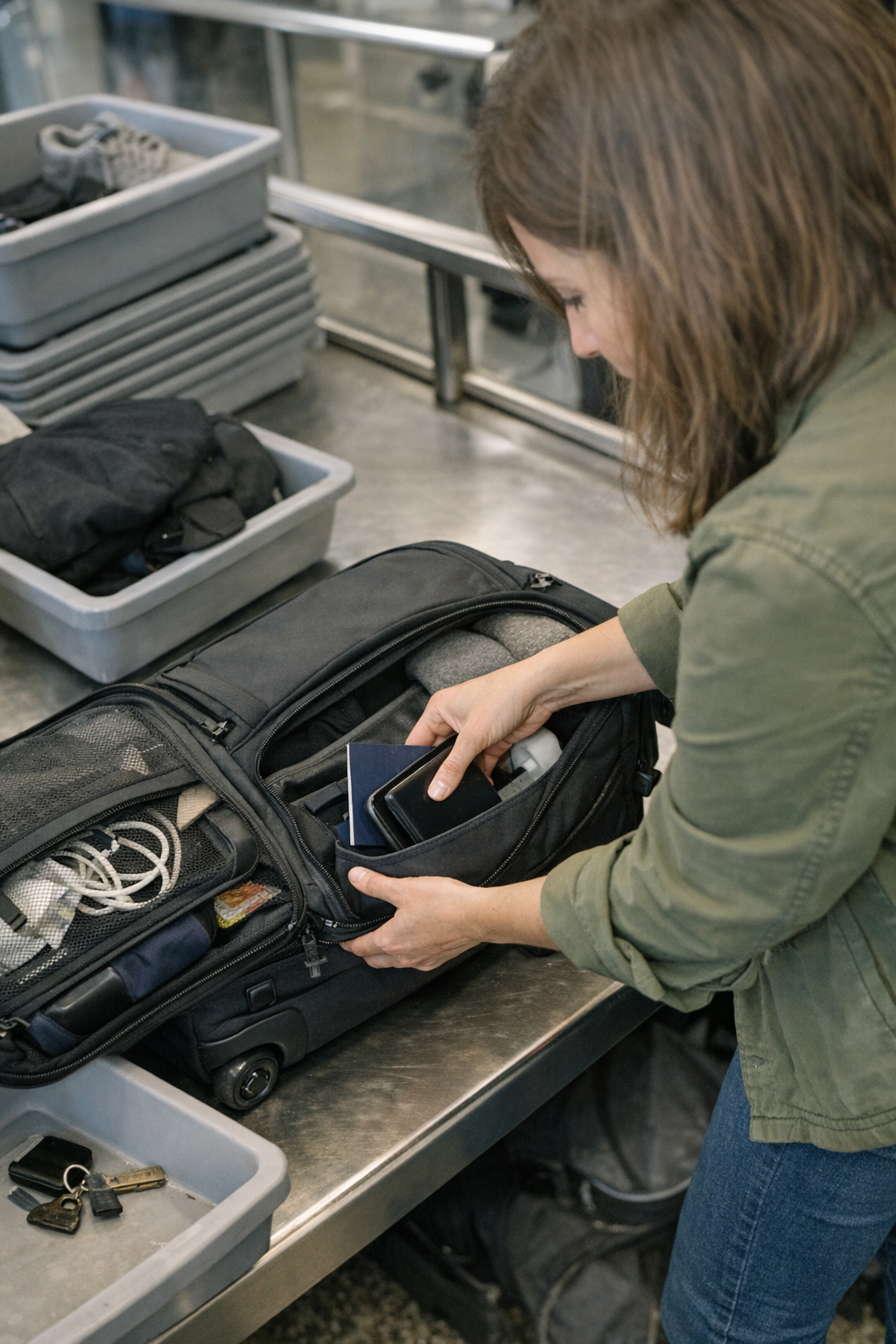
    Here’s what actually happens when your carry-on bag is packed to perfection at home: by the time you’re inching through the airport line, that “order” begins to slow you down. Suddenly, every small action—reaching for a passport, tucking away a charger, returning a boarding pass—becomes an obstacle. Things that fit in a controlled, motionless setup at your kitchen table don’t survive real airport movement. The issue isn’t about bringing too much; it’s about leaving no open space for quick access or last-second drop-ins. When every pocket is filled, retrievals take longer, pockets turn into dead ends, and delays pile up exactly when you need to move fast. This is where seemingly minor packing habits create ongoing friction for every real-world traveler using carry-on luggage or travel pouches from CarryOnSupply’s world.

    Why Buffer Space Makes All the Difference

    When your carry-on is maxed out, every process—security, boarding, seat entry—hits sudden resistance. It’s not just about minimalism or cutting corners; it’s about having a margin, a buffer that you can actually use on the go. This “active” space isn’t wasted—it’s what keeps your bag functional, not just organized.

    At security, you’re juggling keys, a passport, a phone. You’re nudged forward by both staff and travelers behind you. Without somewhere to drop high-movement essentials, you’re left shuffling, dropping, or hunting for pockets you wish were empty. The wrong packing structure reveals itself fast: bags that looked ready for anything get in the way the minute you try to use them in context.

    Looks Versus Real Movement

    Perfectly slotted pouches and zipped pockets look great on camera or in product shots. But real travel isn’t static. The “finished” setup—every item in its compartment, every pouch matched to a purpose—won’t let you stash a scanned ID, a water bottle you weren’t planning for, or even a boarding stub the agent asks for twice. The absence of slack means the bag can’t flex with unplanned events. The setups that survive movement aren’t the most “complete”—they’re the ones that keep deliberate space open for shifting circumstances.

    The Missed Opportunity: Real-World Examples of Lost Buffer

    Here’s how an overfilled carry-on blocks you, over and over:

    • At security: Nowhere to place a loose watch or forked charger—so you fumble in the open, with the line pushing forward.
    • During boarding: Needing a document means digging through packed layers while a crowd builds behind. The right pocket isn’t clear, and now you’re exposing what you meant to keep tucked away.
    • Seat entry: The aisle gets tight; you have to shift items just to make space to stow a phone or snack, risking a spill of smaller contents while squeezing into your row.
    • Overhead-bin lift: Items roll, slide, or drop out of overstuffed sections—what was organized slides just out of reach for the remainder of the flight. Now you’re either holding up the aisle or stuck digging mid-air.

    None of these are rare flukes. These are the breakdowns that stack up—often by the third checkpoint or first boarding call. A setup that looked efficient from the outside forces you into repeated repacking, awkward reaches, or slow-motion retrievals at every in-transit pause.

    Building Buffer: How to Create Usable Space in Your Carry-On

    Smart travelers don’t just “pack less”—they leave one pocket or section intentionally empty for real use. This buffer isn’t wasted; it becomes your control zone for quick swaps or sudden drop-ins. For most setups, this means protecting at least one dedicated pocket or about a quarter of your biggest compartment—something that can take on loose items, documents, or unexpected handoffs at a second’s notice.

    The Buffer in Action: Recognizable Use Cases

    • Security checks: As soon as the tray returns, your phone, passport, and metal watch have a known landing zone—no digging, no double-checking, no hand jams or dropped items underfoot.
    • Boarding sprints: Documents pulled or returned mid-line? The buffer keeps you from blocking the aisle or shuffling through packed pouches on repeat.
    • Seat entry: You slide in, drop headphones or snacks one-handed, and move on—no need to open the main bag in front of strangers while balancing everything else.
    • Arrival repacks: When your travel order breaks down after landing, the buffer captures odd items or “floating” pieces until you’re ready to sort. Nothing goes missing or gets buried by accident.

    The buffer is travel slack. It covers every unpredictable moment, stopping routine items from turning into travel interruptions.

    What Happens Without Buffer?

    If you ignore buffer space, these are the consequences you face on loop:

    • Consistently opening the wrong pocket—because your most-used items are no longer where you expect, or can’t fit without shuffling old contents out of the way.
    • Stopping in crowded lines to repack, untangle, or refit items that always seem to clash. Chargers coil with snacks, documents slip under makeup, and anything “put away” is hard to get back in play.
    • Needing to unzip the entire main bag for a tiny retrieval—slowing both yourself and everyone around you, and exposing other gear you wanted to keep closed.
    • Maintaining the illusion of tidy packing, only to lose time and pace through every major airport transition anyway.

    Over time, these small inefficiencies are what really cost you—not the little bit of volume you set aside as buffer, but lost travel minutes and the compound drag of repeated micro-frustrations.

    Smart Buffer: Lessons from Long-Distance Trips

    After repeated flights, hotel shuffles, and gate movements, the hidden value of buffer space becomes obvious. Travelers who set aside a fallback pocket at the start notice:

    • Less chaos at security, since fast-movement items don’t get trapped under layers or forced into the wrong spot as bins roll down the line.
    • Lower odds of losing essentials in the handoff zone; everything that’s high-touch lives in the same temporary spot, not wherever there’s random leftover space.
    • Faster boarding, since you’re not struggling to cram one more thing into an already-stuffed bag under pressure from the crowd.
    • Way less time spent repacking between transitions—the rest of your layout stays intact, and only one pocket absorbs the churn and scramble of repeated movement.

    The end result: your bag’s order may not ever look “magazine-ready,” but it stays reliable under real travel pressure.

    Making Buffer Space a Habit

    The fix is simple: when packing, mentally reserve a front pouch, top compartment, or just one segment as untouchable buffer. Run a final check before zipping up—if that space is full, unpack and shuffle until it isn’t. Later, when you need a fast drop-zone or a retrieval with a line at your back, that open section makes the difference between smooth movement and another airport bottleneck.

    In the end, reliable carry-on setups don’t just control clutter—they give you structure that works with you, not against you, as the airport routine stacks up. Tools like packing cubes or organizers help, but a dedicated buffer makes sure your carry-on adapts—not just survives—when travel gets messy, rushed, or unpredictable.

    For tools that help your carry-on actually keep pace with repeated use—not just appear orderly—visit CarryOnSupply.

  • Optimizing Under-Seat Pet Travel Bags for Comfort and Easy Access

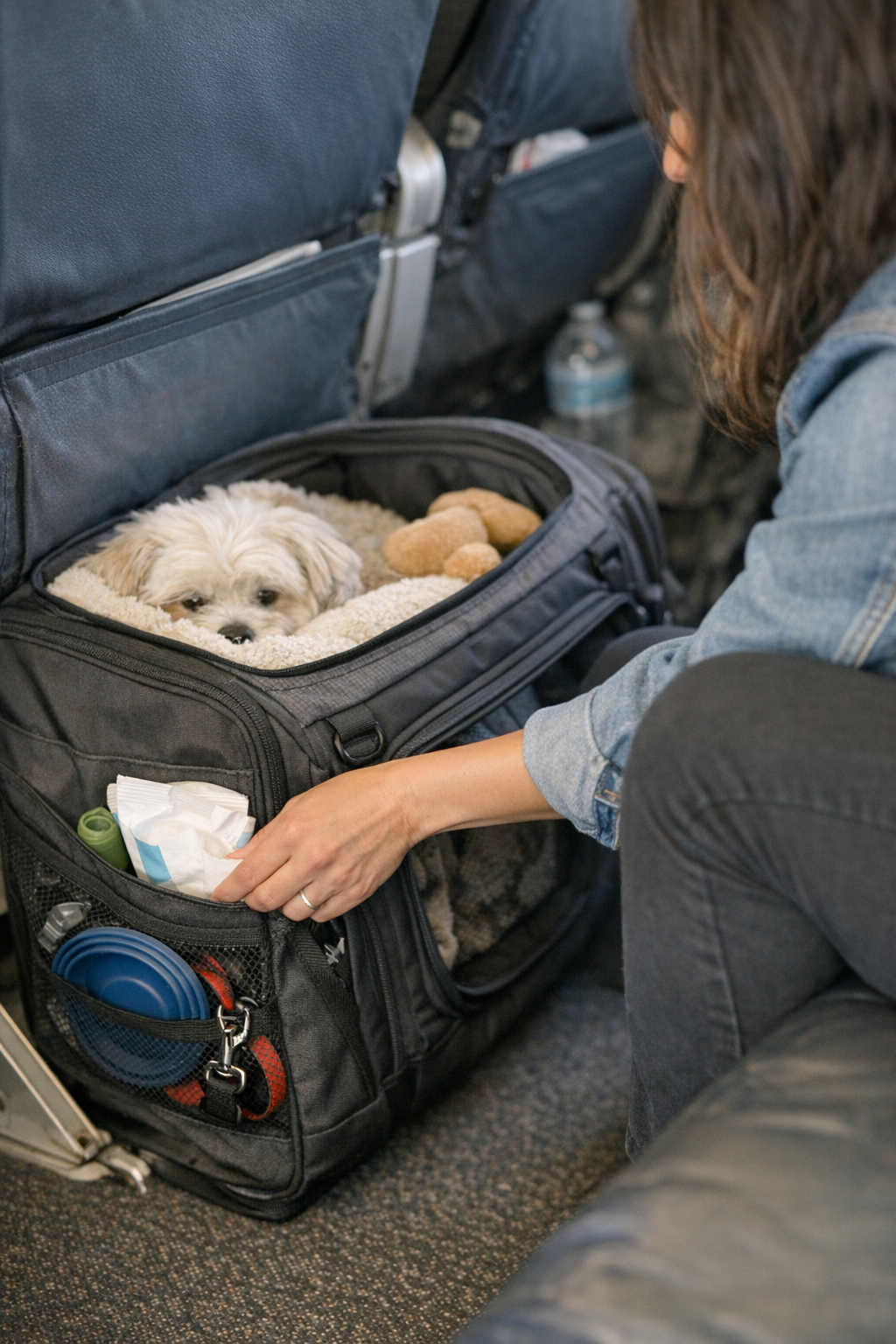
    The pet travel bag that looks streamlined in your living room often buckles under real movement: try reaching for wipes at a crowded rest stop, or grabbing a water bowl one-handed while your dog shifts on the car seat. The first drive may feel smooth, but each pause, climb-back, and in-seat stretch shows where your “organized” under-seat setup slows you down—especially when comfort, cleanup, and your own essentials start scrambling for space. What looks prepared rarely survives a normal day on the road without friction reappearing: blocked access, gear slipping out of zones, and everything taking extra seconds just when you want to move quickly.

    The Orderly Bag That Doesn’t Stay Orderly

    No packing plan survives real travel. At home, your pet bag might look perfect—wipes on top, leash looped, bowls nested with all the right items in their place. But by the third stretch at a highway turnout, your “ready-to-go” setup unravels. A blanket meant for comfort ends up wedged over the bag’s front opening, blocking access. That bowl you filled? It disappears behind snacks jostled loose, while the wipes you thought were easy to grab require digging past toys and tangled leashes. The effect isn’t just a visual mess—even when nothing’s missing, you’re left negotiating with your own gear every time you reach in. Each stop means extra shifting, restacking, or simply wishing you hadn’t buried what you need under layers that slid out of order the last time you braked.

    Repeated Use Exposes Hidden Weaknesses

    Nearly every bag works the first stop. It’s at the fourth or fifth break that real travel habits collide with the bag’s structure. You reach for a quick wipe after water dribbles, but can’t get to it without first untangling the comfort blanket jammed at the opening. Cleanups and calm items mingle in ways you didn’t plan: what’s meant to soothe your pet now barricades the essentials you need fastest. And while the outside might look kept up, your inner routine starts to unravel with juggling, shuffling, and half-reaches that never quite land on what you want first.

    That Familiar Scene: Too Many Pauses, Not Enough Access

    Late-day travel, a restless pet in the back, your own patience running thinner—this is where you feel setup failure most: one hand calming your pet, the other buried elbow-deep trying to dig out a wipe yet again. This time, the compartment that should have held quick-clean items only yields a crusted chew toy and a folded mat. The next grab finds a water bowl upside-down under the treat pouch. Quick access turns sluggish, and you start dreading the pattern: each pause grows heavier, each movement slowed by a bag that looks organized but hides what you need behind something else. The organized look isn’t matching the lived reality.

    Where Overlap and Overpacking Steal Time

    Packing for neatness is the default: tight stacks, zipped pockets, everything nested. But in real use, more stacked means more buried. The more items packed in shared spaces—cleanups tossed with treats, bowls wedged under blankets—the more you repeat the same slow-motion search. Keys and phones wind up mixed with travel wipes. The clean divide between “pet” and “owner” blurs so that every stop becomes a multi-minute hunt, not just a quick reach. This overlap turns what should be a quick fix into a drawn-out shuffle that repeats with each new leg of the trip.

    Repeated Restarts: The Real Drain

    Every time you restart—seatbelt off, door open, pet checked—something has drifted, blocked, or buried itself. Maybe the wipes slipped under a toy, maybe a travel bowl is now stuck behind a rolled towel. Each five-second delay doesn’t seem much in isolation, but repeat it at every gas stop, snack break, and comfort pause and it becomes the background drag of travel. The subtle effect is a setup that feels heavier, not because of weight, but because of friction that resets every time you have to repack, reorganize, or hunt for the essentials all over again.

    What Actually Improves the Routine: Separation and Access Zones

    There’s a clear turning point in bag setup: function-first separation. Instead of a single cavern of mixed gear, create real access zones—side pockets for wipes and bags, a dedicated bowl slot, a top pouch for comfort items that never gets in your way. Assign a non-negotiable front or rear space for things you need instantly at stops. This adjustment isn’t about appearances; it’s entirely about easy reach in real time. The test is simple: can you grab what you need while your pet tugs or squirms, without having to move three unrelated things first?

    A divided, zoned bag does more than look neater. It works lighter, resets faster, and holds up through repeated, unpredictable movement—making each routine feel less like a battle and more like a quick, controllable stop.

    Small Gains, Big Impact

    It may feel minor—saving a few seconds at each stop by having wipes or bowls reachable without shifting a stuffed blanket. But these slices of relief add up quickly: less interruption, smoother handoffs, attention back on your pet instead of the inside of your bag. Each smartly separated pocket reduces the low-level stress that grows when your gear keeps crossing paths every twenty minutes. Multiply that over a travel day, and you feel the difference in energy and focus, not just tidiness.

    Owner Items vs Pet Essentials: Keep Them Apart

    The overlap of pet and owner essentials is a classic source of micro-frustration. Your phone, keys, or wallet wind up tucked with wipes or treats—for the sake of quick stowing, but at the cost of guaranteed confusion later. Keeping your stuff in dedicated, external-access pockets separates the flow: pet needs stay on one rhythm, owner grabs on another. Every stop feels more intentional, with no double-sorting just to fish out your wallet while your pet waits and wiggles. One task at a time, less backtracking, fewer accidental crossovers—that’s functional separation in actual travel, not just organization by label.

    Repeated Use, Once-Exposed Weak Points

    After multiple routines—not just one trip—the weak points aren’t theoretical. The main pouch where cleanup gear gets lost, the “quick-grab” pocket buried by a comfort blanket, or the side section that always collects the wrong category: these patterns reveal themselves fast. They’re not accidents—they signal what needs reshaping. If you catch yourself fixing the same slow access, it means your setup is still tuned for how things look at home, not how they work under actual travel pressure. Spotting and fixing the consistent failure points is the only way to win back effortless movement and real confidence on repeat stops.

    How Reset Friction Builds

    At first, slow handling is just a minor inconvenience. But as the hours and stops build, each re-shuffle or blocked pocket eats into your patience—and your pet’s, too. Bags that divide comfort from quick-access essentials allow you to move on instinct, not by memory. The more you separate “needed now” from “nice later,” the less you struggle each restart. That difference is the real upgrade: less friction, more momentum, and a routine that gets easier with use, not harder.

    If It Looks Ready, but Feels Slow, Rework Your Access Zones

    The real test isn’t whether your bag looks sorted at the start—it’s whether stop-and-go motions stay smooth. Pausing to fuss, re-opening the same pocket, and sorting wipes from toys each time means you’re carrying a flawed setup. A pouch set aside for cleanups—never blocked, always on the outside—removes nearly all of the usual trip friction. Travel stops feel lighter, movements reset quickly, and organization starts to match actual use, not just visual neatness.

    The true win is a travel setup that feels easier every time you move, not one that just looks tidy for a photo.

    Find practical pet-travel setups that work for your real travel, repeated stops, and lived-in routines at PawGoTravel.

  • Why Ventilation Is Crucial for Enclosed Indoor Lighting Fixtures

    The real headache of fully sealed ceiling fixtures doesn’t show up on installation day—it hits after dozens of damp mornings, late laundry shifts, or one too many dim trips down a hallway. What looks crisp and tidy at first slowly turns into fogged lenses, persistent shadows, and an odd sense that the light just isn’t keeping up. If you catch yourself squinting at the bathroom mirror after a shower or hesitating on a stair landing that used to be brighter, it’s not just your imagination—the setup itself is starting to interfere with routines. These scenes aren’t unusual. They’re the repeat signals that even the sleekest, most enclosed ceiling lights break down in real home use, especially when heat and humidity have nowhere to go.

    When the Look Outlasts the Performance

    Sealed ceiling fixtures are pitched as tidy solutions: flush with the ceiling, no exposed bulbs, easy to wipe, and theoretically built for steamy or dusty corners. But initial appearances fade. What you see—an unbroken lens and a streamlined base—can hide the slow start of trouble underneath. With each shower or laundry load, trapped steam creeps behind the lens. LEDs run hotter. Clarity takes a hit, and smudges start to build on the inside, out of reach.

    After dry spells, everything seems fine. But give it two dozen shower cycles or the constant churn of a laundry space, and the difference is obvious: the lens clouds up, wiping does less and less, and suddenly that “maintenance-free” promise is a joke. Bulbs dim, plastics yellow, and the fixture you barely noticed now demands attention—right when you need to move fast or see clearly.

    Everyday Friction in Real Spaces

    Picture a weekday bathroom rush: steam rolling across the ceiling, the sealed fixture softening and blurring its beam over the mirror. The glare hardens where it should fade. You move your head and the shadow splits—right where you need to shave clean lines or check for missed mascara. Clearance fails in the spot you actually use.

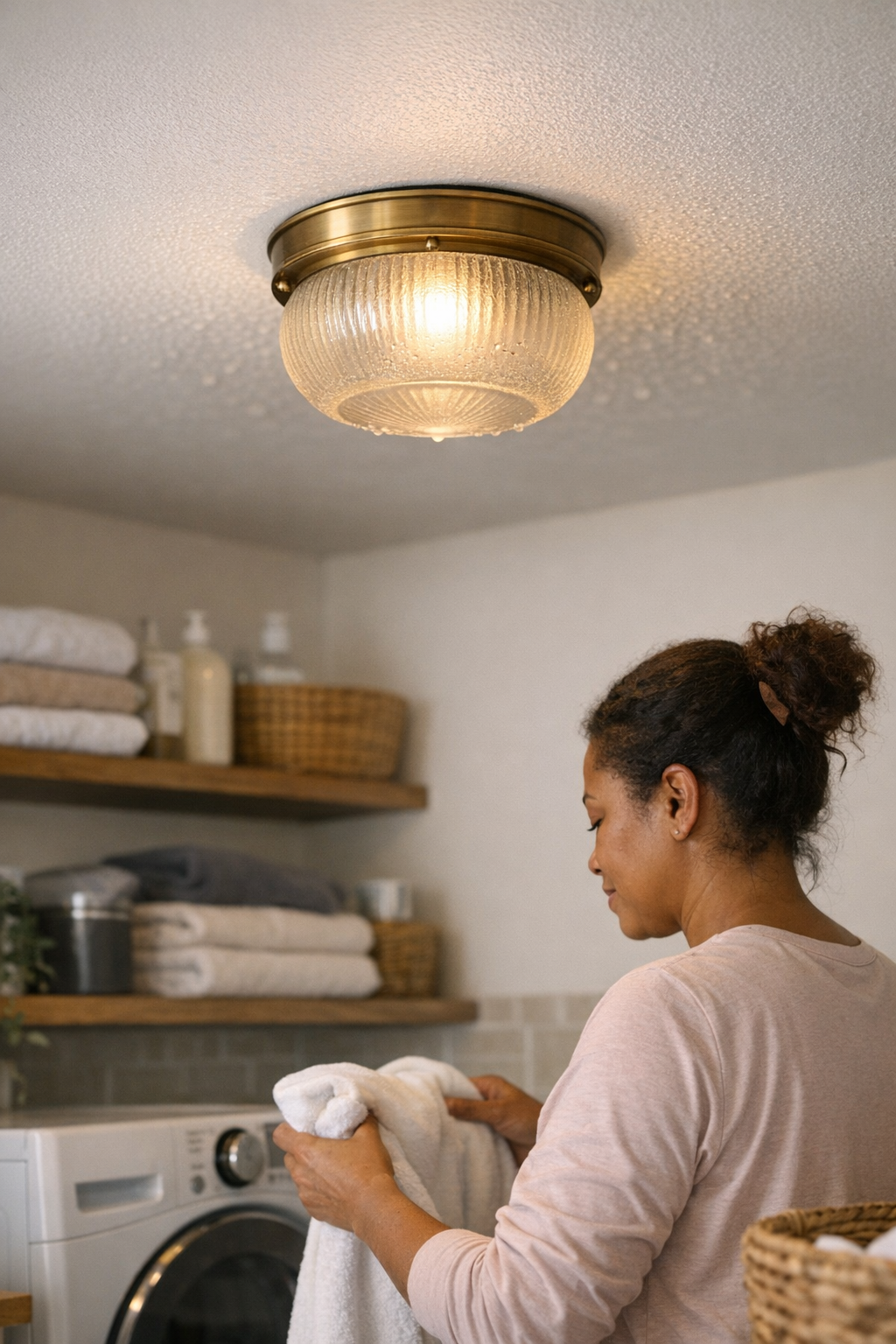
    Or step into a tight laundry room: the overhead lens is no longer clear, and that subtle yellow edge near the wall doesn’t wash off. Shadows stretch across the washer, and checking for stains means shifting the basket, ducking for a better angle, or dragging in a backup lamp from another room. Even the hallway: the sealed light looks fine when you flip the switch, but night after night, one side of the corridor fades too soon, the far corner always just a little murky thanks to the buildup of dust and heat sealed behind the lens.

    How Quiet Problems Build Up and Spread

    Bad lighting rarely fails with a bang. Instead, discomfort crawls in slowly:

    • Lens fog that returns the next day, no matter how recently you wiped it
    • Yellow streaks and haze growing stubborn under repeated cleaning
    • Shifting shadows at the mirror, the counter, or the stair turn—springing up just when routines are tightest
    • Glare growing harsher the more you need soft, even spread
    • Unplanned bulb or LED changes—months ahead of schedule because heat keeps cycling up in a sealed shell

    This isn’t just about how the fixture looks. It’s about losing confidence in movement: second-guessing your step on stairs, not trusting what you see at the mirror, and wasting time fighting shadows that weren’t supposed to exist. Each little workaround—an extra wipe, a backup flashlight—is another sign the setup is working against you.

    Why Ventilation Changes the Game

    Ventilated fixtures rewrite the story invisibly. By letting heat and moisture escape, they keep the lens clear, color true, and shadows consistent. The contrast becomes obvious once routines are in motion: after back-to-back showers, after endless laundry cycles, after a week of dark mornings and quick turns along the hallway. You don’t need to clean as often, and the light you get actually stays usable—no surprise haze, no creeping dimness by the end of the month.

    This stands out fastest in:

    • Bathroom mirror areas: Where you quickly see what’s missing when light blurs on one side of your face or glare makes you hunt for clarity.
    • Stair landings and tight corridors: Where you feel the difference at night as clear sightlines let you move without the hesitation that comes from dim, lopsided light.
    • Laundry and utility corners: Where clean spread means no more squinting into baskets or checking the same counter twice for messes you missed in shadow.

    When Small Design Choices Add Up

    Most people get used to scrubbing enclosed fixtures until the repeated hassle starts to feel normal. But once you swap in a vented, damp-rated model, the frame shifts. One LightHelper user cut lens cleanings by more than half after updating a hallway fixture—and the nagging puddle of shadow that lived on the stair bottom finally vanished. In the laundry nook, treating the “fog cycle” wasn’t a six-step trick; it was a design fix. Back-to-back laundry loads didn’t add haze, stretch shadows, or force extra checks—there was simply more working light, less fumbling around, and noticeably fewer mistakes left behind.

    Spotting the Signs Before Problems Grow

    If your lens clouds up after every shower, starts yellowing early, or leaves your main working zones always half-lit, it’s a clue: the fixture is trapping more heat and moisture than it can handle. With sealed housings, even the newest LEDs aren’t safe. They lose their sharp edge, degrade faster, and leave you chasing a brightness that never seems to last beyond the first few months.

    LEDs are tough, but not invincible: In a steamy, closed fixture, even premium bulbs wear out early, and the promise of “maintenance-free” lighting turns hollow—no one brags about a new install that already feels like a compromise.

    One Smart Fix: Rethinking Where “Clean” Lighting Comes From

    The surface of a sealed fixture might look spotless, but the real question is what happens underneath after weeks of real use. In spaces where water, steam, or heat shift daily—above bathroom sinks, along hallway turns, inside laundry corners—a bit of fixture ventilation isn’t a trivial upgrade. It’s the separation between a room that only looks illuminated and a routine that actually works: clear, balanced, and ready every time. Vented and damp-rated fixtures don’t just last longer; they keep your sightlines sharp, your cleaning list shorter, and your small daily movements—whether shaking out a towel, stepping off a stair, or checking for stains—friction-free.

    http://www.lighthelper.myshopify.com

  • Why Small Yard Storage Fails to Stay Neat After Cleaning

    Here’s the honest pattern of every small yard: You empty bins, stack gear, claim victory on a Saturday, and the place looks like it might finally stay organized. But by Wednesday, reality returns—there’s a line of boots in the walk path, seat cushions teetering on the wrong bin, and you’re weaving around a tangle of tools near the side gate. The frustration isn’t from laziness or too much stuff. It’s from a storage setup designed for looks, not for the fast, unpredictable rhythm of real outdoor use.

    When “Organized” Is Only Temporary

    The first hour after a cleanup feels like promise. Bins line the fence, a deck box hides under the eaves, and you finally rescued ground space from sprawl. But usable order doesn’t last. It takes two rushed mornings, and suddenly the hose nozzle goes missing, garden gloves land wherever there’s a gap, and by the weekend, the supposedly organized system is crowded with overflow. The weak link? Storage that leaves every return up to guesswork—a glove here, a boot there, whatever fits wherever it’s open.

    The bottleneck is always the same: Open bins and plain shelves may look sorted, but without roles or boundaries, every item has to negotiate for a spot. Put away the trimmer and it ends up blocking the folding chairs. Someone else piles sports gear on top because it was handy. Now, a simple reset turns into shuffling bins, dodging stray shovels, and stepping over yet another “for now” heap taking over a corner.

    The Subtle Ways Storage Designs Fail

    Yard setups that just line up boxes along a fence are neutral at best, but neutrality doesn’t survive family use. As soon as there’s more than one person, systems built on “put it wherever” unravel fast. A rainy afternoon, a skip to dodge puddles, or a last-minute cleanup before guests—and things now have new, random homes. Before long, the main route clogs: first with a trimmer left across the path, then boots detoured by a stray bin, then an entire corner filling with overflow that nobody wants to touch.

    Everyday Movement Breaks the Illusion

    Think about the pinch points—side yards barely wider than a wheelbarrow; the patch next to the fence where everyone dumps shoes, balls, or gloves without thinking. Most setups don’t fail with a bang. They slip, quietly, as putting away something “just for now” becomes the new standard. One misplaced shovel blocks the whole return route for everything else. And that pile that was supposed to be temporary? It’s still there next month, blending into the landscape.

    The best signal something’s wrong: If it takes moving three things to access a fourth, the setup is failing your routine. Rearranging bins just to reach the hose, or constantly pawing through another family’s toys to put your own away, means the system doesn’t match the way anyone actually uses the space—and every reset feels slower than the last.

    Why Floor Storage Turns Into Obstacle Courses

    Floor bins and deck boxes seem like a solution—stackable, labeled, squared up—until real life returns. As soon as kids cut through for their soccer ball while you’re watering plants, every system built on neat horizontal brawn collapses. Gear lands wherever there’s an empty inch. Leftover dinner outside? By morning, gloves are jammed under the table, watering cans block the footpath, and the “overflow” bin is the only one anyone uses—because it’s already half open and closest to the door.

    Wall Storage: Looks Clean, Quickly Clutters

    Hooks and racks on the wall have the same fate: perfect after a reset, but by midweek, hooks fill up with whatever’s longest or lightest, and the floor below—supposedly rescued space—collects everything heavy or awkward. By Thursday, even the wall becomes a guessing game. “Which hook does the trimmer go on?” “Why are there four pairs of boots wedged behind the ladder?” The system’s inflexibility sets the stage for chaos, not order.

    Snags in Daily Yard Use—Where Setups Crack

    Returning one, blocking another: Grab the rake, drop it near the storage bin—and now the way is blocked for putting away chairs. The “temporary” fix? Stack the chairs on the nearest flat bit, where they’ll stay until someone needs them—and then get dragged along to a different spot.

    Overflow magnets: No matter how much you spread bins out, one will always become the dumping ground. Boots, then balls, then garden scraps until it’s jammed with a medley nobody wants to sort out. The rest of the system looks untouched, falling out of use.

    Shuffle fatigue: If simple returns turn into a game of musical bins, with pots nudged, hoses shifted, and chairs restacked just to clear a landing area, you end up spending more time fixing the setup than using the yard. If ten minutes vanishes just putting away three things, the routine is broken by bad design, not busyness or clutter.

    What Actually Survives Daily Use: Vertical, Modular Zones

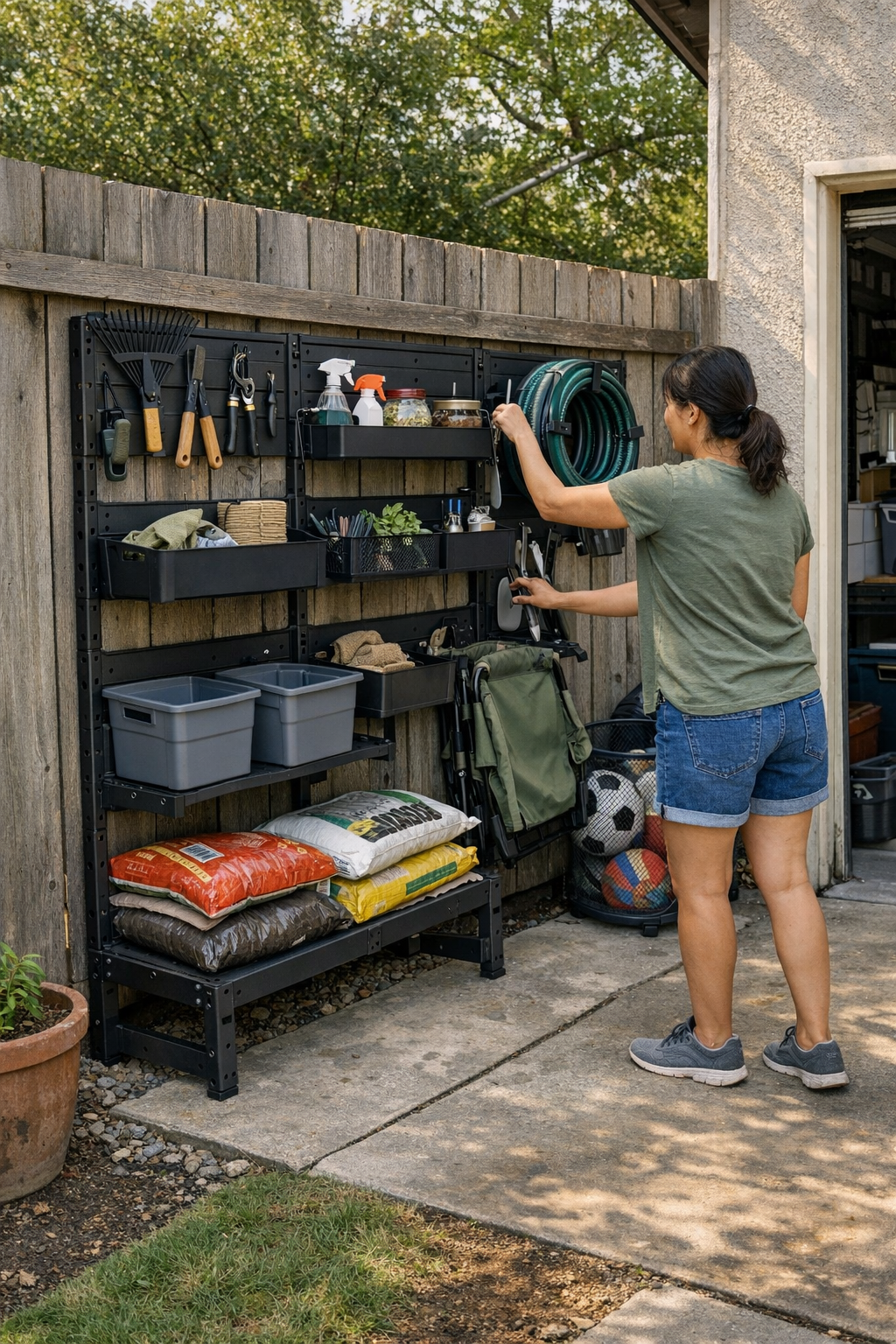
    Eventually, the frustration hits a tipping point. What stands up to repeated use isn’t more containers on the ground, but fewer, tighter zones off the floor—visually divided, close at hand, and arranged for movement, not just for looks. Picture a four-foot wall rack split into three zones: balls, tools, fold-ups. If yard tools overflow or sports gear starts spreading, it immediately shows—the wall can’t hide pile-ups, and ground space stays clear. The next person instantly knows what needs fixing, not shuffling.

    Suddenly, paths aren’t blocked, and routines are easier to stick to—even after a weekend of guests or a week of rain that threw everyone’s habits off. The main run to the gate is open; the dead corner where overflow used to collect is visible again. Resets stop being full rescues—they’re five-minute checks, not an hour of moving everything just to find one missing glove.

    Everyday Adjustments That Stick

    Keep it at eye level. Wall zones that are easy to see and reach—rather than tucked by your ankles or above head height—speed up returns and cut down on lost items. Lean into vertical stacking whenever possible, and don’t let storage sprawl sideways to choke your walking space. Mark sections with color, tape, or a label—small signals help everyone remember what goes where, and confusion drops fast as a result.

    The True Test: The Five-Day Reset

    The best yard storage isn’t measured after a spring weekend’s overhaul. The real test comes after five days of mixed, messy, real life—gardening, soccer, quick dinners, two or three people in and out at random times. If you can still walk through, spot which zones belong to which items, and put things away without negotiating with bins or cutting a new path through chaos, the setup is working. If not, the problem isn’t your effort—it’s the structure itself.

    The setups that last are those that match actual movement and repeated use. Floor storage and wall hooks that aren’t truly zoned will always get overtaken by real routines. But modular, vertical storage—anchored in how your yard really works—protects footpaths, makes mistakes visible, and removes the friction that quietly rebuilds the mess week after week. It’s not about the prettiest box. It’s about boundaries built for lived-in, day-to-day outdoor life.

    For outdoor storage systems that hold up to real use in busy, compact spaces, explore TidyYard.

  • Why Wide Cable Bends Keep Your Desk Setup Smooth and Efficient

    A cable-free desktop looks flawless at first glance: clear surfaces, nothing to trip over, and the calm satisfaction of a desk that appears “finished.” But if you’ve tried working on one, you know how quickly the trade-offs show. Each cable forced flush along a cable tray or stuffed into a tight channel starts to snag the minute you move a monitor, reposition a charger, or need that one HDMI cord for a quick call. What starts as organized turns awkward—every attempt to swap a keyboard or grab a device hits hidden resistance. The setup that looked streamlined now frustrates at just the wrong moments, grinding down your rhythm every time you need flexibility.

    Cable friction: the hidden cost behind a tidy look

    The frustration rarely shows up on day one. Where it hits is day three—when the routine kicks in. You pull your laptop from its dock for a client meeting, or shift your monitor’s angle to fit a sketchpad beside the keyboard, only to fight cables yanked tight around desk legs or wedged into storage trays. Bending and untangling connectors isn’t just a visual annoyance: it’s lost time and an interruption to flow, whether you’re mid-call or trying to clear space to jot quick notes. Tight bundles promise order, but every cable swap becomes a clumsy dance under the desktop—raising questions about whether the desk is working for you, or the other way around.

    If cables won’t flex and follow your movements, every small adjustment costs you more energy than you notice until it’s too late. The invisible drag—sticky USB cables that catch on tray edges, resistance as you try to undock, tiny delays setting up for the next task—adds up over weeks. Minor friction slowly wears down patience and puts extra strain on connectors meant to be plugged and unplugged without a thought.

    Why cable arcs succeed where tight paths fail

    Crowding every cable flat and pin-straight looks clean for photos, but repeated use tells another story. Workflows rarely stay static: speakers and headsets swap, phones charge, displays angle back and forth. Tight cable paths become chokepoints, jamming up when you reach for something new or try to plug in a client’s drive. Wide arcs let cables move with your hands, reducing tension points. Instead of treating cable management as background décor, the real test is whether it lets you rebound quickly: removable storage, shifting between mouse and tablet, undocking for a meeting—each change finds its groove when cables are allowed gentle, flexible curves instead of forced precision.

    Effective cable management flexes with your routine instead of trapping it. Even a few centimeters of extra curve between anchor points can mean the difference between fluid motion and a desk that resists you. The more motion your devices require, the more a cable’s arc wins over a cable’s straight line. Reset moments become faster, and the “perfect” surface actually supports the grind, not just the appearance.

    Real scenes: a workstation that adapts, not just hides

    That midday shuffle: cables get in the way

    The test isn’t how a desk looks right after setup, but what happens at 2 p.m. when normal pace resumes. You finish a call and switch headsets for the speaker, or need to charge a second device. One cable stretches tight, another refuses to budge without crawling under the desk, and suddenly the organizer tray that looked so tidy is a barrier. By late afternoon, you start skipping resets and avoiding equipment changes because every adjustment takes longer than it should. The desk’s order remains, but momentum dips and your reach across the desktop is less fluid—an “organized” problem that only grows with each cycle.

    Subtle signs the cable management isn’t working

    Real trouble shows up in mundane ways: a phone cable that doesn’t quite reach when you need it, a monitor that strains its connection each time you tilt it for note-taking, desk depth disappearing as under-desk trays bump your knees during a stretch, or that persistent few seconds lost feeding a USB cable through a jammed slot. The signs are small but cumulative—connectors loosening, surfaces kept neat at the cost of flexibility. Each forced reset breaks flow before you even notice you’re adapting your own posture or work habits just to match the desk’s constraints.

    How I reset for smoother work cycles

    Moving from tension to bend made the real difference. Instead of jamming cables flat to every angle, I left arcs—enough curve between anchors for each wire to flex naturally, roughly the space of three fingers. The effect isn’t messy; under-desk trays and surface organizers still keep things corralled, but the cables now move as I do. Docking the laptop is no longer a series of tiny struggles. Charging cables reach the notebook without feeling like they’re about to snap. The desk surface still reads as minimal, but the work behind it—moving gear, resetting after a meeting, dragging an external hard drive across—actually feels frictionless, not forced.

    Each adjustment stopped being a mini project. Instead of inching a charger to the desk’s edge or fighting to clear a hub out of a trap of wires, gear shifted as needed. No hidden cable strain, no slow fidgeting under the desk. The system now works around the pace of daily resets, not against them.

    Quick FAQ: common cable management issues in real use

    How do I prevent cables from getting tangled under the desk?

    Give every cable enough slack—spread lines in gentle curves, and avoid cramming more than needed into trays. Flexible routing prevents snags and lets you swap or move devices without a wrestling match each time. Tension-free arc equals tangle-free reset.

    Are cable trays or boxes better when I swap devices a lot?

    Open trays usually win for desks that shift often. They make it easy to adjust or remove cables one at a time without dragging the whole bundle out. Boxes hide mess but force cables into rigid patterns—great for untouched setups, rarely ideal for workspaces in constant motion or shared teams.

    What signals that my cable routing is starting to cause problems?

    If plugging or unplugging gets slower, cables start to fray at connector ends, or you regularly dodge under-desk snags or blocked movement, your setup is too tight. Cables should glide, not resist, and you should never be forced to change your workflow just to appease your storage choices.

    It’s not just about looking organized—it’s about staying usable

    Surface order only matters if the work itself stays smooth. If daily tasks include frequent device swaps, pulling notes to the front, or shifting monitors for a late session, then rigid cable paths undercut the whole reason for organization. Choose flexible arcs and anchor points over purely hidden bundles—use under-desk storage only if it leaves clearance for your knees and reach, and keep cable runs wide enough to handle motion, not just appearance. A workstation that stays functional beats one that just appears neat—especially after the hundredth reset or last-minute plug-in of the week.

    Explore the full WorkBasic collection

  • Why Your Garage Storage Fails After Repeated Use and How to Fix It

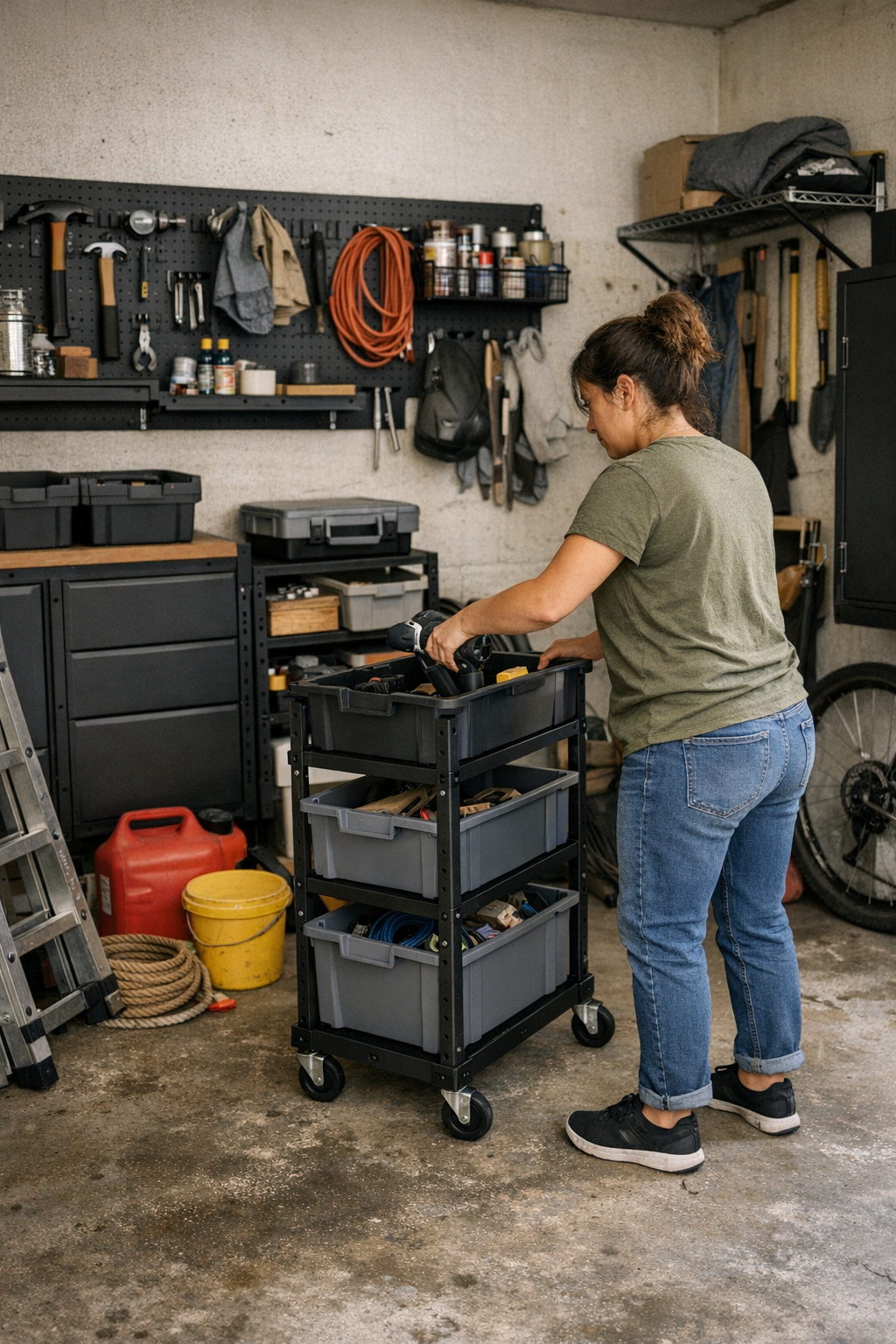
    Tidy at a glance tells you nothing about performance in real life. Garages and workshops fill up with wall-mounted kits, rolling carts, and shelf grids that look sharp after setup. Everything appears under control: hooks aligned, bins stacked, paths clear. But walk in after an actual project, when tools have been dumped in a hurry, bins are halfway out, and you’re jogging between tasks—and that sleek first impression shatters. Order that works in theory can dissolve the moment you’re working against the clock. Does your setup help you bounce back to ready, or does getting organized become another mini-job every time you finish?

    Where Neatness Fails: The Repeated-Use Backslide

    The early satisfaction—rows lined up and tools “put away”—lasts only until you go through a few tough days of real use. Suddenly, you’re moving a bucket just to wedge the drill back where it “belongs.” Each handled tool seems to require a two-step process: one back, another jostled, a third about to topple. What looks like overflow is really evidence of broken flow. That bin left in the walkway? It started as a quick fix when you couldn’t find space mid-task and now lingers, an obstacle for every return trip.

    Overflow happens in predictable hot spots. Park a ladder a few inches too close to a wall rack, and suddenly your sports gear zone is inaccessible. A bike temporarily leaning by the tool shelf morphs into a permanent barrier. The aisle you swore would stay open slowly narrows as “just for now” items migrate. Every tiny compromise—an extension cord dropped, a tote slid halfway, a toolbox at the edge—builds up to real blockages. The zones you planned lose their edges, and you find yourself constantly sidestepping, reaching awkwardly, or just leaving things out.

    Everyday Friction: How Good Layouts Slip

    Blocked In—When Footpaths Become Storage

    Picture coming in with arms full: you want to slide the rolling cart back to its spot or stash a bag by the workbench. But the shelf zone is flush to the wall and just snug enough that any extra item forces you to shimmy things around. You nudge the cart, but it brushes a ladder, which bumps a bin—movement becomes a chain reaction. After a few return trips, the cart ends up abandoned wherever the path is clearest, never quite making it “home.” Freestanding chests and bins become semi-permanent headaches, nagging you every time you try to clear even simple access.

    Serial Shuffle—Losing Minutes on Every Reset

    After a long session, you’re ready to reclaim space and shut the garage. But the wall zone needs to be rearranged before handled tools will fit, and the bucket that holds rags must move just to put the drill away. Repetition sets in: shift, return, reshuffle, then repeat. Reset time balloons from “two minutes” to five, ten, sometimes longer if you’re tired or racing daylight. Soon enough, the temptation is strong to just pile things up somewhere and promise yourself you’ll fix it next time.

    Blurring the Lines—Zones Lose Their Meaning

    The lines you drew—garden on the left, project tools up front, sporting gear down back—fade each week. Repeated use pushes overflow into the nearest empty zone. What began as “organized” soon lets handled tools pile in the paint bucket, cords drape from hooks meant for rakes, and heavy hedge trimmers jut into the walking route. The original organization is still there, technically, but the space no longer works smoothly—everything’s present, nothing’s easy.

    Reset by Design: Small Tweaks, Noticeable Results

    Return flow beats shelf count every time. Improvement rarely boils down to just adding hooks or shoving in a bigger rack. Real change begins with making it easier to put things back—especially when you’re tired, distracted, or in a hurry. For most, that means lowering your most-used options to within arm’s reach (no need to tiptoe or crouch), and ensuring your clean-up path isn’t a tight squeeze between obstacles. If the tools you grab daily are positioned for a quick drop-off on the way out, friction fades; if not, small annoyances pile up fast.

    Treat rarely-used gear like seasonal storage and get it up and out of your main workflow. Meanwhile, claim “prime” space near entry points and major work zones for handled items and daily-use gear. One of the simplest, most underrated fixes: keep a mobile cart or bin as a reset staging zone. During a project, it collects everything in motion—wrenches, cords, clamps—without forcing you to stop and return each piece as you work. At the end, a single trip with everything in hand keeps you from scattershot clutter and blocked footpaths. Less reshuffling. Fewer missed returns. More predictably clear zones.

    Signal Flares: Know When Your System’s Giving Way

    Watch for slow-creep mess. Do half a dozen handled tools gather in corners or on shelves “for now”? Do path edges fill with toted-in gear by the end of every busy week? These are not random accidents—they’re signs that your layout isn’t matching how you move and work. Pay close attention to spots that collect the most overflow or spark the most annoyance. The “just slide it over” problem reveals exactly where a shelf height, wall hook, or reset path needs an upgrade—or where a mobile staging solution could save daily steps.

    More shelves don’t help if resets keep getting slower. Whenever added storage doesn’t ease the return flow—especially for fast-access items—clutter just redistributes itself. The mark of a better system is not a higher storage count, but fewer pauses, less backtracking, and open movement even when the space feels crowded. The faster you reset without shuffling, the longer your setup holds out against daily chaos.

    Real Payoff: Resets That Don’t Wear You Down

    When routines get busy, a well-designed setup makes itself invisible: no blocked wall access, no squeezed-in carts, no hesitation about where things go. Handled tools land in their spots almost by habit—no extra thought, no urge to pile them “out of the way.” When you rarely have to reshuffle, reach around a cabinet edge, or drag bins just to clear a path, you know the layout is pulling its weight. Ignore looks; the real measure is smooth, repeatable motion, and fast, low-effort resets every time.

    Design around your real routine, not just storage targets. When your system flows with your habits—easy returns, open paths, visible zones—it survives seasons and stress. When it doesn’t, no amount of clean lines or matching bins can save you from blocked movement, pileups, and lost time. Build for use, not just for display, and your space will stay useful—and ready—week after week.

    Find more practical storage ideas and tools for better resets at StackNest.