Author: jaesoon_admin

  • Flexible Plug-In Lighting Solutions for Ever-Changing Workspaces

    A lighting setup that looks flawless out of the box rarely survives the first few rounds of actual use. You clear your workspace, run cables out of sight, tuck switches out of reach—only to find yourself dragging cords back across the surface the moment your routine shifts. Move the monitor, and suddenly the wall lamp is throwing glare directly in your eyes. Bring in a new device, and sockets that seemed plentiful are buried behind a tangle. The surface stays camera-ready, but friction creeps in: exposed cables snake over your desk, switches get hidden in dead zones, and your “finished” setup demands awkward workarounds week after week. These are not just aesthetic blemishes—they take time, break focus, and make every minor change feel like a full reset.

    The Trouble with Fixed Lights: Locked-In Looks, Stuck Routines

    Hardwired lights promise a clean, stable look—cords disappear, brackets anchor lamps exactly where they’re meant to go. On day one, it feels solved. That illusion rarely lasts: drag a desk to follow a shift in daylight, or swap to a wider monitor, and now the sconce that “finished” the room throws either too much brightness at your face or barely reaches the working edge. Cables meant to be gone for good resurface when you need to plug in equipment in a new spot. Each small change makes the original install feel less clever.

    Fixed mounts and cable paths lock your lighting into a single function—and any deviation leaves you choosing between dealing with glare, working in half-light, or stretching for a power source behind furniture. Even cleaning the area becomes a negotiation as cords and switches settle into the least accessible zones. In practice, these installations look resolved but rarely adapt cleanly when the ground rules shift.

    Plug-In Accessories: Flexible, But Visibly Imperfect

    In rooms where the setup is never final—shared desks, project tables, hobby corners—a plug-in lamp or movable task light cuts through the strain. Suddenly you can shift the lamp, chase away a shadow, or loop power to a new spot with zero tools and no call to an installer. Rearranging to sidestep glare or adjust for a second chair? Just pivot the light or slide a power strip along the edge.

    But flexibility always trades neatness for adaptability. Extra cords show up at floor level or trace the edges of your work area. A line that was invisible last week becomes a distraction after a quick rearrangement—often winding up under your rolling chair or cutting across the only clear spot for your feet. Over time, instead of one clean cable solution, the room inherits a visible web—and the setup never quite returns to the clean slate of install day. The compromise is persistent but manageable, especially compared to wrestling with a fixed setup every time your use changes.

    How Setup Choices Affect Real-Life Use

    This difference gets sharp during repeated shifts. Think of a table that flips from solo focus in the morning to group project in the afternoon. A hardwired under-shelf light might line up perfectly once but fall short when half the surface gets repositioned or blocked. Plug-in lamps and modular power strips make reconfiguring possible in seconds, but their cords still want to slip back into view or create new points of visual clutter unless you manage each stretch and anchor point.

    There’s no total victory: the “clean” approach resists everyday workarounds, and the “flexible” approach invites small ongoing trade-offs. But in a room where function shifts regularly, those trade-offs usually end up feeling lighter and less punishing than clinging to a single, fixed layout.

    Real-World Scene: Managing Desk Chaos After Rearrangement

    After a week of shuffling furniture and updating equipment, a previously neat shared desk is split by draped lamp cords—each plotting its own unpredictable trail to the nearest outlet. Stack a few chargers and suddenly switches vanish beneath piles of notebooks, while every chair movement risks yanking a plug from the wall.

    The fix isn’t “perfect,” but mounting a plug-in strip beneath the table edge reroutes all the main cables out of direct sight. Plug-ins now drop straight down, cleanups are just moving devices—not untangling spaghetti. The desk may never look invisible—but it regains actual usefulness between shifts, and tangled nests gradually disappear from the main working zone. Visual compromise is minimal compared to the reduction in daily hassle.

    Repeated Issues That Keep Showing Up

    • Shadowed Corners: Desk lights fixed at install don’t reach when your routine or table position shifts.
    • Visible Cable Clutter: Even setups with hidden lines develop knots and loops once devices are plugged in across surfaces.
    • Inflexible Switches: Reaching a switch behind a monitor or stack of files adds friction every single day.
    • Unintentional Tripping Hazards: Quick moves leave cords straying into footpaths, inviting snags or stumbles.
    • Looks Good, Feels Awkward: The room’s visual finish often comes at the price of everyday adjustability and comfort, especially as needs shift.

    Small Adjustments That Actually Help

    A few targeted changes cut straight to the heart of living with lighting, without chasing spotless minimalism:

    • Mount a power strip beneath a desk edge or behind a shelf—this keeps charging and task lights easy to reach while clearing space above.
    • Use cord clips or guides to keep lines tidy along walls or surfaces, minimizing clutter without creating permanent obstacles.
    • Choose lamps and brackets that allow movement—for any area likely to get rearranged, adjustability matters more than chasing a flawless first impression.

    Choosing Between Neat Looks and Daily Usability

    Whether you’re working in a shared office, staging guest setups, or flipping the room role every week, the pain points of a rigid, “polished” setup appear fast: shadowed spots, inaccessible switches, or a surface that blocks more than it brightens. Plug-in options and adjustables may never get rid of every cable in sight, but they turn friction into quick fixes—making each change easier, instead of locking in barriers you’re stuck with. The priority isn’t making cables vanish, but making everyday use actually flow. Sometimes that means letting a single visible cord trade off for a workspace that flexes with you, not against you.

    Find flexible lighting and support solutions for real work areas at LightSupport.

  • Optimizing Pet Travel Bags for Smooth and Efficient Loop Walks

    The difference between looking organized and traveling smoothly with your pet is rarely obvious until the trip begins. At home, setting up a pet carrier or travel bag feels under control—bowls neatly stacked, wipes zipped away, leash and treats in clear view. But the first actual stop exposes what those “ready” setups hide: reaching for a cleanup bag blocks the leash path, a treat pouch vanishes under the wipes, or the side pocket is now backwards against your seat. Each pause or reroute reveals friction built into the system: what seemed perfectly placed loses its logic once you’re moving, stopping, and handling leash tension alongside a restless dog. That’s where the PawGoTravel world starts—where real pet travel isn’t just about tidy layouts, but repeatable access, quick recovery, and gear that keeps up with real, repeated stops.

    What Looks Prepared Isn’t Always Ready for Repeated Use

    It’s a common trap: you pack up for a short walk or drive, feeling sorted, only to end up rummaging frantically at the second curb. Those pauses—at the car door, crossing the street, waiting for the elevator—are when the hidden flaws show. A waste bag that was visible in the living room now sits buried beneath snacks. A tissue pack slides over your wipes every time you shift the carrier. The patterns repeat not because you forgot where things go, but because “logical” at home collapses under live travel demands. The need to reach, reset, and juggle around shifting layers keeps breaking your flow far more than any forgotten item.

    The split between stationary order and moving friction comes fast. By the third stop, “organized” feels tangled. Frustration isn’t about memory or planning—it’s about whether you can dig out core items on the fly, with one hand, while keeping your pet from darting away. The micro-failures build: sliding wipes, a bowl that drops out, a cleanup bag just out of reach. The hassle isn’t just a one-off; each pause means new reshuffling, and the cost of repeated corrections only piles up. A setup that seemed solid turns into a subtle drag, making each outing a slow grind instead of a steady routine.

    How Small Organizational Gaps Become Daily Friction

    Most breakdowns aren’t dramatic. It’s the quiet blockages—item overlap, stacked pockets, or “clever” double-duty sections. At home, layering your treat pouch or stacking wipes over your leash clip feels efficient. Once you’re in motion, that stacking becomes a time sink. A treat bag slips under a shifting bowl, leash handles wedge behind snacks, and cleanup pouches require two-handed digging. Suddenly, pausing at the curb or seat-side means untangling rather than reaching. Each minor slow-down gets replayed at the next stop if structure hasn’t kept roles separated.

    This isn’t about forgetting—it’s about predictable trip interruptions. Every restart after a short pause brings a new reshuffle: wipes hiding the leash path, a comfort blanket blocking the main zipper, items trading places after the bag tilts at a crosswalk. Reach delays and repeated fixing become part of the routine. The result? Time wasted, a tenser dog, and growing reluctance to make quick stops—even when you need to.

    The Hidden Cost of “Orderly” Packing

    What looks perfect in a lineup—leash clipped, bowls nested, waste pouches set aside—collapses in live use. A pet’s pull twists the carrier; one bowl knocks another item loose; wipes end up jammed somewhere new. By the second or third stop, you’re no longer just accessing, you’re re-packing. Instead of single-move simplicity, travel becomes a cycle: hunt, rearrange, hope nothing else shifted. Each minor tangle costs seconds, but the frustration lasts much longer. “Order” for photos rarely survives the seat-side or city-street scramble.

    Scenes from a Typical Outing: Where the Setup Breaks Down

    1. The Curbside Hunt

    You pause at a crosswalk. The leash tugs, the travel bag slips low, and wipes or bags are layered under another pouch. You try for a cleanup bag, but end up with tissues or sliding bowls. Your dog’s patience wears thin while you fumble. Even a one-minute delay feels endless when you’re fighting your gear, not just the sidewalk.

    2. The Seat-Side Shuffle

    Back at the car, you reach for a quick wipe or a snack hand-off. The side pocket you trusted for wipes has shifted under the seatbelt; treats block your main access zip. Every try to grab something means bending, retucking, or rearranging with a hand already half-full. You start skipping quick resets just to avoid the hassle—leaving comfort and cleanup behind next time.

    3. The Blocked Restart

    Restarting after any pause, you’re counting on easy access, but an overlapping pouch jams the leash clip. A comfort item now obstructs the zipper. These aren’t design flaws in theory—they’re repeated-use failures that show up block by block. Every stop means another round of the same interrupted movement, a minor-but-persistent grind you can’t just organize away once at home.

    What Actually Fixes the Real-Use Flow?

    Better pet travel isn’t about re-packing more carefully; it’s about redesigning for motion. The fixes are physical, not theoretical: an outer edge pocket for wipes that you can hit in a hurry, a bowl attached to the side not mixed with interior gear, pouches set apart from one another, not pressed into one shared compartment. Real improvement isn’t layering smarter—it’s separating completely so access points never block each other. Motion-proof bags let:

    • Wipes rest at the edge, never under a bowl.
    • Each cleanup bag has its own quick zip, never jammed together.
    • Bowls ride away from leash paths—always hanging, never drifting below.

    When compartment roles stay separate, friction disappears: one-hand reach at the seat, instant access at the curb, zero need to reshuffle. The “mini-hunt” becomes a non-issue and even surprise stops lose their drag. Instead of shuffling, you’re moving.

    How to Spot a Pet-Travel Bag Built for Repeated Use

    Real-use bags signal their worth by compartmentalization, not just looks. Test gear by simulating fast stops—can you access core items without moving others? Does the bag keep wipes, treats, and cleanup separate and accessible? Overlapping or stack-heavy designs always slow down a travel routine that pauses frequently. Run a personal trial: pack as usual, then do three mock stop-and-go drills. If it gets harder—if you’re reaching deeper as you go—structure, not style, is the weak point. Only bags built for physical separation, fast reach, and repeat recovery hold up outside the living room.

    Packing logic doesn’t always match live motion. The right structure—side pouches, top zips, external hooks—wins not by looking neatly packed, but by surviving real stops, starts, and re-entries with the dog pulling, gear shifting, and cleanup always one hand away.

    The Practical Take: Less Mess, Fewer Interruptions, and a Smoother Restart

    Pet-travel gear should crush the small snags, not just tidy up your look. Every problem solved by instant access saves a fumbled curb, a tense pet, or an unnecessary delay. A structural fix—end-pocket for wipes, hook-hung bowl, slot that physically separates items—translates into fewer restarts, less time fixing, and more reliable movement. Noticing where your routine still drags—what you have to dig for, what requires untangling—signals exactly where better structure matters. You don’t have to tolerate gear that slips from “organized” to “awkward” just because it looked good at first. Move toward setups that work with, not against, your real travel flow—because repeating the same annoyance shouldn’t be the price of “prepared.”

    Find travel bags and organizers designed for real-use access—not just first-glance order—at PawGoTravel.

  • How Painter’s Tape Provides Steady Support for Solo Lighting Installations

    Ever step into what’s supposed to be a well-lit hallway, only to notice the ceiling light has slowly sagged or thrown a shadow right where you need to see? Most people blame bad luck or cheap fixtures, but the root cause usually starts with installation—one person, two hands, gravity working against you, and a fixture that barely sits right from day one. That crooked sconce above the mirror, or the flush mount that gaps near the ceiling, doesn’t happen by itself. It’s the result of an awkward balancing act, holding wires and mounting plates overhead while trying to tighten screws—always wishing for a third hand. The difference between reliable lighting and that nagging tilt often comes down to what happens in those five tense minutes on the ladder: slip once, and you’ll see it every evening as you flick the switch or brush your teeth in uneven shadow.

    When Bright Isn’t Clear—And the Space Still Fights You

    Most indoor lighting isn’t about new fixtures or matching finishes—it’s about hitting the one spot that keeps your routine moving. But flaws creep in quickly: a stairwell light that leaves dark edges on every turn, a mirror fixture that forces you to lean in or shuffle left just to get a clear reflection, a hallway that looks bright but never picks up the corners. These are the routine moments where lighting fails you, not with dramatic outages, but with quiet, repeated friction. Each pass through the hallway, each time your arm stretches out for the switch, those small misalignments cost you again: shadows on the counter, a glare line right across your eyes, a landing that feels less safe because coverage slipped by a few degrees. Rarely is it the style that fails; it’s a slow drift or off-angle that started the first day you installed alone.

    Mounting Alone: Why That Fixture Never Sits Right

    Hang a ceiling light or wall sconce without help, and you get a front-row seat to why so many fixtures end up shifted, sagged, or crooked. One hand holds weight overhead, the other fumbles with wires or screws. You wedge the fixture with your elbow, prop it with your shoulder, or risk letting go entirely for a crucial screw. Tall ceiling? Forget even pressure. Tight spot above a mirror or in the stair turn? Every adjustment pushes something out of line. Even with two people, unless one acts solely as a steadying hand, the fixture usually shifts at the least forgiving moment.

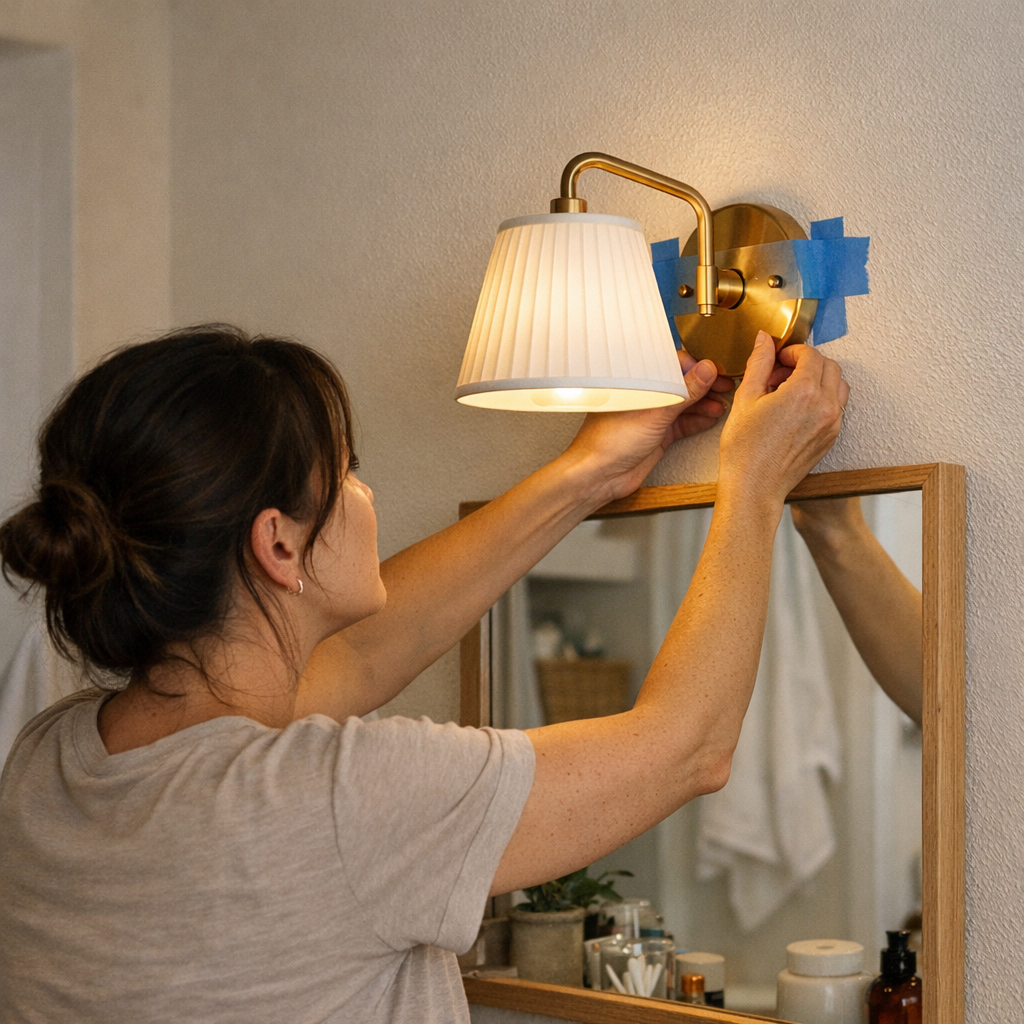
    This is where painter’s tape becomes every lighting installer’s secret weapon. Used as a quick anchor, painter’s tape lets you stick the mounting plate or fixture base at exactly the right spot while you handle wiring and hardware. It doesn’t replace the mounting bracket—it simply stops gravity and weak handholds from deciding your alignment. The tape buys you real precision, so the fixture doesn’t twist or dip with every movement or tired wrist. It’s small insurance, but the cost of skipping it isn’t obvious until you live with the results for months.

    Where Precision Can’t Be Faked

    • Above bathroom mirrors: Even a tiny tilt can double facial shadows, turning shaving or makeup into a squinting, awkward dance as you chase clean light.
    • Along stairways: An off-center sconce or semi-flush turns steps into alternating bright glare and uncertain shadow, especially when racing downstairs or carrying groceries.
    • In hallways and entry spaces: A flush mount that dips or glares never feels settled, and uneven spread will pop up every time you fish for keys or navigate the edge after dark.

    Painters tape—pressed straight across the fixture base before connecting wires—delivers a few decisive minutes where nothing sags, tips, or rotates out of place. This makes all the difference, not in the before-and-after photos, but in your seventh hurried passage, when you expect the light to just work—and it does.

    The Hidden Cost of “I’ll Just Hold It”

    Skip temporary support, and the penalty shows up in the most ordinary routines—not dramatic problems, but a steady drip of inconvenience:

    • Sconces sag just enough to cast odd side-shadows on your face or the cabinet, forcing constant shifting.
    • Flush-mounts never truly hug the ceiling, leaving rings of shadow that gather dust or draw the eye—reminding you where the job went slightly wrong.
    • Ceiling lights start out level, but gravity and loose torque pull them gradually into a crooked lean, so the brightness patches one end but not the other.
    • Worse, rushed wiring produces connections that flicker or drop out, all because the base moved while your hands were busy elsewhere.

    Quick Example: Hallway Test, Tape vs. Gravity

    Last time I replaced a hallway fixture, three strips of painter’s tape solved what two hands never could. One across each mounting edge, one across the front—the base sat steady while I worked. Wiring wasn’t a contortion act, and for once, the fixture finished flush to the ceiling with no need to adjust later. Even after six months, the light stays level no matter how fast the dog charges through or how many times the circuit trips. The difference isn’t just visible; it’s the absence of daily annoyance for everyone who uses that hallway.

    Why Small Deviations Create Big Hassles

    Everything starts to go off-track with just a slight misalignment. A single gap or a few degrees’ tilt means glare where you want eyedrop shadow, or blackout on a stair tread you thought was safe. People adapt—swiveling at the mirror, angling heads to avoid bright spots, slowing at the dark end of the hallway. It’s not an obvious disaster, but it turns “usable” into “workaround.” If every routine includes an unconscious pause to correct for your light’s shortcomings, the advantage of any premium fixture gets lost instantly.

    Painters tape is the small margin that lets you finish the job right—even solo. The result isn’t just good-looking on install day—it holds up through months of restless mornings, midnight stair runs, and crowded doorway crossings. Lighting that stops being a visible struggle and quietly gets out of the way, again and again.

    Painters Tape: Purpose-Built for Install, Not Just Painting

    Painters tape is designed for temporary application on trim, painted drywall, or ceilings. It sticks long enough to handle your electrical work and support the fixture, then comes away clean—no residue, no peeled paint—if you pull it promptly after mounting. For delicate finishes or specialty wallcoverings, spot-test first. For most standard surfaces, it’s exactly the frictionless support lighting needs.

    Final Word: Reliable Light Depends on Five Extra Seconds

    Forgoing that “third hand” can seem insignificant—right up to the point when you realize your new light now throws off your daily routine. Nearly invisible install shortcuts lead to lights you’ll adjust, avoid, or resent with every use. The fix takes seconds: anchor with painter’s tape, finish at your pace, pull away when steady. The next hundred crossings, steps, or quick mirror checks? They stay clean, level, and balanced—not because you got lucky, but because you wrestled gravity at the right moment.

    For solutions that make every part of your living space clearly and reliably usable—not just looking bright, but truly working right—visit LightHelper.

  • How Cable Clips Transform Your Desk Into a Distraction-Free Workspace

    Most desks start the day looking organized—devices lined up, cables measured out, surfaces clear enough to pass for “sorted.” But that surface order burns off fast. Unplug a laptop to move across the room. Swap a headset for a video call. The headset cable slides just far enough to vanish behind a monitor. The phone charger drops from desk height, brushing your thigh before hitting the floor. After only a few cycles, you’re bending down, feeling around behind the drawer, cursing a tangled mess that wasn’t visible that morning. Every hour stacks its own little interruptions—especially on desks with shallow depth, crowded between a task lamp, drawer, leg space, and a keyboard that’s never quite where you left it. “Organized” stops meaning “usable” as soon as you need to move fast from one tool to the next.

    Desk neatness vs. repeated cable drift: why “organized” isn’t enough

    Visible order can be a trap. That clean reset you do—winding cables into trays, tucking them through slots, lining up boxes—works only until the first burst of actual work. Slide your chair just a little further from the desk, reach for a notebook on the crowded side, or plug in a new accessory, and now a cable is dragging under a chair wheel, snagging a drawer pull, or slipping out of sight entirely. Neatness is the illusion; what breaks focus is the hunt. The frustration isn’t just clutter—it’s every lost second chasing a cable that has drifted out of reach at the exact wrong moment.

    The problem builds, reset by reset. A cable dropped under the desk isn’t a one-off headache—it slows everything, especially if your port cluster lives behind the monitor or around under-desk storage units. Each retrieval is a break: pausing to fish for a charger that wedged behind a tray, or rerouting a mouse cord so it stops looping around the lamp base. Slowdowns come from dozens of micro-adjustments that interrupt your flow, not from big visual messes. The cost is felt in time lost—and in the way small hassles interrupt real work.

    The small shift: what cable clips actually change day to day

    Cable clips cut out the slow grind of repeated cable loss. Anchoring cords at the desk’s edge, where you actually use them, breaks the cycle. Unplug the phone: the charging cable stays exactly where you left it. Unplug the headset after a call: still right there, not falling off, not slipping behind a storage drawer. A week in, you realize you haven’t bent under the desk once to chase a cord. Cables finally behave—they’re no longer wanderers waiting to trip you up during the next fast movement, but fixed parts of your reset routine.

    When cables remain at hand, each reset becomes reliable. Instead of a desk that grows more chaotic as the day goes on, you get repeatable motions: reach, unplug, return—no time lost, no digging between the storage unit and the wall, no charger lying halfway across the floor. Predictability in cable location shrinks the routine obstacles that pile up in high-use, mixed-device setups. Over time, the reduction in friction is the difference between a desk you dread resetting and a surface that runs on autopilot—even when the session is heavy with plugging, unplugging, and shuffling devices around a limited workspace.

    Real work, real interruptions: scenes that change with better anchoring

    Consider the after-call reset: you unplug a headset—and it stays put, not flopping off the edge. Charging cords don’t disappear the moment your hand leaves them. When you swap from keyboard to notebook in a tight layout, or clear a path for a cup of coffee, cords still align at your fingertips. Even through a day of flipping between docks and direct connections, the routine inconvenience fades: there’s nothing hiding under the drawer or forcing you to stretch around the monitor riser every time you need a port. The payoff isn’t just time—it’s not losing rhythm to the micro-annoyances that pile up on crowded, compact desks.

    In tight workstations—where under-desk storage already cuts leg space and every surface inch is claimed—a cable clip set eight inches apart redefines the workflow. Movements become predictable, not scattered. Instead of chasing what slipped, you just reset and move on. The payoff isn’t glamour; it’s efficiency you feel every hour, especially when the day stacks device use, calls, and quick resets one after another.

    Trade-offs and quick realities: what to expect before you add cable clips

    Clips have limits—know them before you commit. If your desk is little more than a glass sheet or you swap layouts with every season, mounting and remounting cable clips can be awkward. Rigid setups risk boxing you in if you’re the kind who moves everything twice a week or rotates devices in and out of your main zone daily. Ports at the far rear mean you might need to test a few paths before your reset routine stops feeling awkward—especially around deep under-desk organizers or when frequent repositioning blocks an expected spot.

    But these trade-offs mostly hit edge cases. For mixed setups—where tablets, notebooks, and peripherals rotate through the main zone all week—the difference in day-to-day order is immediate. Each session resets faster. The minutes saved pile up quietly, not as major time blocks but as micro-moments where you didn’t get forced into an off-balance crouch just to recover a charger knocked behind a bar-light or cable box. A workspace can look minimal and still force you to hunt; proper cable anchoring is where visible order becomes actual usability.

    Small installation choices that change the result

    Placement isn’t abstract—it drives ease or hassle all day. Target the edge closest to your most-touched ports; for most, that’s front right for power, left of center for audio. Too wide, and cables flop or overlap. Too close, and cables tangle in use. Space just tight enough so nothing ever falls below edge level, but not so close you’re fighting two cables in the same clip. Leave measured slack so every device moves without jerk or droop. For high-traffic USB hubs or docks, put distinct clips just past the reach zone so reconnecting becomes second nature, not a “where did it go now?” moment.

    Within a week, the reset habit hardwires itself—clip the cable, finish the session, move on. Suddenly, the end-of-day reset is trivial: fewer cables sprawled across under-shelf drawers, no more floor-fishing for what vanished mid-meeting. The positive cycle holds especially when task volume spikes and device shuffling increases. This isn’t a one-time tidying—it’s a permanent drop in routine friction.

    Quick questions and practical answers on cable clips

    How do cable clips actually stop cords from slipping off?

    Clips intercept the cable a hair before the desk edge, creating a fixed endpoint; everyday movements—including unplugging or rolling your chair—can’t generate enough slack to knock the cord onto the floor or wedge it under a drawer. Even if a cable jerks loose, its travel range is boxed in, so retrieval is short, direct, and never blind.

    Where should I put cable clips on my desk?

    Lay out clips at edges closest to each main port or device. Each cable gets its own space, with enough distance to prevent crossover but close enough to the working edge that retrieval is a single motion. Tension matters—too taut or too slack both create their own problems, so test until cables rest at the ready but move freely enough for real-life reach.

    Are there setups where cable clips work less well?

    If your desktop is ultra-thin, oddly contoured, or prone to rapid rearrangement, fixed clips can frustrate or lose grip. In these cases, consider repositionable or temporary-stick clips that let you refine cable paths after a few days of use, rather than committing to a permanent spot on day one.

    The shift from minimal to usable: what matters after the first week

    Desk setups that only look minimal rarely withstand a week of real work. The only surface order that counts is the kind you can actually reset—without input lag, cable recovery missions, or re-tidying every afternoon. Cable clips are a small but structural fix that instantly upgrades a space from “kept tidy” to “works in practice.” Instead of chasing appearance, you build reset reliability; surface order stops being decorative and becomes the background for repeatable, unbroken work cycles. Eventually, you spot the difference in what you aren’t doing—no more crouching, no more cable hunts, no more detours around blocked drawers—just a surface and setup that quietly let you move, unplug, and return, hour after hour.

    Explore the full WorkBasic collection

  • Streamlining Your Dog’s Paw Wipe Routine for Faster Cleanups

    The mess after a dog walk doesn’t start on the street—it begins the second you hit the door, leash in one hand, hunting for that missing towel while your dog circles, already dropping grit. Every return home turns on this nagging gap: do you grab the towel instantly, or does it take a scramble and a wet trail before settling back in? A routine with a single hesitation—where towel, wipes, or mat aren’t instantly reachable—means your “organized” entry setup keeps sabotaging itself, one muddy paw print at a time. DogPile’s world isn’t about collecting gear; it’s about getting from outside to inside cleanly, with fewer stutters and stops.

    Why the Paw Wipe Bottleneck Refuses to Leave

    Most owners try to control paw mess with a towel by the door or a tub of wipes close by. Usually it “works”—until you need it to be immediate, and the system falls apart. It’s not a lack of cleaning power or care. It’s death by micro-annoyances: towel slid off its hook, wipes buried under the mail, a dog twisting to bolt forward while you lunge with one hand. Every small misplacing gets repeated and each time, it slows your re-entry and leaves you one step behind, again.

    Picture the moment: leash wrapped in your fingers, dog eager to move past you, and you’re scanning for the towel—now shoved onto a chair, just out of reach. Every post-walk return starts with this split-second stumble. By the time you recover, grit’s already moved from paws to hardwood, maybe the dog’s halfway towards the rug. It isn’t a crisis. But with each day, the pattern gets more frustrating and more in the way.

    The problem never comes from just one thing missing. It’s a layer of minute disruptions—the reach too awkward, towel a few feet off, dog picking up on your clumsy pause—turning what should be a reset into a small, repeat mess. That choppy handoff means you’re always patching, not preventing, the dog’s homecoming trail.

    How Tiny Delays Multiply into Ongoing Mess

    These aren’t disasters, just friction that adds up fast. You come inside several times daily. Any repeated slip—towel not right at hand, dog pulling as you hesitate, wipes out of view—forces the routine into extra steps and extra cleaning. A routine that’s “good enough” one day exposes its cracks twice as much the next.

    It becomes visible: sometimes your dog pauses in “the spot,” sometimes they crowd ahead, guessing you’re about to grab for something. A two-second stall becomes a trail of mud, or a damp patch on the dog’s bed. That minor lapse—missing a paw, pushing the towel hunt to “later”—twists into the next cleaning job down the line. Leave wet or grit unchecked, and bedding, floors, or even your own shoes pay the price, not just the entryway.

    The Ripple Effect: Delays That Mess Up the Rest of Routine

    No one names it, but blocked cleanup at the door leaks into the rest of the schedule. That five-minute drag means meal prep starts late; the paw smudge you missed shows on a clean comforter, sending another load to the laundry. Slight damp means the dog’s preferred rest spot turns into a new mess. A single sticky entry step doesn’t just look untidy—it quietly chips away at your momentum and time through the rest of the day.

    The Patterns That Keep Entryways Struggling

    If you’ve got a dog, you know these are the real tripwires in “clean” front-door routines:

    • Reaching for what’s not there: the towel you need ends up out of sight or mixed with other clutter just as muddy paws hit floors.
    • Managing a dog in motion: trying to keep your pup still with one hand while the other searches blindly for the gear you swear you left in arm’s reach.
    • Tidy storage that isn’t fast: baskets or bins set up to look neat—always a step away or under something else when you reach for them mid-motion.
    • Visual order that slows you down: moving cleanup gear aside to clear the hallway, not noticing it’s made the right-handed grab almost impossible when the clock is actually running.
    • Stacking options, solving nothing: multiple towels or wipes piling up but never where your hand naturally rests during the actual, leash-in-hand routine.

    These setups pass a glance test but fold in day-to-day use. Cleaning feels “organized,” but one wrong reach and you’re back at square one, correcting the same mistake you tried to fix last time.

    Placement Clarity: The Real Paw Wipe Fix

    Reach is everything. Most stumbling blocks vanish if getting to the towel or wipe takes zero thinking—no searching, no stretching, no bending. The “fix” isn’t buying something specialized; it’s reworking what you have so the wipe is in hand the instant you step over the threshold and the dog pauses on cue.

    This is where the doorknob towel beats every other location. Hanging the towel there—always precisely where the door opens—makes the motion direct: reach, wipe, move along. No detours, no “one sec” glances at baskets or under mail, no bonus second for paws to scatter debris.

    Measured out, just that change typically shaves 15–20 seconds off post-walk delay. But the sharper difference isn’t time—it’s the re-trained rhythm: your dog learns there’s only one stopping point, so less fighting, less zig-zagging, and dramatically fewer paw prints where you don’t want them.

    When Comfort Gear Makes the Routine Worse

    It’s easy to “level up” with a plusher towel, scented wipes, or designer caddy. These feel like upgrades—until real speed matters and none of them are where you need them mid-flow. Hide a towel under leashes or inside a closed box, and you’ve traded soft for slow. Oversized baskets corral clutter but make fast grabs impossible. The only thing that matters is: does your hand instinctively find the gear, every single time?

    The Dog’s Wait Spot: More Than a Convenience

    Routine friction isn’t just about your speed. Dogs read your hesitation—shift your hand once, and your dog might bolt, flinch, or circle. Having a fixed pause spot (threshold rug, clear mat, or even a sticker) isn’t a luxury; it’s a behavioral shortcut. “Wait here” only works when your hand lands on the towel at the very same moment, every walk, regardless of weather or mood.

    With repeated practice, a consistent reach for an unmissable towel and a dog that expects the stop—rather than the scramble—means faster resets for everyone. You’re not calming them after the fact, just integrating them into a predictable routine that doesn’t give time for second-guessing.

    Tools Are Optional — Placement Is Mandatory

    Every thick towel and super-absorbent wipe on the market works if it’s the first thing your hand meets. Don’t let the hunt for another “set” or trending gear get in the way. The strongest entry routines skip the temptation to perfect; instead, they make reach, wipe, and move forward a habit that vanishes into the background—even for impatient dogs and rushed mornings.

    Check yourself: Do you waste seconds on every return hunt? Does your dog’s excitement spike when you hesitate? Do you spot the same dirty prints despite all that setup? Those patterns are neon signals: it’s structure, not more stuff, that rewires daily friction.

    Spotting—and Removing—the Real Points of Drag

    “Almost works” is the entryway trap: you see order, but when rushed or dealing with muddy paws, the system collapses. The cleaning gear is present but inaccessible, or easier to trip over than grab. Maybe shoes eat up your dog’s designated wait space, or the leash always knots under hanging baskets. Sometimes the area looks better, but real use is chunkier, not smoother. Every time the slow spot comes back, you lose a little more patience and the willingness to really reset after each outing.

    Your entry doesn’t need a total overhaul. The simple, low-friction fix: make paw wiping instant and consistent—towel or wipes on the knob, pause spot fixed, and gear that requires zero reshuffling mid-flow.

    • Keep cleanup tools at the exact place your hand lands—preferably the doorknob, not beside or below.
    • Set one unmistakable stop for your dog, so they know the pause is always here, never halfway inside.
    • Resist “organized clutter”—if a setup adds grab time in pursuit of looks, it’s the wrong setup.
    • If you’re delayed at the same point after every walk or return, that’s your fix—streamline that spot before reaching for new gear.

    If Your Return Home Still Feels Disjointed,

  • How Structured Car Organization Saves Time and Reduces Daily Friction

    You clean out your car and for a day or two, it looks under control—but function quickly falls apart in the real world. Cables drift from their charging spots and wedge out of reach. Floor mats glide an inch at a time, leaving mud trails right where you step. A pack of wipes you expected to grab during a drive-out leans into the footwell, now visible only if you kneel and hunt. A supposedly “organized” car slips back into minor chaos, with every short trip revealing another spot where something slides, snags, or blocks your flow—and that’s before you even factor in pets, emergency gear, or loading groceries fast.

    When Organization Doesn’t Cut It: Recognizing Everyday Car Friction

    A quick scan might tell you your interior “looks fine.” But after a week of repeated commutes, city loops, and errand runs, reality shows up in small, persistent problems: charger cables vanishing between seats, mats exposed at heel-wear points, wipes you keep re-anchoring, still loose again after the next drive. The surface is tidy, but every routine action—reaching, plugging in, cleaning, getting back in—runs into friction. Instead of real convenience, you get micro-pauses, untangling, and redo work, even when nothing looks overtly messy.

    This isn’t just clutter. It’s the slow buildup of flaws a vacuum or quick sort can’t touch: cables that wriggle back under, organizers that seem solid until you brake, inserts that hold together for one drive and then create a new snag the next. Over a few days, these subtle fails multiply, making every drive a little more awkward—and making “organized” feel like an illusion built for the first photo, not the fiftieth mile.

    From Looks to Lasting Function: Why Structure Matters

    The difference between a car that just looks put together and a car that actually works is structural. Without fixed boundaries, every item is just waiting to slide, shift, or block access on a random Tuesday, no matter how good the system seemed right after install.

    Picture your charging cable: it’s draped over the center console Sunday night, easy to grab—by Wednesday morning, you’re digging it out from beside the seatbelt buckle, cord twisted and phone low on battery. Or a trunk bin that’s meant to anchor groceries: take one corner a little too hard, and you’re picking apples from way under a folding chair. Even a seat protector, well-placed the first week, can bunch up just enough so every entry or exit is a shuffle, and the carpet you meant to protect ends up spotted anyway.

    What Real Repeated Use Reveals

    It’s easy to feel you’ve solved the problem after adding a new bin or cover—until three days later when you notice that charger isn’t reachable, the wipes aren’t where you expected, or you’re on hands and knees during a gas stop reconnecting tools that slid loose. These moments aren’t major disasters; they’re signs that the “organizer” isn’t actually fixing the routine breakdowns you face each week.

    The point isn’t flawless appearance; it’s a setup that absorbs daily movement, protects where you step, keeps essentials anchored, and doesn’t force you to reset things every single drive. Convenience fades if every solution brings a new pocket of interruption—especially in real driving, not showroom stillness.

    Daily Driving, Real Interruptions: Common Friction Points

    The Cable Slip Phenomenon

    A loose or floating phone cable can look placed—until start-stop traffic, quick braking, or everyday bumps send it sliding under the seat or into the far side of the center console. Now “charging on the go” becomes “reaching blind while balancing your coffee and waiting for the red light change,” again. Every week, more time goes into finding or untangling a vital cord than actually charging your phone.

    Shifting Mats and Floor Protection That Miss the Mark

    Floor mats are supposed to trap mess, but if they shift every time someone gets in, corners peel back. Suddenly, the exact spot you mean to safeguard becomes the exact spot that collects mud and slush. One sloped entry after a rainy day, and you’re scrubbing twice as much as expected—or tracking the mess inside because the mat moved at the wrong moment.

    Trunk Trouble: Organizer Bins and the Law of Unintended Slowdowns

    Cargo bins that appear orderly on Monday become moving targets by Friday. A bin without a secure base rocks with turns, soft bags spill out on sharp brakes, and now every stop for groceries means restacking, shifting, or moving multiple bins just to stash an awkward bag. Supposed quick routines lose minutes to “fixing” storage meant to save time.

    Where Anchored Solutions Smooth Out the Mess

    The solution isn’t about adding more containers or covers, but about putting the right anchor where problems actually repeat:

    • Seat-edge cable clips that hold chargers in the grab zone—no more fishing blindly or rerouting wires mid-drive.
    • Fixed bins for tools and emergency gear—so nothing slides, even on sharp turns or panic stops.
    • Non-slip mats or seat covers that stay locked to carpet or seat edges, so you aren’t cleaning the same muddy spot twice after it slips again.

    Anchored structure rewires how the car behaves on every single trip. Plug in or reach for essentials and they’re there, not migrated out of sight. Cleanup means less reset—not a total overhaul after rain or routine use. If it takes three seconds to drop something back into place every time, you’ve eliminated an entire category of micro-annoyance.

    Repeated-Use Signals: How to Spot If Your Car Setup Is Still Dragging You Down

    Spotting friction is simple: consistent cable drop, needing to lift one organizer to get to another, lost tools reappearing where they shouldn’t, re-cleaning the same patch of floor or seat edge over and over. If errands end with another quick reshuffle or you find yourself reconfiguring storage after every family outing, your setup is defending tidiness at the expense of actual function.

    Even protection can create problems. A seat cover meant to block spills can slide off every time someone gets in, bunching beneath you and threatening to trip kids or snarl leashes. Cargo bins that can’t handle on-the-fly reloading become hurdles instead of help. The signal isn’t big visible mess—it’s the return of these daily micro-issues, signaling a structure problem, not just a cleaning gap.

    The Real Payoff: Predictable Flow After a Week of Use

    The difference shows up after a real week of drives, loading, errands, and returns: the best setups stay quiet in the background. Anchored cables never tangle. Mats hold their line through wet boots and muddy paws. The charger sits where it should. Essentials that leave with you land back in a fixed spot, without scavenger hunts or shuffle games. With structure, cleanup is a fast sweep, not a patch job on shifting mess.

    No setup makes every drive perfect, but good boundaries change the feeling: the car is ready, not waiting for you to pause, fix, or hunt for something that slipped. Routine friction isn’t “tidied away”—it’s genuinely absorbed and avoided. The next trip doesn’t start with a mental tally of what’s out of place; it just begins.

    Find practical solutions for every repeated-use car routine at DriveWellSupply.

  • Why Complex Pegboards Fail in Busy Entryways and How to Fix Them

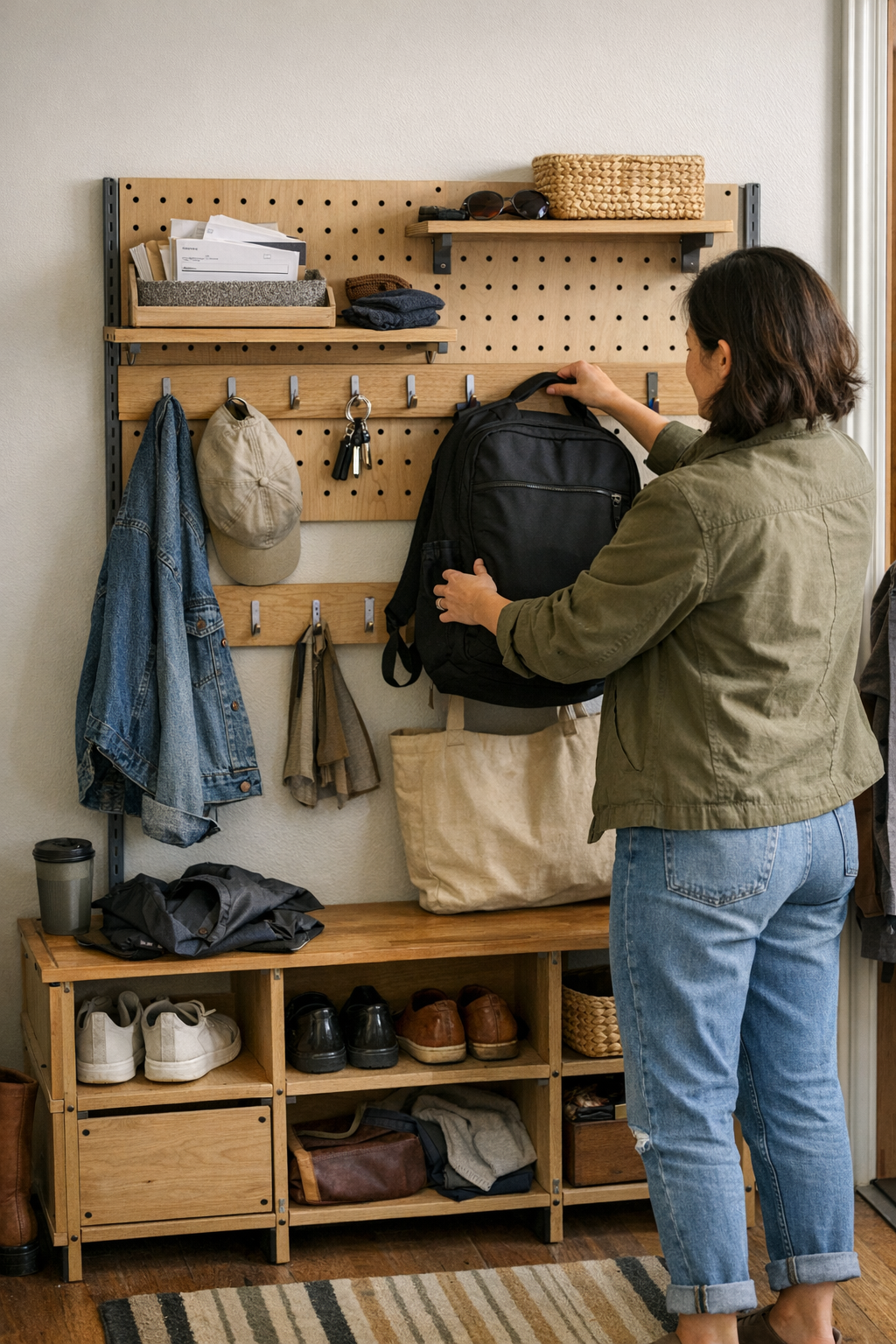
    Pegboards look like the ultimate entryway fix: everything visible, each hook holding a job, no mystery about where things belong. But in the rhythm of real life—busy departures, rushed drop-offs, two bags instead of one—the neat layout quietly unravels. The problem isn’t just visual clutter. It’s bottlenecked motion, overflow landing in the walk path, and the slow grind of resets you can’t keep up with. The promise of easy access quickly meets the reality of missed categories and extra steps. That pegboard? After a week, it stops feeling like organization and starts feeling like maintenance you didn’t sign up for. This is the threshold problem that Betweenry storage is built to address: not how clean it looks for a photo, but whether your exit path stays clear and your routine survives repeated, imperfect use.

    When Organized Access Slows You Down

    Entryways always start fresh: pegs ready, trays empty. By midweek, that’s fantasy. One person comes home with rain boots that don’t fit their hook; next, someone double-hangs bags in one hand—now the remaining hooks are buried. Mail and keys that began in their slots spill out, mixing with earbuds, gloves, chargers. The difference isn’t dramatic chaos—it’s the margin of friction: losing ten seconds to move a bag; pausing because stepping past a dropped shoe narrows the route; bending to rescue something blocking the door. The system calls for resets, but resets now mean sorting other people’s overflow, not just your own. Clutter spreads and so does delay.

    Why Pegboards Look More Adaptable Than They Feel

    Pegboards are sold on adaptability—move a hook, shift a tray, create any arrangement. That holds up only if patterns don’t constantly collide. In real households, schedules clash: one user’s gear lands across another’s setup. Young kids, late arrivals, shared roommates—nobody’s routine fits a single “ideal” slot. Shoes stack over one another, overflow migrates to hat hooks, and suddenly that “flexible” wall becomes a tangle that nobody wants to maintain. A setup that feels dynamic the day you install it starts demanding attention just to hold the line. Now the question isn’t innovation—it’s whether the structure can keep up with the mess it was meant to contain.

    Everyday Drift and the Shape of Clutter

    Clutter doesn’t announce itself all at once. It’s shoes squeezed onto whatever hook is closest, shoulder bags layered three deep, junk mail stacking atop keys. The original logic dissolves when “just for tonight” turns into the new normal. Compare with a bench and open bins: toss in shoes, slide in a backpack, done. No technical beauty—just function that absorbs the excess. Pegboards only outperform in spaces where boundaries stick and users recalibrate on autopilot. Most homes, though, see the slow drift—items finding new spots each day, categories quietly falling apart.

    The Real-Life Test: Entry and Reset Pressure

    Dense setups betray their weakness at crunch time. Picture one person dropping a muddy backpack across the central pegs, shoes propped on a flat tray “just for now.” The second user can’t find a free hook, so their gym bag lands in the path. The walk through the entry slows. Nobody wants to reshuffle someone else’s stuff, so items stagnate. Repeat this a few cycles, and order tips into chaos: the board becomes the very bottleneck it was meant to solve. Thresholds shrink, resets get put off, and temporary piles become fixtures blocking clean entry or exit every day.

    What seems organized on Sunday stops functioning by Thursday. Not through a sudden mess, but by slow, repeating compromise—until even basic movement through the door requires extra steps.

    Comparing Simple Storage and Pegboard Performance

    Bring in a basic bench with bins or a small utility cabinet and the contrast is plain. No, it won’t line up every shoe or assign a hook to every scarf. What it does: swallows overflow fast, tolerates sloppy return, clears pathways. Need a reset? Shove, close door, walk away. Pegboards demand item-by-item sorting—if your categories break, every reset slows down. Simpler storage trades layout for forgiveness: no wall of visible order, but also no delayed exits or awkward reshuffling every morning. The hidden price of “perfect” organization is attention—the margin for error is slim, and function falls apart when the routine changes even slightly.

    Recognizing the Signs: When a Pegboard Isn’t Helping

    • Shoe rows creeping upward, overrunning hooks that weren’t meant for them.
    • Bags tangled together, layers hiding what’s beneath and blocking grabs.
    • Mail, gloves, and keys fusing into a single undifferentiated pile—all in the “catchall” tray.
    • Pauses at the entry as people sidestep overflow or thread around dropped gear.
    • An edge of the board or floor steadily collecting leftovers that nobody resets.

    These aren’t signs of a flawed user—they’re a signal your storage matches display more than it matches real movement. When the system works against how people actually return, pause, and pass through, friction is all you feel.

    Choosing Adaptability Over Density

    When every category requires attention to maintain, the answer isn’t more pegs or more rules. It’s less. Reduce accessories: half the hooks gone = half the distractions. Create wide open stretches so overflow lands clear of the walking zone. Ditch strict divisions—one row of open pegs lets coats, bags, or shoes drop wherever, no path blocked. Set visible limits that force routine overflow to relocate: three pairs of shoes get the lowest hooks, everything extra moves to the closet. Let a single, big hook near the door catch everyone’s bags for the day—at night, emptying it and restaging takes under a minute.

    Adaptability means seeing category drift as a given, not a failure. The best test? If your storage system bounces back easily after a typical week, you’re not just organized once; you’re organized enough to last.

    Keeping the Entryway Easy to Use, Not Just Easy on the Eyes

    Entryway storage isn’t winning if every reset eats time and trips up your path. Real solutions make it simple to recover from the inevitable mess—so routines resume, not slow down. Betweenry designs its storage to meet real-world pressure: bins that tolerate overflow, benches that handle sit-down and drop-off, wall units that absorb routine drift, and mobile pieces that move when you need more space. Good storage for transition spaces doesn’t just show what goes where; it makes clear movement possible even when most categories blur. That’s the win: an entryway that takes daily punishment and still resets fast, so the door stays open—literally and habitually.

    Shop Betweenry for practical, tested threshold storage.

  • Identifying and Fixing the Hidden Weak Spot Behind Shelf Clutter

    Every organized shelf hides its risk of chaos. Even the best-looking closet or storage nook has a weak spot—a single shelf that never seems to keep its promise. At first, the system feels solid: bins lined up, labels neat, each category in its place. But as soon as life gets busy—kids come blasting through the door, you’re running late in the morning, or groceries pile up faster than you can put them away—the fault lines appear. That well-ordered shelf is suddenly the bottleneck, and disorder radiates out from it, reshuffling your whole system from the inside out.

    How Shelf Clutter Actually Starts

    Clutter doesn’t start everywhere at once. It begins in small, familiar ways—one shelf is too high to reach easily, or a divider fails to keep stacks upright. Maybe gloves and scarves share a bin that looks perfect after a reset, but within days the contents are tumbling into each other. The routine moments—pulling out a hat and having two scarves come with it, or reaching for a folded shirt and toppling half the stack—expose the shelf’s hidden weakness long before the closet looks “messy.”

    The signs are subtle but relentless: Shift one pile to reach something behind it, and now nothing fits right. Return a basket in a hurry, and next time you just push things aside to make space. The system wears down in daily, invisible increments until you’re constantly searching, shifting, or giving up.

    Everyday Clutter: When Storage Starts to Slip

    Entry Closet: The Winter Pile-Up Problem

    Take a standard winter entry closet—an attempted set-up: hat shelf, glove bin, spot for scarves. It looks controlled on Sunday. But by Wednesday, gloves pool at the bottom of the hat bin and scarves are blurring into bags. Why? Maybe the “glove zone” was never separated, or a too-deep bin swallowed the smallest items. Short on time, you stuff hats and gloves anywhere close, convinced you’ll sort it later. Soon you’re digging for that missing mitten and knocking three hats to the floor just to find it.

    It’s the closet’s catch-22: baskets appear organized, but nothing is where you expect it. Everyday access becomes a mini scavenger hunt, and returning anything to “its place” feels harder than it should.

    Bedroom Shelves: The Leaning Towers of Laundry

    Even the most careful folding can’t conquer a weak divider or a too-wide shelf. Shirts stack beautifully on day one, but by day three, stacks tilt, piles merge, and you’re pulling socks from between two toppled mounds. Pull one item in a hurry, and the rest threaten to follow. Quickly, that snug stack becomes a generic pile—shirts, shorts, odds and ends, everything blurring by midweek. Resets grow slower; you spend more time restacking than storing or retrieving.

    Looks Organized, Works Sloppy: Spotting the Gaps

    At a glance, your shelves pass the “organized” test. But the cracks show up in real life. How do you know when structure is breaking down?

    • You double-handle items just to get what you actually need.
    • Baskets get stuffed, sending small things to the bottom, practically lost until next month’s cleanout.
    • Labels stare back at you, but what’s inside never quite matches up—especially after a rushed day.

    The true verdict isn’t the after-clean photo—it’s how fast things slide out of place between resets. If putting away a simple stack or bin requires more steps each time, or if you avoid using a shelf because it’s always a hassle, your system is quietly failing the daily test.

    How One Weak Shelf Triggers a Chain Reaction

    Persistent clutter doesn’t explode; it spreads. One loose bin, shallow divider, or ambiguous category quietly creates overflow. Suddenly, bags start piling where coats go, shoes drift off their rack, or hallway surfaces collect a “temporary” drop zone that never empties. In laundry rooms, towels drift into the cleaning shelf, eating up space and unraveling the order you set on day one.

    The more you work around the problem, the worse it gets. Small frustrations—moving a stack for the third time, blindly rooting through a bin—add up. Even if the rest of your system is solid, that one weak shelf turns storage into a guessing game and makes every reset feel like a lost cause.

    Repairing the Real Problem: Sharpen the Shelf’s Role

    The weak spot isn’t always the most obvious mess. It’s often the shelf you keep tinkering with or the bin you dread opening. Watch for these tells:

    • Grabbing for the same item and moving two others just to free it.
    • Piling “random” everything into one catch-all container.
    • Reaching into a bin and coming up empty-handed because things have drifted into the next zone.
    • A hesitancy to use part of your storage because it’s never quite right.

    Take a normal week. Where do categories cross over, piles grow, or you always “just leave it for later”? Here’s the real leverage point: install a divider at exactly the width you need, or swap in a shallower bin you can see into at a glance. Instead of fighting the shelf, you let structure do the work.

    Micro Adjustments, Major Impact

    One winter, I finally got tired of the entry closet avalanche. Oversized bins weren’t helping. I measured and added a simple wood divider, splitting the hat-and-glove shelf in two. Suddenly, gloves stopped leaking into hats, and everything stayed in view. The reset time disappeared—I could toss things in without stacking, and they still ended up sorted. It wasn’t perfect, but that tiny shift turned a daily “I’ll fix it later” into a less-than-a-minute tidy-up.

    It’s not about a showroom finish—it’s about making good habits nearly automatic so daily clutter has nowhere to spread.

    When to Use Bins, When to Use Dividers (And When to Mix Both)

    Customize the fix to the stuff you actually use. Small, loose items—think winter gloves, toiletries, or hardware—do best in open bins you can scan with a glance. But bins that are too deep or too many create their own chaos, hiding things at the bottom. Dividers rescue flat, foldable items—shirts, towels, sheets—by keeping piles upright and categories separate. The real win? Combining both to match the shape of your chaos: a divided shelf with bins for the smallest things, one clear zone for stacks, and nothing too crammed or hidden.

    Quick test: If every day you’re restacking or shuffling through piles, measure the usual width and add a divider that’s just wide enough for the max load. You’ll see the pile hold its ground for a full week—or at least long enough that resets feel trivial.

    Fix the Weak Link, Watch the Whole System Improve

    The payoff for upgrading one shelf isn’t in show-off neatness—it’s how much smoother everything around it gets. Once that trouble zone is contained—bins aren’t overflowing, stacks actually stay up—suddenly, everything else works better. Categories stop mingling, reset time shrinks, and you spend less energy on finding, fixing, or faking order. It isn’t flawless, but it’s steady, and you stop dreading the moment things go off track because now it’s easy to restore normal.

    Shelf systems don’t collapse overnight. They quietly unravel from one weak section out. Fix that point of friction—right bin, right divider, right size—and the rest of your storage feels simpler, calmer, and tougher to undo.

    Visit ClosetWorks for more practical storage solutions.

  • Managing Cat Care Disruptions When Visitors Become Background Noise

    The Real Challenges of Daily Pet Care in a Busy House

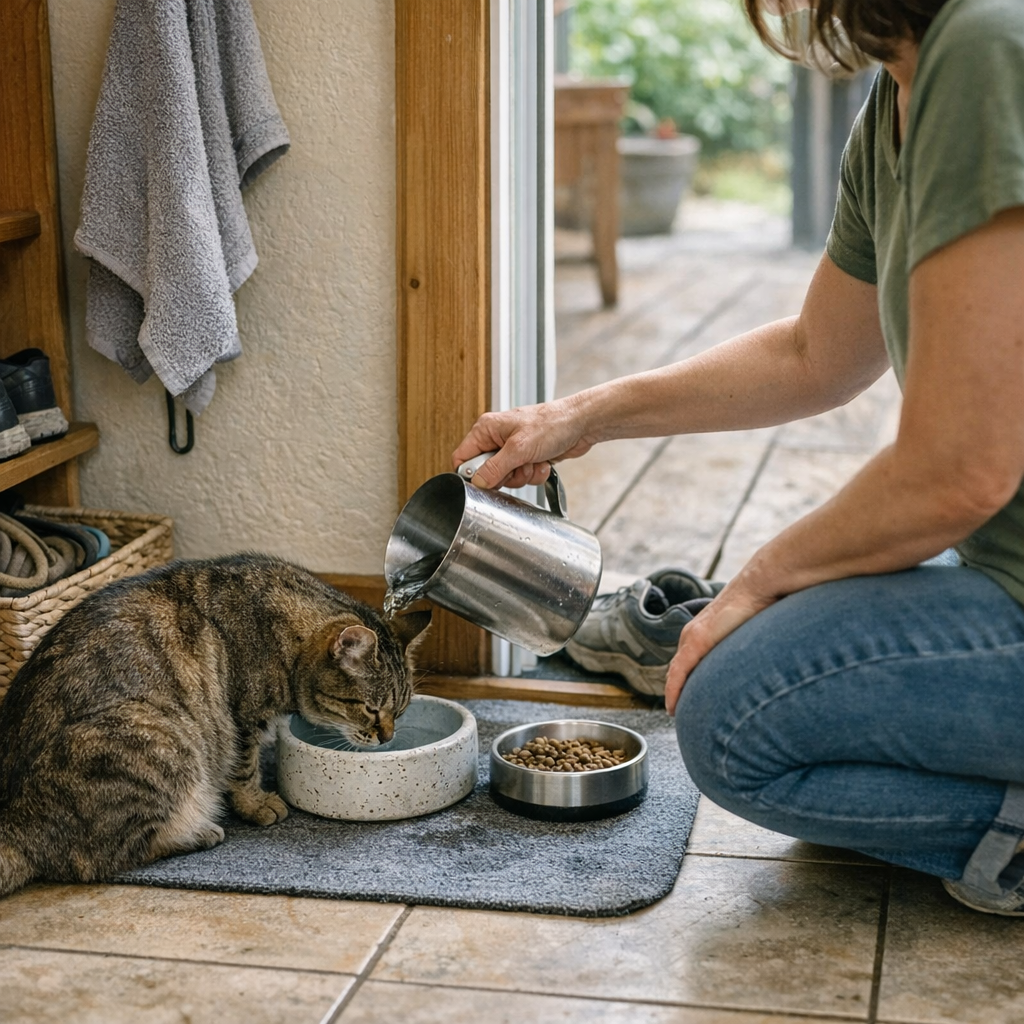
    Feeding a cat or dog in a quiet home usually means reaching for the bowl, topping off water, and wiping stray fur—done in minutes, without delay. But in a house where people and packages constantly come and go, that smooth routine breaks down fast. It starts as a minor inconvenience: you go to refill the water, and there’s a delivery box blocking the mat. The food bowl shifts closer to the walkway after someone nudges it with a shoe. Suddenly, that “quick cleanup” isn’t quick at all—now you’re moving bags, relocating bowls, and fishing the cleaning wipe out from under someone’s backpack. A setup that used to work now drags against daily life, revealing why the CalmPetSupply world focuses on repeat-ready basics and easy-to-reach gear.

    How Small Disruptions Build Up

    Pet routines only stay smooth when the core supplies remain in place and ready to grab. With repeated foot traffic, it’s never just one thing out of order: bowls slip out of their spots, water pools just outside the intended area, fur collects along paths no one meant to create. Sometimes you kneel to refill only to find yesterday’s shopping bag or jacket lying right over the towel you need. Wipes and brushes? Always within arm’s reach—or they should be. In a busy house, they’re just as likely to be shoved aside or hidden under another “temporary” item you forgot about until you actually needed it.

    These aren’t dramatic messes; they’re steady, low-grade interruptions. You realize you’re wiping surfaces late, or shuffling three things aside just to reset the bowls. The mat meant to anchor everything creeps toward open space—pushed by shoes or boxes—eventually creating a hazard and multiplying the work. Every improvised “fix” (tucking a mat away, stacking wipes on the shelf) trades one delay for another, masking the real pinch point instead of solving it.

    Everyday Routine Interruptions: How Mess Creeps In

    It shows up around lunchtime: deliveries drop on the porch, someone swoops through the main room, the pet’s bowls inch dangerously close to the high-traffic lane, and a new cluster of fur appears under a chair. No matter how often you sweep or wipe, stray tufts anchor themselves in the corners you just cleared. When you finally reach for the cleaning towel, you’re lifting a tote bag off it. If that towel isn’t right where you finished last time, the mess stays longer—or gets spread further when another person misses it completely.

    What looks like a tidy feeding area on the surface might still mean walking back and forth to fetch supplies that drifted out of place. The difference creeps in: you aren’t just cleaning after meals anymore, you’re interrupting whatever you’re doing—again and again—to re-tidy what seemed handled hours ago. The “organized” setup masks repeated friction because core items keep wandering out of optimal reach, turning care into scattered resets instead of one smooth routine.

    Repeated Reset Friction: Where the Routine Breaks Down

    Over days, the same small complications stack up: bowl realignment after each meal, double-checks for fur before sitting, hunting for that one stray wipe or the misplaced brush. It’s not chaos, but it’s not effortless either. Instead, you’re caught in a cycle of constant mini-corrections—each tidy-up temporarily fixes the space, never the repeat cause. What once passed as “good enough” starts to feel like extra work that only multiplies the more the day fills with movement.

    The contrast is clear: a space that merely looks clean can still demand backtracking or add hesitations to every feeding and cleanup moment. If you need to shift a pile just to reach the grooming brush, or step around a mat that’s migrated near the hallway, the setup hasn’t really solved the underlying drag. Supplies that technically stay available can still jam up the routine if they’re never in the right place when you reach, stretching out tasks that should be over fast.

    Practical Fixes That Shift the Pattern

    The turning point comes from identifying and correcting the patterns that repeatedly slow you down. Moving the feeding station slightly off the main walkway—still visible, now spared from stray feet—reduces bowl drift and means fewer urgent resets. Elevating a towel hook or storing grooming brushes just outside the highest-traffic zone transforms wipe-downs from “whenever you remember” to a quick side-step that doesn’t stall out your whole routine. It’s not about eliminating every spill or fur patch, but about removing the most persistent hurdles so you don’t waste energy doubling back.

    Within days, these small shifts pay off—routine messes shrink, feeding and cleanup happen on time, and care actually fits the day instead of interrupting it. In busy homes, the difference between a setup that looks good and a setup that truly works is visible in the number of times you have to reshuffle, reach, or repeat the same fixes. That’s the practical logic at the core of CalmPetSupply’s everyday solutions: routines should bend to daily life, not slow it down.

    See what fits your daily setup at CalmPetSupply.

  • How to Keep Your Carry-On Balanced and Easy to Access While Traveling

    A carry-on that looks perfectly organized at home can turn into a liability the moment you actually need to move through an airport at speed. Standing at your front door, you see clean lines, neat divisions, and every pouch zipped just so. But two hours later—while digging for a passport in a tense security queue, squeezing past travelers in a jammed jetway, or grabbing snacks with one hand in a crowd—every carefully planned section starts to fight back. The “orderly” bag that made sense in your living room now slows you down with every retrieval and repack. What feels like smart packing when stationary often reveals hidden friction as soon as real travel movement and repetition set in. Here’s why the wrong carry-on setup adds frustration you can’t ignore—and what to watch for if you want smoother travel momentum.

    The Tidy Trap: When Too Much Order Slows You Down

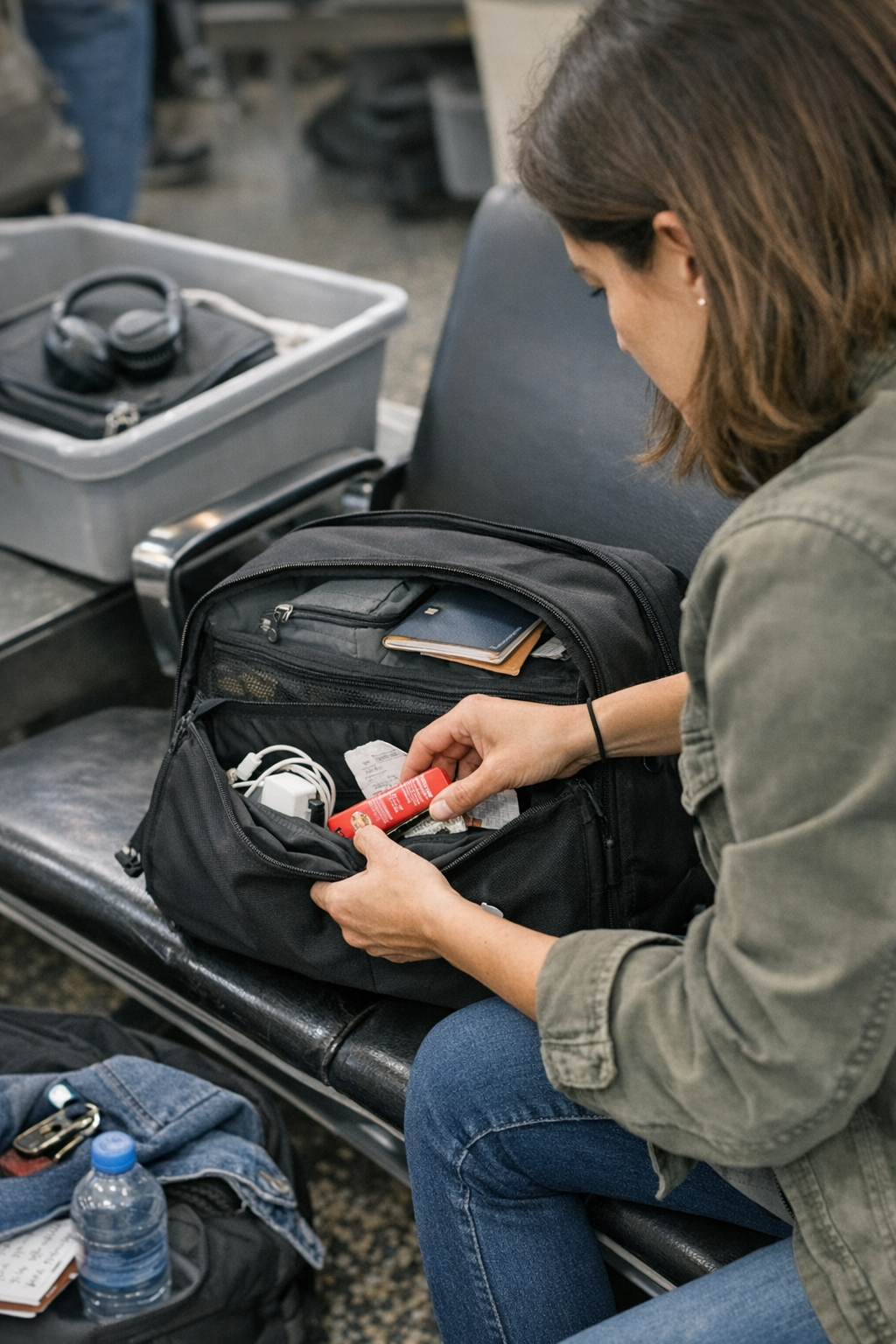
    Over-organizing a carry-on—using dozens of dedicated pouches, tight pockets, and subdivided organizers—can backfire in airport conditions. In theory, it means predictable homes for every cable, card, and charger. In practice, it means threading your arm past stacked zippers just to grab your passport, shuffling through layered tech sleeves for a phone at security, or wrestling snacks out from under a nest of receipts. The logic of neat compartments falls apart the moment you’re forced to repeat the same access sequence under pressure: security agents waiting, boarding lines compressing, tray tables in your way. Each retrieval interrupts your rhythm, and every “fix” piles on another small delay for the next rush moment.

    Disorder rarely erupts—but subtle drag eats at you all trip long. Pulling out and replacing the same essentials (passport, boarding pass, earpods) ends up requiring a mini unpack and repack every time. A system that looked perfectly maintained becomes increasingly unwieldy, especially when you have to squeeze in a last-minute item, or when one rushed addition breaks your neat logic.

    Airport Reality: Where Visual Order Doesn’t Equal Smooth Movement

    A bag’s real test is always in motion. The setup that seemed optimized on your packing table reveals its weaknesses after your second security tray, as you angle to avoid elbowing the person behind. “Good organization” means little if your layout can’t flex quickly when travel gets unpredictable. Watch for:

    • Security stalls: If your liquids or devices are buried, you’re left unzipping, shifting, and reshuffling at the x-ray—the line behind you growing impatient as your orderly system unravels in public.
    • Gate and boarding slowdowns: Retrieving your ID or a snack on the move? If it sets your bag off-balance because a jacket is wedged in, or you have to dig around items now stacked on top of each other, the rhythm breaks instantly.
    • Overhead bin fumbles: Stuffed pockets mean resistance. Zippers catch, compartments bulge, and suddenly stowing your bag for takeoff requires prodding, shifting, or apologizing to the row behind you.

    Repeat Visits Expose Setup Weakness

    Setup flaws appear fastest when you have to pull the bag down from an overhead bin, slide it past cramped seat arms, or jam it underfoot. If a charger cable or snack is behind layers of “organized” gear, a 10-second grab becomes a full pause and reshuffle mid-flight. Fix one jam, and the bag erupts elsewhere; nothing returns to that original, tidy reset. Order recovers visually, but you still feel the interruption every time you reach inside.

    Overflow Happens: Why You Need a Quick-Add Zone

    Even the best packing plans break down—real travel means sudden extras: cables, gum, receipts, new chargers, half-eaten bars. The bag that started flexible and neat starts to feel rigid, overbuilt, and resistant to last-second additions.

    Enter the quick-add pocket. Instead of forcing overflow into the main compartment, a loose, easy-access sleeve by your primary zipper acts as a “mess buffer.” Not beautiful, not posed for photos—but it works. Drop a new phone cable, worn boarding passes, or the snack you just bought without derailing your system. That one pocket absorbs the unpredictable, so your main pouches and planned-out sections stay undisturbed, making repeated use less stressful and more adaptable.

    A Real Travel Test: One Adjustment, Noticeable Difference

    After a recent stretch—three airports, two missed connections, four security trays—I switched to using a single outer sleeve for all last-minute items. The pattern changed: no more stuck zippers, faster security sift, easier flow between gates. Carrying the bag past aisle seats felt steadier, and no last-second addition threw off the balance or forced a rebuild. The quick-add pocket didn’t look tidy, but it made the entire setup work better in the moments that count.

    When Structure Becomes Its Own Problem

    It’s easy to blame travel chaos on crowds or airline rules, but the pain often starts at the packing design stage. Pouches, compression cubes, and layered slots manage obvious clutter, but can’t “flex” for real-life use:

    • The cable you grab mid-flight is pinned under the coat jammed in the outer sleeve.
    • Receipts jammed for expense reports become unreachable behind toiletries you added at the last minute.
    • Returning your passport after inspection takes three moves instead of one, blocking the line while you work the zipper sequence in reverse.
    • Lopsided weight builds up, so the bag tips over or strains your shoulder on the next terminal dash.

    Soon, you’re opening three compartments for each find, pausing for an off-balance reset in busy terminal traffic, and the patience of your bag vanishes with every new interruption.

    The Mark of a Reliable Setup: How Well Does It Reset?

    The best setup isn’t just what fits at packing—it’s what resets itself, fast, after a rush or a repack. If your bag quietly absorbs the passport grab, cable return, or snack drop without asking you to mentally sort everything again, it’s doing its job. Systems that require full attention after every access point—not just at the start—wear you down miles before landing.

    Make space for one low-resistance, rapid-access “overflow” pocket. That buffer pocket for inevitable extras keeps daily movement smoother. Don’t judge your setup by its pre-trip look—judge it after your third tray dump and repeated headphone hunt. That’s when real order counts.

    Packed for Looks or for Repeated Use?

    The pressure becomes clearest when travel goes sideways. Does your organization let you keep moving once reality interrupts, or does it protect its own design at the cost of repeated hassle? The long-lasting carry-on setups are rarely photogenic. They’re simply the ones that stay usable—minute after minute—through access, overflow, repack, and the next boarding sprint.

    Find carry-on tools and travel organizers built for real-world rhythms at CarryOnSupply.