
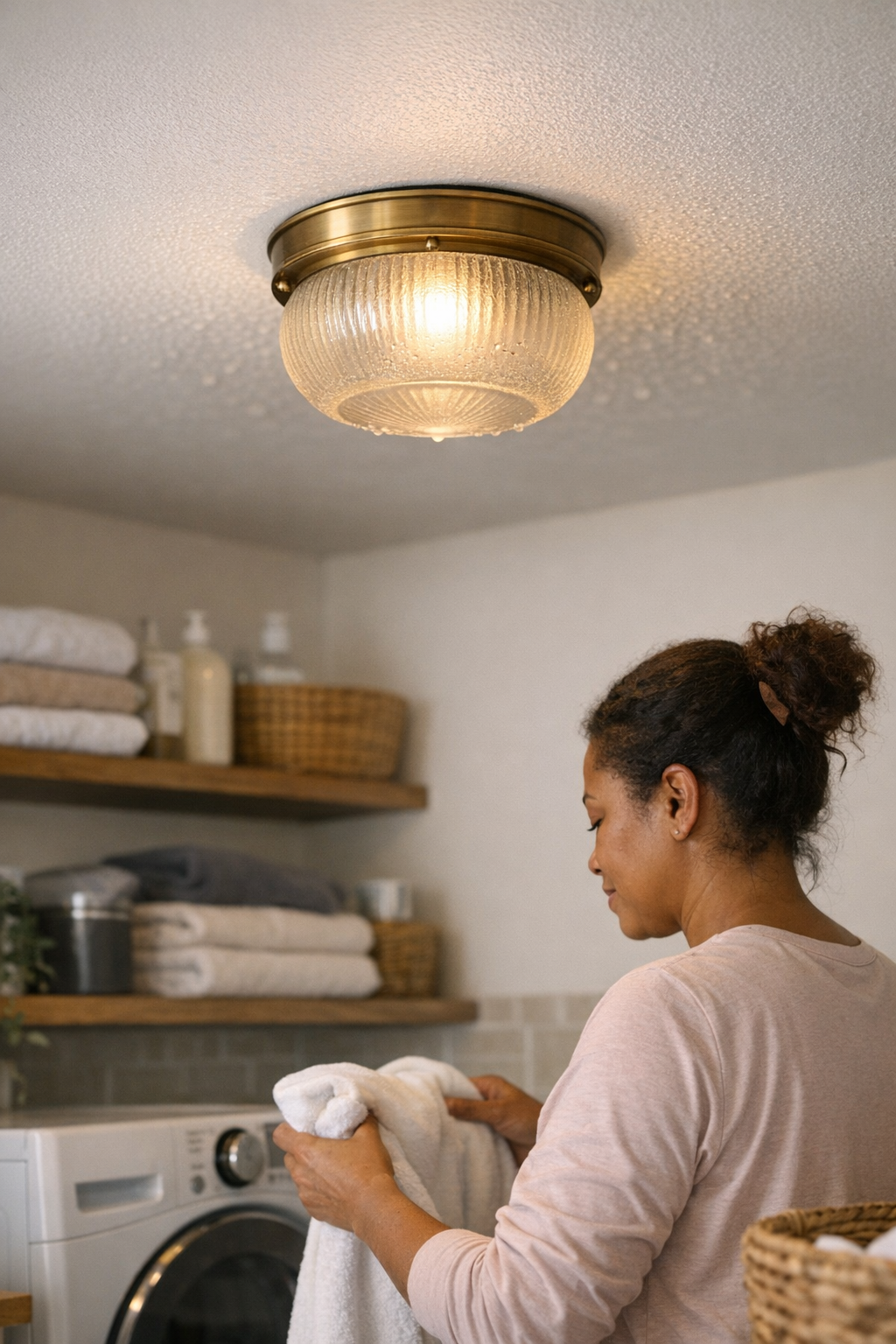
The real headache of fully sealed ceiling fixtures doesn’t show up on installation day—it hits after dozens of damp mornings, late laundry shifts, or one too many dim trips down a hallway. What looks crisp and tidy at first slowly turns into fogged lenses, persistent shadows, and an odd sense that the light just isn’t keeping up. If you catch yourself squinting at the bathroom mirror after a shower or hesitating on a stair landing that used to be brighter, it’s not just your imagination—the setup itself is starting to interfere with routines. These scenes aren’t unusual. They’re the repeat signals that even the sleekest, most enclosed ceiling lights break down in real home use, especially when heat and humidity have nowhere to go.
When the Look Outlasts the Performance
Sealed ceiling fixtures are pitched as tidy solutions: flush with the ceiling, no exposed bulbs, easy to wipe, and theoretically built for steamy or dusty corners. But initial appearances fade. What you see—an unbroken lens and a streamlined base—can hide the slow start of trouble underneath. With each shower or laundry load, trapped steam creeps behind the lens. LEDs run hotter. Clarity takes a hit, and smudges start to build on the inside, out of reach.
After dry spells, everything seems fine. But give it two dozen shower cycles or the constant churn of a laundry space, and the difference is obvious: the lens clouds up, wiping does less and less, and suddenly that “maintenance-free” promise is a joke. Bulbs dim, plastics yellow, and the fixture you barely noticed now demands attention—right when you need to move fast or see clearly.
Everyday Friction in Real Spaces
Picture a weekday bathroom rush: steam rolling across the ceiling, the sealed fixture softening and blurring its beam over the mirror. The glare hardens where it should fade. You move your head and the shadow splits—right where you need to shave clean lines or check for missed mascara. Clearance fails in the spot you actually use.
Or step into a tight laundry room: the overhead lens is no longer clear, and that subtle yellow edge near the wall doesn’t wash off. Shadows stretch across the washer, and checking for stains means shifting the basket, ducking for a better angle, or dragging in a backup lamp from another room. Even the hallway: the sealed light looks fine when you flip the switch, but night after night, one side of the corridor fades too soon, the far corner always just a little murky thanks to the buildup of dust and heat sealed behind the lens.
How Quiet Problems Build Up and Spread
Bad lighting rarely fails with a bang. Instead, discomfort crawls in slowly:
- Lens fog that returns the next day, no matter how recently you wiped it
- Yellow streaks and haze growing stubborn under repeated cleaning
- Shifting shadows at the mirror, the counter, or the stair turn—springing up just when routines are tightest
- Glare growing harsher the more you need soft, even spread
- Unplanned bulb or LED changes—months ahead of schedule because heat keeps cycling up in a sealed shell
This isn’t just about how the fixture looks. It’s about losing confidence in movement: second-guessing your step on stairs, not trusting what you see at the mirror, and wasting time fighting shadows that weren’t supposed to exist. Each little workaround—an extra wipe, a backup flashlight—is another sign the setup is working against you.
Why Ventilation Changes the Game
Ventilated fixtures rewrite the story invisibly. By letting heat and moisture escape, they keep the lens clear, color true, and shadows consistent. The contrast becomes obvious once routines are in motion: after back-to-back showers, after endless laundry cycles, after a week of dark mornings and quick turns along the hallway. You don’t need to clean as often, and the light you get actually stays usable—no surprise haze, no creeping dimness by the end of the month.
This stands out fastest in:
- Bathroom mirror areas: Where you quickly see what’s missing when light blurs on one side of your face or glare makes you hunt for clarity.
- Stair landings and tight corridors: Where you feel the difference at night as clear sightlines let you move without the hesitation that comes from dim, lopsided light.
- Laundry and utility corners: Where clean spread means no more squinting into baskets or checking the same counter twice for messes you missed in shadow.
When Small Design Choices Add Up
Most people get used to scrubbing enclosed fixtures until the repeated hassle starts to feel normal. But once you swap in a vented, damp-rated model, the frame shifts. One LightHelper user cut lens cleanings by more than half after updating a hallway fixture—and the nagging puddle of shadow that lived on the stair bottom finally vanished. In the laundry nook, treating the “fog cycle” wasn’t a six-step trick; it was a design fix. Back-to-back laundry loads didn’t add haze, stretch shadows, or force extra checks—there was simply more working light, less fumbling around, and noticeably fewer mistakes left behind.
Spotting the Signs Before Problems Grow
If your lens clouds up after every shower, starts yellowing early, or leaves your main working zones always half-lit, it’s a clue: the fixture is trapping more heat and moisture than it can handle. With sealed housings, even the newest LEDs aren’t safe. They lose their sharp edge, degrade faster, and leave you chasing a brightness that never seems to last beyond the first few months.
LEDs are tough, but not invincible: In a steamy, closed fixture, even premium bulbs wear out early, and the promise of “maintenance-free” lighting turns hollow—no one brags about a new install that already feels like a compromise.
One Smart Fix: Rethinking Where “Clean” Lighting Comes From
The surface of a sealed fixture might look spotless, but the real question is what happens underneath after weeks of real use. In spaces where water, steam, or heat shift daily—above bathroom sinks, along hallway turns, inside laundry corners—a bit of fixture ventilation isn’t a trivial upgrade. It’s the separation between a room that only looks illuminated and a routine that actually works: clear, balanced, and ready every time. Vented and damp-rated fixtures don’t just last longer; they keep your sightlines sharp, your cleaning list shorter, and your small daily movements—whether shaking out a towel, stepping off a stair, or checking for stains—friction-free.