Tidy setups aren’t always easier. In most indoor cat homes, the trouble starts after the first day—right when everything still looks organized but routines begin to snag. The bowls line up on the matching mat, the litter tray sits neat with a pad, toys vanish into bins, and the room looks “finished.” Then: the first refill stops short because a mat edge folds. Crumbs skip past the border. Water streaks dodge under a bowl, and the “organized” feeding corner quickly demands extra steps. Tiny setbacks multiply, and that’s how a supposed quick upkeep slips into a daily grind. StillWhisker isn’t just about clean lines—it’s about fixing the spots that cause you to double back, bend over, and deal with the same mess, day after day.
When a Clean Setup Keeps Getting in Your Way
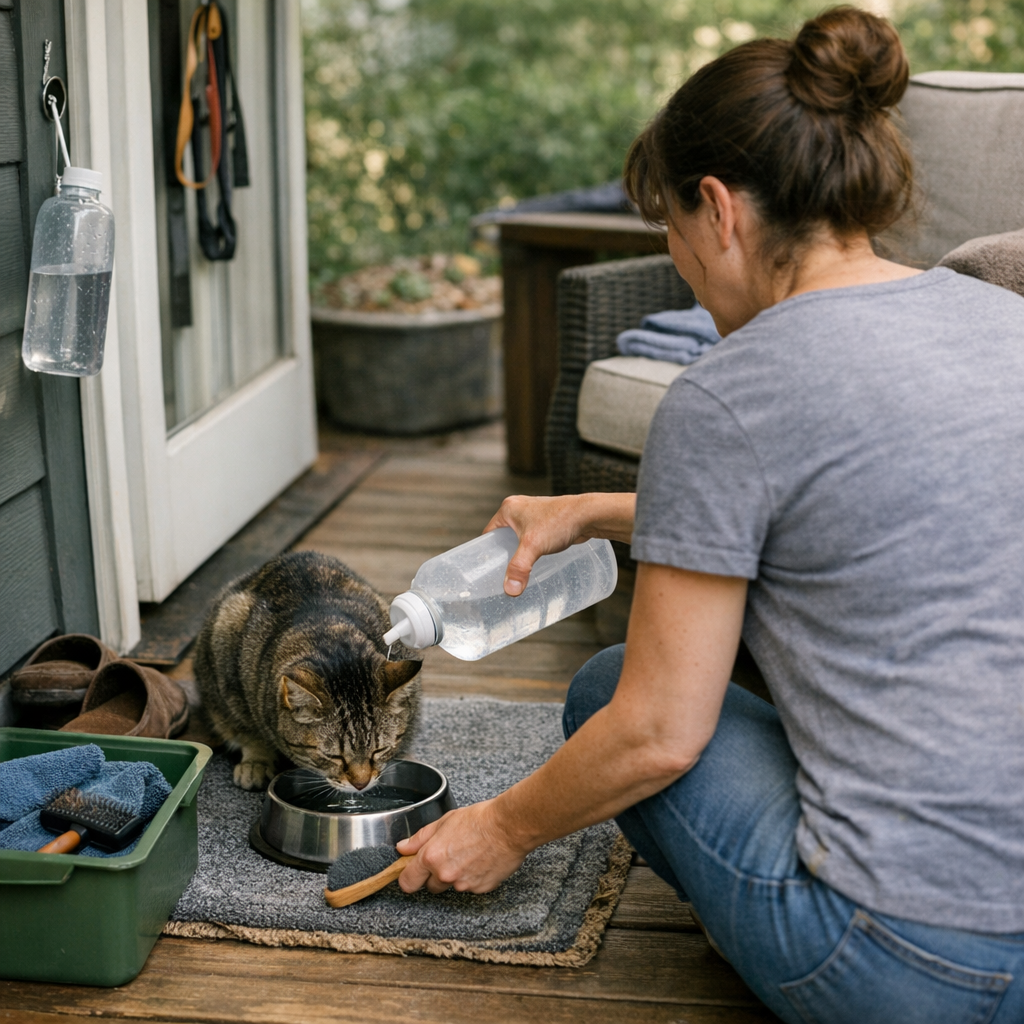
A feeding area looks controlled until you’re nudging a bowl to pour water or sifting crumbs that slip just beyond the mat—at exactly the same spot, every meal. Food bits fall outside the coverage zone. The mat itself drifts as your cat’s real path claims more ground. Reset time stretches because you’re constantly scooting things aside, or stretching to reach, losing seconds to small, repeat annoyances. That “tidy” setup starts acting more like a set of hurdles than a help.
The friction repeats in every zone: a litter mat that looks wide enough—but every sweep uncovers pieces migrating into the hallway. A water bowl wedged next to a chair so it’s hard to reach. The toy bin always half-filled, while favorites resurface under the couch only on cleaning day. These patterns aren’t new—they’re just the places most setups break down when real routines kick in.
Recognizing Friction Points Hiding in Plain Sight
The problem isn’t just stray mess. The true signal your routine isn’t working is repeated inconvenience—if you’re cleaning the exact same spot, moving the same object twice, or finding the same type of mess in the same place, the setup needs rethinking, not just tidying.
Common checkpoints in daily cat-home rhythm:
- Reaching for a food bowl and bumping into another dish or tool that shouldn’t be there
- Kneeling to spot-clean only to realize the wipes or brush aren’t close at hand—again
- Navigating around a “blockage” where cat gear cuts across your main walkway
Each of these moments steals time and movement—one at a time, it’s minor; repeated at every reset, it adds up to real friction.
How Invisible Mess Slips into Your Shared Space
The real test is in shared zones. Mornings start clear; by noon, toy mice trace a crooked line behind chair legs, and that window perch blanket is already holding fur. Even after you tidy, some corners require one more pass—a sign the original placement isn’t matching your cat’s habits. Hot spots develop: a sofa side becomes a toy magnet, a mat edge always slows your stride, and the “invisible” mess is suddenly impossible to ignore. The difference between a room that just looks settled and one that’s genuinely less work lies in these details.
Small Shifts That Change Your Maintenance Routine
The most effective fixes aren’t about aesthetics—they’re about dropping routine strain. Small, targeted changes shift the real daily pressure points:
- Enlarging a litter mat to fully cover the path your cat actually uses, not just the front of the box
- Relocating feeding bowls so pour angle and access aren’t blocked by traffic—ending meal delays
- Moving toy storage directly to the spot toys keep landing, not where they’re supposed to go in theory
A well-placed mat cuts cleanup to one room—not up and down the hallway each night. The difference isn’t a “prettier” room; it’s a routine with fewer interruptions, no extra stretching to reach, and less mess leaking into new corners.
Case in Point: The Litter Mat That Actually Contained the Scatter
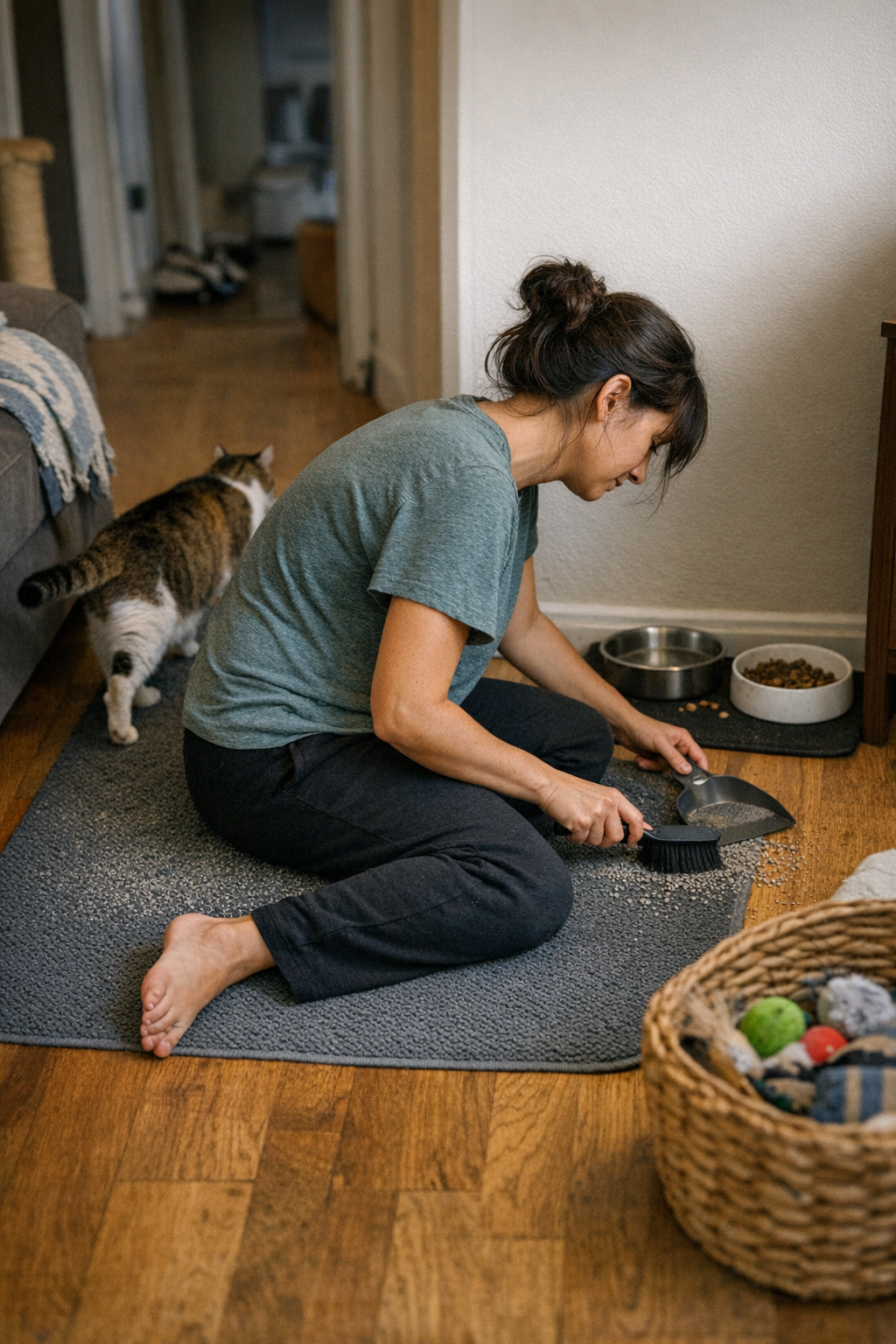
Too many owners fight a losing streak: scoop, sweep, repeat, but tracked litter always sneaks out somehow. A single practical change—a wider, better-placed mat, matched to the actual post-box sprints—finally kept the grit inside the zone. Separating the litter area with more coverage meant fewer midweek sweeps and less mental fatigue from unfinished cleanup. Over a few resets, the litter trail didn’t reappear, cleanup switched from a multi-step drag to a quick pass, and the feeling of constant redo faded. This wasn’t luck; it came from watching exactly where the problem happened, not guessing on setup day one.
When a Setup Looks Tidy but Feels Off
Even a neat-looking setup can slow routines to a crawl. The space looks ready, but use tells another story:
- A window perch feels “finished,” but fur always piles at the same tight corner that resists fast shake-out
- The scratcher blends into the décor but drops loose bits where you walk—demanding daily sweep-ups
- Feeding mats catch most mess, but crumbs sneak past shallow edges, meaning a total sweep after every meal
- Emergency wipes live in a “reasonable” drawer, but you’re always darting out to grab them exactly when the mess hits
This is the gap between upkeep blending into your rhythm and it turning upkeep into a nagging project.
How to Spot a Setup That Needs Tweaking
The warning signs show in the pause: if you’re always slowing at one spot, battling the same debris, or spending more time in “quick resets” than you expected, your setup isn’t doing its job. Look for:
- Crumbs, drips, or fur reappearing at the same mat border or behind the same bowl
- Toys always lost under the same furniture edge and never quite returning to their bin
- Cleanup supplies that remain tucked away but not where the mess keeps showing up
- Routine resets taking longer each week even though the surface looks organized
The goal isn’t mess-free living—it’s to shift obstacles and time-sinks so resets feel automatic, not drawn out.
Targeted Adjustments That Actually Shift the Burden
Update where patterns reveal weak points, not just what looks right on day one. Don’t overhaul everything—go where the routine actually stumbles: extend a mat where mess escapes, nudge feeding stations away from walkways, choose bins that match where toys wind up. After a few days, see which tweaks reduce “double-backs” and cut out the choreography of moving the same item, searching for a cloth, or shuffling bowls for reach. What feels easier isn’t the look—it’s the new normal of zero stalled movement, no unplanned trips for gear, and no more daily interruptions where mess wins.
You’ll know it worked because the house gets quieter: blocked paths vanish, missed messes shrink, and resets become background—not a constant to-do list in your head.
Room by Room: Real Improvements That Last
Feeding and Water Areas: A mat barely “long enough” never holds up; extend it to where actual spills and crumbs fall—not just where bowls line up visually.
Litter-Adjacent Zones: Watch the natural exit path—cats fling debris further on busy exits. Expand coverage and cut down on repeat cleanups.
Toy Spread and Storage: If favorites always end up under the same sofa, adjust your system. Changing bin location or rearranging the trouble spot can eliminate the “lost toy” hunt during cleanup.
Rest Corners & Comfort Setups: Window seats and plush blankets collect fur in predictable places. Have a mat or cover close by—choose one that shakes out in seconds and doesn’t become a backup project.
Cleanup Access: Keep wipes and lint rollers where you pause for resets—not stashed out of sight. Each moved supply that’s within reach takes seconds off every interruption.
It’s Not About a Perfect Room, But a Workable Routine
Indoor-cat homes aren’t for magazines—they’re for living. The best setups prove their value not in looks, but in how fast you recover control after a feeding, refill, scatter, or return. If you and your cat both get on with your day—and the messes stop dictating your moves—the system works, no matter how settled it appears. The difference is clear when friction fades, not when the room looks staged. The proof?