Blog

  • Why Movable Bins Extend Shelf-Edge Label Durability in Busy Closets

    The first week after an organizing overhaul can feel deceptively satisfying. All those matching bins in your entry closet or laundry shelf, each with a crisp new label—everything finally in its place, every category spelled out. But as real life moves in, so does the slow unraveling: bins get bumped, labels start to peel, and the clarity that felt permanent starts fading fast. By week two, what looked organized is under steady attack from rush-hour mornings, bulky gear, and the chaos of daily traffic. Suddenly, a “finished” closet becomes a source of extra fixes and confusion—right where you wanted less hassle.

    How Label Placement Becomes a Daily Friction

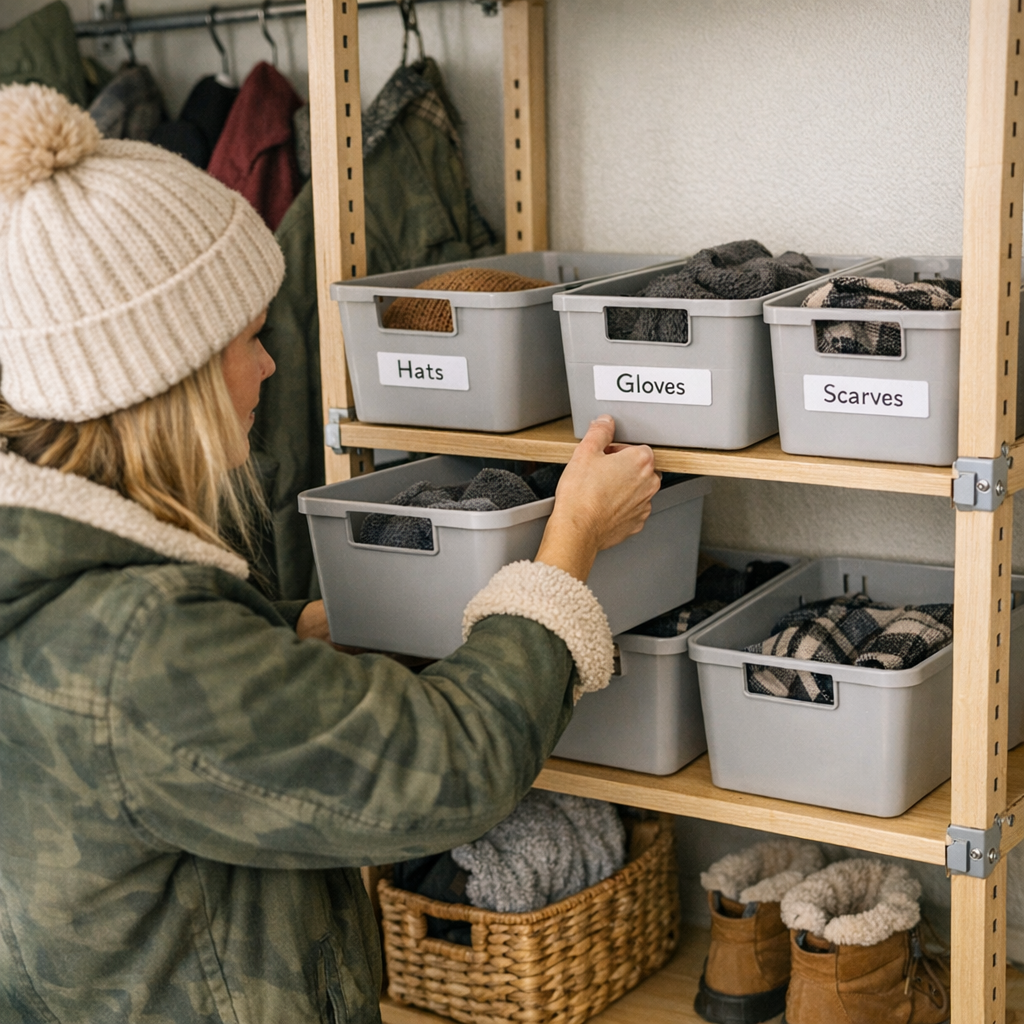
    Picture a shelf lined with bins so tightly packed, there’s no room to breathe. Every attempt to pull out a bin in the middle requires nudging others aside, pushing labels with every move. At first, those labels on the shelf edge seem like a simple answer—you glance, you grab. But as bins grind past the edge, corners lift, labels shift or tear, and in the scramble to get one kid’s hat or one pair of gloves, you end up with labels stuck to the wrong containers or hanging by a thread.

    It doesn’t implode all at once. Instead, the system wears down—bins moved out of order, categories drifting, labels signaling the wrong contents or missing altogether. What should feel automated starts demanding attention: correcting bins, smoothing stickers, hunting for what used to be easy to find. The original organization slowly morphs into a game of catch-up.

    Where Crowded Closets Expose the Weakness

    The problem hits hardest in the entry closet—a daily battleground. Picture parents grabbing boots from the lowest shelf, kids stuffing backpacks and sports gear wherever there’s space, someone shoving a bin aside to reach for an umbrella buried in back. Nobody stops to handle labels gently or keep categories strict. In the rush, bins swap places—the hat bin drops onto the “Gloves” label, the “Scarves” tag dangles over an empty slot, and by the end of the week, half the bins are misplaced and the shelf is a guessing game.

    Bins tugged out for a single missing shoe often take neighboring labels with them. Adjust one overstuffed container, and the entire section slides into disorder. The result? Labels are never synced to what’s inside, and everyone is back to pulling out multiple bins just to check each one—multiplying mess rather than minimizing it.

    What You Lose When Bins Can’t Move

    Packing bins edge-to-edge seems smart—maximum space, minimum wasted shelf. But in practice, it creates its own bottleneck. With nowhere to shift, bins scrape past labels every time they move—tearing, folding, or simply losing their hold. Adhesive builds up, label corners curl, and sometimes half the category name vanishes. More crucially, as what you store shifts—winter hats today, rain gear next month, overflow toys after that—labels get out of sync, and resetting everything becomes a hassle you put off.

    Soon, relabeling isn’t a once-in-a-while tune-up, but a regular chore. What looked neat on day one turns, within a few hurried mornings, into another source of friction—costing you time every reset as bins and labels fight each other for space.

    The Shift: Bins and Labels Move as One

    There’s a small but powerful upgrade: let bins breathe, and let labels move with the bins. Leave even half an inch between containers so each one slides freely. Labels stuck not to the shelf edge but directly to the bin—or attached with a hook, tag, or clip—stay with their contents no matter where you swap or slide. Now, when you need to shift for a season, re-sort after a school project, or clear out Saturday’s clutter, your system flexes instead of falling apart.

    Choose labels built for this, too—removable, strong, and easy to reposition. Instead of scrubbing away adhesive trails or peeling off remnants, you just move the label with the new bin, skip the sticky cleanup, and keep categories visible in one step. Even as gear rotates—mittens in January, pool towels in June, homework supplies come autumn—everyone knows what’s what, and the shelf stays readable and reliable.

    Spotting When Your Setup Isn’t Working

    The signs aren’t subtle: you reach for one bin and two more tumble. You fish for a scarf, but labels come off in your hand. Containers never seem to be where their labels say, and no amount of resetting keeps things straight for long. Shelf edges start collecting dust, lint, and curled corners as labels detach with every grab. These moments aren’t minor—they’re proof the system isn’t matching up to daily needs, and the labels aren’t keeping up with real life.

    Practical Tweaks That Keep Things Organized—For Real

    Give bins room to move

    Never press bins right to the edge or jam them in tight. Half an inch of space lets bins slide freely, protects labels, and stops the classic domino effect of toppling stacks when you reach for something in the middle.

    Pick labels that flex with you

    Go for strong but removable adhesive, magnetic tags, or hooked label holders. Place them where hands won’t constantly scuff them—on the bin handle, lid, or side. With this, updating or relabeling is a one-step fix, never a full weekend project.

    Keep bins and labels in sync, always

    As categories change, slide your bins, shift your labels, and keep order without fuss. From winter gloves to summer sandals, your shelf stays current—not just visually tidy, but actually functional.

    Notice hiccups and adjust

    If bins become a puzzle to access or labels fade out of use in just a few weeks, recognize it’s not you—it’s the setup. That moment of repeated reshuffling means it’s time to give the system more space and flexibility. The ease shows up in the morning—the right bin, the right label, no double-checking.

    The Payoff: Organization That Stays Useful

    When storage adapts, categories remain visible, resets stay quick, and the structure holds up on your busiest, sloppiest days—not just for tidy photos. Shelves become faster to use; you spend less time hunting and more time simply grabbing what’s needed. Family routines run smoother, entryway clutter gets contained, and every bin earns its keep long after “organizing day” is over. That’s the quiet but real payoff: a space that works as hard as you do, season after season.

    Find more practical strategies and products to keep your storage working at ClosetWorks.
  • How Console Cabinets with Drawers Transform Entryway Organization and Daily Flow

    The entryway looks fixed—shoes vanished, chargers invisible, stray mail gone—until you try living with a closed-drawer cabinet for more than a weekend. The first impression is pure relief: surfaces clear, the path to the door finally open, and the messy pileup replaced by order. But the moment real routines kick in—morning scrambles, crowded returns, and hands full of keys and mail—what appeared “organized” quickly strains under the weight of daily use. Here, the gap between looking tidy and actually working starts to matter.

    First Impressions: Clean Surfaces, Calmer Spaces

    Pulling the entry zone under control gives immediate visual payoff. Sideboards, console cabinets, or slim storage benches hide the chaos fast—walking in, you see nothing tangled, nothing spilling onto the hallway. Traffic finally flows instead of bottlenecking around a pile of sneakers and dropped mail. But what works for a single evening—hidden clutter, smooth surfaces—will be tested hard during the next ten hurried departures.

    The energy shifts once routines cycle through. If a cabinet makes it easy to stash everything out of sight, it rarely makes as much sense when you’re late or carrying five small things at once. The first sign is simple: you start opening the same drawers twice, or push past one “put away” item to reach the things you actually need.

    Routine Friction: The Real Entryway Challenge

    This is where hidden storage, for all its visual calm, begins to fight back. The weekly rhythm exposes the flaw:

    • It’s midweek. You’ve got a stack of envelopes, an extra set of keys, your phone’s nearly dead, and shoes half-on—none of it placed precisely where it belongs.
    • You yank open a slim drawer: keys jammed behind chargers, more mail blocking movement, and the item you thought you “put away” missing entirely.
    • Movement stalls in the tight zone—someone waits behind you, another person edges around the stuck drawer, and underfoot, a rogue sneaker blocks the route.

    Instead of quick retrieval, you repeat the same gestures—rummaging, reshuffling, searching again. Surface clutter is gone, but the inside logic falls apart with everyday speed.

    Why Closed Drawers Alone Aren’t Enough

    Closed systems trade visual relief for slowdowns beneath the surface. With an open shelf or basket, you can throw keys, kick shoes onto a rack, or grab a charger in a blink—messy, but immediate. Closed-drawer cabinets demand memory, order, and precision, especially if nobody agrees where anything goes. When drawer zones blur—mail in the key spot, chargers choking up the hat bin—retrieval friction spikes, and “put away” becomes “lost inside.”

    • Drawers fill and overflow fast if categories drift even slightly.
    • Resetting the whole entry takes longer and happens more often as items pile out of zone.
    • Overflowed or misused drawers start quietly reopening the surface clutter—mail left on top, keys tossed anywhere, the cycle restarting.

    The tidy cabinet front survives longest, but inside, chaos builds until the next forced reset.

    Comparing Open vs. Closed Storage in Real Use

    Open storage gives up on tidiness but wins for speed: shoes are visible, the mail pile is obvious, and nothing asks for memory. Closed-drawer setups bring instant calm but can’t keep up with messy, real patterns—morning traffic, overlapping users, and things “temporarily” thrown in. When the inside gets disordered, closed storage becomes a traffic bottleneck and a source of tiny daily irritation: opening, rooting, reshuffling, repeating.

    Look organized once, but slow everyone down forty times a week—and tension creeps in around every ordinary use.

    When Logic Breaks Down: The Cost of Vague Zones

    The deeper pain hits when one cabinet section becomes the unplanned overflow: the “miscellaneous” drawer collects every orphaned item, and suddenly, finding a charger means digging through library books, loose coins, and last week’s mail. If the entry is narrow, the extra seconds standing blocked by an open drawer magnify—especially during grouped departures or late returns. In setups where wall space is used but not organized with interior dividers or trays, even a slim cabinet’s footprint can turn entry flow into a series of stutters and sidesteps.

    A cabinet that promises order ends up shifting the clutter just out of sight—until you feel the slowdown where it matters most: leaving, returning, and resetting the zone between uses.

    Building Real Order: Dividers and Defined Zones

    Nothing improved until the storage inside changed shape: simple dividers, trays, and fixed zones—one for each recurring group of things. The smallest difference: trays for keys and coins. Mail gets a slot, not a loose pile. Things “just passing through”—library returns, random notes—gain a defined limbo, cleared on schedule before it grows toxic. Each item starts and ends in the same spot, so retrievals are single-motion, not long hunts.

    • Designated sections mean no shuffling, no guessing, and faster movement for everyone crossing the entry zone.
    • Surface stays clear because items return home instead of orbiting edge-of-cabinet or drifting back to open air.
    • The reset burden shrinks; even peak mess resets can be done in seconds instead of a weekend overhaul.

    This is not organizational perfection—just the minimum tint of logic required to keep concealed storage functioning for real schedules.

    Tips for Keeping Cabinets Functional—Not Just Tidy

    1. Assign spaces by both item type and user. If your family or roommates all move through the same entry, split drawers or zones by person to prevent habitual overlap and item-migration wars. It won’t stop the occasional stray glove, but overlap drops fast.

    2. Refuse “black hole” drawers. Label interior trays or use translucent bins. This way, you don’t need to open and scan five drawers for sunglasses, and you’re less likely to let small items vanish under mail pileups.

    3. Set a strict “overflow” rule. Allow a temporary holding slot, but empty it weekly—catching runaway categories before they breed hidden chaos inside the cabinet.

    The Tradeoff: Looks Good vs. Works Well

    True entryway order isn’t spotless, but it lets people keep moving—even in a rush. Console cabinets and sideboards with drawers only pay off if their inside matches the churn of daily routines: wall units, slim systems, even storage benches can all fail if items don’t have fixed, retrievable zones. Looks only last if the system returns everything to its right place, no matter how many hands pass through.

    Great storage isn’t what you barely notice—it’s the setup that never slows you down, never asks you to stop and reshuffle mid-commute, and never becomes a hidden overflow zone. In the best cases, the surface stays cleared not because clutter is buried but because flow, not friction, defines the space.

    Find entry-friendly storage systems and more at Gridry.

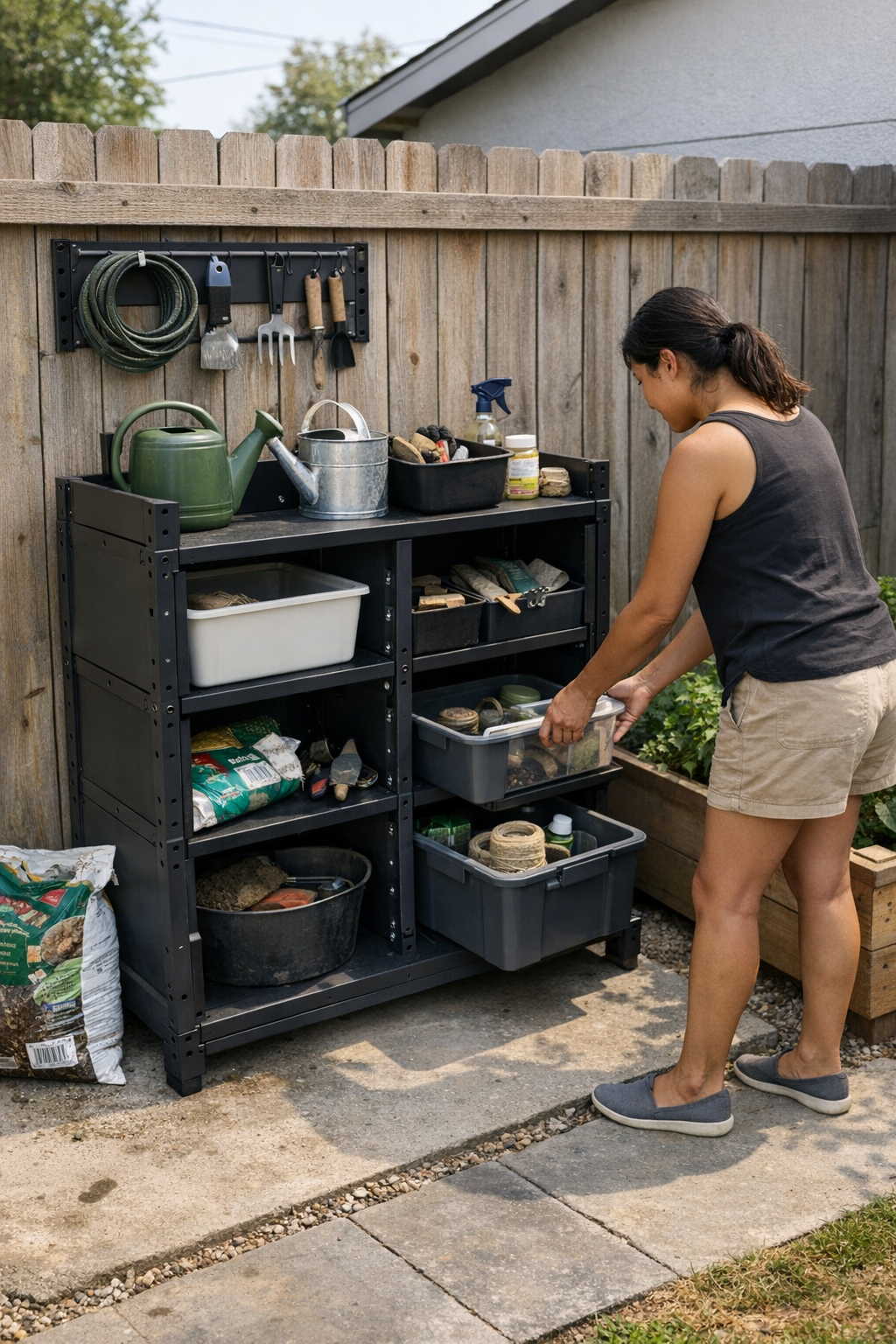
  • Why Edge Storage Transforms Small Yards Into Usable Outdoor Spaces

    In a narrow backyard or tight side yard, outdoor storage can either make your life easier—or quietly trip you up every single day. It’s not just what you buy, but where it actually sits. Stick a bin, cabinet, or bench in the wrong spot, and soon you’re side-stepping bikes, shifting bins out of the pathway, and wondering why every reset feels like untangling a knot.

    Where Storage Sits Is the Difference

    Most people shop for outdoor storage by thinking about space: biggest box, tallest shed, whatever holds the most gear. But in small, hard-working outdoor spaces, the real challenge isn’t volume—it’s movement. That sleek bench or easy-access box looks sharp in the middle of a walkway or play area on day one. By the end of the week, it’s already in the way: bikes get wedged, trash bins block the main route, and what started as ‘organized’ quickly turns into a maze of obstacles you have to dodge just to take out the trash or carry groceries in from the car. Every time you squeeze past, the friction adds up: one awkward sidestep, one box nudged just enough to make the reset harder.

    Most setups don’t fail all at once—they wear you down. That “nearly fits” layout that seemed fine at first becomes the silent reason you skip putting the rake away or leave the kids’ gear on the edge of the patio. Suddenly, every trip outside has a small but persistent hassle built in.

    The Edges vs. the Center: Clearing the Pathways

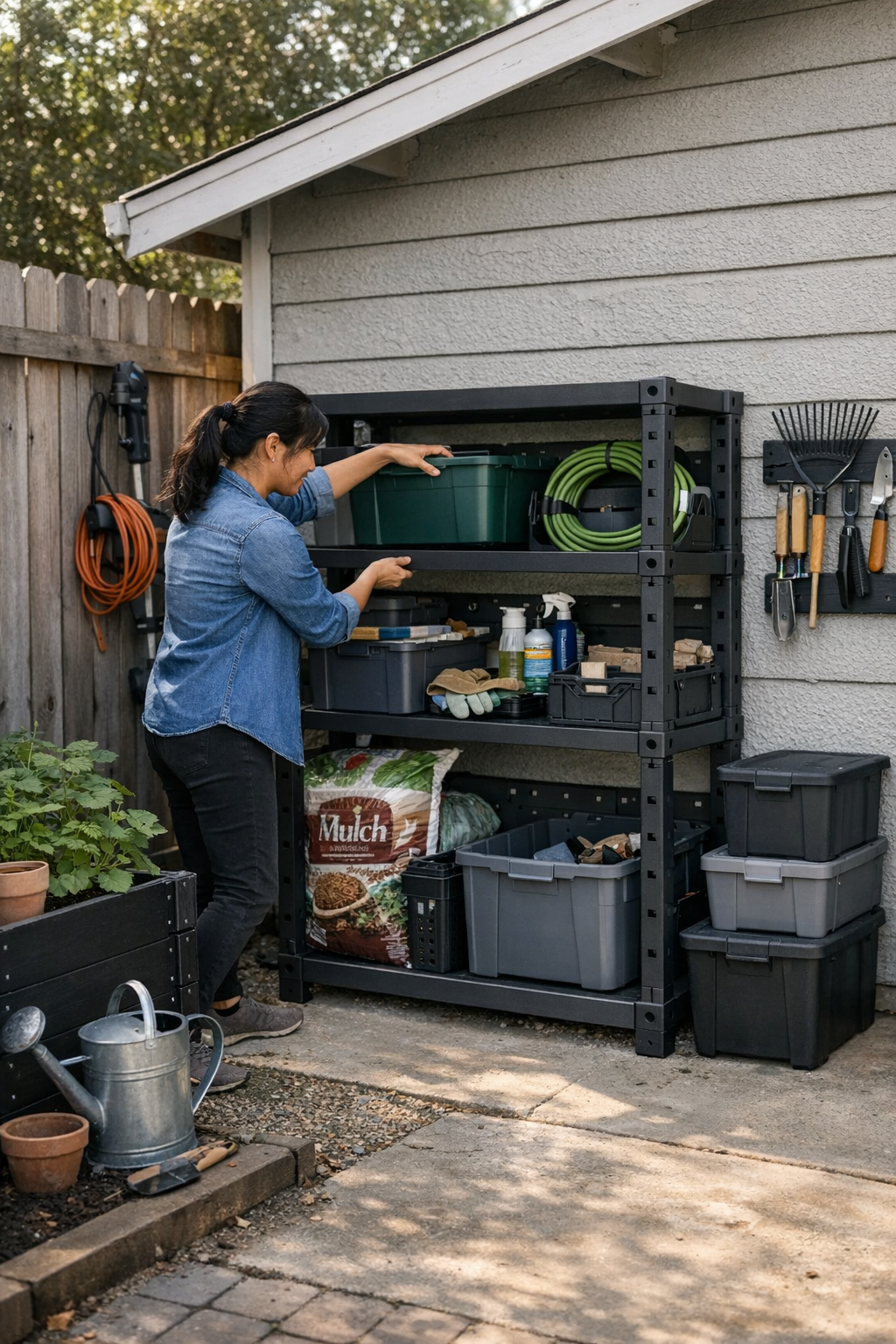
    In mixed-use yards and narrow strips—think bikes, bins, mowers, and a soccer ball all fighting for the same territory—storage needs to mark the edges, not the middle. Push gear up against the fence, under eaves, or flat to the wall, and you un-jam the main flow. Leave a bench or shed in the center and choke points form—sometimes slowly, sometimes instantly. Picture kids coming home and trying to park bikes along a path already squeezed by bins. Parents maneuvering the grill have to slide a tool rack out of the way just to reach the fence gate. It doesn’t take much before you’re shuffling every time you cross the yard.

    Overflow piles up fast when there’s no buffer along the boundary. Centrally-placed storage ends up blocking every possible route after only a few new arrivals: stray toys on the walkway, chair legs sticking into the path, a garden cart marooned in the open because no better spot exists. Every pass-through becomes another loop around congestion. Eventually, even putting something away turns into rearranging half the zone first.

    Real Scenes: The Micro Friction of Small Setups

    Picture a Tuesday evening. The quickest way to the bin is blocked by a wheelbarrow slid too close to a storage box. You set a ball down ‘for a second’—now it’s a fixture for days. Routines slowly break down: putting things back takes twice as long, and stray gear ends up living wherever it landed last because the storage wasn’t truly out of the way.

    Or it’s Saturday morning yardwork. You reach for the rake buried behind a half-open storage bin in the middle of the walkway. Getting it back means lifting lids with one hand, bracing a shovel, and squeezing past a bike that’s now wedged even tighter. Mowers roll through crooked, paths get bottlenecked, and eventually you give up and leave tools out. Small interruptions compound until ‘just for now’ clutter becomes semi-permanent, littering the ground you need to use.

    How Shifting to the Edge Changes Everything

    Sliding storage units right up to the fence or wall—even if that means losing a few centimeters of depth—instantly cuts down on awkward workarounds. The open path stays clear, so walking through with a bike or wheelbarrow feels unrestricted, not like threading a needle. When tools, bins, or toys need to go back, their return spot is obvious and friction-free. The reset becomes a few quick moves instead of a game of outdoor Tetris.

    In one real-world fix, moving all racks flush to the fence (with just enough room for a handle or two) meant bikes once dropped on the patio found a repeatable home. Overflow stopped eating into footpaths. No more stalling while you figured out how to arrange everything just to mow the lawn. Edge storage gives the main area a clear job: for movement, not for parking clutter.

    Test First: Walk Your Routine Empty

    Before adding any storage, lay out the pieces (empty!) where you plan to put them. Walk through the space as if it were a typical weeknight—haul the bike out, pick up toys, imagine taking the trash to the curb. Is there a spot where you have to angle sideways or move bins twice just to keep moving? If so, that’s your pain point. Slide the storage to a boundary and test again until movement feels as close to automatic as possible. Don’t squeeze more in hoping to achieve ‘maximum storage’—protecting the flow is what keeps the yard functional.

    Small Yard Pitfalls: Where Setups Keep Failing

    Overflow traps and junk corners: If you notice a low corner always collects random clutter or you dread reaching for gear because it’s wedged behind something, your current layout isn’t holding up. Dead zones signal storage that’s “out of sight” but never easy to use or put back.

    Wall systems that block more than they help: It’s easy to slap hooks up everywhere, but if you have to move a hose reel just to grab a broom, you’ll start defaulting to the floor. Wall space only counts if it speeds up—and never slows down—the routine.

    Modular pieces becoming moving targets: Stackable bins and rollable benches are great in theory, but in practice you end up shuffling pieces anytime someone else needs to get by. If everything needs to move twice for one thing to go away, the whole system wears out its welcome fast.

    Let the Edges Do the Heavy Lifting

    Sticking to the boundaries isn’t a magic bullet—but it’s the single setup shift that pays off in time saved and frustration avoided over weeks and months. Even after a backyard barbecue or muddy yardwork session, you can shove things into their edge homes and keep the center usable—no epic resets required. Routines stick, flow stays open, and even if life gets messy, the clutter doesn’t blockade your basic movement.

    Perfect yards don’t exist, but setups that work after real-life use are possible. When storage stays on the edge and movement remains effortless through the middle, there’s less reason to slip into bad habits—and way less time lost just getting things back under control.

    For more practical outdoor storage ideas designed for real setups and repeated use, visit TidyYard.

  • How Consistent Cleanup Transforms Your Dog’s Post-Meal Routine

    Post-meal routines with dogs break down fast over small, overlooked weak points. Maybe it starts with a bowl left out for “just a second,” a towel that’s always a few steps too far, or a cleanup that drags because the wipes are buried behind a crate or a spilled toy. What looks like a routine quickly becomes a mess of pacing, glances, or delays—both you and your dog hovering near the kitchen, never quite sure when mealtime is over and rest can begin. This is an everyday friction: the area looks organized, but every cycle adds minutes and micro-stalls, interrupting both your dog’s wind-down and your own next task. DogPile-world routines aren’t shaped by how neatly things look—they’re shaped by how the flow actually performs across repeated use.

    When “Done” Isn’t Done: The Drag of Unclear Transitions

    It happens fast: your dog finishes eating, the bowl sits where it always does, and you plan to reset “in a minute.” Something distracts you, the bowl lingers, and suddenly your dog is planted halfway to his rest spot, waiting but unsure—one paw in eating mode, tail edging toward bed. The house feels settled, but neither of you get the reset signal. Meals never get a clean finish; rest never really starts. The friction here is subtle but constant: a half-cleanup, a bowl that’s somehow always in the way, and a dog stuck in limbo, waiting on you to act.

    This stall-in-place isn’t chaos, but it pulls real momentum out of daily life. There’s no dramatic mess—just a routine that never closes. The delay is small but contagious, slowing down not just the dog’s post-meal wind-down, but your whole schedule. When the “done” moment blurs, your dog circles, the towel hunt drags, and both of you burn extra energy on the same old half-reset.

    The Cost of “Almost Finished” That Never Resets

    Let a few micro-pauses become normal and the day quietly bends out of shape. The bowl left near a bed, the wipes out of arm’s reach, toys scattered underfoot—every friction delays cleanup and pulls your attention off the next thing. By dinner, it’s easy to feel like you’ve spent all afternoon stuck in micro-loops—shuffling bowls, calling your dog back, and running extra laps between kitchen and rest corner. None of it feels big, but every “almost done” eats away at smoothness, energy, and pace.

    The “Half-Wait” Pattern

    Most dogs signal the problem just by standing at the kitchen edge or glancing at their empty bowl. They hang back because nothing says “change mode”—the bowl’s still there, crumbs remain, the area feels unfinished. When cleanup hangs, your dog isn’t sure if he’s still supposed to be focused on food, on you, or on heading off to rest. Both of you end up stuck, neither moving fully to what’s next.

    Where Routine Friction Really Hides

    The tools are nearby, sure, but rarely truly ready. Paper towels behind a crate, wipes buried under grooming pieces, a toy bin you have to sidestep to reach the trash can. None are big obstacles, but stack them up and every post-meal moment stretches. The room looks under control: bowl lined up, toys binned, towels folded for looks. But as soon as mealtime ends, you’re looping, reaching around corners, and pausing to clear another block. The tidy setup reveals its weakness only in the moments you need speed and clarity—the gap between organizing for pretty and organizing for function.

    The Room That Looks Ready, But Trips You Up

    Even visually neat spaces break down under repeat use. Maybe the dog’s bowl crowds her bed; maybe you’re always reaching behind a crate just to get a wipe. The more you go through the cycle, the more awkward each tiny shuffle feels. By the fifth reset, you’re sidestepping past toys, fumbling behind rest corners, and never getting a smooth pass to reset. Even with clear floors and folded towels, something’s always in the way—or just out of reach when you need it most.

    Immediate Cleanup: Turning Reset Into Signal

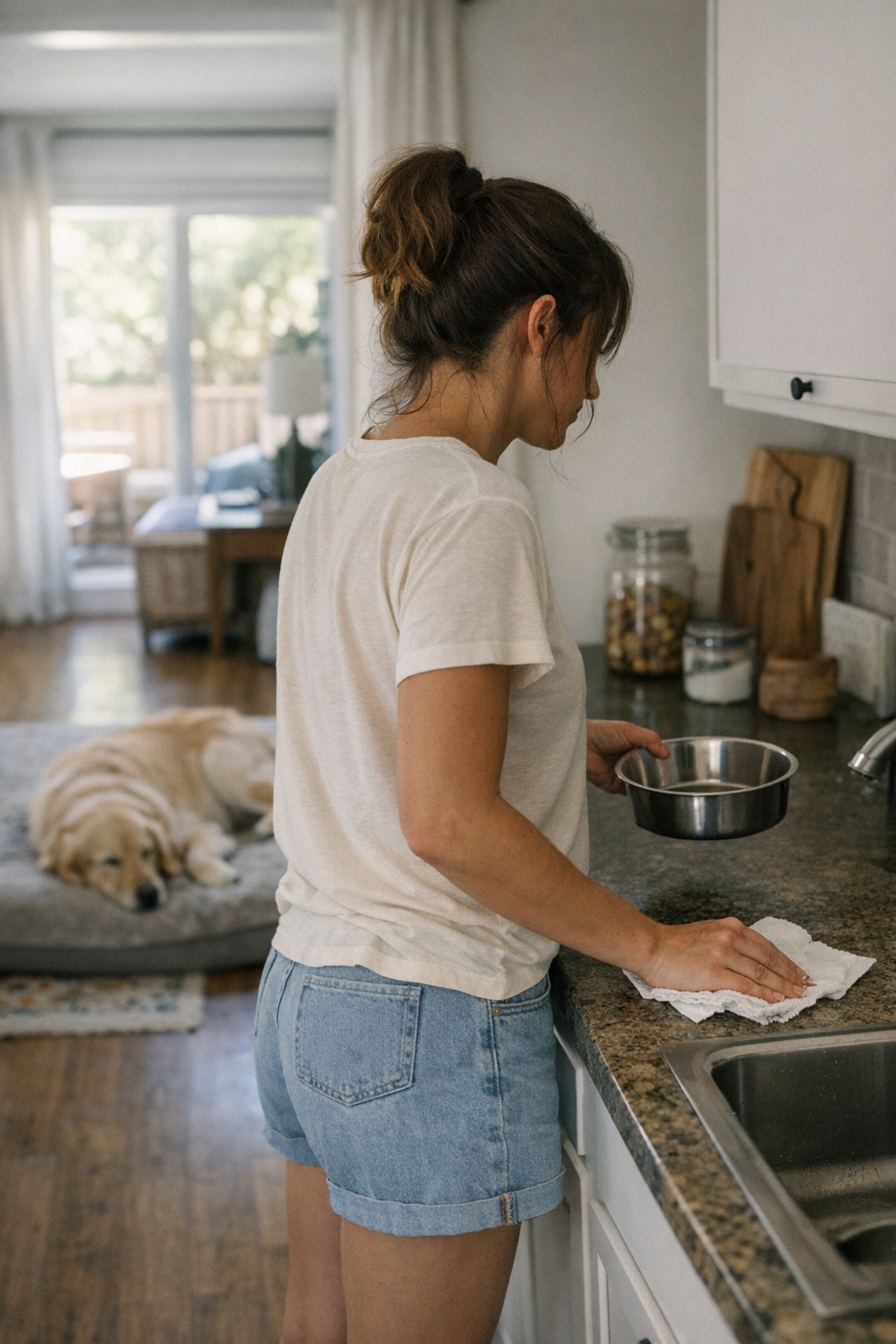
    The difference between laggy and smooth isn’t a new system—it’s committing to cleanup as a visible, immediate anchor. As soon as your dog finishes, the bowl lifts, crumbs disappear, and everything resets before distraction takes over. The dog gets a clear cue—no more circling, no confusion, no leftovers holding back the move to rest. You no longer lose minutes trailing back for wipes or finding the floor blocked by a toy misplaced earlier. Cleanup becomes the “switch modes” signal.

    This single shift returns control to both you and your dog: every meal signals its end; every reset happens without dragging out the in-between. There’s less back-and-forth, fewer delayed settles, and almost no “is it done yet?” energy cluttering up the house. The transition isn’t about speed, but about friction-free flow—the meal ends, the dog moves off, and the day resumes momentum.

    Practical Flow: Ordinary Midday Meal

    Pour kibble, set bowl, step back. Dog eats, you wait, then act. Bowl up, quick towel wipe, crumbs gone. The dog follows your movement, peels off the feeding spot, and glides to bed without waiting for another signal. No repeated calls, no hovering at the doorway, no lingering by an empty bowl. The difference? Every part of the scene closes in one reset, letting both of you swap “feeding mode” for “rest mode” instantly. You get on with your day, your dog gets deep rest, and neither stays stuck in the half-finished zone that exhausts everyone by dinner.

    Repeated Use Finds the Setup’s Weakest Spots

    • Bowl too close to bed: cleanup bumping into nap time, every time.
    • Wipes always one step out of reach: slow response the moment you need quick cleanup.
    • Toys drift by the feeding area: sorting before you can even start tidying.
    • Dog waiting at the door for a signal: neither part of the routine really closes out.

    The most effective setup isn’t just neat—it’s the one that lets you get through the sequence quickly, every single cycle, without tripping on last meal’s friction points.

    Tiny Setup Gaps, Outsize Routine Drag

    Every routine will have its stray moments, but when the setup makes you repeat the same shuffle multiple times each day, the drag adds up. “Just a minute” pauses, towels out of range, and repeated signaling all add weight to the daily flow. If cleanup becomes your automatic anchor, predictability locks in: both you and your dog know the signals, the lines between stages are clear, and the slow creep of repeated friction stops dominating your day. The finish line for one part of the routine becomes the launch for the next—no leftover energy stuck in the middle ground.

    Reset in Practice: Real-Life Checkpoints

    Try walking your own post-meal routine with fresh eyes. Where do you pause? Does a bowl linger where it shouldn’t? Are essential wipes, towels, or bins off by two steps? Does your dog freeze in the hallway, waiting for clearer direction? The difference between a routine you can live with and one that genuinely works comes down to how deliberately you close the loop after every meal. A reset that’s immediate gives the whole house clarity—less drag, less spilled-over energy, and more consistent comfort for both sides of the leash.

    Beneath the Tidy: Structure That Actually Works

    Surface order means little when the actual cycles keep exposing weak points. Try any feeding area across five cycles and watch for where it starts to break: bowls that stick around too long, towels too remote, toys slipping back into food space. The pretty, organized look fades fast if the structure can’t take repeated pressure. The real upgrade is making each clean-up truly easy to reach and reset—again and again—because that’s how routines feel lighter, not just look better.

    The bottom line: looking tidy is only a head start; real payoff comes from a setup that lets you move smoothly from food to rest without dragging out the reset. When your cleanup is ready and instant, your dog gets clearer signals, you cut out the hidden friction, and your day stops stalling at the very step that’s supposed to restore momentum.

    Explore more setups and practical solutions at DogPile

  • Why Proper Fixture Placement Beats Stretching Wiring Every Time

    Most indoor lighting “solutions” fail the minute you walk through a room after dark. It’s not the light itself—it’s where the light lands and what it misses. Real friction starts as soon as you reach the stairway landing and half the steps vanish in shadow, or you stand at the bathroom mirror and find your face sliced in two by glare and gloom. Wiring-led fixture choices might fill a floor plan, but they rarely fill the needs that show up during an average week: squinting to match socks in dim laundry corners, hunting for a hallway light switch while hugging the wall, or shifting position just to see your own reflection clearly. The difference is sharp: a room can look lit and still tangle up the routines inside it. That gap is where daily discomfort creeps in, and it’s where the real work of indoor lighting begins to matter.

    When “Good Enough” Placement Is Never Quite Enough

    Blueprints make any fixture look like an improvement. But the first rushed morning or late-night errand turns flaws obvious: try walking a narrow stairwell and finding the top step lost in murk, or using a mirror split between daylight and darkness. Fold laundry beneath a ceiling light that looks bright on paper—the cabinet edge still disappears under shadow, no matter how many times you swap bulbs. These persistent annoyances trace back to one root cause: lighting picked for cable reach, not for real use. Fixtures that only serve the ceiling leave the people below making constant adjustments, each awkward gesture a signal that placement—not brightness—is the heart of the problem.

    Shadow lines and missed targets stack up over time. Every day, routines reveal the underside of poor placement: half-lit stairs start to feel dangerous, split hallways keep you hugging walls, and a “bright” kitchen leaves your work surface indistinct. Even a new install becomes another source of low-level strain—stepping slow, hesitating at corners, squinting at mirrors—while the “solution” cements the inconvenience you hoped to solve.

    Why Fixture Placement Shapes Every Movement

    The critical mistake keeps repeating: putting the fixture wherever the existing wire just barely reaches—the result is a room that looks illuminated but functions as a patchwork. Problem zones include:

    • narrow hallways with hard corners or branches
    • stair landings where pooled shadow covers the top step
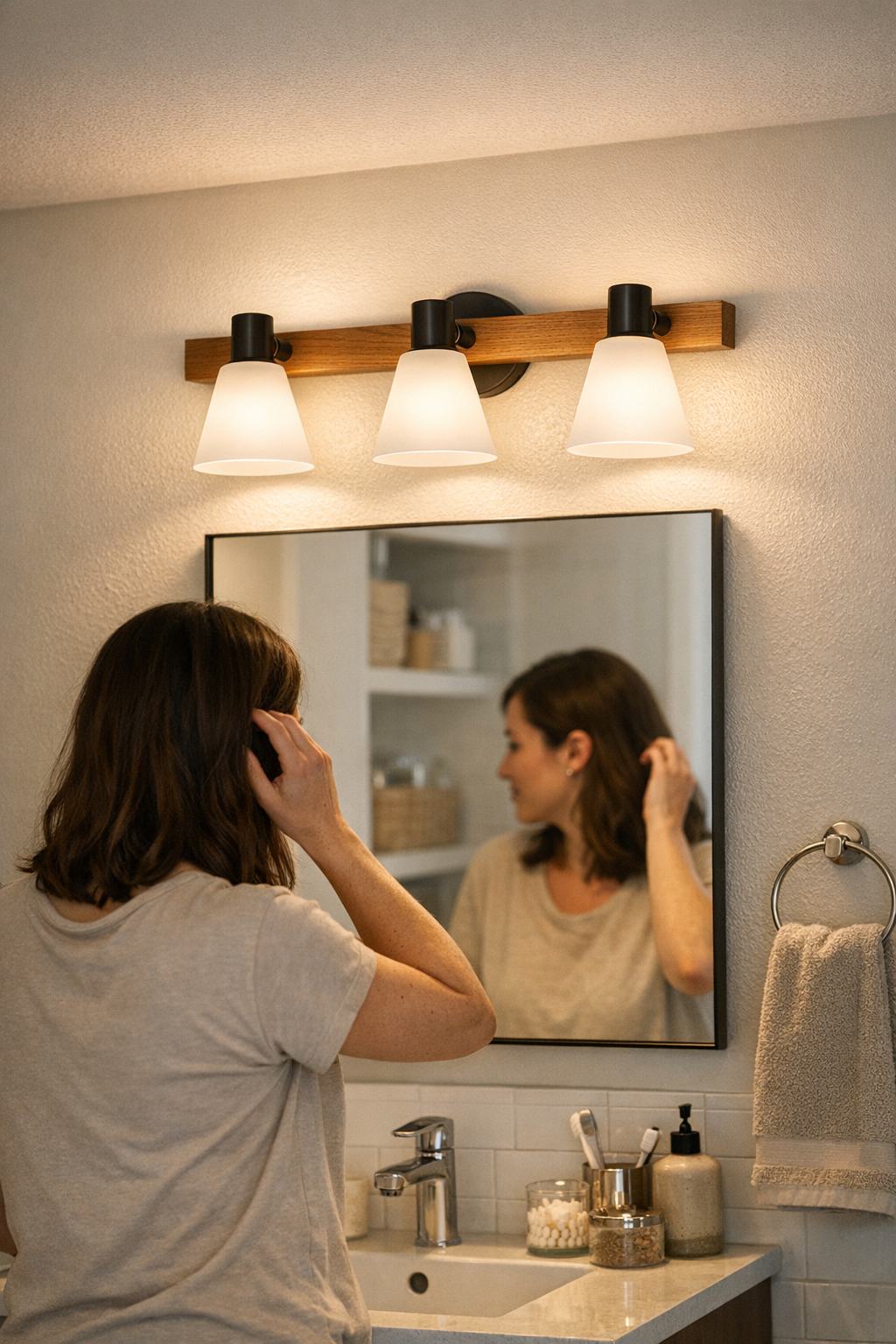
    • bathroom mirrors that see real grooming, not just appearance
    • work surfaces, cabinet runs, or entry points with tight task needs

    An off-center ceiling mount or a wall light set to dodge new conduit doesn’t just look odd; it builds in frustration. Shadow sprawls across counters when folding linens, grooming turns into a battle with glare at the mirror, and every corridor walk becomes a test of memory and confidence as one side slips into darkness. Placement always trumps power—no bulb will fix a bad angle. The moment your behavior changes just to get basic visibility, the fixture’s in the wrong spot.

    Surface Brightness vs. Useful Light

    A stronger bulb fools you for a minute. Surface-level glare only shifts shadows, never removes them. Brighter bulbs deepen contrast, throwing edges into sharper shadow and increasing discomfort where you need calm, even light—the mirror glares, countertop details blur, and every routine slows down. In bathrooms, a face divided by brightness and dark makes shaving or makeup unpredictable. At the kitchen or laundry counter, you lean away or stretch sideways, searching for a usable patch of light. The point is blunt: placement commands every movement, while wattage fights a losing battle with the room’s shape and activity zones.

    Typical Frustrations that Linger After “Quick” Installs

    Real routines draw out the pain points. Here’s where rushed installs, guided by wiring not need, fail over and over:

    • Stairways stuck in semi-darkness. The top or bottom turn is always a risk; every load of laundry or sprint upstairs is slower, more watchful.
    • Hallways with one safe lane. Nighttime trips push you against walls just to stay oriented, the other side lost in shadow.
    • Mirror zones that drain patience. Shadow splits, glare blinds—fixing it after is nearly impossible without shifting the light itself.
    • Cabinet and laundry counters veiled in gloom. The room looks bright at a glance, but the working edge blurs away when you need it.
    • Everyday routines become slow and awkward. Even grabbing keys or folding towels means awkward angle changes and repeated squinting—tiny tasks that never feel simple.

    This isn’t a list of minor headaches—it’s a diagram of how a single shortcut during install locks in inconvenience that you feel every single day.

    What Happens When You Respect the Room—Not Just the Wiring?

    Fixing this isn’t about gut renovations or expensive rewiring. A modest move—adding a short conduit or shifting a fixture by just 30 centimeters—can erase the gloom that slows you down. A subtle fixture shift will bring continuous, balanced light to laundry workspaces, restore full visibility to hallways, or finally let the bathroom mirror show your whole face in normal use. The outcome is not about visual “wow”; it’s about the muted sigh of relief when you realize you aren’t tripping, leaning, or second-guessing your movements as you cross, groom, or work.

    Smart placement delivers, every time:

    • Shadow control: banishes awkward darkness from stairs, mirrors, and work surfaces
    • Natural movement: lets you walk, fetch, or groom without caution or extra steps
    • Consistent comfort: calms glare, reduces eye strain, and keeps sight lines balanced
    • Routine flow: makes habitual tasks straightforward, not slowdowns to be managed

    Tip: Quick Coverage Test After Installation

    After installing any new light, stand at each main zone—stair turn, mirror, countertop—and do what you usually do. If you find yourself shifting, craning, or avoiding glare and shadow, the placement still needs work. Sometimes a small shift or changing to a flush mount, wall sconce, or task fixture is enough to reshape the whole experience.

    Shortcuts in Wiring Always Reappear as Long-Term Hassle

    Forcing wires or gambling on awkward box placements saves almost nothing. What you really get is a ceiling that looks finished but never actually helps. Electrical shortcuts tie you to years of minor but constant hassle: dark steps, incomplete mirrors, vanishing cabinet edges, and daily routines that always take more attention than they should. What’s saved at install is lost in every repeated annoyance—clipped movement, hesitancy, the ongoing sense that the room won’t quite cooperate.

    The best lighting setups start when fixture placement is dictated by repeated use—not just the nearest wire. Bathrooms, hallways, laundry rooms: all of them reward moving the light just enough to line up with the real pathways and tasks that fill your year. Skilled installers and savvy homeowners know it’s the small, targeted change—a fixture nudged to the right spot, the right fixture in the right role—that adds up to hundreds of quieter, easier routines. Change the placement, and the room finally works for you, not against you.

    Ready to make your space as usable as it looks? Explore practical indoor lighting solutions at LightHelper.

  • Small Fixes That Prevent Daily Car Setup Frustrations and Stress

    Every neat car setup has a weak spot. You feel it the moment you drop back into the driver’s seat: the phone cable is never where you expect, the seat cover slides just enough to need another tug, or the trunk organizer forces an awkward reach for the thing you use most. What started as “finally organized” quickly becomes “why am I hunting for this again?”—a pattern that repeats with every errand or after-work drive. The more organized things look, the more friction you notice as routines break down: cables slide out of reach, items drift just beyond a quick grab, and small adjustments eat into your drive-before-you-drive. These aren’t one-time annoyances—they’re the reason a car that appears settled is still a daily hassle.

    The Hidden Cost of a Setup That Only Looks Organized

    Even the tidiest car setups show their real shape under daily routines. A cable that sits perfectly during setup finds its way to the floor after two days of random stops. A seat protector that looked like it would never move gets pulled, bunched, and nudged out of place just by normal entry and exit. It’s not the occasional messy trip that exposes weak structure—it’s the grind of repeated errands, hurried loading, and the constant in-and-out that highlight function gaps.

    The test isn’t the first impression. It’s the third or fourth time you find yourself bending for a fallen cable, resetting the seat cover before sitting, or digging around a cargo bin that stacks storage at the cost of usable reach. These problems rarely get noticed in a showroom. They show up as stress tax in the pace of everyday life.

    Recognizing Early Friction

    The most telling friction points aren’t dramatic—they’re the subtle ways a weak setup makes you work harder without thinking. Signs you’re overdue for a real-world adjustment include:

    • Cables that consistently drift behind the console or under the seat, forcing you to search or scrape your knuckles during the busiest rush.
    • Seat covers that bunch up or creep away from the seat edge so you end up pulling and realigning more than driving.
    • Organizers that gather clutter in one place but require a full unload to grab one must-have item.
    • Accessories that are meant to reduce mess but add steps, slow loading, or force corrections before every ignition.

    It’s not about getting the car perfect. It’s how much correction shows up as part of your normal motion. The more invisible obstacles you’re clearing for the next drive, the more your setup has turned into background resistance that never fully fades.

    Real Use Makes the Flaws Obvious

    Picture this: groceries in one arm, phone and keys in the other, you kick the door closed, reach for your charging cable—and it’s nowhere. It slipped between the seat and console again. Now you’re twisting, shoving the grocery bag onto the seat, rooting around for that elusive cord while the car idles. Or consider the seat cover: after just a few days of routine use, the back edge is permanently out of line, forcing you to shift and re-anchor it every time you sit. None of these scenes is dramatic, but they happen daily. The fix isn’t in tidier setups—it’s in anchored accessories that stay put during the thousand small movements no “before” photo can capture. You shouldn’t have to restart your setup before every drive.

    Why Looking Good Isn’t Good Enough

    Instagram neatness doesn’t survive real life: out-of-sight cables mean more reaching; single-bin organizers turn into hidden piles; perfect symmetry gets broken by two days of actual movement. For anyone sharing a car, juggling short stops, or ferrying kids, these first-glance solutions give way to slower grabs, missed charges, and time lost untangling the “organized” zone. If you keep having to reposition or dig for essentials, your setup is failing the motion test. The difference isn’t just visual—it’s functional, and you feel it every time you drive.

    Choosing Anchored Accessories for Real Routines

    Small adjustments deliver the biggest changes. A low-profile cable clip transforms the cable hunt into a one-move grab. Seat covers with actual anchor points or grippy undersides won’t shuffle after every use. Multi-access organizers keep routine items a reach away, not a rummage away. The shift is visible within days: cables stay present, seats don’t need constant tugging, and each stop is just in and out—no corrections, no resets. The effect builds: less lost motion, more friction removed, and a routine that falls in step with your actual habits.

    Seeing Through the “One Big Compartment” Trap

    The all-in-one bin or giant seat-side pouch might promise order, but it slows you down when it matters. In use, these solutions pile essentials together, turning every quick grab into a shuffle. Few things are more frustrating than dumping half a cargo bin just to fish out a phone charger or emergency glove. The right organizers separate items by reach—not just category—so daily-use gear never gets buried beneath seldom-used stuff. If your routine involves constant in-and-out, open-sided or multi-entry organizers make every stop faster and future searching unnecessary.

    Seat Covers: Looking Stable Isn’t Always Stable

    The quick-fix “universal” seat protector never advertises what really happens after a week: slipping inch by inch, bunching under legs, and demanding constant readjustment. Any cover without real anchor straps or a seat-gripping texture becomes another maintenance task disguised as protection. If you’re pausing to fix a cover more often than you’re cleaning spills, the accessory built to help is quietly doubling your work. The right cover is the one you stop noticing—because it stays put, drive after drive.

    Connecting Form with Real Function

    The best car interior doesn’t just survive a photo; it survives you coming and going, loading and unloading, plugging and unplugging, a dozen times over. Each time you’re forced to realign, untangle, or dig, it’s a signal your setup is more for show than for driving. Accessories should remove, not add, steps from your routine. Good design disappears into the background—delivering function first, order second.

    If you’re still reaching, searching, or correcting after every drive, it’s your setup—not your habits—that’s slowing you down. Swapping just one loose accessory for an anchored, purpose-built piece can reset your whole routine. The answer isn’t a new car. It’s an interior that finally keeps up with your real schedule—and doesn’t make you pay with motion and patience every single trip.

    See practical, anchor-first car solutions at DriveWellSupply.

  • Streamlining Pet Travel Walks with Practical Bag Organization Tips

    Most pet travel routines don’t fall apart because you forgot a key item—they break down because small, repeated slowdowns keep stacking up every time you move. That “ready-to-go” bag by your door feels solid at home, but any normal outing exposes its limits fast. You reach for a wipe and come up empty, dig through twice-zipped pockets, or fumble with overlapping leashes and waste bags just to handle a routine pit stop. By trip three, every pause to search or double-check becomes its own cost—less a one-off mistake and more a recurring interruption that drags at each restart. The difference between set up and actually workable? It’s not neatness. It’s friction—or the lack of it—and the PawGoTravel world starts where most setups start to slow down.

    Where Smart Packing Breaks Down in Real Travel

    The at-home confidence is deceptive: everything stored, everything zipped, bag at hand. Fast-forward to a real travel hour. You’ve got your leash, your pet is already pulling, and your bag is loaded—yet retrieving a single item means two-handed juggling while your dog circles the parking brake. Those well-considered inner pockets? They quickly become barriers at the exact moment you need one thing fast. Even for short errands or pit stops, the supposed “organization” forces repeated stop-and-shuffle, breaking rhythm just to keep up with a pet that never waits for your perfect setup. By the end of a round of errands or a drive broken by multiple breaks, the neat bag that looked ready is now just in the way—slowing cleanups, tangling gear, testing patience every restart.

    The Hidden Cost of Slow Access

    Organization that hides away essentials creates friction you only feel once you’re on the move. Reaching for a cleanup bag that’s slipped behind a pouch, or finding wipes crammed out of reach, doesn’t just delay you—it messes with the whole stop. Now your leash is twisted, your dog is wriggling, the wipes take that crucial extra effort, and what looked “ordered” at home demands finger acrobatics on a crowded curb. Pet-side movement forces you to feel every step: the more you sealed things up, the more you have to open and close, reshuffle and dig. Under pressure—whether it’s a sudden muddy paw or a rush to get back in the car—the order flips against you, slowing every movement that counts.

    Real-World Example: The Two-Bag Test

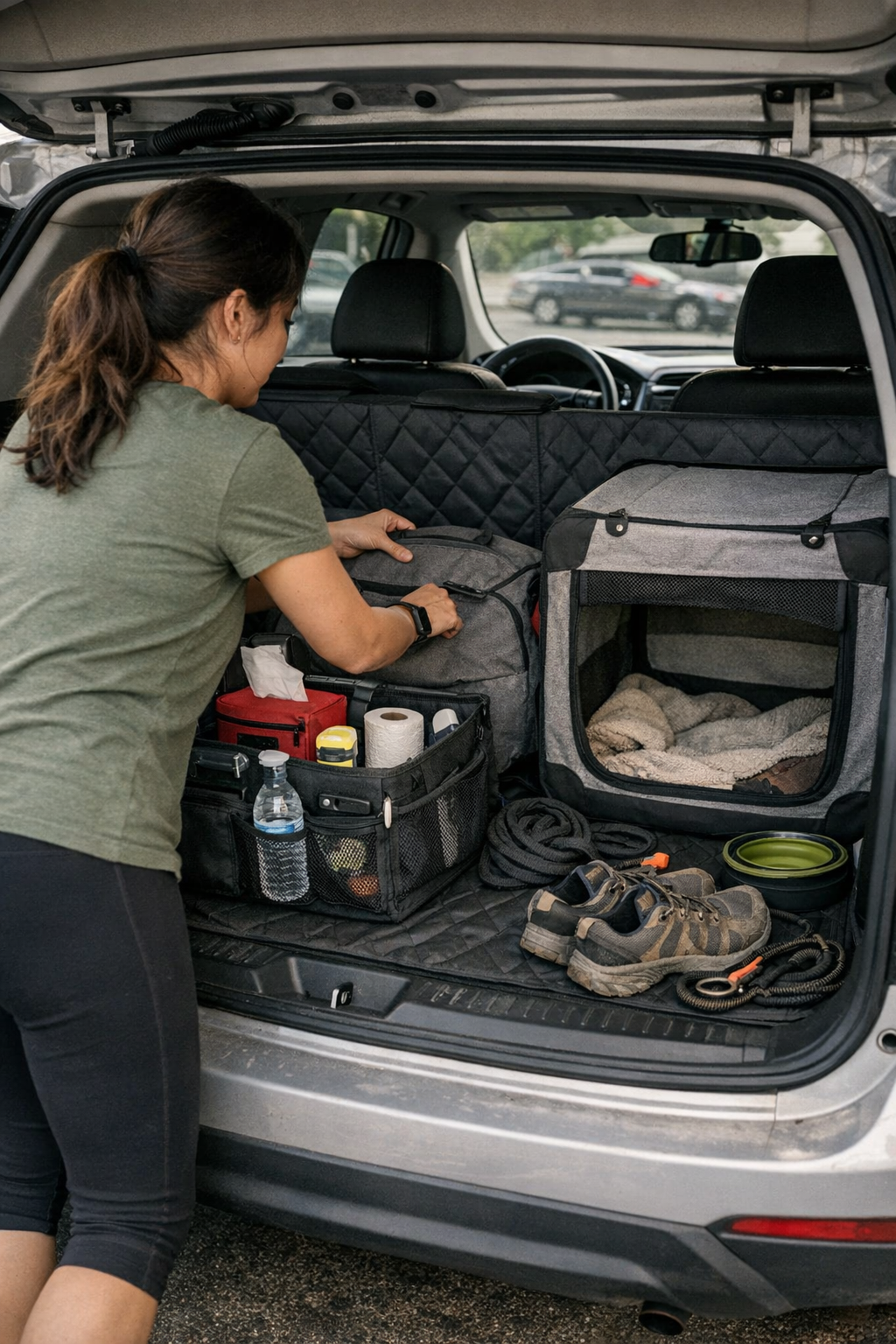
    Lay two setups in your trunk: one, all items in their calculated compartments, zipped and sorted; the other, just core items in a single open side pocket. The first looks ideal as you load up. But once you’re juggling leash and carrier at a busy stop, you notice: two hands to open, inside lining snagged, dog pulling while you hunt for one buried bag. Each small slow-down is invisible at home—painfully obvious in stop-and-go routines. With the looser setup, you reach for waste bags or wipes in one motion, before your pet can make things harder. By round two, the payoff is clear. The edge isn’t visual—it’s practical, under pressure and repeat handling.

    The Trap of Visual Order

    Packed appearance isn’t functional readiness—pet travel tests how easily you can actually access what you need, right when you need it, over and over. If every walk, rest stop, or bathroom break triggers the same hunt for a treat pouch or the right cleanup item, that’s not readiness—it’s an interruption loop. Bags that bury most-used gear inside neat sections guarantee repeat frustration. Unzipping, rooting, closing again—it’s a routine that turns micro-delays into mounting stress, draining your flow and patience as you retrace the same slow pattern each outing. Eventually, the bag itself feels like one more thing you have to fight, not a tool helping you move.

    Single-Pocket Reach: A Simple, Lasting Fix

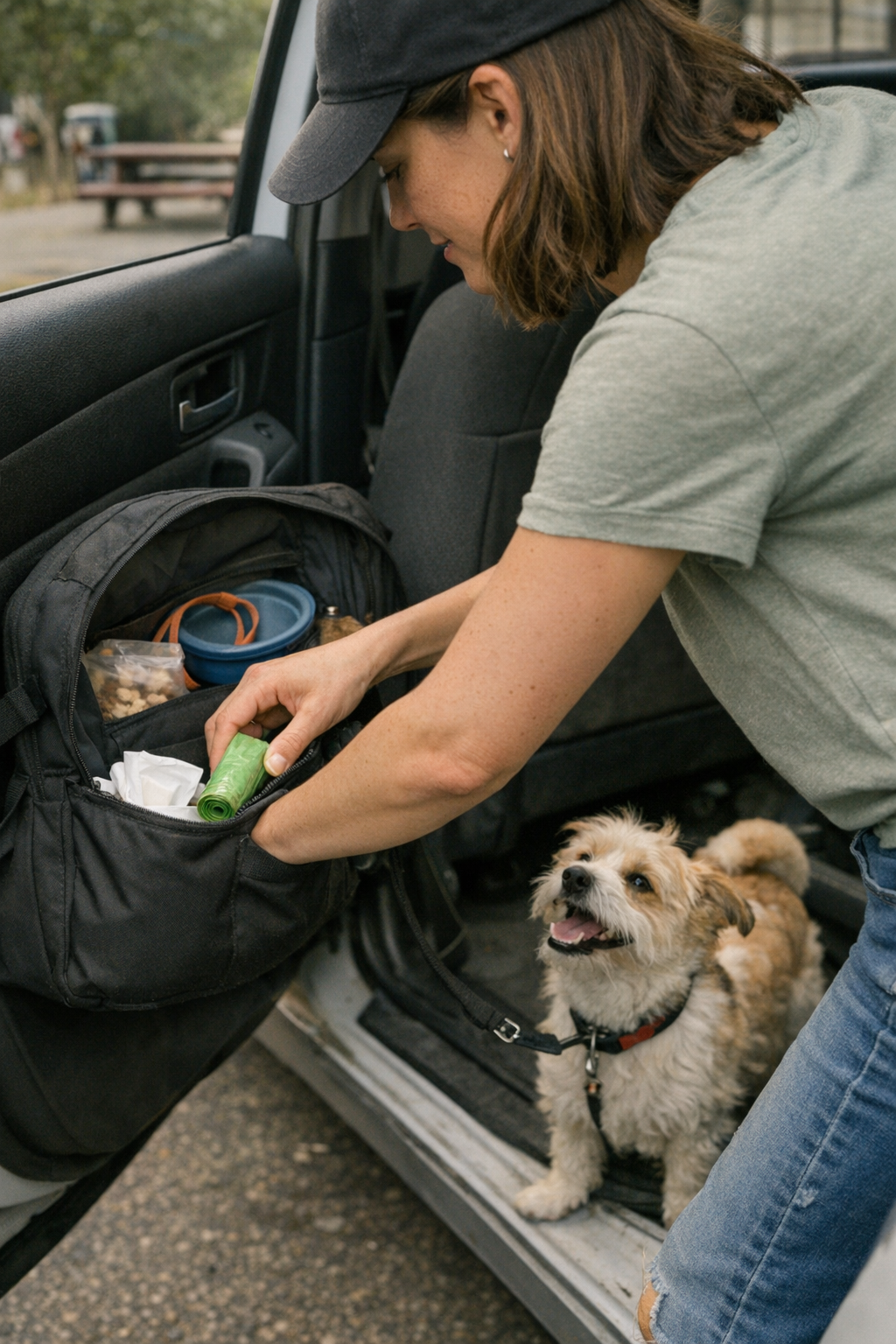
    The best way to cut repeat friction isn’t by adding more pockets or gadgets. It’s as direct as putting high-use cleanup supplies and quick-grab items into a single exterior pocket, always on the same accessible side—angled toward where you exit the car or step off a curb. That side-pocket needs zero explanation: at each stop, your hand lands right on the wipes or waste bags, and you’re already handling your pet before they ratchet up the chaos. There’s less “order” inside, but it stays easy to reset. Even if a backup leash tangles with a toy at the bottom, your main essentials stay one move away. The interruption is gone where it matters: the restart, the moment your setup usually stumbles.

    Why Owners Resist This Change

    It’s tempting to pack for maximal order, thinking more mini-pouches equals less mess. But real travel exposes this: too many compartments create more steps, not less friction. The pet-travel setups with the fewest mid-stop interruptions almost always have a single quick-access spot for daily-use gear, even if the inside isn’t catalog-pure. A “used” layout that puts wipes, waste bags, and leash clips into a side pocket is simpler to handle at every restart, every bathroom rush, every muddy-paw recovery. Once you live through a few awkward stops, giving up a little internal tidiness for real-world speed isn’t just logical—it’s obvious.

    The Real Measure: Less Drag, More Flow

    A few trips in, the wins are concrete: fewer resets, faster cleanup, no more opening the wrong pocket under pressure. The right pet travel setup is the one that stops slowing you down by the third stop, not the one that photographs well before your first walk. Repeated use without repeated rearrangement is the real cost-saver—less time rearranging, more time moving, fewer chances to fumble with leash, keys, and cleanup gear all at once.

    This isn’t a theory any traveler can ignore. If you’ve scrambled for a wipe while your dog is muddy and your patience thin, the value of instant side-pocket reach is obvious. The whole trip feels lighter not because your kit is pretty, but because every needed reset is faster, simpler, and happens with almost zero thought. You start reading your bag by muscle memory—hand on pocket, wipe out, problem solved—and each transition is smoother, every ordinary stop less of an energy drain.

    Building a Pet Travel Setup You’ll Actually Use

    The best pet travel setup isn’t about first-use neatness—it wins at the seventh stop, when you’re not fumbling, not irritated, and not slowed by your own gear. Travel routines that keep key items instantly accessible turn every pause and restart from a mess into an easy reflex. The right setup handles interruption before it starts: quick grab, no digging, no extra drama. Pet travel stops being a series of fights against design decisions and just becomes movement again—ready when you reach, reliable with every routine use.

    Find practical pet travel gear designed for repeated, real-world use at PawGoTravel.

  • How Strategic Nap Placement Calms Indoor Cats and Reduces Evening Stress

    The mistake shows up fast, but never all at once. You set up a soft cat bed—maybe a fleece blanket, freshly washed and squared at the living room’s edge, clear of the walkway (or so it seems). It looks right for a day or two. But then the routine frays: you’re pulling toys out from under the blanket, shaking off crumbs, or re-smoothing a rumpled surface every evening. Your cat circles the area, dozes briefly, abandons halfway through a nap, and by dinner you’re hearing restless yowls or those unmistakable pre-zoomie signals. You got the fabric and spot “just so,” but the problem isn’t comfort—it’s interruption. With most indoor cat setups, it’s not the plushness that fails first; it’s the placement. Where the rest zone sits decides whether it survives your real routines—or just looks tidy for photos.

    Why Cat Naps Keep Getting Interrupted

    Every household has a rhythm: footsteps, dropped keys, doors, the vacuum’s whine, kitchen clatter, or feeding corners that double as corridor. Even if the bedding is plush and cool, if the setup sits in a busy lane—a spill zone near the kitchen, a corner skirting the litter box, or the foot of a high-traffic couch—it constantly absorbs stray interruptions. The nuisance isn’t always dramatic. It’s a toy skittering under the blanket during morning play, a dusting of litter tracked up by afternoon, or a too-close shoe print marking the nap zone’s edge. Each small disruption chips away at your cat’s rest until you’re both dealing with agitated afternoons and needy evenings—proof that comfort materials alone won’t rescue a poorly positioned space.

    When “Organized” Isn’t “Usable”

    Tidy isn’t the same as functional. You can line everything up, vacuum around it, and flatten the blanket daily, yet a week in, the routine sags: shoes overlap the corner; feeding time leaves crumbs inching dangerously close; and you’re fetching a missing mouse toy for the third time by dinner. If your cat is abandoning naps early or seeking out weird corners despite everything looking clean, it’s not the pillow’s fault—it’s a friction point built into daily foot traffic, clutter drift, or overlapping chores that your original “neat” placement couldn’t block.

    Small Frictions That Stack Up

    When you trace a hectic hour in a real home, the friction points multiply:

    • Nap bedding creeps into walkway space as people loop the table or kitchen—each pass knocks the setup askew.
    • Morning meals scatter kibble toward the blanket; the favorite toy ends up lodged underneath after five minutes of play.
    • Afternoon cleanup brings a mop or broom perilously close, and footsteps shake the spot mid-nap.

    What shrinks isn’t comfort—it’s usable time. The main nap area stays empty unless the house is quiet. The rest of the day, your cat flips between shallow half-naps, loitering by doorways, or scouting for some other stable corner, burning energy just avoiding the next interruption. You end up in the same loop: fixing what the layout let unravel.

    Toy Drift, Litter Trails, and Continuous Tension

    Some mess hides in plain sight: a single toy, bits of grit, or muddy footprints creeping closer to the rest area. More often, it’s the sense that you’re always “almost caught up” but never actually ahead—bedding that won’t stay put, objects to rescue, one more wipe-down that delays the next routine. By evening, the difference is obvious: your cat is alert, restless, pestering you just as you want to unwind, or doubling down on noisy, persistent play. This isn’t a training or discipline problem. It’s exactly what happens when rest gets layered beneath traffic, spillover, and shifted clutter—so naps break down, and cleanup becomes a daily rescue operation.

    How Placement Makes or Breaks Calm Cat Routines

    The main divider between an easy nap zone and a trouble spot: buffer from repeat disruption. It’s not about hiding your cat away but shielding rest from friction points—paths where other chores, cleaning, or feeding repeatedly collide with nap time. No setup survives a day if it’s part of your to-do loop.

    Small Adjustments, Noticeable Results

    Try a practical shift. Take a blanket that’s always near the litter mat (where scooping, treading, and stray bits show up like clockwork), and move it two steps behind a sofa or against a wall clear of routine passes. Fold the bedding just tightly enough to keep out wandering toys, and avoid overlaps with shoe drop-zones or bag corners. The change isn’t subtle. Suddenly:

    • Naps stretch longer, even when the house isn’t dead silent.
    • Toys no longer roll under bedding or disappear mid-day.
    • You aren’t crawling under furniture for errant fluff mice.
    • Your cat circles less, settles more, and finishes naps rather than starting new spots every hour.
    • Evening cleanup condenses to a quick smooth-over, not a prolonged hunt for crumbs and toys.

    Eliminating every noise or motion is impossible—but when rest is buffered from direct spillover, the nap zone holds up with far less daily maintenance, and the whole routine stops feeling like an extra task.

    Spot the Signs Your Cat’s Rest Setup Isn’t Working

    The real clue is rework: Your cat leaves naps unfinished as soon as dinner starts, or skips the bedding entirely when daily activity rises. Despite a fresh bed or sunny spot, if you’re seeing:

    • Repeated switching or circling through nap spaces in a single afternoon
    • Short naps leading to more evening vocalizing or attention-seeking
    • Frequent reset of bedding, or picking objects out almost daily
    • Your own movement slowed as you navigate around dish refills, stray toys, or cleaning—all sharing space with the nap setup

    Those are signs: the rest zone is absorbing too much routine collision. Real-life function means the setup avoids—not absorbs—your daily friction points.

    Neat Isn’t Lasting

    Day-one neatness slides fast. Bedding takes on kitchen smells, collects shoes, attracts tracked-in bits from the litter area, or gets kicked out of place with every pass-by. No matter how compact or pretty, any overlap with daily cycles—laundry, refills, cleaning, bag drops—means the setup becomes just another surface you’re subsidizing with extra attention. “Out of the way” visually doesn’t guarantee peace for your cat.

    Making Adjustments for Long-Lasting Harmony

    After you carve out even a narrow buffer from cross-traffic—just far enough from litter, kitchen, or walkway—everything shifts: naps run longer, settle deeper, and break less often; and you finally stop constant micro-resets. Usually within days, your cat eases up on late-evening yowls, and you notice fewer spread-out messes or mid-afternoon troubleshooting. When the setup suits your true daily rhythm, end-of-day chores contract: you aren’t picking over bedding, clearing toys, or dodging extra sweep-ups. Good bedding can’t fix a bad spot, but better placement makes the comfort last past day one, and the novelty doesn’t wear off by the week’s end.

    Quick Checklist: Is Your Nap Zone Actually Working?

    • Is the area safely out of major household loops—not just tomorrow, but every day?
    • Avoids overlap with food bowls, litter cleaning, and main pass-throughs?
    • Does bedding stay put, even after active routines?
    • More finished naps than aborted ones?

    If you’re missing one—or all—a small move can change everything, no new gear required. It’s about noticing where disruption pushes in, and sliding rest just outside the line of fire.

    Real-World Example: The Living Room Reset

    Behind the sofa: In a real home, a thick blanket started near a walkway—ideal until toys rolled in, shoes left dirt, and every quick pass ruined whatever order you managed. Mess escalated daily; nap times shrank. A move behind the sofa, tucked against the least-used wall, stopped 90% of spillover. By three afternoons, naps lasted, and the end-of-day sweep shrank to a single pass. There’s no styling magic here—just subtraction of avoidable friction, letting cat and human routines coexist without constant overlap.

    What Lasts After the Tidy Look Fades

    No bedding, no matter how soft, can outlast a layout that keeps absorbing daily shrapnel—stray litter, toys, or footsteps that never pause. The setups that work in real homes aren’t “perfect,” but they reliably avoid the bottlenecks that pull you back in, day after day. Once the routine holds with less effort, evenings actually settle—and the work of having

  • Why Reinforced Hinges Are Essential for Heavy Door Racks in Busy Homes

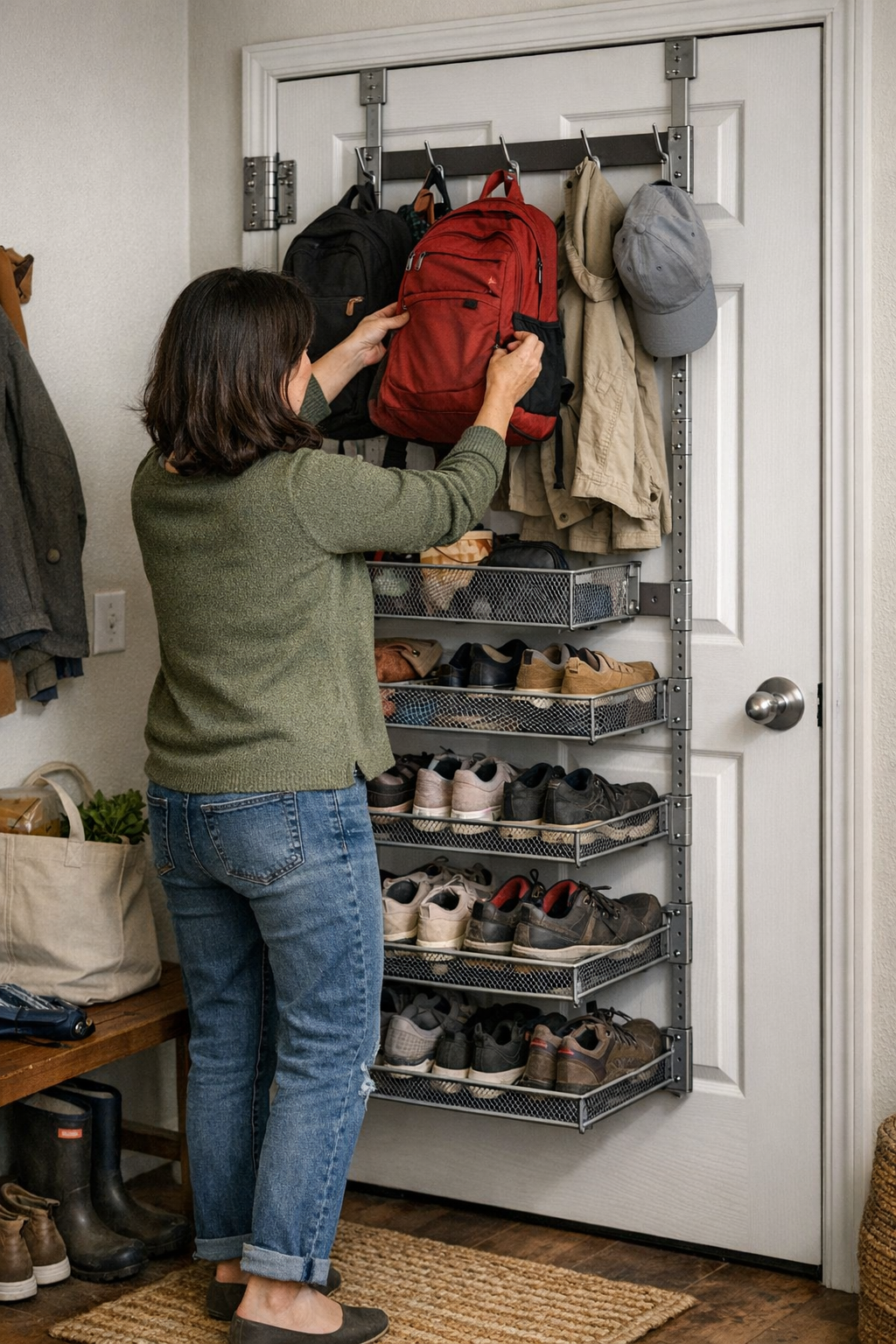
    Most entryway storage looks organized for exactly one day. You hook up an over-the-door rack, sweep the floor for that “finally fixed” effect, and watch clutter vanish—but only until real life leans on your setup. Wet boots appear, bags flop onto the nearest hook, and the careful shoe row fans out until the threshold tightens again. Drop one backpack the wrong way and the door jams; return home with groceries, edge past the rack, and suddenly the space that promised order now blocks every move. Instead of routine flow, you end up with a clean look that collapses the moment daily pressure kicks in—especially if your hardware isn’t built for shifting, repeated loads. A setup that seemed to absorb the mess slowly becomes another obstacle, forcing more resets, more sidesteps, and more friction each time you come or go.

    When Good Racks Go Bad: The Hidden Toll of Everyday Loads

    Transition spaces magnify every small mistake. Over-the-door and wall racks promise vertical storage, but each new coat, pair of muddy shoes, or slung bag doesn’t simply rest—it adds weight that strains hinges and door frames. Standard door hardware is not engineered for these shifting, daily stresses. If the rack’s support isn’t up to the job, you don’t just accumulate clutter—you compress the entry path itself, making each passage less smooth and more awkward.

    The difference shows fast. By midweek, a rainstorm swells the shoe pile; someone returns late, wedges a backpack onto an already-full rack, and now the door grinds at the frame. That slick swing turns stiff. Kids shove their gear through the bottleneck after practice, and you find yourself nudging the door just to step inside. Minor friction—an almost invisible catch, a rack that dips—builds up day by day, gradually shifting the problem from visible mess to movement-pause frustration.

    The Catchpoint: Real Scenes from the Threshold

    Most entryway setups don’t fail all at once—they just get harder to use until you stop using them well. First, the rack leans. Next, the hinge creaks. Then the door needs a special tug, or starts sticking partway. Grabbing a coat one morning, you feel the whole rack twitch. Adjusting shoes or bags becomes its own routine, a ritual of micro-rearrangements just to clear the path. The original tidy look is replaced by a set of silent negotiations at the threshold.

    This cycle plays out in homes everywhere: organized for the photo, undone by the week. Moving piles from rack to bench or spiking overflow into corners doesn’t fix the root issue—the structure just can’t keep up with the way your household actually enters and exits every day.

    Why Reinforced Hinge Support Changes Everything

    Most racks treat the door as a backdrop, not a working, moving part. But that’s exactly where everyday stress accumulates—and where weak support fails first. Ordinary hinges flex, alignment drifts, and what felt “solid” at install turns unpredictable under daily use.

    Add reinforced hinge support, and the contrast is clear.

    • The door swings like it should, even after a muddy soccer day loads it up.
    • Locks line up—no gap at the latch, no need for extra push-and-pull.
    • Redistributing clutter actually works; you’re not shuffling things just to make the rack sit flat.
    • The daily reset becomes a quick habit, not a dreaded event.

    Telltale Signs Your Setup Is Failing

    Watch for these early warnings before a small annoyance grows into permanent bottleneck:

    • The door sticks, resists, or needs a shoulder bump to move.
    • Hinges emit new noises, or the edge of the rack rubs after a busy spell.
    • The rack leans, sways, or sags—especially when the door stands open.
    • Tiny gaps widen at the latch or where frame meets jamb as alignment suffers.

    Ignore these and you risk more than paused movement—swapping cleanups for repairs, rehanging a door, or resigning yourself to a path that no longer works with your family’s routine.

    The Difference Between Organized Looks and Reliable Use

    Entryway storage systems often win on appearance and lose in real use. The true test shows up under stress: post-storm returns, gear pileups, missed resets. A Sunday-night tidy look is easy; a setup that doesn’t unravel midweek is not.

    • Are you forced to shuffle items just to get in or out?
    • Does a crooked rack or sagging mount keep you from resetting quickly?
    • Has returning bags or shoes quietly regained its original level of annoyance—just moved to a new location?

    With the right reinforcement, your threshold stays functional. Shoes and bags don’t sprawl, resets speed up, and the “drift” slows—so routines remain smooth for everyone crossing the zone, not just for the next photo or first day after cleaning.

    When Reinforcement Brings Its Own Trade-Offs

    No fix is friction-free. Some reinforced hardware adds bulk or reduces swing angle—tough on very slim entryways or doors that open flush with a wall. Always measure wall and clearance space before upgrading to heavier-duty solutions. Do a trial run with the typical gear load you expect—so you avoid trading one kind of blockage for another and can spot pinch points before they become part of daily life.

    Small Shifts, Smoother Routines: Practical Tips for Lasting Entryway Flow

    Max storage isn’t always best flow. Instead of maxing out every hook and shelf, try these fixes:

    • Hang heavier bags low and close to hinge-side mounts, where the door is strongest.
    • Assign strict drop zones for each person’s shoes or bags—mapped to real movement, not photoshoot symmetry.
    • In busy households, stagger arrivals and drop-offs to prevent pass-through pileups—especially after school or work peaks.
    • If there’s no room for error, shift heavy loads to wall-mounted units nearby instead of loading up a flexing door.

    The Real Win: Thresholds That Don’t Block Your Routine

    The goal isn’t just fewer piles—it’s less friction every time you cross the entry. A reinforced, well-matched rack keeps shoes off the floor and the threshold open, so you’re not doing the reset shuffle or nudging a blocked door on busy mornings. Choose hardware and setup patterns for real routines, not showroom silence—and you’ll see the difference: fewer backflows, snappier resets, and a threshold that works with, not against, your everyday life.

    http://www.betweenry.myshopify.com

  • Why Rearranging Your Workspace Isn’t Always True Organization

    Every reset looks perfect for a day. Bins labeled, carts lined up, floor swept, shelves squared—your garage or workbench corner finally feels under control. But a true setup isn’t proven by the calm after cleaning. It’s tested by real weeks: constant fetch-and-return, a crowded path, corners you sidestep, and old habits sneaking back in.

    Surface Order vs. Underlying Friction

    That initial sense of victory—everything in its place—fades fast once routine hits. You grab a tool and clip the edge of a cart. Bins begin clustering in the only open spot, which quickly becomes crowded. A cart, flawless in photos, now blocks just enough space that you find yourself shuffling it left, right, back, over and over as projects come and go. Resets, meant to be quick, turn into long sessions of putting away “what doesn’t fit” again.

    The illusion of neatness is easy; actual usability is harder. Fresh labels and crisp stacks might impress your camera, but they rarely hold up under the pressure of daily motion. The layouts that last are not the ones that look tightest—they’re the ones that stop fighting your routine and start flowing with it, even when the space looks half-empty.

    The Real Test: Day-After-Day Use

    Every time you work in the space, the system reveals its blind spots. Maybe you have to swerve around a cart—one hand balancing a bin, the other opening a drawer that barely clears the shelf behind it. Suddenly, “flexibility” means zigzagging to get a screwdriver. The return path for tools gets clogged because one area always absorbs overflow. You’re not reorganizing; you’re repeatedly compensating for small mistakes in the layout.

    Adding another rolling chest or sticking up extra hooks feels like progress, but it often multiplies these micro-frictions unless they genuinely fit the way you move. Suddenly, you’re dodging blocked walkways and team-lift zones that never see use—or reshuffling items that should have a simple route back after every project.

    Scene: The Perpetually Misplaced Cart

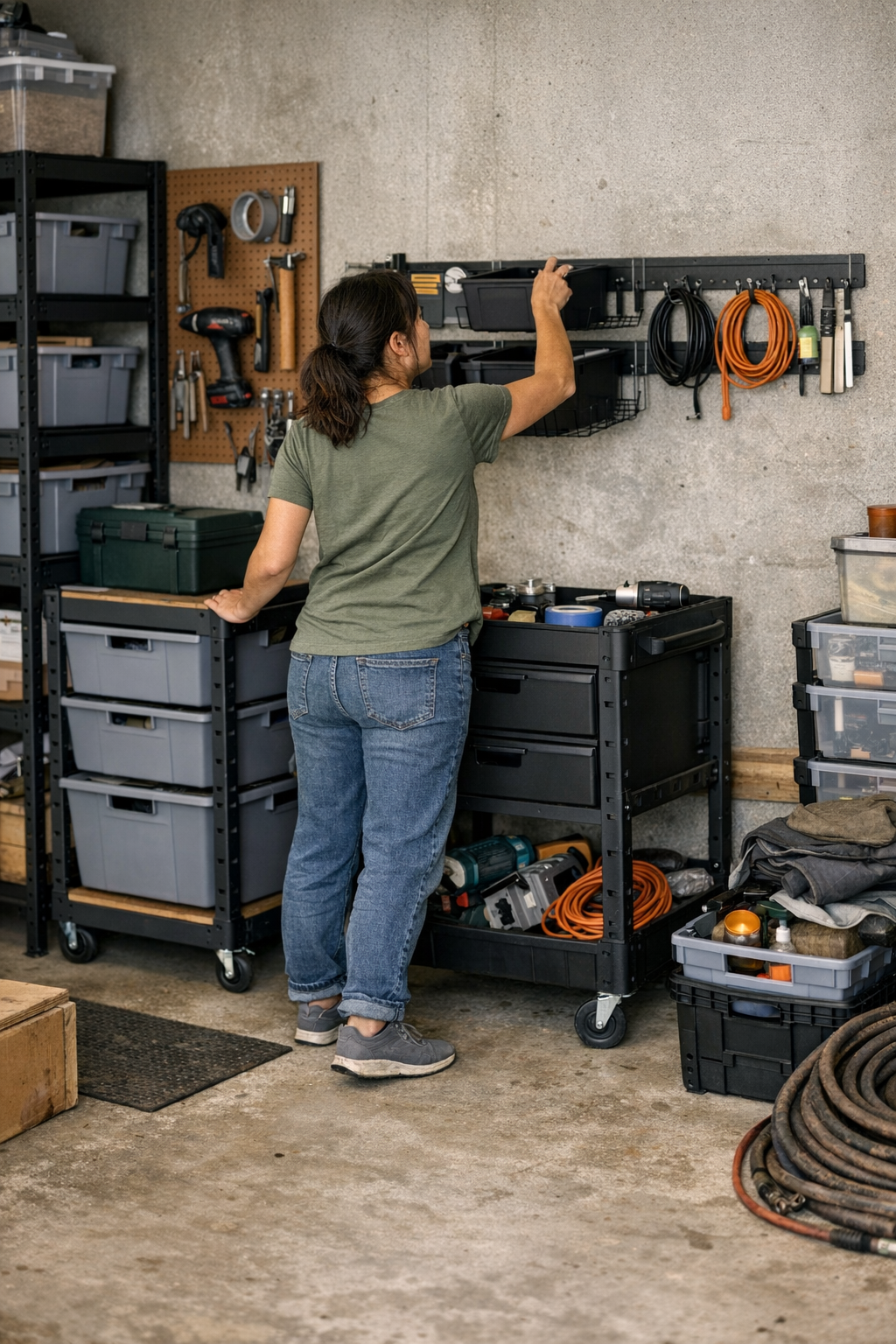
    Visualize the wall: storage bins stacked, two carts tucked underneath. That’s the ideal. By midweek, though, one cart has crept forward, then sideways—now it blocks the cabinet door you reach for three times a day. Any quick reset means nudging the cart out, sneaking around one corner, then struggling with the odd gap behind where lost bits and random tools collect out of sight. The fix isn’t another round of tidying; it’s noticing that the “perfect” lineup breaks down when actually used.

    Scene: A Wall Rail That Sucks in the Extras

    Wall rails promise easy grab-and-go, but routine exposes the truth. What started as your solution for daily tools quietly turns one stretch into a magnet for overflow: shears, odd pliers, a pack of zip ties you grabbed once and never moved. You plan to clear it later, but each week, it grows—blocking straightforward access right when you’re mid-project. The surface stays “organized” yet resists clean workflow when you most need it.

    How to Spot a Broken Routine, Not Just a Mess

    If putting things away gets slower and sloppier, the setup is telling you something. Concrete warning signs include:

    • The same corner or shelf collects random gear, turning into a reset job each time
    • Returning tools or bins means moving something else first—never a direct return
    • Main walkways get squeezed by carts or racks, breaking up your movement
    • One storage zone gets overloaded, while an entire wall sits mostly unused

    The “organized” look does not mean the system works; the real test is how little reshuffling or retidying your routine requires to bring things back to order.

    What Actually Fixes the Flow

    The classic trap is maximizing every inch: carts side by side, shelves butting up, rails loaded ceiling-high. But in use, that wall-to-wall arrangement means jammed walk paths and awkward returns. The fastest fix is often the hardest to accept: leave more gap than you think you need.

    Small Gaps, Big Difference

    Try parking your rolling cart six inches off from the rack instead of flush. Suddenly, you can return a bin or reach behind without a three-step shuffle. The extra stretch of open floor feels “wasted” until it earns you fifteen faster returns that week—and those missing scuffs on the paint where carts used to bump and drag. Practical breathing room beats a flawless grid every time, especially along main reset routes and wall edges.

    Trust real ease, not flawless looks. Strategic emptiness—open zones at corners, between carts, or in front of cabinets—shrinks reset time and makes the space less overwhelming to use, even after months of clutter creep.

    Solving Overflow and Breaking Up Dead Space

    Overflow is more than clutter. It marks the spot where your setup fails to match your real path. Maybe your “overflow” bin is too far from where you always drop tools. Maybe a blocked shelf collects castoffs behind a stuck cart. Every unsorted pile signals a place where your system put appearances over convenience—and each pile always seems to return unless you rethink the zone.

    A Simple Test: Rotate the Trouble Spots

    Pick a trouble spot—a cart, an overloaded wall section, an awkward corner. Switch its location or empty it for a week. Watch what happens. Do dropped tools naturally find a new home, or does the gap fill right back up? Is access easier, or are you just shifting the friction? This small experiment exposes whether the friction is built into the layout, not just the stuff. Real fixes come from seeing where the system blocks you again and again, then opening that space up for what you actually do—not what you wish the setup would achieve.

    Lasting Setups Make Life Easier, Not Just Neater

    Setups that feel “done” usually aren’t. The real winners never draw attention: resets are quick, movement is automatic, and things land in place without you squeezing past, backtracking, or moving a cart for the third time in an hour. It’s not about perfection; it’s about a space that finally stops fighting your routine.

    You can browse practical modular storage, rolling carts, and real-use workshop systems at StackNest.