Blog

  • Why Carry-On Organization Often Fails During Real Travel Use

    Order doesn’t equal speed. Your carry-on starts the trip looking sharp—zippers straight, every passport, cable, and charger snapped into its sleeve. But the moment you’re in line at airport security, digging past tech sleeves for a passport while an agent watches, that “organized” feeling dissolves fast. The real test isn’t how Tetris-neat everything looks in your living room, but whether you can grab what you need without a slow shuffle—over and over, all the way from drop-off to boarding and beyond. The difference hits the first time a queue stalls behind you at the gate or you fumble a tray at the X-ray conveyor: a carry-on setup that hides its friction at home will expose every weak spot under airport pressure.

    The Organizer’s Trap: Looking Tidy, Moving Slow

    Visual order misleads. Neatly stacking toiletries above cables, figuring a passport will be fine under a pouch, can feel unbeatable before you leave. But by the end of your first checkpoint, a few hard truths surface. Reaching for your ID often means dragging a charger out with it. Grabbing snacks in a hurry disrupts the whole stack. Each extra layer multiplies interruption—especially when you’re forced to repack pouches on the curb or while inching through the terminal, feeling each minute elongate as you return things to their “perfect” places.

    Real Friction in Real-Time: When Order Slows You Down

    The first security check might feel manageable, but friction builds exactly where it matters:

    • Two zips to reach one cable, while other travelers squeeze by you in line.
    • Pulling out your passport, now tangled with headphones or sliding behind your boarding pass.
    • Noticing, too late, that a pocket you “just” closed is half open again after a rushed tray transfer.

    Each move costs a few seconds. Stack up a dozen small interruptions over a multi-segment trip, and you’ve gained a real burden. “Well organized” in theory now means clumsy, slow, and distracting in practice—especially during consecutive checks or fast-moving boarding lines.

    When “Neat” Crumbles Under Repeated Retrieval

    Performance reveals itself in the airport, not at home. Between rapid-fire document checks, constantly shifting boarding times, and mid-transit cable grabs, an arrangement that forces you to dig through unrelated pouches feels less like smart prep, more like unnecessary drag. The exact same bag—same organizers, same pockets—responds differently once the sequence isn’t under your control. At every gate, every bin, every seat row, a setup built for visual order gets shredded by the actual pace and rhythm of travel.

    Real-World Slowdowns That Reveal the Wrong Setup

    • Seat-side scramble: Squeezing into your row, the item you need is buried—requiring rushed unpacking while others try to get by.
    • Gate check freeze: Boarding called. You reach for your pass, but it’s snagged behind headphones tangled with paperwork—holding up the line at the worst possible moment.
    • Security bin struggle: What looked ordered now means pulling three pouches and a tangled cord just to hit the next checkpoint as bins close in.

    Repeating the same movement exposes design, not luck. If every “quick” reach involves three separate touches, your setup isn’t built for travel rhythm. Each repeated barrier means the structure breaks down where pressure is real—not on your kitchen table.

    The Shift: Separating Essentials for Actual Flow

    What cut down delays wasn’t more packing, but smarter separation. Essentials by type is different from essentials by travel action. Pulling all documents into a shallow outer pocket—where you can slide out passports or boarding passes with one move—creates its own rhythm: one step, one return, and you’re already thinking about the next gate, not the last shuffle. Cables and other small gear slot into a deeper zone. Now, grabbing your ID doesn’t dislodge a charger and force you to rebuild the whole stack on the spot.

    The fix doesn’t make your bag Instagram-shiny all trip. Zip paths aren’t perfect and “real” turbulence means pockets take a hit. But in high-pressure transit—boarding, security, seat entry—you’re not lost in a pouch-juggling act. Fewer delays. Less repacking at awkward moments. You can handle mistakes—like dropping a pen or crumpling a snack wrapper—without unraveling your entire setup just to get to your documents.

    Overlapping Pouches = Extra Steps, Every Time

    Stacking pouches might look tight for a photo. In motion:

    • Items block each other, forcing stop-start rearranging that adds up in a moving line.
    • Multiple things leave your pocket at once, so you track what goes where and lose time fixing it.
    • Mess comes back faster—interruptions multiply as you repack after each checkpoint.

    But change just one thing—two dedicated outer pockets, one for speed, one for bulk—and the entire feel shifts:

    • You reach once per checkpoint, not three times.
    • Excess zipping and pouch shuffling drops off.
    • Retrieval becomes a muscle-memory move even when you’re rushed and someone behind you sighs audibly.

    How to Recognize It’s Time to Change Your Setup

    Notice yourself double-checking—and correcting—your supposedly “perfect” pouch arrangement after every step? Or repacking the same stack after just a short line? These signals mean your structure can’t keep up. Hidden friction at home becomes exposed in real movement: Zipper paths slow at security, document retrieval fumbles in boarding groups, pouch order thrown off at every terminal shift. A carry-on that only works standing still isn’t built for real travel flow.

    True order survives pressure and repeat use. It’s less about the look and more about whether your bag keeps pace when pace is forced on you. The best setups aren’t the prettiest—they’re the ones that cut friction from the first checkpoint to the last row of seats, staying functional as routines repeat and mistakes happen. For setups that are stress-tested for speed, not just stacked for photos, see what works at CarryOnSupply.


  • Slim Lighting Solutions That Maximize Space in Small Homes

    Crowded lighting setups erode usable space—slowly but relentlessly. In tight work zones or shared surfaces, oversized lamps, jutting brackets, and trailing cords become more than visual noise: they’re real, daily obstacles. After a few weeks, it’s not just about how the room looks; it’s about what you have to push aside, reach around, or keep re-correcting. That lamp base that eats up half your desk, the cable that snags every time you roll your chair, the under-shelf fixture with an awkward bracket throwing shadow on the only spot you actually use—they’re not minor quirks. Each becomes a repeated interruption, carving out less comfort and less clear space than you planned for. The shine of a new fixture dulls quickly when every routine runs into one more setup drag.

    The Real Price of Bulky Lighting in Daily Routines

    Bulky or crowded lighting rarely feels like a problem on install day. In reality, the trouble appears as friction: moments where a lamp foot competes with your notepad, or a chunky fixture pushes your elbow off the best part of the counter. It’s the slow grind—clutter accumulating at the edges, cables slipping into view, dark lines forming wherever a bracket interrupts the throw of light. Kitchens with boxy under-cabinet fixtures often trade one shadow for another, with “solved” spaces gaining a new dead strip where the countertop matters most. Workstations seem complete until you’re forced to squat and untangle a cord cluster after your bag catches a loose plug yet again.

    Every “just for now” setup steals from your routine in ways that build up: keeping one hand clear of a bracket that won’t stay tight, or shifting bills and pens away from a murky desk corner. A fixture that looked resolved still demands navigation, cleaning detours, and extra care you never intended to give it.

    • Turning a lamp to chase paperwork, only to leave half the desk lurking in shadow
    • Bumping a too-tall bracket on your way to get a book, elbow stinging for the third time this morning
    • Vacuuming around a nest of cords, adjusting your path out of habit, never quite trusting the setup to stay put
    • Re-straightening a desk light that never sits flat, interrupting your routine every single week

    Slim and Low-Profile Lighting: Not Just for Looks

    Thin, low-profile lighting changes the surface rules the moment it’s installed. Instead of sacrificing desk area or walk space to lamp feet and curling cords, flat panels and compact strips tuck tight to shelves or stretch across wall edges, opening every inch of usable zone. Cables are routed sharp and out-of-sight, mounting hardware disappears below line of sight, and the surface feels genuinely clear—nothing to sidestep, no exposed cable path to snag or clean around.

    But the proof isn’t in the first day’s photo. Over weeks, the absence of friction stands out most: no glare skim across half the desk, no need to prop a book around an awkward support, no mysterious shadow right where you jot notes. Each workday, clutter remains at bay. Shelves stay practical—not just presentable. The improvement is lived, not just seen: you stop navigating around fixtures and start using your space without second thought.

    Spotting Common Pitfalls in Slim Lighting Setups

    No slim fixture can save a poorly supported or half-planned install. Mount a sleek LED bar too close to one edge, and you’re left with a constant patch of shadow under the opposite arm. Choose a bracket that interrupts the light run, and even the flattest fixture can cast a useless dark strip where you prep. Hardwired wall lights might banish cable clutter, but mess returns instantly if power lines are routed awkwardly or brackets wobble with every reach. Even slim plug-ins fail if a lazy cord loops across the writing area—visible, vulnerable, and always needing to be brushed aside before the work really starts.

    Scenes from Real Life: Where Lighting Friction Sneaks In

    The breakdown isn’t usually dramatic; it creeps in through daily use:

    • Dim desk corners: Install a slim panel just a little too far to one side, and pen, note, or keyboard falls half into shadow—the zone where clarity disappears and you catch yourself shifting everything for one more inch of light.
    • Cord drift: Unanchored cables snake their way back into view, curling across mousepads, knotting with laptop lines, and multiplying the mess every time you adjust position or swap a device.
    • Under-cabinet dead zones: Mounting a light short of wall-to-wall—or letting brackets interrupt the run—leaves a visible dark strip along the edge, right where kitchen tasks or sorting happen most.
    • Support failures: A bracket that starts solid sags with every routine shelf grab, pulling the fixture off alignment and making each day’s use less smooth and less trustworthy.

    Making Slim Lighting Work: Placement and Support Matter

    The real upgrade isn’t just visual—it’s practical space freed by correct placement and smart support. The best results come when fixtures span the entire usable length, not just the space between existing brackets or wherever seemed easiest to mount. Extending a slim panel to cover shelf-length or rounding a fixture around small obstacles prevents those recurring dead spots and shadow patches that sap clarity no matter how nice the room looks.

    Cable management needs more than hiding: it’s about rerouting cables so they never drift or intrude. Replace loose lines with a rigid, clipped-down feed that runs flush behind shelves or out of reach, and everyday work stops bumping against unsightly slack or exposed plugs. Every inch of the work surface stays open and genuinely ready—no cord to dodge, no bracket jutting out, nothing in the way when you move, lean, or wipe down the counter.

    Immediate Results, Noticeable Comfort

    • Full work surface stays visible and evenly lit—instead of fighting glare, shadow, or cable clutter
    • No physical distractions to dodge when cleaning or clearing space for a task
    • Cords and fixture supports disappear from daily memory, tucked snugly enough to stop snagging, drifting, or reappearing in the corner of your eye

    Tip: Plan for the Real Surface, Not Just the Fixture

    Start by reading the actual paths you use—not only the easiest spot for a fixture, but the full stretch where light and access matter. Choose mount points that allow the fixture to cover the whole run, even if this means modding the install with extender brackets or trimming panels to fit tight edges. Route every cable with intent: power lines should drop out of the way and outside all main work and walk zones. Small touches—flush clips, tight cable channels—cut down weeks of micro-interruptions and keep cleaning simple instead of a fight against creeping mess.

    Don’t Let the Details Sabotage the Solution

    Lighting that “looks clean” can still sabotage your work if cabling sags, a support gives way, or a bracket puts press on the wrong spot. Loose clips, visible slack, or unstable mounts remain in your awareness, spoiling hours of use with a single repeated annoyance. The best low-profile fixture will still frustrate if mounted in haste or supported by parts that flex, fail, or just don’t suit the real-life friction of your routine.

    Solid support turns thin lighting from a cosmetic fix to a routine-saving upgrade. The setups that earn their keep are the ones that feel as good on day 30 as day one—nothing to trip over, no new shadows to chase, and no fussy details clawing at your attention. A truly finished surface means less fuss, smoother movement, and open space you don’t have to think about beyond just turning on the light.

    LightSupport — Slim fixtures, smart supports, and accessories for practical, frustration-free indoor lighting.

  • Why Quality Rollers Matter for Quiet and Organized Entryways

    An entryway that looks organized rarely stays that way once real use begins. All it takes is a week of daily rush—bags dropped just inside the door, shoes swapped out mid-step, groceries set down fast—for the weakness in a mobile storage setup to show through. The first signal? Wheels that stall, rattle, or twist out of line, turning what should be smooth resets into noisy, awkward routines, and leaving carts or benches angled out into your path or drifting toward permanent clutter.

    Where Looks and Use Start to Diverge

    Mobile storage in the entry sounds flexible: benches and rolling carts can shift for cleaning, move aside for deliveries, or come forward for a quick grab. That flexibility only lasts as long as the hardware holds up. Basic wheels might be quiet on day one—but after a few real cycles, the difference starts appearing in your daily walk. A once-straight bench slides off its anchor and blocks the path. Carts develop a clatter or stiff resistance, nudging sideways with each nudge or shove. Suddenly, what was an open zone for movement becomes a series of minor dodges, step-arounds, or corner squeezes just to get through the door with your things.

    The telltale rattle of cheap rollers becomes background noise, but the real trouble is how every move throws storage off-line. Each time the unit is adjusted—usually on autopilot or in a hurry—it no longer returns flush to the wall. Bags begin landing on any nearby surface. Shoes don’t stay queued at the bench but spread along the edge where there’s room. Overflow edges appear, and your drop zone is no longer contained—it stretches, blocks, and shrinks the available path with each hurried exit or entry.

    The Small Misalignments Add Up Fast

    Imperfect mobility feels minor at first: a crooked cart, a bench set at an angle, an extra shuffle required mid-step. But as usage repeats, the reset burden builds. Moving the storage makes noise or drags grit; resetting means wrestling something back to place instead of nudging it automatically. What started as organized quickly morphs into an area crowded by semi-permanent drop piles, bins nudged further out, and inconvenient piles that spread as soon as someone takes a shortcut instead of putting things away.

    Day-to-day, the difference is visible: passing through means shifting sideways or stepping over shoe lines that no longer fit. A quick stash of groceries means leaving one bag outside the intended bin to avoid the hassle of moving a cart. The reset that should take seconds now becomes a minor lift or push, always with the question: will this get back into place, or just add to the drift? Over time, the “flexible” setup becomes rigid in all the wrong ways—anchored by friction, not by design.

    Real Use: When Entry Routines Collide

    Hardware failures don’t announce themselves; they reveal themselves at the worst times. When the weather turns and wet shoes multiply, or when every member of the household comes in at once, the difference between reliable and stubborn storage is immediate. One person pushes the bench to make space, only to have it catch on a door mat or balk at an uneven seam—freezing in place, half-blocking the threshold. Now, bags are left beside instead of inside. Shoes scatter further, blocking the main path, not brushing up neatly against the storage as planned.

    Even solo routines break down. If rolling a small cart always involves a thud or scrape, it becomes easier to skip it—dropping gym gear next to the cart, letting items sprawl along the entry. Bulk accumulates at the fringe. The re-entry routine becomes just that—a struggle between the system and lived use, with friction replacing any sense of order or restoration.

    When Setup Details Outweigh Decorative Choices

    It’s rarely about appearances. From across the room, two rolling benches or carts might seem equally practical. But up close, after a dozen uses, the gap opens: well-built, sealed wheels glide quietly and let you reset instantly. When the hardware supports quick, aligned movement, “putting things back” happens naturally, whether you’re returning boots or clearing a pile after a rushed morning. The piece returns flush and stays out of the way, no extra energy needed.

    Cut corners on hardware, though, and your organization scheme turns passive-aggressive. Castors grind or stall. The storage piece drifts out of square with each move and starts acting like an obstacle. Resetting feels like a chore. Overflows and visual clutter grow—not because items lack a spot, but because moving the container takes just enough effort, noise, and real resistance that people avoid it. Day by day, the entry looks less ordered—even if every bin is, technically, still there.

    Tackling the Hidden Friction

    The simplest fix—often overlooked—is to upgrade the wheels, not just the look. Swapping stiff, noisy rollers for sealed, soft wheels (or adding felts under corners when appropriate for flooring) changes the feel immediately. Now, storage moves cleanly, resets are one-handed and unobtrusive, and even during rush hour, people can use the zone as intended. The drop zone becomes a true flow point instead of a bottleneck.

    That “something will be in my way” expectation disappears. Instead, the area holds its form, and the pressure at the threshold doesn’t break the system. Resetting after a storm or a chaotic day no longer feels like rearranging heavy obstacles; it feels like returning the space to working order in a few steps, not a whole reorganization session. Organization stops being a look and starts being an everyday, durable habit, holding up under household traffic, wet weather, and hurried routines alike.

    Small Details, Lasting Difference

    The real divide between “looks controlled” and “actually works” runs through movement, not just capacity. Cheap wheels, sticky rolls, or misaligned hardware all foster the same result: friction that invites the drift of clutter, the spread of shoe lines, and delay that encourages every shortcut. In a setup that gets hit by daily routines—families coming and going, guests dropping by, bags cycling in and out—the point of failure is rarely storage space itself. It’s how frustrating, noisy, or resistant a reset becomes in real time.

    Judgment check: If you’re evaluating mobile storage for any entry or transition zone, ignore appearances for a moment and watch how the piece returns to its place after ten resets, not just one. If it clangs, skids, or hesitates—and you catch yourself leaving items outside the intended space just to avoid moving it—the design already makes daily clutter more likely. The right wheel, in practice, will keep your setup fluid, not fighting against your routine.

    See more transition-space storage that behaves as well as it looks at Betweenry.

  • Optimize Dining Room Sideboards for Effortless Dish Organization

    The promise of a new dining sideboard—less countertop clutter, a calmer room—lasts exactly until the first real week of meals. The trouble doesn’t look like chaos from across the room. It appears at 6 p.m. when you’re halfway through setting the table and realize you need to move two stacks and dig around a giant platter just to reach a dinner plate. Doors close clean, but behind them? Edges tighten. Bowls edge out plates. The “organized” setup buckles by midweek as retrieval turns into reshuffling and single-use stations collect spillover—one silent micro-battle after another.

    Clean on the Outside—Cluttered on the Inside

    Shutting the sideboard doors makes the room look ready, but that’s where the order stops. Inside, the surface calm often hides small points of friction: broad shelves invite you to combine too much; deep zones lure items out of sight. Bowls topple onto plates. The rarely-used punch bowl traps daily mugs behind it. By Thursday, you’re left with an upright stack at the front and a tilted column behind, neither easy to grab without another shuffle. The external order quickly becomes a backstage tangle—overflow at the back, category drift everywhere else.

    Most sideboards and storage cabinets collapse at the simplest test: can you retrieve and return daily dishes in one move, or does everything get interrupted by hidden obstacles? If your dinner plates end up sliding behind soup bowls or lost under the shadow of tall platters, the whole reset cycle slows: double handling, pile-ups near the kitchen sink, and items quietly abandoned in “too hard to reach” zones.

    When Shelf Setup Starts to Break Down

    The real limitations show once you stop admiring and start using the sideboard in your actual routine. Think: dinner plates pulled twice daily; serving platters touched once a week but taking up prime space; pitchers and trays wedged awkwardly until the next hosting run. Systems that look neat on a Sunday erode fast under weekday use. By Friday, you’re pushing stacks side-to-side just to put things away, or realizing—mid-meal—that half your clean plates are now unreachable behind a crowd of seasonal dishes you barely need.

    Concrete signs your system is weakening:

    • Wobbly towers of plates you hesitate to add to, forcing you to leave things out “just for now”
    • Baskets or deep bins creating blind spots—items slip out of view or categories blend until sorting feels pointless
    • Deep shelves building a shadow zone where less-used things disappear, reappearing only in the next big clean
    • Overflow creep—one section collects every “miscellaneous,” making retrieval a mini-reset every time it’s opened

    Often, grabbing a plate from the drying rack just feels simpler than hassling with a sideboard that keeps requiring these end-arounds.

    Real-World Fixes: Adjusting for Repeated Use

    Lasting improvement doesn’t come from arranging by looks—it depends on matching shelves and dividers to real routines. A two-notch shelf drop can bring your main plates to hand-level—solving weeks of awkward bending in a single adjustment. Giving serving bowls their own dedicated lane, far from daily stacks, prevents any one category from clogging the flow. True storage relief comes from making each category stay in its zone, so “category drift” (where any space becomes a dumping ground) never starts. This is setup that self-corrects, not a decorative reset fading by midweek.

    With a storage system set up for repeated handling, the retrieval process compresses from endless shifting to a single, familiar move. The invisible win: the person who sets the table finds everything in place—even after the fifth meal in a row. Categories remain clear because the structure keeps them corralled, not just because you tried harder this week.

    Seeing the Difference with Small Adjustments

    Overlooked tweaks change the whole flow:

    • Main plates and bowls always up front and close to hand—no more stretching or double moves required
    • Rare-use serving pieces confined to one side or out-of-the-way shelf, never mixed beneath the daily run
    • Utensils on dedicated flat trays, making every returned item visible (no more blind pulls from a deep bin)
    • Enough overhead space to avoid stack-lean—if you see stacks bow, density needs cutting or the shelf needs a move

    What takes seconds to adjust—a shelf, a divider, a tray—saves real hassle, especially for whoever resets the sideboard after every meal. The difference is no longer about visual neatness but about shaving actual steps from your routine.

    Noticing Signs of a Setup That’s Breaking Down

    It’s easy to ignore small annoyances until they turn into a pattern. Look for cumulative signals: stacking dishes on the countertop because shelves are overloaded, movement slowing as you shuffle past overstuffed zones, “organized” bins that only mask a deeper tangle requiring double handling. A mismatched setup quietly steals time—then suddenly asks for a full re-sort when the next gathering exposes the system’s cracks. Real fit shows up as steady, low-friction use, not just at the start but on every return trip.

    Common Trouble Spots in Dining Storage

    • Closed boxes or too-tight baskets that feel tidy but demand sorting and repacking with every use
    • Tall intermediate shelving that tempts double-stacking, causing teetering piles and slow restock
    • Bulky serving items leaking into everyday-use shelves, shrinking working space for daily plates
    • Shelves bending or sagging—clear warning to spread the load before a quiet failure turns into a bigger reset
    • Hidden overflow: after a week, one section turns into the “miscellaneous” zone, quietly undoing every organizing intention

    The Subtle Value of Well-Planned Sideboard Storage

    The best sideboards don’t just hide chaos—they nearly erase transition time. Once zones match habits—main-use up front, extras clearly separated, no deeply buried categories—storage isn’t a feature, it’s the absence of slow-down. Systems with true adjustable interiors let you adapt to new routines (a new dish set, a downsized collection, swapped-out holiday ware) without requiring a top-down overhaul or creating fragile stacks. Solid support under each shelf means you can trust the setup will survive stress—maybe not the first overloaded holiday, but the next year too.

    Visible sagging, stacks leaning, or routine shuffling all signal it’s time to re-map the inside—before small inconveniences become daily obstacles. It’s not just a surface test: lasting fit depends on backing up the visual calm with structure that supports repeated stress and varied use.

    Everyday Use—the Only Test That Matters

    The only sideboard that works is the one that makes your routine easier, not just neater. Visual order alone breaks down the moment hidden retrieval delays or crowding interrupts a simple flow. When the storage matches how you actually move—main plates direct to hand, no crowding, no blocked paths—resetting after meals is automatic, and the space remains open for new routines without weekly resets. The real improvement isn’t what you see at a glance—it’s in each use that no longer gets interrupted.

    See practical storage systems that match the way you actually live at Gridry.

  • Why Adjustable Closet Shelves Outperform Fixed Options Over Time

    Closet shelves—the quiet accelerators or slowdowns of your daily routine. At first, the choice between adjustable and fixed shelves can feel like an afterthought. But fast-forward a few weeks into real life—rushed workdays, laundry catchup, last-minute swaps—and that detail quietly starts steering how your closet actually works under pressure. Shelves that seemed well-planned on install day soon reveal where efficiency holds, and where daily habits hit frustrating snags: that extra sweater that won’t quite fit, the tangle of shoes at the bottom, the stack of shirts that’s lost its shape by Thursday. The organization you started with slips, replaced by recurring micro-battles against clutter—and how your shelves are built is at the heart of it.

    How Closets Slide from Order to Overflow

    Fixed shelves deliver that immediate, showroom-worthy look. Shoes in a line, shirts neatly stacked, space mapped out by type. But give it two weeks—season changes, shopping trips, a busy family morning—and the seams start to show. Need to fit in new boots? You end up cramming them in wherever there’s a gap. Grab a bag from the bottom? Now you’re digging through a pile. Bins that were once sorted get mixed as you shuffle to find space for winter accessories. The edge where one category ended and another began blurs fast, and soon you’re bracing a stack with one hand just to pull something from underneath. It’s not chaos, but it’s slow, and it doesn’t reset with a quick tidy. Every reach, every restock, is a reminder—these shelves set the rules, not you.

    Why Adjustable Shelves Shift the Everyday Reality

    Adaptability isn’t a bonus upgrade—it’s a lifeline for real-world use. The biggest difference with adjustable shelving is felt on ordinary days when your routine flexes. Shoes spill from a gym trip? Raise the bottom shelf for fast toss-back. Winter sweaters crowding out tees? Drop a divider shelf so each stack stands alone, instead of merging into one toppling column. A tall tote bag that won’t fit anywhere? One minor reposition and it’s effortlessly slotted, not awkwardly wedged.

    The strength isn’t in the aesthetics—it’s in the reset speed. Adjust, stack, and slide bins without unearthing an avalanche. Edge lines stay crisp, categories stay divided, and you spend less time reshuffling and more time seeing exactly what’s there. The tiny pin holes fade into the background next to the time you save never double-stacking again.

    Scenes from the Closet Frontlines

    Consider a family entryway on a rainy Friday. By the end of the week, the shelf is a patchwork of shoes kicked behind other shoes, gloves tumbling out of bins, backpacks teetering on top. If the shelves are fixed, everyone’s fishing awkwardly—reaching behind boots to find sneakers, accidentally mixing hats in with shopping bags. The aftermath? A permanent bottleneck, slow mornings, and an open invitation for clutter to just spill onto the floor.

    Switch to adjustable: five minutes, a shelf clicks up, and suddenly boots and gym gear have a home under one section, while gloves and hats settle in organized trays above. Instead of improvising a “temporary” pile, there’s just enough breathing room. Cleaning up isn’t about major overhauls—it’s about slotting things back where they belong, quickly, before the clutter cascade even starts.

    Where Fixed Shelves Still Serve (and Where They Don’t)

    There are spaces where fixed shelving works just fine: a library of identical books, or a guest room with neatly folded linens that barely move between seasons. But closets—especially in homes where needs shift with weather or lifestyle—rarely look the same for long. That’s where the cracks show.

    Tall or irregular items are the pressure test. With fixed shelves, you’re often wasting that extra six inches above a sweater stack, or you’re forced to pile higher than is practical. Reaching for a light jacket means moving three big sweaters, and putting anything away usually means breaking the stack again. After a few rounds, all those neat divisions dissolve, and “organized” becomes more about appearance than function.

    The True Differentiator: How Fast Order Can Be Restored

    Few people look forward to the monthly closet reboot. Fixed shelves guarantee this will take longer—moving stacks, accepting awkward gaps, and resigning yourself to living with sagging piles. The edge that was once flawless becomes a seesaw. Even when technically “put away,” nothing is easy to grab or return in a single step.

    Adjustable shelving stops the cycle. Raise a shelf a couple inches and the bottom is immediately useful again—boots, bins, backpacks find their zones with zero balancing act. The reset isn’t a project; it’s a natural part of the routine. Categories can be re-established, and the urge to start a new pile “just for now” fades away because there’s finally room for what you’re actually storing, not just what fit on opening day.

    Common Concerns with Adjustable Shelves—Answered

    Do adjustable shelves support real daily use?

    A quality adjustable shelf system, with sturdy pins and hardware, meets everyday needs for clothes, shoes, and household bins—without sagging or shifting during normal use. For especially heavy items, confirm load ratings, but for 99% of closet gear, adjustables hold steady if correctly installed.

    What about the look—are all those holes a problem?

    The real visual threat isn’t a row of discreet pinholes; it’s an untidy shelf edge, buckling under awkward, misfit piles. Spaced right, shelves give each group a home—meaning edges stay sharp, contents stay contained, and the scene looks managed, not make-do.

    And bulky items? Where do they go?

    This is where fixed shelves collapse as a strategy. Tall boots, helmet bins, or the out-of-the-blue winter bedding all force major compromises with fixed systems. Adjustable shelving turns that pain point into a quick solve: shift, slide, and it fits—no more abandoned overflow on the closet floor.

    From “It Looks Great” to “It Stays Great”

    Every closet starts organized; most don’t stay that way. The real test is three months in: does putting something away feel easy, or do you flinch at the thought of yet another re-stack? Fixed shelves guarantee initial order, but rarely adapt as real life intrudes. Adjustable shelves do what storage is supposed to—bend to fit your needs, not the other way around. The system moves with you, making small resets a normal part of every week, not an exhausting event. Clear lines, fewer piles, and a setup that’s ready for whatever comes next—most days, that’s the advantage you feel, every single time you open the door.

    Ready to build storage that fits around your real life? Explore ClosetWorks for more ideas and practical solutions.

  • Why Your Wall Rail System Feels Cluttered Despite Looking Organized

    That clean wall rail setup is supposed to solve the mess—so why do you still find yourself rearranging tools just to get work done? The illusion is persistent: on day one, hooks and baskets snap into perfect formation, and for a few brief hours, your garage, shed, or workshop looks “fixed.” But real routines don’t run on symmetry, and as the days stack up, that sense of control quietly unravels. You end up standing in the same spot, shifting a cart to reach a shovel, or retracing steps to the same overstuffed hook, wondering where all that planning actually went.

    Where the System Breaks Down: The Slow Creep of Routine Friction

    The unraveling rarely feels dramatic. It starts as a daily pause—that moment you hesitate, tool in hand, because the closest hook is blocked or you’re reaching behind one cabinet edge for the third time today. Gear slides into the high-traffic zone, stacking on itself. Overflow seeps across the most convenient reaches, while pockets of wall—clear on paper—never actually get used.

    This is the story in every real utility corner, not just garages: a garden rack above a potting bench, storage rails in shed corridors, utility hooks at the car wash corner. Items cluster wherever the path is shortest, leaving awkward dead space where your arm never naturally lands. After a month, that “organized” wall looks less like a system and more like another source of lost time.

    Visual Order vs. Actual Flow

    Most wall rail kits set you up to chase the look of order—spaced hooks, even rows, every inch accounted for. The trouble is, real life doesn’t cooperate. Daily use punches holes in the theory, exposing the system’s weak points instead of hiding them.

    Your go-to tools—the hammer, the garden fork, that pair of gloves—move in a tight orbit around your main work zone. Everything else gathers dust or monopolizes a corner you almost never visit. No matter how much storage you add, the pattern is stubborn: the area nearest your routine fills instantly, and the farthest hooks are ignored or become a dumping ground for overflow.

    Everyday Setup Friction—Up Close

    • You have to edge a heavy hose cart away—again—just to get to the only open hook for the rake.
    • High-use hooks turn into clutter islands, hidden under mittens or random off-season gear.
    • That promising far corner stays pristine, because it’s always half a step too far when your hands are full.
    • Returning tools gets sloppy: you wedge a shovel behind a basket “temporarily,” and days later, nothing’s back in order.

    It’s not just mess that signals a problem—it’s the fact you keep tripping over the same small obstacles, losing seconds here and there, until the system feels like more work than it’s worth.

    The Hidden Cost: Dead Space and Routine Bottlenecks

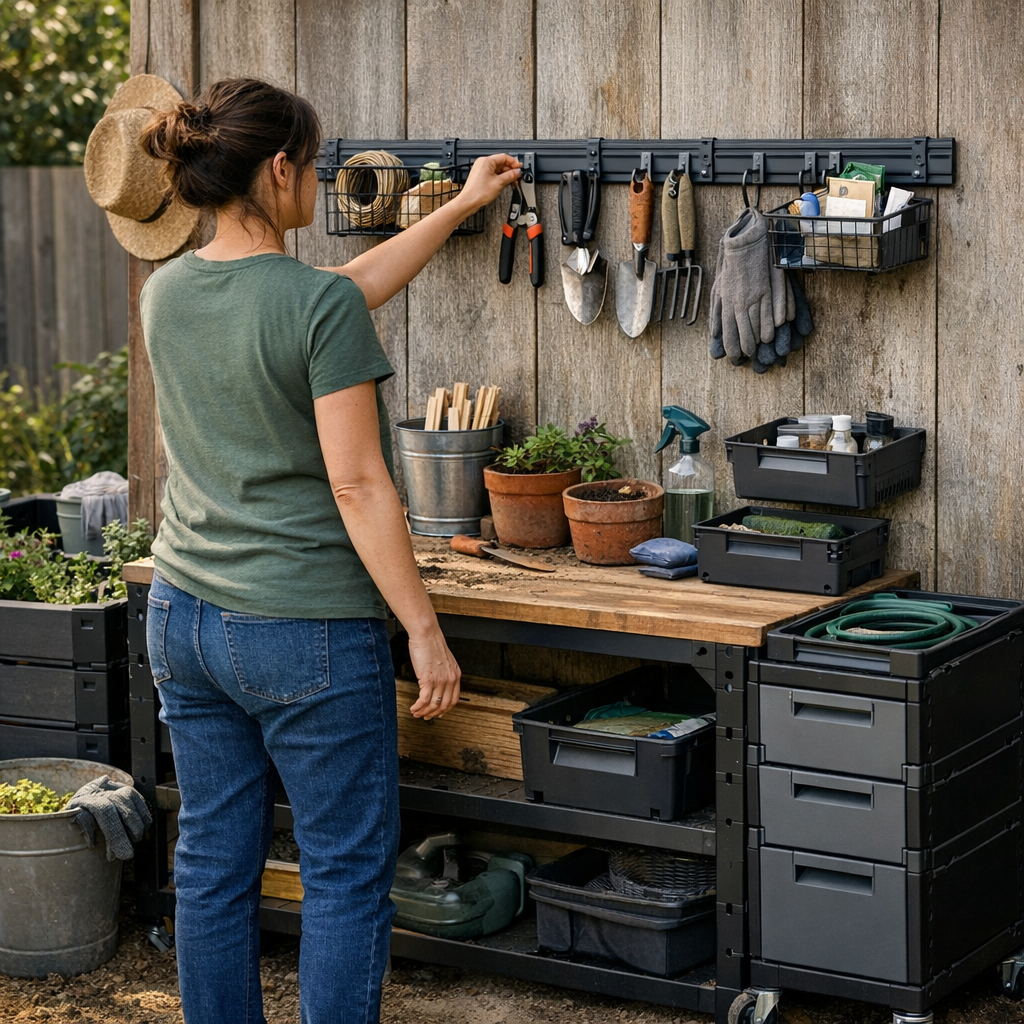
    Imagine a backyard wall rail above the potting bench. The first weekend: trowels, gloves, and plant ties are spaced with surgical precision. By week three, the left section is still empty—nobody wants to stretch for it—while the hooks above the center are packed tight. Need your favorite pruners? Plan on unhooking gloves, shifting a basket, and maybe knocking over a spool of twine on the way.

    The limitation isn’t how much you can store—it’s where and how you do it. Clutter here is often silent: the subtle spillover, the extra shuffle that interrupts your set-down-and-go rhythm, the way dead spots remain clean but useless.

    Resetting for Real Use: Small Tweaks, Real Results

    The real fix doesn’t come from adding more rails or accessories—it’s reshaping how your wall rail actually fits your repeated movements. Forget perfect spacing. Shift high-use tools within arm’s reach of your main work path. Let the rarely grabbed gear occupy the dead ends. What used to be a two-foot “neutral” gap can become a single honest buffer, freeing the rest for what you grab ten times a week.

    Here’s where it matters: suddenly you’re not shifting things aside to make space, or parking tools wherever they land “just for now.” The tools you need most take the direct route home. The time-sinks—the little stutters and resets—fade. The wall looks less magazine-ready and more like something you actually use, because now it is.

    Real-World, No-Nonsense Adjustments

    • Watch out for forced detours: If you keep moving a cart just to reach a hook, move the hook—not the cart. Convenience beats symmetry every time.
    • Embrace flexible zones: Some hooks will go dormant in off-seasons. Let your wall rail adapt as your routines shift through the year.
    • Leave intentional breathing room: Not every inch needs a hook. Gaps let you return items faster, buffer overflow, and clear the reset pathway.

    The Goal: A Setup That Feels Natural—Not Just Looks Organized

    Anyone can make a wall system look sharp on install day. The real challenge is a month later, when the test isn’t visual—it’s whether your flow gets easier or your steps multiply. Efficiency isn’t always pretty; sometimes it’s a dense cluster of hooks where the work really happens and open wall where your elbow needs to swing.

    Walk through your wall setup after weeks of actual use. Where do you slow down? What collects overflow? What spots stay empty by habit? The best wall rail setups absorb these realities—and morph to fit your reset patterns, helping you reclaim time and motion without constant tinkering.

    If your system “looks” organized but you still stumble over gear or reshuffle hooks every week, that’s your real signal to make a change. Your goal isn’t showroom symmetry—it’s a setup you can’t help but use well, because it fits the way you move, not just the way you want it to look.

    http://stacknest.myshopify.com

  • Why Consistent Blade Angle Control Improves Oscillating Multitool Cuts

    On any real jobsite, here’s how it begins: You settle in with your oscillating multitool, blade sharp and square, and the first vent cut kicks out crisp and clean. But by the third or fourth hole, things start to slip. Edges don’t line up, corners wander, suddenly you’re fixing gaps you didn’t plan for and sanding as long as you cut. What’s happened? It isn’t just “muscle memory” failing—it’s the quiet sabotage of sloppy blade angle, creeping in every time the work repeats. The more openings you need, the more that tiny, overlooked variable turns easy cuts into a pileup of frustration, patching, and wasted minutes.

    Where It All Unravels: Small Misses Become Big Problems

    We all trust our eyes and hands for simple tasks. Drop a blade into plywood—feels straight, looks fine. But on repeat work, every degree off angle snowballs. Miss by a hair on the second cut, and the third goes further astray; soon enough, seams drift, and recalibrating mid-run feels like chasing your own shadow. Minor mistakes aren’t obvious on one-offs—clean-up is routine. But when jobs involve batch drilling, cutting, or venting, those tiny slips get carried forward. By mid-job, your “fast” start trades places with extra sanding, rerouting, and tweaks just to cover the growing mismatch.

    “It Seemed Solid—Why’s It Getting Messy?”

    The multitool feels forgiving—at first. Fresh blade, smooth plunge, no resistance. But start moving down a row: each new hole exposes unexpected flares, a drifting edge, or a sunken corner. Sometimes, the blade bites, grabs, or veers off path—forcing you to stop and reset, or, worse, live with a jagged, unsquare opening. Metal work amplifies every slip: a bad angle brings a chattering racket and leaves abrasive burrs nobody wants to sand out.

    The Reality: One Mistake Bleeds Into the Next

    Imagine an actual vent-run. You prep your layout—tape measure swinging, marker streaks still fresh. First cut is perfect, second is passable, but by the fourth, the right edge has started drifting and the blade now wants to veer, forcing awkward corrections. Suddenly, you’re patching the fit, trying to file proud corners, weighing up whether to recut or fudge a fix. The rhythm’s broken—each cut worsens as the last’s error becomes the next’s starting point. You’ve gone from tight, clean progress to damage control.

    Don’t Blame the Blade—Blame the Angle First

    Swapping to a premium bi-metal blade or a higher TPI can help, sure. But no blade can rescue cuts if your angle’s off by even a few degrees each time. The magic isn’t in sharper teeth—it’s consistency at the crucial moment where blade meets material. Factories use built-in guides for a reason: real control, job after job. Most shops and jobsites are more improvised, but you don’t need a custom jig to see a leap in results—just repeatable, physical reference every time you make the plunge. Control the angle, and the tool starts working with you instead of against you.

    A Scrap Spacer: Fastest Fix on the Bench

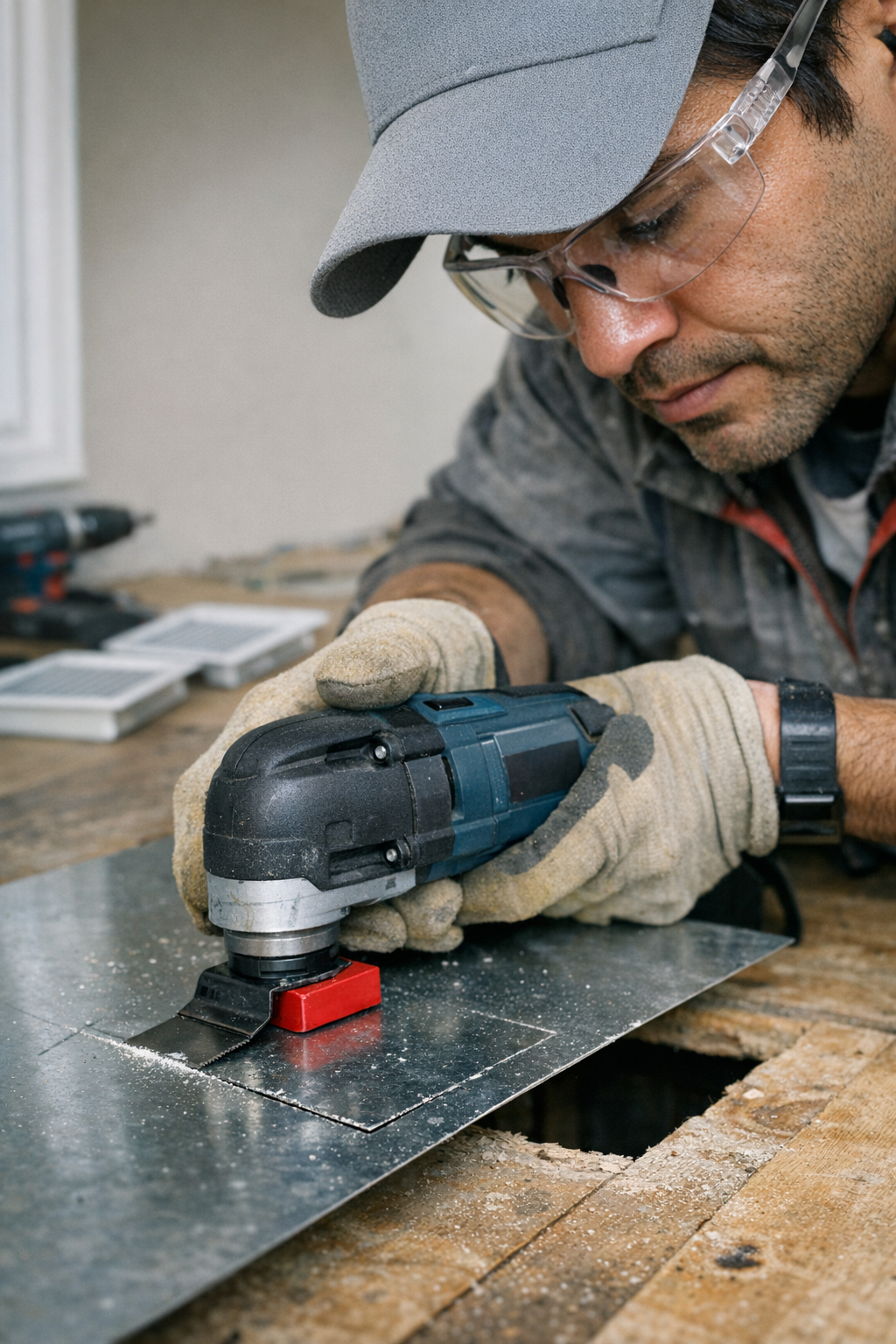
    Here’s what actually works: I started setting an 8mm spacer—a leftover chunk of wood—under the heel of my multitool when lining up vent openings. That single, repeatable move snapped my angle in place every time. Suddenly, six vent holes looked like six intentional cuts, not a slow slide into chaos. No hunting down bumps after, no surprise grabs from the blade mid-cut. The speed difference was real, but the main gain was consistency—no more rogue seams or awkward sanding at the end.

    Know the Signs: Chasing Errors Means Angle Slipped

    How do you know it’s time to rethink your approach? Watch for:

    • Gaps getting wider further down the line
    • Unpredictable, wavy vent shapes
    • Blade hesitations, sudden kicks, or stalls
    • Sanding and correction chewing up more time after each cut

    Bottom line: If these show up, your “eye-tested” angle is bleeding error into the whole workflow.

    Stop Guessing—Physical Guides Mean Fewer Surprises

    Habit says “I’ll be careful” is enough—real life says otherwise. For repeat cuts, nothing beats dropping a quick homemade fence, scrap block, or simple heel guide at the cutting spot. Letting your tool reference off a fixed point every time will save way more effort and cleanup than hoping your hand finds the same pitch on its own. For vents, cutouts, even switch boxes—physical guides equal smoother progress, cleaner seams, and a lot less aggravation mid-batch.

    Every Step Adds Up—Reduce Uncertainty, Reduce Fatigue

    Spend hours with oscillating tools and you notice: the lighter your correction load, the longer you last. Physical references don’t just improve final fit—they mean less constant sand-guess-check, less hand strain, and fewer wrong-size openings causing redo chaos. Nothing fakes the relief of knowing every hole will see its cover drop flush on the first shot.

    It’s About Angle—More Than You Think

    Sure, a dull blade or low TPI makes a rough cut. But if your approach angle is off, even a perfect blade chews up time and nerves. Lock the angle and you’ll see: cleaner chips, true seams, less battery drain (the motor isn’t fighting your mistake), and a visible improvement from hole to hole. Ignore it, and every fix gets costlier—on both finish quality and fatigue.

    When Every Cut Feels Like a Slog—Look at Your Setup

    Before swapping blades, doubling down on pressure, or blaming job fatigue, check your reference. Every repeated task magnifies tiny setup flaws, and a simple angle spacer can save you from hours lost to rescue-sanding or recut nightmares. When you want real gains—in time, finish, and control—a repeatable, simple angle guide quietly does more than new gear ever can.

    See more tools and solutions at Gumboll.

  • Choosing Backyard Storage That Fits Your Space and Daily Flow

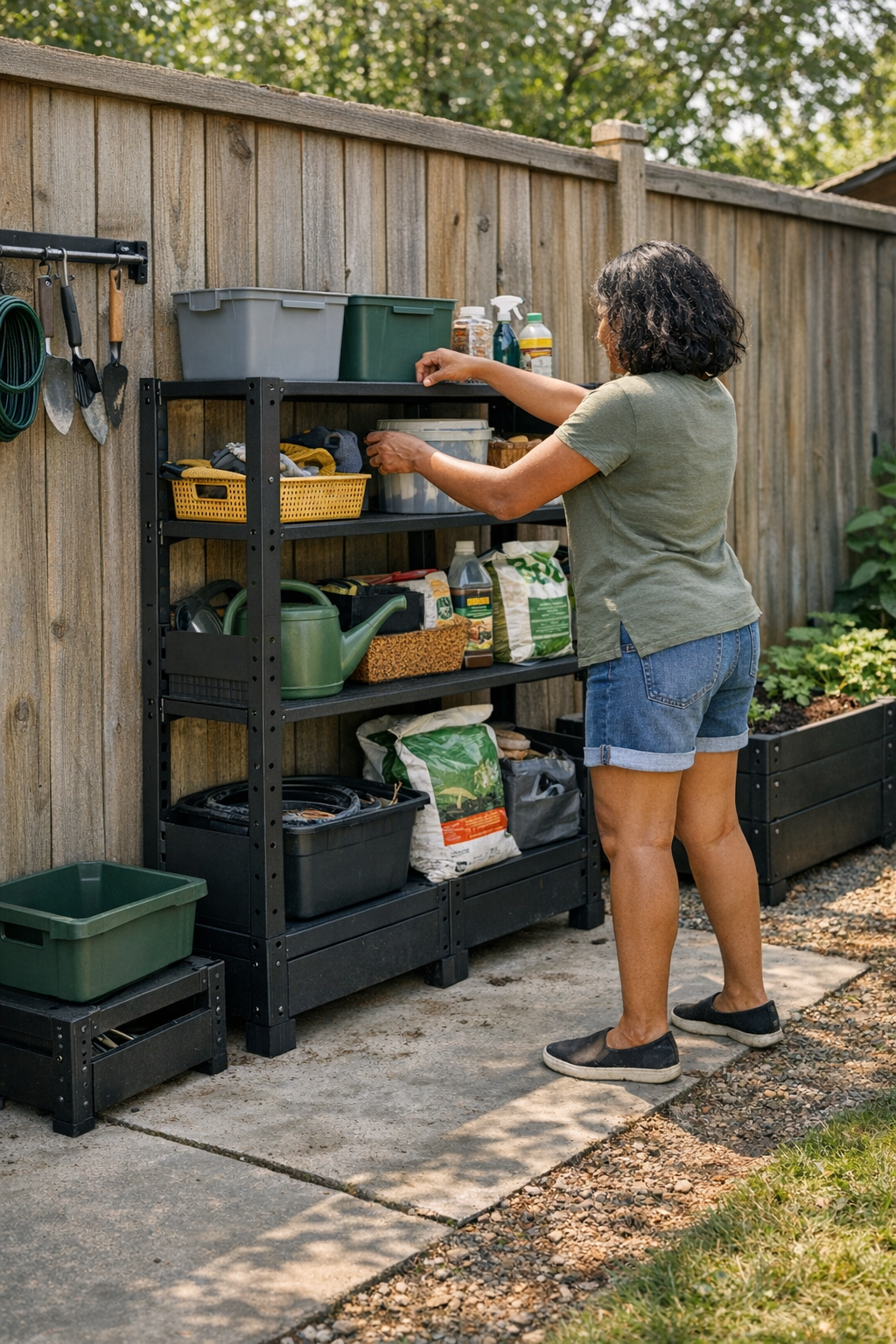
    The illusion of backyard order fades the second your routine collides with real storage. Look past that freshly arranged corner or flawless rack on move-in day—what counts is how your pathway clogs, how bins bloat with overflow, and how “organized” turns to obstacle course. If you’ve ever heaved a deck box aside just to get the shovel, tripped over sports clutter in a narrow run, or watched your best walking route shrink under “temporary” bins that never move, you’ve seen how outdoor storage friction creeps in. It doesn’t announce itself; it builds, waiting for the next rushed return or rain-soaked reset to show its teeth.

    When a Tidy Yard Starts to Feel Tight

    Picture your side-yard strip: a couple of feet between the fence and house, barely enough for a mower squeeze. Add a storage bin with a lid that sticks, and every trip for a hose means an awkward shuffle. It starts neat—tools put back, path almost clear. But within weeks, a ball perches on the lid, a hose slumps over the edge, and every return becomes a negotiation with the last thing that wasn’t actually put away. Clutter always wins if your setup can’t clear itself on the fly.

    It’s not subtle for long. By the second or third family cleanup, “good enough” piles collect on the flattest surface near the gate. Lids stay unlocked, overflow pushes out, and each person’s fix makes the next reset a bit harder. These are not messes—they’re signals: your current setup can’t handle the pace of actual use.

    Diagnosing the Friction: Where Does Use Break Down?

    It’s rarely about how much you can store; it’s about whether you can move and return items without a whole shuffle. Are you forced to reroute because a handle juts out? Is putting away one item a two-step dance? Hooks that send rakes swinging into your shin, bins whose wheels seize up, or modules that break their own logic—all whisper the same thing: your system is working against you, not with you.

    • Wall racks that can’t carry their load: A system that sags with anything heavier than a broom turns into tangled handles and tools that slide out of reach. Each attempt to return a spade becomes a Tetris session—and the floor piles up again.
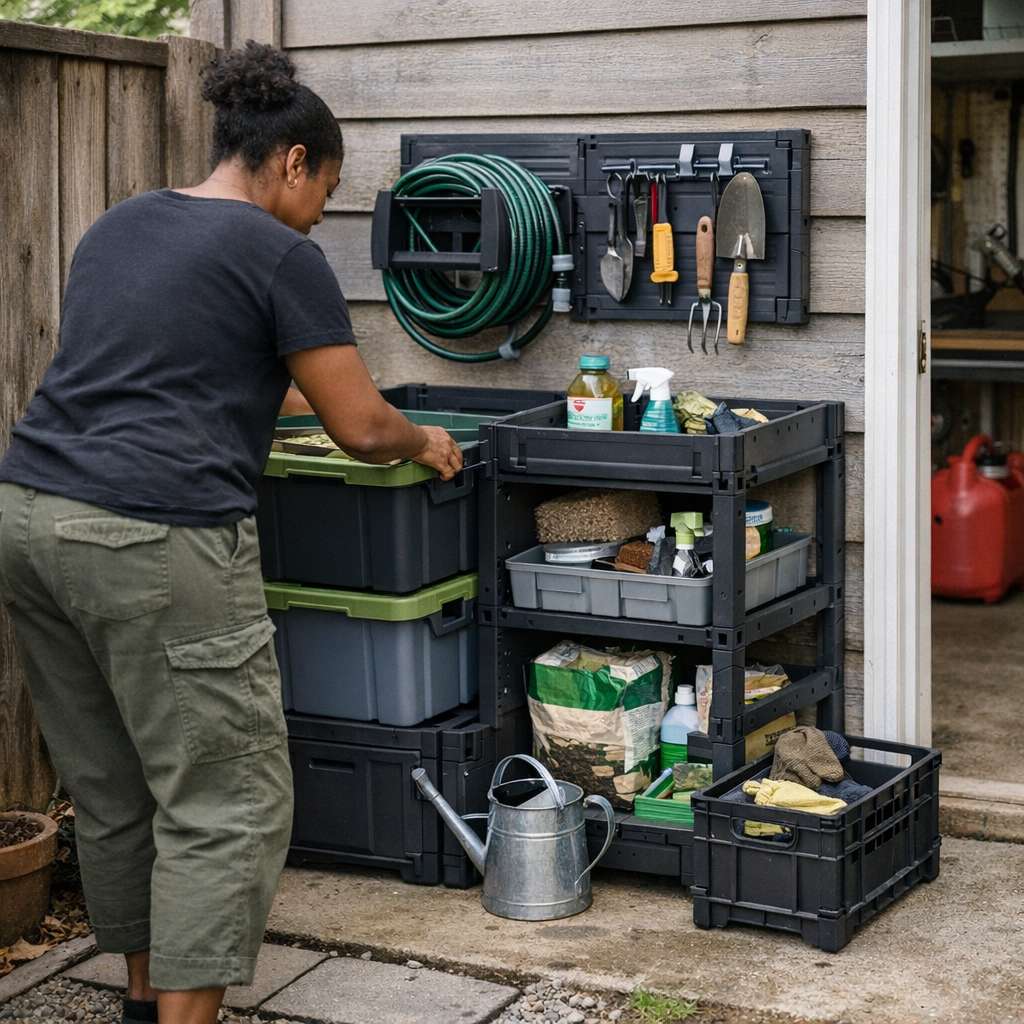
    • Modules that break apart under pressure: Stackable bins sound flexible, but when getting to one lid slows you down, or pieces drift into new corners after one storm, “changeable” becomes “scattered.” Hunting that one missing lid shifts from rare to weekly ritual.
    • Deck boxes that invite clutter, not calm: Closed bins only bring order if the return process is smoother than just dropping gear. Check what gathers in front of or on top of the box—a growing pile there means your storage route is jammed at the entrance.
    • Mobile units that don’t match your ground: Carts and rolling bins look smart until they stall on uneven patio stones or flex when filled. If a “mobile” system needs two hands and a shove to clear a path, you start dodging the obstacle, not using the tool.

    Wall Systems: Vertical Promise, Horizontal Friction

    Mounting tools and gear seems flawless in diagrams—raised, visible, off the floor. Daily reality is rougher. Hooks at the wrong height turn the usual return into a stretch or squat, and heavy rakes or hoses end up slouching to the floor anyway. A wall of hardware that looked custom becomes half-used, as most-used items migrate to whatever’s closest at hand.

    Some pain points hide until you try a real return: a corridor rack so tight you clip a shovel handle on your hip every time you pass, or hooks spaced perfectly for display but hopeless for actual reach. Slip past with wet shoes, arms full, and soon you’re snared by a dangling rake. A system barely used is just one step from surrendering the whole wall to chaos again.

    Tip: Test your system with the bulkiest, most-used item. If it doesn’t go back on “autopilot,” adjust or move before bad habits set in.

    Standalone Units: Closed Storage, Open Churn

    Deck boxes and bins solve the dry-storage riddle, but they create their own kind of shuffle. In theory, everything has a slot—until a rushed return leaves the lid open or piles gear on top “for now.” Give it a month, and you’re spending more energy moving stuff out of the way just to reach the original item. Storage stops being a station and turns into a blockade.

    It all comes down to the return: If flipping the lid or finding space takes even ten seconds extra, people skip it. So overflow builds precisely where you don’t want it—across the walk, on the nearest flat patch. By the time you notice, your “solution” is making you late, not organized.

    Modules in Motion: Stack, Shuffle, Repeat

    Modular containers sound like freedom: move things, reconfigure, adapt with the season. But a stack that doesn’t stay locked—lids that don’t nest, tubs that spread out, pieces that look similar but don’t play well together—turn resets into puzzles no one wants to solve. Each missing or stranded piece slows every session.

    In any small backyard, one lost module or off-balance stack is the weak link. There’s never “just a quick fix”—one routine interruption, and chaos sneaks in. After a few rushed weekends, you end up with half a system and double the clutter.

    Tip: Anchor extra lids or loose modules to a single, visible spot. Otherwise, tracking pieces becomes the next time sink.

    Mobile Units: Promise or Pitfall?

    Wheeled storage offers hope: move bins aside to clear space, bring tools close to the job. But if the wheels gum up or the handles bow with weight, you end up dragging, not rolling. Outdoors, a single uneven flagstone or thick patch of grass can turn “mobile” into “immovable.” The freedom you wanted gets replaced with one more thing to dodge every time you walk through.

    A system that actually works lets you reclaim the walkway for dinner, then shift everything back without a fight. A flawed unit demands its own shuffle—sometimes two or three times a day as everyone uses the path differently. The best outdoor setups aren’t just moveable; they’re actually effortless to move, even after a surprise rain.

    The Fence Line and the Overflow Zone

    Every backyard grows a clutter magnet—along the fence, behind the shed, or that forgotten patio edge. Storage bins should tame those dead spaces, but many just tighten the squeeze, making the side yard or edge paths places nobody wants to fight through. If pulling open a lid boxes you in, or you consistently have to step over a storage stack, the setup has missed its mark.

    Check your “return drift”: if most-used gear never quite makes it back, the layout is demanding too much effort. On paper, the corner stays empty—until real life piles up in the path after every game, barbecue, or gardening session.

    Where Reset Really Breaks

    The tell isn’t wild mess but slow, creeping friction. Every lap around the yard, your walkway feels tighter. The floor fills back in even with empty bins on the wall. The “weekly reset” is just moving piles from one blind corner to another. If your fixes don’t outlast a couple of busy weekends, the setup isn’t designed for your pace.

    Reset can’t be a stretch—it needs to occur as part of using the space, not in a block of weekend chores. The more steps it takes to move, open, or return anything, the faster the frustration adds up and the harder your storage fights back against you instead of alongside.

    What Makes Storage Actually Work?

    Forget “most stylish” or “holds everything.” The only system that works in real outdoor life is one you nearly forget is there. It fits your boundaries, leaves a clear path, and lets anyone—kid, neighbor, or spouse—put things back as naturally as they took them out. That means racks sized for your heaviest gear and reach, not just empty wall; bins that stack only where stacking helps, not where it slows you down; self-contained units that don’t sprawl into walkways; wheels that actually roll over the ground you have, not just a showroom tile.

    If you’re constantly dodging bins, shuffling gear, or scraping open a path just to start your own project, your system is sending a clear signal. The moment you spot where friction first appears—whether at the fence, the wall, or along a too-tight side path—you’ve found your starting point for a real fix.

    See how outdoor storage setups designed for real return and movement can change your routine: Visit TidyYard

  • Small Home Changes That Bring Lasting Calm to Your Dog’s Routine

    The evening routine with a dog rarely breaks down in obvious ways—it’s the small, repeated frictions that drag you off course. The leash is on its hook, the floor is clear, and yet—just after feeding or the last walk—your dog circles the food bowl again, stalls near a cluttered bed corner, or stands caught between entry and rest. Every night, these minor holdups pile up: the towel you need for paws isn’t within reach when the door opens, a plush bed blocks the shortcut to the kitchen, or the water bowl sits just where your foot lands during cleanup. Instead of winding down, you’re stuck in a cycle of half-finished resets and second-guessing what’s holding things up.

    Everyday Friction Hiding in Plain Sight

    Most dog owners run the same drill: feed, tidy, toss a toy aside, expect the dog to settle. But when mealtime ends and the dog hovers around the bowl, paces between spots, or hesitates near a rest corner, it’s usually not pent-up energy—it’s the setup itself quietly working against you. These patterns reveal the problem before you notice: the essentials are present, but their arrangement keeps putting friction in the path of actual comfort.

    You’ll see:

    • Your dog lingering at the bowl with nothing left to eat, unwilling to walk away.
    • Pacing a groove between feeding and rest, never choosing one.
    • Starting to settle on the bed, then popping back up to check another spot.
    • Stalling in a doorway, stuck between activities—not truly resting, not busy either.

    Even when the room looks tidy, persistent micro-interruptions stretch simple routines. You spend extra time resetting beds, grabbing towels too late, or shifting gear that keeps creeping into the wrong spot. None of it seems “wrong” on its own—but in combination, these small misses add up to a routine that never quite flows.

    Why Restlessness Keeps Returning After Meals

    If your post-meal routine is slower every night, repeated friction is likely the culprit. The moment you expect calm, you see circling, step-backs, and hesitation—not because your dog needs more training, but because the route from eating to rest is physically awkward: bowl and bed overlap, the cleanup towel hides behind a bin, or a toy pile blocks the path. These aren’t random quirks—they’re direct feedback from a setup that looks neat but breaks down under real pressure.

    Food and bed crammed next to each other? You’ll see hesitation, not transition. The lack of a clear boundary between feeding, waiting, and resting zones means your dog gets mixed signals. The more these zones overlap, the longer it takes for both dog and owner to switch gears. Instead of a smooth movement from food to bed, you get double-backs, stalling, and repeated glances for cues that never come.

    Small Delays, Cumulative Drag

    A single pause near the bowl doesn’t ruin an evening, but stacked up night after night, these stalls stretch transitions, make bedtime drag out, and chip away at real calm. The very routines designed to bring order end up slowing things down—a cost you barely notice until you’re stuck waiting for your dog to settle, again.

    How Subtle Friction Disrupts Calm for Everyone

    What makes this friction hard to spot is its normal appearance. A bowl tight against a bed, or a plush rest spot barely brushing a hallway, might look organized, even efficient—until you live with it. Dog toys migrate into high-traffic spaces. The towel for dirty paws is present but not actually within reach when you need it. Beds nudged out for tidiness block your path during cleanup. Each fix creates a new, hidden snag:

    • The towel’s there, but you stretch for it while pinning the door open with your knee.
    • Entryways crowd with gear that looks “put away” but isn’t accessible in the rush.
    • That new bed makes floor space look cozy, until it’s the reason two people have to shuffle sideways between kitchen and couch after dinner.

    Looking neat isn’t the same as feeling settled. Repeated-use awkwardness signals that something “efficient” on day one is actually breaking the flow of day-to-day life.

    Scene from a Real Evening: Where Routines Tangle

    Picture this: walk’s over, leash hung up, dog paws wiped (the towel still damp from last time, stashed behind the shoe basket). Dinner goes down next to a fluffed-up bed, so everything’s together—too together. The dog eats, steps toward the bed, stalls, sniffs at the old towel, circles back to the bowl, then freezes half-in, half-out of rest. You wait for the sign she’s ready: instead, she hovers, you hover, the lights stay on. No crisis—just a cycle of stop, start, repeat, because the layout invites hesitation at every step.

    • Meal ends; dog moves halfway to bed—then doubles back.
    • Licks a bowl already empty, pauses at the towel still out of reach.
    • Blocks the path just as you try to step through with groceries or mail.
    • The whole evening slows—not ruined, but never smooth.

    This is what a too-tight or awkwardly shared setup feels like after real use: constant low-level interruptions, with comfort zones turning into conflict zones, and nobody quite settling in.

    The Hidden Weak Points: How Everyday Setups Work Against Flow

    When Efficiency Backfires

    Squeezing everything into one corner means less walking—on paper. In reality, dog spaces packed together blur the lines between routines. The bowl sits under the table, but now you bang your toes or spill water every time you reach for it. Bed and towel share space by the entry, so grabbing one means shifting the other, and the dog never gets a clean cue to settle. Owners and dogs alike run loops around objects meant to help, not slow, the routine.

    Overlapping activity spots create confusion and hesitation for your dog, while repeated detours cost you time and patience. Nothing dramatic—just enough to chip away at calm and stretch the end of your day.

    Blocked Access and Repeated Reshuffling

    You might line up supplies to look tidy, but can you actually reach them when a muddy dog barrels in? If the towel is hidden behind the food bin, or toys slip out into walkways, every cleanup turns into a scramble. Resetting after walks or meals becomes a repeated shuffle—gear gets moved, then returns to block the same spot next time. Even “organized” setups end up causing slow reset and subtle frustration.

    The Subtle Cost: Repeated Interruptions

    Left unadjusted, these setup misfires force you to adapt in small, inefficient ways—waiting for your dog to circle three extra times or shifting your own path to avoid upending a bed. The home may look under control, but the routine underneath stays awkward, incomplete, or just slow.

    Small Fix, Big Difference: Adjusting the Setup

    The most powerful change is often the simplest—repositioning a bowl, moving a bed, clearing a path. No elaborate overhaul required; just realigning the essentials to match the flow you and your dog actually use. For example, moving the food bowl a stride away from the bed creates a clear separation: the dog eats, then heads straight to rest—no looping back, no stuck transitions.

    This isn’t about making the room prettier or adding more gear. It’s about making routines work: bed where the dog won’t block you, towel close enough to grab before muddy paws hit the floor, toys contained so they stop spilling into your path. The right setup fades into the background—what stands out is how little you think about it after.

    One Measurable Change, Immediate Payoff

    Move the bowl just one dog-length away from the bed, and you’ll see instant progress. The dog finishes eating, turns, and settles with a single, no-hesitation movement. That repeated pattern—circling, backtracking, stalled hovering—disappears, replaced by a clean, single transition. The proof isn’t in a claim; it’s right there in how easily both of you switch from action to rest, night after night.

    Other fixes work just as fast when matched to the real sticking points: a bed set in a quieter zone, a towel snapped to the wall near the door, or toys corralled away from high-traffic areas. When everyday friction drops, both routine and rest improve for everyone.

    Recognizing Unsettled Patterns (And Undoing Them)

    If your dog keeps pausing after meals, gets stuck in doorways, or retraces steps between bowl and bed, the message is clear: the routine isn’t just slow—it’s being blocked by the setup itself. These aren’t personality quirks; they’re red flags left by ordinary layout choices. Overlapping spaces mean mudd

  • Why Car Organization Fails Without Practical Accessibility in Daily Use

    Return to your car after a quick stop, and the gap between “organized” and “usable” becomes obvious: your charging cord has slipped under the seat (again), those wipes you stashed are buried just out of reach, and the trunk organizer you placed for order now blocks direct access to whatever you actually need. It’s the same story every week: tidy on Sunday, irritating by Wednesday. Car setups that look controlled—cables routed cleanly, organizers stacked, seat covers flat—start losing coherence the minute real-life driving begins. Multiple short trips, messy pickups, or a fast return can turn neat arrangements into persistent, low-level friction. The tension is everywhere: the tools that should help actually slow you down in daily use.

    Why “Perfect” Organization Collapses Under Real Driving

    Visual neatness breaks first under pressure. After a deep clean, most car setups seem dialed in—until actual routines expose the fault lines. Commuter rush? The charger you buried for aesthetics now requires a blind reach-under every time your phone is gasping at 15%. School pickup shuffle? That zipped packet of wipes vanishes behind a pile as soon as you need it, and the floor mat that stayed perfectly aligned in photos now bunches after each in-and-out. Real driving doesn’t pause for resets; it highlights every buried necessity and every obstacle in your own “well-organized” design.

    Repeated Friction Sneaks In Faster Than You Expect

    The more you hide, the more you interrupt your own rhythm. Setups optimized for one-time order unravel in the face of reach, return, or cleanup under time pressure. Suddenly you’re lifting a mat for a cable, undoing a snapped bin to get one item, or re-straightening a seat cover that doesn’t survive normal exits. The daily slowdowns aren’t dramatic—they’re cumulative: seconds lost, irritation added, and the creeping sense that order is costing you tempo, not restoring it.

    Real Examples: Everyday Routines That Undo Neat Setups

    Phone Chargers That Keep Going Missing

    The mount is always visible; the cable is always gone. One quick turn, and the charging wire has slipped into the seat gap, demanding a hand contortion you don’t have time for between errands. Hidden routes or under-mats might look clean, but by the third store, you’re on another hunt. Charging on the go isn’t halted—it’s perpetually sabotaged by placement that values looks over grab-and-go flow.

    The Elusive Cleanup Wipes

    A covered console or zipped pouch gives a sharp look, but when coffee jumps the cup holder during a left turn, your next moves turn into a timed puzzle. Wipes positioned for neatness are almost always masked by something else—each cleanup event turns into unzip, dig, repack, while traffic inches forward behind you. Car life rarely respects the “everything returned perfectly” plan. It’s the second and third uses that show where the setup breaks down.

    When Trunk Organizers Block Rather Than Help

    Rows of bins or cargo boxes make the trunk look decisive—until the routine is unloading groceries, finding a runaway ball, or desperately needing the jump cables that always sink to the bottom. Systems designed for “maximum order” quickly demand multiple lifts and armfuls shuffled for one item. Loading and unloading drag out, and the original goal—smooth, fast access—disappears behind your own walls of storage.

    The Unexpected Tradeoffs of “Tidy” Setups

    Clean lines, constant interruption. Hiding cables under mats disguises them just long enough to turn a daily charge into a repeat reset: the mat shifts and snags, the wire pops loose, and the “organized” route adds a new repair effort every other trip. Sleek floor coverage turns clumsy once corners curl or overlap, demanding fix-ups before you even leave the parking spot.

    Seat covers aiming to catch messes too often slip sideways or bunch up, so the protection saves cleanup but costs you time—straighten, tug, drive, repeat. The result: setups that excel visually keep raising the bar of maintenance, eventually draining more energy than a basic, open-access layout.

    Making Access Easier, Even When Visual Order Suffers

    What actually works isn’t polished perfection but flow that endures under repeated stress. Swapping a zipped organizer for an open one beside the seat means essentials—your charger, wipes, a tote—are immediately in play. No more pausing to unlock, unzip, or dig: direct reach wins over slow beauty. Let a charging cable stay visible and looped to its mount: no more fingertip hunts under the seat, no more tangled recovery under the mat. Utility first means you lose showroom neatness; you gain predictability in chaos, and fewer issues to fix between trips.

    The car isn’t spotless, but it’s alive to your needs. Push for immediate access, favor simple organizers, and trade a little visual silence for usable control. Especially with unpredictable stops or messy returns, the cost of “perfect” resets is revealed: less routine fixing to do, less dread each time another drive starts, more time actually moving instead of managing.

    Recognizing Where “Order” Adds to the Load

    Most systems fail not through bad design but through daily demands they weren’t meant to meet. If keeping organization means you’re zipping, stacking, or buttoning on every re-entry, the tool becomes a burden—not a solution. Those benefits only last as long as you have time for perfect resets; on normal days, they transform into high-maintenance requirements you’re less and less willing to meet.

    The Small Details That Break the Flow

    Floor mats engineered to reach every edge slip and bunch just from daily ins and outs, putting you in a loop of smoothing and refitting after every short trip. Seat-side organizers with buckles or snaps force pauses that add up—“quick” now means an extra move. These details aren’t dramatic but they chip away at actual usability: the car looks prepped for a showroom but still delays the things you do most.

    Prioritizing Usable Flow Over Showroom Neatness

    Chasing zero clutter slows you down. Put what matters—charger, wipes, tools—directly in reach, let a few cords be visible, use open bins for daily drivers, and allow the interior to look a little lived-in. The point isn’t to eliminate every mark, but to support movement, not maintenance. It’s an active trade: tolerating a bit of visible gear for the sake of removing the slow friction that tidy setups always introduce in real use.

    The best setup won’t remove every annoyance, but it will reduce the slowdowns you notice most. The difference between “looks ordered” and “works on a Wednesday” comes from dropping polish for function. Arrange around what gets used, not what looks finished, and let accessibility override cosmetic order. That’s when your car stops being a reset project and starts acting like the tool you need it to be—task-ready, stress-proof, and ahead of the next repetition.

    Browse practical, real-world car-use tools at DriveWellSupply