Blog

  • Avoid Surface Scorching When Stripping Paint With the Right Heat Gun

    Every heat gun looks the same—until you’ve spent hours stripping paint, fighting burnt edges and bitter smells that just won’t quit. You start with hope: paint bubbles, the scraper glides, the grain looks clean. But fast forward fifty feet of trim—or one hour in a cold garage—and what began as fresh progress is hijacked by a creeping patchwork of brown scorch marks and fragile splintered wood. The promise of even, controlled peeling collapses into stop-start agony, especially around finicky moldings or layered, century-old paint.

    “Good Enough” Heat Guns and the Work You Pay Back Later

    Every spec sheet tries to convince you: 1800 watts, standard grip, familiar nozzle. But anyone who’s gutted a room knows that paper promises mean nothing once you’re deep into a job. One heat gun can glide and lift entire strips in a single stroke, the next leaves behind stubborn halos and charred patches that only reveal their toll when you finally start sanding. What looked like a time-saver has quietly set up hours of rescue work—filling, feathering, endless fine-grit passes—making every attempt at a smooth new finish a reminder that you “settled” for a tool that couldn’t keep pace.

    This is the hidden tax paid by anyone who’s ever chased efficiency with the wrong gun. That brown shadow at the edge, that brittle rough feel under your hand? It’s the signal that your heat is spiking instead of spreading. Specs and wattage don’t account for how real paint and real wood respond job after job—and where shortcuts cost more in the long run.

    How Heat Gun Frustrations Mount Over Real-World Jobs

    The warning signs are subtle on a test patch. But the game changes fast when you attack years of layered paint, old shellac, and all the quirks of trim, rails, or raised panels. The rhythm: heat, scrape, slide—until a tight contour or stubborn knot throws it all off. A few seconds in the wrong spot and you get a sharp whiff of burnt finish or a fresh brown ring in the grain, the kind you’ll have to sand for ages.

    Every minor mistake snowballs: you slow down, scrape with more force, double back for missed flakes. Blade chatter sets in. That crisp peel turns chalky, making progress feel like starting over every foot. Fatigue builds faster than you expect. The more ornate the trim, the more likely every curve and swirl becomes a tedious repair job, prying brittle fibers from places a better heat spread would have kept intact.

    The Unforgiving Reality of Detail Work

    On actual jobsites, tools need to enable flow—not constant monitoring. An inconsistent, narrow jet means you’re endlessly adjusting: holding too far away (and barely peeling anything), or moving too fast (and risking missed spots), or going too slow (and burning the edges). The result is always the same: extra sanding, doubled-up labor, and finishes that just don’t live up to the care you put in.

    Why Even Heat—Not Sheer Power—Matters for Trim and Corners

    Brute force doesn’t deliver a clean result if the nozzle concentrates heat into a single point, baking the substrate underneath and sending smoke signals before you see the damage. What you’re left with are hidden scorch scars—brown ghosts that only surface in the final finish, often on the most visible surfaces. Intricate moldings are where average heat guns truly fail. Linger too long or lose focus for a second, and you’re not just stripping paint—you’re carving permanent reminders of every slip.

    A heat gun with a broad, even heat pattern changes the equation. You move how you need—not at the tool’s mercy. Pause to check your progress, adjust your grip, or refocus under a work light, without branding your project in the process. The whole surface stays workable, the paint lifts at your pace, and you spend less time and energy compensating for hot and cold spots.

    The Difference-Maker: Upgrading to a 50mm Wide Surface Nozzle

    Swapping in a 50mm wide reflector isn’t a minor tweak—it’s a line in the sand between struggle and control. Instantly, you’ll notice the change. Even on curved balusters and complex trims, the heat flows; the surface warms, not blisters. The paint softens predictably. Scraping becomes a single, calming motion instead of an anxious, stop-go scrape and reheat dance.

    The payoff is real, not theoretical. The simple act of broadening your heat path can rescue detail work, cut down on sanding, and lift your finish from “functional” to genuinely satisfying. Your wrists last longer. That signature burnt-must odor fades. It becomes easier to finish a large section at the same standard as your first test patch. And most importantly, you’re less likely to find last-minute disasters hiding under your sander weeks later.

    Know When Your Setup is Sabotaging the Job

    Your heat gun is holding you back if these frustrations keep surfacing:

    • Persistent brown spots or ghosted halos, especially near edges and joints
    • That burned varnish smell, despite careful temperature settings
    • Fragile, splintered wood and new cracks after scraping paint
    • Dragging, stuttering scrapers that resist every pull

    These are not just random annoyances—they’re signs of poor heat distribution or inadequate airflow. Each botched patch bleeds into more sanding, more patching, and the risk of blowing your project schedule (and patience) as the job demands more rescue passes with finer and finer grits.

    Small Adjustments That Make Hard Jobs Easier

    Don’t wait for mistakes to force you into better habits—build them in from the start:

    • Start with a wide nozzle—not as a backup, but as your default
    • Let your gun fully warm the surface before trying to strip—especially on cold mornings
    • Pause frequently; check the color and scent at the surface if something feels “off”
    • Keep your working angle flexible, especially on corners or carved trim, to spread heat evenly
    • If you spot damage, swap out for a better nozzle before continuing, not after the next disaster

    These fast, real-world tweaks add up. They’re the difference between a “good enough” project that demands endless post-work and a finish that survives the daylight and your own scrutiny for years to come.

    The Real Win: Tools That Match the Way You Actually Work

    A superior finish is built from more than just muscle or high wattage—it’s built from control, efficiency, and rhythm. The best tool is the one you barely notice: it keeps up with your workflow, supports your focus, and lets your results improve as your fatigue wears on. Whether you’re restoring old doors in the garage or running trim at a busy jobsite, long-term success comes from tools that fit your pace, your process, and the harsh realities of demanding jobs. That’s the line between finishing with pride and chasing repairs until the last minute.

    For more tools, accessories, and shop upgrades built for real work—visit Gumboll.
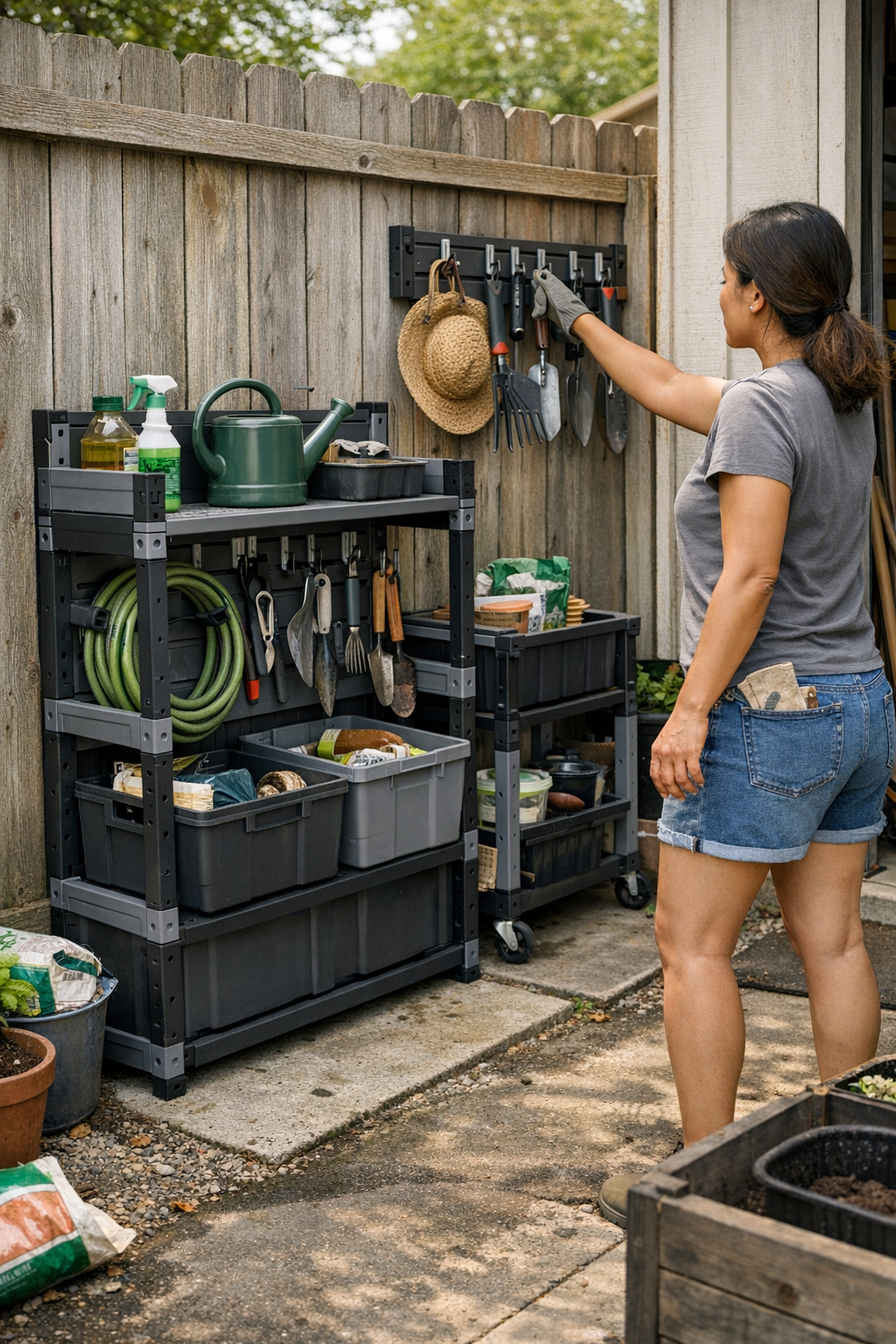
  • Transform Your Outdoor Storage with Modular Wall Systems for Easy Access

    Does your outdoor storage actually speed up your routine—or quietly make every task harder? If you’ve crossed the same garage edge, side-yard, or backyard corner a dozen times, you already know: even a “tidy” storage box can turn into a slow trap fast. Floor bins and bulky chests promise order, but too often leave you wrestling tangled hoses, digging for lost tools, or drifting mud across the path—until “getting things done” becomes “moving stuff out of the way, again.”

    Where the “Tidy Bin” Breaks Down

    After just a couple afternoons in and out, that closed box starts showing its cracks. The pattern is predictable: toss a shovel in here, wedge a bag there, and one tight lid turns into an avalanche waiting to happen. Next time you need the hand shear, it’s under a kinked hose and beside a handle you barely recognize. Every shortcut becomes a setback—what was meant to be grab-and-go spirals into digging, shifting, and stacking just to use the next tool. All the while, the outside looks organized, but the inside is quietly grinding your routine to a halt.

    The more you rush, the worse it gets: a rainy evening turns a half-organized box into mud-caked chaos. The lid resists closure, things pile on the floor, and that single bin starts blocking the whole path. Each reset asks more: bend, search, shuffle, go again. Tools start to wear from friction, not from use.

    The Real Cost: Every Reset Slows Down

    Small yards and tight side returns make the problem more immediate. What looked like a clear run from garden to gate soon becomes a shuffle: one badly placed rake, and you’re sidestepping piles; one “temporarily” coiled cord, and you’re untangling just to leave in the morning. The moment one tool clogs the zone, the rest turn into debris, and the open path you counted on is blocked three days later.

    It creeps in: that trunk by the patio, the hand trowel buried under a hose, the streak of grit tracked inside after a hasty grab. The old bin, once helpful, becomes the thing you avoid resetting. The gap between storing and actually being able to use your stuff widens—resetting for the next use gets slower, and suddenly, every outdoor job comes with cleanup you didn’t budget for.

    When Storage Adapts: Modular Systems Change the Routine

    The shift isn’t just about footprint; it’s about return flow. Wall rails, split shelving, and visible hooks don’t just organize—they keep things from colliding. Daily-use tools get a clear slot; bulky gear sits on an open shelf. Instead of forcing everything back into a mystery pile, each item has a landing zone. Grab one rake, and the others stay put. Return a muddy trowel, and you’re not burying the clippers beneath it.

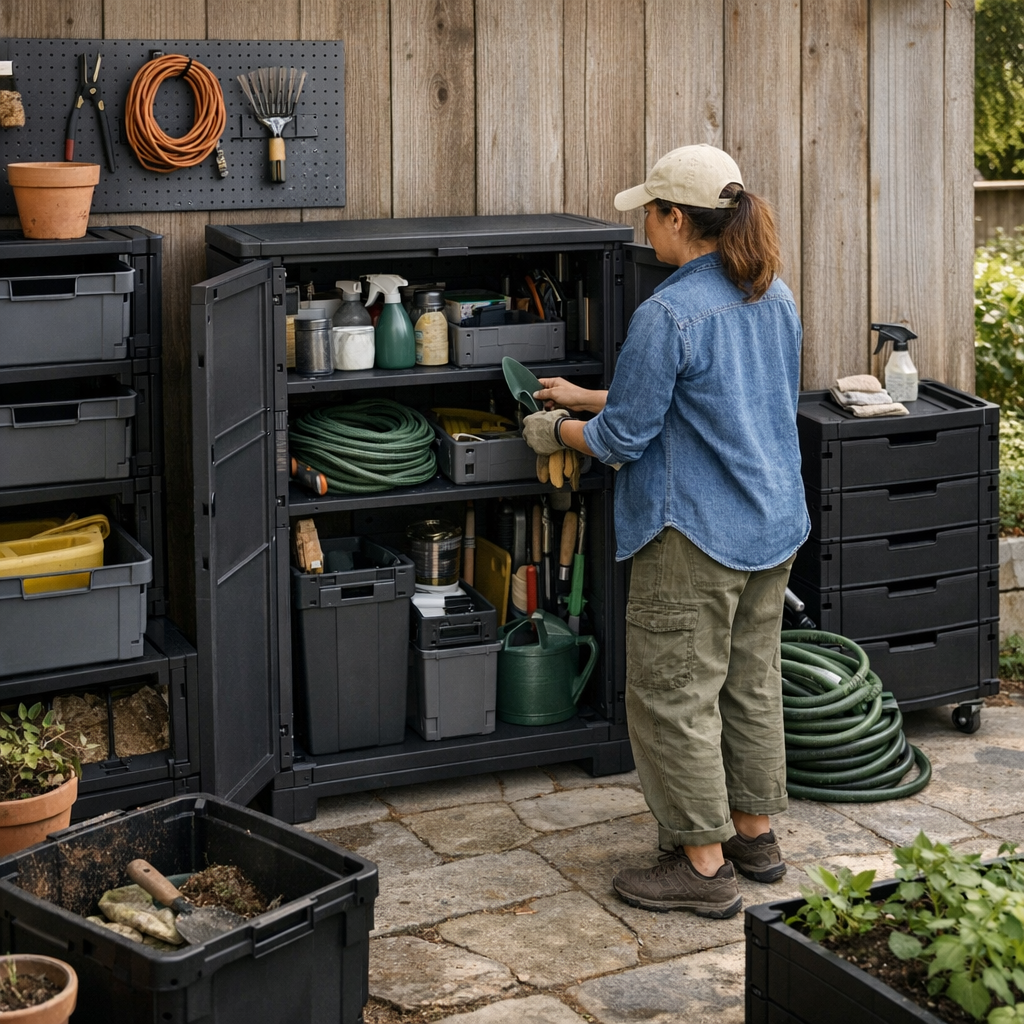
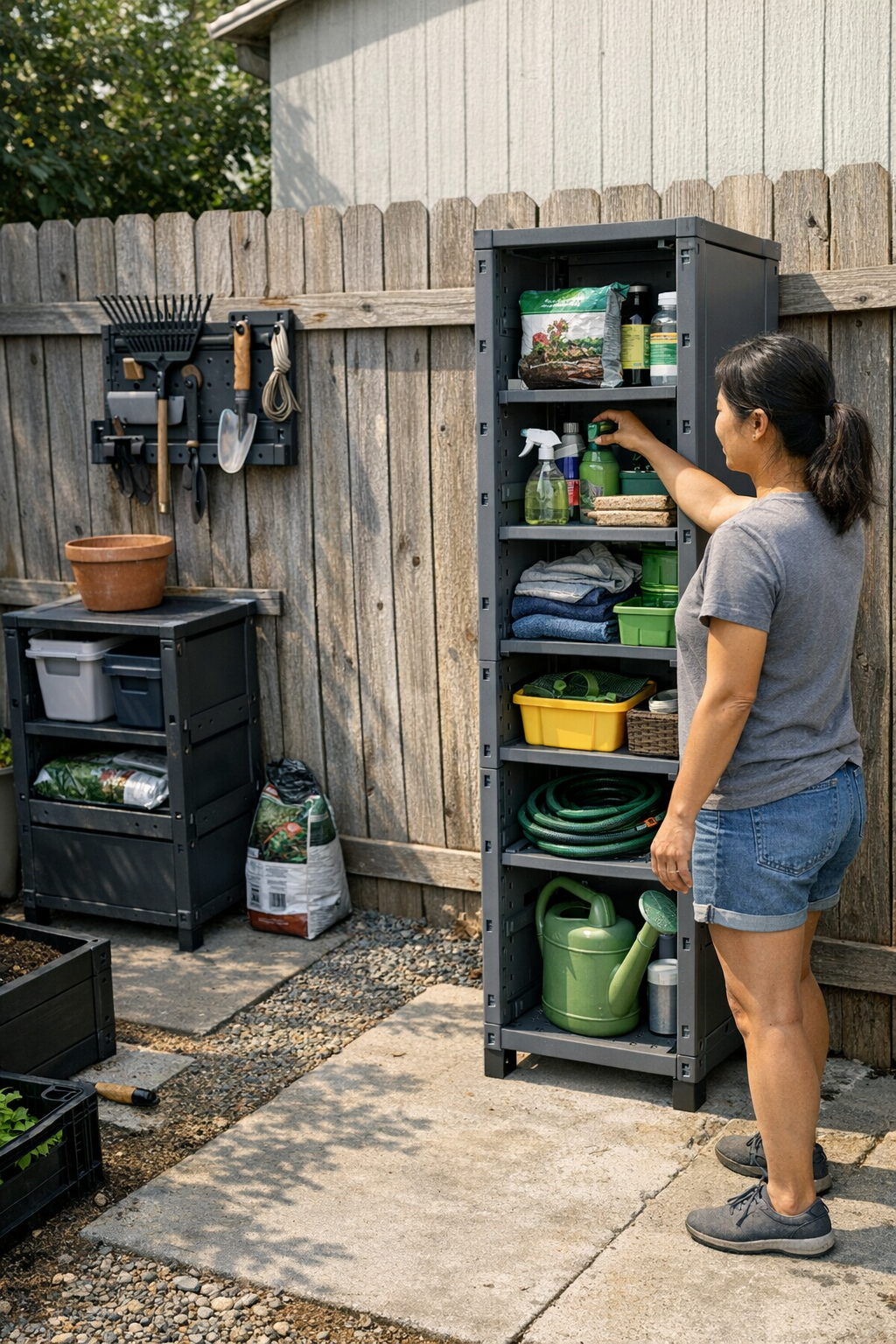
    Visualize a fence-line reset: hooks for rakes and loppers, a shelf for that awkward fertilizer tub, rails handling hoses in a single loop. After rain, nothing’s sinking to the bottom or blocking the lid—items land in sight, and you can count what’s missing before the last light fades. The reset isn’t a big project; it’s a single action, repeated without friction.

    On-the-Ground Tests: How the Setup Actually Performs

    Late-day returns: At the end of a muddy job, tossing tools in a bin is the usual shortcut. But open hooks mean no excuse for piling up. A wall rack makes “putting away” as quick as dropping it—but without the next trip becoming a dig through packed gear.

    Side yard traffic jams: One dropped shovel or a mismanaged cord can stop movement cold. Modular rail systems let you hang items flat against the wall, keeping the walk clear—so you aren’t forced to clear a mini-obstacle course just to take the garbage out the next morning.

    Overflow magnet corners: Every layout collects junk. It’s always the same dead corner, right where you step—or worse, where you can’t reach without moving everything else first. With visible rails and shelves, the corner stays empty: you see when overflow is starting, and stop the pile-up before it needs a weekend fix.

    Clear Resets, Less Mess: What Changes

    Swapping out the bin for panels and shelves won’t give you a bigger yard—but it will change how you move. No more doubling back to fish out a lost spade, or stacking on top of stacks just to squeeze the lid down. Boundaries show up: a rail for daily stuff, a shelf for what you use less, and an absence of “just toss it” zones.

    Here’s what actually stands out after the first week:

    • Returns feel automatic—no extra hunt, no pile-up, no “where does this even go?” pause
    • Obstacles vanish: fewer blocked paths, no tripping over handles that don’t belong on the floor
    • Muddy and clean don’t mix—one glance and you know what needs cleaning, what’s set for tomorrow
    • Any mess appears early, so you reset a little at a time—instead of one dreaded, hours-long overhaul

    The line between “stored” and “still outside” becomes impossible to miss. If something didn’t come back, you know instantly—no hidden trowels or buying a third pair of gloves you already own.

    Keeping the Setup from Backsliding

    Mix rails and shelves where you move most. For small or tough-shaped spaces, a low shelf for overflow, a rail above for daily tools—the difference is immediate. Heavy gear stays off the walk, frequent-use items are right at hand, and nothing’s hidden beneath another thing.

    Give everything a return spot—down to the last hook. Numbered rails, lined bins, marked hose loops. The more you lock in the landing zones, the less likely piles creep up. It’s not about perfection; it’s about reducing the excuses for drop-offs and makeshift stashes, so the area resets after each day, not after each season.

    Notice the warning signs. If reaching for a tool means bumping another, if you keep setting gear down “just for now,” or if corners fill up again, it’s time to adjust—not overhaul. One new hook, a moved rail, a fifteen-minute de-clutter every month: these tweaks keep the system matched to how you actually use the space as the months roll on.

    Long-Term: Why the Routine Stays Easier (or Doesn’t)

    Real outdoor organization isn’t measured by how much you can fit in a box. It’s about how smoothly you can put things away and find them again—without rerunning the same obstacle course every evening. Modular rails and wall systems don’t eliminate the cleanup, but they keep the return easy enough to avoid delayed resets and slow build-up of spillover. The hidden win: fewer “now where did I put that?” moments, less junk creeping over the threshold, and gear that actually lasts because it isn’t getting chipped, mixed, or buried every week.

    The right setup keeps the mess from sneaking up on you. When space is divided by use, not just by size, you spot missing or overdue items at a glance—and you don’t end up reorganizing from scratch. Small, practical boundaries keep everything moving, make cleanup obvious, and cut the stress out of everyday outdoor work.

    For more hands-on outdoor organization ideas and practical storage setups that stand up to real use, visit TidyYard.

  • Transform Your Workspace by Concealing Power Bricks for Seamless Use

    Provisional workspaces always betray themselves: tangled cables underfoot, power bricks scattered along the desk’s edge, and reach zones that punish every shift in position. If you’re swapping devices, dragging chargers in and out, or flipping between projects all day, it’s the power bricks—heavy, awkward, never quite in place—that turn a clean-looking desk into a trap. Hiding them isn’t about surface polish; it’s about clearing the recurring obstacles that steal your time and slow down every single return to work.

    Spotting the Difference Between “Tidy” and “Truly Ready”

    What looks clean at first pass—a line of cables tucked with clips, adapters nudged to the side—unravels once you actually use the setup. By late morning, you’ve knocked a charger crooked with your knee, nudged a power brick along the floor with your foot, and hesitated before pulling a notebook closer, knowing a cable might snag. Even after a careful reset, the desk surface starts surrendering to adapters and cord slack before you finish your first cycle of work.

    Desk organization fades fast under real use. Plug in a tablet here, disconnect a headset there, adjust the monitor during a video call—and the friction spills back into view. Each snag interrupts focus, each crooked brick erodes order. It doesn’t matter how neat the cables looked; the moment you need to shift or reach, you’re reminded the system isn’t actually working beneath the surface.

    Why Power Bricks Become the Unseen Culprit

    High-use desks aren’t static: laptops, dual monitors, phones, tablets, extra drives, and chargers accumulate. Each new plug means another brick taking up space, another path to tiptoe around. Instead of a smooth sweep from chair to monitor to keyboard, you find yourself steering limbs around obstacles just to avoid another tangle—or pausing before every movement, calculating whether it’s worth fighting with the cables.

    Even if the desk looks under control, one posture shift exposes the weakness. Push your chair in, lean for a printout, or try repositioning after a call—then realize a dangling brick has caught on your foot, or a looped cable trails awkwardly across your lap. Over several days, these friction points start controlling your habits: chairs left half-pushed in, monitor placement set to avoid knocking cords, and a shrinking working surface as adapters retake the territory you thought you’d cleared.

    How Hidden Power Bricks Change Everyday Workflow

    Moving power bricks out of sight—with an under-desk cable tray, a rear-mounted box, or sleeved anchor points—does more than clear legroom. It eliminates the silent interruptions that undermine focus: no more shifting papers to dodge a snaking cord, no more sidestepping swinging bricks, and no need to check below the desk before each push-in. The core test is this: aside from the main charger you grab every day, old cable choke points should basically disappear from your working awareness.

    Reset time drops, focus returns: at session’s end, you’re not untangling a mess or shuffling chargers back to hidden corners; instead, you just leave the desk, and it’s still ready for the next cycle. Whether you’re jumping between keyboard and notebook, or pausing for a call, motions are direct—no detours for neglected cords or sliding bricks breaking up your flow.

    Scene Shifts After Hiding the Bricks

    • You push your chair in—nothing blocks the route, no pause or glance underneath
    • You reach for notes beside the keyboard and find real open desk space, not cord clutter
    • You switch a device mid-project and never have to lift a cable out of the way
    • You leave for the day and don’t return to a reset chore tomorrow

    This isn’t about perfection. It’s about the small obstacles that stop eating at you all week—until their absence becomes striking. No more stepping around invisible tripwires. No more ritual untangling before you can move. The desk doesn’t just look better; its routines run smoother and stay smoother, even as the workload shifts and stacks up.

    What Happens If You Only Reorganize (Not Reroute)

    Tidy-up hacks—cable clips, surface organizers—tame the view from above, but rarely solve the lived problem. Bricks still slip into working space, cord loops gather wherever hands move frequently, and stray adapters work their way back to the very path you need clear. Friction reasserts itself and desk “cleanliness” remains a short-lived illusion.

    Rerouting cables completely—using anchored trays, rear-edge boxes, or sleeves placed out of movement lanes—makes a practical difference you notice in ongoing use. Now, device swaps and midday charging don’t leave cords and bricks creeping onto the desk. The difference is simple: you stop improvising; you start working. The desk stops feeling temporary, and instead, it becomes a station designed for return cycles, not just a moment of calm between cleanups.

    Choosing the Right Solution for Your Setup

    Your desk type, device mix, and—critically—your movement patterns all shape which cable structure will actually help. If you reposition between seated and drafting stances, or you’re constantly swapping devices, look for an easy-open cable tray: it’s flexible enough for access and keeps cables locked away from main traffic zones. If you mostly keep hardware static and aren’t changing setups often, a closed cable box at the far rear keeps clutter out of reach with no compromises.

    Key mistake to dodge: mounting storage where it blocks natural leg and chair clearance. A tray that looks elegant but bumps every knee quickly becomes just another obstacle. Leave all major sweep and reach zones open—what feels organized on day one should still support spontaneous movement and quick resets after weeks of use.

    Quick Answers for Common Cable Headaches

    Why does hiding power bricks matter if my desk is already “clean”?

    Because visual order isn’t enough—a hidden brick still adds drag every time you adjust position, swap devices, or try to use full desk depth. True clarity is when you work without pausing to rescue cables or step around adapters, even after back-to-back task switches.

    Will a cable tray or box get in the way or block movement?

    No—when trays are mounted at the rear underside, the main chair and leg paths stay open. Only mount storage away from repeat travel lanes for legs and feet; otherwise, you’re exchanging one friction for another.

    How do I know it’s time to overhaul, not just tidy?

    If the same cable tangles reappear after every reset, if plugging or swapping devices always means moving adapters back into place, or if you hesitate to slide in your chair, it’s clear: you need full rerouting and anchored storage, not just one more tidy-up session.

    What Changes—and What Doesn’t—After Upgrading the Setup

    When the bricks vanish, the desk stops feeling like a provisional fix. There’s more legroom, clearer sightlines to the monitor, cleaner reach zones—routine tasks feel direct rather than complicated by obstacles. Typing, switching devices, or jotting a note no longer means negotiating cords or weighing the cost of moving something out of the way. Of course, every setup has quirks: the job isn’t perfection, but friction that actually stays gone after repeat cycles.

    The surest sign of success? You stop noticing your cable management altogether. There are fewer interruptions, fewer micro-decisions before every move, and less daily time burned on system maintenance. Suddenly, the desk isn’t just ready for a photograph; it’s ready for the next session—and the next, without a pause.

    Explore the full WorkBasic collection

  • Why Weather-Sealed Yard Cabinets Outperform Basic Outdoor Storage Solutions

    Most yard storage setups look right on day one—stacked bins along the fence, a chest tucked by the gate, a cabinet wedged by a dead corner. Everything’s off the ground and visually tidy. But “order” unravels fast when routine sets in: you grab muddy hoses, drop gloves in a rush, and reach for pruners with soil still clinging to your hands. The ideal layout starts to show its cracks after your first few cycles of use. Instead of a smooth return and easy access, you meet small blockades, cluttered edges, and the creeping sense that the setup is working against you.

    First Glance vs. First Week: The Real Test

    Out of the gate, any closed bin or chest feels like a solution, especially when grouped neatly by the wall or in a zone you want to keep clear. But organization that just looks neat quickly reveals its limits. Loose lids let in rain and leaves. Corners that were clear at setup become jumble zones by Wednesday. Each round trip—stowing a shovel, grabbing garden stakes—adds a new layer of inconvenience. Once you’re forced to slide a bin sideways or reach awkwardly behind a chest that crept out of place, you know the setup isn’t keeping pace with routine reality.

    Where Clutter Actually Begins

    The friction isn’t immediately visible. You notice it when grabbing clippers means reaching around a bin half-blocking the cabinet door, or when you have to rescue a trowel that slipped into standing water at the bottom of a supposedly “sealed” chest. Open bins that made sense fill with debris; tools you rinsed yesterday now rest against a slick of mud accumulation. Each retrieval or return is a little slower, a bit less direct—micro-hassles stacking up with every use.

    Clutter creeps in through repetition, not rescue: it’s found in the daily detours, the extra hand shuffles, and slowdowns that chip away at the promise of a tidy, ready zone.

    Sealed Cabinets vs. Reality—Where Protection Counts

    The real difference surfaces on the third or fourth cycle of use. True weather-sealed outdoor cabinets, with their fit-tight doors and elevated shelves, protect against outdoor chaos. No corners turned into puddles, no tools blending in a debris-filled heap. When you finish watering or pruning, the action is quick: cabinet opens smoothly, everything lands in a defined slot or on a shelf, and you’re done. You don’t need a towel to reclaim your hand spade, and you skip the “sort, shake, and hope nothing’s ruined” ritual every time it rains.

    Scenes That Spell Out the Gap

    Think of this: late afternoon clean-up, a little tired, ready to wind down. The open bin? A single glove slides into a pool at the bottom, the pruner sticks on gritty residue, and you lose time trying to wedge tools around standing clutter. With a proper outdoor cabinet, you swing open the door, slot each item onto a clean, dry shelf, and close up—no improvising, no retracing your steps. The next morning, you start fresh instead of re-sorting. The cabinet isn’t just holding the gear—it’s holding the line for your whole routine.

    Reset Friction: Why “Almost-Right” Setups Stall Out

    It’s easy to cheat space with exposed bins or mobile chests, nudging them for a better fit. But these movable clusters almost always drift—blocking walkways, stacking in corners, and collecting a mess right by the entry. A bin rolls an inch too far and suddenly you’re sidestepping every pass-through. Overflow jams up a corner that’s supposed to be functional. The space that once looked so efficient on paper devolves into a slow-motion shuffle, especially as the weeks go by.

    When you swap a balancing act of loose bins for a proper weather-sealed cabinet—especially one at waist height and with the right shelf—you stop sacrificing floor space and flow. Wet days no longer spawn puddles under your gear. Dead corners aren’t clogged by makeshift stacks. That single upgrade cuts the invisible friction: fewer detours, no more blocking your own path, and less frustration on every lap around your yard.

    Spotting Genuine Friction in Your Storage Zone

    Most organization mishaps aren’t headline moments—they hide in patterns. If you shake water off gloves before starting, dodge a mobile cart you never meant to park there, or find a shelf dusted in windblown grit every week, your system is signaling trouble. Rust patches on hand tools, sluggish resets after rain, and needlessly repeated reshuffling are not minor annoyances—they’re signs that superficial order is masking deeper clutter.

    When Shelving Isn’t Enough: Racks vs. Cabinets

    It’s appealing to keep gear visible on wall racks or rails, but unless the spot is dry and protected, you’re just swapping floor mess for wall mess. Damp tools dry slowly, and visible “order” becomes an illusion when you’re still pausing to clean before use. Fully sealed storage—whether low cabinets or upright chests—not only keeps tools dry and categories distinct, but sidesteps the trap of maintaining a wall of almost-right organization that requires constant tweaking.

    Small Improvements, Big Difference: Why Protection Matters

    The benefits aren’t dramatic at first. No big reveal—just the slow, satisfying lack of clutter, hassle, and backtracking that chips away at your patience in lesser setups. Over the weeks, this streamlined routine shows its value: you walk a clear path, return items in one step, and skip the busywork of draining bins or clearing sidetracked piles. The setup becomes an invisible ally, not another round of work after the work.

    The true test for outdoor storage isn’t a tidy photo—it’s how the space handles a wet Saturday, a quick morning rush, a messy return: staying ready, not just looking ready.

    What to Fix (and What to Abandon)

    If your zone demands constant reshuffling, leaves puddles in supposedly “sealed” bins, or turns every return into an obstacle course, it’s time to rethink—not just tweak. The real gains come from direct-access flow: sealed storage raised off damp ground, routes that don’t force detours or repeated reshuffling, and layouts that match how you actually move and return gear, not just how much fits at rest.

    Quality setup means the area feels easier every week, not harder. That means fewer blocked pathways, actual wall utility (not just filled wall space), zones that aren’t collecting overflow by Friday, and cabinets that stay put—holding the line for both order and speed. True storage solutions do more than look tidy on day one—they work with your real routine, week after week.

    You can browse practical storage solutions at StackNest.

  • Prevent Sticky Stains with a Drip Tray in Utility Cabinets

    A single missed drip in your entryway cabinet is all it takes for a clean zone to unravel fast. You’ve done the reset—the bottles are lined up, the shelf wiped down, everything looks ready to handle the daily shuffle. But entry and drop zones are built for repeated crossings, not just looking controlled after a big clean. Without a drip tray, every detergent bottle, spray, or muddy container leaves you playing catch-up: thin films, crusted residue, and sticky edges start spreading almost invisibly along the spots you touch and pass through the most. The setup might pass for organized, but under steady use, even a tight routine breaks down—one leaky cap or missed wipe is all it takes for the mess to mark a return path through your threshold space.

    A Hidden Mess That Builds Up Fast

    At a glance, the problem doesn’t even look like a problem. The shelf is spotless on Monday; by the next Saturday, after shoes grind past, bags jostle bottles, and someone tosses in gloves, a dull film quietly inches across the surface. Every time a bottle’s not capped straight, drips trail outward. Shoelaces snag at the edge, cuffs drag through unseen stickiness, and backpacks travel through the “clean” zone only to pick up a stripe of grit. The moment you sling a bag, hear it thud, and later notice it carried out the smear—that’s when you know the reset didn’t hold.

    When Resetting Becomes Real Chore Work

    Ignore the slow leaks, and cleanup turns from a quick swipe into real scrubbing—hardened lines that claw onto anything brushing past. The cabinet looks composed from a distance, but up close, every detail reminds you what got missed. Resetting stalls out as you pick at streaks and run down gray build-up, the original order fading far sooner than you planned. This isn’t a fix-and-forget zone; it’s a stress loop—mess returns because movement through the space never really stops.

    How a Simple Drip Tray Shifts the Routine

    Positioning a drip tray right under bottles and detergents forces the zone to behave differently. The tray doesn’t just catch big spills. It quietly absorbs those slow, creeping leaks that always seem to beat the wipe-down. Suddenly, after a week or two, the surface around your storage stays dry to the touch—no more sticky shelf edge, no more crusted smears at the seam. Cleanup resets shrink: grab the tray, rinse it, put it back. Instead of dragging out the reset, the process collapses into a simple lift-and-wash–no scouring along awkward seams or chasing stains under bottles that never really get moved in daily use.

    The Real-World Difference After Repeated Use

    Set two entry setups side by side: a tall cabinet clustering bottles low, or a bench drop spot crowded with wipes and gear. Both reset fine, but after a few days, the setup without a drip tray shows its weakness: sticky ridges fan outward, finger-width and hard to spot until a shoe edge finds them. Bottles set back crooked, containers jostled out of line—all it takes is normal movement to start mess creeping past the intended boundary. Neighbors get marked; gloves, bags, and sleeves show stripes you didn’t notice leaving. The tray version contains all that behind a single edge, holding back spread, and making the mess simple to intercept before it becomes routine cleanup drama.

    Entryway Scenes: How Mess Moves Without a Tray

    It’s raining, boots come off, coats pile on hooks, and someone tosses a half-closed cleaner bottle onto a shelf edge. By morning, a ghostly ring has formed—a visual cue right where you grab for the next item. The ring thickens as bags, sleeves, and hands graze it. The mess goes mobile: a bag corner absorbs the residue and carries it to the next room. That dirt isn’t just limited to the shelf—it spreads to the bag, the jacket, the hallway floor. Cleaning up now means extra steps, chasing tracks away from the entry instead of wrapping up at the source. Every missed intercept expands the reset chore past the transition space.

    Working Against the Daily Drift

    Transition zones either reinforce your routine or break it down. Without real containment, clutter and mess expand faster than you notice. Drop a glove, rush a bottle back at a slant, and the cycle begins again. In a high-use entryway without a tray, quick fixes pile up: extra mats that slide, wipes that bunch and clog, shelves doubled up and reshuffled until the original reset is buried under patches. None of these actually holds the line against the drift—they just delay the next full reset.

    Replacing Shelf Mats with a Shaped Drip Tray

    Mats seem practical, but flat mats migrate, fold, or bleed moisture over the very edges they’re meant to protect. Over time, drips sneak underneath or around, forcing you to clean what’s supposed to be covered. A real tray—shaped slightly wider than the bottles, with a subtle raised lip—blocks those leaks from ever getting to the wood or metal beneath. With enough room for a quick lift, you’re not wrestling the tray out or spilling its load back into the cabinet. Reset time drops from a tedious ten-minute wipe-and-scrape to a two-minute rinse—no hunting in corners, no old spots under forgotten bottles.

    What to Look for When Choosing a Tray

    For high-turnover storage, the ideal tray is shallow but firm, edged just enough for containment, and sized to slide in and out without pinching. Too deep, and you jam every reset; too shallow, and seepage wins. Most entry setups only need a weekly rinse—unless you’re deep in gardening season or cycling heavy outdoor gear, in which case, quick lifts catch the worst before it hardens. One everyday test: if grabbing the tray feels awkward or blocks item flow, it’s wrong for the spot. Fast resets and open movement matter as much as leak control.

    Beyond Bottles: Trays for Planters, Boots, and Mixed-Use Corners

    Drip trays aren’t only for cleaners. Under a watering can, beside sprays, or at the base of a bench where boots drip and plant gear rests, a fitted tray prevents pooling water or streaked soil from creeping outward. In zones meant for both indoor and outdoor traffic, anything set down wet or muddy becomes a candidate for containment. The trick is making the tray flush and free-moving—any delay or friction and the tray becomes a setup you avoid, which means the leaks return and the cycle restarts.

    From Stubborn Stains to Simple Resets

    Boil it down: a drip tray transforms the reset into a single action. No more scrubbing layered residue, no more guessing what’s growing under a bottle pushed to the side. The edge stays cleaner, clutter stops jumping zones, and your threshold isn’t a hidden mess waiting to appear next week. Not every drop-spot leaks equally, but the difference between an exposed shelf and a removable tray is felt after a few cycles. Each re-entry takes less effort, and the area works for your routine—instead of you working around its weak point.

    Shop Betweenry transition-space storage solutions

  • How Strategic Litter Box Placement Simplifies Indoor Cat Care

    Stashing the litter box out of sight usually means signing up for a harder cleanup routine. It’s quick to slide the tray under a shelf or cram it behind stacked bins just to keep the mess out of view, but that surface neatness collapses fast. The first sign isn’t strong odor—it’s trying to scoop from a cramped corner, finding a broom blocked by chairs, or squeezing a dustpan through bags you’ve meant to move all week. Out-of-sight becomes out-of-reach, and what started as a discreet solution turns every day into awkward workarounds just to keep an indoor-cat routine running.

    Why Hiding the Litter Box Usually Backfires

    It looks solved at first—those stashed setups behind cabinets, lined up next to baskets, or pinned beside seldom-used shoes. But the tradeoff hits back with every use. Picture the actual cycle: scooping means ducking under a table, bending your wrist around a bin, or shuffling household clutter out of your path before you can even reach the pan. Cleanup supplies migrate: not where you need them, but wherever there’s space left to stash them. What you gain in a calm sightline, you lose in constant detours, arms stretched at the wrong angle, and the slow creep of litter tracing up runners and baseboards. Even the best hiding spots don’t stay unseen—the evidence always tracks elsewhere.

    What Actually Happens During Repeated Use?

    Within days, the “tucked away” setup starts demanding more time than one in plain view. You handle a crusted trail behind a wobbly mat, spot a ridge of litter dust against trim, or notice your sweeping never reaches into that boxed-off nook. Instead of one reset, you repeat small fixes: nudging bins, extracting supplies buried behind storage, finessing scoops around side-table legs, lifting mats that never lie straight. The cost is daily: every pass becomes a double pass, every sweep is partial, and the routine builds up annoyances with nowhere else to hide.

    The invisible “neatness” becomes the most obvious friction in your cleaning pattern—the price of keeping the box hidden is a cycle of small failures and delays.

    Easy-to-Clean Zones Change the Day-to-Day Flow

    A setup built for access, not disguise, cuts the mess and the hassle at the same time. Slotting the litter box on continuous hard flooring with no furniture tight to the sides turns resets into single-step tasks. No wedged corners, no wriggling past obstacles, and granules actually stay where you want them—on a mat you can lift in one go or on flooring you can sweep clear without detours. Cleanup shifts from a chore you want to skip to a routine you barely notice.

    How Open Placement Lowers the Reset Burden

    • Sweeping is straightforward. No blocked passes, no skirting table legs—just clear floor and quick coverage.
    • Both sides open—no more blind scooping. You can see, reach, and clean every corner instead of guessing or contorting.
    • Debris stops spreading. Hard floors let you remove every trace—no bits packed into rug seams, no dust trapped between bins.
    • The cycle becomes routine. Each reset fits into the day, not as a production but as a barely-noticed maintenance step.

    The difference shows up quickly: after a few resets, missed mess almost disappears. The tradeoff—plain visibility for lower effort—unlocks time and prevents the kind of micro-messes that quietly multiply in hidden corners.

    The Mistake of “Low Traffic” but Hard-to-Clean Nooks

    Choosing low-traffic doesn’t always mean choosing easy-living. Squeezing the litter zone under a lamp, behind baskets, or beside deep shelving just replaces foot traffic with maintenance headaches. The dust doesn’t vanish—granules wedge under rugs, clinging unpredictably until you finally move everything for a proper clean. Out-of-the-way setups promise less disruption, but always collect hidden work you can’t ignore forever. Revealing the box was never the real problem; it was turning resets into minor construction projects.

    When Does a Tidy-Looking Spot Make Life Harder?

    It’s the repeated scrambles that mark a bad zone. Place a box near the closet, and stray litter clings to shoes and slaps against bags at every exit. Hide it behind a table, and every cleaning means a two-step: first a failed sweep, then fetching supplies you couldn’t leave nearby. Over a normal week, the toll piles up:

    • Residue bunches up beneath edges, then resists quick removal—out of sight, but never gone.
    • Blocked corners and odd angles stall sweeping—hand vacs become a requirement, not a backup.
    • Mats curl, liners drift; every touch from a cat’s paw pushes mess into the seams rather than catching it on the surface.

    A tidy look is a short-term win; the practical loss is all overhead. The more you shield the box from view, the more its weak points break your normal rhythm.

    Shared Spaces & The Hallway Trap

    Grabbing unused corners, sidewalls, or empty hallway ends can seem like smart territory—just distant enough, just subtle enough. But these are pathways, not destinations. Every time your cat walks out, grit skips the mat, joins the high-traffic run, and tracks dust up and down the main artery of your home. Mat edges clog with gray, and within days, every sweep starts from urgency but ends halfway—the mess just re-circulates with every step, never fully gone.

    When Maintenance Outpaces the Mess

    Even new paint and daily sweeping can’t keep up: stray litter clings to baseboards, lands in the cracks under doors, and mixes with other daily debris before you realize what’s leaked from the box. What felt orderly quickly turns into another cleaning loop—one that’s stitched into the space you move through constantly, not contained in a single part of the room.

    Setting Up for Practicality—A Real-World Example

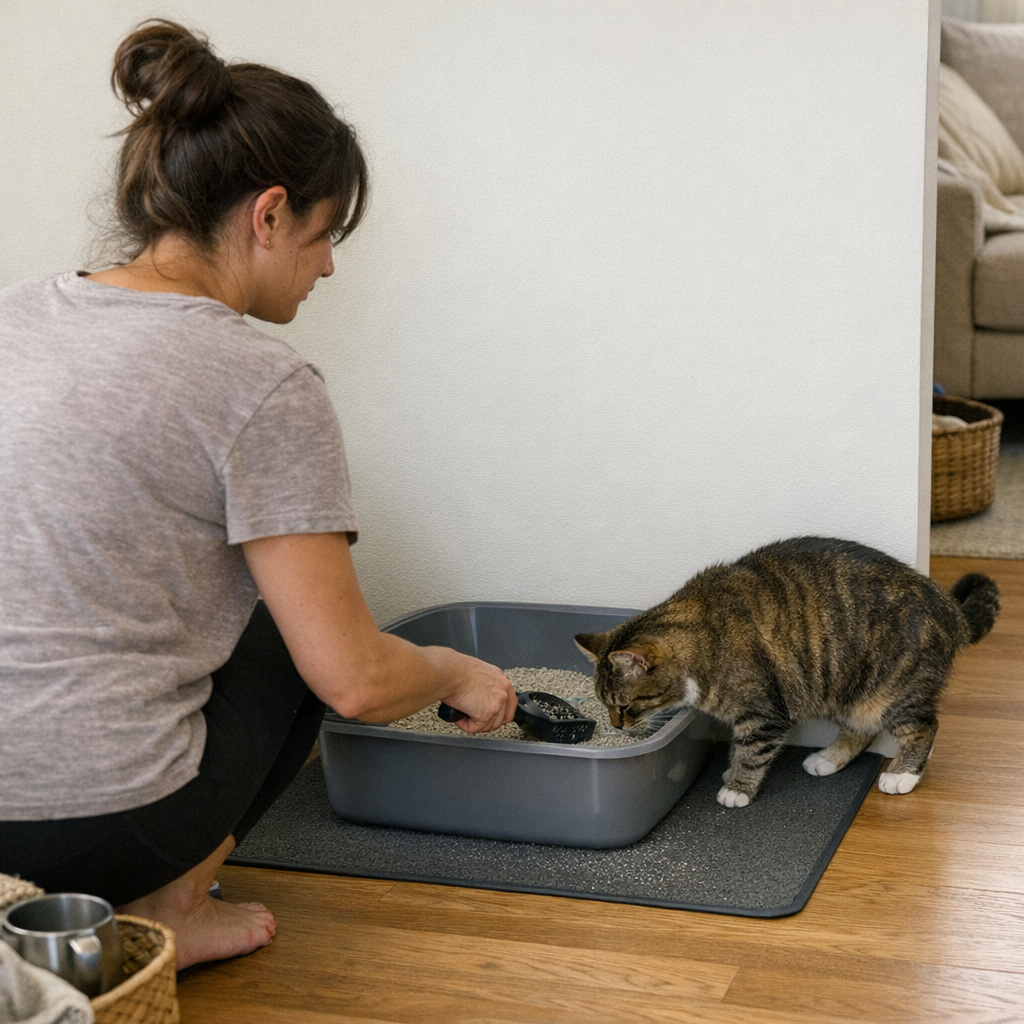
    Not every home can spare a perfect nook, but a “good enough” adjustment will show visible results. The single change that cleared the biggest hurdle was moving the litter box to an open, blank wall section with hard flooring—no shelves, no mats curling into odd spaces, nothing crowding the sides. The mat pressed flat along the baseboard; shaking it out or sweeping the area took less than a minute. The improvement wasn’t about the look, but about eliminating the maze: no more dreading resets, fewer missed crumbs, and every cleaning was direct. Instead of patching up mess all day, routines ran smoothly—no more lost time doubling back for what the discreet spot failed to catch.

    How to Select a Smarter Litter Box Zone

    Effective zones match indoor cat routines with what you can actually reach and reset, not just what looks clean at a glance:

    • Favor hard, unbroken flooring: tile, sealed wood, or laminate let you finish sweeping in a single pass and stop bits from hiding under seams.
    • Leave room to work both sides. Full access for both hands means every cleaning goes faster, with less awkward bending or missed edges.
    • Mind invisible blockades. If shelving, baskets, or doors clip the area, every sweep or scoop is a work-around, not a reset.
    • Accept visibility for easier living. A visible box and mat are often a low price for a smoother routine—mess can’t accumulate where you can see and reach it every time.

    Especially in tight apartments, prefer a box that’s “barely” visible but straightforward to handle over one no guest can spot—your future self will notice the lower burden. A mat cut flush to box width, no unnecessary layers, means nothing to un-bunch or re-align every day.

    The Hidden Reality: Looks Are Cheating, Performance Matters

    The right setup isn’t about making invisible lines—but making fewer obstacles between you and a normal day. An accessible box pays back: less micro-cleanup, lighter resets, and no more hidden crises under the rug. Durable routines start when every step is effortless, not when the box can’t be seen.

    Managing the Cat’s Adjustment to a New Spot

    Cats rarely get attached to the exact nook—what matters is calm, steady access and a surface that feels clean underfoot. If you’re shifting zones, bring along a familiar mat, let some scent remain, and expect only a brief, cautious check from your cat before they settle in. The surprising part: with less mess around the box and easier entry, most cats adapt before you do. Their preference for easy-in, easy-out matches yours for less frequent, less stressful resets.

    Long-Term Wins—Where the Routine Stops Dragging

    A solid litter box placement isn’t about today’s sweep or a fleeting tidy look—it’s about smoothing the rough edge from every future cycle. As friction drops, so does the mental

  • Choosing Narrow Linen Cabinets That Simplify Small Bathroom Storage

    In a small bathroom, the difference between a space that works and one that wears you down shows up the moment someone reaches for a towel and comes away with a pile of clutter. A narrow linen cabinet might seem like a neat solution—until you live with the fallout: doors blocking the sink, shelves too deep to reach without removing half the front row, items drifting out of sight, and every quick grab turning into a slow shuffle. What looks orderly right after install can, within a week, become a zone that interrupts the actual flow: slow retrievals, doubled-up returns, categories blending, and a constant sense you’re resetting the same mess twice.

    Where the Trouble Starts: Crowded Corners and Blocked Moves

    The real trouble isn’t just fitting a slim cabinet in—it’s what happens every time you move through the space. Maybe you tucked spare towels and essentials into that vertical footprint, getting them off the counter or floor. But now, the door swings wide and collides with the edge of the sink. Your hand cranes around an obstacle just to return a bottle, and the next morning, someone brushing their teeth is in the line of your awkward reach. Each shelf return becomes a moment of either shoving or balancing, and every shared morning pushes the limits further: you wait for access, try to stow something mid-routine, bump elbows, give up, toss it back in, and the “organization” unravels faster than you expect.

    Shared bathrooms multiply this friction. One person wants the lower shelf while another needs sink access. You reach for your go-to moisturizer and get blocked by a sibling’s hair spray, which already migrated sideways. Every overlap is another layer of inconvenience, making small annoyances stack up until the zone actively slows everyone down—especially when routines collide at peak hours.

    Deep vs. Shallow: The Hidden Catchall Trap

    A tall, slender cabinet looks composed at first. But open those deep doors after real use and the system starts slipping: towels buried behind a front line of bottles, washcloths lost behind stray soaps, and basic items only reachable after moving what’s blocking them. This double-row trap happens almost automatically once shelf depth outpaces a comfortable forearm reach.

    The farther the shelf, the more each daily grab moves things forward—and overflow gets banished to the dark back. When your return flow is broken, a “sorted” system becomes a jumble: old products hide behind new, categories mix, and the time to locate basics increases every day. After even a short stretch, you’re not maintaining order—you’re excavating the same zone over and over, with every missed restock amplifying the mess. That’s not just a cosmetic issue; it’s a real block to fast, repeatable routines.

    Real World Example: The Shared-Bath Shuffle

    Picture stepping into the bathroom, late and on autopilot. The cabinet door nudges the sink, squeezing your arm as you reach. In grabbing a towel, your hand knocks over three travel bottles—someone else’s product slipped in from yesterday. The stack you organized on Sunday has already spread into a lopsided pile, with loose items filling gaps in ways that barely make sense. You dig, restack, and by the time you’ve found what you need, you’ve sabotaged tomorrow’s attempt at order. Multiply this for every person using that zone, and you get bottlenecks that slow down the entire morning shuffle.

    Function Over Footprint: Why Shallow Shelving Wins

    The best-performing linen cabinets usually don’t look complicated or “maximized.” Cabinets with shelves capped around easy arm’s reach—typically 12–14 inches—quietly outperform deeper setups in daily life. These shallow shelves force everything into one visible line. No blind search, no double-row traps; just a clear, nothing-hides design that speeds up retrievals and resets.

    After switching to shallow, category-sized shelves, resets shrink into simple checks: folded towels fit cleanly, bottles and small items stay up front, and you stop spending time excavating for basics. There’s less opportunity for spillover—everything has a slot, and nothing is forced behind something else. By midweek, the old pattern of category drift is gone: towels hold their pile, personal items aren’t exiled in random gaps, and the shelf stays ready without three rounds of digging.

    Quick Tip: Dedicate a Zone for Small Supplies

    If bottles and boxes keep slipping forward and creating chaos, drop a shallow basket or tray on the lowest shelf. There’s no need for a complicated system—this barrier keeps small items contained and stops them from breaking up stackable categories. The separation is simple but reliable, shaving time off every reset and reducing the temptation to stash random products in whatever gap is available.

    The Reset: Less Work, Real Flow

    The real payoff isn’t that the bathroom always looks perfect; it’s that order is easier to return to, even after a high-traffic day. With shallow, well-zoned shelves, putting things back doesn’t require guesswork or contortion. The improvement isn’t abstract—it’s right in the motion: you move, grab, and return without pausing to fix the system first. Order lasts longer, daily navigation is smoother, and small resets replace weekend overhaul sessions. You spend less time fighting the cabinet, and more time just using the space the way it’s meant to work.

    No design erases all friction, but with the right depth and shelf layout, a linen cabinet finally joins the routine as support—not an obstacle that needs constant workaround. The result isn’t showroom-perfect—it’s a zone that functions with you, not against you.

    Find more sensible bathroom and storage solutions at Gridry.

  • How Stable Pet Travel Bags Reduce Disruptions on Multi-Stop Trips

    The pet-travel setup that looks tidy in your hallway rarely survives real travel without tripping you up. You fill pockets, zip every pouch, and feel “set”—but the illusion lasts until the first round of stops. By errand two, reaching for a leash means digging under crushed wipes, comfort items slide over supplies, and what looked sorted now feels tangled and tiring. The friction isn’t just a side effect—it’s the difference between feeling in control and losing time, patience, and calm on repeat. A setup that seems “organized” at home can unravel fast when seat-side access, restless pets, and blocked pockets collide after just one drive-to-walk-to-café cycle. PawGoTravel’s product world is built around this lived-in gap: setups that move as well as they look—because travel doesn’t play by home-layout rules.

    The Friction Beneath the Surface: When “Ready” Doesn’t Mean Reachable

    Even the best-looking pet travel bag can fail the only test that matters: can you get what you need, one-handed, during a real stop? The moment you find yourself clawing for a clean-up bag or wrangling for a single treat, the problem reveals itself. Pockets close up after shifting, loose items drift beneath bulkier extras, and your pet eyes you—unnerved by every new fumble. Multiple stops in a morning—vet, park, café—turn your “organized” kit into a game of blind scavenger hunt. Every pause is a small scene: rooting for wipes while your dog noses at crumbs, or unzipping the wrong pouch as traffic creeps by. The preparation that felt solid at home breaks down when quick, quiet access really counts.

    Scene in motion: You roll up to the drive-thru, pull the handbrake, and reach for a wipe—finding it trapped beneath a jumble of leashes, tossed garbage bags, and a bundled comfort blanket. Your pet turns, sensing the slow shuffling, and suddenly both of you are tense: what could have been a smooth pause now feels like a tiny crisis of access.

    Seat-Side Struggles: Where Neatness Breaks Down

    Most bag systems don’t show their weak points until you’re packed in tight—driver’s seat, door edge, limited elbow room. That tidy row of supplies? By stop two, leashes have migrated to the bottom, slim pockets press shut, and fabric collapses as you lean sideways. A soft carrier that sat up perfectly on the kitchen table now bends in half at the seat’s edge; you find yourself using an elbow for support, a knee to block a restless dog, and still can’t grab the treat pouch. “Ready” turns to “reset” every time a single item slips and you end up emptying half the bag to reach it. Comfort extras that soothed your pet at the start now bury supplies, trading calm for slowdowns.

    Cleanup bags or waste pouches can be present but still functionally lost: reachable only if you pick the right side or upend the whole bag. In real use, it’s common to chase wipes that fall deeper with every bump, or to find your hands full of tangled leashes while trying to catch a runaway snack sack. The front-seat shuffle isn’t a one-off—it’s a repeating signal that something structural just doesn’t hold up on the move.

    The Repeated Friction Cycle: Every Stop Adds Up

    The catch is subtle: real travel is short-cycle, multi-stop, and always a little messier than planned. You never just arrive and unpack. Trips splinter—park, vet, curb, one more store. Each time, something falls, hides, or mixes—a water bowl you can’t spot, treats kicked beneath a blanket, a leash wedged out of reach. Handing off items or steadying your pet becomes a weird balancing act: your body half-turned, one hand on the bag, the other digging past bulk to fish out a forgotten supply. “Efficient” flips into “clumsy,” and every quick restart nags you with a new delay.

    Small moments compound: The awkward reach, the fidget to get your hand in the right spot, the gentle nudge as you accidentally bump your sleepy dog—these are not quirks but warning signs. By the third loop, the kit that was “optimized” has collapsed into controlled chaos. Patience thins. The “quick stop” becomes a reset drill. Handling slows at every restart, and energy—yours and your pet’s—drains faster than expected.

    What Makes Real Travel-Ready Organization?

    A “travel-ready” setup isn’t just about neat zippers and upright pockets at home. The test is whether the bag gives you consistent, low-disruption, one-motion access to the things you need most, stop after stop, seat after seat. Repeated use exposes any kit’s weak spots—does a side pocket stay open when your hand needs it, or collapse as you try to reach? Are supplies packed in visible, separate but stackable slots—not crammed, not hidden—so a leash or wipes never live under something softer and harder to grab? Can you access essentials half-turned, with a pet nosing in, or only when you’re perfectly positioned and calm?

    Real-World Fix: The Single, Stable Access Point

    Pushing through failed setups led me to try bags with strong, side-opening pockets—and the contrast was immediate. After a few weeks of repeated trips, I noticed those moments I dreaded—noisy rummaging, two-handed tugs, startled pet reactions—just stopped happening. A single wide pocket meant wipes and leashes stayed visible, upright, and in reach from any angle. Even in a tight spot with traffic crawling by, the bag’s structure stayed open, and I could get what I needed without shifting my whole body or waking my dog. The background noise—my own frustration, my pet’s agitation—quieted. The value wasn’t in looking neater, but in actually moving cleaner.

    Recognizing the Early Warning Signs

    If you’re repeatedly fishing for basic gear, waking your pet to extract treats, or needing two hands for a simple grab, your travel organization isn’t working—it’s silently adding friction. The leash always one layer too deep, treats migrating to the blind corner of the pouch, or cleanup bags needing a full bag tilt: none of these “habits” fix themselves by repacking. These are built-in faults, slowing down every handoff and undermining the whole goal of calm, in-control travel. The right kit eliminates—not delays—these built-in obstacles.

    Why Quick, Quiet Access Matters

    Traveling quietly—minimizing snaps, tugs, and searching—does more than save time: it helps your pet settle, keeps you less distracted, and makes every step more predictable. A good setup isn’t about visual tidiness so much as about how silently and smoothly items come to hand during the real, irregular flow of a trip. The difference plays out most clearly mid-errand: seat side, cramped, and with your pet watching for cues about what happens next.

    Most travel layouts fail here because their structure gives out under repeated vibration, shifting, and stops. Soft-sided pouches and tight, upright organizers hide disorder for a while, but collapse, tip, or jam at just the wrong moment. Real readiness isn’t a static state—it’s how well the setup keeps handling predictable, fast, and calm as stop-and-go routines pile up.

    Making Each Restart Smoother—Every Time

    Pet trips are never just single rides—they are attended by interruptions, restarts, and more opportunities for clumsy friction than you prepare for. What works at home falls apart when your setup forces two hands or repeated shuffling for every wipe, leash, or bowl. A stable, seat-side-access carrier or organizer is not about looking clever, but about shrinking the gap between need and reach, trip after trip. When each pause and restart becomes a tiny moment of ease—not a scramble—your energy holds out longer, your pet stays more relaxed, and the whole routine finally fits the messy reality of travel, not only the tidy promise of home.

    Shop travel-tested pet carriers, organizers, and seat-side access gear at PawGoTravel.

  • How Thoughtful Storage Design Speeds Up Daily Cleaning Routines

    If your home always seems to hover somewhere between “almost clean” and “almost chaos,” there’s a silent culprit: the way your storage is set up. It’s not that you’re lazy or messy—your shelves, bins, and baskets might actually be working against you. Sound familiar? You open the linen closet and instantly sigh. You reach for a flashlight, but end up digging beneath batteries and tangled cords. Entryway benches collect stray gloves, mail, and yesterday’s scarf. And every “quick” reset ends with a half-hearted shove somewhere out of sight. A space can look perfectly organized on day one, but after a handful of rushes and drop-offs, the fault lines in your storage system show fast. A setup that only looks neat can’t keep up with real daily use.

    How Storage Friction Builds—And Why Resets Start Dragging

    It’s easy to blame yourself for slow cleanups or crowded surfaces. But most of the time, storage that just holds things—without clarity or access—makes every put-back harder than it needs to be. These small frictions pile up day after day, quietly draining your time and energy.

    Where the system breaks down most:

    • Shelf edges fill with half-stacked, leaning items that block your view of what belongs where.
    • Bins that started out “organized” become mixed: today’s cleaning spray lands on batteries, tomorrow’s light bulbs beside doodads you forgot you owned.
    • Folded towels collapse into slopes, so you dig for face cloths buried underneath—every stack losing shape by midweek.
    • The front of every shelf or bin turns into a blockade; you can’t grab one thing without displacing three others.

    When life gets busy, every quick return means more hunting, unstacking, and reshuffling. Instead of putting something away in one motion, you’re double-checking piles and still never seeing the whole shelf clear at once.

    Staged for Show—But Not for Everyday Life

    The appeal of a visually tidy storage upgrade is undeniable. High shelves, deep baskets, broad bins: at first glance, it all looks calm and contained. Yet the trouble starts the minute you reach for something that’s not right at the front.

    Picture your hallway utility closet: Two big baskets—one for cleaning, one for home stuff. The system works for a week, maybe two. Then you try to return a pack of batteries and find yourself up to the elbows in a pile of extension cords, old tape, and four types of light bulbs. Tools have wandered across the aisle. The neat separation fades, things migrate forward, and eventually, you’re scooting stuff aside just to slide in a can of polish. That five-minute “straighten up” turns into a hunt-for-space event, every time.

    Maintaining Clarity: How Category Boundaries Make Real Order

    The organizing setups that actually work long-term make two things obvious: what you have and where it goes. Shelves with distinct zones, slim bins dedicated to single item types, and clear labels aren’t about being fussy—they let you grab, return, and move on, even with one hand full. No second-guessing, no balancing stacks, no rummaging behind last week’s purchase just to get what you use every day.

    A Real Fix: Swapping the “Catch-All” for Slim Dividers

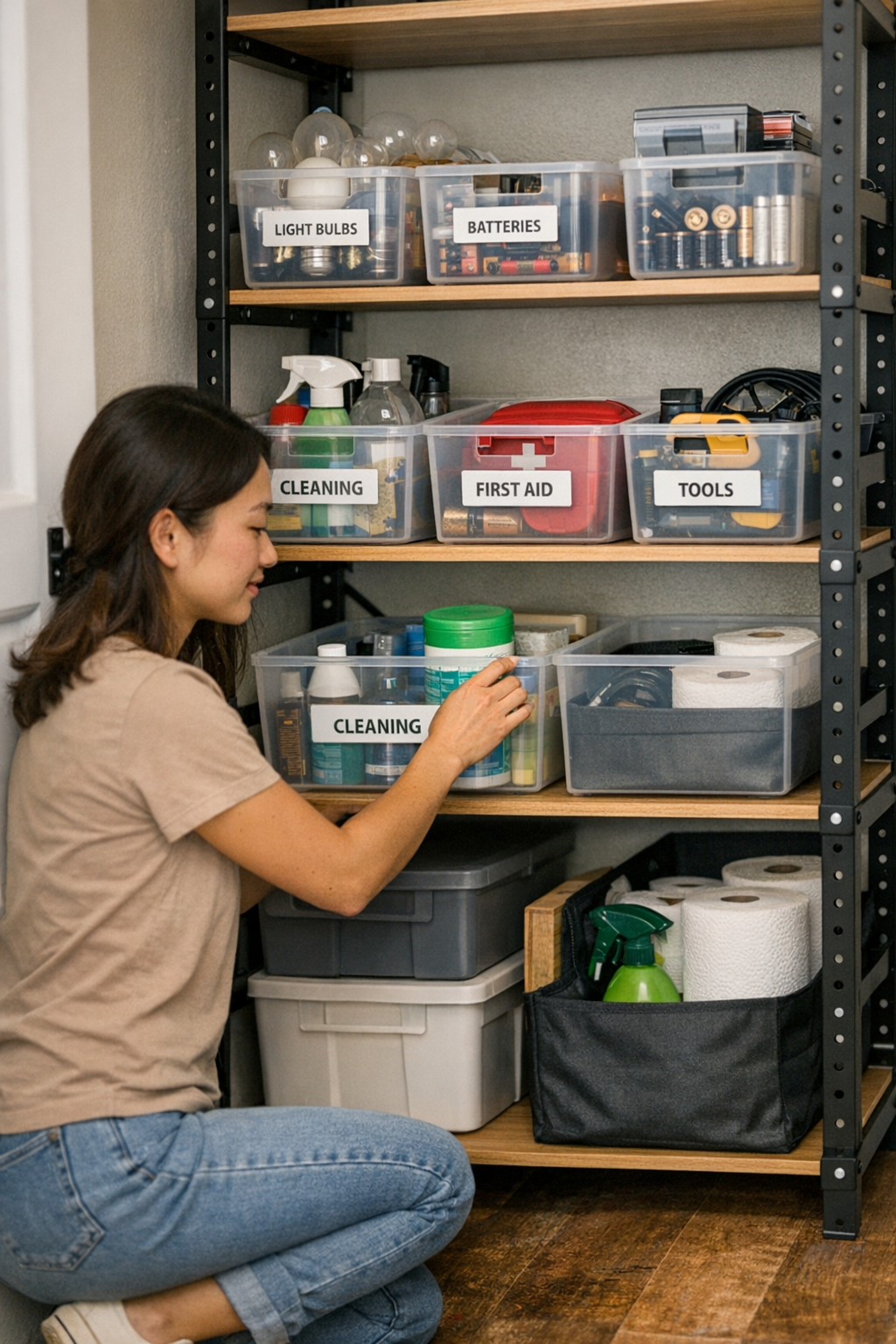
    Go back to that overstuffed closet. Instead of a single catch-all basket (where everything collects and nothing quite belongs), split the space with four narrow, clearly labeled bins: sprays, bulbs, batteries, tools. Now, each item slides into its lane. Bulbs don’t topple into wipes, a screwdriver doesn’t hide under a rag, and you’re no longer rearranging the pile just to put something away. Return an item in one move, walk away—the boundaries hold, even during the busiest week.

    Daily Red Flags: Is Your Storage Slowing Everything Down?

    How do you know your storage is underperforming? The warning signs are in the little annoyances:

    • To put one thing away, you first have to lift, shift, or dig through other stuff—sometimes every single time.
    • Categories blend together: phone chargers end up with garden gloves, mystery hardware migrates into the laundry shelf.
    • Flat surfaces quietly turn into unofficial dumping grounds, squeezing out their original purpose.
    • Each tidy-up feels close to finished, but never quite done—instead of “place for everything,” you settle for “good enough for now.”

    Contrast that with storage where every item can go right back—no shuffling, no guessing, no hesitating. If your hand doesn’t need to clear the field for every return, your reset speed improves immediately (and it actually lasts).

    Basket, Bin, or Shelf? Why the Form Matters on Busy Days

    How you store things shapes how your space feels—and how long it takes you to get out the door. Oversized baskets and deep bins are great for concealment but almost always become black holes for related (and unrelated) items. The difference is clear: an entryway bench with one big “catch-all” gobbles up keys, sunglasses, and mail into a single heap by Thursday afternoon. A shelf with compact dividers and tidy labels? You can grab your gloves or dog leash without the morning scramble—no more sliding shoes aside to find the umbrella.

    Master closets see the same story play out. An extra-large drawer looks serene for a while, but soon one sweater is wedged beneath three others, and bags start swapping spots during every weekly reset. With shelf dividers or adjustable racks, everything holds its place—sweaters aren’t lost, purses have a predictable home, and each return steps takes seconds, not minutes.

    Simple Upgrade: Make Access as Easy as Use

    If you grab something weekly or daily, its home should never be hidden behind, under, or inside something else. Add slim dividers to wide shelves so a single category gets each compartment. Use adjustable inserts to split large bins, or break up a deep drawer with upright organizers. Even just a couple clear labels fend off the slow creep of a “miscellaneous” pile.

    When “Organized” Isn’t Actually Efficient

    Lots of storage systems look magazine-ready. That’s not the same as being functional in real life. Overlapping bins, undivided drawers, and one-size-fits-all shelves stay photo-worthy only until the third or fourth real use. Then you’re right back where you started—resetting more often, reshuffling more items, and losing the speed and clarity the system promised.

    A storage system works if it keeps up with living—not just with arranging. The homes that reset fast have clear, uncrowded shelf edges, visible category lines, and a return routine that ends in one step, not five. They aren’t perfect, but they make every cleanup feel like progress—not defeat.

    Small Changes, Real Results

    You don’t need a total overhaul to notice the difference. Trade an overflowing bin for two targeted containers. Add dividers to a shelf that always becomes a “drop zone.” Stick a few labels on containers that keep swapping contents. A little more structure equals a lot less hunting, stacking, and re-doing—week after week, the minutes add up and the clutter stays at bay.

    Storage isn’t about hiding mess. It’s about supporting daily life—making it easier to grab, put back, and move ahead without the endless side quest of straightening. If your system works hard, your space will finally keep up.

    For more practical storage solutions designed for daily life, visit ClosetWorks.

  • How Proper Cable Management Transforms Wall Sconce Installations

    Exposed sconce cables don’t just disrupt aesthetics—they sabotage the function of nearly every space they cross. What looks clean on install—glow above a reading chair, neat symmetry beside a bed—is undercut by a cable that drops down the wall, undermining both the mood and the routine. Suddenly, every day brings new friction: dust grabs every centimeter, cords snag on chair legs or sleeves, and your eye is pulled back to the jumble long before you enjoy the light. This isn’t a rare annoyance; it’s a routine problem wherever wall-mounted lights meet real-life use, especially in rooms that demand more from their lighting than just staying put.

    Where Exposed Cables Slip into Daily Life

    The slide from minimal to messy quietly accelerates with each small move. Desk corners, bed edges, and high-traffic walkways turn loose sconce cords into obstacles. Shift a desk or reach for a charger, and the cord slips off its anchor. Vacuum too close or bump the headboard, and the line that was flush collapses into awkward bends or sags, instantly visible from across the room. You find yourself not just re-tucking—a task that never lasts—but placing furniture less freely, hesitating to clean properly, and distracted by the cable long after the novelty of your “clean” lighting install fades.

    Consider the first week after mounting a wall sconce above a desk: the cable initially hugs the wall. Midweek, papers are shuffled and the chair gets pulled out—now the cord is tugged off its track, curling against the wall or making an awkward loop at the baseboard. In a bedroom, the same cycle resumes each night as you shift a pillow, drag the lamp cord, or budge the bedside table; the cable subtly untethers itself, becoming a new catch point for dust and distraction. Over and over, tight corners, shelves, and multipurpose walls expose the limits of any “placed, not managed” light, each routine tug compounding the disorder.

    “Installed” vs. “Placed”: What the Cable Tells You After a Week

    That fresh “finished” look fails quickly when the cable isn’t anchored for real life. An installed light should mean the cable stays almost invisible, the plug remains solid, and no amount of cleaning or rearranging causes a shift. Placed lights, with floating lines or barely-stuck clips, betray themselves: cables dip, accumulate dust, or get yanked sideways as people or furniture inevitably test the system. Especially in compact rooms—where outlets are in high demand and surfaces serve multiple roles—slack and sagging force you to repeat the same cable rescue routine: pushing in plugs, brushing away dust, nudging cords back behind corners, never quite restoring the original clean look you tried to achieve.

    Each week, these minor snags multiply. Shared workspaces or walkways see more elbows, more shifting legs, more erratic furniture edging into cable territory. The result isn’t just visual: moving the couch or shelf isn’t about refreshing the space anymore—it’s about chasing and concealing a line that refuses to stay put.

    The Clean-Looking Setup That Doesn’t Hold Up

    Pinning a cable in a dead-straight line or painting it to blend with the wall might look resolved for a day or two. But ordinary movement undoes decorative fixes fast. A sliding chair, a stray mop, or a restless night will scroll that cable back into view. The spot behind a desk or under a floating shelf collects slack and dust stripes—never truly invisible, just transiently disguised. Over time, these points become visual interruptions you adjust for every week: pushing a cord flush, nudging furniture to hide it, or cleaning around an awkward bulge you never planned for.

    Instead of staying streamlined, the “finished” effect deteriorates into something obviously incomplete—a cable that interrupts both how the surface works and how the room feels to live in. What began as a hidden line grows into a repeat annoyance, and every tidy-up is quickly unspooled by normal habits.

    How Proper Cable Management Changes Daily Use

    Upgrading to rigid cable channels or positive-locking clips—ideally, low-profile types with paint-matched finishes—re-aligns the entire setup. The cable drops vertically from the sconce into a fixed route: no more creeping slack, no more semi-visible bulges detouring around table legs or along floors. No more plugging things back in by hand, no more vacuuming around an exposed cord, and no more habit of glancing back to check if the setup survived another routine day.

    Cleaning turns straightforward: vacuums pass without tugging, brooms don’t snag stray lines, and the surrounding floor and baseboard keep their clarity. Furniture can press up against the wall without shifting the cable out of alignment. You stop fixing and start forgetting—the managed cable just stays put, and your sconce or lamp does what it’s supposed to do: provide light, not extra work.

    Months in, that channel or snap-in guide is still holding the path cleanly; no new dust gathers in awkward lines, and the cable route looks nearly new. There’s a functional calm at the room’s edge, one you only notice after moving, cleaning, or rearranging without finding the lamp cable in your way.

    Choosing the Most Reliable Fix

    Rigid surface channels and click-in guides solve what tape and sticky pads can’t: they clamp the cord securely, stand up to gravity and busy hands, and don’t slip out of place. A channel just wide enough—around 12mm, properly matched to the surface—lets the cord vanish visually but keeps it locked in, week after week. Unlike drilling brackets or staples, surface channels can be removed and patched easily, protecting both rented walls and future rearrangement. No permanent holes, less hassle if you decide to swap or move a fixture.

    Mistakes That Keep the Mess Coming Back

    Looping a cable behind a table or letting it drape between obstacles might hide it for a day, but slack and debris appear almost instantly. Every unconstrained cable draws lint, creates cleaning headaches, and invites another cycle of straightening and frustration. A “placed, not guided” sconce is never finished—it slips, shifts, and bumps its way into becoming the part of the room you fix most often.

    The pattern is predictable: the vacuum sticks, the dust lines grow, plugs loosen, and each catch pulls your attention away from the space itself. Instead of enjoying the lighting, you inventory the ways it interrupts the room.

    Why the “Installed” Difference Matters Most Where You Live

    The real payoff of proper cable management isn’t a prettier fixture—it’s a room that works without compromise. In rooms that blend rest and work, in corners where surfaces overlap and furniture shifts often, an anchored light keeps its place and keeps your routine running. The difference shows up in months of not noticing the cable, in never needing to re-tuck or un-snag, in finding both the light and the wall ready for whatever you need next.

    Resolving stray cables means fewer daily interruptions and a routine that stays smooth no matter how often you rearrange, clean, or simply live in the space. Done right, cable management isn’t just appearance—it’s the shift from constantly adjusting to finally using the room as you meant to.

    Explore practical cable channels, mounting options, and support accessories at LightSupport.