Blog

  • Why Daily Litter Scooping Transforms Shared Indoor Spaces Effortlessly

    You notice the problem before you admit it: a thin line of litter just past the mat, a dust patch that reappears after yesterday’s vacuum, an odor that lingers even though everything looks “fine.” With an indoor cat, especially when the litter setup lives in a hallway, laundry nook, or near the main flow of your home, surface-level tidiness fades fast. It doesn’t take a mess—just a skipped scoop or delayed wipe—for these interruptions to start making movement less comfortable and cleanup more of a chore. What looks organized in the morning rarely stays that way by the next water refill or laundry run. In the world of StillWhisker, the setups that work are the ones that stay cleaner with less catch-up—not just look settled for an hour.

    When “Tidy Enough” Stops Feeling Easy

    Reset the litter zone, sweep the floor, lay down a mat: it all looks under control right after cleaning. By tomorrow, though, daily routines put that setup to the test. A single missed reset is enough. Suddenly, there’s ammonia in the air, paw prints bypassing the mat, or fine dust sneaking onto your socks. You recognize it when you’re already carrying something—laundry, groceries, or the water bowl—and realize you’re stepping around a new trouble spot you thought you’d solved.

    It starts subtly, but the friction grows: day-old odors creep back, those stray grains of litter multiply, and what took effort to clean last time now feels like unfinished business. Pretty soon, you’re no longer just accepting minor annoyances—you’re preloading tomorrow with extra work you forgot you didn’t sign up for.

    Why Small Daily Scoops Change Everything

    A day without scooping isn’t neutral. It costs you later—extra odor sticks to fabrics, dust settles in ever-widening circles, and uncollected clumps attract one more round of footprints. The mess that “waits until later” simply takes more effort to erase, while the difference between kept-up and falling-behind shows up most in spots you don’t expect: the hallway edge, the foot of the laundry basket, the area around the refill bowl.

    The real shift isn’t dramatic—just relentlessly cumulative. Extra sweeping, sniff-testing, or surprise wipe-downs become regular. Even if the area looks tidy after each deep clean, let the daily habit slip and soon every other step gets slowed by one more thing to clean or reposition.

    Navigating Shared Spaces: When Litter Setups Meet Everyday Life

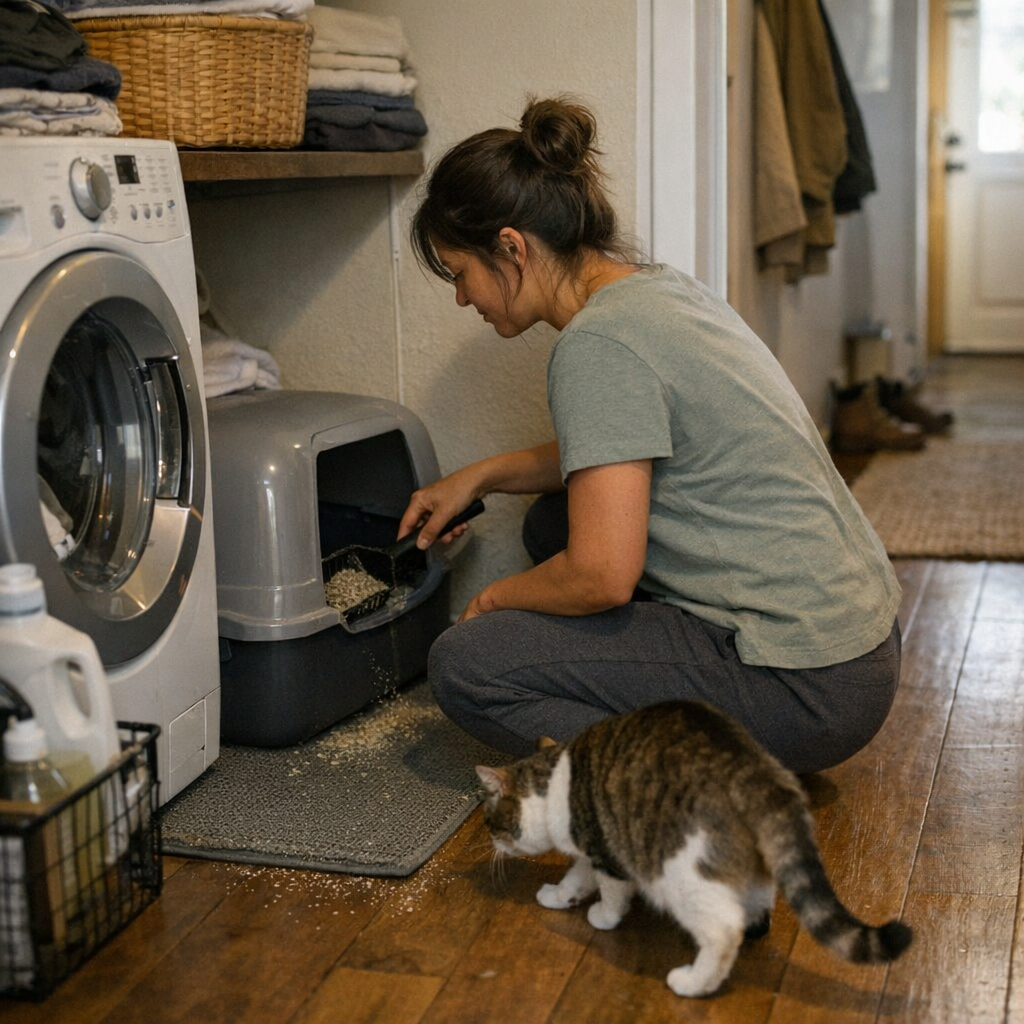
    If the litter box sits anywhere central—hallway, laundry, near the kitchen—the limits of your setup become painfully clear. Litter doesn’t just stick to paws; it migrates directly into your main traffic lanes. Instead of flowing through the space, you pause before setting down laundry, step around the box on autopilot, or delay cleanup, hoping the right moment comes before things pile up. Usually, it doesn’t.

    Miss daily scooping and the cost is obvious: the box takes over. Air shifts, grains spread, and the stretch from cat zone to human zone blurs. Worst case, you find yourself vacuuming when the plan was just a quick water refill. That’s routine interruption, not just pet mess—especially when those interruptions start rearranging your shared spaces instead of keeping them functional.

    The Slow-Creep Problem: What Fails to Show Until It’s Too Late

    Surface order is deceptive. Things can look “done” right after a reset, but a day skipped and grit shows up past the mat, odor lingers after a pass-by, and you’re suddenly wiping the same spot twice. It’s rarely a headline mess—just resistance, extra work built up in the background. Familiar? The best-looking boxes still send out warning signs: a shoe picking up grains, repeat wipes where none should be needed, or a routine that gets held up by a five-minute fix that was missed the day before.

    Invisible Boundaries: The Difference Between “Looks Fixed” and “Stays Fixed”

    Decluttering and wiping the area around the litter box gives the illusion of stability. But if your reset doesn’t last through one feeding or water run, it’s not holding up. Daily scooping adds an invisible barrier—one that keeps small issues from multiplying, even if it doesn’t make them vanish. It isn’t magic, but it’s the simplest line of defense between a controlled setup and a drifting one.

    Scoop right after refilling the water bowl or serving food. Instantly, both routines flow better. Litter stays in the zone, smells stay contained, and you move through your space with less stopping and shuffling. You feel it most not when things look best, but when you don’t have to pause and correct the same issue again tomorrow.

    Real-World Moments: How Routines Expose Weak Points

    • Heading for the feeding bowl in the morning? Litter lines the path, so what should take ten seconds becomes a stop for a dustpan.
    • Laundry comes out clean, but that stale edge in the air follows until you realize it’s from yesterday’s missed scoop.
    • Cleanup wipes sit near the laundry but never close enough when you’re actually at the litter box. By the time you grab them, dust and scatter have spread.
    • The mat corral most grains—but every few days, enough slip by that you’re still chasing tiny dunes across the floor later.

    Each of these friction points signals the same thing: it’s not about how organized an area looks, but how often your real-life routine gets stuck dealing with what slips through.

    What Daily Scooping Really Prevents—Beyond the Obvious

    Odor stopped at the source. Catch clumps before they linger, and you won’t be masking smells—they simply don’t get a chance to settle in. Regular removal keeps air clear not just for your cat, but for anyone using the shared space. This matters most where human routines overlap cat routines.

    Upkeep that never piles up. Small resets mean you’re not scheduling big deep cleans later. Surfaces—mat, floor, box edge—stay “usable,” so cleanup becomes a background task instead of a real interruption or a multi-step event that resets your day.

    Boundaries that actually hold. Addressing issues early prevents litter, odor, and dust from drifting beyond their zone. Shared rooms don’t reorganize themselves around the litter area—they just work, without those micro-detours or “I’ll clean it later” habits that never quite catch up.

    When the Setup Looks Right but Feels Slow

    It’s common: the area looks like it should work—fresh mat, clear floor, box in place—but it still manages to hold you up. That’s what daily resets are for. Skip one and it’s not that something dramatic fails; it’s the slow trickle of small interruptions after each feeding or water refill, a trail of paw-prints, or a second glance at a spot you “just did.” Visual order without flow is just another type of friction.

    The Markers of a System Falling Behind

    • Crisp dust lines meeting you at breakfast or after work—signals of a mat edge that’s no longer stopping the spread.
    • Scent tagging along just as you put laundry away, making clean clothes feel not quite clean.
    • Litter grains showing up in new, random corners—shifting movement through shared spaces from casual to cautious.
    • The simple run to refill water or toss in laundry suddenly becoming a detour for another sweep or a hunt for wipes.

    The “almost fine” setup is a trap: convenient for a day, irritating by the end of the week. Wait for visible friction and you’re already behind. Seamless upkeep comes from routine resets—ones that fit into your flow instead of turning into extra chores. The right setup doesn’t chase perfection; it just keeps “organized” from slipping into “frustrating.”

    Turning Daily Litter Upkeep into a Manageable Habit

    If your home isn’t wide open and your time isn’t unlimited, the best fixes are small ones that fit real routines:

    • Scoop as part of your water or feeding routine—if they’re connected, you’re less likely to put it off.
    • Keep wipes and a trash bin right where you reach for the box, not across the room or in a spare closet.
    • Sweep past the edge of the mat every time you reset. If you see grains, don’t wait—they’re advance warnings, not tomorrow’s problem.
    • Pay attention to spots where routines stall: if laundry, hallway, or feeding gets interrupted, that’s the area to streamline.

    The setups that live easiest are the ones that remove repeat pauses, not just add storage or coverage. If the litter zone, feeding area, or shared space keeps slowing you down, it’s time to reset—not for show, but for how the day actually moves.

    See more practical structures for smoother indoor cat setups
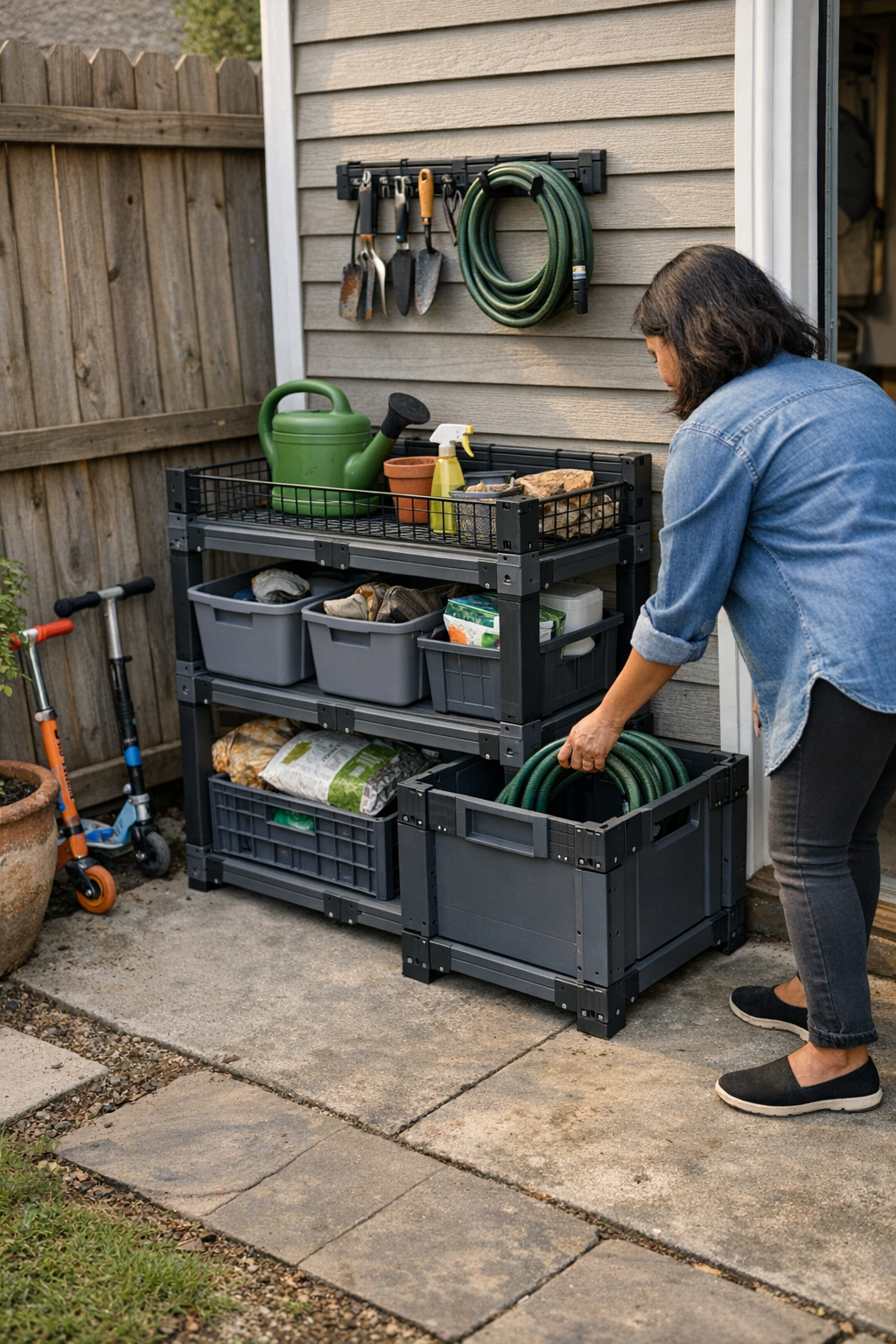
  • How a Return Spot Near Your Door Transforms Outdoor Organization

    Here’s how most outdoor storage setups really get tested: it’s not storms, not big projects, just the daily shuffle of gloves, tools, balls, and chores streaming out and back through the main door—on repeat, week after week. You grab a trowel before coffee, stash muddy gloves “just for now,” step past your kid’s bike helmet, and promise yourself you’ll put it all back after one more trip. By sunset, what started as clear turns crowded—the threshold jammed, paths shrinking, and a setup that once looked organized quietly devolving into a bottleneck you can’t ignore.

    How the Outdoor Door Becomes Clutter’s Landing Zone

    You’ve seen it before: stand in your side yard or at the back step and realize another pile showed up while you weren’t looking. Spare seed packets, faded garden gloves, a shovel caked with last week’s dirt—all gather at ground level, inches from the door. Not because you’re out of storage, but because the nearest bin or rack sits just far enough away that “later” keeps winning. Each rushed return breeds the next one, until temporary drop-offs settle in like they belong there.

    This isn’t just mess—it’s routine drag. With storage shoved to the fence or buried at the garage edge, the return path feels like a detour. You weigh every trip: is it worth the full trek, or should you just leave it for the next round? Without a spot right there, the flow breaks. Reset fatigue sets in fast, grinding down your good intentions into a collection of almost-finished cleanups.

    When the Return Zone is Out of Place

    Two yards might look equally neat from a distance: bins squared off behind the shed, cabinets lining the garage. But spend a day moving in and out, and one difference gets loud. Stores-at-a-distance setups ask for back-and-forth journeys every time you finish a job or retrieve a toy. In practice, that means armfuls get set down “for a second,” stray boots jam the walkway, a soccer cone multiplies into an end-of-day trip hazard. Yesterday’s clean stretch fills up by lunchtime, then clogs entirely by dinner.

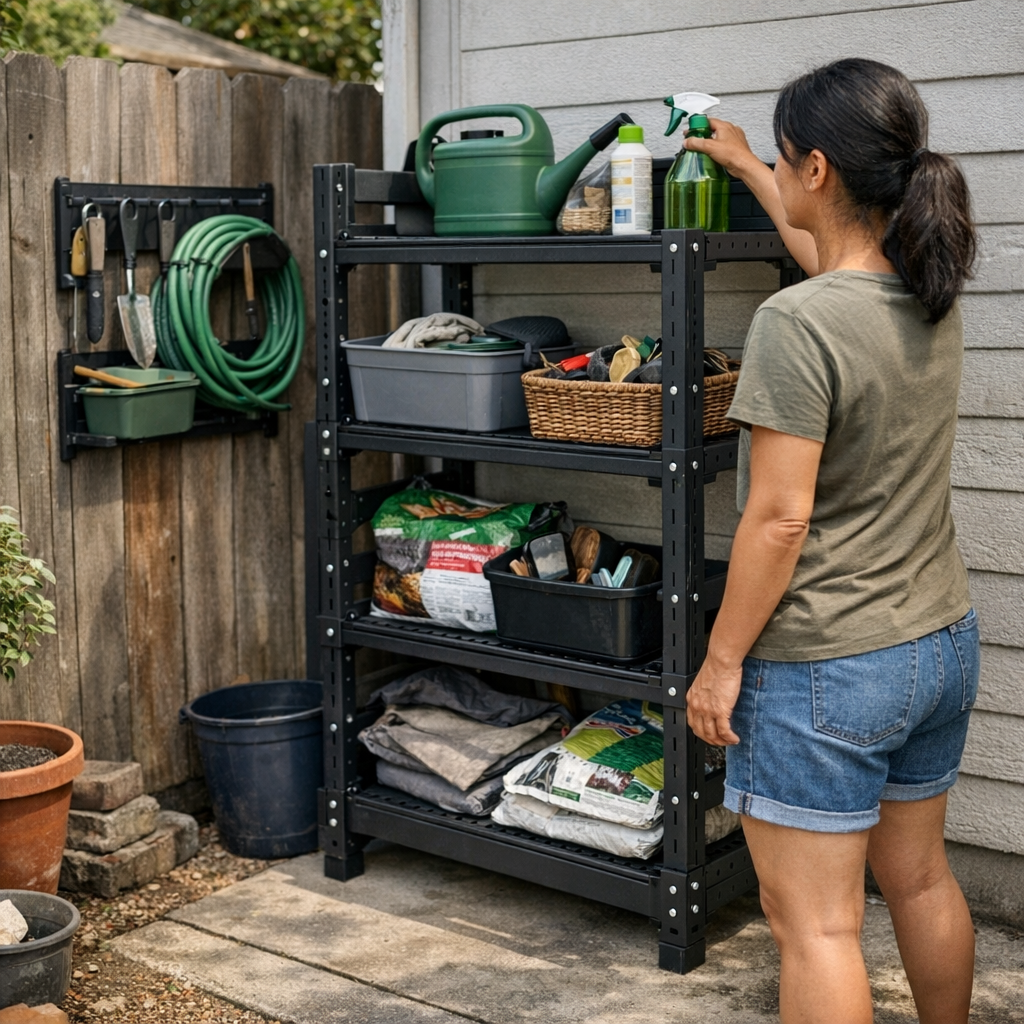
    Move a simple crate or open rack within arm’s reach of the door and the pattern snaps. Suddenly, it’s hand-off, toss, done. Garden gloves drop into the bin, wayward balls land without fuss. The loop tightens: every reset shorter, every pass-through smoother. What felt like a series of little chores fades into instinct—and the exit zone stays open without feeling like one more task to dread.

    The Hidden Cost of Distance: Chores Get Stickier, Movement Gets Blocked

    Picture a weekend morning: the pruning shears get left by the fence, skateboard helmets line up against the garage, and stray buckets pile up by the gate. Storage that made sense on paper—a big tub tucked “out of the way”—makes routine cleanup harder. Instead of a direct path inside, it’s detours around furniture, shuffling gear just to get a clear stretch. Midday, you’re threading through laundry baskets and tarp rolls that should have gone somewhere else. By evening, it’s a tangle—resetting means pausing, picking up after someone else, losing track of what’s out or put away.

    Flip it: add one rack, open tote, or bench right at the main crossing and watch reset friction drop. Suddenly, gear lands where you’re already walking. Tools, gloves, sports junk—all get returned in the right direction without a detour. The path to the house stays open; quick drop-offs replace long cleanup.

    One Small Shift = A Faster Reset, Less Crowding

    Here’s a real test: leave a crate just two steps from your main threshold instead of tucking it behind a utility cabinet. Instantly, pickups get faster; end-of-day sweep is a single motion, not a multi-stop runaround. Even in a cramped entry zone, swapping a closed box for an open rack means no lifting lids, no weird stacking—just toss and move on. Faster in, faster out, less stuff stuck in the way.

    These fixes don’t call for massive storage—just a handoff point that fits your route. Now, putting things away isn’t an ideal to aim for; it’s the default, even if everyone’s busy or distracted. The payoff comes in small wins: Saturday chaos doesn’t block the entry, weekday routines don’t grind to a halt. “Neat” stops being a one-day event and becomes the background, not the project.

    Skip the Shortcut Return—Pay the Daily Cost

    You know the look: piles pressed to the doorframe, pathways reduced to slaloms, little things sucking up more time than they should. Resetting the area becomes a background job you never quite finish. No clear handoff spot? The blur between “in use” and “put away” gets wider, and the daily drain gets heavier—one zigzag exit at a time.

    Floor vs. Overhead: Why Quick-Return Storage Wins Low

    No contest—open bins and low racks beat overhead shelves for outdoor handoff zones. When you’re moving fast, storage above eye level means friction—no one wants to lift a muddy tool or wet glove overhead. No surprise: gear that should be out of the way just piles up below, eating floor space, making resets clunkier, and hiding the “order” you thought you built in. Wall hooks, floor-level bins, and grab-and-go racks almost always work better where the return loop stays short.

    What Changes in Tight Setups—Side Yards, Garage Edges, Narrow Zones

    Space gets tight, movement matters more. Along a garage, squeezed behind a gate, or running the length of a thin side-yard strip, a well-placed return point is the difference between gliding through and getting stuck. Miss the drop zone by just a step, and every entry piles up: a rake blocks the hose, a bucket eats the last walkable strip, a corner becomes a slow spillover graveyard. It’s not more storage that fixes this—it’s moving the return spot to where the flow actually runs, so resets are part of the routine instead of their own event.

    Real Routine Change: Closer, Smarter Returns, Less Daily Grind

    Adding a return point close to your main outdoor door won’t double your storage, but it quietly chops away at the friction points that kill real-world routines. Garages and yard strips run longer without bursting with overflow. Full cleanups shrink to a few direct sweeps instead of an hour of backtracking. You get less shuffling, less resentment, less “it looks organized but still trips us up.” Smart, near-door handoff zones make the whole area feel functional again—so you use the space, not dodge around it.

    See more practical outdoor reset solutions at TidyYard.

  • Why Outdoor Storage Systems Fail Over Time and How to Fix Them

    Every outdoor storage setup looks clever for about a week—until daily routines start grinding it down. That first afternoon arranging your backyard, garage wall, or utility corner is almost effortless: new cabinets fit, the deck box swallows the mess, and for a brief span, all your tools and gear march into place as if the system was custom-built. Then the rain comes, or you rush out for garden work, and it only takes a few muddy drop-offs before things unravel. With real use, order starts to slip: one corner jams up with “for now” piles, the cabinet lid catches on your shoulder every time, and you’re suddenly shuffling boxes or carts just to reach what you need. The friction builds—and so does the sense of wasted effort.

    When “Organized” Doesn’t Mean Easy

    Clean lines and storage bins promise control. At first. You line up matching cabinets, stack everything inside: hoses, rakes, trimmers, gloves—no stray clutter in sight. But it doesn’t last. The deck box turns into a jumble after just a few returns. Heavy tools sink beneath lighter clutter. Quick drop-offs become layered stacks—each one making the next retrieval messier.

    It’s worse on the wall. You mount hooks, shelves, clever racks—clear floor, instant efficiency. But as you start using them, the faults show. One shovel never quite sits right, blocking the next hook; gloves pile up on what was meant to be a “spare” shelf. A dead corner quietly fills with overflow: bent handles, bags of seed, coils of wire. The illusion of order fades with each routine reset.

    Where Storage Friction Builds Up

    The pain points aren’t obvious until you’re deep into daily use. It’s that familiar bend-and-stuff as you wedge a wet hose into a narrow cabinet, balancing muddy gloves on the edge because the shelves are filled—or worse, knocking something loose every time you reach for a hand tool. Rolling carts seem like a flexible fix until you realize you’re always nudging one aside to open a door, move down the path, or avoid blocking the walkway altogether.

    Organization shouldn’t mean working around your storage. Yet, too many setups do: fixed shelves demand awkward angles when you try to put away muddy gear, or you find yourself juggling three boxes just to return a single item. By mid-season, the whole storage zone slows you down with every reset. What started off as “order” now requires constant maintenance to keep from grinding to a halt.

    Prioritizing Return Flow Over Initial Order

    Durable, low-friction storage isn’t built on category—it’s built on actual movement. The most practical change is almost invisible: organize for how things come back dirty, wet, or in a hurry, not just for how they fit neatly on day one.

    Think of a typical storage zone post-rainstorm. Hoses, pronged tools, muddy shoes—everything comes in messy and at once. The designated “all-purpose” cabinet soon becomes layered and damp, and every clean handoff means digging through a grimy stack. Cabinet doors swing into bottleneck spots by the fence or walkway, halting traffic just as you’re trying to put something away quickly. Alone, none of these moments feels huge, but as a pattern, they slow you down and push mess elsewhere.

    A Real-World Adjustment: Letting “Messy” Gear Avoid the Main Storage

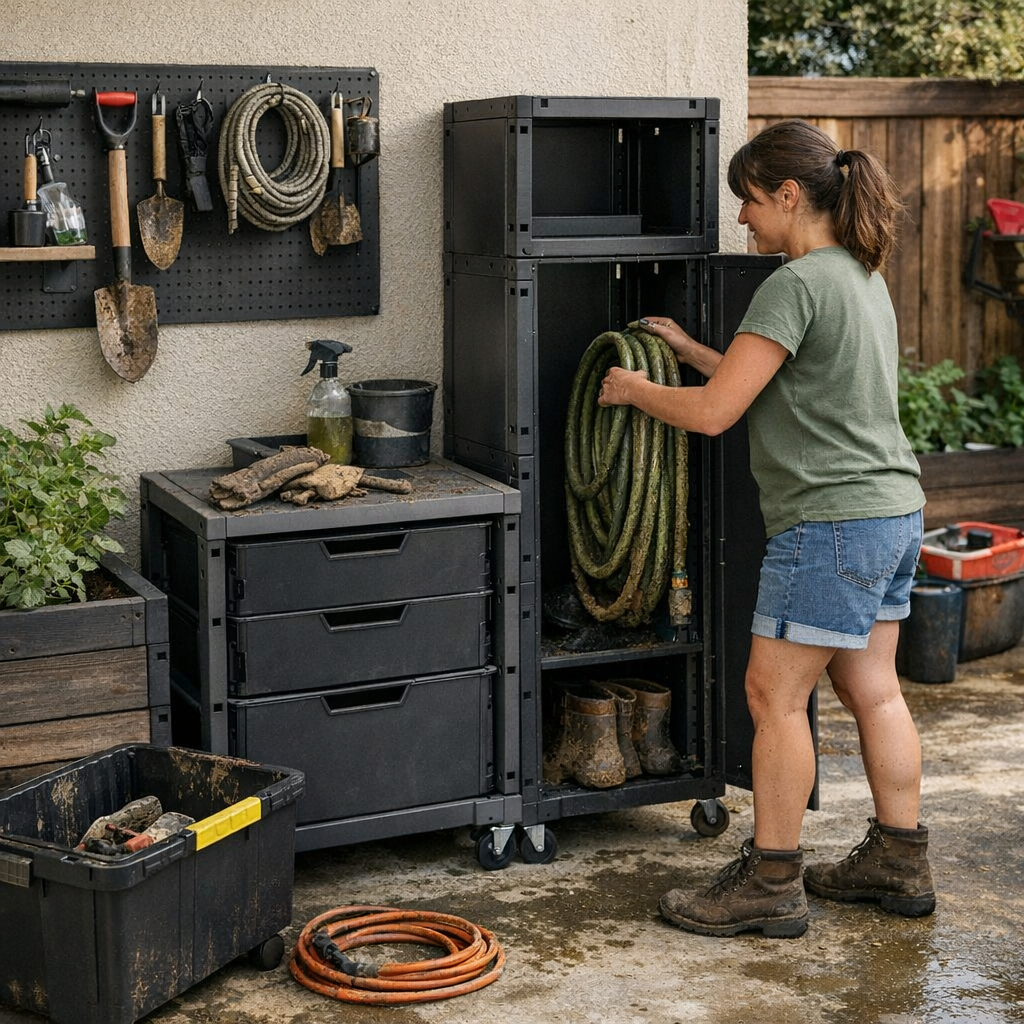
    Here’s a fix that actually sticks: split storage by likely mess, not just by item. Place a modular, weather-resistant cabinet right by the spigot—dedicating it solely to wet or dirty returns. Yank a shelf out and you’re left with a tall bay, perfectly sized to drop hoses, sodden trowels, or filthy gloves upright—no stacking, no digging. The dirty stuff goes direct, sparing the main area from gradual buildup and keeping cleaner tools cleaner.

    The impact is immediate. No more forced bending to squeeze gear where it doesn’t fit. No more blocking your own path to dump a muddy shovel. Instead, fast drop-offs go straight where they belong—so by the end of the week, you haven’t spent half your energy reshuffling the same tools. The whole setup is easier to reset, and far less cluttered, even after heavy use.

    Spot Trouble by Watching for Repeat Choke Points

    If you’re tiptoeing around loose gear, shuffling the same tools day after day, or dreading the reset after a busy weekend, those are your clues: storage isn’t keeping up with your routine. Watch for repeat offenders—the spot where piles start forming, the tool that’s always stuck out, the awkward reach you keep making each time you return something. These are signals the setup is working against you, not with you.

    Solutions can be direct, and you’ll feel the relief quickly:
    • Swap bulky cabinets for wall mounts where walkways are tight.
    • Remove shelves and design vertical slots for long or awkward-handled items.
    • Separate messy, wet gear from dry storage to stop grime spreading everywhere.

    Systems That Move With You, Not Against You

    The best outdoor storage setups anticipate your steps, not just your inventory. Think: slipping out in boots, trying to unhook a hose with one hand, or dropping shears on an easy shelf instead of hiding them under a stack. Modular units stay flexible—they adapt as you swap out gear through the season, or as one side of the system starts collecting too much overflow.

    But even the cleverest modular system fails if it ignores movement. A wall system is only as good as its depth—if tools stick out, you’re always dodging them. Floor cabinets save space until they clog a tight path. Rolling carts seem effortless, until you realize there’s no spot that doesn’t turn them into an obstacle after every use. The real test is after a dozen cycles of use, not after one photogenic reset.

    Make Outdoor Storage Work Harder Than You Do

    At the end of the day, storage that can’t handle muddy hands, surprise downpours, or hurried drop-offs is just aesthetic. What works week after week is a system that lets you move—no detours, no double-backs, no balancing acts. The real value is in setups that match how you actually use the space, not just how it looks after you clean it up.

    If you find yourself thinking, “Why do I have to keep fixing this?”—that’s your cue to rethink the flow, not just the footprint. A few small shifts in layout or zone rules can turn daily frustration into a space that works for you, not against you.

    Find modular systems and practical setups that adapt to your actual routines at StackNest.

  • How Small Car Setups Can Cause Daily Friction and Slow You Down

    Most cars look organized—right up until your daily routine exposes every weak spot. You get back in after errands and something’s already shifted: the charging cable has crept into your grip zone, the phone mount sits just barely off, the cargo area is clean but somehow slower to load. Setups that pass a quick visual check often fail in the flow of real driving—especially in small cars, where one awkwardly placed organizer or “invisible” charger can drag on you at every stop. On the street, neatness does nothing for a snagged sleeve, a blocked grab, or a phone that’s one reach too far away. It’s not about how the car looks at noon; it’s about how much friction you feel by the end of your third loop through the same routine.

    When Visual Order Meets Everyday Friction

    In tight cabins, the margin for error is uncomfortable. Start the commute: keys in one hand, phone in the other, and right away you’re swiping a charging cord off the seat track so your bag doesn’t catch. Each return to the car means nudging a cable, shifting an organizer, or resetting a vent mount that’s slid out of reach. Once or twice is nothing—but after six stops, this is the pattern that slows you down. Those tiny detours steal time and break up the flow every driver hopes for.

    The problem isn’t chaos—it’s micro-obstacles that pile up. You don’t cancel plans because of a stiff console tray. You do find yourself fumbling for the charger again on the tenth return, or reattaching a phone that always needs a second try to stay put. It’s the small, persistent interruptions that reveal whether your setup’s serving you, or tripping you up, especially when driving, parking, and loading repeat over and over.

    The Difference Between Looking Organized and Feeling Right

    Visual simplicity doesn’t guarantee smooth use. Example: push cords behind a center tray and drop in a low-profile organizer. Looks clean—until every charge means threading your hand through a narrow slot or sliding boxes to get to the cable. The result? More steps, more stray seconds, and—quickly—the urge to stop using what was meant to help. It’s not mess; it’s a different kind of blockage, easily overlooked until your actual driving rhythm brings it into focus.

    This is where setups promise more than they deliver. You see the mistake post-fact: Are you reaching what you need in one move, or resetting the same thing repeatedly? If the “solution” interrupts the habits you repeat most, it isn’t actually a fix—it’s just a new slow point, disguised by tidy lines.

    Bag Drag, Phone Mount Shifts, and the Reality of Quick Stops

    The frustrating details add up fast. You drop groceries or luggage on the passenger seat, and a rogue cord tangles in the bag handles. Or you swipe the steering wheel and brush against the phone mount—now it’s facing sideways, and you’re fixing it again instead of just driving. Even small things—like a cable clipped just an inch too far into the driver’s space—become daily annoyances nobody wants to admit they keep encountering.

    Try loading up at night in a crowded lot: fingers full with keys, elbow clutching coffee, and that organizer tray suddenly blocks your reach for the parking card. The cable tucked away “for neatness” is now a struggle to grab in the dark. The setup that looked sorted in daylight is actually breaking your flow in the moments you can’t afford extra steps.

    The Myth of “Set and Forget”

    Many products claim you’ll hide the mess and the problem is gone. Reality is less forgiving: hidden doesn’t mean unnoticeable, it just means you start tripping over a different flaw. Place an organizer in a prime access spot and lose quick reach for daily needs. Route a charger through the back and make plugging in a two-handed production. The neat surface disguises a persistent, subtle hassle—one that grows every time you repeat your routine.

    Real-World Tweaks That Change the Flow

    The strongest fixes are not about adding more—they’re about reducing interference where it hurts most. Anchor the charging cord just outside the entry path, even if it’s slightly more visible. Clip a mount at a reach-friendly spot, not just where it looks seamless. Real change is felt after a week of busy stops: You don’t hesitate before grabbing your phone, or lose seconds to untangle a line. Even if nothing seems dramatic on the surface, the absence of friction tells you the fix is working—because you stop noticing the problem at all.

    You’ll know it’s better when routine flows back into the car. No more pausing to reset, no silent annoyance when you rush out late. The difference isn’t more storage or cleaner lines. It’s fewer obstacles between entering, reaching, charging, and moving on—because the real cost of a bad setup is how quickly mild annoyance turns into daily drag.

    Order Should Match Movement—Not Just Appear Finished

    Most drivers know this story: the car that looks sorted at 8 a.m., but tries to undo itself by dinner. Cables crawl back into footwells, phone mounts slip slowly out of line, and organizers start drifting away from their ideal spots. You don’t see chaos—but you feel resistance: one extra step to reach the pass, an awkward lean across the console, a seat protector that shifts just enough to block a fast grab. Eventually, the clean setup becomes its own form of clutter—just quieter and slower to show.

    The test is simple: after your normal week—quick drop-offs, bag loads, night re-entries, charging on the go—ask what you had to shift or fix the most. If the answer is often, your setup isn’t letting routines flow. The fix is not bigger accessories or total minimalism; it’s honest placement of what you reach for, exactly where your regular moves need it, and a willingness to adjust when friction exposes itself.

    True order isn’t just about what you see from the curb. It’s how often you run into the same interruption—or avoid it—when real life puts your car to work. Efficient setups don’t hide every item, but cut the repeated drag out of every return, grab, and drive. If routine hiccups feel familiar, the right tweaks will drive the difference every day.

    For practical, repeat-use solutions that help your car feel easier to enter, reach, charge, load, and clean—visit DriveWellSupply.

  • Why Cleaning Electrical Contacts Prevents Flickering and Dim Lights Indoors

    Why does lighting that looked flawless on day one start failing you right when visibility matters most? You switch on the bathroom light and your reflection sits half in shadow. You reach the stair landing—suddenly, a step blurs into darkness. In rooms where movement and clarity matter—hallways, laundry corners, over-mirror setups, tight corridors—lights often flicker, lose focus at the edges, or force you into awkward pauses, even if the bulbs and fixtures are new. The trouble usually isn’t hardware—it’s the quiet breakdown at the electrical contacts: dust, oxidation, or grime building up, steadily eroding performance with every skipped cleaning. Miss this step, and you end up with lights that only look bright at a glance but leave you squinting or guessing where to move next.

    The Overlooked Culprit Behind Flickers and Dim Corners

    In the high-turnover zones—bathroom vanities, hallway sconces, stairway flush mounts—lighting performance slips long before contacts visually show dirt. At first, it’s low-key: a flicker you ignore, a stair landing that feels less certain, a mirror reflection that seems slightly grayer on one side. Over weeks and dozens of on-off cycles, cracks in reliability widen. That once-trustworthy laundry ceiling light starts hesitating to turn on, demanding a wiggle. The stair fixture dims one side of the tread, making you slow at the turn. In these moments, the frustration isn’t just the technical failure but the way it interrupts routines—blocking smooth movement and adding invisible friction to spaces designed for daily use.

    How Routine Neglect Leads to Daily Lighting Friction

    Neglecting to wipe contacts—either during a bulb swap or while reinstalling a fixture—lets dust, skin oils, and room moisture block electrical flow. The effect is cumulative, and in high-use zones, even one skipped cleaning can ripple out:

    • Stairways: Edges blur, shadow bands appear at turns. You find yourself scanning the floor instead of walking through on autopilot.
    • Bathrooms: One side of your face looks dim beneath the mirror. Shaving or makeup becomes a guessing game under a light that used to feel clean and direct.
    • Laundry Areas: A flush mount overhead starts flickering out mid-task, breaking your focus or leaving shirts half-shadowed.
    • Hallways and Corridors: Bright where you don’t need it, fading into dull strips where you want to walk confidently. A section near the entry seems to swallow your pace at night.

    These are not one-off annoyances. They’re the sort of irritations you ignore at first but keep bumping into—until you find yourself adjusting for bad lighting as part of your routine.

    The Slow Fade: Recognizing When Contact Neglect Is the Real Issue

    On install day, every flush or semi-flush ceiling light holds steady—clean, even, quick to respond. Fast forward eight weeks of real use: a semi-flush in the bathroom hums, the mirror zone feels yellowed at the edges, or a hallway ceiling light throws unpredictable shadow lines. The bulbs are fine, yet the room’s usefulness sinks. This shift isn’t about luminance specs or fixture style; it’s about the state of the contacts, ignored through quick bulb swaps and hurried remounting. The point when you tense up before stepping on a stair or lean in to double-check your reflection is when contact neglect stops being invisible. Shadowed sinks, delayed illumination, and distracted movement become part of your daily pattern before you even add “fix lighting” to the mental to-do list.

    Small Habits, Major Difference: Cleaning Contacts as Reliable Maintenance

    One minute with a dry cloth or a dab of alcohol on a cotton swab—especially in steam-heavy bathrooms, dusty laundry rooms, or high-cycle corridors—shifts the baseline. Suddenly, that stair fixture that once needed a bang just works. The laundry room light stays steady through the cycle. Over-mirror sconces shed shadow lines, making the face clear from both sides, not just the one closest to the bulb. The room doesn’t just look illuminated; it works better in motion, at routines’ pace. The real benefit shows up during the hundredth use, when you forget to think about the light completely—because it’s just on, every time you need it.

    The Price of Skipping a Step: When Small Friction Becomes Repeat Aggravation

    Simply swapping bulbs or upgrading fixtures without cleaning contacts is a cycle of disappointment. Electrical instability snaps back—lights hesitate, glare builds on mirrors, stair turns lose clarity, hallway paths dull at the edges. Each new attempt at a “quick fix” leaves friction in its wake: you move slower at stair landings, press the wall switch twice, or find yourself repeatedly squinting where you should see clearly. Trust in even a high-end fixture erodes quickly when the lighting never works the same way two days in a row. The thin but real line between a room that glows and a room you can actually use comes down to these tiny connections.

    Real-World Tips for Keeping Fixtures Dependable

    • When changing any bulb or adjusting a fixture, pause to clean the contacts using a dry cloth or a quick swipe of isopropyl alcohol. It’s seconds of prevention that keep reliability in place.
    • Zero in on bathrooms, laundry rooms, stairways, and hallways—these are the “friction zones” where moisture, dust, or daily cycling push contacts to the edge fastest.
    • If persistent flicker or dimness survives new hardware, focus on contact quality before jumping to bigger upgrades. Many failures are about physical connection, not high-tech fixes.

    Lighting You Can Count On Starts at the Smallest Connection

    The distance between reliable, trustworthy lighting and a room that interrupts your routine is often measured in a fingertip swipe at the contact. Most indoor-lighting headaches start—not with faulty fixtures—but with tiny layers of neglect. Each missed cleaning stacks up as shadowed stair turns, faded mirrors, and hallways that look bright yet still make you hesitate. It’s not about collecting the newest model or keeping the room spotless—just about making each reconnection count, stopping small failures before they become part of your routine. Dependable indoor lighting comes not from spectacle, but from the minor, nearly invisible maintenance that gives every switch real, repeatable certainty.

    LightHelper – Practical indoor lighting for dependable everyday use

  • How Cable Management Transforms Lighting Beyond Outlet Limits

    In most rooms, your lighting setup works until your routine changes—or until one too many cables cross your line of sight. What looks balanced at first unravels quickly when outlets force lamps, LEDs, or task lights into awkward, cable-driven positions. Instead of clean edges and reliable light, you end up with cords dictating movement, desk setups that interrupt your flow, and work zones that stay half-lit because the nearest outlet is too far or too exposed.

    When Outlets Dictate Your Lighting: The Everyday Friction

    The first sign something isn’t working? You have to layout your desk or table around where the cord can reach—not where the light works best. A single shift of a laptop, or even turning a chair, is enough to snap a hidden cord into view, drag a lamp sideways, or tangle your feet. Under-cabinet strips fall short at the edge where you actually prep food, and any attempt to clear clutter becomes a dance: catch the lamp, dodge the cable, push the extension strip back yet again. Glance around and the room might look refined, but try using any new surface or adjusting a task light and the setup’s weak spots show up in full.

    Most ‘tidy’ cable fixes collapse under daily routines. The illusion lasts until someone rearranges, cleans, or needs to share a work surface. Suddenly, there’s a choice: settle for glare, weak light, and cable snags—or give up reliable lighting just to keep things out of the way. There’s no real solution when fixture placement is decided by where it can plug in, not where you actually need light.

    Where Good-Looking Lighting Setups Go Wrong

    Running cables behind shelves or disguising them in raceways helps for a day, but doesn’t solve weak spots in coverage. A strip light along the cabinet’s edge looks clever—until the outlet distance creates a bright patch on one end, a dim corner on the other, and a bundle of excess cord trapped under kitchen utensils. Move anything, and the compromise slides right back into view: lamps no longer centered, task lights just missing the usable edge, and practical work zones marred by cable drag or visible adaptors.

    Even rigid cable clips lose the battle as devices shift. Tablet chargers replace lamps, someone brings in a fan, or storage baskets migrate along the shelf—and every change exposes the patchwork. The real problem wasn’t clutter; it was a setup never designed to hold up as you live or work around it.

    Real Scenes: Lighting That Doesn’t Keep Up With Life

    The Shared Table Struggle

    Shared tables never seem to land where outlets do. You set up for a meeting or collaborative work, only to realize the center is always in partial shadow, the edges over-lit, and battery lamps ending up drained halfway through the afternoon. Extension cords and long cables snake along the table, snagging on folders or bags. By the week’s end, the “solution” is an unstable chain of chargers, wobbling lamps, and a guarantee someone’s elbow will send a cable hitched over the edge, again.

    Under-Shelf Lighting That Misses the Mark

    Mounting a slim LED bar on a kitchen shelf should solve shadows, but if the socket is in the wrong spot, the cord cuts diagonally across space or bundles at the weakest point. The result is predictable: the far corner fades, leaving the spot you use most half-lit. Cables gathered to avoid the sink or block drawers become a daily annoyance, not a hidden fix.

    Patching but Not Resolving: Why Neat Cables Alone Don’t Fix It

    Clipping and hiding wires delivers short-lived order, but as soon as a laptop charger is swapped for a lamp, or routines demand a new plug-in, the “clean” look breaks. Cables tear free, task lights shift out of reach, and the original system returns—visible, awkward, and ever ready to trip someone up. Especially on desks and counters that are used by more than one person, cable management that only covers appearance can’t support actual work or living patterns.

    The Payoff of True Cable Management

    Reshaping where cables go—not just hiding them—forces light to match how you use a space, not how a wall was wired decades ago. For example, running a channel along a window ledge, tucking lamp cords precisely into slots, and facing all plugs into a single power strip hidden out of sight—this kills the daily game of avoiding trailing wires. The edge stays free for shifting lamps, cleaning, and sharing. Cables don’t fight for space or slide into high-traffic zones. The room passes its real test not right after the install, but every time things are moved or shared: cables stay out of the way, surfaces don’t become cord parking, and light coverage doesn’t collapse whenever one fixture gets unplugged.

    The shift is immediate in routine: lights actually stay aimed where you need them. Chairs, laptops, and kitchen tools travel in and out with nothing to re-route, no tangled extension strips to lift, and no “cable-pile” shadow running down the edge of your vision. Weeks later, it’s the absence of cable drama—no cords underfoot, no lamps dragged off balance, no one pausing to step around a power strip—that signals the setup is finally working.

    Position Lighting for Use, Not Outlets

    With real cable structure, you can mount wall lights, bracket lamps, or low-profile LEDs based on how you work, read, or relax—not just how close you are to a socket. A managed cable system lets you install at the ideal height, line up coverage, and keep every run off dust-prone surfaces. When your layout changes—swap chairs, tilt a fixture, move from solo work to a group call—lighting follows need, not wiring constraints or old outlet positions.

    Tip: Conceal cords behind cabinet lips or run them through back seams instead of along open edges. This not only blocks visible clutter and dust but ensures task areas (like kitchen counters or desk edges) are actually lit where you use them, not where the cord will reach with the least resistance.

    What About a Room Where Outlets Are Limited?

    Even in rooms with only one or two sockets, intentional cable routing can shift which surfaces function and which don’t. Use a discreet, short-cord power strip tucked under a cabinet or behind a desk edge, not left loose in main sight lines. Managed correctly, you spot a real power shortfall (and decide on an upgrade or extension) before cables pile up in chaotic, unusable tangles. In most setups, a single managed run is enough to keep cables off prime surfaces and let each lamp or task fixture do its real job—lighting the spots you actually touch and use.

    Lived-In Lighting: How Cable Choices Hold Up Over Time

    The failure point for most setups isn’t day one—it’s after a week of moving, cleaning, and adjusting. Cables drift, surfaces start collecting blocky extension strips, and lighting gets nudged out of actual use. The difference with strong cable support isn’t invisible polish; it’s the fact that prime surfaces stay open, lighting covers what matters, and cords stop rerouting your routine. The best result? No one mentions cables at all, because finally, your lighting works for the way you actually move and live, not just the way it looked the first time you staged the room.

    Find practical lighting, support, and cable management for real, repeatable indoor use at LightSupport.

  • How Carry-On Design Impacts Travel Flow and Reduces Airport Delays

    Most carry-ons look organized before leaving home—but inside an airport, tidiness can become the problem. That outer-pocket you packed so precisely jams your hand the moment you need your passport in a moving security line. That neat stack of organizers forces you to shift pouches and unzip main compartments just to pull out your boarding pass. Out on your kitchen table, everything appeared sorted. In real travel, what starts as an orderly system turns into a series of micro-obstacles: blocked retrieval, awkward reach, too many zippers, and a creeping sense that your “organized” bag is slowing you down when you need to move fast.

    Small Delays Start to Add Up in Real Transit

    On your first reach for an ID or charging cable, your setup feels solid. But by the fourth checkpoint, the cost of small design flaws shows up. That document sleeve you buried under electronics has now trapped your passport beneath cords, and the outer pocket you expected to grab on the fly feels overstuffed, squeezing your fingers. These delays are subtle: each time you pause to dig, rearrange, zip, and confirm, you lose seconds that stack up. Even a “good” packing strategy can create a drip-feed of slowdowns, turning a short trip into a simmering frustration loop.

    Retrieving, relocating, repacking—on repeat: The sting isn’t in one hard stop. It’s the six-second shuffle at each ID check, the tug-of-war with a stretched pocket, and the disruption each time you return something “to its place”—and realize your careful order just turned into another round of digging.

    Why Visual Order Doesn’t Equal Smooth Movement

    The calm of a neat layout is skin-deep. Those perfect lines and stacked organizers photograph well, but they don’t move well. The moment airport pressure hits—security trays, boarding pass grabs, overhead-bin shuffles—your visually sorted setup starts to get in its own way. When a tech pouch blocks your main passport slot, or your document holder sits below every other pouch, the linear order combusts into a routine scramble.

    Mid-trip, repeated obstacles become hard to ignore: pause to restash cables after a plug check, fumble for documents buried under “just-in-case” items, wait behind as others step ahead. For every item you fetch, three more get shifted. The more you chase order, the more you get stuck in a cycle of shifting, searching, and wondering why a “clean” bag keeps failing at speed.

    Recognizing Repeated Problem Moments

    Blocked Access at Security

    The security tray reaches your spot. Your hand stops: passport wedged beneath your charger, laptop sleeve pinning it flat. You’re forced to juggle, repack, and rezip while the line breathes down your neck. A setup that doesn’t keep essentials truly at hand turns every checkpoint into a slow, energy-sapping restart.

    Boarding Pass Buried in the Rush

    The boarding line is moving. You reach for your pass—but a wallet or pouch has shifted in transit, burying exactly what you need. You pause and shuffle your bag mid-queue, feeling the pace behind you tense up. The access that seemed easy at home now invites a visible bottleneck exactly when you want to blend in and breeze through.

    In-Transit Pockets vs. Real-World Retrieval

    Travel guides preach pockets and compartments for order. But if your main pouch is layered behind lesser-used organizers, fast-reach items get demoted and blocked. Crossing concourses, you fish for lip balm but dig through a stack meant for hotel downtime. Each mis-sequenced pouch pushes you a notch closer to frustration—and missed cues in real movement.

    The Real Source of Carry-On Friction

    It’s not the mess you see—it’s the mismatch between what looks tidy and what actually stays accessible when you’re moving. Every forced reach, every extra unzip, every time a mesh pouch “secures” something you now can’t get without disturbing the rest—that’s friction. Maybe your tech organizer keeps cables neat but parks itself right in front of your passport or boarding pass. Maybe a rigid case “impresses” in the hotel room, but blocks you in the aisle under pressure.

    Structure matters most when the same access is demanded again and again, at speed. It’s not about the first use—it’s about that late-night reach, the security crunch, the snaking boarding line, or the repack with no place to sit. Those are the moments when carry-on layout is proven or undermined.

    Practical Adjustments That Reduce Travel Drag

    Promote High-Use Items to Outer, Standalone Access

    Reduce grinding friction by giving your top essentials—passport, boarding pass, ID—a dedicated, unshared outer pocket. No pouches piled on top. No trapeze act at the checkpoint. The improvement is immediate: reach, grab, done—even in back-to-back lineups. This one adjustment turns repeated retrieval from a scramble into a single, repeatable gesture.

    Real travel scenario: Relocating travel docs to a slim exterior sleeve eliminated full-bag unzips for two straight security checks. Instead of hunting through layers, your hand lands on the right item every time—no midline panic, no last-second fumbles, no “Did I drop it?” check.

    Let Infrequent Items Sink to the Bottom

    Stuff you rarely need—spare chargers, backup toiletries, extra cords—should be corralled in internal pouches, deep in the carry-on. Keep them out of your main movement pathway so fast-retrieve items stay right where you need them. This lets you keep order without paying an access penalty for urgent grabs.

    Think in Motions, Not Just in Layers

    The best layout isn’t about color-coded lines or “maximizing” every inch. Watch how you actually reach, repack, and retrieve on the move. Which pocket gets checked five times in an hour? Which one stalls you during a rush? Favor accessible pathways and “return to ready” setups over layered cleverness—the difference shows the more you move.

    What Consistent, Reliable Carry-On Setup Looks Like in Real Use

    No setup sidesteps every tangle, but the right structure means the same item is always instantly at hand—even in chaos. You no longer need to upend your bag just to repeat a standard transit rhythm. Over one trip, these micro-adjustments stack up: instead of “Now where is it?” moments, your muscle memory takes over, and you spend more time flowing, less time sorting.

    Don’t chase airbrushed perfection—chase a setup that keeps up when it’s the tenth grab that matters, not the first.

    Shifting Your Carry-On to Work with You—Every Trip

    Carry-on friction never arrives in one big failure. It’s the familiar clumsy reach, the repeated slow reset, the missing passport under a tech pouch—surfacing again and again, until you tune your setup for repetition, not appearance. The right structure builds trust and predictability, making every retrieval and repack automatic, no matter how many times the sequence repeats.

    Shop practical carry-on travel tools at CarryOnSupply

  • Ventilated Towel Shelves Improve Drying and Reduce Odors in Busy Bathrooms

    When towels feel damp or carry a faint sourness straight from storage—regardless of how freshly washed they are—the problem usually isn’t your laundry routine, but how your shelves breathe (or don’t). Cabinets and closed shelving systems trap moisture deep between folds. Behind the neat fronts, air barely circulates. Even a “sorted” stack can turn into a holding pen for residual wetness. Open a cabinet midweek, and what looked calm from the outside hits you with heavy, chilled fabric and an unmistakable hint that something got quietly stale—or worse, infected all your towels at once.

    Why Sealed Shelves Stall Freshness

    Closed towel cabinets seem to promise order and shield against dust, but friction shows up almost immediately in real use. Stack a new load of towels on top of half-dried ones and shut the door: evaporation grinds to a halt. The next grab, instead of clean-dry comfort, delivers something cold or clinging to yesterday’s humidity. The issue isn’t visible until it’s too late—every towel slowly catches the problem, even if the front row stays crisp, and the stack is never truly reset. On the surface, the area looks contained; underneath, freshness is leaking away with every closed door.

    High-use bathrooms magnify every flaw. When towels move through hands all day—roommates grabbing at odd times, new loads stacking over old—airflow drops, and the cabinet turns into a moisture trap. Emptying it and restocking doesn’t erase the pattern: the cycle just reloads stale air into a fresh lineup. Towels that should feel like a reward for keeping order become part of the background clutter, indistinguishable from the ones overdue for laundry.

    Ventilated Shelving: Letting Air Do the Work

    Switch to ventilated towel storage—slatted or open-grid shelving—and the whole room’s rhythm shifts. Air slips between each towel. Moisture has somewhere to escape instead of tunneling deeper into the pile. No, ventilated shelves don’t deliver magazine-perfect rows. Edges end up staggered, stacks are rarely uniform. But within a week, the repeated cost of hidden dampness vanishes: towels dry the right way, odor doesn’t sneak back, and the “will this one be dry?” test all but disappears. The trade is obvious every time—less sculpted visualization on the shelf in exchange for towels that actually perform day after day.

    In Daily Practice: Fewer Surprises, Faster Resets

    Real use always exposes the weak link. Morning rush: a fresh towel needs to go somewhere, hands reach for what’s visible, and the whole system shifts. Closed cabinets magnify friction—bottom towels never catch up, and each retrieval means digging through layers that still feel yesterday-wet. A ventilated setup changes the reset cycle entirely. Even if you cram two loads into a single week’s rotation, open sides and grid undersides strip out residual dampness between uses. Grabbing or returning a towel becomes a one-move routine rather than a cautious sift or a hunt for the “least iffy” option. No more double-washing just to kill mystery odors.

    The Subtle Friction of “Looks Right, Feels Wrong”

    There’s a disconnect when a setup maintains just the appearance of order. Cabinets look zipped-up and serene, but inside you create tiny judgment calls—a quick sniff test, a search for the towel that might actually be dry. The routine starts to tiptoe around the storage, instead of flowing through it. Closed systems conceal their own recurring maintenance: you restack, reorganize, and end up hesitating anyway. That pause before use isn’t style—it’s your routine quietly announcing something’s off. True working order means towels you reach for without thinking, not ones you second-guess every other morning.

    Crowded Bathrooms Put Storage Choices to the Test

    Shared or compact bathrooms strip the theory away and force real trade-offs. Closed shelves absorb the burden, but their design flaws turn urgent quickly:

    • Clashing routines: Multiple users wedge partially used towels into place. One damp towel gets sandwiched, never fully dries, and begins tainting those loaded in after it. The problem compounds behind closed fronts.
    • Retrieval friction: Need a towel fast? Closed storage forces you to disturb the stack, fingers sinking past damp layers, floors at risk for a stray drop or two. The retrieval action itself broadcasts what isn’t drying out between cycles.
    • Overflow pressure: When laundry slips a day, closed cabinets are magnets for every straggler. Piles compress air out of the zone—what started as “neat” storage becomes a musty backlog, hastening the need for a full cabinet overhaul.

    Open-sided, ventilated shelving strips away the guessing. Moisture leaves freely, so even with imperfect laundry timing, stacks recover. The mental load of “which of these is safe?” is gone. Zone boundaries become visible rather than speculative, and resets don’t require unpacking the entire zone after high-traffic days.

    Small Storage Tweaks, Not Just Big Changes

    Sometimes all it takes is swapping out a single piece. Mesh shelf liners over open grids keep even the smallest washcloths in place without choking airflow. Capping towel stacks at three ensures thick towels actually dry fully—beyond that, you’re back to enabling moisture traps. These micro-adjustments don’t read as upgrades, but daily, they cut down on lost time and unplanned side quests just to find a dry piece of fabric.

    What Actually Improves after Switching?

    Reset speed accelerates. Ventilated zones stop turning into secret backlogs. The week’s laundry in, old towels out, with no hidden problems festering at the back. Zero ghost odors midweek; zero weekend deep-cleans “just in case” a single missed towel contaminated the lineup. Any towel can be grabbed with confidence—the friction has shifted from invisible to irrelevant.

    Space stays in play—not simply filled. Ventilated storage puts use flow above sealed neatness. The improvement doesn’t unfold minutes after restacking, but on the fifth or sixth day when the real clutter test hits. Stack boundaries are fixed by airflow, not by how tightly you can cram a door shut. Repeated use doesn’t break the system; it resets itself with minimal manual effort.

    Real-World Reminder: “Good Enough” Usually Isn’t for Long

    Perfect cabinet lines might signal completion, but lived-in bathrooms tell the truth. Watch for the small, stubborn signals: a towel pulled and immediately returned, that hesitation to grab low in the pile, the need to reshuffle after a busy day. There’s nearly always a simple airflow fix lurking in the background. Ventilated towel shelves don’t win style points, but over weeks, they erase the waste—less time, fewer “hold your nose” moments, and almost no reason to start over each weekend. Eventually, the towels stay fresh; the space holds its shape; and maintenance actually shrinks instead of piling up with every cycle.

    See practical storage solutions for every indoor area at Gridry.

  • Creating a Practical Storage Spot to Keep Pet Supplies Ready and Visible

    Daily pet care routines break down not from a lack of supplies, but from one weak point creeping in over and over: your most-used items are out of reach or buried again just when you need them. Reaching for a food bowl only to knock over a treat bag, digging for grooming wipes but finding them wedged under towels—these quick stalls pile up, especially during back-to-back feedings, rushed mornings, or the last water refill before bed. The result: routine pet care either gets drawn out by micro-delays and last-minute reshuffling, or clutter spreads as supplies are left wherever you dropped them mid-task. A setup that looks organized for a moment slips, turning small gaps in readiness into ongoing friction. In this gap, CalmPetSupply’s everyday-first approach shows its advantage—visible, ready-to-grab storage that fits the actual rhythm of feeding, water, wipes, grooming, and quick resets.

    Understanding Care Routine Delays

    Slowdowns happen not because you’re missing supplies, but because they’re constantly in the wrong spot at the wrong time. If bowls or wipes are wedged behind bags you never actually use on a weekday, every care task becomes a short hunt. Need the water bottle? It’s slipped behind a stack of towels—now your pet’s pacing grows as dinner stalls another minute. After a walk, the brush lands on the porch instead of the basket by the door, setting up tomorrow’s search. Each pause is small, but when every care step asks for a quick reaction, those seconds multiply and reshape the day into repeat interruptions.

    Visibility is Key To Quick Pet Care

    The moment supplies slip out of immediate view—even tucked behind a closed lid or double-stacked in a bin—they move from “ready” to “out of mind.” Over time, opening baskets to check what’s inside or rifling through bins for wipes blurs into constant small frustrations. When cleanup can’t happen instantly, spills dry up or spread; when you have to scan for the refill bottle, meal routines lag. Simple, open-but-contained storage—like a lidded basket at easy-reach height—solves two everyday problems: you spot what’s running low, and closing the lid at the end of care signals “done.” This isn’t about a big once-a-month reorganize; it’s about cutting off clutter before it returns in repeated use.

    Realistic Home Scenarios

    The weak spots in a pet care setup show up in lived-in moments:

    • You reach for the food bowl but have to unload spare toys jammed in the same bin, losing time with a pet waiting beside you.
    • Midnight spill? The towel is in the laundry, not the basket—now bedtime drags while you search the house.
    • Need the brush? It’s stuck under treats and collars—by the time you find it, the pet’s moved on or you’ve given up.
    • Feeding looks orderly, but water resets lag—now there’s a trail of wet paw prints to mop up after another hasty search for the refill bottle.
    • The basket by the door is always full, but a quick glance doesn’t tell you if the leash or waste bags are actually in there before the next walk.
    • After a trip, half the supplies are scattered: each person used a different place to stash basics, so no one’s routine lines up anymore.

    From “Looks Tidy” to Works Smoothly

    Visual order isn’t the same as daily usability. A bin that matches your decor but stacks brushes under towels forces the same move-unstack-repeat every day. Shelves that look cleared still end up feeding supply drift—pet wipes blend into cleaning supplies, treats migrate to the living room, and the basics you need stay hidden behind items you hardly use. Systems that only solve the “looks messy” problem quietly swap clutter for daily repeat work: more minutes lost hunting, more interruptions, and less actual ease.

    Spotting Weak Points in the Routine

    The biggest routine drag comes from just one or two items that never find a true “home” between uses. If wipes are left by the door, or the brush travels from room to room, the next cleanup stalls or feeding gets delayed—no matter how nice the rest of the area looks. Enter a room in a rush and start shuffling bins just to clear the basics, and you know your setup still needs work. These weak spots don’t stay cured; they resurface whenever the small return-habit slips.

    Simple Habits for Reliable Access

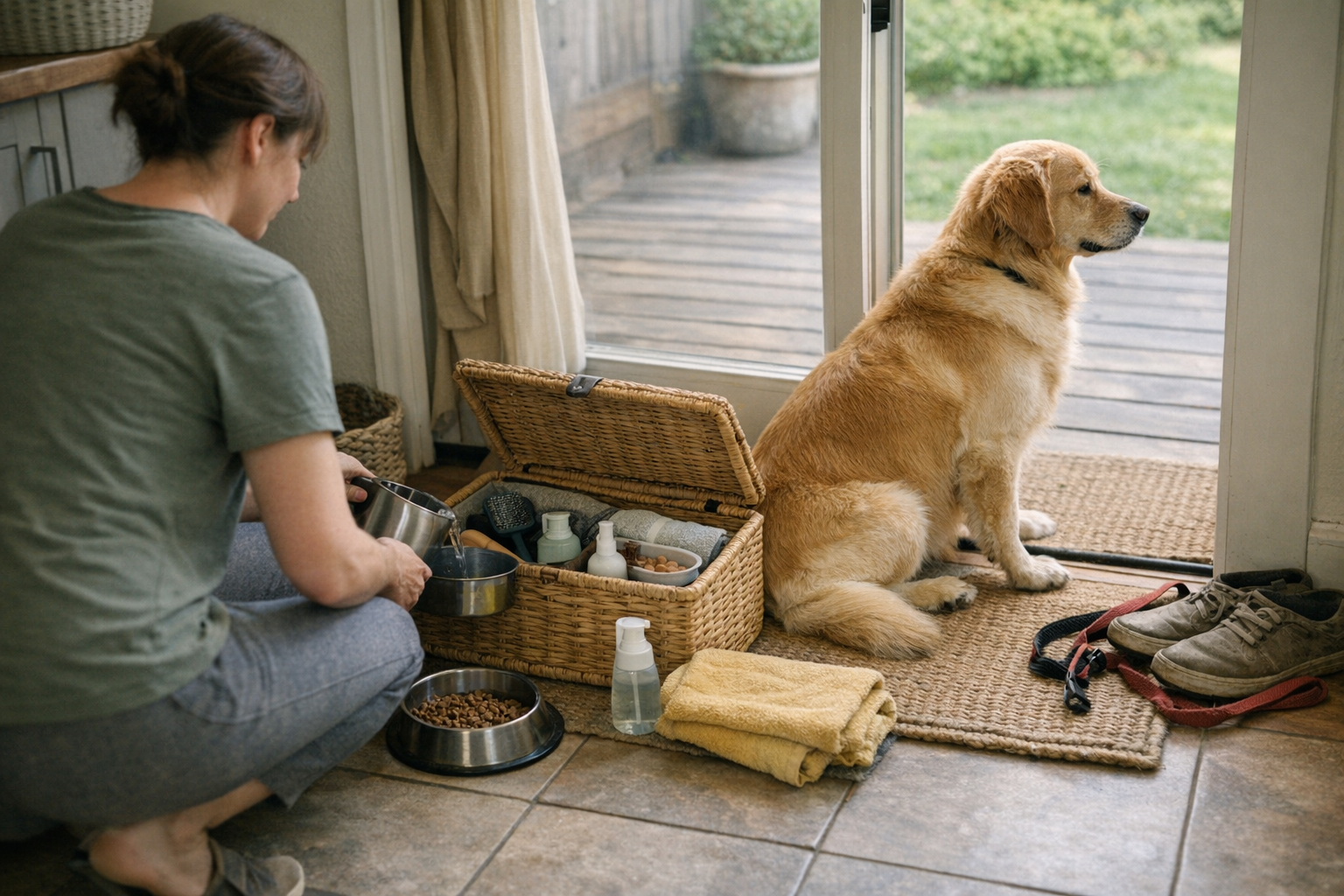
    Cut repeat work by claiming one central, always-visible spot for essentials—a grab-and-go basket with a click-shut lid at hand height near feeding, refills, or the main entry. At the end of each care session, drop items back immediately instead of building up a “later” pile. This one shift—returning the feed scoop, the towel, the wipes—makes missed items and end-of-day cleanups rare, and turns the act of closing the lid into a last check before you step away. If the lid is still open, something isn’t finished.

    Optimizing Storage for Daily Speed

    If you can’t see what’s missing in one look, you’re not eliminating clutter—you’re hiding it. Stacked bins and buried supplies stop you cold during rush care, asking for extra moves that add hidden, daily slowdowns. Shared routines work best with grouped, visible storage: cleaning and feeding basics in one spot speed every reset and swap. For routine-splitting tools, like harnesses or treats, use off-to-the-side containers—or you’ll waste time searching the wrong place and reintroducing overlap that drags every task.

    Reliable Setup Means Better Care

    Real tidy pet care isn’t a visual project. It’s about removing the blockages and backtracking that turn a calm morning or quiet night into a repeat scramble. Visible, ready storage—baskets with lids that you close, basics grouped so you’re never searching two rooms—means fewer missing pieces, faster resets, and less friction as routines pile up. Even a single change, like a properly placed quick-grab bin, resets your daily sequence. It’s not perfect; every once in a while, a brush or bottle will wander. But when every tool is usually in sight and nothing important hides, it’s the difference between “organized enough” and a care routine that holds up through Monday mornings and midnight wipe-downs alike.

    Find simple, ready-to-use storage for daily pet care at CalmPetSupply.

  • Why Pausing for Router Bit Cooling Improves Hardwood Routing Results

    The unspoken threat of overheating router bits: If you’ve ever lined up a dozen hardwood edges for cleanup, you know the moment—router running, everything’s humming, then a thin whiff of burnt wood flips the mood. Your early passes felt crisp, almost easy. But as the stack shrinks, coasting turns into fighting: the motor growls, the cuts drag, and those last few boards each reveal ugly scorched edges and new dings that weren’t there before. This isn’t just about sharpening or shifting technique. It’s heat—slowly, quietly robbing the tool’s bite and turning precision work into salvage.

    Heat builds, and workflow breaks down

    Anyone making repeated cuts through hardwood gets a front-row seat to the issue. Heat stacks up quickly. You might start at full control, shaving oak or maple edges like they’re butter. But after a couple of grooves, suddenly you’re muscling the router, feeling extra vibration, and chasing a cut that keeps veering off mark. The bit, now hot, loses its edge. Performance sags. And every subsequent board takes a little longer and leaves the bench messier than the last.

    When skipping cooldowns snowballs into wasted time

    Chasing efficiency by skipping cooldowns seems tempting in the moment. Early warning signs are easy to dismiss—faint burn odor, slightly stiffer push, a telltale haze across the grain. But push further, and it spirals: straight lines pick up ragged edges, scoring and chips spread, dark char marks coat whole runs. You go from needing a light sanding to spending ten or fifteen minutes wrestling with scorched tracks and chipped profiles. All that “saved” time is lost to repairs—and then some.

    Invisible friction that creeps into every job

    Heat buildup doesn’t just threaten finish quality; it quietly saps your whole workflow. Batch-routing shelves or dado slots? As each pass heats the bit more, not only does the cut suffer—your router’s motor strains and your arms burn out faster countering new resistance. By the time the collet grows warm to the touch, you’re risking both safety and an expensive repair, all in pursuit of getting “just one more” cut before stopping.

    Lost momentum, more cleanup—the real financial cost

    If you’ve run a production line or just managed a longer project, the math gets grim. Five minutes here blending burn marks, ten minutes there patching blowouts—suddenly, your afternoon is lost to double-work that never made it onto the schedule. There’s no fighting the physics; hot tools only slow everything in the end. Try to power through, and you’ll pay for it later with both time and materials.

    Reading the signs: When tools ask for a break

    No beeping indicator tells you when a bit’s overheated. It’s all in the feedback: a router that used to glide now pushes back, edges that once felt like glass suddenly turn sticky, clean shavings switch to dust. Catch it early, take a pause, and those telltale marks stay temporary. Ignore it, and you’ll reach the ‘smoke and scorch’ phase—the kind of shop smell that lingers and takes elbow grease to erase.

    Shop-built efficiency: The two-minute reset

    No fancy accessory needed—just build in a deliberate 2–3 minute rest after every two or three passes. It’s less interruption, more routine: finish a pair of cuts, power off, slide boards aside, clear dust, check your lines. That pause lets the bit drop back to a workable temp, keeping edges sharp and the next pass gliding clean. The difference? Less edge crumbling, fewer burn streaks, and post-cut sanding that’s a matter of seconds—not a gritty grind.

    On a real-world run—thirteen oak shelves, two passes each—sticking with a short pause after every pair kept the cuts consistent all the way. Sanding off the router marks became a three-minute job, not a drawn-out rescue mission. The bit held its edge the entire batch, and cleanup was as quick as promised.

    Tune as you go: Material and workload matter

    Not every wood or job tolerates the same tempo. Pine boards, low-resin softwoods—they buy you extra time per run. Dense maple or tricky hickory? Heat sneaks in fast. If you notice the router straining or a faint singe at the edge, that’s your warning: give it a breather or you’ll pay for skipping it. The fastest hands sometimes know when to slow down.

    Hands-on tweak: If you’re working with especially dense or resin-rich woods, bring in a small fan to keep airflow on the bit or notch your router speed down a setting. It’s less about overhauling your workflow, more about tweaking for the session at hand.

    More than bits—heat travels through the whole rig

    Don’t overlook the rest of your kit. After a batch of heavy routing, check the base and collet—if either is heating up, that’s a sign heat is moving where it shouldn’t. Extended sessions without pauses don’t just dull bits; they cook motors, strain bearings, and eventually turn a trusty router into a “fix me” project. Cooldown isn’t just for edge quality; it’s tool insurance.

    Work smarter: Make cooling pauses routine

    Speed is nothing if you’re making extra work for yourself. Instead of sprinting until things go wrong, layer cooling pauses into your regular workflow—prep the next board, clear off shavings, check for chip buildup, grab a drink. Those brief stops more than make up for themselves: fewer burnt repairs, sharper results, less exhaustion, and tools that stay in the rotation longer.

    The real win: Making bit cooling part of your process isn’t wasted time. It’s the fix that leaves your work sharp, your sanding minimal, and your shop free of that burnt-wood frustration. On jobs big or small, it’s one of those nearly invisible tweaks that keeps your results clean and your bench moving forward.

    Visit Gumboll for practical jobsite tools and accessories