Feeding time looks simple—bowl down, food in, dog eats. But if you keep noticing your dog hesitating at the bowl—shifting weight, pausing mid-chew, glancing back whenever someone walks past—the real problem isn’t pickiness, it’s setup friction. Small, repeated interruptions turn a supposed routine into a slow-motion scramble: food goes untouched, play gets pushed back, and you end up nudging your dog along instead of moving on with your day. The space you set aside for eating isn’t working with your routine—it keeps getting in the way, but not loudly enough for you to call it out. DogPile is all about those pressure points. If feeding keeps snagging—if the routine never feels settled—there’s probably a better setup hiding in plain sight.
When the Setup Looks Fine but Still Creates Friction
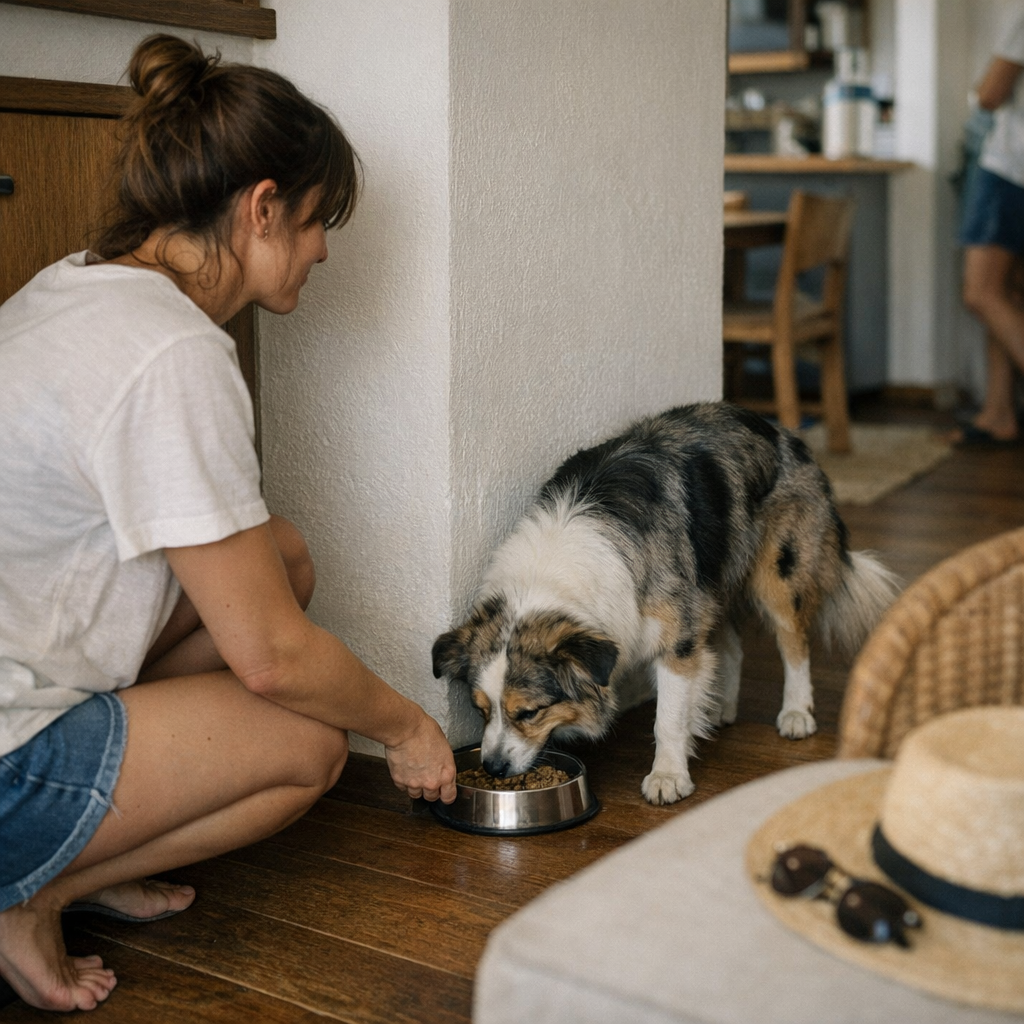
Feeding areas can look organized and still fall short when routines repeat. Bowls line the wall, the location is neat, but if your dog is circling or stalling near the bowl, it’s not about food or attitude. It’s about location. Too close to the hallway, too exposed to movement. Mornings get crowded fast: people cross for coffee, a quick door slam, a burst of kid energy. Suddenly your dog faces distractions at every bite, flinching when shoes scrape or someone grabs a jacket. The “easy” setup stalls, stretching a two-minute snack into a drawn-out shuffle.
Instead of calm feeding, you get constant darting glances and a meal that never quite finishes until the traffic dies down. Every time you walk by, you reset the process. A setup that looks clean still breaks down under real home pressure—especially when your dog’s back is exposed to repeated movement or noise.
Repeated Hesitation Is a Setup Problem—Not a Quirk
It’s tempting to blame a slow meal on your dog’s mood, but daily stalls mean structural friction. Dogs are always alert to movement or sound—especially during feeding. When meals become unpredictable, dogs struggle to relax, and you’re left running interference instead of letting the routine run itself.
Example: The breakfast trap. You set the bowl down where you always do. But this morning, it’s a few inches closer to the kitchen entry. Suddenly, your steps for coffee or your partner’s phone grab turn the space into a bottleneck. Your dog approaches, pauses, sniffs, then backs away if someone passes. With every interruption, the meal window stretches and your morning flow tumbles—play gets pushed off, the routine starts fraying, and one wrong bowl position derails the next hour.
Spotting Micro-Frictions Before They Undermine the Routine
There’s rarely a dramatic collapse. It’s a matter of inches or a shift in traffic: a kitchen that’s calm at noon but chaos at six. Many owners don’t spot the pattern until it gets baked into daily life—now you anticipate the stall, you step around the bowl, you expect the hesitation. That’s when small friction becomes routine drag. If you catch it now—a glance back, a repeated backward step—you can cut off the chain reaction before it turns feeding into a daily detour.
Everyday Example: A “Clean” Setup with a Persistent Weak Spot
The bowl’s tucked under the wall, away from the main walkway. Then after dinner, the whole household rushes between the mudroom and living room. The dog steps up, then pulls back as someone sweeps past—laundry in hand, broom off the hook. The same meal that should flow quietly now stalls and restarts, the dog sniffing, waiting, dodging back to the bowl over and over. Each pass keeps the pause alive. On paper, the setup works; in practice, daily rhythm wears it down.
It’s not about obvious mess—no spills, no toppled bowls. But after a week, you notice you’re always reminding your dog, reshuffling foot paths, or propping the bowl somewhere new. The difference between “looks good” and “works every day” only shows up when you watch what actually breaks under routine use.
Subtle Adjustments: How Small Changes Can Rescue the Routine
You don’t need a major overhaul—an extra six inches or a sturdier backing can change the whole flow. Move the bowl just clear of the walkway or set it near a solid wall, and suddenly the dog settles to eat without a hitch. The payoff is real: no more mid-meal “come back!” calls, no more blinking at why feeding is dragging. The new spot may only be a corner removed from the main lane, but it holds the rhythm in place. Routine returns. Ten minutes and the bowl’s empty, cleanup doesn’t trail into the kitchen, and you’re not resetting five times because a towel was too far or someone needed to reach for recycling.
The change feels small—one adjustment, one habit. It puts routine support over visual neatness. Less stress, less owner-side interruption, fewer small negotiations just to get one thing done.
When Tidy Looks Isn’t Enough: The Difference Between Visual Order and Real Ease
It’s easy to admire a bowl lined up perfectly with the floor tile and food measured to the scoop. But when you keep dodging toys to refill, or move the bowl after dog water splashes halfway to the door, that neat setup just makes the routine slower. An organized appearance doesn’t guarantee smooth daily function. The need to grab a wipe, hunt for a towel, or push the bowl back into place—each signal means ease is missing. If small snags keep stacking, the “clean” look is just hiding the day’s extra drag.
The Domino: How One Weak Point Interrupts the Whole Day
Frictions around mealtime don’t stay contained. A slow meal pushes back the walk, a messier reset steals minutes from the evening, and soon the rest of the routine is bumping along—never disaster, but never quite right. You feel it most when you realize routines take longer, you’re nudging the dog more often, or your cleanup window keeps shrinking—even though nothing “looks” wrong.
Walk-in example: After a muddy stroll, you manage the leash, shoes, and wet paws at once. The bowl is by the door—meant for quick feeding. But boots pile up and the towel lands on the same hook, blocking your access just when cleanup needs to be quick. Instead of a fast, hungry dog-to-bowl moment, you both stutter-step around each other. The “convenient” spot becomes the backlog. Repeat it daily and “fine on paper” never feels smooth in reality.
Reading Your Dog’s Clues: What Hesitation Actually Says
If your dog repeatedly stops mid-bite, scans the room, or leaves food untouched when someone walks past, chances are it’s your setup—not your dog’s appetite. Movement, noise, line of sight, even how backed-up the bowl feels—all signal comfort (or tension) to your dog. When you try new foods and nothing changes, or the same pause happens every day, routine friction is quietly running the show. The dog is reading the space—and asking for change you might not see until you focus on where the trouble starts.
- Stopping mid-meal to check over a shoulder
- Backing away from the bowl during movement nearby
- Delays when the bowl sits in an open or traveled space
- Less hesitation when the spot is moved from traffic or buffered by a wall
Resetting the Routine: Practical Tweaks for Everyday Calm
Feeding isn’t a stand-alone ritual—it’s a pressure point in your daily chain. If the layout supports confidence and quick access, you both get a smoother reset. Don’t chase perfection, chase stability: a consistent, semi-protected spot stops friction in its tracks. Make sure nothing crowds your dog’s bowl when traffic peaks—solid backing, no crossing feet, no competing reach for towels or toys. Watch the difference: feeding, cleanup, and post-meal flow click into place with less effort, and the mental friction fades for both sides.
Most effective spots aren’t the flashy ones. Try a wall-cushioned corner, a few feet from where shoes pile up, or anywhere that makes access possible without blocking the day’s next move. Once settled, resist reorganizing unless friction returns. The shift isn’t always dramatic—but minutes and micro-interruptions vanish. Less owner effort, more actual routine.
Recognizing Setup Friction—And Deciding When Change Is Needed
Just because a setup looks tidy or “almost works” doesn’t mean it’s good enough to keep. True comfort comes from routines that don’t need repeated nudges, bowl slides, or workarounds. When pauses, repeat steps, and tiny resets dominate your morning or evening, it’s not just inconvenience—it’s lost time and lost calm. Spot the friction, choose function over first-glance order, and reset before the cost adds up.
Find practical feeding-space resets and solutions for real daily use at DogPile.