
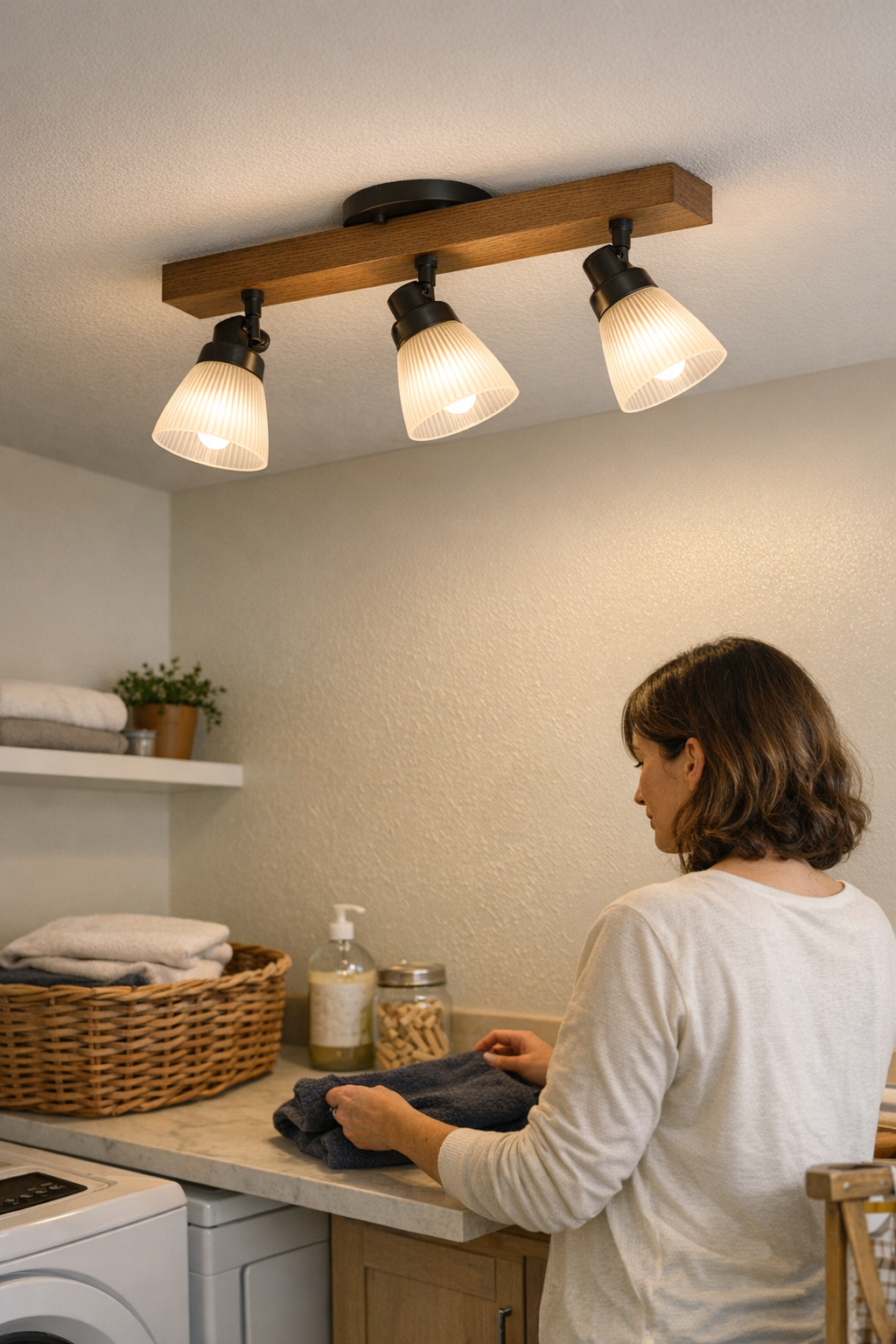
Lighting doesn’t fail all at once—it breaks down at the edges of your routines. You walk into a laundry room and notice one end of the counter always sinks into shadow while you check a hem twice. A ceiling light in the hallway gleams overhead but leaves you guessing at the stair turn after sunset. The mirror looks bright when the room’s empty, but the moment you stand in front of it, half your reflection fades into gloom. Even the most solid-looking fixture reveals its limit not in a quick glance, but in the small, repeated movements where comfort dissolves into squinting, pausing, or stepping sideways. That’s when good lighting matters—and that’s where too many setups quietly fall short.
Where Old Fixtures Fall Short: Real-Use Friction You Stop Noticing
Fixtures that seem fine in casual testing unravel when routines put them under pressure. A tired ceiling box, still technically working, starts hiding the key symptom: patterns of shadow and glare that force you to lean in at the work surface, hesitate at a stair landing, or slide past a hallway corner the brighter side avoids. Over time, these interruptions become background noise—tiny pauses, shifted stances, or double-checks—as you work around an aging fixture that never fully fits how you move, see, or use the space for real.
Shadow lines tell the truth. That moment folding sweaters under a supposedly bright light—one side of the surface clear, the other blurry with shadow—signals more than a minor annoyance. Or the quick realization that a mirror, perfect without anyone present, is suddenly lopsided with shadow streaks the second you need task clarity. These aren’t oddities; they’re signs your lighting is out of sync with actual, repeated routines.
Why First Impressions Mislead—and What Shows Up Instead
Lighting that flips on without flicker may look right in passing. The real test is repetition: if a glossy ceiling fixture makes your hallway gleam but you still step carefully at the bend each night, it’s missed its role. In stairwells, a single misplaced beacon throws harsh shadows exactly where secure footing counts, triggering subtle caution at every turn. These aren’t outright failures—they’re friction points that quietly persist, long after the novelty of “everything lights up” fades away.
The failure isn’t always technical. It’s structural—mismatched sightlines, dead zones in movement, and surfaces that should work but don’t, revealed by demands your routine places on them over and over.
Where Repeated Use Exposes Weakness
Routine is the real stress test. Dull laundry lighting means rearranging baskets just to see the last sock. In the kitchen, a forgotten under-cabinet strip lets dusk push the chopping board into semi-darkness, slowing prep and spotlighting where the fixture’s spread comes up short. Misty bathrooms with ancient wall sconces leave you tilting your face, tracking down streaks and bright spots just to shave or catch real skin tone in the mirror.
Every small annoyance—hesitating on stairs, sidestepping a dark slice in the hallway, repositioning under a bathroom light—becomes part of your routine, not a fluke.
Fix the Fixture, Not Just the Bulb
Swapping bulbs won’t fix daily light failure. Most repeated frustration comes from how the fixture actually spreads and shapes light over time: its mounting, direction, and age set the boundary for comfort or for ongoing struggle. One persistent case: a laundry alcove with a tired, moisture-weak ceiling box doomed one half of the counter to dullness after every cloudy afternoon. Only after replacing it with a damp-rated, flush-mount LED fixture did the full counter fall under even, usable light—no more shadow seam, no more tilting to double-check the bottom of the pile.
This wasn’t just new brightness—it was a shift. The routine became clearer, less compromised, and required no more workarounds just to do a simple task.
How to Tell When Structure, Not Maintenance, Is the Real Issue
How can you tell when it’s not about upkeep, but a real failure in lighting structure? Start by checking any inherited or long-ignored fixture for:
- wobble or loose mounting
- signs of aged wiring, especially in pre-renovation homes
- new or growing shadow bands on key surfaces
- persistent flicker or unevenness after swapping bulbs
If squinting, pausing, or shifting has become routine—even after a bulb change—the structure is failing. That friction compounds quickly in zones you count on for safe footing, grooming, or reliable visibility. The missed detail, the hesitation, the patch of shadow: these are clear signals to look beyond just the bulb.
Damp-Rated and Task-Tuned Fixtures: When They’re Non-Optional
Bathrooms, laundry zones, and utility corners see real steam and moody air. Non-rated fixtures break down from the inside: moisture gets in, spreads corrosion, and subtly disrupts even coverage long before anything looks wrong. Damp-rated ceiling and wall fixtures deflect condensation, keeping both lighting spread and wiring reliably intact. The result isn’t just longer lifespan—it’s fewer daily interruptions: no more unpredictable dimming, more stable task clarity, fewer surprise outages, and less uncertainty mid-routine.
Lighting Structure in Real Use: What Outlasts the First Impression
For actual routines, the fixture’s design—flush-mount for low ceilings, semi-flush for taller halls, damp-rated for steamy rooms—decides whether you forget your lighting or get snagged by it nightly. Well-matched structure banishes hesitation: you stride through hallways with even spread, never guessing which step will disappear in shadow. Bathroom mirrors finally reflect the entire face, not just the side closest to the glass. Kitchen counters stay visible whether the sun’s out or the house is closed up for winter. These are the details that separate “technically lit” from “effortlessly usable.”
Old, worn, or badly matched fixtures quietly invite routine friction. Change the fixture to fit the use, and you shave down layers of silent annoyance—until the real proof is simple: you stop thinking about the light, and just do what you came to do.