
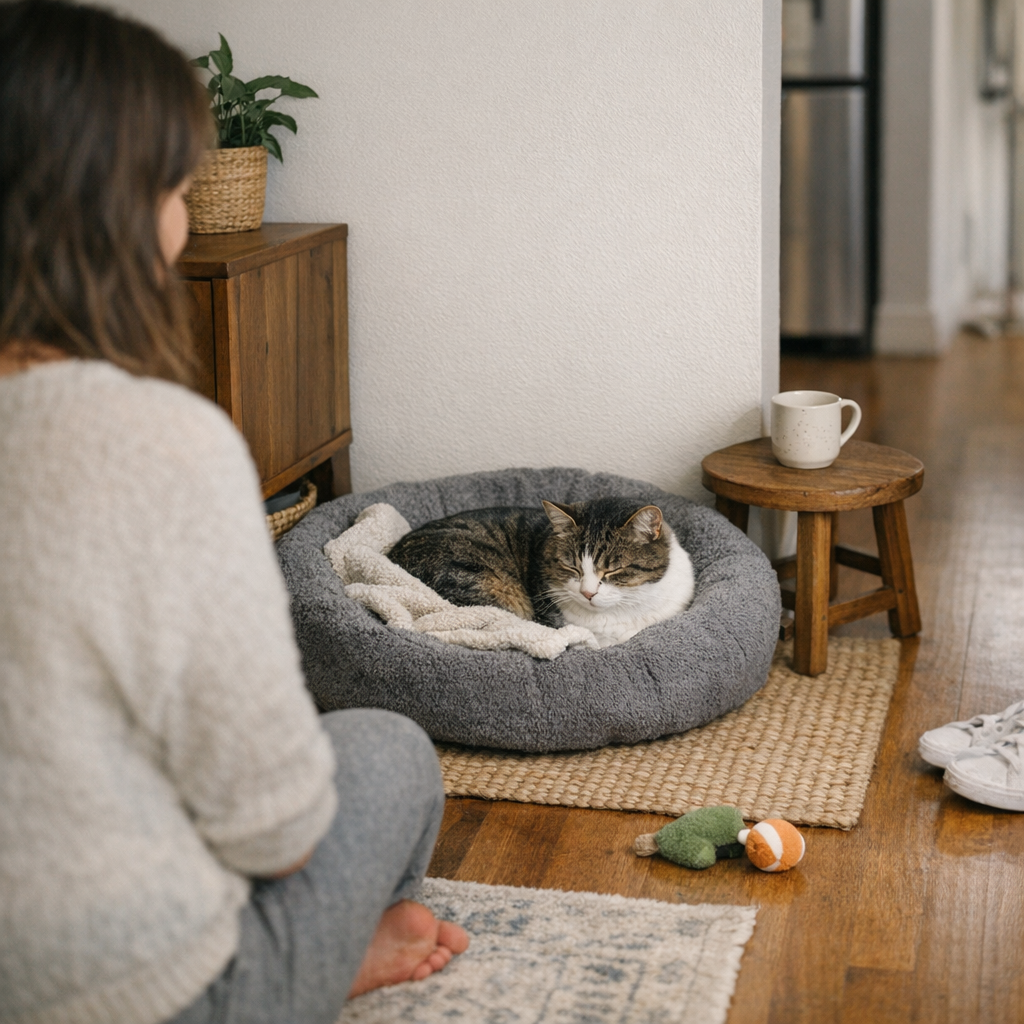
The so-called “quiet cat corner” rarely survives the first week of real use. You might set up a neat bed, a folded blanket, maybe a soft mat, thinking you’ve given your cat a peaceful nook—only to watch that space become the most interrupted spot in your whole home. The minute you fall into your real routine, what looked calm morphs into a crossroads for foot traffic, stray shoes, dropped toys, and the simple fact that your cat keeps shifting position or trailing debris into shared space, turning order into constant friction.
On setup day, the corner looks serene. But by day three, cat fur stretches into walkways, toys migrate across the floor, and your supposedly restful setup demands constant fixing. Not because the arrangement is “wrong” on paper—but because the real-world flow of home life presses in, revealing where things don’t hold up. A cat rest area that seems tucked away quickly gets exposed by shoe drops, bowl refills, or every time you reach for a cleaning wipe, only to disturb the cat you meant to settle. The split between a corner that just looks peaceful and one that actually stays undisturbed shows up the moment routines collide with your setup.
Why So Many Cat Rest Corners Don’t Stay Quiet
The illusion of a calm cat corner ends at the first repeated errand. That Pinterest-perfect nook almost always ends up bordering the busiest path in the house, crammed under a table full of “overflow” items, or right beside a tumbling pile of toys and loose shoes. Once real life resumes, each trip to refill a water bowl, fetch the broom, or retrieve a lost sock means stepping across, or around, your cat’s supposed rest zone—breaking the spell for everyone.
Your cat’s increased alertness is often the first red flag. What looks like simple curiosity quickly becomes a routine head-lift, eye-scanning each time someone moves. That’s not just “interested watching”—it’s disturbance stress. You turn a five-second refill into a series of micro-interruptions: your footsteps send your cat into vigilance, naps fragment, and suddenly that settled area feels continuously exposed.
Maintenance Pileup: When “Calm” Equals Extra Work
As soon as the cat’s corner overlaps with day-to-day pathways or becomes a shared zone for errands, the upkeep quietly multiplies. What starts as a single stray toy becomes a morning pattern: clumps of fur dotting the floor, a bed ignored, or an inconvenient pause just to keep it “presentable.” Once you realize your vacuuming has doubled and your cat is sleeping halfway across the room instead, it’s obvious—a neat corner with the wrong placement becomes a small but constant maintenance drain, not a real cat retreat.
Everyday Scenes of Rest Interrupted
Picture this: it’s late and you’re navigating between kitchen and hallway, only to freeze mid-step—your cat’s bed lies right in your path. Pause and sidestep? Shift the mat? Or tiptoe through and risk rousing your cat yet again?
Or: you drop off groceries and slide off your shoes, inadvertently scattering a cat toy under a side table. Now you’re half-crawling to retrieve it, kicks of fur trailing in your wake, your cat jolted out of relaxation to follow the commotion. The day’s small routines—shoe sheds, quick pick-ups, passing refills—turn the so-called “quiet” area into the busiest, most unsettled patch in the room. And by week’s end, you’re not just straightening a blanket—you’re constantly re-clearing, re-wiping, and reshuffling as the “rest zone” becomes just another busy corner for both cat and owner.
The Ripple Effect: How Placement Shapes Everyone’s Routine
A cat rest area isn’t just about feline comfort. Where you put it changes the rhythm of your whole home. In compact apartments or multi-use rooms, that “unused” corner might become a bottleneck, upending the daily flow. Every bowl refill, shoe grab, or quick cleaning supplies run gets complicated by the awkward placement. Your smooth shortcut turns into a circuit—detours, pauses, hyper-awareness of something underfoot. And every time this happens, your cat’s rest shatters into wakefulness, then watchful pauses. The result? No one gets a reliable spot: you’re resetting, and your cat’s rest is a series of interruptions, not a stretch of downtime.
The Tell-Tale Signs Your Cat’s Corner Needs a Rethink
Find yourself picking up fur, toys, and random clutter from the “quiet” area again and again? That’s your real warning sign. It’s not the occasional mess—it’s the frequency of interruptions, the time lost to resets, and how often you and your cat have to navigate out of your own way. If you’re reaching for wipes or adjusting the blanket several times a day, or if that area keeps attracting everything but rest, the setup isn’t holding up. Even more revealing: your cat lingers on alert, not actually relaxing. If the space doubles as a collection point for laundry, bags—or just ends up being a spillover zone—you’re living with a structure that’s visually tidy but structurally flimsy under real conditions.
Practical Fix: Small Shifts, Big Returns
The difference often comes down to inches, not broad redesigns. Moving your cat’s bed even two feet out of the direct traffic flow can dismantle the daily cycle of mess and micro-interruptions. What matters most: a definite but unobtrusive mat, side-cube, or low barrier to mark out the space—not as a fence, but as a signal, so objects and people slow before crossing into the zone. This tiny shift brings real, visible improvements: naps go longer, cats scan the room less, and scattered toys don’t spill back into the main living area.
Maintenance lightens up fast. Cleanup becomes a single late-day sweep, not a scattered handful of spot wipes. Instead of tiptoeing, re-clearing, or grabbing for hidden tools in a rush, you reset once, on your terms. And with better physical cues, there’s less “oops” stepping on the edge or rousing the cat in the middle of your own errand. The payoff is a rest area that fits in—rather than fights—with actual daily movement.
Examples from Real Cat Life
- The blocked path: Cat bed wedged between living room and kitchen. A week later: fur patches, toy tails, daily sidesteps, and both you and your cat avoiding the zone. Move the setup out of the path—walkways clear, bed actually used, less daily debris.
- The double-duty dead end: Blanket tucked under a table, but every morning you’re down on hands and knees fishing out toys or sweeping stray hair. A quick switch to a side mat away from routine errands cuts down the fuss and invites the cat back in.
- The “clean, but slow” corner: Space looks calm after cleaning, but within hours, clutter drifts back and your cat paces or leaves. Placement adjusted just outside major traffic, and suddenly movement normalizes—less owner intervention and faster cleanup.
When Comfort Helps and Hurts at the Same Time
A soft bed means little if every comfort feature adds reset work. Layering up with plusher mats or thicker blankets may look indulgent, but it complicates quick wipe-downs and toy retrieval. You stash cleaning supplies—lint roller, wipes—within reach, but if you have to reach around or over the rest area, you’re guaranteed to wake the cat, shaking up the calm each time. Every attempt to boost comfort through added softness or amenities can undermine your own routine if it overlooks the physical flow: a cozy corner can still be slow-to-use and hassle-prone if the placement forces clumsy workarounds for even basic upkeep. The tradeoff—comfort for the cat, extra chore for you—shows up every time a “nice” setup turns routine tasks into minor obstacles.
How to Set Up a Real-World Quiet Cat Corner
- Map your real movement. Watch the true daily flow—where feet, bags, and errands go most in every room. Never set a rest zone in these paths, however empty they look when planning.
- Shift away from overlap. If your current spot collects shoes, laundry, or random storage, move the setup out—close to a wall, but with sightlines for your cat, so they can monitor the room without being underfoot or in the way.
- Add a visible signal. A mat, side-bench, or short divider, even if minimal, works better than invisible “boundaries.” It prevents casual stroll-throughs and keeps both people and objects from blurring the zone’s edges over time.
- Keep cleanup tools accessible, not intrusive. Stash lint rollers or wipes just out of immediate rest reach—in a bin nearby, not right next to the bed. You want cleanup to be fast and undisturbing, never another source of alertness or fur scatter.
Reliable Function Beats Visible Tidiness
For real