Category: Yard & Utility

  • Transform Your Outdoor Storage with Smart Wall-Mounted Systems

    Outdoor storage reveals its real story only after you’ve wrestled with it for a few weeks. The first day, everything looks right: a clear path between the trash bins, boots lined up by the shed, nothing in the walkway. But give it some time—a few wet days, a weekend of sports gear, or a rush to beat the rain. Suddenly, that clear route is blocked by a half-tipped wheelbarrow, and the storage box intended for boots is now surrounded by the same muddy pile you meant to avoid. What’s in your way isn’t just clutter. It’s the invisible friction: the lid that jams when your hands are full, the awkwardly placed bin that demands you shuffle other things just to squeeze it back in. This is where “good enough” outdoor setups quietly unravel.

    Where Clutter Creeps Back: Floor Pressure and Blocked Movement

    The warning sign comes small but steady. Maybe it’s a pile of kids’ shoes outside the bin—because lifting the lid is one step too many when you’re on your way inside. Or it’s a garden rake left angled across the entry, blocking the door from opening fully. Each “drop it here for now” moment adds up, until you’re moving something out of the way every time you cross the yard. The more you notice yourself sidestepping bags or inching past makeshift stacks, the clearer it gets: your setup isn’t carrying its weight. The piles aren’t the problem; it’s the daily resistance to returning things that keeps the cycle spinning.

    Floor Space That Disappears Fast

    Small yards and utility strips don’t offer spare inches. Line the fence with bins or block the back gate with a “temporary” storage chest, and your paths vanish. What seemed clever on day one quickly becomes a blockade. Wall-mounted racks look like a fix, but unless each tool or ball actually fits where it’s hung—even when you’re muddy, rushed, or carrying groceries—the spillover hits the floor again. Doors that can’t swing open without first moving a hose reel, lids that demand a free hand—all of it quietly teaches you to pile things wherever is easiest, not necessarily where they belong.

    Real Use: The Gap Between Looking Organized and Actually Working

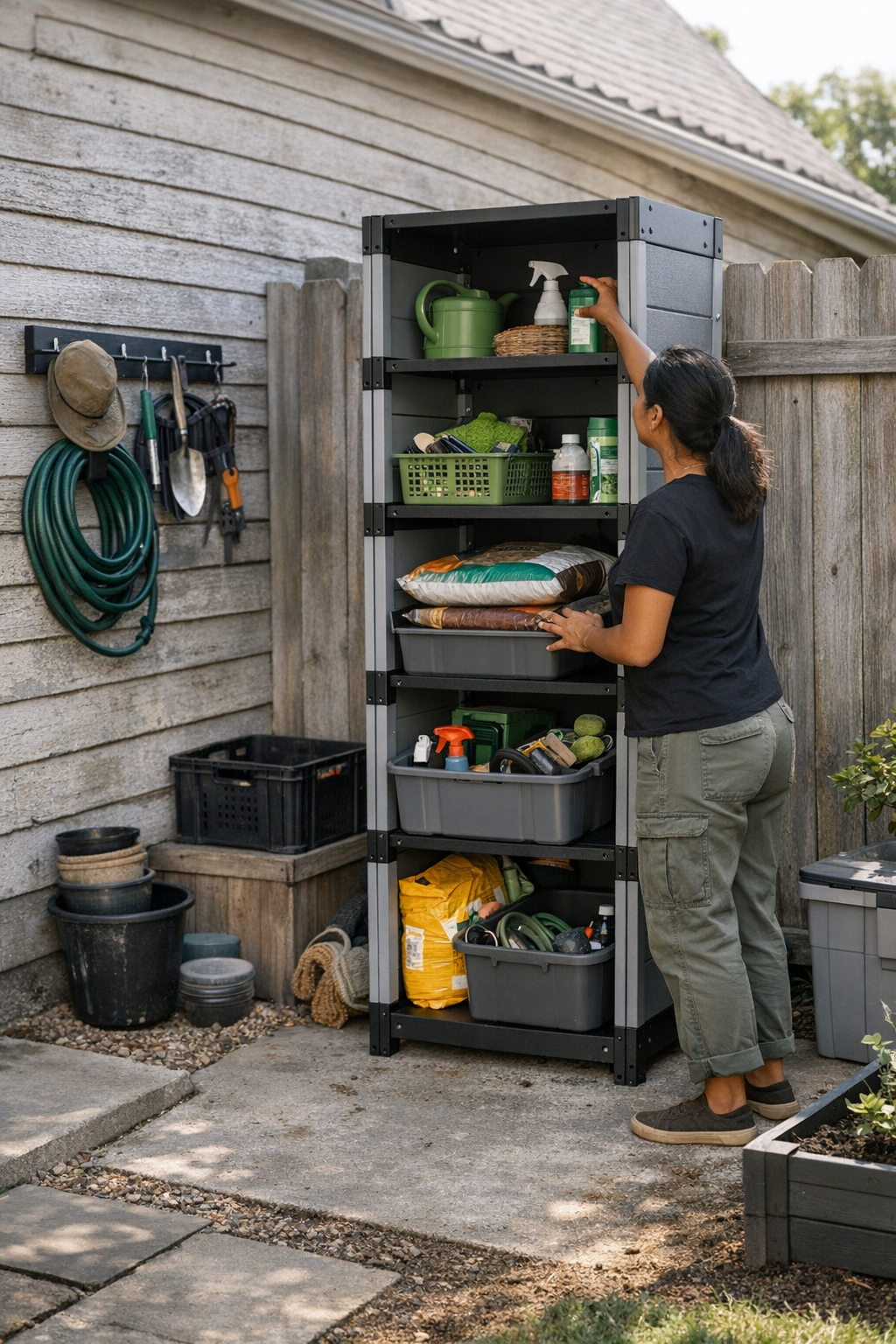
    Outdoor storage lives or dies in the busy hours between resets—not in the “after” shot, but in the churn. Imagine a garage-edge wall with hooks for long tools. The first week, everything finds a home. But quickly the system gets overwhelmed; there’s always one shovel too many, a stray glove never returning. Or picture the tall cabinet in the side yard, meant to tuck bikes and rakes neatly away. By the second week, with school pick-ups and projects, the cabinet doors hardly open—the bikes sit in front, the rakes lean against the outside, and every trip down the path is slowed by detours and sidesteps.

    The Side Yard Trap

    Nothing uncovers a setup’s weaknesses faster than a side yard forced to play double duty—as both storage and main walkway. That tall, narrow cabinet? It eats less floor on paper, but the doors are always hemmed in by something: a bike tipped sideways after a rushed morning, a mower half-parked in front, a plant that migrated just enough to jam the swing. Eventually, what started organized becomes a tightly wound obstacle course. Wheeling the recycling bin out now means shifting two stacks and nudging a forgotten soccer ball just to reopen the passage. The whole flow of using your own yard changes not for the better, but for the more awkward.

    Shifting the Reset With Wall Systems

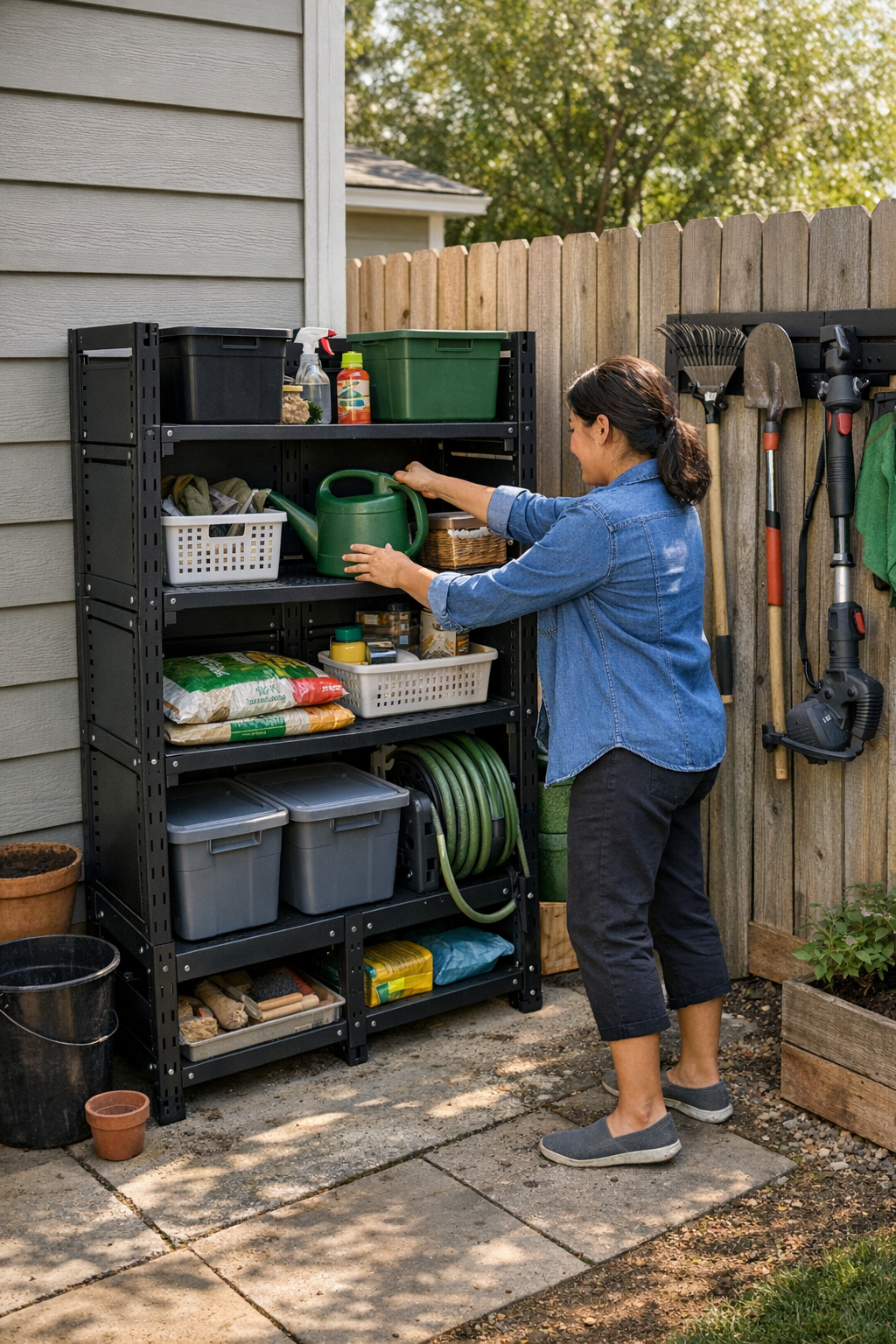
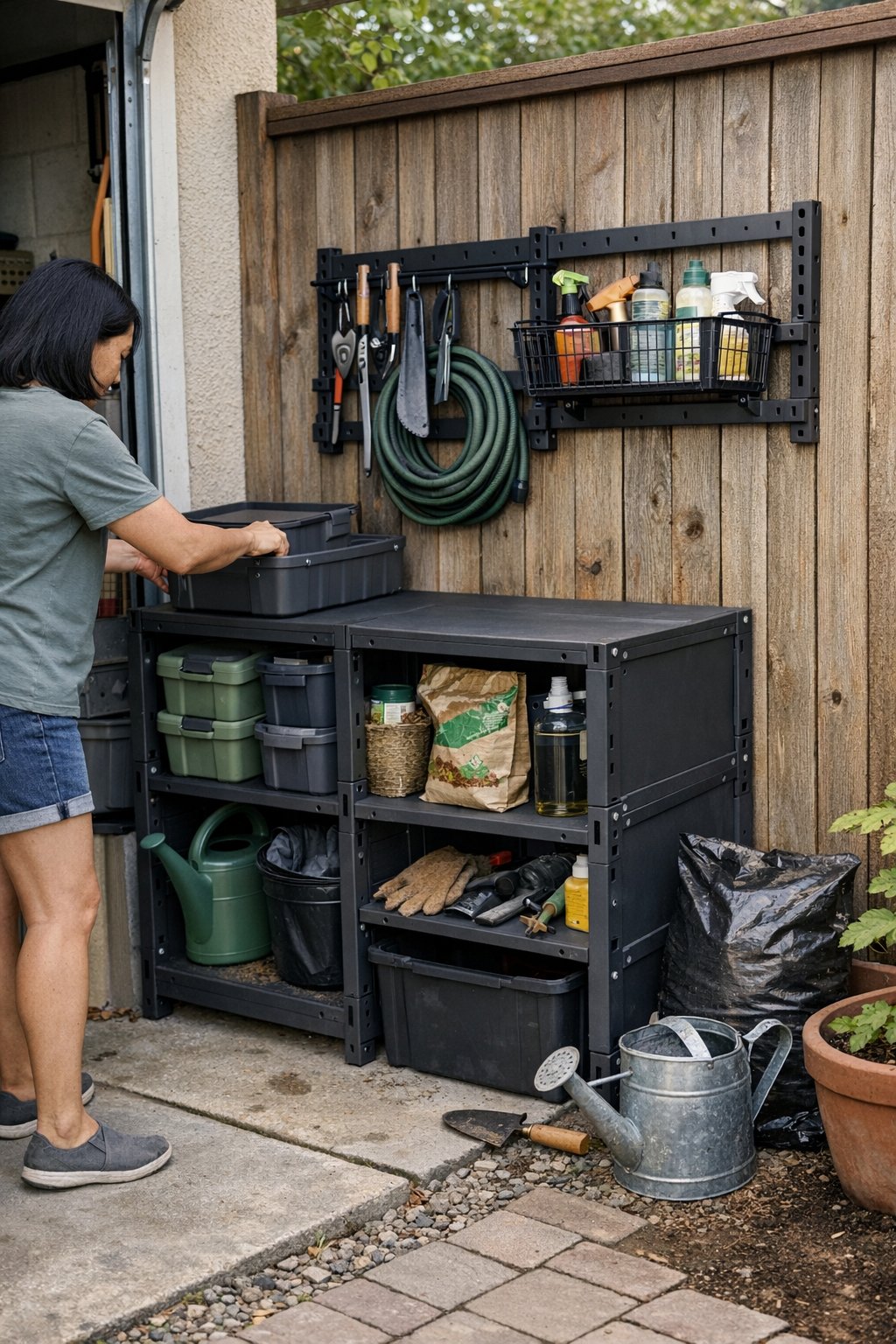
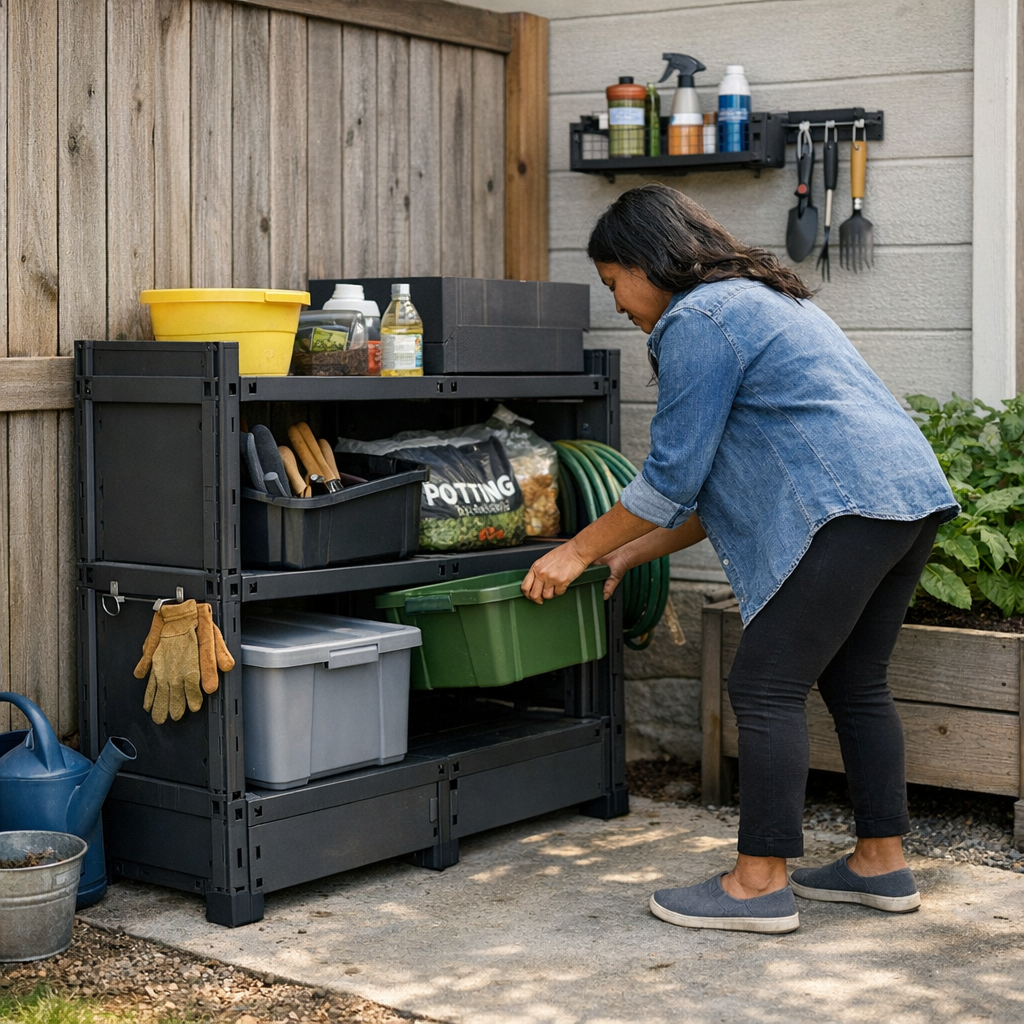
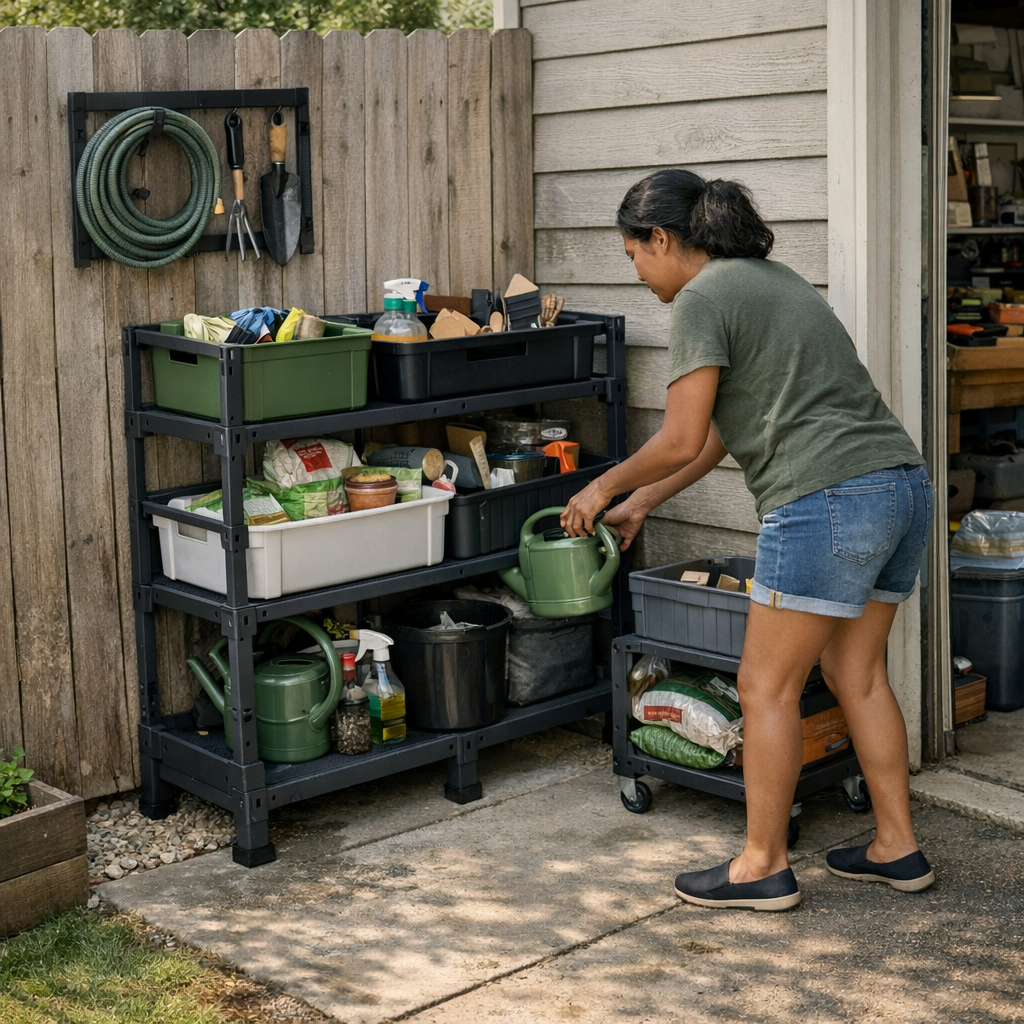
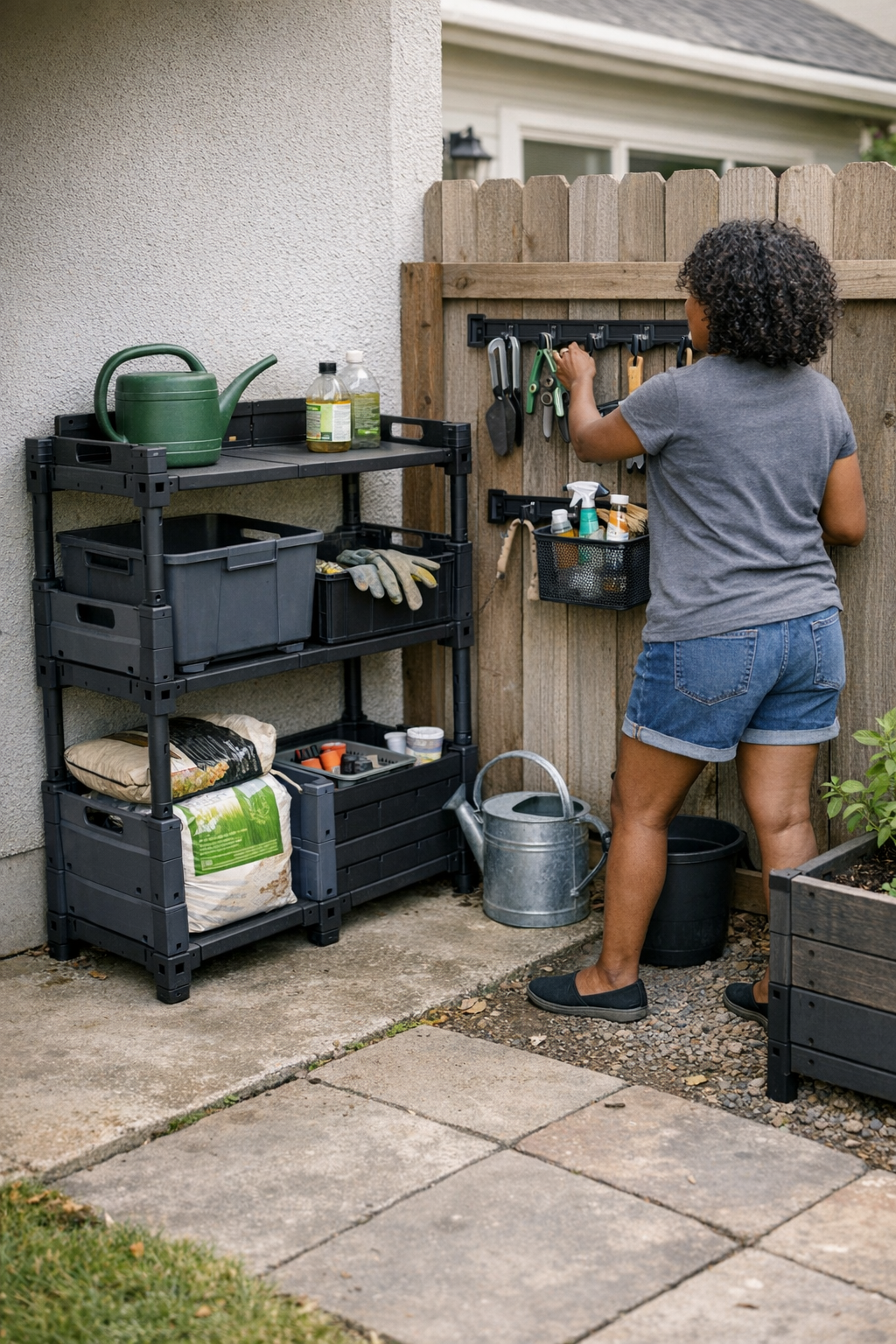
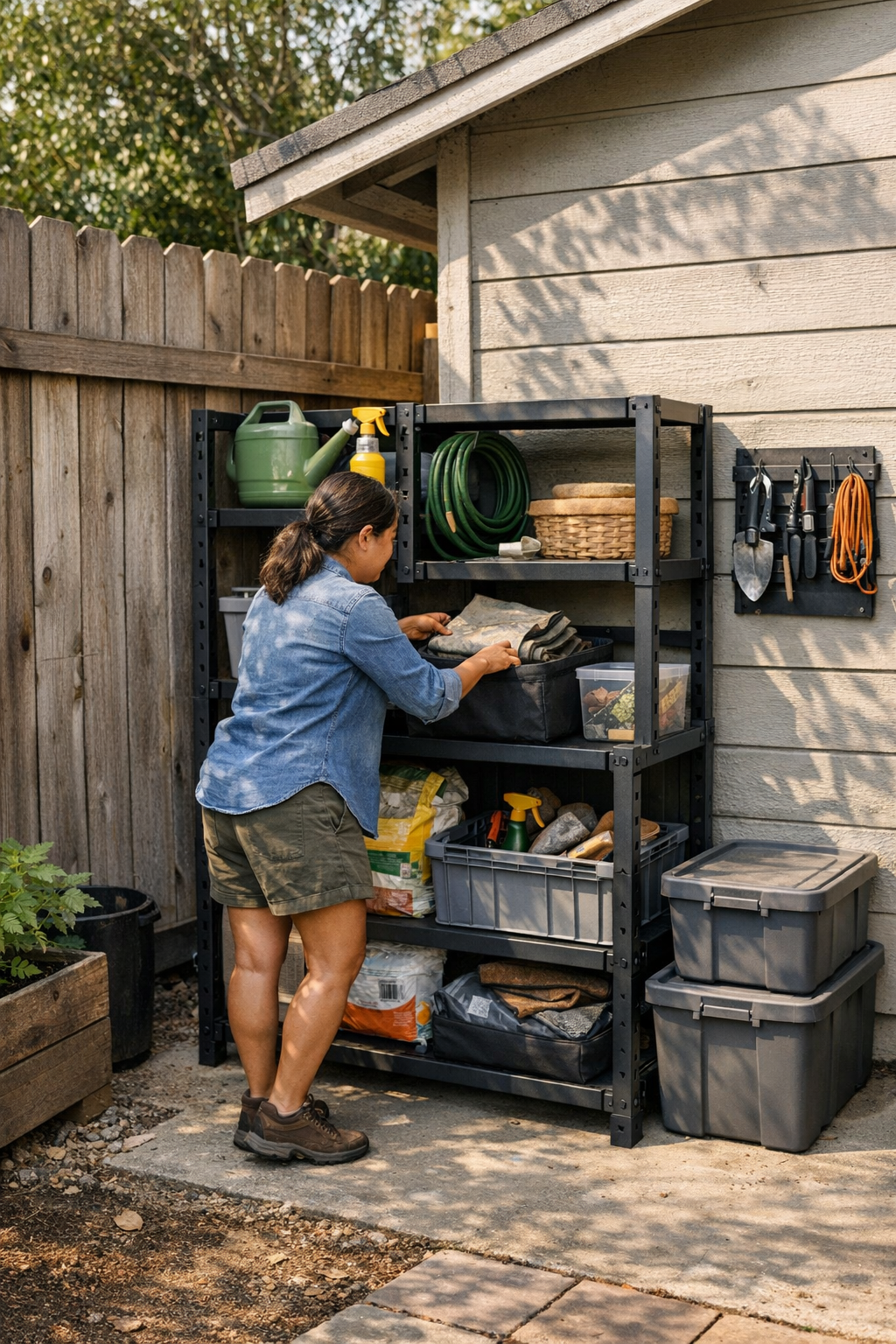
    Everything changes the moment you stop relying on lids and cabinets for high-use items. Modular wall systems, open rails, and quick hooks fill the gap between theory and daily habit. Hang tools at arm’s reach—no opening or lifting required. Face gloves on a front rail, stack a single open bin for things that always cycle in and out. Even spacing—separating hooks by just a few inches—can mean the difference between a wall that collects clutter and one that actually empties pockets and hands on the way in. Slowly, the “just drop it here” mentality fades, replaced by a visible, reachable spot for everything. The best sign: resets don’t take a full afternoon, and the urge to pile fades because returning things actually feels easier than skipping the step.

    Overflow Zones and the Trouble With Dead Corners

    Every outdoor setup has at least one spot that absorbs overflow—a fenced nook that quietly turns into the dumping ground, or that triangle behind the grill where abandoned gear goes to linger. Even with well-built storage, these corners attract clutter if the main system jams up. The result? You circle through the same reshuffling routine: clear the floor, move the pile, open a path, block it again. It’s not a system; it’s a cycle of temporary fixes—and the proof is in how often you find yourself returning to the same dead corner with armfuls that don’t really belong.

    When Mobility Turns Into Stagnation

    Rolling cabinets and portable racks sound ideal—until they lock up from weight or the wheels snag against uneven stone. Intended flexibility can breed its own kind of gridlock: the instant a mobile unit is too heavy to shift, overflow comes back, now clustered in an even tighter spot. For mobility to actually help, the storage must still work everywhere it lands and be light enough to move even when loaded. If not, it quietly becomes yet another blockade hiding in plain sight.

    Making Return Flow Effortless

    The real payoff for any outdoor setup is obvious return flow after real use—not just clean lines, but easy resets when there’s actual mess. Ask yourself: how many steps does it take for each daily item to get put away? Does one simple move bring things back, or are you nudging bins, fighting lids, and tricking open cabinets crammed too full? The best quick fix: add open, easy-access storage at the highest-friction points. Wall racks within arm’s reach for daily tools, a single large bin by the door for quick-dump items, hooks or rails at the entry for gloves and bags. The more the setup matches honest use, the less chance stray piles have to sneak back in.

    Honest Structure Makes Maintenance Nearly Invisible

    Every item needs its spot in plain sight. Wall-mounted systems don’t just keep the walkways open—they shift the habit for everyone under your roof. Forget nagging or mental checklists: the visible structure makes out-of-place items obvious, so resets become second nature instead of a dreaded task. The result: less thinking, less shuffling, and a setup that can actually keep pace with the churn of an ordinary outdoor week.

    Order That Outlasts the Weekend Sweep

    The real test isn’t how neat a yard looks right after a deep clean—it’s what happens after five days of normal life. A setup that blocks paths, smothers corners, or demands daily reshuffling is just another layer of hassle. But a system that clarifies and simplifies where things go—especially as routines change, seasons shift, and hands stay full—keeps chaos from creeping back. Walls carry the turnover, open zones absorb the rush, and floors stay clearer longer. In the end, the win is less time spent reclaiming the same square footage, and more time moving through an outdoor space that actually works the way you hoped it would.
    TidyYard Outdoor Organization

  • Why Textured Trays Outperform Smooth Ones in High-Traffic Entryways

    The wrong entryway tray doesn’t just disappoint—it creates a constant, low-level problem that gets harder to ignore with every round of use. If your tray looks sharp on day one but quickly turns into a scuffed, blotchy mess, you’ve seen the setup unravel: bag straps drag, damp shoes mark up the surface, grit and keyrings cut thin lines that no quick wipe really erases. At first, the space holds together—a controlled zone for the day’s drop-offs. But the second week in, the tray looks bruised and tired, making even a “clean” entryway feel unsettlingly out of control. Instead of anchoring the flow, the wrong tray drags attention to every flaw, doubling the mental reset after a normal pass-through. Trays should corral clutter—not advertise every new scratch and spot as an ongoing reminder that the system’s already slipping.

    Why Surface Texture Sets the Tone in Busy Entry Spaces

    Entryways aren’t quiet museums—they’re collision points for shoes, bags, and whatever’s on your shoulder or in your hands. Every crossing tests the setup: bags drop hard, boots scrape, umbrellas spin water everywhere. On a smooth tray, every one of those moves leaves behind a fresh visual hit. A week in, and you see a gray ribbon where a week’s garden boots cut back and forth, a gouge from a backpack buckle, blurred circles where water never quite dries clean. Even after wiping, the surface holds faint traces—just enough disorder to remind you it’s never truly reset.

    Every shared threshold—partners, families, even roommates—amplifies the effect. Small disruptions spiral: one dropped hockey bag or muddy paw print, and suddenly the tray is less landing pad, more billboard for last week’s chaos. Eventually, people bypass the tray to avoid making it worse, or return shoes to the wall instead—chipping away at the point of having a drop zone at all.

    Textured Trays: Hiding Everyday Friction

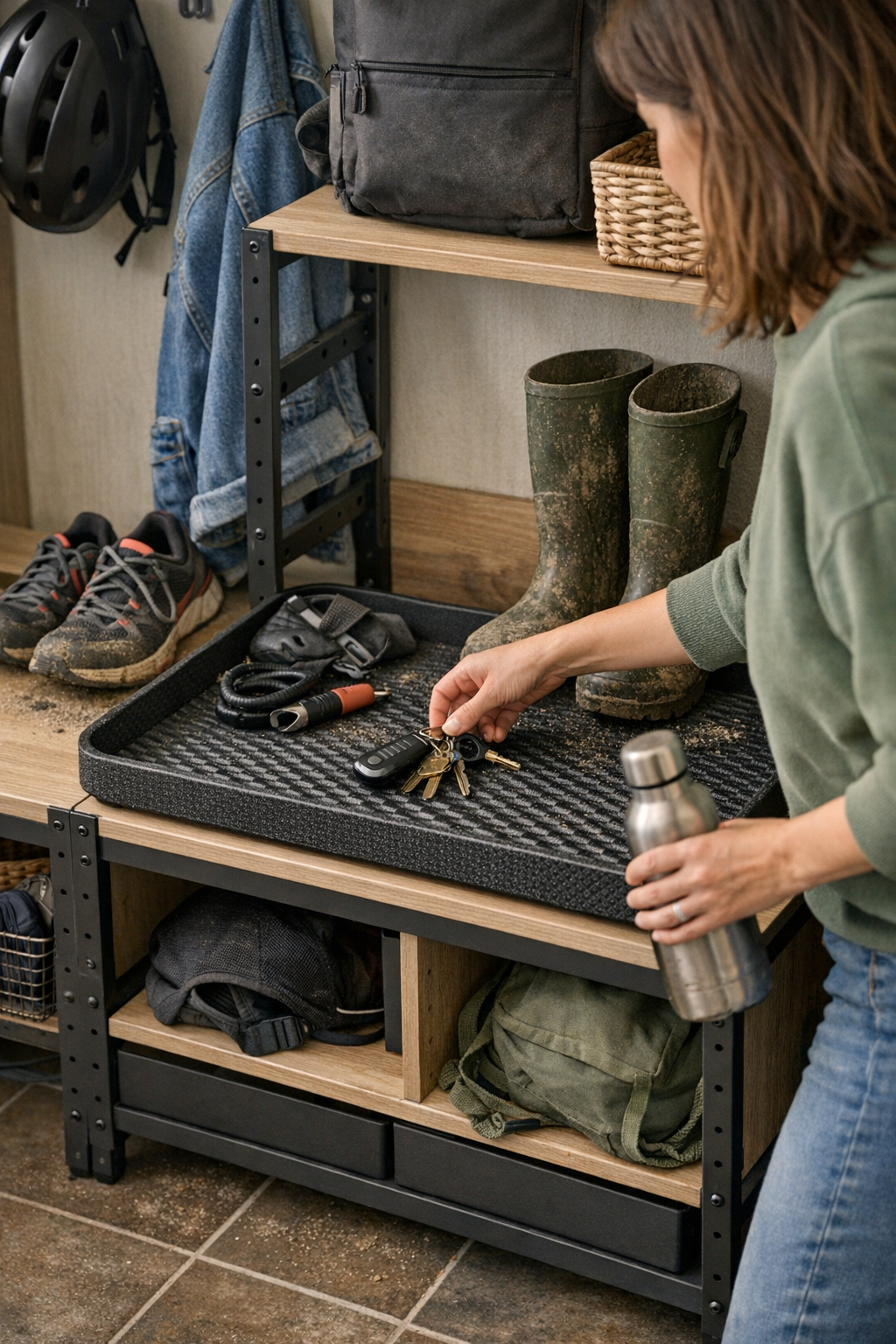
    Texture isn’t just a style—it’s practical camouflage against ongoing pressure. Subtle grooves or raised patterns blur new scuffs and water marks into the tray’s surface, blocking the steady march of visible wear that smooth trays always reveal. In a busy entry, where reset expectation is already high, this one detail quietly shifts how the whole threshold behaves.

    Picture the weekday stampede: wet boots clatter down, backpacks slide, car keys bounce and scrape. On a glossy tray, each new blemish sticks out, adding another micro-task—wipe now or face the next reminder. On a textured tray, those signs mostly fade, the visual field stays stable, and the demand to tidy up after every round eases. If your drop zone sees muddy gear, pet leashes, or grocery bags in constant rotation, you’ll hit this dividing line fast: smooth trays turn small usage into a maintenance loop—textures let the space absorb and keep moving.

    From “Showroom Clean” to “Lived-In Calm”

    That brand-new shine on a smooth tray looks great until the first real day: one detour for mud-caked sneakers or a neighbor’s umbrella, and you’re already losing the fight for order. Every mark sets up a choice—drop what you’re carrying and clean up now, or get used to seeing the entry’s decline. Even minor streaks show up and stick in your mind, pushing the urge to reset.

    A textured tray is built to absorb the storm. Scratches, mud stains, stray water lines—they break up against the pattern and disappear into the background. Instead of policing the surface, you can focus on keeping the actual pile contained. The result: the tray remains functional and calm, not because nothing happens, but because what happens doesn’t show up so loud. This shift makes the difference between a zone that needs constant vigilance and one that routinely holds up under stress.

    How Trays Shape the Life of the Threshold

    Real entryways aren’t static—they flex, crowd, and reset a dozen ways per week. Imagine a rainy afternoon: three people barrel through, school bags tumble, a garden tool lands with a clatter, damp shoes angle out half-off the tray, coats pile on the bench. On a smooth tray, the aftermath is immediate: a streak where a soccer bag dragged, a divot from keys, sticky water outlines that survive every drying. Everything looks marked—reset feels like another job, even though most of it is just surface splatter, not new clutter.

    Switch in a textured tray, and the picture changes. The surface looks steady, disorder muted: light scatters, blemishes blend, shoe treads and bag bottoms land without consequence. No one hesitates to park muddy boots or a heavy tote—there’s no subconscious “don’t mess it up” pause that leads to shoes splaying into the traffic path or bags leaning against the wall. This isn’t just less visible mess; it means less threshold congestion and fewer routines getting rerouted around a fragile setup.

    Reducing Reset Stress, Day After Day

    No threshold system stays neat for long. Kids miss the target, bags tip shoes off their row, dog leashes get tossed almost at random. With a smooth tray, that means cleaning, straightening, and bracing for the next round—resetting the surface, not just the piles. Even at its best, a perfectly smooth tray sets you up for disappointment if you can’t keep pace.

    A textured tray lowers the basic demand. When the morning scramble leaves behind sand, scuffs, and print marks, they filter into the pattern—you straighten the row and brush out real debris occasionally, but the visual “reset” standard relaxes. You don’t carry the constant pressure to hide evidence of life’s routine mess, because the tray keeps most of it unseen. Cleanup shifts from a chore triggered by anxiety to one triggered by actual buildup, making the whole entryway simpler to keep in motion.

    Comparing Cleaning and Upkeep: What Really Lasts?

    Smooth trays sell the idea of easy wiping but demand it constantly. Every streak, scuff, or sticky patch pulls your eye until you clean. Textured trays might need a quick brush to clear out grooves occasionally, but the routine feels lighter—because most marks don’t read as “mess” at all. For a threshold already pressured by muddy weather or quick turnarounds, being able to go days between serious resets is more than a convenience—it’s the difference between a functional entry and one that always feels on the verge of disorder.

    Take a drop: when a metal water bottle lands edge-down, a textured tray hides nearly all trace; on a smooth tray, the dent lingers, adding to a slow pile-up of small, permanent flaws. These tiny differences decide whether your entry feels at risk of tipping into chaos, or whether it quietly absorbs the routine shocks of daily flow.

    Choosing Trays for Real Entryways, Not Just for Show

    A drop zone lives or dies by how it handles the real pressure of repeated, imperfect use. The tray that looks pristine the moment you set it down means little if it can’t stand up to the cycle of shoes, bags, and gear. Texture, in this context, is less about appearance and more about how the whole setup behaves at its limits—especially for tight thresholds, shared routines, or entryways that double as gear stations. Textured trays consistently outlast smooth ones by diffusing marks, lowering the urge to resettle, and making the entry’s order visible but unstressed.

    If your current tray keeps you tense—racing to catch new scuffs, rearranging bags to hide dings, dreading every muddy day—it isn’t just an annoyance. Over weeks, that system quietly erodes the efficiency you actually want. Textured trays deliver a real, durable order: not picture-perfect, but stable and ready, so the threshold works as a transition, not a bottleneck. For more practical entryway and drop zone solutions tuned for real, everyday routines, visit Betweenry.

  • How Small Storage Frictions Lead to Clutter in Shared Spaces

    Every time a storage system asks you for an extra move—lifting, sliding, bending, detouring—another item gets left out. You notice it not as sudden chaos but as an everyday stutter: a shoe lands next to the underbed drawer, not inside; a work bag sits perched atop the hallway bench, avoided for the third day running. It isn’t laziness. Real storage friction shows up as tiny delays that slowly shift a “put back” from automatic to almost never. This is where well-organized spaces fail—not from lack of effort, but from setups that quietly work against the routines they’re meant to serve. When daily return flow breaks down, you end up with overflow piles, drifting categories, and a room that still looks decent but forces you to work around it, not with it. Swap in the wrong cabinet, drawer, or shelf, and the difference is clear by the end of week one.

    Where Storage Friction Hides in Daily Routines

    Your storage looked perfect on install day: lined-up shelves, crisp wall units, clean drawers without a thing out of place. But routines don’t pause for design. That hallway closet with tidy glove shelves now chokes with hats and scarves because no one wants to fuss with tight cubbies. Bags stack on benches when the drawers below need a second hand and a deep breath to open. Underbed bins meant for winter bedding catch on the frame, so duvets pile up outside or get half-stuffed and forgotten. These setups promise order, but small resistances—the ones you feel only under weekday pressure—turn “just for now” into lingering clutter.

    Obvious snags like jammed drawers and stiff doors signal trouble, but subtle friction matters, too. Digging blind in a basket that’s one inch too deep, or splitting attention across modular units where favorite items hide, sabotages the whole “easy access” pitch. Suddenly, getting something out—or putting it back—requires more searching, more reshuffling, and more “temporary” decisions that stick.

    Spotting the Real Problem: Weak Return Flow

    Storage collapse rarely shouts; it creeps. The breakdown comes in the “return” phase. In a pantry, bins meant for snacks start leaking granola bars onto the open shelf, then onto the counter by noon. A linen closet meant for towels starts housing T-shirts and random linens mashed into any available gap, especially after rushed mornings. Delay the reset just a couple of times, and a clear system becomes a patchwork—categories smudged, corners crowded, and nothing quite where you need it next time.

    How “Just Enough” Resistance Adds Up

    Storage resistance is almost always revealed in rush hour, not planning mode. Family closets, shared kitchen pantries, underbed drawers in guest rooms—these pressure points multiply the challenge. A drawer with tolerable friction for one person becomes a daily speedbump when five hands cycle through in the morning. The extra nudge needed, the lid that sticks, the shelf that forces a shuffle—all it takes is a single weak link in the reset chain for overflow to become routine. Categories blur. Shoes and bags roam. The most-used items abandon their home base first, and the drift at the edges spreads until the whole setup slows you down instead of speeding you up.

    This breakdown isn’t dramatic. It’s a slow, steady leak: shoes collecting outside benches, towels sprawling beyond a shelf, the same snack reappearing on the counter. If you find yourself reaching once for an item, then again to get something behind or beneath it, the resistance is already costing you more than it seems.

    Real-World Scenes: When Storage Slows the Routine

    • You open the closet for your jacket but first dodge two bags on the floor. Putting them away means fighting a sticky drawer, so you let them pile up—again.
    • Last night the underbed bin’s runner jammed; now blankets crowd the foot of the bed. One snag and the reset step gets skipped more than finished.
    • Spices meant for a narrow shelf end up scattered because sliding the section is just annoying enough to do “later.” Weeks pile on, and overflow becomes a fixture.
    • A modular shelf looks streamlined, but digging for the right basket means shuffling others aside. Return steps get postponed, and backflow overtakes the neat lines you started with.

    Too Many Steps? Watch for Overflow Zones

    Overflow zones don’t announce themselves. You’ll see them as gradual mounds: items stacked at the bedroom door, a row of cereal boxes exiled from the pantry, a growing pile on the hallway bench, the extra towel always drying on the bathroom floor instead of inside the linen drawer. When “putting away” is more than a one-move operation, temporary piles linger until they threaten to outnumber storage itself. Overflow in real homes almost always points to a closing, sliding, or reach-in step that takes just enough effort to get skipped. Stiff drawer runners, a shelf placed a little too high, clearances that leave you twisting a basket out sideways—all are quiet reset killers.

    Category Drift and the Disappearing System

    The more return steps get skipped, the more categories start to blend. Snack bins collect mail and headphones. A towel shelf absorbs pajamas. Every shortcut a user invents nudges the system closer to entropy—especially in any space used by more than one person. The loss isn’t obvious overnight, but give it a week and even the best-organized system starts to drift, edge out, and blur into improvisation. Eventually, the storage you set up “just right” becomes another source of sorting instead of relief.

    Reworking the Stress Point: Small Shifts, Big Difference

    The biggest storage resets rarely require a full makeover. Often, removing one friction point unlocks the whole zone. Replacing a cabinet door with a slide-open shelf, adding a spring-loaded drawer, or rethinking the height and depth of your most-used bins changes the flow. In a busy hallway, swapping a sticky two-hand drawer for a soft-close slide let everyone drop off bags with half the effort. Corners stayed clear, overflow spots dried up, and items rediscovered their categories—even mid-rush. The change didn’t erase the need for order; it made that order easy enough to survive real life.

    In practical terms: moving everyday snacks to open, low shelves means kids (and grownups) reset more naturally; storing “occasional use” items higher moves the struggle out of the core routine. For underbed storage, units with smooth, solid runners preserve the intention—hidden, low-friction stow, minus the jammed track and underbed pile-up. It’s not about maximizing hardware—it’s about matching the storage mechanism to the actual pressure points you live with.

    Small Practical Changes

    • Keep high-frequency zones a single step from reset. If a door or drawer slows you, try open shelves or exposed baskets for your fastest use items. Cramped? Slim cabinets or shallow benches often outlast deeper, fussier pieces.
    • Track your worst drift and overflow zones. If stuff always piles up on the same bench or shelf, it’s time to troubleshoot: lighten drawer motion, widen clearances, or move the reset spot closer. Chasing new containers solves nothing if the bottleneck stays.

    The Line Between Ease and Extra Work

    Any storage that slots into your routine without extra steps fades into the background; the moment you notice resistance, the system starts leaking. A setup only earns its keep if returning items is as natural as grabbing them—no extra dig, no backup plan, no delayed reset. Door latches, odd heights, overloaded baskets aren’t superficial complaints; they’re warning signs: every small strain today equals overflow, drift, or a backup zone tomorrow.

    Lasting order doesn’t begin with perfect lines or grid photos—it’s sustained by storage that survives the cycle: grab, use, return, repeat. If “organization” feels like a chore or leaves visible spillover, shift your focus to friction at the final move. The right adjustment at the stress point means less daily effort and a setup that holds, not just impresses, from week to week.

    Explore storage solutions built for daily routines at Gridry.

  • How Reliable Outdoor Storage Transforms Everyday Backyard Routines

    In backyard corners and side-yard strips, order can look flawless for a moment—but the illusion rarely lasts long. You mount a new rack, stack crisp bins, maybe line up tools along a shed wall. For a day or two, the setup feels sharp: every shovel, trimmer, and half-empty fertilizer bag finally has a home. But the real test comes fast. By the next weekend, a wheelbarrow blocks the narrow walkway, the mower handle juts out further than planned, and the “quick grab” shelf is overflowing with stray trowels and gloves left in a hurry.

    How Outdoor Organization Unravels—One Small Friction at a Time

    Storage in real outdoor spaces rarely fails dramatically. It erodes, day by day, as minor obstacles stack up. You nudge a stray planter just to reach the seed spreader. You shuffle a pile of rakes to unhook one broom. Even sliding a bin from a corner can turn into a struggle if its neighbors shift midweek. When the hose caddy swings loose and bumps your shin every time you reach beside it, you notice: the friction is small but relentless. None of these make you abandon the system at once. Instead, they wear down your willingness to reset, one annoying moment at a time.

    Photographs catch the moment before complexity wins. In real use, organized looks become slow routines: reach for a tool, then pause to untangle its handle; replace a bag of soil, but first shift those “temporaries” someone tossed on top. The area designed to give you time quietly takes it back. The longer you delay a full reset, the more anything you move causes a chain reaction.

    Real Use Glitches: The System That Can’t Keep Up

    The Return Blockade

    Picture a narrow utility strip: wall rack, long-handled tools, storage bin beneath. On setup day, it feels efficient—each item sorted by type, smaller handhelds clipped at the edge. Soon the flaw emerges. That post-hole digger catches you every time you reach for the shears. To put one thing back, you have to move another. Once you’re rushing, tools end up jammed wherever there’s space. The next person struggles with the tangle, and the wall that looked “organized” starts acting like a barricade.

    The Patio-Edge Creep

    Floor plans lie when lived-in. A mower that slid snugly against the wall ends up parked halfway across the walking path after a rushed return. The bin for small garden gear—pruners, seed packets, twine—turns into a catchall for everything you’ll “sort later.” You start stepping around piles. The path narrows. You dodge and curse, recognizing that the “layout” works until you actually use it during a busy weekend or after a surprise rainstorm.

    When “Fits the Space” Isn’t Enough

    A setup that swallows your tools doesn’t always support your habits. The gap reveals itself at the most inconvenient moments—needing that tarp right before it rains, hustling to reset the yard before guests arrive, realizing you need to correct three things just to return one. Time pressure exposes the system’s design flaw: storage that interrupts your routine instead of following it.

    Hidden overflow zones never vanish on their own. That “temporary” bag in the dead corner becomes a permanent fixture. In a few weeks, you forget what the corner looked like before the drift set in. Resetting these areas quickly goes from “simple cleanup” to “where do I even start?”

    Small Adjustments, Huge Payoff

    Sometimes a single tweak—like moving a rack a few studs aside—opens a crucial foot of space for walking or returning things in one motion. Separating high-use from almost-never-use tools removes the daily crossover that leads to jams. When there’s always space for the most-used items—free and clear, in line with your movement—the battle to keep the area working tilts your way. Resetting stops feeling like solving a puzzle every time.

    Real Tip: Modularity for Shared Spaces

    In any household with more than one set of hands in the storage zone, confusion snowballs fast. If every return or grab can happen without disturbing the rest, routines get smoother. That’s what modular bins do: they turn “whose stuff is this, and where does it go?” into easy parallel flows. Each person’s clutter stays contained. Traditional racks, as needs shift with the season or guests, clog with cross-purpose objects—and the reset cycle grows longer the busier everyone gets.

    Overflow Is More Than Mess

    Watch for piles at the foot of any rack or the edge of a setup. Once these “temporaries” start showing up in the same spot week after week, your system is signaling: normal use is demanding too much friction for a reset. Let it run too long, and every routine reset becomes a full rescramble. Small inefficiencies quietly accumulate, slowing every return and sapping your motivation to clean up at all.

    Lasting outdoor storage is about control over chaos, not about a frozen “after” photo. Clarity matters: open walking paths and easy drop points give you breathing room, even when things slip a bit. An efficient setup feels invisible—things just go back easily, even after a wet, busy month. The friction never disappears, but you stop feeling ambushed by it every time you need the next tool or want to tidy up on your way inside.

    The setups that work aren’t always glamorous. But by keeping the routine simple—clear spots for top-use items, no awkward reshuffling, overflow contained before it takes hold—you end up with a yard that genuinely works for you, not just for the first round of photos.

    Shop TidyYard’s real-world outdoor storage solutions

  • How Interlocking Panels Transform Entryway Clutter Into Lasting Order

    Entryway order isn’t lost in one moment—it leaks away, week by week, through the same repeated points of failure. That clean threshold you set up on Sunday is already fighting back by Wednesday: shoes slip past their “line,” bags slouch across the last open seat, and jackets land wherever mail was meant to be sorted. In busy homes, the difference between a kept-up entry zone and a daily obstacle course isn’t about how well things store when still—it’s about how quickly the area drowns in overflow when everyone is actually moving through at once.

    Where “Simple” Storage Breaks When Life Speeds Up

    The classic setup—a bench, a tray, a couple of hooks—looks crisp in a photo or after a deliberate reset. But in daily use, it’s not the tidy version you live with. As routines turn frantic, small breakdowns add up: the single shoe tray becomes a shoe horizon; one bag, hastily dropped, dominates the bench edge; and the “catch-all” basket becomes a melting pot of hats, keys, and outgoing bills. The difference between visual order and real control isn’t about a system’s potential, but its survival under repeated pressure. Most entryway ideas look “organized” for two days—then default back to blend-and-shove by midweek.

    Interlocking Panels: Disrupting the Drift

    Standard setups encourage drift: the hope is things will land close enough to their zones to work. Interlocking panel systems break that drift with physical boundaries—every time, for every item. Instead of a shared drop zone, each shoe, bag, or coat has to claim its bay or slot or not fit at all. No one’s “extra” shoves into common space unnoticed. These divisions can seem rigid at first, but once actual routines hit, the benefit isn’t theoretical—it’s instantly visible in the way overflow is caught early and obvious, not quietly swept off until the weekend.

    Real-World Crunch: Where Weak Storage Fails

    When everyone piles in—school bags thudding down, muddy boots side by side, wet jackets seeking the least-bad landing—the bench-and-basket combo folds almost immediately. The first wet coat ends up on top of the mail, shoes expand into traffic lanes, and anyone aiming to sit down finds themselves clearing someone else’s heap. You’re not resetting; you’re detangling. By the second round-trip of the day, the boundaries collapse. Every system “works” when it isn’t being tested. In a high-use threshold, the cracks appear at full speed.

    By contrast, with interlocking panels, every item stops at its assigned line. Shoes hit the physical end of their slots—no shuffling outwards. Bags drop straight into their bays, not onto shared seats. When something spills over, it’s not hidden; it’s blatantly out of place and pushes an instant fix. Resetting becomes a habit measured in moments, not minutes of sorting and stacking.

    Pressure Points: How Clutter Sneaks In—and How Panels Push Back

    • Bag drop, clean zone lost: One off-aim backpack on an open bench creates a new magnet for gloves, papers, and headphones—turning a small slip into a full spread. Slot-based panels block this drift by refusing to let random drop-offs blend in.
    • Shoe lines collapsing into piles: Every shoe mat starts as a single-file lineup. By Friday, it’s a multi-width scatter unless each pair has a walled or slotted boundary, forcing the row to restrain itself.
    • Bench becomes “storage” again: The seat’s there to sit—until it’s needed in a rush, and every overflow item claims the available space. Panels hold chaos aside, keeping the bench truly usable—no reshuffling required just to take a seat.
    • Blocked path, slow recovery: Undefined storage means one bulky jacket blocks a hook, shutting off access for everything else. With vertical separation, restoring order means moving one piece, not unjamming the entire rack.

    Panels Don’t Prevent All Mess—But They Expose the Problem, Fast

    Panel systems don’t make clutter impossible; they make it visible and blunt. Assigning a bay to each household member and allowing just a single shoe row—notably, 90cm can cover the basics for one person in a compact entry—means every overflow is a signal, not something that fades into background mess. When categories start to blend, you see it before the pile grows. The goal isn’t a magazine-shoot entry: it’s a setup where disorder stands out early, so resets return to frictionless faster—no hidden heaps, no multi-day buildup under bags or behind the door.

    Structure here delivers on its promise only under pressure. Clear, enforced boundaries mean every re-entry and exit takes less time and negotiation. Even in the weeks when schedules get chaotic, the reset cost stays small—you’re not dreading the threshold or banking a full hour on the weekend just to restore usability.

    Vertical Boundaries: Keeping Categories Separate—When It Counts

    The vertical separation effect is practical: a wet jacket never lands on the mail; muddy boots never topple into a basket of scarves or hats. Panels insulate the mess, so even in a tight entry any misplaced item stays isolated. That’s the difference between a controlled system and an ever-tightening threshold, where one wrong drop gums up the whole flow for everyone.

    The Real Value: A System That Resets Without Drama

    Open baskets, shelves, and flat benches promise flexible storage, but every shared surface eventually turns into a generic pile. That means every pass-through gets clumsier, and every “tidy” becomes a full-blown reorganization. Panels lock down categories—overflow doesn’t sneak by, and movement stays unblocked. Without constant shuffling, just getting out the door becomes smooth—no forced resets, no lost minutes searching for what was hidden by the last rush.

    The real shift for small, high-traffic entryways isn’t just a clean look—it’s breaking the cycle of quiet buildup and costly resets. Investing in more structure is about reclaiming speed and sanity, not achieving perfection, especially when life routinely blows past best intentions and every minute at the door actually counts.

    Browse transition-space storage solutions at Betweenry

  • How Tall Linen Tower Cabinets Control Bathroom Clutter and Overflow

    The gap between a tidy bathroom and a truly functional one always shows up under stress. A shelf loaded with folded towels looks fine—until a morning rush turns neat stacks chaotic and knocks a bottle into the sink. Shared space amplifies the weak points: towels end up half-fallen, toothbrushes play musical chairs between baskets and counters, and every “quick fix” seems to slide the system further off-track. Suddenly, surfaces built to organize are overrun with the same items they’re meant to contain, and every reset cycle feels slower and more annoying. That’s not just a clutter problem—it’s a setup failing to keep up with lived reality.

    Why Open Shelving Struggles Under Pressure

    The idea of open shelving in a bathroom makes sense—instant access, easy to see, hard to forget what you own. But it quickly becomes a weak link once normal use sets in. Every unsteady grab or lost cap is instantly public: one rushed reach, and an entire row collapses like dominos, towels buckling and bottles rolling to the edge. Worse, in a shared bathroom, each hand introduces new disorder. Stacks get yanked from the middle, shaving cream nudges deodorant into your soap’s territory, and small items squeeze themselves between categories. Counters and floors pick up the overflow, and the cleanup isn’t shared—just the aftermath.

    Return flow gets jammed. When it takes two moves to reach anything, or you’re reshuffling containers just to make room, open shelves shift from “organized” to catch-all almost overnight. Items with no fixed place migrate: hairbrushes go missing in folded towels, cotton pads end up perched on the bath mat, and nobody can remember the original plan.

    Closed Cabinets: A Buffer Against the Everyday Mess

    A linen tower cabinet—especially one that adds vertical closed storage—works by creating friction in the right place. It sets real boundaries: towels, bottles, and supplies each get assigned zones, with a door sealing in minor lapses. The fallout from a crooked towel or tossed-in backup shampoo is contained, not broadcast across the room. Overflow stays invisible behind the door instead of leaking onto surfaces everyone uses for something else.

    The everyday advantage: Even if someone returns a towel out of order, only the inside gets messy—there’s no public invitation to pile on or give up. Crowded mornings and unpredictable routines can’t turn one slip into a day-long mess. The space outside the cabinet holds up even when the inside isn’t perfect, giving everyone more margin for error and less daily reset work.

    How Category Drift Quietly Resets the Room

    Real storage stress isn’t always about volume—it’s about “category drift.” The toothpaste slides into the bath toy bin, guest towels collect stray hair accessories, and the basket meant for backup shampoo is suddenly ground zero for forgotten razors. Open shelves make drift obvious but do nothing to stop it. A linen tower acts as both visual boundary and physical constraint: one section for towels, one for products, another for cleaning supplies—and the habit of returning items creates a mini-reset every time the cabinet opens. Zones slow the migration and make new clutter stand out before it spreads.

    One overlooked control: match shelf height to their contents. A shelf sized for a single folded towel or a specific bottle makes overloading impossible to ignore. When there’s nowhere to hide a stray bottle or stack backup supplies, overflow calls attention to itself—forcing a decision, not just slow chaos.

    When Routine Breaks Down—What Holds Up?

    A bathroom is tested hardest during high-pressure moments: two people scrambling before work, kids fighting for space, one person hunting for a missing item. Open shelving can unravel in a single flurry. A linen cabinet’s door covers rough spots and buys time—piles can get messy behind the door, but at least the rest of the space isn’t drafted into chaos. Problems don’t disappear, but they’re contained until you can handle them—one messy return is a minor blip, not a domino effect across the whole room.

    Practical example: You reach for a towel in a hurry and find the previous user left it off-center. You adjust with one hand—done. If it were on an open shelf, the lopsided stack would have invited more mess, and now the effort to “tidy up” snowballs with each look.

    Lean Setups for Tight Spaces

    Not every bathroom can host a wide cabinet or broad shelving system. Slim linen towers—think under 18 inches wide—are tall enough to offer real zones without eating up path space. Placement is tactical: too deep or awkwardly located, and it blocks access to the sink or crowd the toilet. The best setups use vertical space to keep floor pressure low while fitting next to a tub or behind a door. Wall-attached systems or shallow cabinets usually eat less daily movement space than open shelves sprawling outward.

    Inside the Setup: Making Cabinets Work for You

    Give every shelf a job and a limit to block drift before it starts. Add shallow bins or wire dividers to split zones if you’re sharing space—one for towels, one for products, another low shelf for cleaning or backup refills. Small, regular corrections keep cabinets from turning into hidden junk drawers. Resist the urge to ignore problems just because the door is closed; tackle little resets every few days to maintain the gains and keep invisible pileup from turning into an eventual overhaul.

    With daily stress contained, you spend less time bailing out the system. An open shelf puts every slip on display, multiplying the reset pressure. A well-zoned linen tower absorbs small failures, shielding the rest of the space—and your routine—from constant interruption.

    Better Boundaries, Fewer Resets

    Every shared bathroom is a laboratory for clutter, where even “organized” setups gradually surrender to real use. Choosing a tall linen tower isn’t about hiding mess for appearances—it’s about setting boundaries that block the slide: towels hold their spot, toiletries can’t invade, and walls absorb overflow instead of the counter or floor. The payoff isn’t just a calmer look—it’s a room that resists turning every minor lapse into a reset project. In crowded, repeated use, the right cabinet quietly holds the line.

    Find storage that doesn’t just look sorted, but actually stays that way in repeated, imperfect use—at Gridry.

  • How Strategic Outdoor Storage Placement Transforms Shared Yard Organization

    Outdoor storage in real backyards always reveals its flaws fast. One week after a “tidy” setup, garden gloves are left behind bins, sports gear blocks the walkway, and someone else is dragging a heavy bench just to reach their tools. Almost every system looks right until you actually start using it—and the gap between “organized” and “usable” comes down to one thing: where the storage actually lives when the routine hits full speed.

    Why Setup Placement Decides the Fate of Your Space

    The difference between a setup that works and one that unravels isn’t about how many bins you buy. It’s whether storage lands where people actually move and reset. A deck box that blocks the steps, a wall rack hidden around the corner, or a floor chest wedged near the gate: all it takes is one misplaced piece, and suddenly returns slow, items stack in the wrong spots, and you’re the only one fixing the mess at day’s end.

    Watch how quickly a misplaced storage unit forces friction. A few rushed drop-offs—balls dumped on the patio edge, muddy shoes left in front of an overstuffed bin—and your careful system is already losing flow. With each awkward return, someone else blocks a walkway or leaves “for now” piles that become tomorrow’s reset headache. The burden keeps growing for whoever ends up being the “organizer” in the family.

    Real-Life Jams: When Resets Don’t Match the Drawing

    Spend a Saturday in an active yard. Tools, toys, and bikes all head out early, but the returns never hit the same path in reverse. Someone grabs a broom from a distant wall rack—then leaves it by the mudroom door instead of trudging back. Garden tools start off stacked in a chest at the patio edge. By noon, those tools have migrated to a bench, taking over just as someone else needs that seat. Suddenly, you’re moving gloves, moving baskets, shifting everything just to clear a spot that was “organized” this morning.

    Bins fill up past the brim. Pegs collect gloves and hats above the bins, but the overflow slides off, lost behind. One basket gets jammed against a chest lid, so toys end up across the path—blocking the next person coming in. These aren’t just one-offs. Each awkward deposit multiplies. A quick reset becomes a full-on cleanout, every night or every weekend, just to get back to zero.

    Hidden Choke Points Quietly Take Over

    When you look at a setup in photos—empty, staged, clean—it always appears to work. The reality is messier: people run late, cut corners, or just avoid awkward movements. Put a shelf too high and no one wants to reach; put a storage box at the entry and soon you can’t open the gate without stubbing your shins. Items that “don’t fit” land on the floor, in footpaths, on top of the nearest flat surface—slowly turning your order into overflow.

    The Fix Starts With Watching, Not Buying

    If your system keeps coming undone, it’s rarely the product’s fault—it’s where you put it, and whether the pathway back actually makes sense. Try a single, sharp move: shift the heavy box off the walkway, pull the main rack one step closer to the real entry path, or swap a bench off the traffic lane. The smallest change can totally alter the flow.

    One swap that worked overnight: moving a fast-use rack inside the entry instead of across the patio. Suddenly, everyone returned shoes and hats in one motion, instead of stacking them in a tired pile at the back step. Leave open space beside a deck box, not in front of it, and nobody has to shuffle things just to walk through. Treat the pattern you see—not the idea you planned for—as the blueprint.

    Ground-Test Placement Before You Commit

    Before drilling in racks or anchoring a big storage unit, mark out where things naturally land during a normal weekend. Use painter’s tape on the patio, or chalk in the side yard. You’ll spot instantly that your “smart corner” is really too far out of the way, or the new floor chest cuts the path in half. The gap between imagined use and real use can be just a two-step detour—but that’s enough to stop resets from ever taking hold.

    The Repeat Offenders: Clutter Magnets and Blocked Corners

    • Bulky bins in walkways: Put a storage box by the gate or the steps and it will quickly get surrounded by shoes, yard tools, and forgotten gear, turning movement lanes into gridlock.
    • Wall racks set for looks, not reach: If a rack is blocked by the grill or sits just out of normal reach, it turns into dead space. High shelves lead to things left on the ground. Low racks behind furniture just get skipped.
    • Overflow corners that never reset: Every outdoor space has a zone where “for now” becomes “for always”—that one blind spot by the fence where abandoned items quietly multiply. Let that corner dominate, and the rest of your system quickly falls behind.
    • Footprints that trip the return: A setup with good symmetry can still split the path in awkward ways. If you have to step around, shift other items, or bend in odd directions just to return something, shortcuts become the new routine—and stacks reappear fast.

    Flexible Beats Finished: Adjustability Saves Setups

    The only setups that last through seasons, new habits, and growing kids are ones that actually shift with you. Movable racks, stackable bins, and benches on casters aren’t just upgrades—they let you tune the space as patterns change. Summer brings water toys to the front? Slide a rack over. In fall, move bins nearer the garden zone. Nothing’s sacred except keeping flow easy and bottlenecks obvious.

    This isn’t about chasing the “perfect” blueprint. It’s about recognizing where resets start breaking down—and making stitching adjustments before the mess takes over. Each small move saves hours of deep cleaning and keeps everyone returning items with less prodding.

    The Signs of a Setup That Finally Works

    • Returns happen in one or two minutes, not after a full cleanup.
    • Each person knows by habit where things go—nobody has to ask or second-guess.
    • Walkways stay open, not jammed with “will return later” piles or bins blocking the route.
    • Returning one item doesn’t mean moving five others first.
    • The overflow corner stays quiet all season instead of turning into the default dump zone.

    Durable setups don’t obsess over order—they build in forgiveness for real messes and are built to shift when habits change. When you spot movement slowing, items collecting in odd places, or routines slipping, don’t start over—just move the sticking point. The best systems work for your life outside, not just for a quick photo.

    Find more practical outdoor setup solutions at TidyYard.

  • Why Rounded Tray Corners Make Entryway Cleanup Faster and Easier

    In real entryways—the high-traffic, always-in-flux drop zones—organization isn’t about that first-day reveal. It’s about what happens after you’ve lined up shoes, tossed bags and watched the floor reclaim itself with mud, grit, or yesterday’s rain. The overlooked culprit? The interior corners of your entryway storage trays. When storage corners are sharp, grit and moisture settle deep into the angles, turning a quick wipe-down into a frustrating, almost daily reset struggle.

    When the Entryway Works—Until It Doesn’t

    It’s easy to believe you’ve solved the mess after adding trays and bins—at first. Shoes get dropped in, the bag lands (mostly) where it should, and the space looks temporarily under control. Fast forward: a few wet commutes, a toppled lunch container, a steady drift of dirt. You spot the shift right along the tray’s edges—damp streaks, debris trapped tight against the wall. What started as a managed threshold quickly becomes a boundary you’re fighting to maintain. The ‘set it and forget it’ promise of entryway storage gives way to the reality of scraping out grit from deep, hard-to-reach corners, while the zone you cleared starts to blur back into chaos.

    The tray’s internal corner design doesn’t just add up visually—it compounds friction with every reset. Those ninety-degree angles gather what your routine brings in and refuse to let go. You wipe and realize the clean line stops short, leaving behind a stubborn halo in the exact spot meant for order. The frustration isn’t just that dirt remains, but that it accumulates faster than you can keep up.

    How Rounded Corners Change Daily Cleanup

    Switch to trays with rounded inside corners and the main difference lands during real cleaning—when there’s mud, spilled water, or sandy shreds from a gym bag. Instead of hunting into corners with a detail brush, you swipe once and the debris is gone. Water drains in a pass, not pooled for hours. Silt and grit get carried away by a rinse. No second pass, no soaking, no pretending you’ll get to it later. That difference becomes unmistakable as you repeat resets during the week—not silently dreading cleaning up the threshold, but actually finishing in a single move, and moving on.

    Evening Resets Feel Lighter

    Most families can’t schedule a dedicated deep clean for the entry. Resets come between work and dinner, before bed, or just after the next round of drop-offs. With rounded-corner trays, these bursts of cleanup don’t turn into mini-projects. Hit it with a damp cloth or lift under the faucet, and you’re finished. No gritty surprise on your next pass-through. In setups where bags fly in and kids’ shoes land sideways, the speed and completeness of the clean is the thin line: the difference between a truly ready zone and a stubborn base layer of yesterday’s mess.

    Real Friction: What Accumulates When the Corners Aren’t Right

    Entry zones aren’t static shelves—they’re highly active, high-pressure spaces. Shoes start in rows but migrate wide with each return, bags bump against shoes, and larger items like hockey sticks or strollers quickly test the limits. In a sharp-corner tray, each wet day leaves behind harder lines of dirt. Grit builds where you barely notice until it’s suddenly obvious—and then annoyingly stuck. By evening, runoff collects not in the open, but precisely in that narrow, unreachable runway at the tray’s edge. Any attempt to reclaim the clean zone turns into sidestepping mess or wrestling tools into corners never intended for them. Your movement slows, routines stack up, and the illusion of order cracks on the daily threshold reset.

    Let this continue a week or two and you get real consequences: edge stains, baseboard dampness, smells creeping in, and eventually a subtle hesitation every time you cross the space. The overflow becomes self-reinforcing—one dirty bag or shoe can turn the whole drop zone from resettable to semi-permanently off-balance.

    Sharp Vs. Rounded: Which Holds Up Under Real Use?

    Stacking sharp- and rounded-corner trays in the same entry, their strengths emerge in opposite cycles. Sharp-corner trays give a crisp look against benches and cabinets—at first. But as each day brings new shoes and runoff, their corners quietly become sediment traps. Daily, you face a choice: spend extra time for a barely-complete clean, or put it off and accept more mess tomorrow. The reset delay isn’t hypothetical—it stacks onto the time, energy, and willingness you have to keep using the system at all. Over time, what started as ‘organized’ now quietly becomes a bottleneck you avoid, leaving your routine to work around, not with, your storage.

    Rounded-corner trays approach the transition zone with a different logic: anticipating not perfection, but mess, and offering a reset you can actually keep up with. The edge may not sit razor-flush against the wall, but that’s the point: nothing gets trapped. After rain, kids’ practice, or simply one busy return, you can lift, rinse, and see everything washed clean on the first try. Meaningful payoff: less dread around cleanup, more trust that your chosen entryway setup won’t quietly betray you two weeks later.

    Practical, Lived-In Examples

    Picture the weeknight checkpoint: Rain boots thud into the tray, backpacks drop off the side, the leash uncoils still damp. Minutes later, you survey the aftermath. With sharp-corner trays, the surface wipes up—corners do not. Even after two passes, the dirt line hugs the edge. With rounded corners, the same sequence empties with one efficient wipe, even after multiple rapid-fire entries. Mess leaves with you, not dug in for next round.

    Or the inevitable Saturday catchup: You want to clear out overflow before guests arrive, or just to restore passage for the week ahead. Sharp-corner tray: you’re bracing for ten minutes kneeling, toothbrush in hand, cursing those design decisions that seemed so minor. Rounded-corner tray: the entire zone is back to clean with a mop or hose in under a minute—no corners to battle, no mess left lurking. The time saved and the feeling of starting fresh is tangible.

    Small Differences, Big Impact in Setup Performance

    This isn’t theoretical—it’s the difference between setups that stay manageable week after week, versus ones that create new friction and slow your movement. A tray’s corner shape decides whether the space genuinely resets or quietly devolves into the same old clutter spread. In places where the path tightens, the bench edge overflows, and temporary drops keep multiplying, crisp corners look controlled at first; rounded corners maintain actual, practical control through real family use. Setup choices like this signal whether you’ll spend your time living in the entryway, or fighting with it.

    One Useful Tip

    Stuck with sharp-corner bins or trays right now? Line them with a flexible mat trimmed to round out the inside corners. It won’t erase the cleaning dead zones, but it does intercept much of the debris and lifts out for rinsing in seconds. Until you can swap to full rounded-corner solutions, this small retrofit buy you a real-time advantage without remaking the whole entry.

    Why Setup Details Like This Decide How the Threshold Actually Feels

    The reality at the door is a constant tension—you want order, but the pace of daily life keeps breaking it down. Whether you’re dealing with a tight entry zone or a wider drop area, cleanup friction shows itself in dozens of small ways: shoe rows spilling wide, bags blocking reset flows, walls looking clear but clutter drifting back in. Rounded-corner trays are the kind of unglamorous fix that carries real weight. They turn a threshold from a battle for temporary order into a space you can restore—quickly, every time, without dreading the next cycle of mess. That’s not about catalog looks; it’s about whether your setup truly keeps pace with repeated use.

    http://www.betweenry.myshopify.com

  • Why Divided Underbed Organizer Trays Transform Craft Supply Storage

    The first time you stash every marker, glue stick, and bead into a lidded underbed bin, it feels like real progress—until you have to pull something out on a busy afternoon. That bin looks orderly for about a week. But the real test shows up the second or third time you hunt for a missing pen, or try to grab colored paper before the rest of the pile slides forward. Category lines blur, layers collapse, small supplies vanish under bigger ones, and the neat system that promised speed turns into a slow, two-handed excavation just to begin another project. In real daily use, underbed storage can turn into a blocker—adding steps, forcing reshuffles, and turning a “quick project” into a drawn-out rummage on your knees.

    A Glance Into the Real Life of an Underbed Bin

    Picture pulling out a single, undivided bin to find scissors for a school assignment. You reach in and, instead of a clear lineup, you meet a confused stack—paper sheets half-crushed by acrylic paint bottles, stray bead bags jammed into corners, the only black pen missing somewhere under two unrelated kits. That “everything in one place” promise dissolves after a few sessions. Each small retrieval means just enough disturbance that categories slip, supplies settle wherever there’s a gap, and every lid closing locks in new disorder. The initial sense of control unravels. The bin’s outside hides a zone that gets tougher to use every week.

    Where Open Storage Bins Fall Short—And Why That Matters

    Large open bins advertise themselves as solutions, but in repeated use they behave more like a temporary hiding spot. Each hurried cleanup—especially on a timeline or shared with kids—ends with a fast sweep: handfuls of mixed items thrown in, heavy bottles landing on fragile sheets, half-opened packages at the edges. By the fourth or fifth project, what looked streamlined becomes slow and irritating. Items get buried, categories disappear, and next time you need a glue stick in a rush, you’re left picking through a layered mess. The hidden clutter slows every retrieval, shortens patience, and makes it likelier you’ll postpone new projects just to avoid the hassle.

    Compartmentalized Trays—A Small Shift With Real Impact

    Divided underbed trays work differently by turning the open void into a set of contained, visible zones. Instead of letting all supplies tumble together, these trays slice the bin’s interior into clear boundaries: markers lined up here, scissors in reach, small embellishments controlled instead of free-floating. The effect isn’t just neater appearance—it’s a daily behavior shift for anyone whose routine depends on easy retrieval and reliable returns.

    The payoff shows up in the repeat cycle. You slide out the tray for a quick task—beads haven’t wandered, scissors return automatically to their shaped slot, papers aren’t crushed. Because there’s no empty void to build random piles, the space doesn’t demand a mental reset before every use. Each category has a clear “address,” making misplaced items stand out fast and retrieval friction lower in real, regular use.

    Preventing Category Drift (Without Mid-Project Sorting)

    The best trays stay shallow—about two inches deep—forcing each item category to remain visible and contained. This depth control keeps you honest: too much of anything overflows, and you spot it immediately rather than after three projects. Category drift slows down because it’s harder to pile new finds on top. Cleanup isn’t a separate chore—when returning items, they either fit back in the compartment or stand out as overflow that needs handling. That means less double work, even during quick, distracted resets or team efforts in shared spaces.

    This edge is clearest in high-change routines. Instead of ending a late-night session with the resigned thought of “organizing later,” a shallow tray lets you drop items in the right place now. The system reinforces itself without mid-project sorting or weeknight reorganization sprees.

    When Dividers Make Things Worse

    Dividers don’t save every setup. Compartmented trays get difficult—and sometimes counterproductive—if you overload compartments or mismatch their size to your actual supplies. Oversized rolls, bulky glue guns, or irregular tools jam compartments, tumble between zones, or end up crowding every section with overflow. After a few forced fits, you start ignoring dividers, and the “system” becomes just as cluttered as a plain bin, except now retrieval means wrestling past extra plastic walls. Tools that change shape or size often (think expanding craft kits or oddball projects) can highlight wasted space, force awkward fits, or delay storage instead of smoothing it.

    If your supplies skew large, fast-changing, or downright awkward, too much grid can turn flexible storage into a cramped puzzle—one that slows cleanup, blocks access, and makes every retrieval a compromise.

    Small Shifts that Hold Up to Repeated Use

    Most people don’t have time for weekly resets or fresh rounds of triage. A divided tray worth keeping is one that lets you stay functional after normal, careless use—without the hidden penalty of a big re-sort. Here’s how you see the real value: Retrieval gets faster, not slower. You find what you need before you’re annoyed. Lost hours disappear. Return flow smooths out. Distraction or tiredness doesn’t break the system; putting things back becomes automatic, not a new burden.

    For anyone juggling projects or sharing supplies with family, the goal isn’t a showroom finish. It’s being able to pull one thing and return it without dragging out the entire bin or treating “cleanup” as tomorrow’s problem—because categories hold their line through real-world use, not just initial setup.

    Tips for a Reliable Underbed Craft Setup

    Plan before you buy. Lay out your regular supplies. If your materials are mostly small and categorized—think pens, beads, brushes—go for a tray with simple, right-sized divisions and keep each section lean. But match compartment sizes to what actually needs to fit, not what looks organized on day one.

    Concrete tweaks to reduce friction:

    • Label or color-code zones for essentials, especially for families or shared bins.
    • Keep high-use items up front or closest to the pullout edge for fast retrieval under pressure.
    • Pair divided trays with a separate box or folder for bulky, seldom-used, or awkward items—don’t force an imperfect fit.

    Pay attention to drift. If, after a week, you see new piles forming on top of compartments or random category spills at the edges, adjust now: swap divider positions, trim contents, or shift routines so the system matches reality, not a catalog photo.

    The Everyday Advantages (and Limits) of Defined Underbed Trays

    The real difference in craft and household storage is visible not after a rare deep clean, but on the sixth or tenth hurried reset. Open bins solve the appearance once but leak disorder with every use, forcing you to trade surface calm for hidden mess and slower retrievals. Divided trays anchor categories without demanding perfection. They withstand careless returns and shared-traffic chaos—as long as you build around your actual use, not just the first arrangement.

    In crowded rooms, with supplies piling up and routines shifting, the real edge is this: choosing a structure that fights back against silent category drift and endless reshuffling, making it easier to pull, use, and return what you need, even if the system is never truly perfect.

    Shop Gridry Storage Solutions

  • How Easy Return Flow Transforms Outdoor Storage and Reduces Clutter

    Why does backyard storage collapse so quickly, even when there’s space? The headache usually isn’t what the box or shed can hold. It’s the low-grade hassle of putting things back in a real outdoor zone—a side-yard you cross every morning, a cramped fence line where gear always seems scattered, a narrow backyard corner that starts tidy and ends up buried. The trouble builds slowly: clunky lids, awkward stacks, storage that needs two hands when you’re coming back with muddy gloves. One missed return becomes two, then four, and by midweek, the whole setup feels like a pile of catch-up tasks waiting for “some other time.” On the surface, nothing’s missing—but that invisible resistance turns setup “organization” into one more reset you’ll put off.

    Return Flow Drags, and Clutter Takes Over

    Imagine a side-yard storage area that looked fine when you set it up: shed against the fence, hooks for shovels, a bin for gloves. The first few days, sure, things end up where they’re supposed to. But midweek, you’re just trying to get inside before dark, so the hose ends up looped over the bin and the rake stays propped out to dry. That “organized” look falls apart not from design but from the fact that each step—unhook, unclasp, restack—feels like just enough work to skip. Return flow gums up, and little piles fill the edges. Suddenly, that clear Monday pathway is another zig-zag race through stuff you’re too tired to shuffle back.

    Why “Organized” Rarely Means “Usable” Outside

    Nobody’s storage stays show-ready past the first rain or the third hasty gardening session. On-paper capacity is meaningless if the system’s always a step slower than you are. Which tool leaves the setup most often? That’s the one that will break the routine first. Wall rails overflow, “temporarily” parked items fill a bin, and small gear—trowels, hand pruners—becomes nomadic. It doesn’t matter how many containers you own: if the return path is awkward, you’ll start bypassing the system, and the backlog starts. What looks organized today hides the slow breakdown that comes from return routines that never actually match how—under real weather, with real schedules—you use your space.

    Reset Tasks Accumulate Fast

    One pair of gloves left by the steps isn’t a crisis. But let a couple of returns slip, and soon the boundary of the shed is edged with earmarked piles—stuff “for later” that only gets re-shelved when you can’t stand it anymore. The effort to fully reset grows into a single big project you just keep postponing. That’s why people dread their own storage. Not because tools are homeless, but because putting them away is clumsy, cramped, or plain irritating.

    How Setup Friction Creeps In

    Walk through any lived-in outdoor zone and you’ll see the real issue isn’t lack of products—it’s the choke points: bins stacked so high you stop bothering with the bottom, overfilled wall railings that make every return a puzzle, narrow paths shrunk by a wheelbarrow left askew. Each tiny decision (“Do I open this lid with muddy hands or just drop the tool on top?”) piles up, eroding what started as a clear, easy routine.

    Typical return blockages:

    • Placing a trowel away means first moving a planter that’s in the way.
    • Bins with heavy or awkward lids get skipped, so gloves end up tossed wherever’s open.
    • Wall hooks jammed with odd-shaped gear push everything else further from reach, slowly exiling lesser-used tools behind the regulars.
    • Each new “temporary” pile tightens the walk-through, leaving less room—and less incentive—to actually put things back.

    The Gravity of Dead Corners and Overflow Patches

    Almost every setup has a spot that quietly turns into a landfill. An unused corner behind the shed, a fence patch where stray items accumulate, the shadowed ground nobody bothers with until you trip on a pile of spare pots. Those dead zones don’t get fixed by better labeling. They exist because putting things away there is never the fastest, easiest move in the moment—so overflow sticks and multiplies, cementing these spots as permanent “come back to later” zones that never actually get reset during regular use.

    Open Storage Changes the Real Routine

    What keeps order isn’t how sleek or compact the hardware looks on move-in day. It’s whether you can restore order without stopping to fuss, even after a rainstorm, even when you’re juggling muddy tools. Subbing out awkward bins for an open-front shelf or a rail at arm height, suddenly the most-used gear slides back in, single motion—no lids, no awkward stacking, no shuffling required. That’s the difference between a storage area that stays functional and one that’s always halfway to chaos.

    One-Move Returns Shorten the Reset

    After a weekend mowing rush, the trimmer lands on its shelf, not draped over a growing pile by the gate. Overflow bins don’t choke up because the reset path is so clear you actually use it—even if a stray tool lingers, the majority of returns stick, and the catch-up workload never balloons. When most gear finds its way home on the first try, the friction to “reset everything” shifts from overwhelming to background noise.

    Organization That Survives Real Use Patterns

    There’s no such thing as a flawless outdoor setup—power tools, weather, and shifting projects make sure of that. But a system that absorbs hasty returns—one that’s forgiving when the day gets away from you—is what separates clean, usable space from a zone that always looks halfway abandoned. Over time, these setups shrink the time you spend moving the same rake twice, restacking bins, or bracing for the big Sunday sweep. Instead of order that fades by midweek, you get regularly usable space, even if “perfection” never really happens.

    Quick Wins to Reduce Return Friction

    • Create a visible, open drop spot at utility entries for dirties and frequent-use gear. It intercepts overflow and keeps relentless backup from spreading into the main storage footprint.
    • If “scattered” items keep popping up in the same locations, rethink that dense row of bins or tight corner shelf—maybe those spots are fighting your real cleanup routine, not helping it.

    The line between a setup that actually works and one that always needs fixing is simple: if it’s easy to return gear—even with dirty hands, even in a rush—you keep up. If it’s a hassle, disorder creeps in and sticks. Frictionless storage isn’t magic, but over time, it turns resets from sprawling projects to an afterthought, and that’s the difference you feel week after week.

    Find practical outdoor storage setups at TidyYard.