Category: Yard & Utility

  • Why Dividers Outperform Larger Cabinets in Entryway Organization

    Most entryway clutter doesn’t announce itself as chaos—it arrives as small, daily friction. Set up your bench and cabinet on Saturday, and by Tuesday the system’s falling apart: shoes angle out of line, bags block the walkway, keys vanish under the growing pile. It’s not about having too little space. It’s how fast shared routines and rushed drop-offs break down boundaries, letting items blend, pile, and interrupt the flow through your threshold. The deeper problem? Any structure built only for storage, not for flow, fails under real, repeated use. Entryway storage from Betweenry isn’t about capacity—it’s about handling pressure, overlap, and fast resets in transition spaces where ‘organized’ collapses by midweek.

    When Plenty of Space Isn’t the Solution

    The lure of a bigger cabinet or bench is strong: for a few days, every shoe and backpack has a place, and the entry looks under control. Yet by Wednesday, boots have drifted under bags, gloves are buried, and someone’s keys are jammed unseen behind the last grocery return. The problem isn’t storage size. It’s how quickly mixed items invade each other’s zones. With catch-all storage, every end-of-day reset becomes a project—tugging at pileups, sorting jumbled categories, and re-hiding the clutter until it reappears the next morning. The pain point: each new mess slows you down right when you’re least able to tolerate it.

    When bags, shoes, and essentials mix freely, you don’t just lose order. You lose time and patience, right at your home’s bottleneck. A big cabinet with no boundaries lets the same small pileups become routine obstacles. Searching for keys under a backpack isn’t just an inconvenience—it’s tension at the threshold, delaying everyone behind you, and making a two-minute departure slip toward ten.

    Dividers: Small Barriers, Big Impact

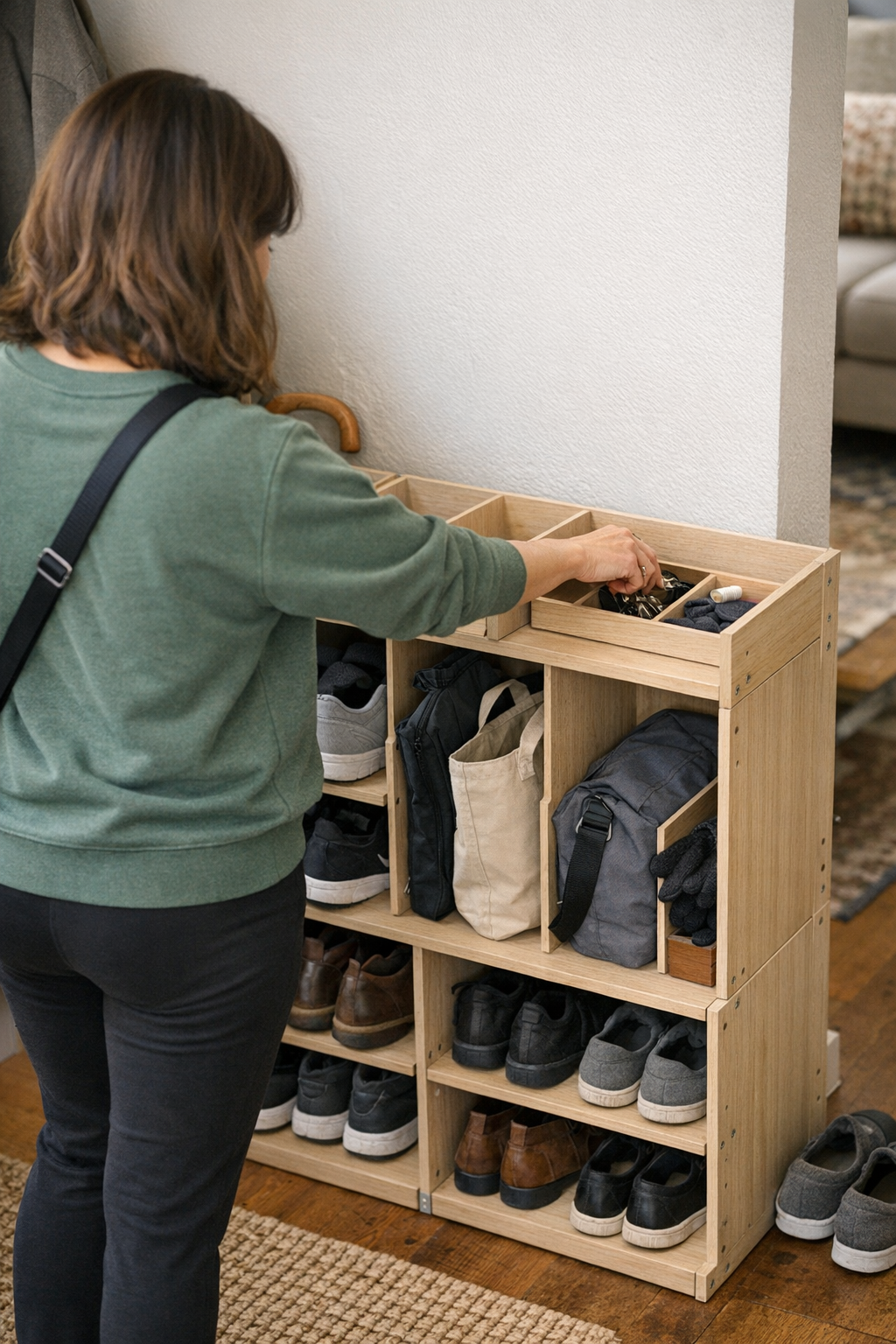
    Insert dividers or trays in your main storage, and the effect is immediate. Shoes slide into lanes—so the row you start with on Monday still stands by Friday. Bags stack upright instead of drifting sideways. A shallow tray collects keys and gloves before they vanish into the churn. Now, when two people come home at once, each can open the cabinet, drop their gear, and move on—without shoving someone else’s pile aside or blocking the path.

    The change isn’t just neater rows; it’s less collision, less searching, and a real drop in return friction. In the rush of morning exits and after school re-entries, dividers keep one pair of shoes from smothering another, shields essentials from bag spillover, and makes anything out of place instantly obvious. “Category creep” slows. Resetting takes seconds, not minutes—or worse, silent frustration as you step around the pile waiting for ‘later’ that never comes.

    Reset Speed and Routine Pressure

    Here’s how you know when open storage is failing: Sunday setup looks great, but by Thursday, you’re fishing for gloves under coats, and the last clean shoe slot has filled with odds and ends. Rushed mornings expose every weakness. A bench without clear lanes becomes a catch-basin. The overflow migrates to the walkway, crowding whoever arrives next. If one reset turns into heavy shuffling and awkward pass-throughs, the cost is bigger than clutter—it’s one more source of daily stress at the threshold where your routine is most fragile.

    Dividers quietly block that breakdown. As volume rises, separation holds: shoes stay paired, bags don’t topple, and a low tray means keys are actually visible before you bolt. Instead of repeating the same ten-minute hunt, you see exactly what’s missing, move what you need, and get out. In transition zones, speed and clarity aren’t luxuries—they’re the line between flowing through and tripping up.

    What Setup Drift Feels Like in Real Life

    Most real entryways are narrow—sometimes just a small bench or low wall cabinet forced to absorb gear for the whole household. That’s where “drift” happens: drop a bag, and shoes scatter sideways; sit to tie laces, and the bench picks up a bottle or errant mail; any new arrival tips the nearest item into the main route through. Overflow isn’t a surprise—it’s inevitable when the only structure is a big, blank container.

    • The bag placed too close to the edge now blocks half the pass-through the next day.
    • Shoes that started lined up against the cabinet end up twisted or shoved into a tangle by midweek.
    • An umbrella wedged in once becomes a permanent obstacle, chewing up foot space and cramping the threshold every morning.

    Visual “order” is a false comfort. More space gives room to hide drift, but the routine keeps breaking: too many things stacked, too few boundaries, too much silent buildup until the zone clogs and movement stalls. That’s the real-world cost—flow interrupted, not just clutter visible.

    Structural Boundaries Over Storage Size

    Equating more storage with smoother routines is a classic mistake. In practice, the bigger the cabinet without structure, the more effort it takes to reach what you need. By Thursday, what looked like generous capacity is now a hard-to-manage obstacle course. When every use demands pulling items out to find what’s buried, the “extra space” just adds steps to your reset burden.

    Divided storage flips this logic. A three-lane divider or segmented tray uses less total volume, but delivers more order: shoes stay paired and visible, bags stand up rather than drift, essentials stay corralled. Instead of guessing what’s behind the pile, you get a predictable routine: put away, retrieve, move through. For shared entryways, the clarity matters—no silent resentment, no repeated moves to reach your own stuff, no more morning pileups because someone else “reset” the space to fit their bags, not yours.

    Keeping Order with Tight Entryways and Mixed Routines

    Entryway setups aren’t static: guests show up, new sports or school gear arrives, and the lineup of must-haves keeps shifting by season. If you keep stepping into a bottleneck—standing on one foot in a tight entry, elbow-deep in a pile that’s drifted across the zone—it’s not just clutter. You’re missing friction-fighting boundaries that reset themselves, even when real life pushes the layout off-script.

    Dividers and tray inserts adapt to almost any structure—wall-mounted cabinets, low benches, narrow shelves. In these tight spots, they block pileup drift: shoes can’t sprawl, bags find a set lane, and small essentials are less likely to feel “lost in the big zone.” Even on a slim shelf, a divided tray keeps keys and passes from sliding under the day’s outerwear or landing at the back where nobody looks until next week.

    One Small Real-World Tip

    Designate a divider slot or tray as a “re-entry” zone—a pocket that always catches quick returns, mail, or essential keys as soon as you walk in. This one small habit keeps return flow smoother, making resets less of a chore and reducing that silent spread where temporary placement becomes tomorrow’s new pile.

    The Real Win: A Transition Zone That Works, Not Just Stores

    Choosing dividers over wide-open storage isn’t about capacity—it’s about building invisible boundaries that match actual routines, so daily mess doesn’t quietly rebuild right after every reset. A slim bench or structured cabinet keeps categories in-check and mistakes visible, not buried. In homes where paths are tight and overlap is constant, structure makes the difference: less blocked movement, faster resets, a launchpad entryway rather than an obstacle zone. The real transformation is visible not in how things look once, but in how quickly the zone comes back to order with every return and departure.

    Betweenry: http://www.betweenry.myshopify.com
  • Why Drawers Outperform Baskets in Everyday Noise and Clutter Control

    The tell: baskets versus drawers isn’t a months-down-the-line difference—it starts showing up within days of real use. Scan a hallway nook or a bedroom wall stacked with matching open baskets, and you’ll see clean lines and clear intentions. But wait until the weekday routine sets in, and that new order crumbles faster than you expect. Each rush-hour grab sends a basket scraping, tilting, or shifting; contents spill or mix; and shelf space that looked organized last weekend now breeds small, constant interruptions. Retrieval isn’t grab-and-go—it’s reach, knock, jostle, and then a reshuffle. In contrast, closed drawers—often overlooked in favor of “easy access”—stand up to repeated friction, containing chaos and absorbing movement you barely notice until you’ve switched over.

    When Organized Looks Don’t Hold Up in Real Use

    Open baskets seem to offer clarity: you can spot what you need in an instant, with no barriers to reach. But easy visibility doesn’t survive real-life habits. Grab your charger or a towel; cables tangle, bottles tip, and items shift out of place. The shelf amplifies every nudge, and pretty soon you’re re-lining baskets as the system falls apart. In shared or high-traffic zones—a family entry, hallway drop-spot, or linen closet—these breakdowns repeat with every interruption. What started as a sorted, open setup now demands daily adjustment just to keep up with basics.

    The central pain isn’t just noise. It’s the constant drag on your routine. Baskets drift or wedge, and small items sneak behind them or migrate between zones. Each pass means a micro-reset: pause to move a basket, dig for a missing item, or re-sort categories merging at the edges. After just a few days, the reset work isn’t background tidying—it’s a friction that compounds until you start questioning the system’s usefulness.

    The Work of Living with Baskets: Small Frictions Add Up

    After three or four regular uses, baskets stop pretending to be effortless. Hunting for keys, you accidentally shove a bottle into the next bin. Folded washcloths topple over. Category drift sets in: hair ties and coins leak into the cracks, chargers slip behind the row, and soft-sided bins lose any real containment. The area morphs into an overflow zone that looks better in theory than it works under pressure.

    The shelf structure exaggerates this effect. Each set-down creates noise or piles. If children are moving through, or if it’s a tight hallway, stray items build up at the edges and regular overflow forms—new piles inch along the shelves, rarely returning to their original spot unless someone does a full reset. Baskets’ open forms become porous, encouraging new disorder each time the space is touched.

    Overflow Zones: When One Area Keeps Collecting Too Much

    One bin inevitably morphs into a dumping ground: scarves, chargers, “just for now” tools that never leave. Instead of basket flexibility making life easier, it creates the risk of accidental avalanches every time you reach for something else. The lack of a firm closure or limit means each use generates a little more mess, and the basket edge becomes a magnet for whatever doesn’t fit elsewhere.

    Drawers in Practice: Quieter, Contained, Less Reset Needed

    Drawers change the daily rhythm. Closed sides and smooth runners turn “grab and go” into “slide in, done.” The whole structure absorbs motion. No rattle. No contents leaking into the next zone. Shared areas suddenly hold their order—not because people try harder, but because the system blocks category drift by design. The items you need—chargers, wipes, remotes—get pulled out and thrown back in with minimal disruption. On a rushed morning, you aren’t fixing a pile every five minutes. And the overlooked value: drawers hide visual clutter, stopping a mess from soaking into the rest of the room or hallway. Return flow improves. The surface stays visually calm even if the drawer contents are only roughly squared off.

    Reset becomes nearly invisible: open, use, close. For families or shared apartments, this difference can be the line between a weekly “reckoning” and a setup that just works. You notice it because you don’t notice the system anymore—it simply fades into the background and stops demanding attention.

    Getting Drawer Sizing and Loading Right

    Drawers don’t solve everything if sized badly. Overlarge drawers cause lost-in-the-depths syndrome: small things migrate where you can’t reach them. Drawers that are too shallow jam and can’t take awkward shapes. Balance matters. Fill drawers so contents are visible at a glance— not stacked to the brim, but not so empty you waste space. Use trays or dividers for micro-items that might get lost (cables, toiletries, adapters). Even at half capacity, a properly loaded drawer stays stable and neat, sparing you the daily work baskets make inevitable.

    Scenes from Real Life: Hearing—and Seeing—the Difference

    Visualize a bathroom corner setup: baskets above for spare towels, drawers below for the daily-use odds and ends. Morning rush: someone tugs a basket; you hear the scrape and watch as a conditioner bottle rolls to the back. Later, the drawer opens—its motion almost silent—everything still in place, and nothing has slipped out of zone. Try moving your most-used items into a drawer for a week. You’ll see fewer things sliding out of position, and the routine “hunt for the missing charger” vanishes. Returning things becomes automatic—even for others in the house—because the contained space signals where things belong, not just where they looked tidy at first setup.

    Why Baskets Keep Falling Short Once Routines Kick In

    The openness of baskets—the very thing that sells them on day one—works against you after repeat use. Each careless grab, quick drop, or side swipe multiplies disorder: baskets slide back, wedge themselves off-center, and even the best-labeled rows collect stray belongings in the cracks and corners. Instead of maintaining their “system,” baskets quietly increase the daily maintenance load.

    The proof is in your patterns: if you’re straightening up most days, shifting bins forward, rebuilding lines that collapsed, or re-sorting what should have been self-explanatory zones, the initial gain has failed the ongoing test. Nothing dramatic—just a slow drain on your time and routine, especially when more than one person uses the same spot and nobody wants to be the reset hero.

    Practical Tips for Smoother Storage Flow

    • If using baskets: Add non-slip liners or felt to kill the scrape, keep categories tight with simple dividers, and fight the urge to overstuff. Anything spilling over the edge is a future reset task in waiting.
    • For drawer setup: Match drawer size to real daily items—not backup extras. Shallow trays help for small, loose essentials. Resist turning deep drawers into black holes: subdivide if needed and keep the most-used things accessible, not buried.
    • Keep the footprint clear: In narrow spaces where every inch counts, replacing wide shelves and floor-standing baskets with slim drawer units or a tall, stackable cabinet can open up the path and block spillover zones forming at ground level. Watch for how much the area actually holds up between resets, not just what fits inside on day one.

    The Bottom Line: Look Past First Impressions

    The basket-versus-drawer decision is less about the fresh-sorted surface and more about what stays functional through repeated use. Drawers don’t just store, they stabilize. They make organization less dependent on your attention, cut noise, tame overflow, and leave shared or high-traffic spaces with less friction day after day. Baskets sell their flexibility, but the price is constant micro-maintenance. When real life returns to the storage zone for the third, fifth, or tenth time, drawers show their steady advantage—calmer routines, clearer return flow, and less clutter pretending to be order.

    Explore Gridry’s solutions for calmer, more usable inside storage.

  • How Smart Yard Storage Designs Keep Outdoor Spaces Clear and Functional

    Recognize the Pattern: When “Organized” Stops Working

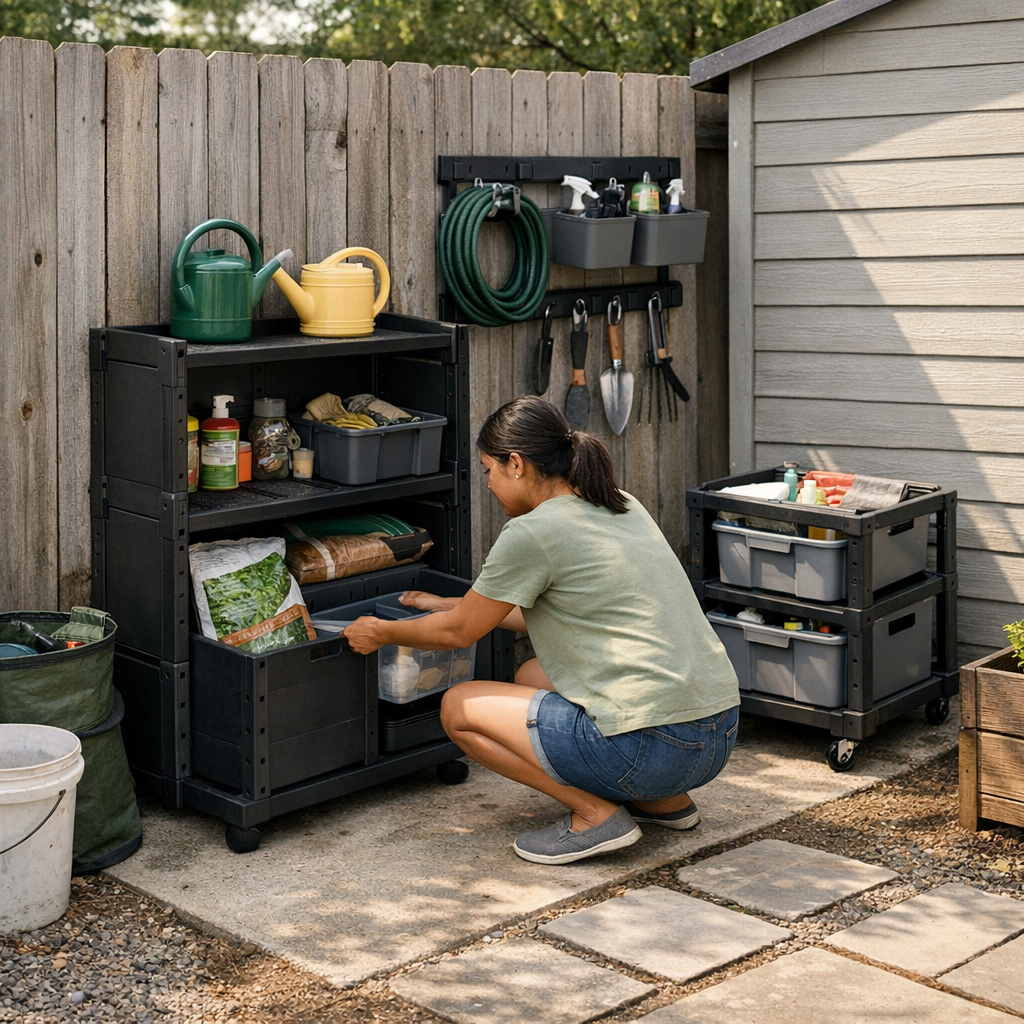
    Everyone knows the cycle. You tear through a Saturday morning, hauling bins out of the side yard, lining them in a parade against the fence, hooks loaded with tools, deck boxes shut tight. By Sunday, the path from the gate to the garage looks almost surgical—clear, controlled, even a little smug. But by midweek, it slips. A muddy soccer ball blocks the gate. A handled shovel slides underfoot just as you’re carrying groceries in. Someone’s bike—half in, half out—turns your side yard into a maze. Suddenly, you’re tiptoeing over clutter to reach anything, burning minutes resetting before any real yardwork can even start.

    The wall you hit isn’t a lack of storage. It’s friction—the everyday gap between how you think the setup should work and how your family, your routines, and the weather actually use it, over and over.

    Where the Setup Starts Breaking Down

    It’s easy to blame “not enough storage” when the walkways get blocked or gear piles up, but real-life bottlenecks almost always come from setups that miss the way things move. The first few days after re-organizing are deceptively hopeful. By Thursday, the narrow path from garage to patio is rubbing elbows with a parked wheelbarrow, a rake slipping out of a loose rack, bins waiting for trash day, and a mess of shoes kicked off at the back door. Setup that looked clean on Saturday now pushes you to detour, step over, or just drop things anywhere they fit. Small frictions—an extra minute here, a clumsy shuffle there—are the early warning flags that your system is quietly falling apart.

    “Tidy” Storage That Still Blocks Your Routine

    Corner sheds, deck boxes, wall racks—these look sharp right after installation. Their surfaces are smooth, the floor is clear, and every tool has a slot. But in reality, that order rarely survives a real week. Here’s how it unravels:

    • The deck box is jammed shut with a bike collection crowding its lid—so skipping gloves becomes normal.
    • Wall racks mounted far from your natural path leave you or the kids dropping tools at the nearest patch of floor—they’ll get put back “later.”
    • Modular panels divide the wall, but the empty space beneath always attracts plastic bats, yard shoes, or whatever needs a temporary home. That “temporary” bubble never bursts.

    What looks like neat storage on paper or in photos quickly becomes a magnet for drop-offs and dead ends. The tools aren’t “out of place”—they’re simply escaping setups that interrupt the real routes you take.

    The Draining Cost of Repeated Reset

    Every touch builds up: sliding a mop just to reach the recycling bin, moving the compost bucket to get the extension cord, unstacking muddy boots that landed in the path. The friction adds hidden effort to every outside task. When your storage interrupts your access—even by half a meter—the reset job never ends. Friday’s “quick tidy” becomes a full afternoon scramble. And the more these micro-blockages layer up, the easier it is to say, “I’ll deal with it later,” while clutter gains permanent status in the zone meant to contain it.

    Narrow Zone, Real Trouble: Side Yard Bottleneck

    Picture that skinny gap from the back door to the trash bins—a classic side yard where every inch counts. You begin with a wall of hooks and a deck box. Four days later, here’s what creeps in:

    • A long-handled broom totters, nudging the kid’s scooter almost into the path.
    • Leftover hose, forgotten boots, and project scraps tighten the already-narrow route.
    • Wet weather? Shoes, bags, and tools land wherever there’s dry concrete. Nobody wants to play storage Tetris—so nothing really moves back.

    No single block is dramatic. But repeat the scramble, and suddenly the “organized” area becomes an obstacle course where every return or retrieval is a nuisance. Overflow starts to build its own gravity: the same corner collects soccer balls and gloves, week after week. Zones that looked efficient turn into daily bottlenecks.

    Return Flow: The Real Test of Organization

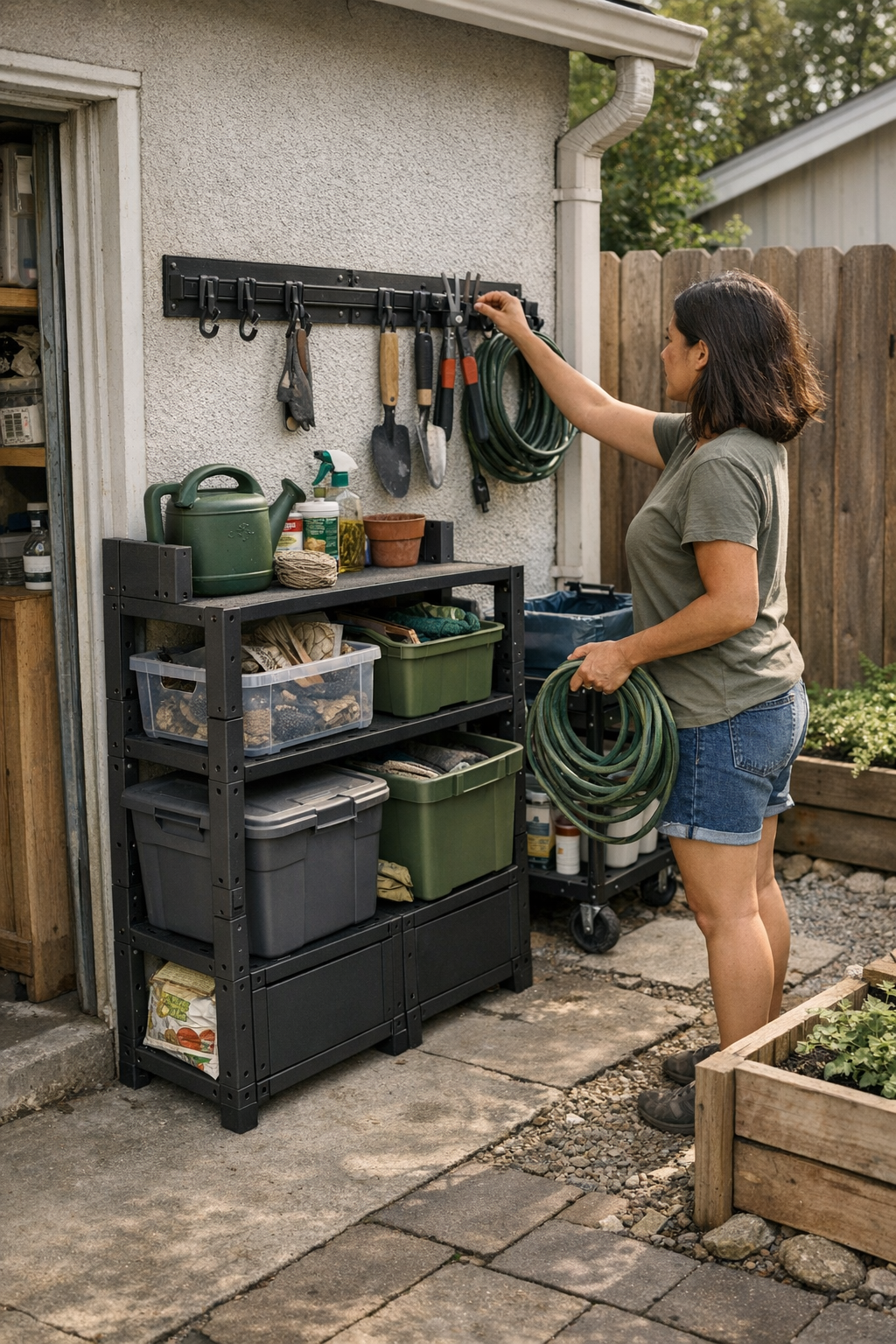
    The difference between setups that last and setups that fail is simple: how easily things return to their spots in real time. Instead of forcing everything by type, try shaping zones along the paths you actually walk and reach. Hang shears or a hose by the gate—not on a panel behind a locked bin. Overflow bins? Place them further from essential footpaths, so they absorb seasonal gear without swallowing daily tools.

    Leave the runway clear: Keep at least a stride’s width—about 90 cm—free of stuff in front of all key storage. This space isn’t extra; it’s vital. It means you’re never shifting bikes just to open a box or tripping over boots on the way to the compost. When the main routes stay open, clutter has nowhere to sneak in and resets shrink to seconds.

    Zones That Survive the Real Test: Repeated Use

    The sharpest setups carve out visible, functional boundaries. Wall racks shouldn’t just fill space—they should live directly on your everyday path, right where your hand naturally reaches mid-task. Movable bins or lidded baskets catch overflow but don’t live in the line of fire. If a routine task means stepping around or shifting anything, that’s a setup signal—a pause to rethink rather than accept another week of friction.

    When “clear path” and “storage” are unmistakable, even after a stormy weekend or a burst of backyard games, it’s obvious: resets are quicker, no one defaults to “just drop this here,” and storage performs instead of getting in the way.

    How to Spot Weak Points Before They Swallow Your Space

    Warning signs are easy to miss until they multiply:

    • Midweek, you’re always reshuffling—to make something fit, to reach a hidden rake—though you “should have enough room.”
    • That strip under the wall rack? It’s a magnet for buckets, shoes, or garden toys that never move back.
    • The same dead corner attracts clutter no matter how often you clear it.
    • Your main route gets pinched, forcing odd detours, especially in rain—now items are not only in the way, but sometimes outright dangerous.

    If you’re working to stay ahead of the mess instead of casually maintaining, it’s a sign: your setup doesn’t match your movement. Real organization isn’t static; it lowers maintenance, not just on day one, but every time you pass through.

    Real Tweaks, Lasting Impact

    What works aren’t wholesale overhauls, but small, targeted changes:

    • Mount racks only where you actually reach for items—not to fill an empty panel.
    • Guard floor space: footpaths aren’t storage. Zone them, protect them, clear them after each use cycle.
    • Give overflow purpose-built homes—flexible bins, movable baskets—so quick dumps don’t become permanent piles.

    The test? Return to your setup after three or four normal weeks. Where does the friction collect? What stalls a quick reset? Better to adjust zone layouts and access points while the pattern is still fresh—waiting turns an inconvenience into a fixture. The setups you want to keep are the ones that are hardest to derail, not just the ones that look best on a clean day.

    The setups that survive aren’t the bulkiest—they’re the ones that keep up with the real, repeated moves of people, tools, and everyday outdoor life. When storage works around your actual rhythm, yardwork stops being a series of resets and finally becomes routine.

    Find practical outdoor organization setups and real-use solutions at TidyYard.

  • How Structured Underbed Storage Bags Simplify Seasonal Bedding and Coat Organization

    Underbed storage promises a clean floor and closed closet doors, but in real bedrooms, its flaws show up fast. Push a soft storage bag under the bed and the chaos is only hidden—until the first time you need a blanket on a cold morning, or try to return a comforter in a rush. Suddenly, that tidy look collapses: categories mix, bags sag, and finding a single item means dragging out a limp sack packed with the wrong things. The difference between “looks organized” and “actually works” isn’t obvious at first—it’s the slow build-up of hassles with every reset.

    Where Hidden Storage Helps—and Where the Trouble Starts

    In cramped bedrooms, parking off-season layers and extra bedding under the bed isn’t optional; it’s survival. Soft underbed bags tempt with quick results: cram, zip, slide, done. For a week, maybe two, the floor stays clear. But friction builds fast. Once bags lose their crisp shape, edges slump, and categories leak together, the setup starts working against you. What was “winter coats only” is soon a dumping ground for hats, towels, and last-minute overflow. The bag jams against the bedframe. Retrieval becomes a knuckle-scraping, two-handed struggle—and the neat system breaks on the first rushed morning.

    The Real-world Test: Repeated Use, Not Just First Impressions

    First impressions are worthless in storage. It’s month three—short on time, long on mess—when the system is truly tested. Unsupported bags sag and lose their grip, so pulling one out means wrenching at misshapen corners that snag the carpet. Inside, any original “bedding only” zoning fades as the bag turns into a stew of last winter’s coats, summer blankets, and whatever else fit in the last reset. Need a single comforter? You’ll pull out half the contents, wreck the folds, and likely shove it all back even messier. The ease of day one is replaced by sluggish access and a muddled mental map of what lives where. Clutter piles just out of sight—until the next time you’re forced to dig for something specific and the whole zone falls apart again.

    • Bags deform and collapse, making them hard to drag or slide without scraping your hands.
    • Contents drift—your “one job” bag now leaks categories, and the old order dissolves.
    • Retrieval of a single item disrupts everything, forcing repeated reshuffling and slower resets with every use.

    Why Bag Structure and Category Rules Matter

    Category drift is the hidden saboteur of underbed storage. Overloaded or structureless bags flatten out and swallow boundaries. A container that started neat soon melts into a limp pile, grabbing at the floor, dragging in random items with each return. Heavier bedding crushes lighter jackets, and seasonal clothes come back wrinkled or even unwearable. The pain point isn’t just visual—it’s the creeping routine delay, the forced half-minute kneel to fix a mess that used to be stored “out of sight, out of mind.”

    Each retrieval isn’t a clean slide—it’s an awkward dig, an extra shuffle, or a full reset nobody has time for. Purpose and shape disappear, and with them, the speed and clarity that make the zone usable in the first place.

    A More Workable Pattern: Moderate-Sized, Defined Bags

    The shift happens with structure. Bags with built-in support, inserted trays, or crisp sides hold their edges and defend their zones. “Blanket only” actually means “blanket only.” A category stays obvious. Slide out, grab, return—without the scramble. Instead of dumping out three things to rescue one, you take just what you need in seconds and slide everything back into place without a hitch. The underbed setup graduates from hidden dumping ground to a reliable part of the routine—fast in, fast out, minimal collateral mess.

    Everyday Scenes: The Hidden Costs of Oversized Bags

    Supersized bags look like space-savers, but in small rooms, they’re a trap. Cram too many mixed items into one big, soft sack, and you’re punished every time you reach under the bed. Awkward lumps bulge against the bedframe and block the way out. Returning items means wrestling slack corners and heavy, sagging contents—often dragging the rest of the load with you. Instead of a streamlined storage zone, the whole underbed area feels slow, heavy, and unwelcoming. Routines break down as overflow blurs categories and nobody remembers which bag holds what, or even bothers sorting at all. What you gain in raw capacity, you lose in everyday usability and speed.

    Making the Underbed Zone Work: Practical Adjustments

    The easiest win is focus: assign each bag to a single purpose and stick to it. Comforters here—never coats. Segmentation matters more than the bag itself. Inserting a shallow tray or using a box under the bag creates boundaries and prevents corners from collapsing. With clear purpose and shape, items stay found, resets move quicker, and the daily drag fades. Slide out, grab, slide back; minimal reshuffling and less chance of the zone devolving into mystery storage. The difference isn’t the initial look, but how the setup still works after a month of school runs or late-night laundry returns.

    Two Small Tips from Repeated Use

    • Place a shallow tray or rigid box under every soft bag. This anchors edges, keeps categories distinct, and prevents bags from spreading or folding in on themselves with use.
    • Never mix jobs or overload a bag “just this once.” What starts as a shortcut ends up fueling runaway mess and lost time; keep lines sharp for less wrangling later.

    Signs of a Setup That’s Actually Working

    The test isn’t on a clean-up day—it’s in the friction-free weekday rush. When the system works, you forget it’s there: no bag corners poking out, no slow, awkward pulls, no guessing where the spare pillowcase went. Underbed zones that stay defined support routines instead of slowing them down. Even at the end of a long week, the same bag for the same job can be opened and closed without spilling its contents or shifting other categories off balance. The space doesn’t just appear tidy; it actually stays usable—even under pressure.

    In the end, real underbed storage isn’t about maximizing volume or hiding mess, but about setting—and keeping—boundaries. The reward for structure and discipline isn’t a pretty photo; it’s not wasting five minutes wrestling with last season’s jackets when all you need is a blanket. That’s the difference between hidden clutter and a storage solution that holds up not just on move-in day, but through every cycle of use.

    Visit Gridry for practical storage solutions.

  • Why Sealed Bins Are Essential for Powder Storage in Busy Entryways

    Entryways and drop zones seem built for order, but in real life, they’re friction points waiting to happen. You start with good intent—bins for supplies, a designated shoe spot, a ledge for bags—but the system breaks within days. Shoes sprawl past their row. Bags eat up bench space or block the path. And the “organized” supplies? In daily use, open bins turn into leak zones: cleaning powders coat shelf edges, grit forms a band under the bench, and stray messes accumulate in seams you barely notice at first. It’s only after daily routines—bags dropped, shoes kicked off, hands reaching for powder in a rush—that the whole setup reveals itself: more hassle to reset, more messes to track, less actual order than you started with.

    When Open Bins Turn Convenience Into Mess

    Open bins tempt you with instant access. No lids, no pause—just grab the nearest supply and move on. But threshold spaces don’t stay still. People rush through, supplies shift, and the pressure multiplies:

    • Shoe cleaner gets grabbed mid-sprint, bin left skewed for the next person.
    • Bags tossed in a hurry clip shelves; a container teeters and tip spills over the edge.
    • Moisture from wet gear seeps into powder containers, and the contents clump or fuse into sticky corners.

    The first spill is small—a quick puff of white powder as someone misjudges the reach. By week’s end, residue tracks along baseboards, and powder is worked deep into seams. The ease of open access quietly costs you time. Each micro-spill or stickiness pushes the whole threshold toward a cycle: fix the mess or ignore it and let it multiply. Either way, fast access becomes endless aftercare.

    Shared Spaces Multiply the Problem

    Few entryways serve just one person. Most are collision points for shoes, bags, and shared supplies. Every extra user increases the chances of containers getting left ajar, bins shoved out of line, and powder escaping where it shouldn’t. Open bins in this setting don’t just save seconds—they fuel disorder: powders migrate under benches, wedge into corners, and soak up stray humidity. Cleanup escalates with every damp footprint and shaken bag. The price of that easy grab isn’t visible on day one; it’s the slow grind of reset routines doubling, as every pass-through wears the storage down a notch further.

    Real Life in a Crowded Entryway

    Picture a slim threshold on a rainy morning. You crouch to tie shoes; the bench is half-covered with bins. A powder tin tips and creates a faint dust trail across tiles. Next, wet bags arrive, mixing mud with whatever powder escaped yesterday. Within three days, the bench legs are gummy, shelf corners are rough, and the supposed “quick-clean” area is now stuck in cleanup mode. Wall shelves and vertical units help, but when bins are left open, powdery supplies jump zones—coating ledges, drifting to the floor, drifting through routines, and quietly raising the daily reset load.

    Sealed Bins: Containment Over Convenience

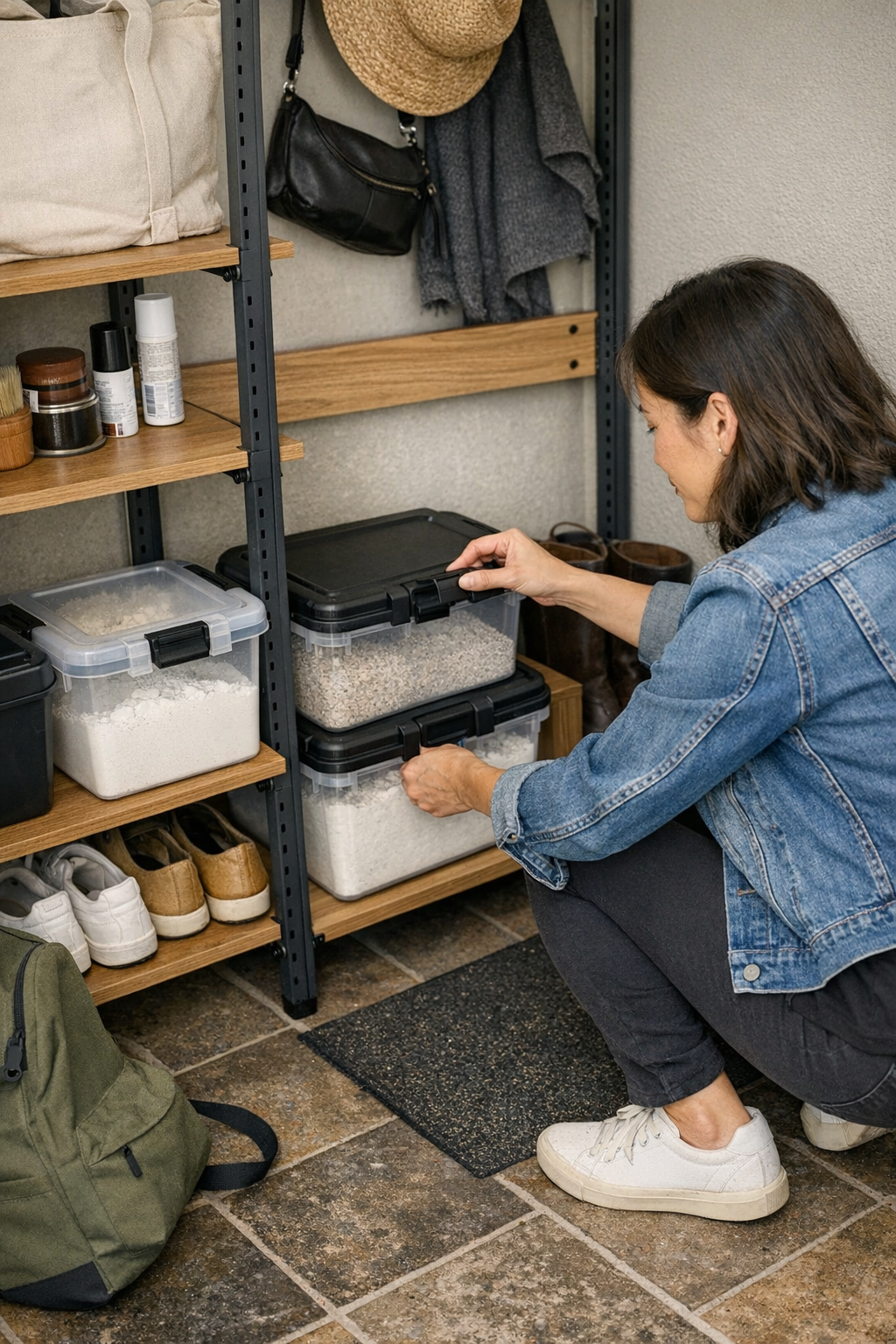
    The real fix is sealed bins—solid walls and latching lids that stop migration cold. It isn’t about making routines perfect. A latch means one more second per use, but delivers hours back in reduced cleanup and replacement. The practical difference stands out the first week if you match the bin size to your shelf or bench:

    • Powders stay dry, shielded from every damp bag and weather-soaked shoe.
    • Latching lids absorb stray bumps and seal against humidity, even in crowded entryways.
    • No crust of residue under the bench, no powder bands along the wall—just a reset that’s fast and actually finishable.

    You’ll still get minor setbacks—supplies get left behind, a bin goes unlatched now and then—but sealed containment keeps the mess from leaking into the rest of the zone. Instead of fighting slow-spreading grit, you refill supplies when they run out, not every time the weather shifts. The result: transition spaces buffer mess rather than spread it.

    Cleaner Resets, Faster Movement

    After switching to sealed storage, many notice their reset load drops. Wiping down corners becomes rare, sticky powder patches barely appear, and shoe dust stays inside bins instead of creeping out. Bags get tossed down without triggering a supply avalanche, and rows of shoes can be managed even in tight entryways without the overflow of last week’s mess. The setup stops slowing you down—its order actually matches its intent, hour after hour.

    Why Minimal-Look Setups Break Down

    A setup that wins on Instagram rarely survives the pressure of real re-entry: open baskets, exposed containers, “everything visible” systems. The weak point isn’t obvious at first. It shows in:

    • Trailing powder leaks no one notices until they’re embedded in seams.
    • Supplies clumping or fusing after a single rainy commute.
    • Surface order that crumbles by midweek as layers of small tasks resurface.
    • Pass-throughs slowed by a path jammed with overflow and drifted supplies.

    And it’s not just shoe powder. Any granular, spill-prone supply—de-icer, sand, shoe freshener—escapes containment in an open system. Every “quick trip” amplifies the breakdown, as small resets become routine interruptions.

    Practical Tips for Reliable Entryway Storage

    • Pick bins to fit your flow: Sealed, slim bins tall enough for powders but narrow enough to avoid crowding the bench or blocking the path.
    • Label clearly: In a shared space, clear category labels head off the “open every bin” search and keep the system sealed.
    • Catch tray below: A shallow, wipe-clean tray beneath bins catches the spills that do happen—reset is a five-second dump, not a deep clean.
    • Weekly check-in: Inspect for stickiness, clumping, or powder outside the bin. If the zone seems messier each day, audit for missed bin closures or misfits in your setup. Ongoing drift means it’s time to adjust.

    Turning Setup Into Stability

    Switching to sealed bins may not feel dramatic, but it draws a hard line between “looks organized” and “actually works.” Surfaces remain clear for days, not hours. Supplies feel ready instead of requiring a pre-clean. The real gain is routine reliability: entry energies can stay on movement, not recovery. Less powder creeps out, less dust settles in seams, and the area remains a passage—not a project.

    When entryway resets go from daily drama to a monthly habit—and your supplies stay dry through the worst storms—the space finally matches how it’s actually used. There’s a clear difference between a setup that performs for a photo and one that holds together every day, at every pass-through, for every person who moves through it.

    See more transition-space storage solutions at Betweenry.

  • Small Adjustments in Outdoor Storage That Transform Usability and Flow

    Every backyard storage setup looks polished for the first two weeks—until real routines start grinding it down. You place a bench under the window, squeeze a deck box along the fence, and swear you have it all covered. Then the rhythm of actual life hits. Suddenly, that smart setup slows you down: you wrestle a lid one-handed, muddy tools dangle off open bins, and every return trip becomes a test of how many things you can juggle or sidestep before quitting and stacking gear wherever there’s space left.

    When Small Storage Decisions Cause Big Hassles

    It always starts with innocent choices—a box pressed just a foot too close to the path, a toolkit wedged into a corner, a wall rack mounted slightly out of reach. Every slightly-off placement quietly adds steps to the routine. After mowing, you juggle a trimmer and have to clear a shovel just to latch the deck box. Or you wheel a bag of soil around bins that have drifted until every errand doubles back on itself. These setups don’t implode. They just keep nudging you off course, again and again.

    What Looks Good Isn’t Always What Works

    The easy answer is to bring in more containers, tighter bins, sleeker wall rails. The real world is less forgiving. On day one, those wall cubes line up neatly and every hook has a purpose. By week three, you’re inching around a bracket to reach a rake, or peeling a tarp back to grab clippers and finding the garden fork now blocks the path. The minute a layout gets in the way of returning something, the frustration shows up in every corner—walkways shrink, bins overflow, cleanup stretches from two minutes to ten.

    A Scene You Already Know: Order Collapses in a Weekend

    Say you’ve lined up four storage cubes along the garage and hung tools on the fence. Looks sharp. But rain hits, and now boots pile near the wall, bags lean across bins, and the only open path gets pinched by a box lid that refuses to close. Each step means nudging bins or stepping into mud. The next day, nobody bothers with the cubes—instead, tools land in the nearest dry spot. The system hasn’t failed loudly, but it’s already fallen apart.

    Invisible Costs: Fatigue in Every Blocked Route

    The real problem isn’t what you see—it’s the slowdowns you can’t ignore. That rack mounted barely out of reach makes every shovel return a pain. Floor cubes that crowd the main lane mean you’re always sidestepping or squeezing past, especially after a rainy project. Return one bulky item and you need to rearrange three others before you’re done; by the time you finish, a simple reset feels like a second job.

    This kind of friction turns the whole setup heavy. Gear starts to “temporarily” pile up outside its intended home. Suddenly, the area feels smaller, less usable, and every organized zone blurs around the edges.

    How Fast “It’s Good Enough” Stops Working

    Things unravel quickly—one busy weekend, an extra load of tools, or guests in the yard, and storage that “almost works” stops working altogether. When returning anything takes more than a few seconds, it sits out. The overflow creeps back and you find yourself negotiating with the setup rather than moving through it.

    Fixing Friction Means Lightening the Load

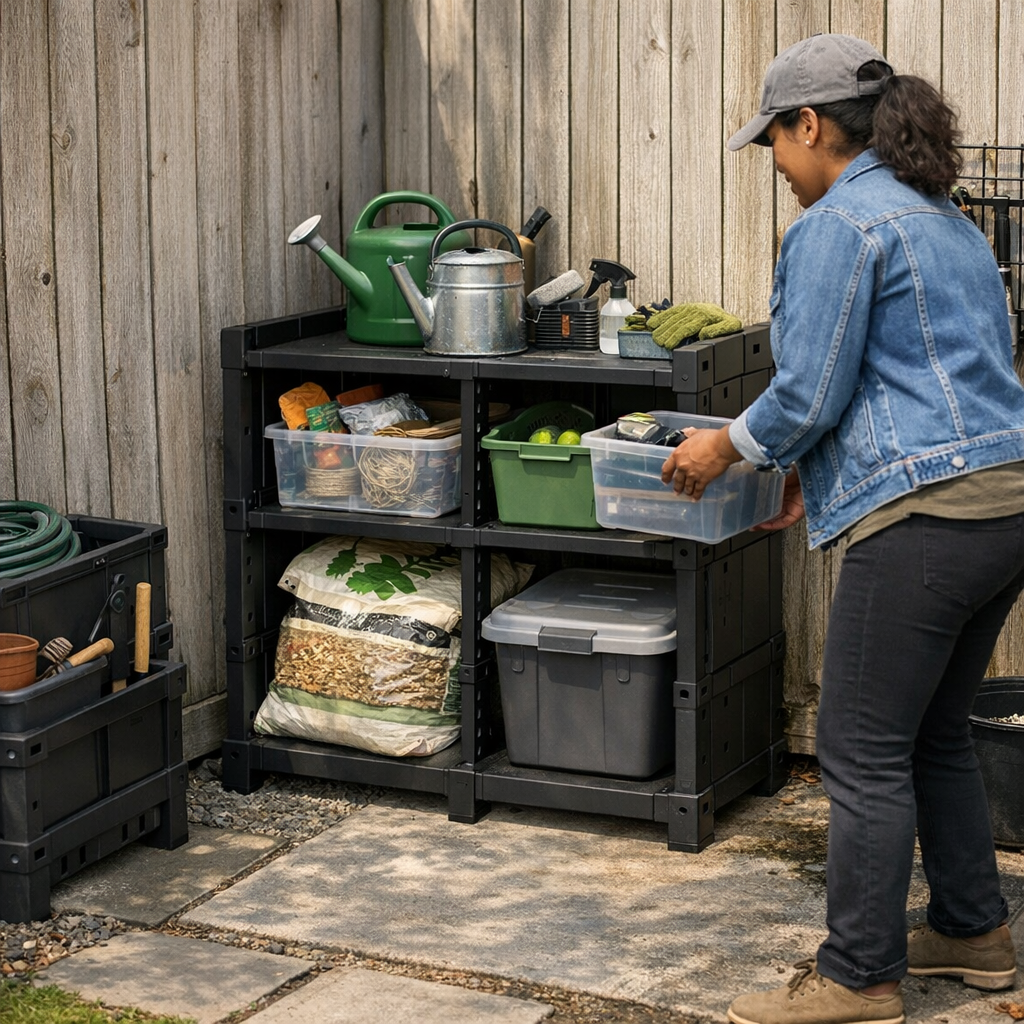
    Most outdoor storage problems aren’t about needing more containers—they’re about needing clear movement and less crowding. Try raising a wall rack five inches, or sliding bins a half-foot off the main walkway. Instantly, that end-of-day cleanup gets smoother. No more ducking under low rakes or banging shins on poorly placed lids. You can stow muddy gear without rerouting around boxes, and the return path stops feeling like a game of Tetris.

    If the daily return means guessing or shuffling gear, the root problem is lack of breathing room—not lack of storage. Even a hand’s width extra makes a difference when you’re carrying yard tools, trying not to trample new grass, or just eager to be done after a muddy job.

    Repeated Use Will Expose Your Setup’s Weak Spots

    Check your routine after a month: Does putting away one tool make it harder to return the next? Are you shifting bins or leaving items on the edge because reaching the main zone is now a hassle? Watch for overflow piling up where the system “almost” works—that’s your signal. The actual limitation isn’t square footage. It’s the hidden work of constant resets.

    Designing for Flow, Not Just a Finished Photo

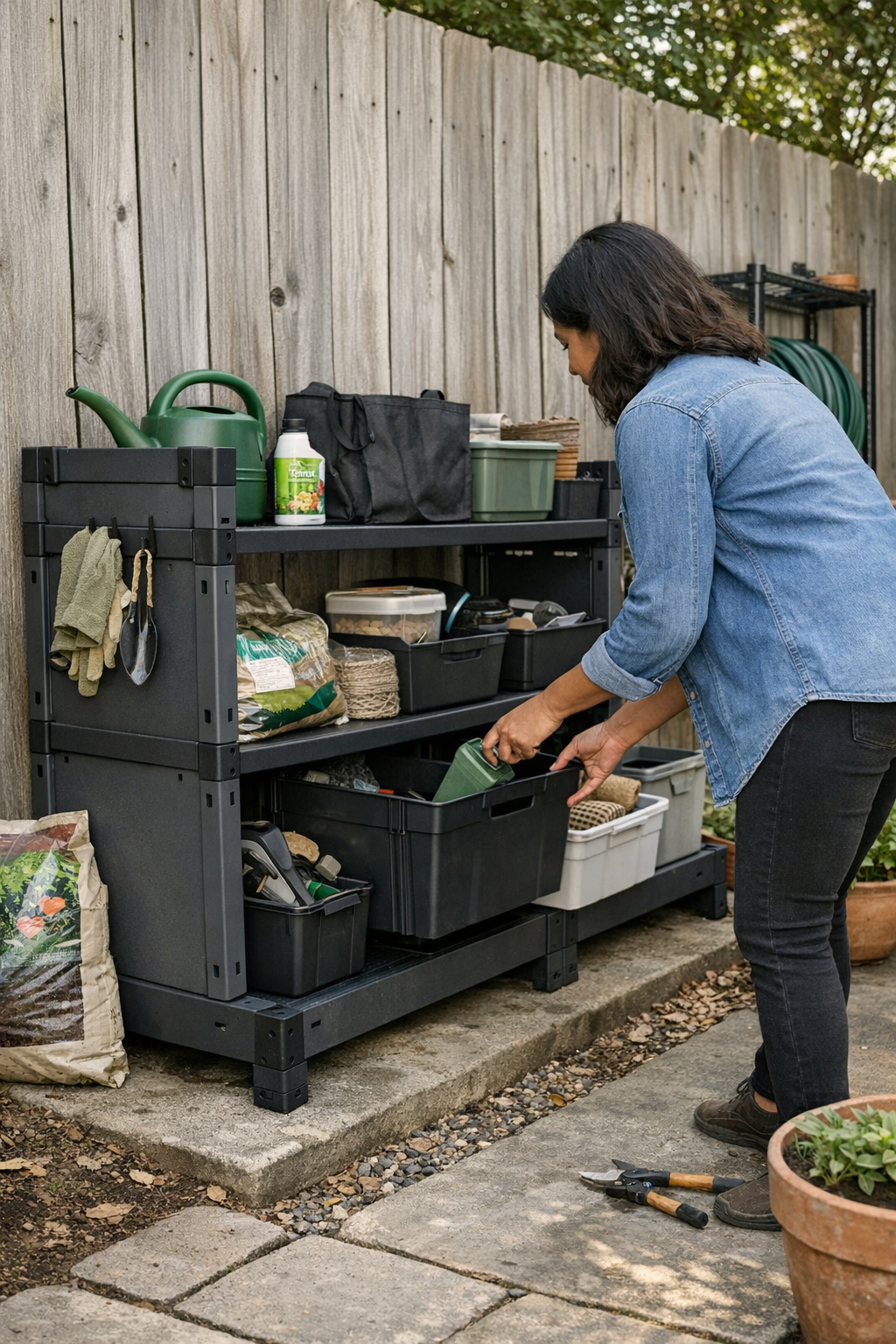
    Start with the footpaths—every zone should have real elbow room, even if storage density drops. Racks belong at arm’s reach (account for gloves and boots), not as an afterthought above head height. Freestanding bins work best when offset from high-traffic paths. Split up zones so it’s obvious where the wet boots or muddy shovel should go, even after a draining day.

    Don’t let awkward corners become overflow traps. If the same dead spot always ends up cluttered, rethink its use—sometimes removing a box or swapping a freestanding chest for a wall bracket is all that stops the mess from coming back.

    What Makes the Difference

    The best outdoor storage doesn’t just hold more—it lets you move without tripping, shifting, or stalling. Most layouts fail in the everyday reset: too much bending, too many sidesteps, too many decisions before you’re even done. If every trip out back adds a reset chore, nothing stays put for long and the “system” becomes just another place to avoid.

    The setups that actually last are the ones that stay easy on the worst days as well as the best. It’s not the number of containers—it’s whether your yard can reset itself at the real pace of your life. Organize for motion, and watch the frustration finally lift.

    Ready for a setup that helps instead of hinders? See what real outdoor organization can look like at TidyYard.

  • Choosing Underbed Rolling Drawers That Keep Guest Linens Organized and Accessible

    An underbed drawer either saves your routine—or adds a new daily hassle you never thought about until the first week. The real struggle isn’t how much you can cram under the bed, but what actually happens each time you pull out those guest sheets or return fresh pillowcases. The first days with a rolling drawer can feel like an upgrade: the floor looks open, the linens are hidden, and everything appears tidy. But the first busy morning or midnight reset reveals the weak spots—jammed wheels on a rug, a drawer that veers off track, or extra effort just to reach the right set. Suddenly, “extra storage” means slow retrieval, blocked access, or a scramble each time you try to keep the bedroom presentable. These small points matter more the longer the setup stays in use, especially in a room that isn’t reimagined often.

    Recognizing the Difference: Looks Sorted vs. Stays Sorted

    It’s easy to mistake a cleared floor for lasting order. The reality sets in fast: what looks organized after move-in day can slip when life happens. Sliding a drawer under the bed might clear a stack of linens from the closet or the corner, but once guest routines start—quick bedding changes, post-visitor resets—the system faces its test. Flaws aren’t theoretical: they show up as you reach twice for the same pillowcase, kneel down to redirect a misaligned drawer, or run late after a supposedly “simple” switch.

    Invisible inefficiencies pile up fast. One drawer tugs sideways? Every access turns into a slow adjustment. Wheels that catch on a rug or a frame rail? Now there’s a two-handed shuffle just to open it, every single time. If one bin swallows everything in a mixed pile, finding what you need at night turns from routine to rummage. The system turns on you not because of storage space, but because of missed friction in daily—or nightly—use. The problem isn’t “volume,” it’s the slow drag of digging for the right item as clutter creeps in again.

    When Practical Details Make or Break the Flow

    How Fit and Movement Affect Everyday Access

    A drawer that fits the space in photos isn’t the same as a drawer that keeps up with repeated access. The differences reveal themselves fast: a poorly aligned unit scrapes the frame with each pull, an over-deep bin becomes a generic pit, and every quick swap ends with socks, towels, or off-season blankets getting mixed up in the guest set. Moments that should take seconds balloon into small obstacles—nothing dramatic, just enough to make staying organized a recurring job instead of an automatic result.

    • Wheels hitting carpet: A subtle jerk on the edge, waking up the household or making you tug back and forth in frustration.
    • One big bin, no boundaries: Sheets and pillowcases tangle; you dig at the bottom, reshuffling everything you just sorted last time.
    • Early overflow: One extra comforter and the logic of the whole drawer collapses—now you’re shuffling contents in multiple zones, not just under the bed.

    The cost shows up in repeated friction. What’s hidden isn’t truly gone—it’s just less clear, harder to keep in order, and slower to retrieve when you actually need it. A system isn’t working if rerouting or reshuffling happens every time you switch a set.

    The Subtle Creep of Hidden Clutter

    The fastest way to lose track of your setup is to let “just for now” items settle in: slippers, laundry waiting for a decision, out-of-season blankets. The underbed zone transforms from a spare sheet hideaway into a slow-motion junk drawer. Once this happens, retrieval becomes a scavenger hunt, slowing down the entire routine. Every guest turnover, you’re reminded that a hidden stash is only organized until daily life fills it with new overflow. Each delayed reset, each accidental mix of old and new linens, makes the next attempt at order slower and less likely to last.

    Why Drawer Structure and Divisions Matter

    Choosing the Right Double-Drawer Setup

    Jumping from one big bin to a pair of dedicated, narrower drawers isn’t about cramming in more—it’s about building real boundaries that keep the system running. Two drawers force clarity. Sheets in one, pillowcases in the other, with less chance to mix or forget what you’ve stored. This split also means you see problems faster: if something’s out of place, it’s obvious. No more fishing around under the bed for a single missing item or sorting through a compressed pile under pressure.

    • Clear division = faster access: Open one, grab what you need, close it—no cross-digging required.
    • Straight sliding: Narrow drawers avoid jams, especially on frames with side rails or uneven flooring. You’re not left wrestling with the whole unit.
    • Category drift is visible: When something winds up in the wrong drawer, you spot it and fix it—mistakes aren’t buried.

    The physical split reduces crawling under the bed or shifting the entire system just to get a pillowcase. In busy homes, or when visitors come and go, smaller, more manageable drawers reset quickly and don’t break down quietly over time. This isn’t a luxury; it’s a way to avoid slow-motion disorder that creeps up over months of “good enough” solutions.

    Small Adjustments: Making the System ‘Stick’

    Guarding Against Storage Creep

    Discipline in underbed zones is simple but relentless: each drawer gets just one category. Even a pair of slippers parked for a single night can signal the beginning of chaos. A fast routine—checking as you restock sheets, clearing stray items at each change—stops clutter before it costs you time later. Deep or over-wide drawers hide the beginning of breakdown, so paying attention to shape and sectioning is insurance, not aesthetic. Anything that can be ignored will be ignored, so keep divisions obvious and resets frequent.

    Thinking Beyond Bags and Baskets

    Fabric bags and bins sell the promise of flexible storage, but in the crunch of repeated use, they collapse or lose shape. Air pockets, crushed edges, and rummage-digs become the norm. Hard-sided rolling drawers don’t require fluffing, digging, or repositioning: you roll them out, grab what you need, and slide them back in a single action—even after the fifth swap in a busy month. Reliability in movement and shape saves time, especially when the drawer is opened far more often than expected.

    One crucial check: If your bed clearance is under 6 inches—including the wheel height—most units will jam or stick, especially over thick rugs, making quick access a struggle every single time. Clearance isn’t an afterthought; it’s a dealbreaker for usability.

    What Happens After the Switch?

    Months after moving to a split, purpose-built underbed drawer set, the difference is in rhythm, not just looks. Sheets and pillowcases actually stay findable—the reset routine shrinks from five minutes to one. Items that drift stand out immediately, making it possible to fix mistakes before they spread. Most telling: you stop bracing for lost time every time you swap linens. The payoff isn’t visual calm after a reset, but sustained, low-friction order in daily use—even when routines change or the room doubles as a storage catchall. Instead of working around your own fixes, the storage finally keeps pace with real life, not just the snapshot ideal.

    Find storage options that fit your space and routine at Gridry.

  • Why Plastic Bins Outperform Cardboard for Durable Entryway Storage

    Cardboard boxes and plastic bins are not interchangeable once your entryway enters real use. Stack a cardboard box under a bench or line a few up along a wall, and they look organized for maybe a day—until the first week of wet shoes, dripping coats, and off-schedule resets. Suddenly the edges of those boxes sag, corners slump, and what started as a tidy drop zone turns into a damp obstacle course. Instead of storing away clutter, you’re now sidestepping a soggy pile and prying stuck boxes off the floor just to keep the path open.

    When Cardboard Boxes Collapse under Repeated Entryway Pressure

    Cardboard seems fine at first—holds shape, fits shelves, takes labels. But entryways are not static rooms: shoes come in muddy, bags drop heavy, and one rainy Saturday is enough to warp what you thought could last a season. By the end of week two, lids don’t close, boxes lean and spread, and one damp base can glue two boxes together. What started as a reset-friendly system now slows you down. The bin meant to collect quick returns blocks the walkway; instead of quick drop-and-go, you’re forced to pause and untangle stuck storage on your way through.

    Every time a cardboard edge curls or a corner gives, movement through the space gets clumsier. Shoes that should stay contained slide out of a sagging box and start a slow creep along the wall. A routine—come in, drop gear, move on—gets punctuated with detours and hands-full recovery runs. The setup looks organized only until the first predictable failure point. After that, your storage becomes an extra obstacle in the threshold instead of keeping the path clear.

    What Entryway Friction Really Looks Like

    • Dropping a wet bag onto a box and feeling the whole stack shift or edges bow, making it harder to use next time.
    • Shoes that start in line, then slowly sprawl as sagging bins can’t hold a shape—turning a tidy row into a constant widening that blocks the bench.
    • Sitting down at the bench and setting something aside, only to realize there’s no clear space because a collapsed bin base has migrated inward.
    • Trying to return one item to its “spot,” but now that bin is half-folded, soggy, or fused to its neighbor, slowing access and pushing everything outward.

    Each of these failures doesn’t just make things look messier—they add seconds and slowdowns to every pass. Resets become rescue operations. Instead of supporting your routine, cardboard ends up giving you more work with every rainstorm or rushed morning.

    Plastic Bins: Rigid Boundaries and Reliable Flow

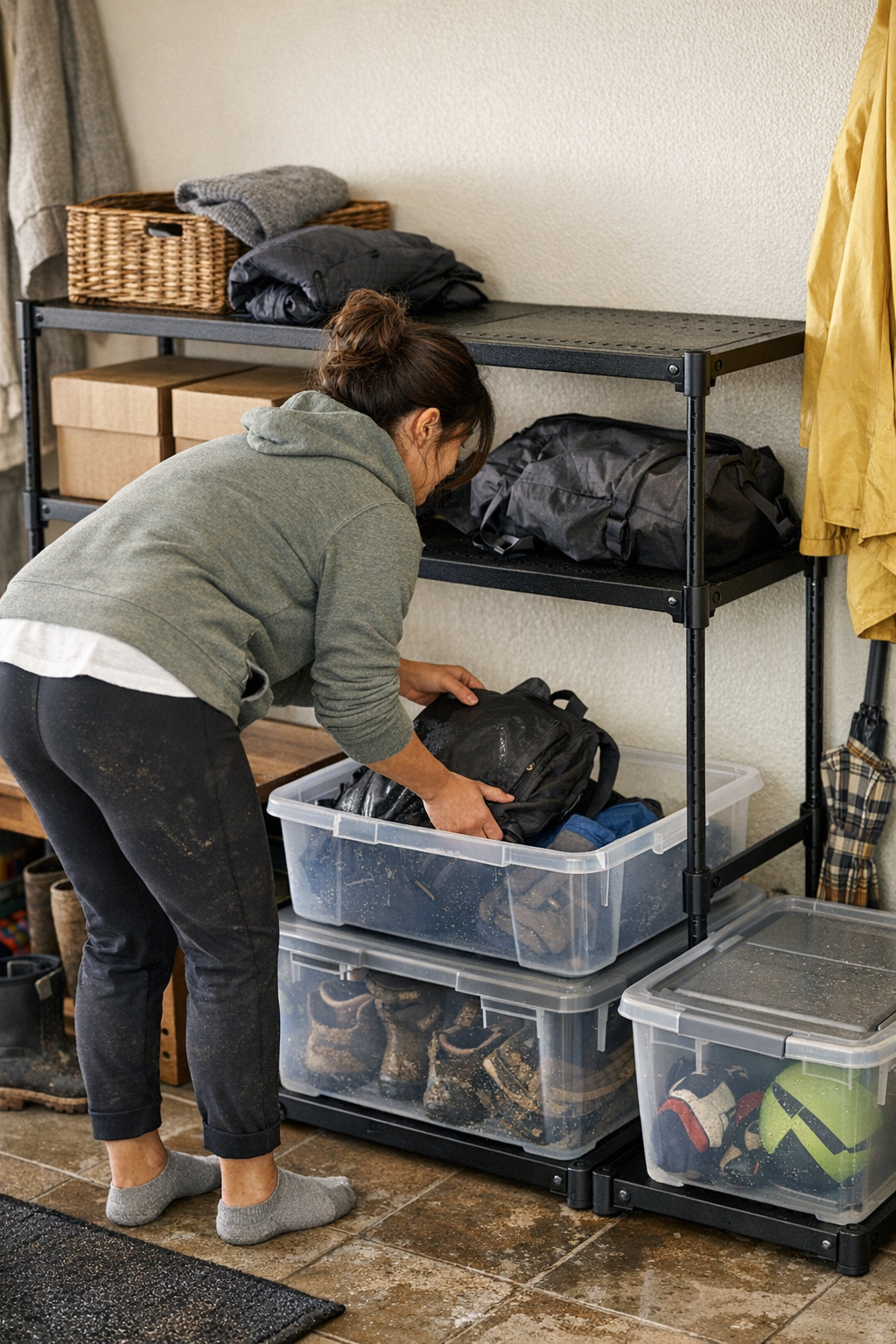
    Plastic bins hold up and hold boundaries when water, mud, and frequent shuffling hit your entryway. Where cardboard absorbs every drip and warp, plastic stays rigid. Floor-level bins see the worst—mud, snow, stray granules from shoes—but a good plastic bin shrugs it off. Slide it out, wipe it down, reset instantly. No warping, no edge collapse; one hand is enough to move, and you’re not worried about the bottom smearing across the tiles.

    The difference becomes obvious in three days of normal use:

    • Plastic slides and resets fast, never sticking or swelling shut.
    • Muddy shoes go in; the bin cleans up with a quick towel—no softened seams, no corner melt.
    • Bins keep a true inside/outside divide. What’s dropped stays contained, walkway stays clear.
    • Returning bulky gear is a repeat move, not a negotiation with torn sides or stuck bottoms.

    Structure Reshapes Reset—Not Just Storage

    Place cardboard too close to daily action—main floor, under the bench, or near the door—and it absorbs the consequences: runoff, constant movement, mixed-weight returns. As the sides give, categories blur and spill, making every reset another project. Plastic reestablishes the edge: even if shoes and coats rotate all season, the bin itself never becomes a variable. You don’t have to do a full re-sort every week; you just return items once, and the zone remains defined and usable.

    Clear Bins vs. Opaque: Finding Items in Motion

    Visibility is another friction point most people notice only after the third or fourth reset. Transparent plastic bins make it easy to spot what’s left behind—no more guessing which stack holds the missing glove or leash. If your drop zone serves a busy household, or you swap categories by season, the extra seconds saved add up. Opaque bins look tidier but often slow you down: you have to open, rummage, and relabel, especially when categories drift and multiple people use the space. Choose transparency to track change, or go opaque if you prioritize a calm, fixed look—just understand the real-world trade-off in retrieval and reset time.

    Right-Sizing: The Early Warning for Friction Creep

    Entryway bins should fit both the shelf depth and real-use pressure. Overstuffing a bin—one extra boot, one extra scarf—quickly turns order into friction. Lids won’t close, bins bulge outward, and just trying to push something in can jam the return flow for everyone. When bins bulge, the whole drop zone loses clarity, bumps against walkways, and requires twice as much correction with every pass-by. Stop loading before bins press against their own limits: that’s the boundary between support and slow breakdown.

    Transition Space Fixes That Actually Work

    • Place plastic bins at high-pressure points: Directly under benches or beside doors—where mud, drips, and returns collide most often. These absorb the worst and deliver the biggest payoff in function.
    • Pick clear bins when categories shift or entryway traffic is high: Faster resets, no guessing, fewer items lost in the shuffle.
    • Reset the base first: Fixing just the lowest, most-used bin sets a strong edge and instantly tightens up the rest of the space.

    From “Organized Once” to Consistently Usable—Across Real Use

    Every system works on day one, but transition spaces live and die by what happens during a downpour, after a week of rushes, or when the pile at the door doubles overnight. Cardboard’s orderly look collapses under repeated pressure, while structured plastic keeps daily clutter from becoming permanent blockage. Resets take seconds, not minutes. Categories hold. Drop zones remain open to use, not just open to look at—so coming home late or carrying a week’s worth of stuff doesn’t wreck your whole flow.

    If your entryway now feels like a semi-permanent pile—slow access, shut-down reset energy, drop zone boundaries failing at the floor—switching even just the main bins to rigid, moisture-proof plastic won’t make things perfect, but it will restore a clear, usable edge. Not a magic solution, but a practical, visible difference you’ll see every time the threshold pressure returns.

    betweenry.myshopify.com

  • Choosing Backyard Storage Solutions That Maximize Small Yard Space and Access

    Every backyard looks organized on day one. The bins are lined up, hooks are empty, and the side yard finally feels open. But fast-forward three weeks, and you’re undoing your own setup just to get through another Saturday. A rake blocks the gate. The “overflow” bin is always full. What started as extra space quickly becomes an obstacle course—especially when daily routines chew up every shortcut. Photos capture the order, but routines reveal the real test: can you move, reset, and stash everything without the path closing in again?

    The Disappearing Order: When Outdoor Setups Start to Drift

    The trouble doesn’t announce itself. A pruner slides behind sports balls, a folding chair “temporarily” blocks the gate, the side strip narrows as shoes, hoses, and garden gloves pile up. Soon, every reset means squeezing past gear or making room for something else—sometimes just to get the recycling out. If you’re playing musical chairs with bins or wincing at the thought of another full reset, the setup isn’t pulling its weight.

    It’s not just how much you can store, but how quickly you can return, grab, and move without a chain reaction. The right system never forces you to clear three things to put one back, or to shuffle gear just to keep the routine moving forward.

    Wall-Mounted Storage: The Difference Between Open Paths and Clogged Ground

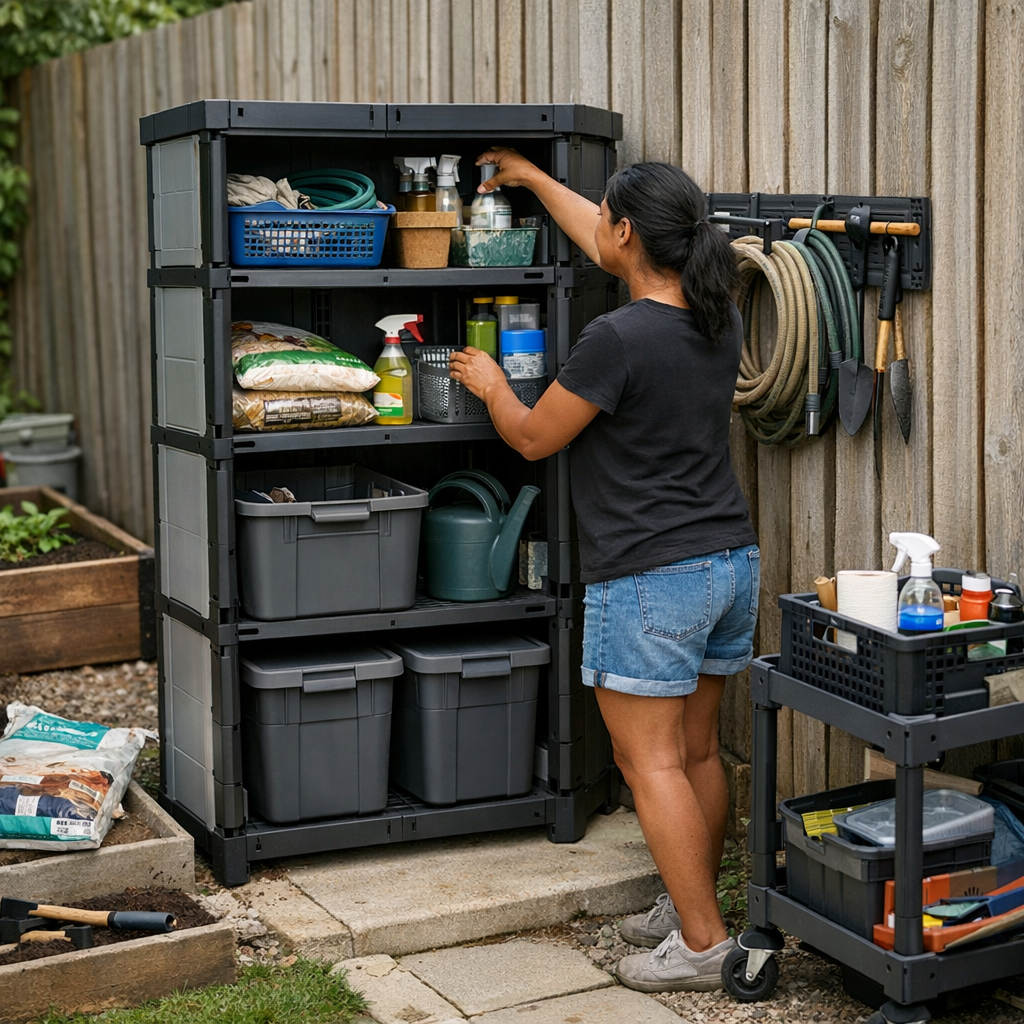
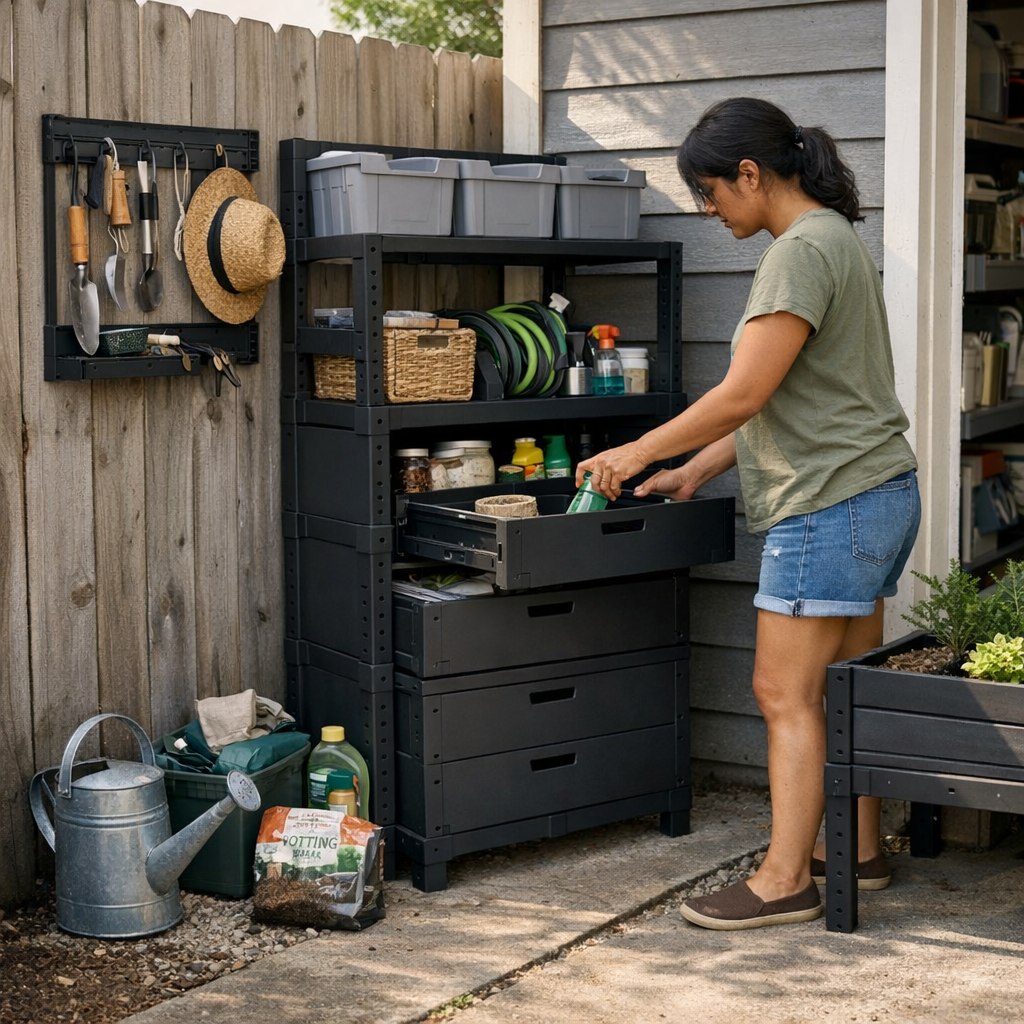
    In stripped-down, high-traffic spaces—side-yard strips, patio edges, that two-foot gap beside the garage—wall storage isn’t cosmetic. Raising gear up changes everything. You stop tiptoeing around bags and garden gear, stop propping the gate with your shin, and stop mapping a safe path for pets around plastic totes left on the flagstones.

    When wall systems are actually used for real routines:

    • Floor space stays open from week to week.
    • Frequently-used items—hose, gloves, loppers, folding seats—are always right where you reach, not buried or migrating toward the door.
    • That slow spill of junk into the patio or driveway edge just…slows down, or even stops.

    It’s the difference between a walkway you cross freely and one you constantly nudge things away from. Ever caught yourself kicking a shoe rack aside before mowing, or dragging a bin over gravel to get at a watering can? That’s the sign: the wall’s unused, the floor pays the price. One sturdy hook at the height you use, above a shoe tray or tool bin, can open a path and end the silent creep of gear that blocks basic movement.

    Common Misstep: Wall Space That Looks Used, But Isn’t Useful

    It’s tempting to stack wall racks with lodge-cast iron or off-season gear just to “fill it up.” But what you need is reach-and-return access for daily items: gloves, tools, pet leads, helmet hooks at kid level—always in the drop zone you actually use. If you notice the wall is busy but the ground is never clear, something’s off. Wall storage must earn its keep right where returns happen, not just display gear out of sight and out of mind.

    Modular Structures: Utility or Just Another Block in the Road?

    Modular storage pulls you in with promises: move it around, adapt with the seasons, mix and match—or so it seems. In real yards, it’s footprint, size, and how easily you can reset zones that separates the helpers from the headaches.

    A functional modular setup lets you:

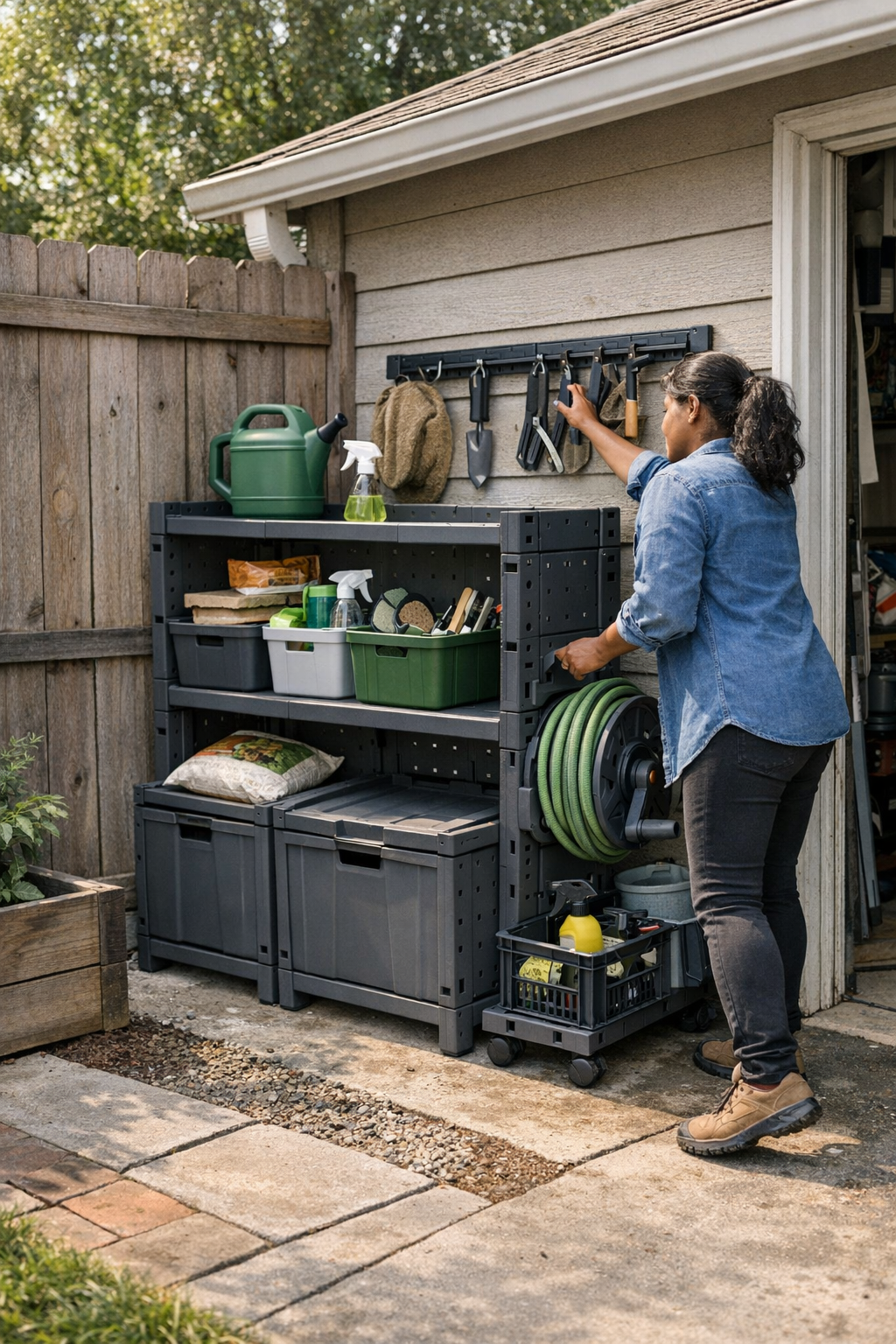
    • Station gear by need—a compact shed for watering tools at the beds, a grill unit by the deck, winter bins under eaves.
    • Shift parts fast when routines change (the school year, spring projects, season swaps).
    • Contain overflow in a single spot, rather than spread it across every pathway.

    But friction hits hard when the pieces are too large, too fixed, or clustered where nothing really fits. Maybe you bought a storage cube that seemed perfect—until the lid blocks the walkway, or its door jams against the shed’s. Or maybe retrieving planters from the modular “zone” always means first moving bulky overflow nobody ever wants to deal with. The worst setups demand a reshuffle every reset; by week three, the system is the new bottleneck.

    Zone Resets Beat Yard-Wide Overhauls

    The best modular setups break the job into bite-sized sections. Five minutes is enough to tidy the side gate, empty the garden bin, or clear the garage threshold—without the pressure to “organize everything.” That’s relief you feel at the end of a long day, not dread. If a unit keeps ballooning with odds and ends you don’t want to sort, it’s time to split or relocate before small piles snowball into another cross-yard dump zone.

    Mobile Storage: When Movement Helps—and When It Breaks

    Mobile storage sounds like freedom—especially before a party or when mowing time collides with a project spread across the whole yard. A rolling bin or rack should let you clear space fast without starting a new clutter pile elsewhere. But not all “mobile” systems survive the real terrain test.

    Rolling setups only help if:

    • They glide—not stall—across what you’ve actually got (flagstones, lumpy turf, uneven concrete).
    • They park out of the way when not in use and don’t interrupt other traffic zones.
    • The wheels aren’t just an afterthought—bad casters mean you’d rather lift than roll, and that’s when bins get abandoned mid-path.

    Actual scenario: It’s Saturday, friends show up, and you need the patio open—now. If everything really rolls, you’re done in minutes. The path clears, the reset leaves no orphaned bins by the door. But if a wobbly wheel sticks at a stone or it takes two people to angle the unit through a gate, “temporary” clutter claims that corner for the next week.

    Side-Yard and Garage-Edge: Where Clutter Settles When No One’s Looking

    The highest friction isn’t always in the center; it skews to the edges. Side yards and garage thresholds see the most foot traffic and, ironically, the laziest “just for now” storage moments. Without a flow system, these spaces attract dumped shoes, muddy tools, umbrellas, and cast-off bins—all quietly edging closer to the main entry with every week.

    What stops it? Short, vertical solutions: a trio of hooks for hoses, a grab-and-go shelf at hand height, or a boot bin beside the garage. Every minute untangling cords or stepping over muddy boots by the door is setup friction in action—repeat it often enough and the clutter wins. If one corner always fills first, that’s your signal. A seasonal bin next to the hooks, paired with a “clear it by Sunday” rule, keeps the area honest—and stops the spill before it marches inside.

    Choose the Setup the Routine Actually Uses

    Every yard is different, but every clutter problem repeats itself somewhere: bottleneck at the gate, bin that won’t stay empty, wall space that collects more dust than gear, or “modular” units that trap you into more moves than they save. Take ten minutes during a busy family day to watch what gets blocked, which zones need clearing (again), and where movement slows down most.

    The difference is in what works after a real day outside, not when the setup is fresh or photo-ready. Wall-mounted systems clear pathways only when used for the right gear at the right moment. Modular units help only if you can reset a zone in minutes, not hours. Mobile systems only fix problems if they actually move, park, and reset with you. The right setup stops overflow before the routine slips, and the wrong one makes every return slower, messier, and more frustrating.

    Find practical outdoor storage solutions designed for real routines at TidyYard.

  • Maximize Underbed Space with Extra Long Divided Storage Boxes

    Shoving a box of wrapping paper under the bed works—for exactly one holiday. By the third emergency search for ribbon or last-minute birthday card, the shortcut starts to unravel: rolls curl and crease, bows vanish into corners, and every “quick grab” spills hidden clutter straight back onto the floor. It’s not the space under your bed that fails, but the way standard bins fight against real-life routines: every retrieval breaks the fragile order, and slowly, chaotic overflow becomes the norm.

    Why Ordinary Underbed Bins Struggle Over Time

    Most underbed bins look organized at first, but they’re not built for repeated use. Wrapping paper needs length and support, yet short, undivided bins force rolls to bend, jamming ends against lids and leaving tissue paper flattened or torn. Ribbons, tape, and scissors start out in their own pile, but a week or two of gift-wrapping later, everything is jumbled: tape half-squashed under paper, scissors wedged between bows, loose glitter half-lost at the edge of the bin. Every hunt for a ribbon triggers a reshuffle; every hurried search sets back the order. The box conceals the mess—until the next rush exposes it again.

    Pressure peaks in busy spells. On a morning loaded with birthdays or sudden project deadlines, a shallow plastic bin becomes a slow-motion traffic jam. Instead of sliding out what you need, you’re crouching on the floor, flattening creased rolls, and feeling for tape that’s migrated to the far end. The bin that should corral the chaos is now its own source of bottleneck, turning the area around your bed into a temporary staging ground for cast-off bows and random scraps. The path between “looks clean” and “stays usable” narrows with every disrupted search.

    Repeated-Use Friction: The Reality Behind the Lid

    The cracks don’t only show in peak seasons—they wear through in small, daily ways. Each time the bin is opened, once-separate categories merge: tools under paper, ribbon spools tangled around tissue. “Category drift” sets in fast—what started sorted by type ends up sorted by gravity. The time saved by hiding everything in one container evaporates when you’re moving rolls, flattening creases, and chasing runaway tape just to find a label.

    These small breakdowns multiply when more than one person uses the space. Shared areas mean mixed-up categories and returns that miss their place. “Looking organized” lasts until reality intervenes: bins are never as neat when everyone actually needs something at once. Resetting the system takes longer each time; the initial structure buckles against repeated, mixed retrievals.

    How Extra-Long, Divided Bins Shift the Routine

    An underbed bin built to match real wrapping paper length—especially with sturdy internal dividers—changes the baseline. Extra-long bins keep full rolls straight and prevent the slow damage that comes from bending and forced fitting, while tough dividers anchor each accessory in its own spot. Instead of scavenging through a jumble, you pull the bin halfway out and see exactly what you need: the main rolls visible, ribbons contained, tape finally where you left it. The rhythm of wrapping resets—no more repeating the same scavenge, no more fighting the box every time a card or tag is missing. Resetting isn’t a separate chore; it happens naturally as each item lands back in its own section.

    This structure doesn’t demand extra discipline—it makes routine maintenance almost thoughtless. Even after a full-tilt wrapping session, the urge to dump everything in a heap fades. Order survives the rush because the dividers absorb the chaos you’d otherwise have to undo by hand.

    Details Matter: Access, Fit, and Tradeoffs

    No system is perfect. The extra length that protects your wrapping paper also makes the bin itself bulkier, so you need to check your bed’s clearance and make sure you’ll actually be able to slide the bin in and out—especially with beds on low frames or slats. Deep bins reward long items but can be tricky if you’re tight on maneuvering space. Dimension checks and a real look at your bed’s setup are essential before switching systems. For high-frequency routines and anyone trying to keep gift wrap in real order, the tradeoff pays: you sacrifice a little floor clearance, but you gain daily clarity and fewer messes clawing their way out from under your bed.

    When Standard Bins Fall Short, and Dividers Make the Difference

    Any undivided bin, no matter how big, eventually devolves into a shifting pile. Pull the bin once and paper rolls collide, boxes of tags topple, and every category blurs. Over a season, the toll is obvious: paper with permanent creases, tissue shredded and lost, ribbon spools half-unraveled and buried deep. What should be a 20-second retrieval drags out, and clutter seeps into the surrounding area. If your usual routine means regular digging, lost supplies, or frustration creeping across your bedroom floor, a firm divider and a longer box are not an aesthetic preference—they’re the step between constant resets and actual daily function.

    Storage That Matches the Way You Actually Wrap

    Few homes have luxury space for upright rolls or custom wrapping nooks. For many, underbed space is the only real option for hiding away seasonal supplies. But invisible storage isn’t automatically better storage; form only follows function if the box matches the repeated reality of use. A divided, extra-long bin stays out of sight but never out of mind: the difference isn’t just how tidy your floor looks, but how much lighter and quicker your next reset feels. Underbed storage done for real-life routines shrinks the time between “ready to wrap” and “back to clear”—a win visible every time you pull the box, not just the day you organize it.

    http://www.gridry.myshopify.com