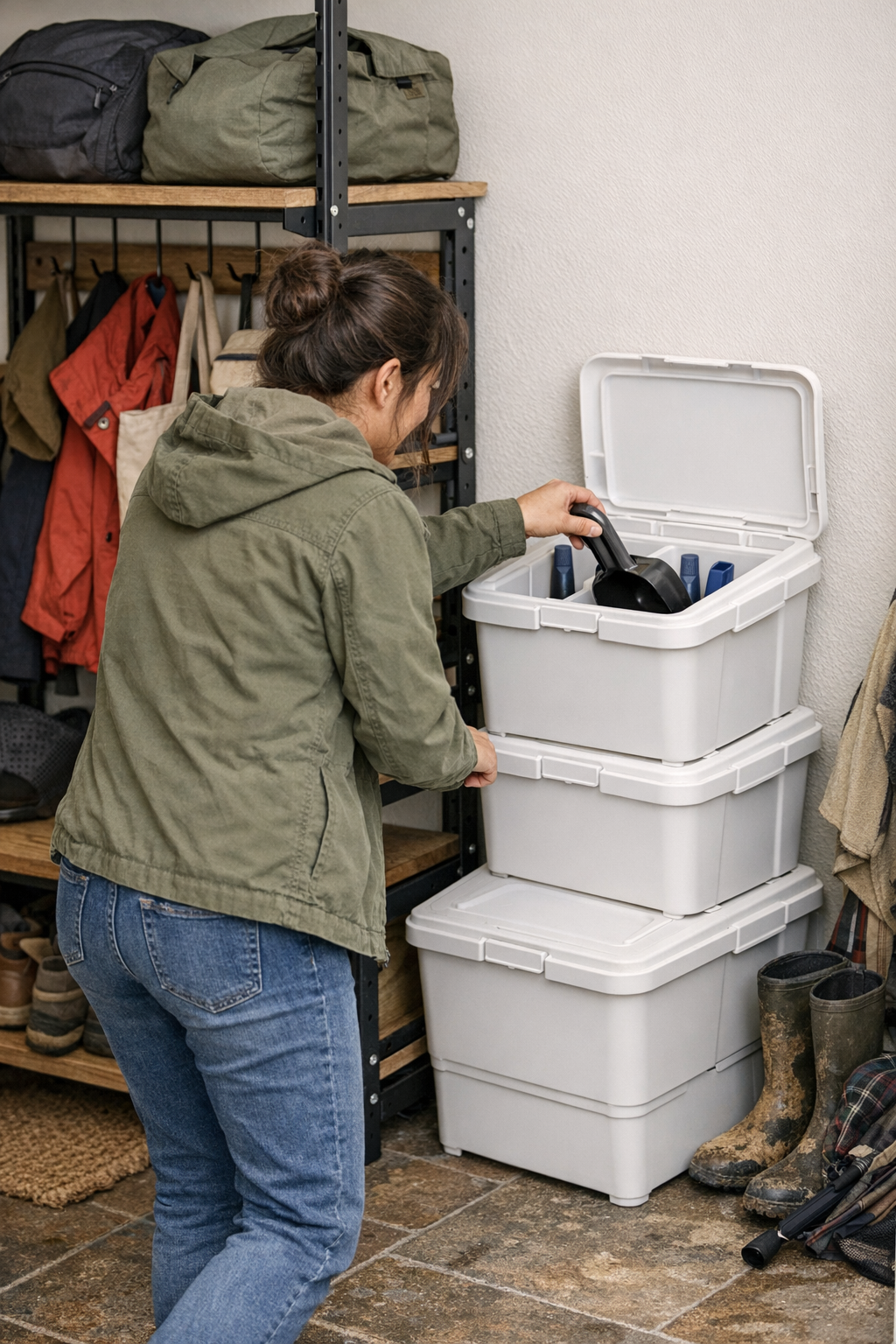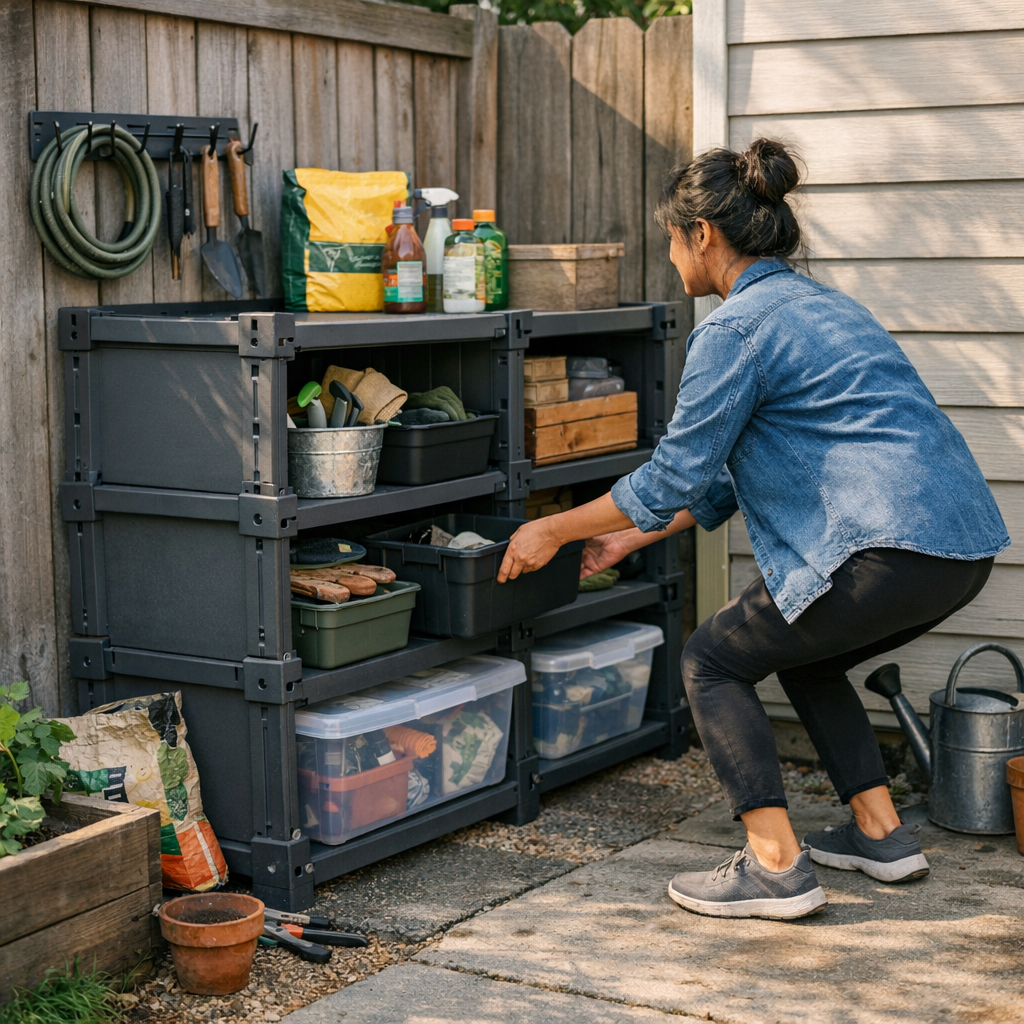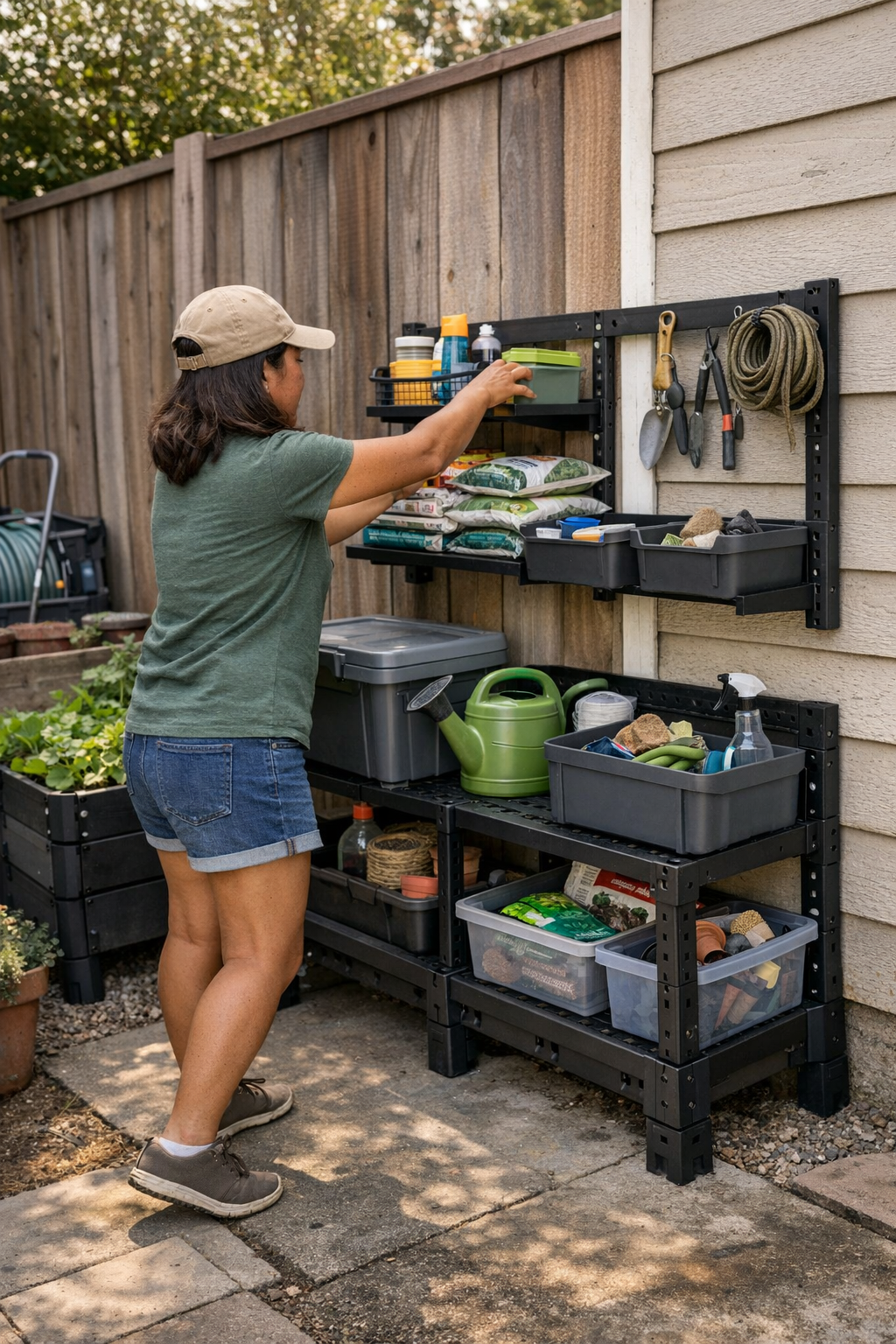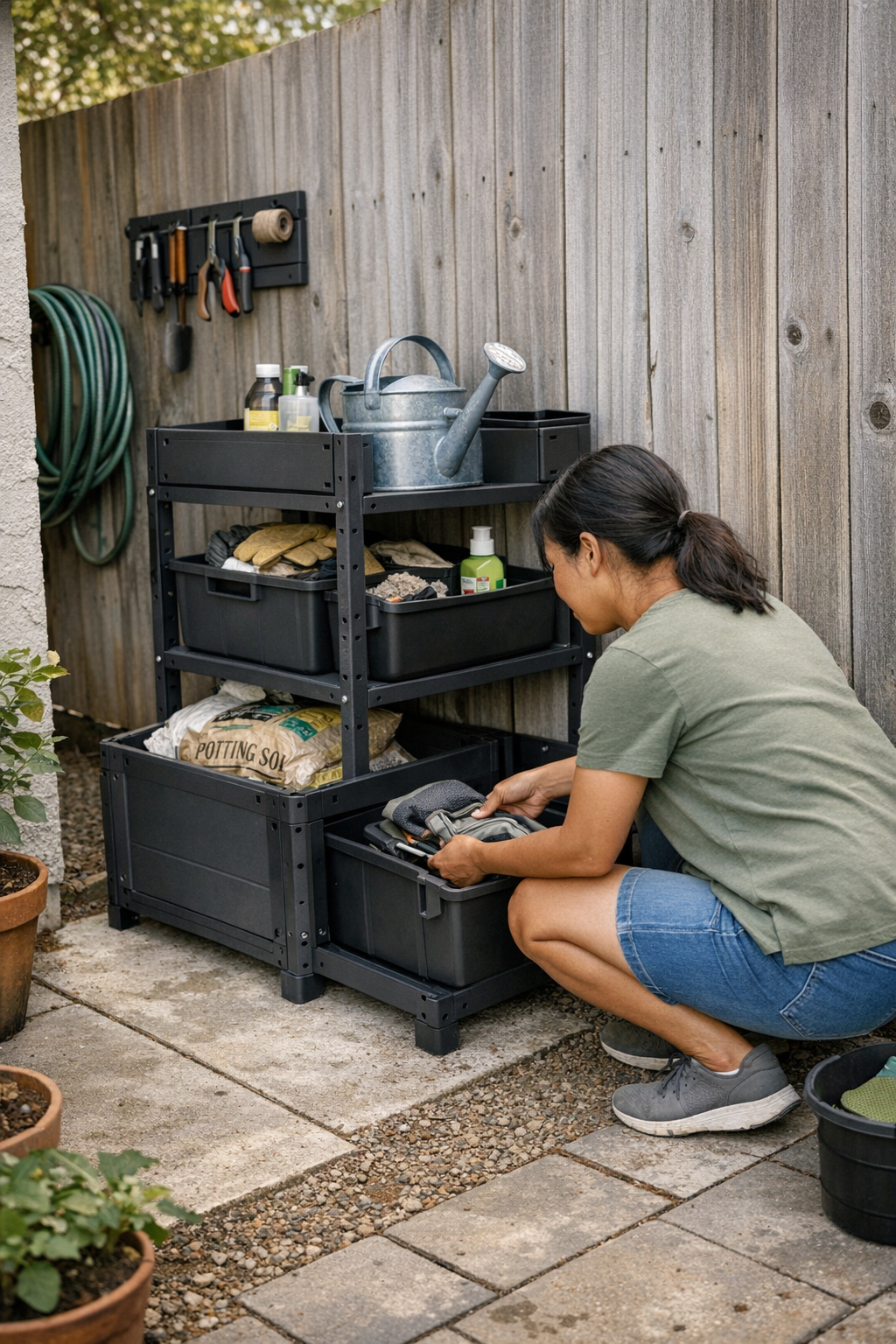
Category: Yard & Utility

  • How Divided Underbed Organizer Totes Keep Shoes and Cords Neatly Separated

    Underbed chaos doesn’t start big—it creeps in one item at a time. The setup is familiar: a wide storage bin slides under the bed, holding shoes, cords, travel pouches, and odds and ends that have no other home. For a day or two, everything fits and even looks organized. Then real use begins. Chargers get pulled midweek and tossed back on the wrong side. That one missing sock ends up twisted around spare cables while shoes trade places every morning. Suddenly, finding anything means digging sideways, kneeling longer, and moving stacks just to get to the bottom. The promise of easy, hidden storage unravels faster than it’s set up. What looks like order on day one usually devolves into search-and-rescue by day five—especially in bedrooms with limited space, where underbed storage isn’t backup, but the main staging ground for daily items.

    Why Wide, Open Bins Fall Short in Daily Use

    Open underbed bins trade visible clutter for hidden disarray the moment routines collide. You start with everything in place—morning hits, and grabbing a charger means fishing through loops of cord and wayward shoes, bumping into items you didn’t intend to move. Each time you grab or return something, the contents shift, categories mix, and one loose pouch becomes a wedge that splits up shoe pairs. The bin doesn’t lose capacity—it loses all sense of boundaries. Within days, searching for a single cable or missing shoe turns into a full-bin shuffle, the original lines between categories erased by daily use. What should save time and space now creates extra friction: you hesitate to put things back, hope the mess won’t grow, and eventually avoid the bin unless absolutely necessary. The wrong setup isn’t a one-time nuisance; it repeatedly slows your next move.

    Where Category Drift Starts—and Why It Matters

    The underbed bin’s flaw is subtle but steady—“category drift.” On day one, every item has a vague zone; by day four, those lines are gone. Shoes get scattered as bags slide over them and accessories wedge in new corners. Cords slip out of neat coils and wander. Small everyday items—the earbuds, a spare watch strap—inevitably vanish beneath bigger pieces. This drift isn’t an accident; it’s what happens every time two categories collide when you’re in a hurry or resetting late at night. In rooms where the bin is the main storage, each retrieval eats away at order until “reset” means dumping everything out just to re-sort.

    Scene: The Slow Creep of Daily Disorder

    You reach under the bed for a charger and drag out half a cluster of cables by mistake. One shoe comes out with another tangled behind it, a wrist pouch slides out and bursts halfway across the floor. What started as a small grab now means re-stacking contents, pushing things back in, and generating a few more floaters with every use. Over time, this delay piles up: the “quick tidy” morphs into a five-minute session nobody wants, especially in shared spaces or if you rotate items for each season.

    Divided Underbed Totes: Small Change, Real Impact

    A divided underbed tote disrupts this mess by making boundaries physical, not just wishful. Instead of one big well, you get dedicated zones—each a hard stop for different items. Shoes stack together and stay paired. Cords get a section where they lie flat and untangled. Small accessories remain corralled, not swallowed. The outside view changes little, but inside, reset is a snap: returning an item means dropping it into a marked space, not shoving and hoping for the best. There’s less friction in both daily grabs and nightly resets. Categories stick—so quick drops don’t turn into tomorrow’s tangled hunt. What shifts is the feeling of control: you’re no longer negotiating with the bin every single time.

    Setting Up for Real Use, Not Just a Clean Look

    Initial neatness is meaningless without daily resilience. The best-packed open bin looks great on setup day, but by the first rushed morning, small items drift and reorder the whole space. Divided totes keep the little objects—stray adapters, single socks, loose batteries—from triggering a full-bin cascade. When each type of item is anchored in place, bigger things remain easy to spot and reach. The time spent on your knees searching and reshuffling is replaced by quick, single-motion retrieval. The setup isn’t just tidy—it actually lowers the barrier to staying organized in real time.

    Design Details That Matter During the Week

    Dividers only help if the bin invites fast resets and zero digging. Depth is critical: a shallow profile (six or seven inches max) ensures items stay visible and accessible instead of buried. Overly deep bins force stacking, which undoes the clarity you’re seeking. Bin placement also matters: keep the tote close to the bed’s edge and away from furniture legs, so you can pull and replace things in one motion. In tight bedrooms or when the zone sits near a desk or dresser, every obstacle turns a quick grab into a slow awkward reach, quietly discouraging real use.

    Limitations: When Dividers Don’t Fit the Bill

    Not every item works with divided bins. Big or odd-shaped objects—boots, puffy blankets, luggage—crush sections and flex dividers until they break down or block access. For anything oversized, purpose-built open bins are less frustrating—else dividers become one more obstacle rather than an improvement. Use divided storage where mid-size and small items actually benefit from a stable category line.

    Making the Switch: Reset Speed and Low-Level Maintenance

    With a divided underbed tote, the daily reset shrinks from a chore to a habit. Cords drop into their slot without tangling. Shoes slide back as pairs, not as a mixed pile. Accessories can be tossed in and still found a week later—no need to upend the whole bin. The difference becomes most obvious during transitions: seasonal swaps, shared use, or back-from-travel chaos. What once triggered reluctant overhauls now takes seconds and actually sticks, even when two people are tossing things in or pulling things out at different times. You’re not just storing—you’re keeping control, almost without thinking about it.

    One Tip: Mark or Color-Code Your Sections

    Dividers work harder when they tell a story at a glance. A quick label or colored tag on each section means less second-guessing—especially if your household has blurred boundaries between what’s yours, what’s shared, and what’s spare. This way, even rushed routines respect the category line, and tomorrow’s reset isn’t another full-bin rescue.

    Organization That Lasts Past the First Cleanup

    Staying organized isn’t about how a setup looks after your first pass—it’s about what holds up through ongoing, real-life use. Divided underbed storage keeps boundaries stable, even when pressure is high and access is constant. That’s the gap between storage that only fits your stuff and storage that truly supports your routine: fewer resets, less category drift, and more visible calm where you need it most.
    Find practical storage solutions at Gridry.

  • Balancing Hidden and Visible Storage for Efficient Entryway Organization

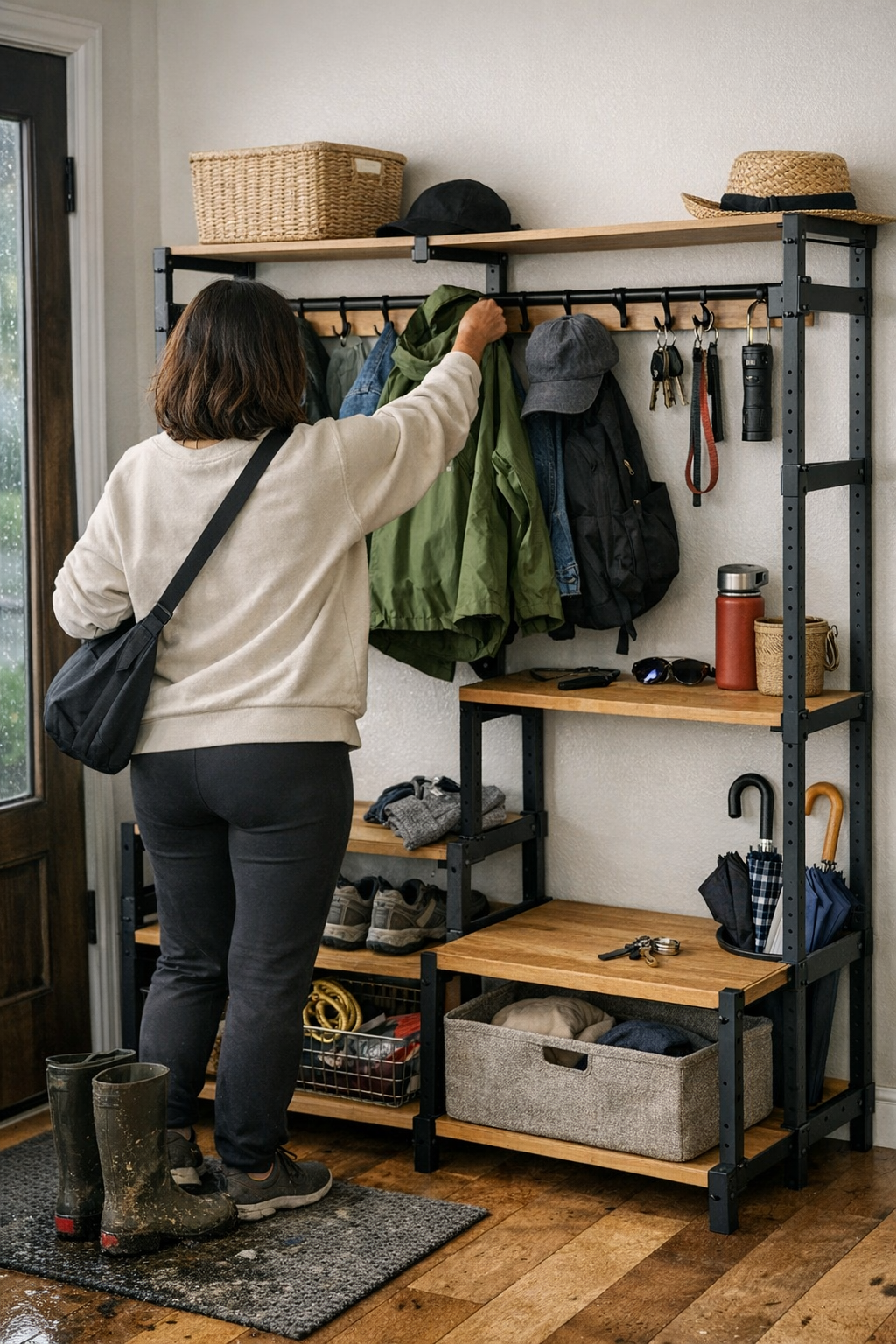
    The entryway never stays controlled for long—especially if your “solution” relies on hiding daily chaos behind closed doors or under lid-covered benches. In real homes, setups that look neat after cleaning almost always buckle by midweek: shoes spill past their row, bags drift from hooks to the floor, and key gear vanishes behind shut cabinet doors. You notice the friction not as visible clutter at first, but as a missing glove, a misplaced umbrella, or the backup light buried somewhere unreachable—right when you’re about to leave and time is short. The moment the system interrupts your path or adds another search step, you’re feeling the hidden cost of a layout that isn’t keeping up with daily re-entry pressure. Every “out of sight” item risks becoming “out of circulation” when the threshold crowds up under real use.

    When Hidden Storage Turns into Bottleneck

    Cloaked organization—closed cabinets, covered drawers, cushioned benches—promises control, but often trades off immediate access. The more steps it takes to store or retrieve the things you use most, the faster temporary placement becomes a default: shoes abandoned outside the cubby, bags left on the floor near the bench, hats and gloves piled on top of closed bins because opening them slows the routine. The subtle trap is delay by concealment—a routine item quietly drifting out of reach until that familiar crunch: you’re blocked at the door, trying to remember where you stashed the spare keys as the clock keeps moving.

    Neat Surfaces, Slow Movement

    The visual calm of shut storage rarely survives everyday pressure. Test it on a rainy Tuesday, not just after the weekend reset: The bench that looked controlled is collecting undone mail and gym bags. Drawers hide a missing glove, while an umbrella, once folded away out of sight, never finds its way back. The real signal is always in the interruption—a last-second hunt, a blocked threshold, one more delay that turns a “neat” entry into a morning bottleneck.

    Open Storage: Clutter You Can Actually Control

    Visible storage systems—wall rails, open shelves, exposed hooks—can look a little more crowded, but they produce a useful kind of pressure: you see exactly what’s missing the moment something slips away. There’s no silent drift. A single glance answers: are there six shoes or seven? Is the flashlight back or still missing? Swapping one deep drawer for a wall rail or bench-top tray rewires the whole reset—what’s being used stays in circulation instead of slipping into dead storage. A row of shoes directly on a rail stays roughly contained—even as use increases—because correction is immediate. Overflow doesn’t sneak up: it’s right there, nudging you to fix it instead of hiding until everything grinds to a halt.

    Overflow at the Edge—Where the Real Battle Is

    No system is immune to drift. Open setups shift the problem from invisible delay to visible nudge. Benches morph into catchalls: bags land “just for now,” mail piles up, coats edge their way across the line. But with visible storage, this edge clutter signals reset points. You notice right away when a bag blocks the path or shoes spread past their zone. Instead of silent failure, these setups make every misstep correctable, and help keep the entry moveable, even when routines slip.

    What Breaks Down Under Real Pressure

    Most entryway solutions fail during stress, not during setup. When your hands are full, the dog’s leash tangles, and the door sticks, do your things return smoothly, or is “putting away” another mini project? The closed bin swallows gloves until none are matched in a hurry; the stylish bench traps a week’s worth of mess. By Thursday, umbrellas are still missing in action—and one muddy pair of boots blocks the entire space. The patterns are clear: if your system needs two steps just to return something, that “later” pile is only going to grow. Quick access and direct return flow determine whether the area works for the actual family cycle, not just during Sunday resets.

    Return Flow vs. Buildup: How to Spot the Real Trouble

    Every threshold zone is a test of how easily things move in and back out. Systems that slow down restocking—requiring lids to be lifted, bins shifted, or doors opened—quietly train everyone to drop gear wherever, breaking down the intended order. The more your entry setup demands, the steeper the drop-off between “put away perfectly” and “dump it somewhere for now.” If you find yourself shuffling piles or re-clearing the same spot every week, your system isn’t matching the pressure of repeated use. Open racks and fixed spots let you spot the moment a basket overflows; closed systems make it easy for items to vanish, only to resurface when the season changes.

    Small Upgrades, Big Differences

    It doesn’t take a remodel to restore flow—sometimes a single swap is enough to make problems visible and correction automatic. The day you replace a deep, slow-drawer with a short wall rail near the door, the contrast hits immediately: keys, leashes, and flashlights cycle in and out, instead of getting lost in “storage.” Family members gravitate toward the open spot—a sixteen-inch rail becomes the in-and-out command center, exposing anything missing before it becomes a snag that slows everyone down. Resets take seconds, not another round of opening, shifting, or sorting what’s supposed to stay ready.

    Entry Routine Tweaks That Actually Stick

    • Expose your high-frequency grab-and-go items. Put hooks and baskets where they’re most needed for shoes, bags, keys—everything that circulates daily.
    • Limit closed storage to overflow or low-rotation gear. If it’s not touched this week, it can live behind a lid—but retrieval still needs to be easy, not a project.
    • Watch for benches turning into “edges.” Repeated landing spots signal your system is missing a needed touchpoint—use a wall pocket or rail to intercept those drops before they build up.
    • Test your reset faster—midweek, under pressure. The real stress test is whether you can restore order in under a minute, not just after a deep clean. If it doesn’t pass, your flow probably needs redirecting.

    Know When to Adjust—Not Just When to Clean

    The biggest red flag in threshold storage isn’t always a mountain of clutter. Sometimes it’s that single repeated slow-down: detours for a missing hat, awkward steps to dodge a bag that’s in the way, a narrow path getting blocked earlier in the week than you expect. If you’re sliding gear around just for the door to open, shuffling piles off a bench midweek, or repeatedly dealing with the same clogs, your setup is asking for a new strategy. Pay attention to where you’re improvising, not just where things “look” off—daily, visible access usually trumps forced neatness if the goal is to keep everyone moving in and out with a minimum of resets and reroutes.

    Transition Spaces That Actually Keep Up

    An entryway only counts as organized if it works under pressure—not just after staging. Systems that build in visible feedback (and make stray items harder to ignore) correct themselves, using open cues to nudge resets before disorder spreads. Real organization lets you notice what’s broken sooner—before the next trip out the door costs you another three minutes hunting for an umbrella or clearing a bench. The right mix of open and closed storage doesn’t stop at “tidy”—it keeps up with shifting routines, absorbed clutter at the edge, and the true test: day-to-day traffic that never moves in perfect order.

    Find more transition-space storage ideas and solutions at Betweenry.

  • Visible Lint Brush Slots Transform Laundry Routines and Dryer Efficiency

    If your lint brush keeps disappearing, it’s not forgetfulness—it’s your entryway setup breaking down right where daily routines hinge. At first, it’s a small interruption: you reach for the lint brush and it isn’t there. But in a high-traffic threshold—where laundry baskets, bags, and shoes pile up—this single missing tool signals a larger problem. Visual order lasts until actual living starts. As soon as the morning shuffle begins, neatness gives way to drift: the brush slips behind a bag, gets wedged under the bench, or ends up hidden after one distracted reset. Each absence wears down your default reset—turning a two-minute filter clean into a slow, uncertain hunt at exactly the wrong time.

    The Real Cost of a Hidden Tool in Transition Zones

    Transition spaces—entryways, laundry corners, utility walls—aren’t designed for idle beauty. They have to survive dropped bags, scattered shoes, and whatever doesn’t claim a fixed, visible place. The lint brush is the first casualty. Out of sight, it becomes lost in overlapping routines: one person empties the dryer, another tosses in a messenger bag, someone else piles sports gear by the door. Miss one reset and the brush winds up blocked or buried. At first, you hardly notice. By week’s end, you’re brushing lint out of the dryer with your hand, skipping filter cleans, and watching tasks stack up because one tool is always “somewhere else.” Small absences turn routine resets into avoidable backtracking.

    Invisible Calm, Lasting Disruption

    Spaces that appear uncluttered only hide the real friction. Each trip through the zone now triggers another minor delay. Filter cleaning gets postponed for “later,” lint begins to build, and resets require hunting through the overflowed bench or the cabinet nobody ever opens. Outward order masks mounting inconvenience. Dryer performance lags quietly; chores stretch out. Hiding tools doesn’t just cost minutes—it chips away at the reliability of your routine and lets batch tasks multiply. The more hidden the brush, the more likely laundry gets neglected or fumbled under pressure, especially as returns and drop-offs overlap.

    Why a Visible Slot Makes All the Difference

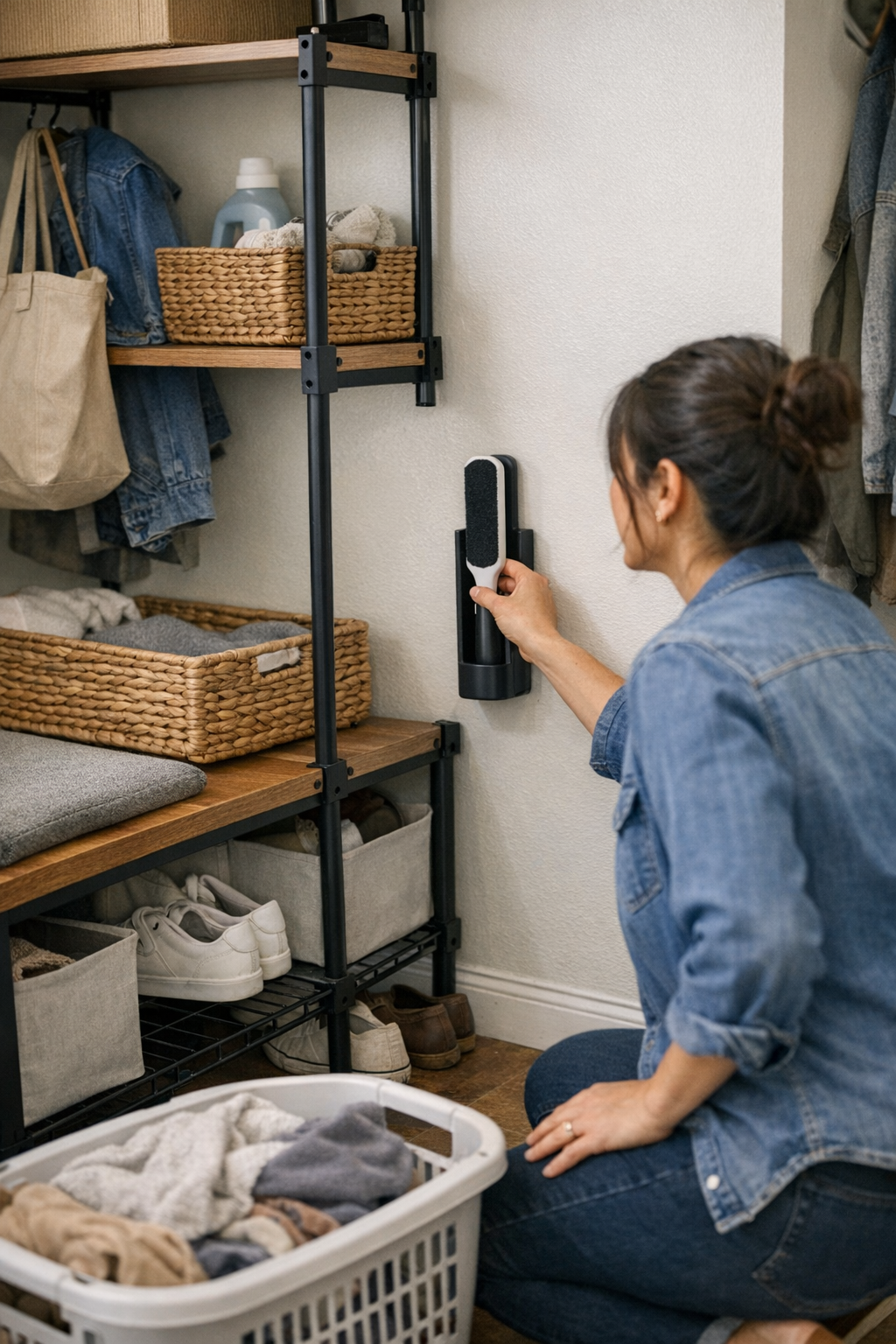
    Visibility anchors the routine right at the threshold. Adding a visible lint brush slot—shoulder height, just inside the main entry or beside the laundry pass—breaks the drift pattern. The tool is always where your hand expects it, whether you’re hauling in a basket, dropping off shoes, or handling surprise guest traffic. Instantly visible and upright, the brush becomes a checkpoint, not an afterthought. The reset now fits the movement flow: you step in, brush in easy reach, filter gets cleaned without extra detour. No fighting cabinet doors, no stooping, no scavenging among half-packed bags or shoe rows widening across the threshold. When the setup answers real movement, not just visual order, every return runs smoother, even on the busiest days.

    Open Access Beats Hidden Order

    It’s tempting to hide everything behind doors or inside bins for a cleaner look. But hidden storage slows down real routines. In multi-use spaces, cabinet doors stick, bins collect stray charger cords, and friction spikes when the needed tool isn’t in direct line of sight. Every extra step—opening, rummaging, shifting overflow—invites avoidance or a “just this once” skip. A visible wall-mounted holder trims the process to one motion: finish, return the brush, move on. Every family member, guest, or tired parent sees the tool instantly—and the act of filter cleaning keeps happening, regardless of the morning’s chaos.

    The Drift Scenario: Where the Setup Breaks

    No setup survives untouched. Picture the threshold by evening: baskets pushing into walk space, two pairs of shoes edging wider, the bench overrun by loose mail and a zipped backpack. The lint brush, last used after Tuesday’s late load, has vanished without a trace. You come in holding laundry, spend a minute sifting through a busy cabinet, then skip the filter entirely because the search interrupts your path forward. Tasks pile up, dryer runs get inefficient, and next time you’re even less likely to bother. The zone that should support repeated resets becomes a bottleneck, all because a tool is “put away” somewhere nobody checks on the way through.

    Visible Slot, Stable Routine

    Swap out the delay. Install a wall slot or upright bracket at arm’s height, next to the everyday return path. Returning home, you drop the basket, spot the brush, and—without pausing to think—clean the filter. No bending down, no guessing game. Even at peak overlap—guests coming in, kids passing through—the brush remains visible, the flow unbroken. With deliberate placement, the reset cycle is self-maintaining and resistant to drift, not reliant on memory or luck.

    Making the Space Work, Not Just Look Organized

    Looking organized fades fast in shared thresholds. Hidden tools or deep storage bins hold briefly, but real routines break down in a matter of days, not months. Here’s how so-called “organized” setups crumble under use pressure:

    • Bench surfaces intended for seating end up buried by overflow items
    • Wall racks get swallowed by bags and jackets, not just gear
    • Shoes fan out, mixing with tools and making retrieval awkward
    • “Temporary” lint brush parking becomes the unplanned long-term spot
    • Blockages emerge whenever one person misplaces an item, disrupting everyone’s motion
    • Constant shuffling every time someone needs access, slowing every threshold pass

    Visible lint brush storage solves for flow, not just appearance. A dedicated upright slot means filter cleaning happens automatically, even during household rush hour. The real test isn’t whether the space looks tidy for a photo—it’s whether the routine endures a week of normal use without breaking down or demanding constant resets.

    Targeted Tweaks, Tangible Results

    Effective setups cut out extra motion at the busiest point. A visible, shoulder-height slot doesn’t just save your knees or free up the bench—it removes half the mental excuses for skipping the task. When the brush always sits just where you move, the reset shrinks to a reflex. Those seconds saved add up: no one needs to debate where to look, and lost tools quit interrupting the rest of the routine. In small spaces or multi-person households, a single wall slot prevents the entire zone from turning into a holding pen for things nobody wants to deal with. The ongoing difference is immediate and cumulative.

    Quick Tips for a Reliable Lint Brush Setup

    • Placement determines success: Anchor the slot just inside your busiest transition area—high enough to reach, clear of foot traffic, and visible from the main walk path.
    • Use upright, mount for one: Mount a wall bracket built for a single brush. Minimized clutter means the tool stays obvious and resets never become a pileup project.
    • Keep it seen, not at risk: Choose a spot that avoids collisions—out of the path of swinging doors and away from where bags usually drop.
    • Make return automatic: Integrate returning the brush into the natural flow after each reset—until it feels as inevitable as parking your shoes or setting down the mail.

    The Payoff: A Routine That Doesn’t Slide

    Adopting a visible lint brush slot is less about “tidiness” and more about making your transition space hold up under repeated pressure. It helps your setup work without added reminders, costly habits, or cleaning sprints every weekend. When laundry, gear, and people all share the same path and reset cycles, a visible slot is a safeguard—not a cosmetic fix. It trades fragile, photo-friendly order for lived-in, lasting function—reset after reset, with less drift and far fewer missing tools.

    http://www.betweenry.myshopify.com

  • How Smart Outdoor Storage Transforms Yard Work Into Quick Tasks

    The satisfaction of a freshly organized deck box or storage bench is always short-lived when real life returns. That neat little setup by the back gate, along the garage, or wedged into a patio corner will pass the “looks good” test for exactly one rainstorm, one busy Saturday, and three half-finished projects. Then the cracks show. Now the “organized” space is stalling you out—tools clatter under pool floats, garden gloves pile up against winter salt, bin lids need prying, and suddenly getting one thing means moving three. What used to feel under control now feels tight and slightly sabotaged, like the storage is quietly running out of patience before you do.

    The Subtle Shift from “Organized” to “Obstacle”

    The problem never announces itself: it just creeps in. Three weeks of normal Saturday yardwork and the walkway is narrowed by an “extra” tote, the garden bench traps the trash bin, and that fence-line chest becomes landfill for every “just this once” drop-off. This isn’t random mess—it’s the slow, relentless friction of storage that doesn’t adapt. What looked smart for a static photo becomes a speed bump in actual use, making you reshuffle and route around your own setup with every visit.

    The bins and boxes aren’t failing—they’re just building in resistance, step by step. Every time you “just put away” one thing, it blocks something else. Deck boxes become a game of unpack-the-closet. Wall rails become clutter displays nobody touches. Over time, you don’t beat clutter—you just reshape its path, letting it rebound in new corners and behind new lids. Daily movement gets slower, more awkward, and subtly more annoying, even if the space still looks fine from the patio door.

    Where Good Setups Break Down: Real Moments in Outdoor Storage

    Retrieving One Tool Blocks Access to Another

    You step onto the deck to grab a hand pruner—simple. Except the pruner is under a tarp, squeezed beside three gloves and last week’s hose. You dig, dump, and finally unearth it, only to realize you’ve started two new piles outside the box. Routine chores become minor projects, and in a few days, unused tools stay out just to skip the hassle. The “system” works—if you never change it or rush it.

    Wall Space: Used, But Not Always Useful

    Wall racks arrive looking efficient, but if half the hooks are behind the storage gate or set above your line of sight, they quickly turn into untouchable displays. The gear you actually use—pruners, loppers, sturdy gloves—drifts right back to chairs, steps, and door handles. The grid promises easy access, but if you need to dodge a ladder or rearrange hanging tools for one rake, the wall is just another obstacle, not a solution.

    Overflow Finds Its Own Zone

    Every setup has that inevitable overflow zone—the patio’s awkward far corner or the trunk of concrete behind the compost bin. It’s where “just for now” piles live indefinitely, where folding chairs and sand toys linger after a storm, and where bins dragged away from the main path quietly become permanent. Once overflow claims a spot, gear leaks out along the fence line and piles start rerouting traffic—dead space breeding more dead space.

    When the Layout Interrupts the Routine

    True frustration builds when storage asks for more work than it saves. Returning the trimmer shouldn’t mean rolling back a storage bench. Putting away the hose shouldn’t force a deck box reshuffle. When resets demand extra steps, even small ones, your outdoor routine unravels: tools stay out, hoses snake through footpaths, gloves pile up on any chair within reach. It’s not neglect—it’s a layout that never matched your pace in the first place.

    Give it a season and you spot it everywhere: there’s a fence chest on week one, but by July, the fence line is a parade of bikes, tools, and leftover planters. The piece that “fit perfectly” now asks you to slide, lift, and nudge just to reach what you use daily. Each return becomes a detour.

    Designing for Access, Not Just Appearance

    The Value in Open Storage and Smart Walls

    Deep deck boxes and closed benches promise to contain mess but often become the black holes that create it. Open shelving or wall grids look busier but keep your essentials both visible and instantly reachable. These setups aren’t showroom pretty, but they spare you from routine obstruction: grab, store, done—without reorganizing half your setup just to return a pair of pruners.

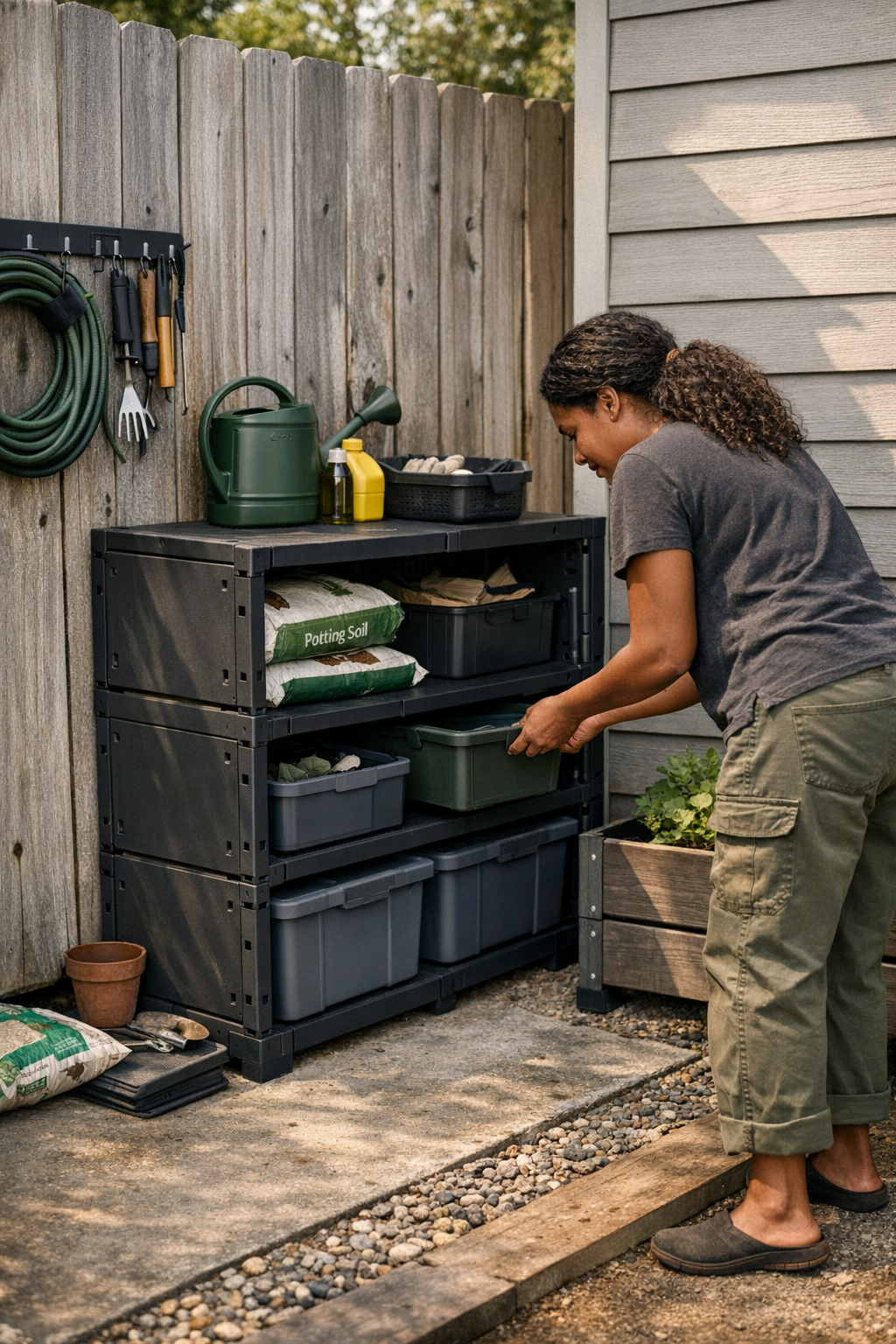
    When high-use tools live on a slim rail at standing height, you move right through the job—no bin unstacking, no puzzle-box resets. A mobile caddy that rolls out beside you and tucks instantly away can keep project clutter from trailing into every yard corner. On busy days, these choices determine whether a quick trim is a ten-minute chore or a drawn-out session wrestling with your own storage.

    One Thing at a Time: The Rule for Reset Speed

    If your storage setup demands three moves for every return, it isn’t built for actual use. Retrieval and return should mirror each other: one grab, one drop, zero rearrangement. Wall hooks at arm’s reach, bins shallow enough to see everything, and modular trays that prevent over-stacking all speed up the flow. Anything that tacks on extra steps will quietly start collecting “waiting-to-be-put-away” gear—and that’s how setups fail, even if they never technically run out of room.

    The Real Test: Return Flow

    The difference between a space that works and a space that nags is never the first week—it’s the fifth evening in a row when you have to cram in a fast cleanup or reset. The best setups bend to unpredictable routines: spring mulch days, late-evening tool drops, gear trashed by rain, last-minute tidy-ups before guests. They keep footpaths clear, push overflow back to the fringes, and make tidying as simple as tossing gloves on a hook or rolling the caddy out of sight.

    Watch for this pattern: If the same item lingers out three times in a week, your storage isn’t the problem—you’re just being honest about how much work it asks. Move high-use gear to grab-and-go positions: eye-level pegs, easy side rails, shallow bins. Save the closed bench or deep box for things you rarely need—holiday lights, rainy-day tarps, backup hoses. Let your flow shape the storage, not fight it.

    When Setup Matches Routine, Outdoor Work Gets Easier

    The goal isn’t flawless order or magazine-cover neatness—it’s a setup that forgives the blur of real outdoor use. You’ll still find a spatula on the fence post or a stray trowel on the patio, but you won’t have to wrestle your own system just to put things away. Strong setups don’t eliminate clutter; they shrink the effort required to reset. The real win is a space where outdoor projects stop feeling like a battle against your storage, and tomorrow’s reset still feels possible—even after the busiest day.

    Find practical ways to build outdoor setups that can actually keep up with you at TidyYard.

  • Why Structured Entryway Storage Beats Open Bins for Busy Homes

    The moment you finish clearing the entryway, real life ambushes the system you worked so hard to set up. It takes just one rushed Monday morning for shoes to migrate out of their neat line, for tote bags and backpacks to reclaim the bench, and for the “catch-all” bin by the door to swallow stray keys, gloves, and mail. What starts as a hopeful setup unravels in real use: the rows widen, the piles build, and a misplaced leash or solo glove triggers the same last-minute search—again. With each unplanned drop or hasty return, the entry loses its order and returns to its default setting: high-traffic clutter, blocked passage, and slow, distracted exits.

    When Day-to-Day Use Overwhelms the Setup

    Open bins and trays seem practical in theory—just drop and go. But in repeated, rushed routines, those wide-open containers turn into collection points for clutter and temporary “just for now” placements. Monday’s backpack lands on top of Sunday’s shoes; Tuesday adds lunchboxes; by midweek, the bin hasn’t just filled—it’s collapsed as a usable system. Now, every trip through the threshold means digging through mixed layers: gloves hidden under yesterday’s mail, keys stranded beneath a soccer cleat, and a leash that’s migrated out of sight just when it’s needed most.

    The Real Cost of a Collapsing Drop-Zone

    No one schedules time to retrieve lost things in the entryway, but daily friction adds up. The penalty isn’t just visual mess—it’s a routine slowdown, especially in moments under pressure. You’re sent scrambling for a glove at the last second, shuffling bags off the bench to make space, or squeezing around stray shoes that have drifted into the traffic lane. What was meant to simplify departures instead creates resistance points that waste time and attention exactly when you’re heading out the door.

    Why Open Storage Breaks Down in Real Entryways

    In nearly every home, the entry is a squeeze point—part path, part drop zone, always at risk of overflow. Benches that promise a place to sit become landing strips for gear that never fully leaves. Floor bins seem smart on move-in day, but once daily use begins, they’re quickly buried by the very things they’re supposed to organize. The travel path tightens as shoe rows spill out and bags settle wherever there’s space. Returning one extra item can block a small hallway, and a “temporary” dump next to the bin sticks around all week. Even wall racks that look great during a reset can’t stop bags or coats from drifting back to benches or the floor once actual routines reassert themselves.

    Temporary Fixes, Permanent Interruptions

    The cycle is familiar: an overflow bag perches “just for now” on the edge of the bench, a couple of shoes wait by the door for tomorrow’s use, and suddenly, these stand-ins become permanent obstacles. Each pass-through adds one more item left slightly out of place, until navigating the space means bumping, stepping sideways, or moving things just to walk through. Resetting the zone gets postponed—until the buildup forces a messy, inconvenient reshuffle right before guests arrive or someone needs to rush out the door. Would-be “easy access” devolves into semi-permanent blockages and extra work every single day.

    Structure: The Quiet Fix for Repeated Friction

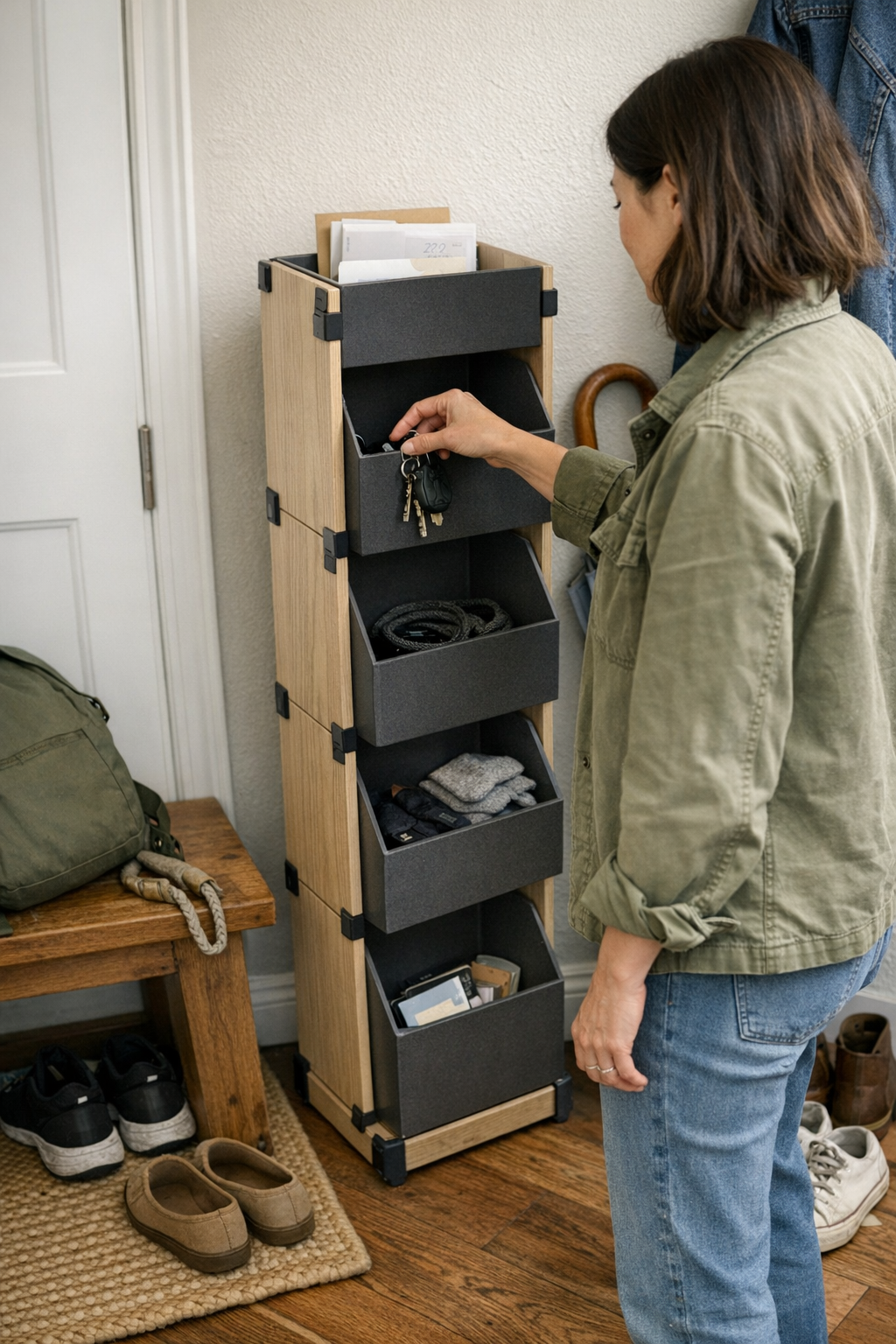
    Open options collapse under the pressure of daily routines, but structured solutions reintroduce control. Adding real structure—through modular cubbies, vertical racks, or labeled slots—turns a dumping ground into a working system. Every key category gets a physical boundary: keys go in a slot, not a heap; gloves fit the top compartment; shoes are corralled in defined rows instead of pooling by the door. The magic isn’t the formality—it’s the way each belonging gains a reliable address, cutting out the constant hunt, the pile reshuffles, and the stalled movements these all trigger in a cluttered entryway.

    Turning Dump Zones into Designated Zones

    • On re-entry, you drop your keys straight into a labeled slot, not a slushy communal bin.
    • Gloves slip into their top cubby, bypassing the cycle of being crushed beneath backpacks or groceries.
    • Shoes aren’t scattered in a loose row along the wall or blocking the walk path—they live upright, side-by-side, always visible and reachable.

    The result is plain: less tripping, no more bench buried in yesterday’s bags, and the access lane staying, for once, actually accessible. Resets are faster because less has drifted out of place—nothing is hiding, and nothing has to be rescued or re-sorted just to leave or return.

    Real Entryway Moments: Where Structure Pays Off

    Picture the weak points: weekday mornings, arms full of work bags, lunchboxes, or groceries, kids scattering in different directions, the dog ready to bolt out the door. The wrong setup means someone’s stopped, shuffling through a pile for the missing leash or tripping over a wedge of shoes in the path. But when structure sorts the entry—leash in its own slot, kids’ shoes in their vertical rack, mail stacked where it won’t vanish—chaos doesn’t stick and access doesn’t stall. Movement through the zone stays clear, even at peak times. Instead of the entry acting as a bottleneck, it works as a checkpoint: everything needed, nothing in the way.

    The payoff: Fewer missed items, less last-second scrambling, and movement that isn’t constantly blocked by spillover gear. When the bench is empty enough to sit on, when walkways hold the line against clutter, and the dog leash is never buried, the system is truly working for your routine—not adding hidden work to it.

    Small Adjustments, Noticeable Uptick in Ease

    Even one or two changes—like a wall-mounted rack for leashes, or vertical shoe slots near the door—can break the old pattern. Labeling storage by category tightens the return flow: everything gets put back right, and nothing disappears into the heap. For small or high-traffic entryways, this category clarity and vertical separation stop the midweek slide into confusion and save time on every pass-through.

    The Real Difference: Looks Nifty vs. Works Every Day

    Entryways that just look organized offer a false finish. What matters is whether the setup survives actual routines—bags dropping, shoes multiplying, hands full, resets delayed. Systems that merely “hold” items buckle under pressure, but a single layer of added structure—modular cubbies, wall hooks at the real-use height, or a vertical shoe rack—changes how the space performs after the first wave of daily use. The right storage doesn’t just tidy the view; it keeps the pulse of the threshold clear before the next scramble, so routines stay fast and friction stays low—even if perfection is always a few steps away.

    See more practical entryway storage solutions at Betweenry.

  • Balancing Space and Function in Low Clearance Underbed Storage Solutions

    Low-profile underbed storage looks clean—until you have to use it every day. Slide slim bins beneath a platform bed, and the room instantly appears more orderly. Clutter vanishes; extra clothes and backup sheets stay hidden. It feels like the perfect storage win—until the first time you need to grab an item in a hurry. Suddenly, bins jam halfway, lids scrape the frame, and nothing slides as smoothly as on setup day. What’s advertised as effortless storage turns into a routine of nudging, tugging, and realigning—every grab pulls the whole zone off-kilter. The surface stays calm, but the friction underneath keeps growing. Hidden storage, especially when used for constant rotation rather than rare access, exposes its weak points fast.

    The False Calm of a Packed Underbed Zone

    Stacking every available bin side-by-side under the bed looks efficient—at first. Each container fills the gap, matched and measured to the nearest centimeter, promising maximum use of “dead” space. But the tighter the fit, the harsher the reality after a week in use. When bins fill every inch, even a quick morning reach for a shirt sends containers bumping rails and snagging corners. A tug on one side knock the whole row off line, leaving containers wedged and mismatched. By the next use, the lineup is already sliding out of formation, with handles poking out and dust gathering in new gaps. Underbed storage set up to be “neat” becomes a constant cycle of small correction—resetting, straightening, finessing containers back into line—especially if you’re rotating items in and out more than once a week. Instead of freeing space, it quietly adds yet another step to your routine.

    When “neat” demands constant fixing

    Within days, even the most carefully-packed setup unravels. Bins drift; edges jut; a cloud of dust marks where a container slid out of place and stayed there all week. The calm appearance persists only if you’re willing to realign and push everything flush after each use. When your storage acts more like an unstable puzzle—where a single rushed return knocks everything sideways—using underbed bins moves from helpful to background hassle.

    Real Scenes: The Subtle Friction of Daily Use

    Typical workday, too little room to maneuver: You reach for a folded shirt stashed in the backmost bin before a rushed meeting. The bin fights you, catching on a bed slat. Yank a little harder, and now the next container on the left drifts into the gap, blocking the return path. It’s a two-hand rescue just to get one item. Replace the bin, and the tidy grid is now skewed—corners sticking out, nothing quite lining up. The friction of access grows with every retrieval: what used to look ordered now nags at your eye every time you walk past, each bin’s crooked angle a reminder of the invisible maintenance required.

    The slow creep of overflow and drift: Even with clear categories—towels here, shoes there—underbed bins quietly morph. Socks slide into the “spare towels” bin. An old phone charger appears where pajamas should be. Out of sight means easy mixing and matching, and soon “categories” evaporate into one big tangle of leftover and lost. By the time you need that last clean pillowcase, you’re digging through a collision of out-of-place items, sending two bins off line, and promising yourself to “reset it later.”

    Design Details That Change the Routine

    The setups that actually work depend on small, repeatable design shifts—not maximum density. That finger-width buffer (about 1.5 centimeters) between the top of every bin and the bed frame? It’s the make-or-break margin: enough space to grip and slide bins without wrestling lids or scraping handles. Wheels and soft glides, too, aren’t vanity touches—they shift friction away from the carpet, so bins don’t stick or drag the whole line with them. A handle that fits the hand without adding height lets you pull with control, not brute force. These cues matter more than squeezing one extra bin under the frame: in daily use, even a single unnecessary jam or realignment starts to shift the whole setup out of “calm storage” territory and into active annoyance.

    Buffer means fewer corrections, smoother mornings

    Trying to use every last millimeter for storage edges into self-defeating territory. Slightly slimmer bins—or sacrificing a single container—returns more functionality than it costs in lost volume. That buffer zone means you can reach, pull, and return a container without jostling every neighbor out of line or kicking off another round of micro-resetting. Storage that looks slightly less “packed” upfront delivers less friction in practice—the habit-forming difference is discovered on mornings when you’re running late and still get your shirt out in one try.

    Measuring the Setup: Practical Checks Before Buying

    Before investing in underbed solutions, check real, not theoretical, clearances. Measure from floor to the bed’s lowest crossbeam—not just the outer rail—and subtract at least half a centimeter as breathing room for sliding bins. Handles and slightly domed lids add height you might not notice until the first time a bin snags. On carpet, bins with wheels or soft glides aren’t just nice-to-have; without them, flat-bottomed bins cling and buckle, forcing awkward tugs that quickly unravel the rest of your careful lineup. Anytime you need to yank or rock a container loose, everything else suffers—a slow cascade from tidy simplicity to crowded, crooked chaos.

    The Trade-Off: Looking Sorted vs. Staying Usable

    The most densely packed underbed arrangement offers a brief visual win—until it’s interrupted by daily living. Maximal storage often leads to minimal return flow: containers block, jam, or stay half-in, half-out. Instead of one smooth motion, you get stuck in cycles of straightening, pulling, and running quick hand-fixes just to get back to zero. If retrieval feels like a chore, or if items move from “in-system” to piled in the far corner, the setup stops serving you and starts demanding service in return.

    Actual value emerges after repeat rounds of use—not at setup, but weeks later. The best underbed storage isn’t the one you never see—it’s the one that lines up, slides smoothly, absorbs overflow without meltdown, and handles rushed mornings quietly. Letting go of one extra bin or leaving a bit of visible buffer pays off in everyday movement, smoother retrievals, and less time spent untangling a system that’s fight-back by week two. Less shuffling, fewer double-hand fixes, and a real drop in “reset” time signal a setup working for your routine instead of against it.

    Visit Gridry for practical storage solutions built for real use.

  • Why Wall-Mounted Storage Beats Floor Bins for Shared Outdoor Spaces

    The first day your backyard looks organized is usually the last day it actually feels that way—especially once more than one person takes over the routine. A week after the “big tidy,” that tidy corner becomes a clutter trap: the rain boots that don’t dry fast enough, the trowel you propped up for a second and forgot, the deck chair someone left blocking the gate because there was nowhere else to put it. What breaks isn’t the system; it’s the workflow. That “has a place for everything” setup quickly turns into a maze, where today’s quick drop-off is tomorrow’s obstacle course—and the real friction is figuring out who’s actually going to untangle the latest mound of misplaced, mid-use gear.

    Why Floor Bins and Boxes Break Down in Shared Backyards

    Imagine the practical chaos of a tight side yard: everyone needs something, everyone drops something off, nobody actually wants to sort out the pile. That oversized outdoor bin feels like the answer at first—it swallows everything, and the ground stays clear. Fast forward three rainy weekends or a few nights when “I’ll put it away later” wins over order. The bin’s lid is a drying rack for gloves, the inside is a half-buried heap of gardening forks and barbecue spatulas, and the weatherproof promise comes crashing down the second you try to extract a hose from the bottom.

    Buildup isn’t gradual—it sneaks in, then takes over. Each person uses the bin differently, and before long the most-used tools migrate to the top, while less-used gear sinks out of reach. It doesn’t matter how careful you are in the beginning; once overflow hits, everything that doesn’t fit lands wherever there’s room—wedged next to the gate or blocking the path. Floor space shrinks, movement slows, and the “just toss it in” convenience results in daily reshuffles just to reach what you actually need.

    Anyone who’s tried to reclaim order from a neglected bin knows the pattern: the surface looks under control, but the real mess is buried. Eventually you’re pulling out half the contents just to find a spade or untangle the extension cord—resetting the lot takes more effort every time. The setup hasn’t failed because it’s not big enough, but because the system can’t keep up with different habits and the constant drift of daily use.

    Wall Systems That Guide Flow Instead of Feeding the Pile

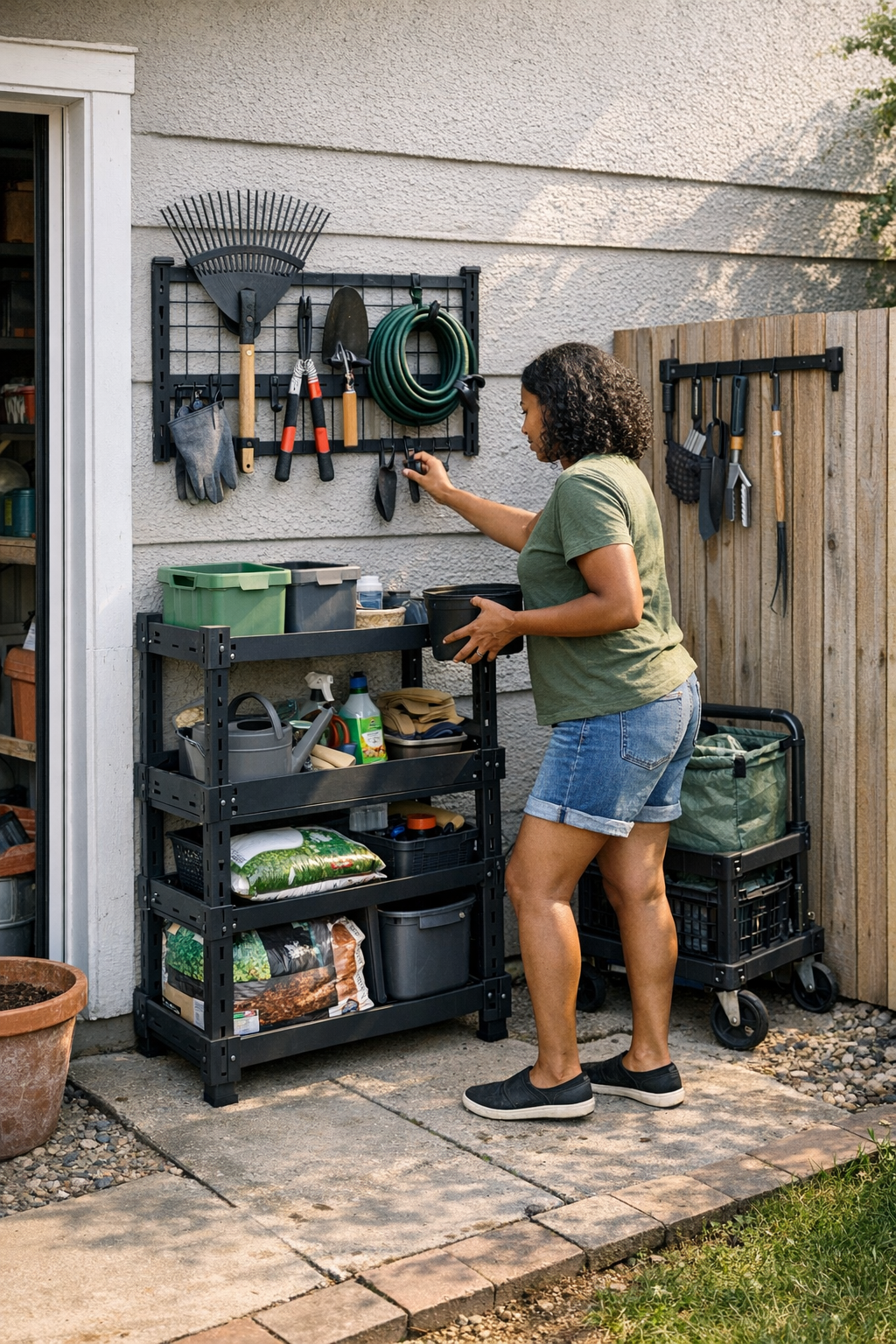
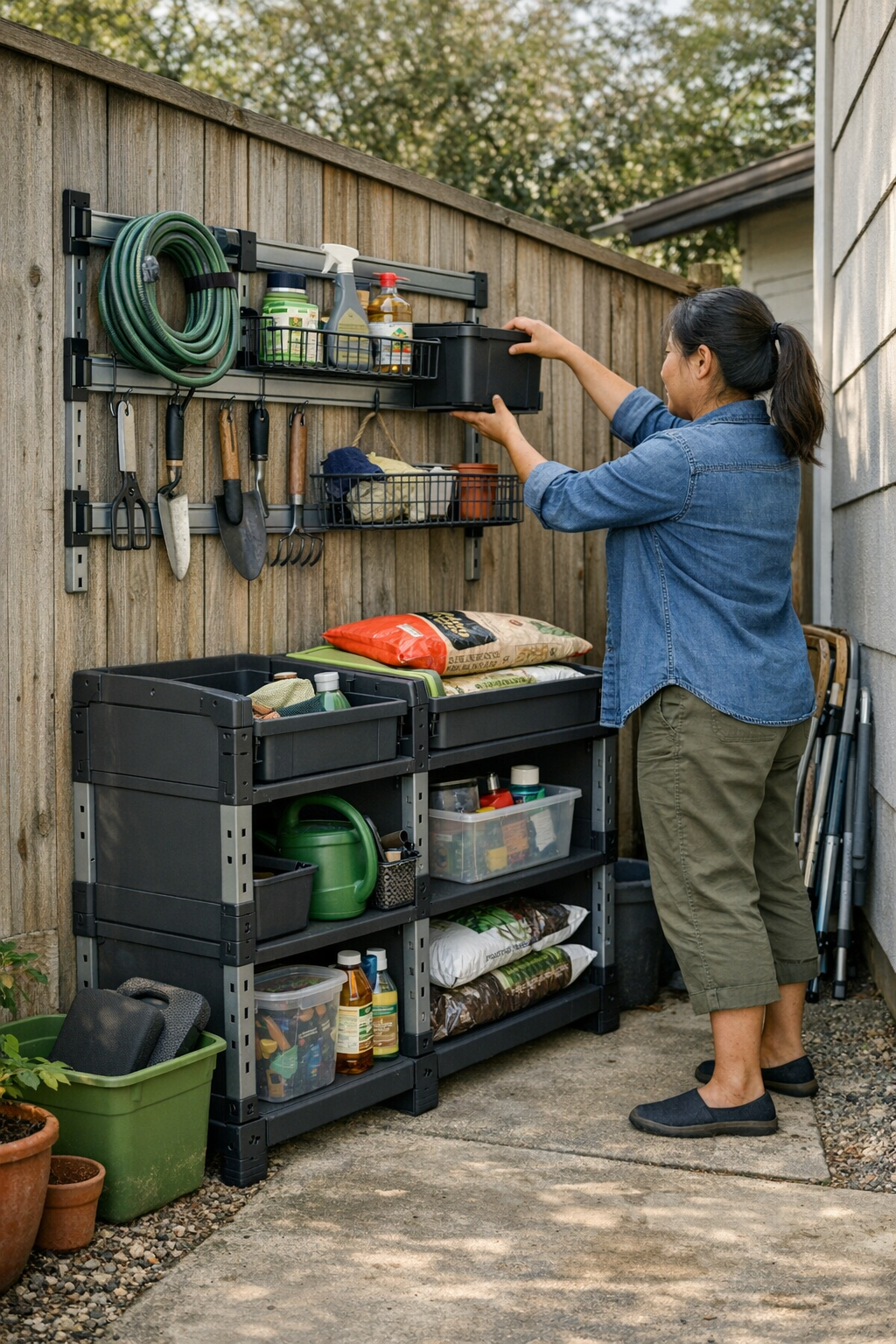
    Wall hooks, modular rails, and open shelving don’t just store things—they change how stuff moves through the yard. Instead of new gear sinking into a box or eating up floor space, each return has a visible spot that doesn’t smother the path. Hanging a rake, tossing gloves in a basket, propping folding chairs onto strong hooks: now, nothing is out of sight or underfoot.

    Step into a yard where the wall system actually gets used: the difference jumps out. There’s no hunt for last week’s clippers under a pile or accidental kick of a tripping hazard by the gate. Movement stays clean because even sloppy returns go up and out—not down and across your walking space. When something’s misplaced, it’s instantly obvious—a single tool out of place, not a hidden layer of chaos.

    Scene: Three People, One Side Yard, and Reset Fatigue

    Picture a classic setup gone sideways: a slim utility strip between house and fence, one hefty bin pushed under a window. The gardener tries to keep planters and pruners neat, the grillmaster stacks barbecue tools just inside the lid, and the third person needs quick chair access for reading after work. At first, everything looks promising. But soon, grill tongs won’t fit and rest against the wall, gloves are forgotten on the bin’s lid, and stacking chairs hog the ground in front. You go to water the pots but now you’re awkwardly stepping over chairs—plus the bin’s jammed with gear that’s not even yours. Nobody’s sure who’s supposed to fix it, and the smallest routine—grab shovel, get the gate open—forces a shuffle of three or four things every time.

    Now run the same routine with a wall system: lower hooks and rails for handled tools, baskets for gloves and hand gear, broad hooks for folded chairs. There’s less to hide. At worst, the trowel lands in the wrong basket or chair hangs unevenly; but paths stay open, gear is visible, and resetting is a minor correction—not a weekly overhaul. The routines coexist—the grill tools aren’t blocking the planters, and chairs can be grabbed without guessing what’s in the way.

    The Real Payoff: Reset Speed and Return Flow

    This is where structure stops being theoretical. Every time someone returns something, there’s a choice: hide it in a “catch-all” or give it a place that’s visible, immediate, and easy to correct. When the bin is overflowing, even a careful return results in a new mess, and you’re back to shuffling just to reclaim a clear path. Missed hooks or baskets with open slots turn small mistakes into small corrections—you see what’s wrong and fix it in seconds.

    Quick layout tip: Set your lowest rail or hook just high enough to clear the tallest tool that lives in that area—mower, shovel, broom. That one adjustment keeps floor traffic open, so even on a rushed afternoon, nothing is blocking walkways. Over weeks, the payoff shows: paths don’t shrink, resets take moments not hours, and the “Why does this space never stay clear?” routine fades from daily complaint to rare annoyance.

    When Your Setup Has Quietly Failed (and the Signs to Spot)

    A backyard fails its owners not when it fills up, but when it stops matching real use. You can feel this shift: items migrate out of bins onto the floor, every corner collects overflow, and nobody’s zone quite works for anyone. Wall space gets “used” with a single hook, but the ground below it clogs up anyway. You recognize the failure when you have to move three things just to get to the one piece you need—or when you hear, “Where did the watering can go? I swear I just left it here.”

    Look for the red flags:

    • Having to clear a route before you can even start your actual outdoor job.
    • Floor space disappearing even though you aren’t adding new gear.
    • Reshuffling the same pile, over and over, to “reset” the path or doorway.
    • Regular confusion: “Did you move the tongs?” “Why is the bin full again?”

    The outdoor setups that work keep resetting themselves, not because people are more organized—but because the structure makes it easy for anyone to fix a problem as it happens.

    Why Wall Systems and Modular Storage Win the Daily Routine

    No wall or modular system magically enforces perfection—but with the right setup, “mess” never becomes a mystery or a constant burden. The target isn’t a perfect surface; it’s a repeatable routine that doesn’t collapse under daily life: resets are quick, nobody is forced to play janitor, and problems reveal themselves early instead of festering. Even when returns are hurried, the fallout is minor, and floor storage never manages to keep pace—because the pile always outgrows the bin, and the pathway always shrinks to half its intended width.

    The secret is visible flow, not hidden stashes. Modular layouts with staggered rails or shelf zones let routines exist side-by-side, so the gardener’s pruners don’t get lost behind a stack of chairs, and the barbecue tools are never buried under hoses and pots. When the structure fits the way the space actually gets used, the whole area works—even when users are in a rush or someone forgets to return an item. The difference isn’t in how it looks after a big clean-up, but how reliably it stays workable after a normal, shared week.

    If you want an outdoor setup that cuts down on traffic jams and keeps your space usable—without endless resets—choose modular wall systems and open storage that flex the way your daily routines actually demand. See what fits your side yard, fence line, or utility corner at http://tidyyard.myshopify.com

  • How Dedicated Bins for Scoops Streamline Busy Entryways Efficiently

    Leave a scoop anywhere loose in your entryway, and your daily flow immediately shifts from predictable to messy. Set it “just for now” on a bench, balance it on a shelf, or prop it by the door—and suddenly, the quick grab-and-go you rely on dissolves. Items pile up at the only open patch, shoes edge wider, and the next person through the door hits an obstacle instead of a path. The space looks calm when undisturbed, but the first scramble for that unreturned scoop reveals the real weak point. In less than a day, what should be routine—grab, use, return—is replaced by scattered resets and blocked exits.

    The Trouble with “Almost Away”

    Every entryway collects “almost away” decisions: a scoop perched because hands were full, a bin with no defined category, or a shelf that quietly absorbs overflow. It all blends in—until routines overlap. One kid drops gear on the bench, someone else shoves a bag against the wall, and now the zone that looked under control in the morning won’t reset in time for the rush back out. Order on pause becomes drift; shoes spill into the path, bags overlap in the corner, and a single left-out tool invites the next. Lived-in entryways rarely get one reset per day—real pressure comes from repeated unscheduled returns, staggered exits, or that sharp transition from a rainy weekday to the evening dash. By then, visible clutter spreads with every small sidestep, and every “for now” turns semi-permanent by sunset.

    Entryways Under Pressure: When Clutter Surfaces Fast

    Routine only survives when every step is effortless—school mornings, wet dog returns, stacked arrivals after dark. The more hands and shoes moving through, the faster the system reveals its limits. After three days of rain, shoes multiply at the edge, and floor space shrinks with every unscheduled drop. The quick grab turns clumsy: someone grabs for dry shoes or the missing scoop, but benches are blocked, racks overflow, and bags drift into every open seat. Each missed reset sets the stage for another: leave a scoop out, and it’s one more object to trip, sweep aside, or search for. Midweek, the shoe line spreads wide, stray gear vanishes under coats, and the official “storage” zones become nothing but background to kitchen floors and hallway chairs. Clutter doesn’t arrive as a pile—it arrives as momentum, ripple by ripple, until the path tightens and exit routines jam.

    Dedicated Bins: One Movement, No Drift

    Containment changes everything. Give every scoop, brush, or tool its own dedicated bin—right size, right position, no exceptions—and retrieval becomes frictionless. Instead of scanning the room, pushing aside bags, or unsticking stuck shoes, you reach in, use, and replace in a single motion. There’s no block at the bench, no accidental bag-drag across the path, no hunting while the door is half-open.

    • The bench stays clear for sitting, not as a catch-all overflow zone.
    • Shoes and gear stop drifting into walking space or crowding underfoot.
    • Everyone—first out, last in—expects the same: the tool is there, always, never improvising its place.

    Bins with a vertical fit and lids account for muddy days and quick transitions, preventing spills and shielding gear from weather. Slim vertical bins trim side-to-side sprawl—no more tripping hazards or expanded mess zones. With designated homes, each reset is a second-long habit, not a weekend project. Containment keeps movement direct and interrupts clutter creep before it becomes something you have to clean up for real.

    Hidden Costs of Loose Storage

    If bins are absent, too generic, or mis-sized, clutter may look sorted in a photo but collapses the moment routines stack. Loose scoops never stay put—they become magnets for everything without a home. A bin lid fills with overflow: yesterday’s scoop, today’s gloves, tomorrow’s gardening tool. Shelves fill up with objects that have no return path, so display space mutates into stash space, and nobody knows what’s supposed to live where.

    Friction compounds in small ways—someone coming in with groceries stashes a bag at the threshold because a scoop blocks the right spot. A child, shoes muddy, drops them in the sole bit of open space, forcing a full shuffle just to get out again. What looks “neat” blocks actual flow: if every trip in or out means moving something first, the setup breaks down. Entryways don’t need snapshot order; they need a real, unfussy system that absorbs use without creating a daily reset burden.

    The Weeklong Test: Where Real Resets Succeed or Fail

    Optimal setups pass the test of repetition. Fix upright, right-sized bins to the wall, label each with its scoop, and after a few days of busy use, you’ll see what holds. The routine shifts: open the bin, grab the scoop, close, done—every time, even when distracted, rushed, or juggling bags. No searching, no sidestep, no resetting a sprawling bench. Tight bins plant the habit—surfaces stay open, and “just for now” evaporates.

    After a full week with rushed mornings, late returns, and shoes drying in cycles, the system holds: retrieval is fast, reset is instant, no trail of abandoned gear or block at the door. Even with back-to-back exits, nobody’s digging under piles. When something slips—a scoop left out or a bag dropped in the wrong spot—reset is so obvious and easy that the spillover never builds. One missed day is recoverable, but a system with clear containment resists chaos far longer before pressure shows.

    Real-World Tips for Sustaining Clear Entry Flow

    Every scoop gets a named spot—always inside, never balanced, never “just close by.” If a bin’s too tight or too shallow, swap it immediately. A bin that’s awkward is a bin that won’t be used, period.

    Clarify the rule for every user, every day. Systems dissolve when only one person follows through—remind at the door, inside the bin, or wherever error is likeliest. The less explanation needed, the less debate later.

    Check after high-traffic bursts. Any time the family piles in at once, or a muddy day hits, give it a brisk scan: is anything hovering, perching, or hiding out of place? Fix within seconds. That habit prevents drift from turning into a full reset cycle by the weekend.

    It’s About Resilience, Not Just Visual Order

    The best entryways aren’t made for show—they’re built to absorb pressure, reset fast, and keep traffic moving no matter how unpredictable the week gets. The line between “just looks organized” and “really works” isn’t subtle after repeated use: in the wrong system, routines bottleneck, clutter spreads, and every movement needs a workaround; in the right one, everything returns to ready, day after day, with no second thought.

    Display fails when the pace picks up. Containment—deliberate and repeated—forces the system to stay open, recover fast, and adapt to real life, not just a photo op. Don’t settle for tidy that only lasts until tomorrow. Build for daily, durable function and let organization be the side effect, not the vain goal.

    http://www.betweenry.myshopify.com

  • Clear Underbed Storage Bins Simplify Seasonal Organization and Retrieval

    Underbed storage: organized or always just out of sync? Lined-up bins and tidy lids look perfect for a week, but the setup’s real test comes after a spill, a laundry rush, or the start of a new season. Suddenly, you’re sliding out bins twice for the same blanket, shifting containers just to reach what’s hidden behind, or scanning a row of identical boxes and still not finding what you need. The surface order hides a restless reality: when every inch counts, “sorted” often isn’t “reachable,” and buried clutter makes every retrieval or reset feel like starting over. The details that seem minor at first—opaque versus clear bins—decide whether the space solves or multiplies the weekly friction.

    Why Seeing Matters: The True Test of Everyday Retrieval

    Clear and opaque underbed bins promise the same thing: compact storage, out of sight. But only clear bins cut through the constant interruption of not knowing what’s inside. Grab a fresh sheet after a midnight spill or swap out bulky sweaters at the first sign of spring—if the bin is clear, you spot what you need instantly. If it’s opaque, it’s a guessing game. That pause adds up: is this the winter blanket, or the summer one? Did I put my backup set here, or the next bin over? Each forced check breaks the flow, forcing you to pop open bin after bin just to track down a single item.

    This isn’t just a minor annoyance. Rummaging means moving more bins than you planned, leaving lids askew, stacking containers in awkward places, and mentally mapping where things probably are. Even labels lose their edge over time—categories drift, and memory fades faster than you expect. The result: the setup looks ordered but quickly turns into a zone that demands effort every time you use it.

    The Blind Spot of Opaque Bins: Hidden Overflow and Masked Category Drift

    Opaque bins not only hide what’s inside—they hide the beginnings of chaos. Overflow builds in silence. A bin for scarves quietly claims hats, then gloves, and then whatever else needs a home. Categories blur, but you don’t see it happening; you only notice when you’re digging through an unplanned pile. Frustration grows: if you can’t tell what fits, you’re more likely to shove things wherever they’ll go. A few rushed returns and the whole system loses coherence—inefficient, slow, and quietly giving up on its original logic.

    Routine Resets Stalled Out

    Out-of-sight is rarely out-of-mind when you need to get in and out quickly. Swapping bedding for the season, pulling out boots, or shuffling forgotten clothes becomes a stalled-out process, half excavation, half guessing game. Items hover between bins, left at the edge “for later,” because it’s easier than finding the right spot blind. What began as a hidden storage win grows into a loose spillover zone—half-organized, half-catchall, and never quite reset. The underbed setup lives on in visible evidence: stray socks escaping into the room, a too-tight fit that makes you dread the next cycle.

    Clear Bins in Action: Small Changes That Add Up Over Time

    Switching to clear bins isn’t just about that first, satisfying reveal—it’s about the way the space corrects itself, every single time you use it. Each time you return an item, the contents stare back: a sweater creeping into the scarf bin, or shoes piling onto the wrong pile become impossible to ignore. The category drift slows because the bin tells you so. Overflow is visible before it becomes a full-blown mess. Reset moments—big or small—don’t become a mystery, and every pass by the bed lets you spot, not guess.

    Faster Swaps, Less Disruption

    The daily pressure points—leaving for work, grabbing a spare blanket, bracing for a cold snap—become less of a scramble and more of a pull-and-go routine. In those high-friction moments, clear bins let you act without hesitation. There’s no “just-in-case” shuffling or double-checking, no half-sorted piles building up at the foot of the bed. The storage works with your movement, instead of slowing you down or forcing a reset you never actually finish.

    Practical Tips for Keeping Clarity Working in Real Life

    Visibility alone isn’t enough. Treat every clear bin as a single-category zone; resist letting items bleed over, no matter how tempting in a pinch. When overflow creeps in, don’t default to stuffing more inside—take it as a cue that something’s due to leave, not that another bin is needed. Add a label to reinforce your visual map, inside or out, and make retrieval as close to effortless as possible.

    Recovering from Early Chaos

    If you’re untangling an opaque-bin mess, the first meaningful reset is a spread-out audit—everything visible, grouped by use, nothing left as a mystery heap. Assign each pile a clear bin. From that point, defend each category; the less thinking required, the more resilient your system stays. The pain now replaces dozens of small friction points later.

    The Real Difference: When Organization Supports Routine, Not the Other Way Around

    Real organization in underbed storage isn’t about optical order—it’s about setups that keep pace with daily movement, seasonal shifts, and the endless return flow that challenges every home. The right bins make you faster, not just neater. The cost of the wrong choice? Search time doubles, resets stall, and that supposedly “organized” zone saps energy just when you need it clear. In the long run, small, visible distinctions—one bin you can see inside versus one you can’t—add up to a zone you can depend on, season after season, with less drag and more actual space reclaimed.

    Find underbed storage solutions and more practical organization at Gridry.

  • Why Clear Walkways Transform Outdoor Storage and Ease Daily Tasks

    The quickest way to ruin a good outdoor setup? Let bins and storage creep into your only walkway. A clear side-yard path or patio quickly becomes a maze: edge bins inch forward, shelf corners jut out, and every trip to the trash feels slower. What was once a simple walk turns into a clumsy dodge, the route tightening each week until even dragging out the wheelbarrow means stopping to nudge something just to squeeze through.

    Why Walkways Become the Pressure Point in Outdoor Organization

    There’s no such thing as extra space in the real zones—narrow backyards, side-yard strips, or fence-line utility runs. You walk these routes daily: hauling out yard bags, returning a shovel, or guiding a bike out before work. When bins and racks start eating into these passageways, every trip stacks friction. Move a bin “just for now” and it stays lodged in the path for days. Squeeze past a half-shut lid and you’re setting up the next slowdown. Organization that looks tidy but strangles movement does not survive repeat use.

    The frustration builds in increments, not explosions. It’s not about how much you’re storing—it’s about whether you can get past it without having to shift things every time. A walkway lost to overflow is a daily interruption. And once you’re pausing in the rain to reshuffle overflow or sliding containers back into line just to get through, the setup is the problem.

    The Creep: How Floor Bins Quietly Steal Your Space

    The classic fix—neat rows of floor bins—works for a day. Lined up against the siding or fence, they promise order. But almost immediately, reality reasserts itself: lids tip, a heavy bin edges out a little closer, someone pulls one out and doesn’t quite shove it back. By the next cleanup, the line has kinks, and your “straight shot” through the yard is a sideways shuffle.

    The real pain? It’s incremental. Maybe you tilt your shoulder to get by. Maybe the garden cart snags on a protruding bin and you have to back up for a better angle. Next week, you’re stacking a bag on top of the recycling because the ground zone is chokepoint. What seemed organized goes rogue—just slowly enough to feel like background noise until you can’t ignore it.

    Scene Report: The Overlapping Side Yard

    This hits hardest in tight quarters. Imagine a seven-foot-wide gap between house and fence. There’s space for storage against one wall and a narrow walking route—until a deadline day. The recycling’s lid hangs open, a shovel left sideways, a paper bag from last weekend sits where you “meant to move it.” Taking out the trash means a three-part shuffle: pivot, scoot, lift, swearing a little when the bag snags on a bin’s handle. None of the bins moved far, but every inch costs time and patience. By the time you’ve made two or three trips, it’s obvious—the layout fought back.

    How Wall Systems Change the Equation

    The entire flow shifts once you get storage up off the floor and onto the wall. Even six inches makes a tactical difference: garden tools go from a toe-stub risk to lined up, tight against the fence. Wall-mounted rails, vertical racks, utility hooks—they buy you the critical foot of open path. Suddenly you’re not slowing the cart to dodge corners, and a bag set down in a rush doesn’t spill into tomorrow’s walk.

    This isn’t about stuffing every square inch with storage. It’s defending the path—the only reliable way to keep routines running without constant resets. Ownership of your walkway is clearest after a rain, or on recycling night, or mid-project chaos. When the wall holds the bulk of the gear, you notice: nothing spills where feet and wheels need to go. Even if the scene isn’t pretty, it’s functional in all the right directions. Organization that only looks good for a photo collapses the first time you actually need to move fast.

    The Real Payoff: Less Reset, More Return Flow

    Elevating storage makes cleanup honest. Junk won’t quietly accumulate at ankle level. If something lands on the ground, you spot it—and clear it—before it becomes a pile-up zone. Pushcarts glide through, not zigzag. Lugging yard bags no longer requires a detour or preemptive tidying. The path isn’t just clear; it stays clear because the layout enforces it. Resetting stops being a draining chore and becomes a two-minute visual sweep: if it’s not on a rail or shelf, it needs to move.

    Keeping the Path Open: When Good Storage Works (and When It Doesn’t)

    The best setups hold up when you aren’t thinking about them—after a week of rain, three days of home projects, or one rushed garbage run. Smart organization supports the real routine: grab, move, return, repeat. The weak points show up fast:

    • You’re constantly nudging bins out of your way to reach the shed or open a gate.
    • Returning a rake blocks the space you need for the trimmer next time.
    • The back corner fills with overflow until you dread moving anything near it.
    • Every “quick reset” turns into a half-hour of dragging, stacking, re-lining.

    It’s not abstract—it’s an everyday stutter in how your space works. Storage solutions that only look clean turn into the biggest hassles as soon as routines pick up speed or weather gets in the way.

    Modular Systems: Flexible, but Not Magic

    Modular wall racks, rails, and adjustable shelves are designed to flex real-time—especially outdoors, where today’s bike zone is tomorrow’s tool wall. You can expand or pull back storage as seasons change, but there’s a catch: too many pieces, or modules not locked in, breed their own chaos. If one section’s tight and another’s loose, overflow finds the weakest link. The walkway shrinks, the footprint sprawls, and the “modular advantage” is lost to haphazard growth.

    The fix isn’t adding storage, but tuning how storage meets movement. When hooks, rails, and bins hug the edges instead of spilling out, the path remains usable even as needs shift. But even wall setups need policing—if a rail starts filling past its length, if a low hook interferes with a mower, you know it. Real flexibility means being able to pull back at the first sign of spread, not just stacking more in every direction.

    The Only Test That Matters: Does the Path Stay Clear After Real Use?

    This isn’t about showroom order. A system passes the test if—after rain, mess, and five returns—your walkway isn’t blocked. Maintenance time drops. There’s no last-minute shuffle. Doors swing wide, pushcarts don’t glance off bins, and returning something after dark isn’t a calamity.

    The biggest difference between a setup that works and one that merely stores is simple: invisible friction disappears. There are no lingering detours, no guilt-pile in the corner, no inescapable clogs as the week wears on. When you stop thinking about the layout—and start flowing through your routine without slowdowns—that’s when the outdoor setup finally fits the space it claims to serve. If you’re still tripping, nudging, or stopping to rearrange, it’s time to rethink not just what’s being stored, but how often it’s in your way.

    See what real, repeated-use outdoor setups look like at TidyYard.