Category: Yard & Utility

  • Why Anchored Drawer Systems Outperform Stacked Units in Daily Use

    Order that needs constant fixing is no order at all. Set up a hallway, closet, or bedroom corner with neat stacked drawers or modular bins and, at first, everything feels crisp. Shoes lined by the door. Toiletries in their cubby. Chargers in one tidy compartment. But it only takes a few days—and a few rushed searches or careless returns—before the weakness appears. Drawers lean, stacks slip, and suddenly the system that promised order starts multiplying sorting and retrieval work.

    Where the Setup Breaks Down: The Reality Check of Daily Use

    Most storage setups look strong right after install: drawers aligned, stacks tight, categories separated. But repeat use exposes cracks fast. Hallways gather stray shoes and bags. Closets swallow everything from winter hats to stray tech. It takes one overstuffed bin or misaligned drawer and suddenly, basic actions—like grabbing a towel or finding a charger—require detours, jams, or digging through mixups at the bottom. What should streamline busy mornings now blocks your path or slows you while you restack or re-sort drawers for the third time this week.

    The pain isn’t just visual. Category drift is daily: device cords wind up in the sock pile; folded linens inherit last-minute clutter. The floor unit that seemed clever now crowds your exit path or blocks a door. The setup “holds” your stuff, but the price is silent friction on every return and retrieval. What’s meant to help you move smoothly ends up forcing slowdowns or extra resets, especially when more than one person uses the same zone.

    Stacked Drawer Units: Fast Setup, Fragile Order

    Stacked drawers only thrive when no one disturbs them. At move-in or in solo spaces, there’s a drawer for every need: scarves, chargers, tools, undisturbed and neat. But daily routine quickly undoes this:

    • Drawers pulled halfway or returned just off-track start to skew the tower—one error throws every level above and below out of line.
    • Heavy or overfilled drawers lean or bow, risking a full collapse or tilting stacked units.
    • Anything buried at the bottom means unstacking half the system just to retrieve one item, disrupting order up and down the tower.
    • Different users, different habits: no two returns land the same, and shared spaces show entropy faster than any single-user setup.

    The cycle recurs: stacks drift, order softens, and what started as “organized” becomes another time sink, calling for regular overhaul just to stay functional.

    Anchored Modular Frames: Trading Flexibility for Usable Stability

    Anchored modular frames change the entire equation. Instead of balancing loose towers, every drawer or bin sits inside a fixed rail, wall slot, or mounted grid. That structural anchor makes visible difference over weeks of real use:

    • Rushed drawer pulls or careless slams no longer knock the whole system sideways. Each unit’s path is fixed within the frame, not able to wander into blocked positions.
    • Category boundaries hold: files don’t migrate into towels, chargers don’t tangle with socks—even under careless returns or shared hands.
    • The footprint never creeps forward or to the side; movement stays clear, access paths open, and resets are faster because items stay where they belong.
    • The frame itself takes the impact of daily churn, keeping the system readable and usable even as habits fray or users change.

    If you want to rearrange constantly, fixed frames push back—swapping layouts isn’t instant. But for most high-traffic zones and shared rooms, clarity and consistent retrieval outweighs the lost flexibility. You regain flow: less fixing, more direct access, fewer slowdowns midweek.

    Small Frictions, Big Delays: Common Scenes in Shared Spaces

    • Double grabs for the same item—try drawer one, find it’s shifted, now drawer two blocks you, and morning routines burn extra minutes.
    • Three drawers pulled before socks appear—all because stacks slipped, and now everything needs reordering just to reach basic items.
    • Wall fixtures that promise “space saved” but instead force awkward side steps or overreaching, as bins migrate outwards under repeated use.
    • Bare floor corners transition into dumping grounds, absorbing overflow from every system failure and stretching out the time needed to reset each week’s mess.
    • By midweek, it’s obvious: the more time you spend “maintaining order,” the less the zone helps you move or live in it.

    One Simple Tip: Prep for Your Own Pace

    Do this after your next reset: Mark the calendar for four days out. If you’re already restacking or reshuffling, or just subtly annoyed at drift and misplaced items, your setup is misaligned with your real daily pattern. Any system that demands correction that quickly is adding friction, not removing it.

    Seeing the Difference: From Correction to Calm

    What stands out after a month isn’t the look—it’s whether you can grab, return, and continue, no matter how imperfectly you and others use the space. Anchored frames win here: categories hold, drawers move cleanly, resets shrink to seconds, and you stop spending time realigning storage pieces just to keep things accessible. Multi-user setups breathe easier: you can pull a drawer while someone else grabs a nearby shelf, assign specific drawers with confidence, and trust that thresholds and paths stay open, not choked by creeping bins or unstable towers.

    The sound of “organization” becomes background—not another chore looming at the week’s end, but a system that absorbs daily disorder and quietly resets on its own terms.

    When Setups Become Another Chore

    If you catch yourself untangling, restacking, or re-sorting more than once a week, it’s a signal: the storage itself is now running your routine, not supporting it. Invisible wasted effort—the time spent fixing, nudging drawers back into place, or tracking down overflow—add up, making every morning or night a little more aggravating. A system that keeps its shape through shared use, carelessness, and the usual churn shrinks this silent workload: you get back clear paths, easy retrieval, and less forced reset, whether you’re hurrying to work or winding down for bed.

    Choosing What Fits: A Setup That Stays Accessible

    The right storage won’t just survive setup day—it will endure the chaos of real life, holding its structure even when days turn chaotic or hands change between uses. If you’re living with ongoing category blending, chronic restack needs, or a storage zone that crowds your routines instead of easing them, an anchored, modular frame can mean the difference between functional space and just another zone to fix. The calm isn’t cosmetic—it’s built into the daily, repeated flow that matters most.

    See more practical modular frames and anchored storage solutions at Gridry.
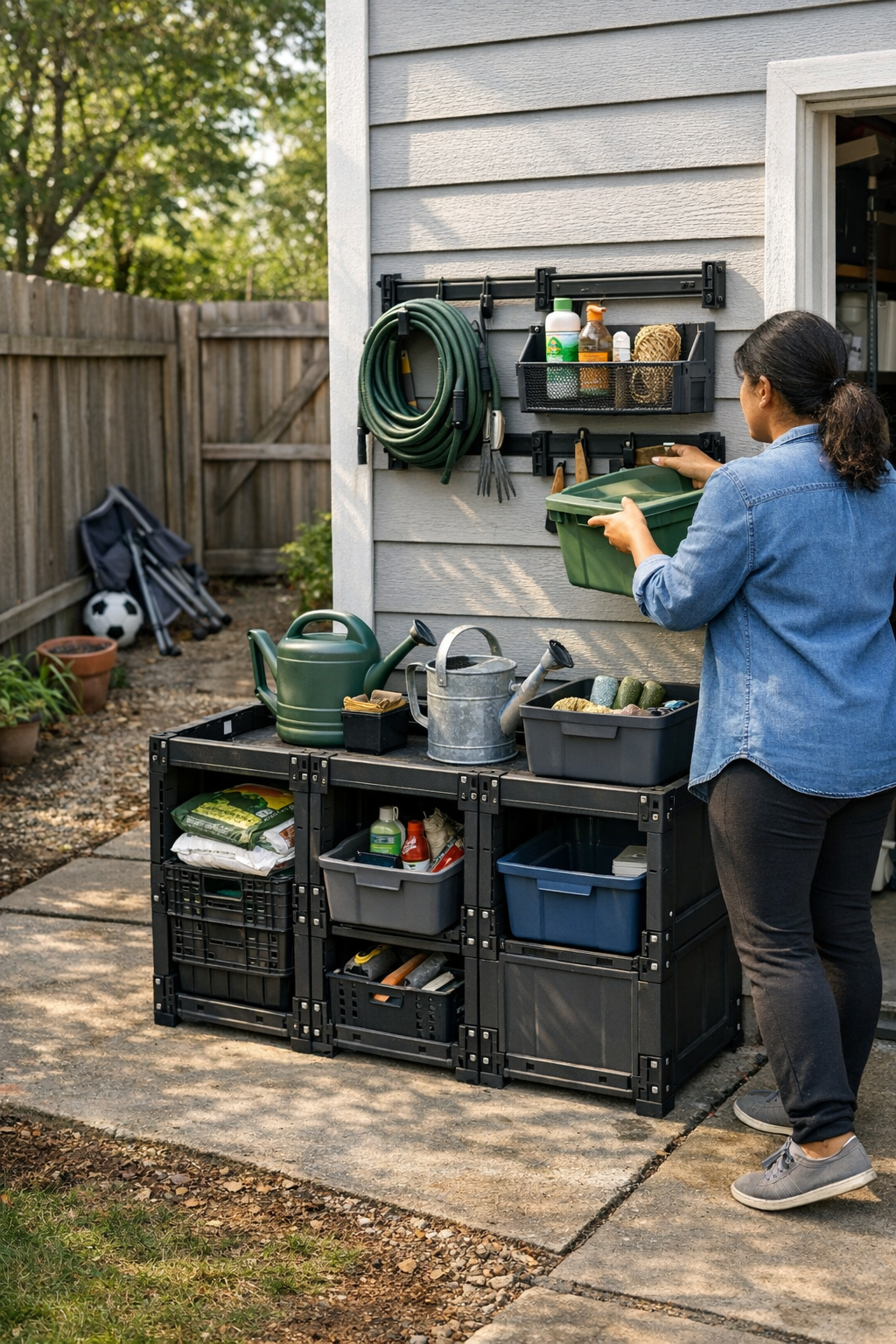
  • How Vertical Storage Transforms Shared Yard Organization and Flow

    Every shared outdoor space has its illusion of order: bins stacked neatly along a fence, racks squared off on the garage wall, the walkway cleared for once. For about five minutes, you’re convinced you’ve finally tamed the yard. Then the real day starts. Kids track boots past the bins. Someone’s hauling chairs in for the neighbors—or out for the third time this week. Afternoon sees garden tools piled next to the toys someone meant to put away “just for now.” By Friday, you’re dodging toppled buckets by the side gate and re-clearing the same path for the fourth time—wondering why the organization never seems to last past Monday.

    Floor Storage: The Reset Trap

    Outdoor floor space always looks more generous on day one than it feels on day six. Bins and shelves line up like a container-store catalog after the initial reset, but in practice, real routines muscle their way back in. Groceries stacked on bins block the gate just as someone’s trying to roll out the mower. Balls wedge themselves behind bulkier gear. Before you know it, overflow piles are back in the walkway, each one tracing the path of an interrupted task. Clearing the floor on Sunday doesn’t fix how fast it chokes up by Thursday—especially when even a single forgotten shovel can trip the whole system.

    Return Flow: Where One Move Unravels the Rest

    You see it in a single moment: someone returns folding chairs, but parks them in front of the boots. Now to get the boots, you have to move the chairs—and in the shuffle, a bucket gets knocked over. Instead of the system working, every return becomes a mini reshuffling. The end result: constant micro-resets and confusion about where things actually go, because the arrangement never matched the way people actually use the yard.

    Wall Storage: Useful Space or Out-of-Reach Hopes?

    Wall racks, hooks, and shelves seem like the next logical fix—take back the ground, make your edges “work.” But wall storage exposes a different set of flaws fast. Put one rack slightly too high or behind a bulky bin, and you’ve only moved the frustration upward. A garden tool rack everyone meant to use? If the youngest kid can’t reach it, the shovels end up blocking the path again. Hooks hidden by bikes or out of the natural return route become ghost zones: everyone ignores them, clutter collects below, and floor space clogs up anyway.

    The Reach Problem: When Storage Stays Just Out of Sync

    Every multi-user yard hits this reality. You put up new wall hooks but watch as hoses and gear continue to stack up just beneath them. It looks like a discipline problem, but really, storage has to meet people where they actually drop things. If a hook’s too high, if the path is blocked, if a bin is awkward to access, items default to the nearest open ground. Systems that work only for the person who set them up lose their hold fast in mixed-family, multi-user yards.

    The Reality Zone: Where Movement Bottlenecks

    Choke points always show up in the same places: narrow side strips, the patio edge, the main walkway past the bins. These spots collect clutter not by accident but by design mismatch. Collapsible chairs nestle into the walkway corners until no one can pass with a wheelbarrow. Sports gear piles up by the fence, edging its way into the path after every Saturday. Each “organized” system starts to break where routines overlap—and it’s these pinch points where you feel the reset pressure most.

    The Cost of Ignoring Real Traffic

    No wall rack or bin system stays neat if it ignores these flows. Weekend returns never follow the clean-out order. Someone tosses boots aside to bring in a cooler, or parks a bike across the shed entry. The neat stacking collapses, and you’re back to nightly or weekly corrections—always reactive, never ahead. The burden isn’t the storage itself, but setups that can’t flex for the actual beat of the yard.

    The Small Fix That Actually Sticks

    Not every improvement means a full overhaul. Sometimes, moving a rack six inches lower or shifting a storage bin a foot closer to the gate finally makes the right action effortless. In one side yard, just adjusting garden tool hooks so kids could use them stopped the daily pile of shovels in the walkway. The setup stopped demanding daily resets. True organization never comes from appearances on Sunday; it shows up in how little you have to think about clearing a path by Wednesday.

    Watch Where Gear Actually Lands

    Before blaming “no one puts things away,” map the mess. Notice where the boots get tossed, where buckets stack up, what doesn’t get returned—these are the spots where the current design loses to habit. Lower the unreachable rack. Move that heavy bin out of the dead corner and into the main traffic line. Reorganize for where returning hands go by default. The less friction, the less overflow shows up next week.

    Looks Sorted vs. Actually Working

    A polished setup is easy to stage for a photo—much harder to sustain through real weeks with real people running in and out, tracking mud and dragging gear. The only test that matters is how often you’re forced to clear the same jam, move the same chair, or unbury the same boots. The trouble spots—the corner by the gate that keeps filling up, the wedge of bins that blocks the garage entry—are signals, not failures. The strongest setups flex for movement and make returns idiot-proof. That’s the shift: less time spent apologizing for the mess, more actually using the yard without resetting it every time.

    No Setup Is Permanent—But Some Fixes Stick Longer

    Unreachable hooks, bins that don’t open easily, and paths blocked before the weekend always out themselves fast. Fixes that work grow out of watching—really watching—how your outdoor space gets used. It’s less about installing the “perfect” solution, more about improving what keeps breaking down in daily life.

    Get adaptable solutions built for real outdoor routines at TidyYard.

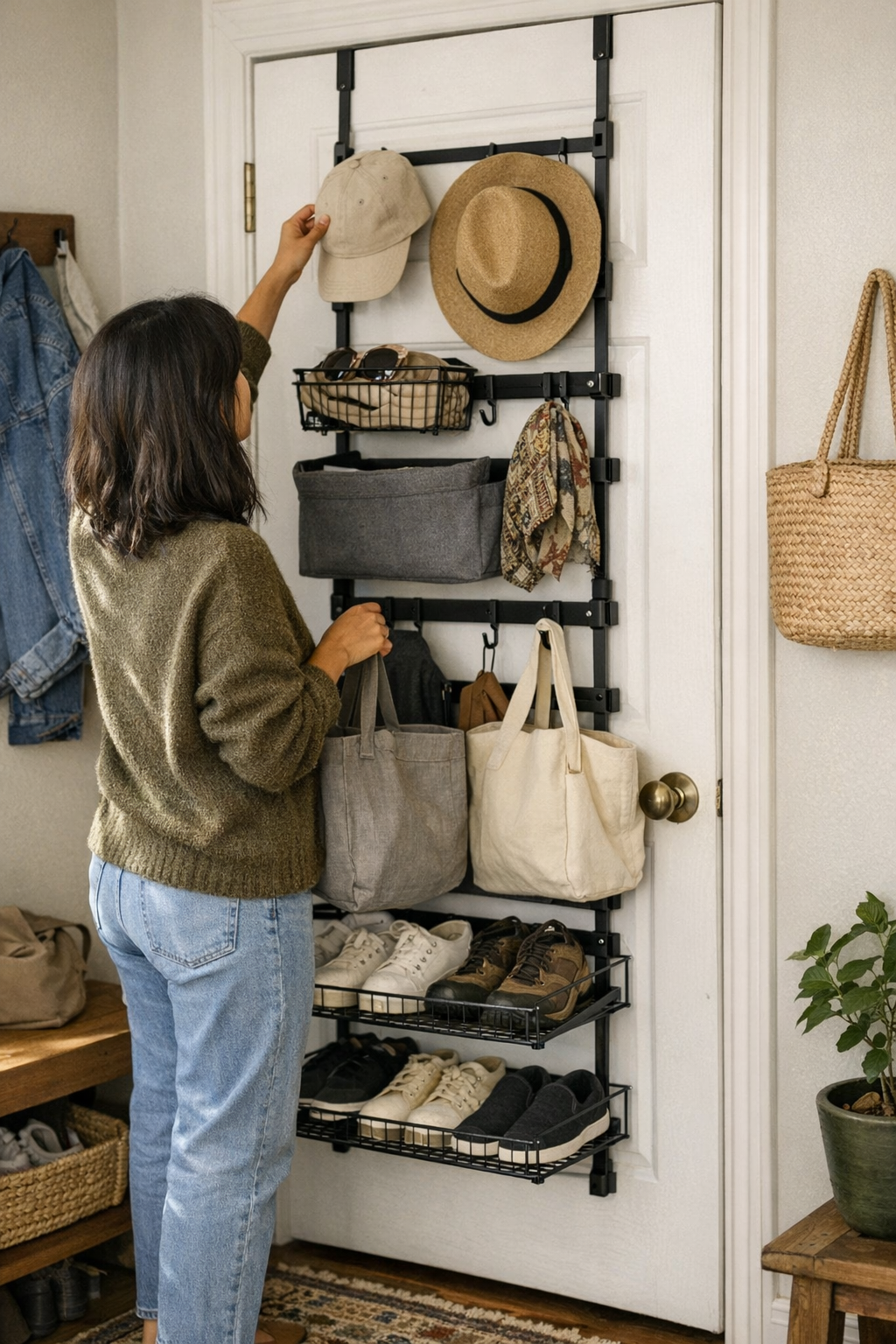
  • Maximize Entryway Space with Door-Mounted Storage Solutions

    The entryway feels wide until the moment you need to get through. Step inside, and the space that seemed clear yesterday turns into a bottleneck: a half-unzipped backpack half-off the bench, yesterday’s shoes jutting across the mat, a grocery bag “parked for a moment” that’s still there tonight. The path from door to living space doesn’t just narrow—it contorts. Shoulders turn sideways to dodge a dropped jacket, and the bench that should anchor the threshold becomes another overflow landing. Every day, the clutter resets the entry—not with one big mess, but with a hundred small intrusions that slowly choke off the centerline.

    Why Standard Storage Struggles Near the Threshold

    If your door opens straight onto a tight zone—or if the “entry” is really a slice between kitchen, hallway, and garage, acting as gear stand, shoe pile, and pause point—the tension builds fast. Routine solutions unravel under real pressure:

    • Shoe benches and floor racks create a fleeting sense of order. But as the week fills up, shoes edge past the bench, “emergency” bags stack on the seat, and you’re left navigating an obstacle course instead of sitting down.
    • Wall shelves help visually, until they protrude just enough to force you sideways, or overflow piles beneath them because no one wants to reach that high for one glove.
    • Catch-alls and extra baskets only shift the border—they don’t stop gear from leaking into the path.

    The core problem isn’t storage capacity, but sideways spread—the constant slide of items off intended surfaces and into movement lanes. That’s when the “just set it down” pattern wins and the pathway clogs. It looks okay for a day, then builds up in patches that make even a quick trip in or out a source of friction.

    Opening Up the Walkway: The Structural Advantage of Door-Mounted Racks

    Most entry storage fights for floor or wall space, but a door-mounted rack uses the back of the threshold itself—a zone most setups ignore. Where benches and shelves compete for every inch, a door rack converts unused, vertical territory into active storage. That means:

    • No second row of shoes tripping up the first step inside
    • No sitting surface lost under handbags or random returns
    • No need to shuffle piles before the door even closes

    The effect isn’t empty minimalism—it’s functional clearance. Things used most often (light jackets, hats, small bags, gloves, daily shoes) move up and behind, leaving the core pathway open just enough to avoid the side-step shuffle, especially when everyone piles in at once. You notice it most during those high-pressure surges: wet school mornings, late returns, or that five-minute window before heading out again. When the path behind the door is open, movement stays fluid—even as routines get chaotic.

    The Real Test: What Changes After Moving Overflow to the Door?

    Door racks either hold up under pressure or quietly unravel. The difference shows in real use, after the novelty fades:

    • The floor around the mat stays clear. Shoes go up or in, not sideways across the entry’s only flat space.
    • Bench space returns. You can actually sit—no juggling mail or moving yesterday’s tote just to tie laces.
    • Resets shrink. Instead of a 10-minute sort, it’s a quick rack-to-bag handoff after a long day. You spend less time reshuffling and more time just moving through.

    Overflow doesn’t disappear—but it’s sent into one vertical zone instead of sprawling outward. That control is the difference between a habit you keep and one that keeps tripping you.

    Scene Check: A Day in the Life of the Door Rack

    Picture a crowded Friday: rain, mixed gear, kids and adults coming and going in shifts. Boots hit the mat, extra shoes slide into lower pouches, hats and gloves up top. Someone swings back through, grabs a backpack from behind the door—no pile teetering, nothing blocking the threshold. The main area doesn’t feel showroom-perfect, but the difference is immediate: you actually get through the door, drop-off barely slows the flow, and resets demand less negotiation.

    Best Practices: What Works—and What Doesn’t—With Door-Mounted Racks

    Door-mounted success depends on what you load—and what you don’t.

    • Best for: Daily shoes (not every pair you own), light bags, compact jackets, hats, gloves—whatever cycles out and in most days and doesn’t weigh the door down.
    • Keep off: Heavy toolboxes, winter coats, large sports gear, anything that strains hinges or feels risky to swing with the door. If you need two hands or a warning, it belongs elsewhere.
    • Watch the limits: Overpacking turns racks into new clutter points and stresses door hardware. Lean categories last longer and reset faster.
    • Stay disciplined: “Temporary” storage always tries to go permanent. Schedule resets—weekly, if not more—to keep buildup in check before small piles become permanent obstacles.

    For high-traffic doors (quick opens, lots of hands, partial closes), check mounts regularly and use lightweight categories. Renters and thin-core doors should prioritize lighter, removable racks or alternative placements. The system works best when the load matches the threshold—useful, accessible, but never overloaded.

    Making the Most of Tight Entryways Without Sacrificing Movement

    The difference plays out in small, everyday moves:

    • Groceries in one arm, you can still walk straight in—the drop zone isn’t a minefield.
    • Kids reach hats without emptying baskets or sprawling across the mat for one sneaker.
    • You pivot, turn, or wait near the threshold and still have space to breathe—even when it’s crowded or messy.

    When floors and walls are packed, the back of the door becomes a pressure release. Not perfect—shoes still sneak under benches, bags still appear “just for a second”—but the pressure point softens. Cleanups shrink, reset effort drops, and the entry stops feeling like a penalty box after every busy day.

    A Small Move With a Noticeable Difference

    Adding a door-mounted rack doesn’t make the entry problem-free. It does shift the way entry routines work—less scatter, fewer trip hazards, and resets that finally stay manageable. The advantage isn’t just looking tidier, but functioning better where friction used to win. With the right category discipline, a door rack turns neglected space into a buffer that holds under real, repeat use—never just another surface to pile on, but a tool for breathing room.

    Visit Betweenry for practical entryway storage that adapts to real routines.

  • Why Drawer Cabinets Transform Office Supply Storage and Daily Organization

    Desk organization rarely fails because of the first setup; it fails when the system can’t stand up to repeat use. By midweek, supplies meant to stay sorted—pens, chargers, stray envelopes—start bleeding across categories, choking up your work surface and slowing every grab-and-go moment. It isn’t about aesthetic order once: it’s about whether your storage actually lets you reset quickly, find what you need, and avoid the slow buildup of friction that leaves your desk unusable by Friday. The problem isn’t bad habits. It’s that most common desk storage—open bins, baskets, stacking trays—works against you after a few days. You move the same pile twice, hunt for a cord under a batch of mail, and realize “organized” only meant “temporarily forced into neatness.”

    When Storage Methods Fight Your Routine

    Open bins, baskets, and shelves promise easy access, but almost always create a new friction: it’s fast to toss things in, but it’s rarely fast to get them back out cleanly—let alone returned to the right category. The things you need most float to the top, blocks of unrelated stuff get nudged together, and suddenly the “stationary bin” is half cables and receipts. Retrieving one item means shifting several. Open shelves? Shift one folder, disrupt a whole row. With every cycle, your carefully sorted order slips further—until reaching for a specific pen is a mini excavation. What looked organized starts to feel more like a staging area for tomorrow’s mess.

    Open systems offer visibility but deliver constant shuffling. You never get advance warning when categories merge or overflow crowds the edge—the only signal is wasted time, quick frustration, and surfaces that grow messier by the hour. You don’t so much “organize” as repeatedly delay chaos, grooming the same piles until there’s no clean return path at all. When the system asks for constant attention just to stay usable, you end up working around it, not with it.

    What a Drawer Cabinet Changes in Daily Use

    Switching from open storage to a drawer cabinet inside your desk zone shifts the pattern entirely. This isn’t just about hiding clutter; it’s about controlling categories, keeping supplies in predictable lanes, and letting the surface recover with almost no effort after every session. The biggest difference isn’t seen in a “before and after” photo—it’s in the dozens of micro-decisions you stop noticing. Pens and notes find their way back to the same drawer. Chargers don’t drift between baskets and counters. That weird receipt doesn’t swallow your to-do list. What’s gone isn’t just the mess, but the repeated double-handling that ate up your Monday mornings and Thursday afternoons.

    Reducing Double-Handling and Decision Fatigue

    Drawer cabinets force a structure on your routine that open storage simply can’t. Each drawer acts as a line against category bleed: paper goods stay confined, tech charges return to their slot, overflow finally remains contained. The reset at the end of a day? Not a 10-minute sweep-and-scramble, but a one-minute routine where everything lands home in three movements. No jamming piles so boxes close, no shuffling items to hunt for a buried USB drive. The unwelcome surprise is gone; the return loop shrinks. You spend less energy deciding “where does this go?” and more time actually working—or just stopping for the evening without a looming mess waiting for next time.

    Stability Versus Sprawl

    Baskets and open shelves almost invite sprawl—new stacks on top, sideways piles, useful tools drifting to the “neutral zone” by default. Drawer units resist this drift. Separation gets enforced every day: open a drawer for stationary, nothing else moves; close it, no new pile is born. Over time, this means missing items stop lingering on the desk edge or under a loose document. The work surface stays functionally open, not just cosmetically clear for a moment. That orphaned highlighter or lost cable is contained, not adrift and slowing you down.

    Real Scenes from the Office Zone

    End of the day: your tray is buried, cords snake across notepads, new receipts pool over half-completed lists. With only open bins or shelf lines, “putting away” is usually just starting a fresh heap—one you’ll sift through again tomorrow. But a drawer cabinet interrupts that spiral. Chargers drop into their compartment; notes and loose pens in theirs; receipts where they won’t interrupt the next task. This one-minute reset turns what would be a growing disaster into a stable, almost invisible routine. You spend less time “tidying” and avoid starting every morning with a shrug.

    Need to grab a notebook or sticky notes before a call? In a mixed bin, you dig, disrupt, and maybe settle for what’s on top. In a drawer setup, each category remains isolated: open, take, close—nothing else slips out of place or crashes to the floor. The absence of inconvenience is what stands out: you stop noticing resets at all, because they barely register in your workflow.

    The Footprint and Flow Dilemma

    Even the best storage can work against you when it starts blocking movement or quietly growing into the room’s “prime real estate.” Floor baskets escape their corner, spreading as you reach for what’s wedged behind. Shelving units creep up the wall, but fill up with so many layers that the front row always blocks the back, slowing every search. Order might look intact, but the path through the space narrows, and you pay with time—not just in steps, but in micro-delays and awkward detours.

    Positioning a drawer cabinet directly beneath the desk—especially a rolling option—keeps storage anchored and minimizes accidental spread. The footprint remains tight; you open only what you need without skirting piles or shifting furniture. In tight spaces, claiming one reliable zone for storage (instead of letting bins multiply) keeps the room usable. Movement isn’t blocked by your own organizing attempts, and the “reset cost” never grows beyond reach.

    Making Resets Less Taxing

    The real test of any storage setup is the reset: how hard is it to bring order back after a messy, real day? In practice, magazine-perfect setups collapse because they can’t absorb everyday use. Drawer cabinets with deliberate zoning keep categories stable, so the return flow is frictionless even when you’re in a hurry. There’s less chance of stashing items in the wrong places, less likelihood that overflow clogs a usable surface, and fewer excuses to let entropy win.

    This isn’t about making the space perfect—it’s about building a setup that stays workable, even under pressure. Drawer units aren’t immune to overfill or lazy returns, but the system resists category slide and keeps daily slowdowns at bay. No more hunting for missing items or resigning yourself to an end-of-week “desk rescue.” The reset becomes so fast it barely interrupts your momentum, freeing up energy and time for actual work—rather than the never-ending drag of sorting through yesterday’s leftovers.

    Small Shifts with Real Impact

    “Organized” means little if it can’t survive daily churn. The value is in a system that matches real movement: things come in, things go out, but the categories and surfaces recover with minimal effort. A correctly placed drawer cabinet does more than contain clutter—it restores the work zone with almost no mental effort, session after session.

    Test it: move one chronic overflow—chargers, pens, whatever piles up first—into its own drawer and see if retrieval and return change. Does the surface stay clear longer? Can you find what you need without shuffling a buried pile? The answer reveals whether your storage is helping your day or just marking time until the next frustrating reset.

    Find storage solutions that work with your space and routine at Gridry.

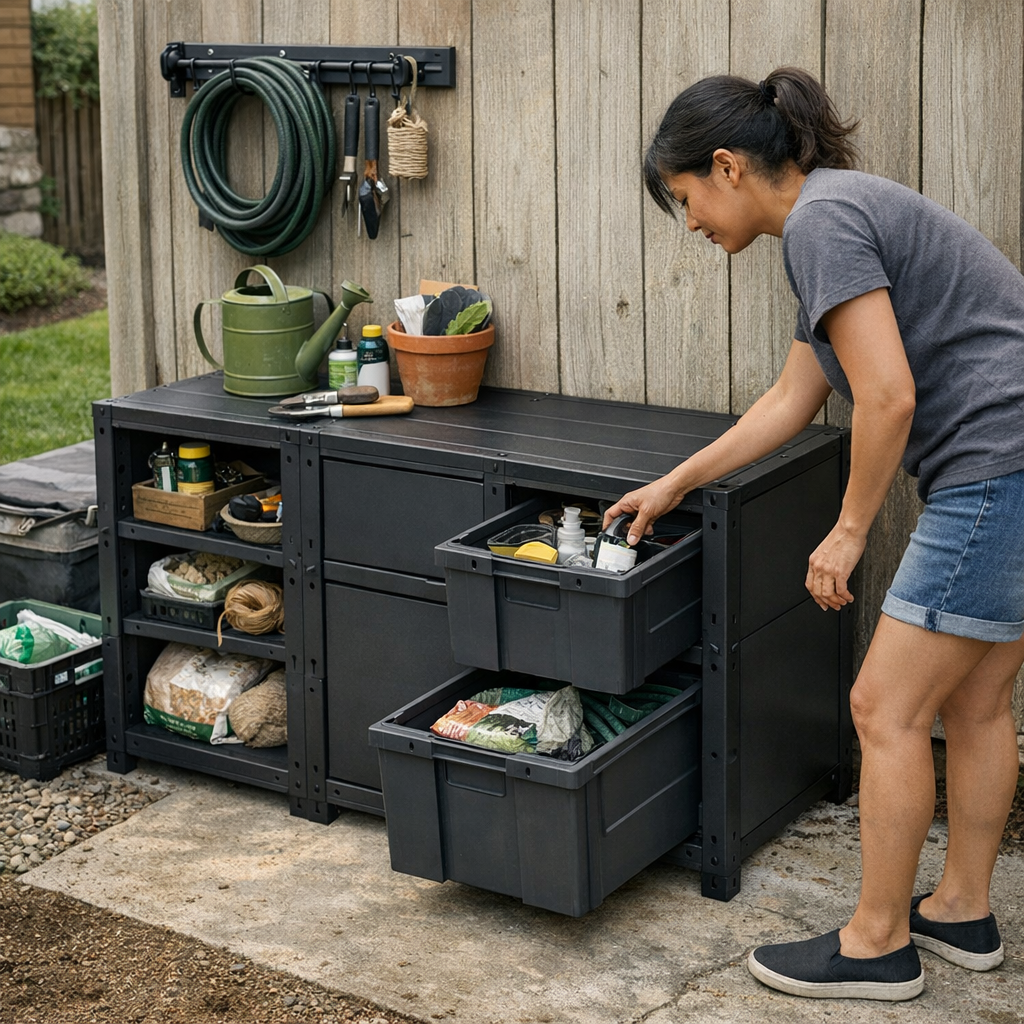
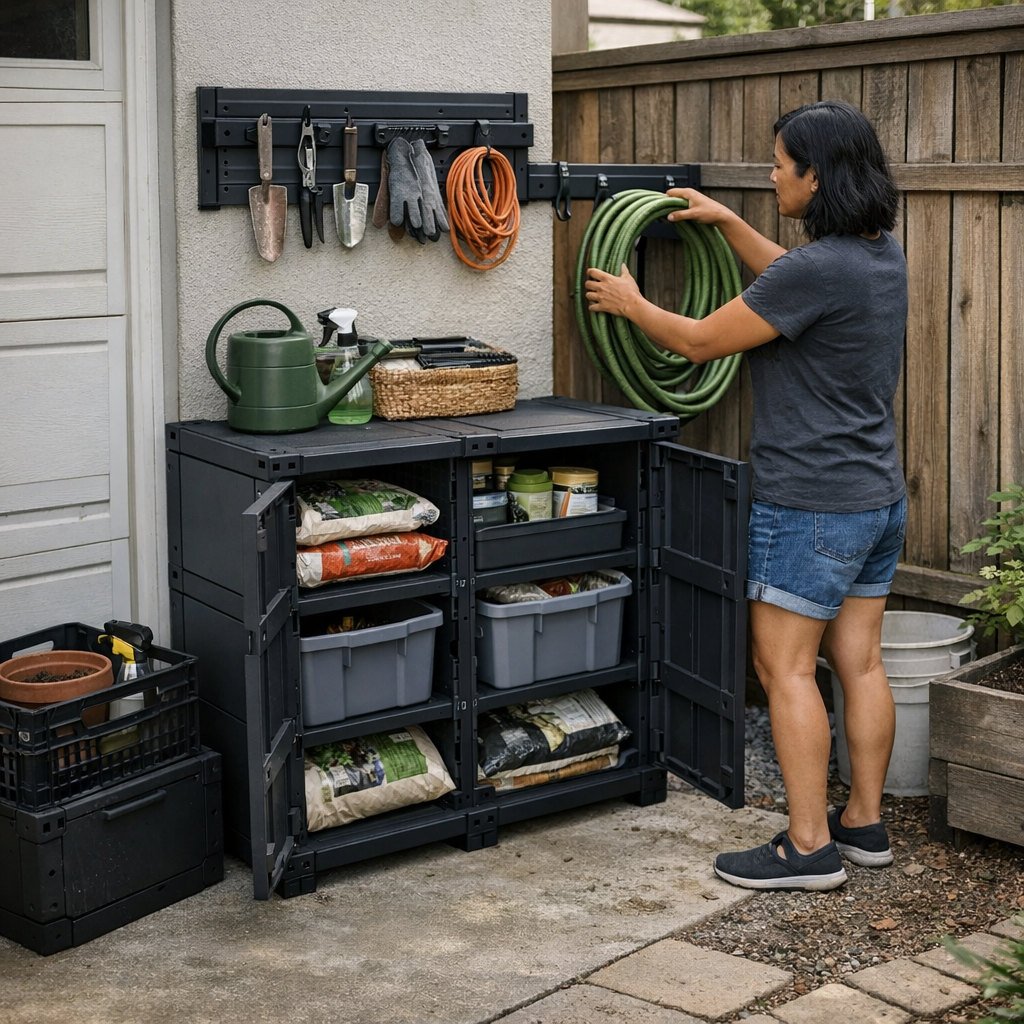
  • How Outdoor Storage Systems Can Adapt to Real-Life Yard Use Patterns

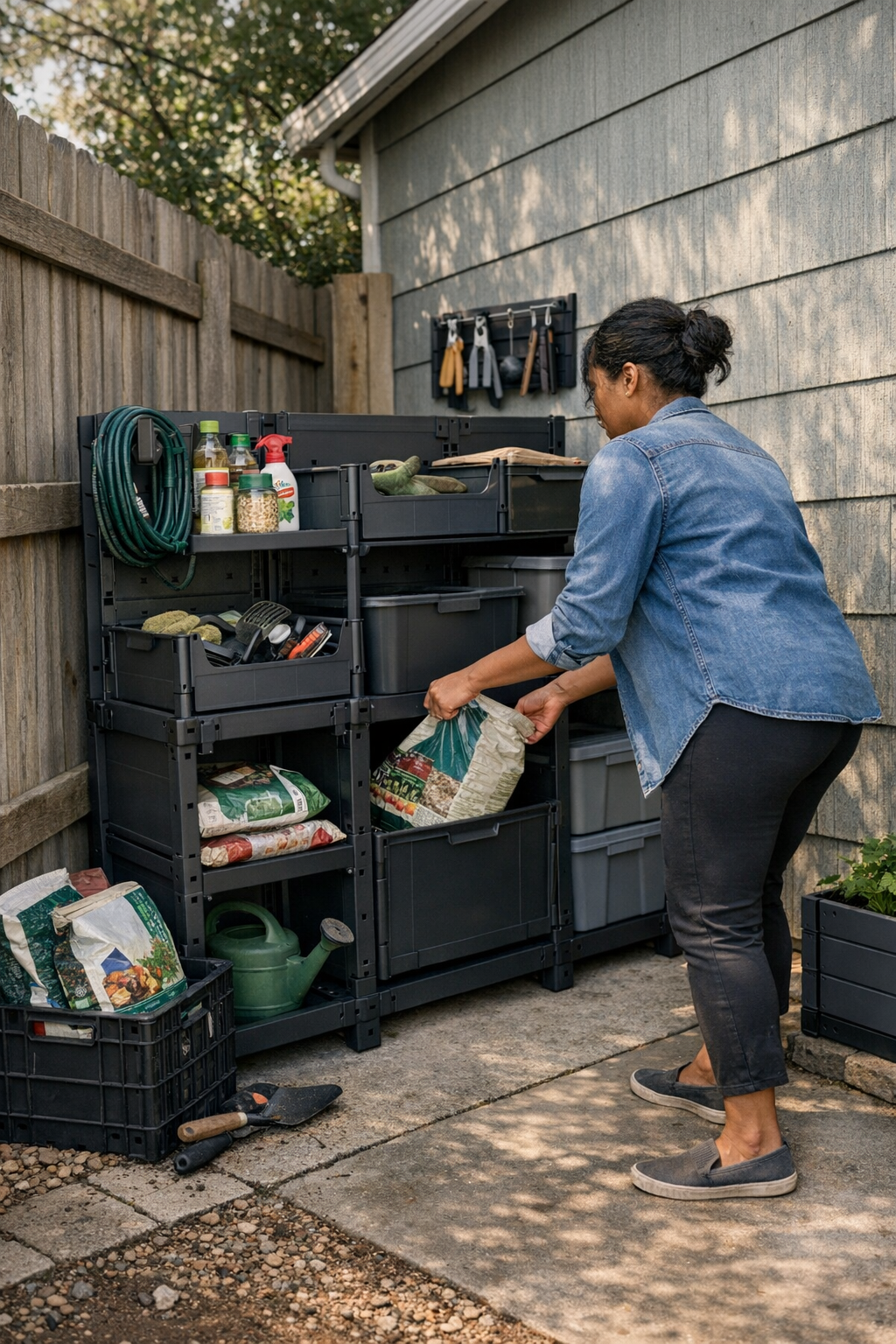
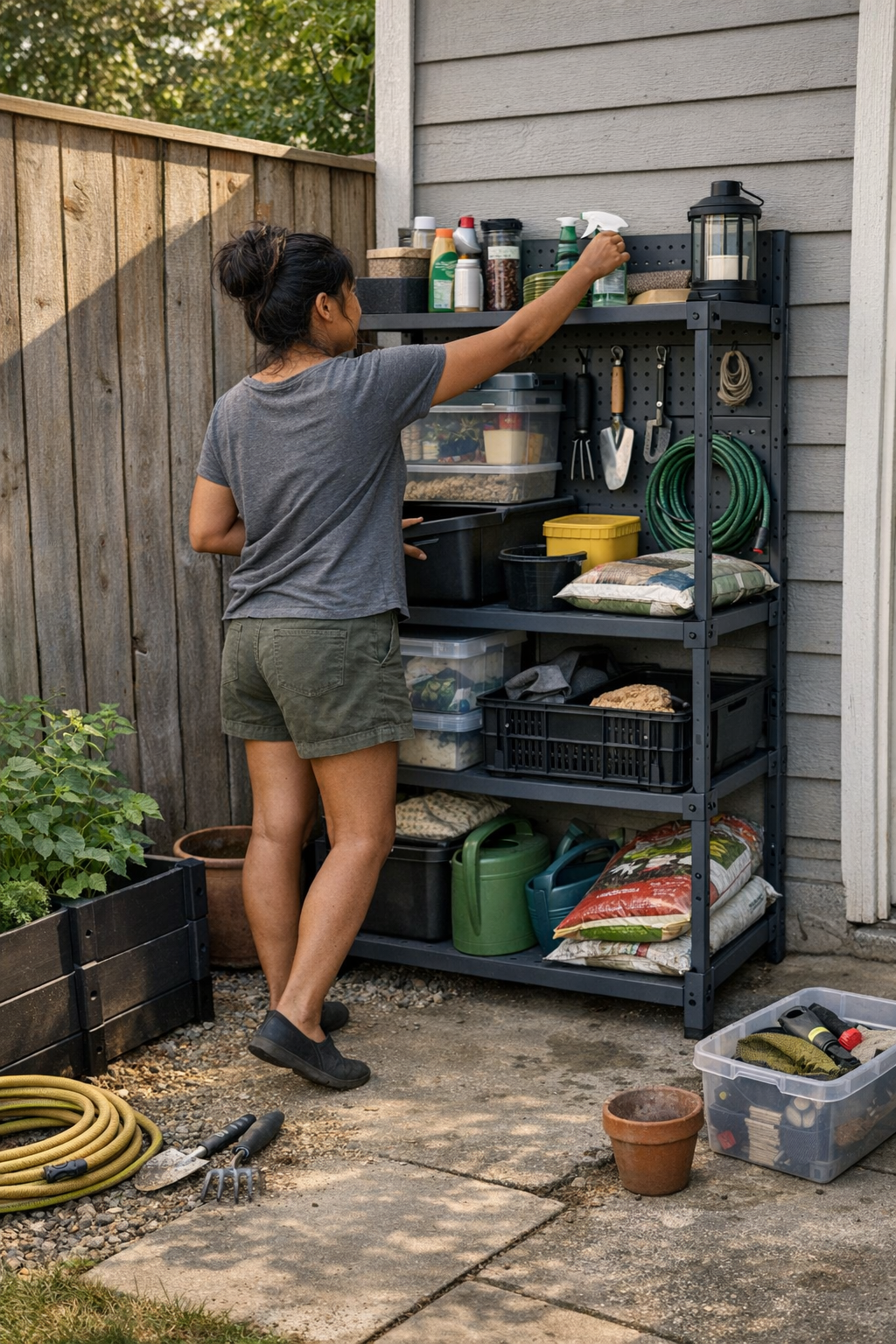
    When outdoor storage can’t keep pace with your real routine, it’s not subtle—it’s everywhere you look. You set up bins or wall racks with good intentions, but within a few weeks, the supposed order starts breaking down. Garden trowels wedge themselves along the footpath; half-deflated soccer balls and garden gloves end up stranded right by the patio door; every “quick return” turns into a small, silent argument with a pile you already dealt with. In the controlled mess of real outdoor use, things drift, pile, and double back—exposing the difference between setups that only look tidy and those that actually make moving through the space easier.

    The Creep Problem: When Storage Designs Fight the Way You Move

    Every backyard, side yard, or patio is an experiment in whether a storage zone can survive real habits. On day one, the fresh wall rack or lidded bench seems to answer every problem. Fast forward a few weekends: is your “solution” quietly jamming the return path or turning drop-offs into mini obstacle courses?

    Here’s where the friction sets in—the places design misses reality. A bin next to the fence looks convenient until you’re elbow-deep, hunting for a trowel buried under discarded dog toys. Hanging hooks along the walkway keep tools visible, but once the jackets and hoses take them over, you’re unhooking half the row just to free a garden fork. Suddenly, storage designed for efficiency is creating its own resistance, and resets slow down after every round of use.

    Wall Storage: Clear Floors, New Headaches

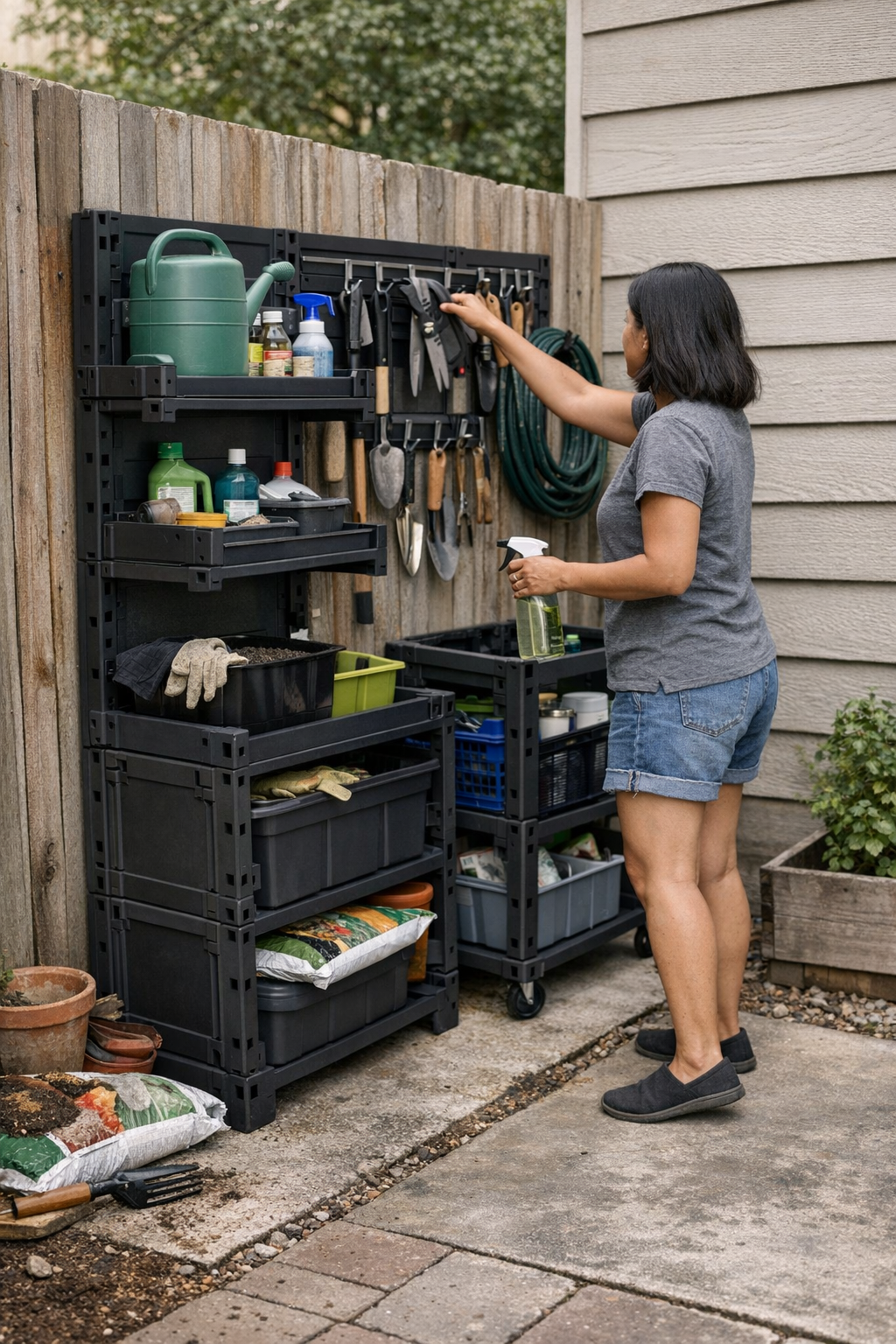
    Wall systems promise open floors and easy access. For the first few weeks, there’s a satisfying stretch of clear concrete and tools lining up in full view. But it’s rarely that simple. Racks spaced with optimism become a game of shuffling brooms, rakes, and loppers just to hang up one more tool after mowing. Narrow shelves display spray bottles while heavier gear—bags of soil, bulkier hoses—creep onto the ground anyway, forming a new, unplanned pile beneath the “organized” wall.

    Family members improvise; “designated” hooks lose their meaning. The return routine stalls: stowing a single cord or trowel becomes a juggling act when the wall’s already at capacity. If putting something away takes too long, it gets abandoned mid-reset—and the clear walkway degenerates into a maze of obstacles.

    The Trap of Closed Storage: Clean Outside, Chaos Inside

    Closed benches and modular storage units look like a win: clutter disappears with the swing of a lid. But inside, entropy rules. Certain slots overflow while others never fill, and one awkwardly shaped watering can means everything else gets dumped on top—masking, not solving, the actual mess. Every reset becomes a blind rummage, making you dig through cords, gloves, and broken tools just to find the one thing you need.

    The tension is clear: wall systems demand relentless tidiness, while closed bins swallow clutter at the cost of access. If the setup doesn’t match your natural return flow, neither holds up for long. Soon enough, piles re-form near gates and doorways, and each reset brings the familiar dance of stepping over spillover—no matter how much storage is on paper.

    Setup Under Pressure: Life in the Side Yard Corridor

    If you want to see a storage system’s fault lines, look at a cramped side yard that pulls double duty. In a 48-inch-wide passage, a wall rack offers a fresh start—rakes and hoses neatly hung, footpath open. But the first muddy boots or armful of sports gear throws off the balance. Hooks are just out of reach, bins are one step too far from where you enter, and suddenly the overflow gathers by the gate. That tidy bench at the far end? It attracts all the gloves and loose parts everyone is too impatient to walk across for.

    Now you’re shuffling bins just to fit the mower through, shifting sports balls to clear the path for the garbage cans, or pausing to relocate a planter box that always migrates to the footpath. The storage “solution” introduces new choke points at exactly the moment you need the space to work fast. Just moving one tool back means first clearing a detour you didn’t plan on—and day by day, the zone gets tighter, not looser.

    Overflow, Backlogs, and Slower Resets

    This is not a rare breakdown. One return brings a bulk bag of compost, but last week’s planter buckets are already blocking the storage corner. A coiled hose should hang on the wall, but the hooks are buried under jackets and extension cords, so it loops onto the ground, creating another tripping hazard. Want your trowel? Get ready to pull half the contents out of a deep bin while balancing on a stepping stone.

    Every time, it’s a micro-delay, a minor shuffle, a footwork adjustment—until the whole area signals that the layout fits in theory but not how you actually use it day to day.

    Small Shifts That Break the Cycle

    The difference-maker rarely comes from buying bigger bins or more hooks. It’s about small, practical shifts—matching the layout to your real path and sequence. In one side yard, simply swapping two shallow storage bins for a single deeper, covered unit chipped away at the perpetual overflow on the ground. But the breakthrough was moving a row of shoulder-high hooks right beside the entry point—no more reaching, no bending, just one flick of the wrist to drop gear as you come in.

    Clearing the main aisle didn’t mean less stuff got stored—it meant the stuff that came back most often had frictionless access, while overflow just couldn’t pile up without someone noticing. The system had a built-in brake: too many things on the hooks forced a rethink, not another pile by the footpath. Resets sped up. Blocked paths opened without drama. The storage finally started to pay back the space, instead of competing with it.

    Force Zone Limits—Not Overflow

    Here’s the simplest shift: don’t let any zone become a catch-all. Bins too deep or hooks too high become graveyards for rarely used stuff and drop-off points for anything you can’t be bothered to store properly. Instead, tailor the zone. Put high-touch items at elbow-level and in arm’s reach. Mark one hook as always clear and enforce it. Set up a shallow tray for gloves, pruners, or tennis balls—stuff that enters and exits daily—so nothing has to move three things just to add one more.

    Don’t wait for a space to get “full” before you rethink the setup. If the return path feels blocked or drop-offs are happening in the wrong spot, it’s time to shift the container, change the hook height, or slim down what stays outside.

    It Doesn’t Need to Be Perfect—Just Less in Your Way

    No outdoor system will send every stray glove or hose into perfect lines. The win is visible: faster resets, fewer detours, and a flow that works after a typical, messy afternoon. Storage that matches the real rhythm of your returns—whether in a tight side yard, along the garage, or at the edge of your backyard—makes the difference between feeling organized and actually moving through your day without repeat friction. The goal isn’t showroom order. It’s getting out the door, or back from the garden, with less to dodge every time.

    Explore practical outdoor storage options at TidyYard

  • Protect Entryway Floors with Non-Marking Glides for Everyday Use

    Thresholds expose the truth fast: That first week with a new bench or shoe rack, the entryway holds its promise—bags find their corner, shoes line up, nothing blocks the path. But real use breaks the illusion almost instantly. Within days, scuffs bloom where everyone pivots, shoes breach their lineup, and the edge of the setup turns into an overflow trap. One hurry into the house, one muddy drop, and the “clean edge” already starts eroding. The reality of moving through a transition zone—bag drops, shoe kicks, rushed resets—shows up right where every piece meets the floor. If the setup falters here, frustration multiplies fast.

    Invisible Scuffs in Plain Sight: Where Standard Feet Fail

    In a busy entry, nothing stays where it started. Benches shift to clear the path, racks get nudged by careless elbows or arms full of groceries. If these pieces rest on basic plastic or bare wood feet, every shift leaves its mark—fine scratches deepen along the traffic path, small scuffs turn into hazy streaks, and sooner than you expect, the floor’s toughest zone looks the weakest. The “just sweep it clean” approach fails when scrapes don’t disappear and that low dull haze creeps across the entryway, signaling the hidden cost of ordinary feet. By the time it’s obvious, your reset routine already takes twice as long, just to line things up again and keep the scraped zone under control.

    Non-Marking Glides: Changing Daily Movement, Not Just Floor Wear

    Non-marking glides—pads of soft rubber or pressure-absorbing felt—replace scraping with sliding. Instead of the jarring sound and grit-grinding of hard feet, you get a quieter shift: the whole bench can move for cleaning or a quick realignment without gouging the finish. The difference is immediate—push a bench on non-marking glides, and it glides in near silence, needing barely a tug. On hard feet, you brace and drag, leaving a visible trail every week.

    This upgrade is a necessity in the setups where:

    • Entry benches double as quick-change spots and get shifted nearly every day—sometimes hour by hour.
    • Slim racks get backed into by bulky bags that push them progressively off-center, especially in narrow halls.
    • Movement is constant and space tight, so every misplaced edge starts a ripple effect—delays, more crowding, a shoe pile bleeding into walkway space.

    Living the Reset: Where Improvements Meet Drift

    Smoother movement feels like relief—until you risk new problems. A setup that glides makes daily resets easier: bump the bench straight, correct a shoe row, restore a clear path in seconds. But the friction drops for clutter, too. After a dozen comings and goings, a bench that moves easily will slide out of alignment without anyone noticing. Shoe racks set up for fast realignment drift into the main walkway, especially as items stack unevenly or bags hook and pull. What started as a streamlined setup gets subtly messier by midweek—not in a dramatic fail, but in small, accumulating misalignments that slow every re-entry.

    From “Looks Tidy” to “Actually Works by Wednesday”

    The difference isn’t just about appearance. By midweek, original order gives way to daily drift: shoes sprawl beyond the rack, the bench edge collects clutter, and a few inches of migration at a time turns a clear way in into an obstacle course. Even if wall hooks help, floor-level storage still shifts—even a few inches off means the return flow blocks up, and the next person squeezing through bumps things further off track. Awkward angles, blocked closets, and the need to shuffle the setup just to close the door become routine by Thursday, not occasional headaches.

    The Real Entryway: Pinch Points and Pressure Under Repeated Use

    Smooth glide pads aren’t magic. They absorb the sharpest damage, but the entry stays a pressure zone: bags slam down, sneakers kick grit under corners, and too many things try to share too little walkway. Hard feet catch on every stray pebble—scraping the floor and halting resets mid-move. Glides let you slide a bench with much less resistance, clearing space for a guest or mopping up a wet track line. But in a setting where every sidestep matters, even the best pads require vigilance: drift adds up, and the thin line between open access and a blocked entry can vanish in two days of high-traffic sliding.

    Unaddressed, this soft misalignment builds up: the bench now blocks storage behind the door, the shoe rack tips toward the walking path, and clutter reclaims what you fought to organize. Friction drops—but so does your margin for error.

    Real-World Installation: When the Details Decide What Actually Lasts

    Swapping standard feet for slim, 3mm-thick rubber glides, the first change is immediate—no more grinding marks, no rut buildup, and resets snap back to a one-handed push. Post-bag-drop, the bench moves without fuss, then straightens for the next rush without damaging the floor. Resetting after a sweeping or mop is now a gentle slide, not a wrestle that exposes fresh scratches or worn seams.

    But it matters what you’re installing: wire racks may not give enough grip for stick-on glides, and thin pads collapse under heavier cabinets—fast losing their protection and inviting embedded grit to do worse. The “right” solution adjusts to both foot shape and zone intensity:

    • Tip: Always size glides for the actual foot and load—expect to swap them out every 12 to 24 months if your entry is in daily rotation.
    • Tip: Notice furniture drift week to week: if items keep wandering, try wider or textured pads to curb the slide, especially on slick tile or glossy hardwood.

    Frequently Asked: Getting Entryway Storage to Behave

    Will non-marking glides fit everything?

    Most solid benches, low cabinets, and straight-leg racks can take glides easily—but narrow metal or wire legs may not hold adhesives reliably and could need a specialty solution.

    How long before glides wear out in real-world entryways?

    In high-shuffle zones, glides compress and gather grit fast. Inspect and clean at every deep reset; plan to switch them every year or two to keep the non-marking effect intact.

    Too much sliding—is it possible?

    If your storage is drifting out of position every few days, widen your pads, pick textured options, or tweak the floor plan so persistent pressure (like bag drops or shoe piles) isn’t always hitting the same edge.

    Everyday Adjustment, Not Entryway Perfection

    The switch to non-marking glides doesn’t erase the daily reset—wayward benches will still need nudging, compressed pads need checking, and busy weeks will test any routine. What changes is the cost of resetting—less friction, less damage, a recoverable shape even after a wild, muddy Monday. Instead of fighting with a deteriorating threshold, you get an entry that better endures the real churn of daily life. For threshold storage solutions that outlast quick-fix order and survive real movement, Betweenry keeps options practical and honest—letting your entryway recover faster from whatever the week brings.

    See practical solutions for entryway storage and transition zones at Betweenry.

  • Why Perfect Pantry Designs Fail During Everyday Family Use

    That first day, the pantry is lined up—labels showing, bins matching, the kind of surface order that feels finished. But as soon as regular life returns, the setup starts to crack. By midweek, anyone sharing shelves notices the shift: a snack restock shoves pasta behind baking jars; a grocery run means new boxes get squeezed wherever there’s a gap; one run for breakfast oats turns into two moves just to get to the right jar. A system that looked controlled for a photo becomes a maze within three busy routines. What actually matters is how a storage structure stands up to repeated grabs, rushed returns, and the churn of shared use—where the “perfect arrangement” becomes hidden friction and small stalls multiply.

    Why Perfect Order Disintegrates in Real Routines

    Sleek containers and identical bins sell the idea of control. But real-world friction starts instantly: making breakfast with a hungry kid at your elbow, loading groceries when the new bag just won’t fit the planned zone, or scrambling for a missing ingredient after work. Each cycle puts pushback on the layout, and signs of strain show fast.

    Visible order gives way to behavior friction. An ingredient you used yesterday is now boxed in by a stack meant for something else. A quick snack is slowed by a parade of bins blocking the “easy” shelf. The shelf route you planned is crowding; you’re shuffling containers sideways just to get a routine task done. The cracks aren’t subtle—they’re the seconds lost and the clutter that piles up so quickly you barely notice.

    The Hidden Costs of a Pretty Pantry

    Category grids and tight labeling promise efficiency—until the first restock undoes it. What actually piles on in daily use:

    • Access bottlenecks. That stack of labeled bins sits right where you need to reach for flour or cereal, forcing you to unstack before you can open, then remember to restack after (if you bother).
    • Category drift. The “snacks” bin slides from Goldfish to a crammed mass of chips, bars, and loose packs. New items crowd out the original plan. Smaller packets disappear to the bottom, and nobody follows the original labels for long.
    • Reset stalls. Restocking groceries means re-stacking or rearranging—often just to make one thing fit. The extra step turns a quick drop-off into a low-key puzzle, inviting temporary piles and counter overflow instead of clean returns.

    The reality: rigid setups work against the actual rhythm of the room. They hold their shape only until real habits overwhelm them. Shelf lines become dead zones, bins interrupt movement, and the design you set up last Sunday becomes an obstacle course by Thursday.

    Where Setup Breaks: Real Scenes from the Pantry Zone

    Pasta Buried, Cereal Exiled, Reset Shrinking

    Midweek, the planned order is flickering. Pasta gets wedged behind decorative jars as new bulk buys push other categories off-plan. Cereal, bought in a rush, lands wherever there’s room—sometimes in the wrong zone, always threatening to topple the neat look. You stop expecting to find things where they belong, and the top layer becomes a shifting array of what’s new, not what’s needed.

    Overflow Piling—From Shelf to Countertop

    Quick-access shelves stop being quick. Lunch snacks, loose apples, and bags start to collect low down, then clump near the front edge, creating a pile that dares you to grab from underneath. Once high-use items run out of zone, they migrate—first to a catch-all spot, then to the nearest open counter. Shelf order becomes shelf pressure: the edge is where the mess is most visible, but the spillover hides what’s really lost behind.

    Blocked Movement, Fragmented Routine

    A neat shelf footprint doesn’t mean a usable flow. Tall bins block reach. Deeper drawers require shifts and shuffles to access the back. One return means two or three moves, and every extra step invites off-path storage—leaving items out or half-rehung. In a shared kitchen, this spirals: one person’s workaround creates a fresh tangle for the next.

    Modular, Open Storage: For Mess and Motion, Not Just Looks

    After enough resets get undone, rigid bins lose their charm. What makes more sense: modular, open setups that flex with use instead of against it. Consider these practical shifts:

    • Most-used items always in the front zone. The lead edge of each shelf is cleared for go-to staples—a “park and grab” area, no stacking or sorting needed.
    • No lids, open bins for true one-step access. Grabbing or replacing an item is just a reach, not a lift-and-reshuffle. The time saved keeps return flow from stalling.
    • Adjustable and movable zones. You can split or collapse categories as habits shift—a snack phase ends, a new bulk buy arrives—without needing to relabel or force-fit the old system.

    The question is whether daily moves are helped or interrupted. Can you return an item as easily as you grabbed it? Or do you have to sidestep your own design? When structure adapts, even small messes get absorbed by a usable routine, instead of resulting in overflow.

    Reset Speed: The Real Test

    If it takes more than a couple seconds to return an item, the system is probably slowing you down—not keeping you organized. Open modular storage, well-placed bins, and frictionless access lanes make maintenance part of the everyday routine instead of a special Sunday chore. The pantry survives the third shop, the late-night snack, the lunch rush, and the surprise grocery drop—all by design, not by accident.

    Concrete cues help: a shelf that stays half-open for overflow, a bin with wiggle room for last-minute extras, or a visible “use-soon” spot that clears itself without turning into tomorrow’s pile. These prevent silent backup at the edges and curb the formation of ‘temporary’ stashes—so the whole structure stays workable.

    Spotting a Setup that Works (or Doesn’t)

    Signs a storage setup is really holding up: the main grab zone stays open, categories expand or shrink without redoing the whole plan, and there’s almost never a moment when putting something away feels like a hassle. You can reach for breakfast without moving bins, overflow lands where it makes sense (not on the counter), and fixing drift is a quick adjustment, not a full reset.

    • Retrieval and replacement each stay fast, even as shelves fill or empty out.
    • Overflow doesn’t relocate to counters, sinks, or another room—what needs returning is returned.
    • Reset is a background action, not a weekly event or source of dread.

    Breakdown shows up just as simply: If you have to move storage blocks just to make breakfast, if “snack” or “baking” means opening three bins, or if every restock is a miniature reorg, something’s wrong. Surface order is masking daily slowdowns—real friction that piles up where you don’t see it but always feel it.

    Structure That Helps You Move, Not Just Store

    The best inside-storage shifts are visible in motion: easier routes, less re-sorting, and less mental overhead. Wall systems and adjustable shelves beat fixed bins because they let the layout flex instead of bottleneck. Floor units and well-placed hidden storage only help if they speed up retrieval and return, not just stack things deeper. The setups that last aren’t the prettiest—they’re the easiest to maintain when routines get busy and the original order slips.

    A storage system that keeps pace frees up your headspace and floor space, absorbing the churn, not hiding it. When storage works, you stop fighting your own layout and reclaim time with every repeat use. If you’re ready for inside-storage that outlasts the reset cycle, visit Gridry.

  • How a Ten Second Start Rule Transforms Daily Yard Storage Efficiency

    Step into any backyard or side-yard strip at the end of a busy week and you’ll spot it instantly: spades slumped on the path, gloves curled beside the fence, and a walkway you now have to squeeze through sideways. These are the trademarks of “organized” outdoor storage that only holds the illusion of order. The true test isn’t how crisp things look on install day—it’s whether grabbing and returning a tool is so easy you do it every single time, even when you’re tired and in a rush. Too often, the setup promises clarity but quietly stacks up new roadblocks, one shortcut and delay at a time.

    Where Setup Friction Starts: The Ten Second Rule in Practice

    Delay kills momentum outside, and if it takes more than ten seconds to grab or put away a tool, your system is already working against you. Here’s the friction: the moment storage feels like a chore, return flow drops. You reach for the trowel but the handle jams under two other tools, so it gets abandoned wherever you last used it. Next, a bin lid is sticky so gloves land on top—then the watering can clutters the path because no one wants to untangle the hose just to reach the rack. Each skipped clean return quietly stacks up another obstacle, and just moving through your own yard starts to feel like crossing a minor minefield.

    Now multiply the problem: add a second person, or a shifting weekend project. Suddenly, what started as a nominally “organized” space drifts into full reset territory every few days. The floor fills with spillover items. “Just for now” becomes “stuck for the week.” That five-minute task? It now starts with shuffling through clutter from the last four hurried drop-offs.

    The Real Divide: Wall Systems vs. Floor Storage

    On a checklist, a storage bin and a wall rack sound equally useful—but in daily use, the split is sharp and immediate. Wall racks take things out of your way, giving every handled tool a visible parking spot. When installed near the action—garage edge, fence line, patio wall—they let you grab or return in a single, fluid movement. Bins and ground boxes, on the other hand, attract overflow. What starts as “temporary storage” quietly morphs into a jumble: gloves slip down the sides, small tools disappear below a layer of tangled hose, and the lid becomes just another thing to navigate around rather than through.

    At first, the lines blur—everything starts tidy. But after a couple cycles of real use, wall systems show their limit quickly and honestly: when every hook fills, the wall says stop. Ground units don’t. They simply absorb more, until the footprint swells and daily returns devolve into stuffing things wherever there’s a gap. The surface still looks “organized,” but the actual movement and access tell another story—a constant, creeping need to reshuffle, hunt, or detour.

    Scene Snapshot: The Clutter Loop in a Mixed Setup

    Picture this: a side yard barely wide enough for a wheelbarrow, with a heavy ground box by the gate, hooks lined along the garage, and a rack tucked behind the fence. Early on, everything has a place. But after a stretch of wet weather, muddy boots collect by the box; a rake balances awkwardly on top because opening the lid requires clearing off last week’s pile. Gloves hang from a crowded line of hooks, doubled up and slipping. The path narrows. Every “quick drop” scores another point for chaos, and now just reaching the faucet means negotiating an obstacle course of your own making. You return one item and block access to another—resetting becomes its own project.

    When wall and bin compete for the same patch of space, they reveal tiny battles: to hang a shovel, you have to move a coil of hose; to close the box, you have to force the lid shut over stray tools. The layout looks good in a photo, but you’re spending more time shifting items just to get moving. That’s the mark of organization that can’t keep pace with routine.

    Getting Off the Ground: Where Wall Systems Change the Routine

    The value of a wall system isn’t immediate—it’s proven after a month, when most bins have already gone sideways. Hooks, modular racks, and rails enforce separation. Each place is fixed, so tools don’t migrate or vanish. Once a wall fills, you see the space itself run out—there’s nowhere for overflow to hide. Bins let you stack, wall systems force a decision: keep only what you use, and spot a missing or misplaced item quickly. It’s not flawless, but it’s honest.

    A small change—like leaving buffer room between hooks or matching each tool to its own labeled spot—prevents “cramming.” You feel the friction instantly if the system gets overstuffed, versus discovering a black hole at the bottom of a box three weeks later when you can’t find your best snips. Miss one hanging return and it’s obvious; miss a bin return and the problem quietly expands until you’re in reset mode again.

    Real-World Trick: Keep Inventory in Sight, Not in Storage

    What you see, you use—and what you see missing, you fix. Wall setups makes it obvious: pruners don’t return, the empty slot stands out. This cuts down on silent overflow and makes end-of-day resets a 30-second loop, not an hour-long dig. Even guests or less-organized family members know where things go—no complicated memory or signup sheet required. The setup works with you, not against you, especially on days when patience is in short supply.

    Why Floor Storage Trips Up: Overflow, Blocked Routes, and Awkward Corners

    Even well-meant floor bins eventually become bottlenecks. A couple rushed returns and you’re staring at a holding tank: gloves lost under a knee pad, small tools hiding under a tarp, hose piles swallowing up anything small enough to bury. If your routine ever slips—because you’re tired, because it’s raining, because life—these bins shift from storage solution to friction generator. Most people won’t dig at the bottom to do a proper reset. Overflow just finds the nearest path and sprawls outward, blocking gates, crowding corners, and slowing every future step.

    The secondary effect is movement loss: a spade jams the gate; the swing of a box cuts the walkway in half; each retrieval turns into an argument with a pile. Micro-delays pile up, every five-minute job drags, and the promise of “easy access” dissolves beneath layers of gear that barely fits. If the setup forces you into routine reshuffling—moving three things to use the fourth—it doesn’t matter how neat it once looked. It failed the return test.

    Spotting Dead Corners: When “Extra Space” Collects Extra Mess

    Every outdoor area has a dead corner—the spot meant to solve problems, but actually hiding overflow. Maybe it’s behind the utility rack, wedged between the house and the fence, or a low bin at patio edge. These zones trap what doesn’t fit the main plan. Over time, they demand full resets: you drag everything out just to reach the one thing you use most, and then the cycle starts again. If you’re shifting stacks just to get to a regular tool, or resetting a path before you can start actual work, your setup is locked in a permanent losing battle against real use patterns.

    This isn’t usually solved with more storage—it’s solved by giving each piece a visible, friction-free home that matches how you actually move in the space. Wall-based setups force that recognition; bins let you avoid it—until the pile wins.

    Building a Setup That Actually Lasts: Flexible, Forgiving, Real

    Perfection isn’t the goal. Staying ahead of friction is. The best setups aren’t museum-grade displays—they’re the ones you reset in a minute, not an afternoon. The ten second rule exposes weak points fast: if your process stalls or your patience wears out, you skip good habits and chaos takes over. Wall rails and modular racks let you adjust as your routine does—tightening in summer, spreading out in the off-season, or shifting as new tools and habits appear. Static bins can’t adapt; living wall setups can.

    The real win? Not an immaculate look, but a space that works through the mess. If last weekend’s project muddies everything, a modular wall lets you restore order in seconds. If gear piles still creep up, at least you can see where reset is failing—not just guess what’s buried where. Even if there are scuffs on the handle or bits of gravel by the wall, the result is clear: more movement, less managing, and a setup that finally keeps pace with how you use your yard, week in and week out.

    For outdoor organization that works with your reality—not against it—see real-world storage solutions at TidyYard.

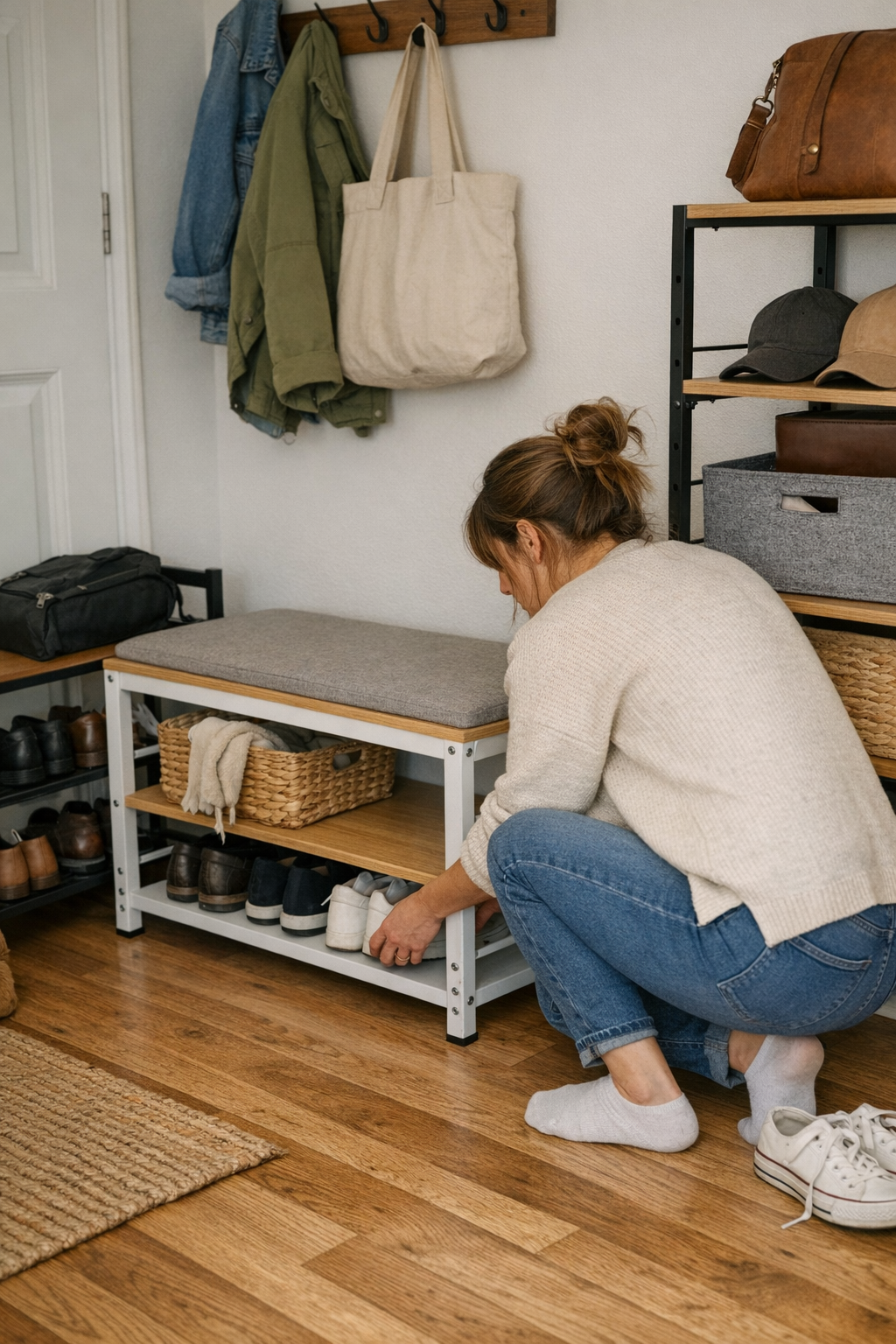
  • Why Shallow Storage Transforms Entryways for Faster Daily Routines

    Most entryways fall apart the same way: the bag you just dropped blocks the path, today’s shoes start a second row, and every reset takes longer than last time. No matter how clean it looks after a weekend sweep, beneath the surface, the friction returns—movement slows, overflow builds, daily routines stumble at the door. Whether you’re stacking shoes on a bench, using a slim wall rack, or trying to keep bags corralled in a cubby, the core problem isn’t just storage—it’s whether your setup keeps pace with real life: the rush out, the fast return, the pileup just inside the threshold.

    The Hidden Cost of Deep Storage in Entryways

    It’s tempting to assume a bigger bench or deeper cubby solves clutter: more room, more out of sight—or so it seems. What actually happens is deep storage becomes a slow-motion trap. Shoes migrate backward into double rows, every new bag pushes an old one farther from view, and anything left “just for now” disappears into the pile. Items vanish, retrieval takes extra steps, and resets spiral: digging for lost gloves means unloading half the bench. Each workaround—a jacket slung on the corner, a bag balanced on top—signals the whole system is stalling.

    Deep storage hides clutter—until it doesn’t. After only a few days, deep entryway setups breed their own mess. That stray shoe set aside on Monday is still blocking the bench on Thursday, and yesterday’s bag sits under today’s jacket. Pathways shrink. The threshold that should help you move instead creates choke points, forcing last-minute searches and slow resets. “Temporary” placements stick; routine bends around the buildup. Clutter drift stops being an exception and becomes the default.

    Shallow Storage: What Changes When You Flatten the Row

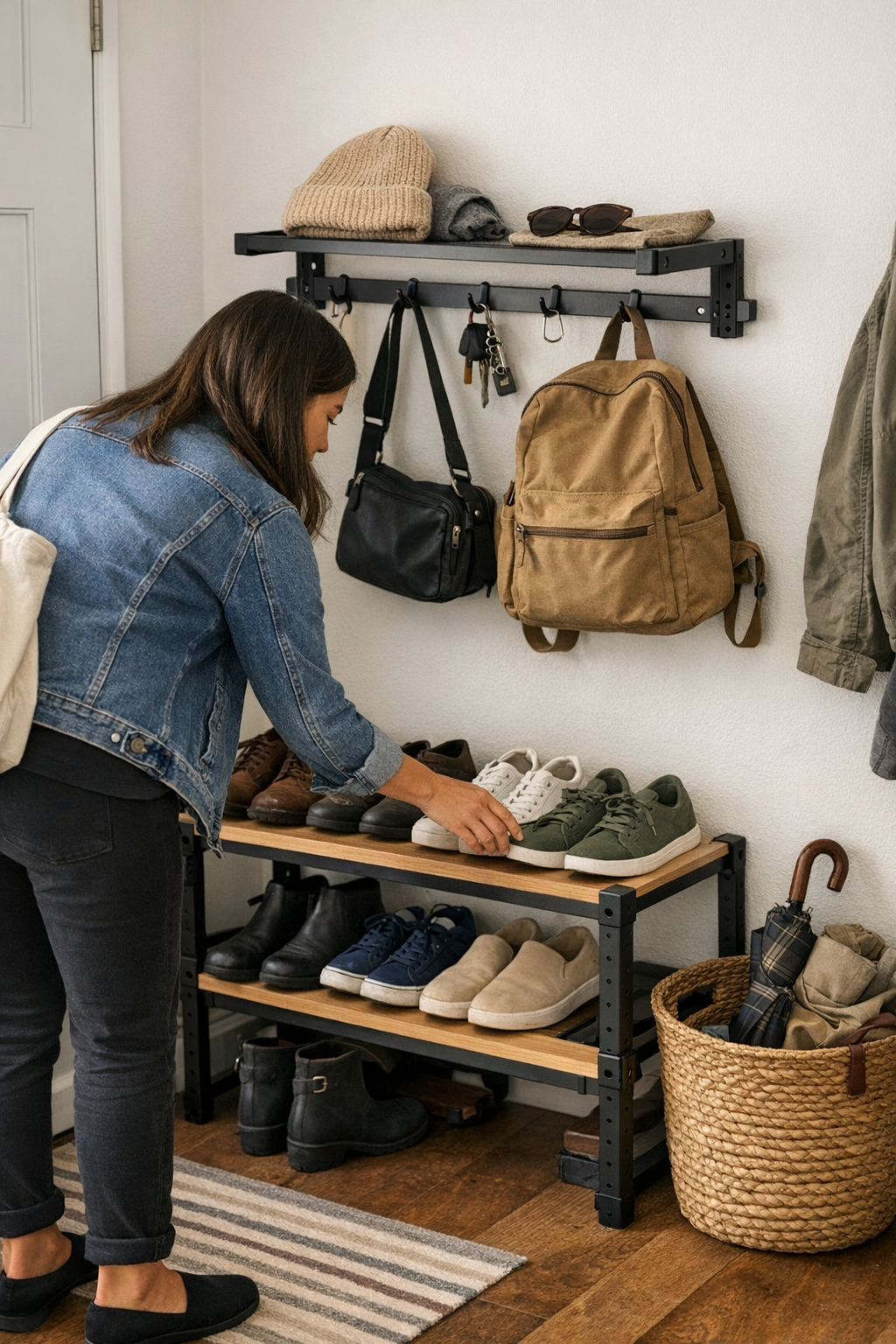
    Shallow storage—wall racks, slim benches, single-depth shelves—removes the places where overflow hides. There’s no hidden back row and nowhere to stash a jammed bag. Every item stays exposed in one line. The logic is clear: what you see is what’s in use. When something’s missing, it’s obvious; when overflow starts, it’s immediately visible. The setup holds you accountable, not the other way around.

    That visibility comes with a real trade-off. On crowded days—spiking with sports gear or extra shoes—shallow setups hit the edge fast: overflow collects in plain sight, not behind or beneath. But this limit is feedback, not a flaw. You’ll know exactly when the threshold can’t take one more drop, rather than slowly smothering in hidden piles. Deep storage quietly collects unfinished resets; shallow storage says “enough” up front. In daily use, that saves time. No digging, no guesswork, no mental checklist—just a visible reset point as soon as you walk in.

    Routine Stress Test: Morning Exits and Fast Returns

    Real problems show up during weekday chaos, not Sunday resets. The alarm rings late; three people rush through in ten minutes. Boots stack up in front, a bag lands half-off the bench, gloves slide down the side. In deep storage, new layers form—finding one shoe means unloading whatever backed up ahead of it. The whole entryway slows down. A slow reset today makes for a mess tomorrow.

    Shallow setups turn missing or misplaced items into immediate signals. If something’s gone, the empty spot shows it. If something shouldn’t be there, it stands out. After school or work, the return is fast: a quick scan, grab what belongs, drop what doesn’t. Resets shrink to a sweep of the hand, not a full excavation. There’s less temptation to pile things “for now”—the line fills, overflow stays visible, you’re pushed to deal with it before the path blocks again.

    From Looks-Organized to Functions-Every-Day

    If you’ve ever stuck with deep storage “because it looks tidy,” you’ve felt the downside. On the surface, the bench or cubby seems orderly, but under the coat pile or behind the first shoe row, chaos creeps in. Eventually you’re shuffling bags for a quick seat or dragging out every scarf to find what you need. The threshold turns into an obstacle course—not a passage.

    Switching to a shallow, wall-mounted rack changed the routine instantly. No stacks to lift, no layers to sort—just a single line of shoes and bags visible at a glance. If overflow happens, it’s right on the floor in your way. You see what doesn’t fit, so you deal with it before it blocks the reset. Overfull bins aren’t concealed under other items; they nudge you to clear out what’s over the line. The difference isn’t just a neat look—it’s a faster, less annoying reset under pressure, day after day.

    Where Shallow Depth Surprises You

    Shallow storage doesn’t create a perfect entryway. But it does make the edge visible. On busy days, when shoes start creeping past the end of the rack, the problem is out in the open, forcing a quick pickup or admission: too much gear, not enough flow. You can’t ignore the pile, but you won’t spend five minutes looking for what disappeared behind last week’s coat. Reset friction is lower because there’s nowhere for problems to hide—what’s out of place is right in front of you, every pass-through.

    For small entryways or shared routes, that matters. The path stays unblocked. Movement through the threshold isn’t pinched between stacked bins or half-dropped bags. Every person uses the same, visible row—resetting becomes a series of small, fast actions, not a single major cleanup. The trade is clear: you lose deep “capacity,” but you get a reset routine that keeps up with daily return flow, not just with weekend appearances.

    Everyday Tips for Real-World Transition Space Setups

    Balance visible limits with controlled overflow. If your routine includes extra shoes or bags some days, keep a small overflow bin close—but cap its size so it doesn’t start a new clutter zone. Lean on moveable or adjustable shallow racks that slide, extend, or swap as seasons shift or the family’s needs change. Place them where you already drop bags, not just where they look good in photos.

    Use built-in “pause points” for mini resets: after dinner, or during a weekend pickup, clear anything that’s drifted past its limit. With shallow storage, these spot-fixes stay manageable—you’ll never be two layers deep, so reset time stays short and control returns, fast.

    The Subtle Difference: A Threshold That Works With You, Not Against You

    What actually matters is how momentum holds up. Too-deep storage buries friction until it stops you cold—a blocked bench, a lost shoe, a reset you keep postponing. Shallow, open layouts show you what’s there and what’s missing as soon as you look; resets become a normal part of passing through, not a dreaded cleanup task.

    No setup banishes clutter or pressure completely, but the right format catches buildup before it blocks the way. Shallow storage isn’t about perfection—it’s about seeing problems early, fixing them fast, and keeping your entryway flowing. Even on the busiest days, the system helps you move—not just tidy up after the fact.

    Ready to see how your entryway can trade deep clutter for everyday flow? Start here: http://www.betweenry.myshopify.com