Category: Yard & Utility

  • How Routine-Based Bathroom Organizers Keep Skincare Counters Tidy and Efficient

    Bathroom counters rarely fail on day one. They fail after the third rushed morning, when your hand stalls in front of a wall of bottles—serum lost behind a larger cleanser, SPF nudging out of the lineup, half of your routine slowed by a micro-reshuffle. The surface might look “organized” after a fresh setup, but in real use, order gives way to daily friction: things migrate, overlap, block, and slow you down. If your storage isn’t mapped to the way you actually move through your routine, even the prettiest tray turns into an obstacle course by Wednesday.

    When “Organized” Isn’t the Same as Easy to Use

    The first night after reset, everything’s crisp—lined by height, brand, or color. But with two rushed routines, the system slides. Bottles crowd the front edge, smaller jars get pressed behind taller ones, and your evening treatment hides until you dig. In this clutter, steps blur: you’re reaching twice for a cleanser lost behind SPF, opening the wrong drawer to fish out a moisturizer, or shuffling three containers in and out just to reach the toner. “Organized” on the surface doesn’t stop the shuffle: cosmetics, creams, and tools drift faster than you expect—especially on shared counters or anywhere new items join midweek.

    Flat containers and open trays can’t hold the line. Even a simple bin loses shape once one item is out of sequence: SPF migrates to the night section, serums get blocked, and overflow collects at the one spot you use most. Under real-life pressure, visual alignment crumbles. The result: slower mornings, more resets, and a counter that demands maintenance simply to stay usable.

    The Real Friction: Routine Order vs. Visual Order

    Most storage solutions deliver “calm” at a glance, but not consistent clarity under pressure. The problem is structure: if storage doesn’t match the real sequence of your steps, retrieval slips. You grab for what was up front only to find it hidden, then have to double back, knocking other bottles aside. If you share the area, your return order interacts—morning routines blend into night routines, and soon the whole system is off track. Every “quick” reach becomes a minor delay. These aren’t just messy moments—they slow movement, break your flow, and replace small wins with repeated corrections.

    You can see it happening: you reach for your serum, find it behind a mask, nudge three tubes to get to moisturizer, or realize that your sunscreen drifted behind hair products. Sometimes you open a cabinet just to avoid a logjam at the counter. These micro-frictions are the warning signs—visible disorder pulling time and focus from your routine, making resets feel constant instead of occasional.

    Lived-In Chaos: Why Open Trays and Bins Slip

    Flat, open setups look fine on day one but fail the return flow test. Trays and bins trap order only when nothing moves out of line, which never lasts more than a few uses. With no built-in divisions, tall bottles lean and trap smaller items; small jars collect at the back, and the everyday shuffle collapses any logic you set. The result is a “sorted” surface broken by friction at every step: retrieval slows, resets multiply, and even simple categories become hard to keep apart. Under repeated use, showy neatness offers little defense against new clutter.

    Anchoring to Routine: What Really Keeps Order Under Pressure

    The setups that last map storage directly to your personal sequence: cleanse, treat, moisturize, protect. Divided organizers—with true sub-zones for each step—build in friction-proofing. When you reach, you grab the exact product, not just a random bottle from a grouped lineup. Sliding items back is almost automatic, since every spot is tuned to a repeated action. Shared zones hold up because the structure absorbs overlap: two people, different routines, same logic—each step protected from drift by its own division.

    This isn’t about looking organized; it’s about preventing drift before it happens. Over a week, you notice it: no pileups at the front, no digging for SPF at night, no wasted time re-clearing the path every day. Instead of a fake sense of order (that collapses on contact), you get tangible, real-world stability. Surfaces stay open for movement, even as products change or new routines join the flow.

    Real-World Example: Routine Flow vs. Return Chaos

    Picture sprinting through your routine, late again. You want to hit every step—cleanse to SPF—without doubling back once. A divided organizer lets your hand move left-to-right, item by item, with no jammed corners or blocked bottles. Returning each piece is almost mindless: you drop the tube back in its slot, not just wherever there’s room. No stack slides forward to block the faucet. No quick “I’ll reset this later”—because the reset’s built in. If you’ve watched your setup collapse from “sorted” to “fog of bottles” in four days, you know the cost: lost time, extra cleanup, and routines that feel heavier by Friday.

    Choosing Setups That Defend Against Drift

    Look for storage with actual divisions—adjustable slots, tiered trays, or modular compartments that fit your routine, not just your bottle count. Tall bottles won’t tip if their zones keep them upright. Short jars don’t get boxed in if dividers actually fit their footprint. Avoid relying on single trays: unless you rebuild the order every round, drift wins. Internal structure turns random drop-offs into predictable returns—even in the half-second put-backs that kill most systems. If your current organizer floods with overflow or never seems to keep categories straight, try simple inserts or small divider boxes: they create new boundaries for even the least disciplined return.

    A small upgrade—like adding subtle dividers or inserts—makes a real difference: less reset time, less frustration, more flow during repeat rush.

    Working with Shared and High-Use Counters

    Shared counters multiply the drift: what starts as a grouped back row quickly becomes a lumpy, double-stacked blockade around the sink. When people overlap—one putting items away, the other grabbing first-step products—category lines bleed, retrieval slows, and resets fall behind. Real defense comes from structure that absorbs overlap: mapped sequences and smaller, step-sized compartments mean one person’s mess can’t swallow the whole counter. If you always notice overflow at a specific section or find products gathering at the same trouble spot, it’s a sign: the zone’s too vague, or the layout doesn’t match the real pattern of use.

    The Line Between “Sorted” and “Stays Usable”

    Most counters pass the post-clean test. The real challenge comes four days in: can you find every item at first reach or do you have to chase down a toner that’s migrated or dig out an SPF buried under hair products? A setup built for actual habits—tuned to return flow, real retrieval, and shared pressure—doesn’t just look tidy, it holds up. Resets shrink from overhauls to a quick straighten. Movement through the area feels normal, not crowded out by drift or double-stacking. The payoff is real: more routine, less rescue, and a counter that actually fits the way you live.
    Gridry – practical storage for spaces you actually use

  • How Proximity of Outdoor Storage Transforms Small Yard Cleanup Efficiency

    In a cramped yard or along a busy patio edge, even the smallest setup flaw gets loud—fast. Walk any side-yard, narrow utility strip, or multi-use corner and you’ll spot it: storage sits just out of reach, a handful of steps too far from where things actually happen. And that gap—barely noticeable at first—repeats on every reset. A so-called “organized” space quietly turns into a pile zone: tools dumped beside bins, garden bags stacked where people cut through, one floor patch that fills up no matter how many times you clear it. By the end of the first week, the storage isn’t helping the flow—it’s quietly making routine work harder.

    Small Setup Choices, Persistent Friction

    The first day, everything looks contained. Maybe you placed a deck box along the fence or a couple of modular cubes by the back gate. Technically, the gear fits. But after a few rounds of real use—a gardening session, hauling out bikes, prepping for guests—you notice the cracks.

    Picture the scene: you’re carrying fertilizer to the shed, someone shoves past with a wheelbarrow, the kids are hunting for gloves before soccer practice. The box you set up is two feet off the main path, so tools land on its lid, not inside. “Just now” becomes later. Before long, the lid’s blocked, spillover piles up, and every return means juggling: move a rake to reach the pads, slide a cooler aside to shut the gate, unjam a hose because someone wedged a broom behind it last time.

    Where Floor Storage Eats Space—And Movement

    Floor storage claims more of your yard than you think—and eats it at the worst times. A low bin or storage bench tucked along the patio edge might feel out of the way, but when a project’s on or guests show up, that few inches stolen from the walkway becomes the reason for jams. Shuffling items to open the lid, double-stacking stuff that blocks the tools you actually need, making extra trips because the return flow never lines up—this isn’t rare. It’s the everyday reality when floor space fills before the workday ends. One “overflow” corner always seems to reappear, hosting half-used bags or lost toys you just relocated.

    Distance Defeats the Best Setup—Every Time

    The gap between “it fits” and “it works” becomes visible over a few daily resets. An outdoor cupboard at the yard’s edge makes sense for overflow—but once it needs an extra detour, stuff gets left by the door. It takes one awkward armload or a muddy afternoon before return trips start getting skipped. Layer by layer, the perimeter fills up: buckets left near the step, hedge clippers on the chair, hoses coiled one fence section short of where they actually belong. The official storage stays technically empty while clutter creeps back into the main walkways.

    Turning the Setup Around—Matching Storage to Movement

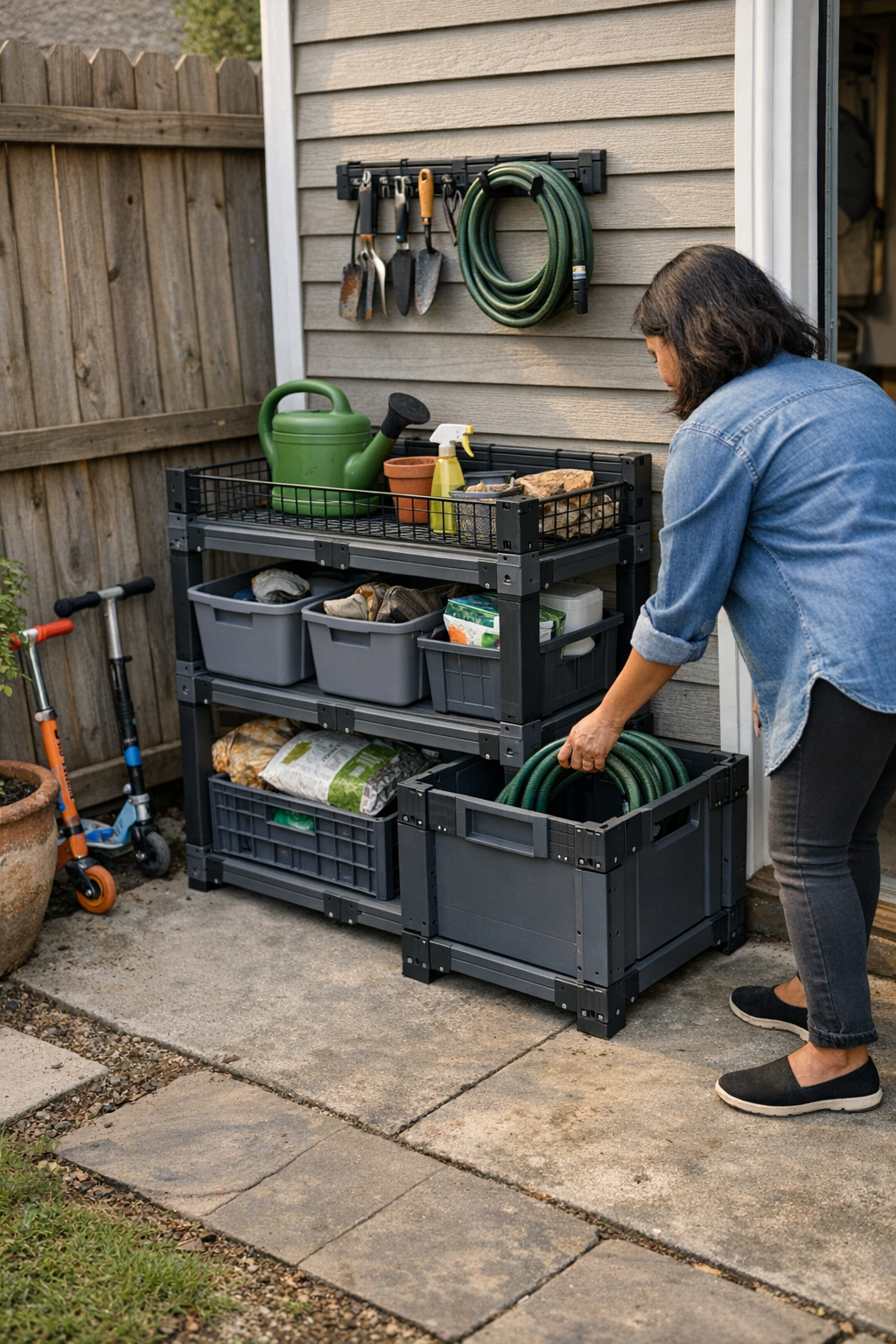
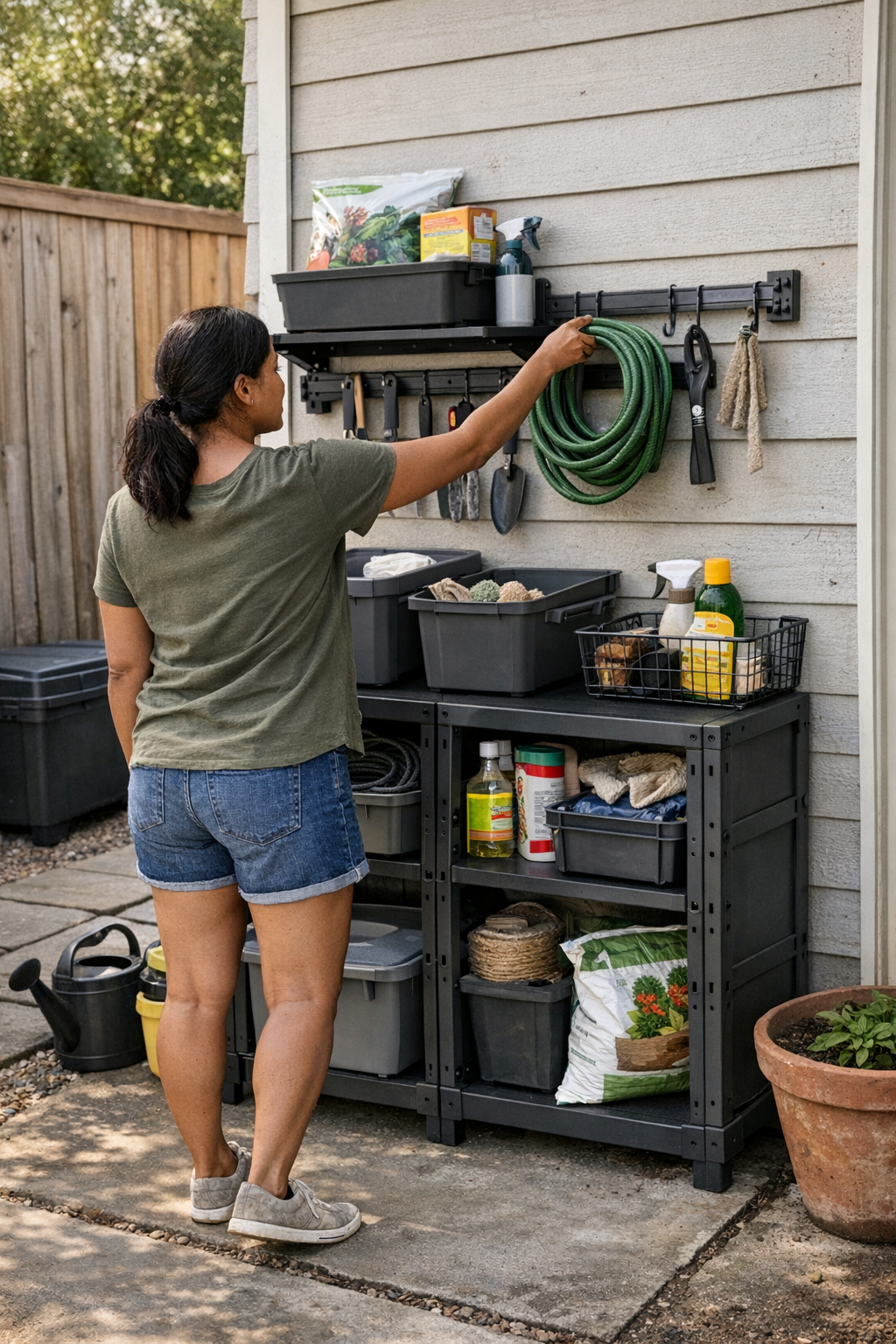
    Everything shifts when storage catches you mid-flow instead of waiting for you at the fringe. Install a low wall rack just inside the most-used door, or a slim hook system at the fence opening. Now, returning gloves or hanging up a hand trowel takes zero thought—you pass, you hang, you go. Any overflow is instantly visible, not buried in a box or behind the swing. Cleanup gets stitched into movement, so “I’ll get to it later” happens by default, not by exception. Reset stops being a chore—it becomes automatic, even if your hands are full.

    This isn’t theory. Try mounting a bar or peg strip at standing height, right where your routine turns from one area into the next. Suddenly, the spot that used to collect pileups becomes a checkpoint—gear gets returned before you lose momentum. Spaces with regular traffic (kids, guests, garden equipment) stay open because the buffer between “used” and “stored” just shrank to seconds, not minutes. Less shuffling, less time negotiating for elbow room, more clarity about what belongs where.

    Modular Storage: Flexible, or Just More to Move?

    It’s easy to believe a reconfigurable system will solve everything. But in tight or shared spots, flexibility without matching the real flow just means rearranging clutter again and again. You set up shelves that slide together, only to discover that the spot for buckets is still a few steps off route, and the stuff you use most ends up on the floor. The real test isn’t day one—it’s week three, when you’re still moving bins to reach a rake, or wishing you’d put the rack right by the door instead of near the back fence.

    Adjustment is the rule, not the exception. Before adding another piece, try swapping positions seasonally. Move a rack into the main pass-through for a week. Notice if things pile less and resets stay quick. The sweet spot is always where your hands pause naturally—where return flow is met, not forced. Forget maximizing volume or counting lids: make sure storage captures motion where it actually happens if you want routine friction to drop.

    Where Setup Breaks Down—And Where It Works

    Side-yard shortcuts: Every narrow access strip has a trap: the storage bin parked just beyond arm’s reach becomes a backlog point. Full hands make for great intentions—until the extra steps add up. “Temporary” becomes standard. Loops of hoses and garden shoes collect at the halfway mark. Eventually, the main walkway turns into a slalom with tools blocking the route and nothing where it should return.

    Patio-edge practicality: Mount storage beside the back door, and cushions or grilling tongs fall easily into place on the way inside. But if the area clogs with a swing or spare cart, even smart wall storage stops working—people start dropping items on benches again. When setup matches real movement instead of just filling blank space, you get clear floor, cleaner returns, and less end-of-day sorting.

    Dead zones: perpetual overflow: Not every nook needs filling. Watch which patch attracts castoffs week after week. If three categories (spare shoes, gloves, small tools) always land there, don’t drag them across the yard—set up a simple rack or hook where the overflow happens. Stop pretending that more bins will fix a zone that needs a smarter intercept, not more volume.

    Everyday Fixes, Real Routine Differences

    The win isn’t downsizing gear. It’s setting up the space so you aren’t moving things twice just to put them away. Storage within the lived flow—never more than two or three steps off your real path—unlocks time you used to spend retracing, reorganizing, or clearing way for someone else. Instead of collecting new clutter, the area returns to clear with each pass, not just at the weekend reset.

    That’s the shift most setups miss: the invisible friction between “looks structured” and “actually keeps up with life.” When the whole family or crew moves through a changing yard, storage needs to meet them mid-motion—not wait for the perfect cleanup moment. The right layout adapts as living patterns shift, keeping frustration low and the routine smooth—even as the season, activity, or users change in real time.

    Find practical outdoor storage tailored for real movement and real spaces at TidyYard.

  • Why Bare Entryway Shelves Fail and How Containment Transforms Clutter

    Entryway Storage: Why Open Shelves Fail When Daily Life Moves In

    On day one, open entryway shelves give the illusion of order—shoes arrayed in a tidy line, bags parked, every surface clear. Within a single week, that controlled image collapses under real use. Wet boots leave pools that stretch across the shelf; backpacks wedge awkwardly, blocking the path; loose mittens and keys start to edge off the surface. Every drop-and-go is a little reset failure, and soon the entry zone is less a pass-through and more a bottleneck—clutter stretches out, footpaths shrink, and it takes a full sweep just to make space for tomorrow’s commute.

    The Drift: How Entryway Shelves Lose Control

    Open shelves promise simplicity but rarely withstand weekday traffic. Small disruptions multiply: one shoe shifts out, another item hovers over the edge, a lunch box topples into the shoe row. By midweek, your threshold narrows—not because you intended clutter, but because every dropped item compromises the clearing you rely on. Without containers or clear boundaries, disorder spreads in slow motion: a puddle spreads across shoe soles, grit builds up in corners, and bags dangle half-on, half-off the shelf, daring anyone to restore order.

    Routine movement adds friction every time. Bringing in groceries? That extra bag gets wedged, and the shelf collects clutter faster than it’s cleared. Rainy morning? One muddy shoe streaks the edge; by week two, the shelving is ringed with water stains and scattered gear. The initial quick-grab setup is lost—a grab-and-go zone becomes a site of delay and detours, and resetting the area requires a full-blown cleaning event, not the two-minute tidy you imagined.

    Seeing Open Shelves Tested by Real Life

    Direct comparison exposes the cracks: two entry zones, one with bare shelves, one with bins or dividers. Both look neat at first—shoes aligned, baskets for hats. But friction builds:

    • A spill on an open shelf creeps, touching every nearby item. With trays or bins, the mess stays contained—the fix is to empty a tray, not scrub a whole shelf.
    • Shoes spread: without clear edges, they migrate until you’re tripping over a splayed line instead of walking cleanly through.
    • Small objects slide to the front, tip over, or disappear underfoot—what’s visible is never what’s actually reachable. Each missed recovery adds to the reset workload.

    It’s not about how much room you have, but whether your setup holds the line against daily disorder—or simply stages it for a messier collapse in a week.

    Crowded Days Expose Weak Spots

    After a busy afternoon, the system’s flaws spike: Several people arrive—muddy boots, armfuls of gear, dripping grocery bags. Open shelves let water and grit spread unchecked; towels, meant to help, get left behind as soggy evidence. Every arrival pushes untidiness outward—eventually you stop even noticing the creep, and resetting feels less realistic every time.

    One extra bag is often all it takes for shoes to block the threshold. Instead of a free pass-through, you’re now forced to reshuffle piles just to get inside. The clear traffic line dissolves into slow-motion clutter, and instead of a returned item, you inherit a new obstacle that lingers for days.

    Containment Adds Boundaries—and Real Relief

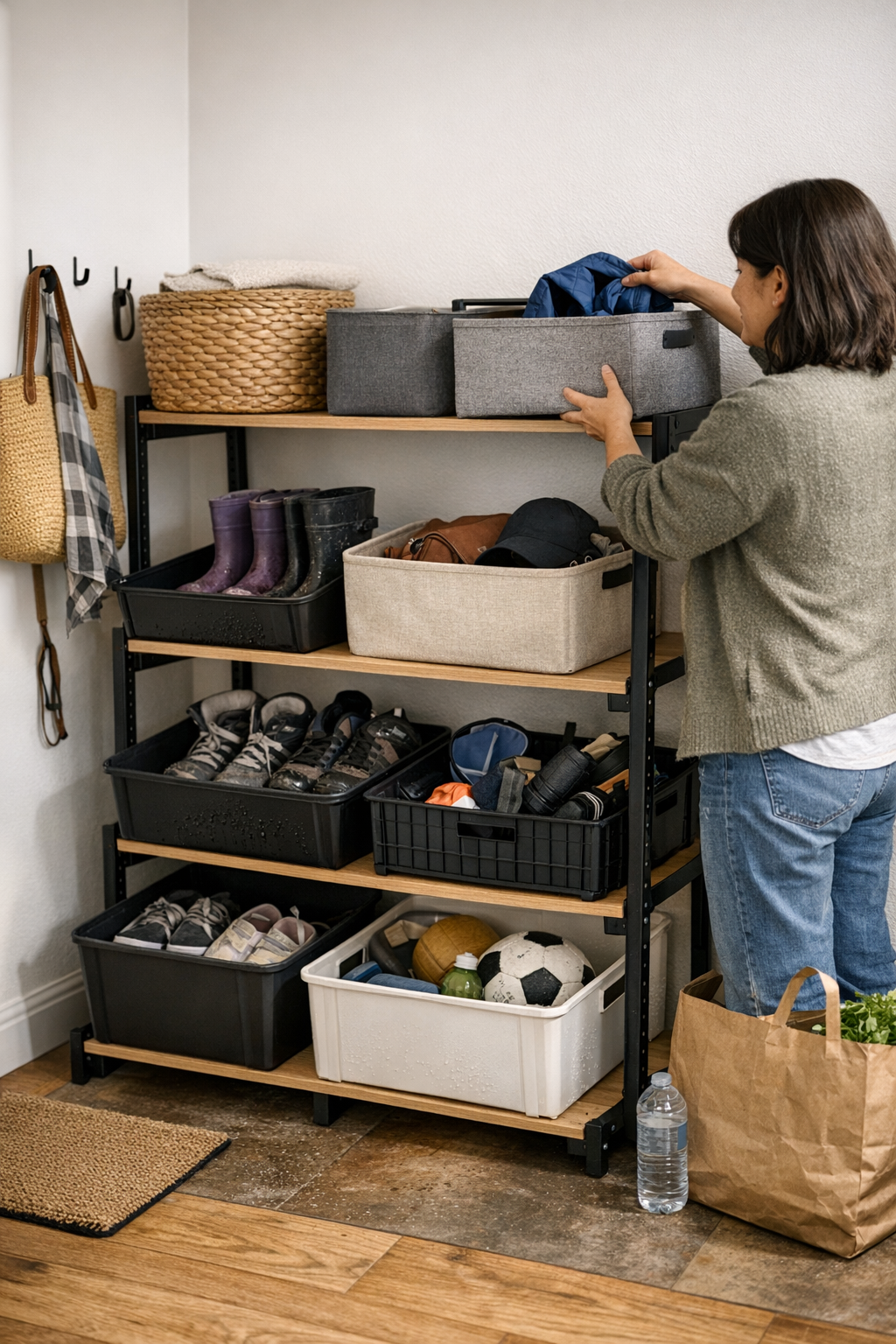
    Adding deep bins, trays, or modular containment means a subtle but firm shift: now each item has a designated zone, messes don’t leak into each other’s territory, and recovery shrinks from a major task to a quick fix.

    • Crumbs and debris are isolated in trays, not broadcast across an entire shelf.
    • Shoes stay grouped—lift the tray, dump, done—rather than hunting single shoes around the room.
    • Spills and dirt become localized cleanups, not silent, spreading backlogs.

    The reset stops feeling impossible. Instead of staging a whole-area rescue, you empty a single bin, wipe a tray, and the entryway’s clear path is back. The storage now works with daily traffic rather than losing to it, making the zone a lasting entry—not just a day-one illusion.

    Floor Space, Wall Storage, and the Illusion of Order

    It’s tempting to believe that lifting clutter off the floor onto wall shelves cures the entryway chaos. And wall-mounted shelves do open up tight passageways and reduce tripping. But without hooks, baskets, or closed compartments, even eye-level storage collects all the same drift—bag straps tangled, hats stacked, misplaced gloves migrating shelf-to-shelf. During a rushed morning, top shelves go unused, and whatever’s awkward to reach simply lands wherever there’s open space. Mixed solution works better: wall bins handle hats and gloves, lower trays catch shoes and wet gear, hooks anchor always-moving jackets—so the threshold holds up under traffic, not just in photos.

    Trouble Spots That Keep Coming Back

    • Shoes drift and sprawl: The row starts neat, then edges wider until the walking route is squeezed to the wall or crowded entirely.
    • Bench turns into overflow: The spot meant for sitting is lost under a pile of bags and coats left in passing. Now, tying shoes means balancing on one foot or clearing a mountain first.
    • The corner of no return: Mail, keys, and “for later” items build up in the same dead zone, forgotten until the next reset marathon.
    • Endless resetting: Every attempt to tidy up just pushes items from one zone to another—never really reclaiming openness for more than a few hours.

    Containment doesn’t erase these cycles, but it shortens the reset window. With every drop, there’s now a real destination—so messes stop becoming permanent squatters, and recovery happens in evening passes, not weekend overhauls.

    Quick Reference: Common Entryway Storage Questions

    Are wall-mounted shelves better than floor units for entry zones?

    Wall-mounted storage wins space and clears the entry path—especially in narrow hallways—but without bins, hooks, or divided sections, clutter simply migrates upward. For cleaning speed and everyday reach, combine wall-mounted racks with baskets or hooks, then use floor bins below to capture overflow and wet gear.

    How can I keep rain boots from spreading mud or puddles?

    Assign a watertight tray or deep bin directly for boots. This holds mud and water in one place, letting you dump or rinse the mess after storms instead of letting it reach the rest of the shelf. Make the habit: dump the tray regularly—otherwise, moisture still escapes the bin and spreads out again.

    Should I use closed cabinets or open shelving for drop zones with mixed use?

    Closed cabinets hide clutter but slow retrieval, especially when multiple people use the space. Open shelves increase speed—but only if you prevent overflow with bins or trays. For mixed, repeated family use, pair open shelving with deep or modular containers, or position the most-used bins inside lower cabinets for a balance of speed and containment.

    The Takeaway: Make the Reset Realistic

    In real transition zones—the “Betweenry” of household life—minimalist arrangements dissolve under the pressure of actual routines. Every dropped item tests your setup’s boundaries. Choosing bins, trays, and smart dividers prevents that slow slide from controlled threshold to daily obstacle course. An entryway that rebounds quickly after a messy day—a setup that clears with a five-minute reset, not an hour—keeps the threshold functional for the next round of entries. Every solution that shrinks the reset burden brings the zone closer to something you actually use every day, not just on move-in day.

    http://www.betweenry.myshopify.com

  • Shelf Liners Transform Entryway Cleanup Into Quick, Effortless Tasks

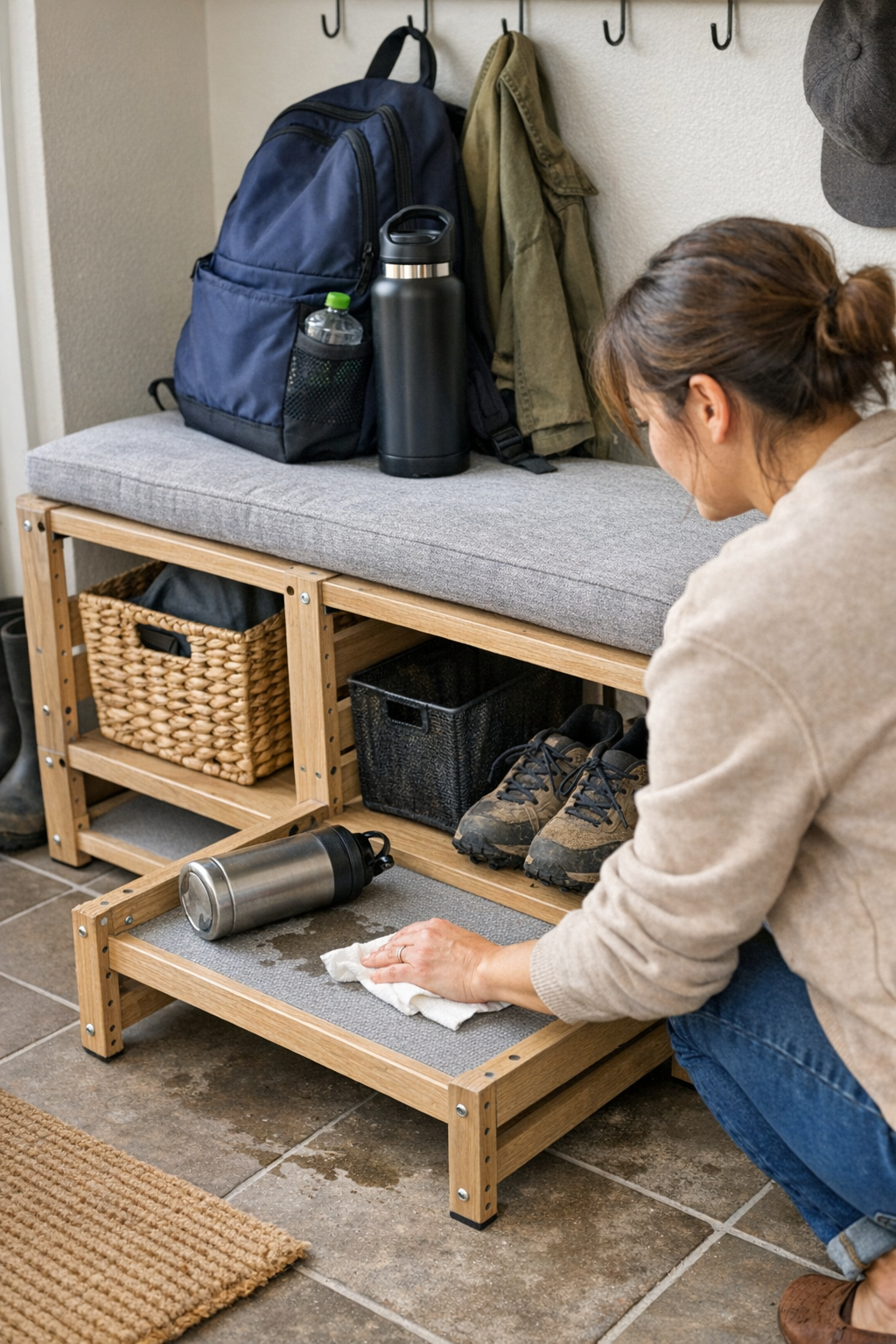
    No entryway setup stays manageable for long—especially when real life rushes through it. The baskets may sit straight and the bench may look clear after a weekend reset, but the order slips the moment someone crosses the threshold with rain-soaked shoes, a runaway water bottle, or an armful of gear. One muddy drop or missed spill is enough to shift your storage from “reset-ready” to “clogged and stained”—with dirt pressed into paint, seams swelling under leaks, and sticky patches you dread tackling. The illusion of control fades fast. If your entry zone isn’t built to withstand daily friction, every cleanup slows down, and each pass-through leaves the space less usable the next time.

    Mistakes That Don’t Show Up Until You’re Rushing Out the Door

    Most so-called smart storage plans seem fine at first—but they rarely keep up with real, repeated use. The difference becomes obvious only after routines collide day after day. A bench that once fit three pairs of shoes is now ringed by double that number—mud trailing off the soles, extra pairs crowding the path. Baskets underneath fill with umbrellas and backpacks, but one slow leak from a forgotten bottle stains the bottom and starts a chain of delayed resets. Soon, what was meant to speed your mornings just blocks the route out. Order that looked “set” begins to resist maintenance—reset times climb, and the urge to ignore messes grows stronger.

    Where Shelf Liners Change the Game

    The real test of an entryway isn’t how neat it looks right after a reset—it’s how quickly you can undo the mess when a spill or splash strikes. Shelf liners draw a hard line between daily mess and permanent damage, turning a messy drop zone into a manageable, wipe-and-go surface. When someone drops a dripping raincoat, or a yogurt tube leaks inside a bag, a liner means a fast cleanup—no basket-pulling, no scrubbing. The threat of water stains creeping under storage or dirt biting into painted wood simply disappears.

    Skip liners, and every reset multiplies in effort. Stains get worked into seams, sticky zones demand a full scrub, and “just a wipe” turns into a full job. You start letting cleanup slide. Over time, a small mess grows into a larger, more permanent obstacle—and even a quick reset feels out of reach.

    Real-Life Reset: A Scene from the Side Entry Zone

    The reality of any in-use entry is pressure at the busiest moments—bags dropped on the seat, shoes overflowing onto the floor, and a bottle tumbling until its cap pops free. At that critical moment, your storage either holds up or becomes a bottleneck.

    • With liners: You notice the spill, grab a towel, do one pass, done—no checking for water pooled under baskets or damage at the seams.
    • Without liners: Moisture seeps into corners, sticky patches turn into stubborn stains, and resets drag out as you dig out baskets, hoping the swelling hasn’t already started.

    The real friction isn’t the mess itself—it’s the added reset burden that compounds. Eventually, anyone in a hurry sidesteps the whole area, and the original flow of bags, shoes, and people is blocked at the threshold. The supposed “system” quietly shifts from help to hassle.

    How Liners Shorten Cleanup and Save the Setup

    The difference a liner makes is lived, not imagined—especially during the peak moments after storms or on heavy-use weeks. Each minute you save on cleanup is a minute the storage actually works under pressure. In direct use, swapping to removable, slightly textured liners cut one family’s muddy shelf reset from ten minutes down to two on a 32” shelf. That payoff matters—not just for neatness, but for reclaiming the entry as a through-zone, not a work zone, even with crowding and back-to-back arrivals.

    Instead of dreading the stubborn gray line at the shelf edge, you clean once and move on. Drips and pools no longer set the timer on long-term damage. The real win: you keep up daily, so the mess never builds high enough to reshape routines around it.

    Where Liners Help—And Where They Don’t

    Liners solve the mess—not the overflow. They defend against mud, salt, and routine leaks, essentially giving your entry shelf an armor against repeat abuse. If your threshold is hit daily with wet boots, open lunch boxes, or sandy gear, liners keep the reset simple and keep the underlying surface ready for another round without a full teardown.

    But liners don’t control accumulation or flow. They can’t make kids put boots on racks or stop bags from taking over the bench. System drift—where temporary drops become permanent piles—still happens if the structure doesn’t match your actual use. Liners just keep a small mess from turning into a job you start avoiding.

    Tips for a Smoother Threshold Flow

    • Pick removable liners: Quick to shake out or swap—even after a season of mud and grit.
    • Get texture with restraint: Enough to grip gear but not so much it holds grit beneath surface wipes.
    • Cover seams and corners: The first places water creeps and grit eats through paint—skip these and resets get longer, fast.

    The Practical Payoff: Reset That Matches Reality

    Shelf liners in transition spaces won’t impress guests—they’re there to defend the zone you actually use. The setups that last are always the ones that make resets short, storage accessible, and friction invisible. If you can clear soaked sand, salt, and spilled drinks in seconds—not minutes—the path stays open, routines keep moving, and the “system” stays a tool, not a time sink. The real advantage comes not in show, but in reclaiming the entryway as a true transition space—one you reset easily, so blockages and workarounds never become a permanent feature.

    Find practical entryway and threshold storage solutions at Betweenry.

  • How a Return Spot Near Your Door Transforms Outdoor Organization

    Here’s how most outdoor storage setups really get tested: it’s not storms, not big projects, just the daily shuffle of gloves, tools, balls, and chores streaming out and back through the main door—on repeat, week after week. You grab a trowel before coffee, stash muddy gloves “just for now,” step past your kid’s bike helmet, and promise yourself you’ll put it all back after one more trip. By sunset, what started as clear turns crowded—the threshold jammed, paths shrinking, and a setup that once looked organized quietly devolving into a bottleneck you can’t ignore.

    How the Outdoor Door Becomes Clutter’s Landing Zone

    You’ve seen it before: stand in your side yard or at the back step and realize another pile showed up while you weren’t looking. Spare seed packets, faded garden gloves, a shovel caked with last week’s dirt—all gather at ground level, inches from the door. Not because you’re out of storage, but because the nearest bin or rack sits just far enough away that “later” keeps winning. Each rushed return breeds the next one, until temporary drop-offs settle in like they belong there.

    This isn’t just mess—it’s routine drag. With storage shoved to the fence or buried at the garage edge, the return path feels like a detour. You weigh every trip: is it worth the full trek, or should you just leave it for the next round? Without a spot right there, the flow breaks. Reset fatigue sets in fast, grinding down your good intentions into a collection of almost-finished cleanups.

    When the Return Zone is Out of Place

    Two yards might look equally neat from a distance: bins squared off behind the shed, cabinets lining the garage. But spend a day moving in and out, and one difference gets loud. Stores-at-a-distance setups ask for back-and-forth journeys every time you finish a job or retrieve a toy. In practice, that means armfuls get set down “for a second,” stray boots jam the walkway, a soccer cone multiplies into an end-of-day trip hazard. Yesterday’s clean stretch fills up by lunchtime, then clogs entirely by dinner.

    Move a simple crate or open rack within arm’s reach of the door and the pattern snaps. Suddenly, it’s hand-off, toss, done. Garden gloves drop into the bin, wayward balls land without fuss. The loop tightens: every reset shorter, every pass-through smoother. What felt like a series of little chores fades into instinct—and the exit zone stays open without feeling like one more task to dread.

    The Hidden Cost of Distance: Chores Get Stickier, Movement Gets Blocked

    Picture a weekend morning: the pruning shears get left by the fence, skateboard helmets line up against the garage, and stray buckets pile up by the gate. Storage that made sense on paper—a big tub tucked “out of the way”—makes routine cleanup harder. Instead of a direct path inside, it’s detours around furniture, shuffling gear just to get a clear stretch. Midday, you’re threading through laundry baskets and tarp rolls that should have gone somewhere else. By evening, it’s a tangle—resetting means pausing, picking up after someone else, losing track of what’s out or put away.

    Flip it: add one rack, open tote, or bench right at the main crossing and watch reset friction drop. Suddenly, gear lands where you’re already walking. Tools, gloves, sports junk—all get returned in the right direction without a detour. The path to the house stays open; quick drop-offs replace long cleanup.

    One Small Shift = A Faster Reset, Less Crowding

    Here’s a real test: leave a crate just two steps from your main threshold instead of tucking it behind a utility cabinet. Instantly, pickups get faster; end-of-day sweep is a single motion, not a multi-stop runaround. Even in a cramped entry zone, swapping a closed box for an open rack means no lifting lids, no weird stacking—just toss and move on. Faster in, faster out, less stuff stuck in the way.

    These fixes don’t call for massive storage—just a handoff point that fits your route. Now, putting things away isn’t an ideal to aim for; it’s the default, even if everyone’s busy or distracted. The payoff comes in small wins: Saturday chaos doesn’t block the entry, weekday routines don’t grind to a halt. “Neat” stops being a one-day event and becomes the background, not the project.

    Skip the Shortcut Return—Pay the Daily Cost

    You know the look: piles pressed to the doorframe, pathways reduced to slaloms, little things sucking up more time than they should. Resetting the area becomes a background job you never quite finish. No clear handoff spot? The blur between “in use” and “put away” gets wider, and the daily drain gets heavier—one zigzag exit at a time.

    Floor vs. Overhead: Why Quick-Return Storage Wins Low

    No contest—open bins and low racks beat overhead shelves for outdoor handoff zones. When you’re moving fast, storage above eye level means friction—no one wants to lift a muddy tool or wet glove overhead. No surprise: gear that should be out of the way just piles up below, eating floor space, making resets clunkier, and hiding the “order” you thought you built in. Wall hooks, floor-level bins, and grab-and-go racks almost always work better where the return loop stays short.

    What Changes in Tight Setups—Side Yards, Garage Edges, Narrow Zones

    Space gets tight, movement matters more. Along a garage, squeezed behind a gate, or running the length of a thin side-yard strip, a well-placed return point is the difference between gliding through and getting stuck. Miss the drop zone by just a step, and every entry piles up: a rake blocks the hose, a bucket eats the last walkable strip, a corner becomes a slow spillover graveyard. It’s not more storage that fixes this—it’s moving the return spot to where the flow actually runs, so resets are part of the routine instead of their own event.

    Real Routine Change: Closer, Smarter Returns, Less Daily Grind

    Adding a return point close to your main outdoor door won’t double your storage, but it quietly chops away at the friction points that kill real-world routines. Garages and yard strips run longer without bursting with overflow. Full cleanups shrink to a few direct sweeps instead of an hour of backtracking. You get less shuffling, less resentment, less “it looks organized but still trips us up.” Smart, near-door handoff zones make the whole area feel functional again—so you use the space, not dodge around it.

    See more practical outdoor reset solutions at TidyYard.

  • Ventilated Towel Shelves Improve Drying and Reduce Odors in Busy Bathrooms

    When towels feel damp or carry a faint sourness straight from storage—regardless of how freshly washed they are—the problem usually isn’t your laundry routine, but how your shelves breathe (or don’t). Cabinets and closed shelving systems trap moisture deep between folds. Behind the neat fronts, air barely circulates. Even a “sorted” stack can turn into a holding pen for residual wetness. Open a cabinet midweek, and what looked calm from the outside hits you with heavy, chilled fabric and an unmistakable hint that something got quietly stale—or worse, infected all your towels at once.

    Why Sealed Shelves Stall Freshness

    Closed towel cabinets seem to promise order and shield against dust, but friction shows up almost immediately in real use. Stack a new load of towels on top of half-dried ones and shut the door: evaporation grinds to a halt. The next grab, instead of clean-dry comfort, delivers something cold or clinging to yesterday’s humidity. The issue isn’t visible until it’s too late—every towel slowly catches the problem, even if the front row stays crisp, and the stack is never truly reset. On the surface, the area looks contained; underneath, freshness is leaking away with every closed door.

    High-use bathrooms magnify every flaw. When towels move through hands all day—roommates grabbing at odd times, new loads stacking over old—airflow drops, and the cabinet turns into a moisture trap. Emptying it and restocking doesn’t erase the pattern: the cycle just reloads stale air into a fresh lineup. Towels that should feel like a reward for keeping order become part of the background clutter, indistinguishable from the ones overdue for laundry.

    Ventilated Shelving: Letting Air Do the Work

    Switch to ventilated towel storage—slatted or open-grid shelving—and the whole room’s rhythm shifts. Air slips between each towel. Moisture has somewhere to escape instead of tunneling deeper into the pile. No, ventilated shelves don’t deliver magazine-perfect rows. Edges end up staggered, stacks are rarely uniform. But within a week, the repeated cost of hidden dampness vanishes: towels dry the right way, odor doesn’t sneak back, and the “will this one be dry?” test all but disappears. The trade is obvious every time—less sculpted visualization on the shelf in exchange for towels that actually perform day after day.

    In Daily Practice: Fewer Surprises, Faster Resets

    Real use always exposes the weak link. Morning rush: a fresh towel needs to go somewhere, hands reach for what’s visible, and the whole system shifts. Closed cabinets magnify friction—bottom towels never catch up, and each retrieval means digging through layers that still feel yesterday-wet. A ventilated setup changes the reset cycle entirely. Even if you cram two loads into a single week’s rotation, open sides and grid undersides strip out residual dampness between uses. Grabbing or returning a towel becomes a one-move routine rather than a cautious sift or a hunt for the “least iffy” option. No more double-washing just to kill mystery odors.

    The Subtle Friction of “Looks Right, Feels Wrong”

    There’s a disconnect when a setup maintains just the appearance of order. Cabinets look zipped-up and serene, but inside you create tiny judgment calls—a quick sniff test, a search for the towel that might actually be dry. The routine starts to tiptoe around the storage, instead of flowing through it. Closed systems conceal their own recurring maintenance: you restack, reorganize, and end up hesitating anyway. That pause before use isn’t style—it’s your routine quietly announcing something’s off. True working order means towels you reach for without thinking, not ones you second-guess every other morning.

    Crowded Bathrooms Put Storage Choices to the Test

    Shared or compact bathrooms strip the theory away and force real trade-offs. Closed shelves absorb the burden, but their design flaws turn urgent quickly:

    • Clashing routines: Multiple users wedge partially used towels into place. One damp towel gets sandwiched, never fully dries, and begins tainting those loaded in after it. The problem compounds behind closed fronts.
    • Retrieval friction: Need a towel fast? Closed storage forces you to disturb the stack, fingers sinking past damp layers, floors at risk for a stray drop or two. The retrieval action itself broadcasts what isn’t drying out between cycles.
    • Overflow pressure: When laundry slips a day, closed cabinets are magnets for every straggler. Piles compress air out of the zone—what started as “neat” storage becomes a musty backlog, hastening the need for a full cabinet overhaul.

    Open-sided, ventilated shelving strips away the guessing. Moisture leaves freely, so even with imperfect laundry timing, stacks recover. The mental load of “which of these is safe?” is gone. Zone boundaries become visible rather than speculative, and resets don’t require unpacking the entire zone after high-traffic days.

    Small Storage Tweaks, Not Just Big Changes

    Sometimes all it takes is swapping out a single piece. Mesh shelf liners over open grids keep even the smallest washcloths in place without choking airflow. Capping towel stacks at three ensures thick towels actually dry fully—beyond that, you’re back to enabling moisture traps. These micro-adjustments don’t read as upgrades, but daily, they cut down on lost time and unplanned side quests just to find a dry piece of fabric.

    What Actually Improves after Switching?

    Reset speed accelerates. Ventilated zones stop turning into secret backlogs. The week’s laundry in, old towels out, with no hidden problems festering at the back. Zero ghost odors midweek; zero weekend deep-cleans “just in case” a single missed towel contaminated the lineup. Any towel can be grabbed with confidence—the friction has shifted from invisible to irrelevant.

    Space stays in play—not simply filled. Ventilated storage puts use flow above sealed neatness. The improvement doesn’t unfold minutes after restacking, but on the fifth or sixth day when the real clutter test hits. Stack boundaries are fixed by airflow, not by how tightly you can cram a door shut. Repeated use doesn’t break the system; it resets itself with minimal manual effort.

    Real-World Reminder: “Good Enough” Usually Isn’t for Long

    Perfect cabinet lines might signal completion, but lived-in bathrooms tell the truth. Watch for the small, stubborn signals: a towel pulled and immediately returned, that hesitation to grab low in the pile, the need to reshuffle after a busy day. There’s nearly always a simple airflow fix lurking in the background. Ventilated towel shelves don’t win style points, but over weeks, they erase the waste—less time, fewer “hold your nose” moments, and almost no reason to start over each weekend. Eventually, the towels stay fresh; the space holds its shape; and maintenance actually shrinks instead of piling up with every cycle.

    See practical storage solutions for every indoor area at Gridry.

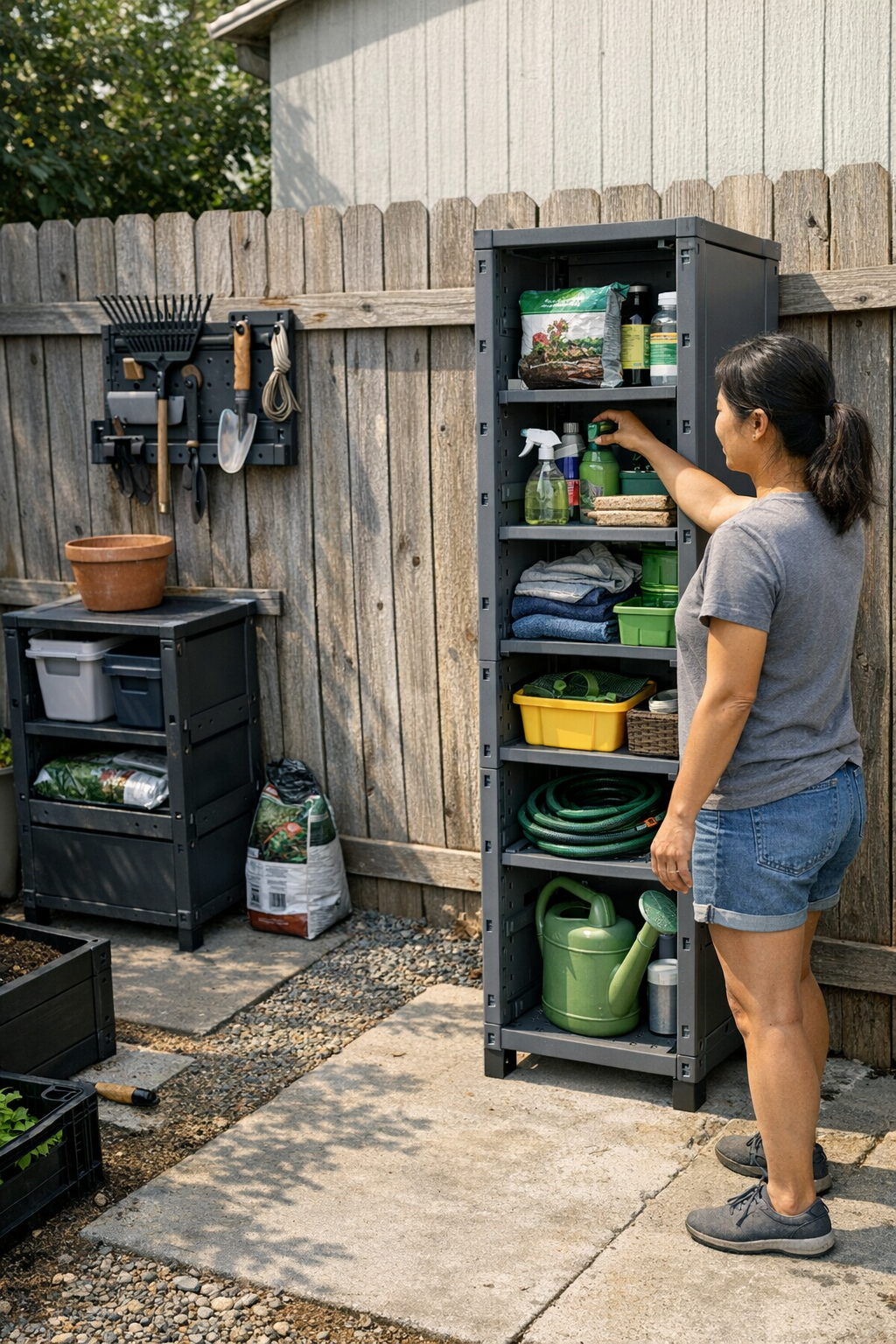
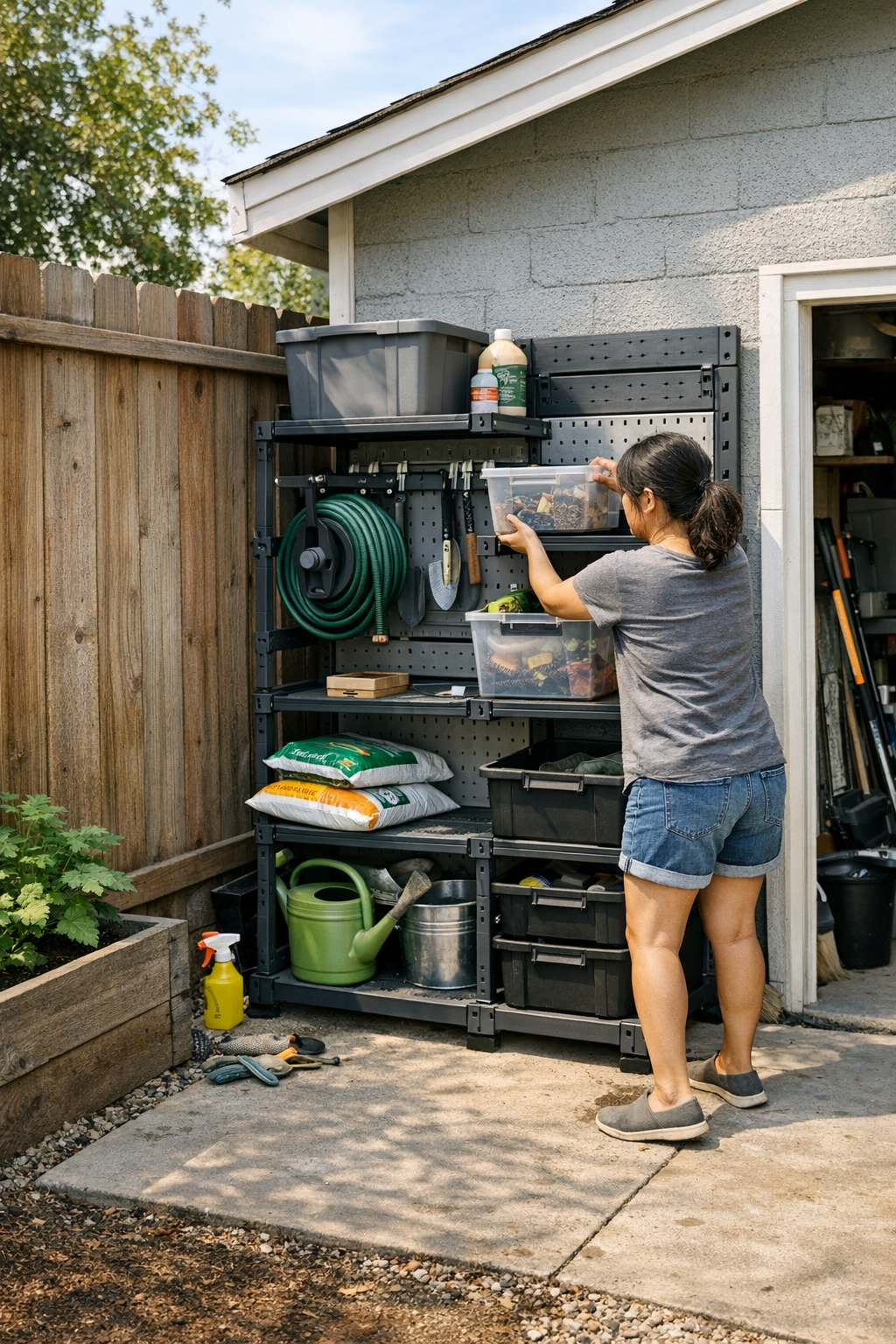
  • Transform Your Outdoor Storage with Modular Wall Systems for Easy Access

    Does your outdoor storage actually speed up your routine—or quietly make every task harder? If you’ve crossed the same garage edge, side-yard, or backyard corner a dozen times, you already know: even a “tidy” storage box can turn into a slow trap fast. Floor bins and bulky chests promise order, but too often leave you wrestling tangled hoses, digging for lost tools, or drifting mud across the path—until “getting things done” becomes “moving stuff out of the way, again.”

    Where the “Tidy Bin” Breaks Down

    After just a couple afternoons in and out, that closed box starts showing its cracks. The pattern is predictable: toss a shovel in here, wedge a bag there, and one tight lid turns into an avalanche waiting to happen. Next time you need the hand shear, it’s under a kinked hose and beside a handle you barely recognize. Every shortcut becomes a setback—what was meant to be grab-and-go spirals into digging, shifting, and stacking just to use the next tool. All the while, the outside looks organized, but the inside is quietly grinding your routine to a halt.

    The more you rush, the worse it gets: a rainy evening turns a half-organized box into mud-caked chaos. The lid resists closure, things pile on the floor, and that single bin starts blocking the whole path. Each reset asks more: bend, search, shuffle, go again. Tools start to wear from friction, not from use.

    The Real Cost: Every Reset Slows Down

    Small yards and tight side returns make the problem more immediate. What looked like a clear run from garden to gate soon becomes a shuffle: one badly placed rake, and you’re sidestepping piles; one “temporarily” coiled cord, and you’re untangling just to leave in the morning. The moment one tool clogs the zone, the rest turn into debris, and the open path you counted on is blocked three days later.

    It creeps in: that trunk by the patio, the hand trowel buried under a hose, the streak of grit tracked inside after a hasty grab. The old bin, once helpful, becomes the thing you avoid resetting. The gap between storing and actually being able to use your stuff widens—resetting for the next use gets slower, and suddenly, every outdoor job comes with cleanup you didn’t budget for.

    When Storage Adapts: Modular Systems Change the Routine

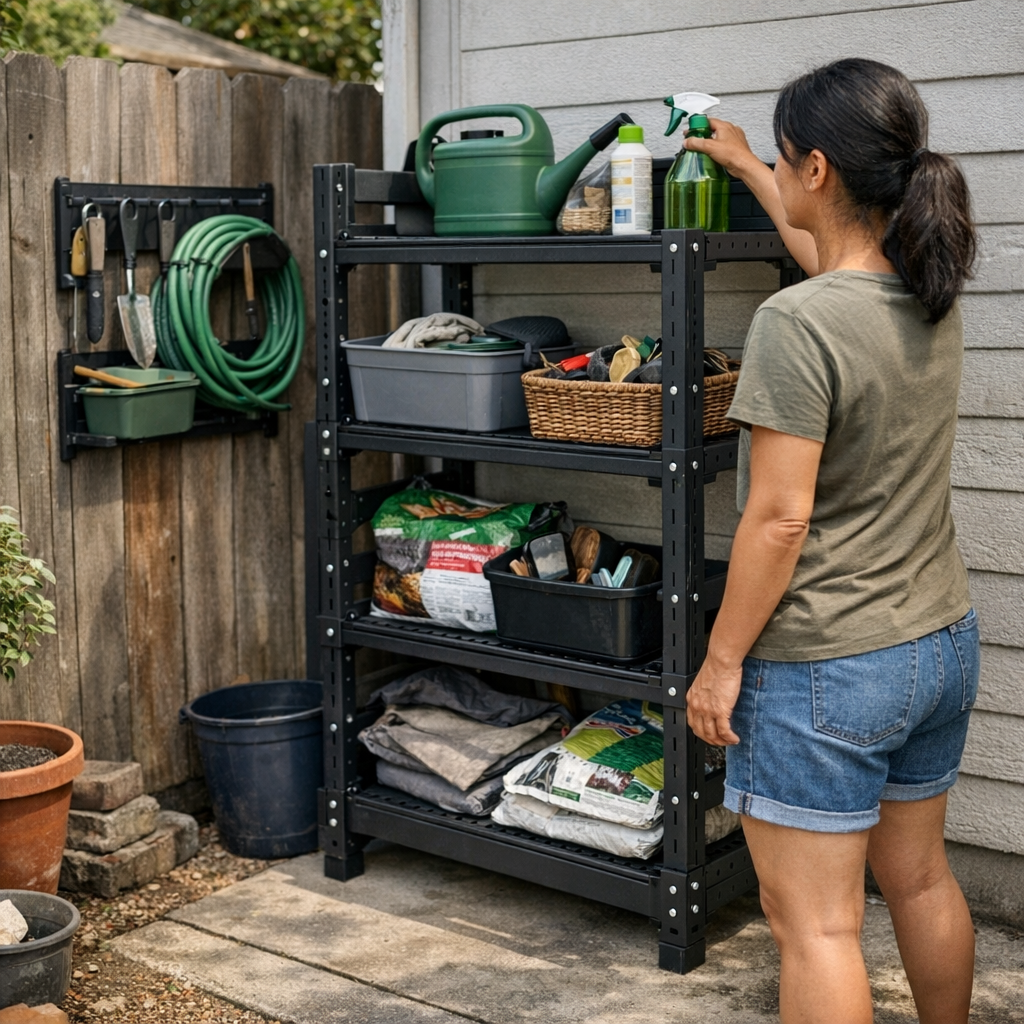
    The shift isn’t just about footprint; it’s about return flow. Wall rails, split shelving, and visible hooks don’t just organize—they keep things from colliding. Daily-use tools get a clear slot; bulky gear sits on an open shelf. Instead of forcing everything back into a mystery pile, each item has a landing zone. Grab one rake, and the others stay put. Return a muddy trowel, and you’re not burying the clippers beneath it.

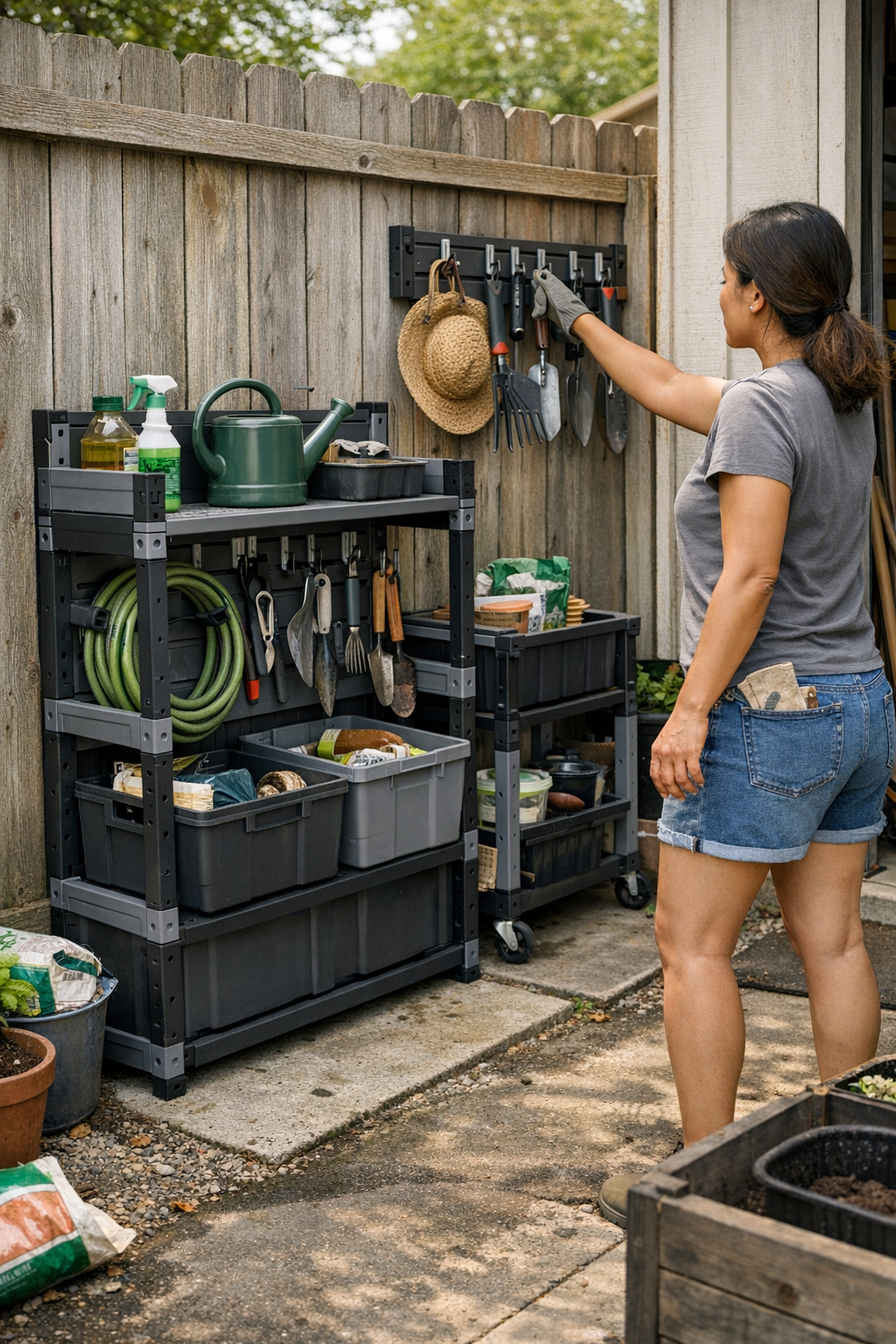
    Visualize a fence-line reset: hooks for rakes and loppers, a shelf for that awkward fertilizer tub, rails handling hoses in a single loop. After rain, nothing’s sinking to the bottom or blocking the lid—items land in sight, and you can count what’s missing before the last light fades. The reset isn’t a big project; it’s a single action, repeated without friction.

    On-the-Ground Tests: How the Setup Actually Performs

    Late-day returns: At the end of a muddy job, tossing tools in a bin is the usual shortcut. But open hooks mean no excuse for piling up. A wall rack makes “putting away” as quick as dropping it—but without the next trip becoming a dig through packed gear.

    Side yard traffic jams: One dropped shovel or a mismanaged cord can stop movement cold. Modular rail systems let you hang items flat against the wall, keeping the walk clear—so you aren’t forced to clear a mini-obstacle course just to take the garbage out the next morning.

    Overflow magnet corners: Every layout collects junk. It’s always the same dead corner, right where you step—or worse, where you can’t reach without moving everything else first. With visible rails and shelves, the corner stays empty: you see when overflow is starting, and stop the pile-up before it needs a weekend fix.

    Clear Resets, Less Mess: What Changes

    Swapping out the bin for panels and shelves won’t give you a bigger yard—but it will change how you move. No more doubling back to fish out a lost spade, or stacking on top of stacks just to squeeze the lid down. Boundaries show up: a rail for daily stuff, a shelf for what you use less, and an absence of “just toss it” zones.

    Here’s what actually stands out after the first week:

    • Returns feel automatic—no extra hunt, no pile-up, no “where does this even go?” pause
    • Obstacles vanish: fewer blocked paths, no tripping over handles that don’t belong on the floor
    • Muddy and clean don’t mix—one glance and you know what needs cleaning, what’s set for tomorrow
    • Any mess appears early, so you reset a little at a time—instead of one dreaded, hours-long overhaul

    The line between “stored” and “still outside” becomes impossible to miss. If something didn’t come back, you know instantly—no hidden trowels or buying a third pair of gloves you already own.

    Keeping the Setup from Backsliding

    Mix rails and shelves where you move most. For small or tough-shaped spaces, a low shelf for overflow, a rail above for daily tools—the difference is immediate. Heavy gear stays off the walk, frequent-use items are right at hand, and nothing’s hidden beneath another thing.

    Give everything a return spot—down to the last hook. Numbered rails, lined bins, marked hose loops. The more you lock in the landing zones, the less likely piles creep up. It’s not about perfection; it’s about reducing the excuses for drop-offs and makeshift stashes, so the area resets after each day, not after each season.

    Notice the warning signs. If reaching for a tool means bumping another, if you keep setting gear down “just for now,” or if corners fill up again, it’s time to adjust—not overhaul. One new hook, a moved rail, a fifteen-minute de-clutter every month: these tweaks keep the system matched to how you actually use the space as the months roll on.

    Long-Term: Why the Routine Stays Easier (or Doesn’t)

    Real outdoor organization isn’t measured by how much you can fit in a box. It’s about how smoothly you can put things away and find them again—without rerunning the same obstacle course every evening. Modular rails and wall systems don’t eliminate the cleanup, but they keep the return easy enough to avoid delayed resets and slow build-up of spillover. The hidden win: fewer “now where did I put that?” moments, less junk creeping over the threshold, and gear that actually lasts because it isn’t getting chipped, mixed, or buried every week.

    The right setup keeps the mess from sneaking up on you. When space is divided by use, not just by size, you spot missing or overdue items at a glance—and you don’t end up reorganizing from scratch. Small, practical boundaries keep everything moving, make cleanup obvious, and cut the stress out of everyday outdoor work.

    For more hands-on outdoor organization ideas and practical storage setups that stand up to real use, visit TidyYard.

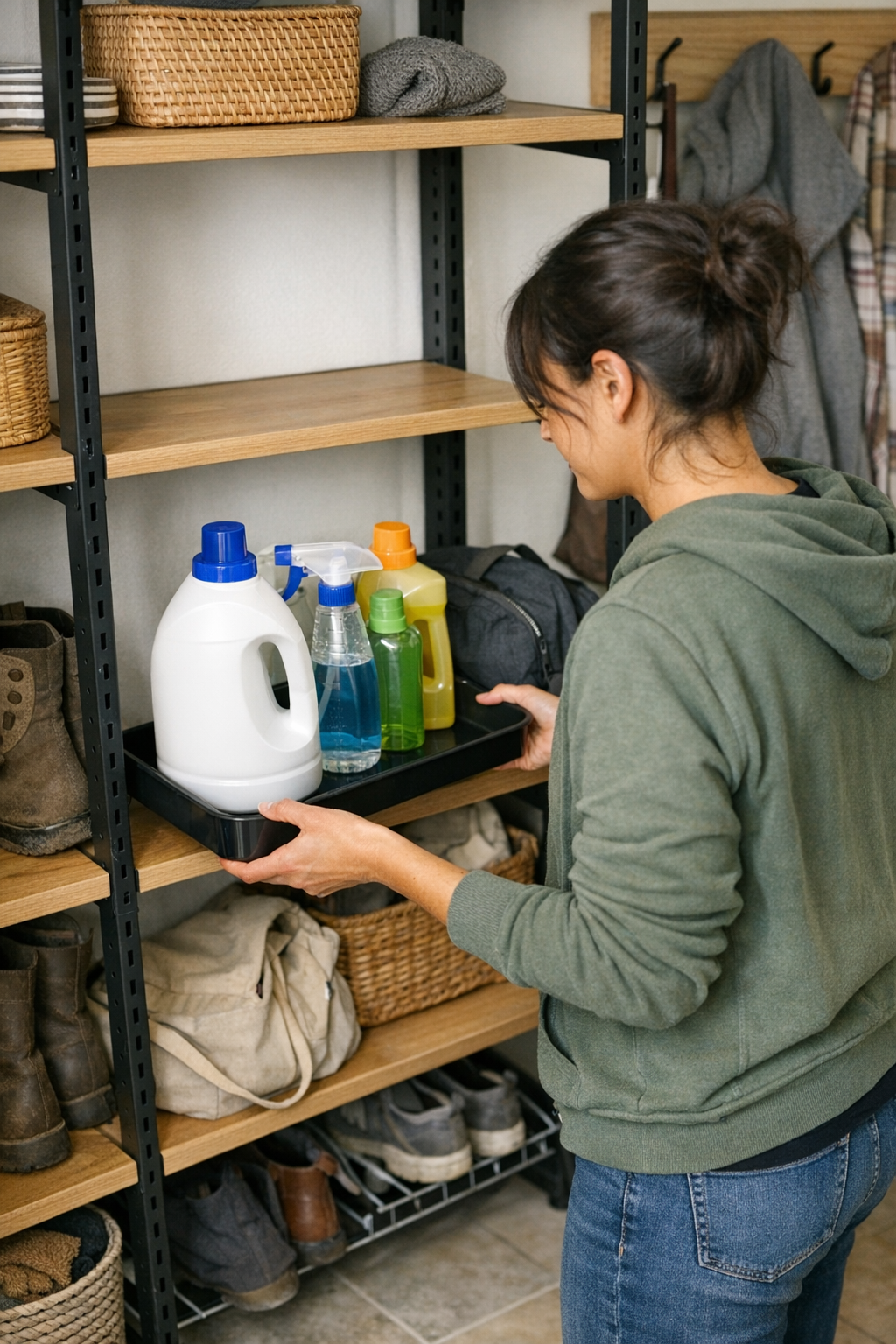
  • Prevent Sticky Stains with a Drip Tray in Utility Cabinets

    A single missed drip in your entryway cabinet is all it takes for a clean zone to unravel fast. You’ve done the reset—the bottles are lined up, the shelf wiped down, everything looks ready to handle the daily shuffle. But entry and drop zones are built for repeated crossings, not just looking controlled after a big clean. Without a drip tray, every detergent bottle, spray, or muddy container leaves you playing catch-up: thin films, crusted residue, and sticky edges start spreading almost invisibly along the spots you touch and pass through the most. The setup might pass for organized, but under steady use, even a tight routine breaks down—one leaky cap or missed wipe is all it takes for the mess to mark a return path through your threshold space.

    A Hidden Mess That Builds Up Fast

    At a glance, the problem doesn’t even look like a problem. The shelf is spotless on Monday; by the next Saturday, after shoes grind past, bags jostle bottles, and someone tosses in gloves, a dull film quietly inches across the surface. Every time a bottle’s not capped straight, drips trail outward. Shoelaces snag at the edge, cuffs drag through unseen stickiness, and backpacks travel through the “clean” zone only to pick up a stripe of grit. The moment you sling a bag, hear it thud, and later notice it carried out the smear—that’s when you know the reset didn’t hold.

    When Resetting Becomes Real Chore Work

    Ignore the slow leaks, and cleanup turns from a quick swipe into real scrubbing—hardened lines that claw onto anything brushing past. The cabinet looks composed from a distance, but up close, every detail reminds you what got missed. Resetting stalls out as you pick at streaks and run down gray build-up, the original order fading far sooner than you planned. This isn’t a fix-and-forget zone; it’s a stress loop—mess returns because movement through the space never really stops.

    How a Simple Drip Tray Shifts the Routine

    Positioning a drip tray right under bottles and detergents forces the zone to behave differently. The tray doesn’t just catch big spills. It quietly absorbs those slow, creeping leaks that always seem to beat the wipe-down. Suddenly, after a week or two, the surface around your storage stays dry to the touch—no more sticky shelf edge, no more crusted smears at the seam. Cleanup resets shrink: grab the tray, rinse it, put it back. Instead of dragging out the reset, the process collapses into a simple lift-and-wash–no scouring along awkward seams or chasing stains under bottles that never really get moved in daily use.

    The Real-World Difference After Repeated Use

    Set two entry setups side by side: a tall cabinet clustering bottles low, or a bench drop spot crowded with wipes and gear. Both reset fine, but after a few days, the setup without a drip tray shows its weakness: sticky ridges fan outward, finger-width and hard to spot until a shoe edge finds them. Bottles set back crooked, containers jostled out of line—all it takes is normal movement to start mess creeping past the intended boundary. Neighbors get marked; gloves, bags, and sleeves show stripes you didn’t notice leaving. The tray version contains all that behind a single edge, holding back spread, and making the mess simple to intercept before it becomes routine cleanup drama.

    Entryway Scenes: How Mess Moves Without a Tray

    It’s raining, boots come off, coats pile on hooks, and someone tosses a half-closed cleaner bottle onto a shelf edge. By morning, a ghostly ring has formed—a visual cue right where you grab for the next item. The ring thickens as bags, sleeves, and hands graze it. The mess goes mobile: a bag corner absorbs the residue and carries it to the next room. That dirt isn’t just limited to the shelf—it spreads to the bag, the jacket, the hallway floor. Cleaning up now means extra steps, chasing tracks away from the entry instead of wrapping up at the source. Every missed intercept expands the reset chore past the transition space.

    Working Against the Daily Drift

    Transition zones either reinforce your routine or break it down. Without real containment, clutter and mess expand faster than you notice. Drop a glove, rush a bottle back at a slant, and the cycle begins again. In a high-use entryway without a tray, quick fixes pile up: extra mats that slide, wipes that bunch and clog, shelves doubled up and reshuffled until the original reset is buried under patches. None of these actually holds the line against the drift—they just delay the next full reset.

    Replacing Shelf Mats with a Shaped Drip Tray

    Mats seem practical, but flat mats migrate, fold, or bleed moisture over the very edges they’re meant to protect. Over time, drips sneak underneath or around, forcing you to clean what’s supposed to be covered. A real tray—shaped slightly wider than the bottles, with a subtle raised lip—blocks those leaks from ever getting to the wood or metal beneath. With enough room for a quick lift, you’re not wrestling the tray out or spilling its load back into the cabinet. Reset time drops from a tedious ten-minute wipe-and-scrape to a two-minute rinse—no hunting in corners, no old spots under forgotten bottles.

    What to Look for When Choosing a Tray

    For high-turnover storage, the ideal tray is shallow but firm, edged just enough for containment, and sized to slide in and out without pinching. Too deep, and you jam every reset; too shallow, and seepage wins. Most entry setups only need a weekly rinse—unless you’re deep in gardening season or cycling heavy outdoor gear, in which case, quick lifts catch the worst before it hardens. One everyday test: if grabbing the tray feels awkward or blocks item flow, it’s wrong for the spot. Fast resets and open movement matter as much as leak control.

    Beyond Bottles: Trays for Planters, Boots, and Mixed-Use Corners

    Drip trays aren’t only for cleaners. Under a watering can, beside sprays, or at the base of a bench where boots drip and plant gear rests, a fitted tray prevents pooling water or streaked soil from creeping outward. In zones meant for both indoor and outdoor traffic, anything set down wet or muddy becomes a candidate for containment. The trick is making the tray flush and free-moving—any delay or friction and the tray becomes a setup you avoid, which means the leaks return and the cycle restarts.

    From Stubborn Stains to Simple Resets

    Boil it down: a drip tray transforms the reset into a single action. No more scrubbing layered residue, no more guessing what’s growing under a bottle pushed to the side. The edge stays cleaner, clutter stops jumping zones, and your threshold isn’t a hidden mess waiting to appear next week. Not every drop-spot leaks equally, but the difference between an exposed shelf and a removable tray is felt after a few cycles. Each re-entry takes less effort, and the area works for your routine—instead of you working around its weak point.

    Shop Betweenry transition-space storage solutions

  • Choosing Narrow Linen Cabinets That Simplify Small Bathroom Storage

    In a small bathroom, the difference between a space that works and one that wears you down shows up the moment someone reaches for a towel and comes away with a pile of clutter. A narrow linen cabinet might seem like a neat solution—until you live with the fallout: doors blocking the sink, shelves too deep to reach without removing half the front row, items drifting out of sight, and every quick grab turning into a slow shuffle. What looks orderly right after install can, within a week, become a zone that interrupts the actual flow: slow retrievals, doubled-up returns, categories blending, and a constant sense you’re resetting the same mess twice.

    Where the Trouble Starts: Crowded Corners and Blocked Moves

    The real trouble isn’t just fitting a slim cabinet in—it’s what happens every time you move through the space. Maybe you tucked spare towels and essentials into that vertical footprint, getting them off the counter or floor. But now, the door swings wide and collides with the edge of the sink. Your hand cranes around an obstacle just to return a bottle, and the next morning, someone brushing their teeth is in the line of your awkward reach. Each shelf return becomes a moment of either shoving or balancing, and every shared morning pushes the limits further: you wait for access, try to stow something mid-routine, bump elbows, give up, toss it back in, and the “organization” unravels faster than you expect.

    Shared bathrooms multiply this friction. One person wants the lower shelf while another needs sink access. You reach for your go-to moisturizer and get blocked by a sibling’s hair spray, which already migrated sideways. Every overlap is another layer of inconvenience, making small annoyances stack up until the zone actively slows everyone down—especially when routines collide at peak hours.

    Deep vs. Shallow: The Hidden Catchall Trap

    A tall, slender cabinet looks composed at first. But open those deep doors after real use and the system starts slipping: towels buried behind a front line of bottles, washcloths lost behind stray soaps, and basic items only reachable after moving what’s blocking them. This double-row trap happens almost automatically once shelf depth outpaces a comfortable forearm reach.

    The farther the shelf, the more each daily grab moves things forward—and overflow gets banished to the dark back. When your return flow is broken, a “sorted” system becomes a jumble: old products hide behind new, categories mix, and the time to locate basics increases every day. After even a short stretch, you’re not maintaining order—you’re excavating the same zone over and over, with every missed restock amplifying the mess. That’s not just a cosmetic issue; it’s a real block to fast, repeatable routines.

    Real World Example: The Shared-Bath Shuffle

    Picture stepping into the bathroom, late and on autopilot. The cabinet door nudges the sink, squeezing your arm as you reach. In grabbing a towel, your hand knocks over three travel bottles—someone else’s product slipped in from yesterday. The stack you organized on Sunday has already spread into a lopsided pile, with loose items filling gaps in ways that barely make sense. You dig, restack, and by the time you’ve found what you need, you’ve sabotaged tomorrow’s attempt at order. Multiply this for every person using that zone, and you get bottlenecks that slow down the entire morning shuffle.

    Function Over Footprint: Why Shallow Shelving Wins

    The best-performing linen cabinets usually don’t look complicated or “maximized.” Cabinets with shelves capped around easy arm’s reach—typically 12–14 inches—quietly outperform deeper setups in daily life. These shallow shelves force everything into one visible line. No blind search, no double-row traps; just a clear, nothing-hides design that speeds up retrievals and resets.

    After switching to shallow, category-sized shelves, resets shrink into simple checks: folded towels fit cleanly, bottles and small items stay up front, and you stop spending time excavating for basics. There’s less opportunity for spillover—everything has a slot, and nothing is forced behind something else. By midweek, the old pattern of category drift is gone: towels hold their pile, personal items aren’t exiled in random gaps, and the shelf stays ready without three rounds of digging.

    Quick Tip: Dedicate a Zone for Small Supplies

    If bottles and boxes keep slipping forward and creating chaos, drop a shallow basket or tray on the lowest shelf. There’s no need for a complicated system—this barrier keeps small items contained and stops them from breaking up stackable categories. The separation is simple but reliable, shaving time off every reset and reducing the temptation to stash random products in whatever gap is available.

    The Reset: Less Work, Real Flow

    The real payoff isn’t that the bathroom always looks perfect; it’s that order is easier to return to, even after a high-traffic day. With shallow, well-zoned shelves, putting things back doesn’t require guesswork or contortion. The improvement isn’t abstract—it’s right in the motion: you move, grab, and return without pausing to fix the system first. Order lasts longer, daily navigation is smoother, and small resets replace weekend overhaul sessions. You spend less time fighting the cabinet, and more time just using the space the way it’s meant to work.

    No design erases all friction, but with the right depth and shelf layout, a linen cabinet finally joins the routine as support—not an obstacle that needs constant workaround. The result isn’t showroom-perfect—it’s a zone that functions with you, not against you.

    Find more sensible bathroom and storage solutions at Gridry.

  • Why Flexible Zones Outperform Fixed Layouts in Small Outdoor Spaces

    The real test of an outdoor setup never happens on day one. A space that looks perfectly organized—patio edged with tidy shelves, a side strip freshly cleared—carries an invisible timer. Come back two weeks later, after rain, projects, and new gear, and the routine reveals what the setup can’t handle: a hose snaking across the walkway, tools wedged together, bins already overflowing into the best shortcut from gate to door.

    The Real-Life Test: When Storage Meets Real Use

    It’s simple to feel satisfied with a weekend’s work—wall units leveled, garden tools lined up, floor space opened at last. But as routines kick back in and the seasons change, the cracks widen. The trowel that barely fits now blocks the watering can. Bike helmets multiply on the rack meant for boots. Movement slows, and suddenly, what started as better flow is now a string of small obstacles: clattering handles, the stepladder lounging in front of the only outlet, plastic bins stacked high enough to tip when you pull the bottom one free. The daily act of returning or retrieving even a single item becomes a negotiation with the arrangement itself.

    Flexible Zones vs. Fixed Layouts: When “Looking Right” Isn’t Enough

    Anyone with a multipurpose outdoor strip—the patio edge doubling as tool storage, that narrow side-yard, or the classic garage threshold—knows the seduction of clean, fixed layouts: a wall grid, permanent shelves, a designated rack for everything. On setup day, it echoes a magazine spread. But new needs arrive relentlessly: a leftover paving stone, an umbrella that won’t stand, another bag of soil, last month’s forgotten plant stakes. Inevitably, one zone starts swelling with the overflow. Suddenly you’re pulling out three bins to reach what’s behind them, or doing a lopsided dance to drag the mower past something that never should’ve been in the way.

    Real scene: “The neat shed” in early spring is all intentions—a crisp path, tools on the wall, buckets nested. Fast forward six weekends: clutters start pooling. Garden hoses don’t fully rewind, soccer balls drift into the walkway, the wheelbarrow migration involves a brief tool-rescue operation every time. By summer, watering the border plants means weaving around a thicket of unsorted gear and side-stepping the permanent pile-up in that one awkward corner.

    Flexible Zones in Practice

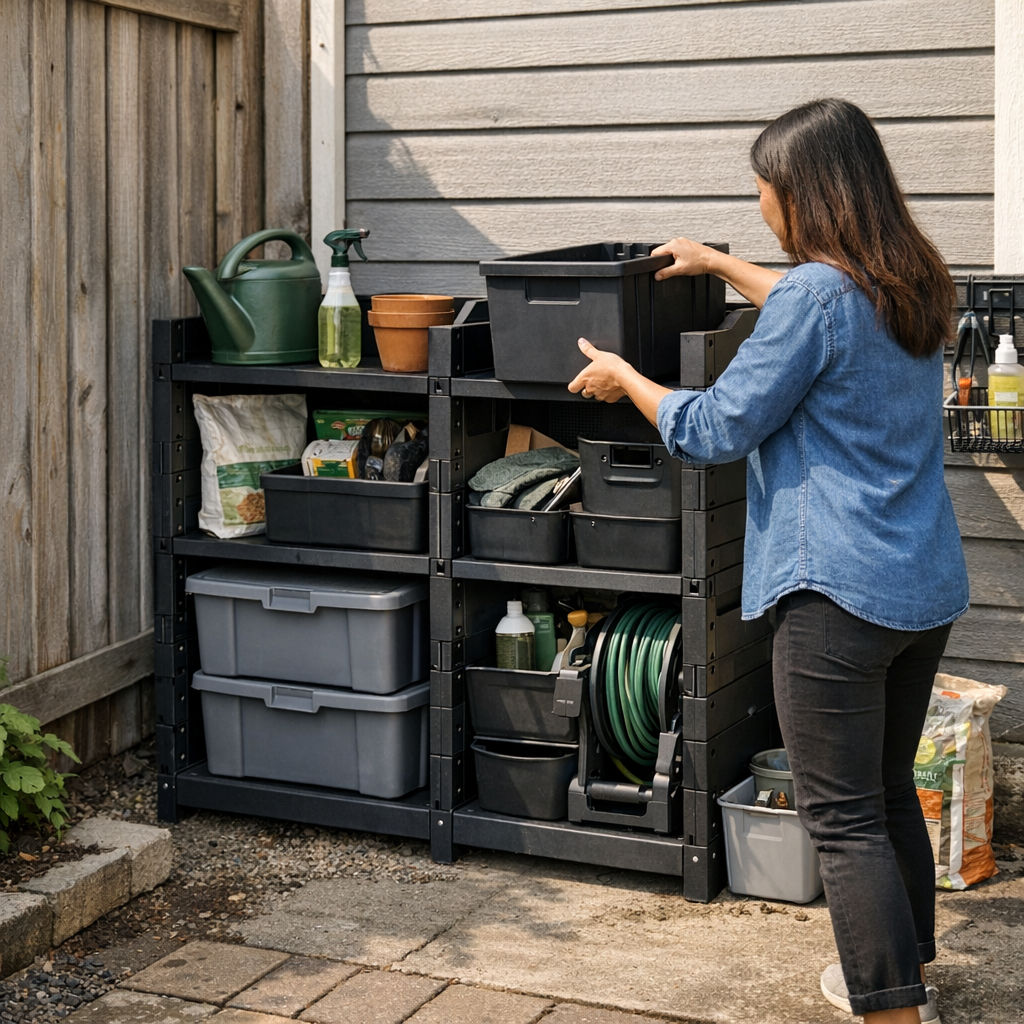
    Unlike rigid built-ins, modular racks, mobile carts, and stackable bins absorb real-life shifts. One extra tool? Add another bin, not another headache. Seasonal overflow? Slide out a rack, shuffle zones, keep paths open. Instead of being boxed in by the layout, you move the pieces—so minor changes don’t trigger a full re-organization and the return path to each item doesn’t keep getting longer.

    Why Clutter Creeps—And How Boundaries Snap Back

    The snag with flexibility: when nothing has a border, everything bleeds together. The gloves join the pool toys “just this once.” The overflow bin turns into a universal drop spot. One fuzzy weekend, you’ve gone from sorted to sprawled, with every clear surface up for grabs. Rather than a setup you can reset in seconds, you get scattered piles and an endless round of shifting things from zone to zone.

    Setting Boundaries That Actually Hold

    The flexible setup only works if each zone stays recognizable—tools here, sports gear there, seasonal overflows apart. Visual dividers, color-coded bins, open labels, even bold tape to mark walking paths—all help keep truly movable systems from melting into a single catch-all. When bins have clear fronts, carts are labeled, and the wall is functionally split between “weekly use” and “someday overflow,” clean-up is snappy, not daunting. Walking through, you know what lives where and quickly spot what doesn’t belong.

    Everyday Reset: Small Corrections, Not Total Overhauls

    A month in, the magic is this: the urge for the dreaded “big reset” fades. No more sinking feeling when you see a pile up. Instead, it’s tiny adjustments—slide the overflow bin back where it belongs, reverse a stray shovel, re-stack instead of dump. These 60-second resets clear space for tomorrow instead of becoming a weekend project. Friction isn’t gone, but it doesn’t snowball. You don’t need to fight the setup to keep it functional—just nudge it back when needed.

    Still, flexible zones have their own traps. The cart becomes a drop-off point you stop seeing, or an open bin swallows stray garden stakes until the season’s over. But now, correcting these is easy—move one thing, fix the flow, and the system works with you, not against you.

    Where Conventional Setups Fail: Dead Corners and Blocked Movement

    Weak setups announce themselves in quiet frustrations:

    • You return the garden fork—then realize the hose reel is now blocked until something else moves.
    • Every time you want the mower, you shuffle two bins out of a too-narrow path yet again.
    • That one back corner? Still a magnet for mystery objects, because it’s never gotten a real job in the zone.
    • The impressive wall rack turns boots and buckets into tripping hazards, because there’s no flow after a normal weekend cleanup.

    Fixed layouts turn small resets into big detours. They promise order but force you into roundabout routes or constant reshuffling. A setup can look sharp while still interrupting every routine. Flexible systems, when clearly divided, keep movement open—quick fix, go on with your day. The difference is every micro-adjustment is built in, not a breakage of the setup.

    Real-World Routines: Keep It Useable, Not Just Organized

    • Take one minute after any busy afternoon to put the mobile bin back or re-mark walkways. Small resets fight creep the whole season.
    • Give each flexible zone a visible identity—labels, color, or tape for “this is garden gear, this is toys, this is just overflow.” It matters more as the space gets tighter or more mixed-use.
    • Let overflow roll, not sprawl. The bin or cart on wheels takes the blow, then gets reset—instead of the whole path turning into a tripping maze.

    The Setup That Stays Useful—Not Just Tidy

    A practical outdoor system isn’t about perfect order. It’s about setups that bend with the routines, block out permanent pile-ups, and let you keep moving through—even after a rush, a project, or a storm. The difference between “organized” and “useable” isn’t how things look after setup; it’s how well the system handles all the imperfect, repetitive ways things actually get used—and returned—every week.

    The setups worth building don’t flatten every friction point, but make it easy to see what’s out of place, correct course with a quick move, and find a clear path after the next errand or chore. When the outdoor zone keeps working through the real-life mess, you spend less time shifting, less time searching, and more time just moving through. That’s how a backyard or utility strip stops being a silent frustration and starts making the rest of the home run smoother.

    Visit TidyYard for practical outdoor storage solutions