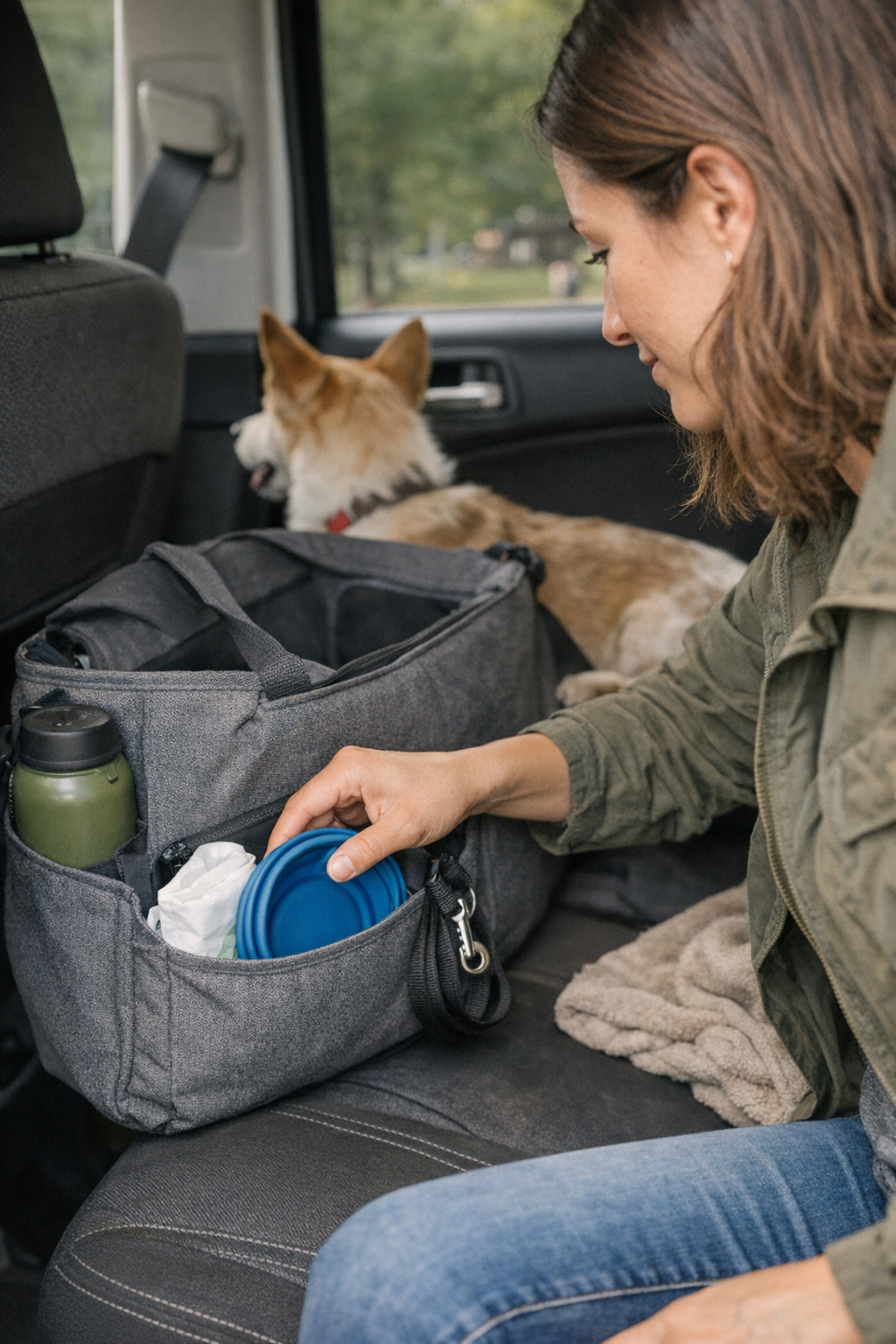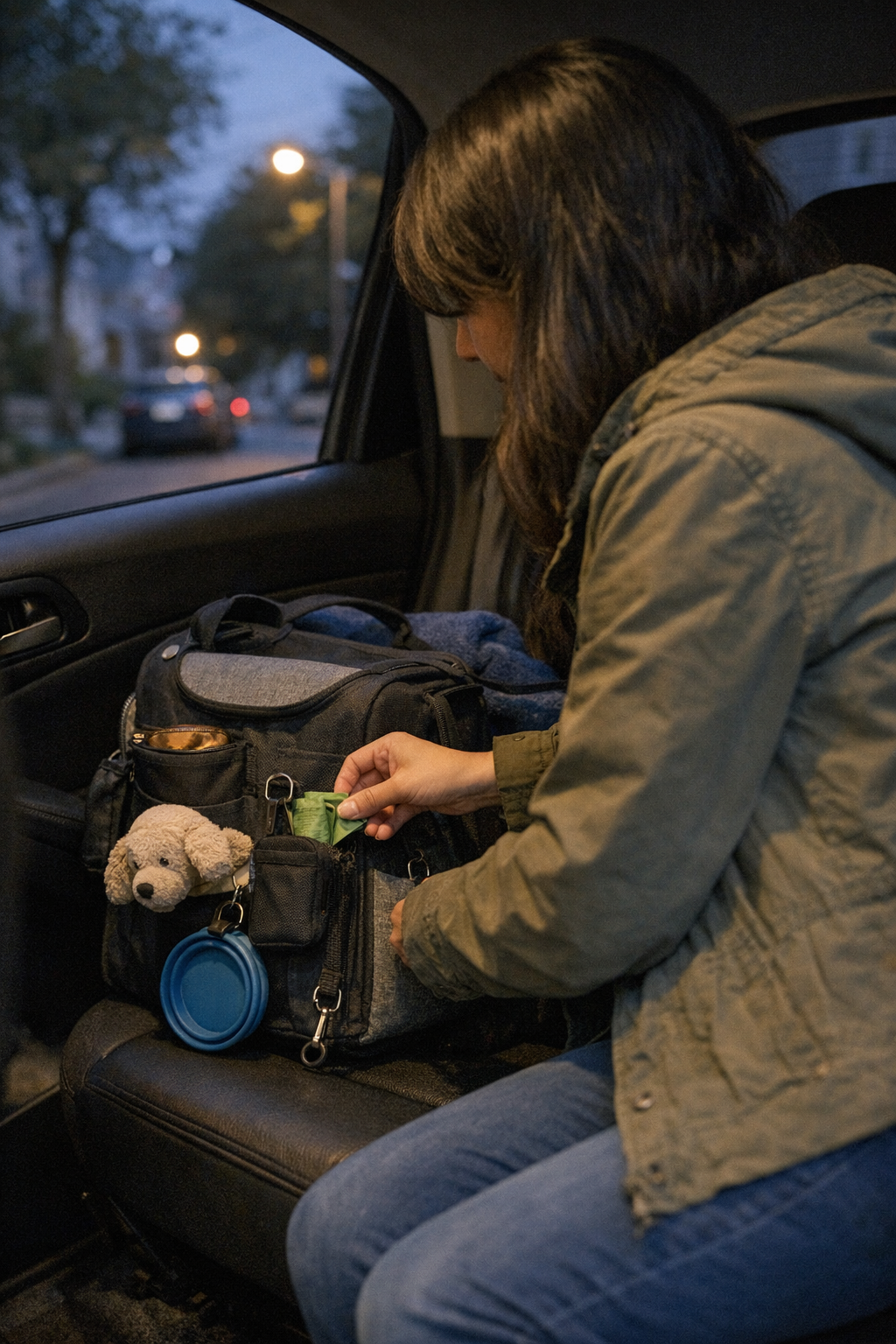
Here’s where most pet travel setups fall apart: you’re out with your dog after dark, a leash in one hand, and what looked like a well-packed carrier now turns into a slow-motion scramble. Every stop, you’re guessing—was the clip in the side pocket, or buried with the wipes? That waste bag isn’t lost, but it’s pinned under a blanket and a collapsed bowl. The bag felt ready at the door, but now, every pause exposes one awkward truth: looking organized does nothing for speed when you actually need to grab, calm, or clean in motion. What you set up for neatness at home now works against you, trip after trip, and the moments you spend shuffling for essentials drag out your pet’s focus, notch up your own frustration, and turn a simple walk into a series of restarts.
The Little Delays That Add Up
Even a bag that leaves the house looking sorted—treat pouch stashed, bowl snapped flat, everything zipped up—doesn’t stay that way after a few real stops. The first delay comes when you stop to clean up; the wipes and bags are rarely on top. Instead, you’re elbow-deep, shifting folded mats for the same supplies every time. Try to pull a comfort toy quickly and find it has slid behind something else. It isn’t just wasted seconds. These repeated interruptions break your pet’s rhythm, making the outing less calm for both of you. Handling that seems fine at first exposes small flaws with every pause you did not plan for.
Evening Movement Magnifies the Mess
As light fades, search time nearly doubles. Items that seemed easy to reach are now scattered, or half-hidden in unfamiliar pockets. Your dog gets jumpy, tugging at the leash, while you fish for a leash clip that slid down behind stacked gear. The problem isn’t shortage of supplies—it’s unreachable supplies. Each new stop—grab waste bag, find treat, settle pet—becomes a blind dig.
You reach for a waste bag but pull up the treat pouch instead. The spot you put the calming toy now means unzipping two compartments while your pet is already winding the leash tighter. The setup hasn’t completely failed, but friction creeps in with every repeated move, making return-to-action slower and clumsier—and your pet feels the tension first.
Looks Organized, Handles Chaotic
The false comfort of tidy packing vanishes the moment you’re actually in motion. Carefully built rows of gear look impressive at home, but by the third stop, your “system” demands you lift and shuffle items just to reach a simple need. Visual calm turns into physical chaos. With each restart, you replace visual clutter with shuffle time. What passes as “organized” before you leave the house becomes the very thing that interrupts the flow of a normal outing.
Compounding Friction, Stop After Stop
Each interruption builds on the last. The waste bags sink to the bottom by the second stop, blocking cleanup in a pinch. Leash clips and toys, wedged for tidiness, now mean everything moves when you tug one item. By the last half of a walk, your gear demands reset after every use. The more you have to reshuffle, the less your dog settles, and the more frustrated you get—because every extra second spent searching is one more moment pulled out of stride.
Real-World Weak Points—Exposed Again and Again
Actual travel weak points don’t show up the first time you use a bag—they creep in after a handful of ordinary interruptions. Standing by a dim street, your pet reacting to an unexpected noise, you realize the calming aid is buried for the sake of “tidiness.” Or as you wait to cross a busy intersection, you miss your window because your cleanup pouch tangled with your own essentials. Supplies that could resolve tension end up being the new source of it—because “organized” means little if you can’t get to what you need when you need it.
When pet and owner items overlap—your phone blocking the leash, wipes wedged between snacks—every stop comes with its own extra handling. Each supposed “reset” makes the main problem worse: every stacked layer only demands another round of sorting at the next stop.
The Value of Quick, Predictable Access
True organizing wins when your most-used essentials—cleanup pouches, leash clips, calming items—are reachable in one direct move. Not “neatly nested,” not “tucked away.” Side or exterior-pouch access is what makes the real difference. Waste bag drawn in four seconds, not twelve. Toy grabbed right as nerves spike, not after a mat and treat switch. That’s the real test: repeat access, without new rummaging, every single outing.
What Replaced the Hassle
Adding just a few “movement-first” choices—cleanup pouch clipped right at hand, treats pocketed on the outside, comfort toy up front—not only sped things up but removed the constant bag reassembly ritual after every pause. What once felt like a series of forced stops now runs closer to “pause, grab, go.” Less reshuffling means your pet resets quicker, you keep pace, and the walk stays focused on the outing, not the bag.
Choosing Structure Over Appearance
Repeated use makes the real lesson obvious: efficiency always beats appearance. A good pet travel setup never hides essentials to create a look of order. If you have to unzip, lift, and hunt for a high-use item on every stop, your system isn’t working. Efficient structure means the stuff you need right now is always in one predictable spot—with less-used items sorted out of reach and out of the way. The best setups aren’t about being “packed” but about being ready for use without pause.
When you judge bags, organizers, or carriers, focus on how they perform under travel, not how they appear fully loaded on a table. If access to waste bags or comfort items ever takes more than one step—or if a normal stop means a total reshuffle—you’re trading smooth movement for aesthetic neatness. That trade becomes painfully obvious the first time you need something fast on a dark curb or after an anxious startle.
Better Walks, Fewer Interruptions—For Both of You
Pet travel gear reveals itself in the little moments: a short reset, a quick-clean, a sudden grab for a comfort item. The only setups that work in real life are the ones built for reach and repetition, not a perfect pre-departure photo. When structure puts the right tool in the right place, you get a smoother outing, less stress with every stop, and an easier reset—trip after trip. Visible order means nothing if it eats up time and patience.
The difference isn’t subtle to anyone who’s struggled with repeated reshuffling: the bag that moves with your routine—not against it—solves more than just mess. It keeps both pet and owner in rhythm and does the real work of travel, wherever the next stop actually takes you.
Shop PawGoTravel for practical pet-travel gear and organizing essentials.